“Putting together all the recent tariff increases, pauses, escalations, and exemptions, it seems clear that the U.S. effective tariff rate has jumped to levels last seen several lifetimes ago,” Georgieva said in a speech before the IMF-World Bank Spring Meetings scheduled for next week.
“The complexity of modern supply chains means imported inputs feed into a broad range of domestic products. The cost of one item can be affected by tariffs in dozens of countries. In a world of bilateral tariff rates, each of which may be moving up or down, planning becomes difficult,” Georgieva said.
“The result? Ships at sea not knowing which port to sail to; investment decisions postponed; financial markets volatile; precautionary savings up. The longer uncertainty persists, the larger the cost,” she continued.
The IMF chief noted that rising trade barriers hit growth “upfront,” and protectionism erodes productivity over the long run, especially in smaller economies.
The IMF will quantify these costs in its new World Economic Outlook, to be released early next week.
“In it, our new growth projections will include notable markdowns, but not recession. We will also see markups to the inflation forecasts for some countries,” Georgieva said.
The IMF chief urged policymakers to redouble efforts to “put their own houses in order,” noting that most countries must “take resolute fiscal action to rebuild policy space,” setting out gradual adjustment paths that respect fiscal frameworks.
She also called for “agile and credible” monetary policy, along with strong financial regulation and supervision.
Highlighting the importance of “cooperation in a multi-polar world,” the IMF chief emphasized that trade policy must aim for a settlement among the largest players that preserves openness and delivers a more-level playing field – “to restart a global trend toward lower tariff rates while also reducing nontariff barriers and distortions.”
The 7th Integrated Household Living Conditions Survey (EICV7), conducted between October 2023 and October 2024, covered 15,066 households across the country. The report was officially launched by Prime Minister Édouard Ngirente at the Kigali Convention Centre on Wednesday.
The survey shows that the national poverty rate dropped from 39.8% in 2017 to 27.4% in 2024, with approximately 1.5 million Rwandans lifted out of poverty since the last survey.
“These achievements were realized over the seven years of implementing the first National Strategy for Transformation (NST1),” said Prime Minister Ngirente during the launch. “They were driven mainly by strategic investments made by the Government of Rwanda and its partners over the last seven years.”
He added: “The long-standing social protection schemes played an important role in improving the well-being of our citizens. These efforts have also effectively contributed to the creation of income-generating activities and job opportunities in Rwanda, and it is a clear demonstration of the impact that can be achieved through good planning and effective implementation.”
The rural poverty rate now stands at 31.6%, while urban areas report a significantly lower rate of 16.7%. The Western Province remains the most affected, while the City of Kigali reports the lowest poverty levels.
Among the districts, Musanze recorded the most dramatic improvement, with poverty levels falling from 42.3% to 21.0%—a 21.3 percentage-point drop.
Only 14 districts had more than 40% of their population living in poverty in 2024, down from 22 districts in 2017. Meanwhile, 16 districts now report poverty rates below the national average.
Extreme poverty also declined sharply, dropping by 5.9 percentage points compared to 2017. The national extreme poverty rate now stands at 3.1%.
According to NISR Director General Ivan Murenzi, a Rwandan needs at least 560,027 Rwandan Francs annually to meet the basic cost of food and non-food necessities.
The report also highlighted improvements in other socio-economic indicators, particularly in rural areas, where access to electricity, mobile phones, internet, and improved drinking water sources has significantly increased. Household access to electricity rose from 34.4% to 72%; mobile phone ownership increased from 66.9% to 84.6%; and internet access grew from 17% to 30%.
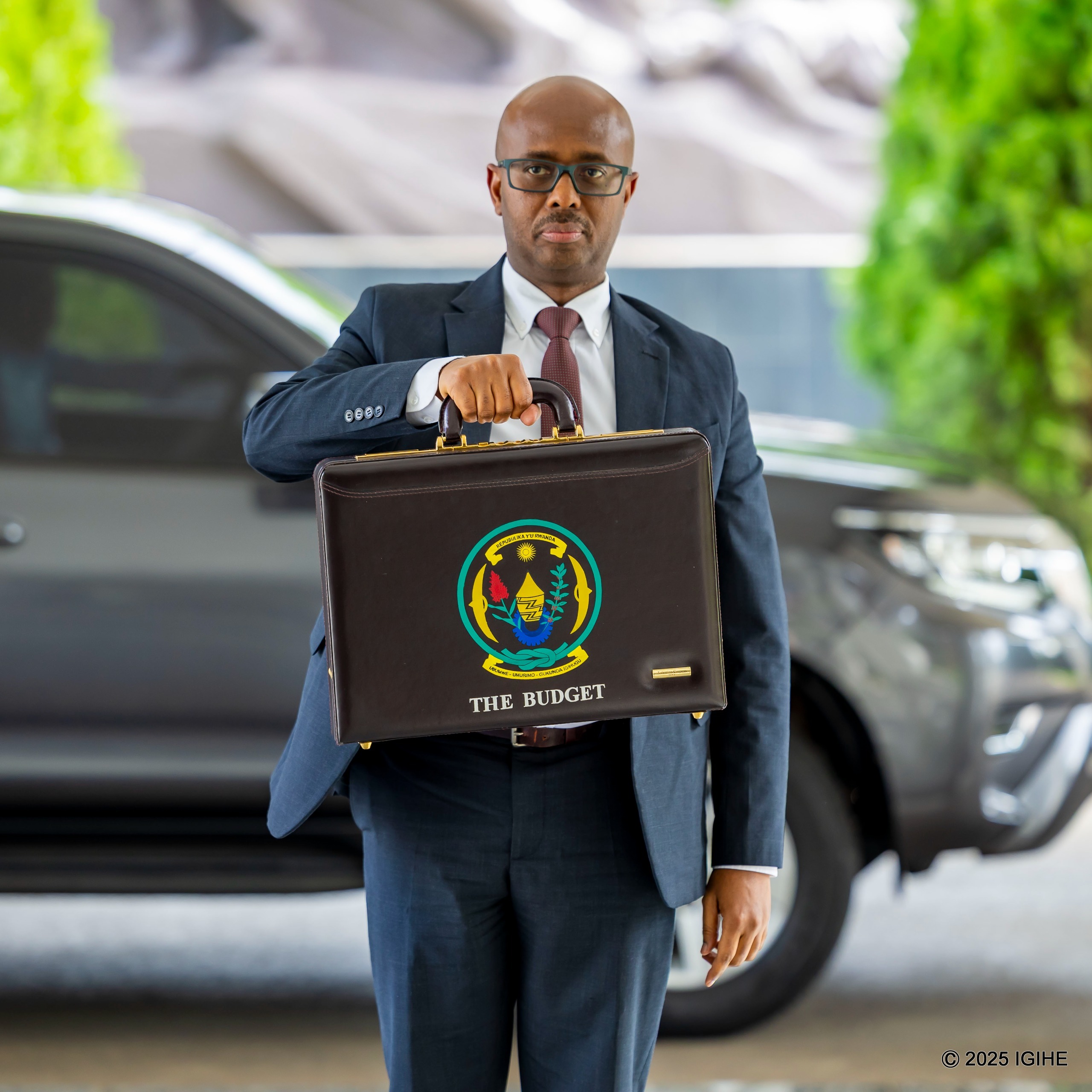
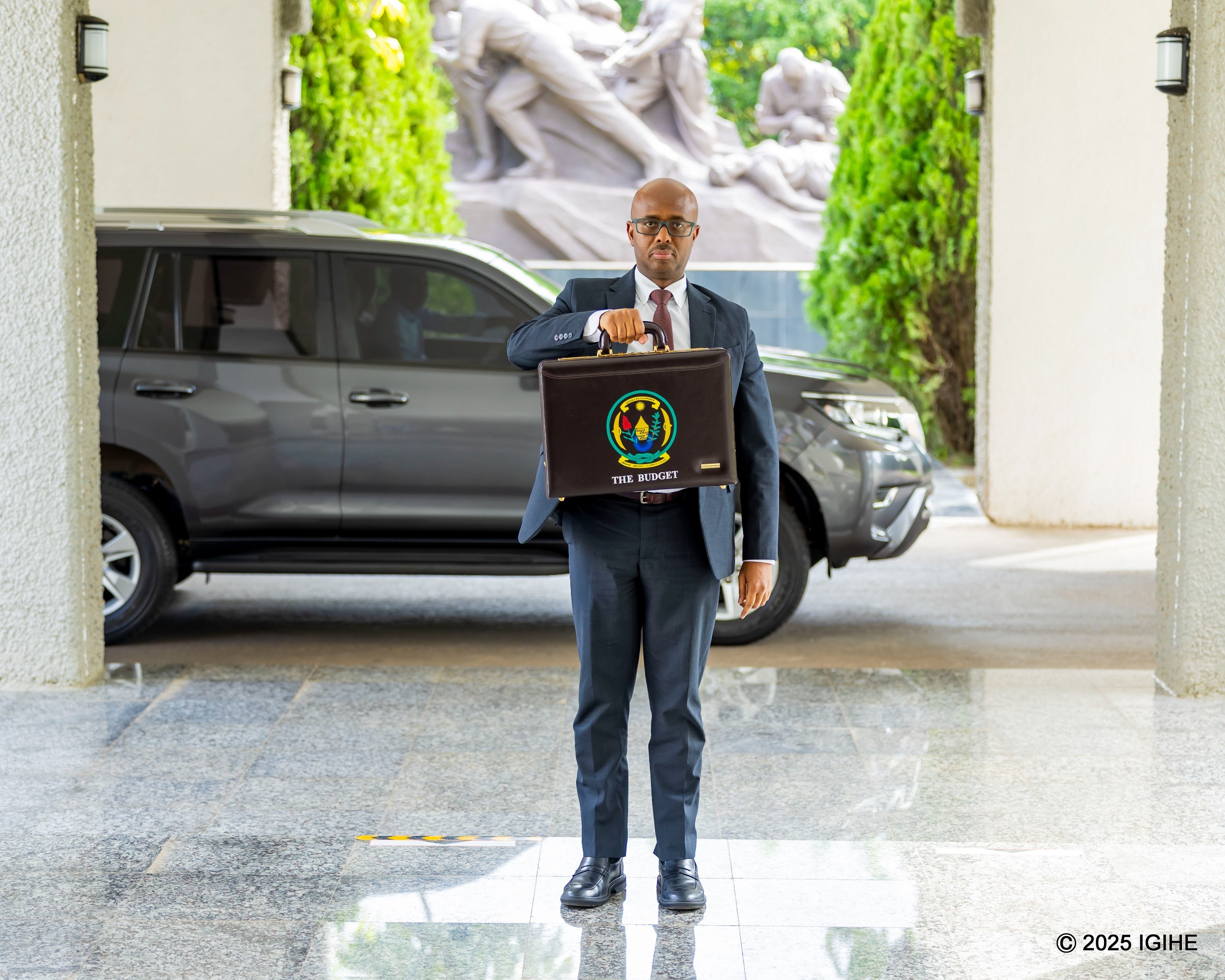
Speaking at the event, Minister of Finance and Economic Planning Yusuf Murangwa described the release of the report as timely, noting that it will support evidence-based policymaking to achieve the goals of the Second National Strategy for Transformation (NST2).
“These results will define where and how the government and partners should invest to get maximum results for NST2 objectives by 2029,” he stated.
The new tariffs are set to take effect from Thursday.
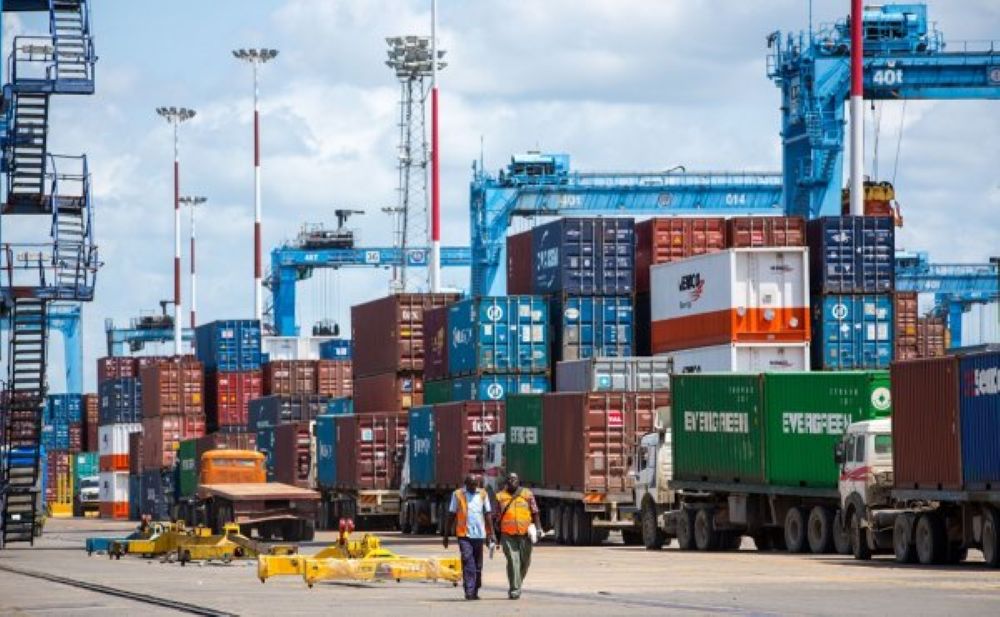
Beijing has called on the international community to unite against Trump’s tariffs, as Chinese exporters face significant challenges from the new levies.
In 2024, the US imported approximately $440 billion worth of goods and services from China, while China imported around $145 billion in goods and services from the US.
The Travel Expenditure Survey (TES), conducted by the National Institute of Statistics of Rwanda (NISR) in collaboration with key partners, provides detailed insights into travel-related spending, offering a comprehensive breakdown of both inbound and outbound travel expenditures.
For non-resident visitors in Rwanda, the survey categorises their spending on goods and services as credits or exports. Conversely, payments made by Rwandan residents while travelling abroad are classified as debits or imports.
The data collection process for the survey involved gathering expenditure details from a diverse sample of travelers. Spending was analysed across key categories, including accommodation, food and beverages, transportation, shopping, entertainment, sightseeing, education-related expenses, and health-related costs. Notably, international transportation expenses were excluded from the findings.
The latest report presents findings from the survey conducted between November 1, 2024 and January 30, 2025. These insights were used to estimate travel service earnings for the fourth quarter of 2024 and the entire year’s figures.
According to the report, Rwanda’s travel sector performed strongly in 2024, with travel service earnings in the fourth quarter alone amounting to $126.1 million. Holiday tourism was identified as the primary driver, generating $56.2 million.
The analysis of visitor spending patterns showed that tourists arriving by air accounted for 81.1% of total visitor expenditures, while those entering via land borders contributed the remaining amount.
Foreign visitors’ spending varied based on origin and mode of travel. Air travelers from Asia had the highest average daily expenditure at $197 per person, followed by those from North America and other African countries at $151 per day.
European visitors spent an average of $129 daily, while East African visitors had the lowest daily expenditure at $82. For land travelers, North Americans on holiday spent an average of $146 per day, while visitors from Asia and Europe spent $109 and $100 per day, respectively.
For the full year, travel exports amounted to $579.5 million, while travel imports stood at $363.8 million. This resulted in Rwanda recording a net surplus of $215.6 million in travel services.
In 2024, 44.6% of foreign visitors traveled to Rwanda for holidays, 28.1% visited friends and relatives, while 14.1% came for business purposes.
Rwanda aims to double its tourism revenue in the coming years, targeting an increase from $620 million in 2024 to $1.1 billion by 2029.
The latest findings are essential for, among other purposes, guiding policymakers, businesses, and other stakeholders in making informed, data-driven decisions to further enhance Rwanda’s tourism and travel sector.
This means that in 2024, roughly for every seven people in the labour force, there was one person unemployed. This represents a decrease of 2.3 percentage points compared to 2023.
The report indicates that Rwanda’s working-age population stands at approximately 8.3 million individuals. Of this, around 4.4 million are employed, while 780,000 remain unemployed.
Additionally, 3.1 million people are not part of the labour force. The labour force participation rate has also seen positive growth, rising to 62.9% in 2024, an increase of 3.6 percentage points from 2023, reflecting a larger share of the population engaging in the labour market.
However, the survey also highlights persistent disparities in the labour market. The gender gap in labour force participation remains significant, with males consistently outperforming females. In 2024, the gender gap stood at 15.5 percentage points, a figure consistent with 2023 levels.
The employment-to-population ratio has also improved, climbing to 53.5% in 2024, up from 49% the previous year. However, this ratio was notably higher among males (62.2%) compared to females (45.9%). It was also higher for adults (31 years and above) than for the youth (16-30 years).
Sectoral employment trends show that the services sector has become the primary driver of employment, accounting for 42.9% of total employment in 2024, up from 39.8% in 2023. On the other hand, employment in the agriculture sector has declined to 39.9%, down from 43.4% in 2023.
Despite the decrease in overall unemployment, it remains higher among females, who face an unemployment rate of 17.6%, compared to 12.6% for males. Additionally, the youth (16-30 years) continue to face higher unemployment rates at 18.5%, compared to 12.3% for adults.
Labour underutilization, which includes unemployment and other factors such as time-related underemployment, stood at 54.2% in 2024. This rate was higher among females (61.2%) and the youth (56.2%), compared to males (47%) and adults (52.8%).
The report also sheds light on the prevalence of informal employment, with 82.3% of the employed population working in the informal sector in 2024. This highlights the continued challenges of securing formal employment opportunities.
The enhanced sampling methodology used in the 2024 RLFS, which incorporated data from the 2022 National Population and Housing Census, offers a comprehensive overview of the nation’s labour market.
The insights provided in the report are crucial for policymakers and stakeholders as they seek to address challenges such as unemployment, labour underutilization, and gender disparities, while working towards ensuring decent work for all.
This remarkable growth was driven by strong performances across various sectors of the economy, signaling resilience and growth amidst global challenges.
The figures released by NISR on Wednesday also show that the services sector was the largest contributor to the GDP, accounting for 48% of the total. Agriculture followed with 25%, while industry contributed 21% while net direct taxes accounted for 7%.
The growth was seen throughout the year, with the first quarter growing by 9.7%, the second by 9.8%, the third by 8.1%, and the final quarter showing a growth of 8%.
Looking at the individual sectors, agriculture experienced a 5% increase. This was largely attributed to a good harvest in both agricultural seasons, with food crop production rising by 5%. Season A saw an 8% increase, while Season B recorded a 2% increase.
However, the production of export crops decreased by 1%, with modest increases in coffee and tea offset by declines in other cash crops such as pyrethrum and sugarcane.
The industry sector experienced a notable boost, growing by 10%. Mining and quarrying activities increased by 12%, construction activities also saw a 12% increase, and manufacturing activities grew by 7%.
The growth in manufacturing was particularly driven by significant increases in the production of metal products, machinery and equipment (up 20%), non-metallic mineral products (up 15%), and chemicals, rubber, and plastic products (up 15%). Other areas like textiles, clothing, and leather also saw a 10% increase in manufacturing, while food processing grew by 2%.
The services sector also showed remarkable growth, with a 10% increase overall. Wholesale and retail trade surged by 18%, while transport activities rose by 9%, including an 18% growth in air transport and a 10% increase in land transport.
Other service areas performed well, with hotels and restaurants seeing an 11% growth, information and communication services up by 25%, and financial services growing by 7%. Public administration services increased by 10%, while health services grew by 15%, and education services saw a 5% rise.
The event, themed “Think Before You Follow, Wise Money Tomorrow,” aims to equip the youth with the knowledge and skills necessary to make informed financial decisions.
Justice Oyakhilome Anthony, Country Director of the International Association of Students in Economics and Business (AIESEC) in Rwanda, emphasized the importance of financial literacy in shaping the future of the country’s economy.
He called on young people to be deliberate in their financial decisions and avoid being swayed by trends and misinformation.
“In today’s world, we are surrounded by financial advice and trends, but not all of it is valuable. It is crucial for young people to think critically before making financial choices. Financial security is not a product of chance but of deliberate, informed, and wise decisions,” he stated.
Anthony reiterated that AIESEC in Rwanda has been committed to financial education for over a decade. “For 13 years, we have championed this cause because we believe in the power of financial literacy to transform the leaders of tomorrow. Through this initiative, we are giving young people the tools they need to take control of their financial future,” he added.
Gladys Miria Usabase, a financial inclusion and education analyst at the National Bank of Rwanda, cautioned young people against making financial decisions based on social media influencers and urged them to be mindful of online scams.
“It is essential for the youth to be vigilant in the digital world. Scammers are everywhere, and protecting personal financial information should be a priority. We advise young people to start early by practicing budgeting, saving, and investing. Even the smallest savings can grow into meaningful investments,” she said.
She also highlighted the National Bank of Rwanda’s commitment to safeguarding young clients in their financial dealings. “We will continue to protect young people as they interact with financial institutions. For those seeking credible financial advice, our website offers resources to guide them in making informed decisions.”
Pierre Celestin Rwabukumba, CEO of the Rwanda Stock Exchange, expressed the RSE’s long-standing dedication to financial education. He emphasized the importance of educating the youth, noting that they represent the country’s demographic dividend and future economic stability.
“If you are not educating your youth, you are losing it. From the very beginning, we saw the need to serve this underserved population. Many young people are unaware of financial literacy, and it is our duty to ensure they understand they are the future of Rwanda’s economy,” Rwabukumba declared.
The launch of Global Money Week in Rwanda marks another milestone in the ongoing effort to promote financial literacy among the youth. With the collective support of government agencies, financial institutions, and education organizations, young people are being equipped with the knowledge and tools needed to make sound financial decisions.
As the week unfolds, participants will engage in workshops, discussions, and interactive activities designed to enhance their financial understanding.
The report was presented during the 57th session of the Economic Commission for Africa: Conference of African Ministers of Finance, Planning, and Economic Development in Addis Ababa, Ethiopia.
Zuzana Schwidrowski, UNECA’s director of macroeconomics, finance, and governance, highlighted that while African economies are resilient, growth rates are still insufficient to significantly drive social development across the continent.
She also pointed out ongoing risks such as global economic uncertainty, geopolitical tensions, and reduced aid, which could hinder growth.
Although intra-African trade is diversifying and becoming more vibrant in certain regions, overall trade’s contribution to growth has declined compared to past levels.
The report also revealed that, despite a decline in extreme poverty across the continent, it remains persistently high in most regions, with North Africa as the only exception.
Climate change poses an additional challenge, with rising temperatures expected to lower agricultural yields, exacerbating food insecurity in some regions.
In an exclusive interview with CNBC Africa, Tesi Rusagara, the Minister of State for Public Investments and Resource Mobilization, outlined Rwanda’s strategic plan.
Among the key targets are doubling exports to $7.3 billion and increasing private investments to 21.5 per cent of GDP. These efforts are part of a broader vision to transform Rwanda into a lower-middle-income country by 2035 and an upper-middle-income country by 2050.
“Taxation plays a crucial role in financing investments and attracting private sector participation,” Minister Rusagara stated. Thus, the government aims to raise the tax-to-GDP ratio from 14 per cent to 18 per cent over the next five years through comprehensive tax reforms.
These reforms are designed to widen the tax base and increase domestic resource mobilization. For example, previously exempt sectors, such as financial services and ICT, are now included in the tax framework to align with Rwanda’s growing economy.
The government is also mindful of the potential impact on consumers and businesses, particularly in sectors sensitive to inflation like fuel and food. Special measures are being implemented to monitor and mitigate these effects.
The tax reforms also aim to encourage positive behavior. For instance, the government is offering tax waivers on electric vehicles to promote the adoption of green mobility. These incentives are part of a broader strategy to ensure sustainable growth while addressing environmental concerns.
Public-private partnerships (PPPs) play a crucial role in Rwanda’s development agenda. Minister Rusagara emphasized that despite a global decline in grants, Rwanda continues to attract both local and foreign investments.
This reflects strong investor confidence in the country’s manufacturing, agriculture, and ICT sectors. “PPPs are essential in leveraging capital, expertise, and innovation to drive infrastructure development,” Rusagara said.
Investments in critical infrastructure, including roads, ICT, and hospitality, are central to the government’s vision. These projects not only improve connectivity but also stimulate job creation and ancillary industries.
Looking ahead, Rwanda remains focused on enhancing its international financial sector to attract investors and solidify its position as a stable and lucrative market in Africa. The government is optimistic that its strategic initiatives will drive long-term economic prosperity.
With a clear roadmap and a commitment to sustainable growth, Rwanda is poised to achieve its ambitious development goals and emerge as a leading economy in the region.
Hakuziyaremye had served as Deputy Governor of the National Bank since 2021. Her predecessor, John Rwangombwa, completed two six-year terms, having held the position since 2013.
Expressing gratitude for the appointment, Hakuziyaremye acknowledged the trust President Kagame continues to place in her.
In an exclusive interview with IGIHE, she shared her reaction to the new role, her priorities, and how the National Bank of Rwanda plans to address potential economic challenges.
{{QN}}: {{How did you receive the news of your appointment as the Governor of the National Bank of Rwanda?}}
{{ANS}}: It’s not something you expect because the President of the Republic holds the authority to appoint the leadership of the National Bank. I received the news with joy and gratitude for the continued trust that the President has confined in me across different roles in serving Rwanda.
I have been the Deputy Governor for four years, so I am familiar with the institution. This new role is a continuation of our work, and I am committed to collaborating with my colleagues to fulfill our responsibilities.
{{QN}}: {{What does it mean to you to be the first woman to lead the National Bank of Rwanda?}}
{{ANS}}: This milestone is not about me; it reflects the country’s commitment to gender equality. Our leadership has ensured that both men and women are given equal opportunities to contribute to national development.
Although I am the first woman to hold this position, two other women have previously served as Deputy Governors. Their contributions helped pave the way and demonstrated that women are capable of excelling in these roles.
{{QN}}: {{How are you preparing to take on this new responsibility?}}
{{ANS}}: These are significant responsibilities that no one can handle alone. Fortunately, I work alongside a capable leadership team and dedicated staff at BNR. Together, we will continue to deliver on our mandate.
Our work involves collaborating with other institutions to maintain economic stability. This is not new to us; we will continue to build on the solid foundation already in place.
The government’s NST2 program urges us to accelerate economic development. We also have Vision 2050, which sets the ambition for Rwanda to become an upper-middle-income country. These goals guide our work, and we are determined to achieve them.
{{QN}}: {{What will be your main focus moving forward?}}
{{ANS}}: Our primary focus is maintaining financial stability and ensuring that market prices remain under control. Additionally, we aim to protect consumers of financial services and promote financial sector development.
With the rapid growth of digital financial services in Rwanda, we want to ensure these services remain accessible and affordable for everyone.
We also plan to advance the Kigali International Financial Centre (KIFC) initiative. Working with the Ministry of Finance and Economic Planning, we will continue attracting investors to strengthen Rwanda’s financial sector.
Another priority is expanding the capital market. As the national bank, we facilitate the issuance of government bonds, and we want to encourage more public participation while ensuring the market provides the necessary financing for the country’s development.
{{QN}}:{{ How will you ensure Rwanda builds a resilient economy?}}
{{ANS}}: Rwanda’s economy remains strong. Although inflation reached 14% in 2023, it has since dropped to an average of 4.7%.
The financial sector is stable and continues to grow, whether in banking, insurance, or microfinance. Capital adequacy and profitability remain solid indicators of a healthy financial system.
{{QN}}: {{Are there concerns that market prices will continue to rise?}}
{{ANS}}: No, the rate of price increases has significantly slowed and remains within the 5% target range. This level supports economic growth without major disruptions.
{{QN}}: {{What measures are in place to promote digital financial services?}}
{{ANS}}: We recently hosted the Inclusive Fintech Forum to explore ways to advance digital financial services. The government has adopted a new Fintech policy to strengthen the sector.
Our main goal is to enhance technological literacy in financial services, particularly in payments, banking, and insurance. We are also working on regulations to safeguard the financial system from risks such as cybercrime.
We want to empower Rwandan Fintech startups, particularly young innovators, by connecting them with major financial institutions. This will help them grow and achieve the global standards we aim for.
{{QN: What can be improved to promote money transfers?}}
{{ANS}}: We should take pride in the progress Rwanda has made, especially when considering the volume of money transferred through digital platforms like Mobile Money, banks, and microfinance institutions.
These transactions now account for 300% of the country’s Gross Domestic Product (GDP). Fifteen years ago, this figure stood at just 0.3%, but it has increased significantly, especially during the COVID-19 pandemic, as more people turned to digital services.
This marked a turning point for the adoption of cashless payments, and we aim to ensure that those who have not yet adopted these methods are included.
Additionally, there is an ongoing e-cash project aimed at integrating banks and mobile money services. For example, a user with an MTN SIM card can now send money to an Airtel user without issues, and it is also possible to transfer money from a bank account to a mobile money wallet.
Our goal is to connect all these institutions, which will facilitate faster transactions and, we hope, reduce the costs associated with money transfers.
{{QN: How far along is the digital currency initiative?}}
{{ANS}}: It is a long-term initiative that we are approaching with caution. If and when digital currency is officially introduced, it must be a secure and beneficial tool for Rwandans.
The first phase of research has been completed, and we have engaged with various stakeholders and collected public feedback on the findings. This will inform a small-scale pilot test of the digital currency, which is our current focus.
We anticipate that in five or six months, we will present the results of this pilot. If the test confirms the potential we foresee, we will initiate a broader pilot involving a select group of Rwandan citizens.
The outcomes of this extended pilot will determine whether Rwanda fully adopts a digital currency. Research suggests that one of the most immediate benefits would be lower transaction costs for both domestic and international transfers.
Other countries that have introduced digital currencies have reported easier and more affordable cross-border trade. Additionally, digital currency could increase competition among payment service providers, driving innovation and better services.
{{QN: Why are there still significant concerns about digital currency?}}
{{ANS}}: The primary concern is that digital currency is a new concept. While research reports provide valuable insights, only through real-world trials we can identify and address potential risks.
This is why we are proceeding cautiously. Currently, 86 countries are conducting experiments and research on digital currency, and we continue to share knowledge and experiences with them.
For Rwanda, participating in this global effort is exciting but requires careful consideration. We want to avoid any unintended consequences that could arise from adopting digital currency.
{{QN: How is the BNR responding to global economic uncertainties?}}
{{ANS}}: Global changes are not new and will continue to occur. As the national bank, our approach is to employ highly skilled economists capable of conducting advanced financial analysis.
For example, when the COVID-19 pandemic emerged five years ago, no one had anticipated it. However, Rwanda successfully navigated the economic challenges and emerged stronger.
Similarly, we have adapted to the extreme price fluctuations caused by the Russia-Ukraine war and climate change, which continue to affect global markets. We understand that climate change, in particular, poses a significant threat to the agricultural sector, which in turn influences market prices.
Our ability to analyze economic data allows us to predict potential impacts of natural disasters and other shocks.
We collaborate with other institutions to mitigate risks early. Our current financial indicators suggest that we are maintaining economic stability. In the first three quarters of 2024, Rwanda’s economy grew by 9%, placing us among the top 10 fastest-growing economies globally.
This growth gives us confidence that we can weather future changes. While we cannot predict everything, we have strategies in place to ensure the continued stability of our economy.
We remain optimistic that our economy will continue to grow steadily. Our projections indicate that inflation will be 6.5% this year and 4.2% next year, reinforcing our position of economic strength and stability.