The latest guidance involves additional ad valorem duties covered by seven executive orders signed from Feb. 1, 2025 to Aug. 6, 2025, according to a bulletin issued by the U.S. CBP on Feb. 22.
The U.S. Supreme Court ruled last Friday that U.S. President Donald Trump’s sweeping tariffs under IEEPA meant for use in national emergencies were illegal, officially striking down the global tariffs introduced since April.
“In light of recent events, the additional ad valorem duties imposed pursuant to IEEPA shall no longer be in effect and, as soon as practicable, shall no longer be collected,” the executive order said.
Trump authorized all executive departments and agencies to immediately take appropriate steps to terminate the collection of the additional ad valorem duties imposed under the IEEPA.
CBP has collected as much as 175 billion U.S. dollars in duties pursuant to the IEEPA, according to an estimate by Penn-Wharton Budget Model.
Meanwhile, the Trump administration is scheduled to impose an additional 15 percent tariff on imported goods from all countries starting Tuesday, according to a White House proclamation and one of Trump’s social media posts on Saturday.
Section 122 of the Trade Act of 1974 allows the president to impose duties of up to 15 percent for up to 150 days on any and all countries to address “large and serious” balance of payments issues. After 150 days, Congress would need to approve their extension.
“This is a setback and a message we did not want to send today, but the work continues,” Kallas told a news conference after talks in Brussels, adding that she also decided to cap the size of the Russian Mission in the EU at 40 people.
Hungarian Minister of Foreign Affairs and Trade Peter Szijjarto said on Monday that Budapest has made clear in the meeting that it will not support or approve the planned sanctions package, and will also block an EU proposal to provide Ukraine with a 90-billion-euro (106-billion-U.S. dollar) loan.
Szijjarto said Hungary will not support any EU decision that benefits Ukraine as long as Kyiv continues to halt oil deliveries to Hungary via the Druzhba pipeline.
The Druzhba pipeline, which transports Russian oil to Central Europe via Ukraine, has faced repeated disruptions since last year amid the ongoing conflict between Russia and Ukraine. Hungary has stated that although there are currently “no practical or technical obstacles,” Ukraine has decided not to restart crude deliveries.
Rwanda is set to spend more than Rwf 513 billion on key infrastructure projects during the 2025/2026 fiscal year, according to a performance report from the Ministry of Infrastructure. The funding will support the construction and rehabilitation of roads and other strategic facilities across the country.
The government recently indicated that the national budget approved by Parliament in June 2025 has so far been implemented at 65 percent. The budget is currently undergoing revisions, with some projects receiving increased allocations while others are being scaled down.
Among the major undertakings is the rehabilitation of 79 kilometers of roads in different parts of the country. This includes the Muhanga–Rubengera road, specifically the 24-kilometer Nyange–Muhanga section. At the start of the fiscal year, works on this stretch had reached 30 percent completion. The rehabilitation of this section is expected to cost more than Rwf 8.59 billion. The Muhanga–Rubengera road has been developed in phases, beginning with Rubengera–Rambura, followed by Rubengera–Nyange, and finally Nyange–Muhanga.
Rwanda continues to invest heavily in road development.
The ministry also plans to produce a detailed design report for the rehabilitation of the 45-kilometer Kigali–Muhanga asphalt road at an estimated cost of Rwf 3 billion.
Construction preparations are underway for the 10-kilometer Prince House–Giporoso–Masaka road. Preliminary activities have begun, including the removal of houses along the road corridor, and construction is expected to commence by February 2026.
In addition, MININFRA will oversee the paving of 184.8 kilometers of national roads this year. Among them is the 63-kilometer Base–Butaro–Kidaho road, with works budgeted at more than Rwf 11.77 billion.
Further roadworks will cover the 18-kilometer Nyagatare–Rwempasha road and the 73-kilometer Nyagatare–Rukomo road, for which over Rwf 4 billion has been allocated. Construction will also proceed on the 52-kilometer Ngoma–Ramiro road linking Ngoma and Bugesera districts, with Rwf 6 billion set aside for the project.
Before the end of the fiscal year, feasibility studies will be completed for the modernization of three major road junctions in Kigali—Gishushu, Chez Lando, and Sonatube—as part of efforts to improve urban transport in the capital. The planned upgrades, to be implemented using modern interchange designs, are expected to cost $100 million.
The government will also undertake construction of the 51-kilometer Sashwara–Rega–Kabuhanga–Busasamana–Muhato road at a cost of Rwf 4.3 billion.
Beyond national highways, Rwanda is preparing to develop feeder roads and apply light asphalt surfacing, including 194 kilometers of feeder roads in Rutsiro District. Other priority projects include infrastructure works at the Kigali Logistics Platform dry port, upgrades to the Nyacyonga–Mukoto and Byumba–Ngondore roads, infrastructure supporting refugees and host communities, and improvements to roads near border areas.
Rwanda will spend more than Rwf 513 billion on key infrastructure projects during the 2025/2026 fiscal year.
Specific border-area projects include paving the 18-kilometer Nyagisozi–Remera–Nshili road at a cost of Rwf 6.1 billion. In Rutsiro, 41 kilometers of feeder roads will be constructed at a cost of Rwf 5.3 billion. Additional funding amounting to Rwf 3.1 billion has been earmarked for equipment and supervision works at the Kigali Logistics Platform, as well as the preparation of a master plan covering 69.45 kilometers of roads.
On February 12, 2026, the Minister of Finance and Economic Planning, Yusuf Murangwa, announced that the national budget for 2025/2026 had been revised downward from Rwf 7,032.5 billion to Rwf 6,952.1 billion.
The reduction stems largely from adjustments in financing arrangements for Phase II of the new Kigali International Airport project, which lowered the amount required in the 2025/2026 fiscal year by Rwf 168.2 billion. Changes were also made to the repayment plan for loans owed by RwandAir, with repayments now scheduled to begin gradually from the 2026/2027 fiscal year.
On February 18, 2026, the Senate plenary concluded that the revised budget is well structured and aligned with the pillars of Rwanda’s second National Strategy for Transformation (NST2, 2024–2029).
Funding for social transformation has increased from Rwf 1,526.9 billion to Rwf 1,641.8 billion, representing 23.6% of the total budget. Allocations for good governance have also risen, from Rwf 1,088.3 billion to Rwf 1,105.1 billion, accounting for 15.9% of total expenditure.
Meanwhile, funding for economic transformation has been reduced from Rwf 4,417.2 billion to Rwf 4,205.1 billion, representing 60.5% of the budget. Overall development expenditure, however, has increased from Rwf 2,719.7 billion to Rwf 2,837.2 billion, an increment of Rwf 117.5 billion. Funding for projects alone has risen by Rwf 253.3 billion, reaching Rwf 2,115.8 billion.
Government projections also indicate higher domestic revenue collections than previously expected. Tax and non-tax revenues are projected to rise from Rwf 4,105.2 billion to Rwf 4,146.2 billion, an increase of at least Rwf 41 billion.
Chairperson of the Senate Committee on Economic Development and Finance, Fulgence Nsengiyumva, said the projected growth in tax revenue reflects increasing taxpayer awareness and strengthens Rwanda’s path toward self-reliance.
Data from the Rwanda Revenue Authority show that between July and November 2025, tax collections reached Rwf 1,456.3 billion, surpassing the target of Rwf 1,449.5 billion. Revenue collected on behalf of districts also exceeded expectations.
Domestic borrowing is set to increase significantly, nearly tripling from Rwf 136.6 billion to Rwf 468.4 billion. Minister Murangwa noted that domestic borrowing provides more affordable financing while supporting the growth of local financial institutions.
He added that borrowing in foreign currencies can expose the country to exchange rate losses, whereas local banks remain sufficiently capitalized to support both public and private investment.
External borrowing, on the other hand, will decline by Rwf 512.1 billion, dropping from Rwf 2,151.9 billion to Rwf 1,639.8 billion. Grants are expected to increase from Rwf 585.2 billion to Rwf 649.6 billion.
Combined tax revenues and borrowing will account for 90% of the total budget, slightly down from 91% in the initially approved budget, an indication of continued progress toward financial self-reliance.
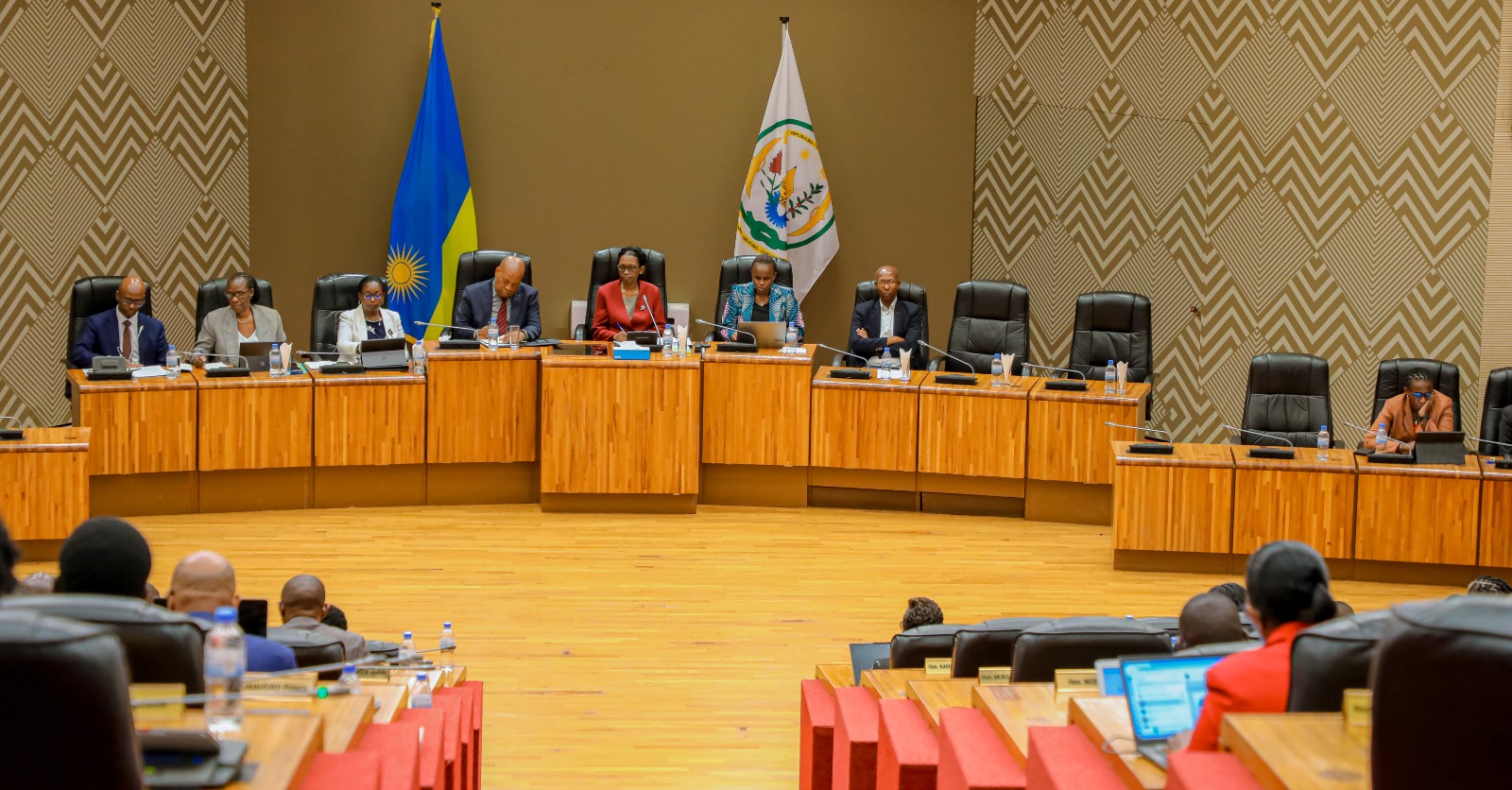
The Senate’s recommendations will now be submitted to the Chamber of Deputies, where the Committee on National Budget and State Patrimony will conduct a clause-by-clause review before final approval.
The Government of Rwanda also reported that by December 2025, 65% of the budget approved by Parliament in June 2025 had already been implemented.
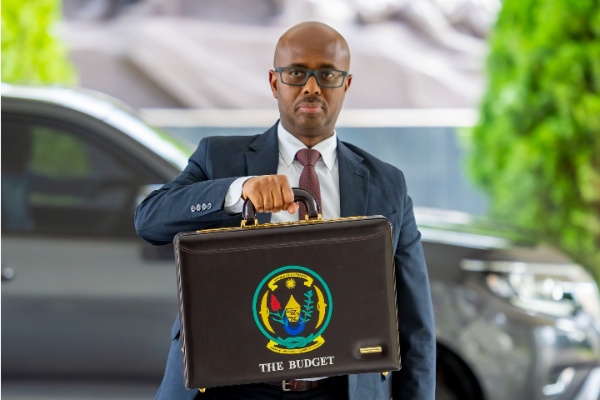
The Minister of Finance and Economic Planning, Yusuf Murangwa presented the revised national budget for 2025/2026 to the parliament on February 12, 2026.
The report shows that the financial sector attracted $299.1 million in 2024, a 27.2% increase. Industry received $267.1 million, construction $150.5 million, while agriculture, education and health together drew $107.7 million in foreign investment.
By country of origin, investors from Mauritius led with $251.1 million, followed by Kenya with $140.3 million, China with $108.6 million, the United States with $103.9 million, and Germany with $65.3 million.
Viewed by regional blocs, the Common Market for Eastern and Southern Africa (COMESA) accounted for $418.6 million in investment inflows, followed by the Organisation for Economic Co-operation and Development (OECD) with $340.6 million, the Southern African Development Community (SADC) with $293.4 million, Asia with $228.2 million, and the East African Community with $159.1 million.
Foreign loans to Rwandan businesses rose to $543.6 million, a 28.5% increase from $423 million the previous year. The report attributes the rise mainly to borrowing from affiliated companies abroad, which accounted for 60.8% of external loans, while 39.2% came from non-affiliated foreign entities.
More than 380 companies participated in the survey. Their combined turnover reached $3.9 billion in 2024, up from $3.6 billion in 2023.
Profitability and employment
The report indicates that in 2024, private companies with foreign ownership exceeding 10% recorded profits of $179.5 million, up 36.4% from $176.5 million in 2023. Reinvested earnings rose by 34.6% to $125.4 million, while dividends distributed to shareholders increased by 15.2% to $38.3 million.
Foreign investment generated 69,341 jobs in 2024, with 97.6% of positions held by Rwandans. In 2023, foreign investment-related employment stood at 59,916 jobs.
Ths photo shows the view of Kigali Special Economic Zone in Masoro.
The originally approved budget stood at Rwf 7,032.5 billion. The proposed adjustment trims Rwf 80.4 billion, primarily through more favorable financing terms for major initiatives like the New Kigali International Airport and a rescheduled RwandAir loan repayment, bringing the revised total to Rwf 6,952.1 billion.
Revenue collection from July to September 2025 reached Rwf 1,156.6 billion, closely aligning with the targeted Rwf 1,157.2 billion.
Presenting the progress update, Minister of Finance and Economic Planning Yusuf Murangwa highlighted advances across agriculture, infrastructure, energy, health, and social protection.
Agricultural production support featured prominently during the first quarter of the fiscal year. Farmers received 4,162 tonnes of improved seeds, including maize, wheat, and soybean, along with 50,452 tonnes of mineral fertilizer.
Climate resilience efforts are expanding through irrigation development, with Mahama I and II agricultural zones in Kirehe District now 75% complete. Crop and livestock insurance coverage also broadened, protecting 14,783 hectares of farmland, more than 16,000 cattle, and over 96,000 small livestock.
Industrial supply chains performed above expectations, with processing plants receiving more raw materials than initially projected. Export revenues remained strong, generating $104.6 million from coffee, $49.5 million from tea, $3.1 million from flowers, and $53.2 million from fruits and vegetables.
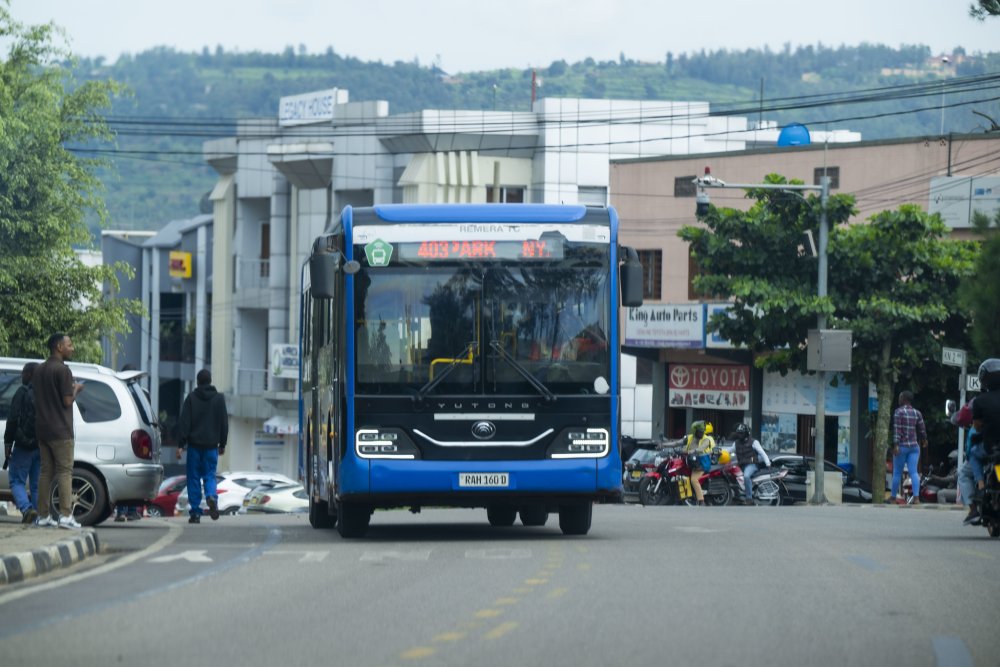
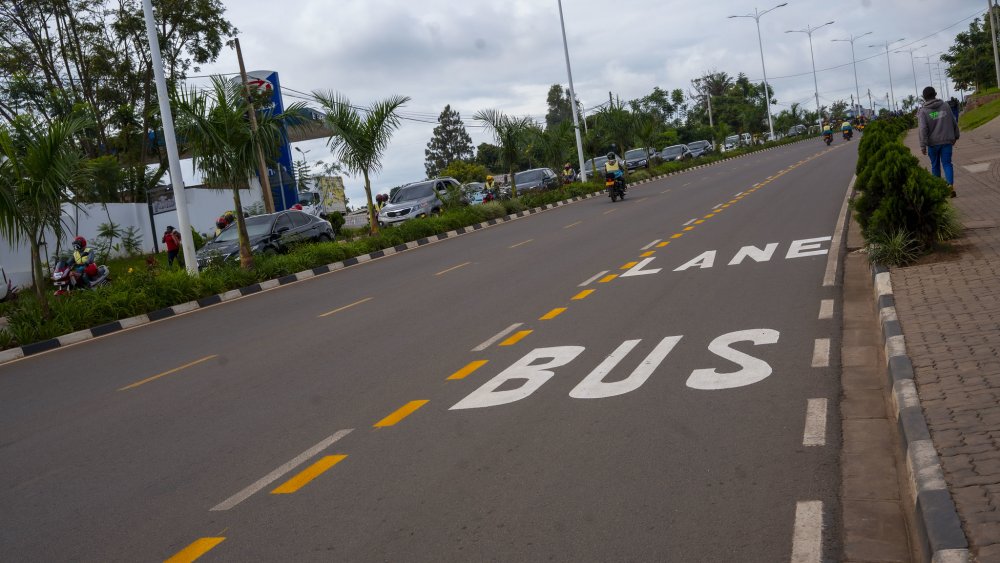
Transport infrastructure works continue to reshape connectivity across the country. Construction of 184.8 kilometers of tarmac roads is progressing steadily, including major corridors linking eastern and northern regions. Rehabilitation of feeder roads is also advancing, particularly in Rutsiro District and Karongi District, improving access between production areas and markets.
Energy access has expanded through grid extension, solar installations, and network upgrades. More than 34,000 households have been connected to the national electricity grid, while over 8,000 households now use solar power and dozens of public institutions have been electrified. Construction of the Nyabarongo II Hydropower Plant, expected to generate 43.5 megawatts, has reached 60% completion.
Water supply projects are advancing in multiple districts. Pipeline construction is underway in Nyamagabe District and Gisagara District, while rehabilitation of water networks across 13 districts is nearing completion under programs aimed at improving nutrition and public health outcomes.
Urban development initiatives are expanding housing and basic infrastructure. Servicing works are underway for more than 500 housing units in Gasabo District, while development of the planned Nyabisindu model settlement is progressing as part of broader efforts to promote organized urban growth.
Education and health investments remain central to the budget’s implementation. Thousands of teachers have been recruited, and new teacher training colleges are approaching completion.
Technology-focused education infrastructure continues to expand, while the modernization of Masaka University Teaching Hospital is nearing completion.
Digital health systems are now operational in hundreds of health centers, strengthening patient record management and continuity of care. At the same time, thousands of patients diagnosed with non-communicable diseases have begun receiving structured follow-up treatment.
Social protection programs have provided employment and direct support to vulnerable households. Public works initiatives created jobs for tens of thousands of people, while nutrition programs supplied milk and fortified foods to young children, pregnant women, and breastfeeding mothers.
Environmental management efforts are also advancing. Restoration of major wetlands in Kigali has reached 78%, and tens of thousands of fuel-efficient cookstoves have been distributed to reduce reliance on firewood.
In the justice sector, community mediation committees and legal aid services resolved the vast majority of cases received, while authorities reported the recovery of approximately Rwf 300 million in misappropriated public funds.
Minister of Finance and Economic Planning Yusuf Murangwa highlighted advances across agriculture, infrastructure, energy, health, and social protection in the 2025/2026 fiscal year.
The survey, which included a working group of ten central banks from Europe, Africa, Latin America and Asia managing roughly US$6.5 trillion in assets, found that over 60% of respondents said they are not using AI for central banking’s core functions. Instead, AI is mostly used for routine analytical tasks, such as summarizing data or scanning markets.
According to the report, the institutions most engaged with AI were also among the most cautious; many expressed concern that AI‑driven decisions could “accelerate future crises.” As one participant was quoted saying: “AI helps us see more, but decisions must remain with people.”
On the issue of digital assets, the survey showed that 93% of the central banks do not invest in them. While tokenization is viewed with interest, cryptocurrencies are approached with caution.
Regarding reserve currencies, the survey indicated a shift among some central banks toward a more multipolar reserve system. Nearly 60% of the institutions signalled a desire to reduce reliance on the U.S. dollar.
Despite this, the unmatched liquidity of U.S. Treasuries remain a strong anchor, meaning the dollar continues to dominate global reserves.
The findings suggest that, for now, many central banks prefer a cautious, risk‑averse approach when it comes to adopting new technologies and shifting reserve practices.
The report was officially launched on Friday, October 31, 2025, at Kigali Serena Hotel, in a ceremony attended by senior government officials, parliamentarians, diplomats, development partners, civil society representatives, and the media.
The Rwanda Governance Scorecard, produced annually by the Rwanda Governance Board (RGB), remains the nation’s flagship tool for measuring progress in governance, accountability, and service delivery.
{{Strong performance in safety, inclusion, and rule of law
}}
The Safety and Security pillar remains Rwanda’s highest-performing area with a score of 90.02%, reaffirming the country’s reputation as one of Africa’s safest nations. The report attributes this to consistently high citizen confidence in the Rwanda Defence Force, National Police, and local security structures.
Participation and Inclusiveness ranked second with 86.31%, reflecting broad citizen involvement in public affairs, effective decentralisation, and gender-balanced leadership. The report notes that power sharing and inclusiveness scored a full 100%, while gender equality in leadership reached 82.42%.
Political Rights and Civil Liberties followed with 82.71%, supported by strong results in democratic rights and freedoms (86.36%), respect for human rights (84.11%), and access to public information (81.77%).
The Rule of Law pillar achieved 81.63%, indicating continued public trust in justice institutions. The report highlights high scores in performance of the legislature (90.44%), though it identifies challenges such as case backlogs (50.85%) and limited digitalisation, with only 11% of government services fully automated.
{{Governance integrity and accountability
}}
Under the Anti-Corruption, Transparency, and Accountability pillar, Rwanda scored 79.25%, driven by transparency (92.35%) and accountability (80.39%). The report acknowledges sustained institutional integrity but notes that anti-corruption mechanisms (67.9%) and training of committees in public and private institutions remain areas for improvement.
The Economic and Corporate Governance pillar scored 74.84%, showing sound macroeconomic management (72.75%) and steady progress in corporate governance (77.67%). However, the report points to weaker results in exports of goods and services (47.95%), credit to the private sector (57.75%), and savings rate (60.23%).
The Quality of Service Delivery pillar registered 71.73%, showing advances in ICT-enabled services (66.9%) but emphasising the need to accelerate full digitalisation, with only a small fraction of services end-to-end automated.
The lowest-performing pillar, Investing in Human and Social Development, stood at 64.69%. The report notes continuing progress in health (74.14%) and education (65.65%), but identifies gaps in nutrition, social protection, and climate resilience, highlighting these as priority areas under the National Strategy for Transformation (NST2).
{{A renewal of Rwanda’s commitment to good governance
}}
Opening the event, Dr. Doris Uwicyeza Picard, Chief Executive Officer of the Rwanda Governance Board, described the Scorecard as more than an annual report, “a renewal of Rwanda’s commitment to good governance.”
“Each edition of the Scorecard is a covenant with our collective pledge to measure ourselves transparently, correct course where needed, and continuously strive for excellence in public service,” Dr. Uwicyeza said.
She noted that the 12th edition reaffirms Rwanda’s strong foundation built on trust in institutions, security, and citizen participation, while also highlighting the need to strengthen decentralised service delivery and human development outcomes.
“Our challenge now is to translate governance strength into tangible results felt in citizens’ daily lives,” she added. “The Government of Rwanda has always chosen self-accountability as a pillar of leadership; this Scorecard embodies that principle.”
Dr. Uwicyeza paid tribute to President Paul Kagame, emphasising his leadership vision rooted in unity, ambition, and accountability.
“When President Kagame was asked about Rwanda’s secret, he said it lies in three choices: we chose to stay together, to think big, and to be accountable. The Rwanda Governance Scorecard is the embodiment of that accountability.”
{{Data is the lifeline of governance
}}
Ms. Fatmata Sesay, UNDP Resident Representative in Rwanda, commended the Government and RGB for maintaining 15 years of consistent commitment to data-driven governance.
“Governance data is more than numbers; it is the lifeline of informed decision-making, policy dialogue, and accountability,” she said. “The Rwanda Governance Scorecard is not just a national tool; it is a global model for how governance data can be systematically collected, analysed, and used to drive transformation.”
She applauded Rwanda’s focus on evidence-based policy and citizen-centred governance, emphasising the Scorecard’s value as a practical instrument for reform.
“Let us not keep this document until next year’s launch,” she urged. “Let it inform our programs, shape our policies, and strengthen accountability. Governance is not abstract—it’s about how services are delivered and how every Rwandan participates in shaping the future.”
Sesay also highlighted the growing role of digital technology and artificial intelligence in public data systems, calling for innovation to enhance citizen feedback mechanisms and real-time data analysis.
{{Turning insight into action
}}
Delivering the keynote address, Prof. Ozonnia Ojielo, UN Resident Coordinator in Rwanda, described the RGS as “a remarkable homegrown innovation that embodies Rwanda’s deep commitment to accountability and continuous improvement.”
“This Scorecard confirms that Rwanda continues to perform strongly in most governance areas, with five out of eight pillars scoring above 80 percent,” Prof. Ojielo said.
He observed that while Rwanda’s governance remains robust, modest declines in human and social development, education quality, and economic competitiveness underscore the need for renewed focus under NST2.
The key goals of NST2 include achieving an average annual GDP growth rate of 9.3 percent, creating 1.25 million decent jobs, doubling private investment to USD 4.6 billion, doubling export revenues to USD 7.3 billion, and reducing child stunting from 33 percent to 15 percent by 2029.
“Governance is about values, how a society chooses to hold itself accountable. What we see in Rwanda is not just a technical exercise but a foundational process of reimagining the socio-economic fabric of society,” he remarked.
Prof. Ojielo emphasised that measuring performance drives progress.
“What gets measured gets managed, and what gets measured gets done. Measurement is not just observation; it is a catalyst for transformation.”
He called for stronger investments in digital public services, education, export readiness, and citizen engagement, reinforcing that “the Scorecard is not just about data, it is about direction.”
{{A tool for continuous renewal
}}
Now in its 12th edition since its inception in 2010, the Rwanda Governance Scorecard continues to serve as both a mirror and a compass, reflecting the country’s governance achievements while guiding future reforms. It benchmarks Rwanda’s progress against global indices such as the Mo Ibrahim Index, the Chandler Good Government Index, and the World Justice Project, while remaining firmly grounded in homegrown accountability principles.
These include a new iron and steel processing plant, a lithium and tantalum refinery, and expanded petroleum storage facilities.
These projects are highlighted in the annual economic performance report released by the Ministry of Trade and Industry (MINICOM).
{{Export targets and industrial growth}}
According to MINICOM, Rwanda aims to increase its total export value to $4.9 billion by 2026, up from $4.2 billion in 2024/25.
The main contributors to this target include exports from floriculture, edible oil manufacturing, construction materials, and mineral processing industries.
Among the new industrial ventures expected to drive growth is the A1 Iron & Steel plant, which will process iron ore and produce a range of steel products used in construction.
The factory will manufacture Thermo-Mechanically Treated (TMT) bars, 5.5 Wire rods, Binding wire, Hot rolled strips, V angles, Flat bars, C channels, I-beams, and Round bars. It is located in the Musanze Industrial Park.
{{Ceramic, lithium and tantalum processing investments}}
Another significant project is the Rwanda Mountain Ceramics factory in Muhanga District, which will produce ceramic tiles using locally sourced clay.
The total investment is estimated at $60 million, with between 70 and 100 workers already employed during construction and about 200 permanent jobs expected once operations begin.
In the mining sector, the Golden Tree Mining plant, owned by the Dubai-based Golden Tree Investment Group, will process tantalum, lithium, and niobium.
Located in the Muhanga Industrial Zone, this facility will be one of the largest of its kind in East Africa and is expected to significantly increase the value of Rwanda’s mineral exports.
In 2024/25, Rwanda earned $1.6 billion from mineral exports, mainly from tin, tantalum, and gold. The new lithium and tantalum processing plant is expected to boost these earnings even further.
{{Cement, leather and industrial parks expansion}}
In 2025/26, CIMERWA, Rwanda’s leading cement manufacturer, will begin constructing a new clinker production plant in Musanze District.
This project is expected to save the country more than $4.5 million per month, which is currently spent importing clinker from neighboring countries.
Additionally, Rwanda plans to establish a leather industrial park in Bugesera District.
The idea stems from the need to process domestic hides and skins locally rather than exporting them for treatment abroad and reimporting them at higher prices.
These new plants will be supported by infrastructure development in Musanze, Muhanga, Bugesera, and Rwamagana industrial zones.
{{Industrial sector performance}}
The government has set an ambitious goal for industrial growth to reach 10% in the 2025/26 fiscal year, a significant increase from 3% recorded in 2024/25. Revenues from the manufacturing sector also rose to $3.4 billion, compared to $3.3 billion in the previous year.
Within this performance, the food processing industries contributed 24% of the total output, while beverages and tobacco accounted for 29%.
The machinery, metal, and equipment segment represent 8%, matching the contribution from textiles and leather industries, which also stand at 8%. Meanwhile, furniture and office equipment contributed around 7%, and mining and mineral processing maintained a steady share of 8%.
{{Expansion of petroleum storage capacity}}
In March, the Minister of Trade and Industry, Prudence Sebahizi, announced that Rwanda’s current petroleum storage capacity exceeds 110 million liters, but the government aims to increase this to 320 million liters within two years.
The 2025/26 plan includes building new petroleum depots, which will significantly enhance the country’s storage capacity.
Rwanda imports petroleum products mainly from Arab countries, routed through Tanzania and, to a lesser extent, Kenya.
Currently, investors operating petroleum depots earn Frw 8 per liter, but the government is considering raising this to between Frw 12 and Frw 14 per liter to make investment in storage expansion more profitable.
As of 2021, petroleum storage facilities included; OilCom depots in Jabana, SP depots in Rusororo, Government depots in Gatsata, Rwabuye, and Bigogwe, ERP depots in Kabuye, jet fuel storage facilities in Kanombe and Rusororo.
In 2024/25, Rwanda spent $637 million on petroleum imports, a slight increase from $636 million in 2023/24.
According to the report released on Thursday, October 9, several categories recorded notable price increases during the month.
The “Food and non-alcoholic beverages” category rose by 4.2 percent on an annual basis and 1.3 percent month-on-month.
Prices for “Alcoholic beverages, tobacco, and narcotics” increased by 15 percent year-on-year and 1.6 percent compared to August.
Housing, water, electricity, gas, and other fuels rose by 4.1 percent year-on-year and 1.9 percent month-on-month, while transport prices increased by 8.6 percent annually and 1.7 percent monthly.
A sharp rise was also recorded in health, which surged by 71.1 percent year-on-year, remaining stable compared to the previous month.
Meanwhile, “Restaurants and hotels” saw a 17.7 percent annual increase, though prices slightly declined by 0.1 percent on a monthly basis.
The report shows that local products rose by 6.5 percent year-on-year and 1.3 percent month-on-month, while imported products increased by 9.5 percent annually and 1.5 percent monthly.
Prices of fresh products rose by 3.3 percent year-on-year and 1.8 percent month-on-month, while energy prices increased by 4.5 percent annually and 0.4 percent on a monthly basis.
The general index excluding fresh products and energy, often used to gauge underlying inflation trends, rose by 8.9 percent year-on-year and 1.3 percent month-on-month, reflecting persistent price pressures in non-volatile goods and services.