“The social gap is widening at the moment, and even more than during the pandemic,” Fratzscher told German media.
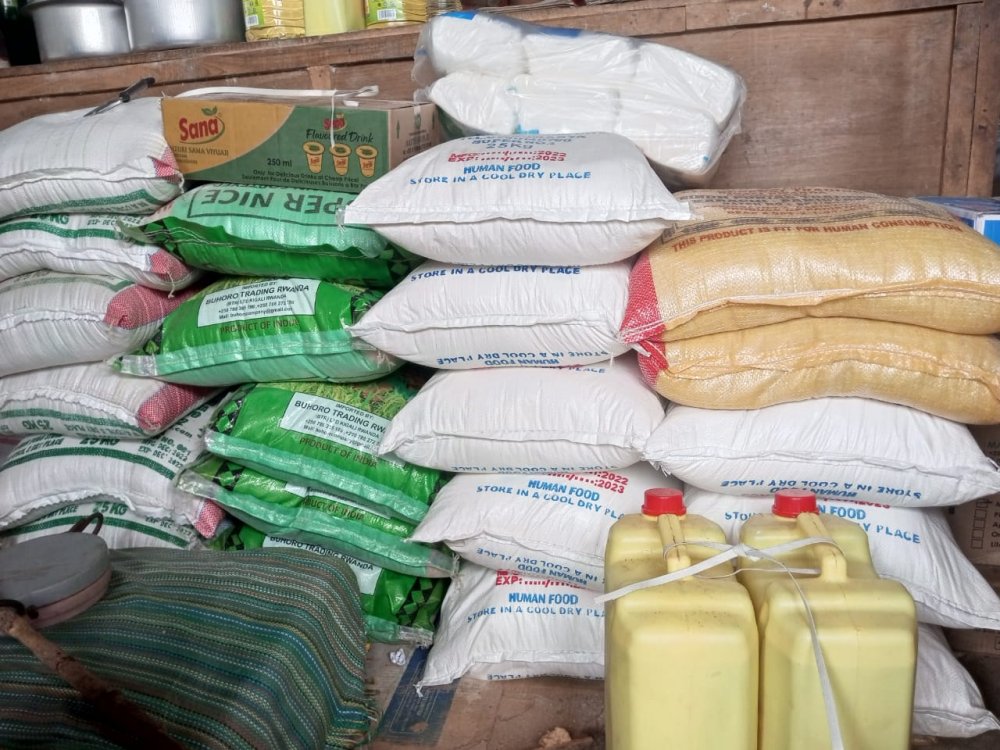
Since people with low incomes are spending a majority of their income on basic supplies such as energy and food, they are feeling the effects of inflation three times as strongly as those on high incomes, Fratzscher stressed.
A similar trend can also be seen among German companies. “Some of the big players are making big profits even in these times, while many medium-sized companies (…) are barely surviving,” Fratzscher said.
A study also published on Thursday by the Institute of Economic and Social Research at the Hans Boeckler Foundation found that the financial gap between households below the poverty line and the median income had already grown significantly before the start of the COVID-19 pandemic.
This development was an “extremely poor starting position for the continued social stress tests” caused by the ongoing pandemic, the Russia-Ukraine conflict and record inflation, the foundation said.
Inflation in Germany climbed to 10.4 percent in October, the highest level since 1990, according to the Federal Statistical Office. The development was mainly driven by rising energy and food prices, which were up by 43 percent and 20 percent year-on-year, respectively.
The urban CPI is calculated based on approximately 1622 products in twelve urban centers of Rwanda.
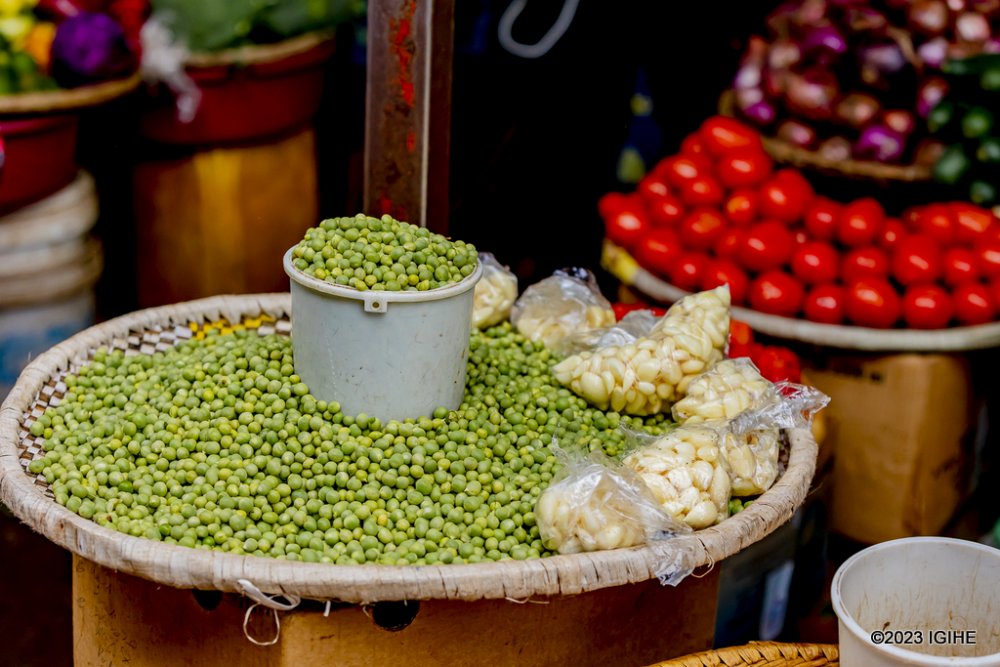
The increase was mainly driven by skyrocketing prices of food and non-alcoholic beverages.
Hiked prices continue to be an issue of global concern owing to effects of COVID-19, the war between Russia and Ukraine as well as low agricultural produce.
In October 022, Food and non-alcoholic beverages increased by 39.7 percent on annual basis and increased by 5.3 percent on monthly basis.
Housing, water, electricity, gas and other fuels increased by 8.9 percent on annual basis and increased by 1.3 percent on monthly basis.
According to NISR, transport increased by 13.6 percent on annual basis and decreased by 0.4 percent on monthly basis. Restaurants and hotels increased by 18.6 percent on annual change and increased by 0.9 percent on monthly basis.
The data also show the local products increased by 20.1 percent on annual change and increased by 3.4 percent on monthly basis, while prices of the “imported products” increased by 20 percent on annual basis and increased by 0.6 percent on monthly basis.
The prices of fresh products increased by 42.4 percent on annual change and increased by 7.5 percent on monthly basis.
Meanwhile, prices of energy increased by 22.3 percent on annual change and increased by 2.4 percent on monthly basis.
Among others, the prices of the “general Index excluding fresh products and energy” increased by 14.4 percent on annual change and increased by 1.4 percent on monthly basis.
Latest figures from NBR’s report for the year 2021/2022 released on 31st October, shows that the country’s Gross Domestic Product (GDP) grew by 8.9% in 2022 from 4.4% of the previous year registered in June 2021.
The report also indicates that Rwandan franc depreciated by 3.8% in June by the end of June 2022, compared to 5.3 percent depreciation recorded in the corresponding period of 2021.
On another note, the banking sub-sector’s aggregate net profits increased by Rwf18.5 billion to Rwf74.4 billion during the first half of 2022 from Rwf55.9 billion during the first half of 2021.
BNR indicates that transfers through mobile banking channels increased by 35 percent from 6 million to 8 million transactions and the value of transactions increased by 140 percent from Rwf917 billion to Rwf381 billion.
Meanwhile, funds transfers through internet banking increased by 42 per cent from 1,552,080 to 2,205,107 transactions and the value of transactions increased by 57 per cent from Rwf2,672 billion to Rwf4,200 billion.
The number of mobile banking subscribers increased by 18 per cent from 2,080,549 in June 2021 to 2,244,652 and Internet banking subscribers increased by 32 per cent from 106,312 to 140,662 in June 2022. Active mobile payment subscribers also increased by 9 percent from 5,079,232 in June 2021 to 5,528,109 in June 2022.
Among others; the number of card based Point-Of-Sales (POS) increased by 14 percent from 4,635 POS in June 2021 to 5,263 POS in June 2022 while the number of mobile POS increased to 49,975 in June 2022 from 45,627 in June 2021. On the other hand, Virtual POS (QR based POS) moderately increased from 4,280 in June 2021 to 4,295 in June 2022.
The number of agents providing banking services increased by 33 percent from 6,555 to 8,720 agents while mobile payment agents slightly increased by 2 percent, from 144,250 to 146,930 agents. The number of automated teller machines (ATMs) remained stable with only 1 percent of increase from 338 to 344 ATMs at end June 2022.
{{Overall performance}}
As per released report, the overall value of retail e-payment to GDP increased by 16.4 percent during the period to reach 111.9 percent.
The usage was dominated by mobile payment (transfer and acquiring services) and internet banking services, which account for 67.4 percent and 35 percent of the GDP respectively.
Transfers through mobile payment channels occupied the largest share of the total number of cashless transactions with 70 percent followed by transfers via mobile banking with 26 percent.
In terms of value, transfer through mobile payment represented 51 percent followed by internet banking with 32 percent of total value of transactions.
According to NISR, in the second quarter of 2022, Gross Domestic Product (GDP) at current market prices was estimated at Rwf3,279 billion, up from Rwf2,668 billion in the second quarter of 2021. Services contributed 47%, Agriculture 25%, Industry 21% while Net direct taxes accounted for 8 % of GDP.
Addressing reporters after the announcement of growth figures, the Minister of Finance and Economic Planning, Dr. Uzziel Ndagijimana noted that despite global supply bottlenecks and inflation, the economy has continued to grow a strong indicator that that overall recovery.
“For the first two quarters the economy has registered over 7% growth. At this rate our 6% growth projections for 2022 is achievable,” Minister Ndagijimana said.
{{Performance by Sectors}}
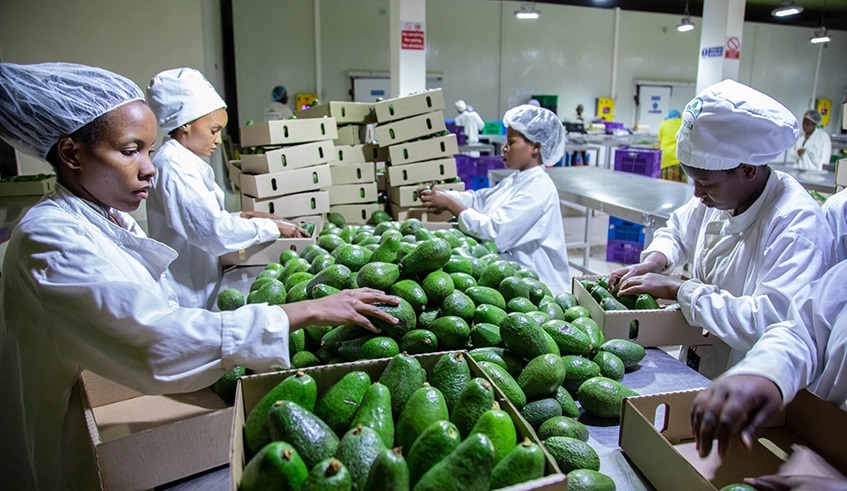
In terms of sector performance, overall, agriculture grew by 2%. This growth was due to an increase of 17% in the production of export crops boosted by 19% increase in coffee production and 2% in tea production. Food crops decreased by 1% due to a decrease in the harvest of season A 2022 when compared to season A of 2021.
The industry sector registered a 6% growth. industry increased by 6% while services increased by 12%. Mining and quarrying grew by 9%. Manufacturing grew by 10% boosted by 8% increase in food processing, 14% increase in beverages, 18 increase in textiles, 10% increase in wood manufacturing and 21% increase in manufacturing of non-metallic mineral products. Given the high growth in construction during the second quarter of 2021 (33%), the sector did not grow further in the second quarter of this year.
The overall service sectors performance was 12%. Within services, wholesale and retail trade increased by 17%; transport activities increased by 27% with 119% and 13% growth in air transport and land transport respectively. Among other services, hotel and restaurants increased by 193%, financial services increased by 10%, telecommunication services increased by 8%, Professional and Scientific Services increased by 2%. Health Services increased by 4% while Education Services increased by 14%.
The revision of the repo rate is part of resolutions of the quarterly Monetary Policy Committee (MPC) meeting held on 9th August 2022.
Repo rate is the rate at which the central bank of a country lends money to commercial banks in the event of any shortfall of funds. It is used by monetary authorities to control inflation.
According to BNR, the increase in lending rate was reached following an analysis by the MPC which pointed out high inflationary pressures driven by global supply challenges as well as lower domestic agriculture output.
Others include the increase in prices for key commodities such as oil, gas and food as well as the war between Russia and Ukraine which are two major producers and exporters of oil, gas, fertilizers, metals, cereals and son-flower seed oils.
Domestically, lower domestic food supply linked to climate constraints and increased prices of inputs have led to increased food prices.
In line with the above, Rwanda’s economy is projected to grow by 6% while the headline inflations is projected to average around 12.1% in 2022.
“Given these developments and the outlook, the MPC decided to increase the Central Bank Rate [CBR] by 100 percent basis points from 5.0 to 6.0 percent, with the aim to reduce inflationary pressures and therefore preserve the purchasing power of consumers.
Consistent with the monetary policy and other measures, inflation is expected to decelerate towards the 5 percent benchmark in the second half of 2023,” reads a statement from BNR.
Exports rose 14.7 percent year on year to 13.37 trillion yuan, while imports increased 5.3 percent from a year ago to 10.23 trillion yuan, according to the General Administration of Customs (GAC).
During the period, China’s trade with the Association of Southeast Asian Nations, the European Union and the United States, expanded by 13.2 percent, 8.9 percent and 11.8 percent from a year ago, respectively.
From January to July, China’s trade with Belt and Road countries and other members of the Regional Comprehensive Economic Partnership (RCEP) soared by 19.8 percent and 7.5 percent year on year.
In July, trade with RCEP partners reached 1.17 trillion yuan, up 18.8 percent year on year, boosting the overall foreign trade growth by 5.6 percentage points, said Li Kuiwen, spokesperson for the GAC.
As per figures released by the National Institute of Statistics (NISR) for the quarter ended on 31st March 2022 , agriculture registered 1 percent growth in the first quarter, industries grew by 10% while the service sector grew by 11%.
Overall, services sector remained the main contributor with 47 percent of GDP, agriculture sector contributed 23 percent, industry sector contributed 22 percent while net direct taxes accounted for 8%.
Agricultural activities grew by 1 percent and contributed 0.6 percentage points to overall GDP growth. Within agriculture, the production of food crops decreased by 1 percent and the production of export crops increased by 14 percent too.
In the industry sector, the main contributors were construction activities which grew by 6 percent, manufacturing activities which grew by 11 percent. Mining and quarrying activities also increased by 16 percent.
The growth in manufacturing activities is due to an increase of 6 percent in food processing, 12 in beverages and tobacco, 20 percent in wood and paper; printing, 19 percent in production of chemicals and plastic products and 22% in textiles.
Within services sector; information and communication services increased by 17 percent, professional, scientific and technical activities increased by 5 percent, real estate activities increased by 5 percent while education increased by 2 percent.
NISR also shows that Human health and social work activities increased by 22 percent, hotel and restaurant services by 80 percent, administrative and support services by 6 percent and public administration and defense; compulsory social security by 7 percent.
The Deputy Director General of NISR, Ivan Murenzi has said that the global economy is currently facing issues related to the supply chain and effects of the war between Russia and Ukraine.
He attributed the GDP growth to expended efforts including vaccination campaign to inoculate a large number leading to eased COVID-19 restrictions for businesses to resume.
The country has a developed tourism sector with national parks covering 38% of its land area.
The latest population census in the country indicate that it has slightly more than 2 million sparsely populated people as 70% of the country is covered by Kalahari desert.
About 11.6 percent of the population lives in the capital and largest city, Gaborone wile the majority of its population is concentrated in in eastern part of the country.
The country was a colony of the British and held the name of Bechuanaland under the colonial rule. The name changed to Botswana in 1966 after obtaining Independence.
Botswana is also renowned for its strong democratic tradition. After gaining independence in 1966, the country has experienced more than four decades of uninterrupted civilian leadership and a consistent record of democratic elections.
Botswana was among African countries hit by poverty following its Independence in 1966 but rapidly transformed into an upper middle-income country, enabled by significant mineral wealth, good governance, prudent economic management, and a relatively small population.
It is among 12 African countries that achieved upper-middle income status including Gabon, Namibia, Ghana, Cape Verde, and South Africa.
The country’s Gross Domestic Product (GDP) amounts to US$18.3 billion with a per capita income of US$7 831.
Among others, the country’s currency (Botswana Pula- BWP) is among strongest ones in Africa where US$100 is exchanged for approximately 1210BWP.
Figures from the World Bank show that the livelihoods of Botswana’s population continue to improve overtime.
From 2002 to 2006, the number of people living on a daily per capita income below US$1.90 per day dropped from 29.8% to 16.1%.
Economic analysts show that the country owes its fast development to advanced agriculture, tourism and reducing inequalities among the poor and rich.
Other reasons include the presence of minerals including Diamond and Gold.
In 2020, Botswana’s exports hit US$4.58 billion becoming the 114th country with large scale exports.
These include Diamonds worth US$4 billion, Gold worth US$87.2 million among others, majority of which was exported to Belgium, USA, the United Arab Emirates, India, South Africa and Singapore.
{{Opportunities for Rwandan investors}}
During COVID-19 pandemic, Botswana faced economic shortfalls as the mining sector was not fully operational due to related restrictions yet the country’s economy heavily relies on minerals.
This pushed the country to expend much effort in other sectors of the economy to keep national development on track where agriculture and tourism were given priority.
To ensure the efforts yield good results, investors from Botswana toured different countries to explore avenues for collaboration with their counterparts.
In April 2022, the delegation from Botswana led by the Minister of Foreign Affairs, Lemogang Kwape and Keletsositse Olebire, the CEO at the Botswana Investment and Trade Center (BITC) visited Rwanda for the same cause.
At the time, Botswana business delegation had an opportunity to engage one on one with their Rwandan counterparts as well as undertake site visits to explore areas of collaboration.
Lemogang Kwape said that Rwandans have investment opportunities in his country.
He explained that Rwanda has developed its agriculture sector where Botswana can learn from Rwanda’s practices to reduce related imports.
“We are exploring how to collaborate with our counterparts so that we can exchange expertize to reduce agricultural imports and increase exports,” he said.
Lemogang added that tourism is among potential areas of collaboration.
He said that Rwanda and Botswana have developed tourism sector and stressed the need to create synergies to lure tourists from outside Africa to attractions fin respective countries.
The visit was concluded with the signing of Memorandum of Understanding (MoU) between Rwanda and Botswana in the areas of economy and investment.
Both countries also signed framework for cooperation agreements in the areas of mining among others.
The signed agreements open doors for Rwandans to explore investment opportunities available in the country.
Botswana has introduced different incentive programs to lure international investors where manufacturers, financial institutions and tech companies are taxed 15% on profits from approved operations.
Meanwhile, businesses in other sectors are charged 22% while the Value-added tax (VAT) is 12%.
Depending on negotiations, an international investor may be exempted from taxes between five and ten years while those with investments transforming communities’ livelihoods are not taxed on imports of raw materials. The same applies to the import of machinery to be used in these factories.
Investors also benefit from the country’s agreements for elimination of double taxation with South Africa, the United Kingdom, Sweden, Mauritius, India and Russia.
For Rwandans, it is an opportunity to export goods to countries of Southern African Development Community (SADC) with more than 300 million population.
Minister Ndagijimana presented the budget on Tuesday 7th February 2022 where he announced that the proposed budget revision will increase the government budget by Rwf 633.6 billion. The original budget of Rwf3,807 billion will increase by 16.6% to 4,441 billion. This increase will ensure the Government of Rwanda’s continued success in fueling a strong recovery from the Covid-19 pandemic.
This increase will supplement the existing support to jobs and businesses, and ensure the continued success of the Covid vaccination drive, as well as investing in areas of long-term development. Further investments in Education, Healthcare, ICT, and Agriculture, will be at the forefront of the ongoing effort of the government to invest in Rwanda’s future, and move closer towards achieving the Vision 2050 goals.
“The Rwandan economy has outperformed forecasts in the previous two quarters. This budget revision reflects these successes, and the effectiveness of the economic recovery plan in keeping businesses afloat, encouraging new investments, creating jobs, and maintaining strong social protection for vulnerable citizens”, remarked Minister Ndagijimana following the announcement. “The increased investments in the Rwandan economy will ensure that we will emerge from this pandemic stronger than ever”.
{{Key changes in the 2022-2021 Revised Budget}}
{{Resources}}
The proposed revised budget contains several important adjustments, such as an increase of domestic revenues by Rwf 155 billion – from Rwf 1,993 billion in the original budget to Rwf2,148 billion – a 7% rise.
A stronger than expected recovery has increased revenues for the government, including an increase of Tax Revenue to Rwf 42.4 billion – 2% higher than expected.
Furthermore, non-tax revenue has also increased, partly thanks to internationally-distributed IMF debt relief of Rwf 23.2 billion, as well as increases in internally generated revenue streams. The budget revision will re-invest these extra earnings in the Rwandan economy.
External loans are also a key funding source for the increased investment in the economy. The successful launch of Rwanda’s first Eurobond, and funds distributed by the IMF’s Covid recovery programme, are set to increase external loan funding to FRW 1,469.7 billion
{{Expenditure }}
On the expenditure front, Government expects the recurrent budget to increase by Rwf371.2 billion from Rwf2,413.7 billion in the original budget to Rwf 2,784.9.
This increase will be primarily be invested in improving public service provisions for Rwandans, including by meeting existing budgetary gaps in the school feeding programme at all levels. Following the confirmation that Kigali will host an in-person CHOGM in June 2022, there will also be further allocations made to CHOGM related activities, as well as to other existing commitments.
{{Capital expenditures}}
For capital expenditure, the original budget amount of Frw 1,398 billion is being raised by a net amount of Rwf262.4 billion to Rwf 1,655.7 billion. This increase in investment will be primarily allocated to key sectors including Education, Healthcare, ICT, Agriculture, Energy and Transport.
In the short and medium-term, these increased capital expenditures will further bolster Rwanda’s strong economic recovery against Covid-19 by making immediate improvements to public services for Rwandans. Furthermore, in the long-term, these investments are also aimed at Rwanda’s future, and at fulfilling the Vision 2050 targets.
The Government will continue to monitor closely all components of the economic performance that may affect the implementation of the revised 2021/22 budget, and will take any necessary corrective measures to ensure its full implementation and maintain macro-economic stability.
Further good news is that the country’s financial sector continues to be ‘stable and resilient’ despite the economic effects of the Covid-19 pandemic, according to the Financial Stability Committee . Banking sector assets grew by 20% between June 2020 and June 2021, from Rwf 3,853 billion to Rwf 4,624 billion driven by growth in loans to customers on the back of increased customer deposits, borrowings from international lenders, local interbank borrowings and capital injections.
The financial sector remains adequately capitalised and liquid, although the FSC noted increased credit risk in lending institutions as a result of the pandemic. This means that while the credit market remained under significant pressure in Q3 2021, the improved economic conditions should lead to a steady recovery in the credit market in coming quarters, said Samuel Tayengwa, the Head of Product for TransUnion Rest of Africa Regions.
This pressure was reflected in the TransUnion Report, which reviews emerging trends in the Rwanda credit landscape and is designed to help lenders identify new dynamics and to make more informed lending decisions. The report showed a decline of 48.2% in new loans opened in Q3 over the previous year, with 102,987 new accounts opened in Q3 2021, compared to 198,862 new accounts in Q3 2020.
The principal value disbursed also decreased by 53.8%, from Rwf 418.21 billion to Rwf 193.43 billion.
Q3 2021 saw the lowest number of loans and principal disbursed reported in the microfinance sector since 2018, with 14,191 loans worth Rwf 19.79 billion. Mobile loans accounted for the highest volume of accounts opened in Q3, with 37.4% of new loans opened. Mobile loans are characterised by high volumes and low principal amounts, with a total principal value of around Rwf 0.4 billion.
At the same time, the non-performing loan (NPL) ratio increased to 6.6% in Q3 2021, from 5.1% in Q2 2021 and 5.2% in Q1 2021. The banking sector’s NPL ratio increased to 7.5% in Q3 from 6.4% in Q2, while the microfinance sector’s NPL ratio was up to 5.2% from 3.5% in Q2.
The report showed that commercial banks hold the majority of the new loans reported in Q3 2021 at 72.1%, with development and cooperative banks accounting for 12.6%. Commercial banks disbursed 49.8% (Rwf 91.2 billion) of the principal amount, with other banks disbursing 38.5% (Rwf 74.52 billion).
Millennials (born between 1981-1996) still dominate the borrowing market, at 56.4%, ahead of Gen Xers (1965-1980), at 21.5%. Mobile loans are more popular among Gen Z (1997-to date), making up 68.2% of all their loans, compared to 56.3% for Millennials and 41.2% for Gen X.
The highest risk customers are the so-called silent generation (1926-1945), with an average NPL ratio of 9.0%, as most are retired and have shrinking incomes that make it difficult for them to meet their credit obligations. The youngest generation, Gen Z, has an NPL ratio of 7.0%, as a result of a lack of financial education and a need to develop improved credit management skills, said Tayengwa.
{{Insights, digital journeys to drive market growth}}
Tayengwa said the Q3 2021 numbers highlighted the fact that banks and lending institutions will have to reimagine the role of lending in the economy and adjust their operations to the current circumstances if they are to stay on a growth path. This will mean a greater focus on risk management and customer-centricity, with customer segmentation and data insights critical for decision-makers to make more informed judgements.
“We’re going to see a greater emphasis on driving strategic value through data, which can be used to make more accurate predictions to inform strategic decisions like increasing wallet share, identifying cross-sell opportunities and prevention of customer churn,” said Tayengwa.
“We will also see a greater drive towards digitalisation in Rwanda’s banks, with consumer appetite for seamless, friction-right online transactions likely to grow due to increased competition between lenders, pushing more institutions to provide more digitised services.”
Tayengwa said the pandemic had also sparked a greater focus on customer financial wellness, with lending institutions becoming more active in helping their customers achieve lasting financial well-being – and in the process, driving greater customer loyalty. Loan portfolio diversification would also be essential if lenders were to reduce their exposure to precarious segments of the economy.
On the technology front, banks should identify technology that strengthens their capabilities in areas like risk management, cybersecurity, credit card fraud detection, customer service, and product development. For instance, conversational artificial intelligence (AI) systems could provide personalised customer experiences and improve call-centre efficiency, said Tayengwa.
{{About TransUnion (NYSE: TRU)}}
TransUnion is a leading global information and insights company that makes trust possible in the modern economy. The company does this by providing a comprehensive picture of each person so they can be reliably and safely represented in the marketplace.
As a result, businesses and consumers can transact with confidence and achieve great things.
TransUnion provides solutions that help create economic opportunity, great experiences and personal empowerment for hundreds of millions of people in more than 30 countries.
Recognised as a leader in the African credit, risk and fraud markets, TransUnion provides consumer reports, risk scores, analytical services and decisioning capabilities to businesses across the continent. TransUnion is the only company in Africa’s IT industry that manages multiple complex databases containing insurance, cellular, consumer, commercial and auto data assets. In addition, it manages leading African databases in property and deeds, qualifications and telecommunications.