The week-long celebration went beyond formalities, serving as a genuine expression of gratitude to the people who make the hotels special. From loyal guests to trusted partners, every moment was dedicated to saying “thank you” in meaningful and memorable ways.
This year’s festivities began with lively lobby hosting sessions, where warm greetings and personal interactions transformed every arrival into a welcoming experience. The hotels’ lobbies buzzed with energy, reflecting the core belief that hospitality is about people and personal connections.
The spirit of appreciation extended beyond the hotels’ walls as the sales team visited clients and partners in person. These visits fostered open conversations, strengthened relationships, and underscored the importance of genuine human connections in business.
In line with Marriott International’s proud value of “Spirit to Serve,” the team also reached out to the community by spending a joyful day at the Sherrie Silver Foundation. They shared laughter, donated food and school supplies, and were touched by heartfelt performances from the children; moments that reminded everyone why giving back is at the heart of the hotel’s mission.
The celebration culminated in a grand Customer Appreciation Event, featuring a variety of dining experiences, lively entertainment, and exciting prize giveaways. Guests left with lasting memories, feeling truly recognized and celebrated.
“Global Customer Appreciation Week gives us the chance to pause and sincerely thank the incredible people who choose Kigali Marriott: our guests, partners, and community,” said Aditya Chacko, Multi-Property General Manager.
“Hospitality is more than just service; it’s about building real connections and making a positive difference beyond our doors. At our hotels, we are dedicated to delivering warm, personalized hospitality where every guest feels valued and connected through thoughtful service and meaningful community engagement.”
The launch took place on 3rd December at Mövenpick Hotel Kigali, marking an important step forward in our mission to make financial services more accessible and inclusive for all Rwandans.
K’avance is an overdraft facility that allows eligible MoMo users to carry out essential transactions—such as sending money, making merchant payments, or purchasing airtime—even when their account balance is too low to complete the transaction.
{{How to Access K’avance
}}
Customers can access the K’avance service by:
1. Dialling *182*5*2#
2. Following the prompts to review and accept the Terms & Conditions
3. Receiving notification of their credit limit once approved, after which they can begin using K’avance
Speaking at the launch event, MoMo Rwanda Ltd CEO Chantal Kagame said:
“K’avance is another milestone in our journey to provide practical financial solutions tailored to our customers’ needs. We understand that access to small, timely credit can make a big difference in Rwandans’ daily lives, and K’avance is here to fill that gap.”
Puneet Chopra, Chief Growth Officer at Yabx Technologies, said:
“With K’avance, we’re addressing the real liquidity challenges faced by Rwandans in their daily lives. The service ensures that customers can access responsible, data-driven credit when they need it most—fostering inclusion, trust, and participation in Rwanda’s growing digital economy. Powered by Yabx’s advanced digital lending technology, K’avance is the first product of its kind in the market, combining cutting-edge innovation, local insight, and strong institutional partnerships to bring seamless access to financial support at the tap of a button.”
Benjamin Mutimura, CEO of I&M Bank (Rwanda) Plc, added:
“K’avance is a strong example of how innovation and strategic partnerships can unlock meaningful impact. With this collaboration, we are delivering solutions that are not only timely but also relevant to the evolving needs of our customers. We remain committed to driving inclusive innovation that brings formal financial services closer to everyday life.”
MoMo Rwanda encourages all customers to explore this service and take advantage of the convenience and flexibility it offers. Eligibility for K’avance is based on customer behaviour and scoring by TransUnion Rwanda, ensuring responsible access to credit.
Held under the theme “Rwanda’s Transformation: Unity, Renewal and Strategic Engagement,” the retreat brought together hundreds of participants to reflect on the incredible progress Rwanda has achieved over the past 31 years, progress rooted in national unity, resilience, and visionary leadership.
The event was officiated by the RPF-Inkotanyi Secretary General, Ambassador Wellars Gasamagera, who emphasised the importance of collective responsibility in safeguarding Rwanda’s gains and ensuring that its future remains bright.
Speaking on behalf of Bank of Kigali, Desire Rumanyika, Chief Digital and Retail Banking Officer, shared the bank’s commitment to enabling Rwandans living abroad to remain connected to their country, financially and strategically.
He said, “At this retreat, we have shown Rwandans living across Europe the tools and opportunities that Bank of Kigali provides to invest back home. Together, we explored how we can strengthen this bond even further. Over the years, diaspora investments have grown, and that growth reflects the connection and contribution of the diaspora to Rwanda’s development journey.”
Throughout the retreat, Bank of Kigali showcased a range of solutions tailored to the needs of the diaspora:
-* The BK Capital USD Fixed Income Fund, offering annual returns of 5–6%, with flexible withdrawals, the ability to borrow against the investment, and full certification by the Rwanda Capital Market Authority.
-* Digital banking services, including the BK Mobile App and Internet Banking, which allow diaspora clients to open accounts remotely, save, transfer money, and manage their finances without visiting a branch.
-* Diaspora mortgage solutions, designed to make homeownership in Rwanda faster, simpler, and more accessible, whether buying a home in Kigali, building in the countryside, or investing in property in Rubavu.
-* Foreign currency accounts in RWF, USD, GBP, EUR, CHF, and CAD, all with zero maintenance fees and free incoming international transfers.
The retreat served not only as a celebration of Rwandan identity but as a reminder that the nation’s progress is a shared journey. Bank of Kigali remains committed to creating solutions that empower Rwandans, wherever they live, to contribute to Rwanda’s future.
The momentum is strong. The connection is real. The time to invest in Rwanda is now. Shora I Rwanda with Bank of Kigali and be part of a legacy that endures across generations.
Boeing’s 2025 Commercial Market Outlook (CMO) for Africa projects that the continent’s commercial aeroplane fleet will more than double to 1,680 aircraft over the next 20 years to meet rising travel demand. Single-aisle aircraft are expected to make up about 70 percent of the more than 1,200 new airplanes slated for delivery, supporting the growth of domestic and short-haul international routes.
“Aviation is a catalyst for Africa’s economic expansion and intra-continental connectivity, building on industry growth we’ve seen across the region over the last 20 years,” said Shahab Matin, Boeing managing director of Commercial Marketing for the Middle East and Africa.
Rwanda is positioning itself to benefit directly from this growth. The development of the new Bugesera International Airport, in partnership with Qatar Airways, is central to the country’s strategy to become a regional aviation hub.
The new airport is designed to far exceed the capacity of Kigali International Airport, which was originally built for 400,000 passengers annually but was handling over 1 million passengers before the pandemic.
Phase I of Bugesera International Airport is expected to handle 7 to 8.2 million passengers annually when it opens by 2028, while Phase II, targeted for completion around 2032, could expand capacity to 14 million passengers annually.
Rwanda’s national carrier, RwandAir, is aligning with this expansion, aiming to more than double its annual passenger numbers from just over 1 million in 2023/2024 to 2.1 million by 2028/2029. This growth will be supported by expanding its fleet from 15 to at least 21 aircraft and increasing its network from 23 to 29 destinations.
In August this year, the airline strengthened its operational capacity with the addition of two modern Boeing 737-800 aircraft. In addition to the two aircraft, the airline operates a fleet of 13 other planes, including two A330-200s, one A330-300, six Boeing 737 Next Generation jets, two Bombardier CRJ900s, and two De Havilland Dash 8-400s. Plans are also underway to add a fourth Airbus to the fleet.
“With sustained investment, an expanding network, and an empowered workforce, we’re building an airline that connects Rwanda to the world, and the world to Rwanda,” Rwandair Chief Commercial Officer Fouad Caunhye told IGIHE in July.
As African carriers, including RwandAir, expand their fleets and route networks, Boeing forecasts a need for 74,000 new pilots, technicians, and cabin crew across the continent over the next 20 years. The Africa CMO also projects aviation services demand valued at $130 billion to support fleet growth and operational resilience through 2044.
With strategic investments like Bugesera International Airport and a growing national airline, Rwanda is set to play a prominent role in the continent’s expanding aviation sector.
The four-day event has brought together global investors, policymakers, mining companies, financial institutions, tech innovators and development partners to explore Rwanda’s growing position in the global critical minerals landscape.
In his address at the Kigali Convention Centre, Dr. Nsengiyumva praised the sector for its continued contribution to national development and highlighted progress in improving professionalism, environmental management and adherence to international mining standards.
He reaffirmed the government’s commitment to maintaining a stable and transparent regulatory environment that encourages responsible investment and supports both workers and operators.
“Your efforts demonstrate that mining can indeed be a driver of sustainable development,” the Prime Minister said, urging the sector to continue prioritising good governance, technological upgrading and community welfare.
While the Prime Minister referenced only the latest employment figure, data from the National Institute of Statistics of Rwanda (NISR) shows the broader trajectory of the sector’s recovery. During the Covid-19 pandemic, mining jobs fell by 19 per cent, dropping to 57,379, down from 71,205 workers in 2019. In 2017, the industry employed 47,727 people. The rebound to over 92,000 jobs marks the strongest recovery in nearly a decade.
The sector’s rapid expansion is also reflected in export performance. Rwanda’s mineral export revenues have grown from $373 million in 2017 to $1.75 billion in 2024, with the government targeting $2.17 billion by 2029, driven by rising global demand for critical minerals essential to modern technologies.
This year’s Rwanda Mining Week adopts the theme “Minerals for a Smarter and Greener Future,” highlighting the importance of critical minerals in the global transition to clean energy and advanced manufacturing. Rwanda continues to position itself as a reliable supplier of strategic minerals, supported by strengthened partnerships with investors, researchers and development institutions.
Dr. Nsengiyumva said the country is committed to playing its part as a “principled, responsible and reliable partner” in the global low-carbon transition.
He called for deeper collaboration and meaningful discussions aimed at advancing the sector’s contribution to Rwanda’s economic transformation.
The funding, provided through the World Bank’s International Development Association (IDA), will finance the Revenue Improvement and Spending Efficiency Program-for-Results (PforR). The program aims to modernise tax administration, reinforce public investment management, and promote accountability across government systems, ensuring that development outcomes reach citizens and businesses more effectively.
“This program reflects our strong partnership with Rwanda and our shared ambition to scale up transformational governance reforms that create jobs, strengthen fiscal resilience, and improve service delivery for all Rwandans,” said Sahr Kpundeh, World Bank Country Manager for Rwanda, in a statement released in late November.
“By supporting both national institutions and local government structures, the program reinforces Rwanda’s decentralisation agenda and helps ensure that development outcomes reach citizens where they live and work.”
The initiative aims to increase domestic revenue mobilisation by expanding the use of electronic billing machines (EBMs) for VAT compliance and modernising property tax registration and valuation systems. It also seeks to enhance national-level public spending efficiency and transparency through improved project feasibility studies, institutionalised asset management, strengthened procurement, and better oversight of state-owned enterprises.
At the local level, the program focuses on improving planning and accountability, ensuring that districts prepare evidence-based development strategies, publish budget performance reports, strengthen financial management practices, and design viable local economic development projects.
The program is aligned with Rwanda’s Second National Strategy for Transformation (NST-2), which emphasises an efficient, transparent, and citizen-centred public sector. It builds on over two decades of World Bank support for Rwanda’s public financial management reforms, which have positioned the country as a regional leader in accountable governance.
The reforms also leverage technology, including piloting AI-enabled functionalities within the Integrated Financial Management Information System (IFMIS), aimed at reducing operational inefficiencies and enhancing financial oversight.
“This program represents a significant step forward in Rwanda’s efforts to expand its domestic resource base and ensure that every franc is used efficiently,” said Meron Tadesse Techane, World Bank Senior Financial Management Specialist.
“By leveraging technology, strengthening institutions, and incentivizing good practices at both national and district levels, the program will help the government deliver better services, build trust with citizens, and expand opportunities for private sector–led job creation.”
Direct beneficiaries include national ministries, state-owned companies, and all 30 districts, while citizens and businesses will benefit indirectly from a more predictable public finance system, higher-quality services, and better-managed public investments.
The IDA, established in 1960, helps the world’s poorest countries by providing grants and low- or zero-interest loans for projects that stimulate economic growth, reduce poverty, and improve lives. Rwanda is among the 40 African countries benefiting from IDA financing.
The three-day meeting, which closed on Friday, November 28, brought together more than 25 stock exchanges, policymakers, institutional investors, and development partners, all converging on Rwanda’s capital to map out strategies for a more interconnected, resilient, and investment-friendly Africa.
{{RSE unveils multicurrency trading platform
}}
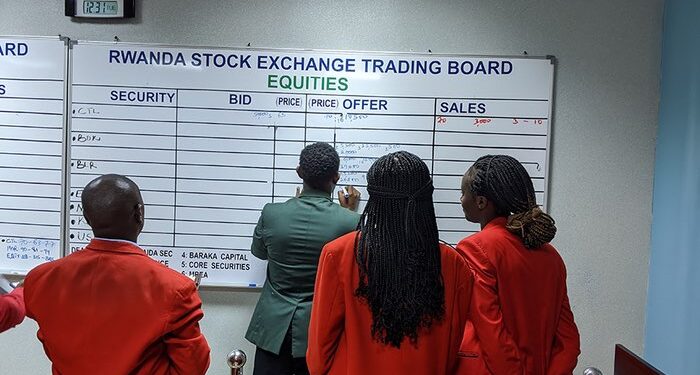
One of the most significant announcements came from the Rwanda Stock Exchange (RSE), which launched its Multicurrency Denominated Securities Market Segment (MDS). The new platform will allow securities to be issued and traded in various global and regional currencies, a move expected to deepen market liquidity, attract diverse investors, and simplify cross-border trading.
“This development supports diversified investment opportunities, enhanced market depth, and improved cross-border capital flow efficiency,” said RSE.
{{New green exchange window targets sustainable finance
}}
Sustainability also took centre stage with the unveiling of the Green Exchange Window, another RSE-led innovation. The dedicated platform will facilitate the listing and trading of green bonds, ESG-linked products, and environmentally focused instruments.
The initiative positions Kigali as an emerging hub for sustainable finance in Africa, offering investors greater transparency and expanding avenues for climate-aligned investment.
Delegates said the window is poised to play an essential role in mobilising capital for renewable energy projects, climate adaptation, and conservation efforts, areas expected to attract growing international interest.
{{ASEA strengthens commitments on cross-border market linkages
}}
At the forum, ASEA members renewed pledges under the African Exchanges Linkage Project (AELP), an initiative that seeks to boost cross-border trading by harmonising technology and market infrastructure. The commitment supports wider goals of building deeper, more unified African capital markets capable of attracting global institutional capital.
In a virtual address, the Secretary General of the Africa Continental Free Trade Area (AfCFTA) highlighted the alignment between ASEA’s market integration agenda and the AfCFTA Investment Protocol. He stressed that stronger governance and liquidity will be crucial as Africa positions itself for enhanced competitiveness.
“I believe that the ACFTA protocol on investment is well poised to position our continent for competitiveness. This is where your work becomes indispensable by deepening liquidity, strengthening governance and enhancing cross-border cooperation. Africa’s Securities exchanges are shifting our economies from dependence on short-term lending to more diversified, resilient financial systems”.
{{Africa launches its first Pan-African ESG awards
}}
Another highlight of the Kigali conference was the inauguration of the Pan-Africa ESG Awards, the continent’s first awards dedicated to recognising excellence in environmental stewardship, social impact, and corporate governance.
The awards aim to set new standards in sustainability reporting and encourage companies to adopt stronger ESG practices in line with global investment trends.
Speaking at the closing ceremony, ASEA President and CEO of the Rwanda Stock Exchange, Pierre Celestin Rwabukumba, praised the collective resolve displayed at the conference.
“Hosting ASEA 2025 has demonstrated what is possible when African markets come together with a shared vision,” he said. “The initiatives launched here, including the Pan-African ESG Awards and the Multicurrency Denominated Securities Market Segment, signal a new chapter for our continent. Rwanda is proud to contribute to a future where Africa’s markets are more integrated, more innovative, and more globally competitive.”
The Kigali conference reaffirmed Africa’s commitment to advancing regulatory harmonisation, expanding sustainable finance, strengthening commodities and derivatives markets, and integrating digital infrastructure across exchanges.
As the continent steps up efforts to build more open and resilient capital markets, the measures unveiled in Kigali are expected to shape the next phase of Africa’s financial integration agenda.
Speaking on the sidelines of the Capital Market Issuer Roadshows’ closing ceremony at Kigali Serena Hotel, Rwabukumba said the initiatives aim to deepen private sector participation, expand access to long-term finance, and support sustainable investment across Rwanda and the continent.
“We have received the necessary approvals to allow hard-currency denominated instruments in our market. Soon, companies will be able to raise financing in dollars or other currencies, and investors will be able to invest in these instruments,” said Rwabukumba, who was appointed president of the continental stock exchange body in April 2024.
The Green Finance Window will provide a platform for companies and investors involved in environmentally sustainable projects to raise capital efficiently, while the Pan-Africa ESG Awards will recognise outstanding corporate and individual performance in environmental, social, and governance practices across the continent.
“The market is ready for these instruments,” Rwabukumba said, noting that RSE has already raised more than Rwf 70 billion through sustainability-linked and green bonds, reflecting strong investor interest in sustainable finance.
The ASEA conference, scheduled for November 26-28 at the Kigali Convention Centre, will convene securities exchanges, regulators, investors, and financial service providers from across Africa and the globe. This year’s theme is “Adapting to Global Market Shifts: Strategies for Resilience and Growth.”
Rwabukumba highlighted the broader context for these developments, noting that African capital markets remain underutilised, with low company listings and liquidity levels.
“Across the continent, excluding South Africa, the average number of new listings per market is less than one per year,” he said. “We must foster a culture of equity investment and local ownership to mobilise savings and drive sustainable growth.”
He added that the conference will serve as a platform for dialogue on critical issues, including SME financing, technological innovation in markets, and sustainability-linked finance. Speakers from countries such as Jamaica will share experiences on leveraging capital markets to support SMEs and cultivate an equity culture.
Capital Markets Authority (CMA) CEO Thapelo Tsheole said the ASEA conference will also spotlight Rwanda’s rapid market growth and the expanding ecosystem of licensed entities.
“The conference provides a unique opportunity to showcase Rwanda’s capital market developments, including record fundraising, strong turnover, green finance initiatives, and new ESG recognition programs,” Tsheole said.
Established in 1993, ASEA represents more than 30 securities exchanges across Africa, providing a platform for cooperation, policy development, and knowledge sharing. The Kigali conference will focus on strategies for resilience and growth as African markets navigate global economic shifts.
Led by the Capital Market Authority (CMA) in partnership with the Rwanda Stock Exchange (RSE), the Rwanda National Investment Trust Ltd, and the Private Sector Federation (PSF), the initiative engaged over 700 enterprises across all four provinces and Kigali. Participants included SMEs, cooperatives, corporates and prospective issuers seeking guidance on raising equity and debt capital through formal markets.
CMA Chief Executive Officer, Thapelo Tsheole, said the nationwide effort successfully brought financial market opportunities closer to businesses that traditionally operated outside the capital.
“We set out to bring capital market opportunities to every part of Rwanda, and we achieved that. This effort represents the beginning of a wider strategy to extend financial participation and stimulate enterprise development through local markets,” he said.
Private Sector Federation CEO, Stephen Ruzibiza, noted that the capital market provides patient, partnership-oriented capital that can accelerate business expansion and reduce overreliance on collateral-based loans. He highlighted financing instruments such as corporate bonds, commercial paper, stock exchange listings and real estate investment trusts as tools that enable companies to diversify their capital base and scale sustainably.
Rwanda National Investment Trust Ltd CEO, Jonathan Gatera, emphasised that long-term domestic savings will continue to anchor the country’s capital market growth.
“Increased saving drives domestic investment. That change in behaviour is fundamental to building sustainable financial capacity,” he said, pointing to the rising importance of pension schemes, unit trusts and pooled investment vehicles.
From the market operations perspective, Rwanda Stock Exchange Chief Executive Officer, Pierre Celestin Rwabukumba, stressed that public markets provide more than just capital, helping issuers strengthen governance and operational standards.
“A public listing provides not just funding, but structure, discipline, and visibility. For ambitious companies, it is a strategic evolution,” he said.
Speaking from private sector experience, Grain Millers Plc Chairperson, Chantal Habiyakare, said listing on the market transformed the company’s competitiveness and formalisation.
“We are living proof that the market works. Going public helped us grow, formalise operations, and compete more effectively. It changed how we operate for the better,” she said.
Delivering the keynote address, Steven Biganiro, Director General of Capital Markets and Investment Schemes at the Ministry of Finance and Economic Planning (MINECOFIN), reaffirmed the government’s commitment to mobilising domestic resources and strengthening financial independence.
“We have laid the foundation. The next step is to build an economy in which our own markets finance our own development. This is about sustainability and shared prosperity,” he said.
While the nationwide campaign has concluded, stakeholders agree that the work continues. The roadshows are seen as a catalyst for sustained engagement among enterprises, regulators and investors as Rwanda seeks to expand market participation and liquidity.
With more local companies exploring listings and international investors seeking entry into frontier markets, Rwanda is positioning itself to build a more transparent, inclusive and robust financial ecosystem capable of financing national development from within.
According to national development projections, Rwanda’s per capita income is expected to rise to USD 12,476 (over Rwf 17 million) by 2050, supported by rapid economic growth, increased productivity, and stronger social protection systems.
Unemployment is forecast to drop sharply to 0.05 percent from 7 percent in 2035, while universal access to water, electricity, and improved social services is expected to significantly increase national living standards and life expectancy to at least 73 years.
{{Kigali population growth driving infrastructure demand
}}
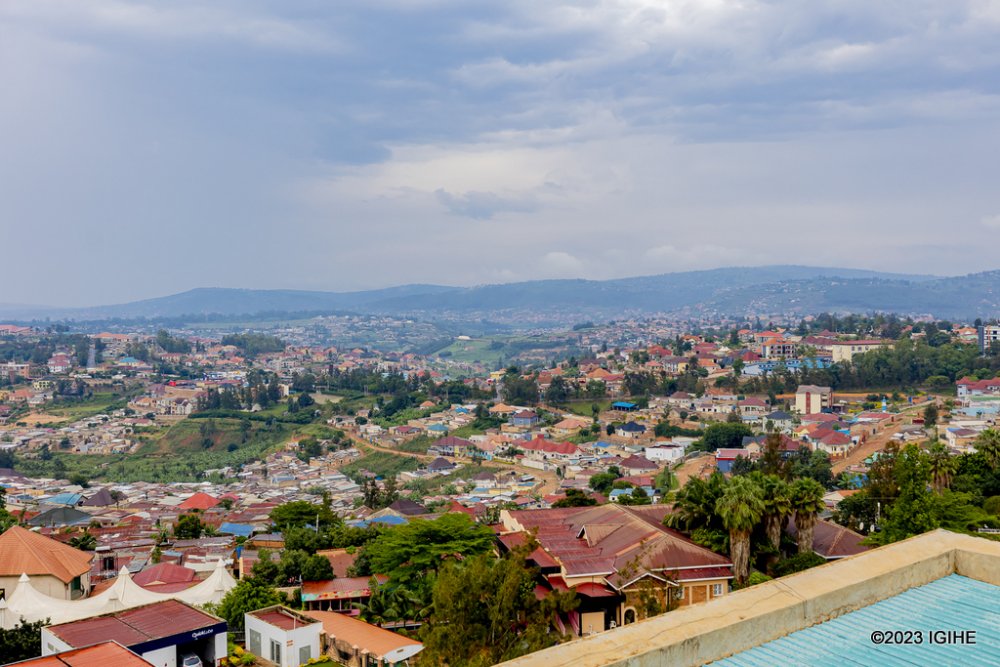
The 2022 national census estimated Kigali’s population at 1.7 million, a figure projected to more than double to 3.8 million by 2050. This population growth is shaping a comprehensive city development master plan that focuses on expanding affordable and modern housing, upgrading public transport and mobility systems, developing improved economic hubs and commercial districts, and protecting green spaces through environmentally sustainable planning.
The master plan also identifies strategic zones for investment, including Nyarugenge CBD, Remera, Kimironko, Gahanga, Nyabugogo, and Muhima, each earmarked for specific economic and cultural roles.
{{Transformation of Nyarugenge CBD
}}
The Central Business District, home to major commercial towers such as M-Peace Plaza and KCT, is set for a significant upgrade to strengthen its role as Rwanda’s prime financial and business hub. The development will expand pedestrian-only zones and enhance urban aesthetics, redesign roundabouts to incorporate gardens, walkways, and improved traffic flow, and create new cultural spaces, including an arts complex near Sainte-Famille.
Additionally, the historic Quartier Matheus commercial area will be modernised while preserving its heritage architecture. New pedestrian corridors will link the CBD to Muhima and Nyabugogo, integrating retail, tourism, cultural activities, and green spaces to create a more vibrant and connected city centre.
{{Nyabugogo to become a modern regional transport gateway
}}
Nyabugogo, one of the region’s busiest terminals connecting passengers from Rwanda and neighbouring countries, will undergo a major redesign to ease congestion and meet international service standards.
Plans include developing a modern bus terminal with enhanced commuter services, transforming the surrounding wetland into an urban park that integrates transit routes, landscaping, commercial facilities, and pedestrian pathways.
In addition, Mpazi Park will be constructed as a mixed-use recreation and business zone featuring sports facilities, green spaces, and commercial amenities. New housing projects in Muhima are also planned to provide affordable urban accommodation for local residents, further supporting inclusive urban growth.
{{Remera and Kimironko to strengthen sports and retail economy
}}
Remera, known for Amahoro Stadium, BK Arena, and several key institutions, is set to become Kigali’s primary sports, entertainment, and cultural hub. Investments will include new commercial developments, multi-storey parking solutions to reduce congestion around Gisimenti, and cultural centres, libraries, and event venues integrated with business facilities.
Meanwhile, Kimironko Market, one of the city’s busiest traditional markets, will be upgraded alongside its local transport terminal to balance modern retail facilities with the preservation of traditional trading culture, ensuring that the market meets the demands of a growing urban population.
{{Gahanga positioned as new business and innovation zone
}}
Gahanga, located in Kicukiro District and strategically positioned along the route to Bugesera International Airport, is planned as a major innovation and commercial zone to attract both domestic and foreign investment. The developments will include technology and innovation parks, green commercial centers connected through pedestrian networks, and new museums, arts centers, hotels, and leisure facilities.
Mixed-use residential developments will be integrated with business and recreational services to create a cohesive urban environment. The nearby Gikondo Exhibition Zone will also be modernised to host large-scale international conferences and expos, complemented by hotels, business services, and green recreational areas.
Kigali’s 2050 Master Plan reflects Rwanda’s broader strategy to develop a competitive city that supports business growth while maintaining environmental sustainability and social inclusiveness.
With major investments in mobility, housing, commercial zones, and cultural infrastructure, Kigali is being positioned as a central economic hub for East Africa and a model for modern urban development across the continent.