
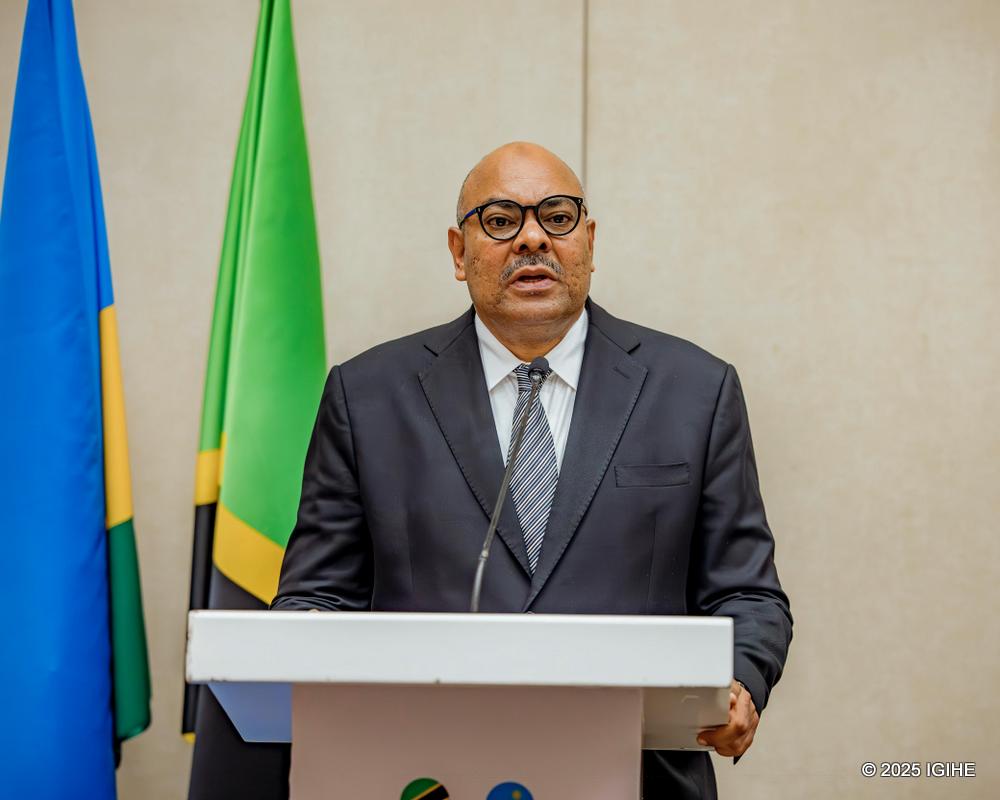
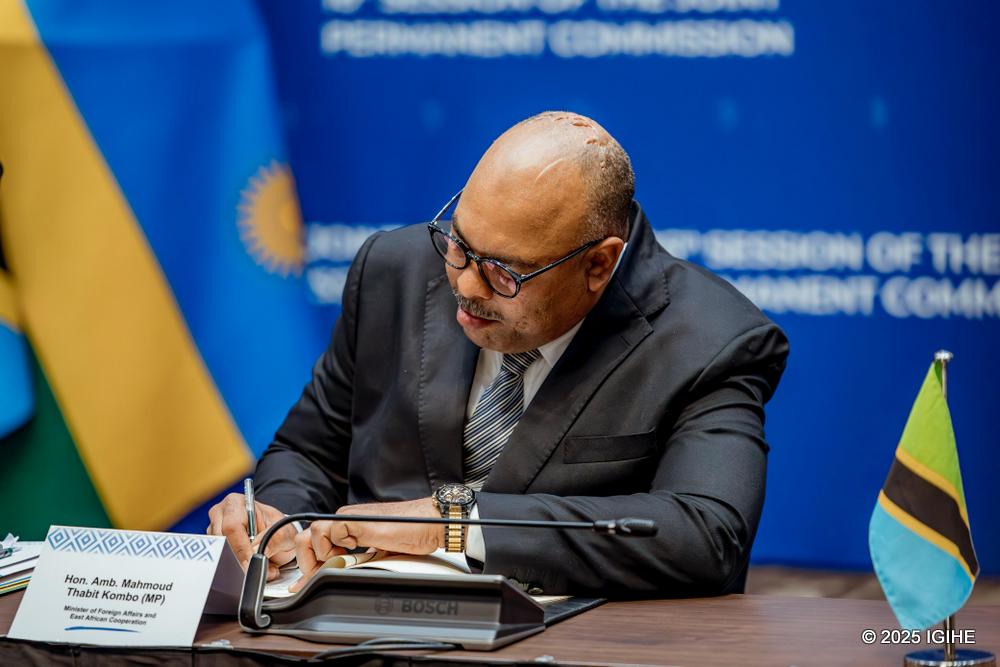
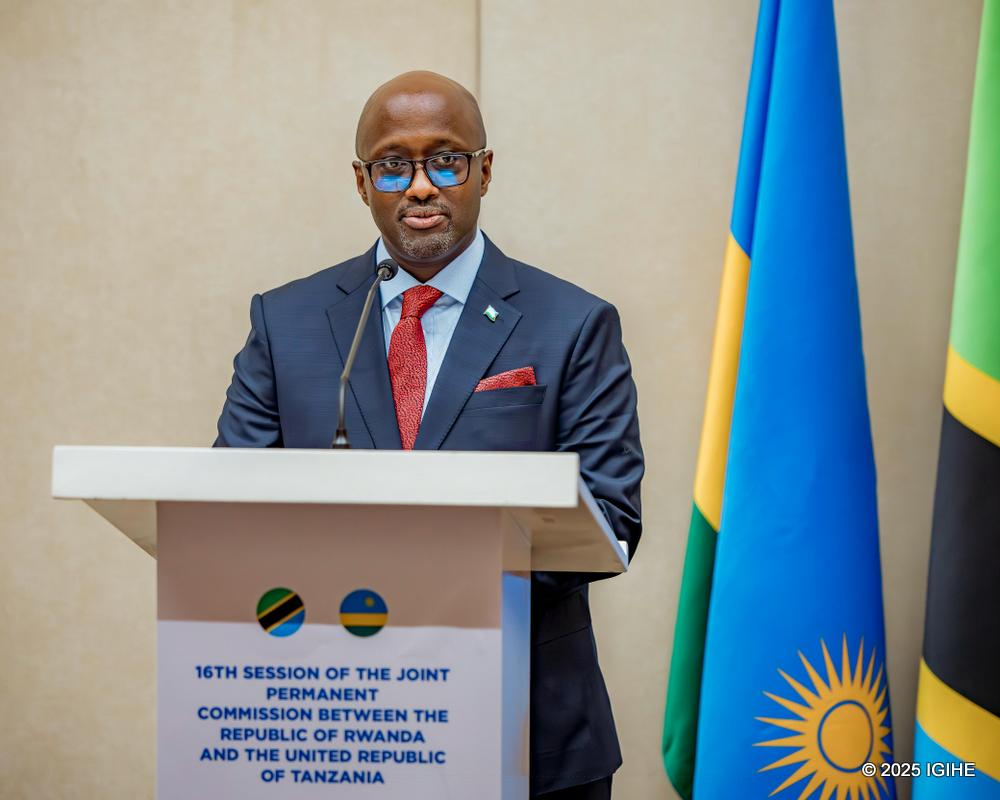
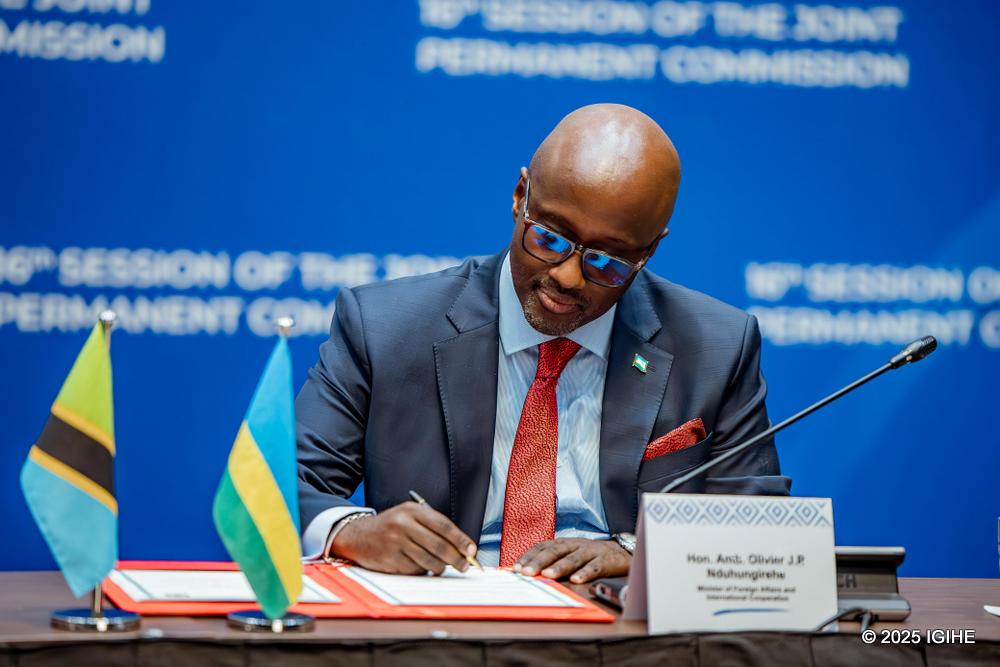
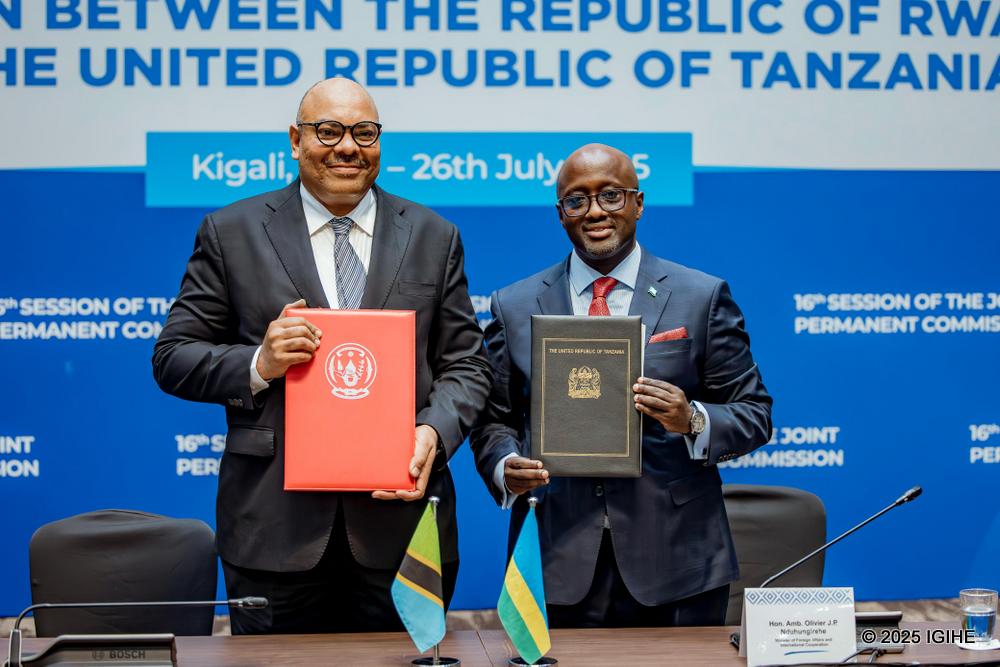
On Saturday, July 26, 2025, during the ministerial session of the 16th Joint Permanent Commission between Rwanda and Tanzania, the two countries signed bilateral cooperation agreements aimed at advancing the agriculture sector and reaffirmed their commitment to deepening overall collaboration.
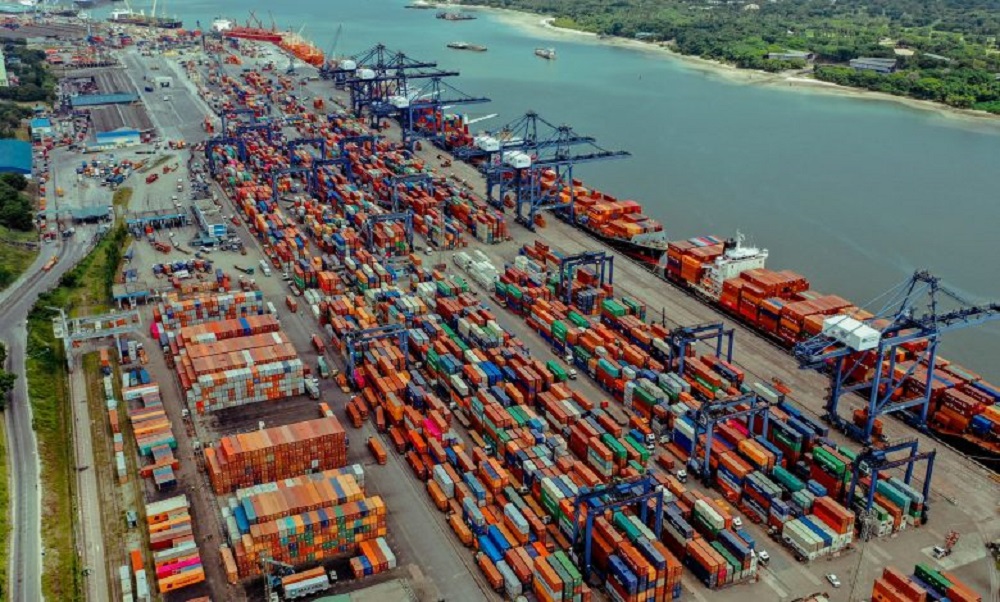
One key agreement includes the establishment of a Kigali office for the Tanzania Ports Authority (TPA), a major step towards boosting trade between the two nations.
The agreements were signed by Rwanda’s Minister of Foreign Affairs, Amb. Olivier Nduhungirehe and his Tanzanian counterpart, Amb. Thabit Mhamoud Kombo. Both ministers emphasised that the cooperation is driven by shared goals of national development, improved livelihoods, and regional progress.
Amb. Kombo noted that while Rwanda and Tanzania already have several agreements in place, there is a strong interest in expanding cooperation into new areas.
Citing the fact that he and most of his delegation flew into Kigali aboard RwandAir, Kombo said discussions are underway to enable Tanzania’s national carrier, Air Tanzania, to resume direct flights to the Rwandan capital.
“I learned that 90% of our delegation, myself included, came here with RwandAir. It’s performing even better than our own airline. This encourages us, because easing travel is essential to any form of cooperation,” he said.
“Air travel cooperation is still under discussion, and we are working on reviving Air Tanzania’s Kigali flights. The airline previously operated this route but stopped due to various reasons. Now that we have new aircraft, we’re actively exploring its return.”
{{Railway project remains stalled
}}
The long-anticipated Standard Gauge Railway (SGR) linking Kigali and Dar es Salaam remains a critical infrastructure project for landlocked East African countries. More than two decades since it was first proposed, it is still seen as a game-changer in reducing transport costs and facilitating trade.
The proposed railway would enter Rwanda through Rusumo, pass through Kigali—where Dubai Ports is developing a dry port in Kicukiro—and extend 18 more kilometers to Bugesera International Airport.
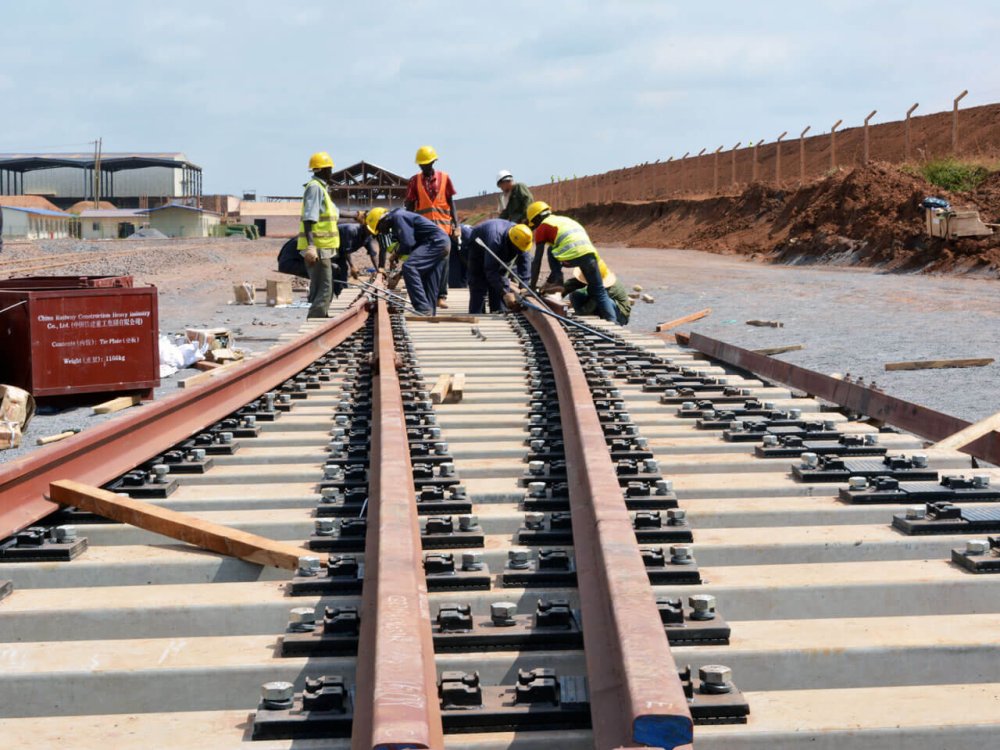
An agreement for a 532-kilometer section of the railway was signed on March 9, 2018. While construction has advanced on the Tanzanian side, progress on the Rwandan section has stalled.
Amb. Kombo said that after learning of the delay, he began closely following up with Tanzanian stakeholders, including contacting two ministers to push for the development of a coordinated implementation plan.
He emphasised that the railway remains a strategic priority with the potential to significantly boost trade across the region.
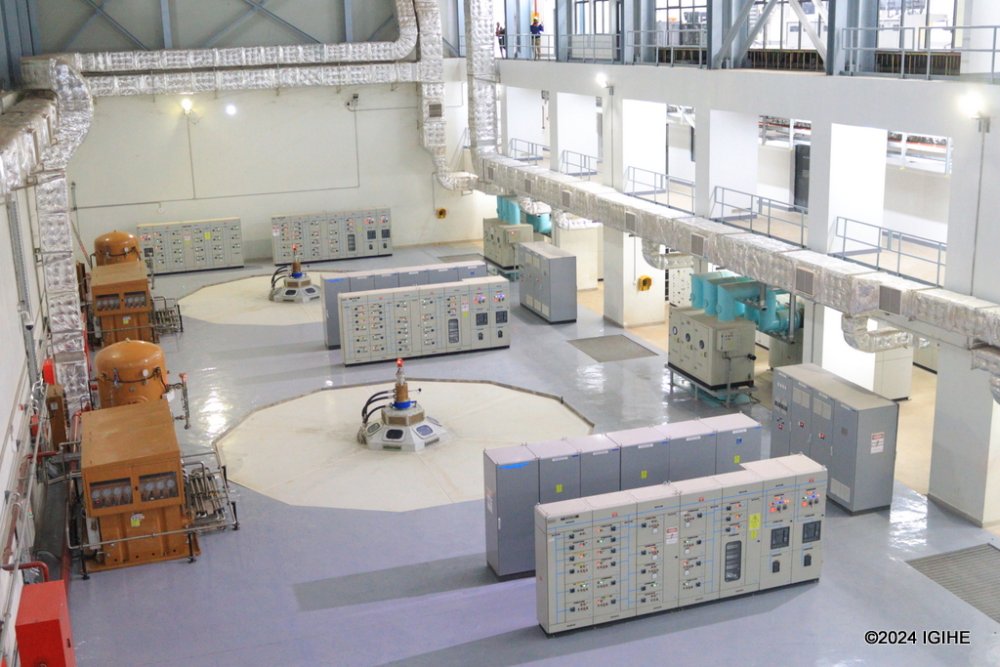
Tanzania and Rwanda also share the Rusumo Falls hydropower project with Burundi, which is expected to enhance energy access and improve livelihoods in the tri-border area.
{{Tanzania is a key trade corridor for Rwanda
}}
Minister Nduhungirehe described Tanzania as a vital trade corridor for Rwanda, noting that more than 70% of Rwanda’s imports pass through Tanzanian ports.
He added that Tanzania is Rwanda’s second-largest source of imports, accounting for 15% of all goods brought into the country over the past three years.
A functional railway, he said, would further ease the cross-border movement of goods and people and reinforce regional connectivity.
{{Kiswahili teachers to support language promotion in Rwanda
}}
Amb. Kombo also highlighted plans to support Kiswahili education in Rwanda. He praised Rwanda for being among the few African countries with four official languages, including Kiswahili.
“Rwanda is one of the few nations with four official languages. In Tanzania, we have only two, one of which is Kiswahili, and we are its custodians, along with its headquarters. So, we have a responsibility to do more,” he said.
He announced plans to send Tanzanian teachers to Rwanda to support Kiswahili instruction and to supply learning materials, including textbooks.
The Tanzanian minister also highlighted the continued expansion of Tanzanian investments in Rwanda, particularly in the energy and industrial sectors. Tanzanian firms are involved in building petroleum storage facilities and setting up manufacturing plants.
The two countries also have existing cooperation agreements covering media, ICT, and internet infrastructure.
Discussions during the visit further explored new areas of cooperation, including tourism development, environmental protection, energy, healthcare, and investment promotion.
“The foundation of our partnership is strong, and today we’ve taken another step toward building a future of shared prosperity,” said Amb. Kombo.

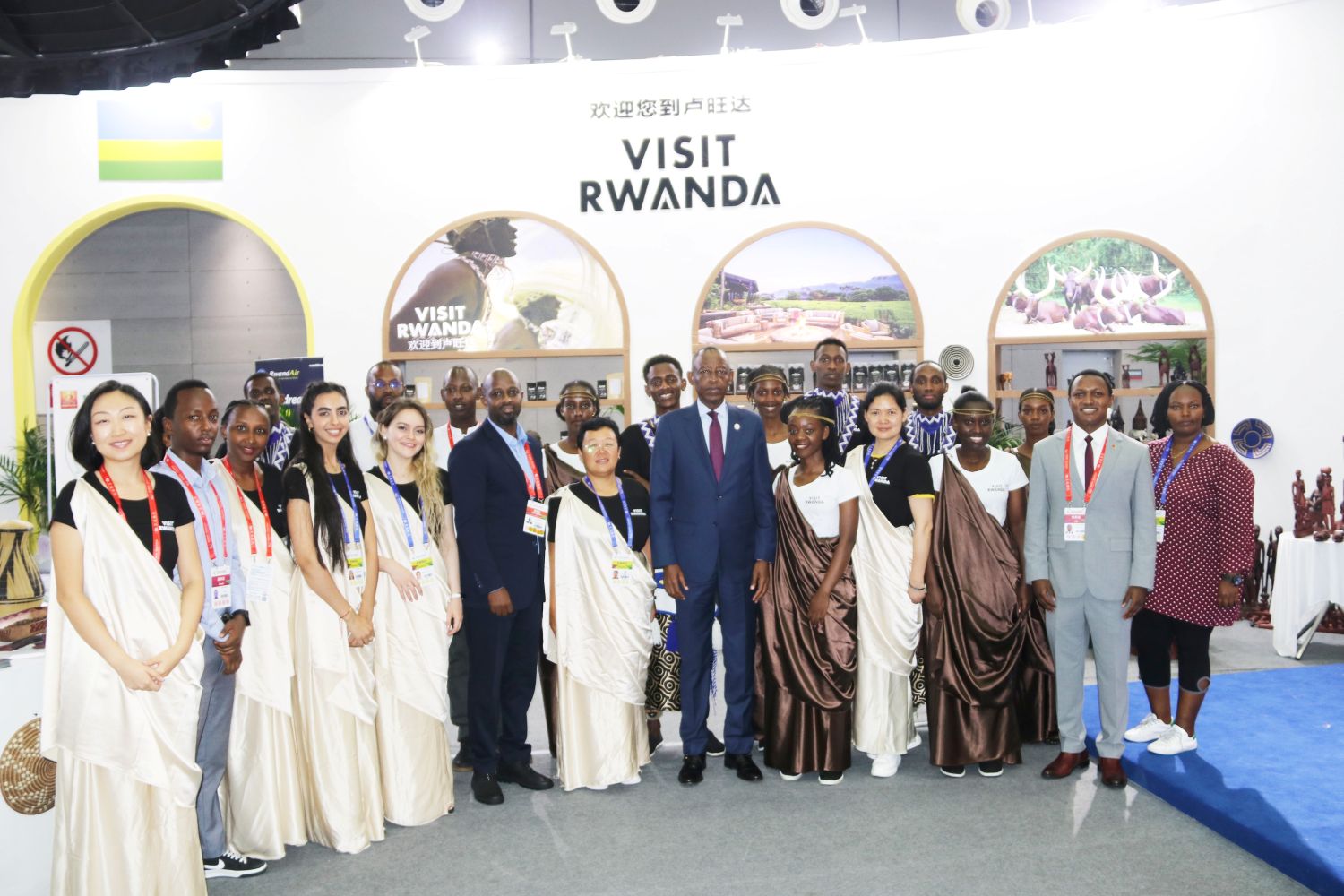
The forum is a collaborative initiative by the Embassy of the Republic of Rwanda in China and the Rwandan community living in China, aimed at deepening bilateral ties through trade, investment, and cultural exchange.
The flagship event will spotlight Rwanda’s progress and the vast opportunities it offers in key sectors such as investment, tourism, manufacturing, and culture. With China currently leading all countries in foreign direct investment (FDI) in Rwanda, the gathering will serve as a strategic platform to attract even more Chinese investors and promote high-quality Made in Rwanda products.
A key highlight of the event will be a high-level business forum organised in partnership with the China Council for the Promotion of International Trade (CCPIT). The forum will bring together Chinese enterprises, Rwandan officials, private companies, academia, traders, and tour operators to explore partnerships and conduct business matchmaking sessions.
“This is more than a promotional event; it is a strategic engagement to strengthen people-to-people ties and stimulate tangible collaboration between our two countries,” the Rwandan embassy in China said in a statement.
Beyond business, “Meet Rwanda in China” will also serve as a celebration of Rwanda’s rich cultural heritage. Coinciding with Umuganura, Rwanda’s national thanksgiving and harvest festival, the event will feature traditional dance and music performances, cultural storytelling, riddles (ibisakuzo), games like kubuguza, and symbolic acts such as guha abana amata (serving milk to children), offering Chinese audiences a taste of Rwandan tradition.
Sports competitions will also feature prominently, especially considering that over 95% of the Rwandan community in China are students. These youth-led activities will foster unity and highlight Rwanda’s values of togetherness, innovation, and shared responsibility.
As a recurring initiative, “Meet Rwanda in China” is expected to become a vital platform for diaspora mobilisation and sustained dialogue on Rwanda’s Vision 2050 development agenda. It also aligns with Rwanda’s broader strategy of building strong international partnerships to drive inclusive growth and prosperity.

The formal trade deficit dropped to $226.75 million in May, reflecting a 2.32% decrease from April 2025 and an even more substantial 18.42% decline compared to the same period last year. The reduction was primarily driven by a strong rebound in domestic exports and moderated import growth.
Rwanda’s total exports rose to $177.31 million, up 19.39% from April. Domestic exports, mainly goods produced within Rwanda, reached $127.81 million, marking a monthly increase of 21.24%, although still 39.58% lower than in May 2024.
The export rebound was largely driven by traditional mainstays, particularly tea, coffee, and fresh produce such as avocados, which generated US$31.98 million, representing a 12.64% increase from April and a 40.38% rise year-on-year.
Exports of animal and vegetable oils soared to $8.79 million, up 20.70% from April and a remarkable 358.48% compared to the same month last year. Beverages and tobacco, though modest in absolute value at $0.93 million, recorded a dramatic surge in annual growth rate of over 12,700%.
Machinery and transport equipment also contributed to the rebound with a 192.34% increase compared to May 2024, despite showing a monthly decline.
Meanwhile, re-exports rose to $49.51 million, representing a 14.87% increase from April, although this remained 16.25% below the level registered in May 2024. Re-exports continued to be driven by regional demand, particularly from the Democratic Republic of Congo.
On the import side, Rwanda imported goods worth $404.06 million in May, a 6.15% increase from April. Despite the monthly uptick, this figure reflects a 26.35% decline compared to May 2024.
Imports were largely composed of mineral fuels and lubricants, valued at $60.48 million, which rose by 16.12% month-on-month. Machinery and transport equipment followed, amounting to $83.22 million, an increase of 12.66% from the previous month. Food and live animals, which cost $75.76 million, saw a modest year-on-year increase of 4.14%.
A striking development in May was the sharp rise in imports from Saudi Arabia, which surged by over 1,026% year-on-year, indicating a spike in petroleum or fuel-related imports. This import surge placed Saudi Arabia among Rwanda’s top import sources for the month.
In terms of trade partnerships, the United Arab Emirates remained Rwanda’s largest export destination, purchasing goods worth $44.68 million. The Democratic Republic of Congo followed with $22.31 million in imports from Rwanda, while China was third at $14.07 million.
On the import side, China led the way with $96.88 million in goods sold to Rwanda. Tanzania followed with $47.09 million, while India contributed $35.97 million. Imports from Kenya also saw a recovery, rising to $32.87 million after a significant slump earlier in the year.
Most of Rwanda’s trade was conducted via land routes, with land transport accounting for $357.25 million in imports and $84.60 million in domestic exports. However, air transport also saw increased activity, with $46.81 million in imports and $43.21 million in exports handled through airports, highlighting a growing reliance on air freight for high-value or time-sensitive goods.

The eight-year amortising bond marks IFC’s return to Rwanda’s onshore market for the first time in 11 years. It’s also its second “Umuganda bond” denominated in Rwandan francs.
The bond, listed on the Rwanda Stock Exchange, was 1.75 times oversubscribed and carries a fixed coupon of 10.50%, about 0.55% below the interpolated government yield.
Proceeds from the bond will be used to finance a local digital infrastructure project, allowing the client to avoid currency risk associated with borrowing in U.S. dollars or other foreign currencies.
Mary Porter Peschka, IFC’s Director for Eastern Africa, said the bond aligns with IFC’s long-term goal of strengthening capital markets while supporting critical infrastructure.
“The bond offers investors exposure to IFC’s triple-A rating, while also enabling IFC to provide local currency financing to an important project that will enhance digital connectivity,” she said.
IFC coined the term “Umuganda bond” in 2014 when it became the first non-resident issuer to place a Rwandan franc bond in the domestic market. The success of the current issuance is seen as a vote of confidence in Rwanda’s capital market framework and regulatory environment.
The bond attracted a wide range of investors, including pension funds, insurance companies, banks, and asset managers. BK Capital and Rand Merchant Bank served as joint lead managers on the transaction.
Finance Minister Yusuf Murangwa welcomed the issuance as a positive step for local market development.
“IFC’s second Umuganda bond will support our work to deepen domestic capital markets in Rwanda,” he said. “Bond issuances by international borrowers such as IFC create new investable opportunities for domestic investors while raising much-needed Rwanda franc financing for local businesses.”
Beyond bond issuance, IFC continues to support capital market reforms in Rwanda through the Rwanda Capital Market Development Project—a joint initiative with the World Bank. The project focuses on improving government bond market liquidity, increasing non-government bond issuance, and building a more diversified and professional investor base.
In 2024, IFC also issued two offshore Rwanda franc-denominated bonds listed on the London and Luxembourg Stock Exchanges.

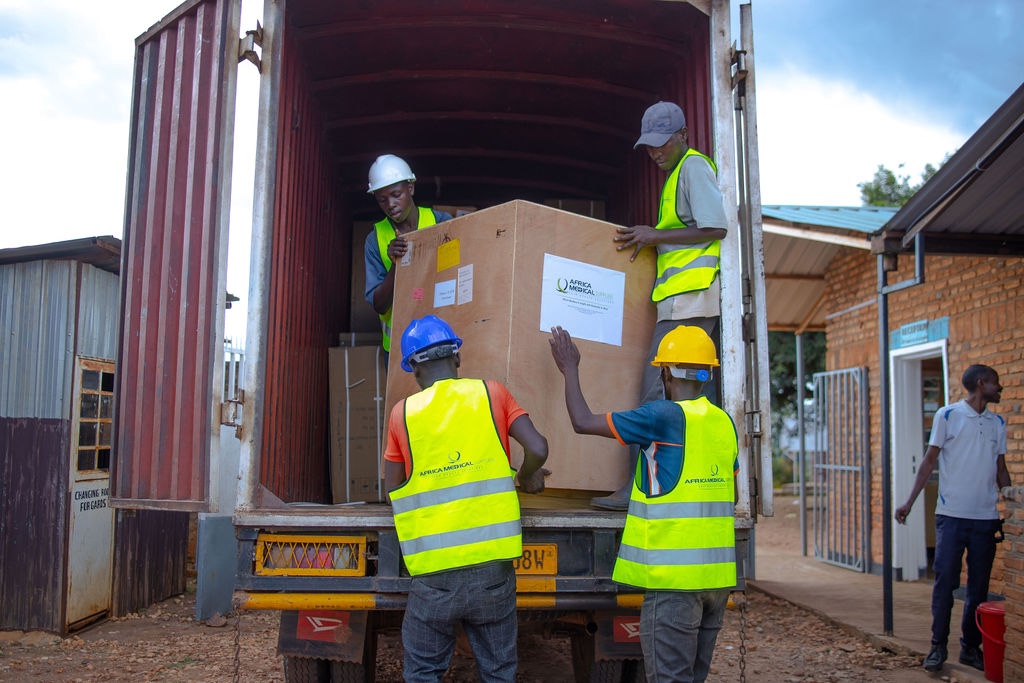
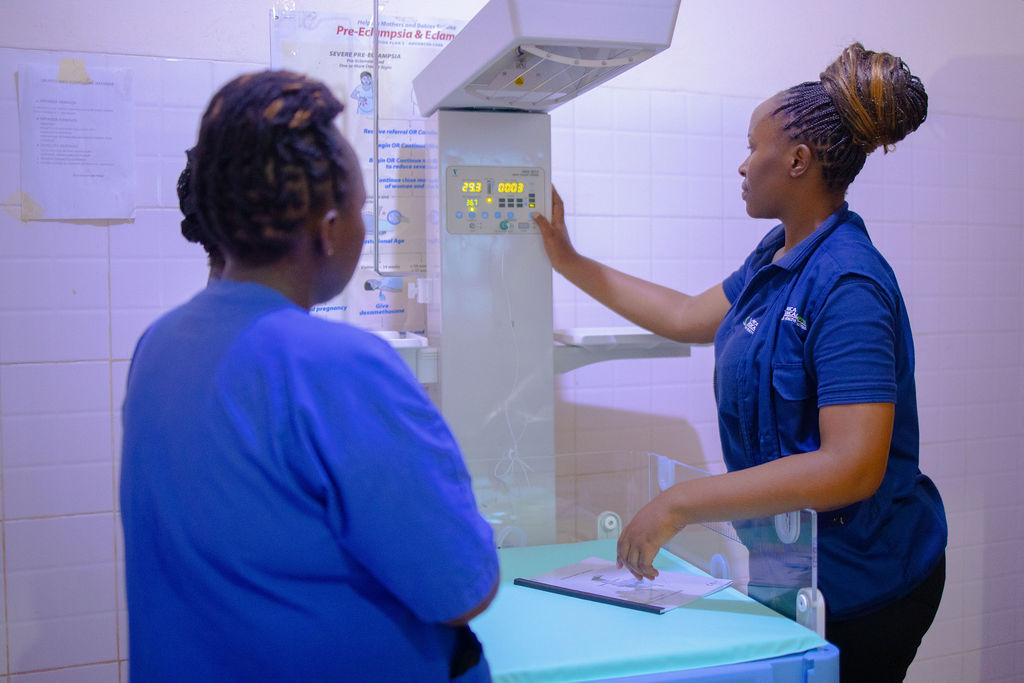
The Frw 5 billion Medium-Term Senior Unsecured Bond marks a major milestone not only for AMS but also for Rwanda’s healthcare and capital markets.
The approval paves the way for AMS to offer the bond to the public and subsequently list it on the Rwanda Stock Exchange (RSE), where trading is expected to commence on August 22.
The five-year bond, which carries a fixed annual interest rate of 13.25%, will be issued in a single tranche. It features an amortising structure with semi-annual interest payments and principal repayments starting 18 months after settlement. The bond’s weighted average life is approximately 3.25 years. The minimum subscription is set at Frw 1 million.
Public subscription opens on July 24 and will run until August 7.
Founded in 2008, AMS supplies life-saving medical equipment, pharmaceuticals, laboratory reagents, diagnostic kits, and hospital furniture to over 400 clients, including public and private hospitals, NGOs, United Nations agencies, and government health programs across Rwanda and the Democratic Republic of the Congo (DRC).
Speaking on the development, Yves Sangano, Chairman of AMS, said the CMA approval is a significant step forward for both the company and the healthcare sector.
“Today marks a pivotal moment not just for AMS, but also for the healthcare sector because access to life-saving medical services remains out of reach for many,” said Sangano.
“Securing approval for the first-ever corporate bond any company in the healthcare sector in the country has issued is a conviction that the sector remains key in Rwanda’s transformation journey.”
According to AMS, proceeds from the bond will be used to refinance USD-denominated debt and support growth plans aimed at increasing the company’s capacity to fulfil contracts and expand into new markets. Frw 3.1 billion will go toward debt refinancing, while Frw 1.9 billion will fund working capital for growth.
Fabrice Shema Ngoga, the company’s Chief Executive Officer and founder, said the bond is not just a financial instrument, but a statement of intent.
“This bond issuance will be a significant financial achievement for AMS, showcasing the strength of our business model and our commitment to responsible growth,” said Ngoga.
“Furthermore, this kind of financing allows us to directly connect with investors who share our vision for a future where every Rwandan has access to affordable healthcare.”
AMS has engaged BK Capital as the financial arranger and sponsoring broker for the issuance. RR Associates & Co. Advocates and BDO Rwanda are serving as legal and accounting advisors, respectively.
In 2024, AMS posted revenues of Frw 18.5 billion, with a net profit of Frw 681 million.
The firm holds a BBB- (RW) long-term rating and an A3 (RW) short-term rating from GCR Ratings, a Moody’s subsidiary.
The company operates across Rwanda and the Democratic Republic of the Congo (DRC), with other target regions including Guinea-Conakry and the Central African Republic.


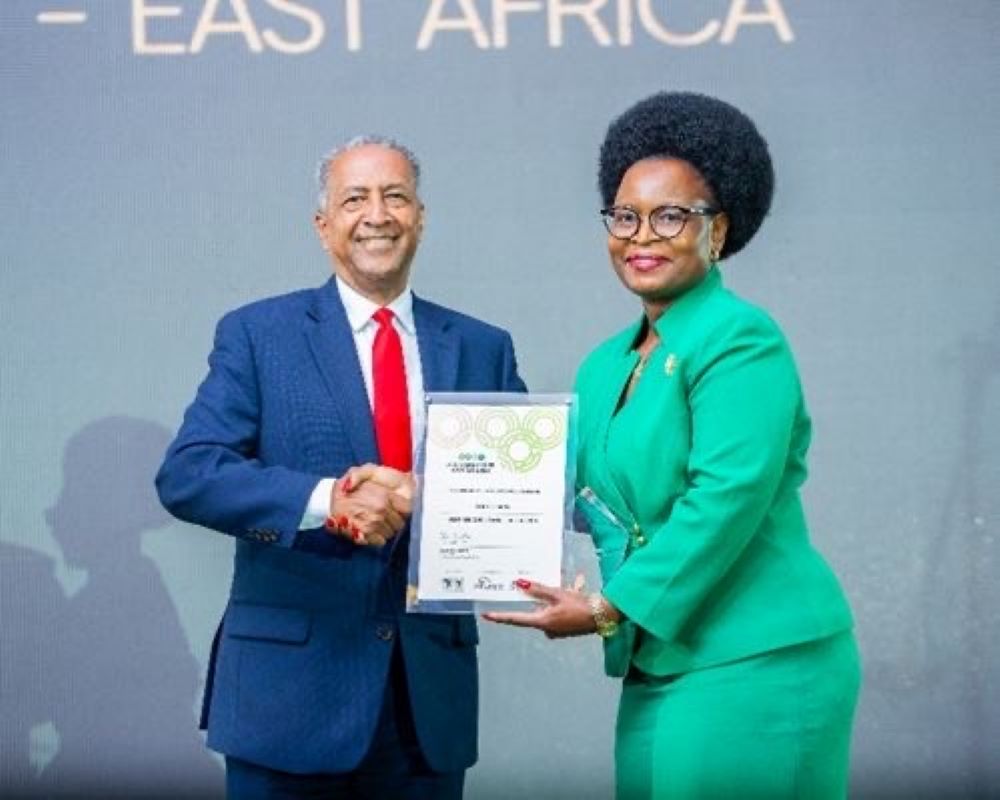
The annual awards, organised by African Banker Magazine and supported by the African Development Bank and the African Guarantee Fund, recognise excellence and innovation in Africa’s banking industry.
This year marked the 19th edition of the ceremony, drawing top financial institutions and leaders from across the continent.
Equity Bank, headquartered in Kenya, earned the accolade for its significant contribution to financial inclusion, digital banking innovation, and regional economic development.
The bank operates across six countries, including Kenya, Uganda, Tanzania, Rwanda, South Sudan, and the Democratic Republic of Congo and maintains a representative office in Ethiopia. It serves over 22 million customers and manages assets exceeding $13.9 billion.
Accepting the award, Dr. James Mwangi, Managing Director and CEO of Equity Group Holdings, noted that the award reflects the bank’s commitment to transform the financial sector.
“It is a testament to our commitment to delivering transformative financial services that empower individuals, businesses, and communities across East Africa,” he said.
According to the regional lender, the success has been driven by its Africa Recovery and Resilience Plan, a strategic blueprint focused on accelerating economic recovery and sustainable growth post-pandemic.
The plan targets key sectors such as agriculture, manufacturing, MSMEs, health, education, clean energy, and social protection, with the goal of transforming Africa’s economic landscape.
The bank has also been recognised for its leadership in digital banking, with nearly 86% of transactions now conducted through digital platforms. This digital shift has expanded financial access for underserved communities, contributing significantly to financial inclusion across the region.
Omar Ben Yedder, Chair of the African Banker Awards Committee, praised Equity Bank for its pivotal role in fostering regional integration and economic resilience, saying: “Equity Bank exemplifies how African-owned banks can drive development, support entrepreneurship, and help build robust economies.”

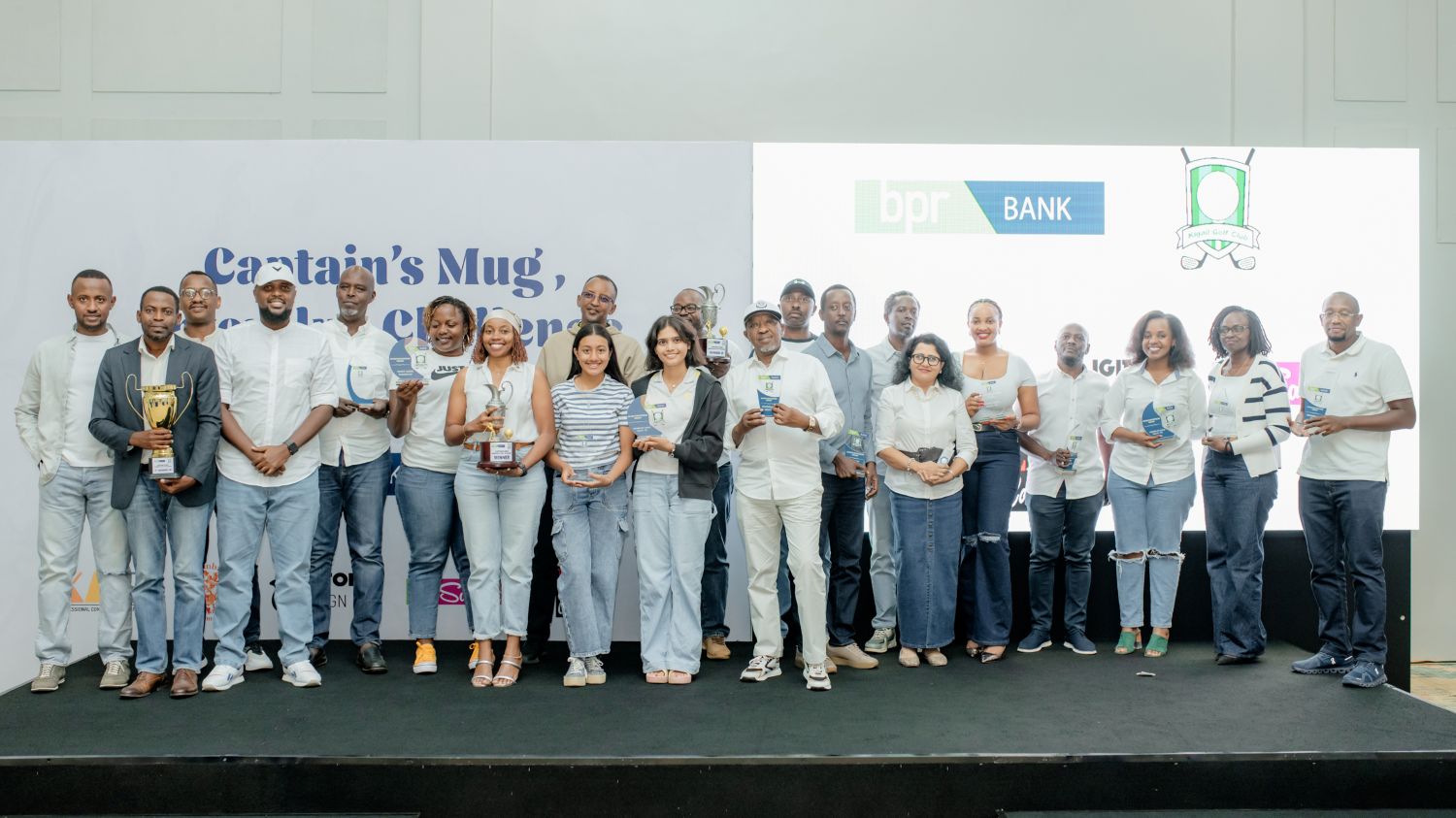
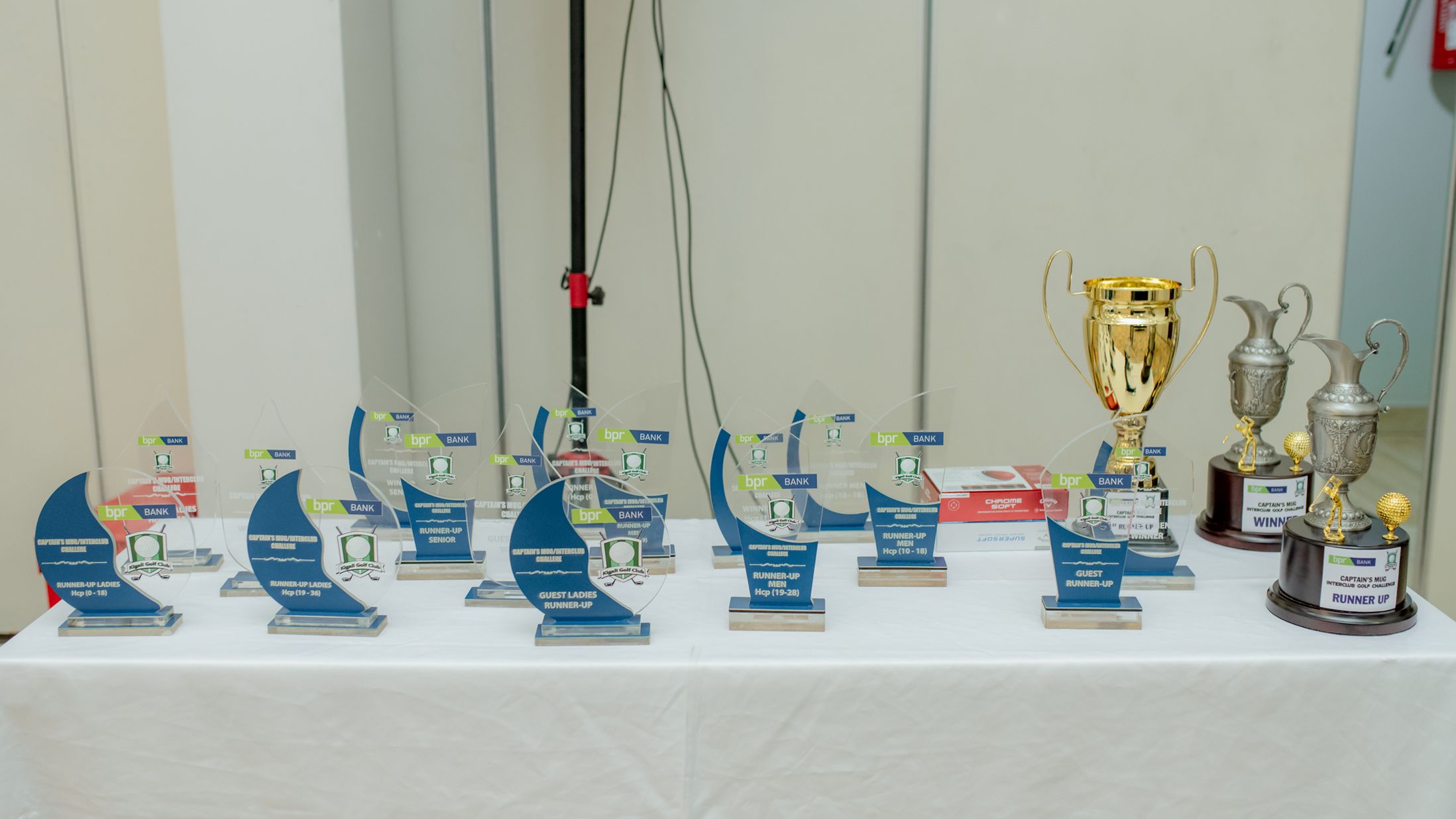
Golfers from Kabale, Mbarara, Kampala, Entebbe, and Tooro clubs joined their Rwandan counterparts in Kigali for a full day of competition and fellowship, marking a new chapter in the growing tradition of regional golf.
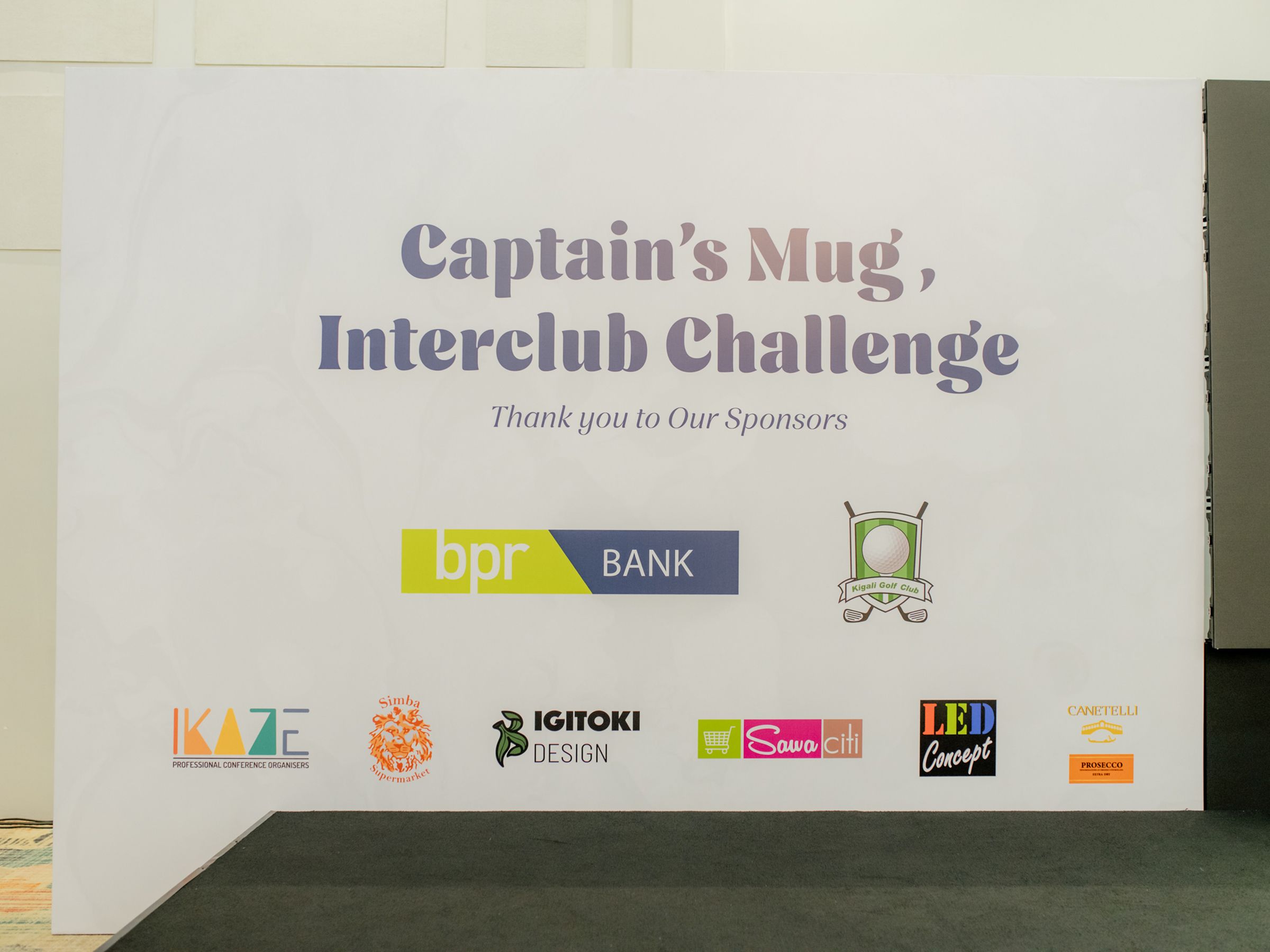
The event, proudly sponsored by BPR Bank, was created to foster stronger bonds between clubs, elevate the sport, and celebrate the values of sportsmanship while bridging communities.
Speaking at the event, Albert Akimanzi, BPR Bank Head of Marketing, Corporate Affairs and Citizenship, highlighted the significance of the regional tournament:
“Golf has always been a central component of our community enrichment strategy. We believe that this particular event has fostered connections across clubs, borders, and cultures. We are a regional entity that is actively engaged in creating opportunities for social and economic connections. The BPR Captains Mug is our attempt to make the game even more inclusive, more competitive, and more meaningful for the East African region.”
Vice-Captain of Kigali Golf Club, Jenny Linda Kalisa, expressed her pride in seeing a successful and colorful gathering:
“This tournament has demonstrated the power of community. We are honored to be able to host local golfers and our visitors from Uganda who added flair, energy, and incredible sportsmanship. We are truly appreciative of every golfer who participated, as well as our partner sponsors who contributed to the undeniable success of this tournament. I would like to extend a special recognition to BPR Bank, our lead sponsor who once again showed their leadership in the game of golf.”
The day concluded with a lively awards ceremony that recognised winners in various categories; Roshni Shah won the Ladies 19-36 with 44 points, while Akanigi Melissa scored 37 points to win the Ladies 0-18 group. Rutamu Innocent took the Seniors category, leading his counterparts with a score of 40 points.
In the Men’s 19-28 group, Mathias Pian held strong to win with 44 points; similarly, Rwitare Derrick registered 41 points to win the Men’s 10-18 category. Rwanyonga Mathias led the Men’s 0-9 group with 40 points. Visiting golfers Musanabera Berna and Maniraguha Bernard posted 34 and 41 points, respectively, to take the visitors category.
In the overall team scores, Kigali Golf Club emerged victorious with 410 points, followed by Entebbe Golf Club with 331 points, Mbarara Golf Club with 330 and finally Uganda Golf Club with a tally of 318 points.
With growing enthusiasm from players and clubs alike, plans are already in motion for the next edition of the BPR Captain’s Mug, which is scheduled for September this year.






Crystal Ventures Ltd (CVL) is a leading investment company and the largest private sector employer in Rwanda, with a diverse portfolio of subsidiaries including Inyange Industries, NPD Ltd, ISCO Security, Real Contractors, and East African Granite Industries.
In a statement released on Tuesday, July 15, the company’s Board of Directors and Management expressed confidence in Barigye’s leadership, citing his extensive cross-sector experience and strong track record in delivering operational excellence, innovation, and sustainable growth.
“Mr. Barigye is a seasoned leader with broad experience across multiple sectors, and a strong track record of driving operational excellence, innovation and sustainable growth,” the statement read.
Barigye steps into the new role after more than five years at the helm of the Kigali International Financial Centre (KIFC), where he successfully led efforts to position Rwanda as a Pan-African financial hub.
Under his stewardship, KIFC gained global recognition and attracted strategic international partnerships and investments that bolstered Rwanda’s financial ecosystem.
Barigye’s appointment also marks a notable return to familiar ground, having previously served as a Senior Executive at Crystal Ventures Ltd from 2008 to 2014. The board expressed pride in welcoming him back into the fold.
“We’re especially proud to welcome him back as an alumnus of CVL and are confident that under his leadership, with valuable global and local perspective, CVL will continue to thrive and advance its strategic goals,” the statement added.
Founded in 1995 as Tri-Star Investments Limited and rebranded to Crystal Ventures Ltd in 2009, CVL has grown into a leading investment firm in Rwanda. Its diversified portfolio spans key sectors such as engineering and infrastructure, construction materials, fast-moving consumer goods, hospitality, security services, agriculture, and mining, with operations expanding across several African countries.
Beyond profitability, CVL is known for its commitment to national development, having played a pivotal role in Rwanda’s post-1994 Genocide against the Tutsi economic recovery by investing in ventures that create wealth and improve lives.


The initiative, led by the Climate High-Level Champions, aims to mobilise capital for climate ventures in developing countries and emerging markets.
Spiro’s inclusion in the RPCP Pipeline recognises its role as a key climate leader, delivering innovative, high-impact solutions that accelerate Africa’s shift to a low-carbon, sustainable future in line with the United Nations Sustainable Development Goals (SDGs).
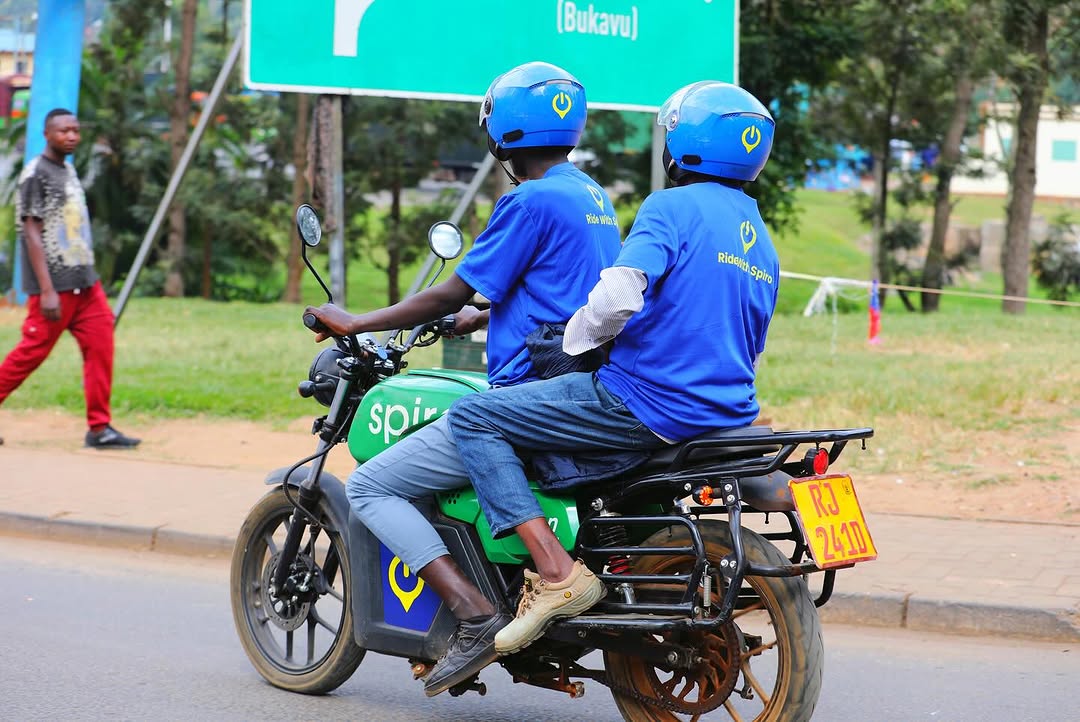
Founded in 2022, Spiro operates a vertically integrated platform that scales electric two-wheel mobility across eight African countries, including Rwanda, Benin, Togo, Nigeria, Kenya, Uganda, Cameroon, and Tanzania.
Its business model includes electric bike sales via distribution partners and financiers, battery-as-a-service subscriptions through an expanding swap station network, after-sales maintenance and spare parts services, and data monetisation via licensing and analytics.
To date, Spiro has deployed more than 35,000 electric motorbikes and facilitated over 20 million battery swaps, enabling upwards of 500 million kilometres of CO₂-free travel and reducing approximately 30,000 tons of carbon emissions.
Beyond environmental benefits, the company has created over 1,000 direct and indirect jobs in Kenya, Uganda, Rwanda, and Nigeria, with women making up more than 40% of its workforce.
Spiro’s Academy also plays a crucial role in training local talent and supporting their transition into medium- and high-skilled employment.
Financially, Spiro generated USD 23 million in revenue in 2024 and projects a tenfold increase to USD 200 million in 2025. To fuel its expansion, the company is raising USD 50 million in Series A funding, complementing the USD 120 million in equity and USD 23 million in debt financing already secured.
Participation in the RPCP Pipeline will provide Spiro with increased visibility at key climate-focused events, opportunities to be featured in curated publications by the Climate Champions Team and partners, and access to a global network of climate stakeholders to foster collaboration and amplify impact.
Spiro, with over half a billion kilometres of CO₂-free travel achieved, aims to transform African economies by replacing costly fossil fuel-based transportation with affordable, locally manufactured electric mobility solutions.