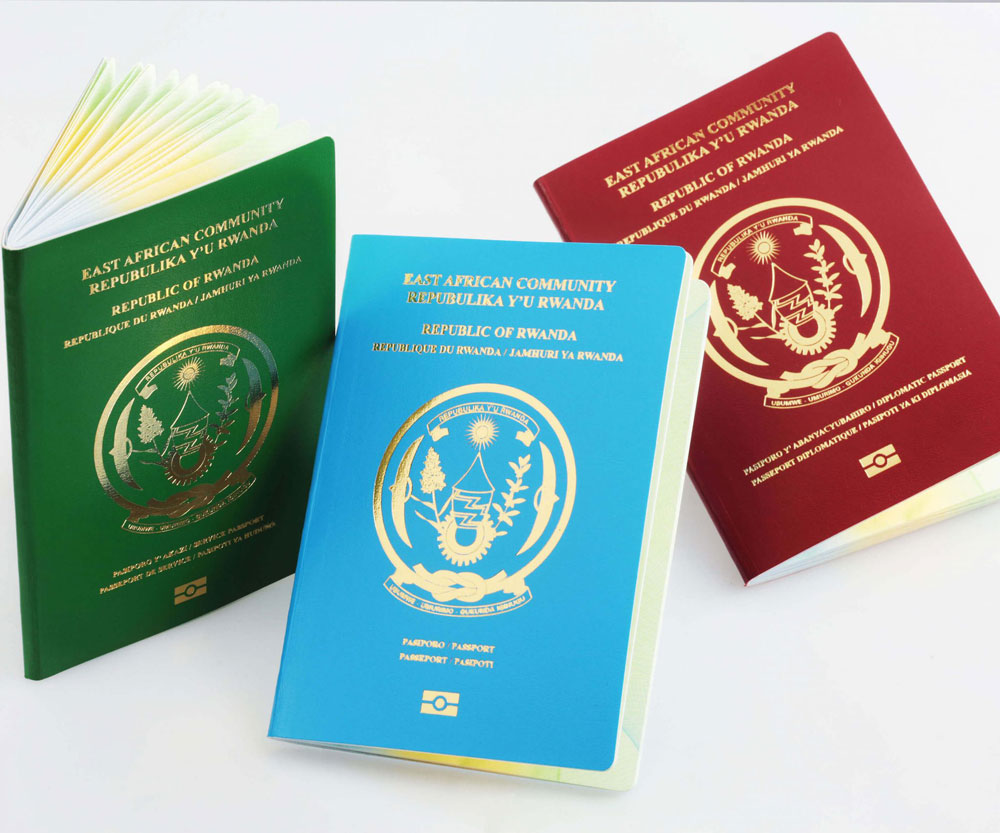
In a notice, the Directorate General of Immigration and Emigration (DGIE) said the service will be available on a new system developed by the immigration department in collaboration with the National Identification Agency (NIDA) and Irembo, an online platform that enables access and provision of government services.
“This was implemented to facilitate the Rwandan community abroad without national ID cards,” the DGIE said.
“The biometric data will be captured from the nearest embassy and be used for the processing of both National ID and e-Passport.”
Interested applicants are required to submit their applications for National ID cards and e-Passports on the Irembo portal.
Irembo was introduced in 2015 to allow people to access government services online with the [ issuance of e-Apostilles being among the latest services onboarded on the portal ->https://en.igihe.com/news/article/rwanda-starts-issuing-and-accepting-e-apostilles-from-other-countries].
Early this month, the Ministry of Foreign Affairs and International Cooperation (MINAFFET) in partnership with Irembo started issuing and accepting Apostilles from other member countries of the Hague Apostille Convention of October 5, 1961.
The initiative makes the legalization process for public documents such as birth certificates, marriage certificates and death certificates faster, simpler, and digitized through the use of electronic Apostilles (e-Apostilles).
“Rwandan documents intended for use abroad will be processed digitally and accessible through the Irembo e-government platform [https://irembo.gov.rw->https://irembo.gov.rw/]. Foreign documents apostilled abroad will be directly usable in Rwanda,” officials said.
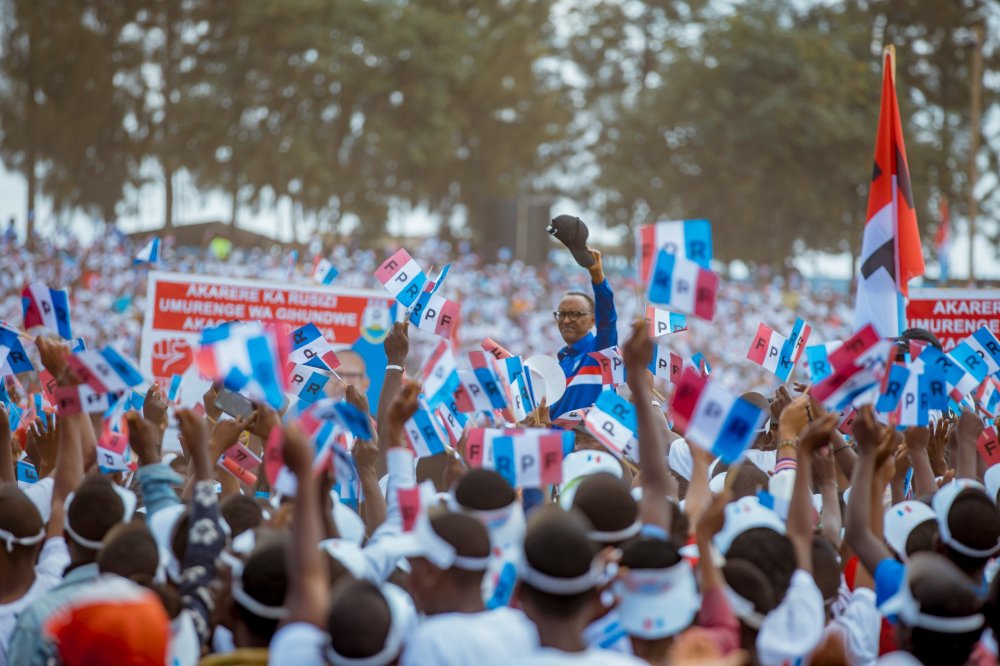
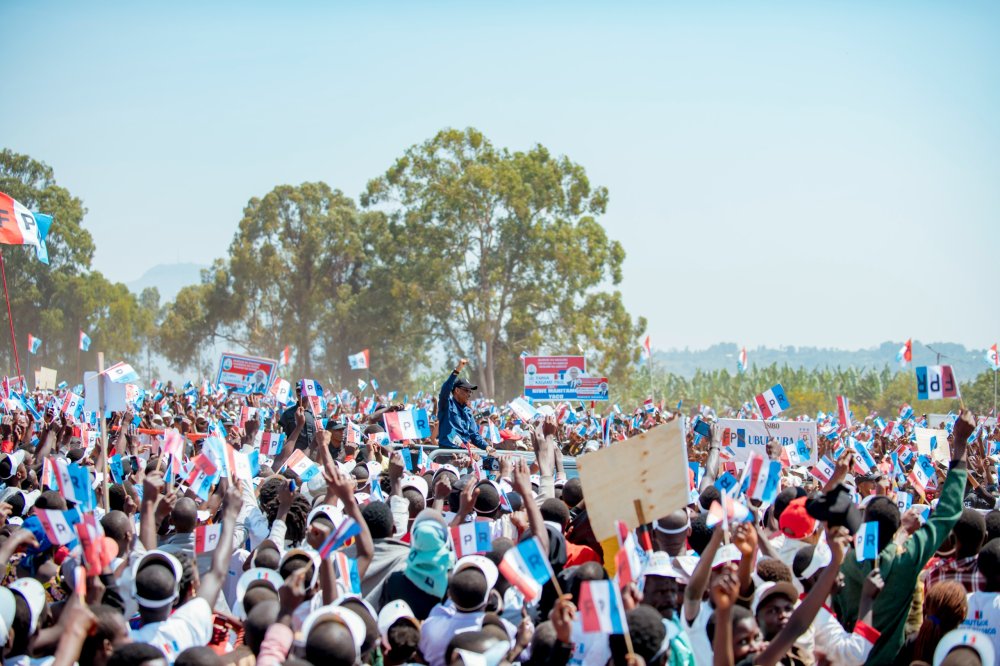
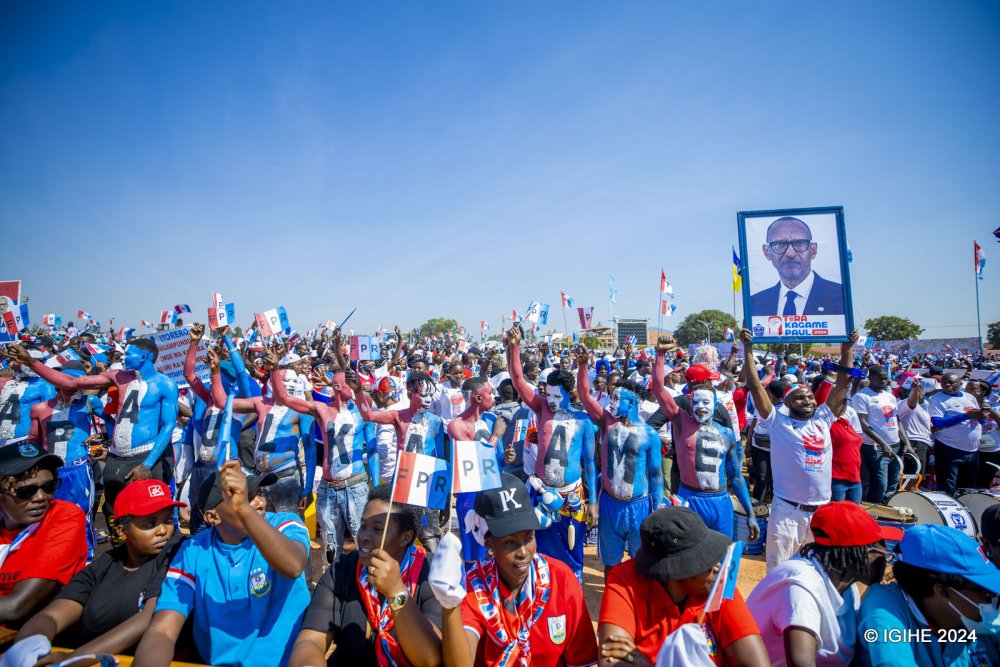
Upon arriving at Kamarampaka Stadium, the incumbent President Kagame was greeted with a joyful atmosphere and songs from a crowd of Rusizi residents and neighbouring districts.
Kagame expressed his gratitude to the event participants, highlighting that this campaign stage is a significant moment to appreciate the progress made while remembering Rwanda’s history.
He acknowledged that all achievements are due to the patriotism of every citizen who has dedicated themselves to building Rwanda, and that the best has already been accomplished.
“Thanks to our security, no one can find a point of entry to destabilize us!” he declared.
He emphasized that Rwanda’s external enemies cannot penetrate the country and keep their malevolence to themselves.
“All they have left is to wish us harm,” he added.
To help the youth understand their duty and responsibility to preserve this security and the progress already achieved, Kagame referred to Rwanda’s journey from the tragic history of the 1994 Genocide against the Tutsi, which the RPF’s policies have transformed into current success.
Kagame expressed his confidence that Rwandans will always work to protect Rwanda and its progress.
“Everything that has been achieved is thanks to you; the RPF has worked with you. You are truly Inkotanyi,” he stated.
He added that the journey has been long, much has been accomplished, and the future holds even more progress.
“We will undoubtedly achieve it,” he asserted confidently to his patriotic citizens.
“You, the youth, look at where Rwanda came from and where it is today. You have a dual responsibility to continue building on the gains and to protect them against any threat,” he urged.
“We will protect our security,” the youth shouted again, reassuring Kagame of their strong sense of responsibility for Rwanda’s well-being.
The RPF chairman is running against Frank Habineza, the leader of the Democratic Green Party of Rwanda, and Mbayimana Philippe, who is vying for the presidency on an independent ticket.
The campaigns will close on July 13. Approximately 9.5 million people have registered to vote in this year’s parliamentary and presidential elections.
In the orders issued on Friday, the High Court also barred the authorities from using any other crude weapons or any form of brute force against protesters, following a petition filed by lawyer Saitabao Ole Kanchory.
“I find the petitioner has demonstrated that the petition is arguable and not frivolous, he has further demonstrated that it is in the public interest that the orders sought are granted,” Justice Mugure Thande ruled.
The court also allowed the petitioner’s request that the police be barred from committing any extrajudicial killings, arrests, abductions, detentions, harassment, intimidation, torture, or cruel, inhuman, and degrading treatment of persons protesting against the Finance Bill.
The court heard that the police had resorted to arbitrary arrests, abductions and harassment of persons believed to be leaders of the Gen Z protesters who took to the streets to protest against what they termed as punitive taxes by the government.
The protests continued on Thursday despite President William Ruto declining to sign into law the controversial Bill which sought to introduce additional taxes to support various government initiatives, including easing foreign debt distress.
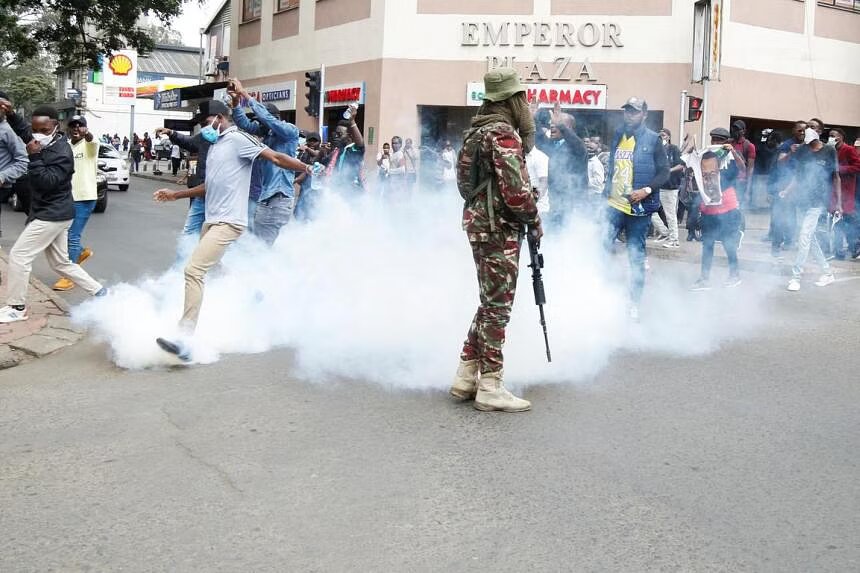
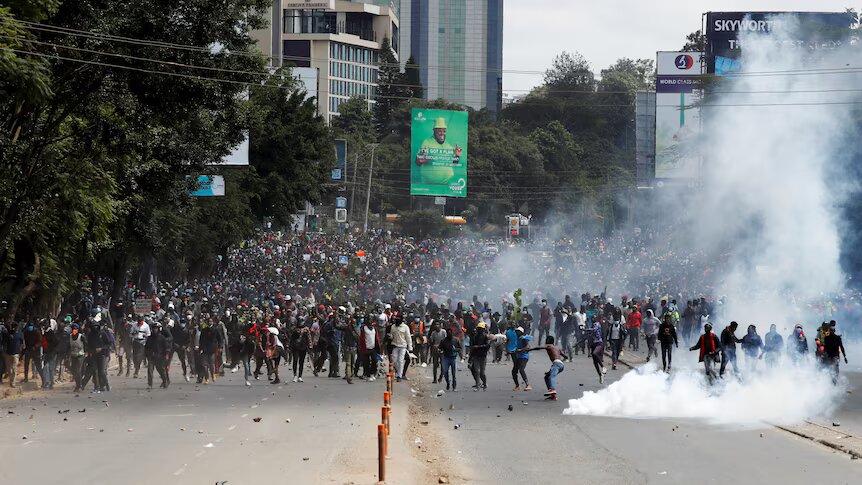
There was heavy police presence in Nairobi and major cities in the country as protesters turned up to express their anger against the government and mourn more than 20 people killed during Tuesday’s protests.
To prevent a repeat of the dramatic scenes witnessed on Tuesday when protesters invaded parliament, the government also deployed the military and erected roadblocks around key buildings in the Capital Nairobi.
The police fired teargas canisters to disperse the demonstrators who were demanding President Ruto’s resignation.
President Ruto had earlier committed to engaging the young people to address their concerns after resolving to withdraw the Finance Bill 2024.
“I propose an engagement with young people of our nation to listen to their issues and agree with them on their priority areas of concern,” President Ruto said on Wednesday.
The Kenyan Head of State also emphasized the need for a multi-sectoral conversation about the public debt and the country’s future.
“I also propose that within the next 14 days, a multi-sectoral, multistakeholder engagement be held with a view to charting the way forward on matters relating to the content of the Bill as well as auxiliary issues raised in recent days on the need for austerity measures and strengthening our fight against corruption.”
The Finance Bill 2024 sought to raise $2.7 billion in additional taxes for the government but Kenyans opposed the proposals citing over taxation.
He made the remarks in Huye District, Southern Province, where he continued his campaign activities on Thursday, June 27, 2024.
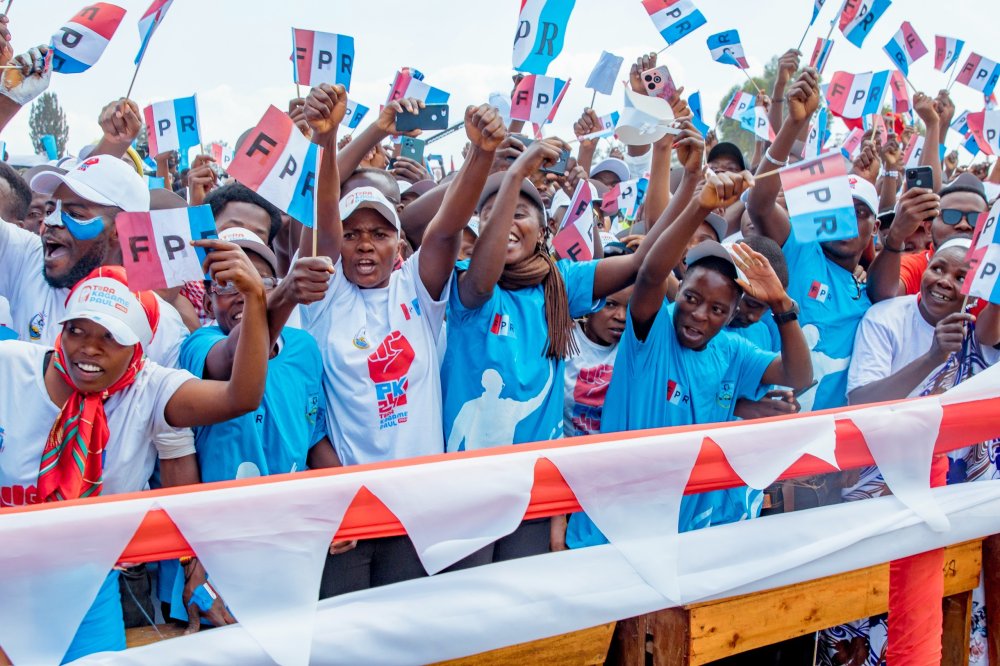
The RPF flagbearer started by thanking the citizens, especially those who gathered in Huye District including residents from Gisagara, Nyanza, and Nyaruguru, reminding them of Rwanda’s collective achievements.
Kagame urged Rwandans to vote for him on July 15, 2024, to continue the journey of building the nation that began after its liberation in July 1994.
The people responded unanimously, saying, “It’s you!” and he responded, “I agree. What convinces me is that what you choose for me, you will also do. So my task is straightforward: to move forward together.”
He continued, “You already know, the progress will continue year after year. The election date is approaching quickly as if it knows that we are all eagerly awaiting it. It’s soon! Actually, with all of you gathered here in such large numbers, it feels like the election has already concluded. Therefore, that excitement compels us to act (to vote) so that we can expedite our work of building the nation. The youth here — when I look at your numbers and other places I have been — you give hope to everyone.”
The people sang, “Continue the path you started, if you falter, you’ve made the right choice, Lord be with you.” That’s how it is.”
Kagame assured those gathered in Huye District that if they vote for him, he will return to thank them.
The RPF chairman is running against Frank Habineza, the leader of the Democratic Green Party of Rwanda, and Mbayimana Philippe, who is vying for the presidency on an independent ticket. Six other independent candidates had their candidature rejected after failing to meet several requirements set by the National Electoral Commission (NEC).
The campaigns will close on July 13. Approximately 9.5 million people have registered to vote in this year’s parliamentary and presidential elections.
The Kenyan Head of State bowed to pressure to drop the Bill after angry protesters overwhelmed the police, invaded, and set ablaze a section of Parliament moments after lawmakers passed the contentious Bill on Tuesday.
The violent confrontation between the police and the young “Gen Z” protesters sadly resulted in the deaths of several people and left scores injured, prompting condemnation from the United Nations, the African Union, and several foreign diplomatic missions in Nairobi.
On Wednesday, just hours after he threatened to crack down on the “organizers and financiers” of the protests, Ruto made a surprise U-turn, conceding to the demands from the protesters and calls for dialogue from the international community.
In a televised speech from State House Nairobi, President Ruto said, “The people have spoken… I concede,” promising to engage the young people he had earlier described as “dangerous criminals” and plotters of “treasonous” activities.
“Having reflected on continuing the conversation around the Finance Bill, and listening to the Kenyan people who say they want nothing to do with this Bill, I concede.
“Therefore, I will not sign the Finance Bill 2024 and it shall be subsequently withdrawn and I have agreed with these members, that shall become our position,” President Ruto stated.
The withdrawal of the Bill, however, complicates matters for President Ruto, who has recently initiated various measures aimed at maintaining Kenya’s creditworthiness in international markets. This comes amid criticism over alleged insensitivity to the welfare of Kenyans grappling with the high cost of living exacerbated by new taxes introduced after Ruto took office.
Currently, the country’s debt burden stands at 68% of GDP, which exceeds the World Bank and International Monetary Fund’s recommended threshold of 55% of GDP. Kenya’s GDP stands at $113.4 billion.
Watch this video to learn more about the Finance Bill protests in Kenya and the impact of President Ruto’s concession.
In a State of the Nation Address on Wednesday afternoon, the Kenyan Head of State stated that the people of Kenya had spoken, and he had “conceded” and agreed with lawmakers to withdraw the contentious Bill.
“Having reflected on continuing the conversation around the Finance Bill, and listening to the Kenyan people who say they want nothing to do with this Bill, I concede.
“Therefore, I will not sign the Finance Bill 2024 and it shall be subsequently withdrawn and I have agreed with these members, that shall become our position,” President Ruto stated.
He announced several austerity measures to contain government expenditure, starting with the Office of the President and the Executive. These include reduced spending on travel, hospitality, the purchase of motor vehicles, and renovations.
“I direct that operational expenditure in the Presidency be reduced to remove allocations for the confidential vote, reduce travel budget, hospitality and purchase of motor vehicles, renovations and other expenditures,” President Ruto stated.
The Finance Bill 2024 sought to raise $2.7 billion in additional taxes for the government.
At least five people were shot dead by the police and a dozen others were injured in the violent confrontation in and outside parliament precincts, according to Amnesty International.
The international community, led by the United Nations (UN) and the African Union (AU), condemned the violent protests and called on the authorities to exercise restraint while also urging peaceful demonstrations.
Retired President Uhuru Kenyatta and former Prime Minister Raila Odinga also pressured Ruto’s administration to listen to the people, especially the young people “Gen Z” who comprised the majority of the protesters.
In the spirit of the proposed dialogue, President Ruto has pledged to engage Kenyan youth to hear their perspectives and concerns.
“I propose an engagement with young people of our nation to listen to their issues and agree with them on their priority areas of concern,” he added.
The Kenyan Head of State also emphasized the need for a multi-sectoral conversation about the public debt and the country’s future.
“I also propose that within the next 14 days, a multi-sectoral, multistakeholder engagement be held with a view to charting the way forward on matters relating to the content of the Bill as well as auxiliary issues raised in recent days on the need for austerity measures and strengthening our fight against corruption.”
{{Debt distress
}}
In his address on Wednesday, President Ruto acknowledged that the Finance Bill 2024 is among the painful measures the government has had to take since assuming office in September 2022 to maintain Kenya’s creditworthiness in international markets.
Currently, the country’s debt burden stands at 68% of GDP, which exceeds the World Bank and International Monetary Fund’s recommended threshold of 55% of GDP.
Pressure from Kenyans last week saw the Head of State allow several amendments. These included the withdrawal of proposed 16% VAT on bread, a 2.5% motor vehicle tax increase, and a hike in the tax on mobile money transfers from 15% to 20%.
Additionally, the proposal to introduce a Ksh150 per kilogram eco-tax on plastic packaging materials, batteries, and hygiene products such as diapers and sanitary pads was dropped.
This, however, did not stop the demonstrations as protesters demanded the withdrawal of the entire Bill.
For the first time in Kenya’s 61 years of independence, angry protesters stormed Parliament in Nairobi yesterday, causing massive destruction after lawmakers defied calls to reject the Finance Bill 2024, which seeks to raise $2.7 billion in additional taxes for the government.
At least five people were shot dead by the police and more than 31 others were injured in the violent confrontation, according to Amnesty International.
Uhuru said he was deeply saddened by the loss of lives, calling on the current administration to listen to the people to avert more loss of life.
“I come to you with a heavy heart. Saddened by the loss of lives occasioned by the current situation prevailing in our country. It is the right of every Kenyan to protest as determined as determined by the constitution we all promulgated in 2010. It is also the duty of leaders to listen to those they lead,” the former Kenyan Head of State stated.
“Leaders must know that power and authority they have is donated to them by the people. I therefore call for calm and for the leadership to show restraint and do the right thing by listening to the people and not be antagonistic to them. Violence on either side is not the answer,” he added.
As a former president, Uhuru said he had felt the weight and the difficulty of leading Kenya and called for wisdom and civility to navigate the current crisis.
“Dear Kenyans, I stand with you and I ask our leadership to embrace dialogue and speak to the people and not at the people. I pray for peace and understanding on the part of each and every Kenyan and for all of us to remember that Kenya is bigger than one of us; there is nothing cast in stone that cannot be changed,” Uhuru added.
Odinga, on his part, urged the state to “stop murdering Kenya’s children.”
He said Ruto’s administration had refused to listen to the cries of Kenyans on high taxation and is instead pushing through additional taxes amid the high cost of living.
“Matters that should have been resolved through dialogue and humility have degenerated into developments that have never been witnessed in the 61-year history of our country since Independence,” Odinga stated.
“I am deeply troubled by the violent and deadly crackdown on young, peaceful protesters exercising their right to peaceful assembly and freedom of expression.”
The former Kenyan Prime Minister called on Ruto’s government to suspend the Finance Bill and pave the way for dialogue with the young people, “Gen Z,” who comprised the majority of the protesters.
“Kenya cannot afford to kill its children just because the children are asking for food, jobs and a listening ear. This Bill is neither an emergency nor a life-and-death matter for the government and Kenyans,” he noted.
“Kenyans will recall that when there was a standoff in the last Parliament over calls for the reduction of tax on petroleum products from 16 per cent to 8 per cent, the then Jubilee government agreed to suspend that provision and fell back on the old Finance Act until a consensus was reached. The same can happen today, with the government suspending the current Finance Bill and continuing with the Finance Act of last year.”
He urged the East African Community, the African Union and the United Nations to immediately be seized of the unfolding situation in Kanya to save lives and the country.
“I mourn with the families that have lost loved ones and stand with them in the ongoing struggle for Justice and economic liberation,” he added.
President Ruto on Tuesday night termed the protests as treasonous and labelled the protesters as dangerous criminals. He vowed to crack down on the “organisers and financiers of the protests” to prevent a repeat of the same.
{{Debt burden
}}
The Finance Bill 2024 is the latest in a series of measures aimed at maintaining Kenya’s creditworthiness in international markets. Currently, the country’s debt burden stands at 68% of GDP, which exceeds the World Bank and International Monetary Fund’s recommended threshold of 55% of GDP.
Pressure from Kenyans last week saw the Head of State allow several amendments. These included the withdrawal of proposed 16% VAT on bread, a 2.5% motor vehicle tax increase, and a hike in the tax on mobile money transfers from 15% to 20%.
Additionally, the proposal to introduce a Ksh150 per kilogram eco-tax on plastic packaging materials, batteries, and hygiene products such as diapers and sanitary pads was dropped.
Other taxes that remain untouched include proposals to increase import taxes from 2.5% to 3% of the item’s value, payable by the importer at the port, as well as a 16% tax on goods and services intended for the direct and exclusive use in the construction and equipping of specialized hospitals with a minimum bed capacity of 50. Kenyans have expressed concerns that the latter could lead to higher costs for accessing critical health services such as cancer treatment, diabetes care, kidney dialysis, and other chronic illnesses.
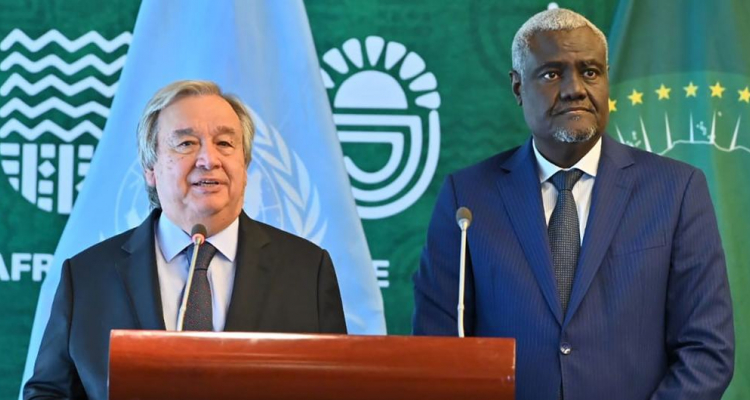
In separate statements, AU Secretary-General António Guterres and AU Commission Chairperson Mousa Faki urged the Kenyan authorities to exercise restraint, while also calling on peaceful demonstrations amid concerns over “punitive” taxes imposed on the citizenry by President William Ruto’s administration.
“I am deeply saddened by the reports of deaths and injuries – including of journalists and medical personnel – connected to protests and street demonstrations in Kenya.
“I urge the Kenyan authorities to exercise restraint, and call for all demonstrations to take place peacefully,” Guterres stated.
Faki, on his part, also called for constructive dialogue to address the issues raised by the protesters.
“The Chairperson urges all stakeholders to exercise calm and refrain from further violence. The Chairperson also appeals to national stakeholders to engage in constructive dialogue to address the contentious issues that led to the protests in the supreme interest of Kenya,” Faki said.
He added, “The Chairperson reiterates the total solidarity of the African Union with the Government and People of Kenya and exhorts them to maintain peace, security and stability in the country.”
Opposition leader Raila Odinga, who has expressed interest in heading the AU Commission next year, also condemned the killings reported on Tuesday, urging the state to “stop murdering Kenya’s children.”
Odinga called on Ruto’s government to suspend the Finance Bill and pave the way for dialogue with the young people, “Gen Z,” who comprised the majority of the protesters.
“I am deeply troubled by the violent and deadly crackdown on young, peaceful protesters exercising their right to peaceful assembly and freedom of expression,” Odinga stated, adding, “Kenya cannot afford to kill its children just because the children are asking for food, jobs and a listening ear…This Bill is neither an emergency nor a life-and-death matter for the government and Kenyans.”
Angry protesters stormed the Kenyan parliament in Nairobi after lawmakers passed the bill seeking to raise $2.7 billion in additional taxes for the government.
The protesters overwhelmed a contingent of anti-riot police officers manning the parliament buildings, set police vehicles ablaze, and shattered the windows of some of the facilities.
At least five people died from gunshot wounds, and thirty-one others were injured during Tuesday’s protests, according to Amnesty International.
The human rights group said it documented 13 cases of people shot with live bullets, four with rubber bullets, and three people who were hit with launcher canisters.
The organization also revealed that 21 abductions and disappearances by uniformed and non-uniformed officers were reported ahead of Tuesday’s protests.
“We urge the State and all parties to de-escalate the situation and stop the use of lethal force to protect life,” the organisation appealed.
President Ruto on Tuesday night termed the protests as treasonous and labelled the protesters as dangerous criminals. He vowed to crack down on the “organisers and financiers of the protests” to prevent a repeat of the same.
{{Debt burden
}}
The Finance Bill 2024 is the latest in a series of measures aimed at maintaining Kenya’s creditworthiness in international markets. Currently, the country’s debt burden stands at 68% of GDP, which exceeds the World Bank and International Monetary Fund’s recommended threshold of 55% of GDP.
The opposition has in recent weeks faulted President Ruto’s proposed taxes, claiming he is under external pressure to overburn Kenyans struggling to make ends meet.
Pressure from Kenyans last week saw the Head of State allow several amendments. These included the withdrawal of proposed 16% VAT on bread, a 2.5% motor vehicle tax increase, and a hike in the tax on mobile money transfers from 15% to 20%.
Additionally, the proposal to introduce a Ksh150 per kilogram eco-tax on plastic packaging materials, batteries, and hygiene products such as diapers and sanitary pads was dropped.
Other taxes that remain untouched include proposals to increase import taxes from 2.5% to 3% of the item’s value, payable by the importer at the port, as well as a 16% tax on goods and services intended for the direct and exclusive use in the construction and equipping of specialized hospitals with a minimum bed capacity of 50. Kenyans have expressed concerns that the latter could lead to higher costs for accessing critical health services such as cancer treatment, diabetes care, kidney dialysis, and other chronic illnesses.
The protests, largely led by young people popularly known as Gen Z, turned ugly on Tuesday afternoon after lawmakers voted to pass the Finance Bill 2024.
The protesters overwhelmed a contingent of anti-riot police officers manning the parliament buildings, set police vehicles ablaze, and shattered the windows of some of the facilities.
Local media reports indicate that several people have been shot in the ongoing protests, with some fatalities being reported.
During the Third Reading of the Bill on Tuesday, 195 Members of Parliament voted in support of the Bill while 106 voted to reject the proposed law. There were three spoilt votes.
Similar protests rocked the country last week as the Kenyan Parliament debated the contentious Bill which has divided the House.
Despite the spirited demonstrations, parliament voted for the Finance Bill 2024 to enter the committee stage.
204 MPs voted in favour of the bill while 115 voted against it, paving the way for the bill to move to the committee stage and a third reading. Having sailed through the third reading on Tuesday, it will now be sent to President William Ruto for assent.
{{Protests rock Kenyan streets
}}
Ahead of the House’s consideration of the bill on Tuesday afternoon, young people came out in droves to demand its total rejection.
The protesters engaged in running battles with the police, who used teargas canisters and water cannons to disperse the growing crowds.
Rita Auma Obama, an activist and half-sister of former United States President Barack Obama, was among the protesters caught up in the melee. A video that has gone viral on social media shows Auma being forced to cut short her interview with CNN due to the overwhelming teargas deployed by the police.
BREAKING: Auma Obama is tear-gassed by Kenya police live on CNN as she joins peaceful protests against over-taxation pic.twitter.com/XLpsvLlDyz
The Finance Bill 2024 is the latest in a series of measures aimed at maintaining Kenya’s creditworthiness in international markets. Currently, the country’s debt burden stands at 68% of GDP, which exceeds the World Bank and International Monetary Fund’s recommended threshold of 55% of GDP.
The opposition coalition led by former Prime Minister Raila Odinga has in recent weeks faulted President Ruto’s proposed taxes, claiming he is under external pressure to overburn Kenyans struggling to make ends meet after a series of “punitive” taxes.
Pressure from Kenyans last week saw the Head of State allow several amendments. These included the withdrawal of proposed 16% VAT on bread, a 2.5% motor vehicle tax increase, and a hike in the tax on mobile money transfers from 15% to 20%.
Additionally, the proposal to introduce a Ksh150 per kilogram eco-tax on plastic packaging materials, batteries, and hygiene products such as diapers and sanitary pads was dropped.
The government said the proposed Eco Levy will only be imposed on imported finished products that contribute to e-waste and thus harm the environment when they are no longer in use.
Other taxes that remain untouched include proposals to increase import taxes from 2.5% to 3% of the item’s value, payable by the importer at the port, as well as a 16% tax on goods and services intended for the direct and exclusive use in the construction and equipping of specialized hospitals with a minimum bed capacity of 50. Kenyans have expressed concerns that the latter could lead to higher costs for accessing critical health services such as cancer treatment, diabetes care, kidney dialysis, and other chronic illnesses.
In response to the Gen Z protests, President Ruto said on Sunday that he is willing to engage with young people to address their concerns.
“I want to tell you that we are going to have a conversation so that we can identify your issues and work together as a nation,” President Ruto remarked at a local church service.
The Head of State disclosed this on Tuesday, June 25, 2024, during a campaign event in Nyarugenge District.
Kagame stated that nothing makes him prouder than leading the members of the RPF Inkotanyi and Rwandans in general, who are willing and capable.
In his speech to the over 300,000 people who attended the RPF Inkotanyi campaign, Kagame highlighted that Rwanda has endured a difficult history but emerged with courage.
He said, “Our country has a dark history, it has gone through many tragic events that took away our loved ones. People have their time and go, but being taken away by someone else, having your life ended by someone else, is not right. That is why it doesn’t surprise me that Rwanda, having gone through those hardships, has produced people like you, people like us. This should always be the case, it should always define Rwanda.”
He continued by saying that for Rwanda to continue being defined by this bravery, certain measures are necessary.
He said, “For this to persist, Rwandans need to choose well, understand well, and perform well. We were fortunate to have the RPF during the historical changes.”
Kagame said that if Rwandans continue to embody this courageous behaviour, they will achieve much, silencing those who criticize Rwanda.
Using an example from his own experience, President Kagame pointed out that there are those who criticize Rwanda without understanding its history, as someone once asked him if he was a Tutu (meaning Hutu) or a Hutsi (meaning Tutsi).
He said, “But you know that most of those who talk about us don’t even know us. Someone once asked me, in these daily inquiries they make, and they also show disrespect, asking me ‘Who are you? Are you Tutu (Hutu) or Hutsi (Tutsi)?’ Not knowing what they were talking about, I told him, ‘In Rwanda, I am all of those things and more.’”
“When he wanted to ask if I was a Hutu or a Tutsi, saying Tutu or Hutsi, I told him, ‘I am both, but also more,’ I said, ‘but all these are encompassed in being a Rwandan; I am a Rwandan.’”
President Kagame urged Rwandans to respect these foreigners, but only if they are also respected.
He said, “Live with them, give them value, respect them but only if they give you value and respect you as well.”