The Supreme Court today accepted a petition from the Democratic Green Party of Rwanda to hear a case in which the party accuses the Government of breaching the Constitution by participating in the process that seeks amendment of Article 101 of the supreme law to allow President Paul Kagame a chance to run for another term in office.
The court set September 23 as the date for the hearing.
Green Party wants the Supreme Court to rule against the ongoing efforts to lift term limits from the constitution.
The petition was filed after more than 3.7 million Rwandans delivered petitions to both chambers of parliament asking it to initiate the process to lift the two-term restriction from the constitution.
Presiding judge Immaculée Nyirinkwaya said the Supreme Court has the jurisdiction to handle petitions related to the constitution and could not delegate that role to any other institution.
Both chambers of parliament have since approved the proposed amendment to the constitution and paved the way for the establishment of a constitutional review commission.
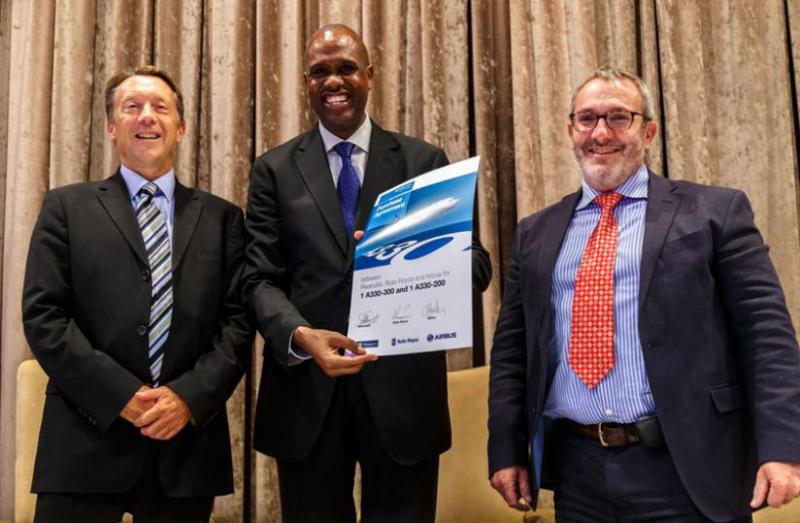
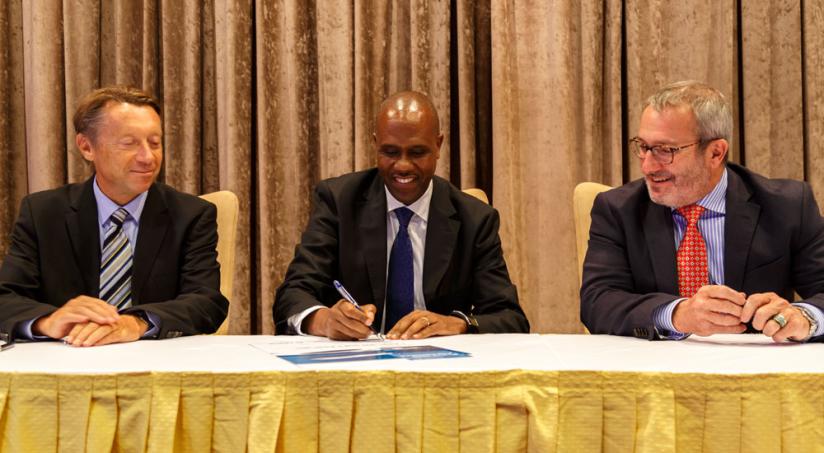
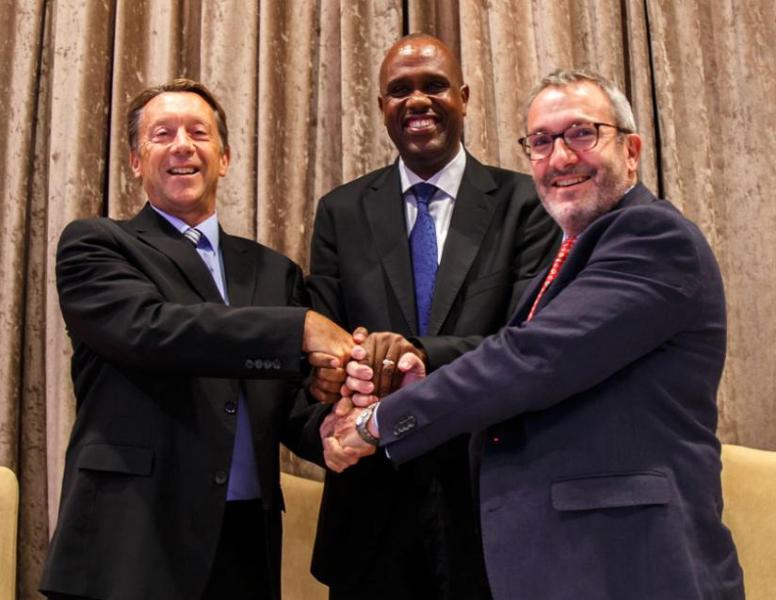
Rwanda’s national carrier RwandAir, and Airbus, yesterday, signed a purchase agreement for the two Airbus aircraft A330-200 and A330-300.
RwandAir becomes the first airline in East Africa to acquire this type of aircraft.
One of the planes has 261 seats and the other 300 seats, and will both come in a triple-class configuration with Rolls Royce Trent 772B engines.
They are expected to be delivered in September and December next year.
The A330 type of aircraft has an operational reliability of 99.4% and boasts efficiency for all market segments, thus making it a perfect match for RwandAir, according to airline officials.
This particular purchase order, according to Dr Alexis Nzahabwanimana, the State Minister for Transport, will help RwandAir to expand its flight coverage to both Europe and East Asia by the end of next year.
“It will also enable the national carrier to take advantage of lower operating costs. This will enhance the airline’s profitability in the long run,” Nzahabwanimana said.
John Mirenge, the RwandAir chief executive, said the deal reaffirms the airline’s efforts to contribute to national economic development.
“The deal is proof of good micro- and micro-economic management and our reliability, passenger comfort, versatility and fuel efficiency, which will enhance our competitiveness in Africa and beyond,” Mirenge said.
The acquisition of these two wide-body aircraft will significantly increase RwandAir’s capacity to effectively meet growing demand and provide exceptional service quality for the ever-growing Asia-China and European passenger markets, he added.
Christopher Buckley, the Airbus’s executive vice-president for Africa, Europe and Asia Pacific, said the deal reaffirms the confidence between RwandAir and the manufacturer, which the two can now leverage to grow and thrive in aviation business.
Recently, both RwandAir and the Eastern and Southern Africa Bank (PTA Bank) signed a financial line of credit worth $160m to support the purchase of the two airlines.
There is hope that with two wide body aircraft, the airline’s capacity could grow from the current 500,000 passengers annually to more than 3 million in the next five years.
The two airlines will see RwandAir fleet grow to 12 planes.
The national carrier was early this year recognised as one of the safest airlines by the International Air Transport Association (IATA) after passing the operational safety audit (IOSA).
It later became a member of the International Air Transport Association (IATA), joining a club of 250 member airlines in more than 150 countries.
The airline flies to more than 18 destinations, including Nairobi, Entebbe, Mombasa, Bujumbura, Lusaka, Juba, Douala, Dar-es-salaam, Kilimanjalo, Johannesburg, Dubai, Lagos, Libreville and Brazzaville, among others.
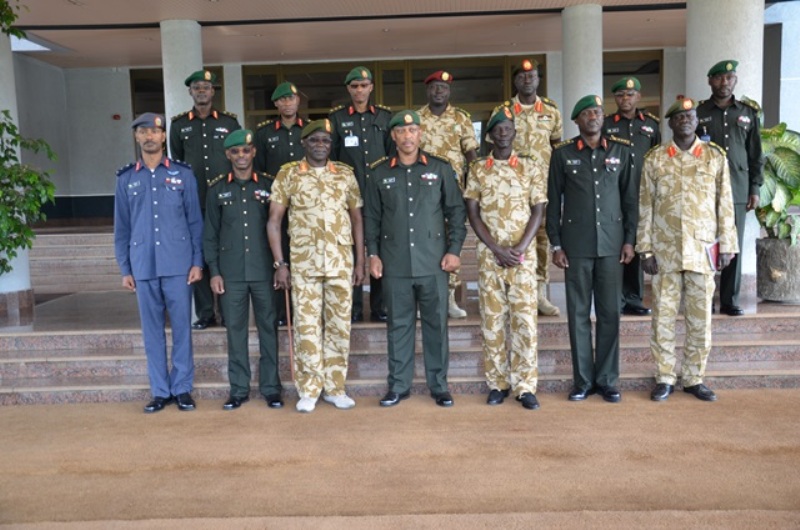
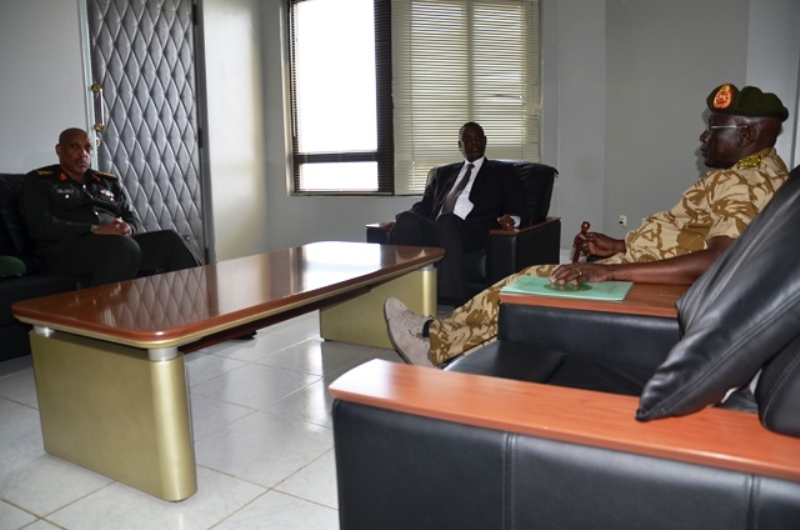
The Chief of General Staff of Sudanese Peoples Liberation Army (SPLA), Gen Paul Malong Awan and his delegation is in Rwanda on a four day official visit from 7-10 September 2015.
On Tuesday 8 September 2015, the SPLA CGS paid courtesy calls on Hon Minister of Defence, Gen James Kabarebe and the Chief of Defence Staff, Gen Patrick Nyamvumba at RDF Headquarters, Kimihurura. The SPLA delegation was briefed on RDF and its role in post-conflict and national development.
The SPLA CGS said “ My visit is very selective, I have selected to visit Rwanda Defence Forces, to share with them their experience, see their facilities with confidence that what we get will serve our purpose as we build our young nation, because we share a common background of armed struggle” said Gen Paul Malong Awan.
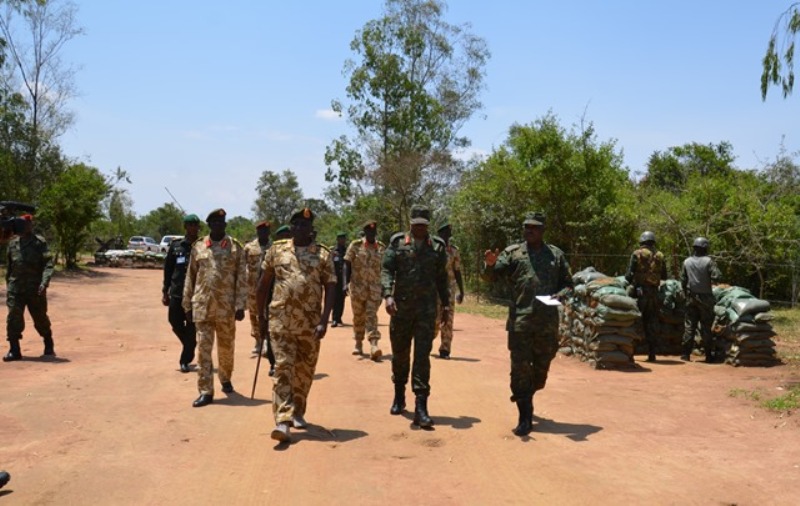
The SPLA CGS and delegation visited Rwanda Military Academy Gako where they toured the Academy and had a presentation on the vision and mission of the Military Academy. RMA Gako conducts a 4 year cadet degree program, a 1 year cadet course, and the Peace Support Operations pre-deployment training program.
The SPLA which trains some of its Officers at RDF Military Institutions is seeking to enhance military partnership with Rwanda Defence Forces.
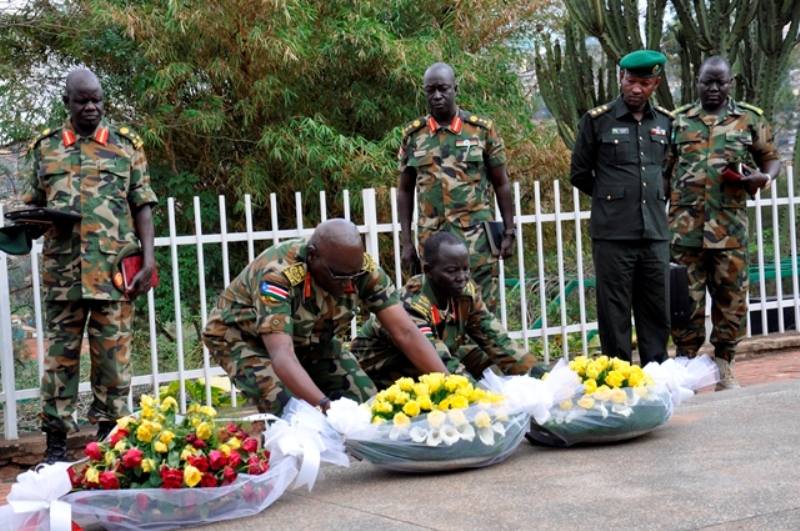
On Monday 7 September 15, the CGS and his delegation visited Kigali Genocide Memorial Center where they paid respect to the victims of 1994 Genocide against Tutsi and learnt more on how the genocide was planned and executed.
During their four day visit, they will visit other Defence Institutions and Installations including Zigama CSS, Military Medical Insurance, Rwanda Military Hospital and RDF Command and Staff College at Nyakinama.
Rwanda maintains two Infantry Battalions and Aviation Unit in United Nations peacekeeping mission in South Sudan (UNMISS).
Rwanda and Britain are scheduled to review their relationship after it turned sour in June following the arrest of Gen. Karenzi Karake Rwanda’s Intelligence chief.
The British government has sent its Minister of State for International Development and Minister for Africa in the Foreign Office, MP Grant Shapps arrives Tuesday in the capital Kigali.
The UK High Commissioner in Rwanda, William Gelling, recently told the press that his government was drawing a plan to review its relations with Rwanda.
On June 20, Gen. Karake was arrested by the Metropolitan Police at London Heathrow Airport. He was returning home. The British Police claimed they were complying with a 2008 Spanish issued arrest warrant that sought to extradite to spain the Rwandan General.
Rwandans across the world condemned the arrest .
Britain is a major donor to Rwanda extending an estimated at £10 million in annual support to the budget.
According to the British High Commissioner in Kigali, part of Minister Shapps’ two-day visit will include touring different projects funded by the British Department for International Development (DFID) in the countryside.
It is also expected that Rwanda’s Finance Minister Clever Gatete and Shapps will formally sign the DFID Learning for All education programme and later meet members of the press.
In 2013, DFID, in partnership with Rwanda, offered £11.9million (Rwf12b) to support 26 projects promoting innovation in country’s education sector, with a focus on projects promoting English.
One of the successful projects is $1million ‘Teacher Self-Learning Academy project’ run by Plan International Rwanda-a child rights organisation. The project improves quality of teaching and learning in Science and English using innovative technology.
The ongoing construction of Nzove II water treatment plant in Nyarugenge District and optimisation of production capacity of Nzove I water treatment plant mean that there will finally be adequate water supply in City of Kigali when the next dry season comes around in July 2016, the water utility has said.
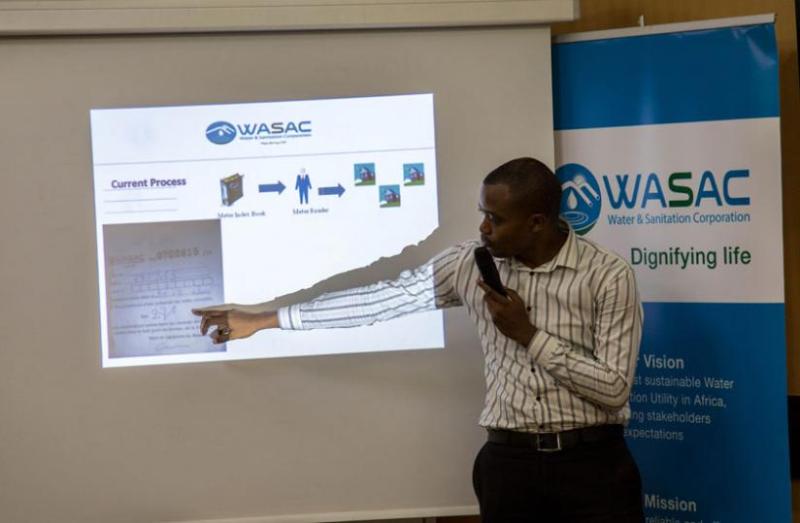
James Sano, the chief executive of the Water and Sanitation Corporation (WASAC), made the remarks yesterday during a news briefing during which WASAC officials talked about water supply challenges in the City of Kigali and plans that have been initiated to address them.
With the current demand of water in Kigali standing at 110,000 cubic metres per day, WASAC’s current supply capacity of only 65,000 cubic metres per day leaves half of the city’s residents without water or having to survive on water rationing.
However, this is about to change, Sano said, with Nzove II Water Treatment Plant set to add 25,000 cubic metres of water per day to the city water supply capacity by December.
He also said the optimisation of production capacity of Nzove I Water Treatment Plant will add 14,000 cubic metres of water per day to the city water supply capacity by July 2016.
By July, WASAC’s water supply capacity in the City of Kigali will be standing at 104,000 cubic metres per day, which will be enough for adequate water supply in the city, according to Sano.
“With 104,000 cubic metres water supply capacity per day, there will be significant improvement in water distribution. There will be very negligible water rationing since there will be adequate water supply,” Sano said.
The official said in case more water demand arises even with the 104,000 cubic metres supply capacity, WASAC will be able to boost the supply by adding 13,000 cubic metres per day on Nzove II Water Treatment Plant within five months after July 2016.
“We did not sit back as we faced water challenges in Kigali; we were busy planning. A sustainable solution to get us out of the problem of water shortage is building water treatment plants,” Sano said.
WASAC officials also said they had embarked on rehabilitating water supply networks in the City of Kigali to make water supply efficient for some 87,000 water subscribers.
Meanwhile, WASAC has also embarked on doing an inventory of its water subscribers in the City of Kigali to make it electronically accessible in a bid to ease its services to customers.
Kigali, Rwanda. September 4, 2015 – Kirehe District in the Eastern province, Mahama Sector is home to the biggest refugee camp in Rwanda, Mahama Camp. Set up to accommodate Burundian refugees who were and still are fleeing their country due to crisis related to the presidential elections in Burundi, the camp is currently home to 43,000 refugees with 1,800 unaccompanied minors.
Managed by the Ministry of Disaster Management and Refugee Affairs (MIDIMAR) in collaboration with the Office of the United Nations High Commissioner for Refugees (UNHCR). Supported by many other partners, the camp is steadily starting to transform. This is being realized with the latest move by the American Refugee Committee (ARC) to construct model shelters which will enable refugees to live in a community based arrangement.
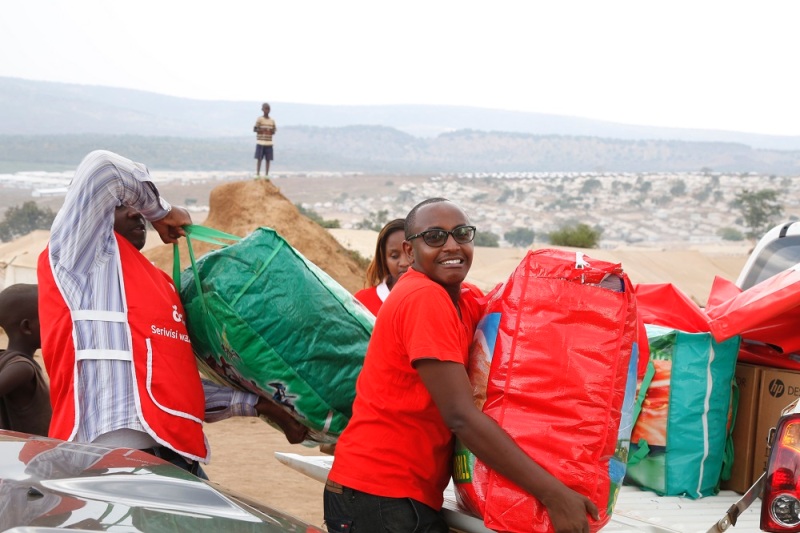
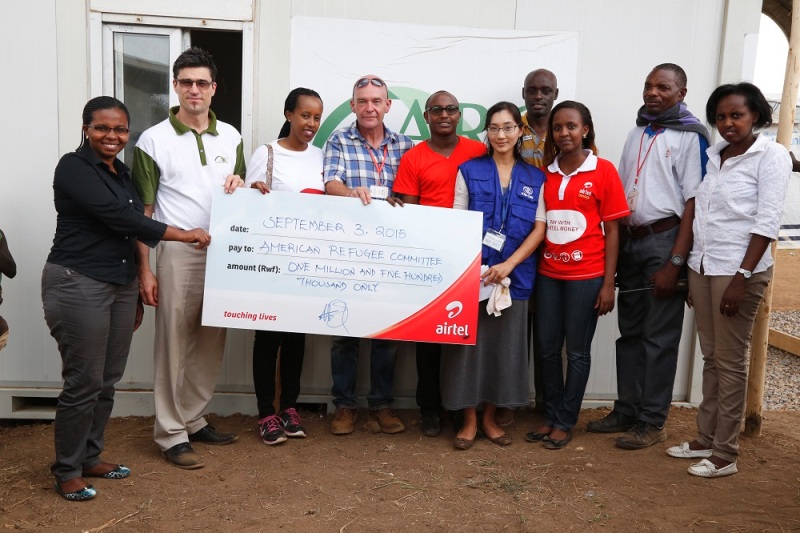
With this initiative and innovative structure, Airtel Rwanda reached out to provide support to the people in Mahama Camp. Through its Corporate Social Responsibility, Airtel Rwanda partnered with International Organization for Migration (IOM) to provide solar energy panels, clothes, shoes, computers and a printer for the residents of Mahama Camp.
Although health care operations started in April, the camp has three Physicians and thirty eight medical staff with round the clock primary health care services. The solar panels will be used to light the health facility at the camp. This environmentally friendly energy source will enable health workers serve patients better and for extended hours.
“Airtel Rwanda aims at improving the general lively hood of the people in our communities, not only by providing them with affordable and reliable telecommunications solutions, but also by providing the basic needs that can improve their lives.
We have been reaching out to people in need of help and it is in line with our Corporate Social Responsibility pillars that we continue to support our communities. Today, we have been able to contribute some items to Mahama Camp and we hope this can help improve the quality of living in the camp. Airtel Rwanda believes in helping the community it operates in.” Said Denise Umunyana, Head of CSR & Corporate Communications Airtel Rwanda.
Mahama Camp also has umbrella partners that have been working with MIDIMAR to help solve the plight of the residents. These include; UNHCR, UNICEF, WFP, ADRA, World Vision, Plan International, Save the Children, among others.
Speaking to ARC Country Director, Mr. Frederic Auger, he said; “We are doing all we can to ensure that the residents of Mahama Camp get all the necessary services. We are building shelters that will improve the housing structure in the camp. We hope with this improvement, there will be more organization within the camp. We are always open to all the support we can get. We are grateful of Airtel Rwanda for the support they have given us today and we hope this sets precedence for other Corporates.”
The Government has set aside at least Rwf200 billion for the reconstruction of the road linking Kagitumba border post to Kayonza District, and the stretch from Kayonza to Rusumo on the Tanzania border.
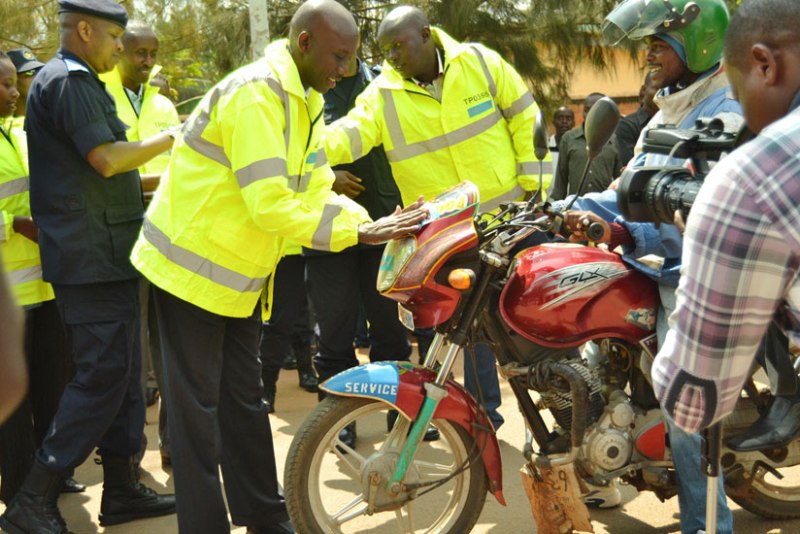
This was disclosed by the State Minister for Transport, Dr Alexis Nzahabwanimana while presiding over the launch of the Police Month in Eastern Province yesterday.
Nzahabwanimana said the construction of the 136km and 120km roads respectively, would start in November.
“We completed the feasibility study that included, among others, expropriation costs and other expenses…it will be a modern, wide road. We earmarked between Rwf180 billion and Rwf200 billion…but because the topography is good, we may remain with some money that would be used for other things like installing traffic signs,” he said.
The Kagitumba-Kayonza highway was constructed in 1986, while Kayonza-Rusumo road was built in place in 1976.
Addressing hundreds of residents who had turned up for the launch of the Police Month, Nzahabwanimana affirmed government’s commitment to tame bad road users and to check accidents.
He warned motorists and owners of transport and cargo vehicles that heavy punishments await them if they fail to comply with the new traffic rules.
“The construction of the road is one way to check accidents…the poor state of the current road is sometimes responsible for the accidents,” he said.
Nzahabwanimana called on the Police to enforce a directive requiring public transport vehicles to install speed governors, noting that failure to adhere to the directives would lead to prosecution.
“February 2016 is the deadline; all passenger and cargo vehicle owners must install ‘Speed Governors’. This is a law that all will have to observe…it is a simple machine you install to limit speed. The speed limit will be 60 km per hour. We have started to upgrade Police’s capacity to manage road accidents,” he said.
At least 200 people died and over 300 were seriously injured in road accidents between January and June this year, according to Police statistics.
The minister said pedestrians were the most affected by the accidents.
“We need sidewalks, including on roads in up-country towns, so that pedestrians are safe. It is disheartening that most victims were not in any way related to the cause of the accidents,” he said.
The Governor of Eastern Province, Odette Uwamariya, reiterated the need to upgrade old roads, noting that they were the cause of many accidents on the highways.
“The roads to Kagitumba and Rusumo are in bad shape…its good news that they will be repaired. Between June and August, we had 94 accidents, 46 people died and 64 were seriously injured. The renovation works, coupled with the speed limits will make a difference,” she said.
Globally, at least 1.3 million people die in road accidents every year.
Local Government minister Francis Kaboneka has called on all road users and motorists, in particular, to have a collective responsibility to ensure sustainable road safety by respecting traffic rules.
Kaboneka delivered the message, yesterday, in Kicukiro District, where he officiated at the launch of the countrywide ‘Road Safety Month-2015,’ which is running under the theme, “Respect Traffic Rule: Save Lives.”
“Intense awareness activities calling for responsibility of road users, coupled with strong enforcement of traffic rules are required to change the way roads are used. There is need to disseminate more information about road safety programmes to overcome any form of ignorance that may be dangerous for road users,” Kaboneka told hundreds of residents, who turned up for the exercise.
He said the country’s development agenda is hinged on safety and security, thus, there is need to prioritise road safety education with a focus on challenges like drunk driving, speeding, negligence and driving cars with mechanical faults, which are among the major causes of road accidents in the country.
The event was also graced by the Mayor of Kigali City, Fidel Ndayisaba, the Inspector General of Police (IGP) Emmanuel K. Gasana, senior Police officers and associations of drivers, among others.
IGP Gasana noted that ensuring road safety is not a one-day event but should be a daily routine for road users.
“We cannot let accidents be part of our daily lives. That is why we consider awareness on road safety as a continuous process and not a once-a-year event. Police implemented a comprehensive plan of action to reduce road accidents by involving residents through community policing and ensuring professionalism of traffic officers,” Gasana said.
“As we aspire for a sustainable and peaceful country, let every road user promote self-discipline as their duty to the nation.”
Police statistics show that at least 200 people died and more than 300 were injured in road accidents between January and June.
In general, 34 per cent of the victims were drivers and passengers, 30 per cent pedestrians, while motor and peddle cyclists contributed 23 per cent and 13 per cent, respectively.
The majority of the accidents were due to speeding, reckless driving, and using phones while driving.
{{‘Protect the youth’}}
Elsewhere, in the Western Province, the Minister in the President’s Office, Venancie Tugireyezu, also echoed the same message, but challenged leaders and elders to protect the youth as the future leaders of the country.
“You must respect Traffic Police at all times as they represent the law; violating their instructions is literally violating the laws. This is a moment for us to reflect on traffic rules; every citizen’s life is a treasure and very precious to the country, we cannot afford to lose a single life, we should always ensure safety of each other,” Minister Tugireyezu told residents of Nyabihu District.
Similar events were conducted in Eastern region (Kayonza District) presided over by the State Minister in charge of Transport, Alexis Nzahabwanimana, Northern region graced by the provincial executive secretary, Deo Kabagambe and Deputy Commissioner General of Police Stanley Nsabimana, while in the Southern Province, the event, held in Kamonyi District, was presided over by Governor Alphonse Munyentwari and the Deputy IGP in charge of Administration and Personnel, Juvenal Marizamunda.
The officials and Police officers engaged road users on road safety tips.
The event in all regions was marked with establishing and painting Zebra crossings, putting stickers with road safety message on vehicles and motorcycles and a road safety awareness walk.
The road safety month is an occasion to sensitise the public to become responsible road users, educate pedestrians on traffic rules and regulations and it will be enhanced by media programmes and community policing activities.
Special attention will be given to school children who will be educated and given road safety tips.
Les Amis Sportifs’ Jean-Claude Uwizeye stormed to an emphatic victory with a 4:26 advantage at the Tour of Kigali on Sunday that covered a total distance of 124.9km to register his first domestic career win in style.
The 21-year old was among a group of six riders including Janvier Hadi (Benediction), Aime Mupenzi, Jean-Bosco Nsengimana (Benediction), Jeremie Karegeya (Cine Elmay) and Mathieu Twizerane(CCA) that broke away at the start of the race in Bugesera, at the border of Rwanda and Burundi.
Hadi and Nsengimana, who are fresh from the Tour of Rio that ended a week ago, took turns at the front but Uwizeye would hold on till the first circuit around Amahoro Stadium in Kigali to drop Nsengimana and take a minute lead before going all out to register a fine finish in the seventh event of the inaugural Rwanda Cycling Cup that also attracted riders from Democratic Republic of Congo.
“I am so thrilled with this win especially because it is the first time I am winning a race in my two-year cycling career. I decided to breakaway because I was feeling good and have been training well,” said the visibly excited Uwizeye.
This is the third win for the Rwamagana-based side that also saw Joseph Aleluya bag the Kivu race from Muhanga to Rubavu in April, which was the first event of the Rwanda Cycling Cup.
Last year’s Tour du Rwanda winner Valens Ndayisenga won the men’s individual time trial at the National Championships in June.
Les Amis Sportifs coach John Rugamba was pleased with his side’s performance with Aleluya coming sixth after posting 3:26:34.
“There was nothing surprising about Uwizeye’s performance because he has gained race experience and is determined to win. He is a young rider whose future is looks very bright,” said Rugamba.
The Rwanda Cycling Cup is comprised of 10 events and is sponsored by Cogebanque and Skol.
{{Rwanda Cycling Cup event winners}}
1. Kivu Race – Joseph Aleluya (Les Amis Sportifs)
2. Race to Remember – Janvier Hadi (Benediction)
3. National Championships – Road Race Joseph Biziyaremye (Cine Elmay), individual time trial Valens Ndayisenga (Les Amis Sportifs)
4. Race for Culture – Janvier Hadi (Benediction)
5. Northern Circuit – Jean-Bosco Nsengimana (Benediction)
6. Western Circuit – Patrick Byukusenge (Benediction)
7. Tour of Kigali – Jean-Claude Uwizeye (Les Amis Sportifs)
Unexpected technical hitches are standing between the nation and 25 megawatts of energy production expected to be generated from the first phase of the KivuWatt Methane Project in the Western Province district of Karongi, The New Times has learned.
The wait has been long. The first deadline was sometime in 2012. The most recent was July, but it was missed. Now a new one has been set for October.
ContourGlobal, an American energy investment firm, has a 25-year concession to produce 100 megawatts from the methane-rich waters of Lake Kivu.
Works on the first phase started in late 2008 but seven years later, the plant is yet to produce any electricity.
This newspaper’s request for access to the project was granted last Friday as it sought to substantiate reports that a critical part of the project’s machinery had been severely damaged during installation, hence the missed July deadline.
Inside KivuWatt
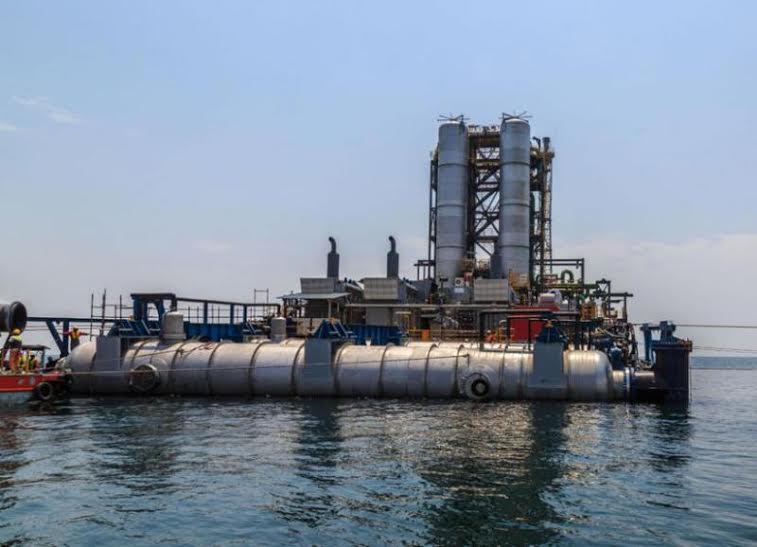
From a distance, the KivuWatt project is like a floating island in the middle of Lake Kivu; its machinery, which is a complicated assemblage of hundreds of thousands of tonnes of heavy pipes and metal, are installed on a wide barge.
The barge is anchored in one place by long strong ropes that are fastened in concrete slabs built at the bottom of the lake; according to the engineers, this is a permanent fixture.
Assessing the project progress from the outside, one could understand the frustrations of the government, which has played the role of patient customer waiting for a long placed order; a government that’s also under pressure from investors to address the daunting energy problem.
But once inside the project site, one gets to appreciate the reasons for the several missed deadlines in the past.
Jarmo Gummerus, ContourGlobal’s country director, says KivuWatt is a ‘lake breaking’ project,’ one that was always going to be a learning process.
Lake Kivu is the world’s only water body with methane gas and KivuWatt is the first project of its kind where methane gas will be extracted for electricity purposes. It’s one of ContourGlobal’s special Greenfield investments around the world.
“It’s lake-breaking because there are no templates for whatever we are doing here, there’s no luxury to copy and paste; everything here is being done for the first time, it’s an experiment where we have been learning and unlearning,” said Gummerus.
Gummerus, an engineer with several decades of experience, is as old in Rwanda as the project he’s managing.
At least two sub-contractors have been hired and fired, including the Kenya-based Civicon, about 3.5 million man-hours have been sunk into the project running on a multi-million dollar budget bankrolled by ContourGlobal investors.
Three million man-hours over a seven year period and the project hasn’t registered any fatal accidents, only five minor incidents were recorded under the watch of the two sub-contractors.
“Safety is a top priority here,” said the project’s head of safety.
Nicolas Suazo Farina is the project engineer for KivuWatt. He has been with the project for four years now and he told me that at the peak of the project sometime last year, there were over 500 personnel on site from 27 different countries.
In that mix were dozens of Rwandans including 27-year-old Cyprian Bigirimana, a graduate of Integrated Polytechnic Regional Centre (IPRC-Kigali), who, more than the money he has earned, acknowledges the project for giving him priceless experience and expertise.
Only about 150 workers remain on site given its near completion.
{{Last-minute glitches
}}
Both Gummerus and Farina said as far as they know, the project is 99.8 per cent complete and the only thing holding them back are a few unanticipated technical malfunctions that saw them lose an entire month and missing the deadline.
At this point of the concession, ContourGlobal is incurring all related costs to the project; the government is only waiting to start buying power from the investor at a cost thought to be around fifteen cents of the dollar.
“Everything is ready, from the production facility to the power plant, all we are waiting for is to sink the separators and extract the gas,” Gummerus said.
{{How it will be done
}}
In practice, KivuWatt will deliver 25 megawatts of electricity from methane gas but to do that, there are two pairs of separators, long and wide metallic pipe drums weighing 4000 tonnes. These are supposed to be installed some 18 meters underneath the lake.
The separators are important because they separate the methane gas from water before sending it (water) back into the lake, this happens in a continuous cycle.
Simply put, water enters these separators; a mechanical process then ensues in which the gas is extracted and sent up to the production system through pipes.
The water is then pushed back to the lake through an exit-valve on one of the separators. Early July, the first pair of these separators was sunk into the lake to begin the gas extraction process.
However, something wasn’t right with their positioning under the lake making them to malfunction; it was decided that they needed to be retrieved to the lake surface, checked, fixed and re-installed.
The process required professional divers. It also required the presence of the engineers who designed the separators, plus it required the purchase of certain machinery that had to be looked for, imported and flown into the country.
“Everything considered, we have lost about a month,” Gummerus said.
The project has hired six divers from South Africa. They also flew in one of the separators’ designers from Germany. Both expert-teams have been at work, the divers retrieved the separators and the engineer reworked the designs.
As of Friday, last week, they had finished their work and the pair of separators was ready to be reinstalled into the lake when another complication emerged.
The exit-valve on one of the separators had somehow jammed, it wasn’t opening; it means after separating the gas, the water couldn’t be released back into the lake…since the valve was closed.
Engineers spent all Friday trouble-shooting to figure out what was wrong with the valve. Once they fix that, the first pair of the separators will be re-installed into the lake followed by the other pair.