The Tunisian national dialogue quartet, a coalition of civil society organisations, has won the 2015 Nobel peace prize.
Kaci Kullmann Five, the newly appointed chairman of the Norwegian Nobel committee, said the quartet had formed an alternative peaceful political process in 2013 when the country was on the brink of civil war and subsequently guaranteed fundamental rights for the entire population.
Live Nobel peace prize 2015 goes to Tunisian civil society groups – live updates
Committee says prize awarded for quartet’s decisive contribution to the building of a pluralistic democracy in Tunisia in the wake of the 2011 Jasmine Revolution
Read more
The peace prize is the only one of the six Nobels to be announced in Oslo.
The five-member committee had released no hints ahead of the announcement as to which of the 273 nominees – 205 people and 68 organisations – would win.
The Arab Spring began in Tunisia with protests that brought down the government of long-time dictator Zine Abedine Ben Ali in January 2011 but the country fell into crisis in the following years. The Nobel committee said the quartet had made a “decisive contribution to the building of a pluralistic democracy in Tunisia” at time of political assassinations and widespread social unrest.
“An essential factor for the culmination of the revolution in Tunisia in peaceful, democratic elections last autumn was the effort made by the quartet to support the work of the constituent assembly and to secure approval of the constitutional process among the Tunisian population at large,” the committee said.
“The quartet paved the way for a peaceful dialogue between the citizens, the political parties and the authorities and helped to find consensus-based solutions to a wide range of challenges across political and religious divides. The broad-based national dialogue that the quartet succeeded in establishing countered the spread of violence in Tunisia and its function is therefore comparable to that of the peace congresses to which Alfred Nobel refers in his will.”
Favourites ahead of the announcement were the German chancellor, Angela Merkel, for pledging to keep her country’s borders open to hundreds of thousands of refugees, Pope Francis, and the US secretary of state, John Kerry, and his Iranian counterpart Javad Zarif for the landmark deal on Iran’s nuclear programme.
Others thought to be in strong contention were the Colombian president, Juan Manuel Santos, and rebel leader Rodrigo Londono, Mussi Zerai, an Eritrean priest who helps coordinate rescue missions for migrants crossing the Mediterranean, and Saudi blogger Raif Badawi.
The quartet is comprised four key organisations in Tunisian civil society: the Tunisian General Labour Union, the Tunisian Confederation of Industry, Trade and Handicrafts, the Tunisian Human Rights League and the Tunisian Order of Lawyers.
“Papaoutai” is a song that gets people on their feet when it plays. A night out in Kigali is not complete if you don’t dance to this hit.
In June this year, fans were left disappointed when the singer of this popular hit called off his Kigali homecoming concert after suffering side effects from anti-malaria medication. Now, he is expected to perform in Kigali next weekend on October 17.
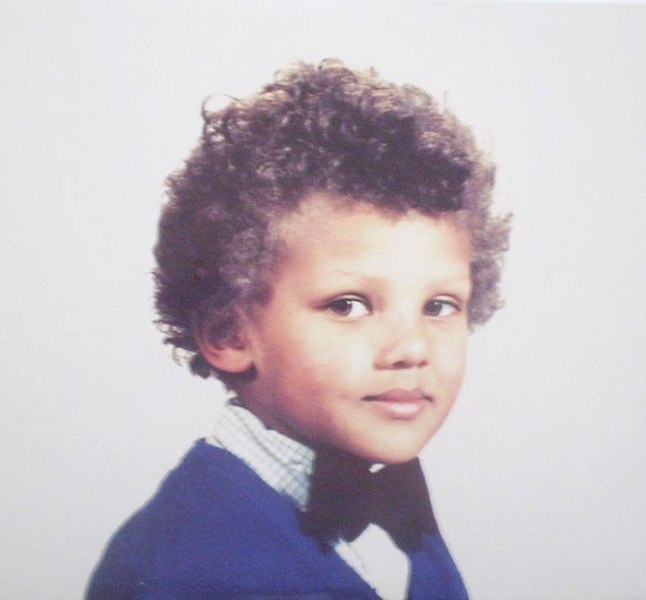
In the song, Stromae, real name Paul Van Haver, 30, broaches the subject of a childhood without a father and it is actually a situation he has himself experienced.Born to a Rwandan father and Flemish mother, many of his admirers know little about the singer’s roots in Rwanda.
{{Who is Stromae’s father? Where is his family? What’s their story?}}
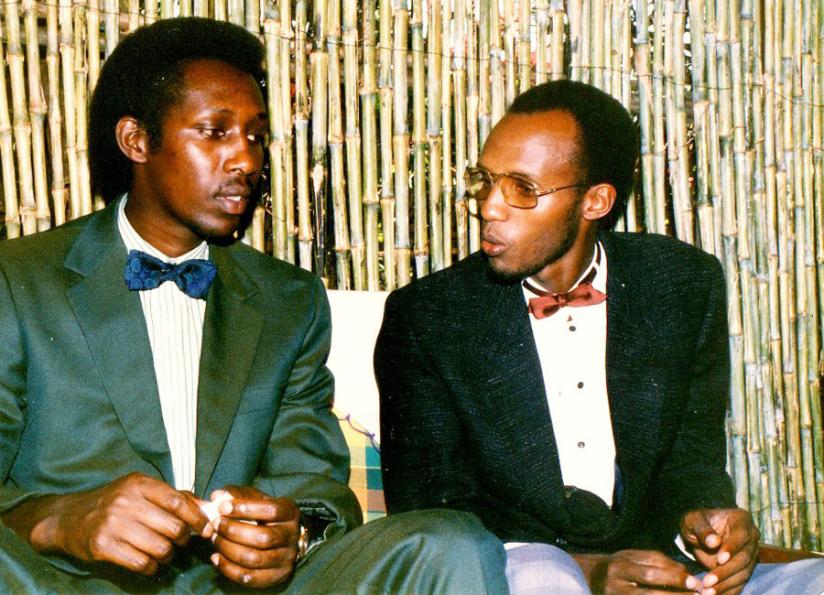
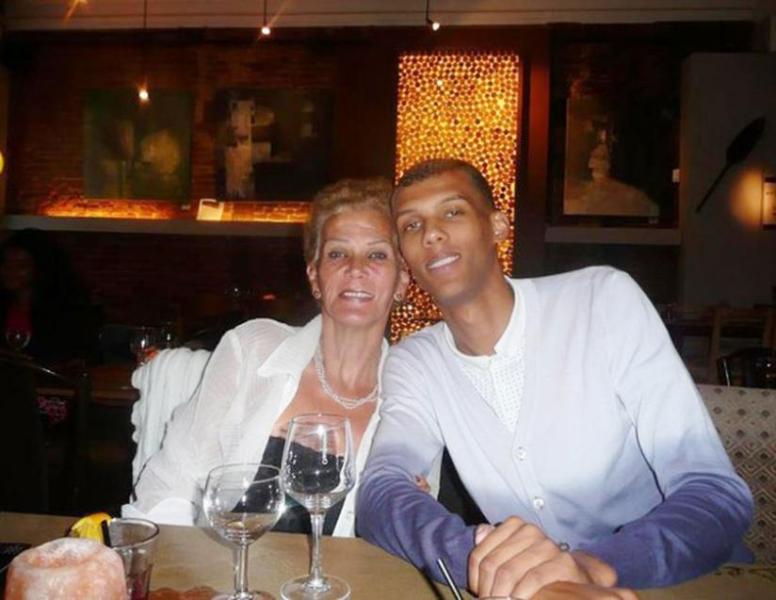
It is said that Stromae’s father, Pierre Rutare, an architect, was absent for most of his childhood. He was killed during the 1994 Genocide against the Tutsi. His mother raised him and his four siblings in Brussels, before moving to a suburb outside the Belgian capital.
Stromae’s family, however, isn’t keen on talking about Rutare or the family for that matter out of respect for other members, some of whom are also departed.
However, Stromae’s 46-year-old cousin, who asked for anonymity, gave us selected insight into Stromae’s Rwandan roots.
{{Who is Rutare?}}
Born in 1958 into a family of seven, in Nyarugenge, Kigali, the young Rutare and his family initially lived in Nyamirambo but due to the strain of living in town coupled with the political tension at the time, Gabriel Gasamagera (Stromae’s paternal grandfather), an established farmer, then moved the family to Shyorongi. It was hard adjusting from town life to the harsh village setting, a location that was once home to elephants.
Rutare attended Collège de Rulindo for his secondary education. He later moved to Kigali and enrolled at Collège St. André in Nyamirambo. His younger brother, Paul, died of burn wounds he suffered under circumstances that remain mysterious to date.
Paul’s death at a tender age took a toll on Rutare, and he later decided to leave the country.
During his last year in high school at St. André, he ingeniously managed to acquire a passport—which wasn’t easy because Tutsis were barred from obtaining travel documents—and later, a Belgian visa.
He presented the documents to his father and asked for financial help to facilitate his trip. Taken completely unaware by the 19-year-old’s decision, Gasamagera couldn’t say no. That was in 1978.
Once in Belgium, Rutare completed his high school and proceeded to university where he studied civil engineering and architecture (génie civil et architecture), at a private university and graduated around 1986. He was registered as a foreign student.
Without a scholarship it was a very difficult situation—he had to think of ways to support himself.
His cousin says, “It is not easy at all to cope as a foreign student in Belgium without a sponsor or scholarship. He was busy day and night. He studied during the day and worked at night. Once, he worked as a night time fuel pump attendant. He didn’t sleep much as he needed to be awake most of the time; at least that is what he told me.”
Gasamagera tried to support his son but could only do so much. He had the money, but he also had an extended family to look after.
In March 1985, Stromae was born to Miranda Marie Van Haver. She met his dad in Brussels but nobody knows where exactly or the circumstances that led to their relationship. After Stromae’s birth, Rutare didn’t stay long.
After his graduation, he was informed that his father wanted him to return home.
Rutare was his most educated child; a perfect candidate to carry on his legacy. Gasamagera, who was in his sixties, needed somebody by his side.
“Stromae’s grandfather thought about his estate; he didn’t necessarily want to pass on the responsibility and was still able to run it himself but at that age, he had to look at life differently,” says the cousin.
When Rutare came back to Rwanda in 1988, the political situation was still tense. He opened up a private company in Kigali called “Bureau de Deux Génies” (B2G).
It was located at the top floor of the then popular building, Kwa Bayingana, which also housed the Kenyan Embassy. The building is still there but is now overshadowed by new buildings that have since come up.
As a rookie architect, Rutare should have struggled to establish the business, but luck was on his side.
Just before leaving Belgium, he had interned at a firm owned by a Belgian architect. The owner, however, was planning to close the firm and needed to get rid of the furniture and tools he used.
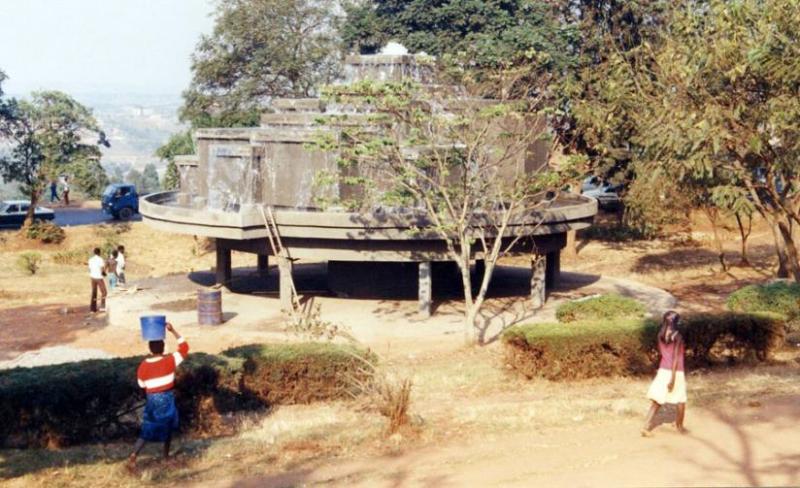
Seeing an opportunity, Rutare requested for the furniture and tools. When returning home, he hired a container and shipped the furniture to Rwanda, as his company’s initial assets.Rutare didn’t stop the hard work and spent sleepless nights drawing blueprints and estimates for his building projects. Among his projects was a fountain at the Kigali City main roundabout (pictured above).
According to Stromae’s cousin, Rutare asked the city authorities not to dismantle the concrete structure.
However, it would give way to the current look of the roundabout when, in 2005, Kigali underwent a facelift ahead of a major conference for the Common Market for Eastern and Southern Africa (COMESA) Summit. It took six months to dismantle it.
Among Rutare’s other projects are well-designed villas in Kimihurura, a Kigali suburb, that stand to this day.
{{Papaoutai?}}
Many people have claimed that Rutare was an absentee father during Stromae’s early life.
But, his cousin says, “Claims that Stromae was abandoned by his dad hold no water. Rutare made trips to visit the boy every year. It was an expensive trip during those times but he tried his best. The song Papaoutai raises the topic of Stromae not knowing his dad. He calls to a dad and family who are not there. Listeners have interpreted the song in different ways.”
In the late 80s Miranda came with little Stromae to Rwanda. The cousin says, “They were given a hearty welcome by the family. It was a special get-together, especially with the grandparents. He stayed at the ancestral home for nearly a fortnight in Shyorongi but suffered from malaria which cut the visit short. The place was heavily infested with mosquitoes.”
Later, Rutare got married and had four more children. Ibrahim Cyusa is a singer based in Kigali; Kevin Rutare lives in Luxembourg and is a high jumper at the national level. The two girls, Cynthia Rutare and Ornelle Rutare, are students in Belgium.
His half-brother, Cyusa, a Gakondo singer known for his albums Migabo and Inama y’Igihugu y’Urubyiruko says, “I’m happy for Stromae, as my big brother, it gives me pride and joy to see how far he has come. It is a good thing for the family, it shows we have talent. We used to communicate but due to his busy schedule, we don’t as much. I guess he got overwhelmed.”
Stromae has other cousins who total up to 20 or so.The name Van Haver
{{The name Van Haver}}
Many wonder why Stromae doesn’t have a Kinyarwanda name.
According to his uncle, Stromae is Rwandan and having a Flemish name does not change that fact.
His first name, Paul, might have been influenced by his uncle whose demise as earlier mentioned certainly affected Rutare and instigated his move to Belgium.
In Rwanda, it’s also common to name a child after a relative or friend. The family referred to Stromae as “Popol”, which means “little Paul.”
{{A chip off the old block}}
There is undeniable likeness between Rutare and Stromae, as seen in photos.
“Stromae was cut from the same cloth as the father, they look alike. In fact, we say Rutare came back in Stromae’s body,” says his uncle.
As earlier mentioned, Rutare would stay up all night, drawing plans for his building projects, on his old-fashioned drawing boards.
The zeal to start from the bottom and make something of themselves shows the similarity in all three, Gasamagera, Rutare and Stromae.
“Gasamagera always encouraged his children to work hard and be self-reliant, and he led by example, it’s the spirit Stromae (his grandson) took.
“Even their dress code has something in common. Rutare used to dress like that too. He would never go out dressed in the same clothes as the ones he went to work with.
“Rutare had a music collection we didn’t know about, the ones that look like CDs and play on a gramophone.
Even when CDs came around he was among the first people to have a collection. They cost an arm and a leg but he had to have them, he really loved them,” his uncle says. However, many were borrowed by friends and never returned.
Among Rutare’s closest paternal cousins is Jean Marie Vianney Rubayiza, father to Miss Rwanda 2015 first runner-up, Vanessa Raissa Uwase.
{{A Jack of all trades}}
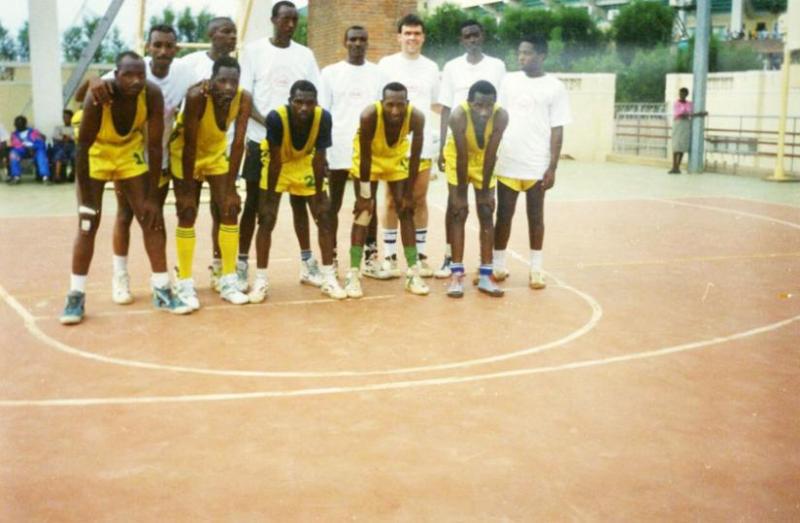
Rutare was also an avid basketball player, both in secondary school and at university. He even got to the semi-professional level in Belgium which at some point facilitated his stay.
Once back in 1988, he joined Terror Basketball Club (Inkuba), a team sponsored by National Bank of Rwanda (BNR) then.
He later started another club, B2G, named after his company. He was president of the team and it was mainly sponsored by his company.
However, it went into oblivion after Rutare’s death during the 1994 Genocide against the Tutsi.
The majority of the team members were recruited by Espoir BBC. Some of his colleagues include Fidel Rutagarama who is still very committed to the game and is president at Espoir and Gerard Ntwari, the Rwandan ambassador to Senegal.
A basketball tournament, the Memorial Gisembe, is held every year in which former Espoir player and coach, Emmanuel Gisembe, Rutare, and other basketballers killed during the Genocide are remembered.
{{
Grandpa nicknamed “Locomotive”}}
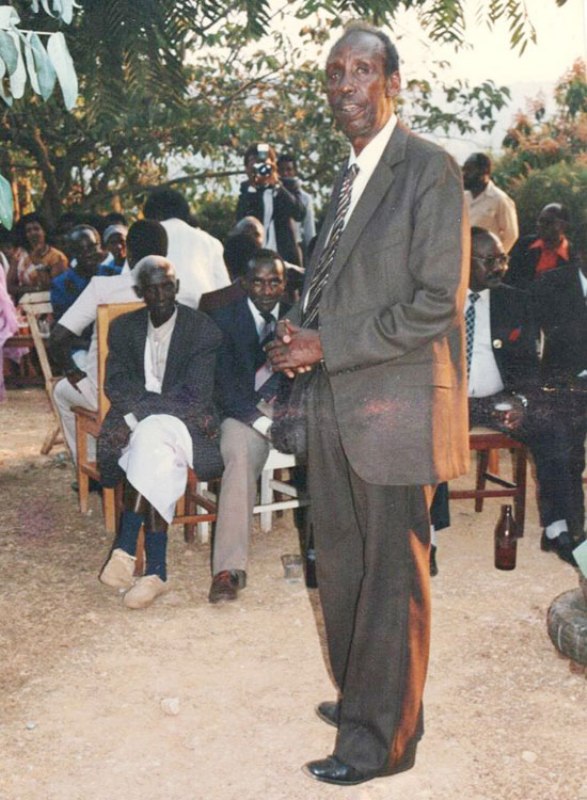
Born in 1924, Gasamagera, Stromae’s grandpa, was a native of Bumbogo, Rulindo District in the Northern Province, his ancestral home.
He had a hand in the construction of key roads in the country in the 1960s, working with Belgian engineers working under the then Ministry of Public Services (Minitrap), now Ministry of Infrastructure (Mininfra).
He was nick-named “Locomotive” because he was a trailblazer and worked tirelessly. His influence—solely because he was Tutsi—worried government officials who made sure he was confined to his home area, not letting him to move around freely for years.
He was one of the wealthy citizens who contributed to the welfare of Shyorongi. Gasamagera was an intensive farmer and employed as many as 300 labourers to work on his farm a day.
Gasamagera, Rutare and many other family members were killed during the Genocide.
{{
STROMAE’S SONGS}}
• Papaoutai (2013)
• Alors On Danse (2010)
• Formidable (2013)
• Tous les memes (2013)
• Quand c’est? (2013)
• Carmen (2013)
• Ta Fête (2013
• Ave Cesaria (2013)
• Bâtard (2013)
• Te Quiero (2010)
• Avf (2013)
• Humain à l’eau (2013)
• House’llelujah (2010)
• Moules frites (2013)
• Peace or Violence (2010)
• Merci (2013)
• Sommeil (2013)
• Bienvenue chez moi (2010)
• Rail de musique (2010)
• Je Cours (2010)
• Meltdown (2014)
• Silence (2010)
• Cheese (2010)
• Dodo (2010)
• Summertime (2010)
• Paproutri (2013)
• Enfants de l’An 2000 (2009)
• Up Saw Liz (2009)
• House’Llujah (2010)
{Nearly half of freelancers report facing payment problems. Here is a smart and comprehensive plan for getting your money.}
Piecing together a steady stream of work and keeping on top of your finances are two skills every freelancer needs to master early on to cut it as a solo worker. Still, often it’s getting paid–-and paid on time—that can become a freelancer’s biggest hurdle. The work is done and delivered, yet you’re still sitting on thousands of dollars in unpaid invoices.
It’s a common complaint for independent workers across industries. In a recent survey by the Freelancers Union, nearly half of participants reported problems with getting paid. According to Sara Horowitz, labor lawyer and founder of the Freelancers Union, member freelancers are owed more than $10,000 in unpaid invoices and spend an estimated 36 hours tracking down each missing payment.
The Freelancers Union has been vocal about the need to hold companies accountable for paying contract workers on time–-even launching a public ad campaign on New York subways this month to address the issue. Some startups are seeing this as a business opportunity. Fundbox, for example, focuses on lending to startups to help them pay freelancers without delay; Harpoon offers financial planning, invoicing, and goal-setting app features for freelancers; and sites like Shake let you create and send legally binding agreements.
But while advocates and startups are galvanizing around the issue, there are still practical and essential steps every freelancer should follow to protect themselves and take matters into their own hands.
{{Look out for problem clients from the start}}
Often the issue of not getting paid on time can be avoided altogether if you know the problem signs to look out for when approached by new clients, says Ilise Benun, author of the book The Creative Professional’s Guide to Money. “Before you even get to the contract and deposit stage, you need to know what the red flags are for the problem clients,” she says.
Benun identifies fives types of problem clients to watch out for:
1. {{The chaotic client}}: This is the person who flakes on every meeting, is always late, canceling, rescheduling, or seems constantly frazzled. We all encounter some chaos in our workdays, but if you’re working for someone who is continuously in a frantic and forgetful state, chances are they won’t be the most timely when it comes to getting you paid.
2. {{The clueless client}} :They want to hire you, but don’t know what they want and need and how much it ought to cost. From the start, work to establish clarity with this kind of client, but if they really don’t know what they want and aren’t willing to pay your rates, you’re better off not getting involved.
3. {{The jerk}}: You know who they are. It can be easy to spot these problem clients from the get-go. If they don’t treat you with the kind of respect you’re giving them, trust your gut and avoid the headache.
4. {{The cheapskate}}: Everyone wants a good deal. But remember what your rates are and don’t let anyone try to talk you into giving them a lower rate because they’re being cheap. “It could be that they don’t know what it should cost and you have to educate them,” says Benun. That, “or they are really cheap and don’t value your services in the first place.”
5. {{The big bore}}: Often work opportunities come up that really don’t excite you. There’s nothing wrong with the client per se; you’re just not into the work. “It’s a red flag when you don’t want the project,” says Benun. Hard as it can be to say no to work, if you really don’t care for a project, there’s a good chance you won’t do your best job and might build resentment towards the client hiring you.
The bottom line, according to Benun: “{Protect yourself by saying no to the bad clients}.”
{{Know what the work means to you before taking it on}}
Say your client doesn’t raise any major red flags and you’re ready to start a new assignment. Take time to consider what the particular job means to you, says attorney Nicole Page, partner at Reavis Parent Lehrer LLP, where she specializes in entertainment, intellectual property, and employment law. Are you in it just for the money? Do you care about the ideas and work you’re producing and hope to do something more with them down the line? Think this through in advance. “It’s hard when you’re just trying to build a career and get your work out there,” says Page. “But you need to think: ‘What do I want to do with this piece of material?’”
Thinking through what work means to you is important, because you’ll likely be signing some sort of copyright agreement that either passes off all rights to the client or enables you to license the work for a certain period of time or limited use. “If you’re contributing something of a creative nature, it might be very important to you, whether it’s an ownership deal or a licensing deal,” says Page.
Typically, there are three common options when it comes to ownership:
-* {Work for hire}: Everything you create is treated as if it was created by and for the client exclusively. They own the copyright and can do with it as they please.
-* {A license:} You license the use of the work for a certain amount of time or on a certain platform, but the copyright ultimately comes back to you.
-* {A straight buyout}: This has the same result as work for hire. You’ve created the work, and the client then buys all the rights for it.
{{Contract fundamentals}}
Don’t let the idea of an official contract scare you. “A written contract doesn’t have to be a really long involved legal document, which people tend to get intimidated by,” says Stephen Fishman, legal expert and author of the book Working for Yourself. As long as the fundamentals of the job are covered—who you are, what the job is, how much you’re getting paid and when, and who owns the work—you should have the basics covered. That said, it’s always important to have some sort of written document outlining these details—even if it’s an email or a simple letter agreement. Online resources like Shake offer a fairly easy way to generate contract agreements including your specific project details.
Page advises freelancers ensure certain specifics that too often get left out of contracts. For writers, for example, it’s important to indicate how many rounds of comments and rewrites are part of the project. Commit to two rewrites, and anything after that would require that you get paid an hourly or day rate for additional work.
A clause that protects you against legal claims and one that indicates a specific pay period—be it 10 days, 15, 30, or more—must also be included so that clients know what window of time they have to pay you in upfront, says Page.
Freelancers can get a bad rap as being flakey or unprofessional when they don’t follow those basic business procedures. “The biggest thing I tell people is read what you are signing. Don’t just sign it. Think about it. Don’t be afraid to ask questions,” says Page. “People think, ‘If I ask, the deal is going to go away.’” But that’s simply not true. “Look at it like: ‘This is my business,’” she says. “You have to learn how to be a business person.”
{{How to build the right client rapport}}
People often find talking about money extremely uncomfortable. But avoiding the topic is a major mistake. “A lot of people have problems talking about money in the first place, especially if they are charging hourly and not letting the client know how much money and time is being racked up,” says Benun. Be sure to communicate how much time you’ve put into work throughout the process to make sure clients don’t feel sideswiped when your invoice arrives. “You have to over-communicate,” says Benun. “Just make it part of your process to send your client a regular update of where you are budget-wise.”
{{What to do when payments are late}}
It’s inevitable that even after taking all the right steps, your payments still aren’t coming in on time. When following up on invoices, there are a few fundamentals to keep in mind. Often the problem isn’t that a freelancer doesn’t have a contract in place, it’s that they aren’t using it properly. “It needs to be done in the most impersonal way possible,” says Benun. “You really have to be very professional about it.”
Revisit your contract. If a payment is past the window of time you specified it should be made in, let your client know the payment terms have been breached. “Don’t harass immediately,” says Benun. Often late payments are a result of miscommunication, invoices getting lost in the shuffle, or other internal hiccups. If it’s been 32 days since you filed an invoice and you haven’t been paid, let them know the payment is two-days past due. If that’s not enough, keep following up. “The squeaky wheel gets the grease,” says Benun.
{{Pulling out the big guns}}
There’s only so much pestering you can do when a payment isn’t being made. If the amount of money you’re waiting on is significant enough that it’s more important for you to be paid than to continue working with that client in the future, you can always take what Fishman calls the “nuclear option” and sue the client in small claims court. “It’s a great way to collect a relatively small debt,” says Fishman.
Still, before going that route, it might be more effective to simply have a lawyer write a letter to let the client know you’re serious.
{{Planning so late payments don’t ruin you financially}}
The key to keeping late payments from devastating your finances, says Benun, is having a solid marketing plan. “I need to know where I am according to my monthly income and what I need to do between now and then to make my goal,” she says. “The way you do that is through marketing.”
By marketing, she means having a regular plan in place to hustle up more work that you can turn to when your finances indicate you might be short. That could be as simple as committing to going to one networking event each month to help generate new leads, sending out a monthly newsletter to your contacts, or spending an hour each month making phone calls or emailing former clients about potential new work.
“There is definitely a feast or famine quality to freelance work,” says Benun. “When people get stuck, they have no foundation to build on.” Get that foundation in place, and you’ll be in a much better position to take control of your finances—late payments or not.
E-commerce has tremendously opened avenues for many especially the youth in Rwanda. Many of the youth are engaged in startups every other day in bid to create jobs as opposed to looking for jobs.
In the previous years, Rwanda has seen the evolution of many online platforms. Examples include Kaymu, Lamudi, Jovago, Lamudi to mention but a few not forgetting Hellofood, the food ordering online platform. The Latter delivers food across kigali from over 80 different restaurants. This food online platform has been a good example in bridging the gap between traditional way of eating and combining it with modern technology.
The technology advancement in Rwanda has helped the e-commerce businesses develop more efficient delivery systems, tweak its propositions to different vendors/suppliers/customers and additionally address consumer behavior challenges. The days indeed are rather rosy for young entrepreneurs in Rwanda as the online mode of purchase is increasingly becoming stronger.
The startups largely employ the youth, the young generation between the ages of 20 and 30.Example is Hello food whose head count is over 40 employees all in the same age bracket. The young vibrant employees ensure to constantly make use of their skills and knowledge to further push the usage of the startups. With the presence of the large group including AIG, e- commerce pioneer in Africa, many youth are involved in the creation of startup versions, seemingly rather doing well in some like Igihe, Gemeya and Tohoza.
With the engagement of the youth in the initial startup versions, this has created merit for the youth through their websites to offer services that fit lives of Rwandan citizens and visitors.
Importantly to note is the role played by the various incubators like K-Lab and THINK. Over the last two years, about 20 e-commerce businesses were created by young Rwandans. E-Commerce has greatly opened doors and new avenues for the youth and has quickly become the “go to “for those ready to engage in entrepreneurship.
Born in Rwanda, Fathia Uwase, 32, left for Ghana four years ago with fashion on her mind. There, she studied fashion for a year at the Joyce Ababio School of Creative design. After graduation, she established her own brand called Fathia’s Creations.
When she left her home country, the Rwandan fashion scene was still close to non-existent. She could not find the opportunities she needed and quality material to make her clothes. It was thus her love for beautiful aesthetics and fashion that made her travel abroad.
While in Ghana, she realised that the opportunities were plenty making it not so challenging to get involved in fashion. What was challenging for Uwase was to start her own business from scratch, like it would have been in any other field.Even so, she successfully built her simple but classy brand with the help of four local tailors who make her colourful designs, and her creations are now sold in a shop in Ghana. By the end of this year, she also wants to have an online store that is up and running to ship her bright and stunning collections worldwide.
But it is not just about the rest of the world, it is a lot about Rwanda. On her occasional visits to the country, she brings some of her pieces with her that she usually sells to friends. Last year, she was able to organise a 3-days mini exhibition at UTC. Her biggest wish for the coming year is to open a shop in Kigali early 2016, probably in January or February, and get more exposure in Rwanda.
She also wants to take part in more fashion shows. During her last trip to Kigali, she took part in Rwanda Cultural Fashion Show 2015, which was a first for her in Rwanda.
This event was eye-opening for Uwase. The local fashion scene could not have surprised and amazed her in any better way. When she meets fellow Rwandan fashion designers today, she feels proud as they are now daring to engage themselves in the fashion business and create something new.
What she still wishes for the country however, is to see more quality material coming in at lower costs. Uwase realises that her collections are a lot more affordable than the ones made in Rwanda simply because she can take advantage of the fact that Ghana is home to beautiful and affordable African print fabrics.And you know what?
Uwase is not only a talented fashion designer, she is also an exquisite chef. She runs a restaurant in Ghana where she serves mainly East African dishes that she often cooks herself. This lady certainly is full of creativity.
A third of adults search for answers without trying to remember and 25% immediately forget what they’ve found out
There are fears impatience is triggering ‘digital amnesia,’ which means we rely on the internet for answers but easily forget the information we quickly look up online.
A new study suggests that when faced with a question, over a third of people automatically Google the answer quickly, without trying to come up with the answer themselves.
It also warns that a quarter of people immediately forget the information they have googled – a process which can mean the dissolution of memories and useful information.
The international study, which involved 6,000 international consumers aged 16 and over, was conducted by digital security firm, Kaspersky Lab.
It reveals 36 per cent of people said they Google information before trying to recall the answer themselves, with the percentage rising to 40 per cent for those aged 45 and over.
It’s possible that these users may doubt the accuracy of their memory, or may be impatient to get the correct answer as quickly as possible, the report says.
Similarly, 24 per cent admitted they would forget the online answer after they had used it and this figure rose to 27 per cent among over 45’s surveyed, with 12 per cent assuming the information will always be out there somewhere so there is little point in trying to memorise it.
This urge for the fastest possible access to information, combined with a reluctance to remember it afterwards, has far-reaching implications for both our long-term memories, because a failure to make use of the information stored in our memories can ultimately result in use forgetting it.
‘Our brain appears to strengthen a memory each time we recall it and at the same time forget irrelevant memories that are distracting us,’ said Dr Maria Wimber of the University of Birmingham’s School of Psychology, who was involved with the report.
‘Past research has repeatedly demonstrated that actively recalling information is a very efficient way to create a permanent memory.
‘In contrast, passively repeating information (e.g. by repeatedly looking it up on the internet) does not create a solid, lasting memory trace in the same way.
‘Based on this research, it can be argued that the trend to look up information before even trying to recall it prevents the build-up of long-term memories.
This is not the first report to suggest that Google is rotting our memories.
In a series of tests conducted two years ago, Harvard University researchers found that participants were more likely to recall information if they believed it had been erased from a computer.
Those who thought it was stored were more forgetful, even if explicitly asked to keep the information in mind.
In another experiment, the team asked students to answer trivia questions with or without Google, and then asked them to rate their own intelligence.
They found those who used the internet had a significantly higher view of their own brain power, even compared with individuals who got the questions right through their own knowledge.
‘Using Google gives people the sense that the internet has become part of their own cognitive tool set,’ the researchers concluded.
And rather than sharing information, people are more likely to save it electronically if they want future access to it, rather than relying on someone else’s memory, the researchers found.
Psychologists Daniel Wegner and Adrian Ward, wrote in the journal Scientific American: ‘Our work suggests that we treat the internet much like a human transactive memory partner [a person we share personal details with].
‘We off-load memories to “the cloud” just as readily as we would to a family member, friend or lover.’
‘It seems that the propensity for off-loading information to digital sources is so strong that people are often unable to fix details in their own thoughts when in the presence of a cyberbuddy,’ the researchers added.
‘They said that having the internet ‘undermines the impulse to ensure that some important facts get inscribed into our biological memory banks’.
Kigali – 8 October 2015: Rwanda joins the international community in celebrating World Post Day on 9th October, 2015.
The purpose of World Post Day is to create awareness of the role of the postal sector in people’s and businesses’ everyday lives and its contribution to the social and economic development of countries. The celebration encourages UPU member countries, including Rwanda, to undertake programme activities aimed at generating a broader awareness of their Post’s role and activities among the public and media on a national scale.
The World Post Day 2015 theme is “Importance of change for the postal sector to better meet the needs of governments and citizens”. This is to show the commitment of the postal operators to paradigm and status shift as posts are an integral part of the increasingly digital world. In fact, Postal services are not standing idly on the sidelines as they evolve and play their role in an era of new information and communication technologies, mobile telephones and the Internet.
In his 2015 message about the World Postal Day, Mr Bishar Abdirahman Hussein, Director General of Universal Postal Union emphasized on innovation, integration and inclusion that are the key drivers for the future of the Post, urging posts to take the challenges they face ‘’as opportunities to innovate and establish new market segments, understanding that a faster and more efficient communication medium is actually what the Post needs in order to build a new business value chain’’.
Reflecting on the importance of the World Postal Day, the Director General of the National Post Office, Mr. Célestin KAYITARE, said that ‘’this day gives us a moment to stop and ask ourselves if we are fulfilling our mandate as we should and look for innovative ways to meet the needs of our clients while ensuring continued growth of our operations’’ .
In Rwanda, the commemorative activities will be held on Friday October 9, 2015 at the National Post Office Head Office at Muhima -Kigali City, among which there is:
{{• Organisation of an ‘’Open – Post – Day’’ }}
This is an opportunity to show to our customers how the services offered to them are produced. We will offer them a guided tour of the back office services such as: letter sorting, treatment of registered mails, parcel handling, mail tracking and tracing, etc..
{{
• Guided Tour for young students }}
The guests for this event are the students from Kigali City Secondary Schools in the age group of 12 to 15 years. They will have an opportunity to ask questions related to the postal service in Rwanda and elsewhere.
{{• Press Conference
}}
The press conference will be hosted by the Director General of the National Post Office and will discuss the strategic orientations as well as the restructuring process of National Post Office.
{{• Conviviality –‘’Ubusabane’’ of the National Post Office workers
}}
This function will be held at MUHAZI Beach on Saturday 10th October 2015 and will be a great occasion to reflect critically on the services the staff of the Post Office provide to the public and renew their commitment to improved service delivery.
World Post Day is celebrated annually on 9 October.
It marks the creation of the Universal Postal Union on 9 October 1874, during the first Congress held in Berne, Switzerland, and invites UPU member countries and all postal stakeholders to celebrate postal services as a valuable public service that contributes to the social and economic development of countries. It was declared World Post Day by the UPU Congress held in Tokyo, Japan, in 1969.
Airtel Rwanda, a subsidiary of Bharti Airtel, and Tigo Rwanda Ltd, a subsidiary of Millicom, have announced a partnership to pilot interoperability between their two mobile money transfer service platforms.
This collaboration will allow Airtel Money and Tigo Cash subscribers to send and receive money directly into their mobile wallets without use of vouchers.
Tano Oware, Acting Chief Executive Officer for Airtel Rwanda said; “As facilitators at the forefront for mobile-commerce in Rwanda, Airtel is pleased to join hands with Tigo to provide our customers with an interoperability option that would allow them access to transact easily using our mobile money transfer services.
This further brings to light our determination to ensure that we achieve Rwanda’s agenda of cashless economy.”
Interoperability in Rwanda’s mobile money sector is aimed at fostering financial inclusion thus increasing the velocity on money in our financial ecosystem.
Adding to the development; Tongai Maramba, Chief Executive Officer, Tigo Rwanda, expressed: “Getting access to financial services via the mobile phone can make a massive difference to people’s lives. I am delighted that we have delivered Interoperability with Airtel.
With this, we underline our commitment to drive financial inclusion and join forces with The Government of Rwanda in the journey towards reduced reliance on cash. On lighter note, I am excited that I will finally be able to send money to Mr. Tano’s Airtel Money account without resorting to cash.”
Commenting on the partnership between the two telcos, Gregory Reeve, General Manager for Tigo MFS added “with this advancement, Rwanda becomes the second market in Africa to launch interoperability after Tanzania. Connecting systems together is a key driver of financial inclusion and access for the people in Rwanda and Millicom is committed to this cause.”
Airtel Money Africa Director Mr. Chidi Okpala added; “This initiative is another demonstration of Bharti Airtel’s commitment to deepen financial inclusion and facilitate cashless ecosystems across Africa. We championed interoperability in Tanzania and have now done so in Rwanda, with two more countries to go before year end.”
Mr. Okpala specially commended the National Bank of Rwanda for its unflinching support for this initiative and commitment towards ensuring the long term success of mobile money services in the country.
In the past few years, there has been great adoption of mobile money services as this has been a mode of accepting merchant payments, sending and receiving money, utility bill payments and pay TV.
To put this in context, in December 2010, only 1.7 million bank accounts and mobile wallets existed out of a population of 9 million people. Today there are over 5.7 million mobile subscribers in the country.
Mobile Money has had a transformative impact on the lives of millions of people who previously had limited or no access to financial services.
Once the customer receives money into their wallet, they will be able to use other mobile financial services such as P2P, bill payment, merchant payments or cash outs while also helping the government to advance important public policy objectives on financial inclusion.
The two companies will continue to work together on international money transfer services to include more countries such as Congo.
The Government of Rwanda today welcomed the decision by the Spanish Supreme Court to dismiss 40 indictments of Rwandan officials, upholding the January 2015 ruling of Spain’s National Court.
Rwanda’s Minister of Justice Johnston Busingye said:
“The Spanish Supreme Court has done the right thing. There was never any basis for the indictments in the first place, it was a blatant abuse of universal jurisdiction.
For years, forty Rwandan individuals have endured sustained persecution at the hands of an investigating judge whose radical motives and actions have now been definitively overturned and halted by the highest court in Spain.
It’s gratifying that we can finally move on from this regrettable episode. Rwandans will continue to build an enduring relationship of trust, friendship and collaboration with the Spanish people and the country’s institutions.”
The cases were filed in 2008 by Judge Andreu Merelles, using the principle of universal jurisdiction and have always been considered politically motivated. In its decision, the Supreme Court halted investigations by the judge in Spain. This amounts to recognition of Rwanda’s primary jurisdiction over the matter.
The Democratic Green Party of Rwanda filed in the Supreme Court an application against the Government of Rwanda seeking several declaratory orders. It alleged that the State had failed to stop the process of amending the Constitution which had started with members of the public submitting petitions to Parliament calling for the amendment of article 101 of the Constitution to enable the incumbent President of the Republic to seek another term of leading the Country.
Among others, Green Party sought declarations that Article 101 of the Constitution is unamendable, that article 193 which deals with the required procedures for the amendment of the Constitution does not open the door for the amendment of article 101, in particular the part that states that no person may hold of the office of President for more than two terms.
The party argued that the only amendment of article 101 possible under article 193 was on the duration of the term of office, not the number of terms. Green Party also argued that allowing the referendum aimed at amending article 101 of Constitution would undermine democracy.
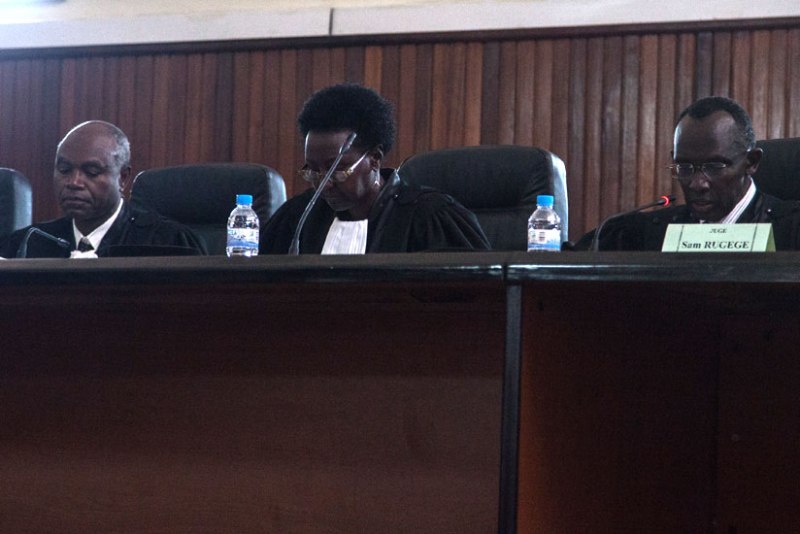
In its judgment delivered today, 8 October, 2015, the Supreme Court’s bench of nine judges led by the Chief Justice, held that there was nothing in the Constitution that prohibited the amendment of article 101. Although Article 193 provides a complex procedure for amending Article 101, it does not prohibit amendment of any of its parts, meaning that if that procedure is properly followed both the duration of presidential term and the numbers of terms are amenable to amendment.
Further, the Court held that amending article 101 through the procedure provided for by article 193 including super majorities in Parliament and a referendum would not undermine democracy. On the contrary denying citizens the right to determine how they are governed following procedures laid down in the Constitution would be undemocratic.
The Court questioned the wisdom of a people binding themselves and future generations in perpetuity without the flexibility to bring the law or the constitution in line with changed beliefs and circumstances. The application was therefore dismissed.