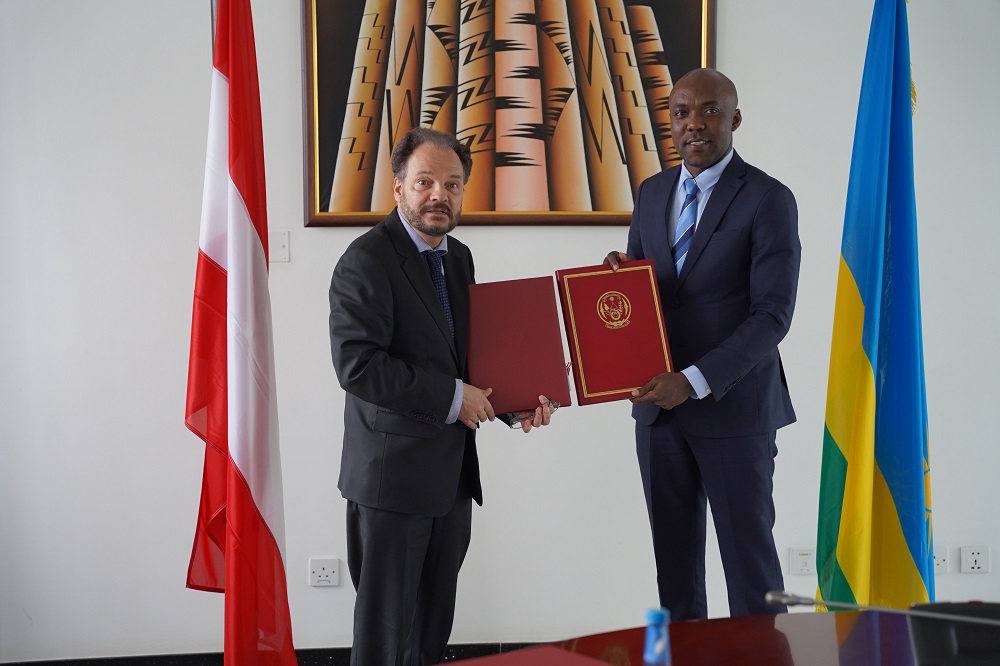
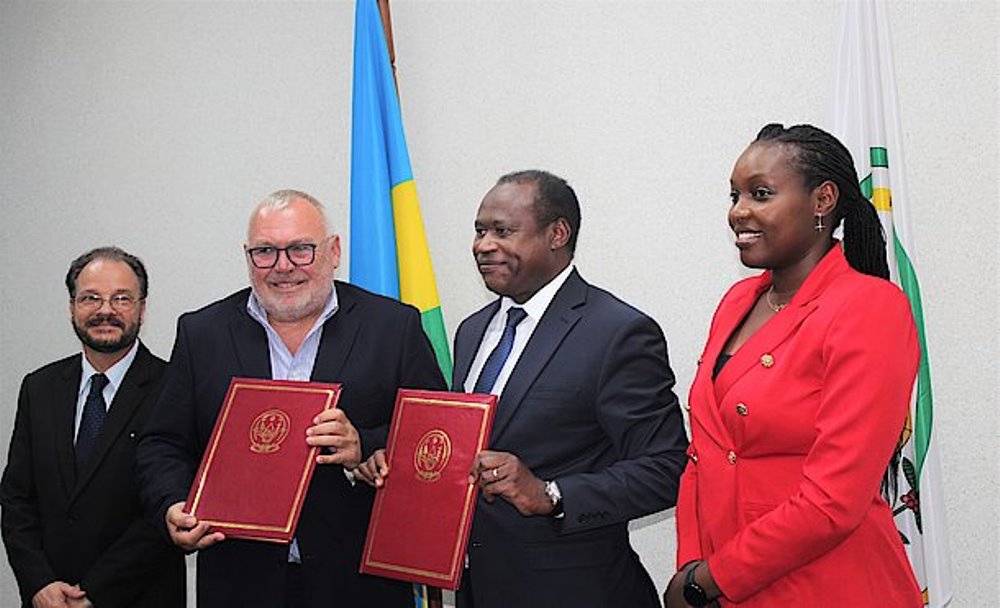
The agreement was signed on Tuesday 19th July 2022.
During the signing ceremony; Rwanda was represented by the Minister of Infrastructure, Dr. Ernest Nsabimana while Austria was represented by its ambassador in Rwanda with residence in Kenya, Christian Fellner.
Minister Nsabimana has said that the bilateral agreement expected to strengthen existing cooperation between both countries, is a fruit of existing relations that have deepened roots.
He explained that it provides opportunities to continue expanding the large network in tourism and trade.
The agreement entails processes aimed at enhancing air transport including a legal framework for the regulation of frequency and capacity of air services between both countries and pricing among other aspects.
Amb. Christian Fellner said that the agreement will add up to efforts meant to enhance movements and commended existing cooperation between both countries in different areas of development.
The development follows another deal inked on Monday 18th July 2022, where Rwanda and UniCredit Bank Austria signed a financing agreement worth EUR 7.5 million (approximately Rwf 7.5 billion) for the establishment of a Technical and Vocational education and Training (TVET) Centre of Excellence in the Kigali Special Economic Zone.
The centre of excellence will enable establishment of a modern and highly efficient dual training program which will be a model for industrial-academia linkages that allows exchange of training facilities such as workshops and equipment for mutual benefits.
According to the financing modalities, 15% of the US$ 7.5 million (or EUR 1.125,000) will be a grant. The financing facility will be guaranteed by Oesterreichische Kontrollbank AG (OeKB) on behalf of the Republic of Austria at 0% interest rate, with a payment period of 18.5 years after a grace period of 8.5 years.
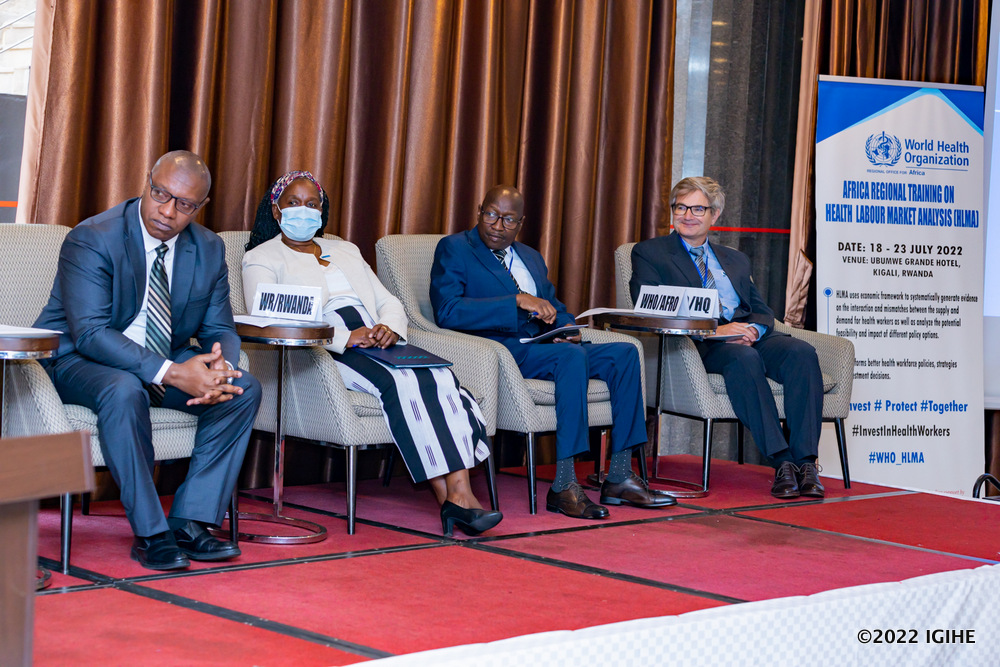
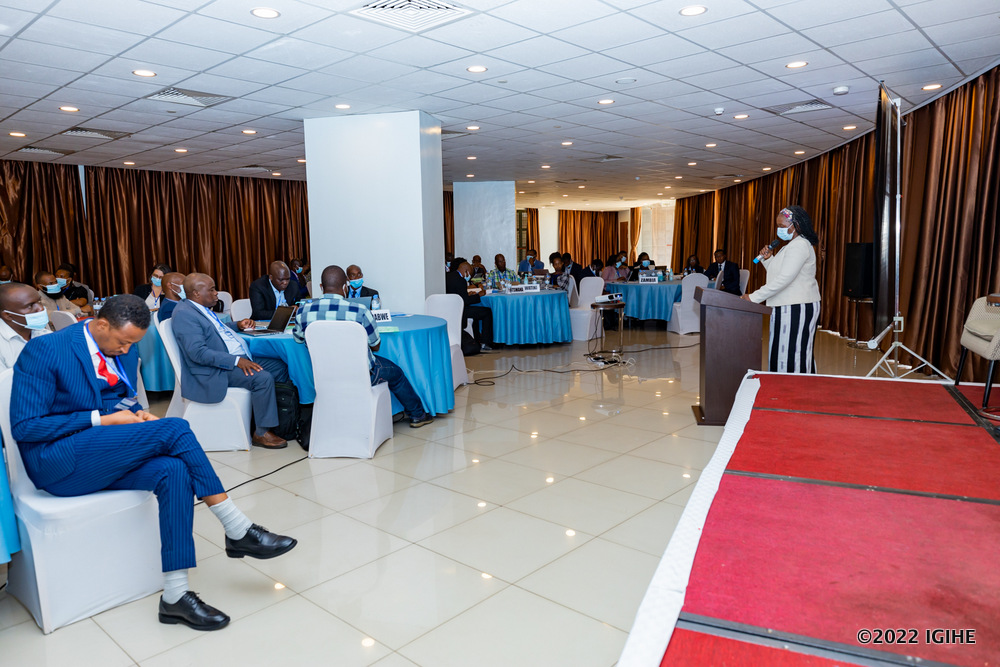
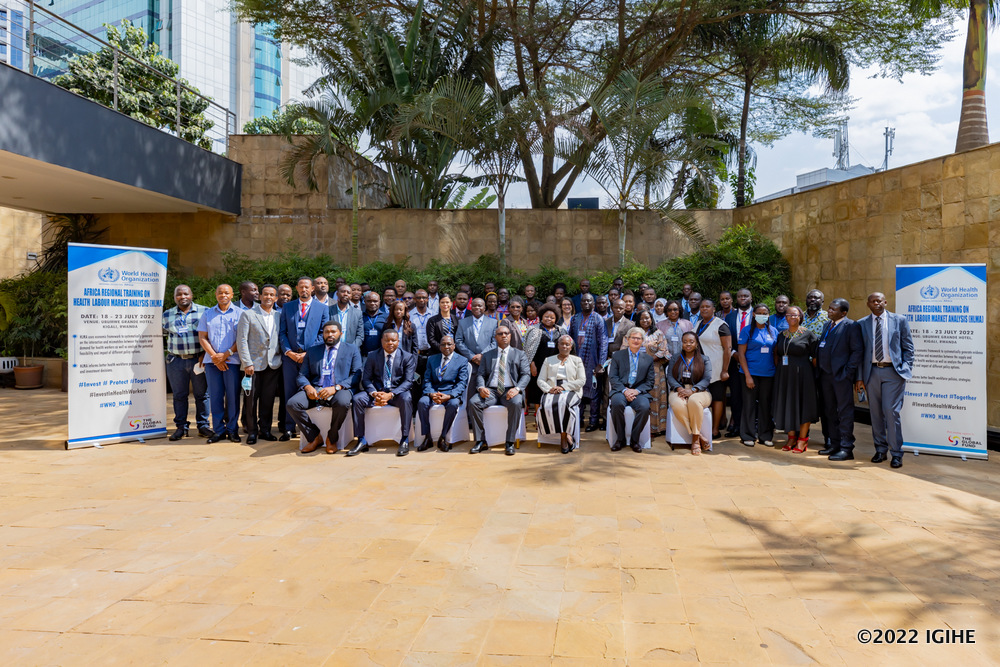
The meeting was organized after identifying numerous issues including shortage of health workers and inadequate capacity among African countries.
Figures show that 70% of African countries face the shortage of healthcare professionals.
Apart from the shortage and inadequate capacity, challenges faced by investors in the sector also results into shortage of infrastructures and high cost of pharmaceuticals.
Dr. Pascal Zurn, a Health Economist at World Health Organization has revealed that the meeting is of critical significance because healthcare professionals need adequate training to bridge gaps in the sector.
He also stressed the need to make follow up to ensure trained individuals are hired to serve people especially in rural areas and expressed optimism that training beneficiaries will contribute to the advancement of the health sector in their respective countries.
“We expect experts gathered here to be equipped adequate knowledge helpful in building capacities of health workers in their countries,” he said.
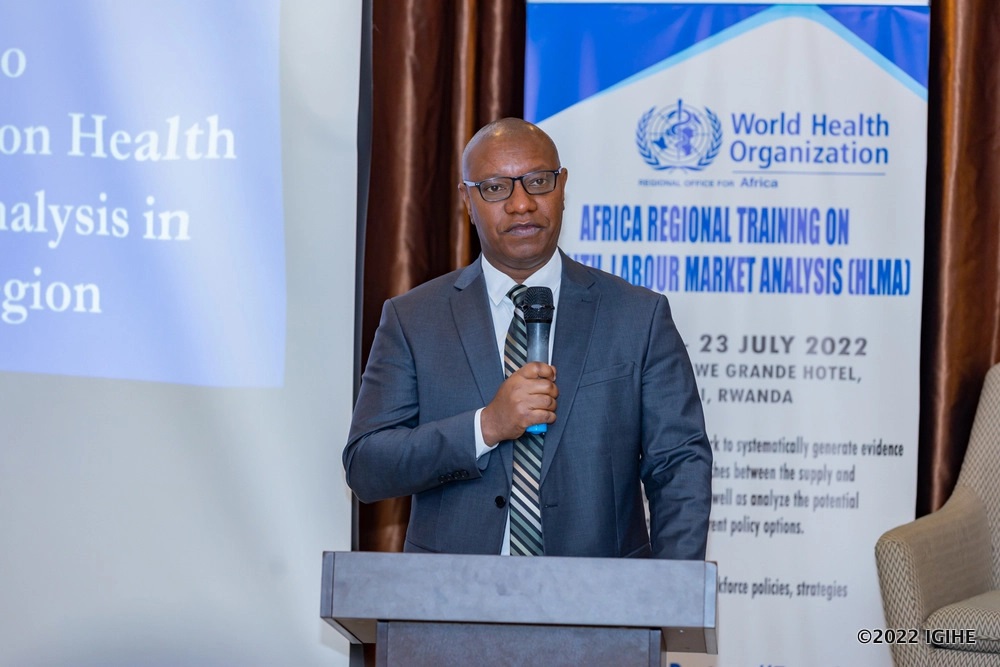
Dr. Patrick Ndimubanzi, the Executive Secretary of Rwanda Human Resources for Health (HRH) thanked organizers of the meeting noting that it is a platform for countries to exchange ideas on how persistent issues can be addressed. He also shared Rwanda’s efforts geared towards building the capacity of health workers.
“We conducted an assessment which indicated that we need healthcare professionals in public and private facilities. Since then, we established the body of human resources for health workers’ capacity building,” he said.
Despite pointed out gaps, the health sector on the African continent has registered commendable efforts to increase healthcare professionals where health schools rose from 168 in 2005 to 401.
The number of trained healthcare professionals also increased from 6000 in 2005 to 28600. At least, 60,000 nurses graduate every year compared to 26,000 graduates released in 2005.
As of today; 148, 000 healthcare professionals attend different trainings every year.
The goods, including banned skin bleaching cosmetics, had been sneaked into Rwanda from the Democratic Republic of Congo (DRC), according to Superintendent of Police (SP) Bonaventure Twizere Karekezi, the Police spokesperson for the Western region.
The successful operations were conducted on Monday and Tuesday.
Those arrested include one Asia Uwamahoro, 35, who was intercepted on Tuesday, July 19, in Rurembo Village, Byahi Cell of Gisenyi Sector with assorted skin bleaching cosmetics, used shoes and clothes, tobacco and an illicit gin called simba waragi, all worth over Frw8.6 million.
“Uwamahoro had hired other people to smuggle the goods into Rwanda from DRC, but her employees dropped them and run away after they saw the Police,” said SP Karekezi said.
The seized outlawed skin whitening oils and creams, include Cocopulp, Carolight and Elegance. They are among the 1,342 listed cream and oil brands with hydroquinone and mercury, which are prohibited in Rwanda.
Another suspect identified as Marie Aimée Mukamazimpaka, 28, was arrested, Monday, July 18, in Isangano Village, Rukoko Cell also in Gisenyi Sector with smuggled electric cables, used clothes and shoes, and non-biodegradable polythene polythene bags, all worth over Rwf550,000.
SP Karekezi added that the two suspected smugglers and dealers in illegal goods were reported by residents.
Article 199 of the East African Community Management Act, which is also used in Rwanda, specifies a penalty of US$5000 to a driver found driving a vehicle with smuggled goods while the vehicle and the goods are auctioned.
Article 87 of law on tax procedures, provides that a person who, while intending tax evasion, commits one of the following acts: use of forged documents in his or her accounts; counterfeit and use of documents or materials of the tax administration used for taxation; hiding taxable goods or assets related to business; making a declaration indicating that the taxpayer has not made sales; changing the trade name by a person prosecuted in relation to tax; fraudulent registration of trade under the name of another person; hiding accounting documents from the tax administration or damaging them; use of forged accounting records; commits an offence of tax evasion.
Upon conviction, he or she is liable to imprisonment for a term of not less than two (2) years and not more than five (5) years.
Article 266 of the law determining offenses and penalties in general, states that any person, who produces, sells, or prescribes harmful products; cosmetics or body hygiene substance or any other products derived from plants, commits an offence.
Upon conviction, he/she is liable to imprisonment for a term of not less than one year and not more than two years and a fine of not less than Rwf3 million and not more than Rwf5 million or one of these penalties.
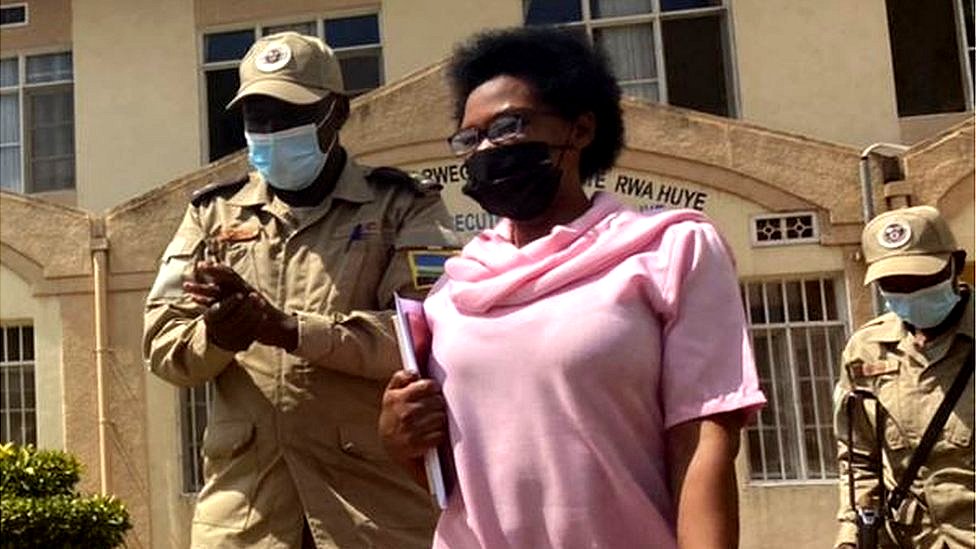
Munyenyezi appeared before the court on Tuesday 19th July 2022 around 9:00 a.m. with combed hair, wearing inmates’ uniform, sandals and glasses.
As the trial began, her defence lawyer requested the court to allow her client to stand trial sitting down citing sickness reasons and responded in favour.
The Prosecution told the court that Munyenyezi is facing charges including manslaughter as Genocide crime, preparation of Genocide, direct or indirect mobilization to perpetrate Genocide, conspiracy during Genocide, extermination as a crime against humanity.
She was deported to Rwanda on 16th April 2021 from the United States of America (USA).
It is suspected that Munyenyezi committed the crimes in former Commune Ngoma, Butare Prefecture currently in Huye District of Southern Province.
Her defence lawyers include Bruce Bikotwa and Gashema.
The Prosecution has revealed that Munyenyezi is the wife of Arsène Shalom Ntahobali and daughter-in-law of Pauline Nyiramasuhuko, the former Minister of Family and Women’s Affairs during the 1994 Genocide against the Tutsi.
The Prosecution alleged that Munyenyezi and her husband along with her mother-in-law controlled roadblocks including the one mounted near Ihuriro Hotel which sheltered Nyiramasuhuko.
She has been accused of attending and leading meetings organized to plan for the killings of targeted Tutsi victims.
The Prosecution accused Munyenyezi of killing a nun who resided in Tumba using a pistol. He was also accused of having arrested Tutsi girls at roadblocks and ordering Interahamwe to rape them.
According to the Prosecution, a witness identified Jean Damascène Munyaneza alias Saddam testified that Munyenyezi was at a roadblock at Mukoni in 1994 when she went to a nearby place where Tutsis were being killed and saw an Interahamwe identified as Lambert Habyarimana raping a nun.
As the Prosecution said, Munyenyezi took a pistol and shot the nun on the head after telling Munyenyezi that they would be held accountable.
Another witness identified as Jean Paul Rutiganda is also said to have told the Prosecution that Munyenyezi shot dead the nun after enduring rape.
Munyenyezi rejected the charges claiming that she didn’t go to any roadblock because she was a pregnant mother taking care of another kid.
The suspect said that witnesses don’t know the person being accused because they revealed, she was studying at the National University of Rwanda yet she has not completed secondary school.
Munyenyezi said that the two witnesses provide contradictory statements because one accuses her of having killed the nun in an underground section of a hotel while another claims that she killed her at a roadblock at Mukoni.
“It is clear that they don’t know what they say. I don’t know why they are telling lies about me,” she said.
Her defence lawyers have told the court that the Prosecution does not present tangible evidences proving that Munyenyezi had a role in the 1994 Genocide against the Tutsi.
They insisted that the names of the nun Munyenyezi is alleged to have killed are not mentioned, which is among reasons pushing them to consider witnesses’ statements as false.
The defence lawyers also said that witnesses’ statements are contradictory, proving that they don’t know Munyenyezi.
They also argued that birth certificates of Munyenyezi and her children indicate that their client was pregnant and had another kid in 1994.
“She was in her last days of pregnancy that she could not take a gun to hunt Tutsis.”
The defence lawyers said that there are other cases of people from Butare including her husband Arsène Shalom Ntahobali tried by the International Criminal Tribunal for Rwanda in which Munyenyezi provided testimonies.
When asked how she was invited as a witness yet she was not able to leave her house due to pregnancy, defence lawyers revealed that Munyenyezi went to provide testimonies regarding how her husband did not hunt Tutsis because he was suffering from Malaria.
The Prosecution has objected that making disclosure of her pregnancy is not enough to sanitize Munyenyezi because there are no medical reports confirming that she was in critical condition.
It was also highlighted that it is normal to have testimonies as per legal provisions and asked Munyenyezi to prove them wrong.
On her education status, the Prosecution said that it is apparent that Munyenyezi was in secondary school where proving that she was a student at the time is enough.
Prosecutors explained that defence lawyers do not present details of testimonies provided at the International Criminal Tribunal for Rwanda to prove how they are contradictory.
They also maintained that not knowing the names of killed nun is not enough to prove that witnesses are wrong.
On the charge of conducting mobilization to perpetrate Genocide, the Prosecution alleged that Munyenyezi attended a meeting held at a playground in Rango where she held a speech and told people that Tutsis are enemies who had attacked the country.
The Prosecution said that more witnesses accused Munyenyezi of having provided grenades to kill Tutsis at a roadblock mounted at Nkubi, issued instructions to Interhamwe to kill a child and arrest Tutsis at a roadblock nearby Ihuriro Hotel and kill them.
Munyenyezi has said that she had no powers to give instructions to Interahamwe.
She also denied having handed over girls to Interahamwe to be raped and attendance of the meeting in Rango.
Her defence lawyers also defended her clients’ objections claiming that witnesses provided false testimonies because they do not prove how they are reliable.
Even though Munyenyezi was not tried by Gacaca courts, the Prosecution indicated that testimonies pinning her were provided by survivors of the 1994 Genocide against the Tutsi and perpetrators.
Munyenyezi has however claimed that being a daughter-in-law of Nyiramasuhuko didn’t grant her powers of attending meetings and mobilizing the killings of Tutsis.
Defence lawyers said that there are witnesses from Butare convicted of Genocide crimes who revealed that they do not know Munyenyezi and argued that there are no evidences pinning her.
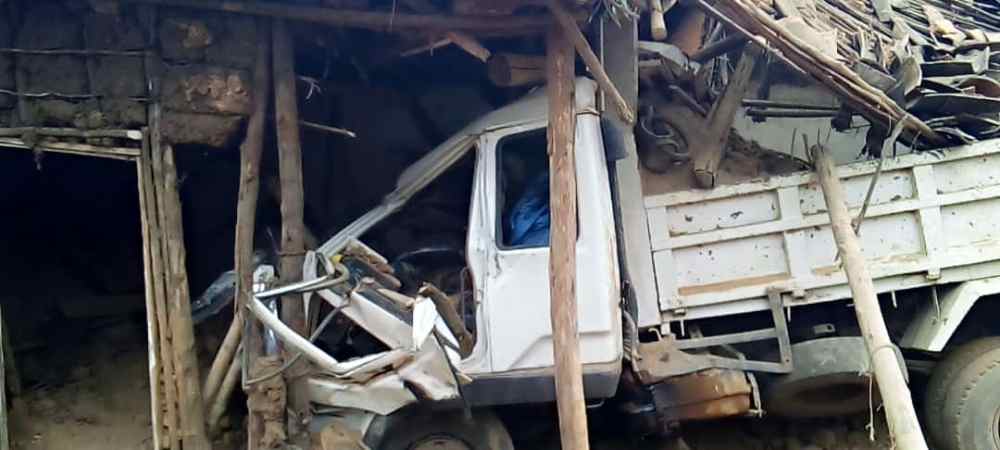
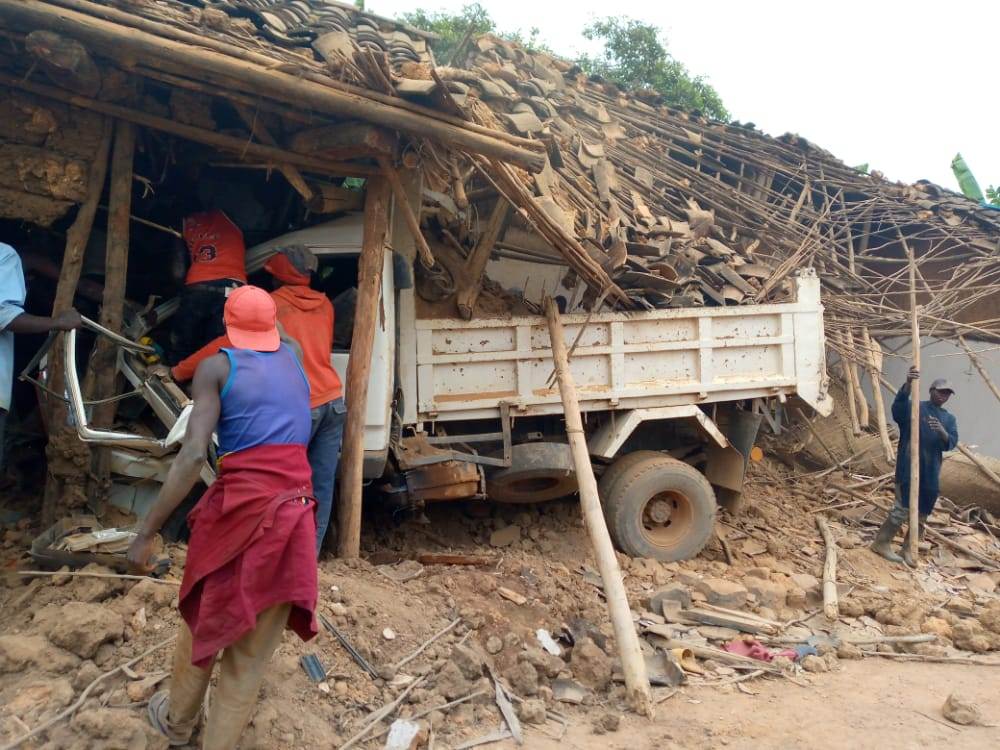
The accident occurred in a business center in Rwinanka Village, Ntwari Cell of Munini Sector on Monday 18th July 2022.
One of witnesses has told IGIHE that the accident happened around 3 p.m. as a Fuso truck which carried sand from River Giswi in Muganza Sector moved along a steep part of the road with high speed and hit two houses.
The Executive Secretary of Munini Sector, Raphal Uwimana has confirmed to IGIHE that the accident has killed two people and injured ten of whom three survived with serious injuries.
The deceased have been identified as Innocent Uwiragiye, 23, who was inside the house and Jean Damascène Habimana, 29, who was onboard the truck.
The local leader has also disclosed that seven survivors were taken to Munini Hospital while those who were critically injured were sent to the University Teaching Hospital of Butare (CHUB).
The centre of excellence will enable establishment of a modern and highly efficient dual training program which will be a model for industrial-academia linkages that allows exchange of training facilities such as workshops and equipment for mutual benefits.
It will also allow students to learn and acquire modern and high-tech skills being applied in industry and aligned to the current and future technologies and innovations; exchange of academic staff and industrial sector experts between the school and companies to enhance the skills needed for the modern labour markets.
Speaking after the signing ceremony on Monday 18th July 2022, the Minister of Finance and Economic Planning Dr. Uzziel Ndagijimana noted that establishment of the TVET centre of excellence will boost the Government of Rwanda’s existing initiatives towards developing applicable skills that meet labour market demands through TVET.
“This financing comes to support human capital development priorities under our National Strategy for Transformation especially by enrolling at least 60% of students into TVET schools and scaling-up the number of TVET graduates with skills relevant to the labor market,” Minister Ndagijimana said.
Former Austrian Chancellor Dr. Alfred Gusenbauer noted that the financing agreement presented a starting point for a deeper cooperation between Austria and Rwanda.
“Sustainable cooperation between the new countries would lead to import of the technology, knowledge transfers and employment opportunities to Rwandans. We look forward to exploring other areas of cooperation,” he said.
According to the financing modalities, 15% of the US$ 7.5 million (or EUR 1.125,000) will be a grant. The financing facility will be guaranteed by Oesterreichische Kontrollbank AG (OeKB) on behalf of the Republic of Austria at 0% interest rate, with a payment period of 18.5 years after a grace period of 8.5 years.
This service is launching soon after MTN Rwanda’s announcement that it would be launching a device financing initiative in partnership with Bank of Kigali, offering customers the opportunity to buy brand new smartphones on credit.
MTN Rwanda’s extended warranty offers customers additional protection for any smartphone purchased at any MTN Service Centre or Connect Shop and also for any smartphone a customer has owned for less than three (3) years, upon the purchase of a screen protector and/or phone case for that existing phone. The warranty is for a period of twelve (12) months.
MTN Rwanda is also offering customers one free repair of their smartphones if any fault develops during the warranty period. For any additional repairs, customers will receive an eighty per cent (80%) discount on the repair costs.
“Smartphones are the gateway to unlimited information and an array of digital services, and we want to ease the process of owning and maintaining one. For a lot of our customers, smartphones are the first big-expense item they purchase for themselves, meaning screen protectors and phone cases are a must-have given the durability of smartphones.
The idea of introducing an MTN extended warranty and repair service went without saying. This is part of our commitment to ensure that as we connect everyone to the digital world, we think of the entire customer journey and offer our customers peace of mind,” said Yaw Ankoma Agyapong, MTN Rwanda Chief Consumer and Digital Officer.
The extended warranty (beyond what is covered in the manufacturer warranty) insures against accidental damage, cracked screens, cracked casing, water and liquid damage as well as malfunction after the manufacturer’s warranty has expired.
MTN Rwanda’s repair service offers top-notch diagnoses at designated MTN Service Centres. Customers located in Kigali will have their phones repaired within 3 days and those located upcountry will have their phones repaired within 5 days.
“We look forward to our customers enjoying this service as we continue to pursue the delivery of digital solutions for Rwanda’s progress,” concluded Agyapong.
{{About MTN Rwandacell }}
MTN Rwandacell Plc (MTN Rwanda) is the market leader in mobile telecommunications in Rwanda. Since 1998, it has continuously invested in expanding and modernising its network and leading digital solutions for Rwanda’s progress.
The telecom offers various services to subscribers, including innovative propositions such as personalised voice and data offers for individuals and corporates with a clear vision to lead the delivery of a bold and new digital world to customers.
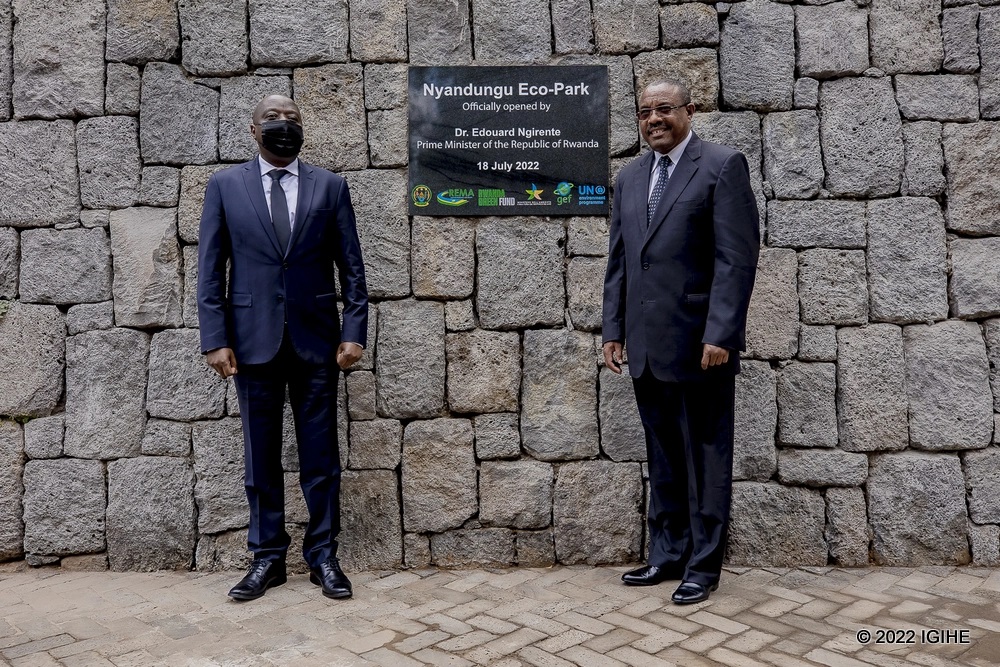
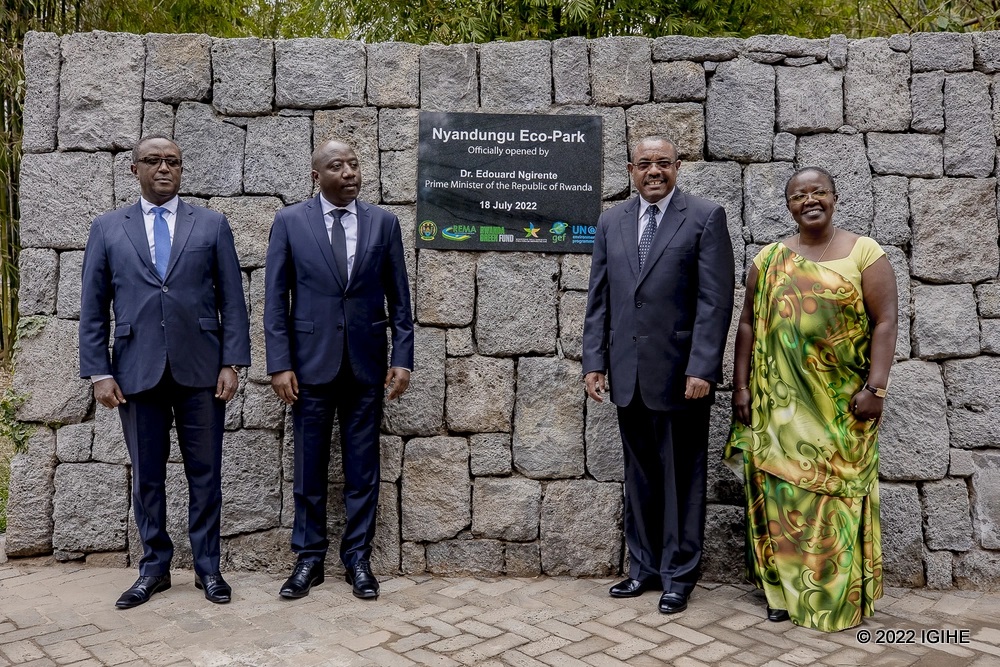
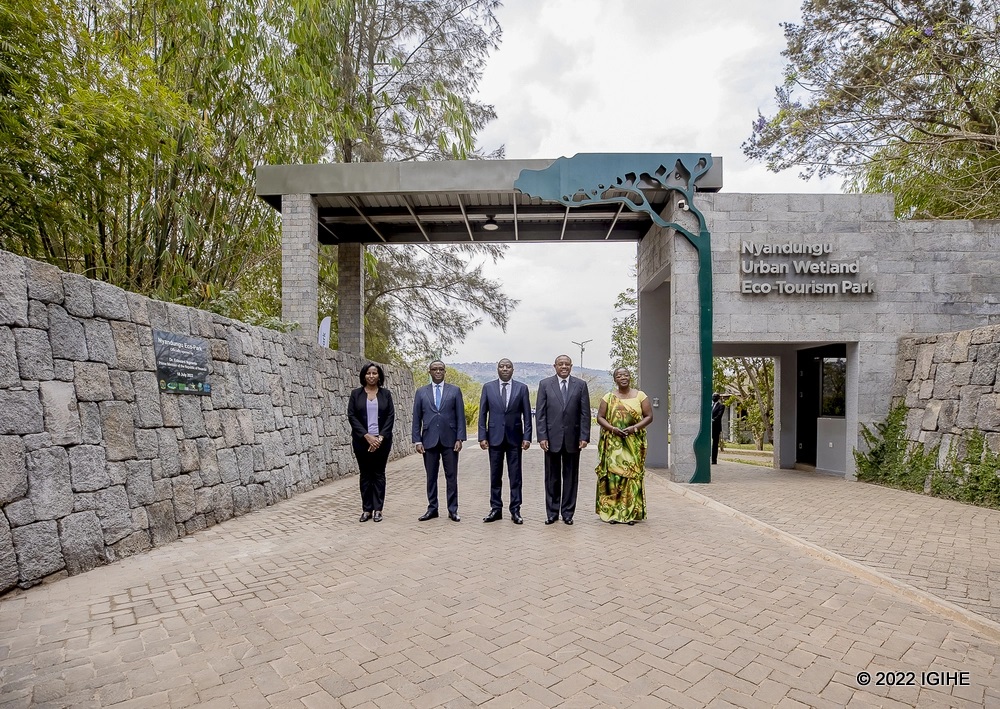
During the event held on Monday 18th July 2022, Premier Ngirente was joined by officials including Hailemariam Desalegn, the former Prime Minister of Ethiopia; the Minister of Foreign Affairs, Dr. Vincent Biruta and the Minister of Environment, Jeanne d’Arc Mujawamariya.
The inauguration took place at a time when Rwanda is hosting Africa Protected Areas Congress (APAC).
The congress running between 18th and 23rd July 2022 is organized by African Wildlife Foundation, an international conservation organization focused exclusively on Africa’s wildlife and wild lands.
The first Africa Protected Area Congress underway in Kigali is intended to further enhance the status of conservation in Africa by engaging governments, the private sector, civil society, indigenous peoples and local communities, academia to shape Africa’s Protected and Conserved Areas Agenda to better deliver benefits for people and nature.
The Director General of Rwanda Environment Management Authority (REMA), Juliet Kabera has explained that Nyandungu Eco-Park is located in a wetland that was seriously degraded.
She revealed that the project is the beginning for the restoration of five more wetlands in Kigali City.
Martine Urujeni, Kigali City Vice Mayor in charge of Socio-Economic Affairs has revealed that protecting the environment will help Rwanda to keep moving forward with its vision of green economy.
She requested Rwandans to protect wetlands and thanked partners helping the city to remain clean and promote green economy.
Urujeni also assured the city’s support to activities mean to enhance conservation of the Nyandungu Eco-Park.
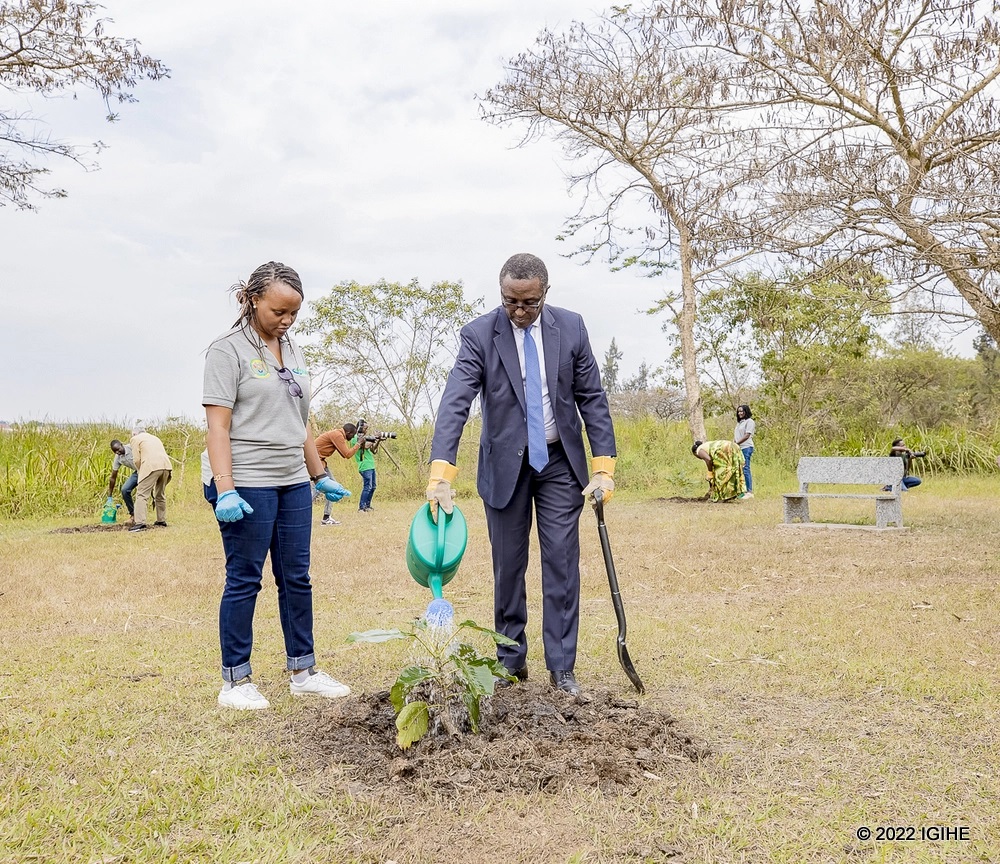
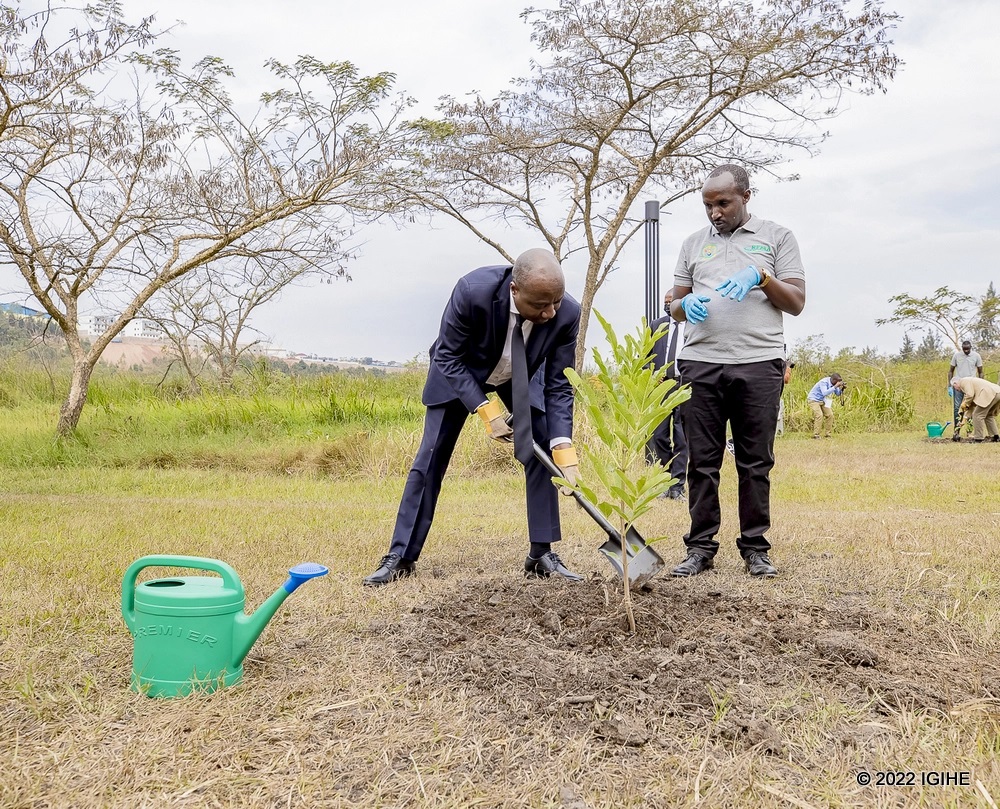
During the event, Premier Ngirente and accompanying officials planted trees for environmental conservation.
Nyandungu Eco-Park was open to public on 8th July 2022. QA Venue Solutions, which also operates BK Arena, will be responsible for the day-to-day management of the park and offer guided tours to visitors and its attractions.
The opening of Nyandungu Eco-Park represents the single largest addition to public green space in Kigali in the city’s history.
The park provides a space for residents and visitors to the city to explore and learn from nature, and is part of Rwanda’s efforts to harness eco-tourism to restore biodiversity and conserve urban wetland ecosystems.
The restoration of the wetland and creation of an eco-tourism park was funded by the Rwanda Green Fund (FONERWA) with support from the UK Government, the Italian Government through the Ministry for Ecological Transition and the UN Environment Programme.
The six-year initiative has restored the Nyandungu wetland ecosystem and promoted the sustainable management of natural resources. The initiative has also created approximately 4,000 green jobs.
The rapid growth of Kigali and the associated human activities have put significant pressure on the wetlands. Wetlands, including Nyandungu, have been degraded and this led to biodiversity loss. Encroachment has also resulted in downstream flooding as well as increased pollution due sewage outflows.
In 2016, the Government of Rwanda through REMA developed the Nyandungu restoration project to respond to these challenges and demonstrate the potential of wetlands to abate pollution and reduce the risk of flooding in urban areas.
Since then, the Rwf 4.5 billion project has restored critical habitats, including a native fig forest and the wetland itself, and rehabilitated streams and ponds to alleviate floods and reed-beds to reduce pollution.
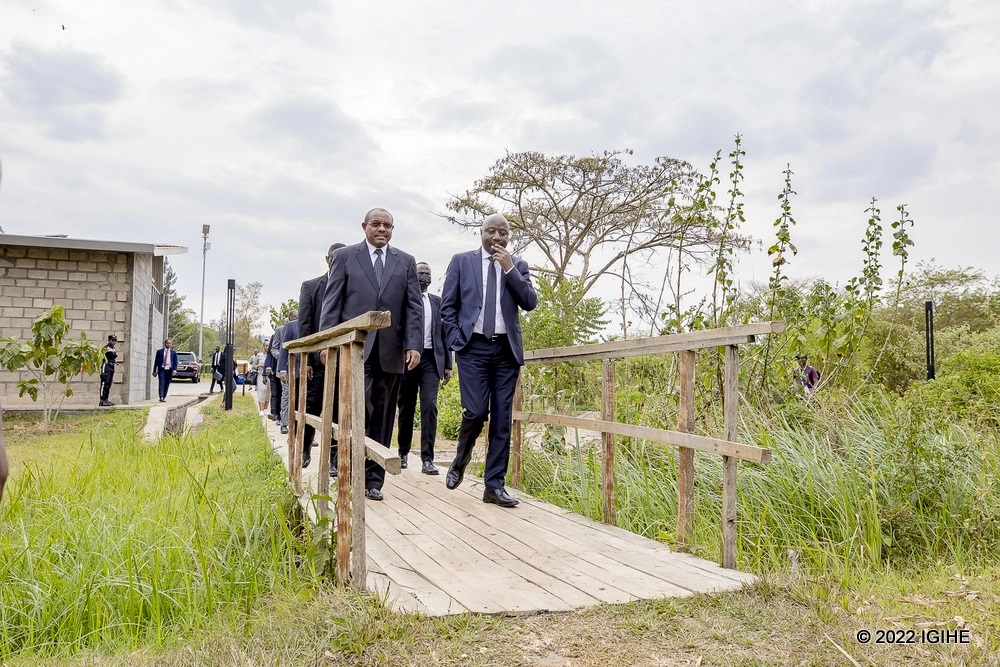
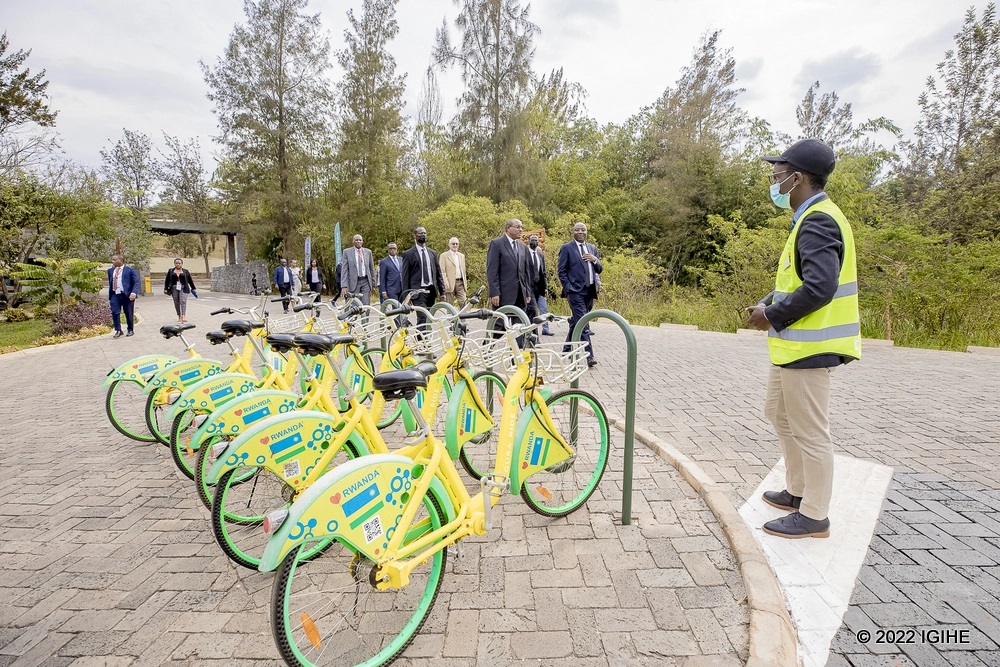
Stretched on 121.7 hectares in size, including 70 hectares of wetland and 50 hectares of forest; the wetland also features a medicinal garden, a Pope’s Garden, five catchment ponds, three recreation ponds, a 10km network of walking and cycling paths, viewing areas, picnic areas, an information centre, and a restaurant among other facilities.
It is home to more than 62 local plant species and over 100 bird species.
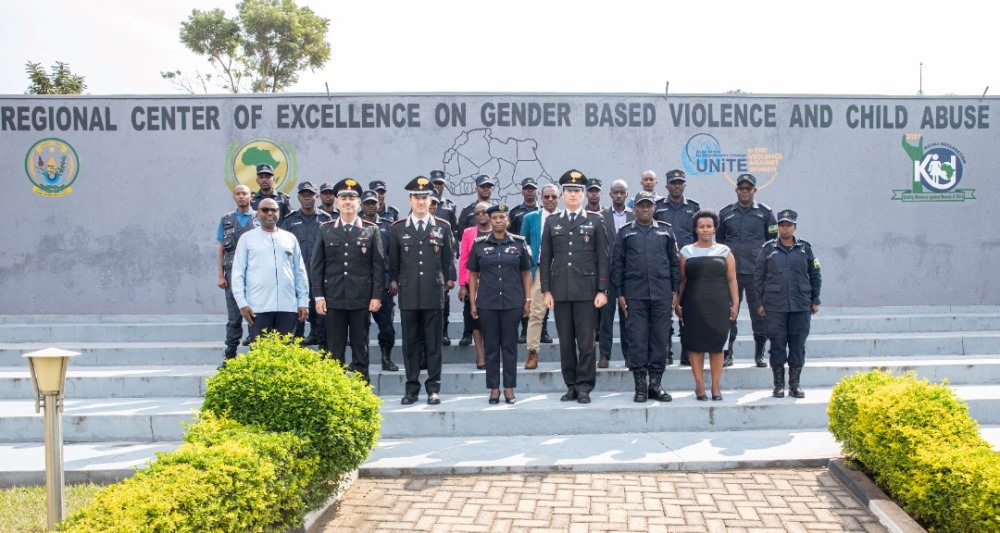
Trainees include Police officers, investigators from RIB as well as those from Rwanda Food and Drug Authority (RFDA) and the Ministry of Health.
The course is facilitated by experts from the Health Protection Department of the Italian Carabinieri, as part of the existing cooperation with Rwanda National Police.
While opening the course, the Deputy Inspector General of Police (DIGP) in charge of Administration and Personnel, Jeanne Chantal Ujeneza, observed that foodstuff, drugs and medicines traded illegally are a serious threat to public health.
She added that foodstuff, drugs and medicines or other products, if produced, traded illegally or poorly stored, present a serious threat to public health since they are dangerous for human consumption.
The training, she said, comes to support the Rwanda Food and Drugs Authority to achieve its mandate to protect the public health through regulation of human and veterinary medicines, vaccines and other biological products, processed foods, medicated cosmetics, medical devices, household chemical substances, tobacco and tobacco products.
“To effectively achieve its mission, Rwanda Food and Drugs Authority requires working hand-in-hand with other government institutions including law enforcement agencies such as RIB and Police among others, for regular monitoring and inspection of all these products circulating in the country to protect the citizens,” DIGP Ujeneza added.
The Deputy Police Chief thanked the Carabinieri for its continuous support in various areas of capacity development.
She urged participants to take advantage of the training to acquire more knowledge in food and drug quality inspection.
On his part, Col. Francesco Sessa, the Carabinieri Liaison Officer observed that the training was implemented in the framework of Cooperation between the RNP and the Italian Carabinieri.
“Here, we come from different backgrounds, with different legal systems, from different institutions, carrying out different functions. However, I believe that we share something in common, a desire to learn from one another and stay up-to-date on how we can accomplish our mandate for a safer society,” Col. Francesco said.
RNP and Carabinieri signed a cooperation agreement in 2017 to partner in capacity development, including peace support operations, counter-terrorism, aviation security, public order management, VIP protection, cybercrime, traffic and road safety, environmental protection as well as acquisition of modern police equipment, among others.
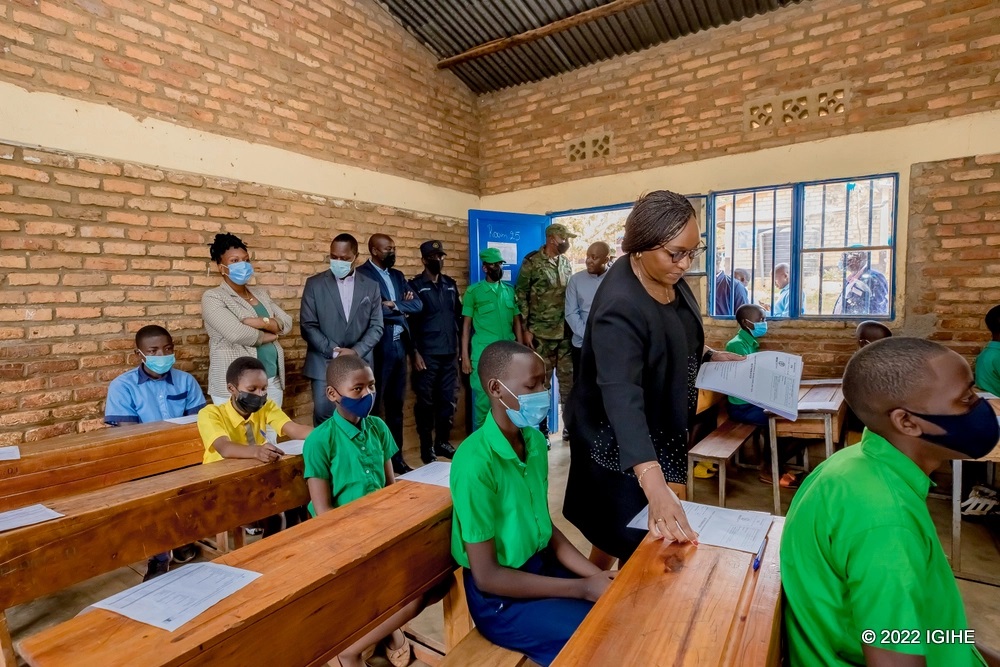
The Minister of Education, Dr. Valentine Uwamariya has officiated the start of exams at Groupe Scolaire Nyagasambu in Fumbwe Sector of Rwamagana District which serves as an examination center for 633 learners (including 301 boys and 332 girls) from four schools including Rwamashyongoshyo Parents School, GS Runyinya, Nyagasambu Vision and GS Nyagasambu.
Minister Uwamariya told the candidates to consider the exam as an opportunity giving them chance to be promoted to the next level.
“You have spent six years preparing for this exam allowing you to be promoted to the next level. In fact, it is about preparations to join the category of mature people. This is a good move for you but it is not extraordinary because you have done exams at different times,” she said.
Minister Uwamariya has revealed that learners have had smooth preparations unlike the past two years where studies were affected by COVID-19.
Even though the pandemic has not yet been defeated, Minister Uwamariya observed that this school year went well and ended on time without COVID-19 restrictions suspending studies and expressed optimism for good performance.
She also urged parents and head teachers to make sure that all children participate lest they are deprived of a brighter future.
At least 429,151 finalists from primary, ordinary level and upper secondary school are expected to sit for national exams this year.
Ordinary level exams are scheduled between 26thy July and 2nd August 2022 while students completing the upper secondary school will sit for national exams from 26th July to 5th August 2022.
Besides, candidates from Teacher Training Colleges (TTCs) will sit for exams between 26th July and 3rd August 2022 while written exams for students from Vocational Training Schools are scheduled to run from 26th July to 5th August 2022.
At last 254,000 primary school finalists sat for national exams last year.