The news about the arrest of this artist, Dr. Munangira B. Thierry Spokesman of the National Office of Criminal Investigation RIB confirmed this to IGIHE. He said,
His arrest has been confirmed by the Spokesperson of Rwanda Investigation Bureau (RIB), Dr. Munangira B. Thierry. “He suspected of assaulting and intentionally injuring a 30-year-old woman,” he said.
IGIHE has learnt that the woman Danny Nanone is accused of beating and injuring is the one they sired a child together. In 2016, the artiste was also arrested under similar circumstances.
Danny Nanone was arrested in the night of September 19, 2022. He is detained at the RIB Kicukiro Station while the investigation continues for his file to be submitted to the Prosecutor’s office.
If convicted by the Court for this crime he is being convicted of, Danny Nanone will be punished by law number 68/2018 of August 30, 2018 which determines offenses and penalties in general.
This law states that whoever is convicted of this crime by the Court shall be sentenced to imprisonment of not less than three years but not more than five years and a fine of not less than five million but not more than rwf10 million.
Dr. Murangira Thierry has urged the general public to be flexible noting that RIB won’t tolerate anyone who commits such a crime.
The incident occurred on September 19, 2022, when the old man went to a toilet where he fainted and died immediately.
The Executive Secretary of Kimisagara Sector, Kalisa Jean Sauveur, told IGIHE that the news of the old man’s death came to light in the early hours of Monday.
He said that the man who was in his 70s was experiencing estranged relations with his wife but they still lived in the same house.
“It happened in early morning but he was a vulnerable person who also had a heart disease. He might have died of it,” he said.
Kalisa went on to say that as soon as this old man died, RIB and Police immediately arrived at the scene for investigation and granted his family the right to bury him.
Under this program, a total of 11 students from Japan joined their colleagues in Rwanda since August, 15 this year for an exchange program that was initiated through the support of NPO Think About Education in Rwanda.
The latter is a non-government organization founded in Japan, by a Rwandese lady who was committed to improve child education and health in Rwanda after the 1994 Genocide against the Tutsi.
Throughout this month-long program which came to an end during a ceremony held recently on 16th September, the students visited different district and referral hospitals, health centers and community health workers to learn about health systems in Rwanda and other institutions to know more about Rwanda.
Dr. Olive Bazirete, the Dean of Faculty of Nursing and Midwifery at UR, said that the main reason behind this program is to develop a global partnership in healthcare systems.
“We are grateful to this partnership and we are looking forward to continued collaboration and development of more projects. This should not only be considered in the context of having this student exchange program, but also we can have the faculty of Josai coming to Rwanda and UR going to Japan,” she said.
“We have learnt a lot of things. What impressed us most is the medical system which is different from Japan including the small number of hospitalization days and the use of drones to transport blood from the transfusion centers,” said Ms. Megumi Uchida, one of students from JIU.
“I also got to know a lot from some initiatives that I would like to see introduced in Japan such as enabling hospitals to provide counseling and provide protection to victims of domestic violence,” she added.
The summer exchange provided the opportunity to interact not only with students but also with people of all ages and to deepen their ideas about lifestyles, societies and education.
It has been an opportunity for JIU and UR students to deepen their understanding of the health sector, culture and to reflect and share as future leaders.
JIU nursing students also visited the Kigali Genocide Memorial to learn about Rwanda history.
Innocent Twizerimana, a UR student said that such summer exchange is very important, however much expensive it is.
“For it to be a full exchange, people should come to Rwanda and vice versa,” he noted.
Twizerimana said that UR students also learnt a lot about the Japanese health system.
“The Japanese government encourages people to get fully vaccinated to develop resistance against pandemics. We found that it could help our country to improve the current vaccination system. Another thing we learned is the way Josai University puts a lot of effort in research to develop resilience against shocks in the health sector,” he revealed.
The president and founder of NPO Think About Education in Rwanda, Mrs. Towari Marie Louise, urged the participants of the summer exchange platform to build on the connection they have created.
“Don’t leave the connection here, please bring them back and you Rwandese, please keep them. If you don’t keep the connection, it’s going to disappear but if you continue connecting, I believe something good will happen,” she said.
“As you have visited many places, remember that you met someone, remember to connect and keep the telephone number in your mind. It’s not by accident, it’s for a purpose we meet. See the millions and millions of people living in the world but we are here together. This is a miracle. Let’s build on it and provide another good future for a new generation coming after us,” added Towari.
{{About JIU}}
JIU was founded in 1992 by the Josai University Corporation in the city of Togane, Chiba Prefecture, about 90 minutes from downtown Tokyo. Josai University Corporation was established in 1965 by Mikio Mizuta who was Minister of Finance for a total of twelve years starting in 1960. The university offers a four-year undergraduate program as well as a graduate program. There are undergraduate schools or faculties: Faculty of Management and Information Sciences; Faculty of International Humanities; Faculty of Media Studies; Faculty of Social Work Studies; Faculty of Tourism;Faculty of Pharmaceutical Sciences; Faculty of Nursing.
There are four graduate schools; Graduate School of Humanities; Graduate School of Management and Information Sciences; Graduate School of Social Studies; and Graduate School of Business Design. Graduate School of Pharmaceutical Sciences; Graduate School of International Administration.At present, the university has over 6,000 students, including the undergraduate student body and the graduate program. Many of the students come from various foreign countries.
{{About UR}}
The University of Rwanda is Rwanda’s largest higher education institution. The University of Rwanda was formed in 2013 through the merger of previously independent public institutions of higher education, the largest of which was the National University of Rwanda.
Initial work to establish the institution was undertaken by Professor Paul Davenport, a member of Paul Kagame’s Presidential Advisory Council, who now acts as chair of the university’s board of governors. The University of Rwanda was established in September 2013 by a law that repealed the laws establishing the National University of Rwanda and the country’s other public higher education institutes, creating the UR in their place.
At the time of its creation, education officials reported that they “hoped that the university will improve the quality of education and effectively respond to current national and global needs”
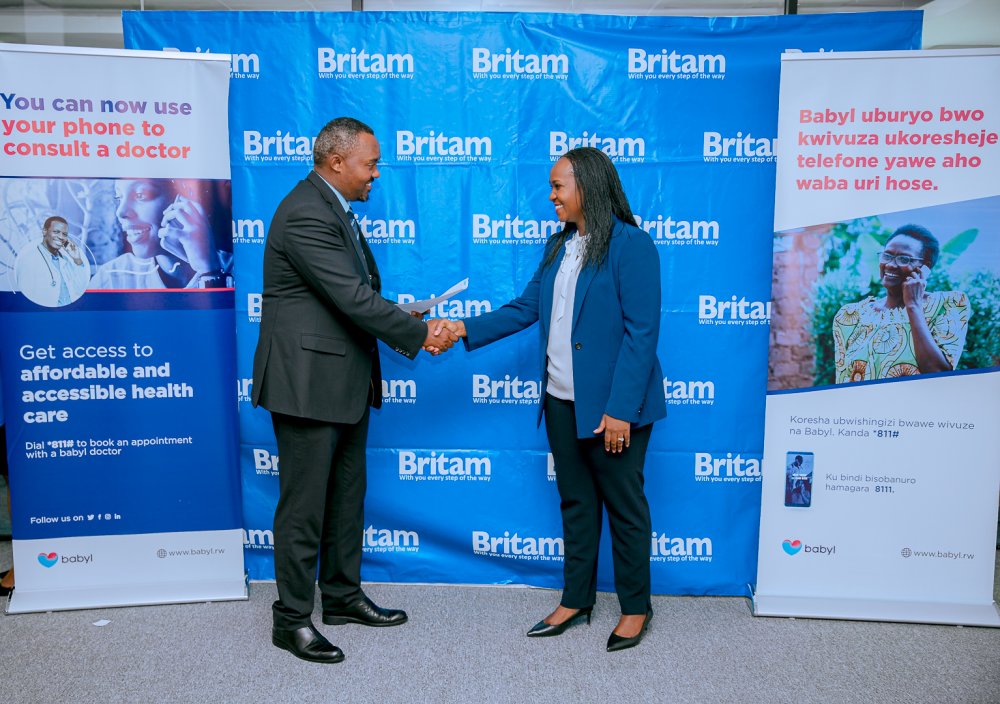
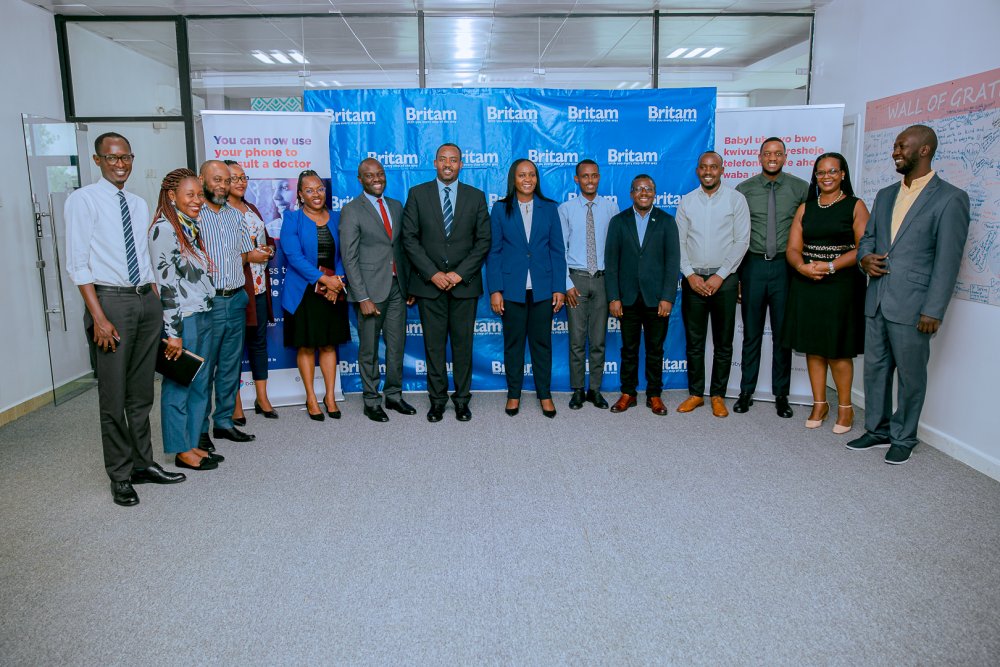
The goal of the deal is to drive affordability and accessibility to quality health care in Rwanda. This will allow individuals all over the country to book medical consultations and speak to clinicians over the phone from the comfort of their homes or offices.
The deal will also allow Britam customers to get medical consultations, receive prescriptions for drugs and book laboratory tests where necessary, making it easy and convenient for users to access healthcare.
The launch of this partnership follows the successful implementation of a 12-month long pilot phase where Britam Health Insurance clients were introduced to the digital health service and sensitized on the benefits of digital healthcare.
Britam subscribers will now dial *811# and receive prompt instructions to access Babyl services and use their insurance to pay for a Babyl consultation. The price point entry for the service is Rwf5,000 and the patients will be charged according to the different co-pay categories.
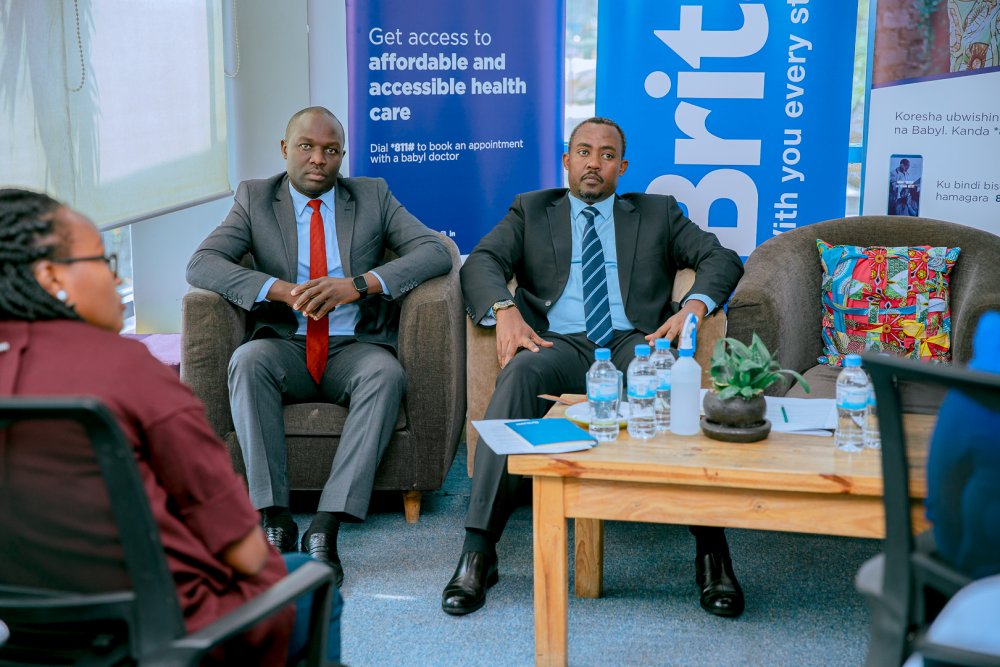
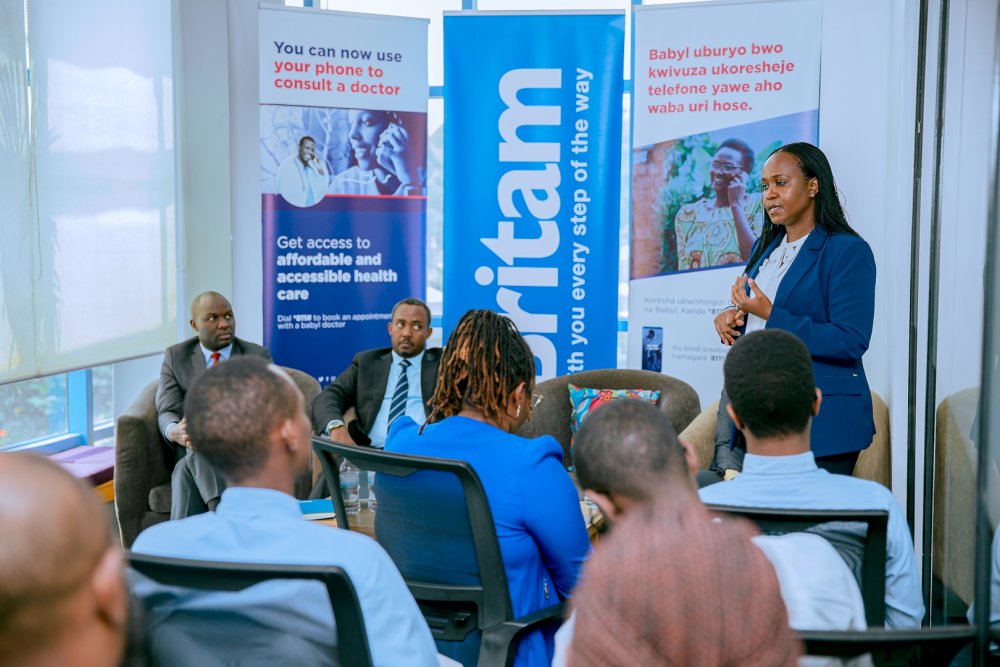
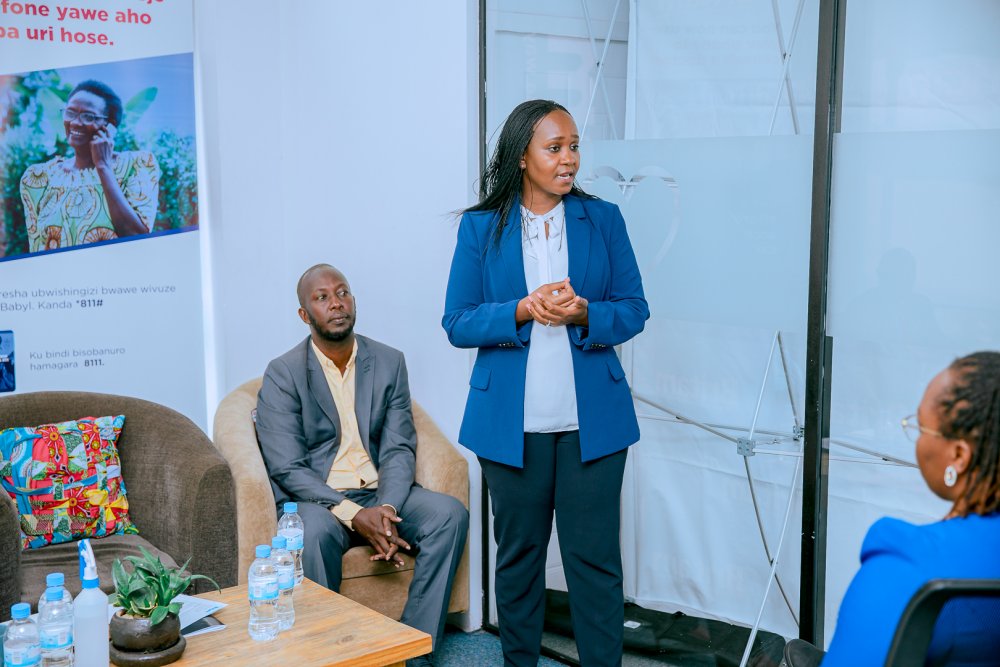
Commenting on the development; the CEO of Britam, Andrew Kulayige revealed that Britam is making intentional and concentrated efforts to improve the experience of its customers by easing access to services.
“This partnership is a step in the right direction towards not only achieving the goals of our 2021-2025 strategy, one centered on customer centric transformation, but also supporting Rwandans access to quality Health Care and accessing it quickly. Insurance will be a key enabler of this and we are glad to be pioneering the solution with Babyl,” he said.
Dr. Shivon Byamukama, the Managing Director of Baby Rwanda said that the company aims to give patients the most convenient experience while seeking healthcare services.
“The adoption of digital healthcare in Rwanda has been remarkable. Babyl clinicians now handle over 3,500 consultations per day. So far, we have been partnering with RAMA and Mutuelle de Santé and now we are extending the partnership to private insurance. That is where Britam comes in,” he noted.
“This partnership and the pilot with Britam is a significant milestone for its members. We look forward to onboarding more insurance companies and ensuring all Rwandans have access to a doctor from wherever they are for early engagement, preventative care and quick access to medical practitioners,’’ added Dr. Byamukama.
The popularity and quick adoption of digital healthcare in Rwanda is also a key factor in reducing self-diagnosis and self-medication in society.
Babyl has a helpline service (8111) that is open from Monday to Saturday, 7a.m. to 7p.m. that handles any inquiries and assists customers in issues ranging from subscription, payment and information on partner pharmacies and laboratories.
{{About Britam}}
Britam is a leading diversified financial services group and is listed on the Nairobi Securities Exchange. The group has presence in seven Africa countries, including Rwanda, Kenya, Uganda, Tanzania, South Sudan, Mozambique and Malawi. The company offers a wide range of financial products and services in Insurance, Asset management, Banking and Property.
{{About Babyl}}
Babyl Rwanda is a subsidiary of Babylon, and is the largest digital medical consultation service provider in Rwanda. Babyl has signed a 10-year partnership with the Government of Rwanda in early 2020 to develop a new healthcare delivery model of ‘Digital-First Integrated Care’, where all Rwandans are able to gain access to qualified doctors and nurses through their mobile phone.
It serves RSSB and Mutuelle de Santé subscribers. To date, Babyl has over 2.5 million registered users and carries out up to 3,500 consultations a day.
Babyl has supported the Government of Rwanda on home-care follow up for asymptomatic Covid-19 patients, where patients were followed up on a daily basis, reporting other symptoms that may occur and ensuring the patients were out of the high-risk population and isolated at home until they test negative for the virus.
Ujiri, 52, is a close friend of Rwanda who contributed to the establishment of Kigali Arena currently branded as BK Arena following discussions with President Paul Kagame as they watched NBA All-Star Game in Toronto, Canada in 2016.
GOA is a basketball camp founded by Masai Ujiri as a platform to explore and nurture basketball talent among African youth.
It started in 2003 in Nigeria but in 2014 Ujiri took it outside of the country.
The renovation of the basketball court at Club Rafiki, Nyamirambo, launched on August 8, 2017 and camps to promote youth’s basketball talent since 2015 are among fruits of Ujiri’s contribution to the development of basketball in Rwanda and the African continent.
In February 2020, Kagame and Ujiri announced the Giants of Africa festival that was expected to take place in Kigali, August 2020, bringing together 11 countries.
At the time, Kagame thanked Ujiri for his work with Giants of Africa and said that the camp is crucial in developing the talents of African youth.
Ujiri also thanked the president for his role in the development of Africa and the way he puts into action everything he pledges, including the establishment of Kigali Arena.
This time around, Ujiri has owns land in Kigali City. In July last year, he was granted freehold land title for 2.4 hectares located in Remera at the former premises of Rwanda Biomedical Center (RBC) along the road to Amahoro Stadium by the Government of Rwanda.
Freehold land title refers to a property title by which the owner of the land owns it for perpetuity. In other words, freehold land title ownership has no limit in time for the landowner and its beneficiaries.
The land will be developed for infrastructures to help people in need of sports related services.
The area allocated for infrastructures to be set up by Ujiri is located in Kigali Sports Hub.
Infrastructures in the area are being developed in phases where BK Arena was inaugurated in 2019. Amahoro Stadium is also being upgraded to host football and Ruby games. There is also a small stadium that can host different volleyball games simultaneously as well as other facilities for Paralympic games.
The Amahoro Stadium being upgraded is expected to be completed in 2024. If everything goes well, another sports facility dubbed ‘Ujiri Court’ is also expected to be completed in the same year.
So far, the study plan for Ujiri’s project is underway.
Speaking to IGIHE, the Acting Director General of Rwanda Housing Authority (RHA), Noel Nsanzineza has shed light on outcomes of the project.
“Normally, people going to watch games and entertainment activities need access to other recreational facilities. This is what Ujiri Court will solve. It will feature a Tennis and Basketball courts, and a space dedicated for lodges or hotel. It will also have a supermarket, all aligned with ambitions to promote sports,” he said.
Ujiri was born on 7th July 1970. His net worth is estimated to be around US$20 million. He earned the money from positions he assumed as the president of different teams.
The modern supermarket to be set up in Remera will be designated for sales of different sports items including clothes and balls among others.
“Ujiri Court is among projects set to commence. The investor has been given the land for such infrastructures complementing others being developed,” said Nsanzineza.
Apart from Ujiri Court, it is said that the project will also be comprised of a pool for contestants in international competition and other facilities.
With the first projects expected in 2023, IFFEd will support education and skills development investments in lower-middle-income countries. With an initial funding of 2 billion U.S. dollars, the facility is expected to expand to 10 billion dollars by 2030.
Since the COVID-19 pandemic began, two-thirds of countries have cut their education budgets, but education is the building block of peaceful, prosperous, stable societies, said Guterres at a joint press conference with Brown. “Reducing investment virtually guarantees more serious crises further down the line. We need to get more, not less, money into education systems.”
Wealthy countries can increase funding from domestic sources, but many developing countries are being hit by the cost-of-living crisis, and urgently need support for education, Guterres said, adding that this is exactly the role of the IFFEd.
This facility is aimed at getting financing to lower-middle-income countries — home to half of the world’s children and youth — and to the majority of the world’s displaced and refugee children, he noted.
IFFEd is not a new fund, but a mechanism to increase the resources available to multilateral banks to provide low-cost education finance. It will complement and work alongside existing tools that provide grants and other assistance, said Guterres, urging all international donors and philanthropic organizations to back IFFEd.
Brown said IFFEd is to deal with a crisis when 260 million school-age children do not go to school, 400 million children at the age of 11 are not able to read or write and leave education for good, and 840 million children and young people, by the time they leave education in their teens, have no qualifications for the workplace of the future.
“Over time, we expect the fund to grow from the two billion (dollars) that it will be initially, to five billion and then to 10 billion. This means that today we’re announcing the biggest-ever single investment in global education that the world has seen, and we believe it can transform the prospects of millions of children,” he said.
Addressing the ceremony, Chinese Ambassador to Ghana Lu Kun voiced hope the scholarships will help Ghanaian students at all levels excel in their study of the Chinese language.
“As China became the second largest economy in the world, learning Chinese helps you not only better understand China but also share China’s development dividends and realize your dreams,” he said.
Lu assured the students that the Chinese embassy is ready to provide assistance to Ghanaians who wish to study in China.
Johnson Nyarko Boampong, the UCC Vice Chancellor, said the significance of the Chinese language has been growing.
“Chinese language provides the keys to unlock the door to a world of opportunities. There are numerous employment opportunities in the growing number of Chinese enterprises in Ghana,” he said, urging the awardees and other students to take the Chinese courses seriously in order to be globally competitive.
Hamed Dizatu, a UCC student and awardee, told Xinhua that she has overcome lots of difficulties in her pursuit of language proficiency.
“This award means a lot to me and it was motivating to know that I am not studying in vain,” she said.
The upgraded road, stretching 13.8 km, starts from the Sonatube roundabout in Kigali, the capital of Rwanda, through the Gahanga sector to the Akagera bridge in the Bugesera district. It forms part of an avenue leading to Rwanda’s new Bugesera International Airport located 40 km south of the Kigali International Airport.
The CRBC, which started the upgraded project in 2019 and took more than three years to finish it due to factors including COVID-19, has won accolades from locals for upgrading the road to ease traffic flow and movement of goods and people as well as stimulate economic growth along the Kigali-Bugesera highway.
“Before the upgrade of this road, we suffered heavy traffic most especially at Kicukiro town center because the road was narrow with only two-way two-lane. This road is mostly used by people traveling from Kigali to Nyamata town in Bugesera district and a lot of people use this road daily,” said Emmanuel Habineza, a trader who uses the road, in an interview with Xinhua.
He said before the road upgrade, it took him 45 minutes to transport his produce from Gahanga town to Kicukiro town but now after the road upgrade, it only takes 20 minutes. “The road is of a high standard and looks beautiful. This makes our movement quick, which saves our time and boosts trade,” said Habineza.
Habineza commended the Chinese company for supporting the upgrade of the road which, he says, has allowed the locals to increase their trade and ease traffic flow along the road.
Speaking to Xinhua in an interview, Tian Chong, the project manager, said that before the upgrade of the road, it was only a two-way two-lane urban road and was of a low standard.
“The contract period is 24 months. Due to the impact of the pandemic and the demolition of local pipelines, the progress has been delayed, and the construction period has been extended by 15 and a half months,” said Tian. “We upgraded the road to two-way four-lane and in some sections along the road, we have reached two-way six-lane. This has eased the movement of traffic along this road.”
“We also constructed a flyover in Kicukiro center along the road. Before the construction of the flyover, there were heavy traffic jams on a daily basis which interrupted the movement of goods and people on this road. Now, there is no traffic jam anymore,” he said.
The overall traffic flow has been greatly improved along the road to Bugesera district, said Tian.
“We have always adopted a localized management model, and most of the skilled and common types of work are hired local workers. There are still more than 500 local employees in our project. Since the start of construction, the project has trained thousands of technical workers,” he explained.
The road upgrade is designed and constructed according to Chinese standards as well as in accordance with the first-class highway standard of China, said Tian.
According to him, the road features a central green belt, and vegetation with local characteristics, including palm trees and sunflowers.
“With the construction and completion of the project, many shops, residences and some office buildings have been built along the line, which has played a certain role in promoting the local economy along the line,” said Tian.
“I was lucky to be offered a job as a secretary for the road project. I started working with China Road and Bridge Corporation in 2016 and the payment is good. I am able to pay school fees for my children and afford a good standard of living in Kigali,” Liliane Nikuze, one of the employees of the road project, told Xinhua.
She added that CRBC is a good company that has offered employment opportunities to many Rwandans including her and this has greatly improved their lives and incomes.
Ba, who was appointed to the position of Prime Minister Saturday morning, explained in a statement made on the occasion that his government was “a mission team” to fulfill the vision of the Head of State, Macky Sall, which centers on the realization of the Senegalese Emerging Plan (PSE), a ten-year strategy launched in 2014 to speed up the country’s development.
The previous government consisted of 33 ministers and four deputy ministers.
According to a decree of the presidency released early Saturday, Amadou Ba was appointed the prime minister, a position abolished in 2019 and reinstated last year.
The new prime minister, 61, previously served as minister of Economy and Finance and minister of Foreign Affairs.
Senior Superintendent of Police (SSP) Rene Irere, the spokesperson for Traffic and Road Safety department, said that there has been an increase of motorcyclists, who overload and sometimes transporting both goods and people, a serious and reckless traffic violation.
“Rwanda National Police has conducted various road safety awareness campaigns against such risky practices but some of the motorists have kept deaf ears. The Motorcycle Policing Unit under the department of Traffic and Road Safety has now started operations against this traffic violation,” said SSP Irere.
In the last one week alone, he added, about 80 motorcycles were impounded in Kigali for overloading.
“These motorcycles were transporting big sacks making it impossible for them to see anything coming from behind, some of them could not control the motorcycle especially in traffic because of the heavy loads and others ended up involving in accidents,” SSP Irere explained.
These practices in Kigali, he added, are common in downtown Nyabugogo and Kimisagara, where most of the motos were impounded transporting heavy loads especially foodstuff.
“Overloading is considered as one of the life-threatening behaviors of some taxi-moto operators, who prioritize benefits before considering their own lives. These operations are continuous and motorcyclists are cautioned against overloading and other practices that put lives at risk,” SSP Irere warned.