Karanganwa was arrested at her retail shop where the Anti-Smuggling and Organized Crime department recovered 121 pieces of assorted skin whitening products, commonly known as mukorogo.
Chief Inspector of Police (CIP) Sylvestre Twajamahoro, the Police spokesperson for the City of Kigali, said that Karanganwa was suspected to be working with those who traffic and sell skin bleaching cosmetics.
“On Monday, the Anti-Smuggling and Organized Crime department got information that Karanganwa had received a new consignment of the banned skin bleaching cosmetics from one of her suppliers. Police officers searched her shop in Downtown where 121 pieces of skin whitening creams were recovered, leading to her arrest,” CIP Twajamahoro said.
Karanganwa said that her suppliers sneak them into Rwanda from the Democratic Republic of Congo (DRC) through porous borders.
The search for her suppliers is still underway.
Karanganwa is one of the many traffickers and sellers of the outlawed skin whitening creams and oils, who have been arrested in different RNP operations across the country.
There are 1,342 listed cream and oil brands with hydroquinone and mercury, which are prohibited in Rwanda.
Article 266 of the law determining offenses and penalties in general, states that any person, who produces, sells, or prescribes harmful products; cosmetics or body hygiene substance or any other products derived from plants, commits an offence.
Upon conviction, he/she is liable to imprisonment for a term of not less than one year and not more than two years and a fine of not less than Rwf3 million and not more than Rwf5 million or one of these penalties.
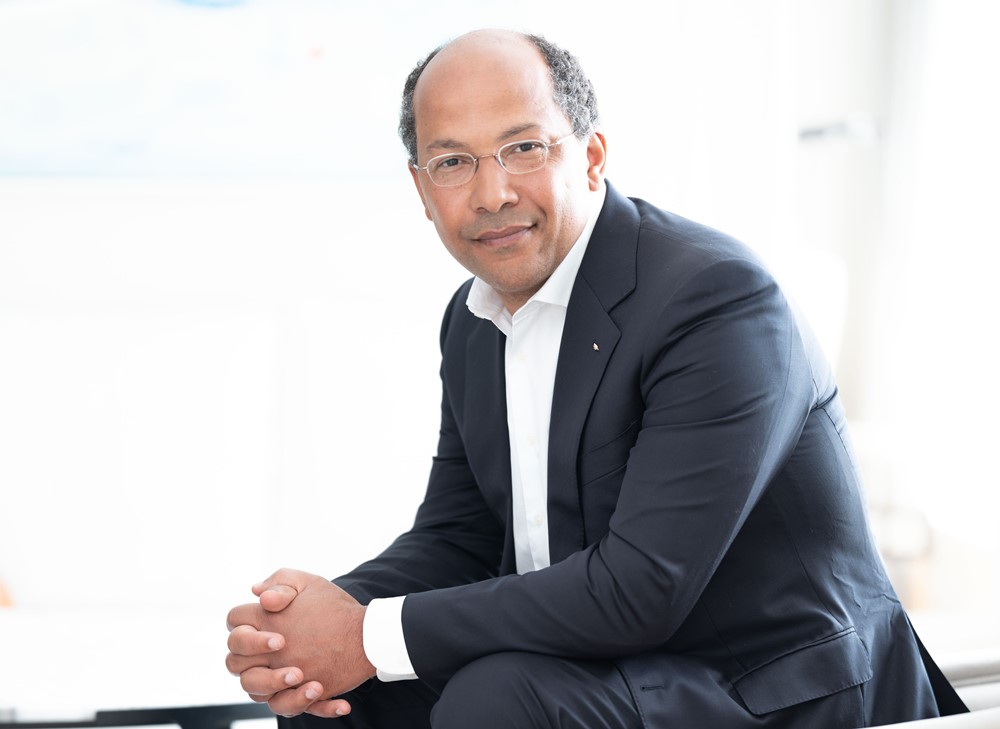
He started his journey from humble beginnings, pouring his life savings into setting up his own company – the African Press Organization (APO) – in 2007. His goal was to provide international and African media with access to reliable news about the continent’s economy, business, and investment news.
It might have seemed like a gamble, but Nicolas defied the odds. He soon abandoned his career as a journalist for online Gabonese media ‘Gabonews’, and, over the last 15 years, APO Group (as the company is now known) has grown into the leading Pan-African communications consultancy and press release distribution service.
APO Group is changing the narrative about Africa, helping communicators relay compelling, uniquely African stories to audiences all over the world.
With close to 100 employees, and more than 300 clients, APO Group reported increased revenue of 88% in the first semester of 2022, versus the same period in 2021.
Some of APO Group’s prestigious clients include FIFA, Facebook, Nestlé, NBA, the Basketball Africa League (BAL), Canon, Coca-Cola, DHL, Marriott Group, Ecobank, Liquid Intelligent Technology, Siemens, Standard Chartered, Orange, Jack Ma Foundation, African Development Bank, World Health Organization, Islamic Development Bank, Rotary International, Kaspersky, Greenpeace, the Association of National Olympic Committees of Africa (ANOCA), the governing body of the Olympic Movement in Africa, among others.
Nicolas is also a judge at the Africa’s Business Heroes (ABH), Jack Ma Foundation’s flagship philanthropic program spotlighting and celebrating Africa’s entrepreneurial talent and promoting entrepreneurship skills.
He was among six judges who recently came to Rwanda for the semi-finals held at Kigali Convention Center on 30th September 2022, during which a Rwandan, Francine Munyaneza, emerged among ten finalists to share Jack Ma’s US$1.5M Prize.
Her company, Munyax Eco Company targets solving Rwanda’s energy challenges in rural and urban areas by providing solar equipment made and tested in Africa.
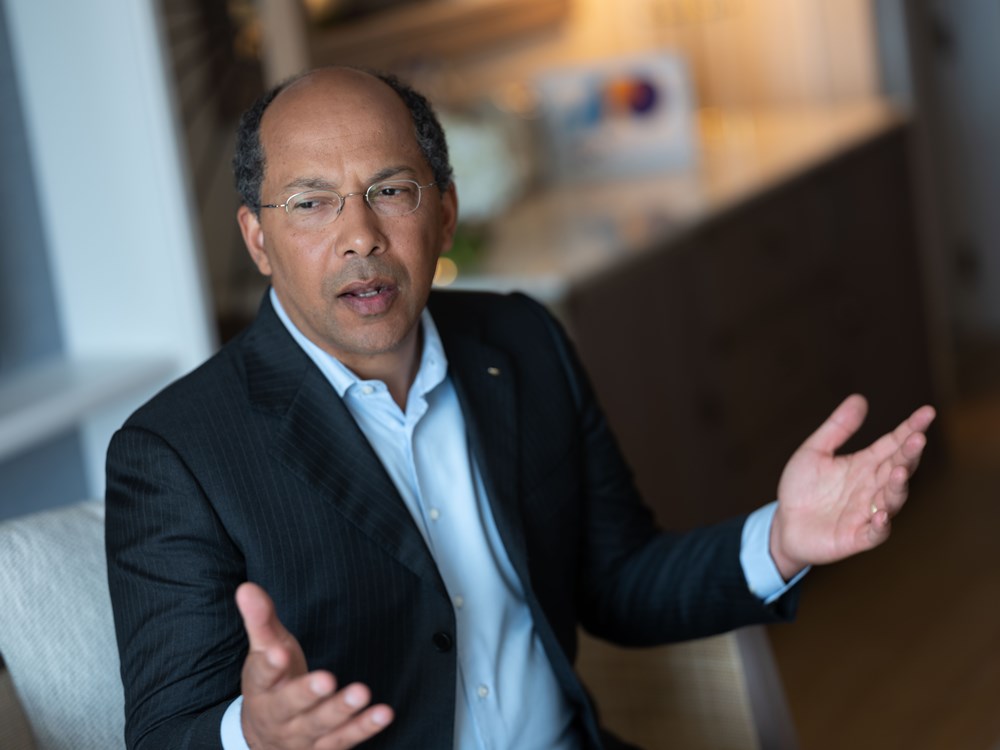
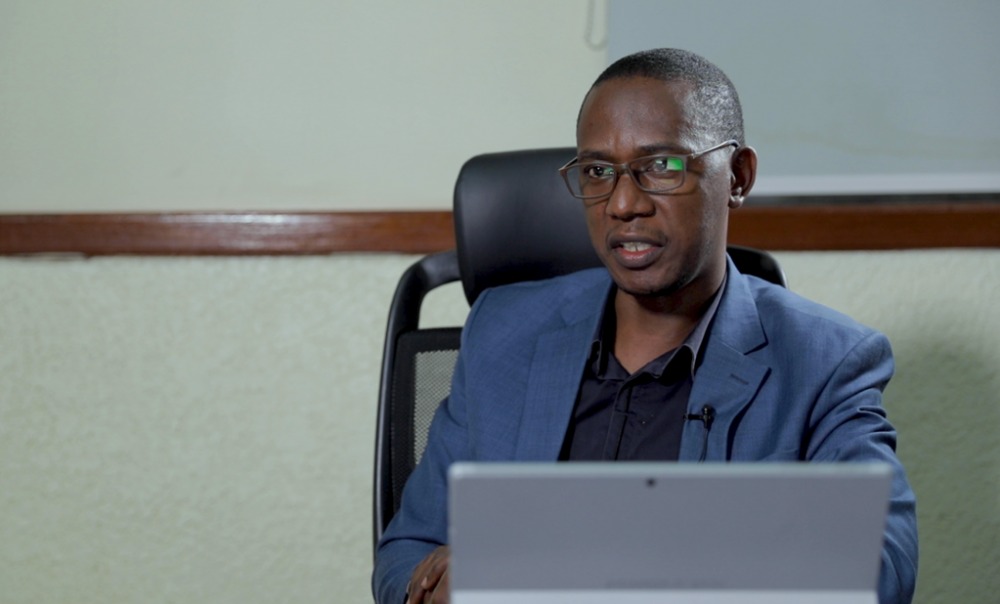
During his week-long stay in Rwanda, IGIHE sat with Nicolas to talk about his entrepreneurial journey, the efforts needed to shape a positive narrative about Africa, APO Group’s partnership with the Catholic Church in Africa, and other topics of interest.
{{Excerpts: }}
{{APO Group has been in operation for the past 15 years. Briefly tell us what the journey has been like?}}
APO Group was created in 2007 as a press release distribution service.
Today, we have two business units: A press release distribution division and a Public Relations division. We are Pan-African in everything we do. We operate in each of the 54 markets of the continent – including Eritrea and Somaliland, where establishing relationships with media can be very challenging. There is not a single country on the continent where we have not delivered our services.
We provide services to more than 300 hundred clients, many of them multinational companies such as Canon, Ecobank and Liquid Intelligent Technology. We are also working with international institutions, Non-Governmental Organizations (NGOs) and Sports Organizations, with organizations like FIFA, the Jack Ma Foundation, and the African Development Bank (AfDB) among our customers.
We are the Main Official Sponsor of Rugby Africa, the governing body of rugby in Africa, and the strategic partner of the Association of National Olympic Committee of Africa (ANOCA). We are also an Official Partner of Olympic de Marseille, and of Team Qhubeka, the only African professional cycling team.
Our work is to provide Public Relations, media relations, and digital marketing services to our clients all over Africa.
{{Where did you get your inspiration and how is APO Group contributing to job creation and Africa’s economic growth?}}
That’s an interesting question. Two days ago, here in Kigali, I was visiting someone who is very dear to me, without whom I wouldn’t have created APO and be what I am today.
The person is Donald Kaberuka. He was the President of African Development Bank in 2007 and 2008 when I started APO Group. I reminded him of what he told me in 2008 when the company was six months old. It is something that was completely instrumental to our success.
He told me that “the dissemination of information about the African economy can participate to the development of the continent”. In other words, making sure people in the USA, UK, China, Belgium, Brazil and Russia – everywhere – are able to receive information about the economy of the continent will drive potential international investment, and participate in the growth of Africa.
Africa needed to share its good economic news with the world. Once investors would receive that information, they will come forward to invest.
During the past fifteen years, I believe we have had an impact on employment in the African continent, maybe not directly, but through supporting our clients and multinational companies.
We have supported some of the biggest companies in the world as they expand across Africa. Through our partnerships with Bloomberg, Thomson Reuters, Lexis Nexis and Factiva – among many others – we make sure information about African economies reaches all the major stock exchanges across the world. That has undoubtedly driven investment in Africa.
By contributing heavily to the dissemination of information about the economy of the continent, we have definitely had an impact on investment and employment.
{{APO Group registered a growth of 88 per cent in revenue in the first half of 2022, compared to the first half of 2021. To what efforts do you attribute this success?}}
In the first quarter of this year, the company’s revenues grew by 70% compared to the first quarter of 2021. In the first semester of this year, the company’s revenues grew by 88% compared to the same period last year. By the end of the year, we expect the growth to hit three figures.
A lot of that growth can be attributed to multinational companies investing heavily in Africa, and specifically on communications.
As an example, I am a member of the Advisory Board of the Africa Hotel and Investment Forum (AHIF) which is the largest event for the hospitality industry in Africa.
Before and during COVID-19, I heard a lot of comments from people who were obviously concerned that the tourism and hospitality industry in Africa might go into decline. But we’ve actually seen the opposite result. APO Group works with Marriott, the leading hospitality group globally. We also have other clients like Radisson, Hilton and Accor. All of these organizations continue to work with us, and are maintaining or increasing their communication spending.
By looking at our growth, you can ascertain a lot about the dynamism of the continent and the appetite of multinational companies developing their presence in Africa.
Usually, people say that if a company is reducing investment, the first thing they cut is communications. If APO Group is growing, it means that there are many multinational companies investing in their PR and Communication. That’s good news for the continent.
{{What should be done for the continent’s communication industry to thrive and promote positive narrative about Africa?}}
Both the media and the Public Relations industry have an important role to play, but it is a long road ahead.
Africa is often portrayed in a negative light by the international media. They tend to play to the negative preconceptions of the western audience. Mostly, the news is of poverty, famine, conflict and corruption.
That is not an accurate depiction of what I see when I am travelling across Africa.
Public Relations Agencies like APO Group have an opportunity to carry positive news that can change the narrative about the continent. But then, the responsibility is passed on to the media.
I am very worried about the increasing expansion and influence of the international media in Africa. We are witnessing an increasing number of international media creating African subsidiaries, opening offices and so on, and perpetuating their own preconceived opinions and bias.
The so-called “international” media – I am referring to CNN, BBC, Aljazeera, TV 5 Monde, France 24, and so forth – are not truly “international” at all. Really, they are “national” media with “international” geographical coverage.
So here is the problem: If I go to my room at the Radisson here in Kigali, I can watch CNN, BBC, Aljazeera and more. If I go to Europe, what Pan-African equivalent media can I watch?
I do not want Africans to be condemned to simply listen to what the “international” media are saying about them.
{{APO Group recently signed a partnership with the Symposium of Episcopal of Conferences of Africa and Madagascar (SECAM). What does it this mean for African countries like Rwanda where a large number of the population is Catholic?}}
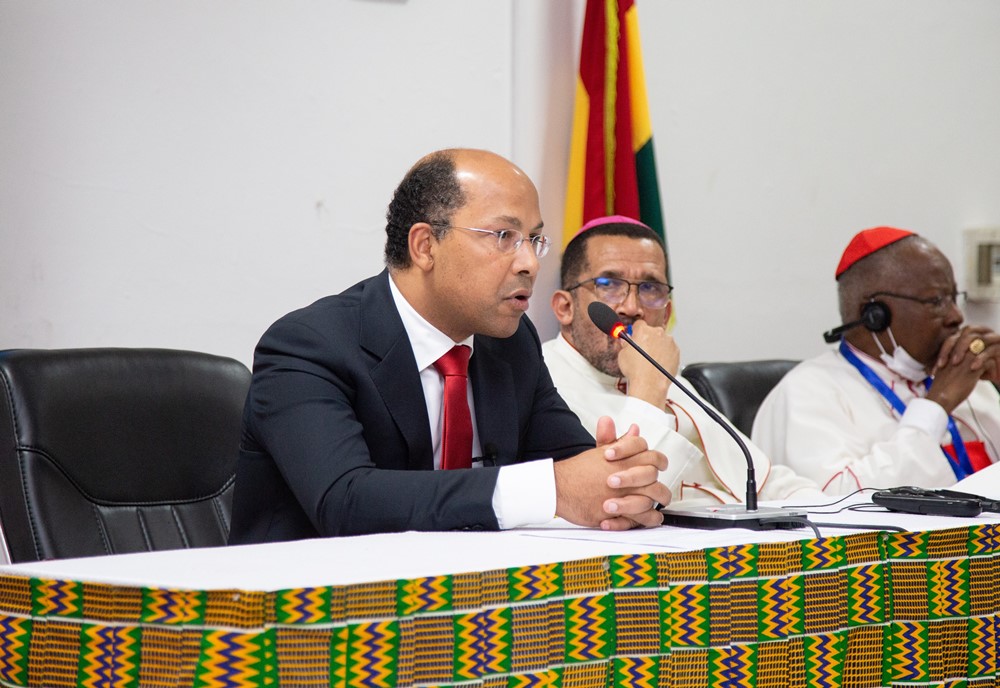
At the Vatican, in May this year, APO Group signed a partnership with the Catholic Church in Africa through their governing body, the Symposium of Episcopal of Conferences of Africa and Madagascar (SECAM).
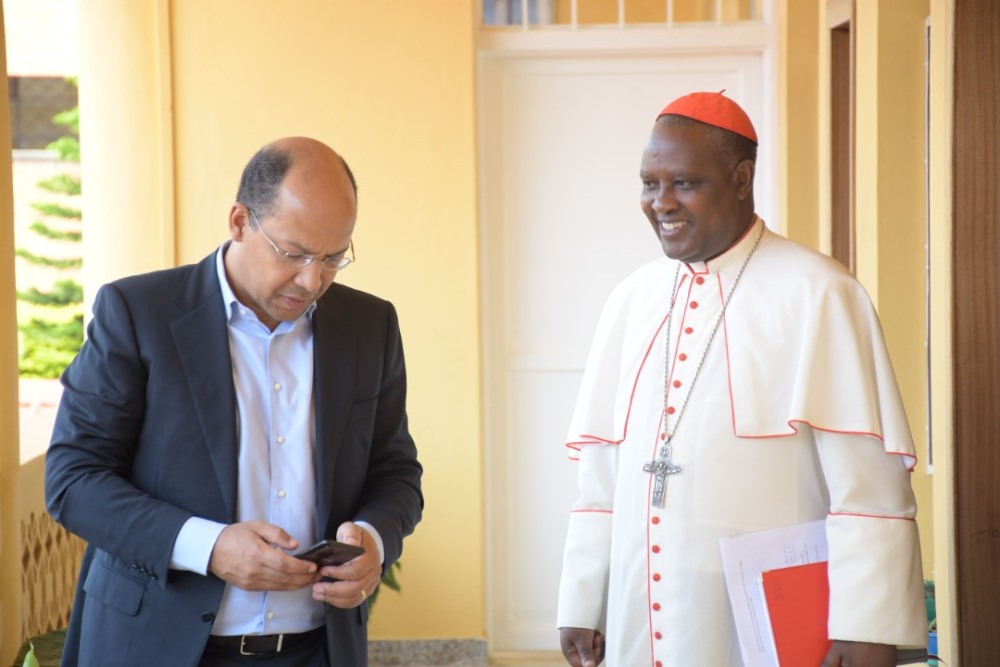
APO Group is providing two main services: The first is media relations capacity building. As we speak, APO Group is planning online training for more than 150 delegates across all the Church’s episcopal conferences with sessions held in English, French and Portuguese. I recently met Cardinal Kambanda at the General Assembly of the Catholic Church in Accra, and we had a very productive meeting in Kigali a couple of days ago. Rwanda will be part of that training.
By doing that, we will increase both the quantity and the quality of the content produced by the Catholic Church in Africa. We will show the Church’s communication managers how to draft proper press releases, the importance of images and video, how they can use smart phones to produce content, and so on.
With the training in full flow, there will be a huge increase in the amount of Catholic Church content by the end of the first quarter next year.
The second part of the agreement is that APO Group will distribute all the content these communications professionals produce, including text, images, videos and soundbites from all echelons of the Church, from parishes, dioceses, episcopal conferences, regional episcopal conferences, and of course the governing body of the Catholic Church in Africa, the SECAM.
One of the things most Africans know but sometimes need to be reminded of, is the importance of the Catholic Church in Africa. 20% of the entire African population is Catholic, and, while the number of Catholics globally is decreasing slightly, in Africa it continues to rise.
The Catholic Church in Africa is deeply involved in development activities across the continent, managing countless schools and hospitals.
The Church has a huge impact on the African continent in terms of education, health and conflict mediation.
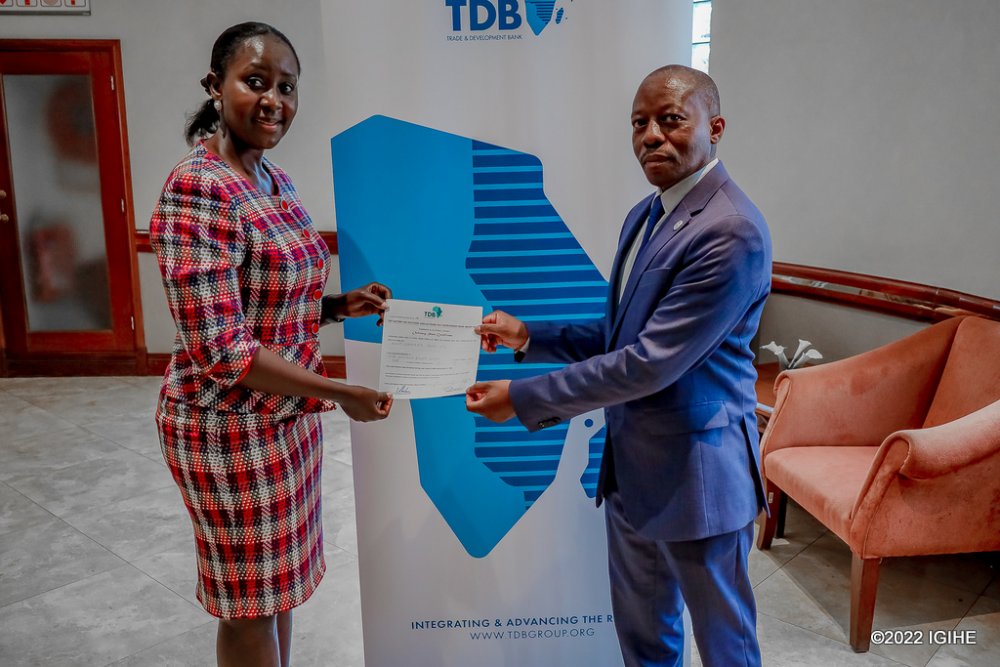
Commenting on the development; TDB Group President Emeritus and Managing Director, Admassu Tadesse said: “We salute Agaciro Development Fund as the first sovereign wealth fund to invest in TDB Group equity capital.
This investment illustrates the growing interest and confidence of institutional investors in TDB’s opportunities. We are proud to be able to continue attracting and making African capital work for Africa’s development, while delivering competitive returns.”
Agaciro Development Fund Chief Executive Officer Gilbert Nyatanyi said that, since inception, Agaciro has principally been reliant on receiving voluntary contributions from Rwandans and friends of Rwanda.
“With the recent phasing out of the contributions Agaciro is rebalancing and diversifying its investments be it in terms of asset classes as geographically in order to further grow the fund with return on investments. Investing in TDB fits perfectly into this approach,” he noted.
In 2013, TDB introduced Class B shares to mobilize capital from institutional investors. This asset class has drawn a lot of interest from investors because of the Bank’s consistent capital growth, impact, and solid profit base.
TDB’s net asset value has grown to USD 13,846 as of 2021, at a 5-year compound annual growth rate (CAGR) of about 7%, and its dividend yield has averaged about 3% over the past 5 years. Since its inception, close to 258 million has been invested in the Class B shares by institutional investors.
The Bank’s shareholding comprises 23 member states, two non-regional members countries, and with Agaciro Development Fund,19 institutional shareholders.
TDB Group Executive Corporate Affairs and Investor Relations Mary Kamari said that it is an honor for TDB Group to welcome Agaciro Development Fund in its family of institutional shareholders.
“With this new investment, and with Rwanda as one of our founding member states, AgDF becomes our second Rwandan institutional shareholder after the Rwanda Social Security Board [RSSB] and we are proud of the sustained confidence in TDB Group to deliver results,” she stated.
Agaciro joins a group of 18 other institutional investors from Africa and the rest of the world, mainly Europe and Asia, which include pension funds, insurance companies, development finance institutions, special funds and now, a sovereign wealth fund.
With an estimate of over US$ 600 billion in pension fund assets in Africa, organizations like RSSB and Agaciro Development Fund have the opportunity to diversify their portfolios by investing in Class B shares.
As TDB expands its geographic footprint, it remains committed to providing innovative financing solutions, crowding in institutional capital and promoting integrated sustainable development for the region.
{{About TDB}}
Established in 1985, the Eastern and Southern African Trade and Development Bank (TDB) is a multilateral, treaty-based, investment-grade development finance institution, with 41 sovereign and institutional shareholders and assets of US$ 8 billion.
TDB serves 23 economies in its region, with the mandate to finance and foster trade, regional economic integration, and sustainable development through trade finance, project and infrastructure finance and asset management.
TDB is part of TDB Group, which also comprises the Trade and Development Fund (TDF), the Eastern and Southern African Trade Fund (ESATF), TDB Captive Insurance (TCI), and TDB Academy
{{About Agaciro Development Fund}}
As one of the many home-grown solutions playing a significant role in Rwanda’s transformation, Agaciro Development Fund (Agaciro), Rwanda Sovereign Wealth Fund, was born out of the Rwandans’ need to protect the country against economic shocks, to build savings for future generations and to accelerate socio-economic development. Agaciro was officially launched on 23 August 2012 by His Excellency Mr. Paul Kagame the President of the Republic of Rwanda.
Fully owned by the people of Rwanda and named “AGACIRO”, meaning dignity which was embraced as Rwanda’s key moral value in its journey towards sustainable socio-economic development, further summarised as “Prosperity for generations” – “Umurage w’ubukungu”, it started with approximately US$ 18,000,000 capital contributed by Rwandans and friends of Rwanda.
By the end of 2021, Agaciro has grown to approximately US$ 250,000,000, including fixed income investments (Treasury Bonds, corporate bonds, commercials papers, term deposits, …) and equity investments in 30 companies.
His new position has been announced through a communiqué released by the Office of Prime Minister on Tuesday 11th October 2022.
It also indicates that the appointment takes immediate effect.
Eng. Emile Patrick Baganizi has been serving as the Deputy Director General of Rwanda Transport Development Authority (RTDA).
RURA gets a new boss following the dismissal of three top executives owing to indiscipline and managerial failures, announced on Monday 10th October 2022.
These include the former Acting Director General, Eng. Deo Muvunyi; Pearl Uwera, Senior Manager in Charge of Finance and Fabian Rwabizi, Senior Manager in Charge of Human Resource and Administration.
Bloomberg Television will expand its coverage in Africa in 2023, adding live reporting from Johannesburg, Kigali, Lagos and Nairobi to enhance its breaking-news operations and analysis from the region.
Bloomberg anchor Jennifer Zabasajja will also anchor the team from the region and become a local correspondent across all Bloomberg’s platforms.
Commenting on the development, Stephen Colvin, Chief Commercial Officer, Bloomberg Media said: “We’re excited to be expanding our reach to important business and finance audiences in Africa through investing in programming and operations in the region.”
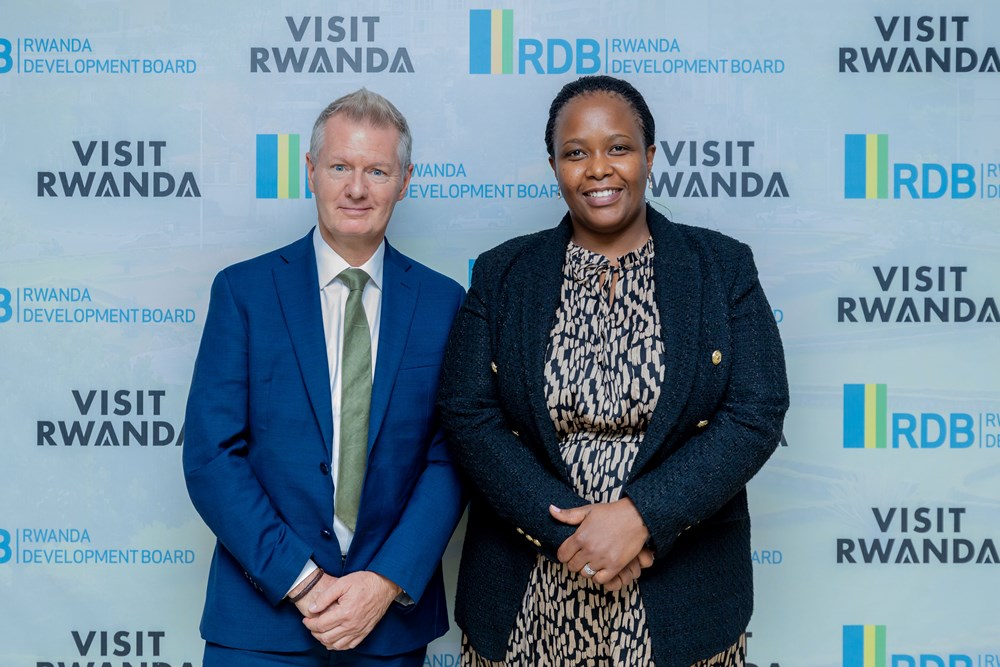
Clare Akamanzi, the Chief Executive Officer at the Rwanda Development Board has welcomed Bloomberg TV in the East and Central African region with a studio in Rwanda’s capital, Kigali.
This will enhance coverage of the many exciting developments and business stories in this region of interest to African and global audiences.”
{{About Bloomberg Media}}
Bloomberg Media is a leading, global, multi-platform brand that provides decision-makers with timely news, analysis and intelligence on business, finance, technology, climate change, politics and more.
Powered by a newsroom of over 2,700 journalists and analysts, it reaches influential audiences worldwide across every platform including digital, social, TV, radio, print and live events. Bloomberg Media is a division of Bloomberg LP.
{{About the Rwanda Development Board}}
The Rwanda Development Board is a government agency responsible for leading the country’s transformation into a dynamic global hub for business, investment, tourism and innovation. Its mission is to fast-track economic development in Rwanda by enabling private sector growth.
As a result some businesses evaded taxes yet paying dues to the national treasury serves as the foundation for many development activities.
It is possible that a person may be wondering how the taxes benefit them, but the truth is that evading taxes would see many activities going awry.
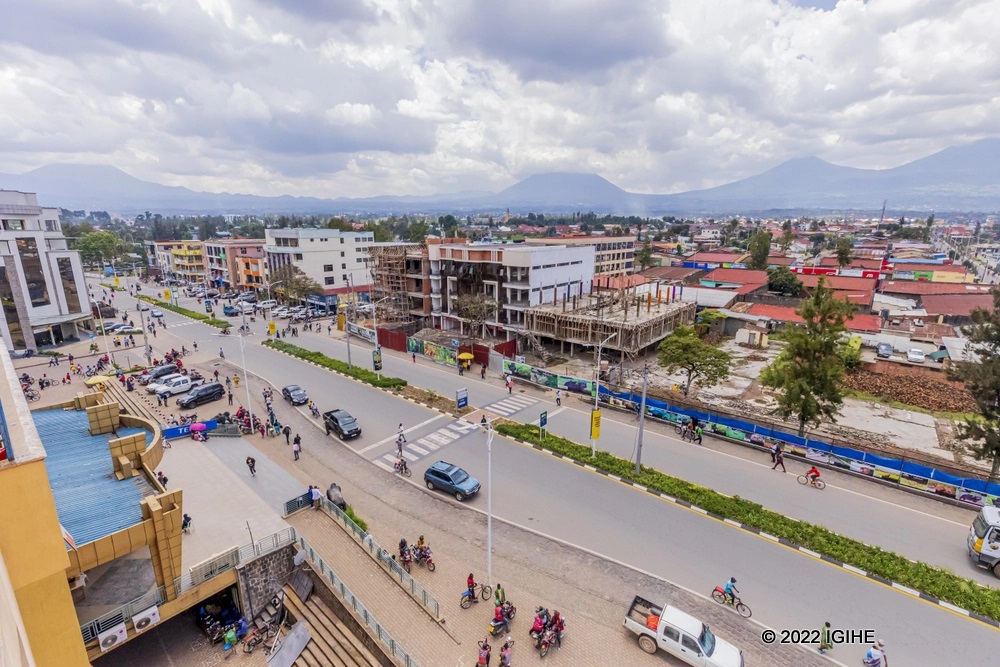
This article will focus on the development of the Musanze District over the past 25 years since Rwanda Revenue Authority (RRA) took over tax collection duties.
The Government of Rwanda allocates the budget to districts for various development activities. Part of the funds is utilized to address some of citizens’ concerns with a large portion derived from taxes.
Areas of focus include construction of roads, schools, health facilities, hospitals, business centers (workshops), markets, access to water and electricity as well.
Musanze is among districts where such development activities have considerably transformed residents” livelihoods.
{{Kinigi Model Village}}
Built by the Rwandan Army, Kinigi Model Village is located 12 kilometers from Musanze Town. It is consisted of multi-storey buildings built for 144 needy families.
The modern village has all the basic infrastructure such as water, hospitals, schools and recreational areas.
Each family accommodated in these houses is provided with basic furniture including mattresses, beds, chairs and televisions.
The construction of Kinigi Model Village cost Rwf26.6 billion, of which nearly Rwf8 billion was allocated for the construction of residential houses, Rwf1.5 billion for the construction of a health center and Rwf3.3 billion for the construction of schools and childcare center.
Buying 102 cows and 8000 chickens for the families living in this village, building a shed, business center workshop, planting gardens and fruit trees cost Rwf1.8 billion while other works such as roads, electricity, planting trees and expropriation cost more than Rwf11 billion.
Residents settled down in this village told IGIHE that they are glad for the support extended to them where their livelihoods have improved significantly.
The Head Teacher of Kampanga High School built in this village, Jean de Dieu Twagirimana said they are happy that President Paul Kagame walks the talk.
“We thank the President of the Republic because he fulfills promises. Having a school like this with all equipment in the countryside, is beyond one’s imagination and evidences how the country has expended much effort in different areas of development,” he said.
Since 2016, 82 modern villages have been built. Five of them including Rweru, Kazirankara-Nyundo, Horezo-Kanyenyeri, Karama, and Gishuro were inaugurated by President Kagame.
{{Schools’ development and upgrade of IPRC Musanze}}
Education is among areas that received attention in Musanze District where each sector has primary and secondary schools.
It has more than 400 classrooms that cost more than Rwf1.8 billion.
The government and development partners managed to upgrade the Integrated Polytechnic Regional Center (IPRC) in Musanze, which capacitated it to open doors for more children.
{{The topography of Musanze, building block of development}}
Musanze is one of the five regions that make up the Northern Province. It has the uniqueness of being a tourist destination over the presence volcanoes and other touristic attractions.
This region is considered as the hub for tourism in the country Rwanda, and is the district most visited by tourists.
They are mainly attracted by the Volcano Park which is home to mountain gorillas, Buhanga Eco-park as well as the volcanoes of Muhabura, Gahinga, Kalisimbi, Bisoke and Sabyinyo.
Musanze is one of the six secondary cities and has been equipped with various infrastructures luring tourists to prolong their stay. These include hotels and other leisure activities.
In addition to the main commercial buildings upgraded day-to-day, Musanze town has high-end hotels that welcome tourists from all walks of life.
Among the largest hotels in the city there is Singita Kwitonda Lodge and Kataza House built at a cost of $25 million; The One & Only Gorilla’s Nest is built in Kinigi in a tropical forest, a volcanic area, and Bisate Lodge.
Among other large-scale projects, an industrial zone has been set up. The latter accommodates Prime Cement Factory while plans are underway to set up an assembling facility for Volkswagen cars.
Musanze’s development is mainly rooted on tourism related investment.
Figures released in 2019 show that the area is home to more than 30 hotels, while other major economic activities include potato farming and animal husbandry among others.
The Mayor of Musanze District, Janvier Ramuli, said that safety, decent roads, electricity and magnificent buildings are among other factors that attract visitors as they add up to many reasons to stay comfortably in a particular place.
Over the past 25 years, Musanze has developed infrastructure including roads – given that the district is has over 80 kilometers of tarmac roads, hotels and commercial buildings such as modern markets and residential houses.
The statistics show that Musanze District had a few development activities in the last 25 years but have increased at large scale.
Through taxes, the district has become a tourist destination and models rapid development.
The taxes collected in Musanze District have been increasing as years go by.
Statistics from Rwanda Revenue Authority (RRA) show that Musanze District collected Rwf6.7 billion in taxes in 2014/2015 which increased to Rwf14.5 billion in 2021/2022.
Among the works carried out include the construction of 76 kilometers of tarmac roads and other feeder roads.
90% of the population has access to water, while 51,117 households have access to the main-grid while others use renewable sources of energy.
25 years ago, the district had no decent market but has got a five-storey modern market, as well as business center workshops that have been constructed to promote jobs’ creation.
Currently, Musanze has 23 factories including Prime Cement. It has also built a modern bus terminal.
With the majority of the population forcing their meal upon agriculture, Musanze registers 38,000 hectares of arable land.
More than 350 cooperatives bringing together residents involved in different activities including agriculture, handicrafts, tourism and others have bene established and contribute in no small part to members’ livelihoods transformation.
25 years ago, the district had 33 nursery schools but have increased to 113.
Primary schools have also increased from 87 to 109, the number of secondary schools went up from 11 to 71 while universities increased from four to seven.
Some of these schools are owned by the government, partners or members of the private sector.
As for the health sector, the district has Ruhengeri Hospital which has undergone major facelift, 16 health centers and 32 health posts.
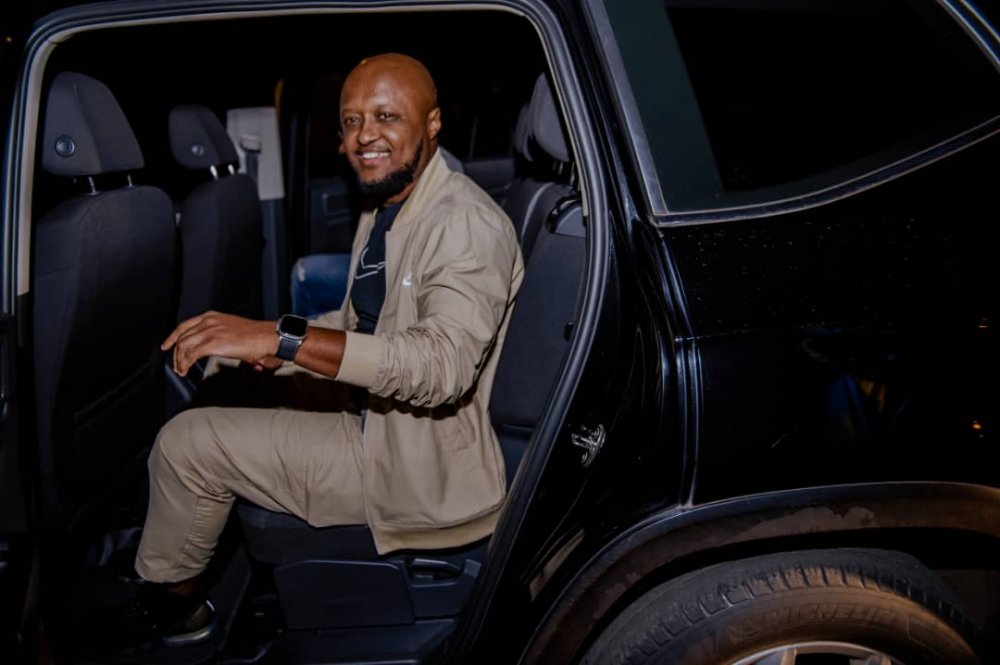
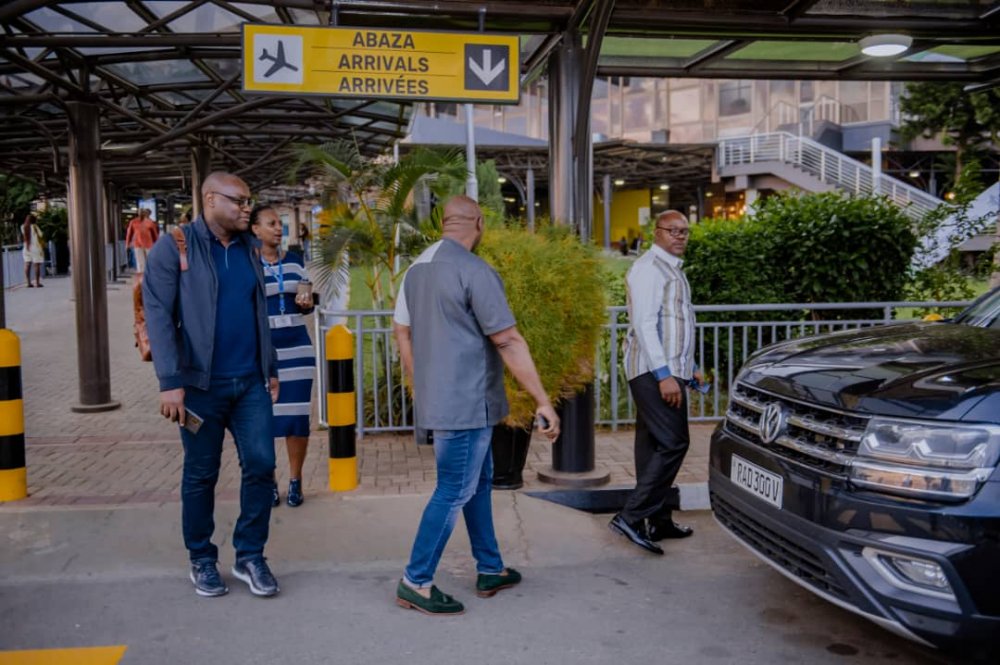
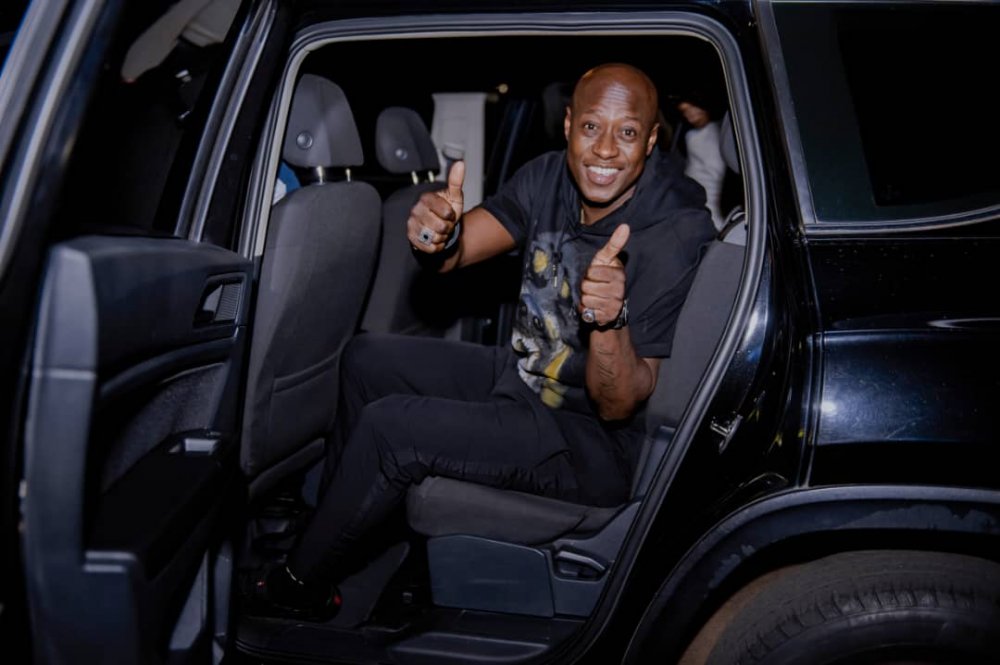
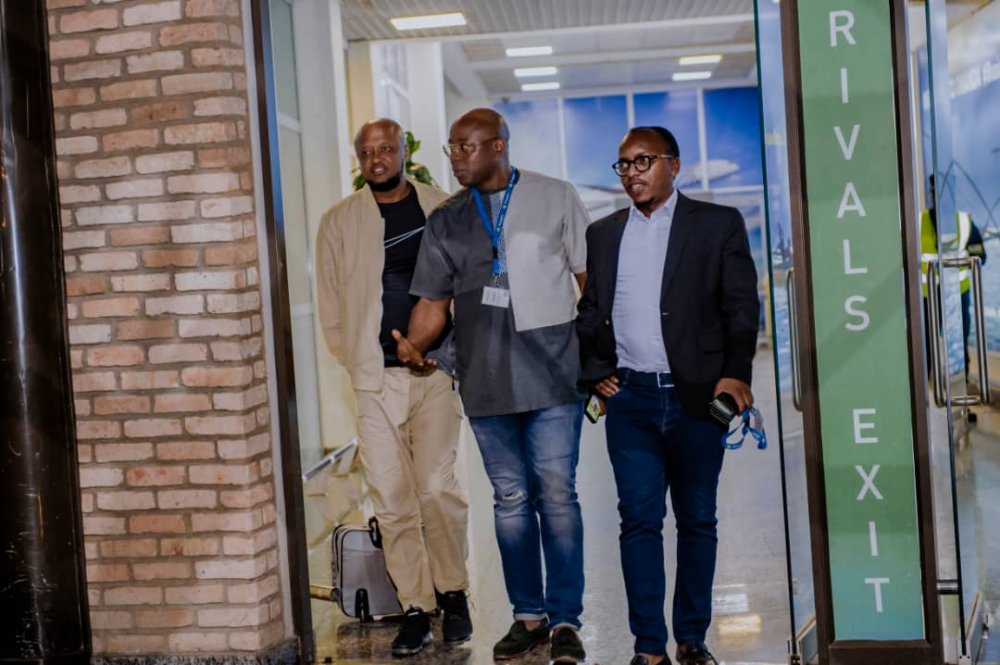
Upon arrival at Kigali International Airport in the night of 10th October 2022, Gatete revealed that he was impressed by the country’s magnificence.
“I am overwhelmed with joy. I can see the country and Kigali City have undergone a lot of transformations. It is my pleasure to be back to my motherland where I will have an opportunity to interact with Rwandans whom I have been missing so much,” he said.
Gatete played for different teams in Rwanda including Mukura VS, Rayon Sports and APR FC.
He scored goals as Rwanda faced off Uganda and Ghana that helped the country to qualify for the Africa Cup of Nations (AFCON) in 2004.
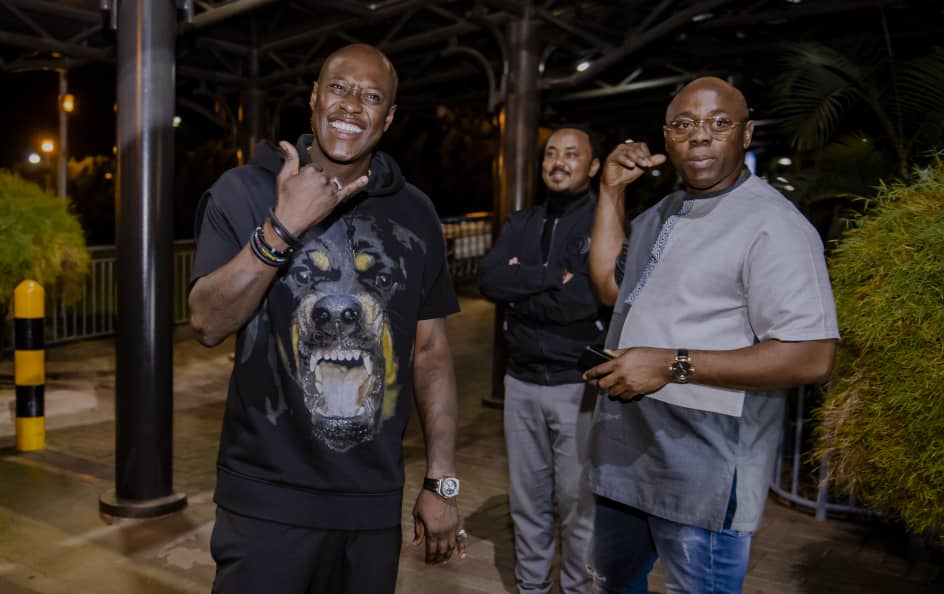
Gatete, Khalilou Fadiga and Patrick Mboma arrived before other veteran players including Roger Milla, Lilian Thuram and Laura Georges awaited in Rwanda to attend the official launch of The ‘Legends in Rwanda’ between 12th and 14th October 2022.
The ‘Legends in Rwanda’ tour seeks to promote the 2024 Veteran Clubs World Championship to attract global participation, mobilize the Rwandan and African to be part of the event, promote Visit Rwanda campaign and recruit business, institutional, operational and media partners as well.
The promotional tour was organized by the International Federation of Football Veterans.
Throughout the two-day tour, the veteran footballers will meet with the Minister of Sports, president of Rwanda Football Federation (FERWAFA).
They will also participate in talks on different topics in the areas of education, economy, tourism and interact with aspiring young footballers.
The Veteran Clubs World Championship (VCWC) is due in Rwanda for the first time in May 2024.
It will bring together 150 football veterans from 40 countries (eight teams) facing off in 20 games.
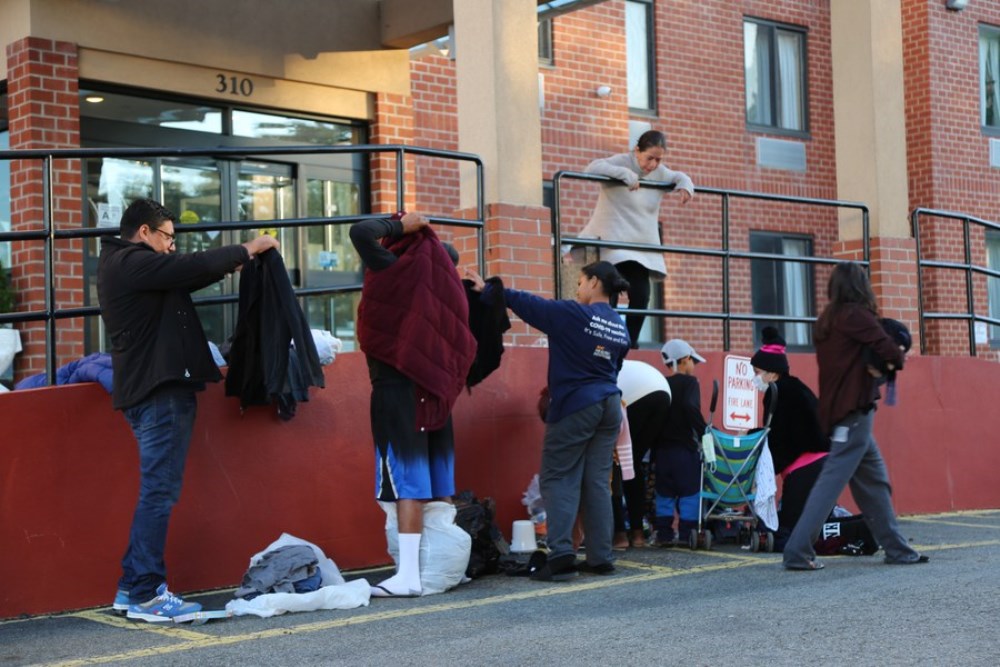
Antonio Ovando, who arrived in New York City less than a week ago, was expecting some people from the city to bring some clothes on Sunday afternoon when he joined his family members and fellow asylum seekers around the entrance of a hotel in Staten Island.
Ovando told Xinhua that he arrived in Texas at the end of September, and then was advised to come to New York assuming they could get material support there.
“We have no clothes and no shoes. And we ran out of money,” Ovando said.
Ovando stays with his wife and two young children in Comfort Inn on Staten Island, which is far from the downtown area and was recently converted into a shelter center for asylum seekers.
New York City has contracted over 40 hotels across the city to accommodate over 17,000 asylum seekers since April 2022.
Some migrants waiting outside the hotel were in their shorts, when the temperature in New York City had fallen to around 10 Celsius degrees.
It was reported that some asylum seekers from the Comfort Inn knocked on the doors of local residents and asked for help.
Ovando and other migrants finally picked up some clothes, which were dropped off by some New Yorkers at the hotel.
More importantly, asylum seekers don’t have work permits and have to wait for months, which adds to their anxiety and hardship.
Ovando, who worked as an accountant in Nicaragua, said he needs to find a job though he is thankful for help from others.
Jose, who came from Venezuela with his wife and son, said, “Getting a job is the most difficult thing for us who are here from far away.”
“We don’t know how long we will stay here and we’re just following instructions,” said Ovando.
As the vast majority of asylum seekers only speak Spanish, there is a language problem in everyday life and school.
Moreover, the newly arrived asylum seekers may find themselves unwelcome in the local community.
Shortly after the arrival of asylum seekers at the Comfort Inn, elected officials from Staten Island held a press conference voicing their opposition to placing migrants in the Comfort Inn, which is located in Travis-Chelsea neighborhood.
“Travis is not the place for these asylum seekers. It’s sad to say, but it’s just not going to work here,” said Gene Guerra, president of the Travis Civic Association.
John Michael, a member of Travis Civic Association, posted a comment recently on the social media suggesting that community members hold a rally and protest against using the Comfort Inn and other hotels in the neighborhood as migrant shelters.
Meanwhile, New York City is building a humanitarian emergency response and relief center for asylum seekers on Randall’s Island in Manhattan borough.
Dubbed as a “tent city,” the transitory relief center is designed to accommodate 500 newly arrived asylum seekers, but the island’s relative isolation, as local media reported, would not help migrants interact with the local community.
Last week, New York City Mayor Eric Adams declared a state of emergency in response to a record-breaking influx of asylum seekers into the city, mostly from the southern border of the United States.
The strikes at TotalEnergies and ExxonMobil refineries will extend to Tuesday, the General Confederation of Labour (CGT) said.
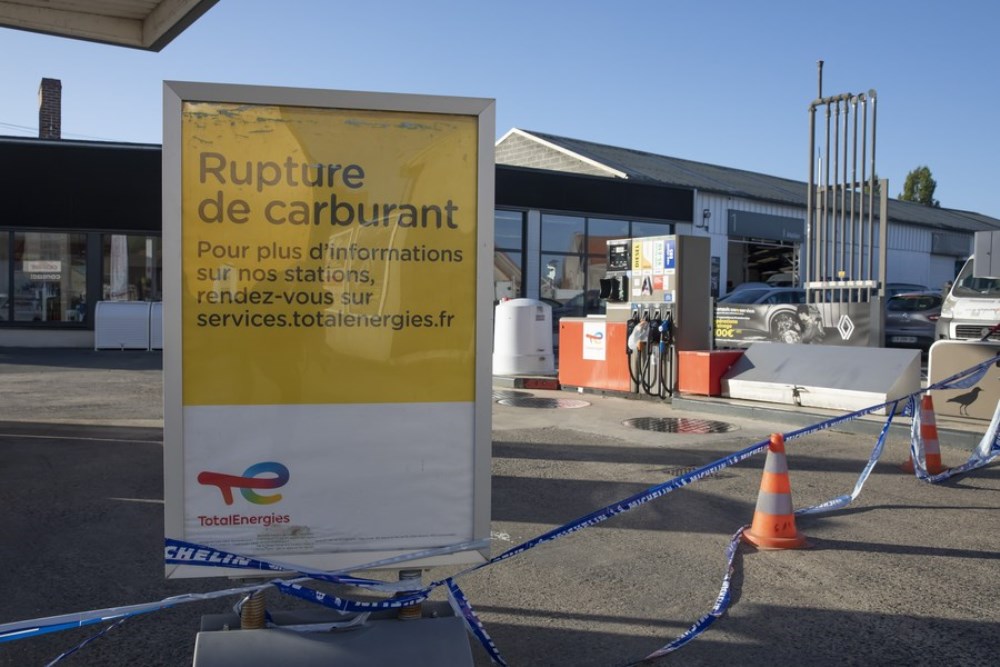
According to the Ministry for Energy Transition, 29.4 percent of service stations in the country were experiencing difficulties with at least one product on Monday, compared to 19 percent on Friday.
French Prime Minister Elisabeth Borne organized an urgent crisis meeting Monday evening. According to French media, the government will ban the filling of fuel jerry cans across the country.
The strikers’ actions have led to a decrease in fuel deliveries, provoking fears and long hours of waiting. School bus transportation was also affected by the strikes.
“The French must not be prisoners of this social conflict which does not concern them,” said Minister for Energy Transition Agnes Pannier-Runacher on Monday.
In addition to the strikes, the price of fuel has increased in the last seven days. In order to counterbalance the fuel shortage, the French government has released significant volumes of fuel from its strategic stocks and reinforced fuel imports from Belgium.
Over the weekend, TotalEnergies and the CGT agreed to start negotiations but no agreement was concluded.
The strikers demand a raise in salary to compensate for the high inflation that France is experiencing.
“We believe that the internal issues is related to the (Iranian) government and the people of Iran and we do not allow any other country to interfere in Iran’s internal affairs,” Kanaani said during his weekly press conference.
“The positions and views of Iran (on nuclear talks) have been expressed many times, and we are ready to proceed in the same direction and reach a comprehensive agreement that will meet the interests of all parties,” he added.
The talks on the revival of the 2015 nuclear deal, formally known as the Joint Comprehensive Plan of Action (JCPOA), began in April 2021 in Vienna but were suspended in March this year because of political differences between Tehran and Washington.
The latest round of the nuclear talks was held in the Austrian capital in early August after a five-month hiatus.
On Aug. 8, the EU put forward its final text of the draft decision on reviving the JCPOA.
Iran and the United States later indirectly exchanged views on the EU proposal in a process that has so far failed to produce any favorable outcome.