The Rwanda Formed Police Unit One (RWAFPU-2) and Rwanda Protection Support Unit (PSU) both operating in the capital Bangui supported the communities that were recently displaced by floods and currently sheltered at Ecole Primaire Kina of 3e Arrondissement.
At least 120 people were given free medical consultation and medication. The peacekeepers also donated foodstuff to the affected communities.
The humanitarian activity was organized by the MINUSCA Joint Task-Force for Bangui (JTFB) to support communities that were displaced by floods.
It was attended by the Deputy Special Representative of the Secretary General (DSRSG), Lizbeth Cullity, the JTFB commander, Brig. Gen. Alognim Takougnadi and officials from the CAR Ministry of Health.
The FPU-1 and PSU operates in the capital Bangui while another FPU contingent is deployed in Kaga-Bandoro, about 400 kilometers from the capital Bangui.
The FPUs specialize in public order management, delivery of humanitarian assistance, escort duties and protection of UN facilities.
The PSU undertakes special duties such as protection for VIPs, including the SRSG, his two deputies, the Prime Minister of CAR, President of the National Assembly, Minister of Justice and the Head of MINUSCA Police Component, among others.
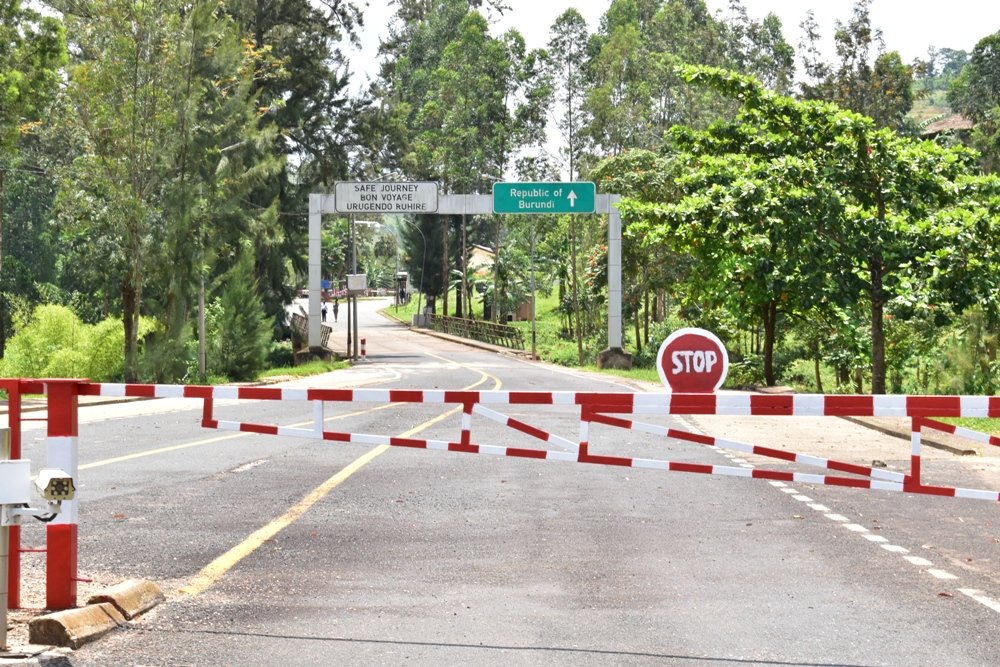
The development has been disclosed to the public by Burundi’s Minister of the Interior, Community Development and Public Security via Twitter.
“All borders between Burundi and neighbouring countries are open,” reads part of the statement posted on Twitter.
The move was welcomed by Rwandans and Burundians who have been eagerly awaiting for the reopening of borders to ease free movement following tensions that escalated in2015.
Burundi accused Rwanda of supporting coup plot suspects who attempted to overthrow the then President Pierre Nkurunziza. Rwanda repeatedly rejected the allegations but accused Burundi of supporting security threat architects and armed groups intending to destabilize Rwanda.
Bilateral relations took a new shape through discussions to de-escalate tensions since 2020 when President Evariste Ndayishimiye took power.
The closure of borders halted free movement between both countries’ people and incurred losses for traders running businesses in Burundi and Rwanda.
Trade between Rwanda and Burundi has dropped from US$20 million per year in 2014 to US$0.01 in the third quarter of 2021.
Meanwhile, Rwanda closed the border with Burundi as COVID-19 emerged in March 2020.
On 7th March 2022, Rwanda reopened all land borders but Burundi did not do the same.
According to The New Times, Musoni arrived in Rwanda on Friday 21st October 2022.
He was handed the sentence in 2015 by Stuttgart Court in Germany on counts of leading a terrorist organization. He was accused of with the then President of FDLR, Ignace Murwanashyaka handed 13-year sentence after he was found guilty of war crimes in relation to five FDLR attacks in eastern Congo and of leading a terrorist organization.
At the time, Germany’s Federal Court of Justice rejected an appeal by Musoni, who was given an eight-year sentence, but overturned Murwanashyaka’s conviction and sent his case back for a retrial.
The court cited legal errors in the reasoning of the original verdict that could have counted both for and against Murwanashyaka, including doubts about the war crimes conviction and whether he encouraged or facilitated attacks on villages.
It also said that section of the Stuttgart court’s verdict was contradictory in parts.
Murwanashyaka and Musoni lived in Germany where they had been granted asylum and coordinated FDLR.
They were charged with 26 crimes against humanity and 39 war crimes.
The duo was arrested in 2009 in Germany while their trial began in 2011.
Musoni was born in 1961 and settled in Germany in 1986 where he worked as a computer specialist.
He returns to Rwanda after serving his sentence while his boss Murwanashyaka died in prison in 2019 before completing his sentence.
As the world economy is facing a tough situation this year, with probably tougher prospects for the next, China’s economic outlook carries global significance. Voicing their confidence in China’s future growth, business communities worldwide believe that China’s modernization stride and innovation-driven growth will inject more certainty into the global economy.
{{Quality development benefits all }}
China will accelerate creating a new development pattern and pursue high-quality development, said Chinese President Xi Jinping, also general secretary of the CPC Central Committee, while delivering a report at the CPC congress.
“We must fully and faithfully apply the new development philosophy on all fronts, continue reforms to develop the socialist market economy, promote high-standard opening-up, and accelerate efforts to foster a new pattern of development that is focused on the domestic economy and features positive interplay between domestic and international economic flows,” Xi said.
Deeply impressed by the remarks, Wichai Kinchong Choi, senior vice president of the leading Thai bank Kasikornbank, said he can see China’s future development direction focus more on high-quality and sustainable development. “This is good news for Thailand and other neighboring countries,” he said.
In the past few years, many Chinese high-tech enterprises have set up factories in Thailand, which is exactly what Thailand needs, he noted, saying that they have helped the Thai economy to transform and upgrade, and enhance its competitiveness.
Over the past decade, China’s gross domestic product has come to account for 18.5 percent of the world economy. It has become a major trading partner for over 140 countries and regions, leading the world in total volume of trade in goods. Since the COVID-19 pandemic broke out, China, which has managed to coordinate pandemic control and economic development, still maintains a stabilizer of the global supply and industrial chains, and is keeping driving the world economic recovery.
Moreover, its development is not achieved at the expense of the environment. Instead, China is striving to make its development greener and more sustainable. In pursuit of harmonious coexistence between humanity and nature, the country has cut its carbon emission intensity by 34.4 percent over the past 10 years, and pledged to have CO2 emissions peak before 2030 and achieve carbon neutrality before 2060.
In the eyes of Chenhong Huang, global executive vice president of the German multinational software company SAP SE and president of SAP Greater China, China’s green development will profoundly change the global energy, environment and economic landscape.
“Chinese enterprises are using digital technology to make carbon emission data transparent and quantifiable, and promote a balance between green development and commercial development,” Huang said.
Meanwhile, China renewing its commitment in the CPC congress report to promoting a high-standard opening-up also strikes a chord with the international business community. U.S. automaker Tesla’s success in China speaks volume for Beijing’s determination to further opening-up.
Thanks to the efforts of the Chinese government to facilitate foreign investment, Tesla became the first wholly foreign-owned auto enterprise in China, Vice President of Tesla Tao Lin said, adding that the U.S. company is seeking to further expand its presence in the Chinese market.
German heat exchanger company Kelvion (China) has started operations in China over 20 years ago. Cheng Wenwu, general manager of the company, said doing business in China is becoming easier.
Mentioning an effective market mechanism and a convenient and fast standardized administrative process in China, Cheng said the changes over the past years have lowered the costs of companies, facilitated market access and helped firms to adapt to international rules, benefiting the companies’ operations.
{{Chinese modernization means opportunities}}
Chinese modernization, a key term defining China’s journey to national rejuvenation and another buzzword in the CPC report, has spurred a heated discussion in business communities both domestic and abroad.
It contains elements common to the modernization processes of all countries, but more importantly, it features the Chinese context. It is the modernization of a huge population, of common prosperity for all, of material and cultural-ethical advancement, of harmony between humanity and nature and of peaceful development.
For business leaders in many parts of the world, Chinese modernization means more opportunities.
Jose Antonio Hidalgo, former president of the Ecuador-China Chamber of Commerce, said Chinese modernization will generate a positive impact in the global context, especially for the agri-food sector of Ecuador.
“It is an opportunity for us because the middle-class consumers (in China) are going to need excellent quality agrifood and they are going to look for it in countries like ours,” he said.
In 2021, China announced that after eight years of strenuous work between late 2012 and late 2020, the country had lifted the final 98.99 million impoverished rural residents living under the current poverty line out of poverty, and removed all 832 impoverished counties and 128,000 villages from the poverty list. Now the country boasts the world’s biggest middle-income group — 400 million people. That means huge potential for consumption.
Hamdi Al-Tabbaa, president of the Jordanian Businessmen Association, also sees opportunities in the Chinese path to modernization.
China’s consistent efforts to improve people’s living standards mean a significantly expanded middle-income group and upgraded consumption structure, which will offer more development opportunities for global enterprises, said Al-Tabbaa.
From initiating the Asian Infrastructure Investment Bank and the New Development Bank to taking the lead in implementing the UN sustainable development agenda, China has always been sharing its development dividends with the rest of the world.
Woody Guo, senior vice president and managing director of Herbalife Nutrition in China, said the CPC report underlines the certainty of the Chinese market against the uncertainties of the global market, and makes foreign enterprises feel reassured about their development in China.
The Chinese modernization “will provide more chances and opportunities, not only from the growing of markets, but also from an employment point of view,” said Sara Vermeulen-Anastasi, head of group communication at Swiss technology group Oerlikon. “We will be able to attract more engineers and have more choices of new technologies,” Vermeulen-Anastasi said.
{{Innovation inspires new momentum }}
While invigorating its economy, China has made innovation a top priority in its planning. The country rose to 12th place on the Global Innovation Index 2021, up from 34th place in 2012, said the World Intellectual Property Organization. It ranked first among middle-income economies.
“We must regard science and technology as our primary productive force, talent as our primary resource, and innovation as our primary driver of growth,” Xi said in the report.
“Everything is about innovation,” said Stephen Perry, chairman of Britain’s 48 Group Club. China is very forward-looking, as in every sector, China has the dynamic about “wanting to know where the world is going,” he added.
Amid the innovation drive, the number of Chinese companies on the Fortune Global 500 list has grown. In 2021, 145 Chinese companies made it to the list, climbing from 95 in 2012 and increasing for 19 consecutive years.
In terms of telecommunication infrastructure, the country has built the world’s largest 5G network, with a total of 1.43 million 5G base stations installed across the country by the end of 2021, accounting for over 60 percent of the world’s total.
Backed by technological advancement, China has accelerated the construction of high-speed transportation networks. With the world’s most developed high-speed rail network, China now has more than 40,000 km of high-speed rail lines in operation.
Oswaldo Navarro from Jalisco, an agriculture-producing state in Mexico, has purchased several pieces of agriculture and farming equipment from China.
He told Xinhua that the seed cleaning machine he imported from China has a daily capacity two to three times that of the equipment from other countries, saving much time and cost.
China’s increased efforts in science and education will help turn scientific and technological achievements into productivity, said Navarro.
Hichem Chorfi, an Algerian businessman working for a consulting firm in industrial technology and innovation, said China shares advanced development models and achieves economic complementarity with other countries, improving the well-being of people in various countries through advanced technologies.
Chinese innovation will be featured in many important areas of human society in the future, he said.
The CPC congress has realized its goals of unifying thinking, fortifying confidence, charting the course and boosting morale, Xi told 2,338 delegates and specially invited delegates present at the closing session of the weeklong congress at the Great Hall of the People in Beijing. “This has been a congress of holding our banner high, pooling our strength, and promoting solidarity and dedication.”
At the closing session presided over by Xi, the congress elected a new CPC Central Committee, with 205 members and 171 alternate members, and a new Central Commission for Discipline Inspection (CCDI) consisting of 133 members.
The congress passed a resolution on the report of the 19th CPC Central Committee, a resolution on the work report of the 19th CCDI, and a resolution on an amendment to the CPC Constitution.
The congress noted that the establishment of Comrade Xi Jinping’s core position on the Party Central Committee and in the Party as a whole and the guiding role of Xi Jinping Thought on Socialism with Chinese Characteristics for a New Era has set the rejuvenation of the Chinese nation on “an irreversible historical course.”
The report of the 19th CPC Central Committee charts the course and establishes a guide to action for the new journey for advancing the cause of the Party and the country in the new era and for realizing the Second Centenary Goal, Xi said.
Hailing the report “a guiding Marxist document,” Xi said it is a political declaration and a program of action for the CPC to rally and lead the Chinese people of all ethnic groups in securing new victories for socialism with Chinese characteristics.
The CCDI work report underscores the significance of using the Party’s own transformation to steer social transformation, and declares the Party’s firm resolve to keep improving conduct, promoting integrity and fighting corruption with sober-minded determination to make this an unceasing endeavor, Xi said.
On the revised CPC Constitution, which came into effect as of the date of adoption, Xi said it encapsulates the theoretical, practical and institutional innovations made by the Party.
The revised CPC Constitution sets out clear requirements for upholding and strengthening the Party’s overall leadership, promoting the Party’s full and rigorous self-governance, continuing and improving Party building, and advancing the Party’s self-reform, he said.
The new developments in Xi Jinping Thought on Socialism with Chinese Characteristics for a New Era since the 19th CPC National Congress have been incorporated into the Party Constitution.
Advancing the rejuvenation of the Chinese nation on all fronts through a Chinese path to modernization has been designated as the central task of the Party on the new journey of the new era at the 20th CPC National Congress. This central task has been included in the revised Party Constitution.
Also added to the Party Constitution are statements on gradually realizing the goal of common prosperity for all, pursuing high-quality development, developing a broader, fuller and more robust whole-process people’s democracy, elevating the people’s armed forces to world-class standards, resolutely implementing the policy of One Country, Two Systems, and resolutely opposing and deterring separatists seeking “Taiwan independence.”
Holding dear humanity’s shared values of peace, development, fairness, justice, democracy and freedom was also included in the Party Constitution.
On the newly elected CPC Central Committee, Xi said it is a broadly representative and well-structured body with highly qualified members who meet the standards for Central Committee membership, match the expectations of ordinary officials and the general public, and reflect the realities of the Party’s leadership teams and contingent of officials.
The new CPC Central Committee will definitely be capable of shouldering the historic mission of rallying and leading the whole Party and the Chinese people of all ethnic groups in building China into a modern socialist country in all respects and in advancing national rejuvenation on all fronts, he said.
“We believe that all the decisions and plans set out at the congress and all its outcomes will play a significant role in guiding and underpinning our efforts to build a modern socialist country in all respects, advance national rejuvenation on all fronts, and secure new victories for socialism with Chinese characteristics,” Xi said.
Xi called on the delegates to firmly keep in mind the Party’s original aspiration and founding mission and the country’s most fundamental interests, and firmly keep in mind that “this country is its people; the people are the country.”
During the congress, the central committees of other political parties, the All-China Federation of Industry and Commerce as well as public figures from all ethnic groups and all sectors in China offered their congratulations, as did members of the public through various means. Political parties and organizations in many countries around the world also sent congratulatory messages.
“The presidium of the congress wishes to express its heartfelt thanks to each and every one of them,” Xi said.
Having come through a century of great endeavor, the Party is once again embarking on a new journey on which it will face new tests, Xi noted. “We are fully confident and capable of creating new and even greater miracles on the new journey of the new era — miracles that will amaze the world.”
Xi urged all Party members to stay closely rallied around the CPC Central Committee and hold high the great banner of socialism with Chinese characteristics.
“We must remain confident in our history, exhibit greater historical initiative, and have the courage to fight and the mettle to win,” he said.
Xi called on the Party to stay focused, determinedly forge ahead, and unite and lead all Chinese people in striving to fulfill the goals and tasks set out at the 20th CPC National Congress.
The meeting comes at a time when many African countries and environmental activists lament of emissions from developed countries which continue relenting on compensation of occasioned damages.
They highlight that some families lost relatives due to floods, landslides, erosion, drought and other effects of climate change associated with the increase of greenhouse gas emissions released by countries; mainly from Europe and the United States of America.
The United Nations (UN) report dubbed International Plant Protection Convention (IPPC) indicate that greenhouse gas emissions will exacerbate global warming by 2030.
The report shows that the global warming will increase from the current 1.2 to 1.5 degree celsius or 2 by 2040.
Like other African countries, Rwanda is among countries with least emissions but the continent is more affected than developed countries.
{{Rwanda’s stance at COP27 }}
Rwanda has an ambitious target to reduce greenhouse gas emissions by 38% by 2030 compared to business as usual, equivalent to an estimated mitigation of up to 4.6 million tonnes of carbon dioxide.
Rwanda is among countries expected to attend the upcoming COP27 which draws near and will be an opportunity to call other participants for action to concert efforts aimed at dealing with climate change.
Herman Hakuzimana, the Environment and Climate Change Adaptation and Mitigation Specialist at Rwanda Environment Management Authority (REMA), has said that Rwanda will put forward its broad agenda aligning with designed national policy.
“Rwanda as a country affected by climate change, wants to see resolutions of the meeting highlighting how funds earmarked to mitigate climate change will be increased and raised,” he said.
The previous meeting ‘COP26’ resolved that funds allocated for climate change action plan should be doubled to reach at US$40 billion by 2025.
The funds are expected to bridge existing gaps related to financial constraints.
As for Rwanda, the country needs US$11 billion to implement the climate action plan.
The funds are made up of 5.7 billion dollars for mitigation and 5.3 billion dollars for adaptation.
Rwanda also wants to highlight its efforts to reduce greenhouse gas emissions by 38% to 16%.
Hakuzimana said that Rwanda is not among major polluters but wants them to reduce emissions.
“We also want the meeting to come up with a resolution demanding major polluters to reduce emissions lest the issue continues to exacerbate,” he revealed.
Experts indicate that issues related to climate change increase proportionally to global warming.
Paris Agreement targets to limit global warming to well below 2, preferably to 1.5 degree Celsius.
Hakuzimana explained that Rwanda wants delegates to take a resolution requesting countries to take bold actions to meet the target.
Rwanda will also advocate for special attention to implement National Determined Contributions.
The country will also mobilize developed countries to contribute US$100 billion to run different projects to help poor countries overcome effects of climate change.
The pledge was made at COP held for the 21st time in 2015. The funds were to be provided between 2020 and 2025 but not a single coin has been donated.
Faustin Mvuniyingoma, the coordinator of Rwanda Climate Change Development Network (RCCDN) has also said that Civil Society Organizations need increased funding to implement projects aimed at dealing with climate change.
“Damages and losses should be compensated. There are people dying, washed away crops, landslides and destroyed infrastructures. There is a need for compensation because there are people releasing emissions that occasion such devastating effects. Their contribution is needed to compensate damages,” he said.
The aircraft which involved in the accident had to take off from Kigali International Airport at 7:00 a.m to land at Kamember Aiport at 7:40 a.m.
According to a statement released by RwandAir following the incident, all passengers are safe.
“RwandAir Flight WB601 to Kamembe this morning had a minor incident on landing. All passengers and crew are safe. We’ll experience some disruptions in our schedule today and apologize for any inconvenience,” reads the statement share posted on Twitter.
The cause of the accident has not been announced.
Similar incident happened on 20th April this year when RwandAir’s aircraft which took off from Kigali in the wee hours flying to Kampala in Uganda, was involved in a runway excursion in the process of landing at Entebbe Airport as a result of bad weather.
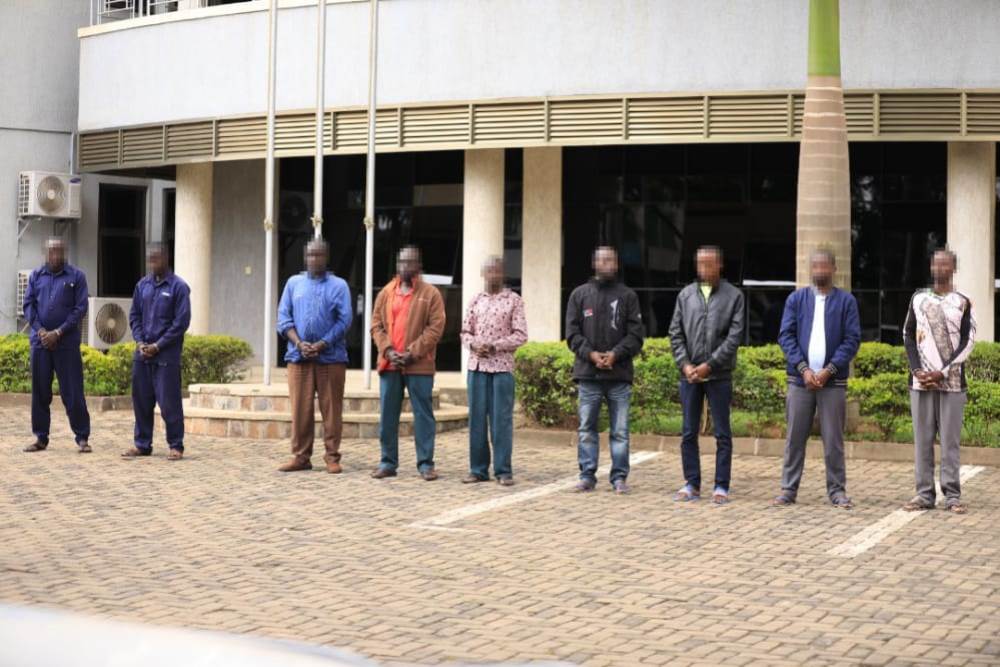
The racket includes two Police officers, driving school instructors and those who have been masquerading as brokers.
The RNP spokesperson, Commissioner of Police (CP) John Bosco Kabera said that the two arrested Police officers were helping those hired by candidates, to enter into the examination room at Muhima Computer Based Provisional Driving Centre.
“Investigations indicate that these seven civilians and two Police officers were working together to fraudulently help candidates to acquire provisional driver’s license,” CP Kabera said.
Some of the suspects, he added, would look for registered candidates and make them believe that they can help them pass the test, and that Police officers would help the ghost candidates to enter into the examination room to do the exams for candidates.
CP Kabera warned aspiring drivers against such criminal shortcuts.
“The process of acquiring a driver’s license is known, no parties involved. Anyone, who tells you that they can help you, they are either trying to defraud you or they are luring you into criminal activities and you will be answerable as well,” CP Kabera warned.
Police, he said, is wide awake to arrest anyone that engages in such criminal acts.
The suspects were handed over to RIB for further investigations.
Article 277 of the law determining offences and penalties in general, states that any person who, by fraud, acquires for oneself or unduly issued domestic or foreign travel documents, degrees or certificates, transcript or report, driving license and other documents issued by competent authorities; commits an offence.
Any person, who upon conviction of any of the acts referred to under Paragraph One of this Article is liable to imprisonment for a term of not less than five years and not more than seven years with a fine of not less than Rwf1 million and not more than Rwf3 million.
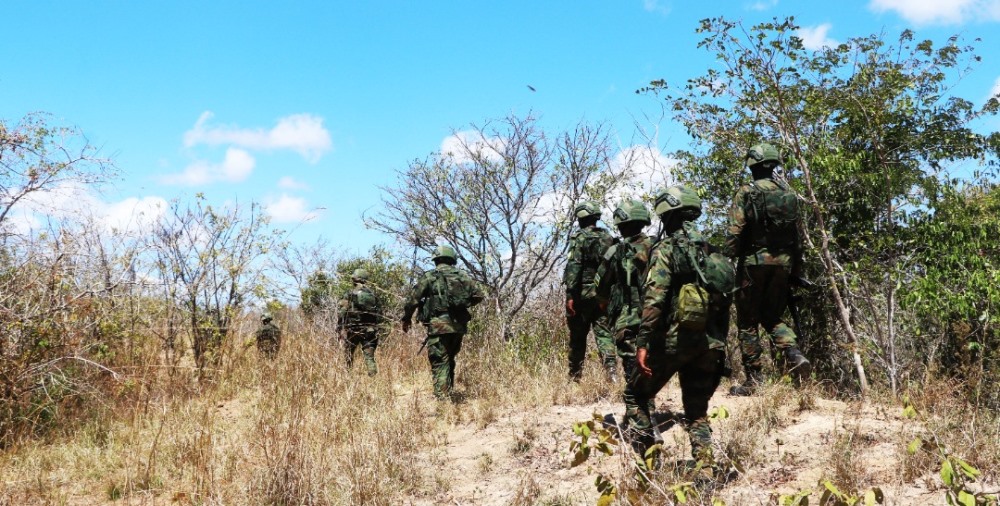
The areas in which these weapons were discovered were terrorist strongholds before they were dislodged by the Mozambican and Rwandan joint forces in August 2021
According to some sources, the Ansar Al Sunnah Wa Jammah (IS Mozambique terrorist group) have attempted several times to return to recover the weapons to no avail.
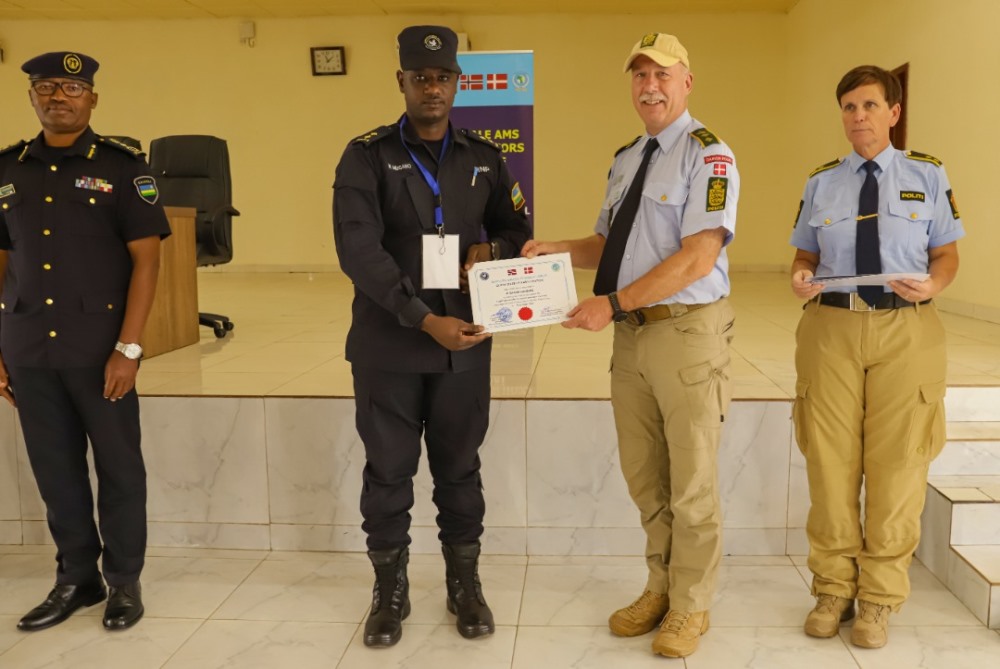
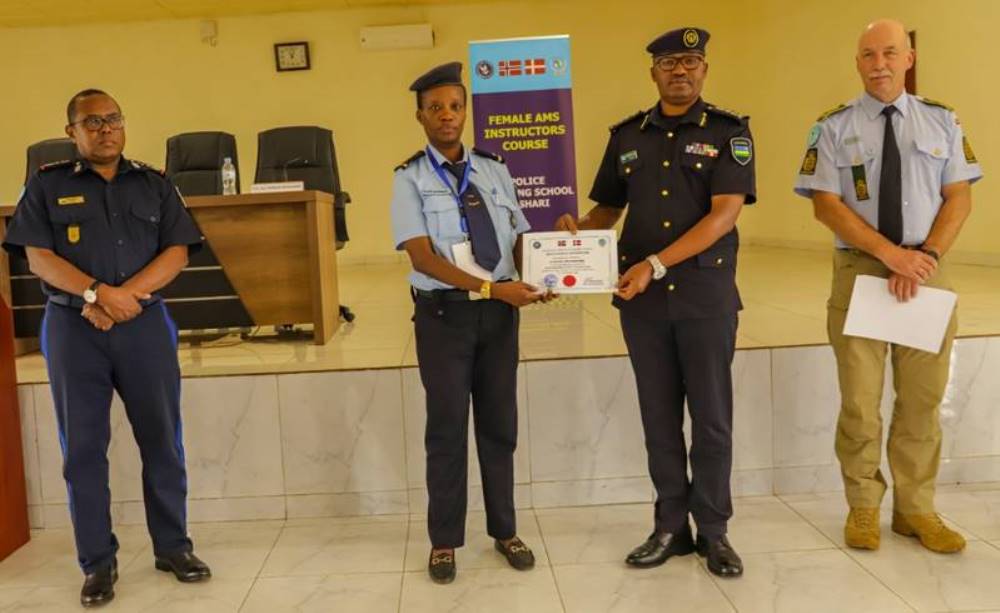
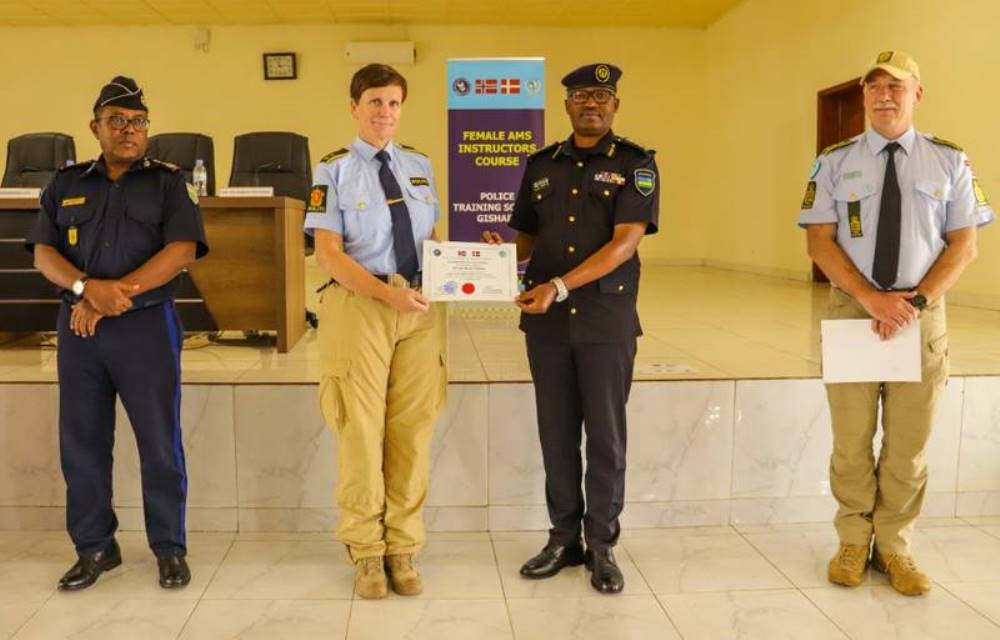
The five-day course brought together 24 participants from seven EASF member states, namely; Burundi, Kenya, Seychelles, Somalia, Sudan, Uganda and the host, Rwanda.
The course, the first of its kind, was designed to build the capacity for EASF trainers to train and assess Individual Police Officers (IPO) prior their deployment to peacekeeping missions.
The IPOs work as mentors and Police Advisors in peacekeeping missions.
The PTS commandant, Commissioner of Police (CP) Robert Niyonshuti, while closing the course, reminded the trainees to use the acquired skills and knowledge to strengthen efforts towards achieving the EASF purpose.
He added that this provides capability for rapid deployment of forces to carry out preventive deployment, rapid intervention, peace support and stability operations, and peace enforcement.
“This mandate can only be achieved through force training and effective assessment to be done by competent trainers. We are happy that you have acquired knowledge and skills that will help you to fulfill this noble task,” CP Niyonshuti said.
The training, he added, is an opportunity to build network and share experiences not only in the field of training and assessment but also in other policing areas.
Col. Ali Mohamed Robleh, the Head of Police Component at EASF, reminded the participants of their responsibility to assess the IPOs in their home countries or police officers from EASF member states.
During the five days, participants acquired skills in combined language assessment, driving skills, weapon handling and shooting exercises.