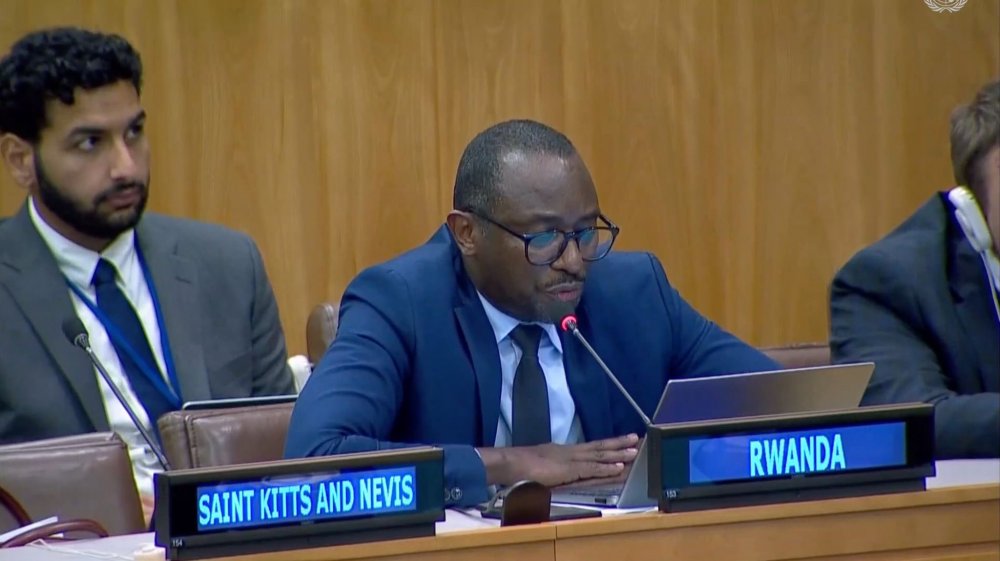
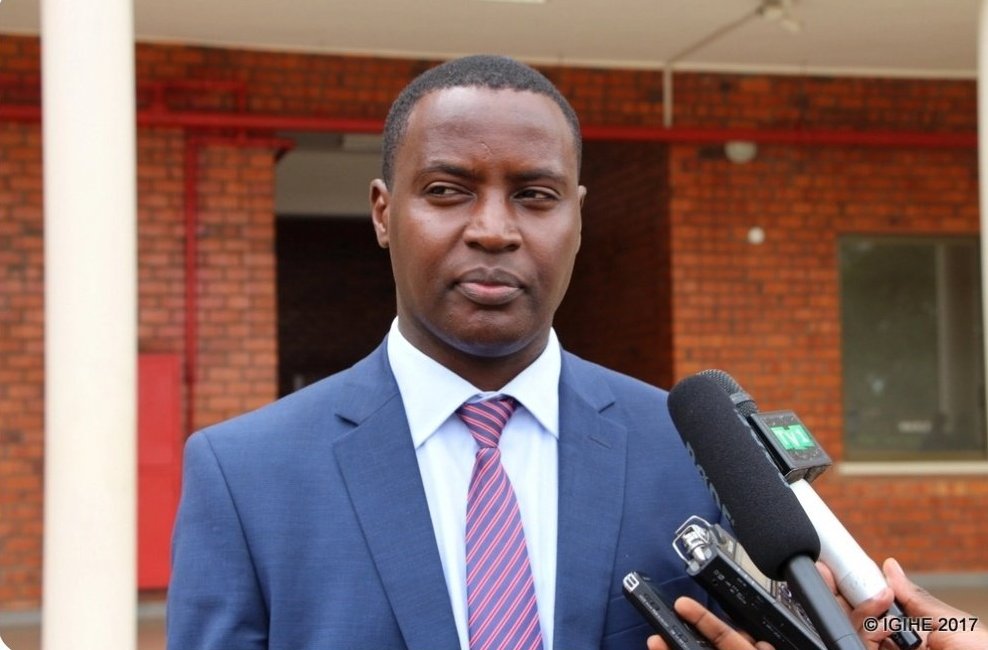
He voiced the concern as the United Nations Security Council convened for discussions on Combating Illicit Trade in Natural Resources That Fuels Conflict in the Democratic Republic of Congo.
The meeting took place on Wednesday 26th October 2022, amidst ongoing fight between Congolese Army (FARDC) and M23 rebel group that resumed on 20th October.
Reports indicate that the rebel group is on the verge of capturing Rutshuru territory.
DRC accuses Rwanda of supporting the group, but the country repeatedly denied the allegations.
M23 has been claiming that resuming fighting was triggered by DRC’s stubbornness to implement peace Accords signed in 2013.
Kayinamura explained that Rwanda “knows first-hand what it takes to build a nation from the ashes”, which is why it is committed to carrying out all tasks required by the Peace, Security and Cooperation Framework Agreement.
Stressing the need to address the root causes of conflict, he expressed concern about the “dangerous attitude” that characterizes certain communities in the eastern Democratic Republic of the Congo as “foreigners” who should “go back where they came from”.
Kayinamura highlighted that the attitude is “a seed of unending conflict” which undermines efforts to find a lasting solution.
Another concerning issue pointed out is FDLR, which settled in the Democratic Republic of the Congo after committing the 1994 Genocide against the Tutsi.
Kayinamura expressed worries that the armed group continues to recruit and train combatants and commit grave human rights violations, despite several Council resolutions and presidential statements calling for its disarmament and disbanding.
He further called on the international community to build on regional initiatives to achieve sustainable peace ‘by addressing the root causes of crises in the Great Lakes region, including the two-decades-long active presence of FDLR in the Democratic Republic of the Congo’.
On the other hand, DRC’s envoy Georges Nzongola-Ntalaja, said that the town of Bunagana has been occupied by M23 for more than four months, asked the Council to demand that “Rwanda and its M23 immediately withdraw.”
The envoy does not see FDLR as a problem but explained that it is used as a cover to loot minerals in his country.
He demanded the UN Security Council ‘to support the Nairobi process, require all armed groups to lay down their weapons, impose sanctions against internal and external mafia networks which illegally exploited the country’s natural resources, and ensure that each country in the Great Lakes region settles its disputes with the combatants and rebels’.
The envoy of Burundi, Zéphyrin Maniratanga said it is important to ensure that Council members goes beyond the presentation of reports in New York to a visit to the region so as to be able draw its own conclusions.
Burundi underscored the need for cooperation and coordination of military efforts between the armed forces of the Democratic Republic of the Congo, MONUSCO and the forces of the East African Community.
“When the house of your neighbour is on fire, you must move to contain the fire before it spreads to your own house,” he said.
Maniratanga expressed support for the Nairobi process and said that his country deployed a military contingent of the Burundi National Defence Force.
He said that the deployment is not only in need of political support, but also of technical and financial aid to ensure its effective discharge of its mandate.
Maniratanga also underscored that the Peace, Security and Cooperation Framework for the Democratic Republic of the Congo and the region is an essential platform to bring together the DRC and the regional countries to arrive at a lasting solution.
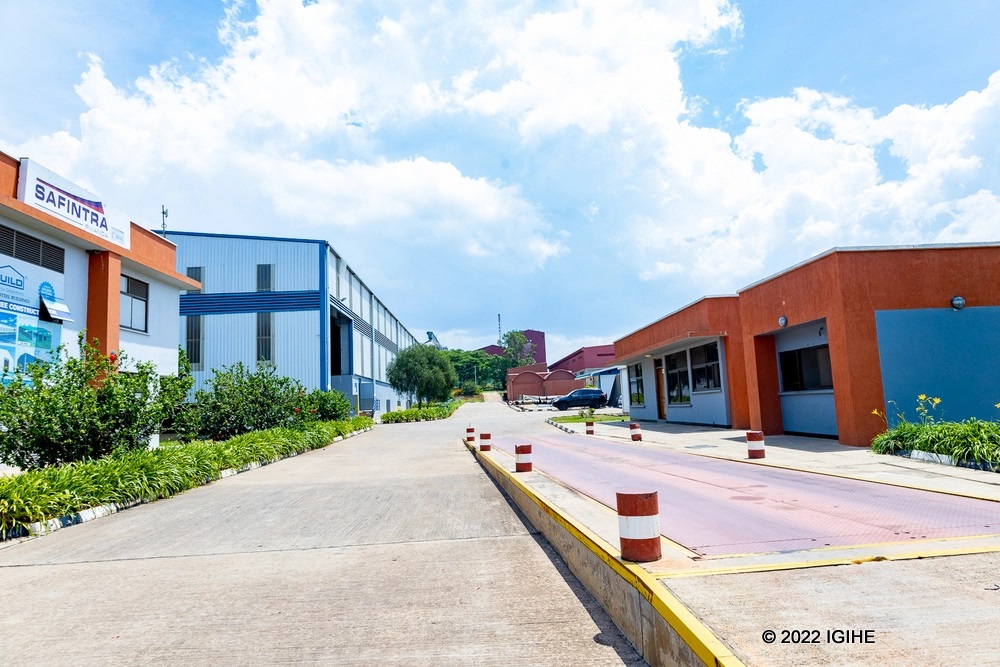
The new platform is expected to help customers easily access its services and products without visiting its Kigali plant to place an order.
The Managing Director of Safintra, Vikrant Srivastava, has told IGIHE that the company mulled launching the e-commerce platform to improve services and adjust operations to the world’s digital advancement.
“We have launched the platform to respond to the needs of our customers. We want to facilitate them to place orders without disrupting their businesses or work,” he said.
Vikrant went on to explain that the platform will also help retailers of construction materials and end users to access updated information on the latest products.
The e-commerce platform also has a section for live chat enabling direct interactions between the customer-support department and customers who might need more clarifications or share suggestions.
The technology is expected to bring more convenience to customers in placing orders from Safintra Rwanda Ltd to execute their construction projects without the hassles of buying physically.
According to Vikrant, the platform will also relieve customers located in areas that previously had no retail stores for products from Safintra.
Safintra Ltd is a Rwanda-based subsidiary of the Safal Group with a presence in 8 African countries providing high-quality roofing materials. The company was registered in 2007 and started commercial production in 2008.
The Safal Group has also launched the e-commerce platform in other countries – Uganda, Tanzania and Kenya.
Once a customer places an order via the platform, products will be available between three and five working days.
Customers can access the company’s products and buy via the online store www.shop.safintrarwanda.com
Vikrant Srivastava has explained that customers placing orders online have different payment options using Mobile Money, Visa Card, and Master Card.
After making payments, you receive an email and a proof of payment for performed transactions to be presented before picking the products from the factory.
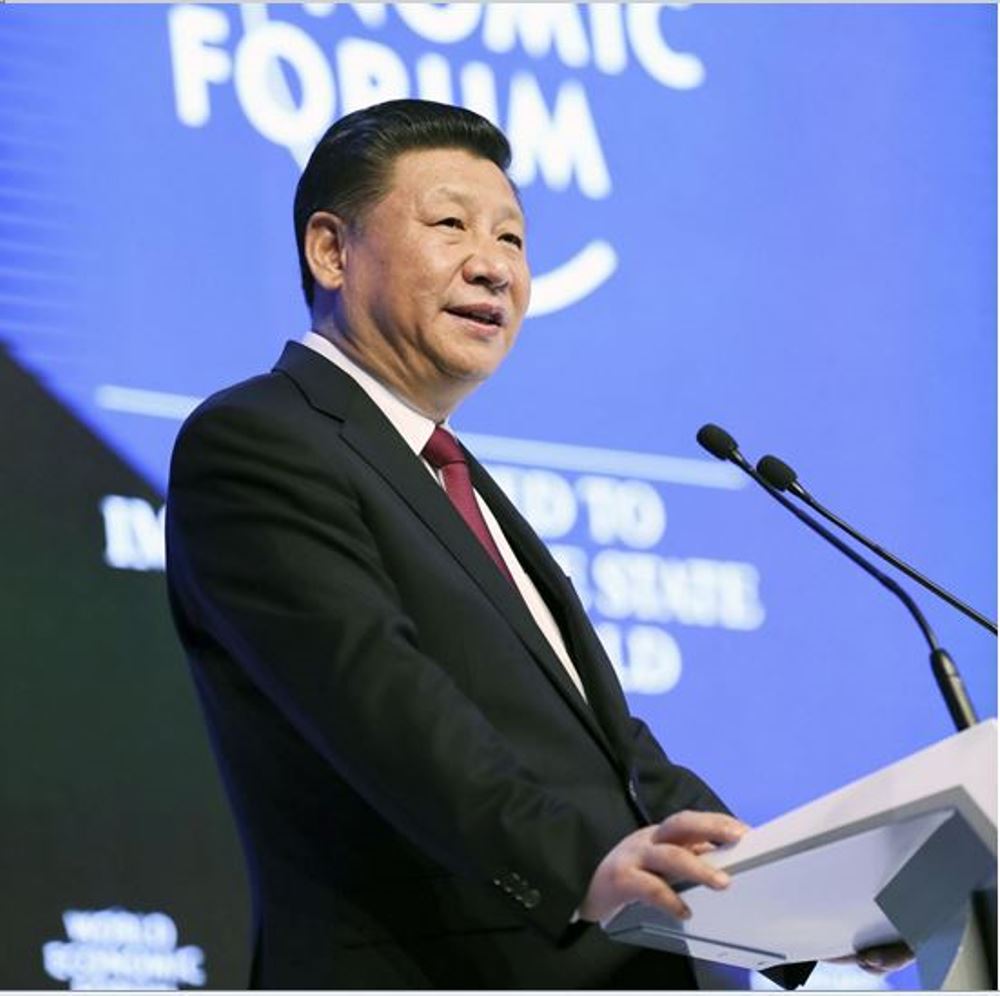
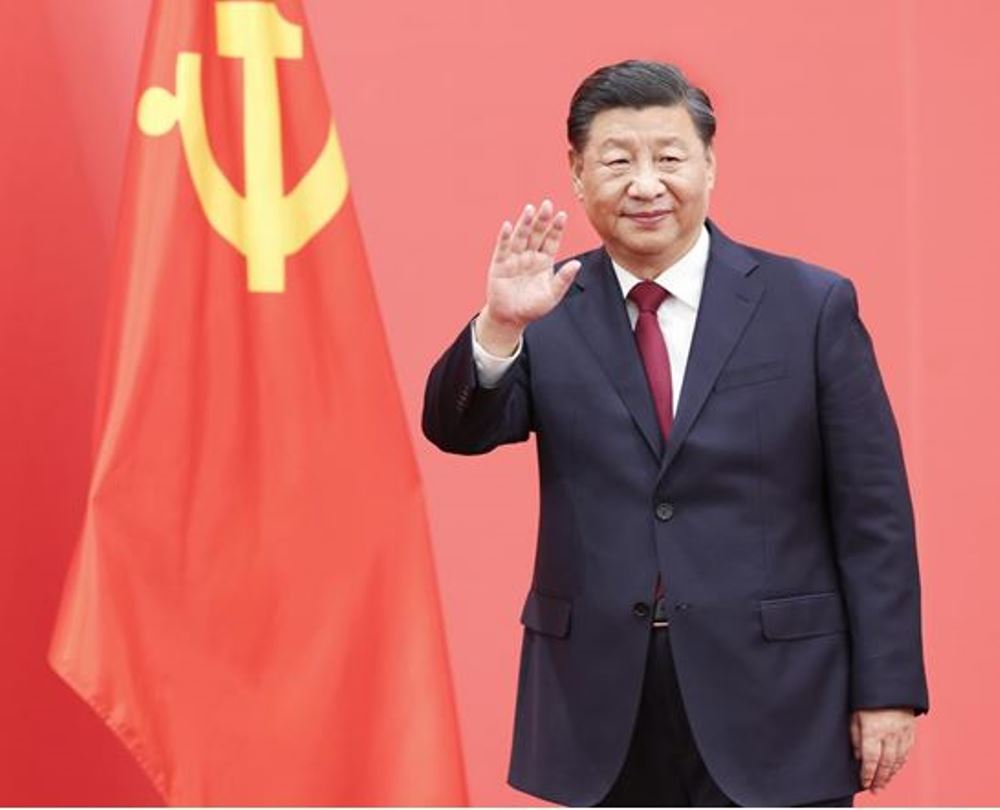
“We shall keep in mind the Party’s nature and purpose and our own mission and responsibility, and work diligently in the performance of our duty, to prove worthy of the great trust of the Party and our people,” Xi said on Oct. 23, as he led his colleagues to meet the press, fresh from a Party plenum that elected him general secretary of the CPC Central Committee.
In 2012, after assuming the Party’s top job, Xi said that he and his colleagues would lead the CPC in striving for national rejuvenation, pursuing a better life for the people, and addressing problems within the Party.
In the past decade, China under his leadership has witnessed historic changes, with its economy more than doubling to 114 trillion yuan (16 trillion U.S. dollars), absolute poverty wiped out and moderate prosperity attained for the country’s 1.4 billion people.
It was also a decade of severe challenges. The COVID-19 pandemic, a trade war with the United States and the downward pressure on the economy all posed hurdles for China’s development and tested the strength of Xi and the Party he leads.
Bringing about milestone transformations and ushering in a “new era” for socialism with Chinese characteristics, Xi is regarded as the helmsman capable of leading the country in overcoming difficulties and pursuing full modernization.
{{Son of Loess Plateau}}
Xi Jinping was born in June 1953 into a revolutionary family. His father, Xi Zhongxun, was a revered CPC leader. Describing his father as “someone who had devoted himself wholeheartedly to the Chinese people,” Xi Jinping said he was greatly inspired by the elder Xi and had pledged to follow in his footsteps.
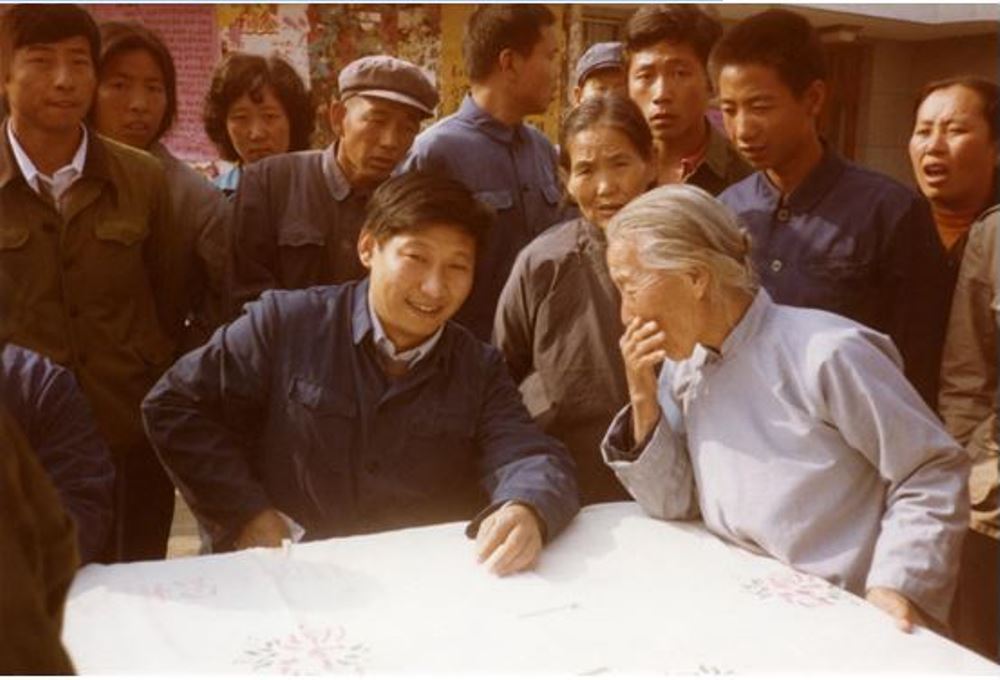
At 15, as an “educated youth,” Xi left Beijing for a village called Liangjiahe in an arid part of northwest China’s Shaanxi Province. He would later spend seven years in the countryside, working and living alongside farmers.
He joined the CPC there and later became the village Party chief — the beginning of his political career. Xi recalled his earnest wish then was “to make it possible for the villagers to have meat and have it often.” He led them to dig wells, build dams, terrace hills and set up the province’s first methane-generating pit.
Xi said he gained his understanding of the meaning of the word “people” through his experience in Liangjiahe, and it strengthened his determination to “serve the people” — a principle he has adhered to over the decades.
In the late 1970s, after graduating from Tsinghua University, Xi served as a secretary to the minister of defense. In 1982, he volunteered to work at the grassroots level and moved to Zhengding, a poor county in north China’s Hebei Province. Peng Liyuan, his wife, later said that many of Xi’s classmates went abroad and he could have just done the same. But Xi stayed and chose a much harder path — to be a servant to the people.
In his three years in Zhengding, where Xi served as deputy Party chief and then Party chief, Xi rode bicycles to all the communes and production teams of the county to inspect work. Sometimes, he arrived when villagers were tilling the fields. He would join them and do the farm work.
Then he spent over 17 years in Fujian Province and nearly five years in Zhejiang Province. He served multiple roles in the two coastal provinces including vice mayor, prefecture Party chief, municipal Party chief, provincial governor, and provincial Party chief. In 2007, he worked in Shanghai as its Party chief before ascending to the Standing Committee of the Political Bureau of the CPC Central Committee.
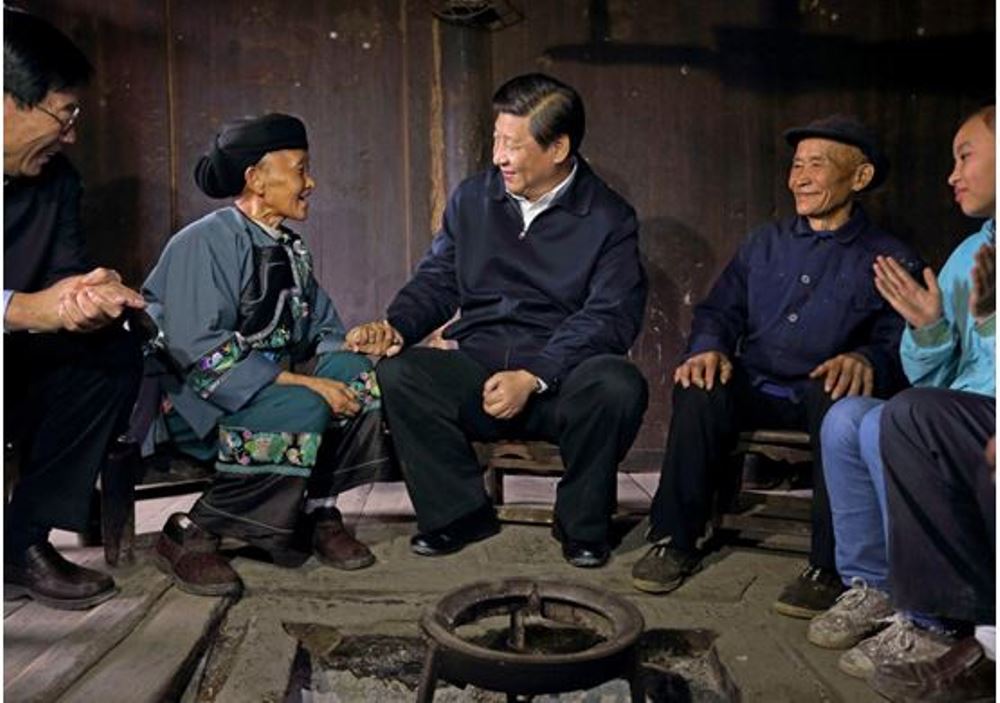
Xi kept a close bond with the people wherever he worked, even after he was promoted to work at the apex of the Party. Xi has made it a tradition to visit the homes of the people ahead of every Spring Festival. Xi’s early-year experience of hunger and toiling on the farms may help explain why he would check the kitchen, bathroom and cellar in ordinary people’s homes.
In 2013, Xi initiated a “targeted poverty alleviation” drive and made plans for its implementation. Altogether, over 255,000 work teams and more than 3 million cadres were sent to the countryside to help villagers shake off poverty household by household. About 100 million people were lifted out of extreme poverty in the past decade.
In Xi’s words, all he did is essentially for the betterment of the people. In the past decade, Chinese people’s wealth grew steadily. In 2021, the per capita disposable income of the Chinese reached 35,128 yuan, growing nearly 80 percent from 2012. The urban-rural income ratio was narrowed to 2.5:1.
The Party and the government enjoy good ratings. A Harvard University survey found that Chinese citizens’ satisfaction with the government has increased across the board, with the central authorities receiving the highest level of approval at 93 percent.
{{For a strong China}}
Xi inherited a mission to achieve China’s modernity, which had been dreamed of and fought for by generations of Chinese people.
Ten years ago, when Xi ascended to the Party’s top post, China was already the world’s second-largest economy and top manufacturer. But the economy faced increasing downward pressure. Other tough issues also needed to be resolved, such as corruption, pollution and the rich-poor income gap, all posing grave challenges to the Party.
All eyes were on Xi. People expected him to bring real changes. And changes must begin from the Party itself. Xi said it takes a good blacksmith to forge good steel, calling for the self-reform of the Party and “full and rigorous” self-governance. He unleashed the largest anti-corruption campaign in the Party’s history.
Xi considers the Party’s overall leadership the key to building China into a great modern socialist country. Observers said Xi has played a key role in reshaping the CPC. Liu Jingbei, a professor at the China Executive Leadership Academy in Pudong, said Xi reversed the trend that the Party’s leadership was being weakened and marginalized in some localities and departments.
Xi has fostered the concept of “whole-process people’s democracy,” calling for greater efforts to develop socialist democracy.
The law-based governance in all fields Xi advances is considered a profound revolution in governance. In the past decade, China’s national legislature adopted 70 laws and revised 238 laws. Many of the legislations are groundbreaking, including the Civil Code adopted in 2020 and the Foreign Investment Law adopted in 2019, which is the basic law governing foreign direct investment in the country promoting the high-level liberalization and facilitation of foreign investment.
These efforts have helped create more favorable conditions for development. Xi personally chairs a number of central commissions to strengthen the Party’s leadership over economic work as well as reform and opening up.
Since the third plenum of the 18th CPC Central Committee in 2013, more than 2,000 reform plans have been implemented, covering almost every aspect of economic, political, social and cultural undertakings as well as people’s everyday life.
Xi has put forward a new development philosophy that promotes innovative, coordinated, green, open and inclusive development for all. Peter Koenig, a former senior economist at the World Bank, said the new development philosophy is probably the core of what has been named “Xiconomics.”
Under Xi’s leadership, China has consolidated its position as the world’s second-largest economy. In the past decade, the share of China’s GDP in the global economy grew from 11.3 percent to 18.5 percent. On average, the Chinese economy contributed more than 30 percent of global economic growth in recent years.
Stressing a people-centered approach to development, Xi rolled out a slew of policies that bring tangible benefits to the people. China has established the world’s largest social security system, with 1.04 billion people covered by basic old-age insurance and 95 percent of the population covered by basic medical insurance.
Xi has placed common prosperity on agenda. He said this is the essential requirement of socialism. Xi’s common prosperity drive aims to narrow the rich-poor gap, address the regional and industrial disparity, and improve both the material and cultural-ethical life of the people, thus achieving balanced development and social equality.
In the past decade, China witnessed holistic and historic improvements in environmental protection.
Xi declared at a virtual UN gathering that China will strive to peak carbon dioxide emissions before 2030 and achieve carbon neutrality before 2060. He instructed imposing a 10-year fishing ban in the Yangtze River. Every river in China now also has a river chief, in charge of its ecological protection. Endangered species such as giant pandas, Tibetan antelopes and snow leopards have been brought back from the brink of extinction.
Xi led the nation to engage in an unprecedented fight against pollution. Years of tenacious efforts paid off. A report by the University of Chicago’s Energy Policy Institute said the density of harmful particulates in the air in China fell 40 percent between 2013 and 2020. If sustained, this would add about two years to the average life expectancy of Chinese citizens, it said.
Xi places sci-tech innovation at the core of overall national development and issued the call to build greater scientific and technological strength. He visited satellite launching sites, chip labs and high-speed train workshops to learn the latest sci-tech development. “You can’t ask, buy, or beg for core technologies in key fields from other countries. They must be kept firmly in our own hands,” Xi said.
China’s ranking in the Global Innovation Index, released by the World Intellectual Property Organization, rose from 34th place in 2012 to 11th place in 2022.
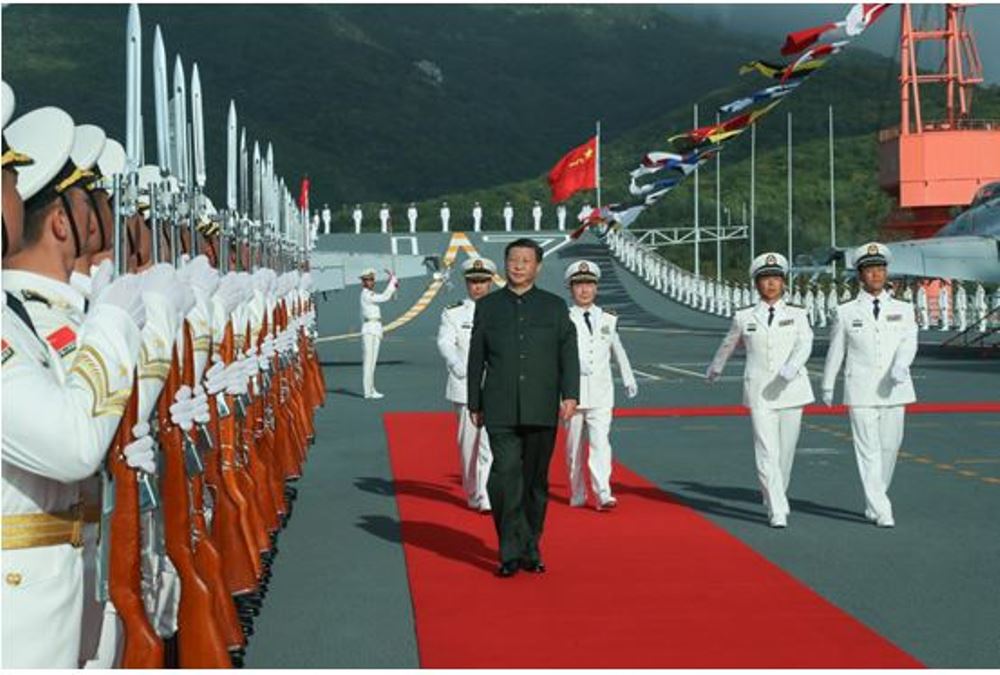
Xi has close ties with the military and knows its operations well. He initiated the earth-shattering military reform, in a bid to build the People’s Liberation Army into world-class armed forces. Over the past decade, China unveiled two homegrown aircraft carriers. The fifth-generation stealth fighter aircraft, J-20, was commissioned. China also took the lead in hypersonic weapon research.
Media outlets described Xi as the leader who is making China strong. They said he has solved a great number of problems that had long gone unsolved and secured many accomplishments of major significance for the future.
In October 2017, Xi Jinping Thought on Socialism with Chinese Characteristics for a New Era was officially instituted at the 19th CPC National Congress as a guiding principle. The thought was enshrined in the CPC Constitution and China’s Constitution.
David Ferguson, who edited the English translation of four volumes of “Xi Jinping: The Governance of China,” said poverty alleviation, the Belt and Road, and the environmental cleanup all fit in Xi’s thought and they fit at the grassroots level where ideas become action, driving the historic changes over the past decade.
In 2016, Xi’s core position on the Party Central Committee and in the whole Party was established at the sixth plenum of the 18th CPC Central Committee.
“To me, this means responsibility,” Xi said, pledging to devote all his time and energy to the job so that he can live up to the trust the Party and the people place in him.
In 2021, the Party’s third historical resolution says Xi’s core position and the guiding role of Xi’s thought are of decisive significance for driving forward the historic process of national rejuvenation.
{{A tough man with a tender heart }}
Xi has a strong track record as a crisis manager. Battle-hardened by years of handling tough situations, Xi has the experience, courage and tenacity needed to cope with the tests and challenges China faces today.
While working in the coastal regions of Fujian, Zhejiang and Shanghai, Xi led local response efforts to multiple powerful typhoons. During these instances, he would spend whole nights overseeing the evacuation in an effort to minimize casualties and damage.
When he served as vice president of China, Xi oversaw the preparations for Beijing 2008 Olympics and Paralympics, which were made under tremendous pressure in a year overshadowed by the devastating Wenchuan earthquake and the riots in Lhasa.
Yet Beijing 2008 has been remembered as one of the best Games in history. Nearly 14 years later, under Xi’s leadership, China presented the world a streamlined, safe and splendid Winter Games despite COVID-19 and the so-called “diplomatic boycott” by some Western countries.
He says that China in the new era is faced with more challenges and uncertainties. “We must be prepared to carry out a great struggle with many new historical features,” he said.
In response to severe situations in Hong Kong, Xi rolled out a package of measures to ensure that the central government exercises overall jurisdiction over Hong Kong and the city is administered by patriots.
Xi met with Ma Ying-jeou in Singapore in 2015, marking the first meeting between the leaders of the two sides of the Taiwan Strait since 1949. The cross-Strait relations deteriorated after the Democratic Progressive Party came to power in Taiwan in 2016. Xi has proposed a series of measures, including a “two systems” solution to the Taiwan question, to “maintain the initiative and the ability to steer in cross-Strait relations.”
In August 2022, in disregard of China’s stern warning, U.S. House Speaker Nancy Pelosi went ahead with her visit to Taiwan, causing escalating tensions across the Taiwan Strait. The PLA conducted joint combat training exercises of an unprecedented scale around the Taiwan Island, effectively deterring “Taiwan independence” separatist forces and foreign interference.
Xi has likened China’s COVID-19 fight to a war. Under his leadership, China has led the world in getting COVID-19 under control and restarting work and production. After the severe outbreak in Wuhan and Hubei was brought under control, Xi has led China in implementing a dynamic zero-COVID policy, maintaining the country’s COVID-19 infection and fatality rates at a very low level.
Given its huge population, if China adopted such prevention and control policies as herd immunity or a hands-off approach, the consequences would be unimaginable, Xi said.
Handling China-U.S. relations was one of Xi’s priorities in the past decade. When the United States initiated a trade war against China, he devised the strategy that China does not want a trade war but is not afraid of one and will fight one if necessary.
In his meetings with former U.S. President Donald Trump and incumbent U.S. President Joe Biden, Xi said that China and the United States should not fall into a so-called trap of conflict and confrontation, and cooperation is the best option.
A tough man in the face of challenges and crises, Xi also has a tender side. He wrote letters replying to American people, including young students. He hoped that the students would become young ambassadors for the friendship between the Chinese and American peoples.
Xi is open to diverse opinions and even criticism. During his tenure as a county Party chief, he received a letter from a young man who criticized the county’s work in boosting the production of commercial goods. Without being offended by the criticism, Xi acknowledged the young man’s talent and decided to send people to interview him for a potential job. As the Party’s top official, Xi also stressed that criticism and objections are allowed in intra-Party discussions and the decision-making process.
He likes making friends with intellectuals, writers and artists. When he was a county official in Hebei, he enjoyed many inspirational discussions with the writer Jia Dashan. Sometimes, the two would meet in Xi’s office and talk well into the night, only to find themselves locked in the compound.
Xi is an avid sports fan. He enjoys football, ice hockey, boxing and swimming, often taking time out of his busy schedule to swim. He uses sports to learn how to deal with challenges. Just as athletes focus on cooperation during great football matches, we should focus more on cooperation than on individual skill, Xi once told cadres who were in charge of economic work.
{{Striving for a better world }}
As a young man, Xi was already fascinated by the rich diversity of the world. In rural Shaanxi, he devoured literary classics of the world, such as Faust and William Shakespeare’s plays. He read Das Kapital three times; his reflections on the book filled 18 notebooks. “Marxism, though wide-ranging and profound, can be summed up in a sentence — the pursuit of the emancipation of humankind,” he later observed.
All the early reflections on the world and mankind have contributed to “a community with a shared future for humanity,” a vision Xi raised in 2013.
“Mankind, by living in the same global village in the same era where history and reality meet, has increasingly emerged as a community of common destiny in which everyone has in himself a little bit of others,” Xi said.
In 1985, Xi, then a county-level official, traveled as part of a Chinese delegation to the United States on an agricultural research trip. He was accommodated in a homestay in rural Iowa, sleeping in the bedroom of his host family’s son, who was at college at the time. The room was decorated with novelties such as “Star Trek” action figures.
Recalling this trip to the United States nearly three decades later, Xi said the Chinese and American peoples have many things in common, and can become good friends and partners for mutually beneficial cooperation.
Xi has visited the United States eight times. He was the first Chinese leader to watch an NBA game in a U.S. arena. When visiting Cuba, he paid a special visit to the breakwater in Cojimar where Hemingway wrote “The Old Man and the Sea,” and dropped by the bar Hemingway frequented to order a mojito.
Xi and Russian President Vladimir Putin have had approximately 40 meetings since 2013, charting the course of bilateral ties. Bilateral trade has increased from 88.1 billion U.S. dollars in 2012 to 146.8 billion U.S. dollars in 2021. The two countries have cooperated on major energy projects such as the eastern route of the China-Russia natural gas pipeline. They have also launched cooperation in such frontier fields as the International Lunar Research Station project.
Xi advocates for the creation of a new model for relations between major countries. “One cannot live in the 21st century with outdated thinking from the age of the Cold War and zero-sum games,” Xi said.
Xi cherishes China’s friendships with other developing countries. At meetings with African leaders, he has announced a series of initiatives for pragmatic cooperation. Xi has urged BRICS countries and other emerging economies to pursue openness and innovation.
Xi said China is a “peaceful, amiable and civilized lion,” and a “big guy,” but not “Mephisto.” “All countries are welcome to get on board the express train of China’s development.”
According to Xi, China is always a builder of world peace. “Only when we all cherish and uphold peace and never forget the painful lessons of war can there be the hope of peace,” he said.
Since the COVID-19 pandemic, Xi has engaged in intensive “cloud diplomacy.” In 2021, he had more than 100 diplomatic activities conducted via phone, letter or video link. China has sent anti-virus supplies to more than 150 countries, and its homegrown vaccines — a global public good as was promised by Xi — reached many places around the world.
An even greater global public good is the Belt and Road Initiative proposed by Xi. About three-quarters of the countries in the world have signed cooperation documents with China to jointly build the Belt and Road.
Xi is seen as a key figure in pushing forward some initiatives and measures for dealing with global issues, climate change included.
“Had it not been for President Xi Jinping’s initiative, we would not have the Paris Agreement. Not even now,” said Ban Ki-moon, former secretary-general of the United Nations.
Xi said China has the ability and responsibility to play a bigger role in global affairs.
China has a wonderful opportunity to take on the leadership role in the respect of creating a shared future, said British sociologist Martin Albrow. “This isn’t leadership in a military sense. This is leadership in a moral and value sense.”
{{ New model of civilization }}
“Our understanding of time is measured in centuries or millennia,” Xi said.
He draws strength from history and China’s fine traditional culture to govern China and lead the country toward modernization.
An avid reader of history books from a young age, Xi told officials to have a “historical perspective” when they think and make decisions.
Xi praised China’s fine traditional culture as the “root and soul” of the Chinese nation.
Xi has stressed confidence in four spheres: in the path, theory, system and culture of socialism with Chinese characteristics. Among the four, confidence in one’s culture is a broader, deeper and more fundamental form of self-confidence, he said.
“China is not just a nation state, it is a civilization state. And if you don’t understand that, I don’t think you really understand anything about China,” said British scholar and political commentator Martin Jacques.
Xi is leading China on a uniquely Chinese path to modernization, which analysts say, is creating a new model for human civilization.
By 2035, China will have basically achieved modernization. This will mark the first time in human history that an entire population of over 1 billion people achieve modernization as a whole.
By then, China’s per capita GDP will reach the level of moderately developed countries and the size of the middle-income group will be significantly expanded. China will be a global leader in innovation, and its carbon dioxide emissions will steadily decline after reaching the peak. China’s high-speed railway system, already the world’s largest, will almost be doubled in total length.
China’s path to modernization is not only a source of pride for the Chinese people, but also offers a new option for nations who want to accelerate development while preserving their independence.
The success story of China is also a story of the revival of socialism. More than 500 years after its birth, socialism has survived and thrived despite setbacks and the noise of naysayers, revitalized by the Chinese Communists in the new era.
A new journey has begun. Xi will lead China to pursue national rejuvenation by following the uniquely Chinese path to modernization, and to continue striving for a shared future for humanity.
“The journey ahead is long and arduous, but with determined steps, we will reach our destination,” Xi said.
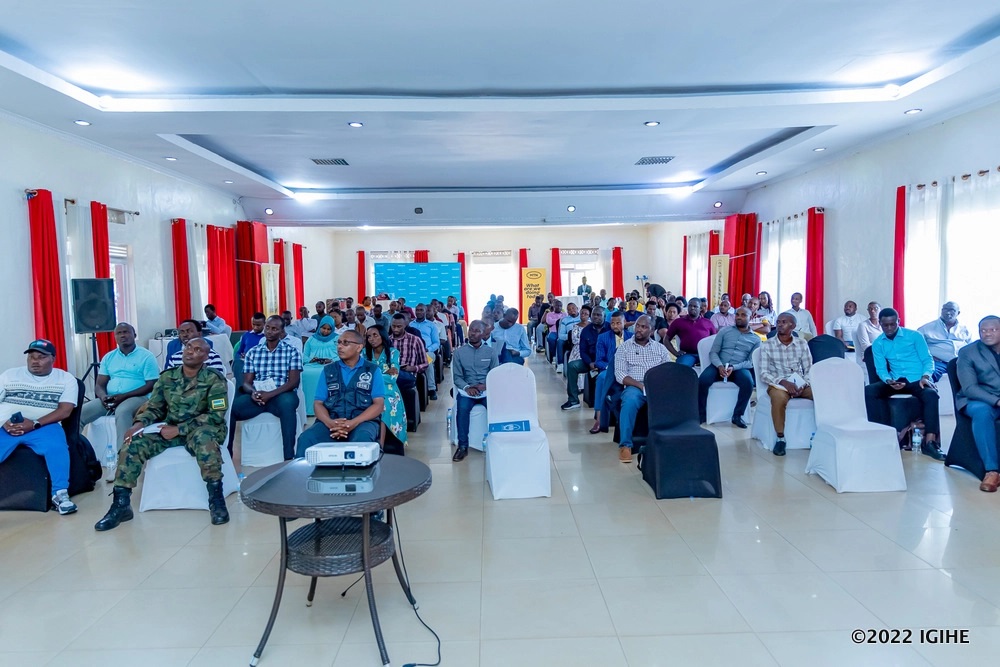
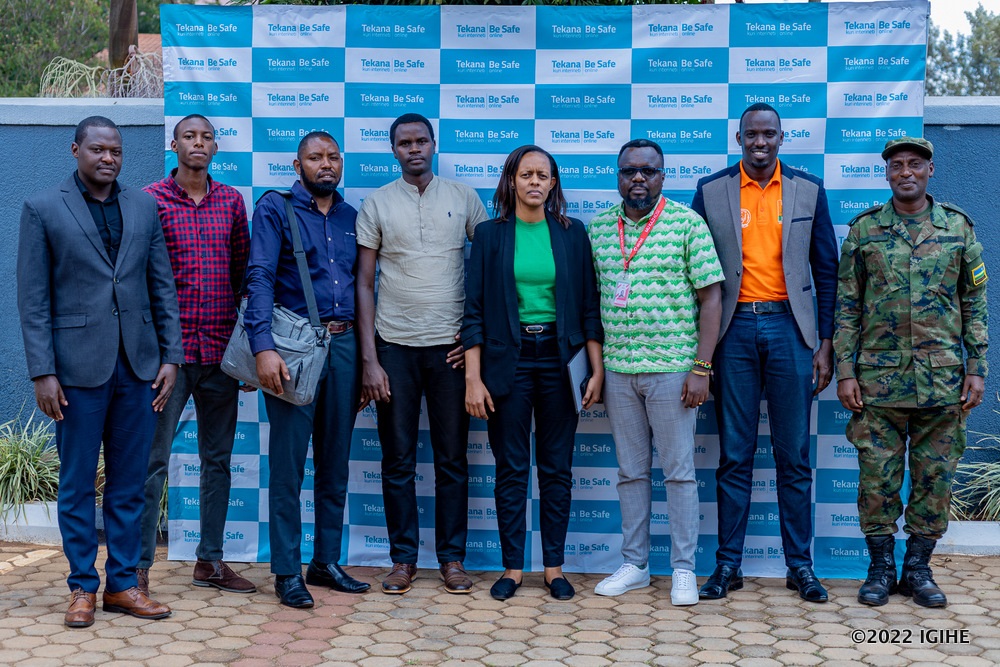
The training conducted on Wednesday 26th October 2022, is part of the ongoing cyber security awareness campaign rolled out in collaboration with different partners including MTN Rwanda and Rwanda Investigation Bureau (RIB) among others.
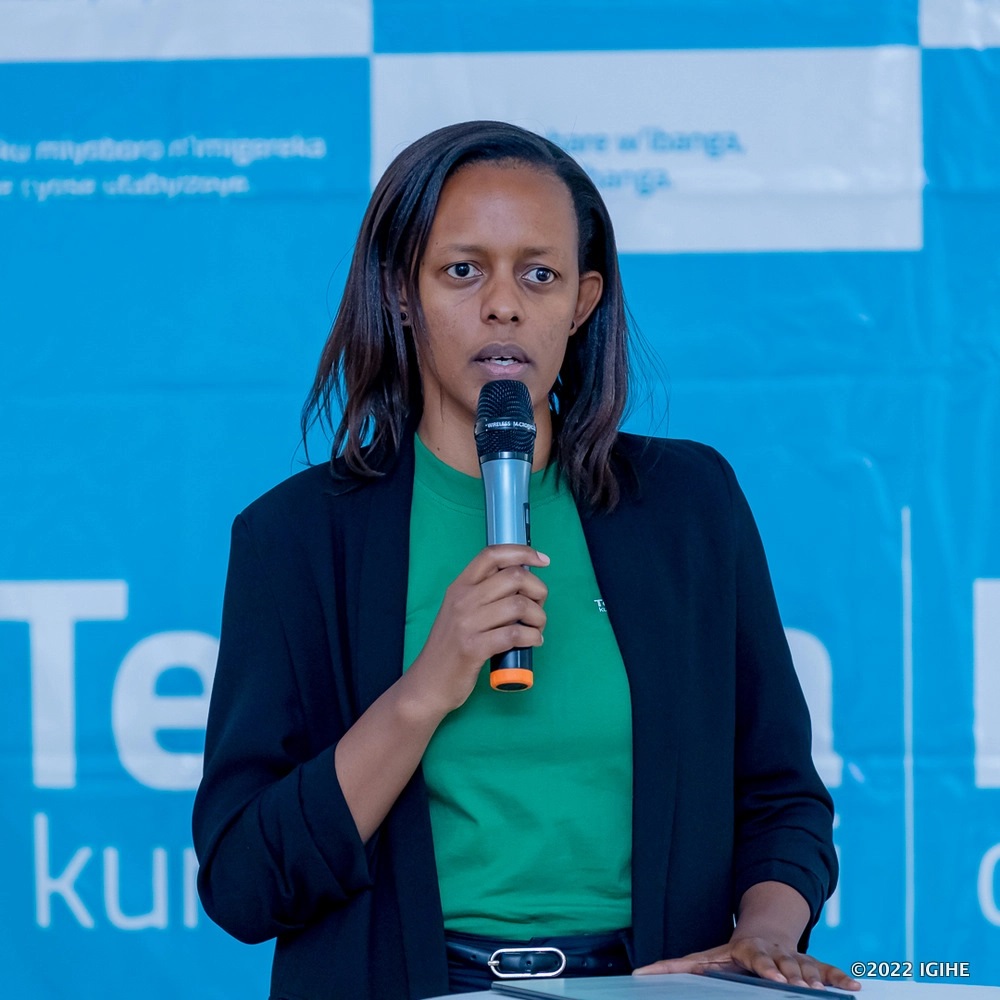
Ghislaine Kayigi, Chief Cybersecurity Standards Officer at NCSA said that they brought together members of the private sector as they are among segments of the population affected by cyber threats.
“Technology helps us to access services easily but the more it evolves, the more others take advantage of it for unlawful acts. Fraudsters have been arrested at different times using various techniques to swindle or offend unwitting members of the public,” she said.
NCSA advised the general public to avoid sharing their passwords, protect their devices including laptops and mobile phones and monitor how their children use technology.
The Executive Secretary of Eastern Province, Dr. Jeanne Nyirahabimana urged participants to be vigilant so that they can protect themselves and children against cyber threats.
She advised them not to leak their data anyhow lest they are used in wrongful intentions.
Hubert Rutaro, the Provincial Chief Investigator for Eastern Province explained that everyone’s cellphone can drag owners in cyber-crimes and lead to their arrest.
He urged them to protect their passwords lest other people use their devices for criminal intentions.
Eryna Nshimiyimana from Gahini Sector revealed that she often experiences cases of people attempting to defraud her via mobile Money and requested for regular training to sensitize people on cyber threats.
Members of the private sector pledged to educate their colleagues on cyber security.
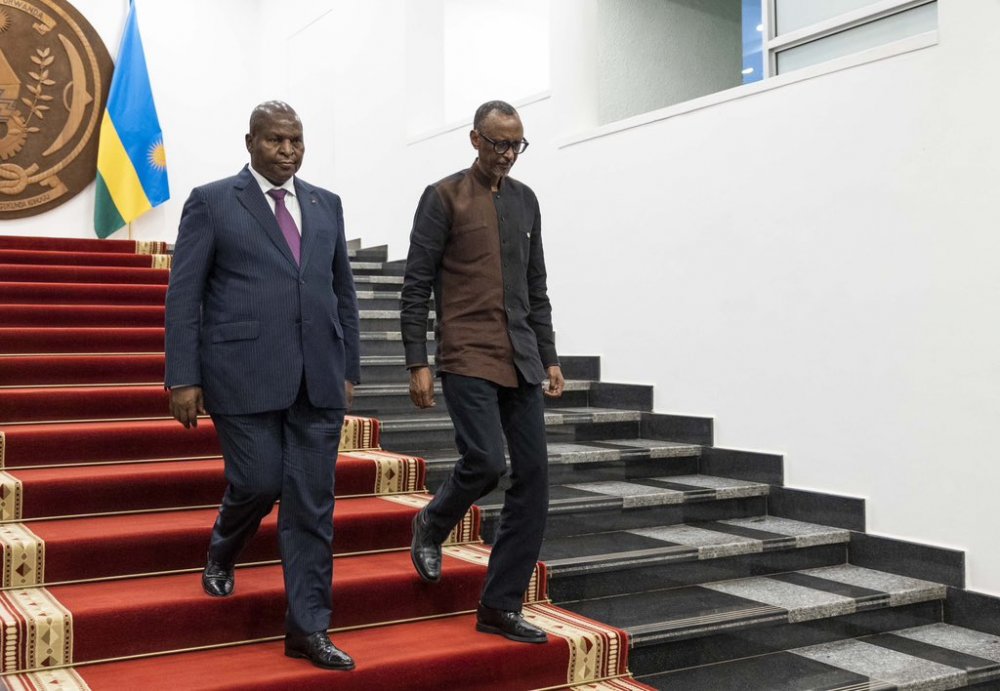
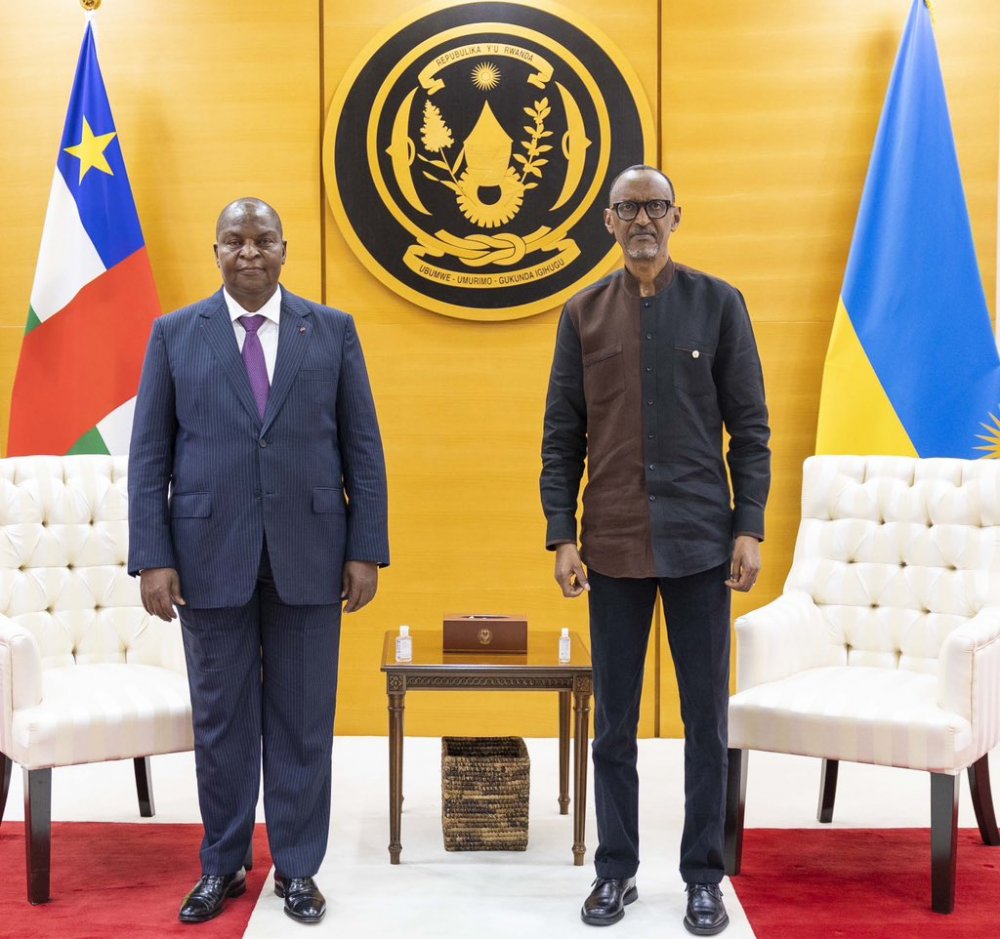
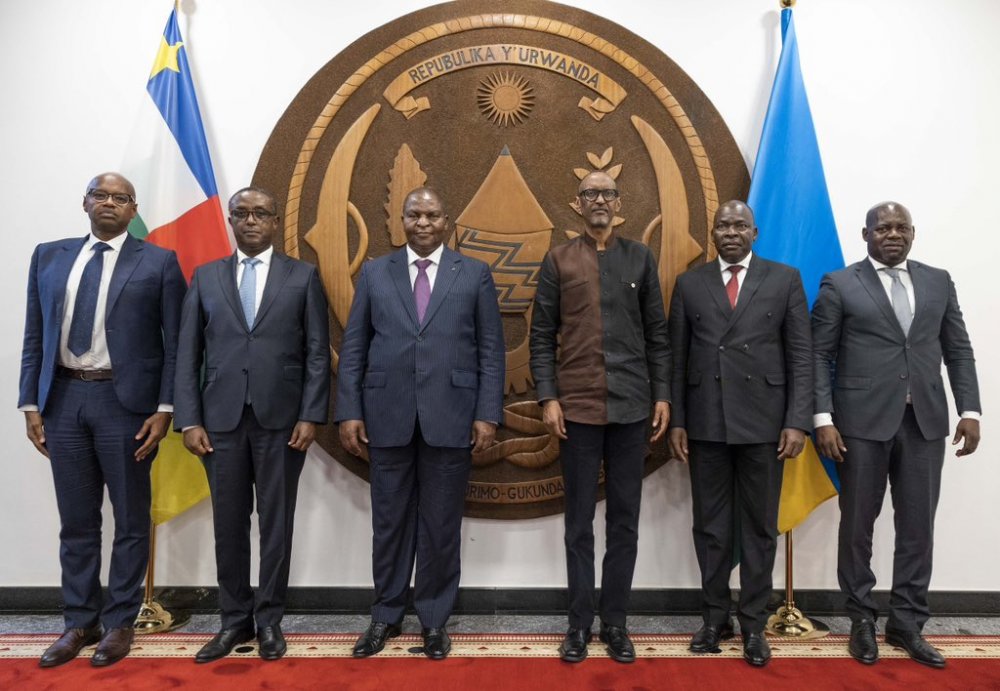
Touadéra was hosted at Urugwiro Village on Wednesday 26th October 2022.
The heads of state discussed the political situation in CAR, ongoing bilateral cooperation in various areas including security, governance and economic development as Rwanda’s Presidency revealed.
He comes to Rwanda following the annulment of proposed constitutional reforms.
CAR’s Constitutional Court last month ruled that a commission for constitutional reforms set up previous was “unconstitutional,” dealing the first blow to President Faustin-Archange Touadera’s bid to get through legislation allowing him to run for a third term.
In August this year, Touadera formed the body to draft a new Constitution of the Central African Republic.
But following a petition filed before the court by civil society group bloc for the Defense of the Constitution, the court in the capital Bangui ruled that the “decree was not in compliance with the country’s constitution.”
On Monday, President Touadéra ousted the Head of Constitutional Court, Danièle Darlan and the court’s judge Trinité Bango Sangafio.
Rwanda and CAR have been for long enjoying cordial relations whereby Rwanda is helping the country engulfed by wars to restore peace.
Rwandan Police forces and soldiers are deployed in the country to protect top leaders and major infrastructures in the country.
At the beginning of October 2022, Touadéra and First Lady invited and shared dinner with 200 senior officers, officers and other ranks, of the Rwanda Bilateral Force, at his home in Damara district, Central African Republic.
The troops were deployed to CAR in 2020 under an existing bilateral agreement on defense to reinforce electoral security and protect existing troops.
They have a different mandate from other troops deployed under the United Nations Multidimensional Integrated Stabilization Mission in the Central African Republic (MINUSCA).
The troops were sent one week before CAR presidential elections when different rebel groups including the one led by François Bozize who was president between 2003 and 2013 planned to disrupt polls and threaten security.
On Election Day on 27th December 2020, Rwandan troops were deployed on different streets and polling stations in Bangui (capital city of CAR) standby to protect voters against security disruptions.
Speaking to the media one day after elections, Touadéra thanked his counterpart of Rwanda, Paul Kagame for support to secure the presidential and legislative elections that took place amidst fears that armed groups would disrupt them.
He thanked Rwanda and President Paul Kagame for contribution to restore peace in the country.
“I thank President Paul Kagame, Government of Rwanda, and Rwandans for their support to secure electoral process which allows nationals to freely choose their leaders. Many thanks for the great support,” said Touadéra.
Apart from security, Rwanda and CAR also enjoy cooperation in the areas of economy and mining.
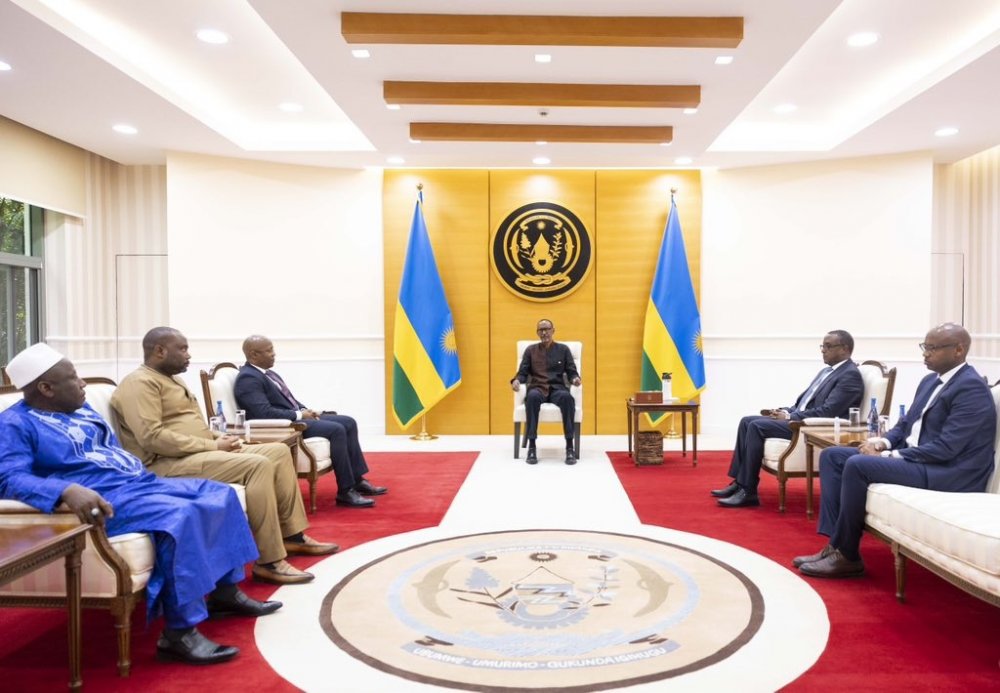
Rwanda’s Presidency has revealed that Kagame hosted the envoy who brought a message from Col Mamadi Doumbouya on Wednesday 26th October 2022.
Discussions between the Head of State and Minister Gaoual Diallo along with his delegation were also attended by Rwanda’s Minister of Foreign Affairs, Dr. Vincent Biruta.
Rwanda and Guinea enjoyed cordial relations before President Alpha Conde was ousted.
In 2016, President Kagame was awarded The Grand Croix, the highest honor in Guinea as he visited the country.
Colonel Doumbouya overthrew Alpha Conde in September 2022.
In April 2022, he received credentials from Amb. Zaina Nyiramatama to represent Rwanda to the country.
Upon receiving the credentials, Col Doumbouya said that both countries maintain African solidarity and each country’s history holds solutions to its problems.
He reaffirmed his keenness to work closely with Rwanda, which, he considers a role model country with remarkable social-economic transformation under the leadership of President Paul Kagame.
Col Doumbouya, was the commander of the country’s special forces before overthrowing Alpha Conde.
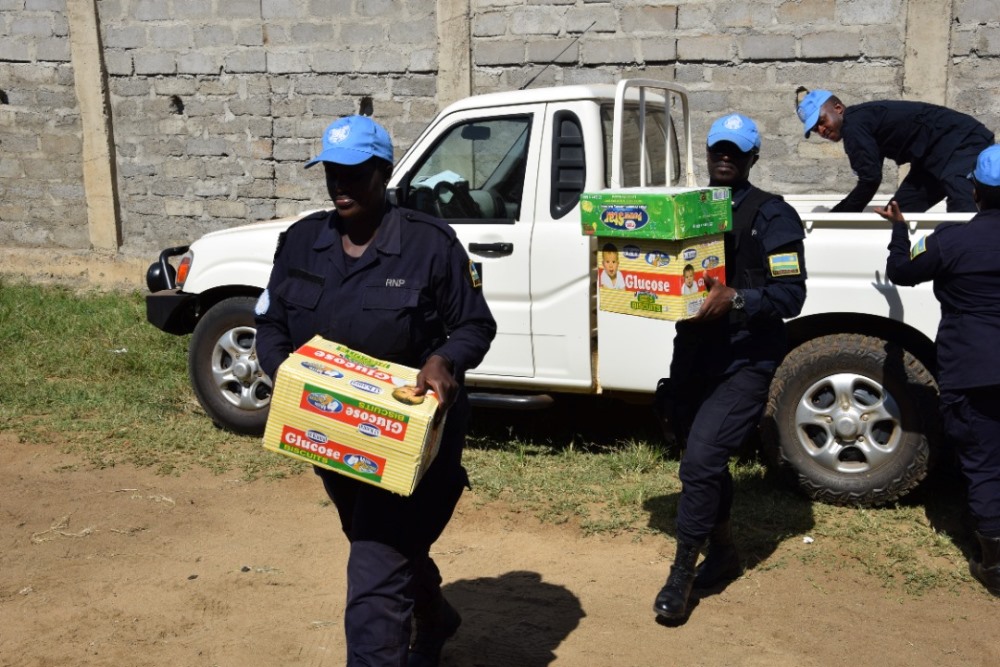
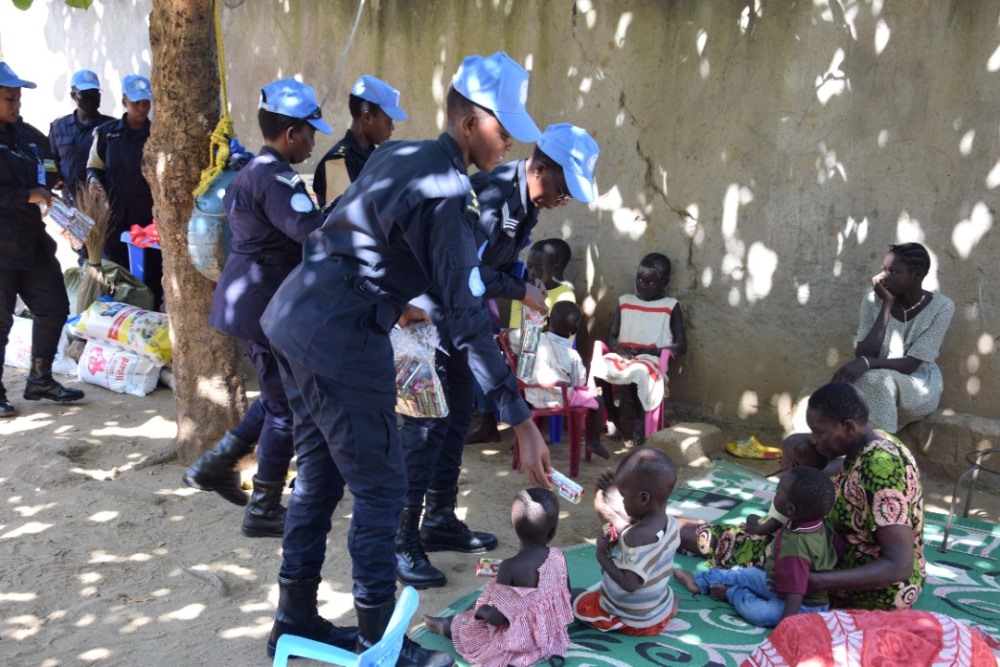
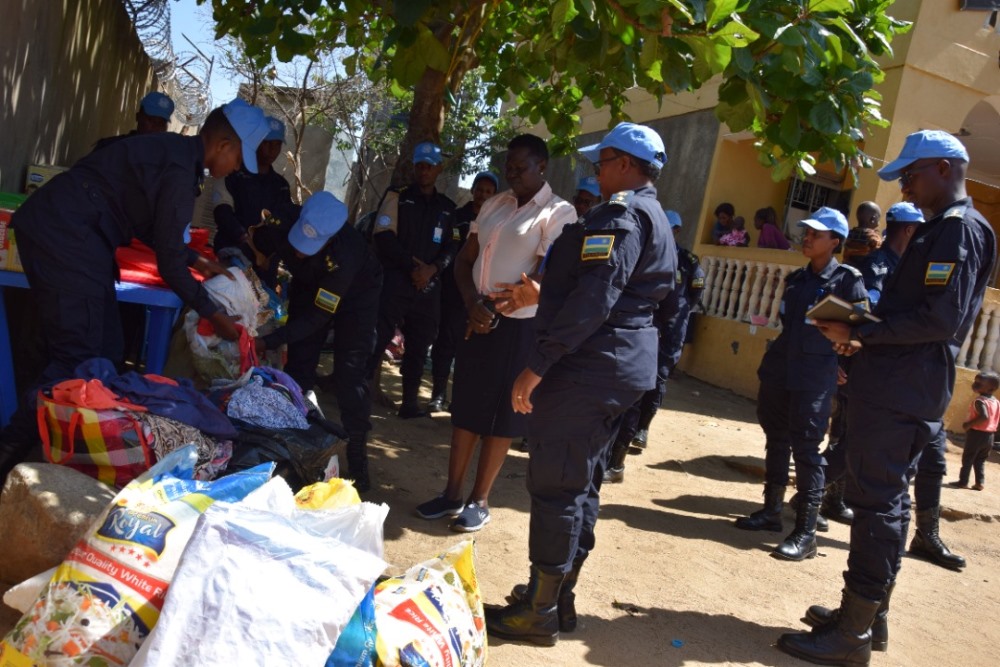
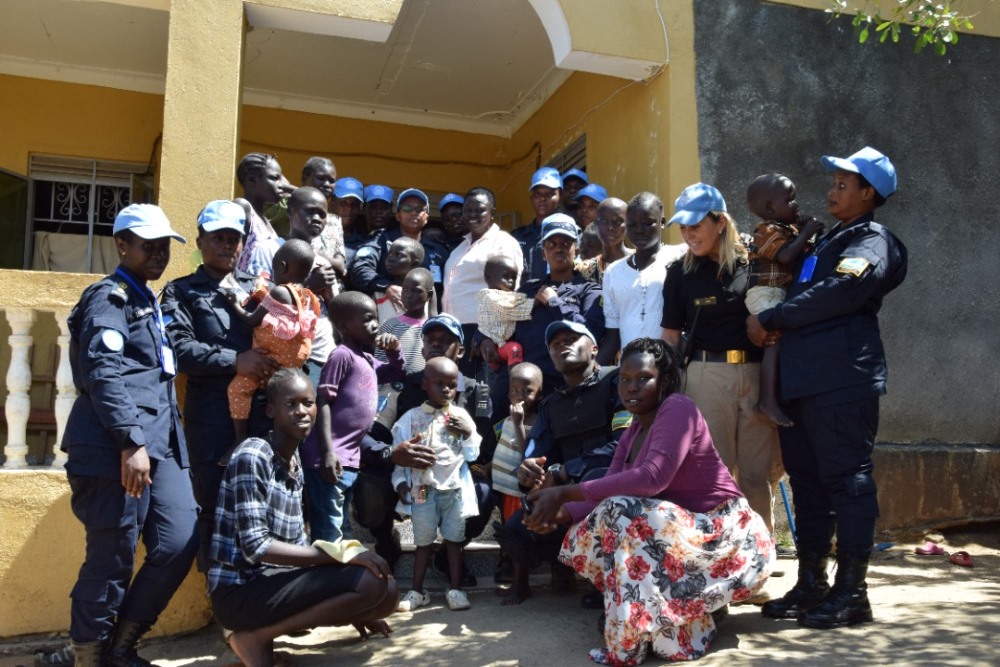
The peacekeepers provided sacks of rice, mosquito nets to fight malaria, clothes and hygienic items, to the orphans of St. Clare House for Children.
The donation is out of the financial contribution of the officers of Rwanda FPU-3.
St. Clare House for Children is a home for 95 orphans aged between 3 and 16 years.
Rwanda FPU-3 Contingent Commander, Senior Superintendent of Police (SSP) Marie Grace Uwimana said that the humanitarian assistance falls in their mandated tasks.
“As a mother thinking about her children, Rwanda Formed Police Unit thought and looks at this humanitarian gesture in the same lense for the betterment of the lives of these orphans, who have experienced tragic situations and going through tough conditions. It is about giving these children hope,” SSP Uwimana said while handing over the items.
Betty Thomas Lolo, the founder and Executive Director of St Clare House for Children, thanked the RWAFPU-3 for the support rendered to the needy children.
She explained that the children lacked food and bed mosquito nets.
The children, she added, include those, who lost their parents in conflicts, uxoricide, victims of early marriage, and defilement as well as those abandoned by parents.
“They were eating only beans from Monday to Sunday, and these mosquito nets have come in handy because of the high cases of malaria,” Lolo said.
Rwanda FPU-3 of 160 officers is one of the two Rwandan Police contingents deployed in South Sudan. Another contingent, Rwanda FPU-1 of 240 officers, operates in Malakal, Upper Nile State.
On Sunday 23rd October 2022, the Government of Rwanda announced suspension of IPRC Kigali for two weeks to allow for investigation into cases of theft and misappropriation of public resources at the school.
Individuals who have been arrested in the saga include the Principal of IPRC Kigali, Eng Diogène Mulindahabi accused of connivance in resources misappropriation and forgery case.
Others include Vander Thomas Muhimpundu, the Director in charge of Administration and Finance at IPRC and Mediatrice Uwantege, the Director of Logistics arrested over connivance in the same case.
Meanwhile, another Jean Claude who served as a storekeeper and Fortune Ndayambaje who worked as the Deputy Director in Charge of Finance and Administration are charged with resources misappropriation.
The Spokesperson of RIB, Dr. Murangira Thierry has told IGIHE that 12 individuals have been arrested under this case. These include top managers and staff at IPRC, security guards and traders.
The dossier was transferred to the Prosecution on Tuesday 25th October for further legal process.
Dr. Murangira has appealed to individuals entrusted with the management of public resources to do it efficiently and avoid misappropriation.
IGIHE has learnt that Rukundo Tumukunde, Nepomuscene Mugenzi and Venuste Habimana are among other suspects facing resources misallocation while Eugene Yambabariye, Nzavugejo, Daniel Harerimana and a trader identified as Alphonse Manirafasha are charged with theft.
Rwanda’s penal code stipulates that funds misallocation attracts a sentence between seven to ten years and the fine worth three to five times the embezzled funds.
Meanwhile, a public servant convicted of forgery is liable to a sentence between seven and ten years and a fine between two or three times the misallocated funds or of the two.
The crime of theft also attracts between one and two-year sentence and a fine between Rwf1 and Rwf2 million.
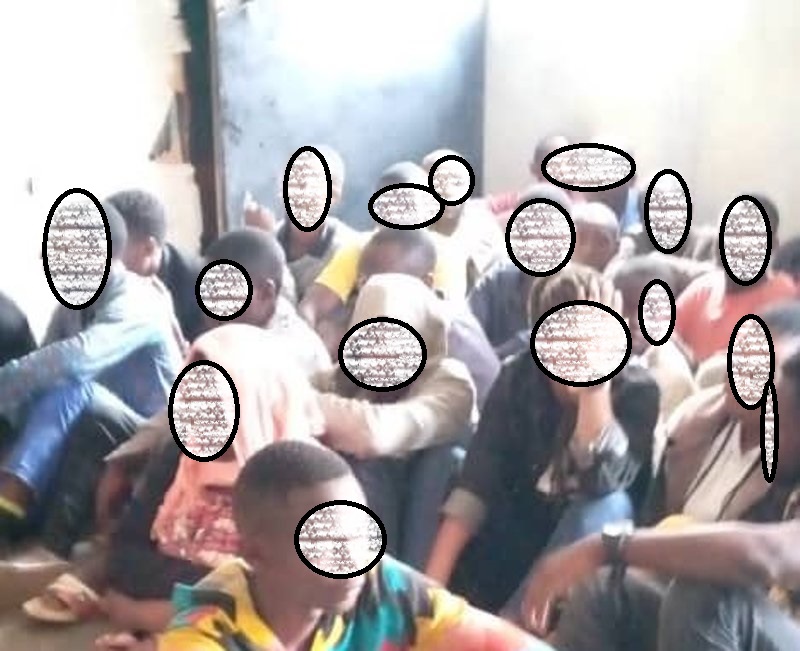
The Executive Secretary of Gisenyi Sector, Jean Bosco Tuyishime has said that the suspects were arrested during an operation conducted last night.
“The exercise will be conducted every day as part of reinforced measures to ensure the security residents and shun theft in Gisenyi town. We were recently tipped of whereabouts of the thieves and fortunately found them in the place during the operation,” he said.
Tuyishime revealed that some of the suspects were caught along pathways attempting to ambush and dispossess residents of their belongings.
He also appealed on residents to provide information on thieves’ hideouts to be arrested and face the law.
The operation follows different cases where thieves stole household items including electronics and clothes among others in Gisenyi Sector.
Rwanda being one of the African countries most affected by the impact of climate change, a total of 39.5 million euros of the financing commitment will be allocated to Rwandan-German Climate and Development Partnership launched on 1st March 2022.
Commitments include funding of key climate change mitigation and adaptation projects by the Rwandan Green Fund (FONERWA), but also important activities to support sustainable urbanisation – such as making coastal cities along Lake Kivu climate-resilient, where the impact of climate change is particularly evident with flooding and landslides becoming increasingly common.
Activities to improve waste management and circular economy were also agreed upon. The partnership is embedded within global climate initiatives, such as the Taskforce on Access to Climate Finance and the COP27 in November 2022 in Egypt, where Rwanda and Germany will jointly showcase their climate partnership.
Commenting on the development, German Development Minister Svenja Schulze says: “Climate change and social protection are two sides of the same coin. This is why, in addition to climate action, our climate and development partnerships are also about strengthening social justice. We want to provide particular support to those worst hit by the climate crisis.”
Both sides also agreed to promote small and medium-sized enterprises, as well as strengthen the provision of vocational education and training for young people and women.
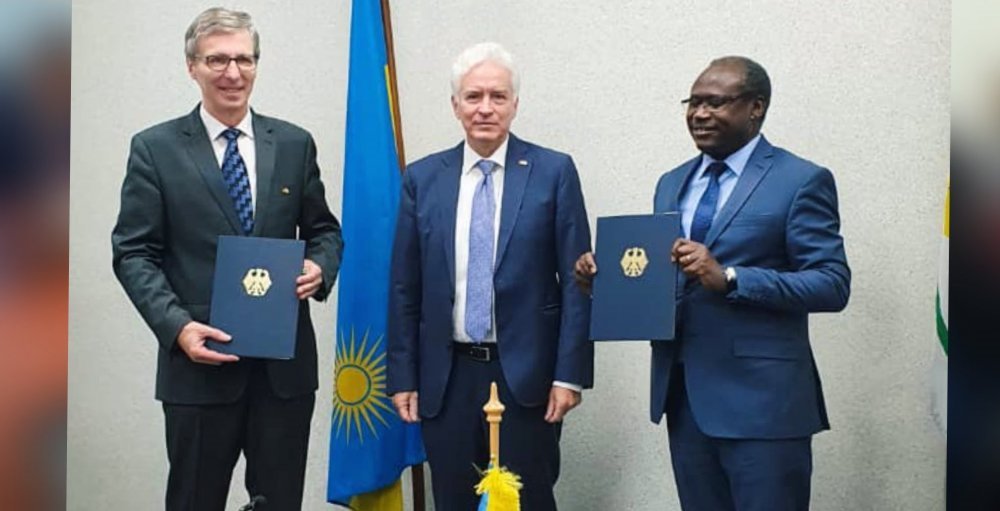
In this regard, Minister Dr Uzziel Ndagijimana and KfW Regional Manager Ms Bettina Tewinkel signed two agreements worth 29 million euros of German financial cooperation for the TVET sector, which will be used for stipends to increase access to education as well as for school investments in infrastructure and equipment of TVET schools.
Dr Uzziel Ndagijimana, Minister of Finance and Economic Planning, noted: “The outcome of the inter-governmental negotiations concluded today is a clear indication of a growing partnership between our two respective Countries as we celebrate 60 years of fruitful and impactful cooperation. The two parties agreed on key sectors of bilateral cooperation including Education with special focus on TVET, Climate Partnership, Social Protection, Vaccine Production and Governance among others.”
Laying the foundations for pharmaceutical manufacturing (including for vaccines) is another priority area of Rwandan-German development cooperation.
Currently, 99 per cent of Africa’s vaccines are imported. On 23rd June 2022, a high-level ground-breaking ceremony for a vaccine production factory of the German company BioNTech launched the construction work in Kigali.
Germany is providing substantial support with regard to training qualified personnel and lending support to the Rwanda Foods and Drugs Authority (with the involvement of the Paul-Ehrlich-Institute and in close cooperation with European partners).
The joint efforts are a key contribution to making access to high-quality, affordable health care in Africa possible and to strengthen the pandemic preparedness of the continent.
As part of the negotiations, Germany and Rwanda also agreed to expand social protection system through a sector budget financing contribution.
Since the outbreak of the COVID-19 pandemic, the cooperation has focused on expanding the Rwandan social protection system.
With the current war in Ukraine and its global implications of massive price increases and growing food insecurity threatening to increase poverty levels, Rwanda and Germany agreed to continue this cooperation.
The package also includes a pro-poor basked fund that aims to strengthen inclusive public service delivery and infrastructure to poor and vulnerable population groups.
Of the total commitment of 98.1 million, euros 31 million euros are subject to approval by the German Parliament.