At least 920 pellets were seized from two people on Tuesday, January 10, who were traveling on a motorcycle, in Bugesera District, Ntarama Sector in Kanzenze Cell.
Superintendent of Police (SP) Hamdun Twizeyimana, the Police spokesperson for the Eastern region, said that the two suspects were intercepted at about 9:30p.m. by the Police on night patrol.
“When they saw the Police, they abandoned the motorcycle and a bag containing 920 rolls of cannabis, and fled,” said SP Twizeyimana.
The motorcycle registration number RD 355D, used in the crime, was also impounded to Nyamata Police station as the search for the suspects continues.
In Kicukiro District, one Adam Habineza, 42, was arrested by the Anti-Narcotics Unit (ANU) in Nyenyeri Village, Bwerankori Cell in Kigarama Sector with 375 rolls of cannabis.
“Habineza is a suspected distributor and retailer of narcotic drugs in Kigali. At the time, he had already sold part of the narcotics for Rwf300,000, which was recovered from him during the operation,” Chief Inspector of Police (CIP) Sylvestre Twajamahoro, the Police spokesperson for the City of Kigali, said.
The search for his accomplices is still underway.
Habineza disclosed that he is supplied by other drug dealers in Rubavu District before trafficking them to Kigali.
He was handed over to RIB at Gikondo station for further investigations.
It is not the first time that Habineza is arrested in drug related crimes. He was arrested for the same crimes in 2019.
The 46.5-nanometer extreme-ultraviolet imager or Solar Upper Transition Region Imager (SUTRI), mounted on SATech-01 satellite, was launched into space on July 27, 2022, from the Jiuquan Satellite Launch Center in northwest China by a Lijian-1 carrier rocket.
SUTRI is the first solar imager in the world to work at a wavelength of 40 to 110 nanometers based on a multilayer narrow-band filtering technique, according to the National Astronomical Observatories of China under the Chinese Academy of Sciences.
The device is capable of taking full-disk dynamic pictures of solar regions between the solar chromosphere and corona, thus building a key bridge for solar scientists for the lower atmosphere and higher one on the sun.
Starting operation on Aug. 30, 2022, SUTRI obtained over 200,000 pictures within four months. The data released in its first group were acquired between September 5 to November 5 last year.
Now, the device in orbit is in good working order and is expected to produce more data.
A total of 696 inmates had their prison terms reduced, 10 were granted freedom and one had a death sentence lowered to a life sentence, according to the ministry statement.
The others who are not currently jailed had their prison terms or fines or both annulled.
The Proclamation of Independence Day is celebrated on Jan. 11 every year to commemorate Morocco’s proclamation of independence on Jan. 11, 1944.
“We were not imposing any restrictions or travel requirements for China, the United States or any country with rising infections,” said Phaahla when briefing the media virtually about COVID-19.
A patient with the XBB.1.5 variant was discovered on Dec. 27 during a random sampling and further details remain unknown, he said.
The minister said they have engaged scientists, the World Health Organization and the ministerial advisory committee, who suggested that there is no need to impose travel restrictions internally or for any country.
“We were advised to increase surveillance and vaccination. We will do wastewater testing on aircraft from China, the United States or any country with rising infections to check for the virus. We will step up our communication and messaging for people to get vaccinated or a booster,” he said.
Michelle Groome, an official at the National Institute for Communicable Diseases, said wastewater testing on aircraft will start next week as part of the surveillance.
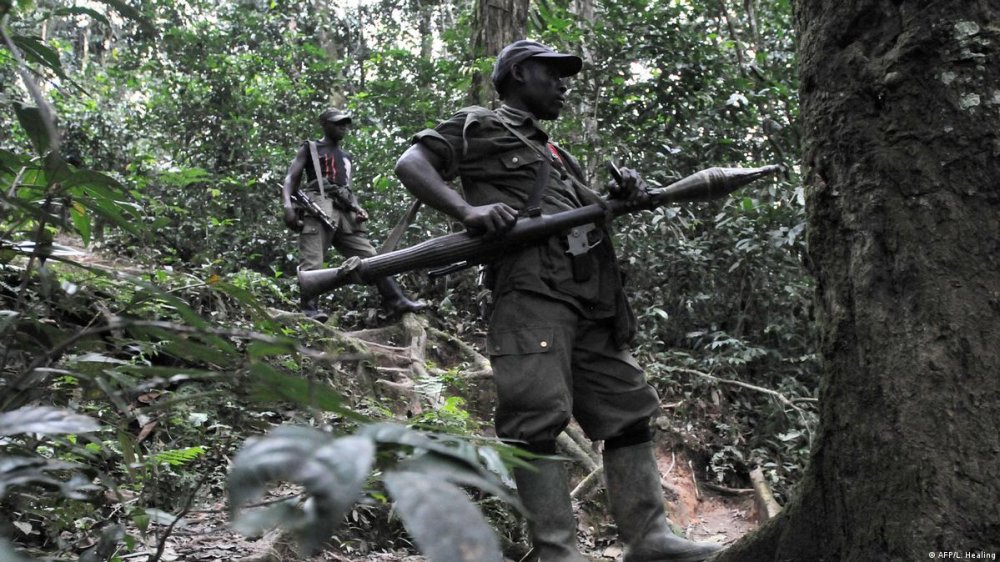
Spreading genocide ideology as a terrorist group that was formed by individuals responsible for the 1994 Genocide against the Tutsi is among concerns given much attention when people talk about FDLR. However, the source of funding is not given the attention it deserves yet it is the backbone helping the group to continue terrorist activities that affect DRC citizens and pose threat to Rwanda’s security.
Various non-governmental organizations operating in DRC indicate that FDLR is involved in large scale trade in collaboration with members of Congolese Army, police force and politicians. Below are highlights of major activities serving as the source of revenues for FDLR to sustain terrorist activities and some recommendations to defeat the group.
{{Trade of charcoal }}
Pole Institute, a non-governmental organization operating in DRC, recently released a report pointing out sources of funding for armed groups in the country.
The report was released in April 2022 but there are no evidences that the armed group has stopped its businesses. The report shows that DRC is home to a large number of armed groups where 72 of 132 registered in 2017 were based in Northern Kivu Province.
It further reads that charcoal produced in Virunga National Park makes up the largest portion of FDLR’s source of revenues after losing mines controlled in Walikale and Masisi following the pressure of FARDC and Mai Mai armed group.
The report highlights that FDLR has strongholds in Rutshuru territory and Nyiragongo in protected areas of Virunga National Park. It also has bases in Bwito, Binza, Bukoma and Busanza. FDLR takes advantage of these forests and makes charcoal traded in Goma.
Emmanuel de Merode, the director of the Congolese Institute for the Conservation of Nature (ICCN) which manages Virunga National Park in DRC, confirmed that FDLR benefits from illegal activities in the park including fishery and the production of charcoal.
He highlighted that FDLR reaps a handsome amount of money from sales of charcoal in Goma town populated by more than 1 million of whom 97% have no access to electricity. Merode disclosed that FDLR shares a portion of its profit with other armed groups including Mai Mai and FARDC soldiers.
It is said that Goma uses at least 150,000 tonnes of charcoal per year even though there are other reports estimating the quantity to be between 60,000 and 90,000 tonnes.
Of the charcoal, 95% is reported to be produced from Virunga National Park in the areas controlled by FDLR including Nyamulagira, Kahunga and Nyamitwitwi.
It is important to note that FDLR combatants do not transport the charcoal themselves. They have created a large network involving many people who benefit from the business.
The network is comprised of FDLR combatants, DRC soldiers and police personnel, transporters and retailers among others.
The report published by Pole Institute indicates that the trade of charcoal can generate up to US$45,000,000.
Overall, the report shows, FDLR and business partners receive at least US$20,000,000. This means, US$11,671,809.4 goes to FDLR and US$8,215,157.2 to business representatives.
{{Taxation}}
FDLR has expended much effort in tax collection from residents in controlled areas.
A big portion of the revenues is generated from agriculture and transport. The report published by Pole Insitute indicates that FDLR charges rental fees or taxes so that residents can be allowed to exploit productive farmlands.
The revelations were also confirmed by FDLR combatants captured recently during fighting between M23 and FARDC in collaboration with armed groups including FDLR.
Warrant Officer Innocent Uwamungu is among FDLR combatants captured during a recent fighting that took place in Rutare, near Paris, on the way to Tongo.
Warrant Officer Uwamungu worked in the secretariat of General Pacifique Ntawunguka alias Omega, who took over as the commander of the military wing (FDLR-FOCA) after the assassination of Sylvestre Mudacumura.
Uwamungu said that FDLR depends on agriculture and collection of taxes to buy ammunition and medicines.
Among the people captured together with the FDLR was Pastor Niyonzima Jean Damascene, who said he provided the FDLR with intelligence information.
He was born in the former Commune Kinyami in Byumba Prefecture and left in 1994.
Niyonzima said that he was the ’Assistant Bourgmestre’ before leaving the country.
He also confirmed that FDLR secures funding from taxes and selling part of produce collected from farmers during harvesting time.
Residents in areas controlled by FDLR can be taxed between US$0.30 and US$5.
As for leaders and magnates, the report says, they pay huge amounts to FDLR to make sure their security is guaranteed.
Among others, the report shows that a politician running for electoral campaigns or following up other businesses can be charged up to US$2500 so that FDLR can provide safe passage for vehicles through Virunga National Park in Kalengera, in Bwisha or Tongo in Bwito.
It reveals that whoever disobeys the protocol, might be ambushed and eventually risk his/her life.
The report of experts on Congo emphasizes that soldiers and the government left taxes administration in the hands of FDLR, which shows that the country is not ready to take responsibility to protect citizens.
{{Transport}}
Apart from taxes, the terrorist group also works with commercial motorcyclists and truck drivers.
In Rutshuru, FDLR fixed taxes on transportation of goods transiting through controlled area.
The report released by the United Nations Organization Stabilization Mission in the Democratic Republic of the Congo (MONUSCO) in 2014, indicated that a driver can pay between US$25 to US$300 depending on the type of luggage.
The report by Pole Institute confirmed that FDLR has its own Fuso trucks that carry bags of charcoal and commercial motorcycles for transportation of passengers.
The group hires Congolese to drive the vehicles and motorcycles but those who violate terms and conditions are killed.
{{Other sources of income }}
FDLR is also reported to be involved in the extraction and trade of minerals in Lubero as confirmed by MONUSCO.
MONUSCO’s report indicates that FDLR also sells timber, hemp and fishes. When combined with illegal taxation, the total revenue from these sectors at least amount to over US$71 million per annum (over Rwf76 billion). This is where FDLR secures funding to sustain its terrorist activities.
{{Defeating FDLR}}
Experts reveal that the genocide ideology propagated by FDLR is of serious concern to Rwanda’s security and the entire region. Else, allowing the group to run businesses in an open air capacitates it to buy weapons and recruit more fighters.
The report of Pole Institute provides different recommendations to defeat FDLR where it stressed the need to increase police and military personnel in eastern DRC and block all its sources of revenues.
Meanwhile, the group of experts on Congo urges the country to stop supporting and working with armed groups including FDLR.
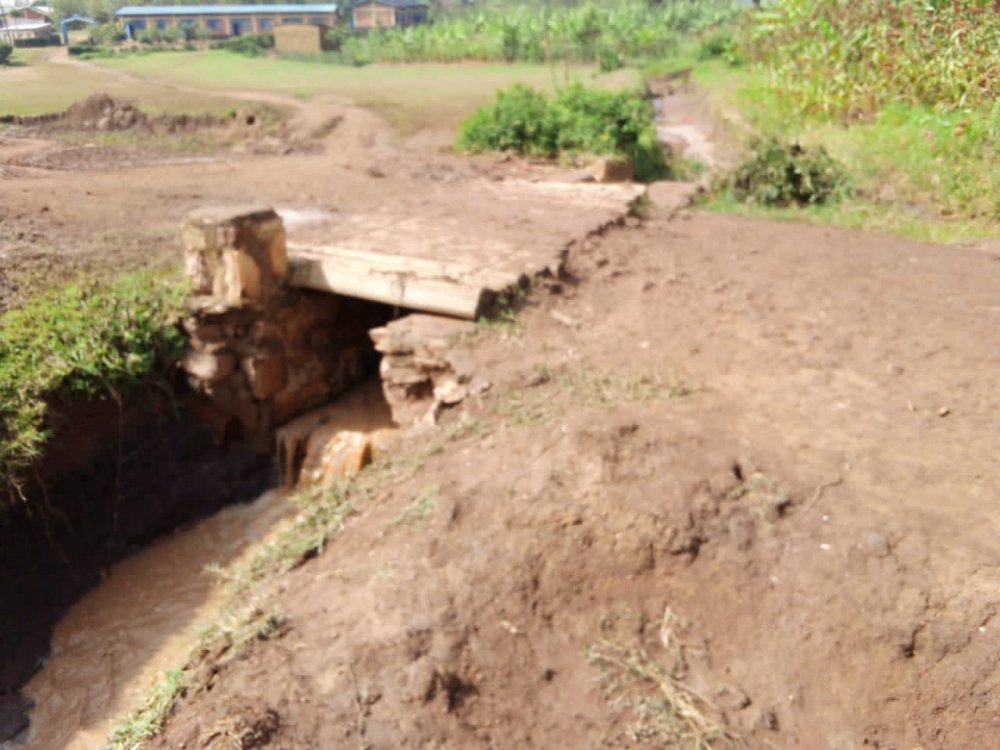
The executive secretary of Murundi Sector, Benon Gashayija has told IGIHE that the child was washed away trying to pick a shoe that was lost in a waterway.
“After yesterday’s heavy rain stopped, a child returning home from school was washed away trying to retrieve his shoe that fell in a waterway as he crossed at a bridge,” he said.
Gashayija disclosed that his colleague returned to school and informed teachers and members of the administration. They rushed to the scene and found the child dead in few meters away from the bridge.
Gashayija urged parents to prevent children from playing around water bodies and the school administrations to develop proactive measures and accompany children during the rainy season.
Rwanda accommodates nearly 80,000 Congolese refugees who fled insecurity more than 20 years ago but their government has remained silent on their problems.
When M23 rebel group resumed fighting with Congolese Army (FARDC) in 2021, DRC started accusing Rwanda of being behind insecurity in eastern part of the country and put it forward as the major concern instead of addressing issues that pushed its citizens to flee to Rwanda.
As he delivered remarks after presiding over the swearing-in of the new Senate President on Monday this week, President Paul Kagame said that Rwanda has been blamed for DRC’s problems but insisted that it is time to show how it is not Rwanda’s business.
“We are going to ensure that everybody realizes that it is not Rwanda’s problem. And starting with saying, those who think this is Rwanda’s problem and not Congo’s, first remove these Congolese from here. Those who coming in every day just on the actions of the government and institutions, you will tell me, ‘the government is not functioning properly, this or that but this is still none of my business,” said Kagame.
Following his speech, some media houses misinterpreted the message and reported that ‘Rwanda won’t accept Congolese refugees any longer’ while others ran stories indicating that ‘Rwanda may expel Congolese refugees’.
This comes at a time when violence against some ethic groups is ongoing in DRC where there is fear of possible Genocide against Kinyarwanda-speaking communities.
Meanwhile, Congolese refugees in Rwanda have been staging protests demanding their government to respond to their concerns.
During an interview with BBC, the Deputy Spokesperson of the Government of Rwanda, Alain Mukuralinda underscored that Rwanda will continue to receive all refugees crossing fleeing to the country.
“Rwanda respects international norms and abides by laws protecting refugees. Besides, it is part of the country’s culture to welcome all people coming to us as mentioned before,” he noted.
“We will continue to accept refugees and keep pushing the international community and DRC Congo government […] It is surprising that we have never had Congolese government taking into consideration problems of its citizens hosted here over the past 20 years yet Burundi sent officials in the past few days to visit different camps and mobilize Burundian refugees to return home,” added Mukuralinda.
Mukuralinda explained that Congo did not show willingness to do so but is only concerned with Rwanda and M23.
“When the problem is not addressed from its roots, it will take five or ten more years,” he said.
“To make things clear, Rwanda will neither reject refugees nor evict them. They will only return when they feel their security is guaranteed,” added Mukuralinda.
As at May 2022, Rwanda registered 127,369 refugees including 76,968 from Congo equivalent to 60.43% and 49.859 Burundians equivalent to 39.15%.
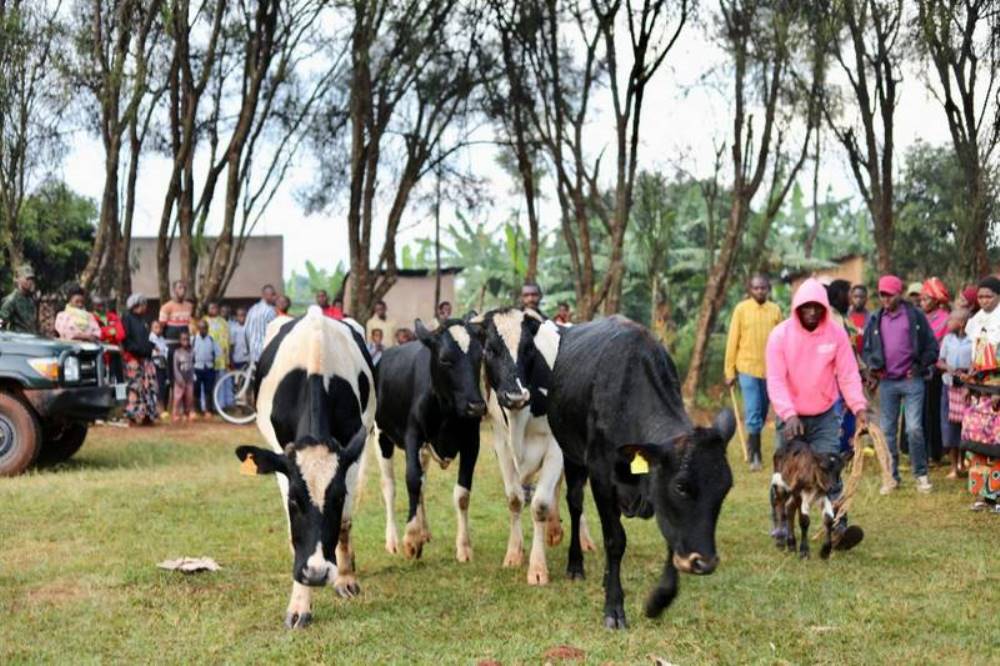
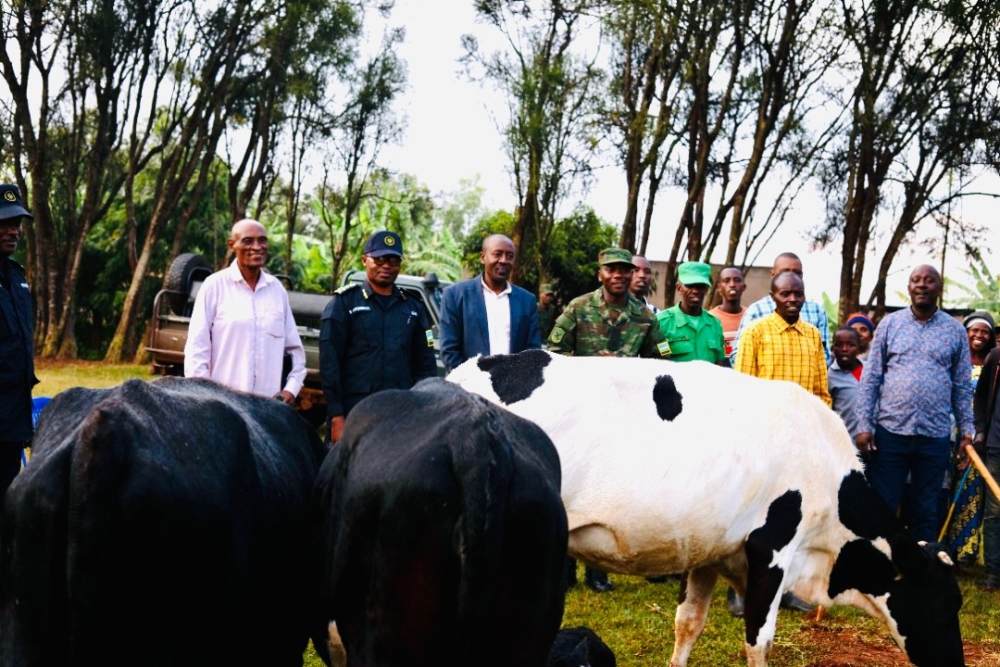
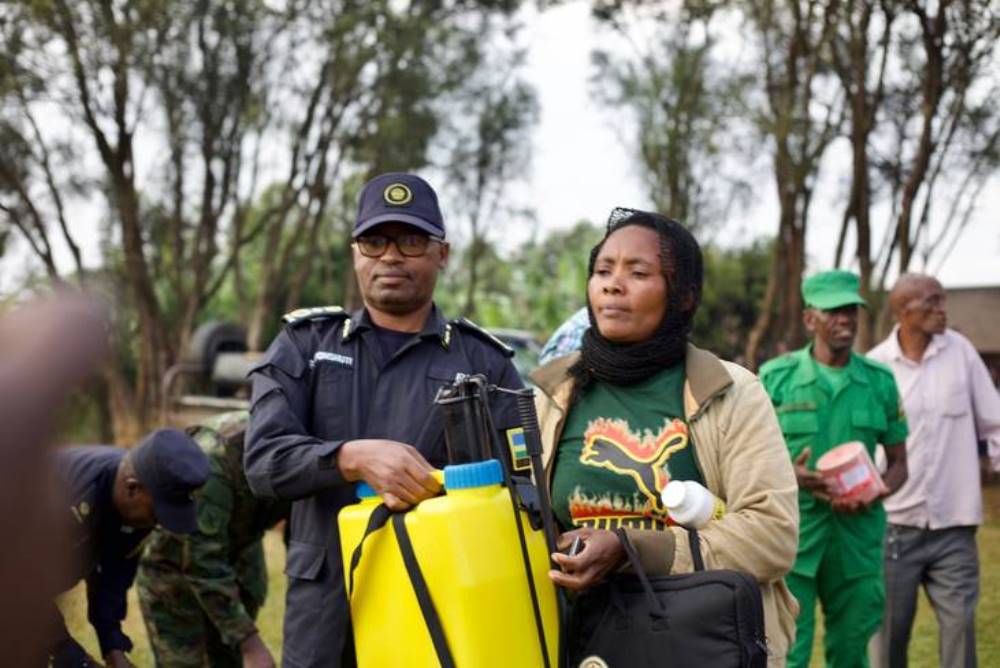
The beneficiaries are from Umunini Village, Ruhimbi Cell in Gishari Sector. Also donated to the same families are cattle spray pumps and tick control medicines.
Jean Bosco Bazatsinda, a father of four and one of the beneficiaries said that the cow will support his family and other community families, who will benefit from its offsprings.
“I thank our president, Paul Kagame, who brought Girinka (one-cow per poor family). Lives of many Rwandans have been changed because of Girinka. I will look after it well so that my family and the community reaps from it as well” said Bazatsinda.
“This cow will be provide manure to increase our agriculture production, and milk for our children. Cows in Rwandan culture, is a blessing, partnership and togetherness,” he added.
The mayor of Rwamagana District, Radjab Mbonyumuvunyi observed that the RNP community development projects define a people-centred policing.
“Police ensures the safety and security of Rwandans and their property, and goes extra miles to improve the livelihoods of the people; that’s a feat that should be rewarded with strong collaboration to fight and prevent crimes to ensure sustainable security,” mayor Mbonyumuvunyi told hundreds of residents of Gishari.
The PTS Commandant, Commissioner of Police (CP) Robert Niyonshuti thanked the residents for their community policing spirit in fighting and preventing crimes.
“Police cannot be everywhere, but you cover those gaps through community night patrols, neighborhood watch and real time information sharing,” CP Niyonshuti said.
He asked those who received heifer to graze them well to support their families and to benefit others.
Girinka programme initiated in 2006 by President Paul Kagame, is a home-grown initiative existing within the national social protection initiatives to reduce poverty, and improve livelihoods through increased milk consumption and income generation; improving agricultural productivity through the use of manure as fertilizer and promoting unity and reconciliation among Rwandans.
A poor family receives a heifer raises it and when she gives birth, the first female calf is given to another poor family and the process continues.
Recently, the PTS also paid medical insurance premiums for 1000 Gishari residents.
During the month dedicated to community development activities known as ‘Police Month’, in December last year, the RNP connected 278 households of Gishari Sector with solar energy, constructed two houses for two vulnerable families and an Early Child Development Centre (ECD).
The Uganda Civil Aviation Authority (UCAA), the country’s air transport regulator, said flight Number TK606 hovered in the Ugandan airspace for more than an hour.
“As a precautionary measure, the flight hovered in the Ugandan airspace before landing safely at Entebbe at 08:52 a.m. [local time],” the aviation body said in a brief statement.
“The aircraft is being checked for airworthiness before resuming the flight,” UCAA added.