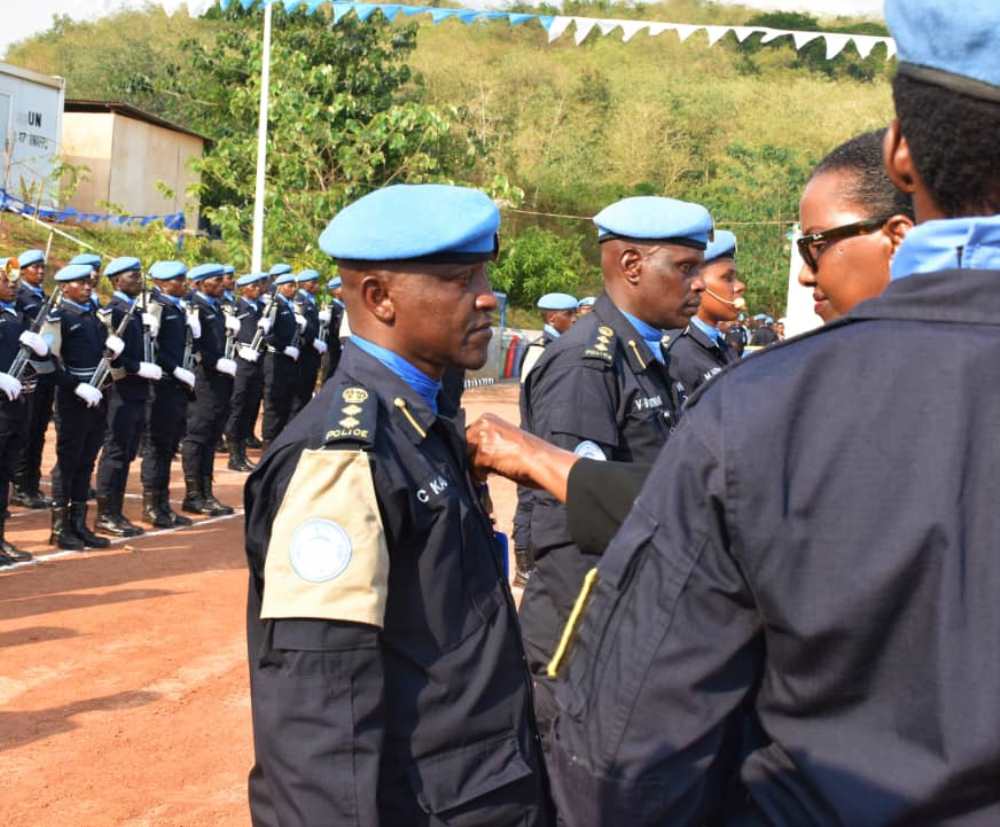
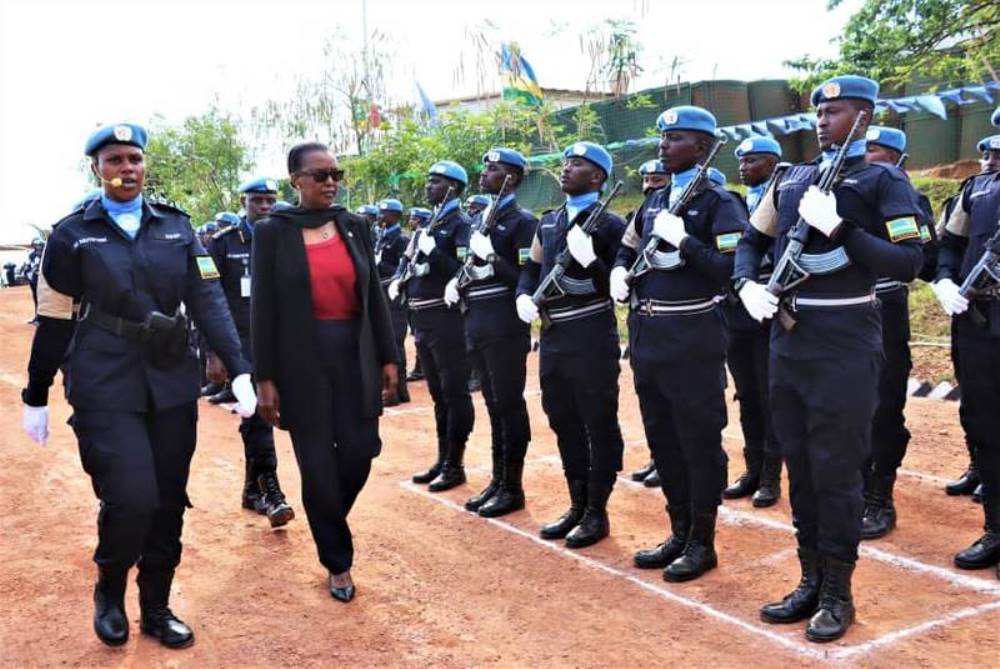
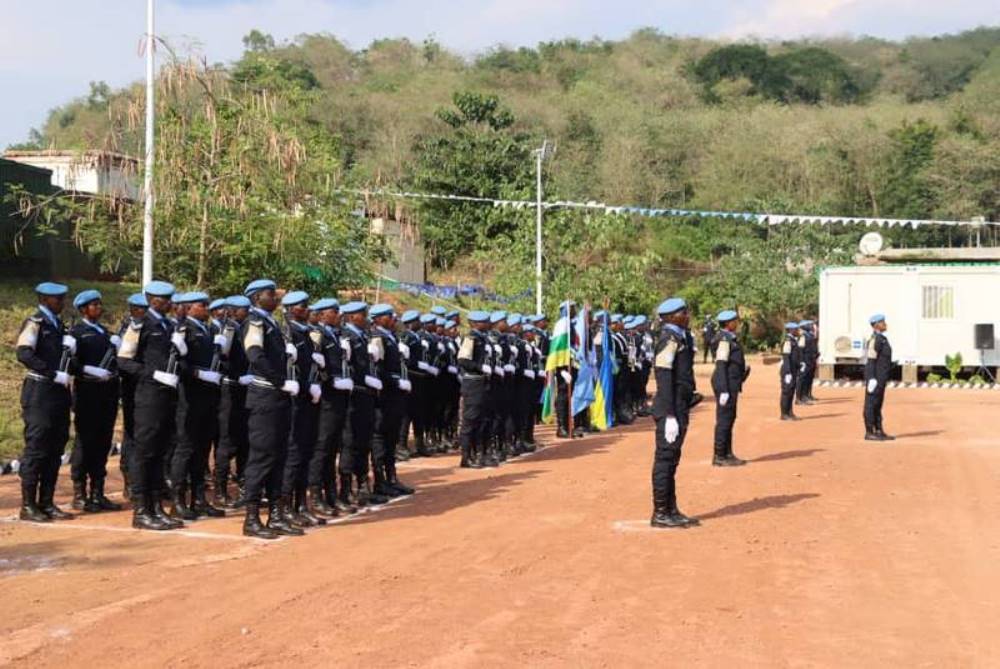
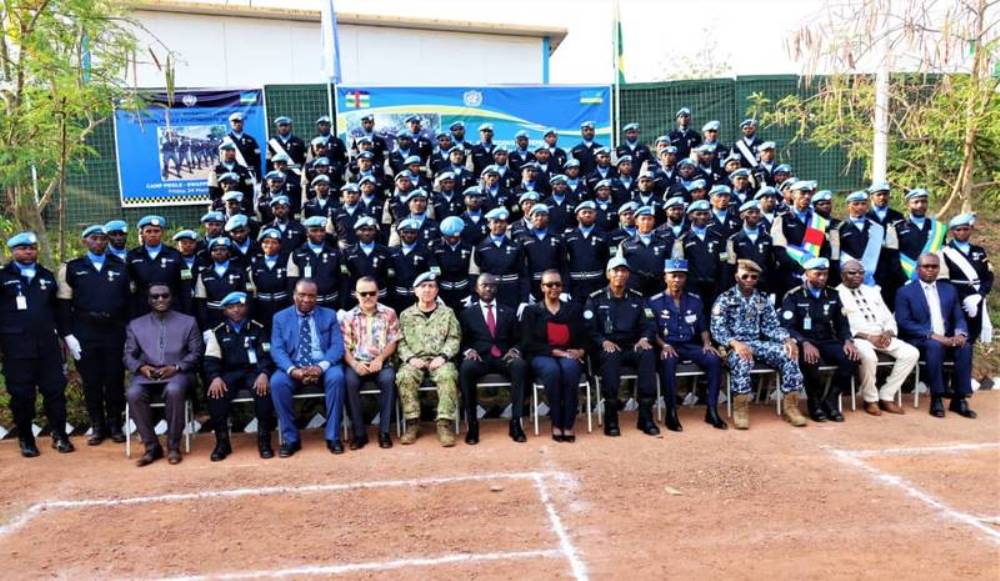
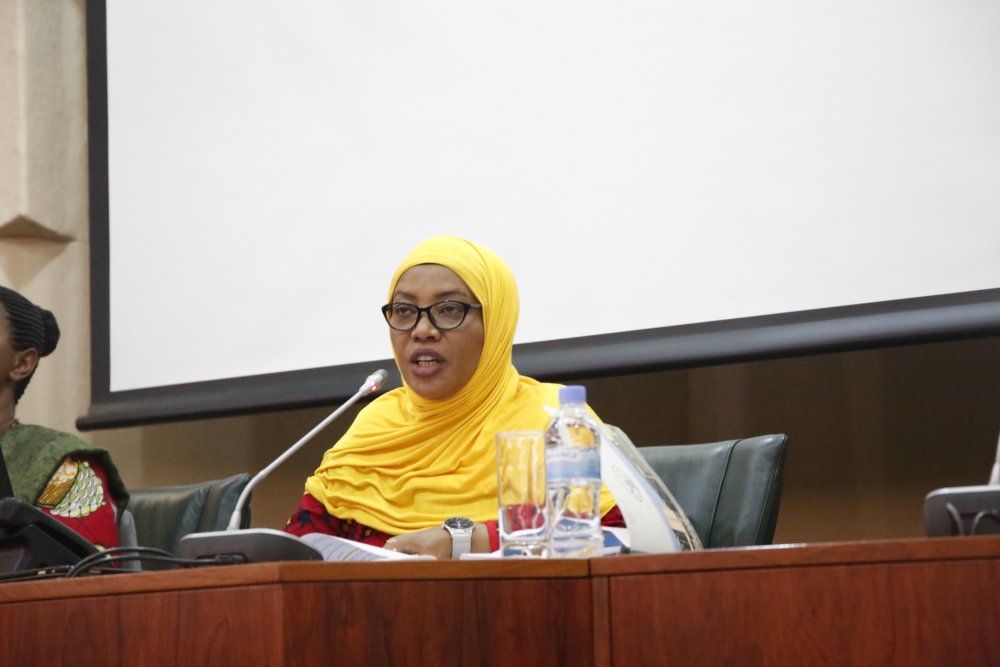
The medal pinning ceremony held on Friday, March 24, at the the Rwanda Formed Police Unit One (RWAFPU-1) Base Camp in the capital Bangui, was presided over the Special Representative of the UN Secretary General (SRSG), Valentine Rugwabiza.
The decorated peacekeepers include 139 of RWAFPU-1 contingent, 140 of Rwanda Protection Support Unit (PSU) and 41 Individual Police Officers (IPO).
The ceremony was also attended by the Head of Rwanda Diplomatic mission in Central Africa Republic, government officials, representatives of other Police and military contributing countries, the local people and the Rwandan community in CAR.
The SRSG commended the peacekeepers for their selfless service to stabilize and maintain security for the people of CAR.
She thanked the Government of Rwanda and Rwanda National Police (RNP) for the commitment to peace and safety of the people of CAR.
“You have contributed to the peace and stabilization of this country, I would like to thank each one of you for having served efficiently regardless of the various mission responsibilities assigned to you, and challenges,” Rugwabiza said.
She thanked them for their human security activities to support the local people.
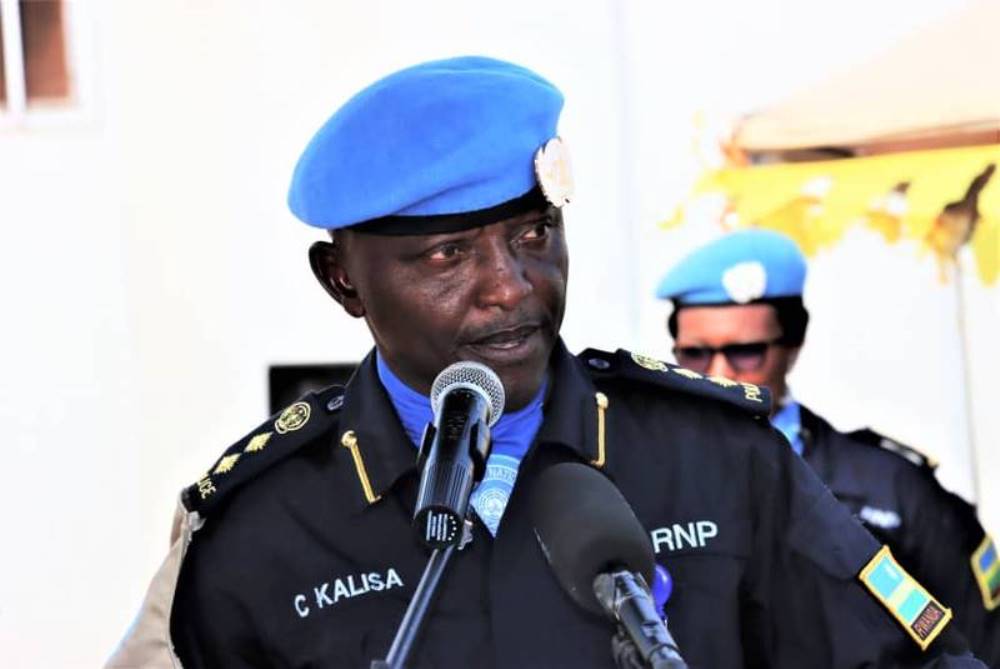
The RWAFPU-1 commander, Chief Superintendent of Police (CSP) Callixte Kalisa, thanked the decorated peacekeepers for the courage, and commitment to defy the mission challenges to accomplish their mandate.
“The tour-of-duty could not have been successful without maximum commitment, resilience, courage and selfless efforts as one team to perform the assigned duties and obligations,” CSP Kalisa said.
He also commended the support by the MINUSCA leadership, the Government of CAR, the local people and other peacekeepers
Rwanda maintains four Police contingents under MINUSCA.
The RWAFPU-1 and Rwanda Protection Support Unit (PSU) of 140 each, are operating in Bangui.
Rwanda Formed Police Unit Two (FPU-2) is deployed in Kaga Bandoro, more than 300kms out of the capital.
Rwanda FPU-3 of 180 officers operates in Bangassou, about 725 kms South East of the capital Bangui.
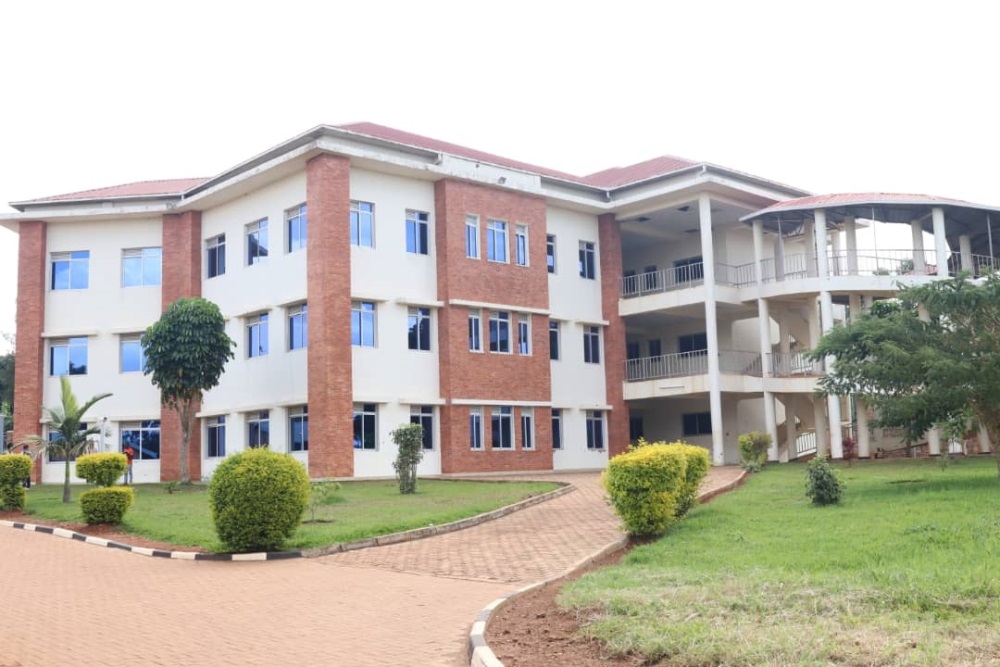
The conference, organized under the theme “Re-thinking Holistic Education for the 4th Industrial Revolution,” aims to serve as the basis for the debate during the three-day meeting. Educational scholars and practitioners will reflect on how they can contribute more towards addressing societal problems and challenges to ensure that no one is left behind before the end of the 2030 agenda for sustainable development.
UR-CE, through its Leaders in Teaching (LIT) Initiative Project, funded by the Mastercard Foundation (MCF), is hosting the conference to build the capacity of academic staff and pre-service teachers. The UN Sustainable Development Solutions Network (SDSN) in the Great Lakes is collaborating with UR-CE to organize the event.
The conference aims to unite a diverse range of individuals from local and international educational organizations, including researchers, scholars, educators, policymakers, and postgraduate students. Through in-depth discussions, the conference hopes to further the cause of quality education for sustainable development. Attendees can network, share new ideas, best practices, and collectively address challenges facing the education sector.
Prof. Wenceslas Nzabalirwa, LIT Project Academic Lead, said that the conference would be an opportunity to learn from research findings aimed at addressing challenges obstructing the development of education.
“The meeting aims to support emerging researchers in the field of education, encouraging them to take their research to the global stage and make meaningful contributions towards finding solutions to societal issues in various countries, including Rwanda,” he said.
Professor Nzabalirwa stated that UR-CE would benefit greatly from the experiences shared by teachers from other universities, both locally and globally.
He mentioned that the funds collected from individuals who request permission to attend the conference would be utilized to organize additional conferences that promote research and forums designed to enhance the capacity of educators.
The conference will also offer an opportunity for students who have completed their studies, including those with PhDs, to present their research findings and release polished research findings. UR-CE staff will also learn from the best practices of other countries during the conference.
Overall, the conference is an important initiative aimed at reshaping education for sustainable development, and it is expected to generate valuable insights and ideas that will help improve the education sector in Rwanda and beyond.
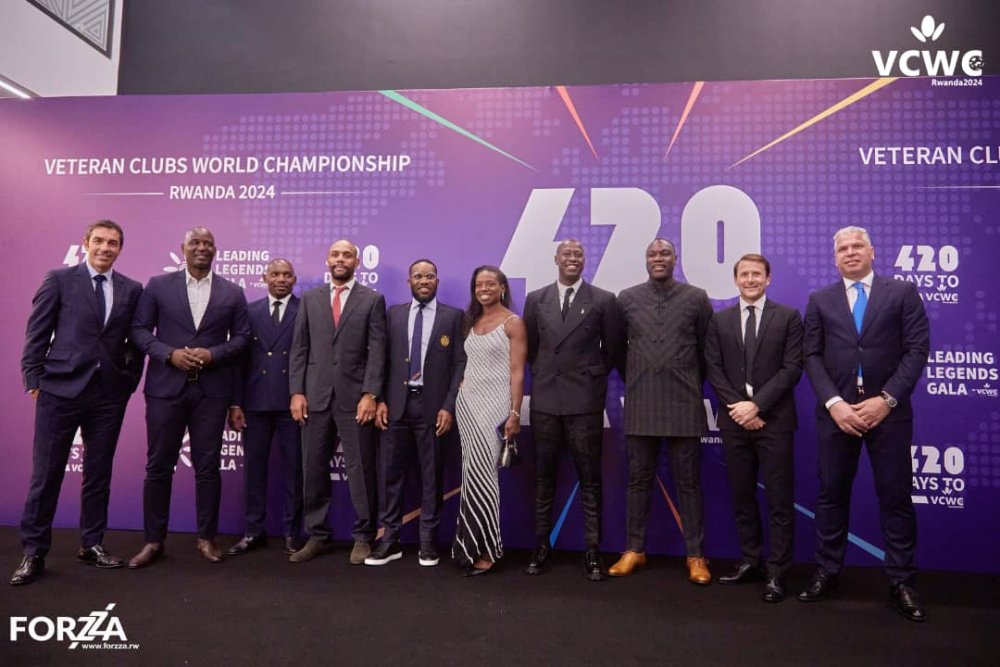
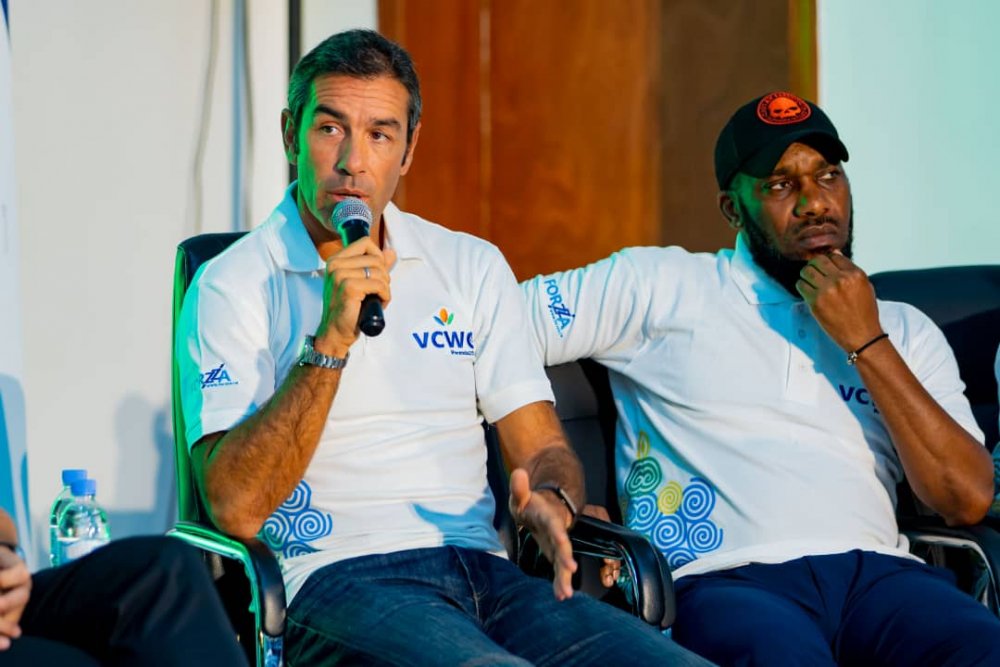
The captains include French national Robert Pirès and Spanish Gaizka Mendieta for Europe, Cameroonian Patrick M’Boma, Rwandan Jimmy Gatete and Egyptian Wael Gomaa for Africa and the Middle East, Brazilian Maicon Douglas and Canadian Charmaine Hooper for the Americas, and Japanese Tsuneyasu Miyamoto for Asia and Oceania.
Each captain is tasked with selecting players from their respective region to make up their teams (of 15 male players and 2 female players).
{{International tour}}
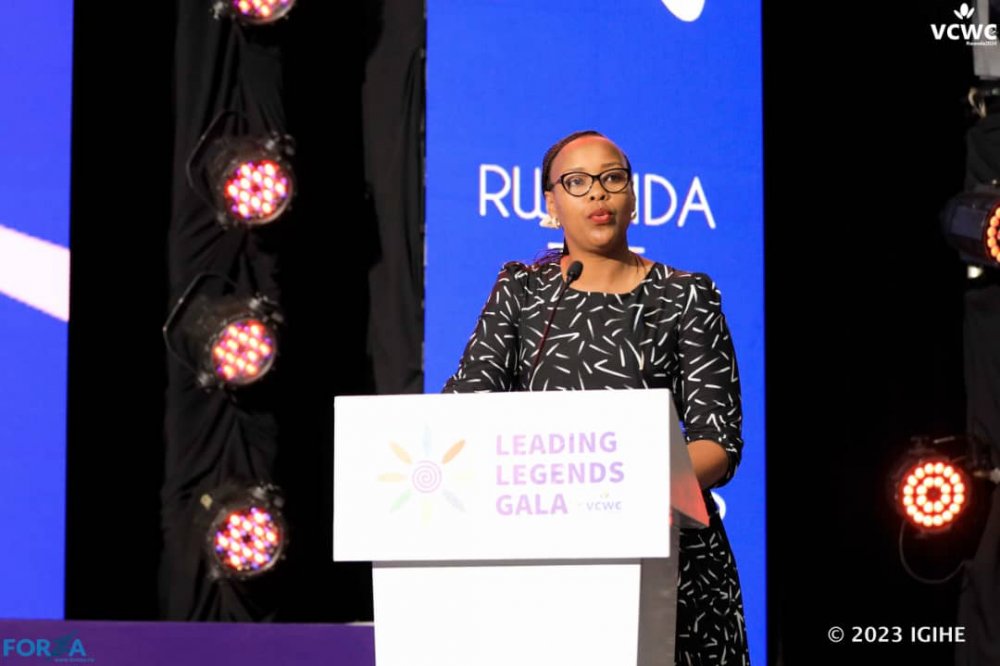
“As it is customary for some of the other major international competitions, we will be visiting different cities around the world. Instead of showcasing trophies or torches, our main attraction will be football legends,” says VCWC ‘Rwanda 2024’s spokesperson Regis Isheja.
“Once in a particular city, we will reach out to Rwandans and other Africans living there. All this to ensure no one misses out on this historic event,” he notes.
Confirmed cities for the tour include Rio de Janeiro, Brussels, London, New York City, Toronto and Abidjan.
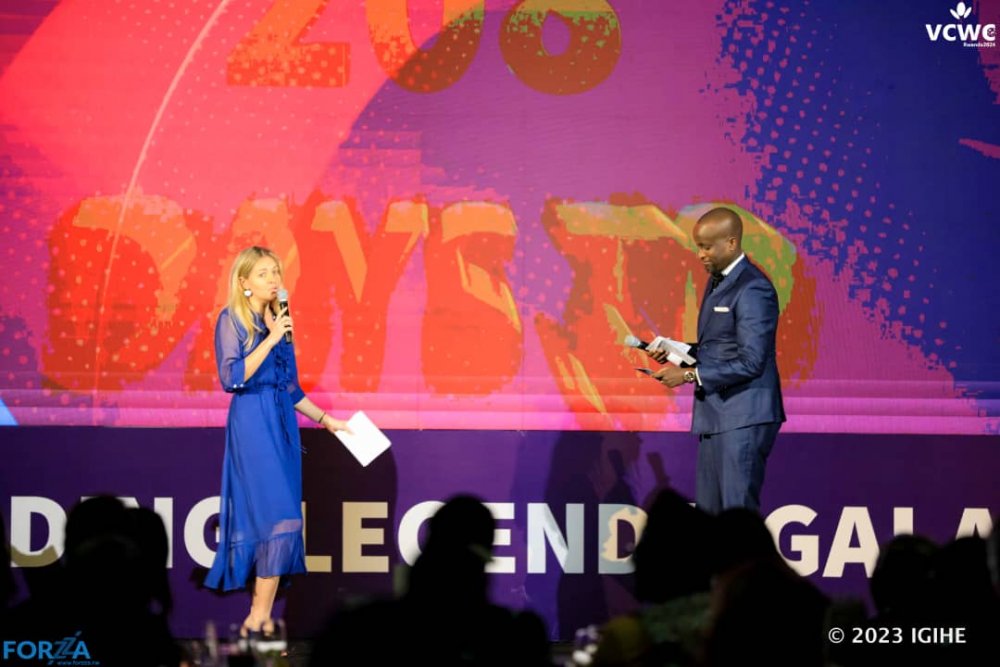
In Kigali, the captains’ reveal was welcomed with a one-of-a-kind drone show, at Kigali Convention Centre.
“We needed to start the official countdown to VCWC ‘Rwanda 2024′ with a show stopping display. I believe we did just that, and some more”, says Isheja.
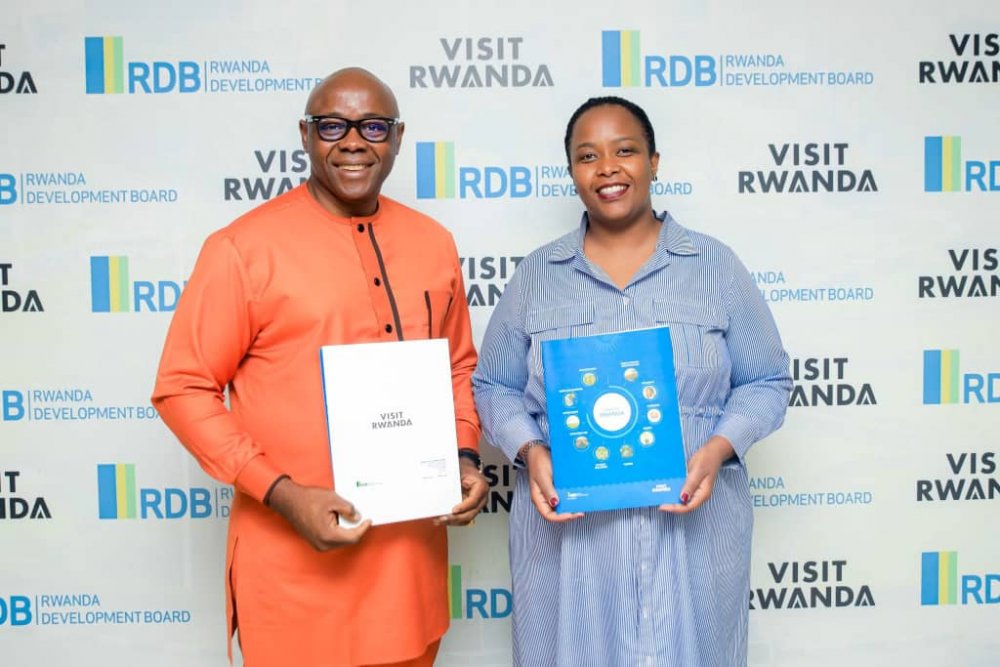
The week was equally marked by two Memorandum of Understanding signings; one with the City of Kigali and one with the Rwanda Development Board (RDB), through the Visit Rwanda campaign, stipulating Rwanda will host the next three editions of the football tournament.
Isheja says both partnerships are meant to promote Rwanda’s visibility and attractions.
“Visit Rwanda has become a trusted brand across the world and it is only right that it aligns with an event of this caliber. Our legends will be involved in promoting the campaign.”
The world championship is the largest sporting gathering ever to bring together veterans. 150 legends to be exact, for this initial edition.
The partnerships’ main aim is to leave a sustainable legacy to the people of Rwanda, via forums and various partner events.
5000 visitors are expected in the country for the tournament.
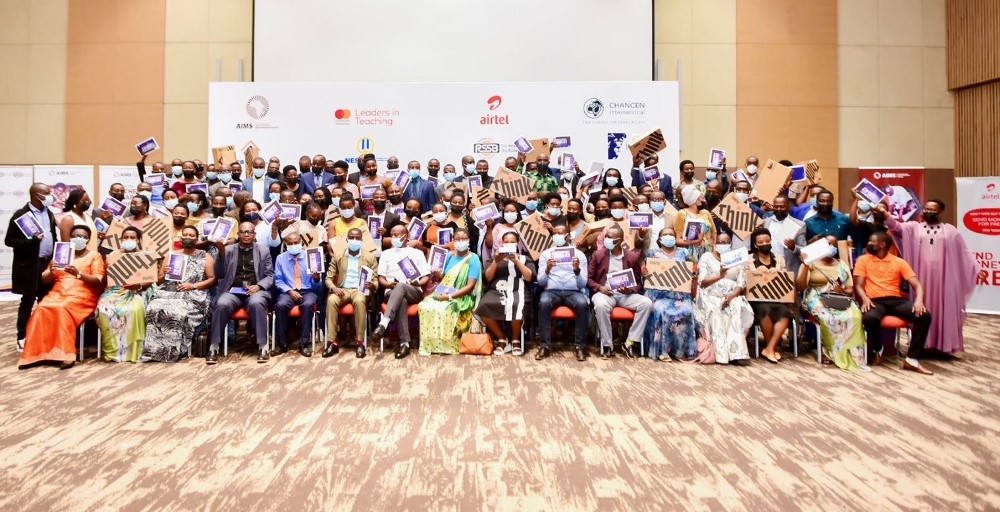
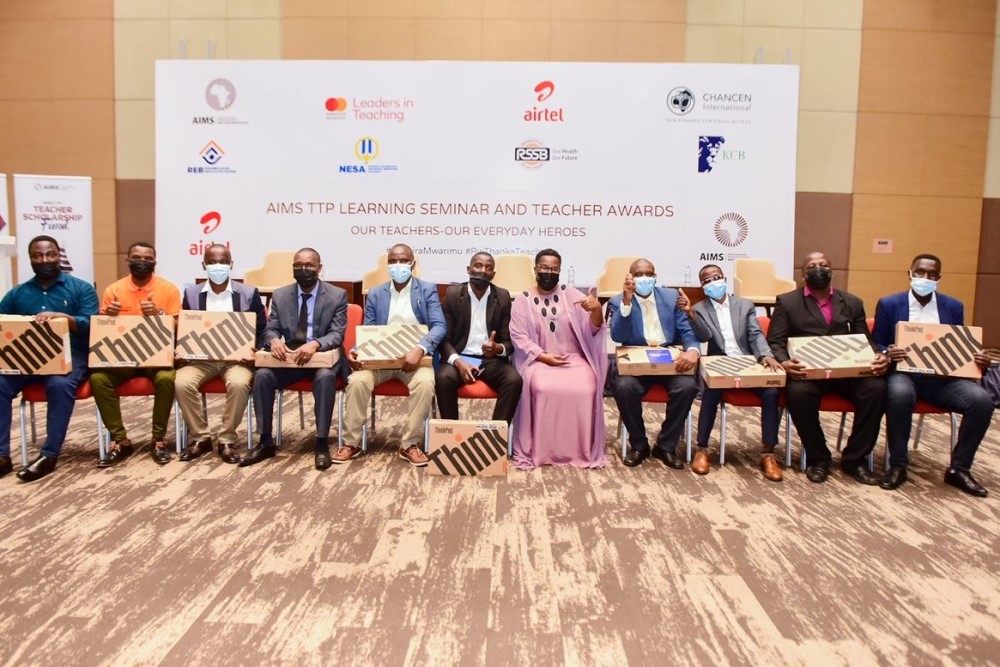
The event, scheduled to run from 9:00 am to 1:00 pm, aims to increase teachers’ motivation in teaching and learning of science and mathematics and to foster a culture of appreciation for Rwanda’s science and mathematics teachers for their hard work and dedication to teaching Rwandan children.
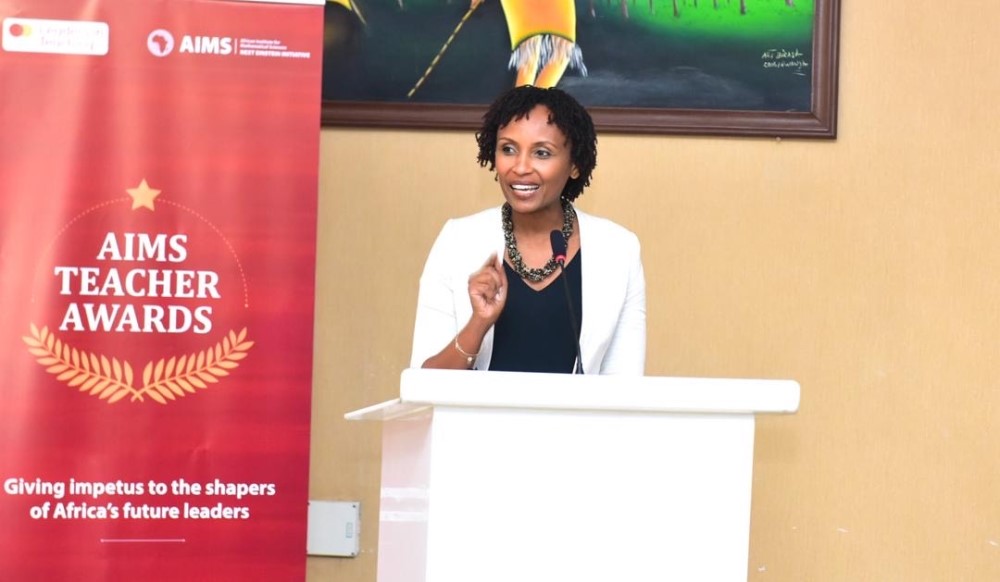
Commenting on the development, Lydie Hakizimana, AIMS CEO said: “This event recognizes and celebrates the tireless efforts and commitment of our educators in Rwanda, who play a critical role in shaping the future of our nation. We want to involve all in improving mathematics and science education outcomes.”
The AIMS Teacher Training Program organizes the awards to enhance learning outcomes in mathematics and science for secondary school students.
The program offers professional development courses, technology- equipped classrooms, and classroom resources to increase student transition to STEM education and address gender stereotypes that discourage girls from studying mathematics and sciences.
The awardees are chosen from teachers and educational leaders in 14 Leaders In Teaching Initiative (LIT) districts where AIMS RWANDA-TTP is being implemented and schools participating in the Pan African Mathematical Olympiads (PAMO). “Participating in the Teacher Training Program has been a valuable experience for me as it has assisted in enhancing my pedagogy and teaching techniques,” a teacher who won in the past edition shared.
“I was humbled to be acknowledged for my efforts in the field of education and am excited to continue making a meaningful impact in the lives of my students,” he added.
The first and second phases of the teacher awards had a significant impact on the education community in Rwanda, particularly in the 14-LIT districts.
During the first edition in 2020, 85 teachers were recognized and awarded for their outstanding contributions to the field of education.
In the second edition of the AIMS teacher appreciation campaign in 2021, the program expanded its activities to include three initiatives: appreciating retired teachers, corporate scholarship fund, and the teacher awards.
A total of 108 teachers and education stakeholders were recognized and awarded various prizes, including laptops, tablets, and smartphones. Additionally, AIMS-TTP teachers and members of the public organized unique visits to retired science and mathematics teachers across the LIT districts. Thirty-three retired teachers were visited across 9 districts, and gifts worth over 1,500,000 Rwandan francs were awarded to the retired teachers, and 15 teachers were awarded scholarships to pursue further studies at two institutions of higher learning.
The Corporate Scholarship Fund initiative is a partnership between AIMS-TTP, the Rwanda Social Security Board (RSSB), Airtel Rwanda, KCB Bank Rwanda, Kibogora Polytechnique, and the University of Technology and Arts of Byumba (UTAB), offering full scholarships to 43 teachers worth 27 million Rwanda Francs to fund their further studies at two institutions of higher learning.
The 2023 Teacher Awards will be organized in partnership with the Mastercard Foundation, Rwanda Basic Education Board (REB), National Examination and School Inspection Authority (NESA), Rwanda Social Security Board (RSSB), International Computer Driving Licence (ICDL), and Airtel Rwanda.
{{About AIMS}}
Founded in 2003, the African Institute for Mathematical Sciences (AIMS) is a pan-African network of centres of excellence for post-graduate training in mathematical sciences, research and public engagement in STEM.
With centres in South Africa, Senegal, Ghana, Cameroon and Rwanda, AIMS is leading Africa’s socio -economic transformation through innovative scientific training, cutting-edge research, and public engagement.
With expertly tailored academic and non-academic programs spanning through Centres of Excellence, Research Centres, the AIMS Industry Initiative and Gender-Responsive Teacher Training, AIMS equally created two critical initiatives: Quantum Leap Africa, which aspires to do leading-edge research in quantum science, and the Next Einstein Forum, which is positioning Africa to become an important player in global science.
The US Presidency, White House conveyed their appreciation through a brief statement that acknowledged Rusesabagina’s release and thanked the Rwandan and Qatari governments for facilitating it.
“I welcome today’s release of Paul Rusesabagina by the Government of Rwanda. Paul’s family is eager to welcome him back to the United States, and I share their joy at today’s good news,” reads the statement in part.
“I thank the Rwandan Government for making this reunion possible, and I also thank the Government of Qatar for facilitating Paul’s release and return to the United States. I add my gratitude to those across the U.S. Government who have worked with the Government of Rwanda to achieve today’s happy outcome,” adds the statement.
Stephanie Nyombayire, the Press Secretary for the Office of the Presidency, disclosed that Rusesabagina’s release is the outcome of a joint effort to reset the relationship between the United States and Rwanda.
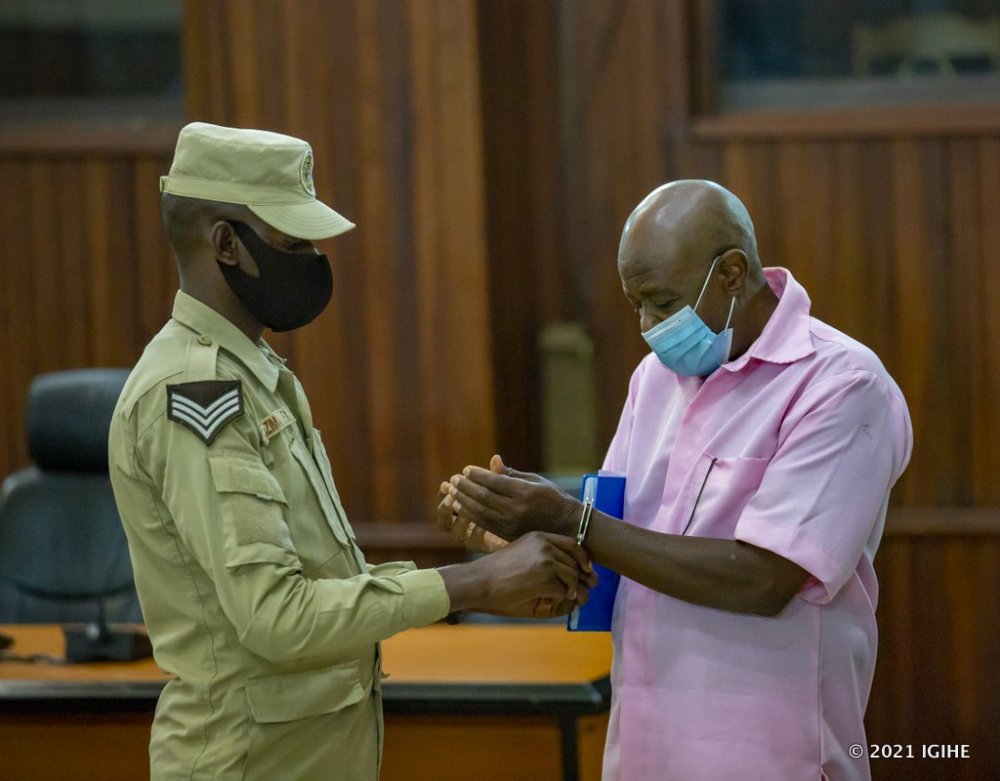
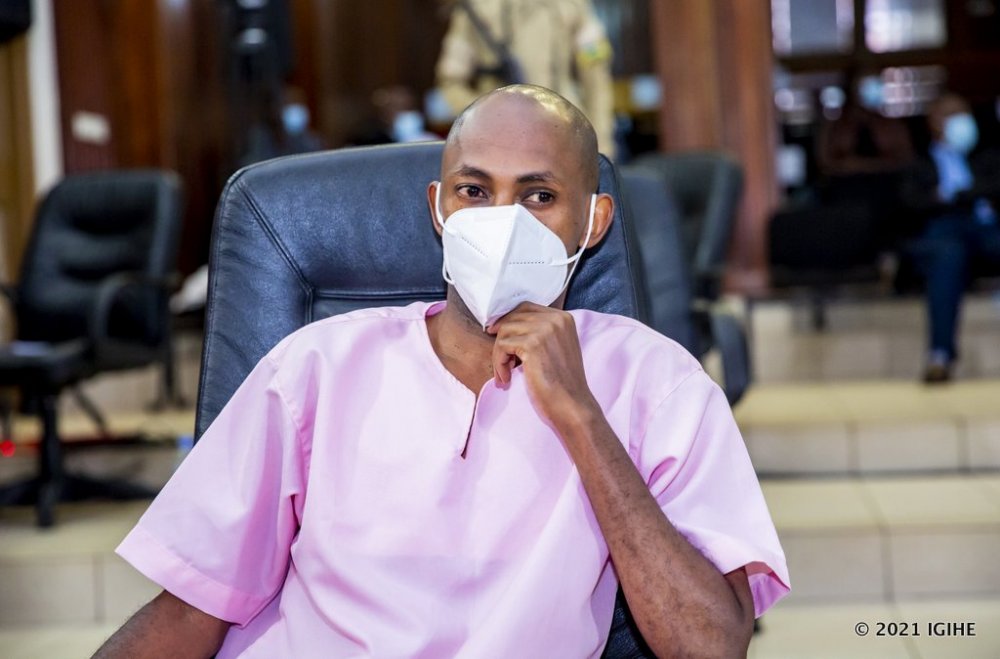
Rusesabagina, the former President of the MRCD-FLRN terror group, was sentenced to 25 years for terrorism charges. Along with Nsabimana Callixte, alias “Sankara,” who served as the FLN’s spokesperson, and 18 others linked to the same case, he was released on presidential clemency. Rusesabagina was arrested in 2020.
The appointments included Abdallah Utumatwishima as the new Minister of Youth and Parfait Busabizwa as Permanent Secretary (PS). Busabizwa, who was previously the Executive Secretary of the Southern Province, will now take up his new role in the Ministry of Youth.
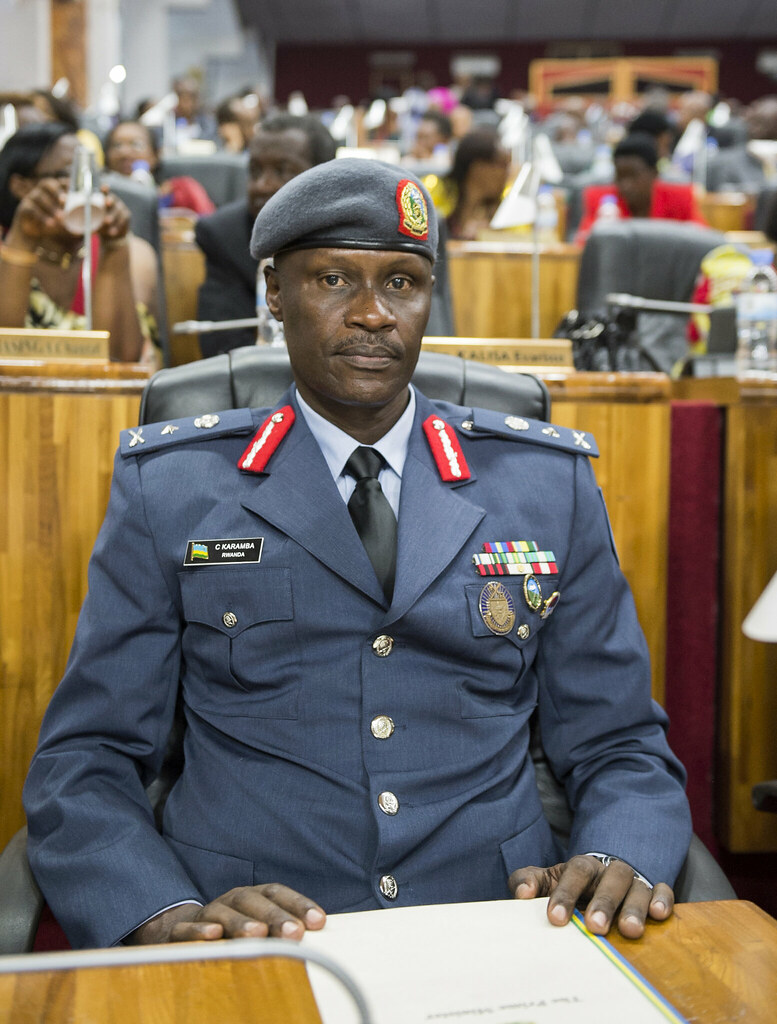
In addition to these appointments, the Ministry of Foreign Affairs and International Cooperation (MINAFFET) saw several changes, with Maj Gen Charles Karamba being appointed as envoy of Rwanda to Angola, Vincent Karega as Ambassador of Rwanda to the Kingdom of Belgium, Richard Masozera as envoy of Rwanda to the Czech Republic, and Rosemary Mbabazi as High Commissioner of Rwanda to Ghana.
Other changes in the Ministry of Foreign Affairs included Nkubito Manzi Bakuramutsa being appointed envoy of Rwanda to the Republic of Korea, Eugene S. Kayihura as ambassador to the Kingdom of Saudi Arabia, John Mirenge as the new envoy to the United Arab Emirates, Fatou Harerimana as the High commissioner to Tanzania, and Emmanuel Hategeka as the High commissioner to South Africa.
The Rwanda Development Board (RDB) also saw a new Deputy Chief Executive Officer (CEO), Nelly Mukazayire, who was previously the Rwanda Convention Bureau (RCB) boss. Janet Karemera was designated as the CEO of RCB, while Candy Basomingera was appointed as her new Deputy.
The office of the President also saw some changes, with Valens Uwineza appointed as Deputy Director of Cabinet and Mauro De Lorenzo as Executive Director of the Strategy and Policy Council.
These appointments come as Rwanda continues to make progress in various sectors, including youth empowerment, foreign relations, and economic development. The new leaders are expected to bring their skills and experience to bear in their new roles, helping to drive the country’s growth and development.
The Statement released by Rwanda’s Ministry of Justice (MINJUST) indicates that their pardon was approved by the cabinet meeting that convened on Friday 24th March 2023.
They have been commuted by Presidential Order, after consideration of their requests for clemency.
Rusesabagina and Nsabimana Callixte have been granted collective commutation along with 18 members of MRCD-FLN convicted alongside their leaders Paul Rusesabagina.
Under Rwandan law, commutation of sentence does not extinguish the underlying conviction. If any individual benefitting from early release repeats offences of a similar nature, the commutation can be revoked and the remainder of the prison sentence will be served, in accordance with the conditions specified in the Presidential Order.
According to MINJUST, other penalties imposed by the Court, such as compensation owed to victims, are not affected by this commutation ‘and thus remain in force. The letters requesting clemency are being released in the public interest’.
The Ministry of Justice has also revealed that more 358 individuals convicted of various offences were also granted collective commutation.
On 20th September 2021, the High Court Special Chamber for International and Cross-border crimes convicted the former President of MRCD-FLN terrorist group, Paul Rusesabagina of terrorism charges and handed him 25-year jail term.
He had been arrested in August 2020 while his trial began on 20th January 2021.
Rusesabagina and co-accused individuals including Nsabimana Callixte alias ’Sankara’ (former spokesperson of MRCD-FLN terror group) faced charges including the formation of an irregular armed group, membership of a terrorist group, financing terrorism, murder as an act of terrorism, arson as an act of terrorism, attempted murder as an act of terrorism, and assault and battery as an act of terrorism.
The crimes were committed since 2018 when MRDC/FLN combatants plotted attacks to Rwanda which claimed lives of nine innocent residents in the Southern Province.
They left many others gravely injured, and caused significant material and economic damage in South-West Rwanda.
Apart from Rusesabagina, Sankara, the former spokesperson for the terror group was sentenced to 20 years behind bars.
Sankara was later handed 15-year sentence after pleading guilty and appealing for leniency.
In March 2023, Rwandan President Paul Kagame on Monday said there were discussions about “resolving” the fate of Paul Rusesabagina that signaled his possible release.
The majority of the ravaged land was from the Kimonyi sector, while Nyange sector saw the most houses destroyed in the district, with more than 190 homes affected.
Infrastructure damage was also significant, with schools and roads among the destroyed structures. Farmers in the area suffered significant losses, with erosion also washing away part of their land. Gaudance Mukasano, the executive secretary of Kimonyi sector, explained that the marshland had been flooded before due to the overflow of a water drainage channel from Busogo sector.
Mukasano estimated that it would take Rwf2 billion to address the issue and divert the water course into River Mukungwa. Musanze District officials reported that 16.7 hectares of land planted with irish potatoes, beans, and maize were destroyed, while 228 houses and 80 kitchens lost their iron sheets due to the hailstorm. Additionally, the roofs of six classrooms and the road from INES to Kinigi sector were also destroyed.
This decision is a significant step forward in the normalization of bilateral relations between the two countries, which have experienced setbacks since 2017.
General Odongo made this announcement on the final day of the 11th Joint Permanent Commission (JPC), which was established to follow up on mechanisms aimed at restoring bilateral relations to normal.
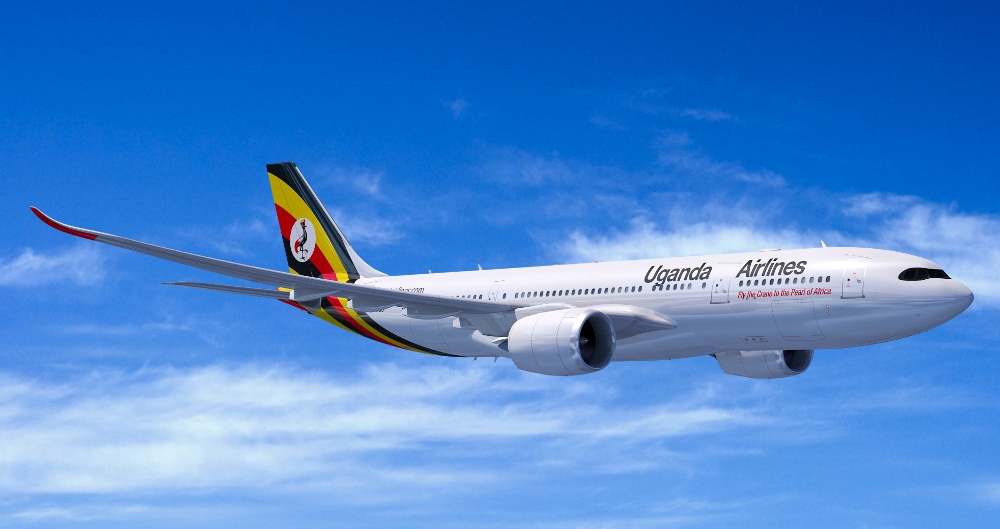
“Uganda welcomes the acceptance of the designation of our national carrier -Uganda Airlines by the Rwanda authorities, which will lead to its commencing of direct flights from their hub in Entebbe to Kigali. This will further boost trade, enhance connectivity, and contribute to strengthen people-to-people exchanges,” said Gen Odongo.
IGIHE has learned that Uganda Airlines has been asked to fulfill additional requirements after approval, although the date for the inauguration of the new flights has not been announced.
Uganda Airlines had announced plans to conduct direct flights from Kampala to Kigali in December 2019.
The current Uganda Airlines is a revival if an older version of the airline that operated from 1977 to 2001. The airline recommenced commercial operations in August 2019, with a flight to Nairobi, Kenya.
In December 2019, Uganda Airlines announced plans to conduct direct flights from Kampala to Kigali. The airline, which had operated from 1977 to 2001, was revived in August 2019 with a flight to Nairobi, Kenya. However, mismanagement and losses have delayed the implementation of envisioned projects.
According to Uganda’s Auditor General Report for 2021/2022, Uganda Airlines incurred a loss of 164.5 billion shillings (US$43.9 million) at the end of the financial year 2020/2021. This loss reportedly increased to 266 billion shillings in the following year. As reported by Chimpreports recently, the airline has experienced a loss of 532 million shillings in the past three years.
Although the airline initially planned to operate flights to 19-21 destinations, it has only reached 11 so far.
Currently, Uganda Airlines conducts flights to various destinations, including Bujumbura in Burundi, Dar es Salaam, Kilimanjaro, and Zanzibar in Tanzania, Johannesburg in South Africa, Kinshasa in the DRC, Mogadishu in Somalia, Nairobi in Kenya, and Dubai.
On 20th September 2021, the High Court Special Chamber for International and Cross-border crimes convicted the former President of MRCD-FLN terrorist group, Paul Rusesabagina of terrorism charges and handed him 25-year jail term.
He had been arrested in August 2020 while his trial began on 20th January 2021.
Rusesabagina and co-accused individuals including Nsabimana Callixte alias ‘Sankara’ (former spokesperson of MRCD-FLN terror group) faced charges including the formation of an irregular armed group, membership of a terrorist group, financing terrorism, murder as an act of terrorism, arson as an act of terrorism, attempted murder as an act of terrorism, and assault and battery as an act of terrorism.
The crimes were committed since 2018 when MRDC/FLN combatants plotted attacks to Rwanda which claimed lives of nine innocent residents in the Southern Province.
They left many others gravely injured, and caused significant material and economic damage in South-West Rwanda.
Apart from Rusesabagina, Sankara, the former spokesperson for the terror group was sentenced to 20 years behind bars.
Sankara was later handed 15-year sentence after pleading guilty and appealing for leniency.
In March 2023, Rwandan President Paul Kagame on Monday said there were discussions about “resolving” the fate of Paul Rusesabagina that signaled his possible release.
He made the disclosure during a video interview at the recent Global Security Forum in Doha, Qatar.
“We’re not people who want to get stuck in one place and not make any movement forward,” said Kagame.
“There is a discussion looking at all possible ways of resolving that issue without compromising the most fundamental aspects of that case and I think there’s always going to be a way forward,” he added.
The Head of State also reminisced on some cases related to the Rwanda’s history where the country took decisions that people some people believed to be ‘impossible.
He pointed out an example of people convicted of the 1994 Genocide against the Tutsi who were pardoned and reintegrated into Rwandan society.
Since the arrest of Rusesabagina in 2020, countries including the United States of America and Belgium where he was granted citizenship, continuously advocated for his release.