The deployment was confirmed during the Extra-Ordinary Meeting of the EAC Chiefs of Defence Forces/Staffs (CDF/CDS) held on 23rd March, 2023 in Bujumbura, Burundi.
The meeting was called to review the implementation of the Heads of State Directives of the 20th Extra-Ordinary Summit held on 4th February, 2023, and to evaluate the security situation in Eastern DRC.
The EAC Partner States’ Chiefs of Defence Forces confirmed that the EAC Monitoring and Verification Mechanism (EAC-MVM) has already been deployed to Eastern DRC to monitor and verify the ceasefire and withdrawal by all Armed Groups.
The deployment of the EAC Regional Force and EAC-MVM is a significant step towards ending the conflict and restoring peace and stability in the region.
The EAC has through released statement, welcomed the full deployment of the EAC Regional Force and commended the deployment of the EAC-MVM to monitor and verify the ceasefire and withdrawal by all armed groups.
The EAC Secretariat reiterated its support for the restoration of peace and stability in Eastern DRC, urging all parties to the conflict to continue implementing the ceasefire directive, observe the withdrawal timelines, and join the political process as directed by the 20th Extra-Ordinary Summit of the EAC Heads of State.
The conflict in Eastern DRC has been ongoing for years, with armed groups fighting for control of resources and territory.
The deployment of the EAC Regional Force and the EAC-MVM is a significant milestone towards ending the conflict and restoring peace and stability in the region.
Governor John Rwangombwa presented this economic performance on March 29, 2023, during the Monetary Policy and Financial Stability Statement.
The Central Bank of Rwanda evaluated the economic performance in 2022 and the prospects for 2023.
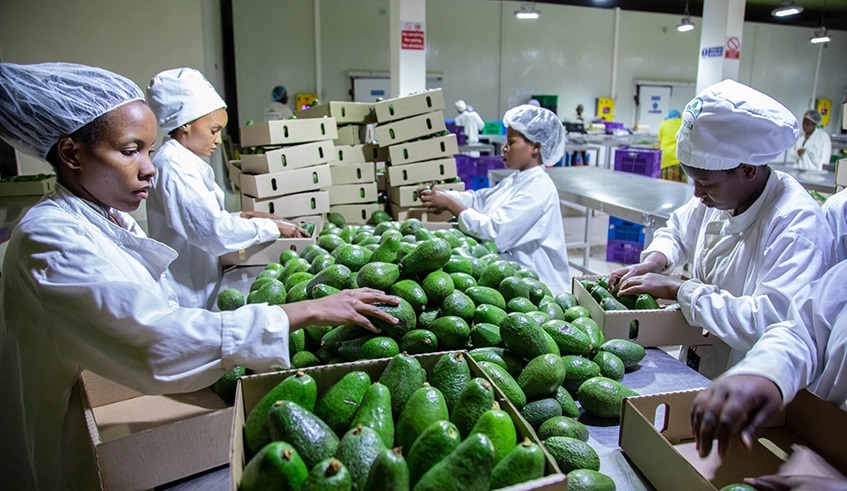
The increase in exports was primarily due to the thriving manufacturing activities and high commodity prices in international markets. Traditional exports such as minerals, coffee, and tea increased by 27.7%, and non-traditional exports, such as manufactured products and horticulture, rose by 26.8% and 39.3%, respectively.
However, the import bill also increased by 26.9%, reaching $4,060 million in 2022, leading to a 20.7% increase in the trade deficit. The increase in imports was due to the continuing recovery of the national economy and the rise in global raw material and fuel prices.
This affected Rwanda’s exchange rate, leading to a 6.05% depreciation of the franc against the dollar. Additionally, the overall annual inflation increased to 13.9% in 2022 from 0.8% in 2021, primarily due to global economic turbulence and weak agricultural production in the country.
Governor Rwangombwa expressed confidence in improved economic figures in the early second half of 2023.
The Ministry of Finance will announce projections for 2023 following consultations.
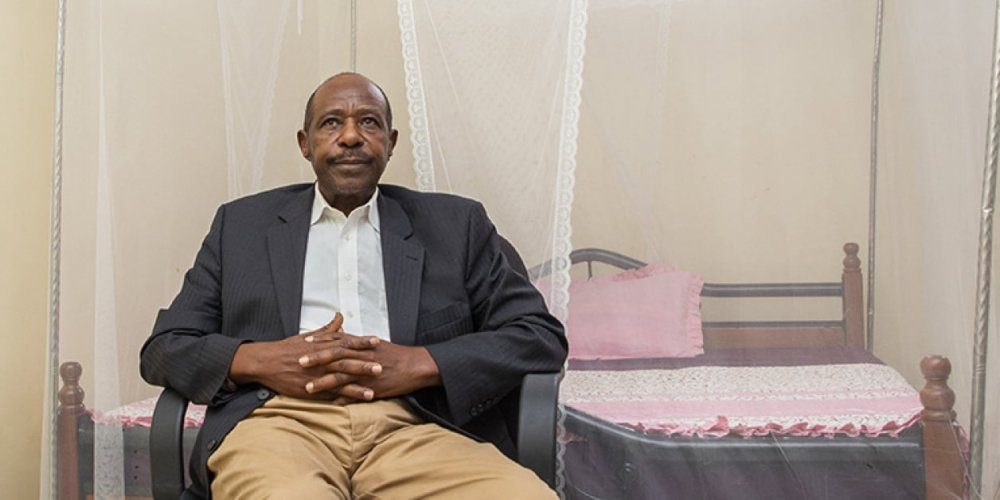
According to media reports, Rusesabagina arrived in the US on Wednesday.
As per established protocol, Rusesabagina departed from Rwanda to Qatar early this week before heading to the United States.
Rusesabagina’s daughter, Carine Kanimba, has also confirmed her father’s return to the US in a post on Twitter.
Kanimba expressed her gratitude to everyone who worked to bring her father home, and announced that their family is finally reunited.
Rusesabagina is a US legal resident with dual citizenship in Rwanda and Belgium.
Rusesabagina was released from prison on Friday last week after his sentence was commuted by President Paul Kagame. The commutation came after he asked Kagame for a pardon in an October 2022 letter.
“If I am granted a pardon and released, I understand fully that I will spend the remainder of my days in the United States in quiet reflection,” he wrote in part. “I can assure you through this letter that I hold no personal or political ambitions otherwise. I will leave questions regarding Rwandan politics behind me.”
The US Presidency, White House recently conveyed their appreciation through a brief statement that acknowledged Rusesabagina’s release and thanked the Rwandan and Qatari governments for facilitating it.
Commenting on the development after the presidential clemency granted to Rusesabagina, Stephanie Nyombayire, the Press Secretary for the Office of the Presidency, disclosed that Rusesabagina’s release is the outcome of a joint effort to reset the relationship between the United States and Rwanda.
Rusesabagina, the former President of the MRCD-FLRN terror group, was sentenced to 25 years in 2021 for terrorism charges.
Along with Nsabimana Callixte, alias “Sankara,” who served as the FLN’s spokesperson, and 18 others linked to the same case, he was released on presidential clemency last Friday. Rusesabagina had been arrested in 2020.
More 358 individuals convicted of various offences were also granted collective commutation on the same day.
He emphasized the need for businesses to stay informed about the latest developments in data privacy and security, and to adopt best practices in encryption, firewalls, intrusion detection and prevention systems, VPNs, and biometric authentication.
Kabeja underscores that any company is vulnerable to data breaches and cyber-attacks where businesses must prioritize cyber security and build their cyber security capabilities. Kabeja also offers tips on strengthening security at the workplace and for individuals, as well as how companies can balance the need to collect and use data for business purposes with the need to protect the privacy of individuals.
{{Excerpts: }}
{{How data privacy and data protection are intertwined and what financial implications could it have?}}
Data privacy is a fundamental right and is recognised under the Universal Declaration of Human Rights and various other international covenants, whereas ‘data protection’ means the tools, mechanism, and policies to secure the data to access by a third party without its owner’s consent. The cost of data breaches has clearly impacted macroeconomies making strong security mission-critical. Business leaders face tough choices as the cost of data breaches continues to rise. If the cost of business increases due to security concerns, then goods and service prices will also rise and people lose their jobs due to breaches. Therefore, the practice of protecting digital information from corruption, theft, and unauthorised access to hardware and software devices is vital in ensuring financial wellbeing.
{{The importance of technology in cyber security, such as encryption and firewalls}}
Savvy cybercriminals use sophisticated technologies because they are more difficult for traditional cyber security tools to detect. Technology plays a crucial role in cyber security by providing tools and systems to protect sensitive information and systems from unauthorised access, use, disclosure, disruption, modification, or destruction. Encryption is a key technology that helps to secure data by converting it into a code that can only be deciphered with the correct key. Firewalls are another important technology used to control network access and protect against unauthorised access and cyber-attacks. Other technologies such as intrusion detection and prevention systems, virtual private networks (VPNs), and biometric authentication also play important roles in securing information systems and networks.
{{Are businesses doing enough to protect themselves against data breaches?}}
African businesses are not giving cyber security the priority it deserves, and this inadequate security is directly affecting business for enterprises, as well as countries. Businesses in Africa are particularly vulnerable with more than half of the countries having inadequate cyber security laws and regulations, making it a haven for cybercriminals.
Businesses operating in this environment face a dual challenge: lobbying governments for more stringent cyber security laws and protections and addressing the immediate threats. Rwanda, for example, has invested significantly in Information and Communications Technology (ICT) infrastructure and applications, as a cornerstone for National economic growth. Even though the rapid development of ICT determines Rwanda’s journey towards economic development, these technologies have introduced new types of threats such as data breaches. Therefore, it is imperative that businesses in Rwanda prioritise cyber security and build their cyber security capabilities for detection, prevention and response.
{{How can businesses stay informed about the latest developments in data privacy and security and stay ahead of potential threats?}}
Businesses need to adopt a two-pronged approach against sophisticated cybercriminals. Businesses need to adopt best-practice mitigation and management protocols and continuous training and awareness programmes to protect against vulnerabilities and threats from within.
{{The types of businesses most at risk from data breaches or cyberattacks}}
Companies, corporations and businesses are especially vulnerable as most of the sensitive and confidential company information is stored online but individuals can succumb to such attacks too. That is what makes cyber security so indispensable because anyone can be exposed anywhere in this digital economy.
{{Smart tips for strengthening security at the workplace, as well as best practices for individuals?}}
Many organisation do not have sufficient resources to educate staff on data management. With this lack of awareness and resources, human error continues to be the driving force behind an overwhelming majority of cyber security compromises.
Poor password is also a significant contributor towards compromises, with not enough individuals and corporations applying best practice and taking advantage of built-in mechanisms such as group policy enforcement, strong encryption, and multi-factor authentication. It is key to have multi-layered approach to strengthen security at the workplace and organisations need to partner with a service provider with proper expertise and experience to adopt a well-tailored cyber security strategy specific to their business needs.
{{How do businesses balance the need to collect and use data for business purposes with the need to protect the privacy of individuals?}}
We at Liquid Intelligent Technologies encourage all businesses to have a formal cyber security framework aligned to their strategy and objectives which requires a continuous management and improvement of the technologies and systems and establishment of an information security management system (ISMS) and resilience control. Enterprises of different sizes have varying capacity and budgets, different information security requirements, face different threats, and have different legislative, regulatory, or industry requirements to comply with. They also have different people challenges, processes, IT footprints, services, and applications, so their cyber security frameworks need to consider all these factors.
{{How does a company’s approach to data privacy and security impact its reputation and customer trust?}}
Trust is an essential element of a customer relationship. Cyber-attacks damages reputation and erode the trust customers have for companies. This, in turn, could potentially lead to loss of customers, loss of sales and reduction in profits.
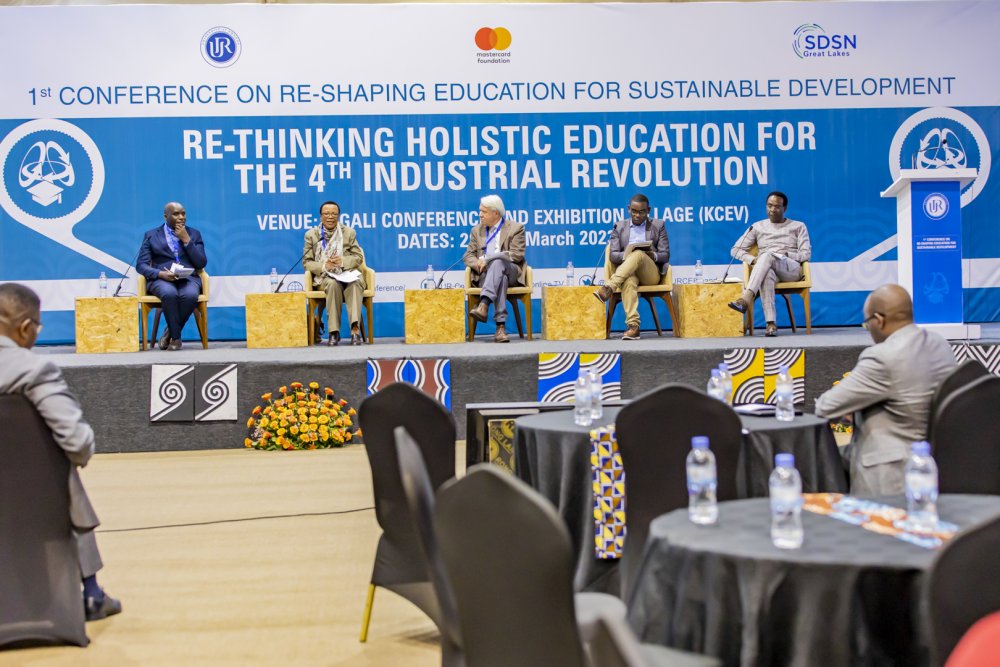
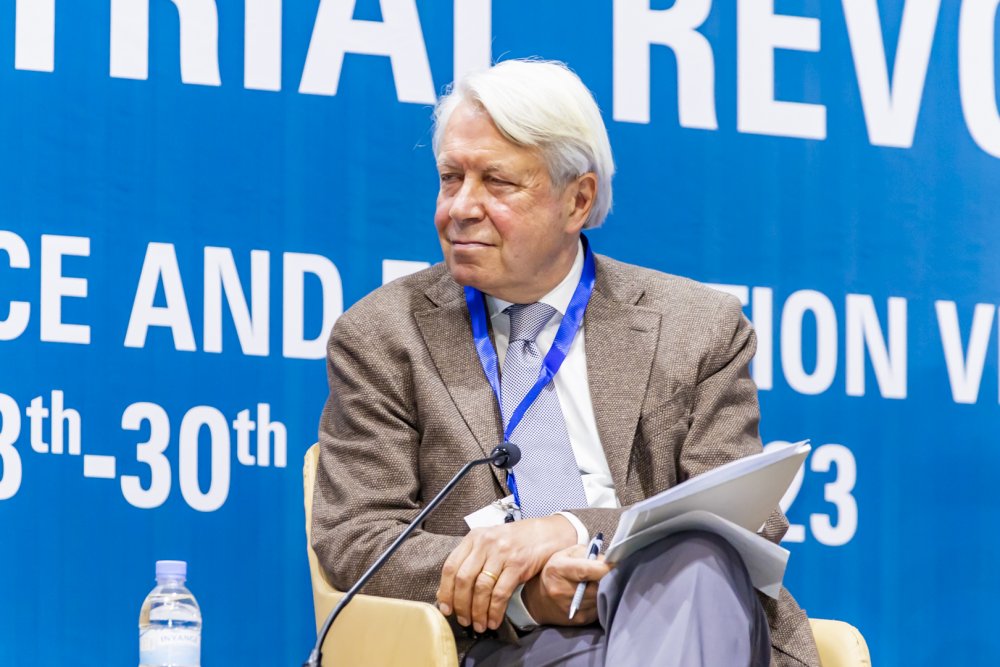
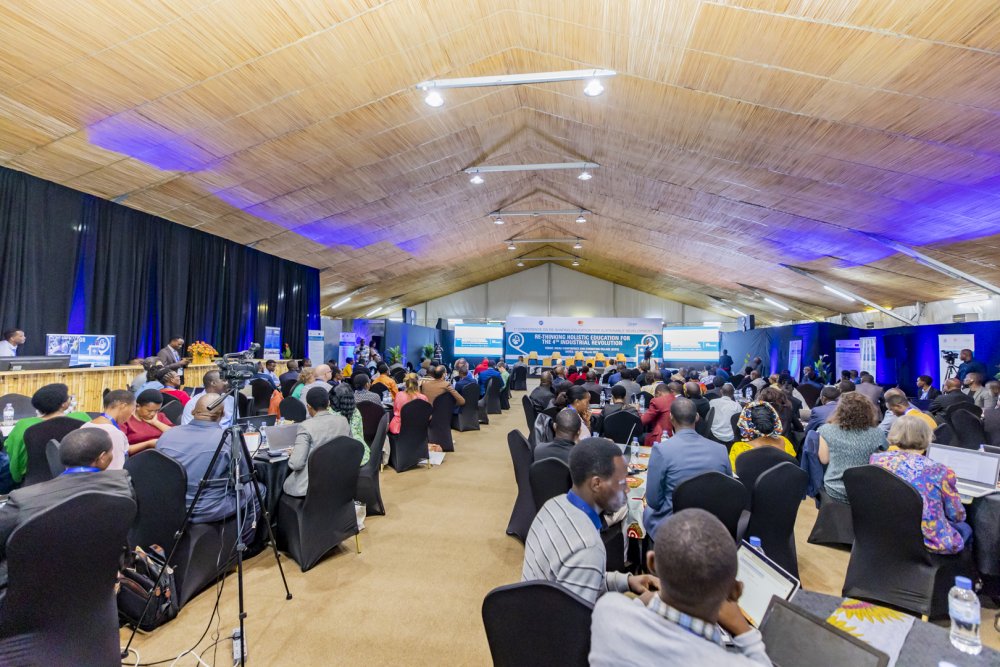
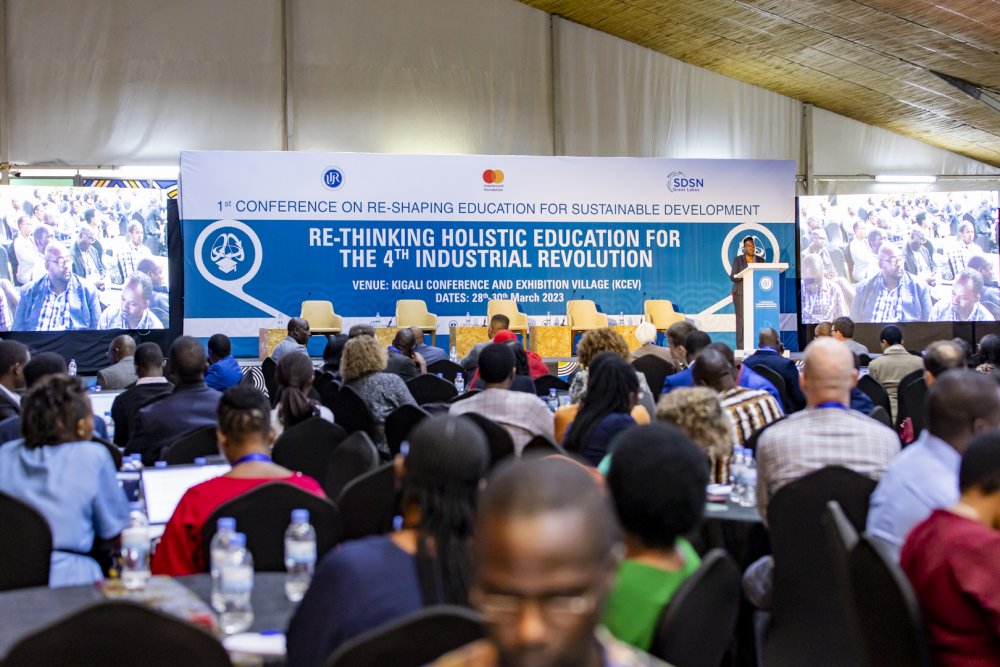
The conference organized by the University of Rwanda- College Of Education (UR-CE), brought together researchers, scholars, educators, policymakers, and postgraduate students from different countries to discuss the future of education and how it can be adjusted to the labor market.
The theme of the conference is held under the theme “Re-thinking Holistic Education for the 4th Industrial Revolution.”
Dr. Mathias Nduwingoma , a lecturer and the Director of the Centre for Open Distance and eLearning (CODeL) at the University of Rwanda, stressed the need for collaboration across different levels, including parents, students, and lecturers, to advance education.
He emphasized that research projects should focus on helping governments and policymakers make informed decisions regarding expertise and technology, and that education should be centered on students to build their capacities.
Olivier Habimana, a lecturer of ICT at UR-CE, stressed the need for deeper research on issues miring the education sector and finding appropriate solutions.
He noted that the government of Rwanda has embarked on a journey to equip lecturers at the College of Education with basic and latest resources to make it possible.
Meanwhile, the Principal of the College of Education, Dr. Florien Nsanganwimana, highlighted that efforts to reshape Rwanda’s education are centered on reinforcing digital penetration and building the capacity of graduates.
He pointed out that the University Of Rwanda- College Of Education has started embracing e-learning where students acquire relevant knowledge to be competent in the labor market.
However, he noted that inadequate equipment and classrooms are among the obstacles to reshaped education and called for research to address other issues affecting education from their root causes.
Françoise Kayitare Tengera, Deputy Vice-Chancellor for Finance and Administration at the University of Rwanda, said that the conference’s objective aligns with Rwanda’s agenda 2030.
She disclosed that it serves as an opportunity to discuss various issues aimed at promoting quality education for sustainable development and urged participants to share constructive ideas advancing the cause.
Speaking on behalf of his colleagues, Epimaque Rwandenzi , the executive secretary of Nkingo cell in Kamonyi District, explained that they work beyond normal working hours, including weekends, to attend to residents’ needs.
He emphasized that meeting their request would further prioritize cells’ service delivery to citizens, and expressed optimism that the government would address their concerns gradually, depending on available resources.
The Minister of Local Government, Jean Claude Musabyimana, acknowledged the critical role played by cells in the implementation of government programs and affirmed the need for adequate staffing and resources to enhance their efficiency.
He assured that the government will continue to build capacity for these leadership levels.
In response to the request to increase staff, President Kagame emphasized the need to assess the reason for the increase and its impact on productivity. He also emphasized the need to match salary increments with efficient performance to avoid wasting resources.
The announcement was made on 29th March 2023 by RDF through a statement that highlighted the immediate effect of the promotions.
Rwanda’s army is well known internationally for its professionalism, discipline, and ability to work in challenging environments.
The promotion of military officers is a critical aspect of military management, and it serves to motivate officers to work harder and achieve better results.
It also provides an opportunity for the military leadership to identify and reward exceptional performers while at the same time, ensuring a structured career progression for the officers.
It also underscores the importance of investing in the country’s human capital, especially in the area of defence, which plays a crucial role in safeguarding the nation’s security.
As someone who splits his time between the UK – specifically Rochdale – and Rwanda where he has a fiancée named Claudine, Danczuk asserts that he knows which migrants he would prefer in his own constituency.
According to Danczuk, most of those opposing the UK’s Rwanda policy have little understanding of the country in question. In contrast, he claims that Rwanda is a welcoming nation with a strong infrastructure, including sectors dedicated to energy, agriculture, trade, hospitality and finance.
Besides, the country has the knowledge and expertise required to deal appropriately with the people that would be sent from the UK.
For Danczuk, this is an important consideration. He believes that the asylum seekers sent to Rwanda will have access to greater opportunities than if they were relocated to areas such as Rochdale.
This has been a longstanding policy, and one that has put enormous pressure on resources such as healthcare, education and social housing, whilst simultaneously eroding the character and identity of the local area.
Danczuk argues that the Rwandan policy is a more humane approach to dealing with illegal immigration and people-trafficking, as well as reducing the number of cross-Channel economic migrants.
As a result, it could alleviate the challenges faced by struggling towns across the UK.
Whilst acknowledging that many Labour MPs favour an open borders approach, Danczuk suggests that the Party’s reputation has been tarnished by the fact that some have downplayed the severity of child exploitation by British Pakistani grooming gangs.
He suggests that this may be a contributing factor to why many in Labour oppose the Rwandan strategy.
Ultimately, Danczuk believes that supporting the Rwandan policy would be a smarter move for Labour than continuing to push their “woke” agenda around issues such as immigration, diversity and criminal justice. Whether or not this will be taken on board remains to be seen.
The recent collapse of housing units in Kinyinya of Gasabo District is a glaring testimony of the catastrophic aftermaths of such negligence.
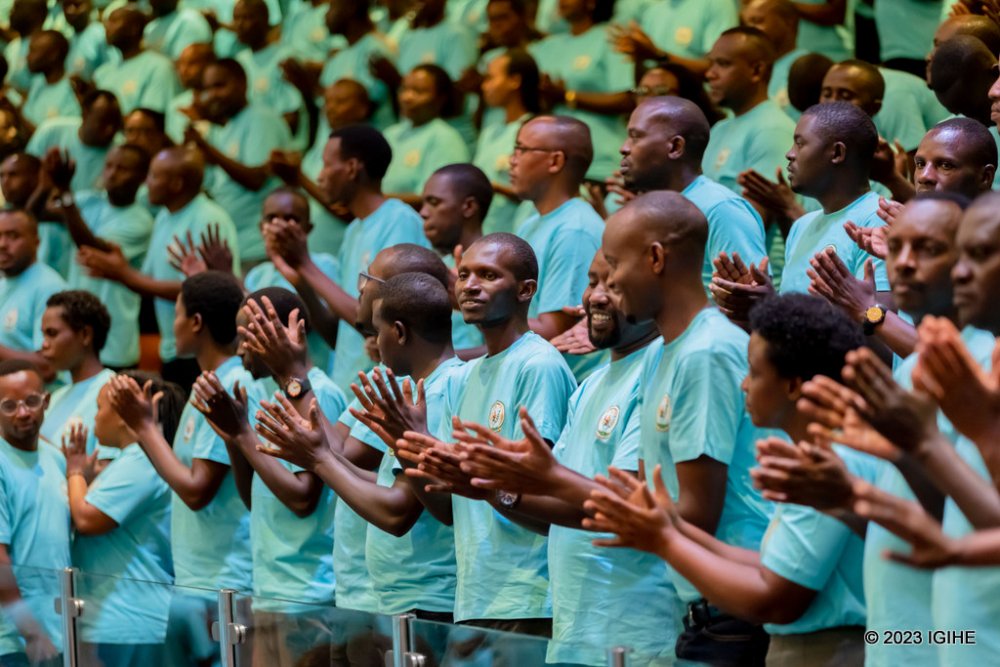
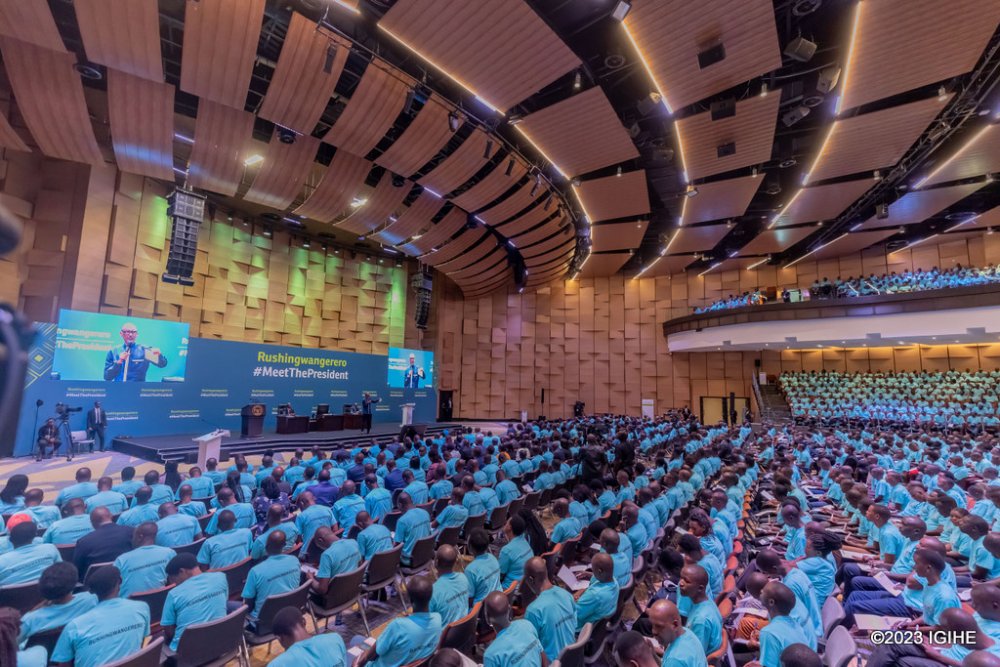
Kagame articulated his disapproval on Tuesday 28th March 2023 while officiating the closing ceremony of the National Civic Training, Itorero, where over 2,000 Cell Executive Secretaries from all over the country at Intare Arena.
He recalled the recent incident where houses built in Kinyinya of Kigali City crumbled to the ground, an event that could have been prevented had leaders acted on the telltale signs of poor quality.
Considering this situation, the Head of State requested the Minister of Infrastructure, Dr. Nsabimana Ernest to provide explanations regarding circumstances under which such unfortunate events occur.
Dr. Nsabimana revealed that an investigation into the recent collapse of housing units in Urukumbuzi Estate, developed by investor Jean Nsabimana, had unearthed a revelation that the houses were built with substandard equipment.
The President expressed his dismay at how such irregularities go undetected until buildings are officially inaugurated and handed over to citizens, leaving them vulnerable to the disastrous consequences of such faulty constructions.
Minister Nsabimana attributed the failure to report irregularities on time, poor collaboration and gaps in the implementation of policies.
Kagame exhorted leaders to undertake the necessary measures to reverse the status quo and ensure that buildings adhere to the required standards.
He also urged Cell Executive Secretaries to work collaboratively towards the attainment of shared goals, underscoring that their achievements will count only when they work together.
The teams of Q-Lana and BRD configured Q-Lana’s Open Banking Platform to digitalize the bank’s entire lending process – including acquisition, assessment, approval, disbursement, monitoring, and collection, all which can now be managed online by the bank’s staff.
The Development Bank of Rwanda (BRD) and Q-Lana Inc recently celebrated a major achievement in the bank’s digital transformation efforts with the successful implementation of its Credit Management Platform.
During the “go-live” launch event, BRD CEO Kampeta Sayinzoga thanked the teams of both companies for taking part in a collaborative process to convert the detailed steps of the bank’s loan process into a seamless application. This was the goal when embarking on the project and it has been achieved. “We aim to champion excellence in all our ways. This go-live will enable us to make another major step towards a digital bank by providing our clients with faster processes for the kind of service they deserve.” – Kampeta Sayinzoga, CEO of BRD.
Christian Ruehmer, Co-Founder and CEO of Q-Lana echoed the remarks: “we are proud of what we have achieved together”, he said. “Lending processes in development banks are often very detailed due to the nature of the products. Our joint teams have overcome those challenges. With this, we have laid the basis for a great collaboration going forward.”
Over 130 BRD staff members from 12 different departments will use the Q-Lana platform throughout the complete lifecycle of the loan process for originating, monitoring, managing, amending, and restructuring loans. With the new platform, loan agreements and more than 20 other banking documents now will be generated online for clients.
As part of the ongoing collaboration, Q-Lana will continue to work with BRD to further support the client onboarding process and interactions with clients online.
{{About BRD}}
BRD is responsible for promoting private sector involvement in critical sectors for achieving the STI and SDGs through affordable, long-term finance. They support enterprises directly or through other financial institutions across 7 key areas, such as Energy and Agriculture, through investment loans, grants, guarantees, trade finance, and advisory services. The bank’s investments contribute to economic growth and development while aligning itself for competitiveness, sustainability, and enhanced value creation.
{{About Q-Lana Inc.}}
Q-Lana Inc., founded in 2016 in the US with offices in Belgium, Rwanda, and India, offers Open Banking Solutions for financial institutions of all sizes to succeed with digitalization. The low code-based platform, with SME lending and risk management expertise, is ideal for institutions seeking a development partner. Q-Lana’s cloud and server-based solutions support digitization and the implementation of full-scale digital ecosystems based on APIs and microservices. Asset Managers seeking to digitalize their asset origination and fund management activities are also targeted by Q-Lana.