This institution plays a pivotal role in shaping national education policy, overseeing entities responsible for curriculum development, teaching standards, examinations, schools’ management, and various other aspects of education.
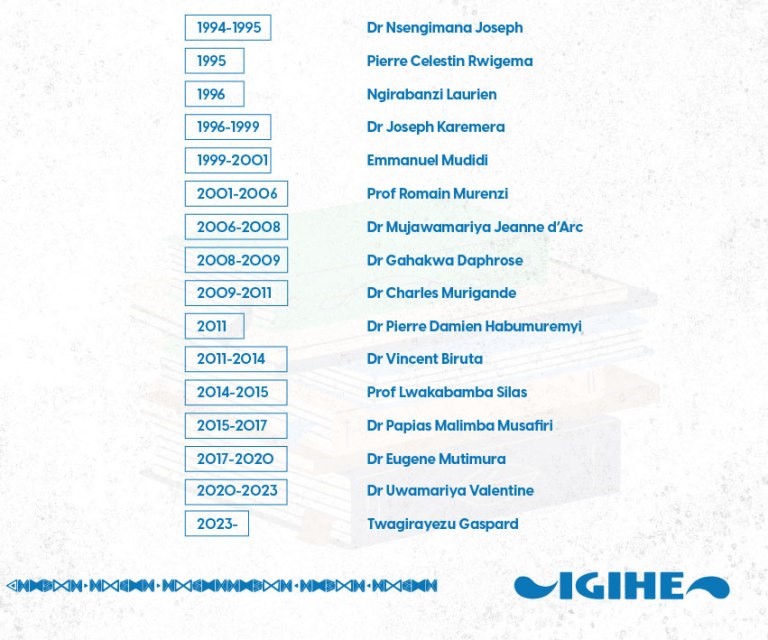
From the post-Genocide against the Tutsi leadership under Dr. Joseph Nsengimana, the inaugural minister, to the recent reassignment of Dr. Uwamariya Valentine, the longest recorded tenure was that of Prof. Romain Murenzi, who served from 2001 to 2006.
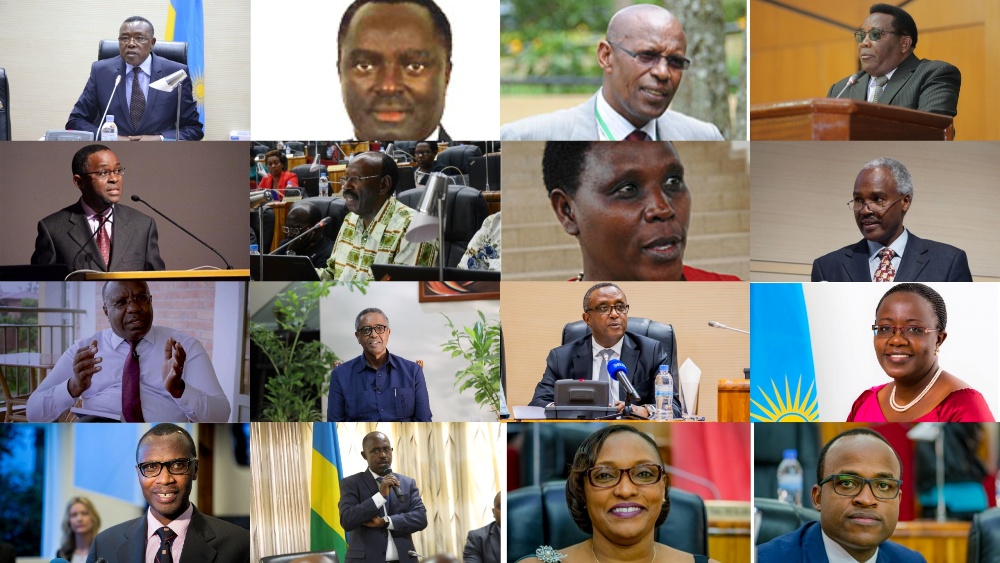
{{Below is the list of sixteen ministers who have successively led MINEDUC until the present day.}}
Throughout these 29 years, numerous substantial challenges have been confronted. Ministers grappled with reintroducing education in the aftermath of the genocide, constructing primary schools, training educators, and redesigning curricula. The primary objective was to ensure maximum enrollment of children in schools.
The period spanning from 2003 to 2010 was marked by efforts to counteract the infiltration of genocidal ideology in schools. This was coupled with a significant transition in language preference, favoring English over French. The government also initiated the Education for All program, which spanned 9 years and aimed to boost enrollment in vocational schools among young people.
Nonetheless, the last 13 years have been notably tumultuous for Mineduc, with nearly half of all ministers experiencing turnover. However, this period was far from stagnant. Starting in 2010, the government invested in extending basic education to a 12-year duration, established a national university, welcomed foreign universities to establish campuses in Rwanda, and improved the salary conditions of teachers.
Yet, according to education journalist Joseph Hakuzwumuremyi, in an interview with IGIHE, the instability of educational policy remains a significant challenge that many ministers have grappled with. He asserts that the absence of a consistent educational policy and the prevalence of commercial interests are issues that have hindered any minister from effectively steering the ship of education.
Nevertheless, it is important not to overlook the achievements that have been accomplished. The literacy rate has shown remarkable improvement: in 2000, nearly 50% of Rwandans struggled with reading and writing, whereas by 2019, the figure had risen to 89%.
Technological advancements have also been evident, with 51.6% of the population utilizing the internet, which now covers 95% of the national territory.
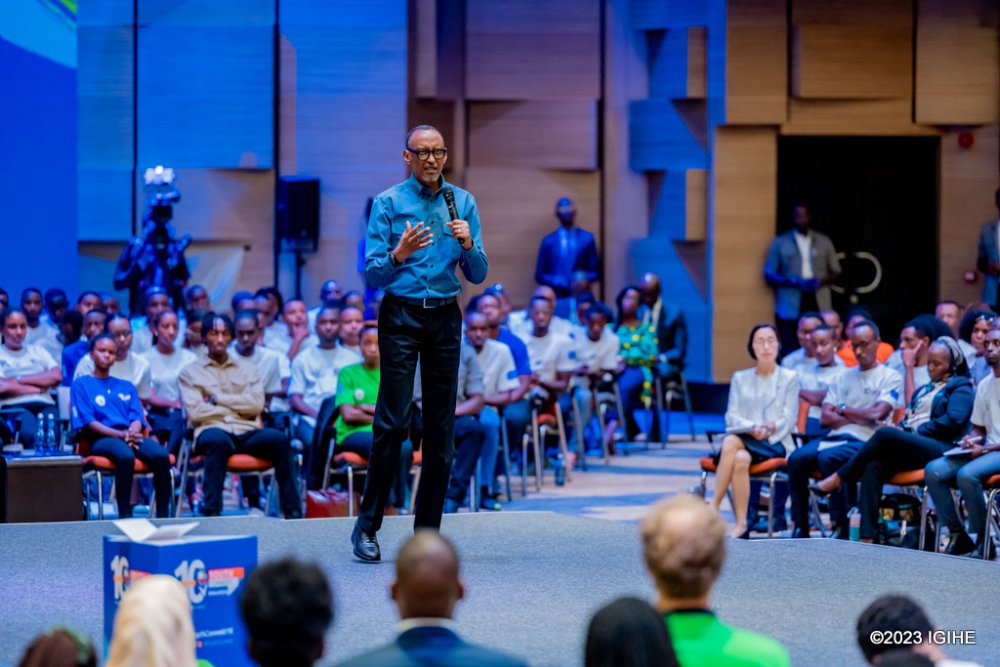
He delivered these remarks at the celebration of YouthConnect’s 10-year anniversary at Intare Arena in Rusororo.
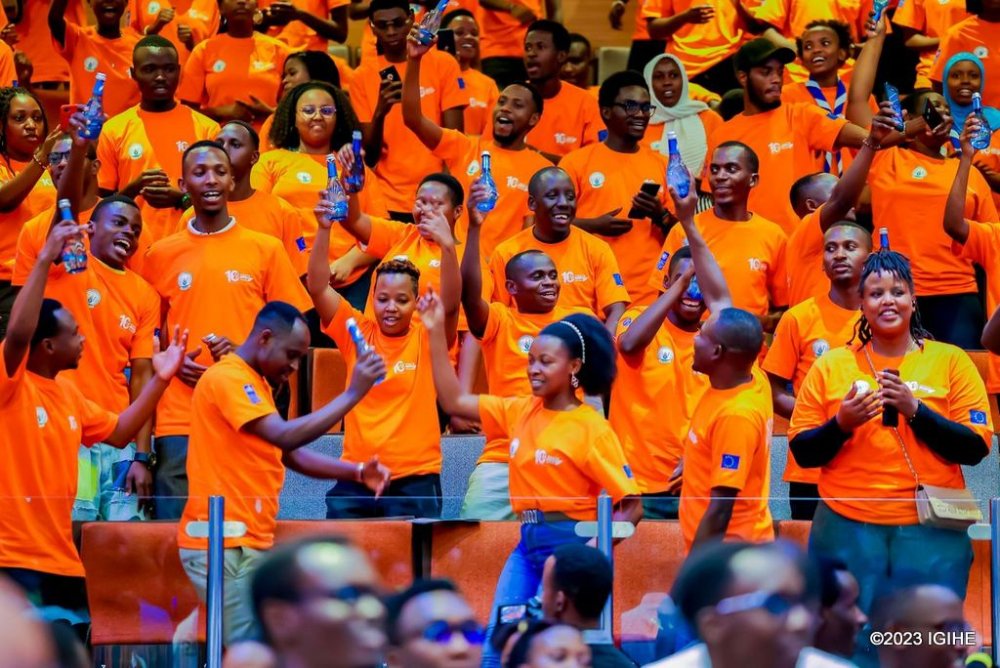
The event brought together thousands of young Rwandan leaders, entrepreneurs, and innovators to engage in opportunities for socioeconomic transformation, while showcasing their accomplishments and addressing challenges.
The Head of State emphasized that Rwandans and Africans are akin to other global citizens, where foreign powers should not have the authority to control them.
“There are powerful and affluent nations that impose their ways upon others, which raises questions, as no person created another. Regardless of whether you hail from America, China, India, Russia, Europe, or elsewhere, no one is the creator of another. From this standpoint, it’s evident that people should coexist with mutual respect,” he observed.
The President encouraged the youth to devise solutions and cultivate positive mindsets if they are to achieve the desired self-worth.
“Individuals strive for self-respect. You should think in a manner that acknowledges your humanity and capacity, albeit with limitations, just as other individuals also possess limitations in their capabilities,” he highlighted.
Kagame asserted that considering individual contributions collectively would have a positive impact, ensuring the continent is not perceived as lagging behind. He also reminded the youth to play their roles as early as possible to make significant strides towards desired progress and meaningful contribution to national development.
“Young people, in everything you do, ask yourself why Rwanda and Africa are still lagging behind in terms of development when other parts of the world have managed to move ahead. In whatever you do, ask yourself what you can contribute toward solving that problem. There is no early time or young age for you to not think about the future and what you can do about it,” stated Kagame.
The President also motivated young individuals to dispel any pessimistic thoughts or feelings of hopelessness and self-underestimation.
“No, you are capable, just give it a try, even if it fails you will have tried. Have that heart that wants to try to do something and succeed, you will fail in some cases but if you fail, try something else, you will succeed,” he advised.
Themed “10 Years of Impact,” this anniversary highlighted the multitude of achievements by YouthConnekt, which includes the establishment of over 30,000 jobs and the provision of support to over 2,000 youth-led enterprises with skills in business development, mentorship, funding, and more.
YouthConnekt Rwanda is the result of an effective partnership between the Rwandan government, the youth, and development partners such as the United Nations Development Programme (UNDP), Imbuto Foundation, MTN, KOICA Rwanda, the European Union, United Nations Children’s Fund (UNICEF), United Nations Population Fund (UNFPA), UN Women, World Health Organization (WHO), MasterCard Foundation, Airtel Rwanda, Bank of Kigali and BPR, among others.
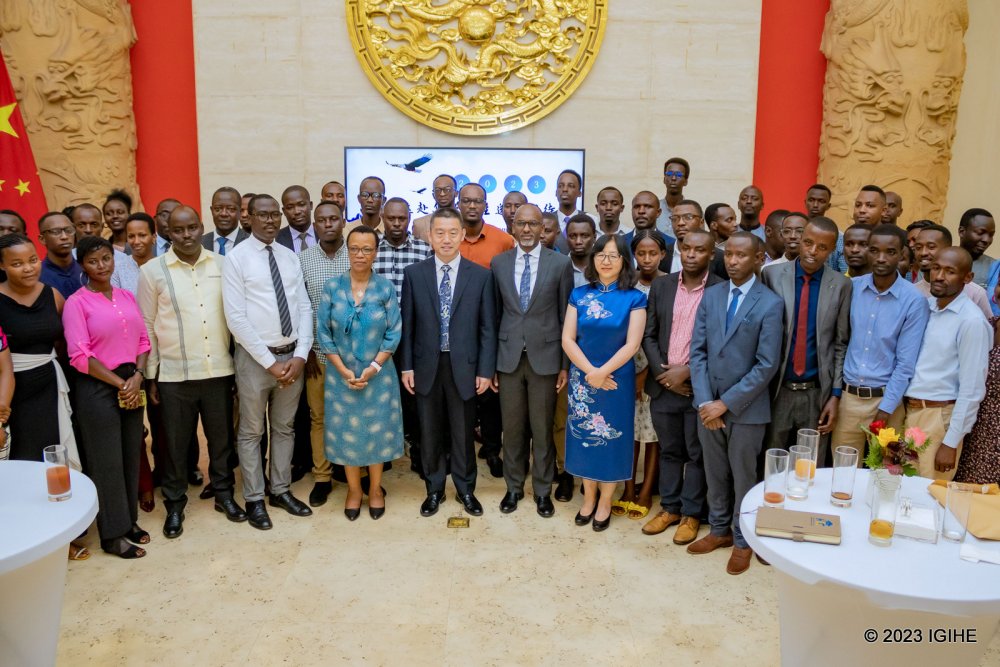
Among them, 75 students are to pursue master’s degrees, two doctorates and three bachelor’s degrees in science, technology and economics among other disciplines.
Speaking at a farewell ceremony in Kigali, Rwanda’s capital, Wang Xuekun, the Chinese ambassador to Rwanda, urged the students to make good use of the study opportunity, aim high and pursue academic excellence.
Encouraging the students to connect personal ambition with national development, Wang said that Rwanda attaches great importance to education and the development of human resources, as it plays a key role in the country’s transformation agenda.
Since the 1980s, more than 1,500 Rwandan students have completed their studies in China after being awarded Chinese government scholarships, according to official data.
The graduates from China are said to be working in different sectors of Rwandan society, contributing to the country’s progress.
Rose Mukankomeje, the director general of Rwanda’s Higher Education Council, highlighted the importance of cooperation between the Chinese government and Rwanda in terms of capacity building.
Besides knowledge from lecture rooms, she advised the students to embrace Chinese culture and society and come back upon completion of their studies with the necessary experiences to contribute meaningfully to the country’s development.
The students are to study at first-tier universities in China.
Phillip Karenzi, the director general at Rwanda’s Ministry of Foreign Affairs, described the farewell ceremony as a key event in the history of China-Rwanda relations.
“This farewell reception is not just (a) symbolic event but a symbol of strong ties between Rwanda and China,” he said, commending the leadership of Rwanda and China for the unwavering commitment to strengthening excellent relations between the two countries.
He noted that the commitment has yielded tangible results in various sectors such as infrastructure, health, agriculture, energy, technology and education. “The collaboration is a testament to the friendship that has flourished for over 50 years and it serves as the foundation for greater cooperation in the years ahead,” said Karenzi.
Underlining the Rwandan government’s appreciation to China for supporting Rwanda’s human capital development, Karenzi emphasized that the country’s education sector has greatly benefitted from the bilateral cooperation between the two countries.
Karenzi challenged the students to act as Rwanda’s ambassadors in China and carry with them Rwanda’s spirit of “agaciro,” literally meaning dignity in Kinyarwanda, the national language of Rwanda, or dignity while remaining open to new ideas. He advised the students to not only gain classroom knowledge in China but learn from China’s rich transformative experience from the community they will be part of.
Emmanuel Kamanzi, the adviser to the Rwanda-China Alumni Organization, advised the students against being swayed from their studies, when they reach China, noting there is a lot to learn there which can be helpful when they return to Rwanda, including language and Chinese culture.
Ian Jesse Mbanda, who spoke on behalf of the new scholarship beneficiaries, said their belief is that studying in China offers many rewards in terms of knowledge and skills. He said there is a lot to learn in terms of Chinese technology and industrial development.
Ambassador Wang also encouraged the students “to add fuel to China-Rwanda friendship,” saying the relationship between the two countries is a model of state-to-state relations. “During your stay in China, I encourage you to visit various places, make more friends, and deepen your understanding of China, its people and culture.”
Noting that Senegal is an important partner of China in Africa, Xi said that with joint efforts in recent years, the two countries have enjoyed ever-deepening political mutual trust and fruitful cooperation in various fields.
Xi said that China firmly supports Senegal’s endeavors in safeguarding national stability and development, adding that China stands ready to strengthen mutual support with Senegal and deepen cooperation in such areas as industry, agriculture, infrastructure and human resources, jointly safeguard their legitimate right to development, and push for greater development of their comprehensive strategic cooperative partnership.
He stressed that currently, the international situation is undergoing profound and complex changes, and that China and Africa need more than ever to strengthen solidarity and cooperation.
Xi said China supports the African Union in joining the Group of 20, and stands ready to share with African brothers its development experience and opportunities, and push for the joint pursuit of a China-Africa community with a shared future in the new era by continuously upholding the principles of sincerity, real results, amity and good faith and pursuing the greater good and shared interests.
As co-chairs of the Forum on China-Africa Cooperation (FOCAC), China and Senegal have supported and cooperated with each other and successfully held a series of important events including the Extraordinary China-Africa Summit on Solidarity against COVID-19, he said.
China, Xi added, stands ready to work with Senegal to continue to strengthen communication and coordination, push for the implementation of the nine programs announced at the FOCAC, and make new contributions to consolidating China-Africa solidarity and cooperation.
For his part, Sall said that Senegal and China are high-quality comprehensive strategic partners, hailing Xi as a great friend of Africa and Senegal.
He noted that the two sides, in the spirit of sincerity and friendship, have carried out mutually beneficial cooperation in a wide range of fields such as infrastructure, industry, agriculture and education.
Senegal, he said, firmly adheres to the one-China policy, appreciates China’s foreign policy of peace, and hopes to work with China to deepen bilateral and multilateral cooperation.
The vigorous Africa-China cooperation meets the development needs of Africa and has been implemented efficiently, which has strongly underpinned the economic and social development of African countries, he said.
Sall thanked China for taking the lead in publicly supporting AU’s G20 membership, saying that his country, as a co-chair of FOCAC, will continue to closely communicate and work with China to promote the further development of Africa-China relations.
According to the Energy and Petroleum Regulatory Authority, a state agency, peak demand for electricity in Kenya has increased by an average of 3.1 percent annually and currently exceeds 2,000 megawatts (MW).
Kenya, like many other African countries, has not been spared the challenge of energy shortage, with government statistics indicating that about 25 percent of the East African country’s population lacks electricity connection.
In addition, power supply disruptions linked to drought and the high cost of maintaining diesel-fired power plants have undermined efforts to realize universal access to electricity.
To address the energy access gap, the government wants to replace diesel-fired power generation by drilling geothermal wells across the country’s Rift Valley.
Currently, geothermal accounts for 39.15 percent of power installed in the national grid, followed by hydropower at 26.47 percent by the end of 2022, according to the Energy and Petroleum Regulatory Authority.
President William Ruto said during the Africa Energy Forum held in Nairobi, the Kenyan capital, in June that the country aims to achieve a 100 percent clean energy transition by 2030.
He said Kenya has 10,000 MW of untapped geothermal energy, spread across some 20 locations in the Rift Valley, which is enough to meet the country’s electricity needs even during peak hours.
Kenya’s development blueprint, Vision 2030, projects that its geothermal power generation will reach 1,600 MW by 2030, accounting for 60 percent of overall power generation.
In the middle of picturesque escarpments on the northern edges of the Rift Valley county of Nakuru, the Menengai Geothermal Power Plant, financed and constructed by a Chinese firm, stands out for its architectural finesse.
Major civil works on the plant are 98 percent complete, according to local officials, and upon commissioning, it will supply 35 MW of electricity to the national grid, boosting Kenya’s clean energy switch.
The exploration of geothermal power at Menengai crater, a geological marvel at the heart of the Great Rift Valley, commenced in 2011 but paused later, only to resume in 2021 when a group of Chinese financiers and contractors came on board.
One of the Chinese companies implementing the geothermal power project is Kaishan Group, the project’s contractor, which was involved in securing financing as well as designing and constructing the plant.
Guo Rui, the project manager at Kaishan Group, said that through a contractual arrangement with Sosian Energy, a local privately owned independent power producer, it has been possible to mobilize funds and technology required to exploit geothermal resources in Kenya.
“We are at the final stages of constructing the power plant and once it is completed, we shall hand it over to Sosian Energy company, which will later sell electricity from geothermal wells to the national grid,” Guo told Xinhua during a recent interview.
Kaishan’s manufactured equipment has slashed the geothermal project’s implementation timeline significantly, saving on cost, Guo said.
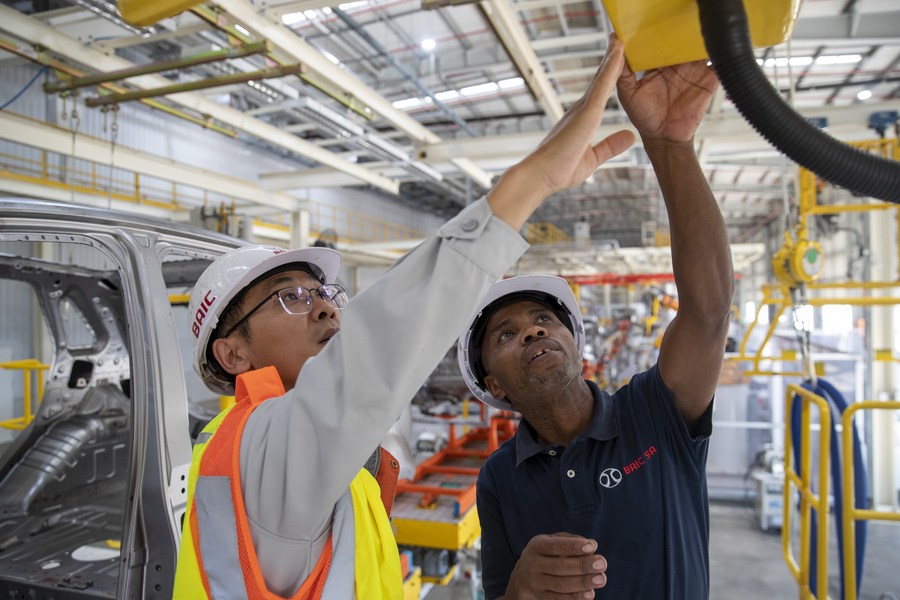
“The equipment produced by Kaishan Group is highly energy efficient and has a shorter construction lifespan,” Guo said, adding that transferring skills to local technicians has been a major priority for the Chinese firm.
Venugopal Varanasi, the managing director of Sosian Energy, in an article published on June 1 by China Global South Project, noted that air compressors manufactured by the Kaishan group convert geothermal steam into electricity speedily.
Varanasi added that through the use of Kaishan technology, it has been possible to convert low-pressure geothermal steam into power, noting that the Menengai geothermal project will serve as a model for innovative blending of Chinese capital and technology to promote clean energy access in Kenya.
Kenya could become a regional hub for geothermal generation and supply, thanks to the injection of Chinese funds and modern technology to hasten the implementation of the Menengai geothermal plant, said Lin Juntao, a site engineer at Power Construction Corporation of China (PowerChina).
PowerChina, according to Lin, has since January 2022 been undertaking civil and installation works at the Menengai geothermal plant.
“All the installation works are finished,” Lin said, noting that equipment supplied by Kaishan Group, including turbines, can use high steam temperature to generate power twice, compared to only once with Japanese or European equipment.
Moses Kachumo, a project engineer at Geothermal Development Company, a state-owned firm, hailed the Chinese for their flexible and no-strings-attached financing model alongside technical prowess for hastening the implementation of the Menengai Geothermal Power Plant.
Kachumo singled out technology supplied by Kaishan Group for maximizing generation of geothermal power from steam and hot water, adding that replicating similar technology in other geothermal projects in the country is being mooted.
“With Kaishan technology, we can use a low-pressure mixture of steam and water to generate power. The technology maximizes the energy from steam,” Kachumo said.
According to Kachumo, Kaishan Group has a 14-year contractual agreement with Sosian Energy to run and maintain the Menengai geothermal plant, and the Chinese firm will later hand it over to the Kenyan energy firm upon recouping its investments.
Kachumo said that Sosian Energy has a 25-year power purchasing agreement with Kenya Power, the state-owned utility, where it will be supplying electricity generated from the Menengai geothermal plant
BRICS economies have “emerged as powerful engines of global growth,” and “the changes that have taken place in BRICS economies over the past decade have done much to transform the shape of the global economy,” Ramaphosa said while addressing the BRICS Business Forum Leaders’ Dialogue here ahead of the 15th BRICS Summit.
The BRICS countries make up a quarter of the global economy, a fifth of global trade and more than 40 percent of the world’s population, while trade between BRICS countries totaled some 162 billion U.S. dollars in 2022, he said, stressing the important role of foreign investment in the growth of BRICS economies.
“However, the new wave of protectionism and the subsequent impact of unilateral measures that are incompatible with WTO rules undermine global economic growth and development,” he warned.
“We therefore need to reaffirm our position that economic growth must be underpinned by transparency and inclusiveness. It must be compatible with a multilateral trading system that supports a developmental agenda,” he said.
He also called for “a fundamental reform of the global financial institutions so that they can be more agile and responsive to the challenges facing developing economies, hailing the New Development Bank established by BRICS countries in 2015 for having demonstrated ability to mobilize resources for infrastructure and sustainable development in emerging economies without conditionalities.
Noting that the rapid economic, technological and social changes underway create new risks for employment, equality and poverty in many BRICS countries, he called on the business community “to join hands with us to identify solutions to these and other challenges affecting our respective economies.”
The president also invited BRICS countries to invest in Africa, which will be positioned as “the next frontier of productivity and growth” with its rich critical minerals and massive untapped potential for investment in infrastructure, agriculture, manufacturing, new energy, the digital economy as well as in skills development, small and medium enterprises, and others.
As a developing country and a member of the Global South, China breathes the same breath as other developing countries and pursues a shared future with them, and has resolutely upheld the common interests of developing countries and worked to increase the representation and voice of emerging markets and developing countries in global affairs, said Xi in a speech read out by Chinese Commerce Minister Wang Wentao at the BRICS Business Forum 2023.
{{CRITICAL JUNCTURE}}
“Right now, changes in the world, in our times and in history are unfolding in ways like never before, bringing human society to a critical juncture,” Xi warned in the speech titled “Enhance Solidarity and Cooperation to Overcome Risks and Challenges and Jointly Build a Better World.”
“Should we pursue cooperation and integration, or just succumb to division and confrontation? Should we work together to maintain peace and stability, or just sleepwalk into the abyss of a new Cold War? Should we embrace prosperity, openness and inclusiveness, or allow hegemonic and bullying acts to throw us into depression? Should we deepen mutual trust through exchanges and mutual learning, or allow hubris and prejudice to blind conscience?” Xi asked. “The course of history will be shaped by the choices we make.
Our world today has become a community with a shared future in which we all share a huge stake of survival, Xi said, noting that what people in various countries long for is “definitely not a new Cold War or a small exclusive bloc; what they want is an open, inclusive, clean and beautiful world that enjoys enduring peace, universal security and common prosperity.”
Such is the logic of historical advance and the trend of our times, Xi stressed, urging all countries to uphold the correct views of the world, of history and of our overall interests.
Noting that the global context is extremely complex nowadays, particularly in the economic and political fields, Eduardo Regalado, a researcher at the International Policy Research Center of Cuba, said the BRICS summit takes place at a time when more cooperation among countries is needed to bring prosperity and well-being to people worldwide.
The 15 BRICS summit is slated for Aug. 22-24 in Johannesburg, and leaders attending the event are to discuss issues including deepening BRICS cooperation, giving more voice to the Global South, and the BRICS group’s expansion.
“Emerging countries are becoming more and more relevant in the international arena. This summit will very much contribute to the shaping of a new global economic and political order. It will help change the current situation when it comes to international relations,” he said.
{{WAY FORWARD}}
In the speech, Xi underscores the importance of inclusive development, universal security, cultural exchange, and the collective rise of emerging economies and developing countries for a better world, expressing China’s willingness to deepen solidarity and cooperation with other emerging markets and developing countries to make the international order more just and equitable.
“We need to promote development and prosperity for all,” Xi said, adding that with perseverance, hard work and huge sacrifices, many emerging markets and developing countries succeeded in gaining independence, and “everything we do is to deliver better lives to our people.”
“Every country has the right to development, and the people in every country have the freedom to pursue a happy life,” Xi said, noting that China will work with all other countries to speed up cooperation under the Global Development Initiative, meet common challenges together and make life better for people across the world.
“We need to achieve universal security,” Xi said, adding that only a commitment to a new vision of common, comprehensive, cooperative and sustainable security can lead to universal security.
China stands ready to jointly pursue the Global Security Initiative with all others, have dialogue and oppose confrontation, forge partnership but not alliance, and pursue win-win outcome and oppose zero-sum game, and work together to build a community of security, Xi added.
“We need to stay committed to exchanges among civilizations and mutual learning,” Xi said, stressing that human civilization is colorful by nature, and deliberately creating division with the assertion of “democracy versus authoritarianism” and “liberalism versus autocracy” can only split the world and lead to clash of civilizations.
China, Xi said, welcomes all other countries to get involved in cooperation under the Global Civilization Initiative, promote the common values of humanity, encourage different civilizations to bring out their best and flourish together, and renew human civilization.
The collective rise of emerging markets and developing countries represented by BRICS is fundamentally changing the global landscape, Xi stressed, noting that whatever resistance there may be, BRICS, a positive and stable force for good, will continue to grow.
“We will forge stronger BRICS strategic partnership, expand the ‘BRICS Plus’ model, actively advance membership expansion, deepen solidarity and cooperation with other emerging markets and developing countries, promote global multipolarity and greater democracy in international relations, and help make the international order more just and equitable,” Xi said.
CHINA OPPORTUNITY
China will remain an important opportunity for the world’s development, Xi said in the speech, stressing China’s firm resolution in advancing high-standard opening-up, fostering a world-class, market-oriented business environment governed by a sound legal framework, and building a globally-oriented network of high-standard free trade areas.
China enjoys several distinct advantages: a socialist market economy in systemic terms, a supersize market in terms of demand, a full-fledged industrial system in terms of supply, and abundant, high-caliber labor force and entrepreneurs in terms of human resources, the Chinese president said, emphasizing that the Chinese economy has strong resilience, tremendous potential and great vitality, and the fundamentals sustaining China’s long-term growth will remain unchanged.
As it endeavors to achieve modernization for its more than 1.4 billion people, China will surely contribute even more to the global economy and provide even more opportunities for the global business community, Xi said.
China’s GDP expanded 6.3 percent year on year in the second quarter of 2023 with total goods imports and exports expanding 2.1 percent year on year to 20.1 trillion yuan (2.81 trillion U.S. dollars), according to official data.
The Chinese economy is projected to grow 5.6 percent in 2023, led by a rebound in consumer demand. Capital spending in infrastructure and manufacturing is expected to remain resilient, according to a World Bank press release in June.
China’s share of the global economy is crucial. By pursuing internal reforms and speeding up the opening up of its domestic market to foreign companies, China is offering opportunities to the rest of the world, said Lyazid Benhami, vice president of the Paris Association of French-Chinese Friendship.
“By investing in emerging countries, it is increasing the attractiveness and economic stability of countries that want to develop sustainably,” said Benhami.
BRICS countries choose their development paths independently, jointly defend their right to development, and march in tandem toward modernization, which represents the direction of the advancement of human society, and will profoundly impact the development process of the world, Xi said in a speech delivered at the 15th BRICS Summit.
The track record of the BRICS shows that the members have consistently acted on the BRICS spirit of openness, inclusiveness and win-win cooperation, and taken BRICS cooperation to new heights in support of the five countries’ development, he said.
BRICS nations, Xi said, have upheld fairness and justice in international affairs, stood up for what is right on major international and regional issues, and enhanced the voice and influence of emerging markets and developing countries.
BRICS countries invariably advocate and practice independent foreign policies, said Xi, adding that they always address major international issues based on their merits, making fair remarks and taking fair actions.
BRICS nations do not barter away principles, succumb to external pressure, or act as vassals of others, he said, adding that they share extensive consensus and common goals.
No matter how the international situation changes, the BRICS’s commitment to cooperation since the very beginning and the common aspiration will not change, he added.
Xi also noted that BRICS countries gather at a crucial time to build on their past achievements and open up a new future for BRICS cooperation.
He called on all members to navigate the trend of the times and stay in the forefront.
BRICS members should always bear in mind their founding purpose of strengthening themselves through unity, enhance cooperation across the board, and build a high-quality partnership, Xi said.
All BRICS countries, he added, should help reform global governance to make it more just and equitable, and bring to the world more certainty, stability and positive energy.
Xi called for efforts to deepen business and financial cooperation among BRICS countries to boost economic growth.
Xi said the world economic recovery remains shaky, and challenges for developing countries are even more formidable, hampering their efforts to realize the Sustainable Development Goals.
“Development is an inalienable right of all countries, not a privilege reserved for a few,” Xi said.
He called on BRICS countries to be fellow companions on the journey of development and revitalization, and oppose decoupling and supply chains disruption as well as economic coercion.
BRICS countries should focus on practical cooperation, particularly in such fields as digital economy, green development, and supply chain, and bolster economic, trade and financial exchanges, Xi said.
He added that China will set up a China-BRICS Science and Innovation Incubation Park for the New Era to support the deployment of innovation results.
Xi called on BRICS countries to expand political and security cooperation to uphold peace and tranquility.
“The Cold War mentality is still haunting our world, and the geopolitical situation is getting tense,” Xi said.
The BRICS countries should keep to the direction of peaceful development, and consolidate the BRICS strategic partnership, Xi said, adding that members should make good use of the BRICS Foreign Ministers’ Meeting, the Meeting of High Representatives on National Security and other mechanisms, support each other on issues concerning their respective core interests, and enhance coordination on major international and regional issues.
“We need to tender good offices on hotspot issues, pushing for political settlement and lowering the temperature,” he said.
Noting that artificial intelligence (AI) is a new area of development, which not only can bring huge development dividends, but also contains risks and challenges, Xi said the BRICS countries have agreed to launch the AI Study Group at an early date.
“We need to enable the study group to play its full role, further expand cooperation on AI, and step up information exchanges and technological cooperation,” he said.
The BRICS members should also jointly fend off risks, promote the establishment of an international mechanism for universal participation, and develop AI governance frameworks and standards with broad-based consensus, so as to continuously make AI technologies more secure, reliable, controllable and equitable, he added.
Also in his speech, Xi said human history will not end in one civilization or one system.
“There are many civilizations and development paths in the world, and this is how the world should be,” he said.
“We should increase people-to-people exchanges and promote mutual learning between civilizations,” he added.
The Chinese leader said BRICS countries need to champion the spirit of inclusiveness, advocate peaceful coexistence and harmony between civilizations, and promote respect of all countries in independently choosing their modernization paths.
“We need to make good use of such mechanisms as the BRICS seminar on governance, the BRICS forum on people-to-people and cultural exchanges, and the Women Innovation Contest to deepen people-to-people exchanges and strengthen the bond between our peoples,” he noted.
Xi also said that China would like to propose that BRICS countries expand cooperation on education, enhance the role of the BRICS alliance for vocational education, explore and set up a cooperation mechanism on digital education, and foster a paradigm of all-round cooperation on education.
In addition, he also urged BRICS countries to strengthen exchanges on traditional cultures and promote the renewal of fine traditional cultures.
Xi urged BRICS countries to uphold fairness and justice, and improve global governance.
Xi said strengthening global governance is the right choice if the international community intends to share development opportunities and tackle global challenges.
International rules must be written and upheld jointly by all countries based on the purposes and principles of the UN Charter, rather than dictated by those with the strongest muscles or the loudest voice, he said.
Xi also said ganging up to form exclusive groups and packaging their own rules as international norms are even more unacceptable.
BRICS countries, Xi said, should practice true multilateralism, uphold the UN-centered international system, support and strengthen the WTO-centered multilateral trading system, and reject the attempt to create small circles or exclusive blocs.
“We need to fully leverage the role of the New Development Bank, push forward reform of the international financial and monetary systems, and increase the representation and voice of developing countries,” he added.
Addressing the summit, South African President Cyril Ramaphosa expressed his concerns that global financial and payment systems are increasingly being used as instruments of geopolitical contestation.
He also said new realities call for a fundamental reform of the institutions of global governance so that they can be more representative and better able to respond to challenges.
The BRICS group supports the rise of a multipolar world order, and opposes attempts made by some countries to assert their hegemony, Russian President Vladimir Putin said at the summit in a virtual address.
“We are all unanimously in favor of the formation of a multipolar world order that is truly just and based on international law,” the Kremlin reported Putin as saying at the summit.
“We are against any kind of hegemony, exclusivity, which is being promoted by some countries,” Putin said.
Putin noted that the BRICS group is strengthening economic cooperation in such fields as supply chain diversification, de-dollarization and transition to national currencies in mutual settlements.
Putin outlined the importance of enhancing cooperation in other fields such as innovation, and in the creation of safe transport routes.
The future-oriented strategic course of BRICS meets the aspirations of the global majority, Putin said, adding that the BRICS group is tackling some of the most pressing issues on the global and regional agenda.
China will also try its best to provide support for Cuba’s economic and social development, said Xi in a meeting with Cuban President Miguel Diaz-Canel on the sidelines of the 15th BRICS Summit.
Xi recalled that President Diaz-Canel paid a successful state visit to China last November, when they reached a broad consensus on further deepening China-Cuba ties in the new era and agreed to work together to build a China-Cuba community with a shared future.
With the joint efforts of both sides, the consensus is being effectively implemented, Xi said. China is ready to work with Cuba to continue deepening political mutual trust, expanding practical cooperation, strengthening strategic coordination, and pushing for progress in the special friendly relationship between the two parties and the two countries, Xi added.
China praises Cuba’s steadfast support for China in issues concerning its core interests, Xi said.
Xi stressed that the Group of 77 and China is an important platform for cooperation among developing countries, adding that Cuba, as the current chair of the Group of 77 and China, has made positive contributions to strengthening the unity of developing countries.
China attaches great importance to and supports Cuba in successfully holding the Group of 77 and China Summit next month, Xi noted. China is willing to work with Cuba and other members of the Group of 77 to better safeguard the common interests and development rights of developing countries, Xi said.
For his part, Diaz-Canel spoke of his successful state visit to China last November, saying that both sides are earnestly implementing the important consensus reached by the two leaders.
He said the current Cuba-China relations are at a historical peak, adding that the Cuban people deeply admire President Xi and are grateful for China’s understanding and invaluable support for Cuba’s just cause.
Cuba firmly supports the Global Development Initiative, the Global Security Initiative, and the Global Civilization Initiative proposed by Xi, he said, adding that Cuba is ready to work with China to deepen Belt and Road cooperation, build a Cuba-China community with a shared future, and advance on paths of socialism with respective characteristics.
The Caribbean country is ready to closely collaborate with China to ensure the success of the Group of 77 and China Summit, he said.
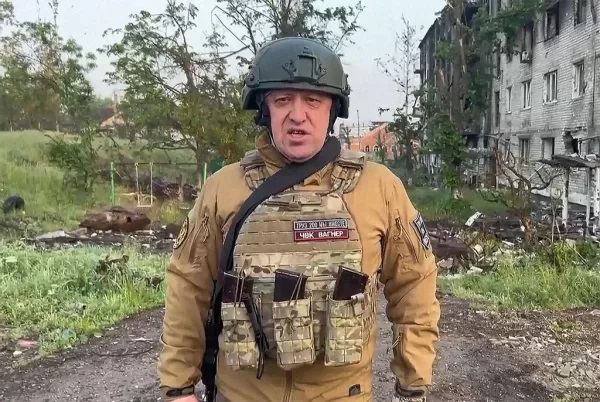
As per media reports, authorities are presently investigating the cause of the crash, which took place on Wednesday, exactly two months after Prigozhin led his fighters in a brief mutiny against Russia’s military leadership.
“There’s not much that happens in Russia that [Russian President] Putin’s not behind. But I don’t know enough to know the answer,” US President Joe Biden said in reaction to the news.
Mykhailo Podolyak, an aide to the Ukrainian president, remarked that the plane crash might signify “a message from Putin to Russia’s elites leading up to the 2024 elections. ‘Beware! Disloyalty equals death.’”
The news of his purported demise has raised concerns about the future of the numerous Wagner fighters stationed in Africa, Belarus, and other regions around the world.