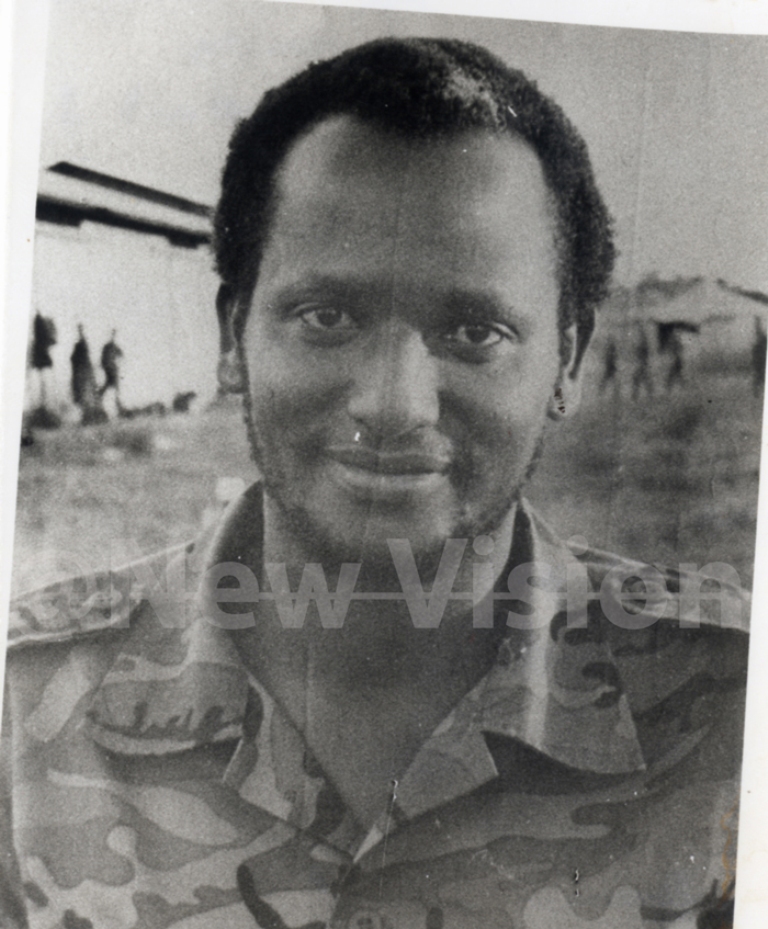
Fred Gisa Rwigema is in the category of “Imanzi” heroes.
His tragic demise occurred during the daring incursion of the armed wing of the Rwandan Patriotic Front, the Rwandan Patriotic Army (RPA), into Rwandan territory.
Comprising over three thousand individuals, mainly young Rwandans in exile, this force aimed to challenge the entrenched regime of President Juvenal Habyarimana. At the time, Habyarimana’s government stubbornly refused to allow Rwandan exiles to return to their homeland.
Rwigema’s loss struck a severe blow to the leadership of the FPR, both within the RPF and its army. The leadership, out of concern that revealing his death would demoralize their troops and endanger their mission, initially classified it as top secret. Rwigema had been the linchpin of the invasion, and his absence weighed heavily on their efforts.
This military campaign was a bold move against Habyarimana’s government, which had declared a state of national saturation, denying the rights of Rwandans in exile to return home. Tragically, Rwigema’s fate was followed by the loss of two other top commanders, Major Peter Bayingana and Major Chris Bunyenyezi, who were killed by Habyarimana’s forces in Ryabega. This further intensified the gravity of their sacrifice.
For a month, the RPF maintained a strategic silence about these critical losses before officially announcing them at a press conference in Brussels.
The reaction from the Habyarimana regime was swift. In Rwanda, supporters of the genocidal regime greeted the news with jubilation, while the RPF, though wounded, regrouped and continued their struggle.
In an exclusive interview with IGIHE, Tito Rutaremara, a key figure in the RPF who currently serves as the Chairperson of Rwanda Elders’ Advisory Forum, reflected on this tumultuous period.
He explained that the media silence was a deliberate effort to preserve troop morale and external support, stating, “Announcing such a loss on the first day would have sown doubt and confusion.”
The post-Rwigema era witnessed the ascent of Major General Paul Kagame, who, at the time, was undergoing military training in the United States. He answered the call of duty and assumed command of the RPA, returning to Rwanda on October 8, 1990, just days after the tragic loss of Maj Gen Fred Rwigema.
In later years, rumors circulated, partly fueled by Major Michael Mupende, who was in exile in the United States, suggesting internal dissent within the RPA as the cause of the “assassinations” of these honorable sons of Rwanda.
General (retired) James Kabarebe, currently the Secretary of State for Foreign Affairs in charge of Regional Affairs, vehemently refuted this theory, asserting that the deaths occurred in combat, in the face of the enemy. There was no more to it than that.
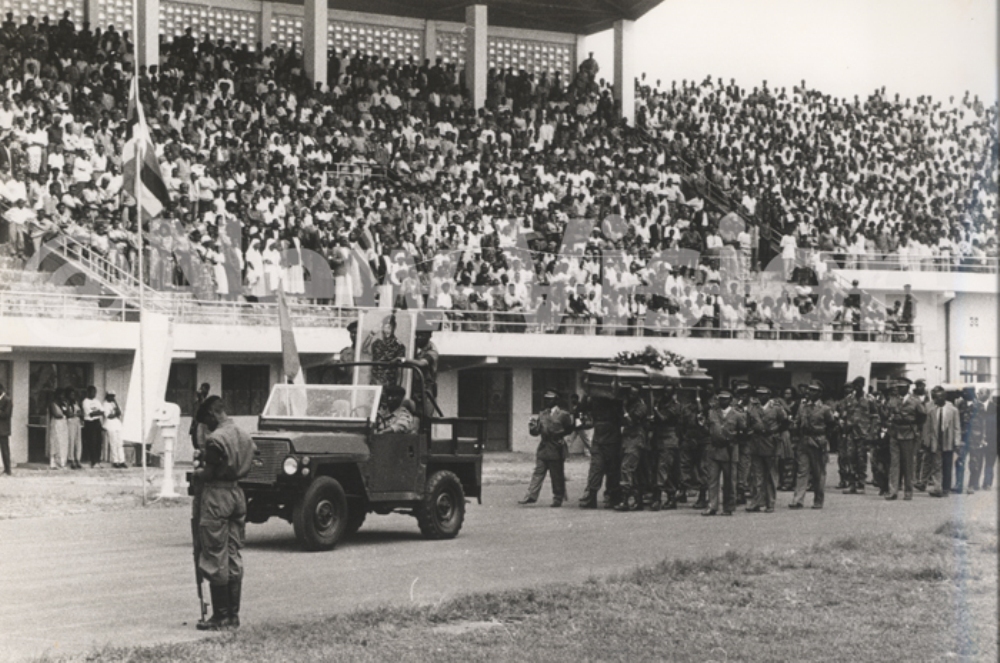
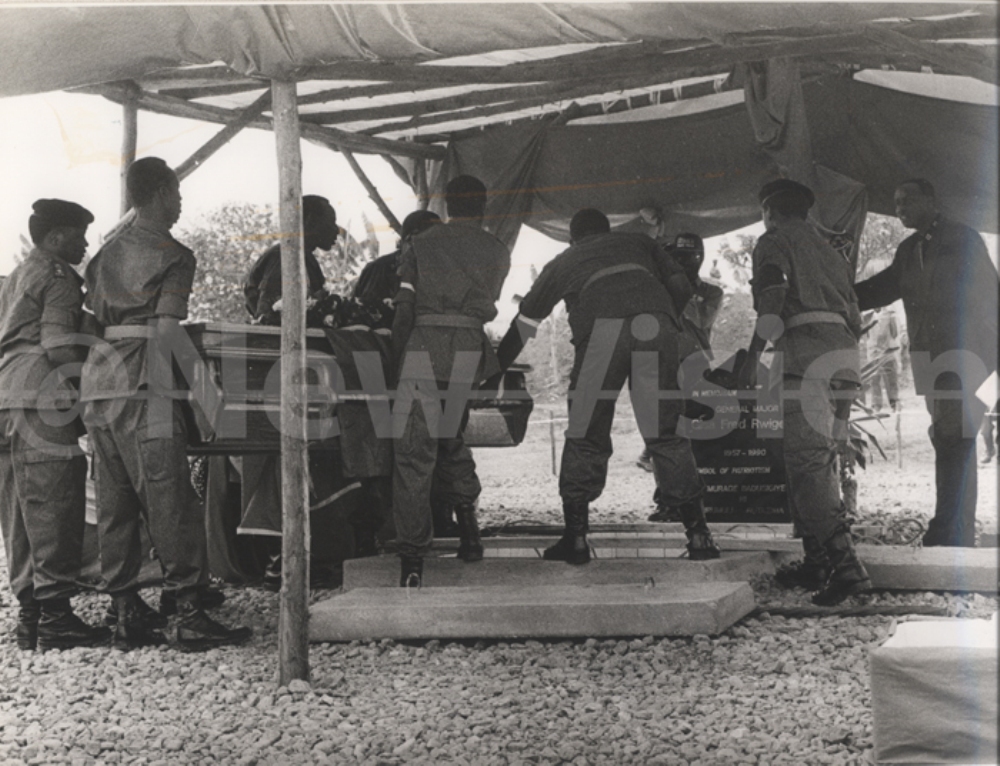
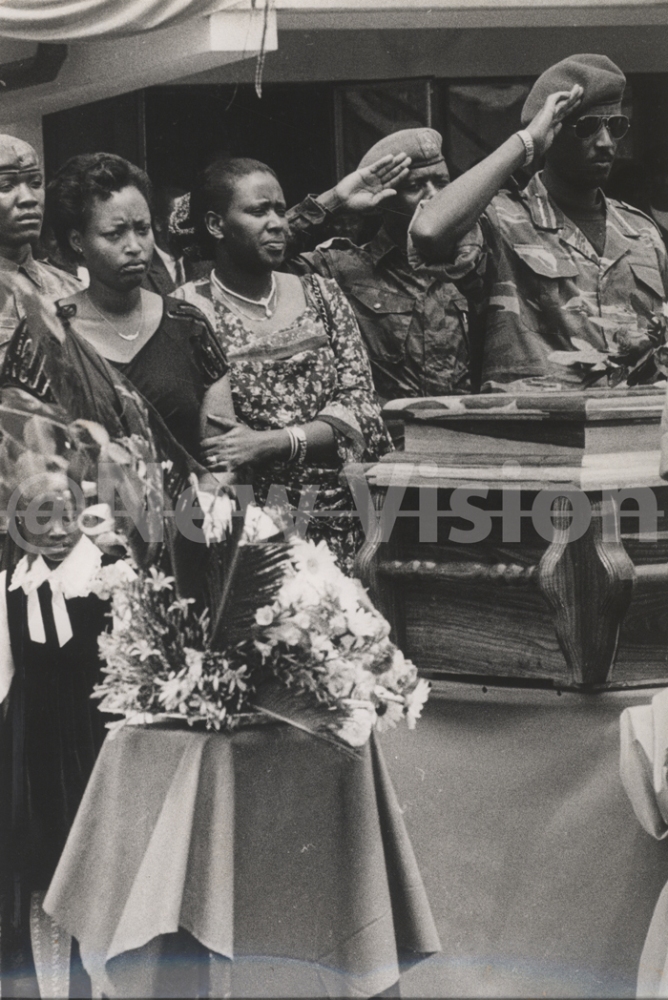
The memory of Maj Gen Rwigema and his comrades who fell in battle remains etched in the annals of national history. Rwigema was laid to rest on October 1, 1995, with full military honors at the Heroes’ Square in Remera.
Today, the names of men and women who made the ultimate sacrifice in pursuit of a free Rwanda serve as enduring symbols of a struggle that, even in the darkest hours, aimed to restore Rwanda to its unified and sovereign essence.
According to RIB, the arrest of Apostle Yongwe took place on Sunday, October 1, 2023. He is detained at the Kimihurura RIB Station while his file is being processed to be transferred to the Prosecution.
Dr. Murangira B. Thierry, the spokesperson for RIB, has informed IGIHE that the preacher was apprehended on charges related to the fraudulent acquisition of another person’s property.
This action is in violation of Rwanda’s penal code, specifically Article 174, which penalizes the fraudulent acquisition of someone else’s property.
Article 174 of Rwanda’s penal code states that any individual who deliberately obtains another person’s property fraudulently, either through the use of false identities or qualities, with the intent to create hope or fear of harm, and gains a portion or the entirety of their fortune, commits a criminal offense.
If found guilty, the suspect could face imprisonment for a period ranging from two to three years, along with a fine ranging from Rwf3 million to Rwf5 million.
Dr. Murangira has emphasized the importance of the general public being aware of legal provisions in their daily lives and avoiding involvement in criminal activities.
Sources indicate that Apostle Yongwe may have been arrested due to allegations of deceiving many individuals by promising them prayers to solve their problems, despite their situations not improving.
Formerly a follower of the ADEPR church, Yongwe is currently leading the Horebu Church, which is situated in Kagugu, Gasabo District. He has been known to claim that he makes a living from followers’ offerings.
A meeting took place in August, during which the Rwandan High Commissioner to the UK, Johnston Busingye, was also in attendance. The discussions during this meeting covered various aspects of the bilateral relationship between Rwanda and the UK, and according to Makolo, the article contained several factual inaccuracies.
Makolo clarified that Chelgate, owned by Terence Fane-Saunders, mentioned in the article, neither represented nor currently represents the Rwandan government. The government had terminated its contract with Mr. Fane-Saunders’ company over a year ago, and therefore, his comments should be disregarded.
Addressing the broader issues raised in the article, Makolo emphasized Rwanda’s pride in partnering with the UK government to address the challenges posed by the broken global migration system. She underscored the need to protect vulnerable individuals and prevent the empowerment of criminal smuggling networks, highlighting that Rwanda was actively engaged in finding solutions in cooperation with the UK.
In April 2022, the UK and Rwanda entered into a migration and economic development partnership aimed at offering a dignified life to those seeking asylum in European countries. Under this agreement, some individuals would be relocated to Rwanda and supported through various initiatives.
Makolo expressed Rwanda’s deep empathy for those seeking safety and opportunity in a new land, citing the country’s historical context as a driving force behind its approach to migration and asylum issues. She reiterated Rwanda’s commitment to combating discrimination, emphasizing that it is enshrined in the nation’s constitution and upheld through a dedication to the rule of law.
Regarding the Migration and Economic Development Partnership, Makolo stressed that Rwanda and the UK approach their collaboration from a foundation of mutual respect and open dialogue.
She also highlighted the pivotal role played by the Rwandan High Commissioner to the UK in maintaining the strong bilateral relationship between the two nations across various domains, including migration.
Libya’s Education Ministry said students whose schools were damaged or destroyed in the floods would be hosted by other schools.
The ministry also prepared psychosocial support for the students affected by floods, and demanded that private schools in Derna receive the affected students free of charge.
On Sept. 10, Mediterranean storm Daniel triggered the largest and worst floods in Libya in decades. Thousands of people were killed and went missing.
It also damaged 70 percent of the region’s infrastructure, including 114 schools in 15 flood-hit cities and towns.
A few days ago, Prime Minister Abdul-Hamed Dbeibah issued an order to allocate nearly 93 million Libyan dinars (about 19 million U.S. dollars) to restore the schools damaged by the floods in eastern Libya.
Albert Seneza, the village leader of Gaseke, recounted that the grenades came to light during the removal of the roof from a dwelling that had remained unoccupied for nearly a decade.
The house had once belonged to a former soldier named Francois, who held the rank of Second Lieutenant during the 1994 Genocide against the Tutsi. It is said that Francois fled to the Democratic Republic of Congo (DRC) and never returned to the area.
The discovery unfolded when a young man involved in removing the roofing tiles spotted two suspicious, bottle-like objects. In a swift response, an elderly woman, the sister of the aforementioned soldier, promptly alerted the village leader, Seneza.
Speaking to IGIHE; Jean Claude Gasore, the executive secretary of Mushubi Sector confirmed that the grenades were found within the residence of an elderly woman who had passed away several years ago. The decision to unroof and dismantle the house was motivated by its age and its location within a high-risk zone.
“It is true that these grenades were found in the house on Friday. Sources reveal that there is an EX-FAR soldier who used to live in the house during the 1994 Genocide against the Tutsi and fled to Congo. It is suspected that he might have left them in their home before fleeing,” acknowledged Gasore.
In this article, we will explore these qualities and discuss whether some people are, in fact, immune to narcissists.
{{Understanding narcissism}}
Before delving into the traits that may repel narcissists, let’s briefly define narcissism. Narcissistic Personality Disorder (NPD) is a mental condition characterized by an excessive need for admiration, a lack of empathy for others, and a grandiose sense of self-importance. Narcissists constantly seek validation and often manipulate those around them to maintain their inflated self-image.
{{Qualities that repel narcissists}}
Resisting Praise and Validation One significant quality that repels narcissists is the ability to withhold praise and validation. Narcissists thrive on attention and adoration, known as narcissistic supply. When someone refrains from readily providing these, narcissists may lose interest and move on to individuals who fulfill their need for validation.
Ramani Durvasula, a psychologist and author, emphasizes that this can be challenging for empathetic individuals who genuinely enjoy engaging with others. Resisting the urge to praise and validate may not come naturally to them.
Establishing and Maintaining Boundaries Narcissists enjoy a challenge, but they also have an aversion to individuals with unyielding boundaries. If someone clearly communicates and enforces their limits, narcissists often find it not worth their effort to continue pursuing them.
Stephanie Sarkis, a psychotherapist and author, points out that the word “no” is particularly repellent to narcissists. They will work tirelessly to transform a “no” into a “yes.” Someone who remains firm in their boundaries becomes unattractive to narcissists.
Recognizing Manipulation Being aware of manipulative tactics is crucial in avoiding narcissists. If a narcissist senses that someone is unaware of their tricks, they are more likely to target that person. Trusting your instincts and recognizing when something feels off is an essential tool in building immunity to narcissists.
Chelse Coley, a psychotherapist and author, stresses the importance of discerning who you are dealing with. Recognizing the presence of a narcissist early on can be the first line of defense.
While no one is entirely immune to narcissists, certain qualities and behaviors can act as a safeguard against their influence. Resisting the urge to lavish them with praise and validation, establishing and maintaining strong boundaries, and being vigilant for signs of manipulation are effective strategies. However, these strategies may be easier said than done, especially for empathetic individuals who naturally seek positive connections with others.
In a world where narcissists exist, it is crucial to develop and strengthen these qualities. By doing so, individuals can protect themselves from the emotional turmoil often associated with narcissistic relationships. Ultimately, it is not about complete immunity but about minimizing the damage inflicted by narcissistic individuals. Recognizing the presence of narcissists and taking proactive measures can help create healthier, more fulfilling relationships and a stronger sense of self-worth.
Nevertheless, the vast majority of us detest taking on agriculture as a profession, yet it’s the main source of food.
During Rwanda Institute for Conservation and Agriculture (RICA)’s recently concluded graduation, Howard Buffett, the Chairman and Founder of RICA, shared a story of a couple of young women he met at a girls’ school in Rwanda who had a negative perception about agriculture.
“I remember the first time Anna and I sat down at the girls’ school here in Rwanda and a couple of young women said; ‘we don’t want to be farmers, we don’t want to be in the field with a hoe, or chasing cows around, we just don’t want to do that,” he recalled.
As a way to convince them, Howard explained to the ladies what agriculture is. “But I told them, that’s not really agriculture today. Agriculture is about science, maths, and technology. It’s about improving lives, feeding people, and taking care of the land and the natural resources so that the next generation can produce even more than what we do today,” he said.
“It’s about transforming your country and its economy, and it’s about supporting farmers to improve their lives,” added Howard.
While there may be others with the same mindset as the ‘young girls’ Howard met, there are also individuals who viewed agriculture as a chance to transform the world and pursued it as a university course.
RICA graduate, Sifa Florence Sangwa grew up in Rulindo village-Rwanda, where agriculture was the main source of income for her family.
Every weekend, she would accompany farmers to the fields and while there, she witnessed firsthand the challenges they encountered.
Although this would have discouraged her from taking a profession in agriculture, it instead motivated her to take the practice very seriously. After all, she was rearing some livestock herself.
“When I was younger, I was given a rabbit as a gift. Unfortunately, its kits were always born sickly, and they died since I didn’t know how to care for them. Furthermore, I used to overdose our hens to death whenever they got sick, thinking it would heal them quickly,” she stated.
Through taking up a course in agriculture, Sifa is now competent to take on any agriculture challenge including those farmers in Rulindo face.
“I am able to carry out various technical skills involved in animal production like Artificial Insemination, veterinary intervention, and animal nutrition skills.
Besides, the teaching mode at RICA acquainted me with problem-solving skills that helped me develop innovative solutions to real-world agricultural problems like climate change, pests and diseases, and adaptability to new technologies in agriculture,” she stressed.
Another graduate, Assoumpta Umwali Ujeneza was drawn to a career in agriculture because of her interest in food processing. During her studies at RICA, she participated in initial cultivation with farmers, which helped her understand the interconnection of many stages in guaranteeing food safety.
She also learned the significance of sustainable and ecologically friendly farming techniques, which will allow her to operate effectively in the agricultural industry and provide advice to others in the food value chain.
On the other hand, Ntihemuka Benjamin’s knowledge of agriculture was confined to what he watched on television. Fortunately, during one of his study tours at ‘Urwibutso enterprise,’ he learned about the ‘banana-value-chain’ and its positive impact on farmers.
He also witnessed the threat ‘agrochemicals’ posed on bees and the entire ecosystem which stirred up his need to pursue a course in agriculture so as to improve people’s lives while at the same time conserving the environment.
“I wanted to address agricultural challenges while conserving nature at the same time,” he explained.
While in his fifth year in high school, Robert Ganza Mpore and four of his friends owned a small-scale farm where they cultivated cucumbers.
With their school acting as subtle customers for their produce, Mpore and friends generated some ‘good’ income from their efforts which led him to come to the conclusion that agriculture is what he should do, hence enrolling in an agricultural institute for his university studies.
“Throughout my studies, I had the privilege of delving into various facets of the agricultural domain, the most notable one being; ‘the subject of agricultural leadership’ which ignited my passion and nurtured my ambitions to pursue this specialization in the future,” he explained.
“Furthermore, the capstone internship at the Ministry of Agriculture and Animal Resources shaped my practical knowledge and skills. This invaluable opportunity provided me with hands-on involvement in the development of agricultural projects and policies,” added Mpore.
Now a graduate with a degree in agriculture, Mpore intends to ‘leverage the skills and expertise cultivated during his tenure at RICA to make a meaningful contribution to the agricultural sector of Rwanda and the African continent at large.’
{{Youth encouraged to embrace agriculture}}
When it comes to choosing study courses at university, reports say that most youth shy away from the profession yet it provides countless opportunities in technology, resource management, food processing, among others.
Benjamin Ntihemuka, a graduate with a Bachelor’s of Science in Conservation Agriculture from RICA, urges the youth to engage in agriculture and exploit the vast wealth it holds.
“The problems and challenges of the agriculture sector make it even suitable for the youth to adventure and find solutions which will turn into multibillion businesses in the future,” he states.
“The world’s population will have doubled by 2050 meaning that food demand will also increase drastically. Technology advancement like machine learning, Internet of Things [IoT], and artificial intelligence will be instrumental in precision agriculture and sustainable production. This is a great opportunity for the youth to create a synergy not only in agriculture but also other sectors that will elevate food production,” he explained.
Robert Ganza Mpore, also a graduate from RICA, sympathizes with those who look down on agriculture saying he was once like that not until he studied agriculture.
“Through studying agriculture, I discovered the tangible connections between Science Technology Engineering and Mathematics (STEM) and agriculture.
I came to recognize that agriculture is not just about farming; it encompasses a multifaceted landscape that employs some of the finest entrepreneurs, communicators, leaders and IT experts who employ cutting-edge technology like unmanned aerial vehicles (UAVs) or drones, skilled mechanics, among others,” he explained.
He thus recommends a foundation for a more informed perspective on agriculture to be laid during early education as a solution to eradicate the mentality that agriculture is a ‘bad profession.’
“Schools should consider integrating agricultural education into their curriculum, fostering practical experiences such as maintaining gardens, thereby enabling students to gain firsthand knowledge of the fundamental principles of agriculture.
By doing so, we can bridge the gap between misconceptions and the rich world of opportunities that agriculture offers,” stated Mpore.
“The same way Gold is excavated from mud and becomes the most valuable mineral, so is agriculture,” says Sifa, a graduate with a Bachelor of Science in conservation agriculture, urging the youth to have a more positive approach to the profession.
She adds that the practice has evolved and is no longer about trolling in the mud. Instead, it is a dynamic and innovative field that offers countless opportunities for growth, learning, and positive change.
“I call upon the young generation of students to know that their positive attitude in agriculture counts a lot. They should venture and invest their time in this sector because it requires technology, innovation, and research that is easily done by young people. This will ensure efficient agricultural evolution and transition, making it easier to optimize production in agriculture,” Sifa explained.
{{A glance at agriculture in Africa}}
According to reports, agriculture contributes 35% to the continent’s GDP in addition to providing livelihood for more than 50% of the population.
Reports further indicate that ‘Africa has the potential to meet not only its own food needs, but also those of the rest world’.
Despite this potential, one in five people faced hunger in 2020 and the number continues to rise as per report published by World Vision in February 02, 2022.
The United Nations (UN) recently warned Global governments that action is needed in order to prevent the next food crisis caused by the pandemic, climate change, production of food that can’t keep up with the increasing consumption, and current agricultural methods and strategies which aren’t sustainable.
Therefore, to address this problem, Howard Buffett together with the Government of Rwanda, founded RICA not only to address long-term challenges of smallholder farmers through conserving agriculture but also change the way that people view agriculture not only in Rwanda, but also in Eastern Africa and the continent at large.
Commenting on the significance of the institute, Howard emphasized the importance of each African country having its own version of a land grant university ‘that would train the next generation of leaders in agriculture to help countries reach their highest potential both in agriculture and across national priorities.’
Land grant universities are colleges or universities that were established 175 years ago in the United States devoted to practical training and sustainable solutions in the agricultural context.
Women and handbags are ‘inseparable’; they have this relationship where not only ‘one complements the other,’ but one where ‘one can’t do without the other,’ just like pen and paper, tea and sugar, or what ‘Radio and Weasel’ sang about in one of their hit songs: bread and butter.
There have been trends of women going ‘braless,’ ‘pantless,’ ‘make-upless,’ and ‘hairless,’ but fashion experts truly doubt they will ever go ‘bagless.’
In fact, researchers have it that six is the average number of bags a woman has in her closet.
Designed in different sizes, from different fabrics and for different occasions, bags play a pivotal role in a woman’s life, not just as an accessory, but a ‘survival kit.’
Just as men’s wallets always have business or ATM cards and currency notes, there are certain items that will always make it to a woman’s bag, regardless of its size.
{{‘Always haves’}}
{{Make-up:}} When it comes to women who have embraced their ‘natural’ looks, we have to give it up to ‘Rwandans.’ I don’t know if it’s because Rwanda is the only country I’ve been to after Uganda, but again, I’ve worked in places where clients are from all walks of life and been to international schools for my education.
So yes, I can confidently say Rwandans rock their natural looks even on ‘big’ events like wedding days.
But hey, makeup is not only foundation, powder, primer, or concealer. Makeup is any product that is used on the face to enhance one’s looks, and this may include mascara, lip balm or lip gloss, lipstick, eyelashes, and eyeshadows.
No matter the size of the bag, a woman of any age is guilty of carrying at least one of those in their bag.
{{Mobile phone:}} If there’s one thing 99.9% of people, men alike, never leave home without, it’s the phone. In brief, mobile phones are like the ‘MTN’ network of Africa, “everywhere you go,” you carry them with their accessories, like earphones, chargers, or power banks, phone cases, among others. However, don’t get the same attention, simply because they can be shared.
{{‘Must haves’}}
I’m ‘tiny’ by nature, if there is such a thing in English, but I enjoy small things.
However, when it comes to bags, I make sure not to buy extremely little ones because there are some things that I know I can’t go without because of my gender, both for safety and sanitary reasons.
I’m not sure what you always take in your luggage, but the following items are essential for every elegant woman.
{{Pocket tissues:}} Along with their kin wipes, pocket tissues should never be left out of a lady’s bag. While you leave home, you never know what you will encounter along the way. For us pedestrians, an angry driver may splash water onto you, or you may spill food on that gorgeous outfit while you have lunch; a wet wipe or pocket tissues will come in to ‘save the day.’
{{Mint or chewing gum:}} When Philip Knight Wrigley, an American chewing gum manufacturer said, “fresh breath, fresh moments,” he didn’t lie. There’s a certain confidence that comes with speaking with fresh breath. It’s similar to how you can freely pose and smile for the camera after brushing your teeth in the morning. If you want to maintain that confidence throughout the day, carry a pack of chewing gum, or just sweets, for after lunch and later in the evening so that you don’t have people ‘turn heads’ when talking to you.
{{Wallet:}} They have recently replaced handbags, where one would just grab their wallet and move. This is not to say that if you are carrying a handbag, you should leave your wallet at home. Due to their size, wallets may fit in almost any bag and should never be forgotten. Not to mention how they help one look classy and organized because they don’t have to empty the bag on the floor when looking for their ID, business cards, or banknotes.
{{Hand cream:}} I know we are past Covid-19 times where we had to wash hands because our lives depended on it, but every now and then, you find yourself having to wash your hands, especially after answering that nature call. A hand cream should come in handy after drying your hands; both as a cosmetic (they help keep your hands free from fine lines) and also boost your confidence (imagine not wanting to shake your colleague’s hands because your hands feel rough and dry).
{{Hand sanitizer:}} Covid-19 did a good job of convincing us to carry these on a daily basis. Whether you were carrying a tote bag or a belt bag for the day, sanitizers were available in all sizes. Although the virus is long gone, germs and bacteria are still there, and carrying a sanitizer with you at all times will help you keep them at bay.
{{Toiletries:}} The list of toiletries is vast, and some may seem unnecessary, especially if you’re not going to a sleepover (e.g., soap, deodorant, toothpaste, toothbrush, and so on). Carrying some like sanitary towels, however, even if you are not on your period, can be a ‘life-saver’ for a friend, colleague, or stranger. So make it a point to carry one with you on a regular basis; they’re not that heavy after all.
{{Sunglasses and an umbrella: }} You may not need to carry these at all times, especially if you own a car and know you won’t be strolling around in the sun. But if you don’t have that luxury and you know the weather can change at any time, having them in your backpack will do you more good than harm.
{{Notebook and a pen:}} My profession allows me to have these most of the time; but, you can develop the habit as well. Journaling has been shown in research to lessen overall levels of depression. According to a 2006 study by Stice, Burton, Bearman, and Rohde, “writing in a journal can be as effective as cognitive-behavioral therapy in reducing the risk of depression and anxiety symptoms.” Even if you use your phone to record important occurrences, a pen and book are still useful because they don’t require a ‘battery’ to function.
{{Phone accessories:}} Although I previously indicated them under things not carried frequently, accessories such as earphones/earbuds, power banks, or chargers should come in handy with their kin; the phone. You don’t want to miss an important phone call or record a once-in-a-lifetime moment because your battery is dead, and no one else uses the same charger as you.
{{Pepper spray whistle: }} I can’t say it ever occurred to me to carry these in my luggage, but after reading Lilian Arjona’s blog, I felt obliged to purchase them one of these days. Women are a vulnerable gender by nature; imagine being attacked as you make your way to your car in the parking lot, or being attacked as you open the door to your house after work; what can help you first, other than pepper spray or a whistle to summon help?
Whichever bag you decide to carry, let it have some of these essentials. “Don’t just add sparkle to your look, add memories and safety.”
According to Cape Town South Africa, her life was marked by a turbulent journey through addiction, a harrowing suicide attempt, a relentless battle against cancer, and the tragic loss of two young children.
The Mandela family officially announced her untimely demise on Tuesday, following her passing on Monday. Although Zoleka had previously overcome breast cancer, her health took a devastating turn when she was diagnosed with cancer in her liver and lungs. The disease had metastasized, spreading throughout her body, ultimately claiming her life.
The Nelson Mandela Foundation, dedicated to preserving the legacy of the iconic South African leader who passed away in 2013, expressed deep sorrow over the loss of Zoleka Mandela. They extended their heartfelt condolences to her family, acknowledging her as a cherished grandchild of Nelson Mandela.
The foundation lauded her tireless efforts to raise awareness about cancer and her role as a beacon of inspiration for those affected by the disease and for parents who had experienced the profound grief of losing a child. Zoleka had established foundations to support individuals in both of these critical areas.
Zoleka’s early life was a series of profound challenges and tragedies that would have overwhelmed anyone. These difficulties unfolded in the backdrop of her struggle to live up to the extraordinary legacy of her grandfather – a Nobel Peace Prize laureate, the leader of the anti-apartheid movement, South Africa’s first Black president, and a globally respected symbol of positive change.
Zoleka experienced sexual abuse during her childhood and grappled with drug and alcohol addiction from her teenage years onwards. Tragically, her 13-year-old daughter, Zenani, lost her life in a car accident in 2010, caused by a drunk driver. At that time, Zoleka was deep in the throes of addiction and had even attempted suicide.
In a candid interview with The Associated Press in 2013, she admitted the devastating choice she had made: “I hadn’t seen my daughter for 10 days before her passing, and I hadn’t because I chose to use drugs. That’s obviously a reminder that I chose my addiction over my kids and I have to live with that for the rest of my life.”
The immense pain and guilt shook her to the core, leading her to seek help and enter rehab, not just for her own well-being but also for the sake of her surviving child, Zwelami, and in memory of Zenani. Zenani’s tragic death prompted Nelson Mandela, then in frail health, to attend his great-granddaughter’s funeral, marking one of his final public appearances.
Shortly after her daughter’s passing, Zoleka was diagnosed with breast cancer, which necessitated a double mastectomy and grueling rounds of chemotherapy. Tragically, her second son was born prematurely in 2011 while she was undergoing cancer treatment and passed away shortly thereafter. At the time of her passing, she had four surviving children.
In 2013, Zoleka Mandela released her autobiography, titled “When Hope Whispers.” The book delved into the profoundly challenging circumstances of her life, including her unconventional upbringing as a Mandela during the violent era of apartheid in the 1980s, when her grandfather was incarcerated for leading the anti-apartheid movement.
In her autobiography, Zoleka recounted a startling childhood memory: “By the time I was born … my mother knew how to strip and assemble an AK-47 in exactly thirty-eight seconds.” Her struggle with alcohol began at the tender age of nine, eventually spiraling into a daily cocaine addiction. This addiction would later separate her from her own children and become her deepest regret, particularly during the period when her daughter tragically lost her life.
However, Zoleka’s life would ultimately take a different trajectory, concluding with a remarkable chapter of transformation. She emerged as a prominent advocate, not only for cancer awareness but also for road safety, earning widespread acclaim for her efforts in both areas. Even as she battled terminal cancer, her unwavering courage and commitment to her causes were evident.
The foundation bearing her grandfather’s name aptly recognized her as a “tireless activist.” This tribute was particularly fitting, as Zoleka, despite initially feeling daunted by the monumental legacy of Nelson Mandela, ultimately found inspiration in it.
She expressed her hope that her grandfather, wherever he might be, was looking down and thinking, “she has gotten it right, finally.” These words, spoken to the BBC in 2016, encapsulate the journey of a remarkable woman who, in the face of immense adversity, ultimately found her purpose and made a profound impact on the world.
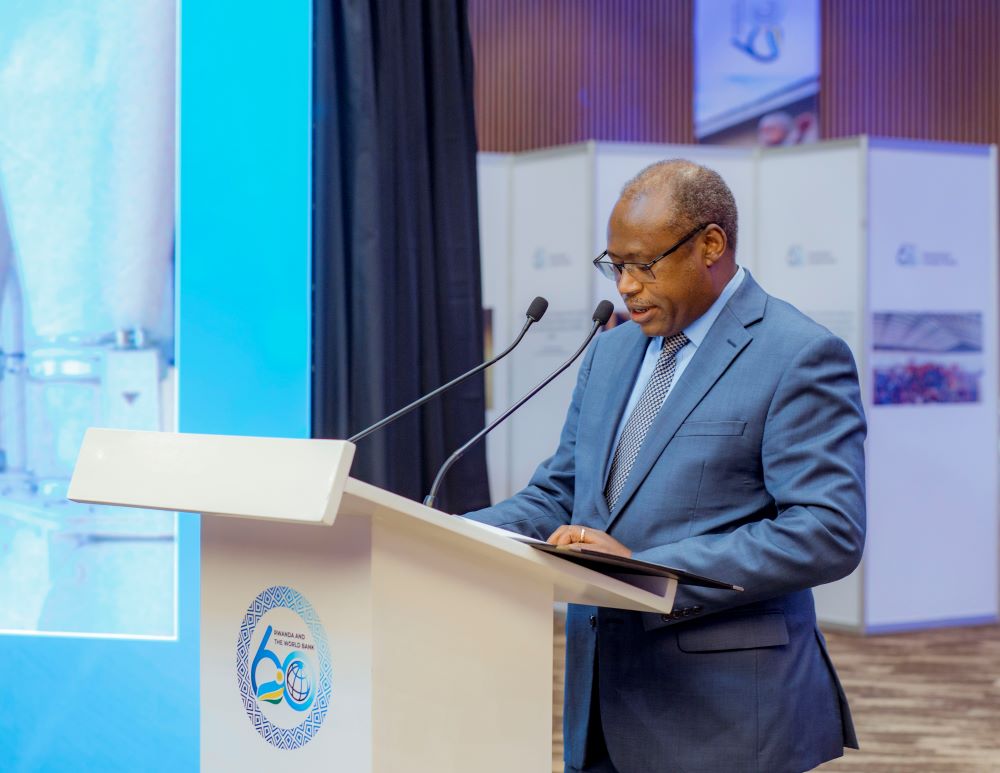
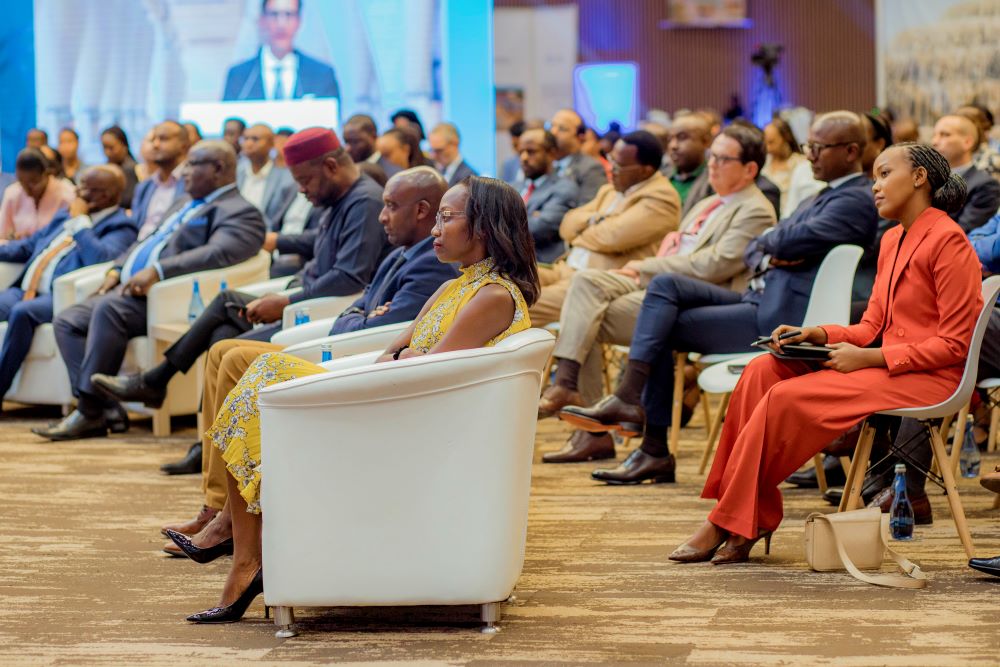
Dr. Uzziel Ndagijimana, Minister for Finance and Economic Planning and Keith Hansen, World Bank Country Director inaugurated a multimedia photo exhibition depicting Rwanda’s development story over the past six decades and joined a conference to reflect on 60 years of partnership.
Rwanda became a member of the World Bank on September 30, 1963. Since then, the bank has provided about 8.2 billion in support of different development programs in Rwanda including human capital, infrastructure, agriculture, resilience, and private sector development. Over the last decade, one million people have lifted themselves out of extreme poverty, capitalizing on a rapidly improving agriculture sector in which the International Development Association (IDA) has been proud to make substantial investments.
“World Bank has had the honor and privilege of accompanying Rwanda in its exceptional journey of building transformational infrastructures and setting up modern institutions that led to one of the most impressive growth performances in the World in recent decades, said Keith Hansen, Country Director for Rwanda, Kenya, Somalia, and Uganda.
“Continuing Rwanda’s remarkable success requires accelerated efforts and collaboration to rebalance its economy away from public investment toward greater reliance on private investment, and the World Bank is committed to continuing supporting the government to attain her targeted sustainable development goals.”
Rwanda tells the world a remarkable story of poverty reduction and development. It has been one of the fastest-growing economies in the world, having generated persistent high growth averaging 7.2% per annum between 2000 to 2019, poverty has declined from 58.9% in 2000 to 38.2% 2016, and inequality has reduced with GINI co-efficient of 0.51 in 2000 to 0.43 in 2016 maternal mortality ratio fell from 1070 per 100,000 live births in 2000 to 203 in 2020, and by 2019, 96% of the population has health care cover, and Rwanda is a leader in gender equality, in innovation, technology, and its investment climate has radically improved.
“World Bank has been a reliable and strategic partner in supporting our country’s development trajectory over the past six decades. Together, we have achieved tangible results in reducing poverty, developing human capital, promoting private sector, increasing access to infrastructure and digital economy, improving agricultural production and commercialization as well as urban development,” said Minister Uzziel Ndagijimana, the Minister of Finance and Economic Planning.
“We also recognize, the knowledge and technical assistances that have helped to design and implement innovative and evidence-based policies and programs which have been important guiding tools that are helping us to achieve our ambitious goals of becoming an upper-middle-income country by 2035 and a high-income country by 2050,” he added.
In collaboration with the Government of Rwanda, the World Bank supported many sectors with significant impact. For instance, Rwanda has rapidly expanded access to electricity from 6% in 2003 to 65% in 2023. In this, the World Bank has mobilized resources, financed generation, transmission, and distribution of power including from renewable sources, helping fuel economic growth.
Marshland and hill-side areas have been developed, irrigation systems expanded, rural communities empowered, post-harvest infrastructures enhanced, farmers trained in modern farming techniques sector policies and institutions strengthened, and innovative approaches such as agricultural finance and insurance have been adopted improving food security and farmer’s incomes raised.
To accelerate human capital development, provision of financial support, technical expertise, data, research have improved access to quality of basic and tertiary education and acquisition of market-relevant skills. Strengthened Vision Umurenge Program has enabled poor and vulnerable households access economic inclusion services.
The World Bank, IFC and MIGA, delivered one of sub-Saharan Africa’s first PPPs in the water sector – Kigali Bulk Water Project, which is supplying 27 percent of the city’s water supply.
In the past 60 years, the World Bank has also produced knowledge, analytical work, and data which has supported the government’s evidence-based development decisions and policies.
“The speed with which Rwanda has successfully achieved major transformations is an evidence that much more can be done to realize the country’s development aspirations,” said Sahr Kpundeh, World Bank Country Manager for Rwanda.
“I would like to reaffirm that Rwanda and the World Bank will continue to work together, as we have for six decades, to further advance the country’s transformation, and to achieve green, resilient, and inclusive development to which Rwanda aspires,” he added.