RNP Spokesperson, ACP Boniface Rutikanga has told IGIHE that Nsengimana was shot dead on the evening of Monday, October 2, 2023 while leading security officials to the location where he had concealed the stolen items.
“He was among those recently apprehended for vandalizing infrastructure and stealing electricity wires. He was awaiting justice. He had agreed to reveal the whereabouts of some of the stolen wires, but it seems it was a ploy to find a way to escape. That’s when he was shot dead while attempting to flee,” noted ACP Rutikanga.
Another individual suspected of the same crime was shot dead not long ago in Muhanga District after allegedly assaulting police officers with a machete.
ACP Rutikanga emphasized that both suspects’ cases are linked, as they had committed the same crime and showed reluctance to face the consequences of their actions.
“When they choose this path, it hinders our ability to obtain valuable information from them that could lead us to apprehending more criminals,” he added.
ACP Rutikanga further explained that investigations are always carried out to ascertain the circumstances surrounding such shooting incidents since resorting to lethal force is not the primary option.
He also called on citizens to refrain from resisting security officials and instead cooperate, accept the legal process, or provide information that can help in the arrest of additional suspects.
The police have been conducting operations to combat the vandalism of public infrastructure and the theft of electricity wires. Individuals found innocent after thorough investigations are released, while other suspects are brought before the court.
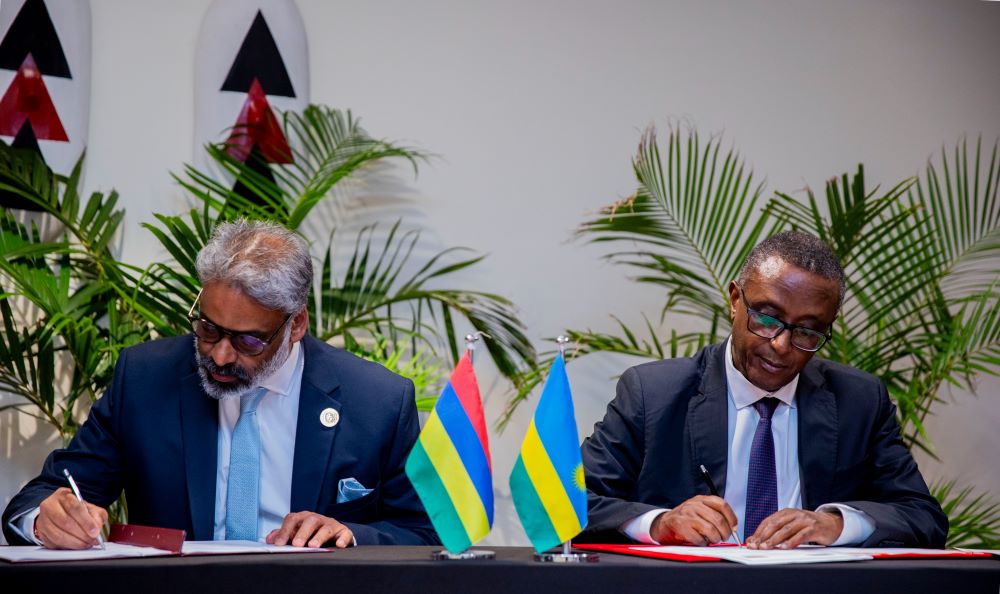
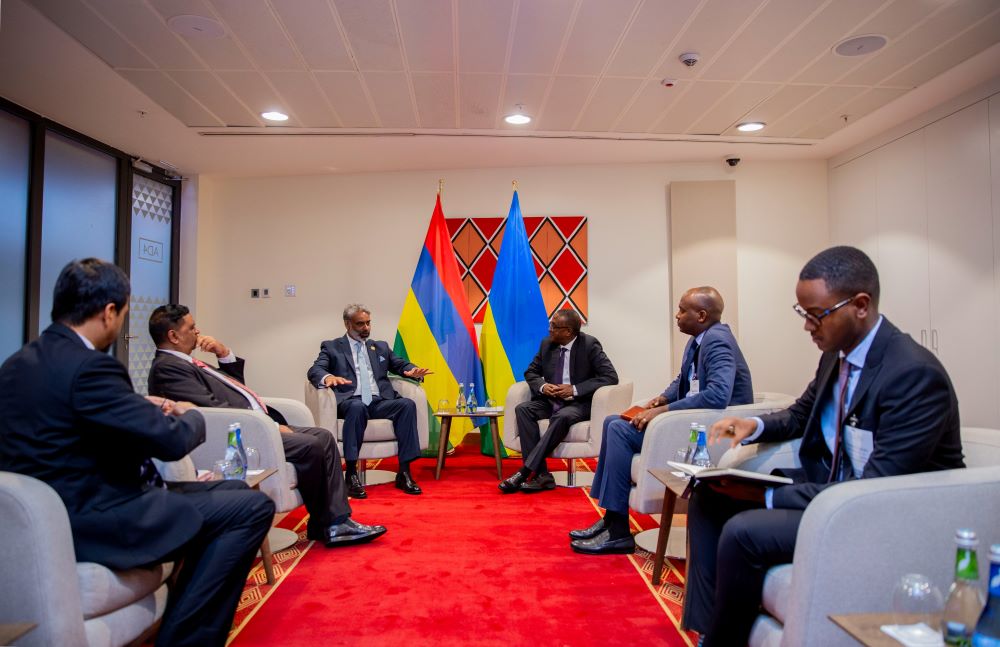
This agreement was formalized by Dr. Vincent Biruta, the Rwandan Minister of Foreign Affairs, and Maneesh Gobin, the Mauritian Minister for Foreign Affairs, Regional Integration, and International Trade, further solidifying their already fruitful cooperation.
This agreement aligns with the African Union’s Agenda 2063, aimed at transforming Africa into a leading global player by removing internal economic barriers.
It’s worth noting that Rwanda and Mauritius already maintain vibrant bilateral relations. In 2014, they signed an agreement to boost investments, trade, and mutual cooperation.
Both nations are recognized for their significant efforts in facilitating investments on the African continent. This signing follows President Paul Kagame’s visit to Mauritian Prime Minister Pravind Kumar Jugnauth in June 2022.
Jugnauth had also visited Rwanda where he paid tribute to victims of the 1994 Genocide against the Tutsi at Kigali Genocide Memorial.
According to a report from the National Institute of Statistics of Rwanda, Mauritius significantly increased its investments in Rwanda, growing from $386.4 million in 2020 to $543.8 million in 2021, representing a growth of 40.7%. In 2021, Mauritius dominated foreign investments in Rwanda, holding an impressive share of 32.4%, particularly in the financial, energy, technology, and tourism sectors.
Besides, several Mauritian companies, including Mauritius Union Assurance and LOLC Mauritius Holdings Limited, have established a presence in Rwanda. The latter, a subsidiary of the Sri Lankan firm LOLC Holding PLC, recently acquired 90% of the shares of Unguka Bank PLC.
Located in the Indian Ocean, to the east of Madagascar, Mauritius is composed of other islands such as Rodrigues to the east, Agalega, and Saint Brandon, which are part of the Mascarene Islands.
The island nation has a population of approximately 1.3 million people over an area of 2,040 square kilometers.
Brewed locally in Rwanda with the same passion and craftsmanship that has characterized its production for over a century, Bralirwa ensures that Rwandan beer lovers enjoy the same high-quality of Heineken® brewed around the world.
Bralirwa Plc, which was founded in Rwanda in 1957 became a subsidiary of HEINEKEN in 1971 and started brewing Heineken® as one of its premier brands in 2018 as well as selling Heineken® 0.0 the alcohol-free beer, in December 2022, to empower consumers with choice and options for all drinking occasions. The iconic beer brand evolved the way it measures success – focusing not just on the volume of beer it sells but also the good times it delivers for its customers in over 190 countries.
“Brewing good times has been in our DNA for 150 years. That is why we are evolving our brand metrics to show that creating good times is equally as important as the beer we produce” said Bram Westenbrink, Global Head, Heineken® Brand.
To celebrate this milestone anniversary, Heineken® is putting good times front and centre of its global birthday festivities. Part of the celebrations include the anniversary’s tongue-in-cheek campaign taking viewers on a journey around the globe to embrace all the different ways people adapt and enjoy social moments and memories with Heineken® – ranging from an incorrectly spelt tattoo of the logo to a Heineken® Original being served with a lime, straw, and ice. The light-hearted video sees the brewer celebrate the good times it provides – even if the way consumers spell or enjoy it isn’t 100% correct or as originally intended.
In celebration of Heineken’s 150 years, Bralirwa is introducing a limited-edition bottle label and embarking on promotional and experiential initiatives across various outlets. These endeavours are designed to deliver the true essence of the Heineken® brand – the enjoyment of life.
Customers are invited to come with an open mind and to expect the unexpected as bars and outlets will be serving up the Heineken® you know and love in surprising ways you have never seen before. Cheers to the Rwandan Heineken experience!
The delegation led by Col CM Munachilemba is in Rwanda for a study tour from 1st October to 7th October 2023.
The RDF Spokesperson, Brig Gen Ronald Rwivanga briefed them on the RDF’s Structure, Roles, Organisation and Transformation Journey.
Col CM Munachilemba emphasized that their tour is aimed at equipping students with practical experience of whatever they learn at the College and be able to compare with other countries “so that we see how we can improve our curricula and the wellbeing of our country,” he said during an interview.
He said that as they are focusing on regional peace in Africa, their key interest will be mainly learning from Rwanda’s experience on peacekeeping activities.
During their tour, they visited the Kigali Genocide Memorial and Campaign against Genocide Museum.
The delegation will also visit Zigama CSS, Military Medical Insurance, Rwanda Military Hospital, RDF Command and Staff College and few other Government and private institutions.
At least 53 percent of road accidents registered between January and June this year, across the country, involved motorcyclists and cyclists. Some 98 people died and other 46 sustained serious injuries during the same period.
Most accidents resulted from speeding, dangerous maneuvers, holding onto moving trucks on hilly roads, overloading, cyclists operating at night, riding when intoxicated, violating traffic lights and other traffic rules.
On Monday, October 2, Rwanda National Police (RNP) extended the road safety awareness to about 2,500 cyclists operating in the Northern districts of Rulindo, Gakenke and Musanze.
The Northern region Police Commander, Assistant Commissioner of Police (ACP) Edmond Kalisa, while speaking to about 1,300 commercial cyclists from Rulindo and Gakenke districts, at Base, urged them to value their lives by riding safety on the road.
“The Northern province comes second in regions with the highest record of road accidents and most of which are caused or involve cyclists.
When you leave your homes in the morning, know that you are going to work and you have to go back home safe. You are not leaving your homes to go to the hospital or worse still, to die on road because of your recklessness,” ACP Kalisa told the cyclists.
The cyclists were reminded to stop holding onto moving vehicles, avoid speeding downhill, stop operating beyond 6p.m and riding in middle of the road; to respect pedestrian walkways, not to transport heavy luggage sometimes impeding traffic flow; and to respect traffic control signposts.
Cyclists are required to operate not beyond 6p.m.
The same campaign was held in Musanze where the same message was delivered to about 1,200 cyclists.
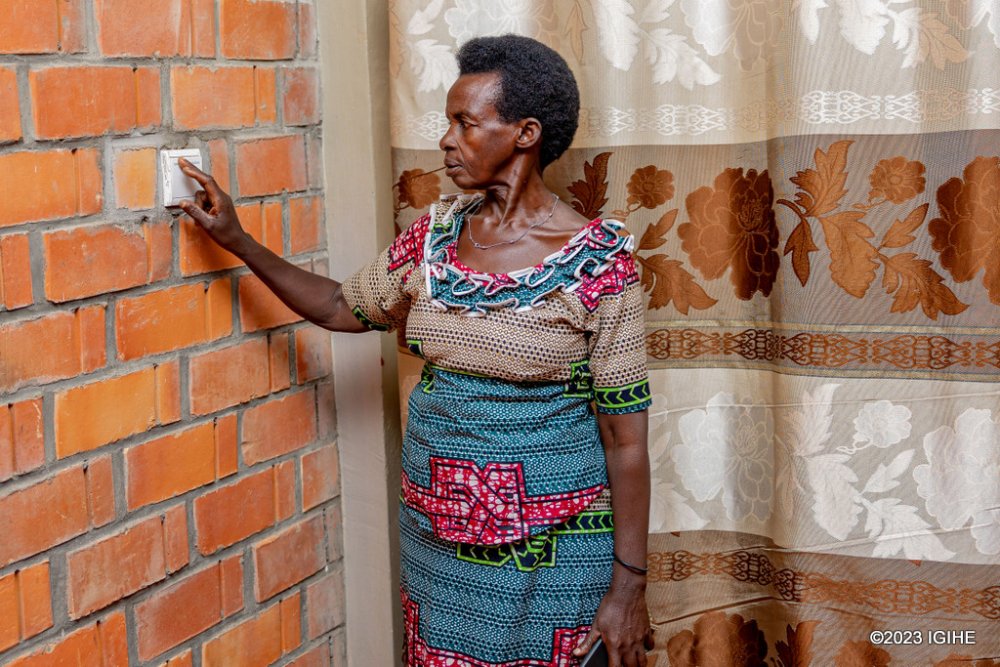
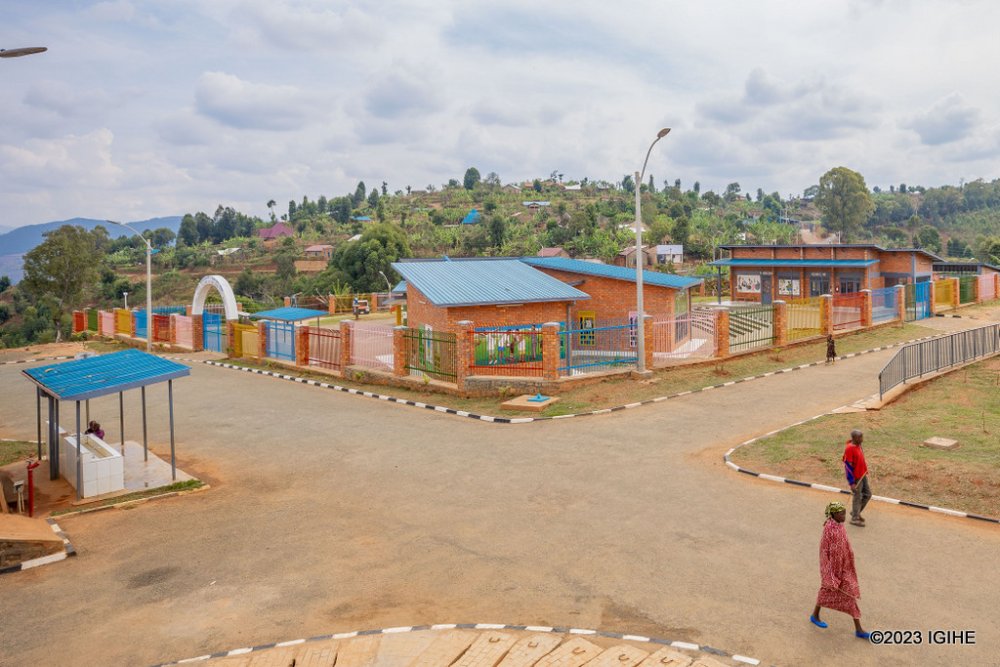
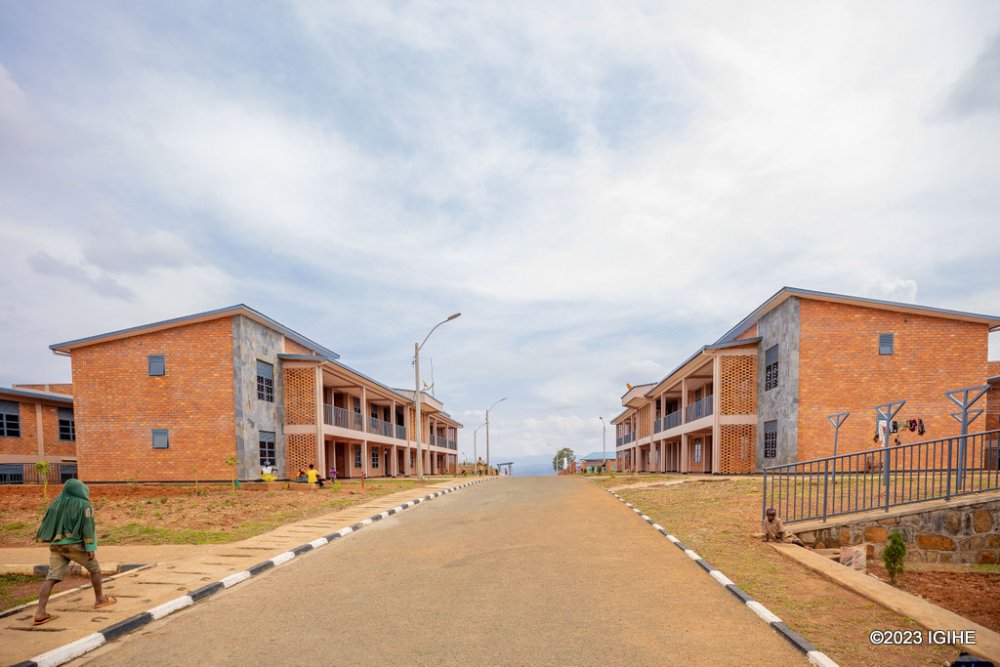
Sibomana’s family is one of the 48 families resettled in Munini Model Village. They previously lived in poor conditions and in hazardous areas.
“Before, I lived in a dilapidated house that leaked, sharing space with cows and goats. Here, it’s different. I live in a place that doesn’t leak; I’m not drenched by rain,” he said.
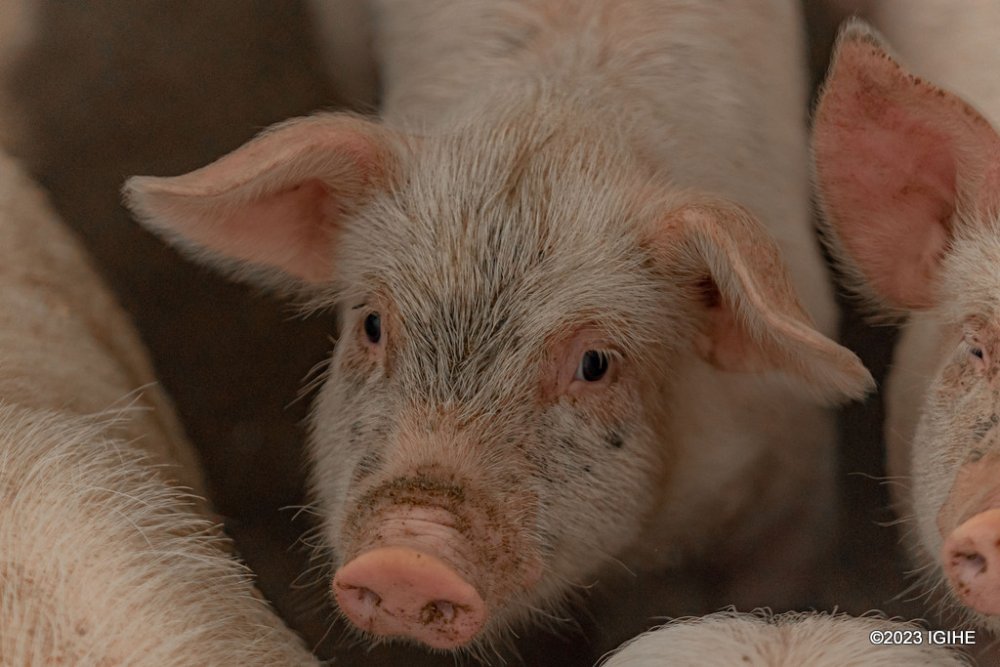
In addition to modern houses, Munini Model Village introduced a unique initiative: each family received a gestating sow to help them sustain themselves after being resettled.
These houses, pigs, and other amenities were gifted by the government to uplift impoverished citizens. Unlike other villages built previously, this was the first time pigs were distributed as livestock. Initially, 48 pigs were given out, which multiplied to 226 in nine months.
Dieudonné Dusabimana, a veterinarian in Munini Sector, told IGIHE that this project is special because its benefits are already evident in the residents’ lives.
“Living conditions have improved, and you can see that the children are healthier. The village is thriving compared to the time when they were scattered across the hills, suffering from hunger,” he said.
Residents of Munini Model Village have formed a pig farming cooperative. When a resident’s pig farrows, the piglets are placed in a designated pen and cared for collectively.
The cooperative provides food, medicine, and other necessities for these pigs and pays the caretakers. Every six months, the pigs are sold at a market price set by the authorities, and the owner receives 50% of the sale proceeds. The rest is deposited into the cooperative’s account to cover ongoing expenses.
Placidia Mukanyarwaya, who has benefited from this pig farming initiative, shared that within one year, she has sold two pigs.
“I’ve sold two pigs and still have nine that will be six months old soon, ready for sale in October. I expect to make around Rwf900,000 from the sale, half of which will stay in the cooperative’s account, and the rest will be mine,” she said.
Mukanyarwaya plans to buy a cow for Rwf300,000 to provide manure for her farming.
Sibomana also dreams of buying a cow, having already earned Rwf180,000 from selling his first pigs. He used this money to buy potato seeds and is preparing to buy a cow once his remaining pigs mature.
Dusabimana emphasized that the pig farming in Munini Village is unique due to its strict hygiene, disease control, and care practices. Before entering the pig pens, individuals must step into a disinfectant to prevent infections. The pigs are also insured, so in case of death, the insurance company compensates the owner.
“We encourage farmers to invest in livestock insurance because it provides peace of mind and prevents financial loss from any cause of death. If a pig worth Rwf500,000 dies, it would be challenging for the farmer to afford another one. With insurance, there’s no worry about feed as funds are available. Initially, we started with medicine provided by the government, but now we can sustain ourselves with the 50% savings,” Dusabimana said.
So far, pigs sold in Munini Village have generated Rwf17 million. Emmanuel Murwanashyaka, the Mayor of Nyaruguru District, stated that Munini Model Village has shown many that decent living conditions are achievable.
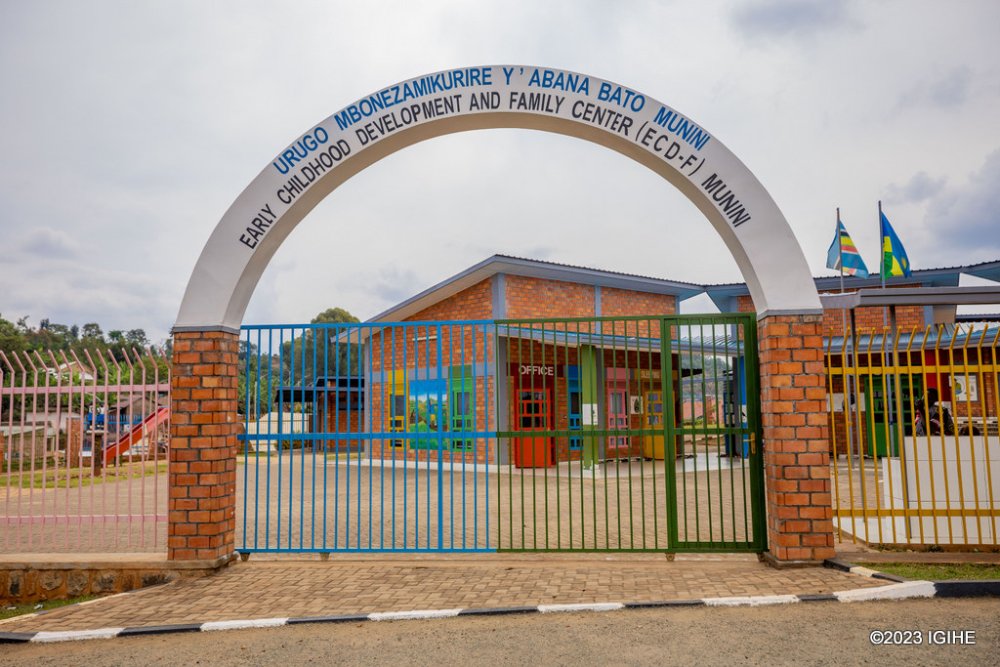
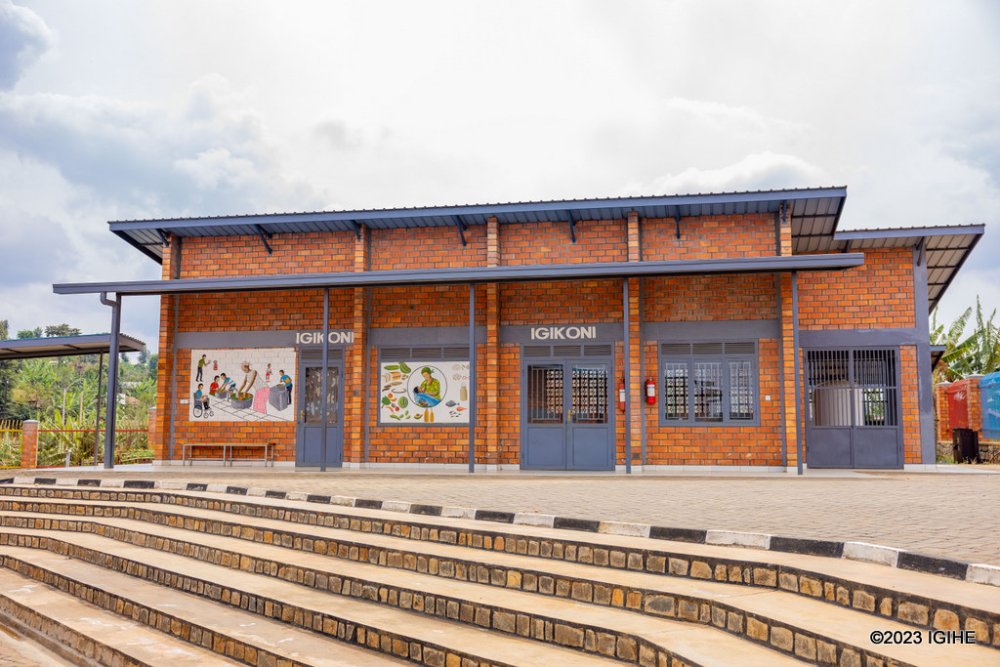
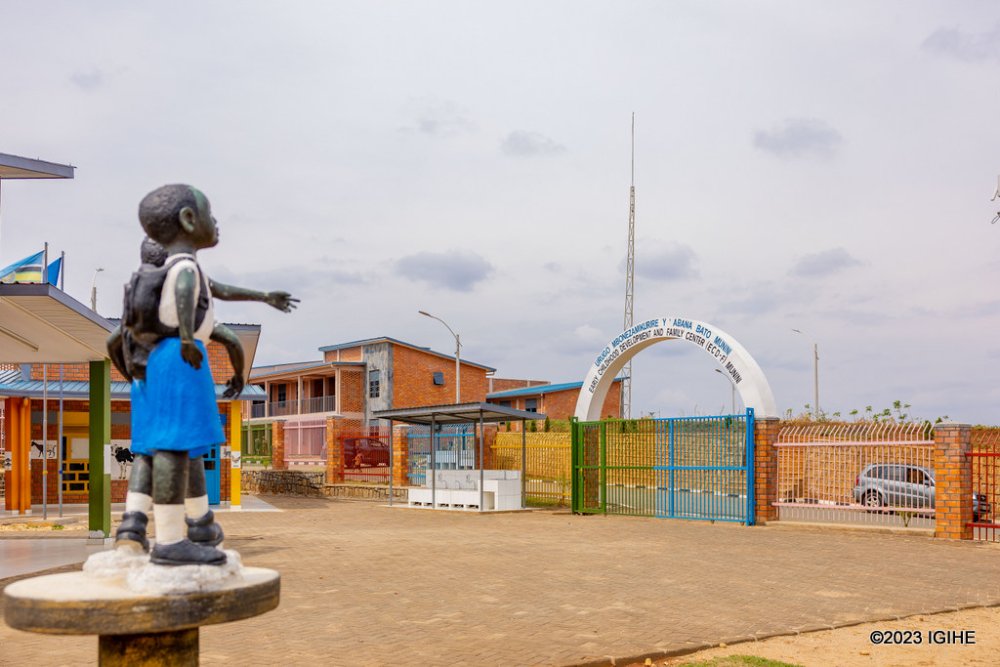
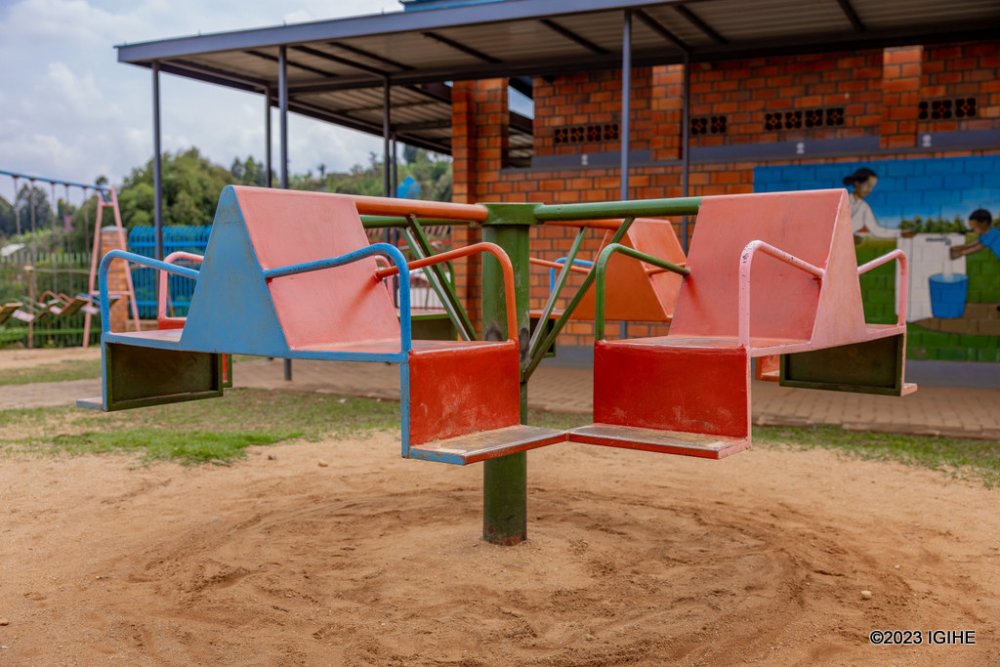
“This village has shown that good living conditions are possible. It’s equipped with all necessary services, including a school, an Early Childhood Development Center, a workshop, advanced pig farming, and a market,” he said.
Mukanyarwaya hopes this living and farming model can be extended to others. “I urge the government to help others who are still living in poor conditions. If they lack housing, they should be provided with homes and support, just as we have received,” she said.
The Rwanda Housing Authority reports that 253 IDP Model Villages have been built across the country to improve living conditions. These villages are home to nearly 30,000 families.
This tragic incident occurred in Butare Cell, Gihombo Sector, on 2nd of March 2023, around 11:30 a.m.
The two victims have been identified as Ndahimana Jonathan, aged 57, and Bizimana Phanuel, aged 18.
Athanasie Mukankusi, the Nyamasheke District Vice Mayor in charge of Social Affairs has told IGIHE that the injured victims have been promptly transported to Mugonero Hospital for immediate medical care.
“A group of ten individuals was constructing a stone wall when the slope unexpectedly collapsed. Tragically, two people lost their lives instantly, while the remaining eight survivors sustained minor injuries and are currently receiving medical treatment,” she stated.
Mukankusi further speculated that the collapse might have been triggered by recent heavy rainfall, saturating the soil and weakening the slope’s stability.
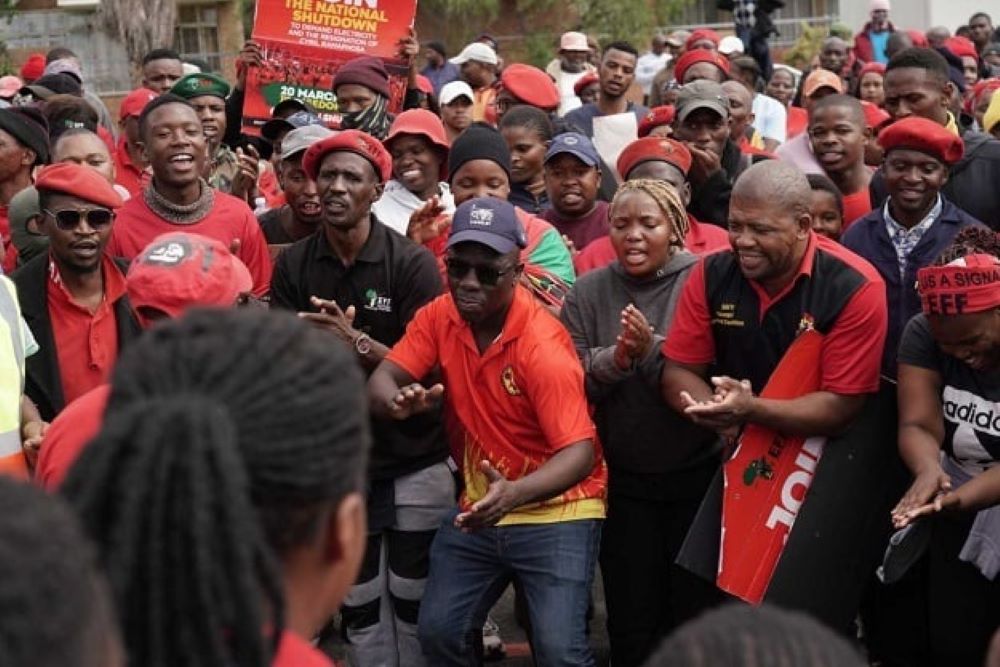
While the South African National Taxi Association (Santaco) has indicated that it intends to continue its operations as usual, the African National Congress (ANC) withdrew its support for the shutdown on Sunday, expressing opposition to any form of shutdown.
As per media reports, the decision to organize this shutdown comes in the wake of violent taxi strikes by operators and associations in August, primarily in response to the impounding of taxis.
Wandile Kasibe, the EFF’s provincial spokesperson, stated that they would present a memorandum during the protest. The memorandum demands the immediate release of all unjustly impounded minibusses, expeditious issuance of taxi operating permits and licenses by the city, and the elimination of excessive fines imposed on taxi drivers.
On the other hand, ANC provincial spokesperson Neville Delport discouraged their members from participating in the shutdown, emphasizing that the initial intention was for this to be a multi-party march against the unjust impoundment of taxis rather than a shutdown led by a single political party. Delport cited mixed messages in the media as a reason for the ANC’s withdrawal of support.
Kasibe expressed no surprise at the ANC’s decision and emphasized that their primary concern is addressing the issues affecting the local population.
City mayco Member for Safety and Security, JP Smith, confirmed that the city was aware of the planned protest and noted that the EFF had applied for a peaceful protest permit. The permit includes specific conditions, such as refraining from intimidating City staff, not entering the Ndabeni pound, and excluding taxis from the procession. Smith also mentioned that the city has an operational plan in place to address any potential violence or traffic disruptions during the protest, utilizing technologies like drones and CCTV for effective response.
Jacques Moolman, President of the Cape Chamber, expressed hope for a peaceful protest. He acknowledged that the chamber shares many of the concerns outlined by the EFF, particularly regarding the energy crisis and the rising cost of living.
Moolman also raised concerns about the strained dialogue between the City and the taxi industry, which he believes contributed to the disruptive protests in various parts of the city. However, he expressed deep concern that the EFF’s protest might display a disregard for law and order, citing previous statements by party leader Julius Malema.
Through their groundbreaking findings, which have fundamentally changed the understanding of how mRNA interacts with the human immune system, the laureates contributed to the unprecedented rate of vaccine development during one of the greatest threats to human health in modern times, the committee said in a statement.
“Through their discoveries that base modifications both reduced inflammatory responses and increased protein production, Kariko and Weissman had eliminated critical obstacles on the way to clinical applications of mRNA,” the statement said.
“The impressive flexibility and speed with which mRNA vaccines can be developed pave the way for using the new platform also for vaccines against other infectious diseases,” the statement added, stressing the prospects for the technology to be used to deliver therapeutic proteins and treat some cancer types.
Thomas Perlmann, secretary of the Nobel Committee for Physiology or Medicine, announced the winners at the Karolinska Institute. He said both scientists had received the news.
Kariko expressed being “so overwhelmed” and Weissman said he was “enormously grateful to receive the prize,” Perlmann said.
Born in 1955 in Szolnok, Hungary, Kariko received her Ph.D from the University of Szeged in 1982. Since 2021, she has been a professor at the University of Szeged and an adjunct professor at the Perelman School of Medicine at the University of Pennsylvania.
Weissman, born in 1959 in Massachusetts, the United States, received his MD-Ph.D degree from Boston University in 1987. He is the Roberts Family Professor in Vaccine Research and serves as the director of the Penn Institute for RNA Innovations at the University of Pennsylvania.
The prize amount is 11 million Swedish kronor (1 million U.S. dollars) and will be shared equally between the two laureates. (1 Swedish krona = 0.091 U.S. dollar).
According to USA Today, this decision comes amid high-profile work stoppages in the state this year.
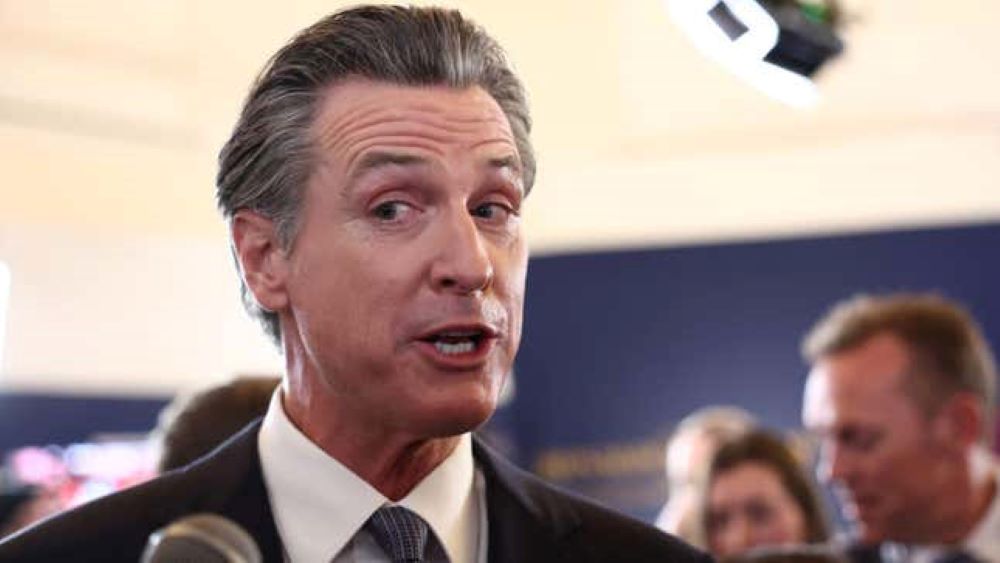
In a veto message, Newsom cited the state’s financial concerns, as it had already paid over $362 million in interest on a federal loan used to provide benefits during the pandemic, with an additional $302 million in interest due in September.
Newsom explained that increasing costs and incurring significant debt was not advisable at this time. He expressed his respect for workers’ collective actions and his commitment to improving labor conditions in California.
His rejection of the bill followed the conclusion of a five-month-long Hollywood writers’ strike but left other major labor groups, including Southern California hotel workers and Hollywood actors, still on strike, with many workers experiencing months of unpaid work.
The bill had garnered strong support from labor unions, including the California Labor Federation, and Democrats in the state legislature. It aimed to provide weekly benefits to workers on strike for a minimum of two weeks. Labor advocates criticized the veto, arguing that it favored corporations and was detrimental to workers’ rights.
California is facing a substantial unemployment insurance debt, with a projection of nearly $20 billion in debt by the end of 2023. The state’s unemployment benefits rely on the Unemployment Insurance Trust Fund, funded by unemployment taxes paid by employers and businesses based on employees’ wages.
This amount has remained unchanged since 1984, and the state had to borrow federal funds to provide unemployment benefits during the pandemic when many businesses closed due to social-distancing measures, resulting in a surge in unemployment. The state’s unemployment insurance trust fund is currently more than $18 billion in debt, and unemployment fraud during the pandemic may have added up to $2 billion in costs.
The bill was introduced in August during a period of strikes in various industries in California, as Democratic state lawmakers sought to support labor unions. However, Governor Newsom expressed concerns that expanding eligibility for these benefits could further increase the state’s federal unemployment insurance debt and impose higher taxes on employers.
The proposed legislation would have allowed striking workers to receive unemployment benefits after two weeks of striking, offering checks of up to $450 per week. Typically, workers are eligible for such benefits only when they lose their jobs through circumstances beyond their control.
Labor advocates argued that the bill’s impact on the state’s unemployment trust fund would be minimal, citing that out of 56 strikes in California over the past decade, only two lasted longer than two weeks, according to Democratic state Senator Anthony Portantino, the bill’s author.