RSF commander Mohamed Hamdan Dagalo announced the pause in a televised address, saying his fighters would halt operations to allow aid deliveries and protect civilians. He said the group agreed to the truce to offer “hope” to a population “exhausted by this war.”
Dagalo pledged to set up a field mechanism monitored by the Quad — Egypt, Saudi Arabia, the United Arab Emirates (UAE), and the United States — along with the African Union and other international bodies, to ensure aid reaches civilians. He also vowed to hold RSF members accountable for abuses and safeguard offices of humanitarian organizations.
The RSF has been accused by rights groups and diplomats of widespread atrocities, including the killing of more than 2,000 civilians in El Fasher, a key Darfur city the group seized from the army in October.
The announcement came after army chief Abdel Fattah Al-Burhan rejected a Quad proposal that called for a three-month humanitarian truce followed by a nine-month political process aimed at a permanent settlement.
In a statement late Sunday, Al-Burhan said the roadmap would “eliminate the existence of the armed forces” and dissolve security agencies while leaving the RSF “in its positions.”
Al-Burhan, who also heads Sudan’s ruling Transitional Sovereignty Council, accused the UAE of bias and of seeking to weaken the army. On Monday, the UAE’s foreign ministry accused Al-Burhan of “consistently obstructive behavior.” The UAE has long denied accusations from the Sudanese army that it arms and funds the RSF.
Al-Burhan also criticized Massad Boulos, a senior adviser to U.S. President Donald Trump, saying Boulos risked becoming an obstacle to peace. Boulos has accused the army of blocking aid and using chemical weapons, allegations the military denies.
Fighting between the army and the RSF erupted in April 2023 and has killed thousands and displaced millions, fueling one of the world’s worst humanitarian crises.
“Many of the controversial provisions were either softened or at least reshaped” to get closer to a Ukrainian position or reduce demands on Ukraine, Oleksandr Bevz, a Ukrainian official who participated in the Geneva talks, was quoted by The Washington Post as saying.
He added that the Thursday deadline, set by U.S. President Donald Trump for an agreement on the 28-point plan, now appears more flexible than it did before.
“It’s not a code red — it’s more important to finalize the text,” said Bevz.
Ukrainian First Deputy Foreign Minister Sergiy Kyslytsya told the Financial Times that the new draft bore little resemblance to the leaked 28-point version.
“Very few things are left from the original version,” he said.
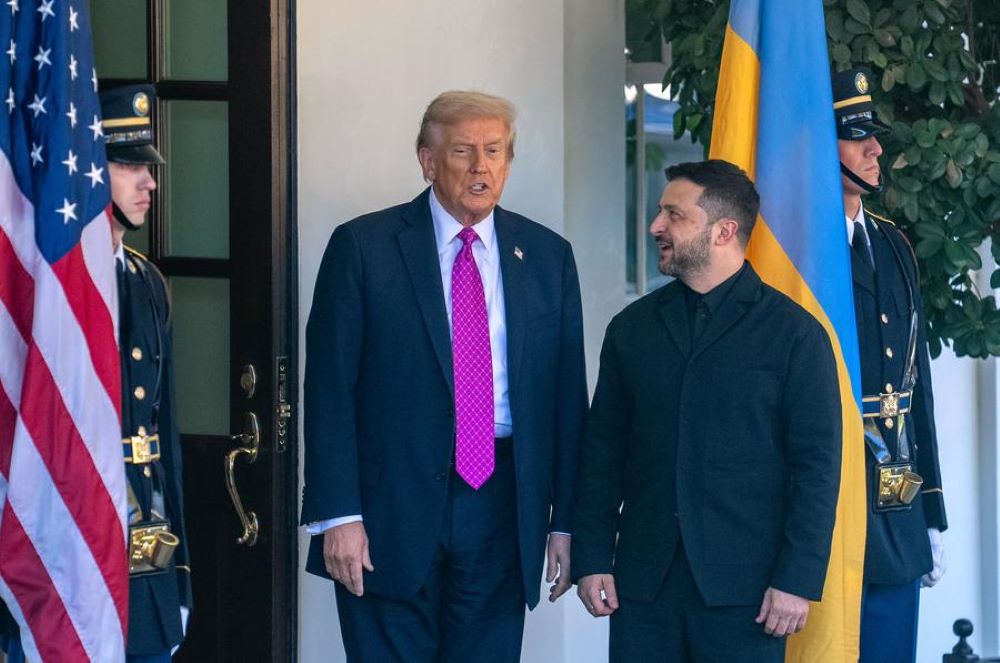
The new draft leaves the most contentious issues for Trump and Ukrainian President Volodymyr Zelensky to decide, according to multiple media reports.
The earlier 28-point version would have required Ukraine to cede territory in eastern Ukraine, reduce its military and forswear NATO membership. The plan thus crossed several long-standing Ukrainian red lines, drawing criticism from Ukraine and across Europe, according to reports.
Representatives from the United States, Ukraine and European countries met in Geneva on Sunday as the White House pushed for agreement on the 28-point plan.
Following a meeting between the Ukrainian delegation and national security advisers from Britain, France and Germany, the Ukrainian side held bilateral talks with the U.S. representatives.
It’s reported that Sunday’s Geneva meeting was attended on the U.S. side by Secretary of State Marco Rubio, Special Envoy to the Middle East Steve Witkoff and Army Secretary Daniel Driscoll, with Zelensky’s office chief Andriy Yermak leading the Ukrainian delegation.
According to a joint statement issued by the White House on Sunday night, the talks between U.S. representatives and Ukrainian officials in Geneva made “meaningful progress toward aligning positions.”
The Kremlin said it has not received official details from Geneva and does not plan talks with U.S. officials this week, according to a Newsweek report.
Trump has set Thursday as the deadline for reaching an understanding with Kiev on the framework, while suggesting that talks could continue beyond that date if progress is being made.
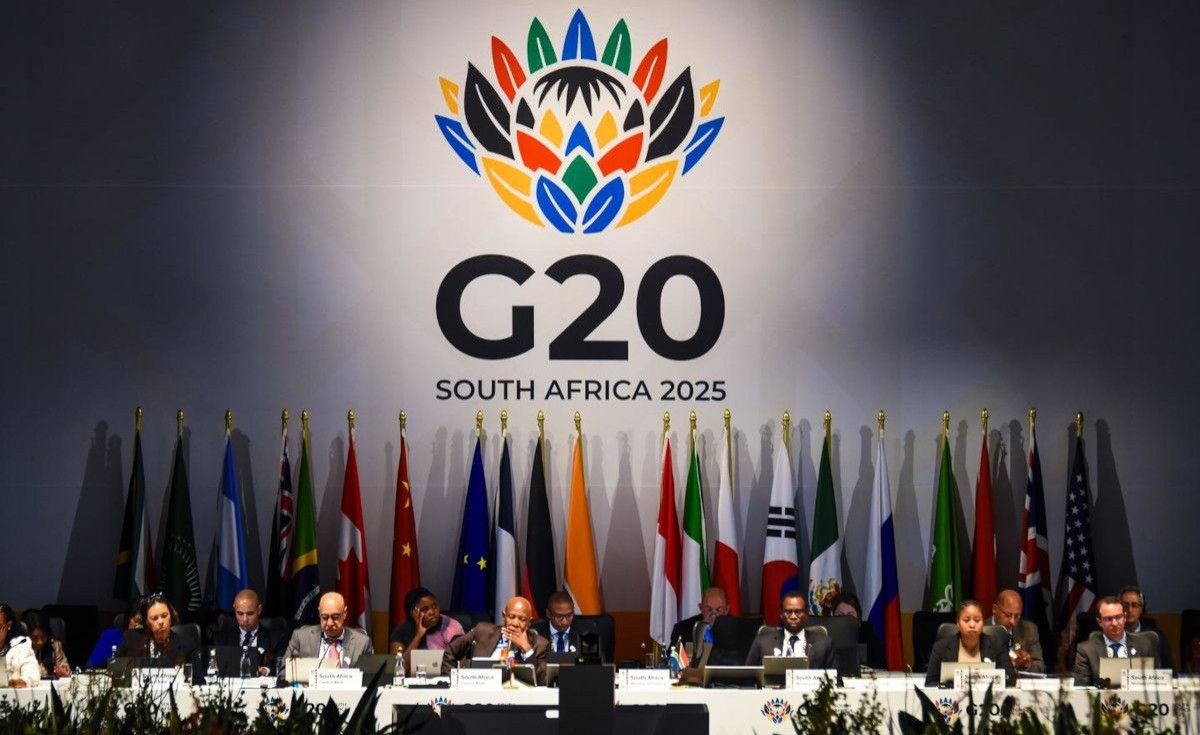
The summit opened under strain. The United States boycotted the meeting entirely.
Russia’s Vladimir Putin, China’s Xi Jinping and Mexico’s Claudia Sheinbaum were also absent from the summit. Putin is wanted by the international criminal court, to which South Africa is a signatory. Xi has delegated attending many international gatherings this year to China’s premier, Li Qiang.
In an unusual move, world leaders from the Group of 20 broke with tradition and adopted a declaration at the start of their summit in South Africa on Saturday despite opposition from the United States.
Traditionally, such declarations are adopted at the end, but the hosts acted early to ensure the meeting showed at least a minimum of unity.
The declaration focused on the priorities of developing countries, highlighting debt sustainability and the need for support to nations affected by climate-related disasters.
President Cyril Ramaphosa said the text “reaffirms our renewed commitment to multilateral cooperation and our recognition that our shared goals outweigh our differences.” The declaration remained non-binding and largely symbolic.
Besides, the war in Ukraine dominated discussions, and French president Emmanuel Macron warned that the G20 “may be reaching the end of a cycle,” saying members were finding it difficult to resolve major crises together.
Only hours after the declaration was adopted, Argentina’s foreign minister said his country “cannot approve this declaration,” pointing to “red lines,” especially regarding the wording on the Middle East conflict.
The United States also criticized the host country, accusing South Africa of “weaponising their G20 presidency to undermine the G20’s founding principles.”
Although a joint declaration allowed the summit to save face on paper, the tensions revealed in Johannesburg showed the fragile state of the forum.
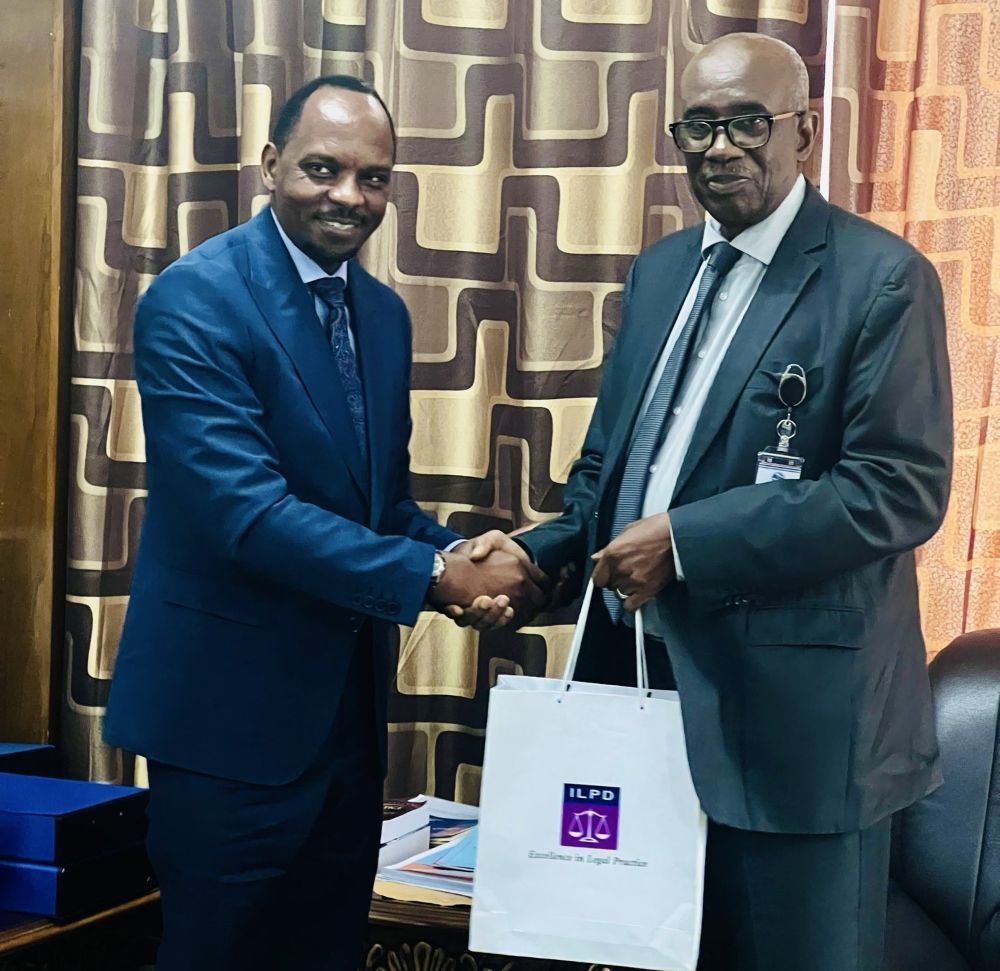
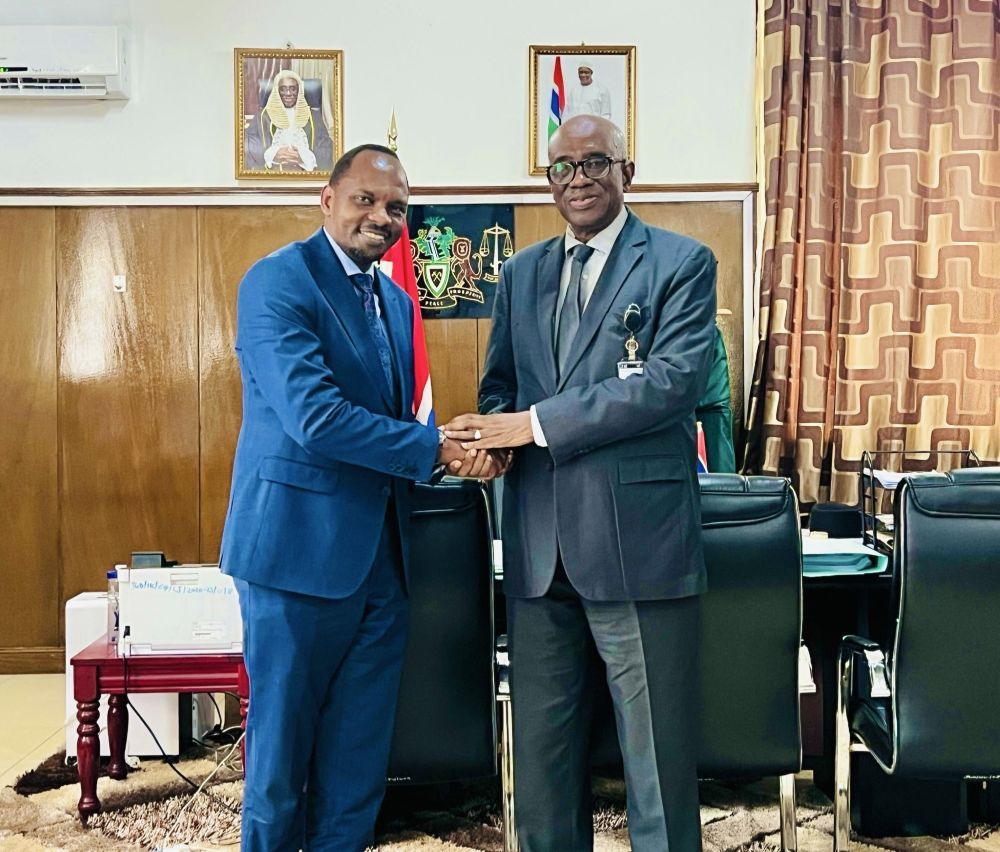
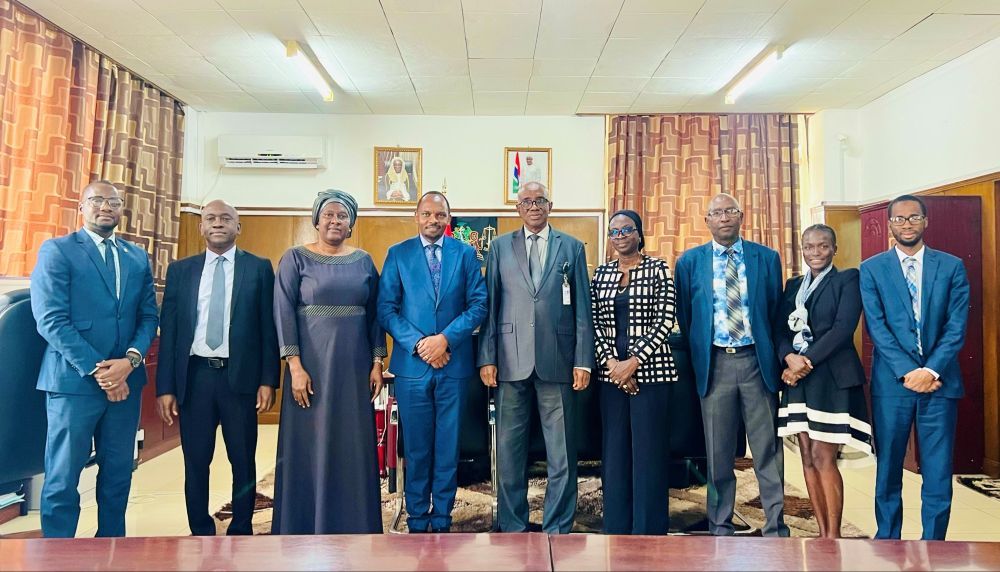
The visit took place on November 18 and 19, 2025, during which Dr. Muyoboke toured various justice-related institutions in The Gambia, including the country’s school of law.
In 2024, The Gambia revised its law regulating the legal profession, adding provisions that specify which countries’ law degrees are recognized for practicing law in Gambia. According to the new law, no one can practice law in Gambia without presenting a valid degree from a recognized country.
In Africa, recognized countries include Rwanda, Ghana, Nigeria, and Sierra Leone. In Europe, countries like Scotland, Northern Ireland, the Republic of Ireland, and the United Kingdom, which colonized Gambia, are recognized. In the Americas, only Canada is accepted, while in Asia, countries like India, Malaysia, New Zealand, and Australia are recognized.
Dr. Muyoboke explained that the relationship between the two institutions has sparked the beginning of discussions on how justice institutions in both countries can collaborate.
During the visit, the President of the Gambian Bar Association, Neneh Cham, spoke with the President of the Rwanda Bar Association, Moise Nkundabarashi, exploring avenues of collaboration between Rwandan lawyers and their Gambian counterparts.
This collaboration is expected to facilitate Gambian students who graduate from ILPD and other future initiatives.
Dr. Muyoboke further mentioned that both The Gambia’s Supreme Court and Rwanda’s Supreme Court have set up dedicated teams to assess how the justice institutions can work together effectively.
In September of this year, the President of the Supreme Court of Rwanda, Mukantaganzwa Domitille, also visited The Gambia’s justice institutions, marking the start of in-depth discussions on collaboration.
This followed the visits of The Gambia’s Supreme Court President, Hassan B. Jallow, and the Head of the Gambian Law School, Rougie Thomasi, to Rwanda.
Dr. Muyoboke expressed hope that these discussions would yield positive results in the future.
He said, “This visit will strengthen cooperation in judicial education, research, and the development of the legal profession. There is a strong desire to promote legal professionalism and collaboration in our continent, and this will be possible through our partnership.”
The President of the Supreme Court of The Gambia, Hassan B. Jallow, also stated that Dr. Muyoboke’s visit was very valuable, as it continues to build the good relationship between The Gambia and Rwanda, particularly in the field of justice.
He added, “For me, Rwanda is like a second home. I lived and worked there. The partnership we will have benefits us all, and working together as Africans is what is needed on our continent.”
During his visit, Dr. Muyoboke also met with The Gambia’s Minister of Justice and Attorney General, Dawda A. Jallow, the Permanent Secretary in the Ministry of Justice, Hussein Thomasi, and others, including former ILPD students from The Gambia, who have now founded an association called the ‘ILPD Alumni, Gambia Chapter.’
One Gambian lawyer, B.M. Bajo, who works in Rwanda, told IGIHE that he is excited about the collaboration between the two countries.
He explained that before the legal recognition agreement between Rwanda and The Gambia, Gambian lawyers working in Rwanda faced challenges in advancing their careers.
However, he believes that these issues are now left behind, as the partnership allows them to represent clients in court and tackle other legal obstacles.
To date, 50 students from The Gambia have graduated from ILPD, with others still studying.
Some of the graduates have chosen to continue working in Rwanda, where they appreciate the values they learned, such as cleanliness, fighting corruption, and advocating for justice.
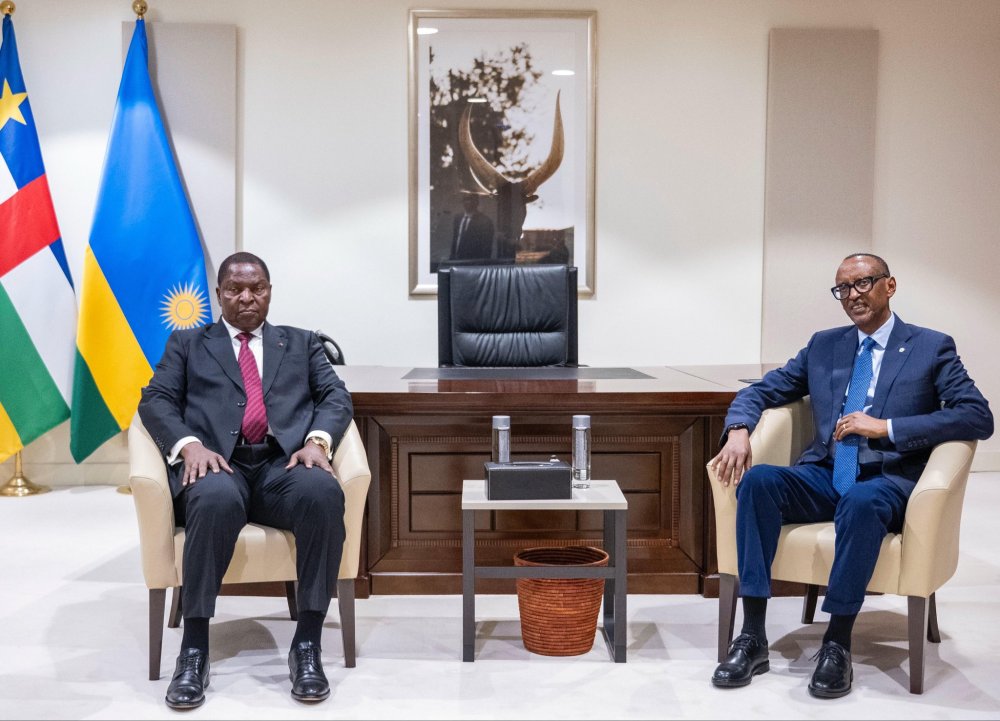
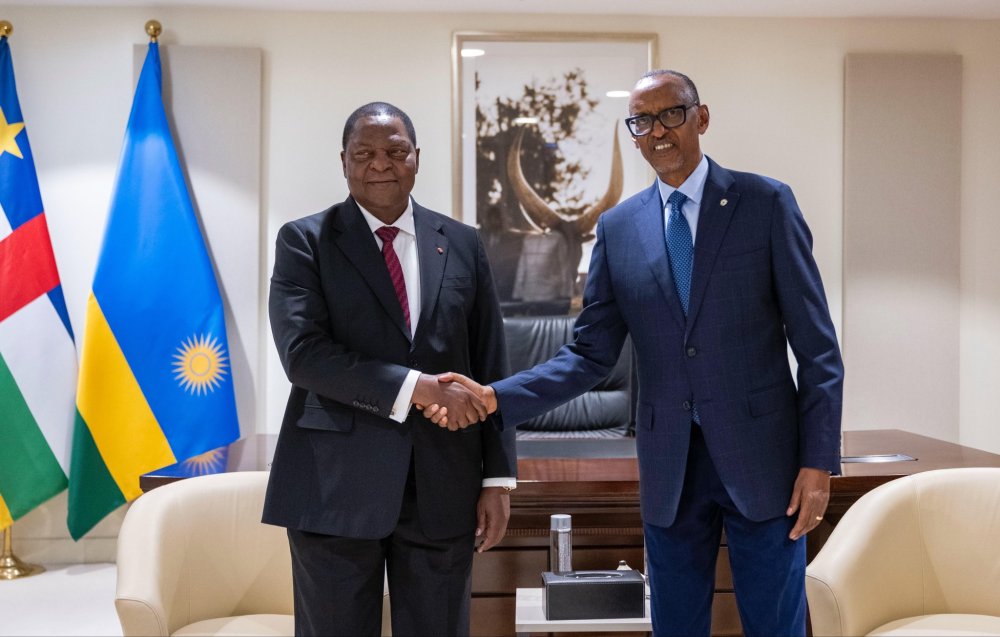
According to Rwanda’s Office of the President, the two Heads of State discussed the existing cooperation, including Rwanda’s ongoing support through the Rwanda Defence Force (RDF) troops serving under the existing bilateral security agreement as well as those serving in the United Nations Mission.
Both leaders also exchanged on the opportunities to strengthen bilateral cooperation through collaboration in various sectors of mutual benefit for the people of the Central African Republic and Rwanda.
President Touadéra arrived in Kigali on November 23, 2025, where he was received by Rwanda’s Minister of Interior, Dr. Vincent Biruta, before meeting President Kagame later in the evening.
Relations between Rwanda and the Central African Republic have grown significantly over the years, with security cooperation standing at the core of this partnership.
Rwanda first deployed troops to the Central African Republic in 2014 as part of efforts to restore stability following waves of conflict that began in 2012.
Rwandan forces were initially deployed under the African Union mission, MISCA, before transitioning to the United Nations peacekeeping mission, MINUSCA, a few months later.
Their responsibilities included protecting civilians, safeguarding UN equipment, and ensuring the security of the CAR Head of State and his family.
In 2020, Rwanda sent additional troops under a bilateral agreement with the Central African Republic. Through the same agreement, Rwandan forces have been training CAR’s national army.
In March 2025, the third cohort of 438 CAR soldiers trained by Rwandan troops completed their military courses, which included enemy detection, territorial defence, map reading, and field operations.
Over nearly 11 years of cooperation, the partnership has expanded beyond security, with Rwandan peacekeepers also supporting community welfare initiatives, including providing medical services to local residents.
In February 2025, Rwanda and the Central African Republic further deepened their cooperation by signing a security partnership agreement between their respective interior ministries.
President Touadéra’s visit comes just days before the Central African Republic heads to presidential elections scheduled for December 2025.
In July 2025, he announced that he would be seeking another term in office.
According to media reports, U.S. Secretary of State Marco Rubio and U.S. Special Envoy to the Middle East Steve Witkoff attended the meeting.
The Ukrainian delegation was led by Andriy Yermak, head of the Ukrainian Presidential Office.
Also, national security advisers from France, Germany and the United Kingdom, as well as representatives of the European Union, also took part in the meeting.
Yermak said on social media platform X on Sunday that the Ukrainian delegation had begun its work in Geneva.
He said the team held its first meeting with national security advisers from the United Kingdom, France and Germany and would next meet with the U.S. delegation, adding that they were “in a very constructive mood.”
Yermak added that a series of meetings in various formats was planned for the day as the sides continue working together to achieve a lasting and just peace for Ukraine.
Ukrainian President Volodymyr Zelensky also said on social media platform X on Sunday that he hoped the talks would be constructive and lead to a positive outcome.
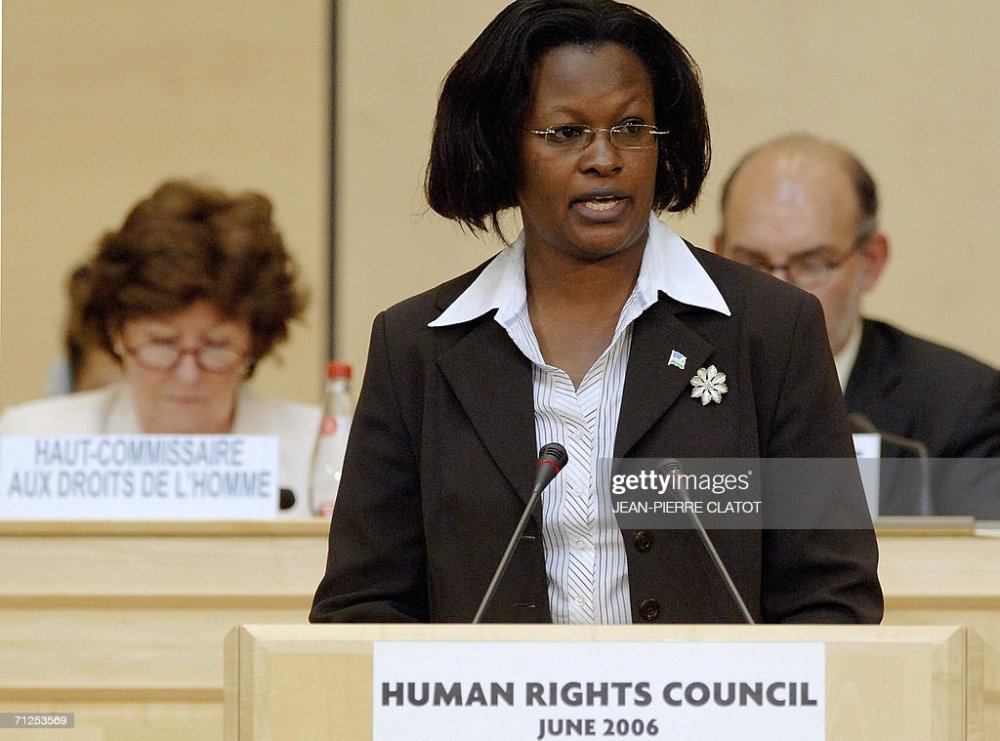
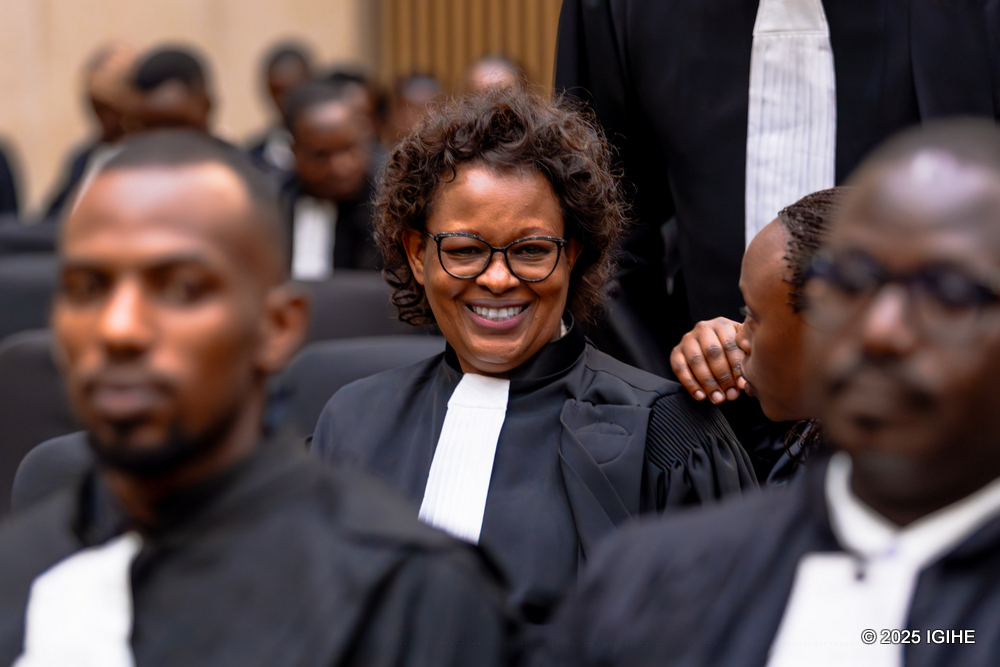
She was also the Deputy Speaker of the Chamber of Deputies in the Parliament, responsible for legal affairs and government oversight, a role she held for six years.
Mukabagwiza served as Rwanda’s High Commissioner to Canada and Cuba between 2007-2013, after which she was elected as a Member of Parliament from 2013-2018, and later became one of the leaders of the Chamber of Deputies.
She is an expert in law, having studied at the University of Rwanda after completing her secondary education at Collège Saint André.
Mukabagwiza holds a Master’s degree in Diplomacy from Washington International University in the United States, along with other qualifications in law. She has worked in various ministries and non-governmental organizations.
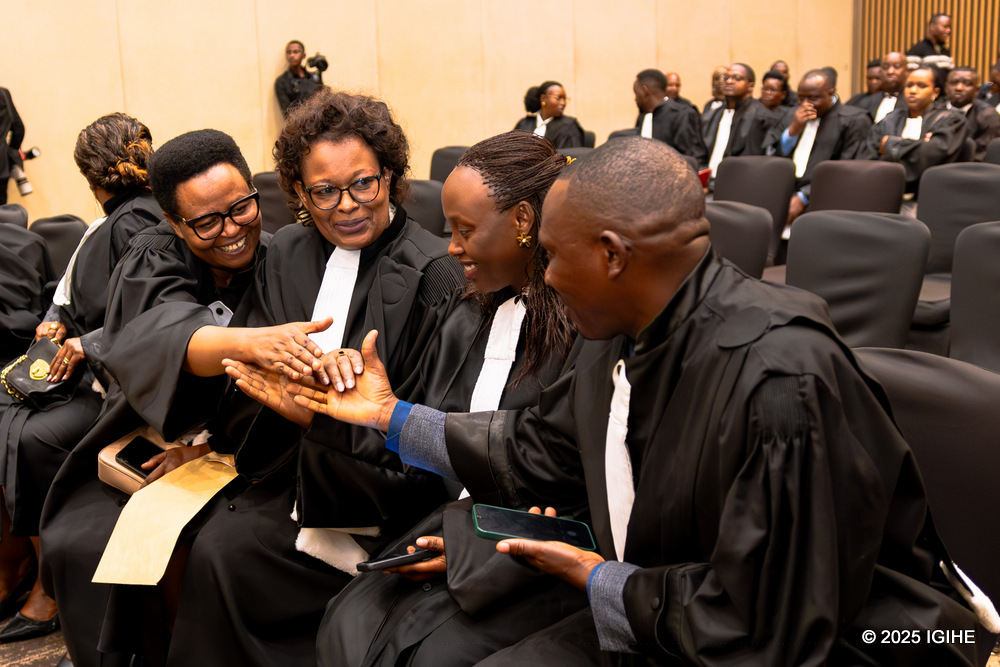
She recently took the oath to become a legal advocate and has founded her own firm, EM Pathways Legal & Advisory Ltd.
In an interview with IGIHE, this legal expert explained that becoming an advocate was something she chose to do after finishing her political career, emphasizing that it is a way to continue contributing to the country.
{{IGIHE: How did you transition to becoming an advocate?}}
{{Mukabagwiza:}} I have worked in the political field, meaning I was involved in a career where I had to step into the job market. I thought that I could be more useful by focusing on issues directly related to justice.
First of all, I am a lawyer. I studied law and later added other qualifications in this field, and with the experience I have, I felt it would help me continue my mission of serving the people.
A lawyer helps a citizen or an institution, but for our purposes, let’s focus on helping the people. It’s about advocating for justice and explaining the law to the public.
So, as someone trained in law and having taken part in justice-related duties, representing the people, I have a lot of information on what the citizens need.
I felt that moving into this profession would be beneficial, because a lawyer is not focused on their personal gain but on helping others legally.
Indeed, it is a profession that can sustain you and your family, but most importantly, a lawyer works with the justice system to ensure that justice is effectively delivered to the people as they need it. This is what led me to this profession.
{{Having served as Minister of Justice and Deputy Speaker of the Chamber of Deputies, what core values do you bring to your ongoing service to the citizens?}}
I believe the values I had then are still the same as those I carry now. As a leader, it’s about fighting for the truth, advocating for justice, and being aware of the issues so that, in addition to what I already knew, I can continue sharing those insights with different bodies, whether governmental or partners, to find solutions.
I feel a responsibility to highlight what needs improvement, support what is going well to further build on it, and also help expand the boundaries.
The profession I’ve entered into shouldn’t be inward-looking. We should be like people in the world, in the region, and what’s happening should concern us.
We shouldn’t be people confined to just our country; as members of the EAC, we should expand our knowledge of how lawyers in the region work and how they practice.
I also come to learn because your knowledge is never enough. There are others with more experience in this profession, and I will learn from them, observe them, and sometimes follow how cases are being handled, how lawyers are advocating, to truly master this profession in the proper way.
I respect justice, both in front of the people, the Rwandan society, and the judges, because in our duties and oaths, we commit to respecting our profession and those we work with.
{{How do you think efforts should be prioritized?}}
I am an arbitratior, and I completed my training in June 2025. Looking at the issues within the justice system, the number of cases continues to increase rather than decrease. The problem here is that Rwandans still have numerous cases to settle.
Among the people, there are still disputes, but there is also the issue of some cases not being resolved quickly.
A person loses a case, and it is quite evident, but they continue to take the case to higher courts. This is an issue that has been ongoing, but it is good that the justice policy has begun to address these issues before they go to court.
People can be helped to meet and resolve their issues without wasting time or money, but at the same time, we need to educate them to avoid grudges.
{{What do you mean by holding grudges?}}
When one person says, “I will deal with you,” that’s where the gap grows. These are the problems that can cause people to drift apart in different ways.
There are cases that arise within families, between neighbors, or between friends.
Many people end up in court with someone they were very close to, especially when there is a disagreement over money lent, a partnership in a business, or other issues. These are things that show how close people were but then became divided.
{{What should be done in such cases?}}
I think that in our role as people responsible for justice and those who defend the law, we should put more effort into resolving these issues because the person comes to you, seeking advice.
That means, first, you can advise the person not to take the case to court, suggesting they should resolve it with the other party, whether they are right or wrong.
So, I believe the contribution I can bring is to work with others who joined this career before me, and together, we can look at ways to reduce the conflicts between people who are involved in legal disputes.
{{In your oath, you pledge not to defend an unjust case. What types of cases would you consider unjust and choose not to defend?}}
Some people come to court with false claims. When a person tells you their issue and you listen to them, sometimes you can immediately tell that they are not telling the truth.
For example, you might find that the person claiming someone has stolen from them is the one who actually took the property, but they are saying they were robbed.
At that point, you can give them advice, rather than going to court and defending something that isn’t true. It’s important to make them realize the truth.
If all lawyers gave clients this type of advice before they started, there would be fewer cases in the courts because you would have already shown them that they cannot win.
There is also the case where someone may admit they did something wrong but still want you to represent them as if they hadn’t done anything wrong. In such cases, it’s important to know the truth and advise them accordingly. Maybe you can help them reduce their penalties due to the circumstances, but the truth should always be part of the conversation.
For that person, if they want to pursue a case knowing they are wrong, you are not helping build the unity we want for Rwandans. It would not be in the interest of justice, and their actions might lead to an unfair verdict that could hurt them even more in the future.
{{How do you view a woman in justice today?}}
A woman, as she was created and how she stands, if she uses the gifts given to her by God well, with the kind heart she has to love people and be compassionate, she should be honest in justice, stand for the truth, and not back down. This would make her trustworthy.
Because of her compassion, she listens and acts quickly. I’m not saying that men don’t have these qualities; there are men who possess them, and they build these qualities based on their character and relationships.
So, a woman, using these values, continues to develop herself, becoming an honest person, and helping the justice system in many ways. However, the world we live in is tainted. This doesn’t mean that all women are flawless.
What advice would you give to those who have taken the oath, practicing and aspiring advocates?
This profession is a good one. It is a profession that gives you dignity as a lawyer, sustains you if you do it well, and helps the government, especially the justice sector.
My advice is that those in the profession should do it well and bring value to themselves and to the profession.
To do this, one must speak the truth, provide good counsel, and go before the court to represent a person you’ve read about, prepared for, and know that what you are asking for on behalf of the client is legitimate.
It is about recognizing the issues in the case you are handling and sharing them with others, without revealing the secrets of the person you represent, because lawyers are prohibited from doing that.
A lawyer is not just someone who goes before the court. They assist in many different ways: by drafting contracts, advising people, conducting research on a specific issue, offering consultations, and many other things.
Being a lawyer requires thinking ahead. For example, you might ask, “This issue brought to me today, if it involved 10 or 100 people, what kind of problem would it cause in the country?”
Then, you think that maybe the law should be revised, or a new law might come into existence, and then you seek advice from the relevant bodies.
{{What has been the most memorable experience for you throughout your career?}}
I can’t say there is something I specifically miss because, in all the responsibilities I have taken, I am a person who is close to the people and cares about them.
I believe the responsibilities I have carried have always brought me closer to the people, requiring me to protect them.
They asked me to gather the thoughts I encountered, which would build or support a particular program. Even now, I see that my role is to continue getting closer to the people and helping them. I don’t miss these duties because they complement each other.
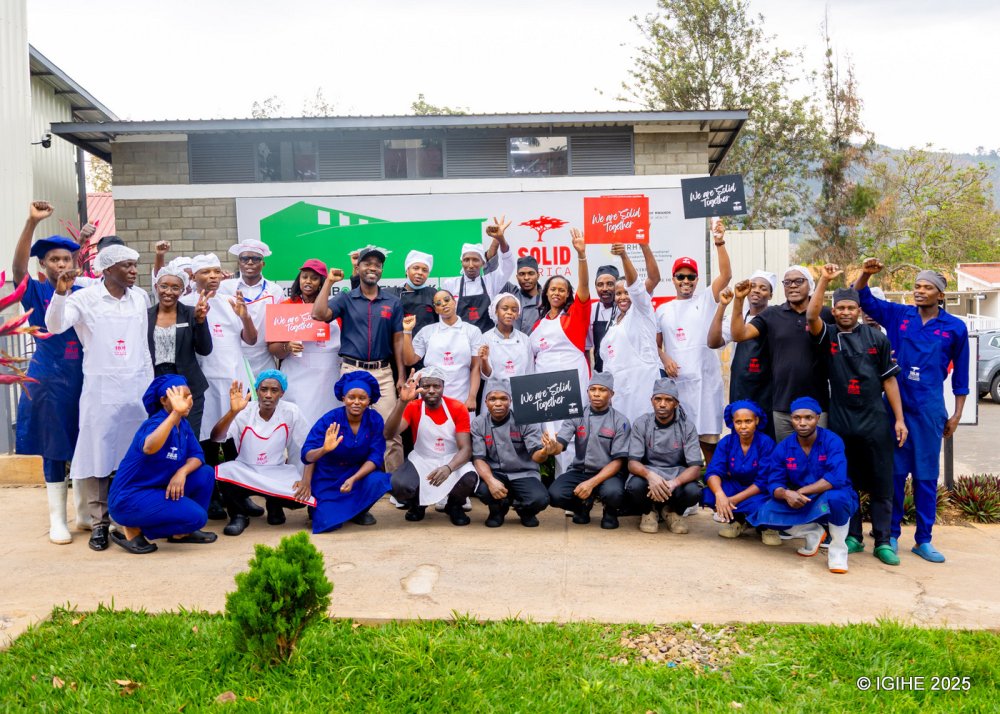
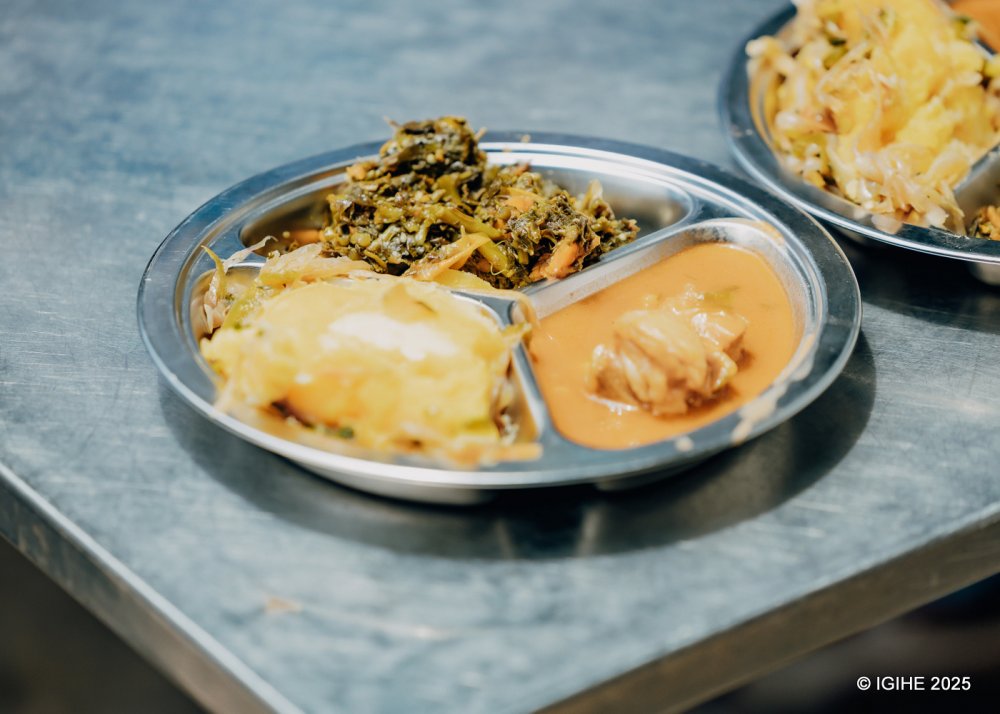
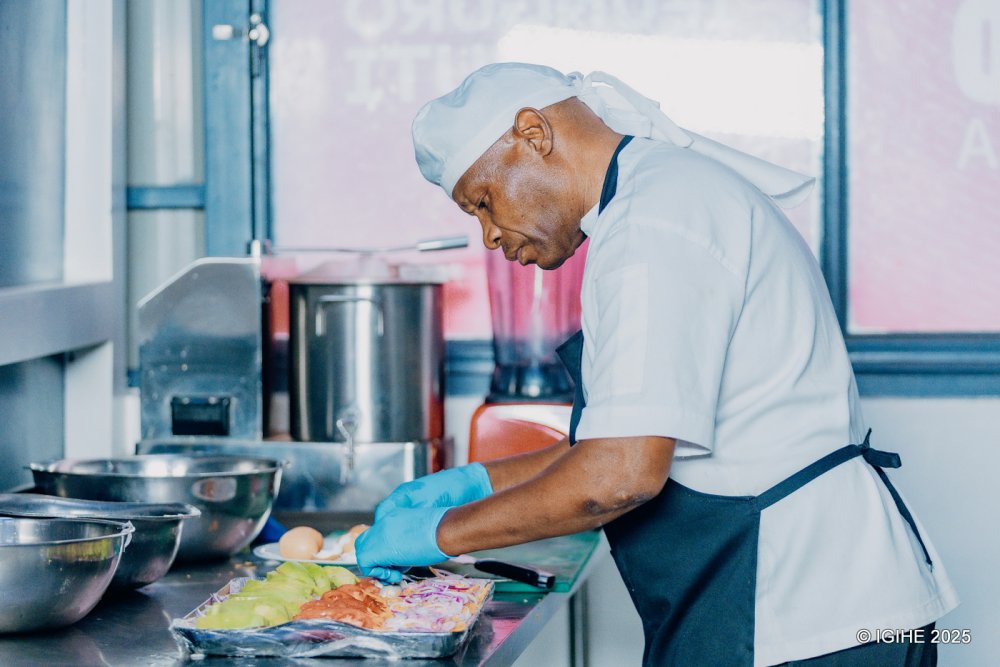
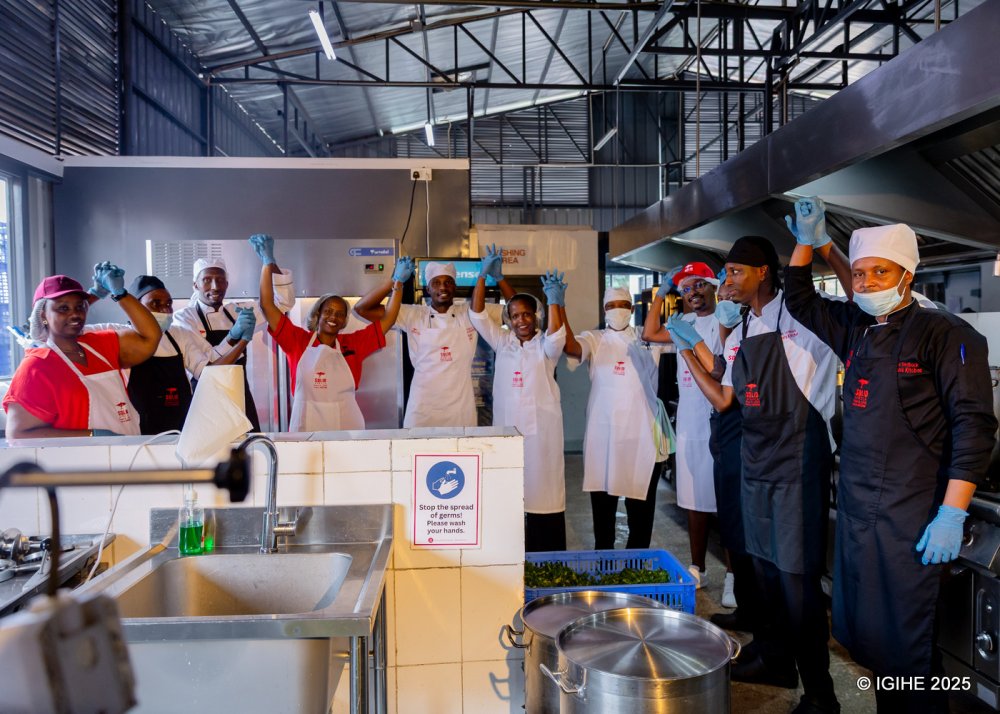
The campaign seeks to expand access to healthy, life-sustaining meals for vulnerable patients, with a goal to reach individuals across the country.
The campaign encourages contributions of all sizes, emphasizing that even the smallest donation can make a significant impact.
“We want to remind people that they have the power to make a difference with Solid’Africa so we can expand our efforts,” said Inkesha Ariane, one of the founders. “Our goal is to reach every patient in Rwanda, ensuring they receive healthy meals to support their recovery.”
The campaign introduces a new partnership model, allowing customers to contribute through designated accounts by making donations at participating supermarkets, restaurants, and other businesses. Through this, customers can make financial contributions with ease, helping to support patients in need.
“If you buy a bottle of water, you can also buy one for a patient. If you purchase a kilogram of rice, you can contribute the surplus to help a patient,” explained Inkesha.
The six-month awareness campaign is just the beginning, as Solid’Africa plans to make this model a permanent part of its operations.
While the focus is initially on providing free meals to the most vulnerable patients, there is also a plan to allow individuals with the means to contribute a small amount, no more than 600 Rwandan Francs per meal, to support the initiative. This will help sustain the program while continuing to provide meals to those who cannot pay.
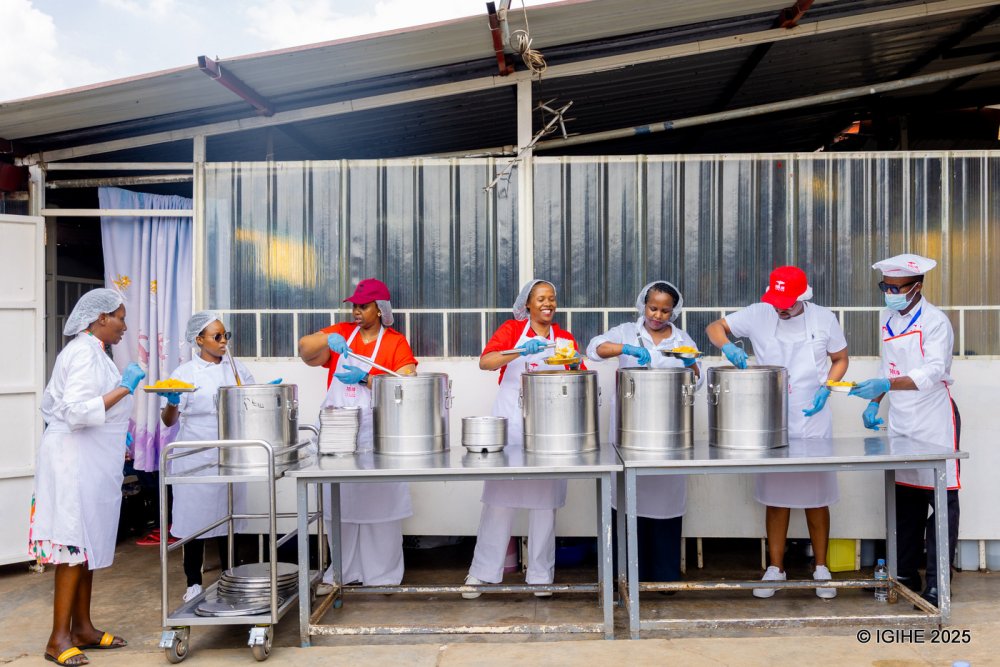
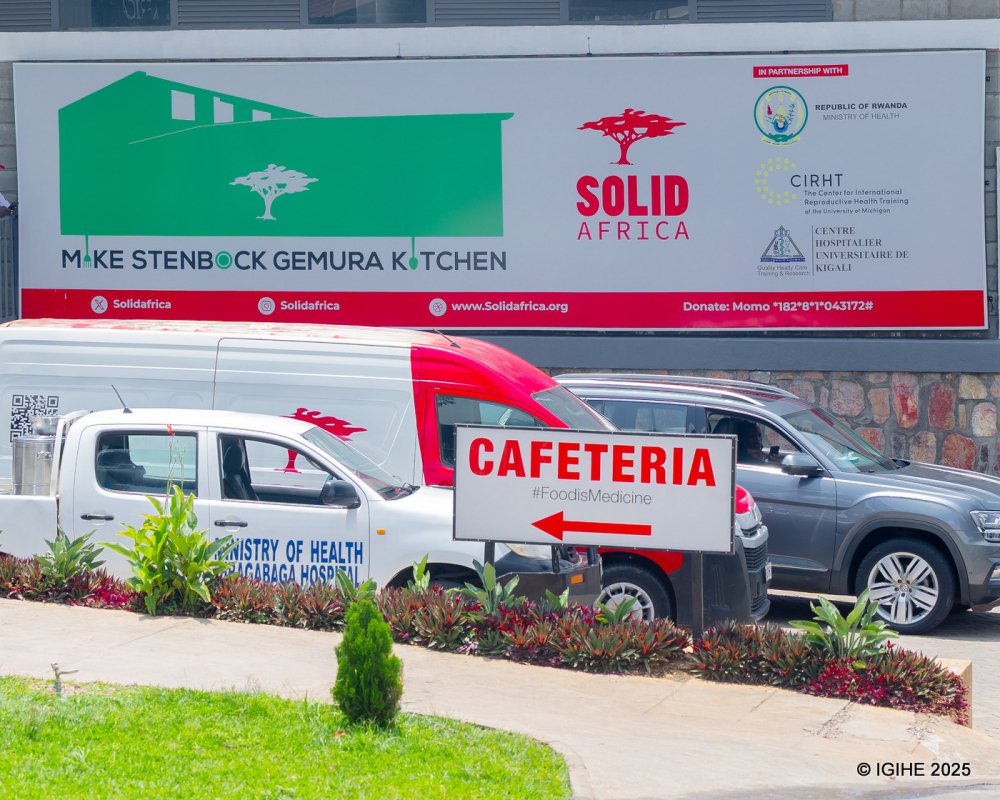
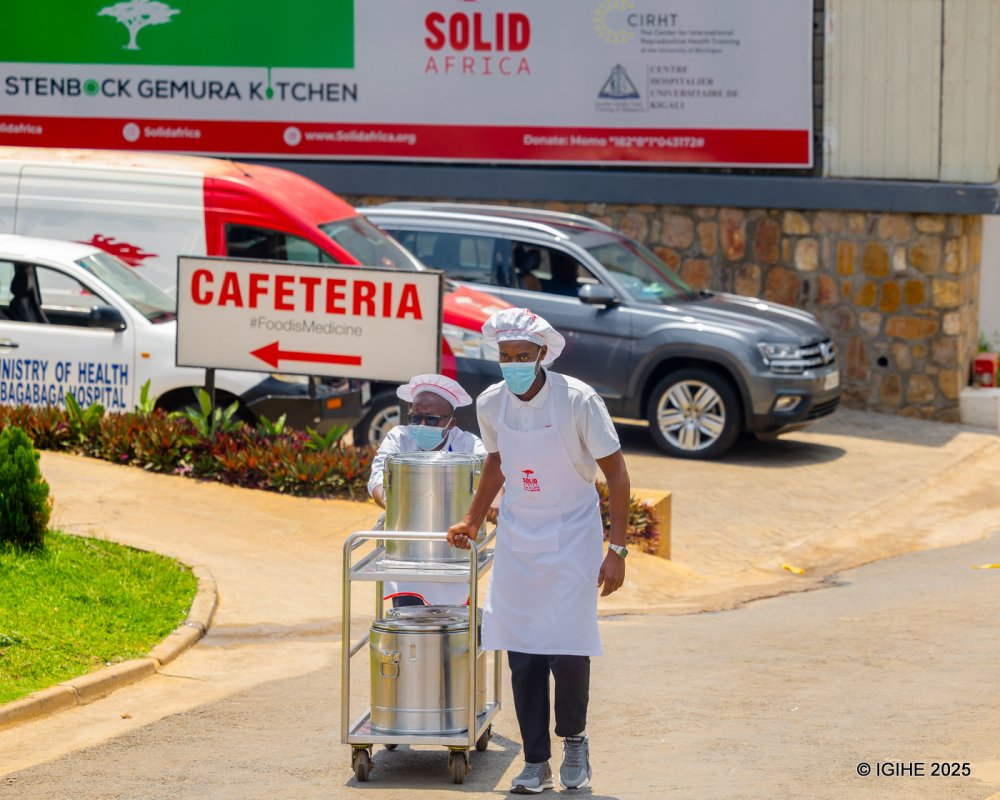
Currently, Solid’Africa provides free meals to patients at six hospitals in Kigali and its surrounding areas, including the University Teaching Hospital of Kigali (CHUK), Kibagabaga Hospital, Muhima Hospital, Nyarugenge Hospital, Masaka Hospital, and Rwinkwavu Hospital (PIH – Partners In Health).
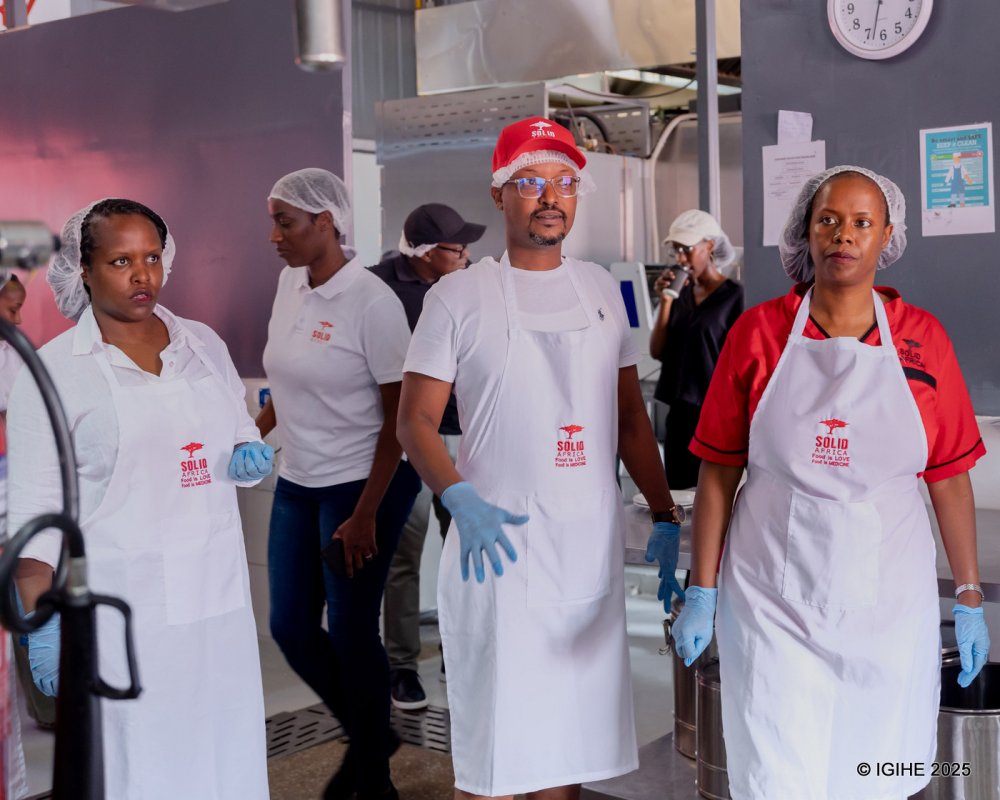
Kamaliza Isabelle, another co-founder of Solid’Africa, shared that since its establishment in 2010, Solid’Africa has been able to restore hope to patients in the hospitals it operates in by providing them with free meals, which they were previously struggling to afford, and offering support alongside the medication they receive.
Currently, Solid’Africa provides meals to 14,972 students once a day and serves 1,500 patients three times a day. In total, the organization delivers 19,500 meals daily.
Supporting Solid’Africa can be done by donating [here ->https://wearesolidtogether.org/] or by dialing 7758*4# and following the instructions.
In this program, Solid’Africa will closely collaborate with IGIHE, BK TechHouse, Nokanda, and Secam.
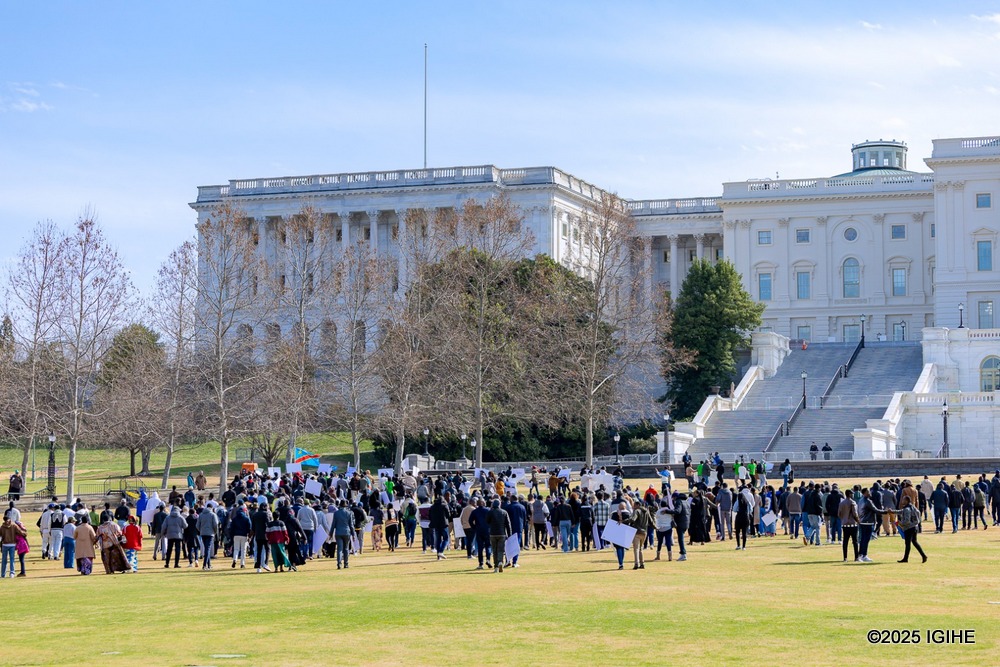
This appeal is part of an open letter issued by the Mahoro Peace Association, a group advocating for the rights of the Banyamulenge, which was sent to U.S. leaders, including Secretary of State Marco Rubio and members of Congress.
Douglas Kabunda, the association’s leader, emphasized that since 2017, Banyamulenge communities in the Fizi, Uvira, and Mwenga territories have endured brutal attacks by a coalition of Congolese military forces.
Kabunda pointed out that the Banyamulenge areas in South Kivu are surrounded by over 58 military camps, where civilians are prohibited from accessing markets, hospitals, or receiving humanitarian assistance.
He also highlighted that many houses and crops have been burned, with drone strikes by the FARDC and Burundian forces still targeting civilians in November 2025, despite the Doha ceasefire agreement.
He also reminded that Burundi had acknowledged its blockade of the Minembwe area, which is home to the Banyamulenge. On November 12, Brigadier General Gaspard Baratuza, the spokesperson for the Burundian army, accused the residents of collaborating with the enemy.
Kabunda stressed that the ongoing attacks against civilians, without distinction between combatants and non-combatants, constitute severe violations, including war crimes such as starvation, displacement, and genocide, as the Banyamulenge are being targeted as a group.
The Mahoro Peace Association is calling for an end to the siege of Banyamulenge-inhabited areas and for Burundian forces to withdraw from eastern DRC.
Additionally, they have requested that an independent international commission be dispatched to the Fizi, Uvira, and Mwenga regions to investigate the ongoing war crimes, crimes against humanity, and genocide targeting local populations.
Kabunda also urged for sanctions against the Burundian and Congolese military officers responsible for the siege and starvation of Banyamulenge civilians, including asset freezes and travel bans to the United States.
To amplify their message, Banyamulenge communities in the U.S. are planning protests from November 23 to 28, demanding that the U.S. government take action.
“I’ve had a lot of deadlines, but if things are working well, you tend to extend the deadlines,” Trump told Fox News Radio. “But Thursday is it — we think an appropriate time.”
Ukraine was losing land and “will lose in a short period of time,” he said.
Ukrainian President Volodymyr Zelensky said Friday on X, following a phone call with U.S. Vice President JD Vance, that the Ukrainian side “agreed to work together with the U.S. and Europe at the level of national security advisors to make the path to peace truly doable.”
In an address to the nation, Zelensky said: “Ukraine could now face a very difficult choice: either the loss of dignity, or the risk of losing a key partner. Either the difficult 28 points, or an extremely difficult winter.”