{A High Court in Rwanda on Thursday sentenced a man to life in prison for leading and coordinating attacks on Tutsis during the 1994 genocide against Tutsi.}
In the genocide, over one million innocent Tutsis were killed in just 100 days.
Bernard Munyagishari, who headed a government-allied militia known as the Interahamwe in Rwanda’s west, was convicted of crimes of genocide and crimes against humanity.
Lawyers for Munyagishari said they would appeal.
Timothée Kanyegeri, one of the three judges who convicted him, said Munyagishari had trained the militia in how to distinguish the Hutu from Tutsis.
He also “told them that to kill as (for a) snake, you have to hit hard the head, otherwise it will sneak away”, the judge said.
Kanyegeri said Munyagishari had transported members of the militia in buses as they went to kill the Tutsis in Rwanda’s former prefecture of Gisenyi and had personally helped to distribute guns, machetes, axes and clubs used in the killings.
Munyagishari was arrested in neighboring Democratic Republic of Congo in 2011. His case was transferred to Rwanda in 2013 from Arusha, Tanzania, where the now-closed International Criminal Tribunal for Rwanda was based.
Munyagishari is being held in Kigali’s central prison and was absent during Thursday’s sentencing. (Reuters/NAN)
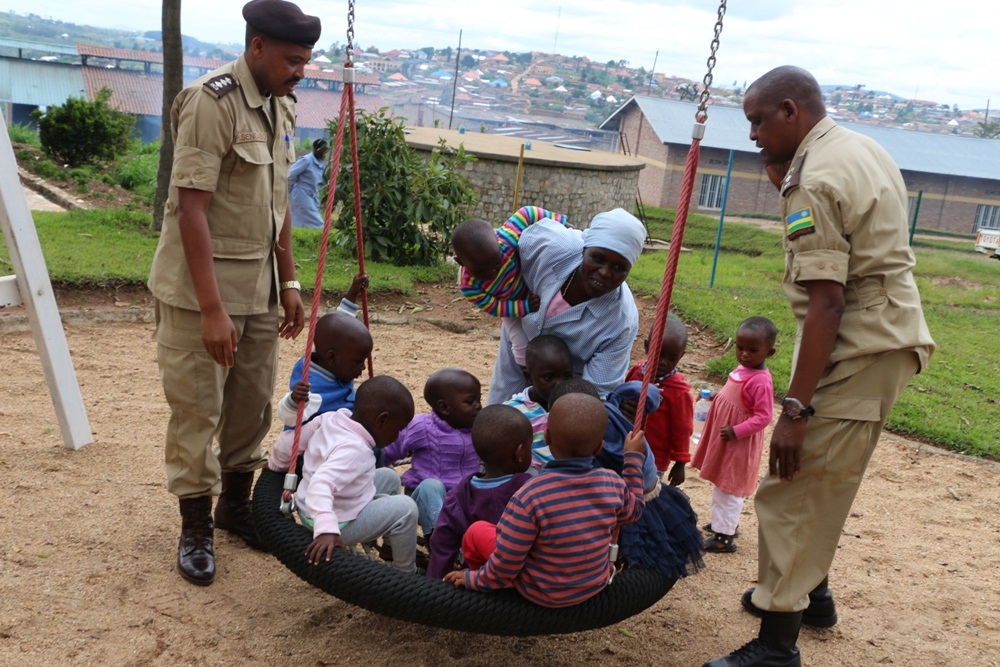
The fact that the children are living with their parents in prison does not turn them into prisoners but they stay there just because a child aged below three years has rights to live with their mother as long the conditions allow.
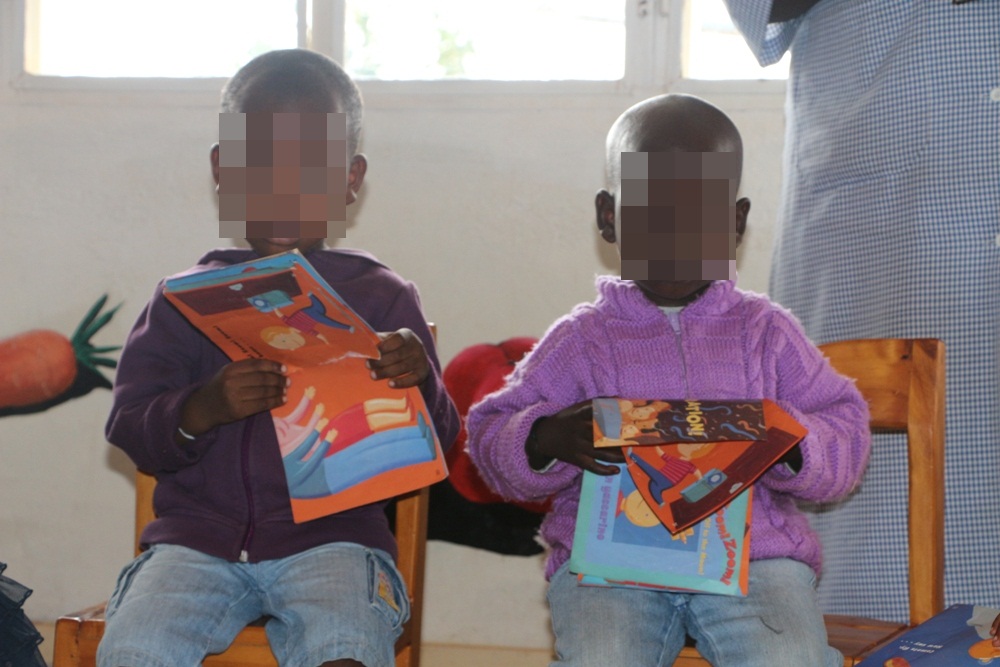
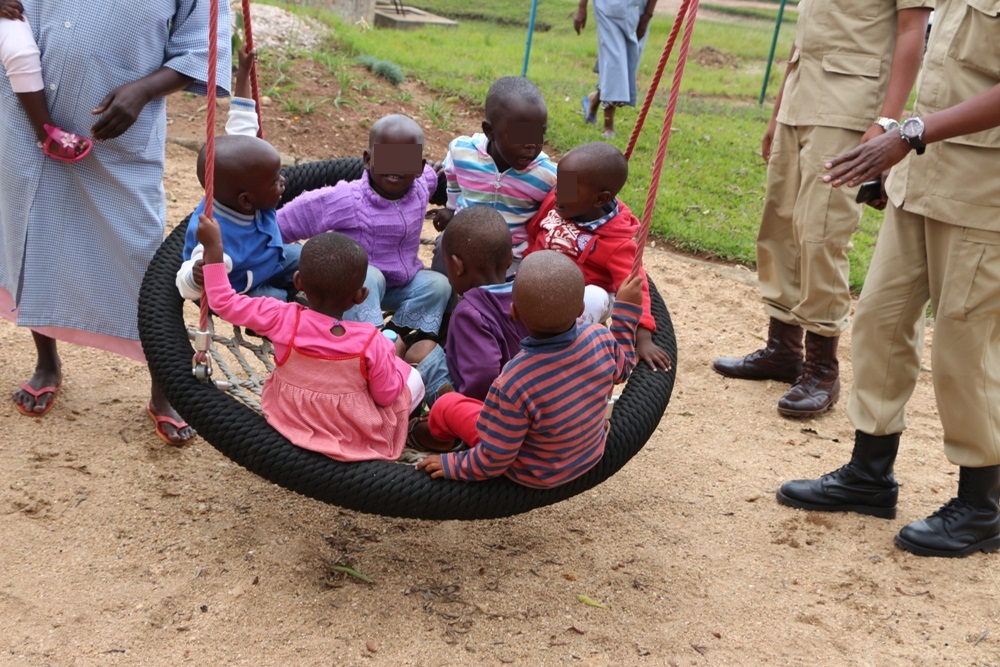
Since 2011, children who accompanied their parents and those born in Muhanga Prison have acquired childcare centre from which they are raised in normal conditions and prepared to be reintegrated into families having good health and manners at the same level as children out there in the community.
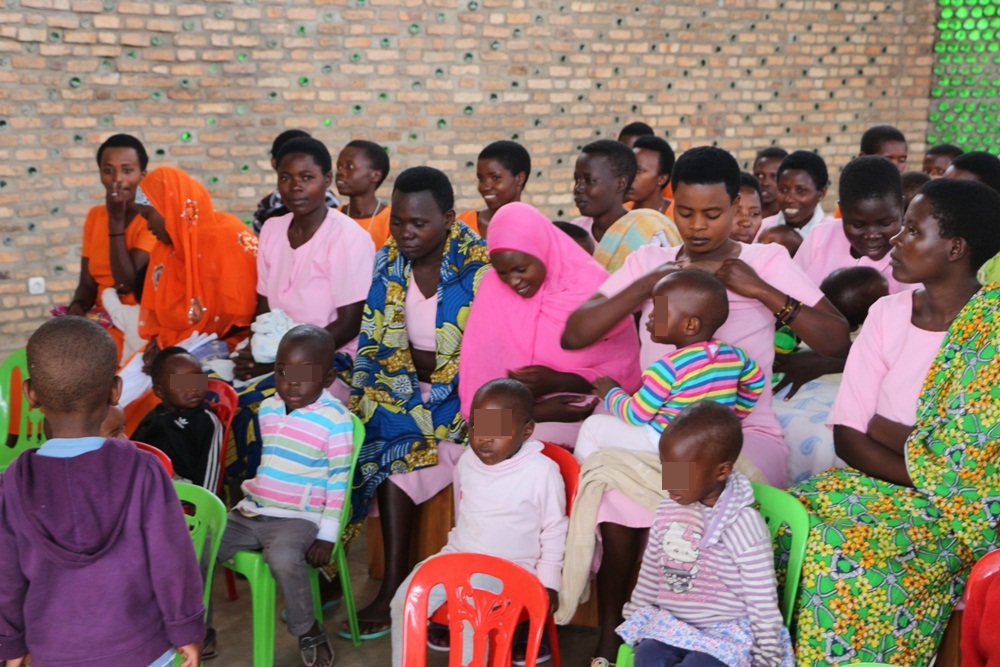
With the help of Rwanda Correctional Services (RCS), IGIHE’s Emmanuel Kanamugire was able to enter the Muhanga Prison where he found 52 children belonging to female inmates. The children are enjoying their legal rights of staying with their mothers
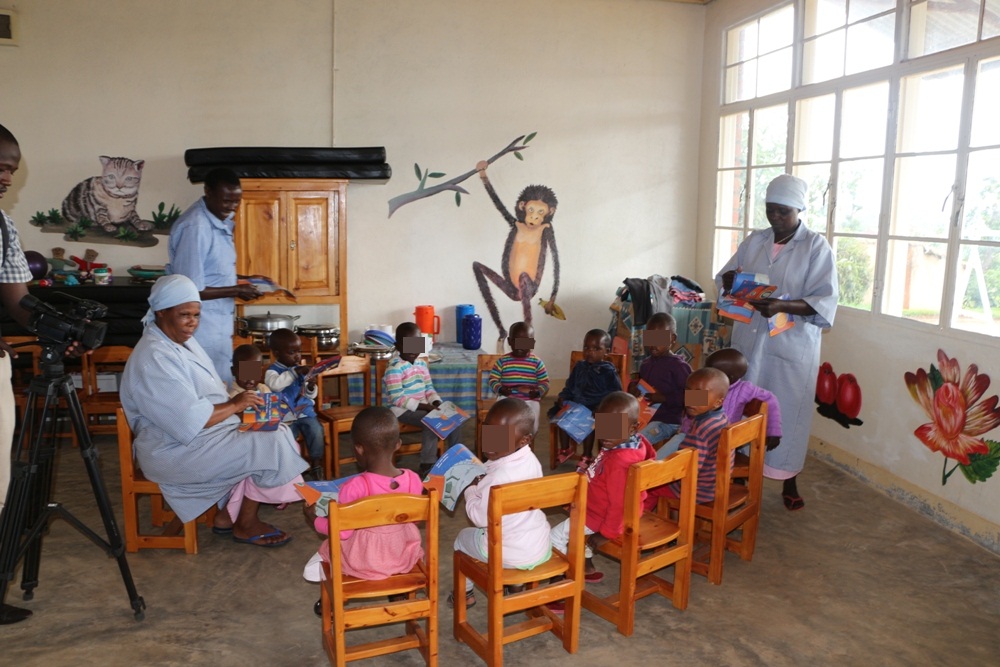
Children at three years and below are taken to the childcare centre every morning, handed to their caregivers who do their cleanliness, give them food and drinks and teach them some basic life skills that are also offered at nursery schools in the country.
Ms. Eugenie Musayidire who, in partnership with different sponsors, opened the childcare centre in Muhanga Prison, and currently monitoring the children’s life on a daily basis, says that she decided to help the inmates’ children acquire the same care as what other children are acquiring in their families.
“Children living in their families are cared for on a daily basis as usual but these ones living with their mothers in prison would not have caregivers without this initiative. We are caring for their lives. We pick them in the morning and spend daytime with them, teaching them good manners. We provide them with meals, teachers, playthings and more. After taking their lunch, they take a nap, serve them with milk or porridge when they wake up and we take them back to their mothers in the evening,” she says.
Despite the care rendered to these children, they still face challenges that include lack of life skills outside prisons like the language used in the society because they have no interactions with people outside the prison. For instance, it is hard to get these children into a car because cars are strange to them and they also confuse cows’ colours with clothes’ whereby some say that a cow is putting on a dress.
As a response to this problem of lacking exposure to society’s life, RCS has committed to taking these children for regular tours around the country for them to understand the life outside prisons.
RCS’s Spokesperson Mr. Hillary Sengabo, says “We have set up adequate conditions for those children’s proper development. They spend daytime outside the prison and go back to sleep in their mothers’ chest at night. We take them outside of prisons to learn about the conditions there and we are doing our best to provide them with the necessary needs.”
He says that when a child grows up to three years, is separated from an inmate mother and joins the family at home.
RCS first examines the ability of the child’s receiving family to provide adequate life conditions and the transfer must be approved by the child’s mother who stays in prison.
The government cares for children who cannot find families to receive them at three years of age.
Mothers of these children appreciate the education and care that their children are receiving and they have hope that their children will be marked by good manners when they are reintegrated into families.
”Our children are well catered for during daytime. They receive food, drinks and education and they come back to us in the evening telling us what they have acquired at the centre. We believe that they will be having good manners as they go back home,” says one of the inmate mothers in Muhanga Prison.
{{Child’s rights in prison}}
Mr. Francois Bisengimana, the Director of Adoption, Protection and Promotion of Child Rights at the National Commission for Children (NCC), says that a child living with her mother in prison has rights as any other child living at home.
NCC reveals that every prison accommodating children is supported with at least Rwf1 million annually according to the number of children therein and the funds help prisons in childcare.
Minister for Gender and Family Promotion, Ms. Esperance Nyirasafari urges families and individuals to foster children who are regularly sent from prisons.
“As we usually reintegrate children from orphanages into families, we keep asking families to receive these innocent children regardless of biological connection but anyone with a loving heart and ability can adopt a child,” she says.
There are five women prisons in Rwanda namely prison of Kigali, Ngoma in the Eastern Province, Nyamagabe in the Southern Province, , Musanze in the Northern Province and Muhanga which alone has a childcare centre.
Muhanga prison’s administration says that figures of inmates’ children who have been reintegrated into families are unavailable because of the fire which gutted the prison’s files in 2014.
{IBUKA, an umbrella of organization of survivors of the 1994 genocide against the Tutsi has requested concerned parties to revise the law relating to genocide ideology and recommend heavier punishments to the offenders. According to existing laws, a genocide ideology convict is subjected to a sentence ranging from five to nine years.}
The president of IBUKA, Prof. Dusingizemungu Jean Pierre made the request yesterday during the commemoration of genocide against Tutsi in Nyange.
“We feel that the current punishment of genocide ideology is inadequate. It seems that convicts don’t draw a lesson because the punished emerge again among people violating genocide survivors. This calls for heavier punishments,” he said.
The senate preside Bernad Makuza requested government , private investors and religious institutions to work together for positive social interests other than unity meant to destroy as it happened in the country’s history especially in Nyange.
Newly retrieved remains of 242 victims following the 1994 genocide against Tutsi were accorded decent burial during the commemoration yesterday.
Nyange memorial is home to 2,478 genocide victims of whom the majority were killed as they fled to the church of Nyange parish where father Athanase Seromba ordered their killing and demolishing the church.
Father Seromba was handed a life sentence by TPIR .He is detained in Benin.
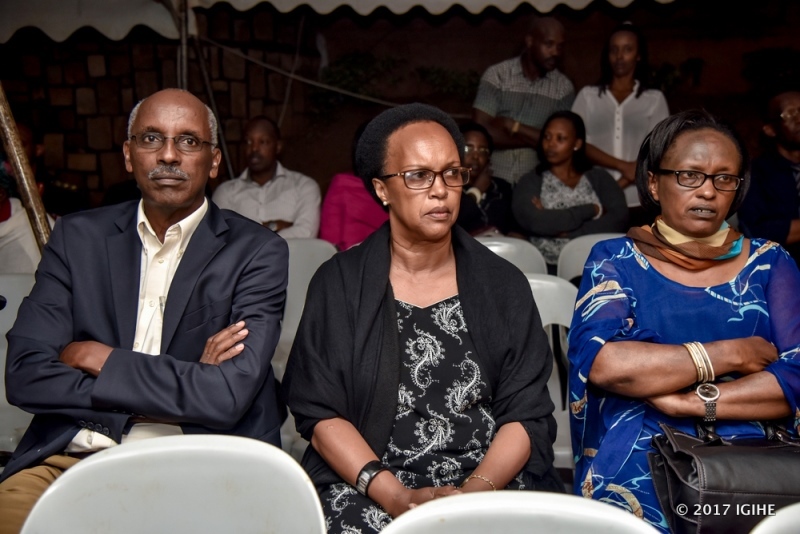
{The late Sayinzoga Jean, former chairman Rwanda Demobilization and Reintegration Commission has been commended for his deeds and bravery when he was alive and serving. His deeds were appreciated last evening in a tribute to his achievements held at his home in Intashyo village, Bibare cell of Kimironko sector in Gasabo district,Kigali. }
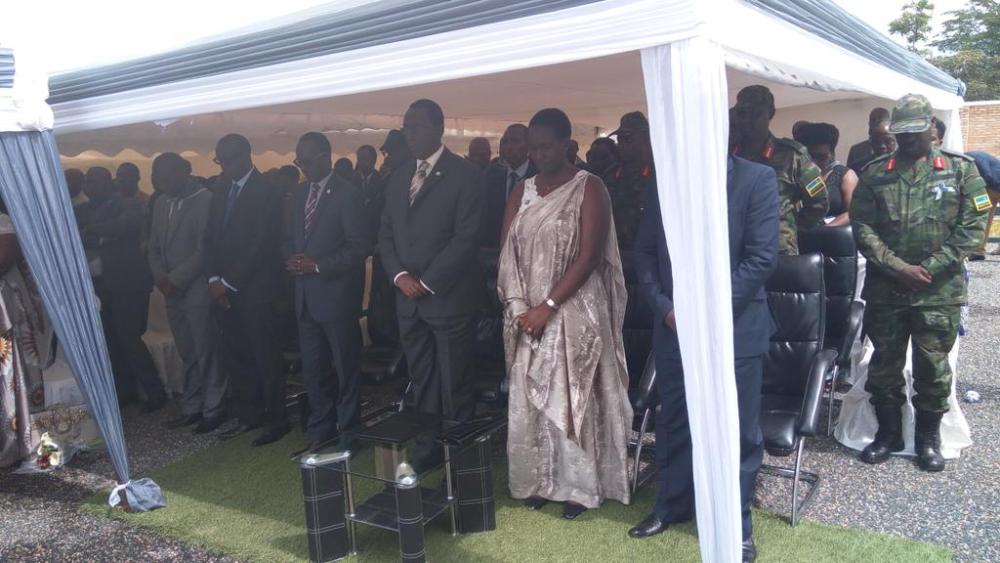
The celebration was attended by relatives, friends and top government officials including Prime Minister, Anastase Murekezi, the Minister of Local Government, Francis Kaboneka and the Minister of Justice Johnston Busingye among others.
The representative of the bereaved family, Mathias Abimana described Sayinzoga as a parent and brave who could dare anything for the family and the country.
“ He was brave, parent, adviser, leader in family and the country,” he said.
Mathias said he won’t forget words of Sayinzoga who always encouraged them to strive for greatness and success.
Jeanne Mukantwari, sister to Sayinzoga, said his brother would strive to fend for the family and recalled how he stopped studies in junior seminary to help her grow younger orphaned sisters.
{{ {That law reflects the will of the government only, not our will} }}
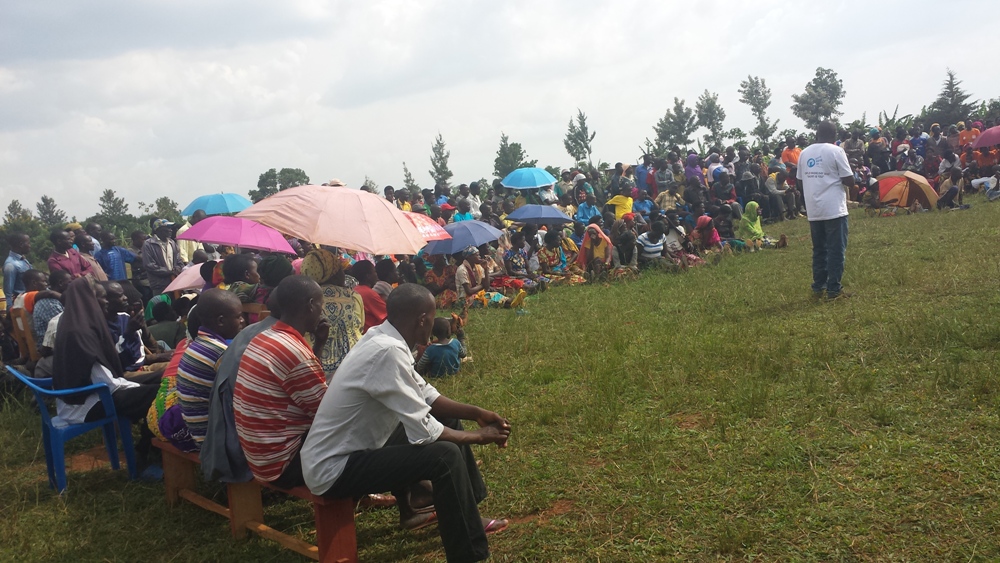
{It’s a sunny afternoon in Munyiginya Sector of Rwamagana District in the east of Rwanda. Men and women are seated on the lawn of Nkomangwa Cell’s football pitch. What brings together about 300 people this afternoon is a community debate, organized by the journalists network “Pax Press” in partnership with “Rwanda Women’s Network” to discuss with citizens the new law governing family relationship adopted last September. }
The main change is the fact that now both spouses – man and woman – are jointly responsible for the management of the household, including moral and material support as well as its maintenance as article 209 of the law puts it. “The performance of those duties by only one spouse is only allowed if the other spouse is unable to do so. In case of a disagreement, competent authorities make a decision.”
Elie Nizeyimana, a lawyer, explains the changes from the old law that bestowed a husband as superior over the wife in the household’s management. Some men crease and furrow, frown and murmur with grumbling grunts of dissatisfaction. “They deprived us, men, of our powers when they made the new law”, complains an old man, adding that he had never heard of the changes which he is to shoulder as the last resort.
Soon after, Munyiginya residents start sharing their thoughts on the new law. Whereas men blame the law to relegate them from their superior position in their families, women say they are not quite ready yet to take up the responsibilities as equal leaders of households.
Emmanuel Ntawuyirushintege says: “It is not possible to have two heads of one institution. The same should be respected regarding the family because it always needs a last signature by one head over any discussion to reach a decision. And this last signature will be the husband’s signature, as it always has been. That law reflects the will of the government only, not our will.”
Benithe Mukamana admits that she didn’t know about the changes in the law. “My husband is the head of the family. We don’t have the same powers and I am comfortable with that,” she tells the audience.
“Men’s powers have been reduced in favour of women, but I think the changes that will come with it are going to improve the family situation if women take up equal responsibilities as men in providing for the family,” says Theoneste Ruzindana.
Sarah Simbi, the Executive Secretary of Munyiginya Sector, is confident the revised law will bring solutions to some conflicts in families. “We used to receive conflict cases whereby men gave away or donated the family’s property without their wives’ consent. These cases will no longer come up as spouses will have to agree on everything,” she says.
{{Reasons behind law revision}}
Lawyer Nizeyimana says the law has not deprived men of their powers but gives equal responsibilities to women for the better of the family. “Women will take on more ownership of household activities and take up responsibilities to ensure its development instead of leaving heavy burden to men,” he said.
Referring to the new law’s preamble, Nizeyimana says the old law was outdated and not meeting gender equality principles including international conventions and African protocols that Rwanda has currently ratified. He says Rwanda remains the sole country in the region that has linked its family law to international standards while countries like Kenya, Tanzania and Uganda still use culture-based laws that give men superiority over women.
The preamble stipulates that the law was revised pursuant to the Constitution of 2003 revised in 2015; the Convention on the Elimination of All Forms of Discrimination against Women opened for signature in New York on 18 December 1979 that Rwanda ratified in 1980; the Protocol to the African Charter on Human and People’s Rights on the Rights of Women in Africa opened for signature in Maputo on 11 July 2003 that Rwanda ratified in 2004.
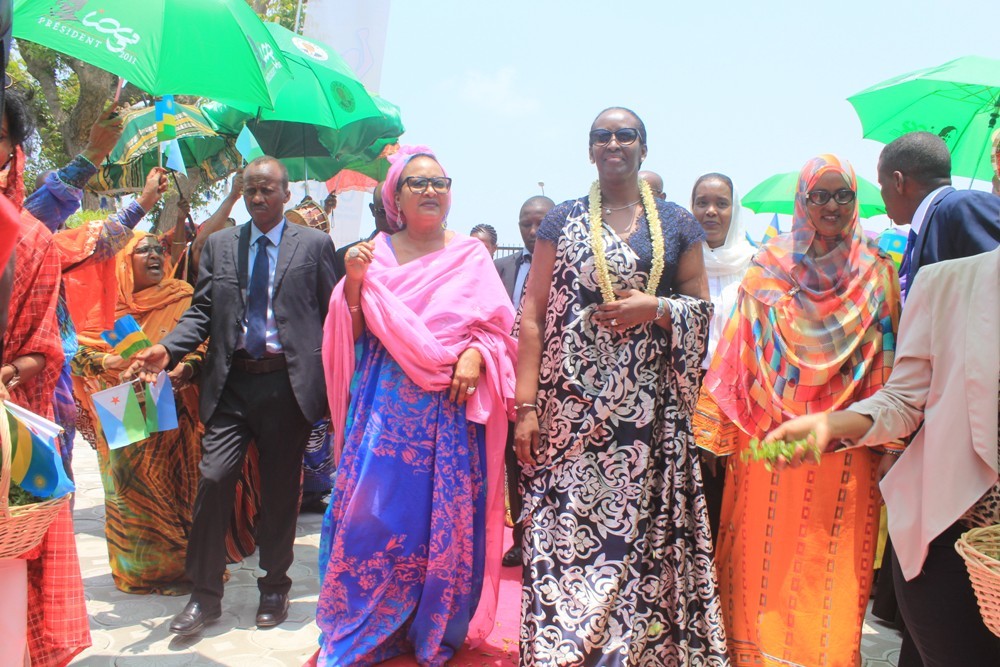
{The First Lady, Jeannette Kagame and her Djibouti counterpart of, Kadra Mahamoud Haid yesterday visited the association of women in Djibouti known as Union Nationale des Femmes de Djibouti (UNFD).}
The visit was attended by hundreds of women from Djibouti and Civil society organizations.
Guests were taken through activities of UNFD in promoting women’s livelihoods, enhancing political participation and economy since the country obtained its independence 40 years ago.
They also visited crafts center of Djibouti women and the center fighting against gender-based violence which provides legal aid and health services to both men and women.
UNFD has also promoted women education among others and is chaired by Djibouti First Lady, Kadra Mahamoud Haid since 2000.
Djibouti obtained independence in 1977.
The First Lady and president Paul Kagame arrived in Djibouti yesterday on a two-day state visit to Djibouti accompanied by other government officials including the Minister of Foreign Affairs, Louise Mushikiwabo, Minsiter of Youth and ICT, Philbert Nsengimana and the Minister of Infrastructure , James Musoni.
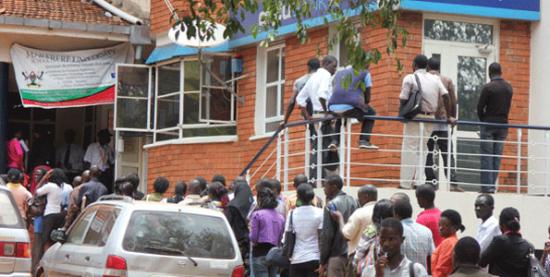
{Makerere University has dismissed 15 students who allegedly forged diploma transcripts to gain admission to the College of Health Sciences.}
Thirteen of those affected are all first-year students of medicine and surgery. Two others were pursuing pharmacy degrees.
On March 9, the academic registrar, Alfred Masikye Namoah, wrote to the affected individuals informing them to appear before an ad hoc committee in the Senate building to defend their diploma transcripts before the university could take action.
“It was discovered that you presented a forged diploma academic transcript for admission on private sponsorship for the 2016/2017 academic year. You are therefore requested to show cause why your admission should not be cancelled by appearing before the ad hoc committee on March 21 without fail,” reads Mr Namoah’s letter.
Sources close to the university but who declined to be named told Daily Monitor that only 11 students appeared before the committee but their defence was weak.
On Wednesday last week, the committee dismissed the students.
The deputy vice chancellor, finance and administration Barnabus Nawangwe confirmed the dismissal saying that the university does not admit students with forged documents.
Prof Nawangwe noted that the victims should not expect any refund from the university because they are criminals.
“If somebody has got entry into the university using fake documents, the matter is not just being dismissed from the university, but it is a criminal offence so they should be in prison because they are criminals,” Prof Nawangwe said. “They are not entitled to any refund because they have been studying and using our facilities yet they were here illegally.”
Charles Ibingira, the principal College of Health Sciences, had earlier informed Daily Monitor that the students had presented fake documents for admission and that the management was working round the clock to ensure the culprits are nailed.
“This time round, we went to the institutions the affected students claimed to have studied and it was discovered they didn’t have their records,” said Prof Ibingira..
According to university regulations, cases of impersonation, falsification of documents, giving false or incomplete information, whenever discovered either at registration or after leads to automatic cancellation of admission and prosecution.
Makerere University has been grappling with the problem of false marks. Recently, officials from the Academic Registrar’s office were suspended following accusations that they altered students’ marks in the university’s data base after pocketing cash.
{The issuance of the East African Community electronic passport has been pushed by a year to January 2018, to give Uganda and Tanzania more time to prepare for the rollout.}
Only Burundi, Kenya and Rwanda are ready.
Uganda and Tanzania say they will be ready by end of the year while new EAC entrant South Sudan will start at a later date.
Uganda reported that it was using the public-private partnership mode of financing for the production of the EA e-passport booklets.
In Tanzania, the government has adopted and domesticated the minimum technical specifications, which have been used to prepare the artwork and structural design for the international EA e-passport.
The existing system has been upgraded to personalise and encode e-passport booklets. The process of procuring a contractor to supply and install additional equipment and infrastructure to the existing system is ongoing.
At the EAC Heads of State Summit in March 2016, it was directed that the issuance of e-passports be done at the same time in all member states, with a one-year phase-out of the national and Community passports.
While meeting in Arusha, the EAC Council of Ministers said partner states should be allowed to conclude their preparations before the issuance starts across the region. This would allow for recognition agreements to be signed between the countries.
Burundi said it was ready, having approved and domesticated the EAC designs and specifications of the document.
“However, in the interest of moving forward with other partner states, the Republic of Burundi would wish that the period to commence issuance of the EA e-passport be extended to April 3, 2017,” Bujumbura had said.
Kenya indicated it had finalised the specification and design of the document. It had also domesticated the design and procurement of booklets. Nairobi said the upgrade of the current system from machine readable passport (MRP) to e-passport was complete.
Kenya has also revised its laws, regulations and administrative procedures to accommodate the issuance of e-passports.
The Kenya Communication Act, 2013 outlines cyber laws and regulations that promote e-transactions and e-signatures.
The law has given way to implementation of national digital services transformation initiatives such as online visa, e-citizen portal, e-foreign nationals management system, e-temporary permit and online payments platform.
On its part, Rwanda has initiated a tender to procure both the systems and booklets for the EA e-passport and is now in the final stages of contract signing. A Cabinet paper on the e-passport modalities including categories, validity and key features was approved on October 12, 2016.
{Families of inmates previously held in Gasabo Rwanda Correctional Service (RCS) facility in Kigali are yet to be informed of the whereabouts of their relatives who were relocated to different prisons following recent riots.}
Two days after a fire ravaged through a large section of Gasabo Prison in Kimironko on the March 31, riots rocked one of the country’s largest correctional facilities as inmates protested dire conditions that followed the blaze.
A week after the fire, angry inmates pelted administration offices of the prison and nearby dwellings, forcing police to close off the main road and use tear gas to quell the riots inside the prison.
The inmates said that following the fire, which destroyed their shelter and basic belongings such as blankets, mattresses and clothes, they have been living in dire conditions, despite the RCS reporting that it had delivered relief items to replace the destroyed ones.
A week ago, hundreds of inmates onboard heavily guarded trucks were relocated to different facilities across the country. However, relatives who came to visit their kin were told to return later to confirm if their relatives were still in Gasabo Prison.
“We came here on a Friday only to find the relocation process going on. We could not confirm if our people were still here or transferred but prison authorities told us to come back on Sunday. When we returned, we were told that there is an administrative process that is still going on,” said Kankindi Mukamusoni, wife of a relocated inmate.
Last Friday, dozens of relatives of inmates watched helplessly as trucks left the facility, headed to different parts of the country.
A source told Rwanda Today that some three trucks, each with more than 150 inmates left the facility, enroute to Mageragere Prison and other facilities across the country.
RCS said a minimal number, mainly those suspected of instigating the riots and those in sections affected by the fire were moved. But according to RCS spokesperson CIP Hillary Sengabo, following the fire and riots, the process to move the majority of the inmates has started.
However, he denies that families of relocated inmates were denied information about the whereabouts of their relatives.
“The prison administration keeps a list of inmates who were moved and where they were moved to. I encourage families to get the information from the administration. We can’t withhold such information,” Mr Sengabo told Rwanda Today.
He added that the RCS had identified individuals who instigated the riots and they will be charged with vandalism and given additional punishments.
The riots, which caught everyone off guard, caused damage within the facility itself and the neighbouring environs.
{The Chairman of Rwanda Demobilization and Reintegration Commission (RDRC), Sayinzoga Jean has passed on. It is said that he breathed his last yesterday at King Faisal Hospital where he succumbed to liver cancer. }
According to sources, Sayinzoga has been working normally but he shockingly died immediately on arriving at the hospital despite having shown no signs of aggravated health conditions.
Jean Sayinzoga contributed to the development of various government programs and is famous for Karate game.
He was the first Rwandan with advanced Karate rank with the grade of ‘6th Dan’ which he obtained in 2015 followed by Sinzi Tharcisse who rescued 118 Tutsi during the genocide applying Karate techniques. The latter holds ‘5th Dan’ grade.
Sayinzoga is also known to have introduced and taught Karate in Burundi.
He served as the president of Rutsiro district advisory committee from 2011 until last year.