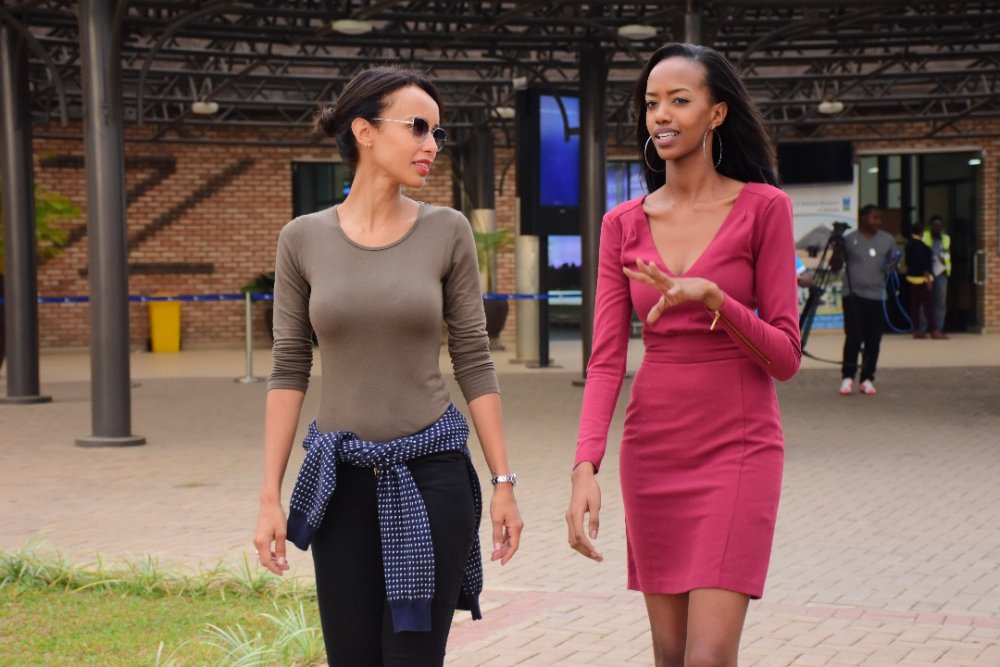
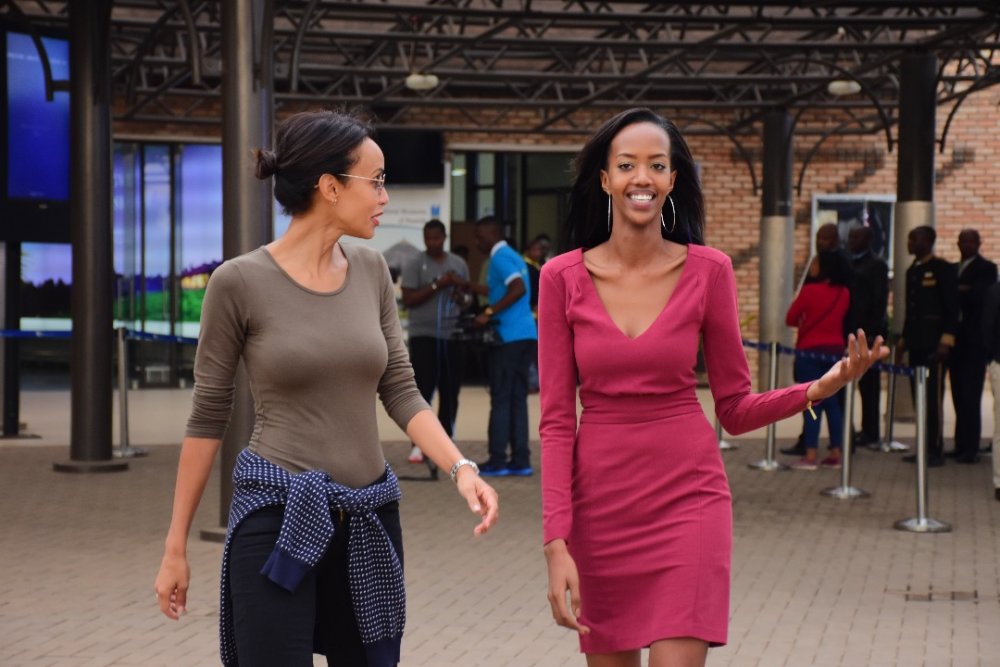
The Chinese food is scheduled to be the next episode of RTV’s food program Foodtube.
The shooting took place at the Chinese embassy in Kigali, Rwanda’s capital city.
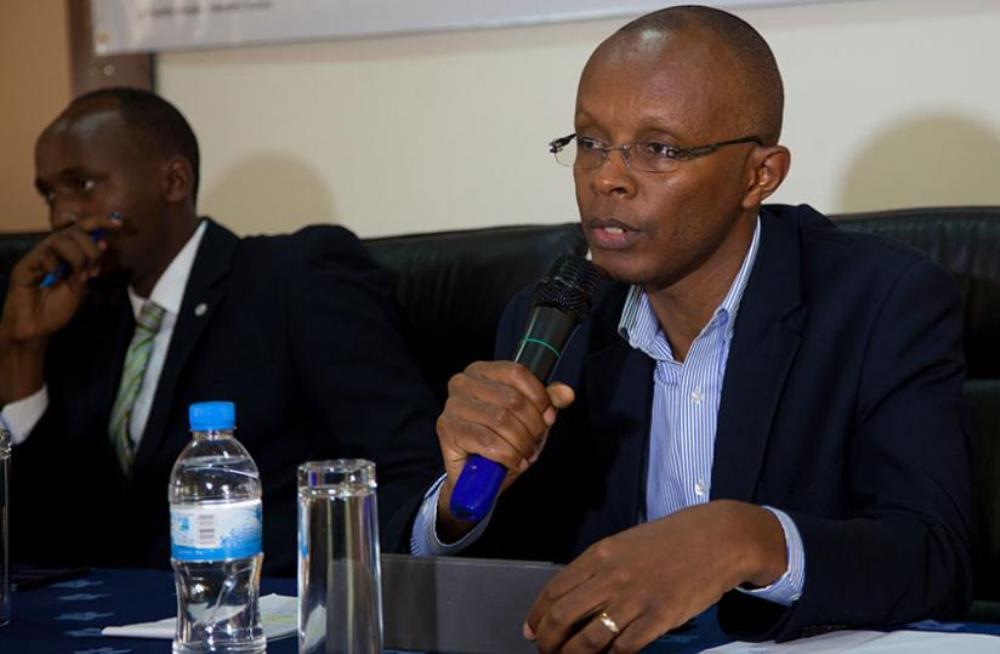
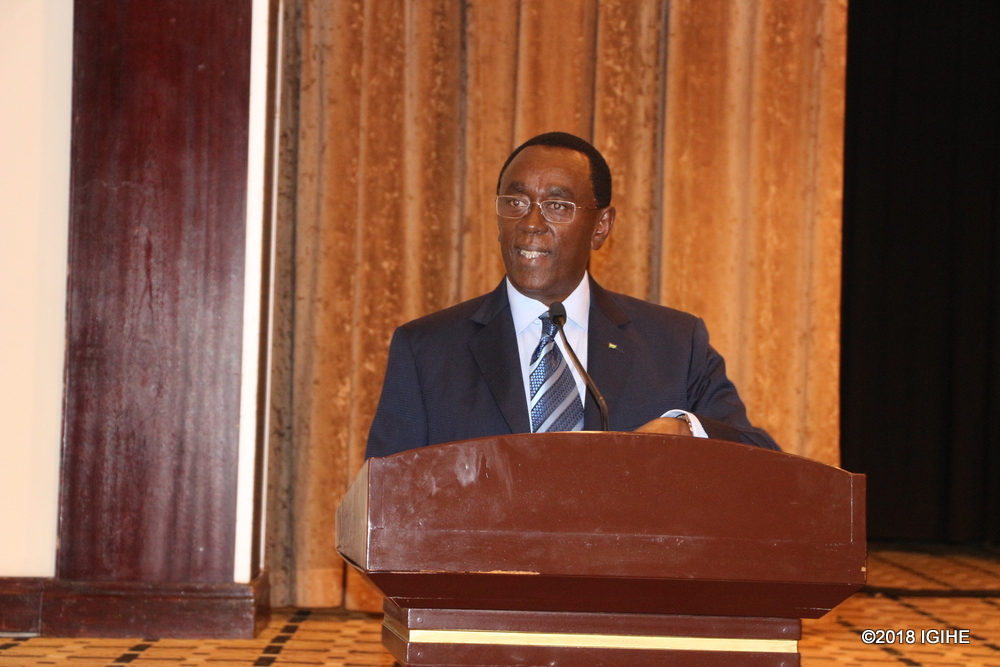
Chinese Ambassador to Rwanda Rao Hongwei introduced the significance of Chinese cuisine, the culture of Chinese cuisine and explained the reasons why Chinese cuisine are prominent all over the world.
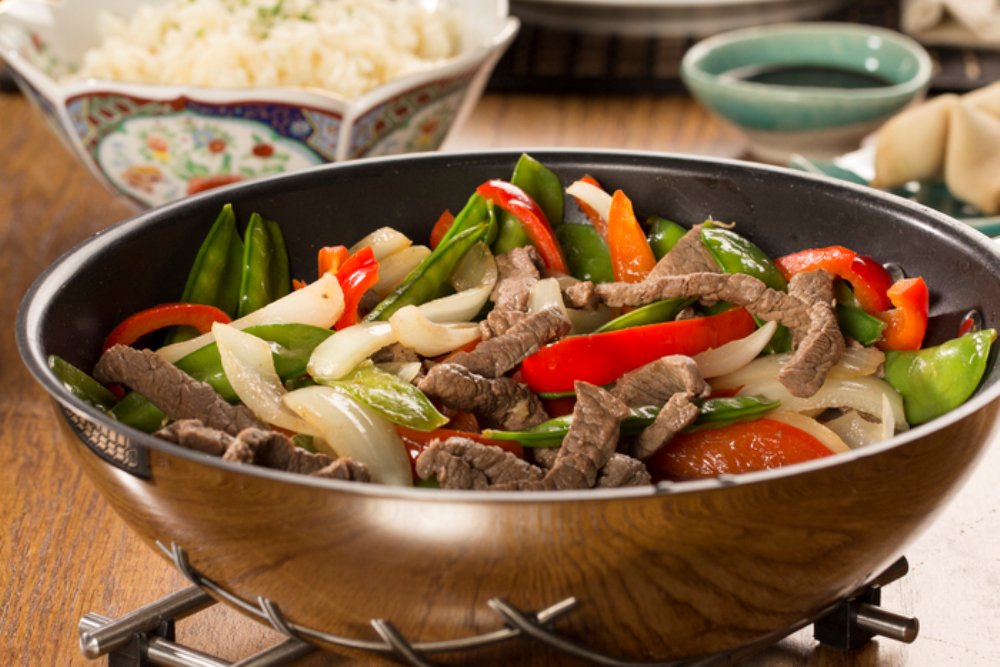
Tao Yukun, the chef of the Chinese embassy, cooked various dishes of Chinese cuisine for the program, including Ginger Chicken, Lamb and Mashed Potatoes, Pickled Kale and Mushroom, Spicy Beef Shreds, Crispy Drumsticks, Chinese Stroganoff, among others. Tao also shared his cooking methods and experience with RTV.
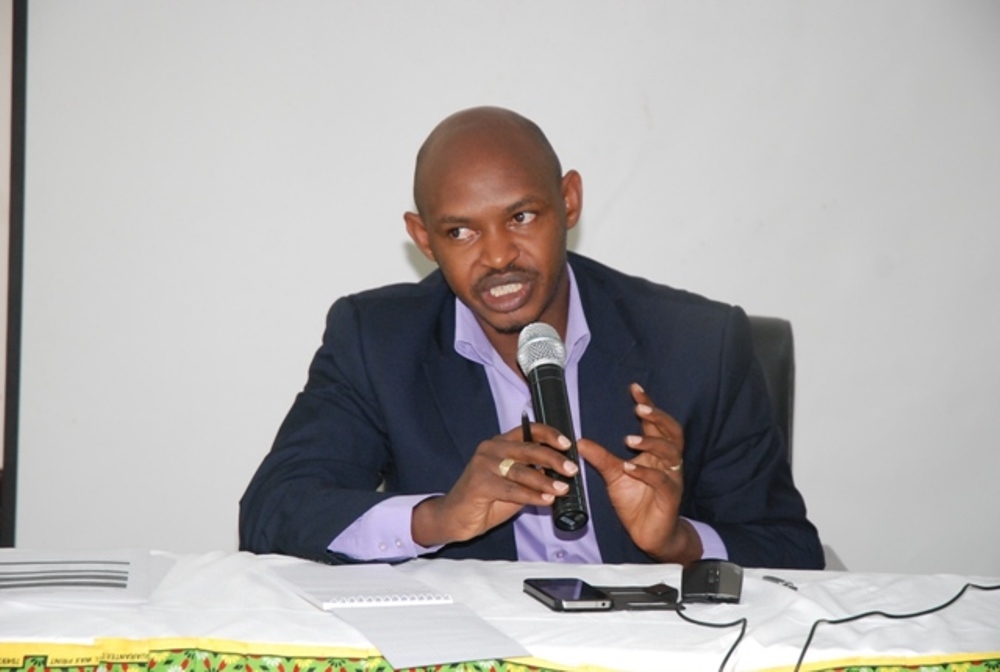
The food program has been introduced for many purposes, including helping people to know exactly about diets and providing tips for people in terms of eating, said Kennedy Munyangeyo, the head of RTV.
RTV’s audience requested for watching Chinese food on the program, said Munyangeyo. There are Chinese restaurants everywhere in Kigali and people want the program to help them cook pure Chinese food at home, he said.
Nigeria had on Friday beaten Uganda 102-86 in their first game and D’Tigers will play host Mali on Sunday in their last game of the first round of the series.
Shooting Guard Michael Efevberha five of nine threes in the first quarter gave Nigeria the unassailable lead only adding a point from the line for his 16 point in the game. Efevberha who played just 19:10 minutes in the game crashed the board four times and dished out three assists.
The quartet of Talib Zanna (14 points), Obi Emegano (13 points), Ike Diogu (12 points) and Michael Ojo contributed 49 points to Rwanda routing on Saturday.
Ikenna Mbamalu added nine points, dishing out five assists in the game.
Christopher Obekpa though scored four points but was the highest rebounder for Nigeria crashing the boards seven times.
However, E. Kaje led the floor for Rwanda with his 15 points with the duo of K. Gasana and K. Kabange each contributing 10 points.
Mali that lost their opening game to Rwanda will play Nigeria today, while Rwanda will play Uganda.
So how can basic information about an individual farmer’s plot help to grow his or her produce?
Charles Rubagumya is a maize farmer in Rwanda who recently mapped his plot of land using a new GPS technology. Determining the right amount of fertilizer to buy was previously a guessing game for Rubagumya, as he did not know the exact size of his field. But GPS – a technology which most Americans have on their cell phones or in their cars – can change all that.
“If I know the exact measurements of my land, I will know how much seed I will use and how much fertilizer I will apply,” says Rubagumya. “The monitoring of our plots will be easier, the crop yield will be measured as we will know the area under exploitation, and the volume of seed and other inputs to be used will be more exact.”
Knowing how impactful information about plot size can be, the U.S. African Development Foundation (USADF) teamed up with Milan Innovincy, an agriculture analysis company, to provide farmers in Rwanda with agricultural services and information technology – like GPS.
USADF, a Feed the Future partner, provides technical expertise and seed capital to support early-stage agribusinesses, such as a $250,000 investment to construct a COAMANYA maize milling factory. Milan Innovincy is a private sector partner that specializes in geospatial mapping and digital technologies to advance agricultural production. Together, they are partnering on a pilot project, a digital platform to help the cooperative’s farmers to grow healthy crops.
The digital platform helps farmers map the exact area of their land using GPS and satellite imagery, and is designed to be accessible and easy for farmers to input data. It is written in the local language, and a local extension worker for the project connects with farmers to track important agriculture and weather information. The platform also sends out localized SMS messages to farmers with planting tips based on data collected from their neighboring farmers.
With the data generated through this technology, farmers can predict exact information on the size of their land, average crop yields and expected sale revenues. They can use this data to negotiate better financing options from banks and market this information in advance to buyers, meaning greater stability for the cooperative.
Leonile Uwimana is a member of COAMANYA cooperative who hopes the new technology will assist in predicting flood patterns, too. “Floods destroy our plantations before the maize is ready to be picked,” Uwimana says. “With the right quantities of seeds, fertilizers and accurate weather information, the yields will improve and losses will decrease.”
So far, COAMANYA farmers have mapped more than 1,000 plots of land. And as Rwanda’s population – and number of smallholder farmers – continues to grow, innovations like GPS and the COAMANYA digital platform will equip farmers to make smart use of their farmland to support increased food security in the country.
The U.S. African Development Foundation (USADF) is an independent U.S. Government agency established by Congress to support and invest in African owned and led enterprises which improve lives and livelihoods in poor and vulnerable communities in Africa. USADF is a Feed the Future interagency partner.
The crackdown launched this week involves evaluating places where churches operate from and consider whether they are not operating from buildings meant for residential houses, well-constructed, having toilets, parking, constructed on the surface of one hectare, having rain water harvesting systems and licensed.
The monitoring was launched following a meeting that brought together different faith organizations and Rwanda Governance Board (RGB).
Under the current report, IGIHE has learnt that among 480 churches that were monitored, 203 have been closed.
In Gasabo District alone, 369 churhes have been monitored and 129 among them were closed whereas in Nyarugenge District 111 churches were monitored and 74 among them were closed over poor hygiene.
Speaking to IGIHE, the Churches Union representative in Gasabo District, Rev. Pastor Erneste Ruyenzi said that the exercise is going on and numbers are likely to increase.
The exercise also targeted Islam Mosques and resulted into the closure of two mosques in Kigali Sector of Nyarugenge District.
Briefing media about Corruption Perception Index (CPI) 2017 report on Thursday, TI-Rwanda’s Executive Director, Apollinaire Mupiganyi, hailed media for the unrivalled role in pointing out corruption and sensitising the general public on preventing and fighting graft.
The anti-corruption watchdog’s report released on Wednesday ranked Rwanda as 48th globally with 55 score, reflecting a slight improvement compared to 50th position with 54 score in 2016 but retained best position in East Africa and third tying with Cape Verde in Sub-Saharan Africa which is topped by Botswana followed by Seychelles ranked 34th and 36th,respectively, globally.
Clément Musangabatware, the Deputy-Ombudsman in charge of Preventing and Fighting Corruption, also commended media role and called for concerted efforts from the general public, civil society, public and private institutions to intensify the battle
He listed government’s efforts against corruption including ensuring the recovery of misappropriated funds, digitising services to minimise provider-consumer interaction and tightening laws punishing corruption.
ACP Jean Nepo Mbonyumuvunyi, the Commissioner of Inspectorate of Services and Ethics at Rwanda National Police, also highly recognised media hand in the force’s work against corruption.
{{Journalists cite threats, suggest solutions}}
Despite their role also recognised by Patricia Moreira, the Managing Director of Transparency International, media practitioners and organs told IGIHE on Thursday that they can do even more were the conditions rendered favourable.
Announcing the CPI 2017 findings on Wednesday, Moreira called for increased protection of media and civil society, saying that among the journalists killed in the last six years, one in five was covering a story about corruption.
John Williams Ntwali, an independent journalist carrying experience of 17 years, said there are threats against investigative journalism in Rwanda including limited safety and financial constraints, adding that special mechanisms are needed to protect investigative journalists.
“Investigative journalism is highly risky and corruption is among the issues that are often investigated. Crimes done in the hiding are often shielded by strong powers. People often fear to point out people with extensive authority. We are sometimes forced to drop corruption investigations,” he said.
Ivan Mugisha, an investigative reporter with The East African, said “The major risk to investigative journalism in Rwanda is security. Reporters who try to uncover corruption involving influential politicians or businessmen are sometimes threatened. The second challenge is lack of information. Government institutions are sometimes adamant and refuse to give journalists information despite the existence of a law on access to information.”
Mugisha cited the establishment of Rwanda Media Commission (RMC) as “an important step towards facilitating investigative journalists because now we do not have to worry about jail sentences for writing stories like it was in the past. The other credible step government has taken is to decriminalise defamation.”
Albert Baudouin Twizeyimana, the National Coordinator of Pax Press, a local NGO operating in promoting media professionalism, said there are still security threats against investigative journalism in Rwanda despite good policies fighting corruption, adding that a stronger networking of civil society and media can help encounter the threats.
He also called for government’s special financial support to journalists doing corruption investigation, citing ombudsman office and the Ministry of Finance and Economic Planning as being in the right position.
Gonzaga Muganwa, the Executive Secretary of Rwanda Journalists Association, said that no journalist has been killed or reported facing threats covering corruption but cites financial constraints and skills gap as serious impediments for investigative journalism.
{{RMC, MHC speak}}
Emmanuel Mugisha, the Executive Secretary of RMC, also said the body has recorded no case of threats against a journalist doing investigation of corruption and called for increased public support to investigative journalism, urging media houses to come up with innovative approaches that can contribute to their financial means.
He also urged journalists to take safety precautions in their work of investigation, noting that investigative journalism carries safety risks everywhere in the world.
Peacemaker Mbungiramihigo, the Executive Secretary of Media High Council (MHC), acknowledged media’s limited financial and skills constraints, saying that MHC is doing the best in capacity building.
“We want to increase training focusing on specialised reporting so that we get professional investigative journalists who can do more in fighting corruption and other crimes. We also ask other concerned institutions to keep increasing media’s financial means,” he said.
He added that MHC has introduced training types that take reporters to a certain area and spend good days getting familiar with the residents, making it easier for citizens to open up and tell reporters about issues like corruption.
For the first time, CPI study examined the relationship between corruption levels and the protection of journalistic freedoms and engagement of civil society. It found that at least nine out of 10 journalists killed in the last six years were in the most corrupt countries scoring 45 and less on CPI.
On average, at least one journalist was killed in a country that is highly corrupt every week.
New Zealand leads the CPI 2017 ranking with 89 scores down from 90 in 2016, followed by Denmark, Finland, Norway and Switzerland.
Rwanda leads the East African region, followed by Tanzania ranked 103th, Kenya 143rd, Uganda 151st and Burundi 157th globally.
The bottom five countries are Somalia with 9 scores, South Sudan, Syria, Afghanistan and Yemen with 12, 14, 15 and 16 scores respectively.
More than two-thirds of countries scored below 50 per cent while the global average score is 43 on the scale 0 to 100 with zero being the highly corrupt while 100 is for no corruption.
The event that took place on this 22nd February; featured a handover of Kinyarwanda storybooks and bookshelves for classrooms, supplied by the United States Agency for International Development’s (USAID) Soma Umenye project. Attending the event was the Ministry of Education’s Minister of State in Charge of Primary and Secondary Education, the USAID Mission Director, the Mayor of Kicukiro District, and representatives from the Rwanda Education Board.
Throughout 2018, USAID Soma Umenye will support the Ministry of Education in distributing storybooks in Kinyarwanda and bookshelves to every single lower primary classroom across Rwanda.
Participants at the event emphasized the importance of Kinyarwanda literacy for every student’s academic success, and praised the progress being made in Rwanda. Worldwide research shows that children learn to read faster and better in the first language they speak and understand.
Isaac Munyakazi, the Minister of State in Charge of Primary and Secondary Education, praised everyone involved in preserving Kinyarwanda as a mother tongue, especially USAID’s work through Soma Umenye and other projects.
“The Rwandan Ministry of Education is happy to collaborate with USAID to strengthen the capacity of the education system in Rwanda by implementing and supporting high-quality, evidence-based reading instruction throughout the country, enabling quality Kinyarwanda reading instruction to be an integral part of our children’s education,” he said.
The USAID Mission Director Leslie Marbury took the opportunity to reaffirm the US Government’s support for improving literacy in Kinyarwanda.
“USAID will continue to work with the Government of Rwanda to ensure that students achieve literacy in Kinyarwanda in the early grades of primary school. The future workforce of Rwanda depends on the foundational skills that these children are learning today,” she said.
International Mother Language Day is a worldwide annual observation held on 21 February to promote awareness of linguistic and cultural diversity and promote multilingualism. The day was proclaimed by the General Conference of the United Nations Educational, Scientific and Cultural Organization in November 1999. The 2018 international theme is “Linguistic diversity and multilingualism count for sustainable development” while the national theme is “Let’s preserve Kinyarwanda while protecting its authenticity and quality.”
Makuza was speaking yesterday during a dinner in honor of EALA members who have been in the tour around the Northern and Central Corridors and concluded their tour in Rwanda yesterday.
Makuza said that the people of EAC expect the community to succeed and produce real opportunities. He said they want countries to demonstrate tangible commitment to unity and to stay together in order to achieve integration in terms of infrastructures and remove all obstacles and barriers from people to do business, to live and work in the region.
“The treaty for the establishment of the community stipulates that the fundamental principles to govern the achievement of the objectives of the community which include mutual trust, peaceful coexistence and got peaceful settlement of disputes and cooperation from mutual benefits,” he said.
“All fundamental principles of the community require unity; unity must be your starting point as you do the important work of passing bills, overseeing implementation of plans in the vision of the community,” he added.
He thanked members for overcoming the disagreements during the recent elections of the assembly’s speaker.
“I salute the resolution to move beyond disagreements you had in the house. It was a normal democratic debate to have. It was more important to move on and focus on the core mandate of the assembly,” he said
Makuza said that the EAC legislative assembly has the mandate to exercise its power and parliamentary diplomacy as the means to move in the right and positive directions, to ensure service delivery and to assure peaceful relations.
“I’m quite confident that the assessment you have completed today was done for the common good of our region in the interests of our population,” he said.
He recommended EALA members to move from the office and go to see what happening on the field.
“You have the legal authority to see what is happening to the ground, I can say even you have the authority to exercise your powers to oversight our respective governments, it is very important to move from the office and to go and see what is happening on the field and you can bring your contribution in a concrete manner without talking about things that you have not witnessed,” he said.
Bapfakurera has been elected with 137 votes against his contestant Françoise Mubirigi who got 18 votes.
In his manifesto, Bapfakurera pledged to support business development in the country.
“I’m a businessman; I will advocate for you, I will do all my best to develop business in Rwanda. I know everything needed to develop the sector,” he promised.
Eric Gishoma was elected first vice-president, beating Isabelle Uzamukunda while the second Vice-chairperson is Eugenie Mushimiyimana.
The outgoing chairman, Gasamagera commended his team for the commitment which enabled them to successfully perform their responsibilities.
He said that in past three years, PSF is consulted for advice before any business decision is taken; he said that the federation is represented in all corners of the country.
He said that their advocacy led to solving different problems, among them is the waive of taxes on public buses carrying over 30 people and waive of Value Added Tax on exported commodities and services.
He said that PSF encouraged investors to invest in big projects and led to the construction of different big structures in the country.
PSF also has been able to raise the level of self-dependency where today only 33% of the budget comes from funders while in 2013 it was 54%.
“This means that 67% of federation’s budget comes from private investors, federation’s services and organized events,” he said.
In past three years, PSF also conducted a feasibility study where they will construct a new International Trade Fair (Expo) ground at Gahanga Sector in Kicukiro District.
Private investors also attend study tours outside the country, Rwanda Day and international business conferences among others.
Gasamagera urged the new committee to concentrate on new Expo ground, promoting Made in Rwanda and the Federation’s capacity building.
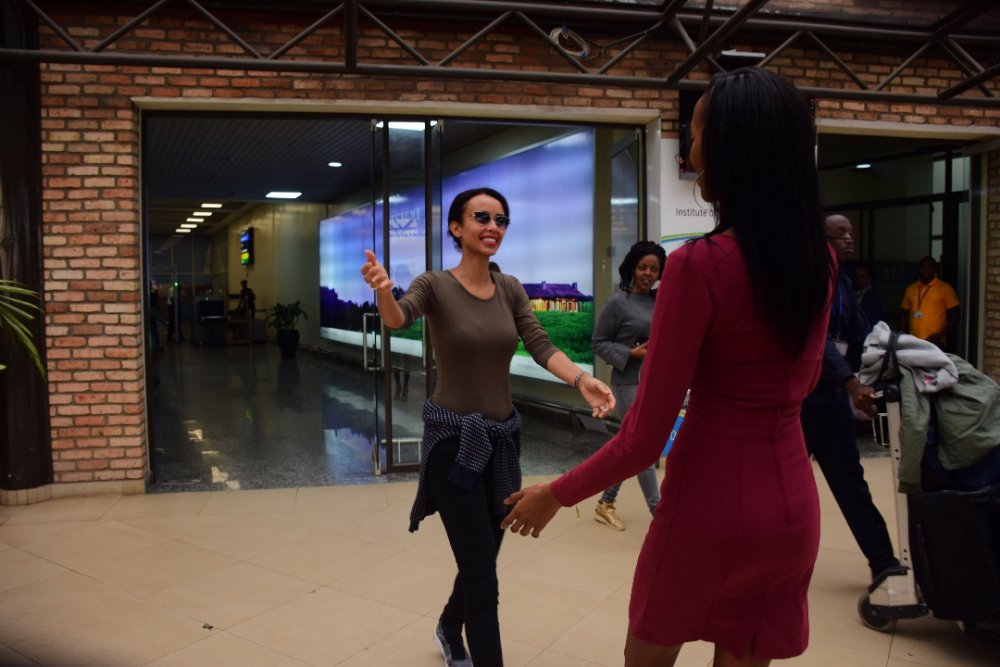
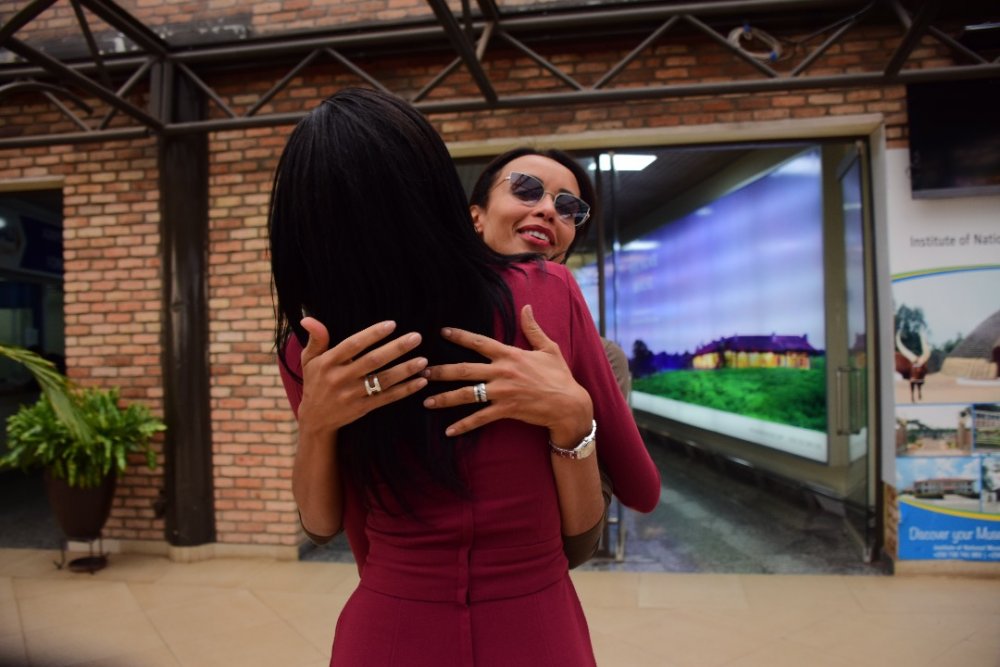
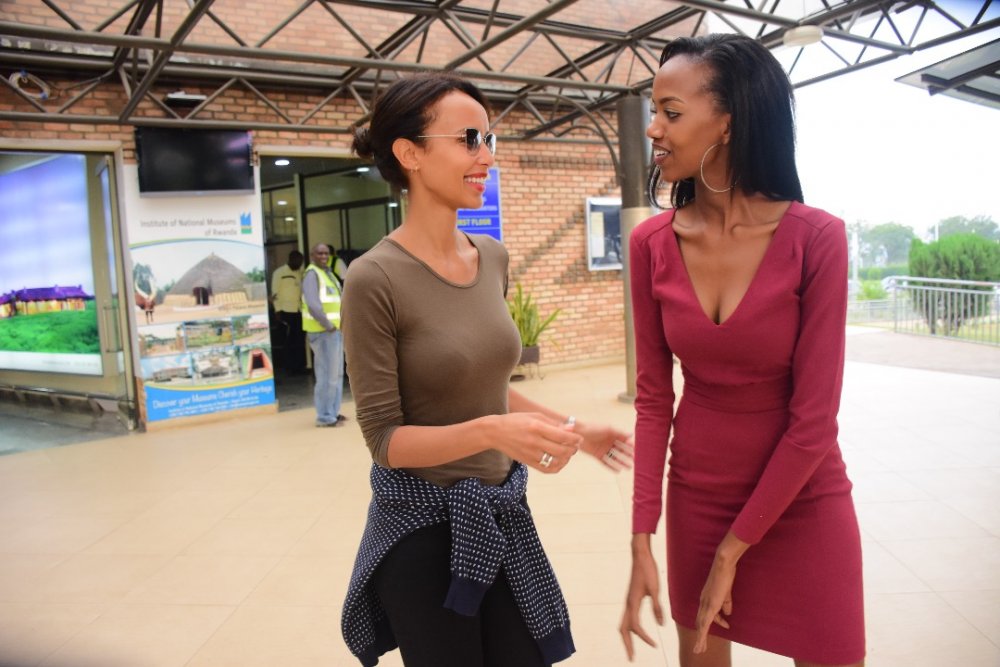
The former Miss France 2000,Sonia Rolland was the first African-born (Rwandan) winner of the Miss France pageant and at the same time, contestant in the Miss Universe Pageant that took place in Cyprus, where she finished at the 9th place.
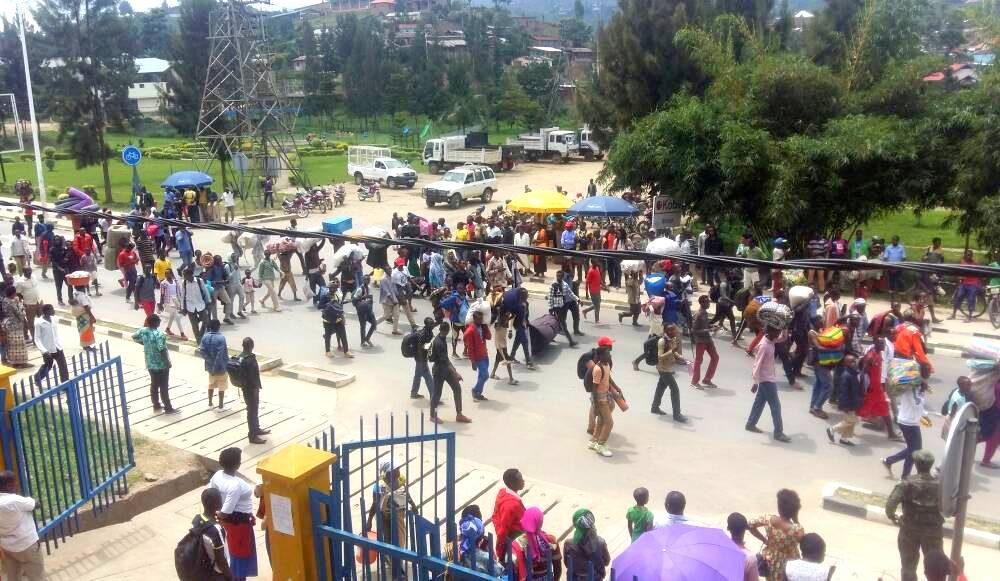
Demonstrations started on 20th February where refugees marched out of the camp in protest over reduced food rations.
However, the Ministry of Disaster Management and Refugee Affairs (MIDIMAR), United Nations High Commission for Refugees (UNHCR) and local leaders urged the refugees to return to their camp as their grievances were being addressed. However, according to Police, these calls were met with strong resistance that turned violent.
“Refugees armed with sharp objects (stones, sticks and metal pieces) began to assault police officers, who then used tear gas to disperse the unacceptable riots and secure the nearby community,” Police said in a tweet.
“When the attacks persisted, we used proportional force that left 20 rioters and 7 Police officers injured. They were rushed to hospital, five rioters unfortunately succumbed to their wounds and 15 arrested for illegal demonstration, taking hostage and inciting violence,” tweet reads.
On Thursday, UNHCR urged the refugees to respect local laws and express grievances through dialogue, while calling on authorities to handle the situation with calm and restraint. Some refugees indicated their desire to return to the DRC, out of desperation.
To date, UNHCR’s 2018 appeal for US$ 98.8 million to support refugees in Rwanda only 2 per cent is funded. WFP warns about potential larger ration cuts if monthly requirements of US$2.5 million are not met. Prolonged ration cuts put at serious risk food security and nutritional needs of refugees, who are dependent on assistance. Rwanda hosts over 173,000 refugees in six camps, including Kiziba, where Congolese refugees have lived for over 20 years.