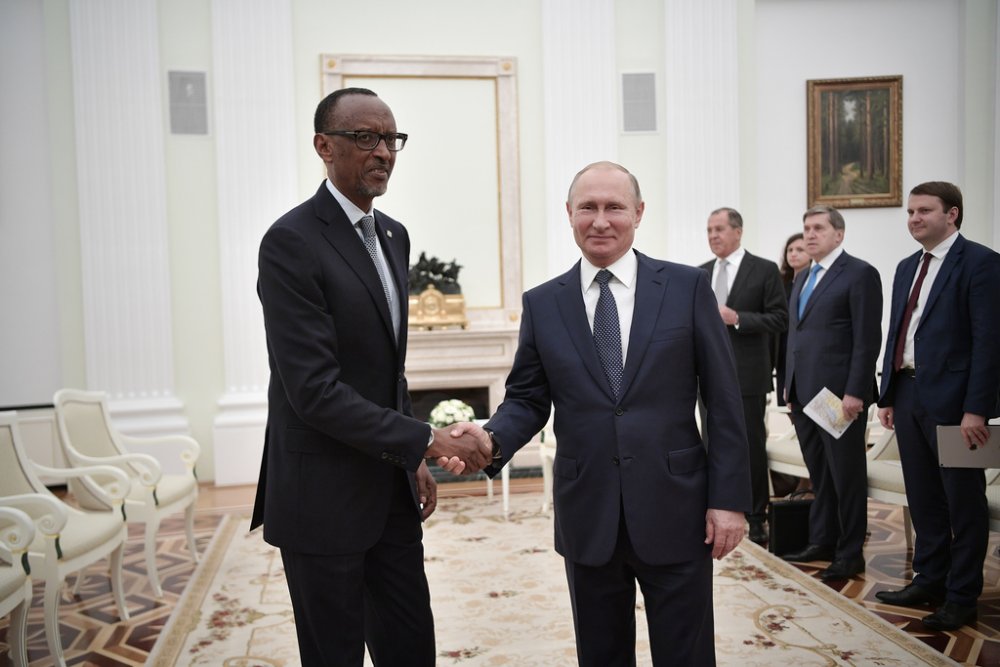
Kagame is in Russia for the opening of 2018 World Cup ceremony.
According to Russia’s Office of the President, Putin said that he was pleased to welcome Kagame to Moscow.
“Our Foreign Minister has visited you recently. This year marks the 55th anniversary of the establishment of diplomatic relations between our countries. I am very pleased that we have this opportunity to talk about the development of our relations,” reads the statement by Russia’s Office of the President, the Kremlin.
“I hope you will have an interesting and pleasant time in Moscow during the 2018 FIFA World Cup”
Kagame thanked Putin for welcoming him and for the invitation to Russia as well as participating at the FIFA World Cup.
“I want to congratulate you also on Russian Independence Day as well as the hosting of the World Cup,” the statement reads in part.
“Also I am happy that our relationship has so far lasted over 55 years. I am happy about that and look forward to strengthening our relationship further,” Kagame said.
Kagame said that Rwanda had a very good visit by the Russian Foreign Minister, Mr Lavrov.
“He came with a delegation to Kigali. We are happy about that. We want to build on that momentum for strengthening our relationship which we want to continue to take further,” he said.
He thanked Putin for the support and the cooperation by Russia to different fields that are very useful and productive to the development of Rwanda.
“These are the areas of education, training, defence cooperation as well and other areas. And we are looking forward to having the private sector work in Rwanda and look forward to hosting some of them from Russia to see the areas in which we could do investment and business,” Kagame elaborated.
Taking place in Travelling to a different European city each year in June, World of Coffee is the essential event for coffee professionals – drawing a loyal audience from the global specialty coffee community, more than 80% of whom return year-on-year. Brought by the Specialty Coffee Association, the event has more than doubled in size and stature over the last five years, growing from 3,000 visitors and 45 exhibitors to 6,800 visitors and 240 exhibitors in just 5 years.
Rwanda Coffee with its complex acidities and diverse flavours will be exhibited and tasted by prominent European specialty coffee importers, roasters and retailers. The exercise will generate business deals and seek more investment opportunities within the coffee sector in Rwanda.
A delegation of 15 exhibitors from Rwanda representing the coffee sector players will participate in the RAI Amsterdam event. The participation of Rwanda delegates is facilitated by a joint collaboration of the Embassy of the Republic of Rwanda in The Netherlands and National Agricultural Export Development Board (NAEB). The team will similarly explore sessions related to coffee quality improvement, marketing and promotion. On the side-lines of the World of Coffee, Rwanda Coffee exhibitors will make a call for participants about the up-coming ‘African Fine Coffee Conference and Exhibition’ to be hosted by Rwanda at Kigali in February 2019.
‘This is an invaluable experience for international coffee enthusiasts, ‘urban foodies’, key industry players and of course many other interested parties to discover and enjoy the specialty coffees from Rwanda’, said H.E. Ambassador Jean Pierre Karabaranga.
Rwanda Coffee – A Second Sunrise is a national coffee brand, comes from Rwanda’s best coffee-growing areas. It captures the essence, landscapes, resplendent beauty and natural biodiversity of Rwanda.
The 2018 edition of the World of Coffee will be another opportunity for Rwanda’s Coffee to reach thousands of coffee industry stakeholders.
Inkomoko, a Rwandan organization that provides specialized training to business leaders to learn skills that can be applied directly to their companies, as well as the potential to access zero-interest loans from Bank of Kigali; reached out to some of last year’s winners to ask them how the initiative impacted their business, and why entrepreneurs should apply this year.
{{Moto riders get opportunity to buy own motorbikes
}}
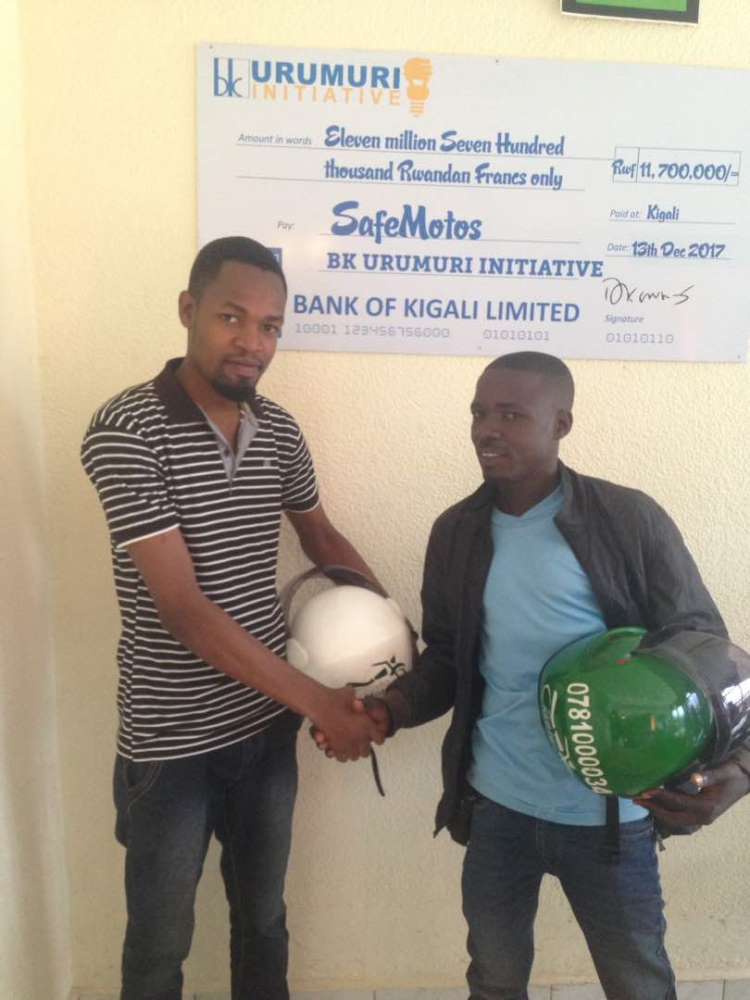
SafeMotos, a Rwandan ride hailing platform that enables customers to book moto-taxi rides, won Rwf 11,800,000 in last year’s Urumuri Initiative.
“The Urumuri initiative enabled us to create a new product offering, that we wouldn’t have been able to launch otherwise,” said Nash Barrett, the CEO of SafeMotos.
According to Barrett, the platform used the loan to purchase motorbikes that riders would eventually buy using the Family Wallet, which is an online platform that enables the riders save a small percentage from every ride.
“We really appreciated the combination of business support and zero-interest loan. The money enabled us to launch the program, but the consulting helped us to redefine the product – initially we wanted to finance drivers’ equipment, such as helmets, but Inkomoko helped us realize that it was more interesting to partially finance the bike purchase” said Joseph Erick, the director of the SafeMotos Family Wallet product.
The program was well received by SafeMotos drivers, according to Jean Chrysostome, one of the drivers who managed to buy his motorbike by using the platform: “I have been working in the moto industry for more than 5 years, renting bikes and paying Rwf5000 a day to the owner of the bike. I am grateful to SafeMotos’ platform that allowed me to save part of my income and helped me to get my own bike. From now on, I will not worry about the daily fee I have to pay to the owner or the times I used to stay jobless because the owner had decided to take his bike.”
{{Publishing house gets investors ready
}}
Mudacumura Publishing House, another 2017 Urumuri winner who received a Rwf8 million loan from Bank of Kigali commended the initiative for helping them acquire skills they lacked.
“If an investor comes at any moment, we are better prepared than before, and that it is why I decided to continue with Inkomoko business support even after the initiative, because in today’s world, the business environment changes a lot and we have to have the skills to stay in the game.” Says Fiston Mudacumura, the CEO of Mudacumura Publishing House.
“We used the loan to purchase publishing rights for new books by authors from Muhanga district” added Fiston Mudacumura.
{{Murakali grocery store grows substantially
}}
Murukali, an online grocery store, is another business that was amongst the winners. The business received a Rwf6 million loan from Bank of Kigali that they in turn invested in stocks.
“Now I’m no longer afraid of any shortages, I have enough stock to cover the demand. Our daily revenues more than doubled after the initiative, so it has really helped us to grow substantially” said Yvette Uwimpaye, Murukali’s CEO.
Murukali also benefited from Inkomoko’s programme on marketing and sales as they learnt how to better target customers and generally increased their professionalism and competences.
{{Urumuri 2018 – your chance to win consulting support and a zero-interest loan
}}
The Urumuri Initiative, which began last year to mark Bank of Kigali’s 50th anniversary, continues this year as Bank of Kigali continues to invest in Rwanda’s emerging business leaders.
“In line with the government’s initiatives to develop local products and services for the Rwandan and export markets, this year’s Urumuri is seeking to help entrepreneurs with a unique “Made in Rwanda” brand,” said Nathalie Niyonzima, Inkomoko’s Managing Director.
“We’re pleased to partner with Bank of Kigali for another opportunity to support young entrepreneurs and promote Made in Rwanda.”
The Urumuri application deadline is June 15, whereby the 25 selected winners will start the Inkomoko Business Development accelerator on July 2nd. Eligible businesses must be based in Rwanda, have financial sustainability plans, and meet other competitive criteria.
To apply for Urumuri 2018 and get the chance to win 6-months free consulting and zero-interest loans, entrepreneurs can visit[ www.BK.rw/urumuri ->www.BK.rw/urumuri] or [www.inkomoko.com->www.inkomoko.com] and contact +250 786 779 012 or +250 788 548 441 for any questions.
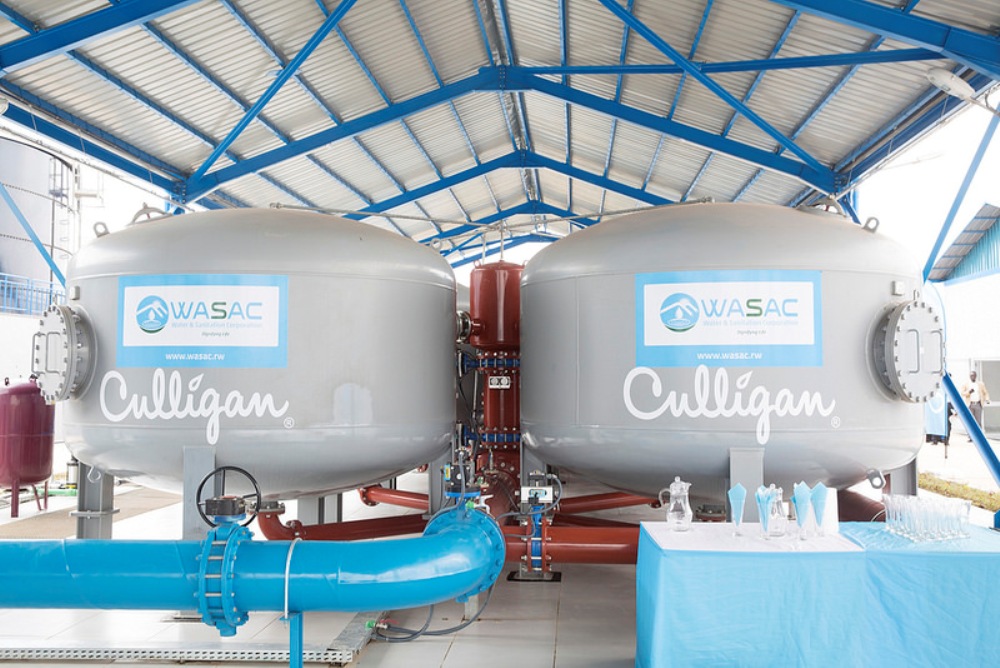
Affordable and accessible safe drinking water has an arching role in the social-economic development of a country. In Rwanda it has been ranked as a basic amenity—among the highest priority public goods.
Access to drinking water reduces time spent on fetching water and has a positive impact on school enrolment and attendance especially for girls, while absent, unsafe, and distant water supplies have been seen to be detrimental to all lives, and especially for women who are normally responsible for water collection and handling for household hygiene and for caring of the sick.
The water and sanitation sector in Rwanda is thoroughly monitored within the Vision 2050—which is about ensuring high standards of living for all Rwandans, modern infrastructure, transformation for prosperity as well as an improved quality of life.
{{Water and sanitation for all}}
The Water and sanitation sector in Rwanda aims at increasing the proportion of the population / households accessing improved source of water from 84.8% (EICV 4) to 100% and the proportion with improved sanitation facilities from 83% (EICV 4) to 100% by 2024 as per National Strategy for Transformation (NST1).
It also plans to increase the proportion of the rural population living within 500m of an improved water source from 47.% (EICV4) to 100%, and to raise the proportion of the urban population residing within 200m of an improved water source from 61%(EICV4) to 100%.
Regarding sanitation, the sector has plans to increase the proportion of schools with latrines complying with health norms will reach a target of 100% and the proportion for rural households will increase to 100%.
Understandably, the water and sanitation sector plays a critical role in ensuring that targets of the Vision 2050 which include Sustainable Development Goals (SDGs) and National Strategy for Transformation (NST 2018/19-2023/24) are attained.
Officially known as Transforming our World: the 2030 Agenda for Sustainable Development (SDGs) are a comprehensive set of 17 goals which will go above and beyond the remarkable past accomplishments of the Millennium Development Goals (MDGs) to create a sustainable world by 2030.
The SDG’s have three targets around water and sanitation which are; achieving universal and equitable access to safe and affordable drinking water for all; achieving access to adequate and equitable sanitation and hygiene for all and lastly, improving water quality by reducing pollution, eliminating dumping and minimizing release of hazardous chemicals and materials, halving the proportion of untreated wastewater and substantially increasing recycling and safe reuse globally.
However to achieve these targets, adequate investment in water and sanitation infrastructure, providing sanitation facilities and promoting hygiene at every level is a prerequisite.
{{Overcoming challenges through united efforts}}
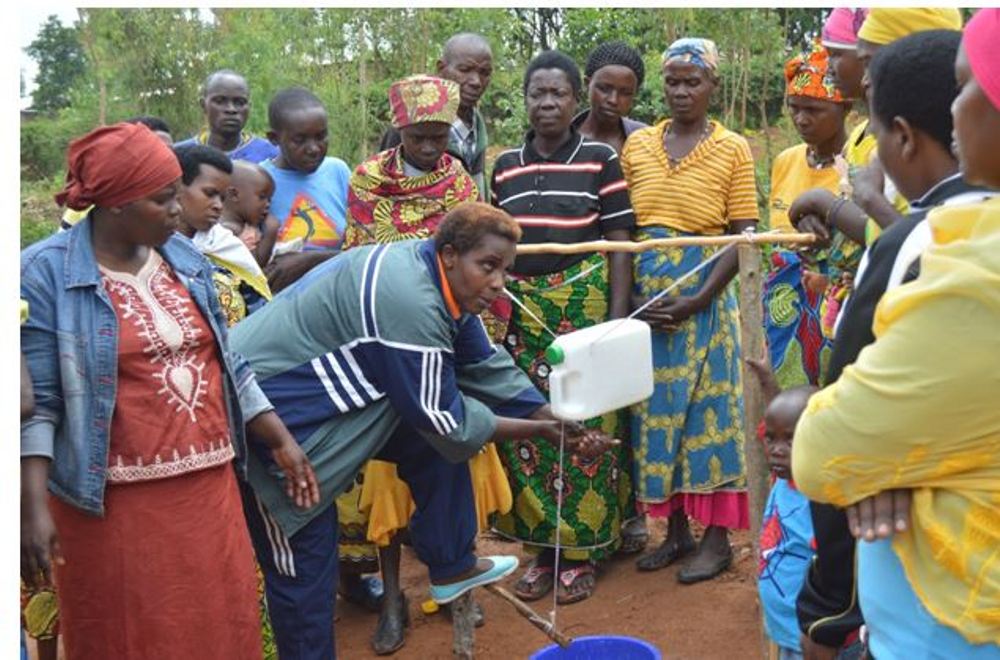
As a way of partnering with the government in protecting the population against dangers that come with unsafe water, a number of local and international organizations for years have been implementing vibrant programs that enable people especially in rural areas to easily access clean water, as well as intervening in sanitation projects.
As an example, a five year program dubbed “Ending Poverty One Village at a Time” (EPOVAT) that was led by ‘Tear fund’– a Christian Organization; provided water and sanitation facilities that drastically improved many households’ hygiene standards.
In the first phase of the program, up to 43,797 households were reported to access water through water gravity flow system, springs and piped water. More beneficiaries also gained access to water within a walking distance.
The program also permitted a decrease in a number of hygiene-related diseases as a result of improved hygiene practices.
Also, SNV is also leading a consortium of non-profit partner. It is implementing USAID funded Isuku Iwacu project, running from 2016 to 2020 to improve household sanitation in Rwanda.
The project aims at increasing local ownership of, and capacity to deliver, sustainable, high-quality sanitation and hygiene services, in order to improve access to and support correct, consistent use of household sanitation and hygiene facilities, with the overall goal of decreasing childhood stunting.
Similarly, Financial Institutions are playing a big part in boosting the water and sanitation sector, such as the two loans totaling $171 million that were recently approved by the African Development Bank Group Board to finance Rwanda’s Sustainable Water Supply and Sanitation Programme under which water supply and sanitation infrastructures & services will be provided in Kigali, Rubavu, Rusizi, Nyagatare, Muhanga, Huye, Musanze and Karongi.
The move is expected to boost water supply and sanitation in the country.
Although the journey is still long, efforts in creating a promising future for the country’s water supply and sanitation sector are beginning to pay off. The day when safe water will be easily accessible for all citizens is approaching little by little.
On June 6th, the UN Security Council unanimously adopted the Resolution 2419 (2018) to “consider ways to increase the inclusive representation of youth for the prevention and resolution of conflict”, considering the crucial role of youth in “building sustainable peace”, “promoting a culture of peace” and protecting youth from violence and conflict at the same time.
As this resolution’s recognition of the increasing role of youth with its influence in peace-building, the two-day event that was led by the International Youth was advocating peace to nationals.
At the event citizens, especially students, wrote letters with the contents advocating efforts of peace by their national leaders. According to the IPYG, 20,006 peace letters were written and collected in two days of the event through youth participation. The IPYG further said that the letters will be delivered to the two leaders of the two Koreas when they reached 150,000 in number.
As a backbone of the youth-led advocacy campaign for peace-building, the IPYG introduced “the Declaration of Peace and Cessation of War (DPCW)” with 10 articles and 38 clauses, which stipulates peaceful dispute settlement, disarmament, religious and ethnic freedom, and spreading a culture of peace.
Ms. Park Min-Jeong, a participant, said, “Although there was a vague fear of reunification, I have come to think about positive aspects and expectation that reunification will be achieved in this era by seeing the inter-Korean summit.”
“I realized that I should be aware of the issues of the international community to join in peace activities that will end the war in our times,” she added.
“The future of Korea is youth. If young people are interested in reunification, and take the lead for it, we can achieve peace on the Korean Peninsula. The start can be a letter of heart. We will work hard so that youth can be more interested in and lead the peaceful reunification,” said Mr. Peter Jung, General Manager of the IPYG.
The IPYG has initiated a youth network for peace with 851 youth organizations in 110 countries around the world. The IPYG says that the “Peace Letter” campaign has also been held globally and the letters advocating peace-building in their countries will be delivered to their national leaders.
The five year initiative ‘Hanga Ahazaza’, meaning “create the future”, worth US$50 million, will increase economic opportunities for young people while enhancing access to financial services and training so that small tourism and hospitality sector enterprises can expand.
The Tourism and Hospitality Accelerator was officially launched on June 5 at a panel discussion event with experts in the sector.
Speaking during the launch, Ariella Kageruka, Director General of Rwanda Chamber of Tourism, urged entrepreneurs in the tourism and hospitality sector to be unique, “the vision of the country is to uncover unexplored markets in tourism and explore the niches.”
Inkomoko’s Managing Director Nathalie Niyonzima echoed her remarks saying “We see great potential in the tourism and hospitality sector and we believe that this is a sector where Inkomoko can significantly support job creation”.
“Inkomoko’s comprehensive approach to business development will support promising young entrepreneurs in a priority sector,” said Rica Rwigamba, Program Manager at the Mastercard Foundation. “We are excited to work with Inkomoko to ensure small businesses in the tourism and hospitality sector can expand and create more employment opportunities for young people.” She added
According to Kenn Munyeki, General Manager of Ubumwe Grande Hotel, “Rwanda almost surpasses Cape Town and Addis Abeba” in the tourism sector.
During the next three years, 300 businesses will participate in the Inkomoko Accelerator, helping them become more professional and successful in this demanding sector. Businesses will receive finance, operations, and sales support depending on their needs during the six-month program, consisting of trainings, a thorough business assessment, one-on-one consulting, and often access to finance.
Any business that qualifies as a tourism or hospitality business can join the Accelerator, as long as they are registered with RDB and have been operating for minimum six months.
“I am excited to join the Inkomoko program, and I am looking forward to improving my finance and accounting skills as well as having the possibility to access financing at a later stage. I’ve chosen to work with Inkomoko because of the strength and diversity of their team and the intensive trainings offered,” said Wilson Habimana, the CEO of Wilson Tours and a new participant in the Accelerator.
Inkomoko’s offering this Accelerator at a 60 percent discount. To join the program, contact Christian Kitumaini, Inkomoko’s Client Relationship Manager, at [christian@inkomoko.com->christian@inkomoko.com] or +250786779012.
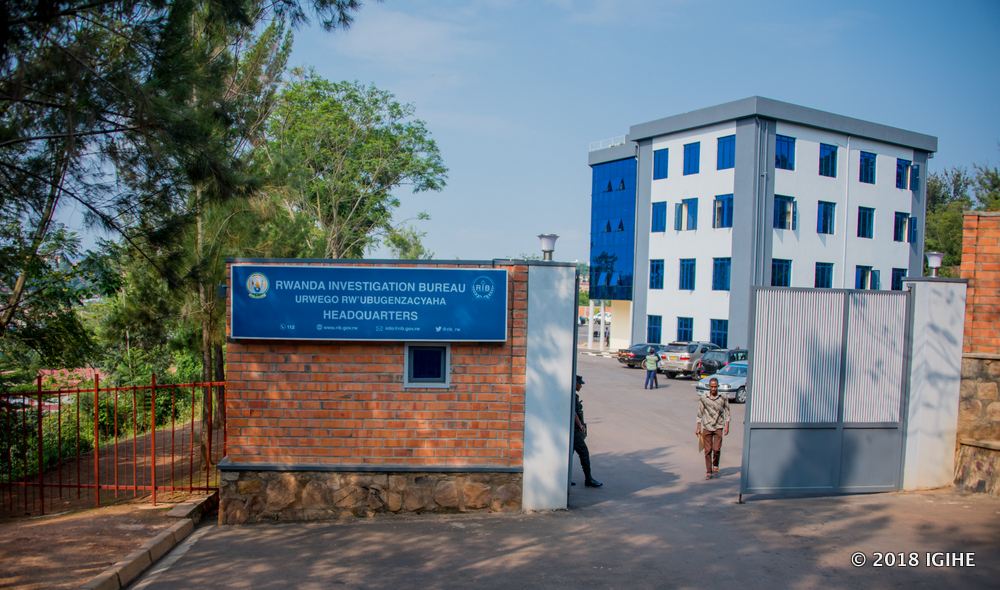
The call was made yesterday when the Minister of Justice and Attorney General, Johnston Busingye was meeting RIB senior officials at RIB headquarters in Kimihurura.
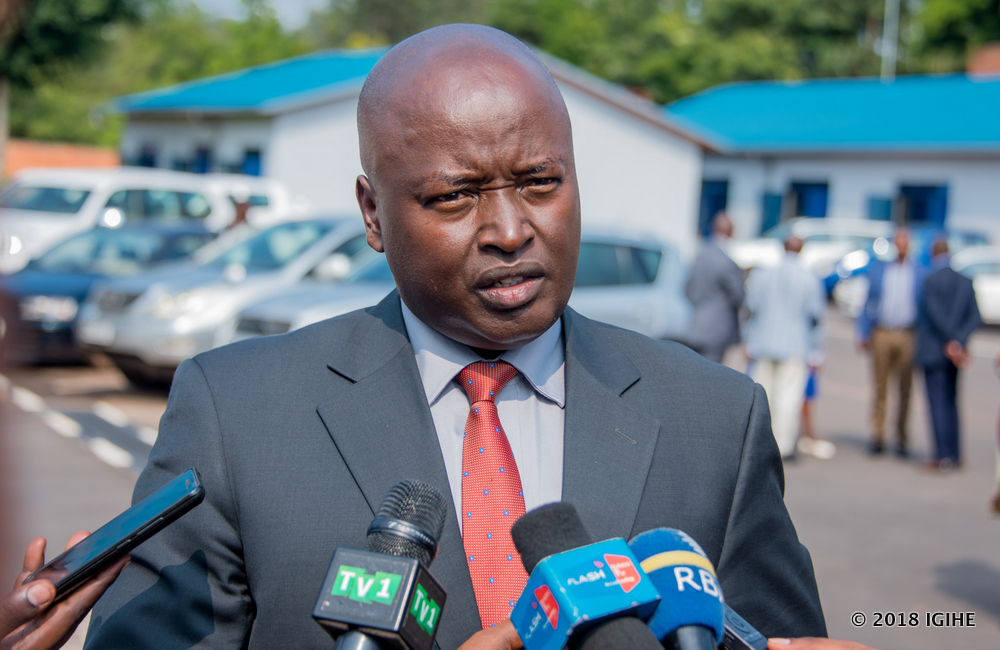
Speaking to the media after the meeting, RIB Secretary General, Col. Jeannot Ruhunga said that the bureau still has some challenges including a small budget that hampers the institution from successfully meeting their targets.
“For us to successfully execute our responsibilities, we need some basic requirements. That’s why we requested him advocacy for increased budget so that it can help us attain our mission,” he explained.
“We receive many people, but have a small place. We need more offices for investigators. Currently they are fused in few offices and don’t work comfortably,” he added.
Speaking to journalists after the meeting, Busingye said that RIB started on the good note. He commended the institution for the achievements and promised Government support on the few challenges reported such as small workplace among others.
Busingye called on RIB leaders to embrace team work, timely sharing of information and professionalism in delivering on their mission and objectives.
He acknowledged that the institution has a big staff with few offices and promised them on extended place.
“They have 50 office rooms with a big staff which needs a least 90 office rooms. Under the partnership with other institutions, we promised them more office space activities,” he said.
“Budget issue is common, but aspects which can affect implementation of their mission shall be seriously considered,” he said.
Rwanda Investigation Bureau has powers to arrest and detain suspects in criminal cases; restrict access to an area or set up a roadblock for the purposes of maintaining security, preventing and detecting crimes.
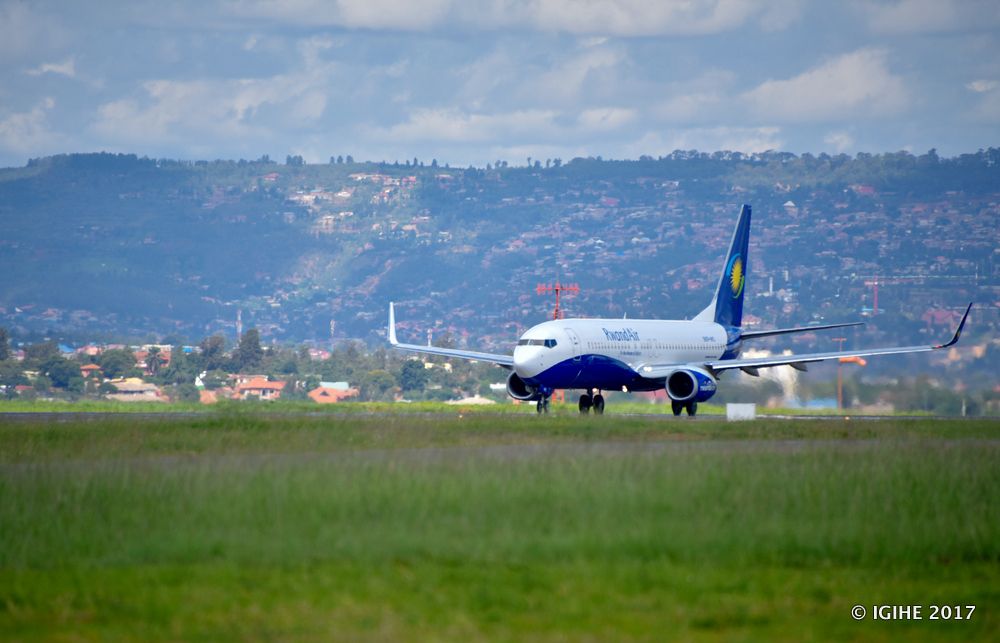
The order dated May 30th 2018 says that along the process, the US Department of Transportation gave interested people 21 days to file objections to the Order. The office said that if no objections were filed, all further procedural steps would be deemed waived, and the Department would enter an order which would make final the findings and conclusions of the Order.
“We make final our findings and conclusions as stated in the Order and award to ‘RwandAir’ Limited Liability Company the foreign air carrier permit with associated conditions attached to the Order (and attached as the Appendix to the present order),” reads the order.
However, the order shall become effective on 61st after the day it was submitted to the President for review.
“Unless disapproved by the President of the United States under 49 U.S.C. §41307, this order shall become effective on the 61st day after its submission for section 41307 review or upon the date of receipt of advice from the President or his designee under Executive Order 12597 and implementing regulations that he or she does not intend to disapprove the Department’s order under that section, whichever occurs earlier,” reads the Order issued by Brian J. Hedberg, US Director Office of International Aviation.
Once RwandAir is authorized, according to the Order, will be able to engage in scheduled foreign air transportation of persons, property and mail from points behind Rwanda via Rwanda and intermediate points to a point or points in the United States and beyond.
It will also engage in scheduled foreign air transportation of property and mail between the United States and any point or points.
RwandAir will also engage in charter foreign air transportation of persons, property, and mail between any point or points in Rwanda and any point or points in the United States, and between any point or points in the United States and any point or points in a third country or countries, provided that, except with respect to cargo charters, such service constitutes part of a continuous operation, with or without a change of aircraft, that includes service to Rwanda for the purpose of carrying local traffic between Rwanda and the United States.
Currently, RwandAir has 26 destinations and 12 aircrafts.
The 2018 ICFP will be co-hosted by the Bill & Melinda Gates Institute for Population and Reproductive Health with the Ministry of Health of Rwanda.
According to the event’s organizers, the fifth International Conference on Family Planning (ICFP) will take place from November 12 to 15, 2018 in Kigali Convention Centre, with “Investing for a Lifetime of Returns” as the theme for the conference.
In a press statement, organizers indicated that they chose Rwanda as the host country due to the country’s achievements in the family planning sector as well as a strong commitment towards ensuring a healthy and prosperous future for the sustainable development of its people, and the world.
Rwanda is one of the family planning success stories of recent history.
The first 15 years of the 2000s saw great achievements: a dramatic rise in the country’s contraceptive prevalence rate for modern methods between 2000 and 2015, and a drop in total fertility rate from 6.1 in 2000 to 4.2 in 2015. The use of modern contraceptive methods increased from 10 percent in 2005 to 45 percent in 2010, and then rose slightly to 48 percent in 2015.
Rwanda has set ambitious goals of achieving a total fertility rate of 3.1 children per woman and 72 percent contraceptive prevalence by June 2018.
The Minister of Health, Diane Gashumba said that it is a great honor for the country to host the event adding that the Government will maintain efforts to ensure the success of the event.
“The Government of Rwanda is privileged to host the fifth International Conference on Family Planning delegates in Kigali, Rwanda, and is committed to working with the Bill & Melinda Gates Institute to ensure that the event is successfully hosted in the country,” she noted
The Director of the Gates Institute and Chair of the International Steering Committee of the ICFP, Jose “Oying” Rimon II, said that they are looking forward to highlight some of the spectacular gains in family planning that are occurring in many parts of Africa today.
“We are delighted to be partnering with the Rwandan Ministry of Health for the 2018 ICFP. It will be wonderful to return to Africa for the 2018 conference, and to highlight some of the spectacular gains in family planning that are occurring in many parts of Africa today, as well as the challenges that lie ahead,” he said
President Paul Kagame was one of the distinguished attendees of the 2012 London Summit on Family Planning, at which he joined the co-hosts, Bill & Melinda Gates Foundation and the United Kingdom, along with the research and development community, in a groundbreaking promise to make affordable contraception available to an additional 120 million women and girls in the world’s poorest countries by 2020.
Rwanda’s leadership has been highly supportive of family planning. In recent years, the country has invested in its network of community health workers (CHWs), run communications campaigns to drive demand and behavior change, and provided training on long-acting and permanent contraceptive methods.
RIB took over some of the functions formerly exercised by the Rwanda National Police, such as criminal and counter-terrorism investigation, economic and financial crimes investigation and crime intelligence.
Speaking to the press, Wednesday, RIB’s Secretary General, Col. Jeannot Ruhunga, said the new uniform will be unveiled soon.
“So far, what distinguished us from others was a duty card that indicated that one worked for the judicial sector. Now, we’ve decided to bring in a special uniform that clearly be used to identify a RIB officer from other law enforcers,” he said.
RIB announced that it will take up to four months for the investigators to have the said uniform.
Rwanda Investigation Bureau has powers to arrest and detain suspects in criminal cases; restrict access to an area or set up a roadblock for the purposes of maintaining security, preventing and detecting crimes.
Officiating the Bureau, 463 police officers previously working under CID plus other officers from different departments were also transferred to RIB, immediately shedding off their status as police officers.