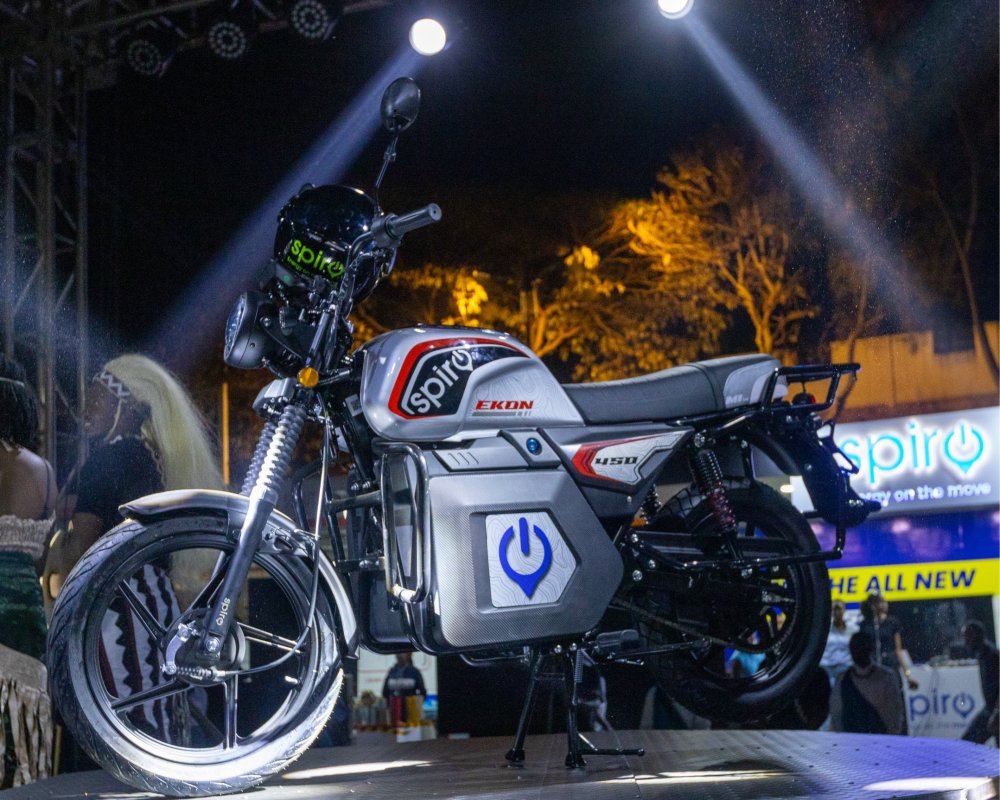
Now, that familiar machine is changing. The emergence of electric motorcycles such as Spiro’s electric bikes is quietly challenging one of the oldest assumptions in African transport: that moving around the city must depend on petrol. The significance is not simply that the bikes are electric.
It is what happens to the economics of the motorcycle when petrol disappears from the equation.
A conventional motorcycle requires a rider to repeatedly spend money on fuel. An electric motorcycle replaces that recurring fuel expense with electricity and, in Spiro’s model, battery swapping. Instead of waiting for a battery to recharge, riders can exchange it for a charged one and return to the road.
For a motorcycle taxi rider whose income depends on how many trips can be completed in a day, that is not a technological curiosity.
It is a business proposition. And this is where Africa’s electric-mobility story becomes particularly interesting.
The continent does not need to copy the electric-vehicle transition taking place in Europe, China or North America. Its transport realities are different.
Africa has enormous motorcycle fleets, rapidly growing cities, relatively low car ownership and millions of people whose livelihoods depend directly or indirectly on two-wheel transport.
That makes the electric motorcycle one of the most logical entry points into mass electrification.
Spiro’s experience illustrates the potential. The company says it has deployed more than 95,000 electric motorcycles across African markets and built more than 2,500 battery-swapping stations. It is effectively testing whether electric mobility can become part of everyday African commerce rather than remaining a premium product for wealthier consumers.
The implications go beyond the rider. Every electric motorcycle creates demand for a wider ecosystem: batteries, swapping stations, electricity, software, maintenance, financing and technical skills.
That ecosystem could eventually become an industrial opportunity.
This is perhaps the most important part of the story. Africa has historically been a major consumer of imported transport technology. The electric-mobility transition gives the continent an opportunity to do something different.
Instead of simply importing electric motorcycles, Africa could increasingly assemble them, maintain them, develop the software that manages their fleets, build charging and swapping networks, and eventually manufacture more of the components.
The motorcycle could therefore become the starting point for something much larger.
But there is a warning. Electric motorcycles will not automatically transform African transport. The transition requires affordable financing, reliable electricity, sufficient battery infrastructure and policies that make it possible for businesses to invest for the long term.
Governments also need to think beyond incentives for buying electric vehicles.
They should be asking a more ambitious question: what African industry do we want the electric-mobility transition to create?
Rwanda has an opportunity to be part of that answer. Its experience with electric motorcycles provides a practical laboratory for understanding what happens when technology meets one of Africa’s most important transport sectors.
Spiro’s electric bikes are therefore worth watching for a reason that goes beyond their batteries.
They represent a test of whether Africa can turn a daily necessity – the motorcycle – into a platform for a new industrial economy.
The real revolution may not be the moment Africa buys its millionth electric motorcycle.
It may be the moment the continent stops seeing electric mobility simply as a cleaner way to move and starts seeing it as a way to build, employ, innovate and compete.
That is when the electric motorcycle stops being just a vehicle. It becomes infrastructure for Africa’s future.
The writer, Innocent Ninsiima Ihinda, is a Government Relations Strategist.
Leave a Reply