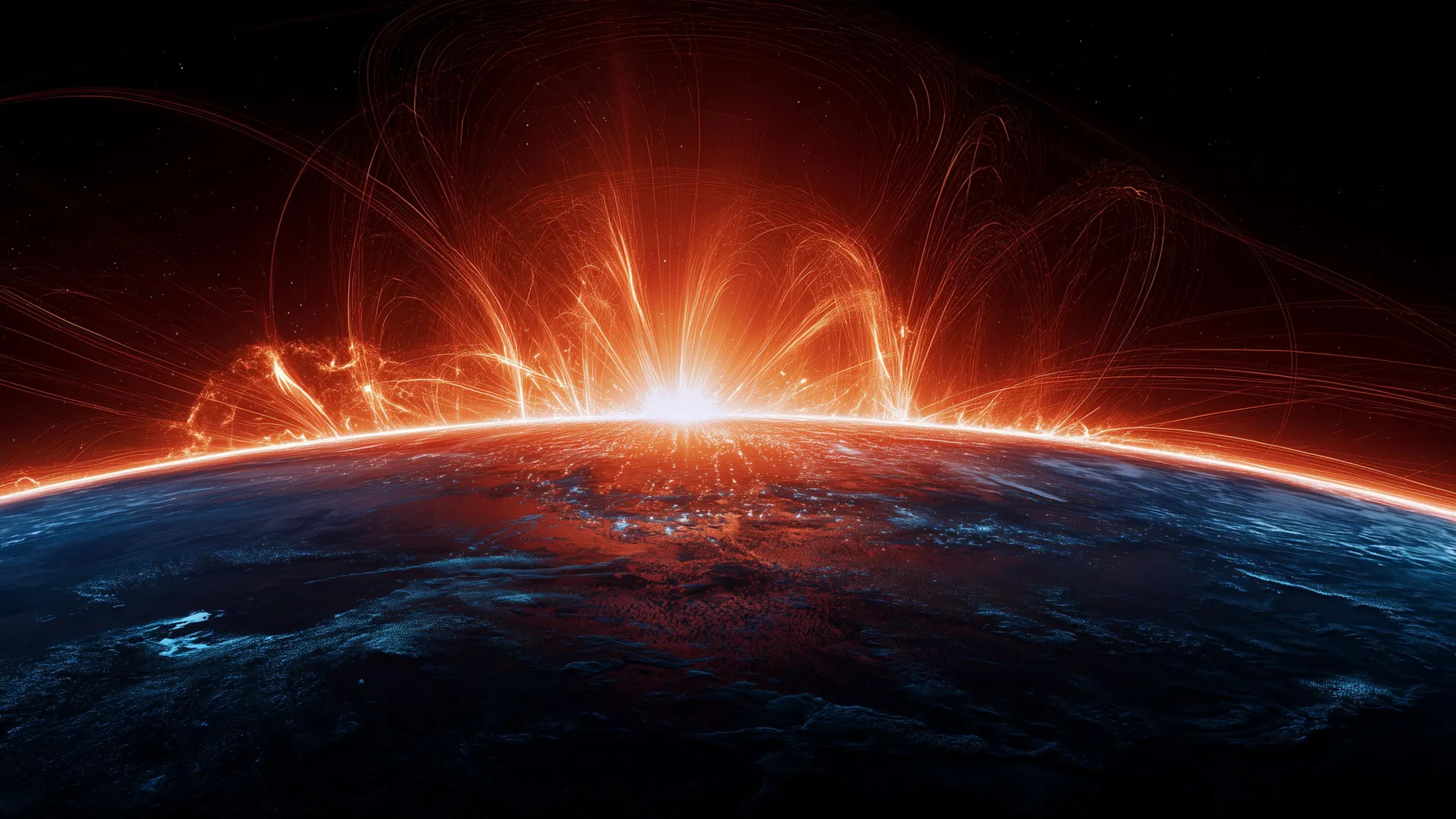
Solar activity, especially intense flares, can disrupt Earth’s ionosphere, a layer of charged particles high above the surface.
The researchers developed a theoretical model showing that when solar flares increase the number of electrons in the ionosphere, they can create strong electrostatic forces that travel downward through a kind of electrical coupling between the ionosphere and fractured rock deep in the Earth’s crust.
These forces, while subtle, might be enough to push a critically stressed fault a little further toward slipping especially if it was already near rupture.
Importantly, the team doesn’t claim that solar storms cause earthquakes outright. Earthquakes are complex and usually result from stresses building inside tectonic plates over years or decades.
Instead, the researchers suggest that space weather could act as an additional factor in some cases, potentially influencing when a rupture happens on a fault that’s already close to breaking.
The model also connects this theory to observations where unusual ionospheric behavior has been seen before major quakes.
The scientists plan to combine detailed space weather data and high‑resolution measurements of the ionosphere in future studies to better understand if and how solar activity might meaningfully interact with geological processes underground.
This research opens a new perspective on how phenomena in space could subtly affect conditions on Earth, reminding us that our planet is part of a much larger, dynamic system stretching all the way to the Sun.
Leave a Reply