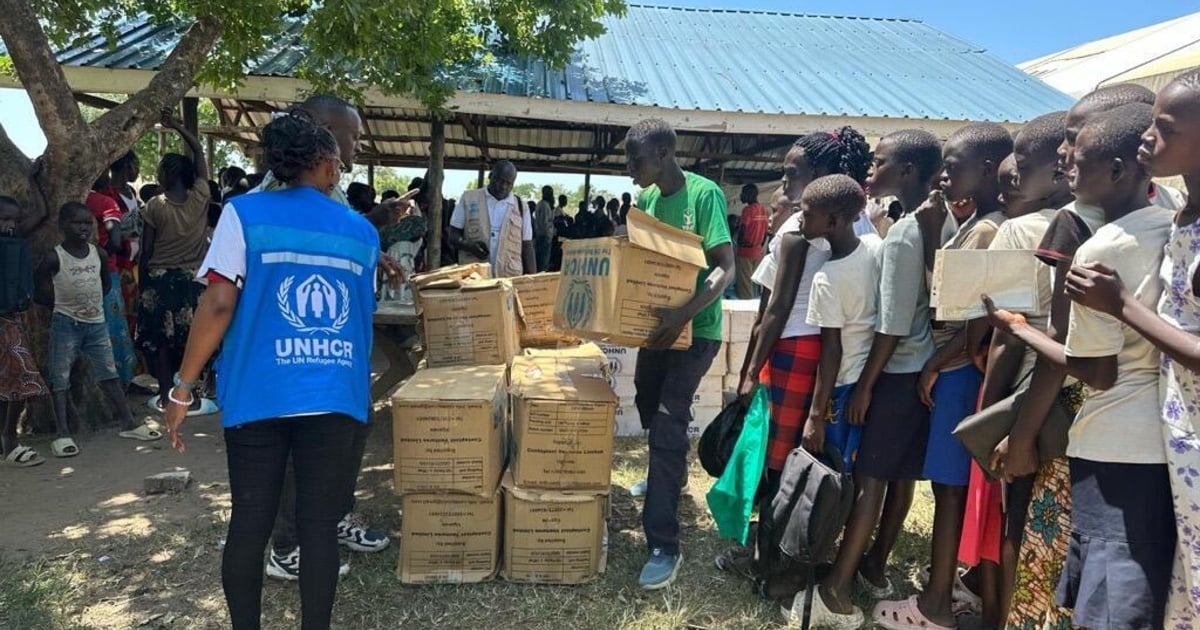
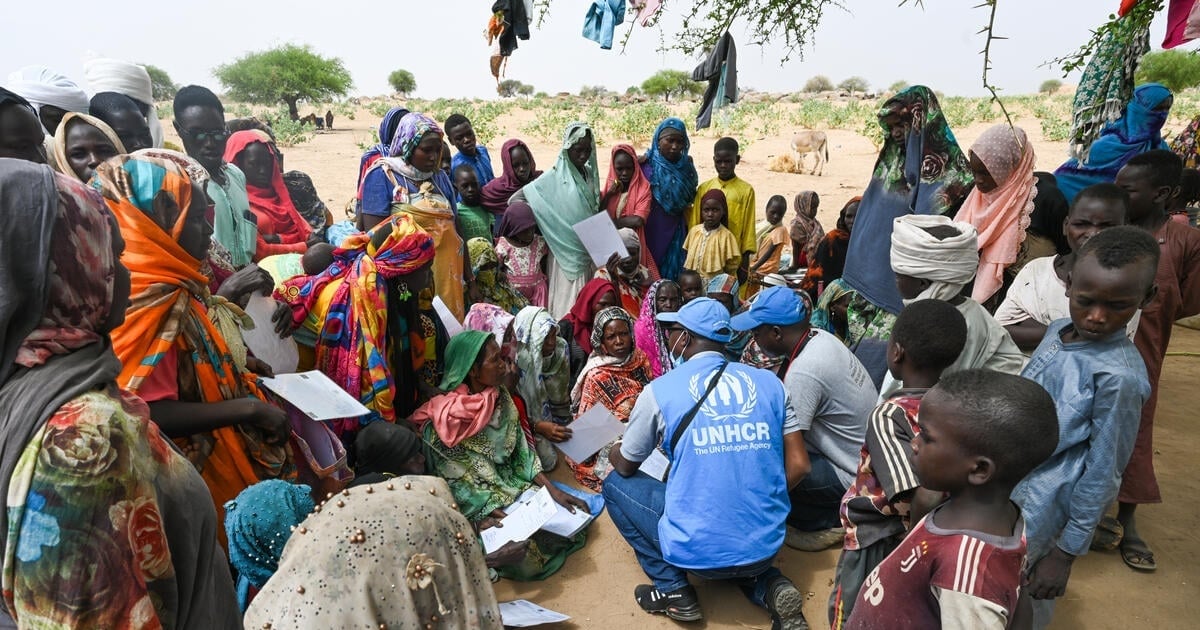
The United Nations High Commissioner for Refugees (UNHCR) said the total figure includes 610,268 registered refugees and 3,442 asylum-seekers.
“The vast majority, 94 percent or 576,672 individuals, are Sudanese refugees, followed by 14,677 or 2 percent from the Democratic Republic of the Congo, 6,599 from Ethiopia, 5,605 from the Central African Republic, 5,165 from Eritrea, and 1,550 from other nationalities,” the UNHCR said in its latest report released in Juba, the capital of South Sudan.
It said the South Sudanese government continues to grant prima facie refugee status to those fleeing Sudan in response to the ongoing conflict.
According to the UNHCR, 49 percent of the refugee population are females aged 0-59, while women and children combined account for 75 percent of the total.
The agency said Ethiopians and Eritreans each account for 37 percent of the total, forming the two largest groups of asylum seeker population, followed by Burundians with 9 percent, Ugandans with 7 percent, and 9 percent other nationalities.
South Sudan remains at the center of one of the region’s largest displacement crises, with more than 2.3 million South Sudanese living as refugees in the DRC, Ethiopia, Kenya, Uganda, and Sudan, the UNHCR said.
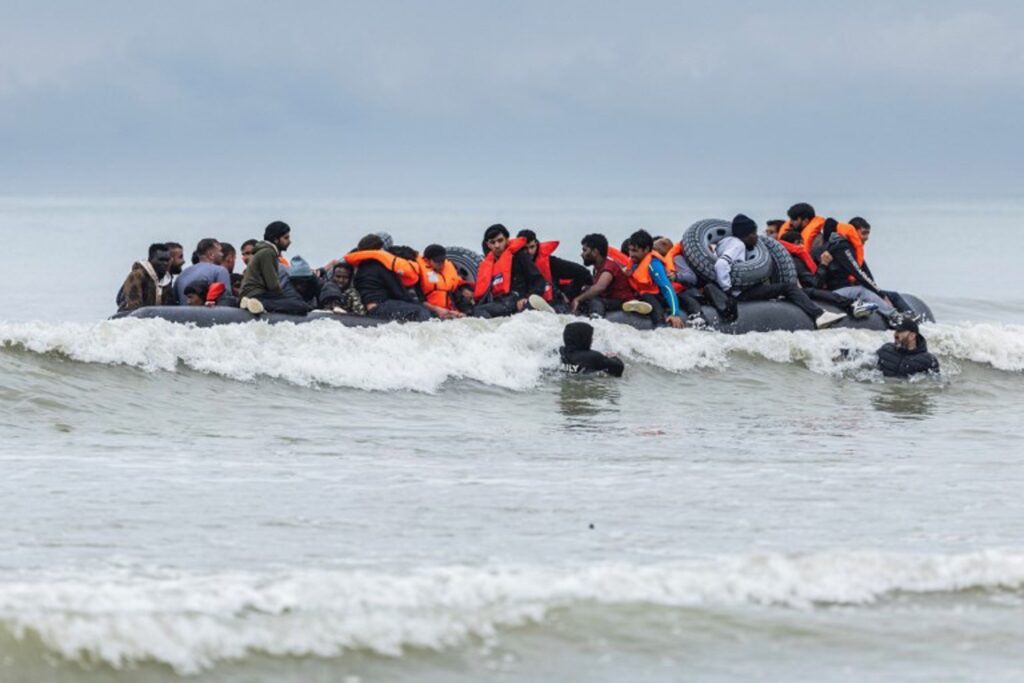
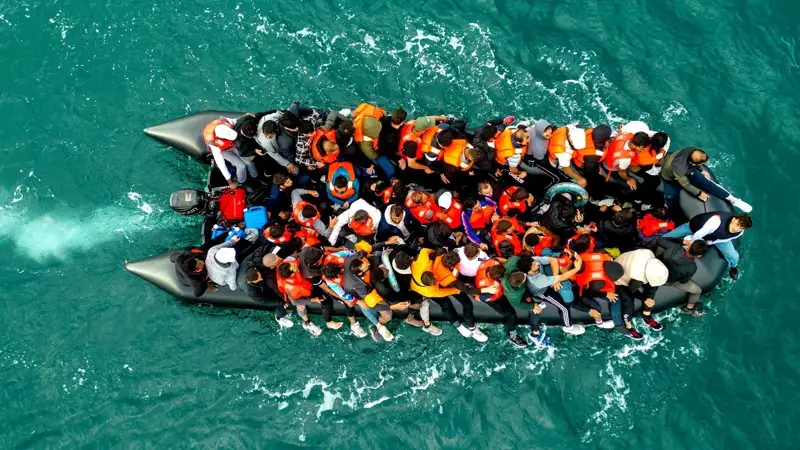
Speaking to reporters at a daily briefing, Stephane Dujarric, spokesperson for the UN secretary-general, said that according to the IOM, sea crossings remained among the deadliest routes, with at least 2,185 people dead or gone missing in the Mediterranean, and 1,214 recorded on the Western Africa/Atlantic route toward the Canary Islands.
Despite year-on-year declines, the real toll is likely much higher, Dujarric said.
The spokesperson said that IOM figures showed the number of deaths in 2025 was lower than the nearly 9,200 deaths recorded in 2024.
Over 7,600 people died or went missing on migration routes worldwide in 2025:
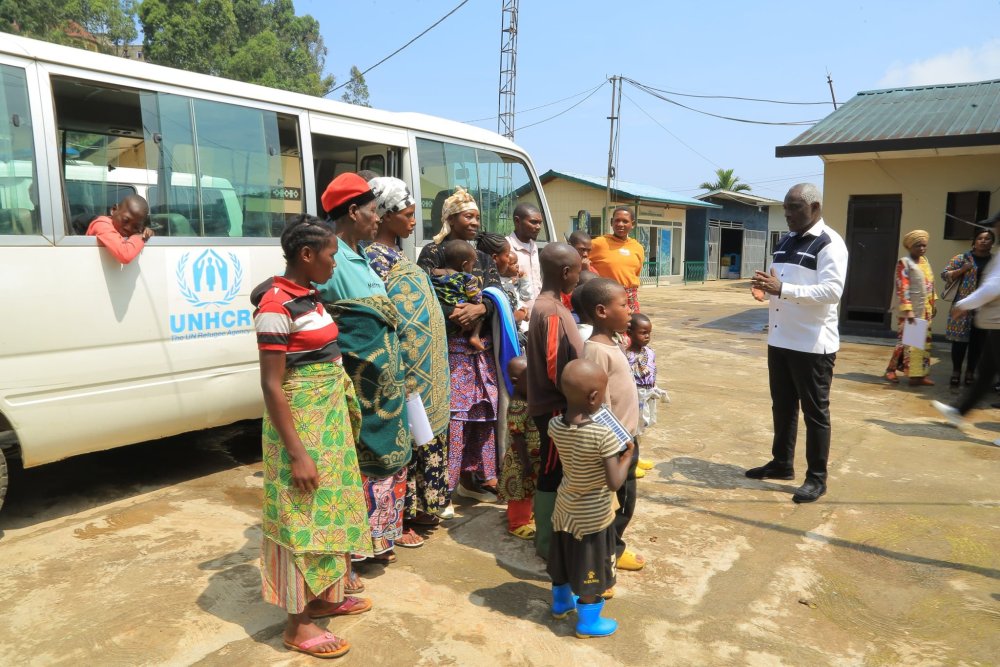
The group arrived through the Rusizi I Border Post on February 24, 2026, marking the second group repatriated from the DRC this year.
Speaking to RBA, the returnees said years spent in displacement severely disrupted their lives, particularly access to education for their children. One returnee said the family had spent years constantly moving to escape insecurity, leaving children unable to attend school.
Another said life in the DRC was marked by persistent conflict and instability, preventing children from accessing education. He explained that a relative who had returned earlier encouraged them to come back after describing Rwanda as peaceful and secure.
Upon arrival, the returnees expressed gratitude for the warm reception and the stability they found in their home country. They were welcomed by officials from Rusizi District, representatives of the United Nations High Commissioner for Refugees (UNHCR), and security officials.
Rusizi District Mayor Phanuel Sindayiheba described their return as a positive step toward rebuilding their lives and contributing to national development. He said their decision to return also reflects a break from divisive ideologies and encouraged others still abroad to consider coming home by learning about the country’s progress and stability.
The group of 22 returnees includes two men, four women, and 16 children. They were taken to the Nyarushishi transit center, where they will stay before being reunited with their families.
The group arrived through the Rusizi I Border Post on February 24, 2026
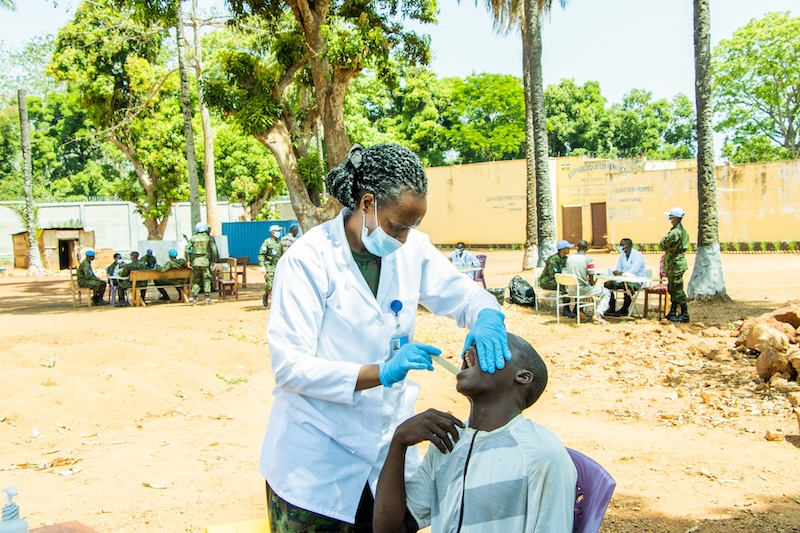
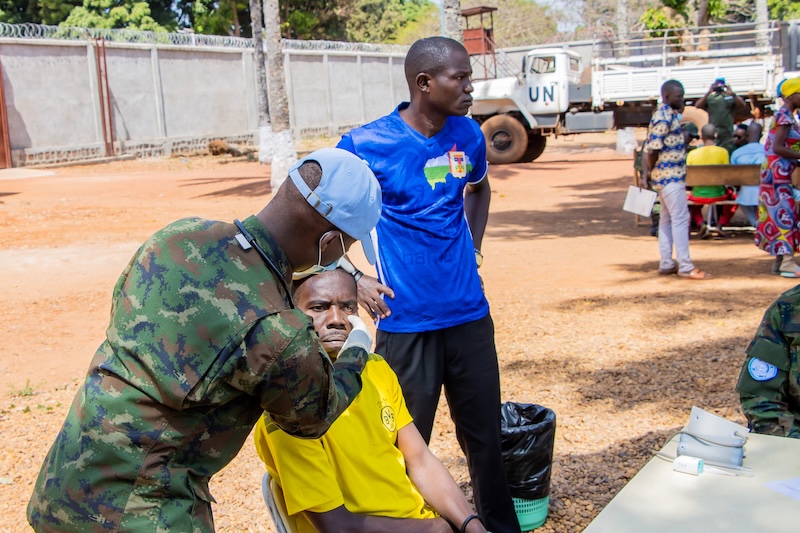
According to Rwanda’s Ministry of Defence, the initiative was carried out by Rwanda Battle Group 8 in collaboration with the Rwanda Level 2 Hospital contingent, it aimed to address essential health needs within the prison community by offering a wide range of medical services, including internal medicine consultations, gynecological care, dental treatment, and other critical healthcare support.
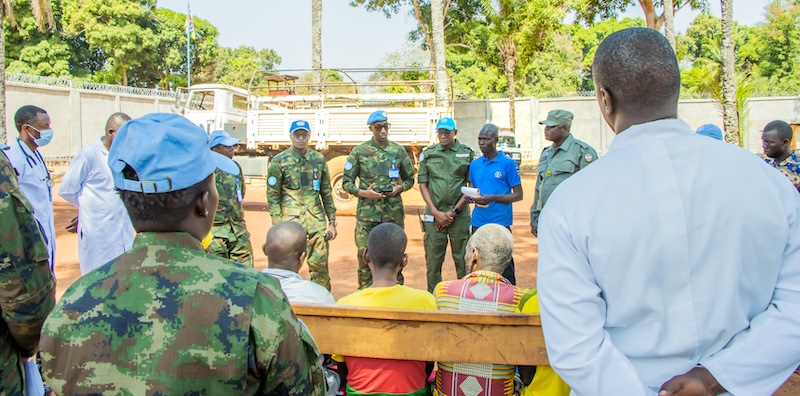
The activity was attended by the Director of Bria Prison, Mahamat Adoum Salle; the Commander of the Rwanda Level 2 Hospital, Col Dr. Christian Mukwesi; and the Commander of Rwanda Battle Group 8, Lieutenant Col David Ngabonziza.
In his welcoming remarks, Bria Prison Director Mahamat Adoum Salle expressed sincere gratitude to MINUSCA leadership and the Rwandan peacekeepers for their timely intervention. He described MINUSCA as a longstanding and reliable partner in various areas of support and commended the medical outreach as a strong example of effective cooperation.
He further highlighted the challenges prisoners face in accessing medical care, particularly due to shortage of essential medicines and medical supplies.
“When prisoners experience health problems, we take them to the hospital where medication is prescribed, but obtaining those medicines is often difficult,” he explained. “It is therefore extremely important that the Rwandan peacekeepers under MINUSCA have come to provide free medical treatment to our inmates.”
Col Dr. Christian Mukwesi, Commander of the Rwanda Level 2 Hospital, stated that the outreach was guided by the fundamental peacekeeping principle of protecting civilians.
“This medical outreach at Bria Prison demonstrates our commitment not only to maintaining security but also to promote the well-being, dignity, and fundamental rights of every individual. Health is a universal right, not a privilege. By offering free medical consultations, treatment, and preventive care to prisoners, we reaffirm that every human life is precious and deserves compassion,” he said.
The activity was attended by the Director of Bria Prison, Mahamat Adoum Salle; the Commander of the Rwanda Level 2 Hospital, Col Dr. Christian Mukwesi; and the Commander of Rwanda Battle Group 8, Lieutenant Col David Ngabonziza.The contingent offered a wide range of medical services, including internal medicine consultations, gynecological care, dental treatment, and other critical healthcare support.The exercise was conducted on Tuesday, February 24, 2025, conducted a medical outreach at Bria Prison.
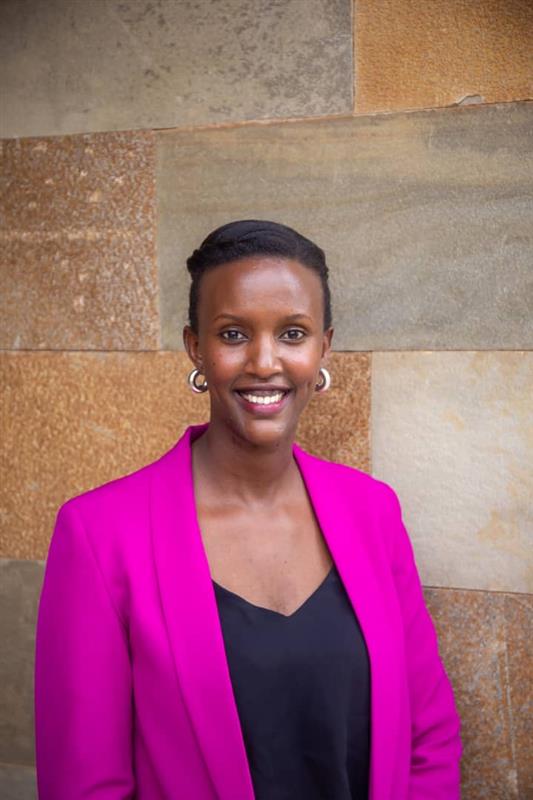
In an interview, Ishyo Foods’ founder, Sharon Akanyana, credited this remarkable growth to data and digitalisation.
Akanyana founded her company in 2017 as a way to produce affordable yoghurt, especially for young children like her own. Although the original plan was to focus on yoghurt, challenges with equipment delayed the production for months.
“When we faced issues with equipment, we pivoted and said, ‘Let’s make jam,’” she recalls, describing a move that kept her idea alive. The first batches were supplied to a neighbourhood supermarket in Kibagabaga, a neighbourhood in Kigali, as the supermarket had agreed to give the product a chance.
One shelf led to several more; they acquired their S Mark from Rwanda Standards Board (RSB) and got their equipment from customs, and they began making yoghurts. Those small wins built the momentum that prompted a shift in focus towards scaling production and improving standards.
The team upgraded to a modest facility, documented its procedures on paper, and treated quality as proof of progress. Once shelf space was secured, the focus shifted from whether the product could sell to how the start-up could evolve into a scale-up.
That question revealed a major information gap. “We realised there was a lot of data we needed. We asked ourselves: how will we know we’re making losses? How will we know we’re making profits? How will we know how many customers we have? How will we know which customers we haven’t served in the past week?” Akanyana explains.
“Milk might be ready while the cups were missing, or a store could drop from four deliveries a month to two without anyone noticing. The solution was a shift from manual processes to digital systems, designed around the everyday decisions that kept the business running.”
Ishyo Foods later became one of the Rwandan micro, small and medium-sized enterprises (MSMEs) selected to be part of a cohort of businesses supported through the Rwanda Economy Digitalisation (RED) Programme. The RED Programme is implemented by a partnership between the Mastercard Foundation, the Ministry of ICT and Innovation and Cenfri.
The programme provided Ishyo Foods with the support to move from manual processes to digital transformation. “We used to use Excel sheets for our sales, but it was a semi-digital system. There is not much you can do with it”, she says. With the right support, finance moved first, adopting QuickBooks. QuickBooks stabilises invoicing, and sales visibility followed.
That shift helped form a simple customer-relationship rhythm across about 300 supermarkets. Operations and inventory then began a migration to Odoo, an online software application that will be used company-wide for the management of business processes.
“We are starting to learn how to use Odoo,” she explains, “because an integrated view of stock, procurement, and production planning helps reconcile minimum order quantities with supplier lead times before shortages appear.”
After digitalising their processes, the company started recording service improvement. The company treated each signal as data, which led to recipe refinements, re-sequenced routes, and tighter contact schedules that protected relationships while volumes rose. “Data is our oxygen,” she says. “When you have no data, then there is no growth. How will you know you’re making losses? How will you know you’re making profits? How will you know how many customers you have? So data is essential. Data is everything.”
Results followed the discipline. “In 2023 and 2024, we grew our sales by more than 100%,” she reports. Production climbed from using 200 litres of milk per week to 1,000 litres.”
The team grew with the workload. “Full-time about 28, and part-time about 27,” she notes in response to a question about the size of the team. The customer base widened in step. “We have 300 customers now.” The narrative lines up with the numbers. Better delivery cadence, fewer stockouts, and earlier procurement tend to raise throughput and reduce waste when demand is present.
Context matters, and she is explicit about Rwanda’s ecosystem. “Rwanda is the best place for businesses, startups,” Akanyana says, pointing to advisory networks, grants, affordable loans, and selected tax relief on imports.
Akanyana is equally direct about the internal responsibility that sustains growth. “When you have no data, then there is no growth,” she says. “Tools require consistent input. Teams need training and time. Suppliers can miss deadlines. Cash cycles can tighten even when dashboards are accurate. These are constraints to manage with routine, review, and prompt action.”
The method is simple to state and demanding to practice. Define the facts that matter for tomorrow’s deliveries, capture them without fail today, and make decisions while they can still change outcomes.
Eight years after a kitchen trial became a company, the results are visible on shelves across Kigali. The engine behind those shelves is a founder who chose to turn listening into a system and records into dashboards that guide the next move.
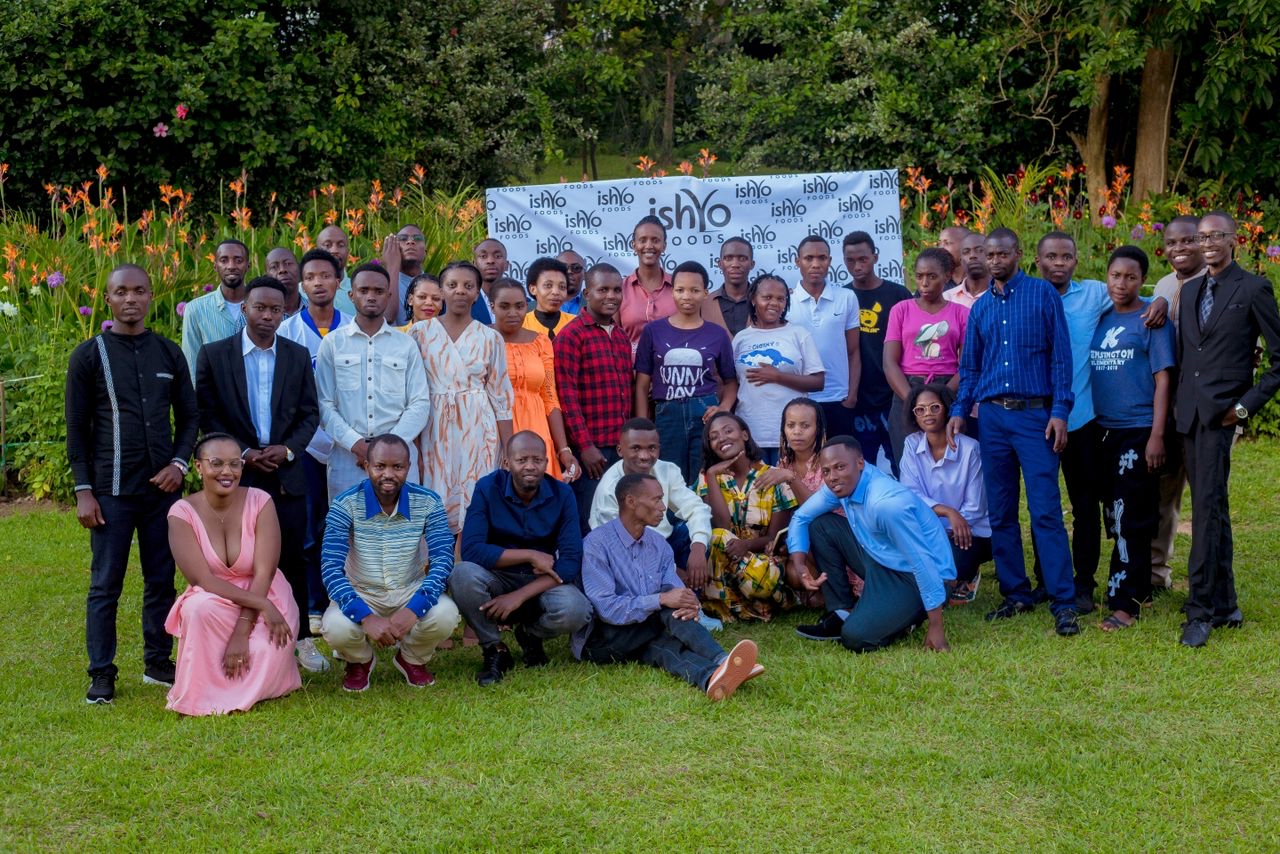
The company has expanded its team from a single employee to 28 full-time staff. Sharon Akanyana founded Ishyo Foods in 2017. The company has grown from producing jam to making yoghurt.Acquisition of new equipment helped the company to expand operations.
This independent nature has led to repeated accusations that the cow damages crops, resulting in Mukagahutu’s arrests, yet the cow loyally follows her to the police station each time.
Mukagahutu resides in Rumonge Commune, Burunga Province, in northeastern Burundi, where she has long combined cattle rearing with farming.
Among her cows, which she names to reflect their positive traits and value, one stands out. This cow, which has calved six times, bears the poetic name “Biriri Birira mu Cyakunze Abana Bakaririmba,” roughly translating to “The one that brings joy where children sing.”
In an interview with Akeza TV, Mukagahutu explained why this cow lives separately: “It stays alone because whenever it tries to join the other cows, they attack it.”
She described its disciplined daily routine; it wakes at 6 a.m., grazes throughout the day, and returns home by 6 p.m. to nurse its calf. “It does not sleep in the open! It sleeps on the tree behind here,” she said, adding that she leaves it alone to avoid conflicts with the herd.
Because the cow grazes on its own, community members have repeatedly blamed it for crop damage, leading to Mukagahutu being summoned or arrested.
She has paid fines of 200,000 Burundian Francs on one occasion and 500,000 on another to settle the claims. However, neighbors later clarified that the accusations were unfounded, the damage was often caused by other cows, not hers.
One neighbor recounted an incident near Lake Tanganyika: “We took the matter to Izere, and they claimed her cow had grazed the crops. After she paid 500,000, we found out it wasn’t her cow that had grazed the maize.”
What makes the story truly extraordinary is the cow’s behavior during Mukagahutu’s detentions. Each time she is taken to the police station over these accusations, the cow follows her there.
It stays calmly at the station, grazes nearby without bothering anyone, and returns to rest until her release. Mukagahutu revealed that the cow has even given birth five times while at the police station alongside her.
“Even when they arrest me, we are together. It stays in the station,” she said.
The incidents stem partly from a presidential decree in Burundi banning open grazing in fields to protect crops.
The President of Burundi issued a decree banning farmers from open grazing in fields to protect crops. Mukagahutu tried tying her cow and feeding it prepared fodder, but fearing it would die without freedom to graze, she released it again.
Despite the troubles, Mukagahutu remains attached to her loyal animal. She says no one will take it from her unless they pay 20 million Burundian Francs (approximately USD 6,700).
In a recent exclusive interview with IGIHE, Clark revealed that for much of his life, he felt trapped in a world where he was “constantly treated as less than human,” always being seen as “a Black man” rather than just a man. He spoke openly about the daily struggles of microaggressions, police harassment, and toxic environments.
“It was like modern-day slavery,” he says, describing a society where people are bound to unfulfilling jobs and material pursuits.
For Clark, life in America felt like a prison, working tirelessly just to afford a house and a car, trapped in a cycle of traffic, widespread drug problems, and a healthcare system that prioritises pharmaceuticals over healing. Yet, a trip to Ethiopia two decades ago planted the seed for a new life.
“That was the first time I felt like a man, not just a Black man,” Clark shares. This journey to Africa, which began with the adoption of four sisters from Ethiopia, marked the beginning of a profound connection with the continent.
“I knew then, this is where I belong,” he says, his voice thick with emotion. His experience in Africa shattered the negative portrayals of the continent seen in the media. Clark describes a deep “gravitational pull” that ultimately led him back to Africa, the land of his ancestors, a place he now views as the “promised land” for people of colour.
“I believe that Africa is the promised land for all people of colour, our ancestors who were enslaved, to return. Africa is where we originally are from,” he declares. “It’s time for everyone to come back home.”
Clark introduces himself not only as a man of roots but as a man on a mission. “I’m a father of approximately 20 children. I’ve adopted many, many children from all over the world. I’m a philanthropist, a community leader. My purpose is to help people, to inspire them to do bigger and better things.”
While initially considering other African countries such as Tanzania, Kenya, and Ethiopia, Clark says that Rwanda’s stability, infrastructure, and warmth made it the perfect place to settle permanently.
“Rwanda kept calling me and calling me,” he explains. “The people, the roads, the infrastructure… It was just overwhelming in the best way. Coming from a toxic environment like America, Rwanda welcomed me with open arms.”
Clark’s move to Rwanda was not simply about leaving the United States; it was about seeking a more peaceful, fulfilling life. “I had a good lifestyle in America. I had the white picket fence, the house, the cars, and everything that comes with materialism,” he says, but his heart was never at peace.
“In America, even though I had all that stuff, that wasn’t the thing. It was temporary happiness. Here, I found peace, love, and joy that money cannot buy,” he continues. “Here, the government supports you, the food is organic, and I’ve lost 76 pounds. It’s just the environment, the balance of nature, the clean air, and the kindness of the people. I’ve never experienced anything like it.”
As a farmer, Clark emphasises the self-sufficiency he has found in Rwanda. “We grow almost all our crops here. I have hundreds of bamboo plants for building materials. The land here is incredible,” he says. He also grows medicinal plants and runs a coffee farm, planning to scale up production in the coming years. Despite being in the process of building his dream, Clark insists this journey is not just for him.
“I want to show others that it’s possible, that you can come home too. Come on home, man. It’s a place for financial freedom, better health care, and peace.”
He passionately challenges the misconception of Africa as a land of poverty and disease, calling it “fake news” designed to maintain control. “Africa is the most progressive continent in the world. People need to see the truth,” he states.
In his final words, Clark reflects on his new life, insisting that he does not miss America. “People ask me that all the time: do I miss anything from America? I miss nothing. Wait, let me tell you once again, I miss nothing from America. Zero. We should be treated like kings and queens and human beings. Hey, I run kings and queens and human beings. That’s how we should be treated.”
Clark’s vision extends beyond personal success. He envisions a community centred on love, empowerment, and growth, where people of colour can thrive, free from the oppressive forces they’ve endured in the West.
“It’s time to come back home,” Clark concludes, his message powerful and clear: “This is the promised land, and it’s time for us to reclaim it.”
Mitterrand died at the age of 79, shortly after completing 14 years in office. He remains one of the most controversial French leaders in modern history, particularly over his African policy, which critics argue contributed to instability across the continent. His presidency has been closely scrutinised for France’s conduct before, during, and after the Genocide against the Tutsi in Rwanda.
Presidency coinciding with the genocide
Mitterrand’s final term coincided with the 1994 Genocide against the Tutsi, a period during which he was reportedly weakened by illness. Critics maintain that his close personal and political relationship with then Rwandan President Juvénal Habyarimana influenced France’s actions in Rwanda.
That relationship, analysts argue, shaped France’s continued political, military, and diplomatic support for the Habyarimana government, even as preparations for mass violence were underway.
The anti-genocide-denial organisation Survie has documented the involvement of French actors in Rwanda prior to and during the Genocide. Among those cited is Captain Paul Barril, a former French gendarme who had worked closely with senior Rwandan officials from 1989. Barril reportedly operated with the backing of François de Grossouvre, a close adviser and confidant of President Mitterrand.
Barril is accused of having signed an agreement on May 28, 1994, with Rwanda’s Interim Government, represented by Prime Minister Jean Kambanda, to supply weapons and provide military training to forces implicated in the Genocide. Reports indicate that the government at the time agreed to pay France approximately three million US dollars for the arms.
{{Bisesero and accusations of abandonment
}}
French forces have also been criticised for failing to protect Tutsi civilians during massacres in several parts of the country. In Bisesero, where tens of thousands of Tutsi had gathered and attempted to resist attacks, documents later revealed the presence of French mercenaries in mid-May 1994.
Survivors and investigators allege that these mercenaries encouraged continued attacks rather than intervening to protect civilians, leading to the deaths of thousands.
{{Zone Turquoise under scrutiny
}}
Under Operation Turquoise, French forces established what was described as a humanitarian safe zone in parts of Cyangugu, Kibuye, and Gikongoro. However, critics argue that the operation failed to prevent killings of Tutsi who sought refuge in those areas.
Despite Radio Télévision Libre des Mille Collines (RTLM) continuing to broadcast genocidal propaganda into the French-controlled zone, no action was taken to shut it down. French troops also did not arrest members of the Interim Government who fled Rwanda through Zone Turquoise into what is now the Democratic Republic of Congo.
When questioned in the French National Assembly, France’s Foreign Minister at the time stated that the troops had not been given a mandate to investigate crimes or arrest suspects.
While the conduct of French forces has been widely criticised, President Mitterrand consistently defended them, claiming they had saved thousands of lives.
{{Kagame on France and Belgium’s role
}}
In an interview with journalist Mario Nawfal last year, President Paul Kagame stated that France and Belgium played a role in preventing timely United Nations intervention during the Genocide.
“You see an ideological link from the beginning,” Kagame said, referring to Belgium’s colonial legacy and policies that entrenched ethnic divisions.
On France, Kagame described Mitterrand’s relationship with Habyarimana as very close.
“The French president at the time was François Mitterrand. He was a very close friend of Habyarimana. Very close. One was like a father figure to the other,” President Kagame said.
He added that historical records show that Mitterrand bore responsibility comparable to others who enabled the killings.
{{Protection of Agathe Habyarimana
}}
Following the shooting down of President Habyarimana’s plane, Mitterrand facilitated the evacuation of Habyarimana’s widow, Agathe Kanziga Habyarimana, and her children to Europe.
Despite international arrest warrants over her alleged role in the Genocide against the Tutsi, France has neither extradited her to Rwanda nor prosecuted her domestically.
President Kagame once said he raised these issues with individuals close to Mitterrand, including his son, who wielded influence over French policy in Africa, but they consistently rejected any responsibility.
{{Rwanda marginalised after the genocide
}}
After the fall of the Habyarimana government, Mitterrand distanced himself from Rwanda’s new leadership under the RPF-Inkotanyi. Rwanda was sidelined diplomatically at a time when it urgently needed international support.
In November 1994, France hosted the France–Africa Summit in Biarritz, attended by 25 African heads of state. Discussions included France’s relations with Africa and post-genocide Rwanda. However, Rwanda was not invited.
Former presidential adviser Dr Charles Murigande later said the exclusion reflected Mitterrand’s stance toward the new Rwandan government.
“The fact that we were not invited did not surprise us,” Murigande said. “That was his mindset. He had aligned himself with those who had destroyed Rwanda. He carried a burden of shame and could not bring himself to invite the President of Rwanda to Biarritz.
As the year draws to a close, this sense of reflection has become part of the national mood. Beyond statistics, projects and public milestones, 2025 has reminded Rwandans that progress is shaped by people, leaders, artists, and public servants whose lives and work helped move the country forward. Their absence is felt not only in their respective fields but in the collective memory of a nation that continues to draw strength from their example and sacrifice.
This article revisits some of the distinguished individuals who did not live to see the end of 2025, honouring the lives they lived and the lasting impact they made.
{{1. Lt. Gen. Innocent Kabandana
}}
He was one of the generals in the Rwanda Defense Forces (RDF). Lt. Gen. Innocent Kabandana, who led peacekeeping operations in the Cabo Delgado region of Mozambique, passed away on September 7, 2025, due to illness. A career military officer, he was known for his dedication and discipline, leaving behind a legacy of strong leadership and contributing to building a resilient army.
{{2. Ingabire Marie Immaculée
}}
She was well known for her advocacy for justice, fighting against corruption and injustice, particularly during her time as the Executive Director of Transparency International Rwanda. She was an outspoken voice on accountability for leaders at all levels of government. Her work extended beyond national borders, contributing to international discussions on human rights and governance. She passed away on October 9, 2025, after battling illness.
{{3. Alain Mukuralinda (“Alain Muku”)
}}
Alain Mukuralinda, also known as Alain Muku, was the Deputy Government Spokesperson and a lawyer who previously served as a national prosecutor. He also worked in music and supported artists. Beyond his professional duties, he was a mentor to young people and an advocate for talent development. He passed away on April 4, 2025, after suffering from a heart condition.
{{4. Jean Lambert Gatare
}}
Jean Lambert Gatare became a household name among football enthusiasts for his talent in broadcasting sports. He was a respected figure in the media, especially in sports commentary, and was a key figure in advertising. He passed away on March 22, 2025, while receiving treatment in India.
{{5. Aissa Kirabo Kacyira
}}
A distinguished diplomat and urban development expert, Aissa Kirabo Kacyira served as the Mayor of Kigali and later as Deputy Executive Director of UN-Habitat. She played a pivotal role in Rwanda’s urban planning, advocating for sustainable city development and international partnerships that enhanced Kigali’s global reputation. She passed away on August 12, 2025, leaving behind a legacy of leadership, mentorship, and transformative urban initiatives that continue to benefit Rwanda and Africa at large.
{{6. Alphonse Kilimobenecyo
}}
Known for his significant contributions to the design of national symbols, including the national flag, currency notes, and coins, Kilimobenecyo Alphonse was one of Rwanda’s most talented artists. He passed away on April 19, 2025, at the age of 66.
{{7. Claudine DeLucco Uwanyiligira
}}
Claudine DeLucco Uwanyiligira played a significant role in the development of the media sector in Rwanda. She was the Deputy Director-General of the Rwanda Broadcasting Agency (RBA), where she was known for professionalism and capacity-building. She later worked in the United States at Global Solutions Agency LLC, overseeing projects in Africa and the Caribbean. She passed away on January 14, 2025.
{{8. Joseph Murekeraho
}}
Although not widely known, Joseph Murekeraho made contributions to social and community development in Rwanda. He served as the Minister of State in the Ministry of Education from 2007 to 2008, overseeing primary and secondary education. He passed away on August 8, 2025, at the age of 73.
9. Protais Mitali
Mitali Protais was another unsung hero whose work in Rwanda’s development space touched many lives. Whether through social initiatives, professional achievements, or community engagement, Protais’ contributions were marked by diligence and a commitment to positive change. His work continues to inspire those who carry forward similar missions.
{{10. Madeleine Mukanemeye (“Mama Mukura”)
}}
Mama Mukura was a well-known name in Rwanda, especially among sports fans, particularly those who supported the national football team and Mukura VS. Beyond her love for sports, Madeleine was known for her charitable work, caring for others without expecting anything in return.
{{11. Speciose Mukabayojo
}}
Speciose Mukabayojo was the youngest child of King Yuhi V Musinga. She passed away on October 27, 2025, at the age of 93. She was one of the children who fled with King Musinga when he was exiled to Moba in the Democratic Republic of the Congo (then Zaire).
{{12. Josephine Murebwayire
}}
Josephine Murebwayire played a key role in helping survivors of the 1994 Genocide against the Tutsi. Her contributions to the welfare of survivors and the healing of the community are remembered with deep appreciation.
{{13. Natty Dread
}}
Natty Dread was a well-known reggae artist in Rwanda. His music touched the hearts of many, and he was an important figure in the Rwandan music scene. He passed away this year, leaving a lasting impact on the music industry.
{{14. Gloriose “Gogo” Musabyimana
}}
“Known as ‘Gogo,’ Musabyimana Gloriose was a beloved artist in Rwanda. She passed away unexpectedly in September 2025 due to illness while on a missionary trip in Uganda, leaving a void in the music community.”
While we mourn the loss of the individuals who contributed significantly to our country, we honour their legacies in leadership, culture, media, civil society, and beyond. Their memory will live on as we continue to build the Rwanda that we aspire to be.
His daughter, Wanjiku wa Ngugi, confirmed his death in a brief yet moving Facebook post, calling not only for mourning but for celebration.
“He lived a full life, fought a good fight… let’s celebrate his life and his work,” Wanjiku’s post read in part.
Ngũgĩ’s daughter signed off her farewell with the Gikuyu phrase: “Rîa ratha na rîa thŭa. Tŭrî aira!”, loosely translated as “At sunrise and sunset, we are witnesses.” It was a poetic homage to a man whose words lit up dark times and whose legacy will continue to illuminate generations to come.
To celebrate Ngũgĩ’s life is to honour a man who challenged the very foundations of postcolonial thought and reimagined Africa’s literary identity on its own terms.
A pioneer of decolonisation in literature, Ngũgĩ used words as both sword and shield, fighting cultural erasure, linguistic imperialism, and political oppression. He wasn’t just a novelist. He was a defiant wordsmith, a pan-African thinker, and above all, a storyteller who rewrote the African narrative from the inside out.
Born James Ngugi in 1938 in colonial Kenya, Ngũgĩ came of age during the Mau Mau uprising and the brutal suppression that followed. These formative experiences would later shape the raw, politically charged texture of his fiction. His first novel, Weep Not, Child (1964), was the first novel in English published by an East African. It was undeniably a historic achievement at the time.
Yet, even as he wrote in the language of the coloniser, Ngũgĩ’s stories always sought to humanise and dignify Africans. From The River Between (1965) to A Grain of Wheat (1967), he painted a nuanced portrait of a people grappling with the wounds of colonialism and the promises, often broken, of independence.
In the mid-1970s, Ngũgĩ underwent a dramatic ideological transformation. He denounced English as a medium for African literature, arguing that to truly decolonise the African mind, one must write in African languages. In Decolonising the Mind (1986), he described colonial languages as vehicles of alienation and control.
“Language, any language, has a dual character: it is both a means of communication and a carrier of culture,” he wrote.
This marked the start of a literary rebellion. Ngũgĩ adopted his birth name, abandoned English in favour of Gikuyu, and challenged other African writers to do the same. His critics called it idealistic. His supporters called it revolutionary. In truth, it was both, and it would shape African literary debates for decades.
{{Jailed for his words
}}
In 1977, Ngũgĩ and fellow writer Ngũgĩ wa Mirii staged a Gikuyu-language play, Ngaahika Ndeenda (I Will Marry When I Want), in a rural village. The play transcended mere art; it was an act of political insurgency. It exposed class divisions, land grabbing, and corruption in post-independence Kenya.
The state responded swiftly. Ngũgĩ was arrested and detained without trial in a maximum-security prison. Yet even behind bars, his pen did not rest. On toilet paper, he wrote Devil on the Cross (1980), the first modern novel written in Gikuyu. It was a profound act of cultural defiance, proving that indigenous languages could bear the weight of complex, modern narratives.
Like Petals of Blood, published in 1977, the novel deepened his critique of post-independence disillusionment and foregrounded the lives of Kenya’s working class, particularly how the new elite perpetuated the exploitation of the masses.
{{Exile and intellectual resistance
}}
After his release, Ngũgĩ faced threats, surveillance, and continued censorship. In 1982, following an attempted coup in Kenya, he went into self-imposed exile, first to Britain, then to the United States, where he taught at universities including Yale and UC Irvine. Though separated from home, he remained deeply connected to the African struggle.
In exile, Ngũgĩ published prolifically. Novels like Matigari (1987) and memoirs like Detained (1981) and Dreams in a Time of War (2010) kept his story, and Kenya’s, alive for a global audience. His essays, especially Moving the Centre and Something Torn and New, advocated for recentring African languages, thought systems, and worldviews in both education and culture.
{{A visionary for African cultural sovereignty
}}
For Ngũgĩ, literature was never an elite affair. It was a public instrument, a communal mirror. He championed the belief that Africa could never be truly free without linguistic and cultural liberation. His call was not just for African writers to return to African languages, but for education systems to be restructured around them.
He fiercely criticised what he saw as the Western stranglehold on African intellectual life, challenging the dominance of Euro-American publishing industries, curricula, and academic gatekeeping.
Ngũgĩ’s legacy is carved not just into the pages of books, but into the consciousness of a continent. His life asks uncomfortable questions: What is freedom without cultural self-determination? What is education if it divorces children from their heritage? What is literature if it only mirrors the worldview of the oppressor?
He proved that African languages were not relics. They were alive, powerful, and capable of shaping modern identities.
Across generations, young African writers, linguists, and educators continue to engage with Ngũgĩ’s ideas. His novels are taught in schools and universities around the world. His speeches and essays continue to ignite debates on decolonisation, cultural preservation, and the politics of language.
Even in death, Ngũgĩ wa Thiong’o remains a guide. His is a voice reminding Africa to tell its own story, in its own words.
He may be gone, but his story and his call to decolonise the mind will continue to echo across Africa and the world.