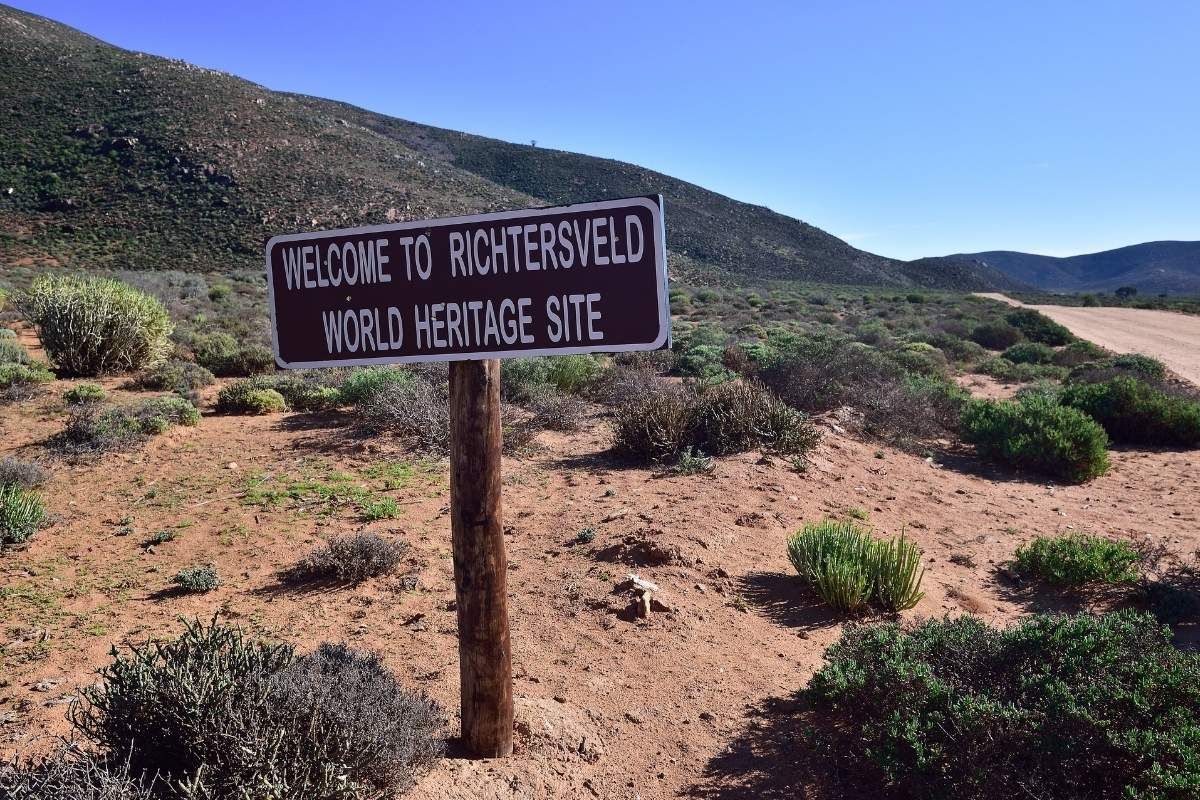
According to SA News, the discovery was made by Dr. Massimo Meregalli from Italy and Dr. Roman Borovec from the Czech Republic.
These respected entomologists recently published their research on flightless weevils found in remote parts of the park. These tiny insects live in the soil, hidden under shrubs, and mostly come out at night, making them very hard to find and study. Therefore, their discovery required meticulous fieldwork in the Richtersveld’s challenging environment.
SA News quoted a statement by South African National Parks (SANParks) as saying, “With the support and guidance of Richtersveld National Park Nursery Curator Pieter van Wyk, the researchers explored the remote Armmanshoek Valley, an area not previously surveyed for soil insects.”
“Their efforts resulted in the identification of multiple new species, further confirming the Richtersveld as a hotspot of endemism and scientific importance,” it said.
To honor the park’s importance for conservation and SANParks’ support for research, the scientists named a newly found group and species “Richtersveldiella sanparkensis.”
This is the first insect species to be officially named after SANParks and Richtersveld National Park. The researchers have also previously honored the local culture by naming other groups, Khoisan and Nama, recognizing the long history of connection between the communities and this unique land.
“These discoveries highlight the importance of continued scientific exploration within protected areas and reinforce SANParks’ commitment to conserving not only iconic wildlife and landscapes, but also the often-overlooked species that form the foundation of healthy ecosystems,” SANParks said.
“The naming of Richtersveldiella sanparkensis stands as a lasting scientific tribute to the Richtersveld and SANParks’ ongoing dedication to biodiversity conservation,” it added.
To honor the park’s importance for conservation and SANParks’ support for research, the scientists named a newly found group and species “Richtersveldiella sanparkensis.”
The 14th edition of Africa’s premier conservation prize will recognise individuals and ranger teams whose work protects wildlife, landscapes, and community livelihoods.
Held in partnership with global investment firm Ninety One, the Awards provide both international recognition and funding to help winners scale proven conservation solutions across the continent. This year, prize money of £225,000 will be awarded across three categories: the Prince William Award (£100,000), the Tusk Award (£75,000), and the Tusk Wildlife Ranger Award (£50,000).
In a statement on Thursday, the organisers said the Tusk Wildlife Ranger Award has been expanded to recognise ranger teams alongside individual rangers, reflecting the collaborative nature of modern conservation efforts in Africa’s protected areas.
“The Awards shine a light on the remarkable courage and commitment of individuals working tirelessly to safeguard Africa’s natural heritage, often in challenging and dangerous conditions,” said Nick Bubb, CEO of Tusk.
“We encourage anyone who knows an individual or ranger team who has made a significant impact on wildlife conservation to nominate them for this once-in-a-lifetime opportunity to have their achievements recognised on a global stage.”
Rwandan ranger Claver Ntoyinkima has previously made a mark at the Tusk Awards. In 2024, the Senior Ranger Guide and Trainer at Nyungwe National Park was honoured with the Tusk Wildlife Ranger Award for his exceptional work in primate and bird conservation. Born near the forest he now protects, Ntoyinkima has played a key role in primate habituation, anti-poaching patrols, scientific research, and youth conservation education initiatives.
“I am truly grateful to be a finalist for the 2024 Tusk Conservation Awards; there are no words to describe how proud I am to win this award,” Ntoyinkima said. “The acknowledgement of my dedication and efforts to give back to the community is truly inspiring.”
Since its launch in 2013, the Tusk Conservation Awards have recognised 61 winners from 23 African countries, helping expand ranger patrols, secure critical habitats, build community conservancies, and create sustainable livelihoods linked to conservation. Past winners have protected gorillas in eastern Congo, turtles in Sierra Leone, and restored forests in Madagascar, among other achievements.
Nominations for the 2026 Awards are open until April 26, 2026 and can be submitted online at [www.tuskawards.com/nominations->www.tuskawards.com/nominations]. Nominees must be entered by someone familiar with their work, such as a colleague, mentor, partner, lecturer, supervisor, or collaborator.
The Tusk Conservation Awards are held in partnership with Ninety One and supported by the Nick Maughan Family Foundation and other generous donors.
The project, part of Japan’s Supplementary Budget for FY2025, is aimed at improving access to health, nutrition, and Water, Sanitation and Hygiene (WASH) services in six border districts: Rubavu, Nyabihu, Karongi, Rusizi, Nyamasheke, and Rutsiro. The initiative forms part of a larger Japanese contribution of approximately $2.5 million released in 2023 and 2025, which has already enabled the rehabilitation of water supply systems in Nyamasheke and Rusizi, benefiting thousands of residents.
The new funding will directly impact nearly 115,000 people, with a focus on restoring damaged infrastructure and ensuring safe, climate-resilient water supply services. Rutsiro District, which experienced significant damage to its water systems, is a key beneficiary.
Kazuya Nakajo, Ambassador of Japan to Rwanda, said the funding aligns with Rwanda’s National Strategy for Transformation (NST2).
He noted that the $2.5 million support will reach more than 100,000 beneficiaries, addressing stunting and advancing universal health coverage to help end endemic diseases.
Gemma Maniraruta, Director General of Water and Sanitation at the Ministry of Infrastructure, said past Japanese grants achieved about 94 percent of physical progress and that the new funding will sustain and expand these gains.
She emphasised the importance of technical support, noting, “We are requesting a technical team to maintain the existing projects, and we submitted a proposal in 2024. Considering our shortage of expertise, we hope this request will be considered.”
Lieke van de Wiel, UNICEF Representative in Rwanda, highlighted the strain that climate change and disasters have placed on health and water systems.
“The contribution will strengthen essential health, nutrition, and WASH services, helping to save lives today, prevent disease, and build resilience for the future,” she said, adding that UNICEF will ensure diligent implementation through monitoring and reporting.
Officials from the Rwanda Biomedical Center and the Water and Sanitation Corporation Group welcomed the support, noting that it will improve public health outcomes, reduce stunting linked to poor sanitation, and help transition communities toward climate-resilient water and health systems.
Inger Andersen, UNEP’s executive director, said on Friday at a briefing that UNEA-7 will take place against a backdrop of a fragile geopolitical landscape, necessitating global solidarity to tackle pressing ecological challenges such as climate change.
“UNEA-7 will focus on how we can strengthen multilateralism to deliver united, inclusive action across every strand of the triple planetary crisis, treating it as the single, interconnected challenge it is,” Andersen said.
More than 3,000 delegates, including 55 environment ministers from across the globe, are expected to participate in UNEA-7 that will run under the theme of “Advancing Sustainable Solutions for a Resilient Planet,” Andersen said.
She added that the five-day forum will discuss 19 draft resolutions and decisions covering artificial intelligence, minerals and metals, tackling wildfires, and hydrological cycles.
While acknowledging that ecological challenges, including pollution, planetary warming, and habitat loss, have intensified, Andersen stressed that UNEA-7 offers a chance to reset global environmental governance and deliver lasting solutions.
Radhika Ochalik, UNEP’s director of governance affairs, said that delegations will share successful case studies on the implementation of international environmental treaties that advance the green agenda.
Besides side events covering a wide range of topics, UNEA-7 will also feature exhibitions, high-level panel discussions, while negotiations on draft resolutions will be conducted throughout the forum, according to Ochalik.
She revealed that draft resolutions have been organised around four clusters: nature and climate; governance and law; chemicals, waste, and pollution; and strategic and procedural matters, such as the approval of UNEP’s medium-term strategy for 2026-2029.
Deborah Barasa, cabinet secretary in Kenya’s Ministry of Environment, Climate Change, and Forestry, said that Kenya will leverage its role as host of UNEA-7 to champion an ambitious and inclusive green agenda that benefits communities and the planet.
Held biennially since 2014, UNEA is the world’s highest-level decision-making body on the environment, enjoying universal membership of all 193 UN member states, alongside major groups like civil society, the private sector, and academia.
This reduction was observed over the eight-day event held in Rwanda. To monitor air quality during the championship, REMA set up 10 stations across different parts of Kigali to monitor air pollution levels, particularly focusing on both closed and open roads.
These stations were located in areas such as Gacuriro, Rusororo, Mont Kigali, Gikondo, Nyarutarama, Kibagabaga, Kimironko, Nyabugogo, and Kimihurura.
REMA’s analysis revealed that temporarily closing major roads improved air quality significantly.
The [report->https://www.rema.gov.rw/index.php?eID=dumpFile&t=f&f=145048&token=e3cf8ea673c17d0db4d1fb735c157438d8fcc388] shows that Particulate Matter (PM2.5) levels— fine particles in the air, measured in micrograms per cubic meter were measured.
Because they are so small, when inhaled, they quickly enter the lungs and even the bloodstream, causing various health problems such as coughing, chest pain, shortness of breath, lung diseases, heart problems, stroke, and even cancer.
The primary sources of these pollutants include vehicle emissions, especially those using gasoline and diesel, burning coal, industrial smoke, and other pollutants. These fine particles have been linked to numerous short and long-term health problems, including the potential harm to unborn children.
Meanwhile, alternative routes used during the event had less traffic and were not regularly used, leading to a reduction in air pollution by 30% – 35%. On the roads that were not affected by the race, no significant change in pollution levels was observed.
Juliet Kabera, the Director General of REMA, emphasized that the findings show that reducing pollution has a direct impact on improving the air quality that people breathe.
The WHO recommends that the annual average concentration of fine particulate matter (PM 2.5) should not exceed 10 micrograms per cubic meter of air, and for a 24-hour period, it should not exceed 25 micrograms per cubic meter.
“These findings are a clear demonstration of how reduced traffic emissions directly improve the air we breathe,” said Juliet Kabera, Director General of REMA.
“During the UCI Championships, the air quality in Kigali was moderate, which is acceptable for the general public according to WHO [World Health Organization] air quality guidelines. This should inspire all of us to properly maintain our vehicles, and to embrace more sustainable transport choices such as using public transport, cycling, walking, and avoiding unnecessary car trips whenever possible. Cleaner air is within our reach if we make conscious decisions in our daily lives,” she added.
Earlier this year, the Ministry of Environment, through REMA, introduced enhanced vehicle emissions testing, underscoring Rwanda’s commitment to cleaner air, improved public health, and sustainable development.
REMA notes that the positive results during the championships underscore the importance of sustainable urban mobility.
In addition to the air quality monitoring stations located in Kigali, REMA operates stations across Rwanda, and citizens are encouraged to follow real-time updates on [aq.rema.gov.rw->https://aq.rema.gov.rw/] to stay informed about the air they breathe and make healthier choices.
The low level of ozone depletion observed in 2024 was partly due to naturally occurring atmospheric factors which drive year-to-year fluctuations. However, the long-term positive trend reflects the success of concerted international action, reported the Ozone Bulletin of the World Meteorological Organization.
The report, offering encouraging scientific news for both human and planetary health, was issued to mark World Ozone Day on Tuesday and the 40th anniversary of the Vienna Convention, which recognized stratospheric ozone depletion as a global problem and provided the framework for mobilizing international cooperation in ozone research, systematic observations and scientific assessments.
“Forty years ago, nations came together to take the first step in protecting the ozone layer — guided by science, united in action,” said United Nations Secretary-General Antonio Guterres.
“The Vienna Convention and its Montreal Protocol became a landmark of multilateral success. Today, the ozone layer is healing. This achievement reminds us that when nations heed the warnings of science, progress is possible,” he said.
According to the report’s investigation, to date, the Montreal Protocol has led to the phase-out of over 99 percent of the production and consumption of controlled ozone-depleting substances, which were used in refrigeration, air conditioning, firefighting foam and even hairspray.
As a result, the ozone layer is now on track to recover to 1980s levels by the middle of this century, significantly reducing risks of skin cancer, cataracts, and ecosystem damage due to excessive UV exposure.
Among just sixteen global winners, Nyandungu Eco-Park received a Full Star accreditation alongside category Stars for “People” and “Biodiversity,” highlighting its excellence in community engagement and ecological conservation.
The award, presented by Wetland Link International (WLI), is the only global quality mark dedicated to wetland educators and visitor attractions, recognising sites that promote conservation and public awareness of wetlands such as rivers, marshes, and coasts.
Located in Kigali, a Ramsar-accredited Wetland City, Nyandungu Eco-Park has rapidly become a flagship urban nature sanctuary. Since opening to the public in July 2022, following six years of extensive restoration, the park has seen a steady rise in visitors, welcoming 76,754 people in 2024, up from 67,222 in 2023 and 48,813 in 2022.
Spanning 121 hectares, including 70 hectares of rehabilitated wetlands and 50 hectares of forest, the park is home to nearly 200 bird species and more than 62 indigenous plant species.
The transformation from a degraded wetland to a thriving ecosystem was made possible by a Frw 4.5 billion investment led by the Rwanda Environment Management Authority (REMA), with funding from the Rwanda Green Fund (FONERWA), the UK Government, Italy’s Ministry for Ecological Transition, and the UN Environment Programme.
Nyandungu offers visitors a unique combination of recreation and education with features such as a medicinal garden, the Pope’s Garden, five catchment ponds, three recreational ponds, 10 kilometres of walkways and cycling lanes, an information centre, and a restaurant.
In its seventh edition, the UNEP’s Frontiers Report said that rising global temperatures present an existential threat to the survival of older adults.
According to the report, climate change is likely to escalate the melting of icecaps, resulting in widespread release of disease-causing pathogens such as bacteria, fungi, and viruses.
The 2025 edition also highlighted the reemergence of banned chemicals and persistent organic pollutants in the environment and food chain due to flooding.
In addition, the report sounded an alarm over the risk of ageing dams to downstream fishing communities and pristine landscapes, adding that the removal of obsolete and unsafe water reservoirs has intensified in Europe and North America.
UNEP Executive Director Inger Andersen said the Frontiers Report endeavors to delve into and spotlight emerging planetary threats, and propose some policy interventions required to turn the tide.
“All these emerging issues require careful attention and proactive action. I call on policymakers to read this issue of the biennial Frontiers Report and take forward its findings to protect people, nature and economies from threats that will only grow with each passing year,” Andersen added.
In a candid interview on Sanny Ntayombya’s The Long Form podcast, Sebunya, who grew up under Idi Amin’s regime in Uganda, shared his journey from a politically turbulent childhood to leading one of Africa’s most influential conservation organisations.
He outlined a vision for the continent’s future, one where conservation is not merely about protecting wildlife, but a driver of economic prosperity for African people.
Born in 1965, Sebunya’s early life was shaped by Uganda’s political upheaval. His father, Sewankambo, a member of parliament and Pan-Africanist, was hunted by Amin’s regime, forcing the family to disperse.
“I didn’t grow up with all my siblings,” Sebunya recalled, describing how this experience promoted resilience and a broader African identity.
“I never saw myself as a typical Ugandan, nor tribal.”
His path to conservation was serendipitous, sparked by a chance encounter with Margaret Thatcher’s environmental debates in Strasbourg while studying French. This led to a master’s in environmental policy in the UK, despite his initial training in political science and sociology at Makerere University.
Sebunya’s critique of Africa’s conservation history is unflinching. He argues that the continent’s 8,000 protected areas, many established as colonial hunting grounds, alienated Africans from their land.
“Overnight, Africans became trespassers, poachers, not people looking for food,” he said, noting that post-independence governments perpetuated these frameworks. This colonial legacy, he contends, fuels perceptions of conservation as neo-colonialism, a sentiment echoed in a 2017 Guardian article where he described the sector’s non-African dominance as resembling colonialism.
Less than 5% of conservation NGOs in Africa are led by Africans, a statistic Sebunya finds “uncomforting” but is working to change.
At the heart of AWF’s approach is integrating conservation with community prosperity. In Rwanda’s Volcanoes National Park, AWF donated 27.8 hectares to expand gorilla habitat while establishing the Sabyinyo Silverback Lodge, owned by the SACOLA cooperative.
Generating up to $500,000 annually, the lodge has funded community projects like housing for elderly widows and scholarships, directly linking gorilla survival to local wealth.
“No gorilla has been poached because they don’t need to harm them—that’s where the money comes from,” Sebunya explained.
AWF’s innovative bamboo cultivation initiative further exemplifies this, encouraging communities to grow high-value crops that attract gorillas, effectively expanding the park while boosting incomes by up to 700%.
Sebunya rejects the costly colonial model of militarised park management, which he estimates costs $3,000 per square kilometre and is unsustainable for African governments.
“A park like Serengeti is almost the size of Rwanda. How do you fence it?” he asked, highlighting the model’s failure, with 30,000 elephants lost annually and rhinos extinct in many countries.
Instead, AWF promotes a symbiotic relationship between wildlife and communities, arguing that animals like mountain gorillas would say, “Create a better relationship with my neighbors,” not “Bring a gun to protect me.”
Looking to the future, Sebunya sees Africa’s youth, 70% of the continent’s population, as key to transforming conservation.
“In five or 10 years, these young people will demand to run parks for economic aspirations,” he predicted, envisioning decentralised management where communities like those near Rwanda’s Volcanoes oversee their assets.
He cites rising human-wildlife conflict, as seen in Kenya and Botswana, as a challenge requiring private-sector solutions like insurable conflict mitigation. In Botswana, home to over 200,000 elephants, culling controversies spark protests in London and New York, not locally, where elephants threaten livelihoods.
“Until Africans value an elephant as much as a chicken, which pays school fees, we can’t protect them without benefits,” he said.
Sustainable financing is another priority. Sebunya criticises Africa’s reliance on foreign aid, noting that USAID funds 65% of Nigeria’s health sector, a dependency he calls unsustainable.
AWF’s partnership with the African Union, including the 2022 Africa Protected Areas Congress in Kigali, marked the first time African governments discussed conservation’s importance since independence. Proposals like the Pan-African Conservation Trust aim to secure African-sourced funding, reducing dependence on global donors amid rising defence spending.
“Africa cannot outsource its core platform for economic development—conservation,” Sebunya asserted.
Sebunya’s optimism hinges on aligning conservation with development. He warns that without an African model, large mammals face extinction within a century due to land pressure and climate change.
“We’re doing the same things Europe did, and it has no wildlife,” he cautioned, citing Lake Chad’s shrinking size as a driver of regional instability.
Yet, he believes Africa’s globally connected, educated youth will value natural assets like Victoria Falls or giraffes, which currently generate less revenue than artificial attractions in Dubai.
“This is their war—climate change,” he said, comparing it to his father’s fight for independence.
As AWF prepares for a private-sector-led future, Sebunya sees conservation as a global responsibility with African stewardship.
“If we cut down the Congo Basin, Europe will flood,” he warned, urging international support without ownership.
The global average surface air temperature in June was 16.46 degrees Celsius, 0.47 degrees above the 1991-2020 average for the month and 1.3 degrees higher than the 1850-1900 pre-industrial level, C3S said in its monthly bulletin.
Europe’s average temperature for the month was 18.46 degrees, making it the fifth-warmest June on record. Western Europe, however, experienced its warmest June ever, with temperatures averaging 20.49 degrees.
“June 2025 saw an exceptional heatwave impact large parts of Western Europe, with much of the region experiencing very strong heat stress,” said Samantha Burgess, strategic lead for climate at the European Centre for Medium-Range Weather Forecasts.
She warned that heatwaves are likely to become “more frequent, more intense and impact more people across Europe” in a warming world.
Beyond Europe, above-average temperatures for June were observed across the United States, northern Canada, central and eastern Asia and West Antarctica.
June’s global average sea surface temperature (SST) over latitudes from 60 degrees north to 60 degrees south was 20.72 degrees, the third-highest for the month.
An “exceptional” marine heatwave developed in the western Mediterranean, where daily SSTs peaked at 27 degrees, the highest ever recorded in the region for June, marking the largest daily SST anomaly globally for any month, C3S noted.
“The long-term trend of rising ocean temperatures is evident globally,” said Julien Nicolas, senior scientist at C3S. He noted that higher SST poses a rising threat to marine ecosystems and biodiversity as oceans absorb around 90 percent of the excess heat caused by human-induced climate change.
Nicolas urged faster action to cut greenhouse gas emissions and to improve climate resilience.
“Reducing emissions and adapting our cities and communities to a world with more extreme weather is critical,” he said.