Author: Wycliffe Nyamasege

  • RDF chief visits Uganda, delivers lecture to senior military officers

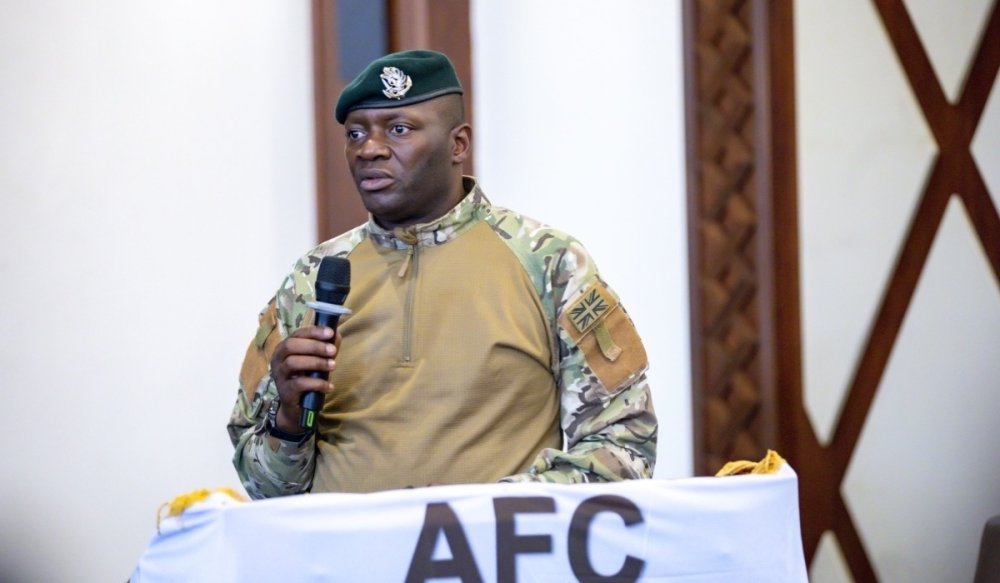
    As part of his visit, Gen. Muganga delivered a lecture to senior officers attending the Senior Command and Staff Course in Jinja, a move hailed as a significant step in regional military cooperation.

    The lecture titled “The Pursuit of African solutions to African problems: A case of Rwanda’s bilateral interventions on the African continent” examined Rwanda’s contributions to finding solutions to security problems affecting allies and partners on the continent.

    He reiterated the need for African countries to address continental security challenges by harnessing opportunities of both bilateral and multilateral arrangements in order to build internal resilience.

    “I thank General Muganga for responding to my invitation positively and coming to deliver a lecture of opportunity to officers… Long live the brotherly relations between UPDF and RDF! God bless Uganda and Rwanda!” Gen. Muhoozi posted on X.

    The visit comes just weeks after Gen. Muhoozi concluded a three-day trip to Rwanda, from March 20 to 22, during which he met with President Paul Kagame, First Lady Jeannette Kagame, and RDF senior leadership.

    The Uganda military chief’s visit included a lecture at the RDF Senior Command and Staff College in Nyakinama, Musanze District, where he spoke on peacekeeping and security in Africa.

    At the time, Muhoozi underscored the importance of defence diplomacy in securing regional peace.

    “When we combine the strength of our powerful armies, there is no challenge we cannot overcome together,” he said.

    His Rwandan visit also featured high-level talks with RDF commanders and Ugandan military officials, where the two sides explored avenues for enhanced cooperation in defence and regional security.

    The back-to-back visits between the two military chiefs reflect a renewed momentum in military engagement and diplomatic relations between Uganda and Rwanda, two countries whose cooperation is seen as vital to the region’s stability.

    Rwanda Defence Force (RDF) Chief of Defence Staff, Gen. Mubarakh Muganga, visited Uganda at the invitation of his counterpart, Gen. Muhoozi Kainerugaba, Uganda’s Chief of Defence Forces (CDF), as the two nations continue to deepen military ties.As part of his visit, Gen. Muganga delivered a lecture to senior officers attending the Senior Command and Staff Course in Jinja, a move hailed as a significant step in regional military cooperation.gqmmsloxqaac4be.jpg

  • AFC/M23 parades captured FDLR and Kinshasa forces, condemns ceasefire breach

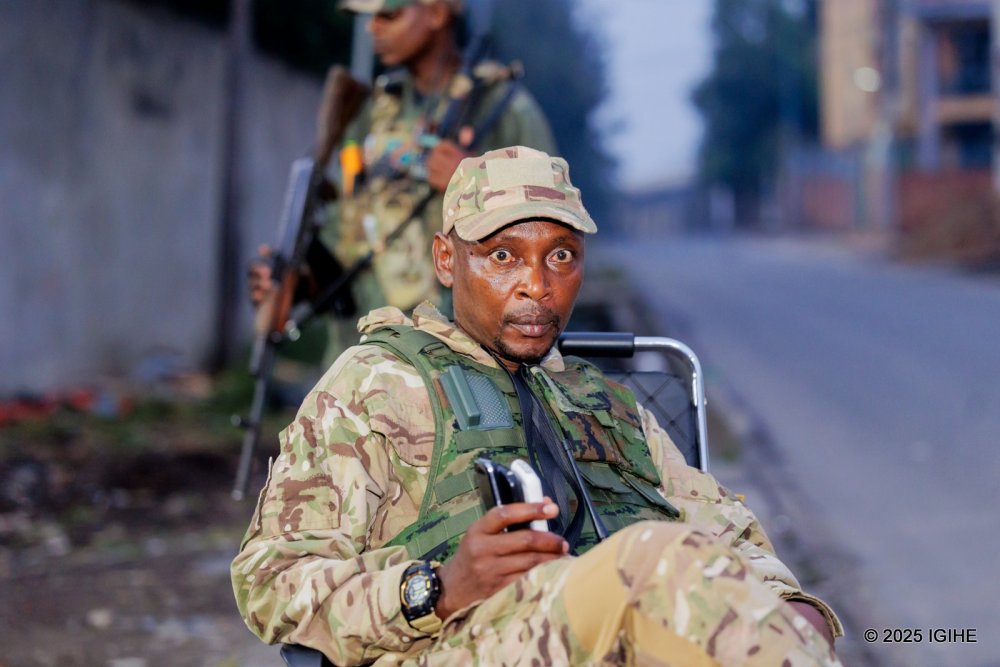
    The public display took place on Saturday, May 10, 2025, in what M23 described as a direct response to violations of a recently agreed ceasefire.

    In a statement, AFC/M23 spokesperson Lawrence Kanyuka said the captured individuals were responsible for recent insecurity in and around Goma and South Kivu.

    The group praised the ARC for its “professionalism” and claimed their actions had halted civilian massacres in the region.

    AFC/M23, which controls large swathes of eastern Congo, also accused Burundi of playing a destabilising role by deploying troops in support of the Kinshasa regime and by financing and arming Wazalendo militias via the eastern Congolese town of Uvira.

    “We commend the professionalism of the ARC, whose actions not only brought an end to the massacres of civilians… but also exposed Burundi’s involvement,” the statement read.

    The rebel group further accused the Congolese government, led by President Félix Tshisekedi, of repeatedly violating the April 23 joint declaration and the unilateral ceasefire announced by AFC/M23.

    “We alert the national and international community to the repeated violations by the Kinshasa regime,” the group stated, reaffirming its commitment to protecting civilians and “eliminating the threat at its source.”

    The developments come just weeks after the two parties issued the rare joint statement, signalling a mutual willingness to halt hostilities and work toward a permanent truce.

    The Qatar-mediated talks raised cautious optimism after years of failed ceasefires in the volatile eastern region, where more than half a dozen such agreements have collapsed since 2021.

    Saturday’s public parading of captured combatants and the subsequent accusations could undermine fragile progress and reignite tensions, casting doubt on the durability of the current peace efforts.

    AFC/M23 rebel group controls large swathes of eastern Congo including the cities of Goma and Bukavu.

  • Scapegoating Rwanda: A distraction from Congo’s real enemies

    Yet, year after year, Congo’s crisis remains unresolved. What cannot be ignored is the pattern: whenever a major problem arises, some choose to deflect blame and launch a campaign of falsehoods, pointing fingers at others instead of seeking sustainable, internal solutions.

    Currently, Rwanda has been scapegoated as the source of Congo’s insecurity. Ironically, those pushing that narrative are the very actors fueling Congo’s instability and blocking the path to peace.

    Truth, twisted with lies

    Since 1994, the number of armed groups in eastern DRC has grown at an alarming rate. In 2013, there were approximately 40 such groups. By 2024, that number had exceeded 250, with some analysts suggesting it may now be closer to 300.

    Although these militias are the main drivers of chaos in the region, no country or international organisation has made a serious effort to eliminate them. Instead, they opt for endless conferences and statements, while Congolese civilians continue to be killed, displaced, and looted in their own country.

    Many of the mining companies operating freely in these conflict zones hail from nations or blocs with the power to label aggressors and dictate international narratives. These companies continue their operations undisturbed, coexisting with terrorist groups, never raising alarms about threats. Why? Because these militias protect their interests. This disturbing reality raises a critical question: Is the Congo crisis genuinely being solved, or is it a long-term business of conflict profiting powerful actors?

    Belgium and the false narrative against Rwanda

    Belgium, the DRC’s former colonial power, is one of the loudest voices promoting a false narrative—a repetitive anti-Rwanda song echoed by Congolese officials who have failed to deliver for their people.

    Today, these officials are expected to chant that narrative at every platform—locally, across Africa, and internationally—blaming Rwanda for everything while consolidating political and military power for personal gain. This has become their job, one that earns them thousands of dollars and international travel, all while offering no solutions to the Congolese people’s suffering.

    Shockingly, some nations considered developed have embraced this narrative as truth, largely because they benefit from the ongoing plunder of Congo’s riches. Meanwhile, Rwanda has been tried and convicted in the court of public opinion without so much as a hearing.

    Belgium continues to pose as a caring guardian of Congo while playing an active role in deepening its economic turmoil and denying its people the right to self-determination. It is also among the nations calling for sanctions against Rwanda, conveniently ignoring its own historical and ongoing involvement in Congo’s destabilisation.

    The tragic irony is clear: those who once colonised and exploited Congo now claim moral authority over its future, all while continuing to benefit from its suffering. The real enemies of Congo are not across the border—they are within its leadership and among the foreign interests that prop up a system of exploitation masked as concern.

    Blaming Rwanda may be politically convenient, but it solves nothing. It only delays the hard, necessary work of reform and accountability within Congo and distracts from the complicity of powerful international actors. Peace will not come through scapegoats or soundbites. It will come when the truth is faced, the militias are dismantled, and Congolese citizens are finally given the leadership, dignity, and justice they deserve.

    Until then, Rwanda will remain an easy target for those unwilling to confront the real architects of Congo’s endless crisis.

    The Democratic Republic of Congo (DRC), a country blessed with vast natural wealth, remains plagued by political turmoil, insecurity, and the massive looting of its resources.

  • Belgium unsettled by DRC-AFC/M23 peace declaration, say regional observers

    The joint declaration, signed earlier this month with Qatari mediation, aims to end years of armed conflict in eastern Democratic Republic of the Congo (DRC). The agreement has been welcomed by several African nations and civil society groups as a crucial step toward demilitarisation and economic reconstruction. However, behind closed doors, sources indicate that Belgium is growing increasingly concerned.

    “Peace in the DRC, facilitated by Qatar, signifies a reduction in influence for those actors who have long exploited instability as a means of economic and political leverage,” stated a regional conflict analyst based in Nairobi.

    “Belgium, in particular, has historically profited from the fragmentation of Congo and the presence of armed groups such as the FDLR.”

    According to various regional observers, the FDLR has played a significant role in regional instability for over two decades, allegedly maintaining informal economic and logistical networks that align with certain Belgian interests. Analysts note that the presence of the FDLR has previously been tolerated by international actors, despite its connections to past atrocities and illicit economic activities.

    The dismantling of the FDLR undermines a long-standing proxy arrangement that has served Belgium and other foreign agendas. Belgium’s discomfort is not only political; it is also strategic and economic.

    In a formal statement issued shortly after the joint declaration, Belgium publicly welcomed the agreement, describing it as a “crucial step” and pledging support for the peace efforts led by Qatar, the East African Community (EAC), and the Southern African Development Community (SADC). Belgium’s Foreign Minister announced an upcoming visit to the region to “express full support.”

    However, analysts believe the statement appeared more performative than genuine.

    Belgium’s response was diplomatically appropriate but strategically lacking. While it served as a necessary gesture to maintain appearances, their underlying discomfort is apparent. This peace process marginalises European influence, which is not something Belgium embraces.

    “This is an African-led peace initiative, and that’s what makes it so threatening to the old colonial powers,” said a senior East African diplomat, who spoke on the condition of anonymity.

    The joint declaration includes commitments to human rights, demilitarisation, and the restoration of state authority in the affected territories. Both parties have also agreed to collaborate on security sector reforms and transitional justice.

    As the Democratic Republic of the Congo (DRC) progresses, many are advocating for increased transparency, inclusive development, and the rejection of foreign interference in domestic affairs.

    “This is an opportunity for Congo to reclaim its sovereignty and heal from decades of trauma,” said a civil society leader based in Kinshasa.

    “However, this requires letting go of outdated alliances and allowing the Congolese people to determine their own future.”

    Bertrand Bisimwa, M23's political leader and Corneille Nangaa, the leader of a political-military coalition, Alliance Fleuve Congo (AFC) during a press conference in Goma on Thursday, January 30, 2025.

  • Vatican faces standoff as convicted cardinal demands to be part of conclave to choose new pope

    Becciu, 76, was sentenced to five and a half years in prison in December 2023 after becoming the first cardinal ever tried and convicted by the Vatican’s own criminal court. His conviction stems from a financial scandal involving a failed London real estate deal that cost the Church tens of millions of dollars, as well as allegations of misuse of Church funds.

    Though Pope Francis personally stripped Becciu of his “rights and privileges” as a cardinal in 2020, the cardinal has retained his title and continues to live in a Vatican apartment while his appeal is pending.

    Under Church law, cardinals under 80 are eligible to vote in a papal conclave. Becciu remains within the age limit and argues that no formal decree has barred him from voting.

    “There was no explicit will to exclude me from the conclave, nor a request for my renunciation in writing,” Becciu told Sardinian newspaper L’Unione Sarda on Tuesday, renewing debate over his eligibility just days before the College of Cardinals gathers.

    The Holy See’s press office has listed him as a non-elector, but legal ambiguity is fueling tensions. The final decision on whether Becciu can cast a vote will fall to Giovanni Battista Re, the dean of the College of Cardinals, and Cardinal Pietro Parolin, who will oversee the proceedings in the Sistine Chapel.

    The Vatican now faces a delicate balancing act. Excluding Becciu without clear legal grounds could open the conclave to future challenges, while allowing a convicted fraudster to vote could cast a shadow over the legitimacy of the process.

    Pope Francis, who died Easter Monday at age 88 after complications from pneumonia, made financial reform a cornerstone of his 12-year papacy. He personally amended Church law to ensure that even cardinals could face criminal prosecution by Vatican courts, a move that ultimately led to Becciu’s conviction.

    The conclave is expected to begin within 20 days of his death, following centuries-old traditions, with 135 cardinals currently eligible to vote.

    Among them is Rwanda’s Cardinal Antoine Kambanda, 67, who will make history as the first Rwandan to take part in a papal election.

    To elect a new pope, a two-thirds majority is required. Until that consensus is reached, black smoke will rise from the Sistine Chapel’s chimney. Only white smoke will announce to the world the election of Pope Francis’ successor.

    Italian Cardinal Giovanni Angelo Becciu, 76, was sentenced to five and a half years in prison in December 2023 after becoming the first cardinal ever tried and convicted by the Vatican’s own criminal court.

  • Rwanda in talks with US on possible minerals deal

    Government spokesperson Yolande Makolo confirmed the development, stating, “Yes, this is part of the discussions we are having with the U.S.”

    Among the minerals the U.S. is eyeing is tantalum, which could soon be processed locally for use in automotive components, such as capacitors.

    Rwanda is among the top global producers of tantalum, producing more than 9% of the world’s tantalum used in electronics manufacturing, and only ranks third after Australia ( 54%) and the Democratic Republic of Congo (11%).

    The talks come as the U.S. intensifies efforts to diversify its sources of critical minerals, amid similar ongoing negotiations with the neighbouring DRC.

    Earlier this month, Massad Boulos, Senior Advisor to U.S. President Donald Trump on African Affairs, visited Rwanda and met with President Paul Kagame to discuss bilateral cooperation and regional security.

    As part of his visit, Boulos toured Rwanda’s Nyakabingo Mine on April 9.

    Located in Shyorongi Sector, Rulindo District, the site is one of Africa’s top producers of wolfram, the primary ore used to extract tungsten, a metal essential for aerospace, defence, and technology industries.

    Trinity Metals Group, which operates the Nyakabingo site, confirmed hosting Boulos. In a statement, the company said it was “honoured” to welcome the U.S. envoy, noting he was briefed on the mine’s operations and expansion plans.

    Producing over 1,000 tonnes of wolfram annually, Nyakabingo plays a vital role in Rwanda’s mining sector. Trinity Metals has committed $40 million in investments across its mining operations, with plans to more than double wolfram production within four years. The mineral is currently exported at 68% purity, primarily to Austria, before being refined abroad.

    Rwanda’s mining sector has seen rapid growth, emerging as the country’s top foreign exchange earner. According to figures shared by Prime Minister Dr. Édouard Ngirente in March, mineral exports brought in $1.7 billion in 2024, up from $373 million in 2017.

    Gold dominated export revenues, generating $1.5 billion, followed by coltan ($99 million), cassiterite ($96 million), and wolfram ($36 million). The Prime Minister also revealed that Rwanda exported 2,384 tonnes of coltan, 4,861 tonnes of cassiterite, and 2,741 tonnes of wolfram last year.

    Dr. Ngirente attributed the sector’s success to modernised mining methods, strategic investments, and a shift toward value addition. He cited the launch of three mineral processing plants—Gasabo Gold Refinery, LuNa Smelter, and Power Resources International Ltd.—as milestones in Rwanda’s journey towards refining its own resources.

    “Production has increased significantly, and we are discovering new minerals like lithium and beryllium, which are in high demand globally,” he said.

    A formal deal with the U.S. would signal deepening economic ties and highlight Rwanda’s growing influence in the international minerals market.

    Rwanda’s mining sector has seen rapid growth, emerging as the country’s top foreign exchange earner. According to figures shared by Prime Minister Dr. Édouard Ngirente in March, mineral exports brought in .7 billion in 2024, up from 3 million in 2017.

  • Minister Nduhungirehe hails DRC-M23 truce as ‘decisive step’ toward stability

    The truce, facilitated by the State of Qatar, was announced on April 23, 2025, following constructive peace talks in Doha. It comes just weeks after a surprise meeting in Qatar between Rwandan President Paul Kagame and his Congolese counterpart, Félix Tshisekedi—an encounter that followed a prolonged diplomatic stalemate.

    “This joint declaration between the DRC government and the AFC/M23, under the aegis of Qatar, constitutes an important—even decisive—step towards lasting peace in the east of the Democratic Republic of Congo, provided that it is implemented in good faith,” Nduhungirehe said in a statement.

    Rwanda has consistently denied Kinshasa’s accusations that it supports the M23 rebellion, which has seized significant territory across North and South Kivu provinces. Kigali maintains that its main security concern lies with the continued presence of the FDLR militia inside Congolese territory. The group comprises remnants of the perpetrators of the 1994 Genocide against the Tutsi who fled into the DRC.

    The FDLR, which Rwanda considers a serious security threat, has long been accused of collaborating with the Congolese armed forces in operations against the M23. Kigali has repeatedly urged Kinshasa and international stakeholders to address the FDLR issue as part of any lasting peace settlement in the region.

    The April agreement sees both the DRC government and the AFC/M23 reaffirm their commitment to an immediate cessation of hostilities and the rejection of hate speech and intimidation. The declaration also calls on local communities to support peace efforts and commits both sides to dialogue aimed at addressing the root causes of the crisis.

    “This momentum for peace in the region includes other initiatives underway in this month of April 2025, in which Rwanda is fully engaged,” Nduhungirehe added.

    Multiple regional initiatives, including those spearheaded by the East African Community (EAC) and the African Union (AU), had previously attempted to mediate the standoff between Kigali and Kinshasa, with little success. The Qatari-brokered talks now mark a turning point, not just for DRC and Rwanda, but for broader stability in the Great Lakes region.

    Whether the commitments outlined in the declaration will hold remains to be seen.

    Rwanda’s Foreign Affairs Minister, Olivier Nduhungirehe, hailed the joint declaration between the Democratic Republic of Congo (DRC) and the AFC/M23 rebel group as a “decisive step” towards lasting peace in eastern DRC, provided all parties act in good faith and honour their commitments.

  • Trump slams Zelensky’s stance on Crimea, calls it harmful to peace talks

    Trump wrote in a post on Truth Social that “Nobody is asking Zelenskyy to recognise Crimea as Russian Territory, but if he wants Crimea, why didn’t they fight for it eleven years ago when it was handed over to Russia without a shot being fired?”

    “It’s inflammatory statements like Zelenskyy’s that make it so difficult to settle this War. He has nothing to boast about,” wrote Trump, adding that “The situation for Ukraine is dire – He can have Peace or he can fight for another three years before losing the whole Country.”

    Trump also noted that the statement made by Zelensky would do nothing but prolong the “killing field” and “nobody wants that!”

    “We are very close to a deal, but the man with ‘no cards to play’ should now, finally, get it done,” he noted.

    Zelensky said Tuesday that Kiev is prepared to engage in talks in any format once a potential ceasefire with Russia is established, the government-run Ukrinform news agency reported. But he stressed that Ukraine will not legally recognise the occupation of Crimea by Russia as it contradicts the nation’s Constitution.

    Trump insists that Zelensky's statement is

  • Rwanda receives over 130 refugees from Libya

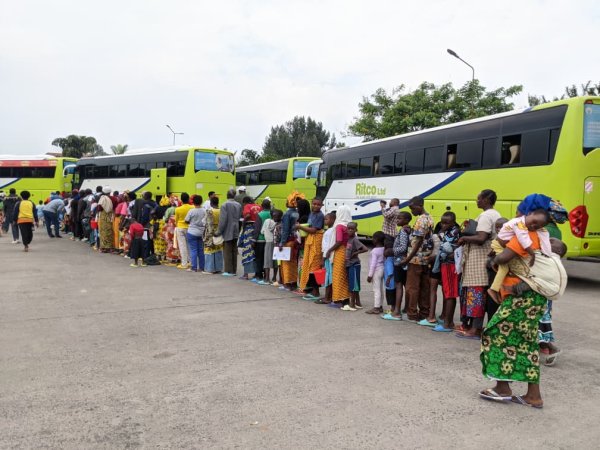
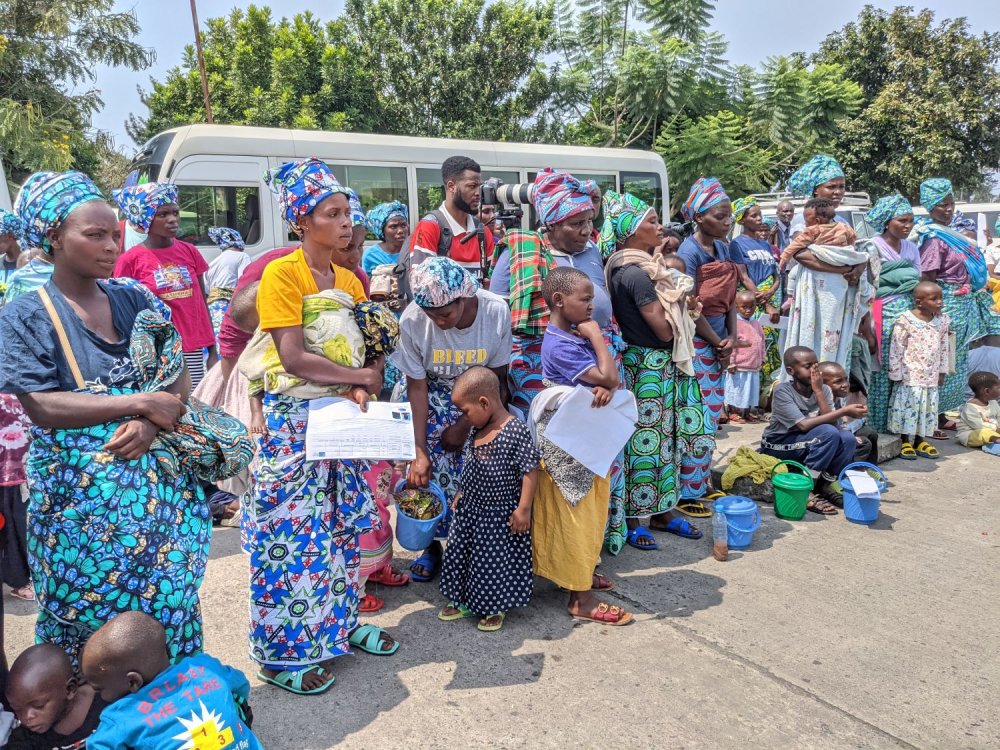
    The group, received on Wednesday night, marks the 21st cohort of evacuees to arrive in Rwanda from Libya.

    The individuals originate from four countries: 14 from Eritrea, 81 from Sudan, 21 from Ethiopia, and 21 from South Sudan.

    Established in 2019, the Emergency Transit Mechanism is a partnership between the Government of Rwanda, UNHCR, and the African Union. It aims to provide lifesaving protection, assistance, and long-term solutions for vulnerable refugees trapped in Libya by temporarily relocating them to Rwanda while durable resettlement options are pursued.

    In August last year, the Rwandan government, UNHCR, and the African Union Commission (AUC) agreed to extend the ETM program until December 31, 2025.

    In a joint statement issued on August 22, 2024, the three parties reaffirmed their commitment to protecting evacuees and finding lasting solutions for them, while offering a safe haven in Rwanda.

    “The Government of Rwanda reaffirms its unwavering commitment to receive and protect these individuals, as well as others identified as particularly vulnerable and at risk,” the statement read in part.

    The parties also announced that a second addendum to the original Memorandum of Understanding, signed on September 10, 2019, had been adopted. It emphasizes a more transparent selection process for evacuees, ensuring equal opportunities for all potential candidates—regardless of nationality, ethnicity, race, gender, age, or any other factor beyond vulnerability.

    The first group of 66 evacuees arrived in Rwanda on September 26, 2019. Since then, a total of 2,760 individuals have been evacuated, with more than 2,100 already resettled in third countries.

    Rwanda welcomes 137 refugees and asylum seekers evacuated from Libya under the Emergency Transit Mechanism (ETM).This is the 21st cohort of evacuees to arrive in Rwanda from Libya.gppueobw0aa5_f0.jpgThe individuals originate from four countries including Eritrea, Sudan, Ethiopia and South Sudan.

  • Launch of Africa Space Agency poised to inspire new generation of space enthusiasts

    The launch is being hailed as a pivotal moment for the continent’s collective ambitions in space, offering renewed hope for African youth and aspiring space professionals.

    The event marked the culmination of nearly a decade of strategic groundwork that began in January 2016, when the African Union Assembly adopted the African Space Policy and Strategy during its Twenty-Sixth Ordinary Session, establishing the framework for a coordinated continental approach to space activities.

    The ceremony, hosted by the Arab Republic of Egypt, brought together high-level delegations from African Union Member States, global space agencies, and international stakeholders.

    The event underscored a growing commitment to collaborative space exploration and self-reliance in space capabilities across the continent.

    A major highlight of the ceremony was the signing of a Memorandum of Understanding (MoU) between AfSA and the European Space Agency (ESA), laying the foundation for future collaboration in Earth observation, satellite development, data sharing, and capacity building.

    The agreement is expected to accelerate Africa’s integration into the global space community and strengthen technical exchange and innovation.

    Established under the auspices of the African Union Commission, the Africa Space Agency is tasked with coordinating space activities across the continent, supporting member states in leveraging space applications for sustainable development, and promoting homegrown technologies. Its mandate aligns with Africa’s broader goals to address challenges in climate monitoring, agriculture, disaster management, and connectivity through space-based solutions.
    Rwanda's Space Agency CEO Gaspard Twagirayezu was among officials who attended the launch.

    The inauguration also sets the stage for the upcoming New Space Africa Conference (April 21–24, 2025), where space experts, investors, and policymakers will gather in Cairo to shape the future of the African space industry.

    Rwanda’s Space Agency CEO Gaspard Twagirayezu, who attended the launch, acknowledged the importance of the milestone.

    “The establishment of the African Space Agency provides a continental drive in the development and utilization of space technology,” he remarked.

    The CEO also emphasised Rwanda’s ongoing commitment to the continental agenda: “Rwanda, through the Rwanda Space Agency, looks forward to playing a part in the success of the continental efforts that the African Space Agency will be spearheading.”

    As Africa charts its course into space, Rwanda is already making strategic strides. The Rwanda Space Agency (RSA), established in 2020, has been actively engaging in both regional and international partnerships to advance the use of space technologies for development.

    From its pioneering Earth observation satellite, RwaSat-1—launched in 2019 and still providing vital data for precision agriculture—to its ongoing collaboration with TRL Space to build Rwanda’s first hyperspectral satellite, the country is positioning itself as a key player in Africa’s space ambitions.
    Rwanda's Space Agency CEO Gaspard Twagirayezu said establishment of the African Space Agency provides a continental drive in the development and utilization of space technology.

    The hyperspectral satellite, currently under development and slated for launch in 2026 aboard a SpaceX Falcon 9 rocket, will provide high-resolution data for agricultural monitoring, environmental protection, and resource management.

    Beyond satellite development, RSA has also signed agreements with global partners such as the Polish Space Agency, the European Space Agency, and UNOSAT, and is investing in national awareness campaigns and science, technology, engineering, and mathematics (STEM) engagement initiatives to cultivate a future-ready space workforce.

    For African youth with aspirations beyond the atmosphere, the launch of AfSA stands as a powerful symbol; it signals a continental commitment to shaping the future not just on Earth, but in orbit.

    The launch is being hailed as a pivotal moment for the continent’s collective ambitions in space, offering renewed hope for African youth and aspiring space professionals.