Author: Wycliffe Nyamasege

  • 200 new students join ALX Rwanda’s Pathway program

    The event marked the launch of Cohort 2 of the Pathway Foundations program, an initiative designed to nurture ethical and entrepreneurial leaders dedicated to building Africa’s future.

    Drawn from various parts of Rwanda, the new cohort includes a diverse group of young learners, each stepping into a rigorous program that opens doors to global academic and leadership opportunities. Nineteen parents were also in attendance.

    “This ceremony is more than just a welcome—it’s the first step in these students’ journey to becoming the leaders Africa needs,” said a representative from ALX Rwanda.

    “We’re excited to guide these 200 talented individuals through the Pathway Foundations program and beyond.”

    The Pathway program equips students with essential skills for academic excellence, leadership, and career success.

    Participants stand a chance to earn scholarships to some of the world’s top universities, including the University of California, Berkeley, Tufts University, Northwestern University, Macalester College, African Leadership University, Sciences Po Bordeaux, Nexford University, Skidmore College, ACity, African Leadership College for Higher Education, Morehouse College, Bates College and the University of Chicago.

    Others are Hamilton College, Vanderbilt University, Code University, The School of Entrepreneurship & Technology at Patten University and Richfield Graduate Institute of Technology, among others.

    During the event, students were introduced to ALX’s mission of building Africa’s future through ethical leadership. Sessions throughout the day offered an overview of the curriculum, scholarship pathways, and mentorship opportunities.

    Alumni from previous cohorts also shared insights from their journeys, encouraging the new students to embrace community and collaboration, with the powerful message that “you go further when you go together.”

    Recognising that student success relies on strong support systems, the event included dedicated time for parent engagement. ALX team members emphasised the crucial role parents play in supporting learners throughout their educational journey and ensuring consistent commitment and engagement.

    In an engaging team-building exercise dubbed the “Lily Pad Challenge,” students demonstrated leadership, problem-solving, and teamwork skills that are core to the ALX experience.

    The event also included an emotional moment where students created personal time capsules, envisioning their future achievements at graduation.

    The ceremony concluded with the entire cohort reciting the Pathway Pledge—committing to a life of value, community investment, and representing Africa with dignity and pride.

    As their voices rang out in unison, “Together, we are ALX,” the newest members of ALX Rwanda stepped into a journey that promises to redefine their futures and impact the continent.

    ALX Rwanda officially welcomed 200 new students into its transformative Pathway program during a vibrant KARIBU Ceremony held on Saturday, May 10, 2025, at the ALX Rwanda Hub.Drawn from various parts of Rwanda, the new cohort includes a diverse group of young learners.122a9943122a9943.jpgThe Pathway program equips students with essential skills for academic excellence, leadership, and career success.During the event, students were introduced to ALX’s mission of building Africa’s future through ethical leadership.Sessions throughout the day offered an overview of the curriculum, scholarship pathways, and mentorship opportunities.In an engaging team-building exercise dubbed the “Lily Pad Challenge,” students demonstrated leadership, problem-solving, and teamwork skills that are core to the ALX experience.122a0236122a0236.jpg

  • What Africa can learn from China’s vocational education model

    But what sets China apart is not just the scale, but the strategic positioning of vocational education as an equal and essential pillar to academic education. It is this ecosystem that fuels China’s ability to sustain all industrial categories, an achievement unmatched globally.

    At the heart of this transformation is Beijing Polytechnic College, a national model institution that proves what vocational education can and should be. Founded in 1956 and transformed into a higher vocational institution in 1999, BPC is one of the first independently upgraded colleges in the country and is now a leader in China’s Double High Plan, a program aimed at cultivating high-level vocational schools and speciality programs with Chinese characteristics.

    At BPC, students are not only taught how to use technology—they’re taught how to build, fix, and innovate with it.

    With nine teaching departments, a School of International Education, and 34 majors spread across five professional clusters, BPC is home to 6,550 students and 518 faculty members.

    A recent visit to BPC reveals not only its modern infrastructure but also the intensity of hands-on learning. In the School of Mechanical and Electrical Engineering, students were working directly with BYD electric vehicles, diagnosing faults, repairing them, and understanding their systems in a real-world setting.

    Students at BPC work directly on BYD electric vehicles in a live workshop environment—learning by doing, not just by watching.

    These aren’t lab simulations—they’re industry-level workshops with real equipment. In the Architecture and Surveying Department, students use drone mapping and laser scanning tools for field data collection. In the Urban Safety Engineering School, disaster response drills are conducted with professional-grade monitoring instruments.

    BPC’s success is powered by deep integration with industry. With over 200 enterprise partnerships, including BYD, Siemens, Huawei, and Beijing Construction Engineering Group, the college co-develops curricula, receives donated equipment, and places students into internships that often lead directly to employment.

    BPC students engaged in intensive hands-on workshops—logging over 20 hours per week on real tasks.

    In fact, a large number of its teaching equipment is donated or co-sponsored by industry, ensuring that students are not only taught what is relevant but trained on the very tools used in the workforce.

    BPC independently developed national vocational training standards in automation, information technology, and jewellery design and processing.

    At BPC’s Urban Safety Engineering School, monitoring is not a theoretical concept.

    BPC’s students spend more than 20 hours per week in hands-on training environments, and graduate employment rates exceed 90 percent, with many hired before they even finish their studies.

    As Vice President Gao Shiji remarked during a speech to African and Eastern European media delegates at BPC, “We believe educational cooperation is not just a bridge between civilisations. It is the engine of shared development. We have built a rotating door of mutual growth, where African sunrise meets Beijing’s twilight, and knowledge flows both ways.”

    Every hour spent working on actual machinery reduces the gap between school and the job market.

    The contrast with much of Africa’s vocational education landscape is sobering. According to UNESCO’s Global Education Monitoring Report (2022), less than 20 percent of vocational schools in Sub-Saharan Africa are equipped with modern training facilities.

    The World Bank has reported that only 30 percent of African technical institutions include mandatory hands-on training in their curricula. Meanwhile, over 60 percent of employers across the continent say they struggle to find technically proficient graduates for entry-level roles.

    In a fast-evolving economy, textbooks can become obsolete, but experience doesn’t.

    Too often, vocational education in Africa is treated as a fallback—a plan B for students who didn’t make it to university. It’s underfunded, disconnected from the private sector, and heavily theoretical. The result is a growing number of diploma holders who lack market-ready skills.

    Despite these challenges, there are signs of progress. A handful of African nations are beginning to shift course, with Rwanda leading the way. The country is pioneering reforms through strategic collaborations, including with China.

    Students at a Chinese vocational college undergo rigorous training, highlighting the equal status of technical and academic paths.

    In Rwanda, the China-Africa Vocational Education Alliance has connected local polytechnics to Chinese institutions like Tianjin Light Industry Vocational College, where students train in robotics, sustainable agriculture, and others.

    Now, just two years into the partnership, a growing number of graduates from Rwanda’s St. Joseph Integrated Technical College are securing jobs at local tech startups.

    These cases prove that when African governments prioritise vocational training and leverage international partnerships, tangible improvements emerge.

    You cannot fix a machine by reading about it. Real training means real tools, real environments, and real problems.

    What makes BPC a blueprint for African nations isn’t just its technology or partnerships—it’s the mindset behind them. It recognises that vocational skills are not inferior, but they are essential.

    It also proves that when governments invest, when industry partners, and when institutions prioritise relevance over ritual, vocational schools can become engines of innovation, economic resilience, and national pride.

    Students in automation labs learn to monitor production lines using sensor data and PLC software.Students practice on industry-standard machinery.The classroom is only the beginning. In a well-designed vocational system, the workshop is where transformation happens.img_7984-2.jpgimg_7989-2.jpgimg_7994-3.jpgimg_8001-2.jpg

  • Gabon’s ousted leader Bongo freed after nearly two years under house arrest

    Bongo, 66, and his family arrived in the Angolan capital late Thursday, nearly two years after the end of the Bongo dynasty’s 55-year rule over the oil-rich Central African nation.

    The former first family’s release follows discreet diplomatic negotiations between Angolan President João Lourenço and Gabon’s new leader, Brice Oligui Nguema, according to a statement from Angola’s presidency.

    Bongo and his family welcomed at the airport in Luanda.

    Photographs shared on the Angolan presidency’s official Facebook page show Bongo and his family being welcomed at the airport in Luanda.

    “The Bongo family has been released and has just arrived in Luanda,” the statement read.

    Ali Bongo was placed under house arrest in Libreville immediately following the August 2023 coup, which brought General Nguema, a former head of the presidential guard, to power.

    Nguema was sworn in as president for a seven-year term earlier this month after securing nearly 95% of the vote in elections widely seen as consolidating military control.

    Bongo’s wife, Sylvia, and their son, Noureddin, had been detained separately and accused of embezzlement and money laundering. Reports indicate that the two were recently moved from basement cells in the presidential palace to house arrest on May 9. Their supporters allege they were subjected to torture while in custody—claims that Nguema’s administration denies.

    The African Union had been pressing for the release of the Bongo family. At a meeting on April 30, the AU’s Peace and Security Council formally readmitted Gabon after suspending the country following the coup. The council urged Gabonese authorities to guarantee the rights and health of the Bongo family.

    Ali Bongo came to power in 2009 after the death of his father, Omar Bongo, who ruled Gabon for over four decades. His presidency was marred by allegations of electoral fraud and corruption, culminating in widespread discontent that paved the way for the 2023 coup.

    Gabonese authorities have not officially commented on the former first family’s departure.

    One of the photographs shared on the Angolan presidency’s official Facebook page showing Bongo and his family being welcomed at the airport in Luanda.

  • US presents draft peace deal to Rwanda and DRC leaders

    U.S. Senior Advisor for Africa, Massad Boulos, announced the development in a statement issued on Thursday night, following what he described as “constructive conversations” with President Paul Kagame and his DRC counterpart Félix Tshisekedi.

    The conversation followed the submission of the respective draft agreement versions by DRC and Rwanda earlier this month.

    “We have provided the first draft of a peace agreement to both sides and will work with the parties to iterate on the agreement to reach consensus,” Boulos said.

    “Resolving long-standing differences is hard work, and we are committed to seeing this through. We look forward to further engagement to come to a resolution,” he added.

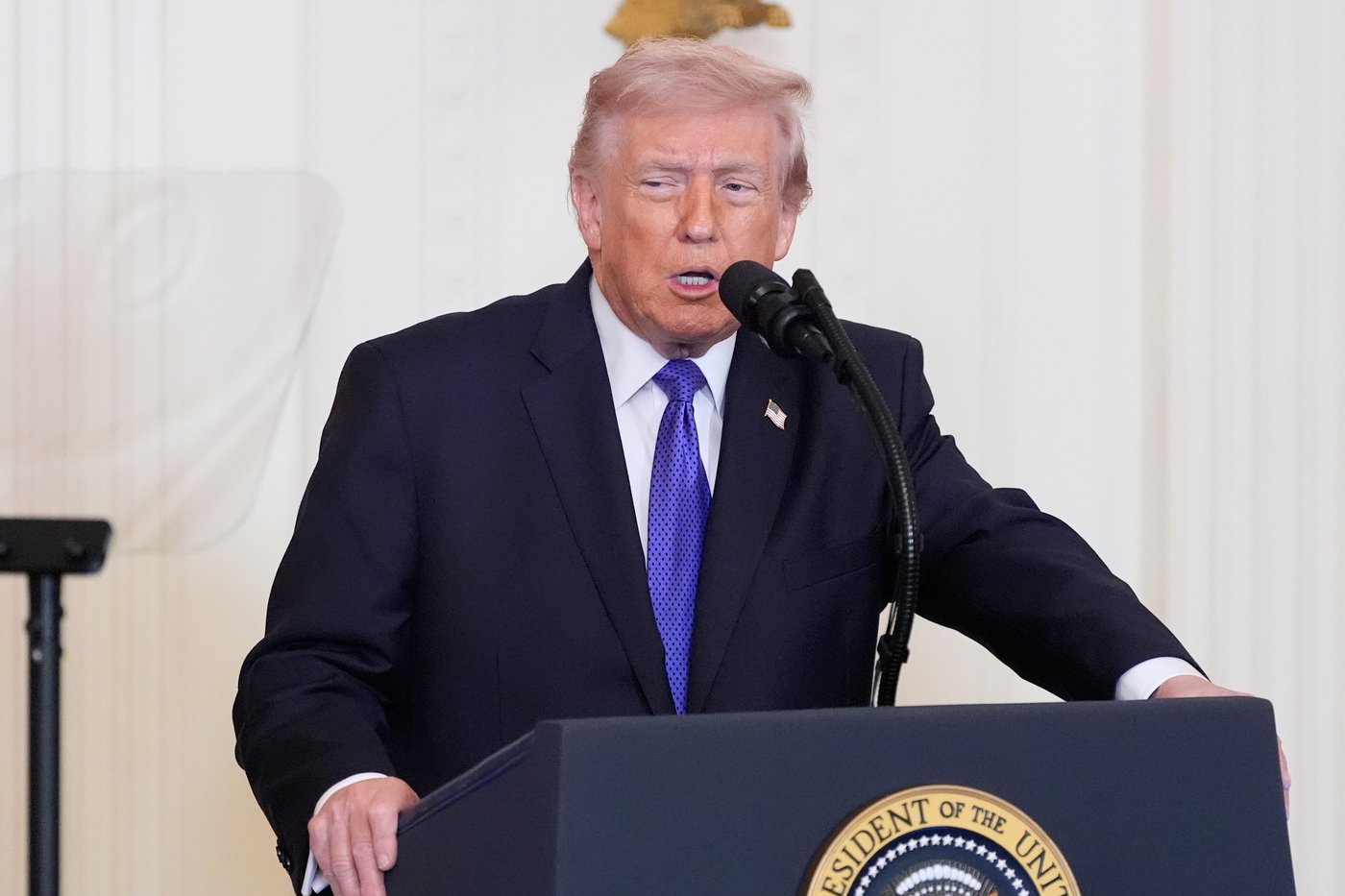
    The draft agreement comes ahead of a landmark ceremony scheduled for June at the White House, where Presidents Kagame and Tshisekedi are expected to formally sign the peace accord in the presence of U.S. President Donald Trump.

    On the same occasion, additional agreements on economic cooperation between the United States and the two African nations are expected to be concluded.

    If all proceeds as planned, the deal could pave the way for significant American investments in both Rwanda and the DRC, marking a major step forward in regional development and bilateral relations.

    The U.S. has emphasised that before the agreement can be finalised, both parties must meet a series of preconditions.

    For the DRC, this includes addressing internal security issues such as the disbanding of the FDLR militia—a group formed by the perpetrators of the 1994 Genocide against the Tutsi in Rwanda—and implementing governance reforms to ensure a more equitable distribution of national resources.

    The peace process has gained momentum in recent months, with notable diplomatic progress made during a series of negotiations held in Doha, Qatar.

    Delegations from Rwanda, the DRC, the United States, and Qatar participated in the talks. Rwanda was represented by Brig Gen Jean Paul Nyirubutama, Deputy Director General of the National Intelligence and Security Services (NISS), and Brig Gen Patrick Karuretwa, Head of International Military Cooperation.

    Talks initially mediated under the East African Community (EAC) and Southern African Development Community (SADC) frameworks are now being facilitated by the African Union, with Togo taking a lead role in guiding the final stages of the process.

    U.S. Senior Advisor for Africa, Massad Boulos, said the draft peace deal was ready, following what he described as “constructive conversations” with President Paul Kagame and his DRC counterpart Félix Tshisekedi.

  • Rwanda’s medical cannabis processing plant nears completion

    The project, located in Musanze District in the Northern Province, is part of a broader national effort to tap into the lucrative global medical cannabis market and drive economic diversification.

    An official from the Rwanda Development Board (RDB) confirmed during a parliamentary budget hearing on Tuesday that the project is 83 percent complete.

    Joseph Cedrick Nsengiyumva, RDB’s Chief Financial Officer, informed lawmakers that remaining tasks include the installation of a double-layered security fence—an international requirement for medical cannabis infrastructure.

    “The works related to drainage layout were completed but are yet to be invoiced,” said Nsengiyumva.

    For the 2024/2025 fiscal year, Rwf2.2 billion has been earmarked for the project, with over Rwf1 billion already spent, representing a 46 percent financial execution rate.

    The medical cannabis initiative marks Rwanda’s foray into the pharmaceutical and health research industries, with the long-term goal of becoming a key exporter of cannabis-derived therapeutic products.

    Based on ministerial orders issued in June 2021 concerning cannabis and its derivatives, King Kong Organics (KKOG) was granted a five-year license to cultivate the plant.

    The firm, a subsidiary of KKOG Global, has already invested $10 million into facility construction, advanced machinery, land acquisition, and the importation of genetically modified cannabis seeds.

    Initially, construction of the production site was expected to be completed by May 2024, but delays linked to infrastructure access pushed the timeline to September of the same year.

    KKOG CEO Rene Joseph said the plant will be used to extract cannabis oils for export to international markets.

    Rwanda has allocated 134 hectares for medical cannabis cultivation, targeting a yield of 5,000 kilograms per hectare for export.

    An official from the Rwanda Development Board (RDB) confirmed during a parliamentary budget hearing on Tuesday that the project is 83 percent complete.

  • Rwanda’s central bank to begin investing in gold starting July

    Rwanda Central Bank Governor Soraya Hakuziyaremye made the revelation during a press conference on Thursday, May 15, following a recent Monetary Policy Committee (MPC) meeting.

    Addressing growing interest in gold among central banks in the East African Community (EAC) region, Governor Hakuziyaremye said Rwanda’s central bank conducted a detailed study on incorporating gold as an additional reserve asset.

    The move follows a trend observed by the EAC Central Bank Monetary Affairs Committee, which noted several regional central banks considering gold to diversify and strengthen their reserves.

    “Given gold’s ability to counter shocks in the financial market and serve as a hedge against external uncertainties, we have decided to explore it as a new asset class,” Governor Hakuziyaremye explained.

    The central bank boss emphasised that capital preservation, liquidity, and reasonable returns remain the primary objectives for the central bank’s foreign reserves investments.

    “The good news is that gold meets these criteria at this time, which makes our consideration positive,” she said.

    The central bank has already secured board approval to include gold investments in its portfolio.

    However, Governor Hakuziyaremye highlighted that gold is a new asset for the bank, and further updates on acquisition volumes and expected returns will be communicated by the end of the current financial year.

    “This is a learning process, and as we continue benchmarking with our peers, we plan to start adding gold to our reserves from July 2025,” she said.

    Meanwhile, the bank maintained the lending rate at 6.5 percent, a level Governor Soraya noted is aimed at keeping inflation within the targeted 2 to 8 percent range.

    Commenting on the economic outlook, she said headline inflation rose to 6.7 percent in the first quarter of 2025, up from 5.2 percent in the previous quarter, largely driven by increases in core and fresh food prices. Core inflation climbed to 6.1 percent, while fresh food inflation surged to 11.2 percent, mainly due to a base effect from unusually low prices in early 2024 and rising meat prices.

    Despite the uptick, inflation remains within the medium-term target range and is expected to average 6.5 percent in 2025 before easing to 3.9 percent in 2026.

    “Inflationary risks remain, particularly from global geopolitical tensions and shifting trade policies,” the central bank governor warned, but emphasized that the current rate should continue to anchor inflation expectations.

    The recent MPC meeting also noted Rwanda’s ongoing economic resilience, with the Composite Index of Economic Activity (CIEA) registering a 9.3 percent year-on-year increase in Q1 2025, supported by robust industrial and services performance. The economy grew by an impressive 8.9 percent in 2024, buoyed by a rebound in agriculture and strong domestic demand.

    However, Rwanda’s trade deficit widened by 10.8 percent in Q1 2025, as merchandise exports fell by 3.0 percent—mainly due to declining re-exports—while imports rose 5.8 percent, driven by increased demand for machinery and raw materials. This put pressure on the Rwandan franc, which depreciated by 2.46 percent against the U.S. dollar by the end of April.

    NBR Governor Soraya Hakuziyaremye confirmed that the central bank plans to begin investing in gold as part of its foreign exchange reserves portfolio starting in July 2025.Addressing growing interest in gold among central banks in the East African Community (EAC) region, Governor Hakuziyaremye said Rwanda’s central bank conducted a detailed study on incorporating gold as an additional reserve asset.

  • Rwanda’s central bank maintains lending rate at 6.5%

    NBR Governor Soraya Hakuziyaremye announced the decision on Thursday, May 15, a day after a meeting of the Monetary Policy Committee (MPC), which sets the rate quarterly to guide the cost of borrowing and maintain macroeconomic stability.

    This marks the fourth consecutive time the MPC has held the rate at 6.5 percent, following its initial reduction from 7.0 percent in August 2024.

    Addressing members of the press, Governor Soraya said the current rate remains appropriate to keep inflation within the targeted 2–8 percent band.

    Headline inflation rose to 6.7 percent in the first quarter of 2025, up from 5.2 percent in the previous quarter, largely driven by increases in core and fresh food prices. Core inflation climbed to 6.1 percent, while fresh food inflation surged to 11.2 percent, largely due to a base effect from unusually low prices in early 2024 and rising meat prices.

    Despite the uptick, inflation remains within the medium-term target range and is expected to average 6.5 percent in 2025 before easing to 3.9 percent in 2026.

    “Inflationary risks remain, particularly from global geopolitical tensions and shifting trade policies,” the central bank boss warned, but emphasised that the current rate should continue to anchor inflation expectations.

    The MPC also noted Rwanda’s ongoing economic resilience, with the Composite Index of Economic Activity (CIEA) registering a 9.3 percent year-on-year increase in Q1 2025, supported by robust industrial and services performance. The economy grew by an impressive 8.9 percent in 2024, buoyed by a rebound in agriculture and strong domestic demand.

    However, Rwanda’s trade deficit widened by 10.8 percent in Q1 2025, as merchandise exports fell by 3.0 percent—mainly due to declining re-exports—while imports rose 5.8 percent, driven by increased demand for machinery and raw materials. This put pressure on the Rwandan franc, which depreciated by 2.46 percent against the U.S. dollar by the end of April.

    Money market trends have followed suit. The interbank rate declined to an average of 6.78 percent in Q1 2025, down from 8.29 percent a year earlier, reflecting the impact of earlier rate cuts. Deposit and lending rates also fell, with the average lending rate dropping to 15.89 percent from 16.35 percent.

    Going forward, the central bank reaffirmed its commitment to closely monitoring both global and domestic economic trends and to adjusting policy as needed to maintain price stability and support growth.

    “The MPC stands ready to take appropriate measures if inflationary pressures intensify,” Soraya stated.

    Addressing members of the press, NBR Governor Soraya Hakuziyaremye said the current rate remains appropriate to keep inflation within the targeted 2–8 percent band.This marks the fourth consecutive time the MPC has held the rate at 6.5 percent, following its initial reduction from 7.0 percent in August 2024.

  • Africa Re wins Pan-African Champion Award 2025

    The award recognises Africa Re’s significant strides in expanding its footprint across the continent and positioning itself as a global player in the reinsurance sector.

    Organised by the Africa CEO Forum, the Pan-African Champion Award is presented to an African company that has most increased its presence across the continent while implementing a consistent and coherent regional growth strategy.

    Eligible companies must operate in more than five African countries and record annual revenues of at least €50 million.

    In 2024, the award was bestowed upon the Africa Finance Corporation (AFC) for its instrumental role in developing infrastructure and industrial value chains throughout Africa.

    In a statement following Africa Re’s victory, Dr. Corneille Karekezi, Group Managing Director of the corporation, welcomed the recognition as a reflection of its achievements over the past year.

    “I thank God for this continental recognition, which comes on top of an exceptional 2024 year in all performance metrics. We are the largest and most financially rated reinsurance company in Africa and the Middle East. With 31% of our 2024 turnover ($1.2 billion) coming from outside Africa, we export African excellence in overseas markets such as China, the Middle East, Brazil, Israel, and India,” Dr. Karekezi said.

    Africa Re’s cross-border operations and growing share of business from international markets were key factors in its selection. The company’s performance in 2024 and continued expansion have strengthened its position as a driver of African excellence in global financial services.

    The Africa CEO Forum Awards, organised in partnership with the International Finance Corporation (IFC) and Forvis Mazars, celebrate leadership, innovation, and excellence within Africa’s private sector.

    In addition to Africa Re’s recognition, this year’s awards honoured several other standout performers. Danone received the Local Impact Champion award for its contributions to community development and sustainability, while Rawbank was named Family Business of the Year, reflecting its strong governance and generational leadership.

    The Gender Leader award went to Schneider Electric, recognising its commitment to gender equity in the workplace. Nala, a fintech company driving digital disruption, earned a place in the Disrupters Club.

    Finally, Idrissa Nassa, CEO of Coris Bank, was honoured as CEO of the Year for his transformative leadership in the banking sector.

    The awards ceremony is a key feature of the Africa CEO Forum, which gathers more than 2,000 business leaders, investors, and policymakers to discuss strategies for driving economic transformation across the continent.

    The next edition of the annual Africa CEO Forum will be held in Kigali.

    The African Reinsurance Corporation (Africa Re) was named Pan-African Champion at the 2025 Africa CEO Forum Awards held on Monday night in Abidjan, Côte d’Ivoire.whatsapp_image_2025-05-15_at_8.58_18_am_1_.jpgThe award recognises Africa Re’s significant strides in expanding its footprint across the continent and positioning itself as a global player in the reinsurance sector.The Africa CEO Forum Awards, organised in partnership with the International Finance Corporation (IFC) and Forvis Mazars, celebrate leadership, innovation, and excellence within Africa’s private sector.

  • Ghanaian star King Promise hints at collab with Element as he lands in Kigali for BAL (Video)

    The Terminator hitmaker arrived in Kigali on Wednesday night, May 14, and is set to headline the BAL halftime show during the opening clash between APR Basketball Club and Nairobi City Thunder at BK Arena on Saturday, May 17.

    Speaking in an exclusive interview with IGIHE, King Promise reflected on his first visit to Rwanda during the Qatar-Africa Business Forum in November 2023, where he also performed.

    The Terminator hitmaker arrived in Kigali on Wednesday night, May 14, 2025.

    This time, the Afrobeats star is eager to soak in more of Kigali’s culture and connect with the local music scene.

    “I had a good time. I went to see the gorillas, ate at some nice restaurants, met amazing people, and performed,” he recalled. “This time I’m looking forward to doing even more… especially the BAL experience and performing for you guys at BK Arena. That should be sick.”

    King Promise will headline the BAL halftime show during the opening clash between APR Basketball Club and Nairobi City Thunder at BK Arena on Saturday, May 17.

    The singer, whose continental hits Tokyo (with Wizkid) and Terminator have made waves in East Africa, noted the growing support from Rwandan fans and teased new collaborative projects with African acts, including Element.

    “I’ve worked with Rayvanny, Harmonize, Joshua Baraka, and even Sauti Sol in Kenya,” he revealed. “I met Element in Tanzania, and we said we’d link up when I came here. Hopefully, something comes out of that. I’m down for collaborations.”

    King Promise also hinted at a potential collaboration with Rwandan super-producer Element.

    Element Eleéeh, born Fred Robinson Mugisha, is famed for producing hit songs for both local and international artists, including Bruce Melodie and The Ben.

    Though King Promise admitted he’s still getting familiar with Rwandan music, he expressed keen interest in discovering local talent.

    “There’s so much more across our borders,” he said. “We should push our craft and collaborate more. The vibe and energy in music—that’s what connects us.”

    During the Nile Conference, King Promise will share the stage with Rwandan stars Ariel Wayz, Kivumbi King, and emerging Kigali rapper Kid, further strengthening the bridge between West and East African music scenes.

    The BAL Nile Conference sees APR Basketball Club competing for one of two playoff spots, alongside Al Ahly Tripoli (Libya), Nairobi City Thunder (Kenya), and Made In Ball Basketball (South Africa). The playoffs are scheduled for June in Pretoria, South Africa.

    Launched in 2019 through a partnership between the National Basketball Association (NBA) and the International Basketball Federation (FIBA), the Basketball Africa League continues to merge elite sports and entertainment, drawing international stars like King Promise to its growing platform.

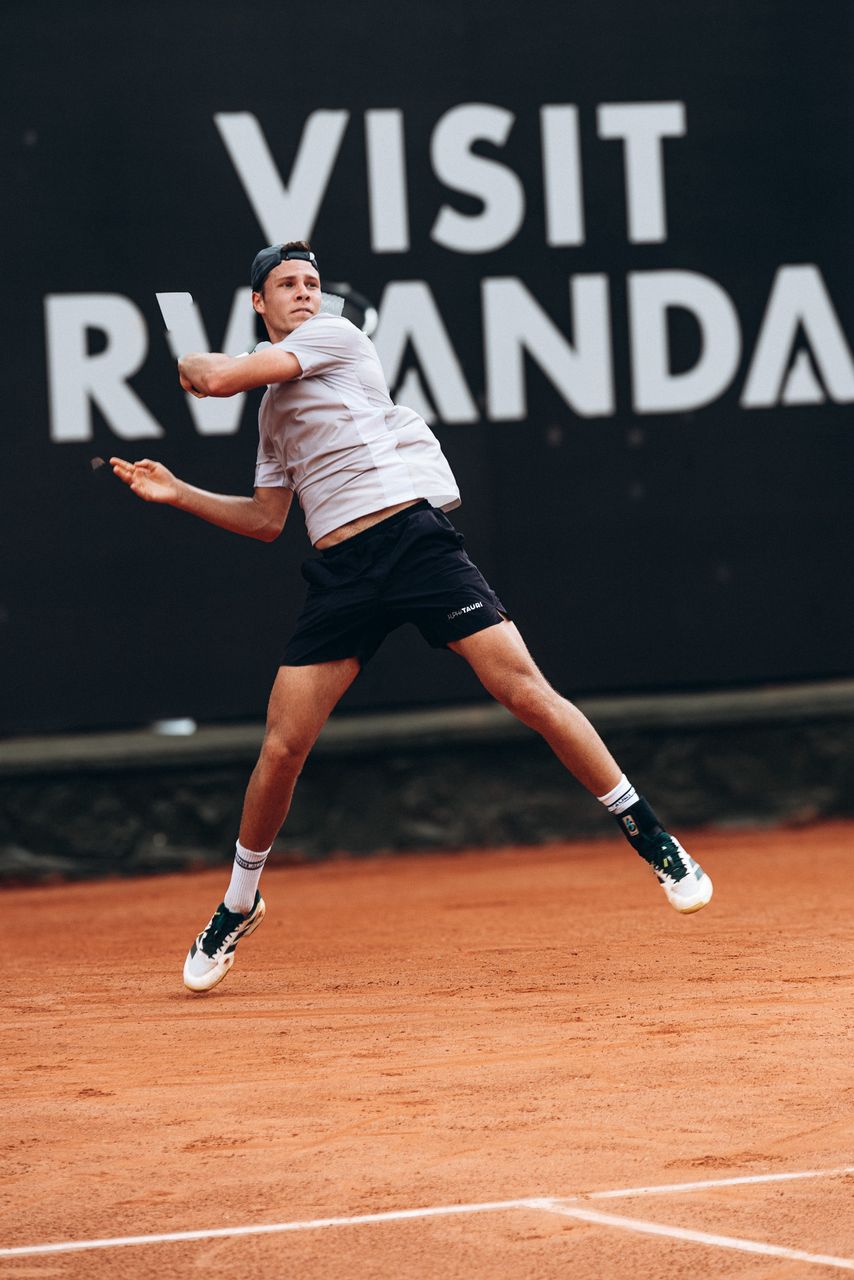
    The Rwanda Development Board (RDB), through its tourism initiative Visit Rwanda, is a Founding and Host Partner of the BAL, adding to Rwanda’s growing reputation as a hub for sports and entertainment on the continent.

    Watch the full video interview below.

  • Qatar Airways inks 210-jet deal with Boeing during Trump visit

    The deal, valued at $96 billion according to the White House, includes Boeing’s 777X and 787 Dreamliner models powered by GE Aerospace engines.

    The agreement was formalised at a signing ceremony in Doha attended by Trump, Qatar’s Emir Sheikh Tamim bin Hamad Al-Thani, Boeing CEO Kelly Ortberg, and Qatar Airways CEO Badr Mohammed Al-Meer.

    Trump, who is on a regional tour of Gulf states, hailed the deal as “the largest jet order in Boeing’s history.”

    While the exact breakdown of the aircraft types and the number of firm versus optional orders remains unclear, the deal represents a significant commitment from Qatar Airways, which already operates one of the world’s largest fleets of Boeing widebody jets.

    Qatar Airways has continued to expand its global footprint in recent years. In October 2021, the airline signed a codeshare agreement with RwandAir, deepening its presence in Africa and strengthening connectivity between Kigali and global destinations.

    The move is also a blow to rival Airbus, whose A350 model has struggled in the Gulf’s hot climate, with ongoing maintenance issues related to Rolls-Royce engines.

    Qatar opted for GE Aerospace’s GEnx engines for the 787s and the GE9X for the 777X, the only engine currently certified for that aircraft. GE Aerospace described the deal as its largest-ever widebody engine agreement.

    The timing of the announcement highlights the strategic importance of the deal for both Trump and Boeing. For Trump, it adds to a series of economic announcements linked to his Gulf tour, which also included trade agreements with Saudi Arabia.

    For Boeing, the order comes at a time when the company is working to recover from significant setbacks, including manufacturing delays, safety concerns, and a lengthy strike by workers that affected output.

    The Qatar Airways deal is also expected to support an estimated 154,000 U.S. jobs annually throughout the production cycle, according to the White House.

    U.S. President Donald Trump, Qatar's Emir Tamim bin Hamad Al Thani and Boeing CEO Kelly Ortberg attend a signing ceremony in Doha, Qatar, May 14, 2025.U.S. President Donald Trump shakes hands with Boeing CEO Kelly Ortberg next to Qatar's Emir Tamim bin Hamad Al Thani, ahead of a state dinner at Lusail Palace in Lusail, Qatar, May 14, 2025.The Boeing 777X is the latest series of the long-range, wide-body, twin-engine jetliners in the Boeing 777 family from Boeing Commercial Airplanes.