Author: Wycliffe Nyamasege

  • Tanzanian cardiologist Prof. Janabi elected head of WHO Africa office

    The election comes after the sudden passing of Dr. Faustine Ndugulile, the Regional Director-elect, who died in November 2024 before taking office.

    Prof. Janabi was nominated by President Samia Suluhu Hassan and emerged as the successful candidate among a competitive field, which included Dr. N’da Konan Michel Yao of Côte d’Ivoire, Dr. Mohamed Lamine Dramé of Guinea, and Prof. Moustafa Mijiyawa of Togo.

    Prof. Janabi’s nomination will be formally submitted for appointment during the 157th session of the WHO Executive Board, scheduled for May 28–29, 2025. Once appointed, he will serve a five-year term, with the possibility of renewal.

    In his acceptance remarks, Prof. Janabi affirmed his commitment to regional unity and health system strengthening.

    “Thank you for your trust in me. I will not let you down. Your support underscores our collective resolve to build a healthier, stronger, and more united Africa. As we face challenges ranging from infectious diseases, noncommunicable diseases to climate change and limited health financing, we must harness African resilience and unity,” he stated.

    WHO Director-General Dr. Tedros Adhanom Ghebreyesus welcomed the nomination, praising both Prof. Janabi and the other candidates:

    “I offer my warm congratulations to Professor Janabi on his nomination as Regional Director for Africa, and also to the United Republic of Tanzania. He will take the reins at an unprecedented time for the African Region, and WHO as a whole. We are grateful for his experience and expertise.”

    Dr. Tedros also acknowledged the contributions of Dr. Chikwe Ihekweazu, Acting WHO Regional Director for Africa, for his leadership during the transitional period following the end of Dr. Matshidiso Moeti’s term.

    A leading figure in Tanzanian and African healthcare, Prof. Janabi brings over 30 years of experience spanning clinical cardiology, public health leadership, and health system reform. He is a vocal advocate for equitable healthcare access in low- and middle-income countries.

    Prof. Janabi steps into the role amid growing health challenges across the continent, including emerging disease threats, climate-induced health crises, and funding gaps. His leadership is expected to play a pivotal role in driving regional health priorities and reforming health systems for resilience and equity.

    Prof. Janabi's nomination will be formally submitted for appointment during the 157th session of the WHO Executive Board, scheduled for May 28–29, 2025. Once appointed, he will serve a five-year term, with the possibility of renewal.

  • Former U.S. President Biden diagnosed with ‘aggressive’ prostate cancer

    A statement released by Biden’s office on Sunday revealed that the cancer has metastasised to his bones.

    The announcement follows Biden’s recent medical evaluation after experiencing increasing urinary symptoms on Friday, May 16, 2025.

    “On Friday, he was diagnosed with prostate cancer, characterised by a Gleason score of 9 (Grade Group 5) with metastasis to the bone,” the statement read.

    According to his physicians, although the diagnosis indicates a more advanced and aggressive form of the disease, the cancer is hormone-sensitive, which allows for potentially effective treatment options.

    Biden and his family are currently reviewing treatment plans with his medical team.

    Joe Biden served as the 46th President of the United States from January 20, 2021, to January 20, 2025.

    He chose not to seek re-election in the 2024 presidential race, citing a desire to pass the baton to a new generation of leadership. At the time, Biden, then 81, also acknowledged the increasing demands of the office and the need to prioritise his health and family after more than five decades in public service.

    The decision to withdraw from the race came after increasing pressure and concerns, particularly following a debate performance that raised questions about his fitness for office.

    Since leaving office, the former president has maintained a relatively low public profile, occasionally commenting on political developments and emerging global issues.

    Former U.S. President Joe Biden has been diagnosed with an aggressive form of prostate cancer.

  • Amb. Uwihanganye presents credentials to represent Rwanda in Brunei

    High Commissioner Jean de Dieu Uwihanganye has presented his letters of credence to the Sultan of Brunei, Haji Hassanal Bolkiah Mu’izzaddin Waddaulah, accrediting him as Rwanda’s representative to the country.
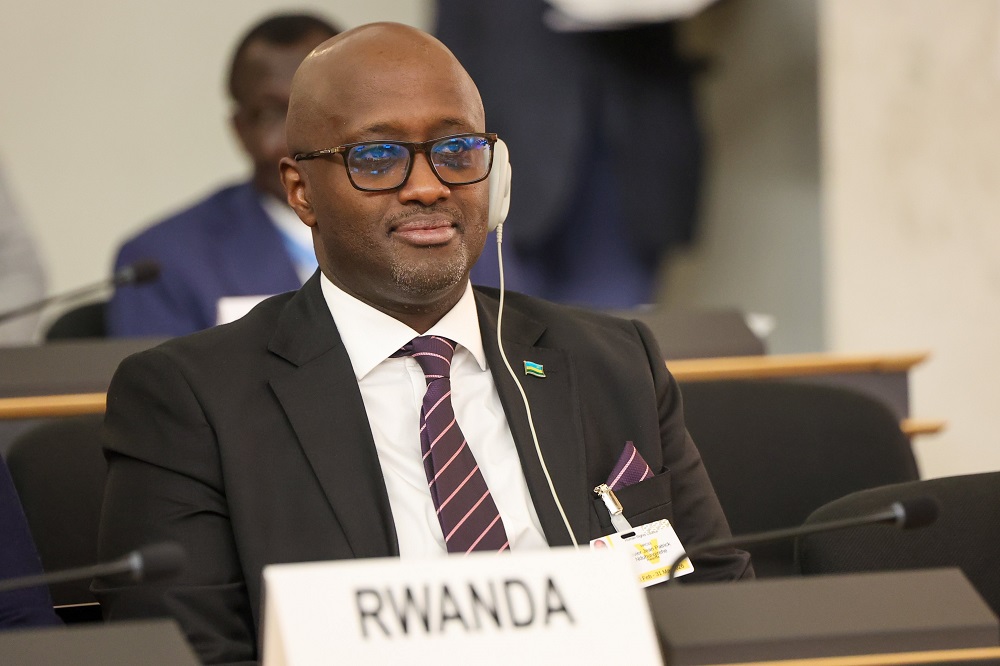
    The ceremony took place at the royal palace, Istana Nurul Iman, on Saturday, May 17, 2025.

    Amb. Uwihanganye, who is based in Singapore, also represents Rwanda in Australia and New Zealand. He becomes the first High Commissioner to represent Rwanda in Brunei since the two countries established diplomatic relations nearly five years ago.

    During his visit to Brunei, Amb. Uwihanganye also met with Dato Seri Paduka Abdul Manaf, the Minister of Primary Resources and Tourism (MPRT). Their discussions focused on fostering bilateral cooperation in the tourism sector.

    The High Commissioner is also scheduled to meet with other high-ranking officials in Brunei to discuss cooperation in various sectors, including construction, agriculture, and finance.

    Rwanda and Brunei are both members of the Commonwealth. The two countries initiated diplomatic relations in December 2020.

    In June 2022, President Paul Kagame met with Sultan Haji Hassanal Bolkiah Mu’izzaddin Waddaulah during the 26th Commonwealth Heads of Government Meeting (CHOGM) held in Rwanda. The two leaders discussed issues of mutual interest.

    During that visit, the Sultan of Brunei was accompanied by Prince Abdul Mateen.

    Brunei is a small but wealthy country located in Southeast Asia, with a population of just over 455,000 people.

    For many years, Brunei’s economy has been largely dependent on the export of petroleum and natural gas, with over half of its GDP coming from oil and gas revenues.

    Additionally, Brunei’s domestic economy is supported by significant income from foreign investments, mainly managed through the Brunei Investment Agency (BIA), which operates under the Ministry of Finance.

    Analysts consider Rwanda an attractive destination for Brunei’s investments, largely due to Rwanda’s investor-friendly legal framework that facilitates foreign direct investment.

    This aligns with Brunei’s long-term strategy to diversify its economy beyond oil and gas.

    Currently, the two countries are in discussions about cooperation agreements in the education sector and the potential for a visa waiver arrangement for their citizens.

    High Commissioner Jean de Dieu Uwihanganye has presented his letters of credence to the Sultan of Brunei, Haji Hassanal Bolkiah Mu’izzaddin Waddaulah, on Saturday, May 17, 2025.The ceremony took place at the royal palace, Istana Nurul Iman.

  • Pope Leo XIV begins papacy with plea for church unity and protection of the poor

    The first American pope and 267th pontiff of the Roman Catholic Church, Leo used his inaugural Mass to set the tone for what appears to be a pastoral and socially conscious papacy.

    St. Peter’s Square was filled with an estimated 100,000 faithful at the start of the liturgy, a crowd that swelled to 200,000 as the two-hour ceremony progressed.

    The Mass, steeped in centuries-old tradition, was attended by dignitaries, royalty, and worshippers from across the globe, including U.S. Vice-President JD Vance, Secretary of State Marco Rubio, Ukrainian President Volodymyr Zelensky, and Peru’s President Dina Boluarte — the leader of the country where Pope Leo previously served as a missionary and bishop.

    Before the Mass began, the 69-year-old pontiff, born Robert Prevost, toured the square in the open-air popemobile, warmly greeting the cheering crowds and pausing to kiss a child. As chants of ‘Viva il Papa!’ (Long live the Pope) echoed across the square, Leo’s humility and calm demeanour were on full display.

    In his homily — widely seen as a declaration of papal priorities — Pope Leo called for healing within a Church often divided between conservatives and reformers.

    “There is no room in the Church for propaganda or power plays,” he said. “This is the hour for love.”

    He also issued a sharp rebuke of global economic systems that “exploit the Earth’s resources and marginalise the poorest.”

    Calling on Catholics to serve “not with superiority, but with humility,” Leo emphasised a missionary spirit rooted in compassion and respect for diversity: “We are called to offer God’s love to everyone, in order to achieve that unity which does not cancel out differences but values the personal history of each person.”

    The Mass included several striking moments of symbolism: the bestowing of the pallium, a lamb’s wool vestment representing his role as shepherd, and the Ring of the Fisherman, engraved with the image of St. Peter and Leo XIV’s name, symbolising his role as Peter’s successor. As the ring was placed on his finger, Leo appeared visibly moved, glancing down in quiet reflection.

    In a solemn close to the liturgy, Leo offered prayers for peace in Ukraine and Gaza. “We pray for a just and lasting peace,” he said. “For children, families, the elderly, survivors — those reduced to hunger and sorrow.”

    Since his election on May 8, Pope Leo has signalled a blend of continuity and change. He has embraced tradition, including Latin liturgy and ornate vestments, while also launching a papal Instagram account and making early appeals for interfaith dialogue and global peace.

    He has also struck a chord with many, from traditionalists to reformers, with his calls to uphold human dignity, protect migrants, and prioritise the needs of the marginalised.

    Next Sunday, Pope Leo XIV will take formal possession of the Basilica of St. John Lateran, the cathedral of the bishop of Rome, marking the canonical start of a papacy already being watched closely around the world.

    He succeeds Pope Francis, who passed away on April 21 after a long illness.

    Newly elected Pope Leo XIV began his papacy on Sunday with an impassioned appeal for unity within the Catholic Church and a firm condemnation of systems that exploit the poor.Pope Leo XIV receives the Ring of the Fisherman from Cardinal Luis Antonio Tagle during the Mass of Inauguration in St. Peter’s Square on Sunday, May 18.As the ring was placed on his finger, Leo appeared visibly moved, glancing down in quiet reflection.grorz96xmaaoeqa_1_.jpgThe “Ring of the Fisherman,” engraved with the image of St. Peter and the pope’s name and seal, marks the official start of his papacy.ring3.jpgThe Mass, steeped in centuries-old tradition, was attended by dignitaries, royalty, and worshippers from across the globe, including U.S. Vice-President JD Vance, Secretary of State Marco Rubio, Ukrainian President Volodymyr Zelensky, and Peru’s President Dina Boluartegrn6bwdxmaa_l1h.jpggrotbkyx0aalzoz.jpgSt. Peter’s Square was filled with an estimated 100,000 faithful at the start of the liturgy, a crowd that swelled to 200,000 as the two-hour ceremony progressed.Pope Leo greets crowds from popemobile during his inauguration Mass on Sunday, May 18, 2025.

  • Kenyan politician Martha Karua denied entry into Tanzania

    The renowned lawyer shared the development on her official X account, saying they were detained and set for deportation.

    “I have been denied entry into Tanzania and I and two colleagues are awaiting deportation at Mwalimu Nyerere International Airport, Dar es Salaam.”

    The two others detained with her are Gloria Kimani, a council member of the Law Society of Kenya, and Lynn Ngugi, a human rights advocate.

    According to Karua, all three were guests of the East Africa Law Society (EALS). They were scheduled to attend a court session related to Lissu’s ongoing treason case.

    Karua detailed the sequence of events upon arrival at Julius Nyerere International Airport at 9:00 a.m., explaining that her passport was referred to a supervisor who kept her waiting for over an hour while consulting superiors. She was later informed that entry had been denied without explanation.

    “The supervisor has now informed us that our entry into Tanzania has been denied. No reasons given,” she posted.

    Karua voiced concern over the apparent restriction of her freedom of movement within the East African Community (EAC), saying,

    “I am concerned that as a citizen of EAC, my access within a @jumuiya country appears inexplicably restricted.”

    Lissu was charged with treason in April, a day after being arrested following a political rally in southern Tanzania.

    The charges stem from his “No Reforms, No Election” campaign, which calls for sweeping electoral reforms ahead of Tanzania’s general elections scheduled for October.

    Karua has been a vocal advocate for Lissu’s release and recently took on a leadership role in a pan-African rights lobby group calling for the charges against him to be dropped, labelling them politically motivated. She is also among the lawyers representing Ugandan opposition leader Kizza Besigye, who is facing similar charges in the neighbouring country.

    Lissu, who survived an assassination attempt in 2017 and has been in and out of exile, is among those expected to challenge President Samia Suluhu Hassan in the upcoming polls.

    President Suluhu rose to power in 2021 following the death of her predecessor, John Magufuli.

    By the time of going to press, Tanzanian authorities had not issued any official statement regarding the decision to deny Karua and her colleagues entry into the country.
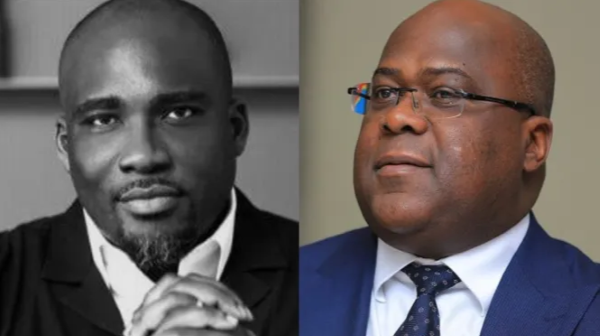
    Kenyan politician and former Justice Minister Martha Karua has revealed that she was denied entry into Tanzania on Sunday morning, along with two colleagues, while en route to observe a court hearing involving Tanzanian opposition leader Tundu Lissu.

  • Rwanda’s Inkomoko ranked among Africa’s fastest-growing companies

    The annual FT ranking, compiled in partnership with research firm Statista, tracks companies across the continent based on their compound annual growth rate (CAGR) in revenues between 2020 and 2023.

    This year’s list features 130 companies, with South Africa and Nigeria dominating the rankings, together accounting for more than half of all entries. Kenya ranks third, with 11 companies making the list.

    Inkomoko’s inclusion is seen as a major milestone for Rwanda’s private sector. Founded 12 years ago, Inkomoko has grown into a regional enterprise, operating in Rwanda, Kenya, Ethiopia, South Sudan, and most recently, Chad.

    The company has invested over $35 million, supported more than 100,000 entrepreneurs, and reached over 1.2 million people, many of whom live in refugee camps or underserved communities.

    “This isn’t just our growth story — it’s our clients’ and the communities we serve,” said Emmanuel Mugabo, Inkomoko’s Rwanda Managing Director.

    “Every business we support is a reminder that talent is everywhere, but what is often missing is access. That’s something we can fix together with partners, investors, and policymakers,” he added.

    Inkomoko’s model is built on the belief that displacement-affected communities are not just in need of aid, but ripe with economic potential. By providing entrepreneurs with training, finance, and market access, the organisation demonstrates that empowering the underserved is not charity, but a proven method for driving local economic growth and long-term stability.

    As the world faces mounting challenges from conflict, climate change, and inequality, Inkomoko is positioning itself for greater impact. The organisation has announced an ambitious goal to invest $150 million in 550,000 small and micro businesses by 2030, and is actively seeking like-minded partners to scale its mission.

    “This recognition from the Financial Times is an honour,” Mugabo added. “But the real measure of our success will be how many others join us in this work.”

    Founded 12 years ago, Inkomoko has grown into a regional enterprise, operating in Rwanda, Kenya, Ethiopia, South Sudan, and most recently, Chad.

  • Pallium and ring of the fisherman: Significance of symbols in Pope Leo XIV’s papacy

    Central to this historic rite are two ancient and powerful symbols: the pallium and the Ring of the Fisherman. These items not only signify the authority of the papacy but also mark the official beginning of Pope Leo XIV’s apostolic mission as the successor of Saint Peter.

    The pallium, made from the wool of lambs, evokes the image of the Good Shepherd carrying His flock. It recalls Saint Peter’s call to “feed my lambs and tend my sheep,” symbolising the pope’s pastoral responsibility to care for the faithful worldwide.

    The pallium is a liturgical vestment in the Roman Catholic Church worn by the Pope.

    The pallium, worn over the shoulders during liturgical celebrations, is adorned with six black crosses and three pins, which represent the nails of Christ’s crucifixion, further connecting the pope’s mission to Christ’s sacrifice.

    The Ring of the Fisherman represents the seal of faith entrusted to Saint Peter, the fisherman called by Jesus to become the “rock” upon which the Church was built. This ring serves as a signet, symbolising the pope’s spiritual authority and his role in strengthening the brethren.

    The Ring of the Fisherman inside an ornate, gold-embossed case lined with red velvet.

    The inauguration ceremony begins inside St. Peter’s Basilica, where Pope Leo XIV will pray at the tomb of Saint Peter, honouring the Apostle’s martyrdom and legacy. Following this, the pallium, the Ring of the Fisherman, and the Book of the Gospels will be carried in procession to the altar outside in St. Peter’s Square.

    As Pope Leo XIV approaches the altar, cardinals representing the three orders of the Church will place the pallium upon him and present the Ring of the Fisherman. Special prayers will invoke Christ’s guidance and strength for the new pope as he takes up his ministry.

    The ceremony also includes a rite of obedience, in which representatives from the global Catholic community pledge their allegiance to Pope Leo XIV. The liturgy features scripture readings in multiple languages, reflecting the Church’s universality and the pope’s mission to shepherd all peoples.

    As the Mass concludes, Pope Leo XIV will bless the assembly and offer a prayer that God may protect and guide him in leading the Church with unity, charity, and faithfulness to the Gospel.

    Pope Leo XIV, born Robert Francis Prevost on September 14, 1955, in Chicago, was elected on May 8, 2025, to succeed Pope Francis, who passed away on April 21, 2025.

    Pope Leo XIV, born Robert Francis Prevost, succeeds Pope Francis, who passed away on April 21, 2025.

  • Kagame, NBA leaders discuss ongoing partnership and Africa’s sports future

    The meeting took place on the sidelines of the 5th season of the BAL (BAL5) and brought together Clare Akamanzi, CEO of NBA Africa; Amadou Gallo Fall, BAL President; and Leah McNab, Head of International Operations for the NBA.

    Also in attendance were Rwanda’s Sports Minister Nelly Mukazayire and Rwanda Development Board (RDB) CEO Jean-Guy Afrika.

    According to a statement from the presidency, their discussions centred on Rwanda’s role in hosting the league’s inaugural season and the rapid growth the BAL has experienced over the past four years.

    The leaders also explored the deepening partnership between Rwanda and the NBA, particularly in efforts to nurture basketball talent across the continent, as well as the broader economic opportunities that sports can unlock for Africa.

    Rwanda has become a key partner in the NBA’s African expansion, with Kigali’s BK Arena serving as a regular host for BAL playoffs and finals under a multi-year agreement with the RDB. NBA Africa’s engagement has also included grassroots court projects, youth clinics, and high-profile branding through the “Visit Rwanda” initiative.

    Earlier in the evening, President Kagame and First Lady Jeannette Kagame joined a sold-out crowd at BK Arena for the opening of the 2025 BAL Nile Conference. The energy in the arena peaked as Rwanda’s APR Basketball Club secured a resounding 92–63 victory over Kenya’s Nairobi City Thunder, their first win in the weeklong tournament.

    President Paul Kagame met with top NBA and Basketball Africa League (BAL) executives on Saturday evening to discuss Rwanda’s growing role in advancing basketball and unlocking sports-driven development across Africa.Earlier in the evening, President Kagame and First Lady Jeannette Kagame joined a sold-out crowd at BK Arena for the opening of the 2025 BAL Nile Conference.grlcym7xuaaii6z.jpgThe energy in the arena peaked as Rwanda’s APR Basketball Club secured a resounding 92–63 victory over Kenya’s Nairobi City Thunder—their first win in the weeklong tournament.grlcynfweaan-xg.jpg

  • ‘We don’t pretend’: Kagame shares Rwanda’s journey with Harvard students

    Speaking with clarity and introspection, Kagame emphasised the importance of understanding Rwanda on its own terms—shaped by its history, defined by its resilience, and guided by a deeply internalised sense of responsibility.

    “Like any other country or society, Rwandans have their ways, they have their problems, they have their restraints,” Kagame said.

    “So we approach the management of our affairs and society and deal with our problems based on that understanding of who we are, who we want to be, where we are coming from, where we want to go.”

    Kagame urged the students to look beyond surface narratives and adopt a more nuanced lens when evaluating nations like Rwanda.

    He stressed the value of introspection and open communication within Rwandan society as key tools for progress.

    “It’s important to read and understand carefully what all that entails. And more importantly, to try and communicate it among ourselves and do the kind of soul-searching we need to find solutions to the many problems we have or have had,” he asserted.

    In a statement that anchored the tone of the discussion, Kagame declared, “We don’t pretend about anything.” Acknowledging the significant strides Rwanda has made since the 1994 Genocide Against the Tutsi, he also admitted that challenges remain.

    “We know that a lot of progress has been made, but we have not succeeded in everything. We are not even bound to succeed in everything. But we try to register progress in the things that matter most to us.”

    The Head of State, who led the Rwandan Patriotic Army (RPA)—comprising Rwandan refugees from neighbouring countries—to stop the Genocide against the Tutsi, described Rwanda’s journey as one forged not in privilege, but in perseverance.

    “We are not spoiled. We don’t have much to spoil us. We have just had the lessons of our past that are tragic. Therefore, you either pick up your pieces and move forward or you perish,” Kagame told the students. “We operate within these kinds of limitations.”

    The meeting served as both a lesson in leadership and a window into Rwanda’s ongoing efforts to build a self-reliant, inclusive society that acknowledges its scars but remains focused on a future defined by integrity, purpose, and homegrown solutions.

    President Kagame is credited with steering the country toward prosperity following the 1994 Genocide Against the Tutsi, which left more than a million people dead.

    Today, Rwanda is regarded as a model of good governance, with notable progress in areas such as infrastructure development and the improvement of public services, including healthcare and education.

    A recent survey conducted by the National Institute of Statistics of Rwanda (NISR) revealed that national poverty has declined by 12.4 percentage points over the past seven years.

    According to the survey, the national poverty rate dropped from 39.8% in 2017 to 27.4% in 2024, with approximately 1.5 million Rwandans lifted out of poverty during that period.

    Moreover, the country has made concerted efforts to combat corruption and enhance the efficiency of its public sector, placing a strong emphasis on accountability and performance.

    President Paul Kagame hosted students from Harvard Business School at Urugwiro Village Office on Friday, May 16, 2025.Speaking with clarity and introspection, Kagame emphasised the importance of understanding Rwanda on its own terms—shaped by its history, defined by its resilience, and guided by a deeply internalised sense of responsibility.President Kagame stressed the value of introspection and open communication within Rwandan society as key tools for progress.grfoof-xiaenne8.jpg

  • Frw 30 billion earmarked for community projects near Volcanoes Park

    In 2024, the tourism sector generated $647 million (over Frw 932 billion) for Rwanda, marking a 4.3% increase compared to the previous year.

    RDB’s 2024 annual report attributes this growth to a 27% increase in gorilla-based tourism and an 11% rise in air travel.

    Each year, 10% of the revenue generated by national parks is shared with neighbouring communities and used for public interest initiatives and socio-economic development projects.

    The report indicates that 105 community projects received financial support. A significant portion, about 43.1%, focused on agriculture-related activities, while 41% were dedicated to infrastructure development.

    Another 10.5% of the funds were used to provide various equipment, 2.9% supported the repair of property damaged by wildlife, and the remaining 1.9% went toward strengthening local businesses near the park.

    While briefing members of the Parliamentary Committee on National Budget and State Assets, RDB officials highlighted the Volcanoes Community Resilience Project, aimed at supporting communities surrounding the park.

    This project has a three-year budget of Frw 30,778,107,419 and is set for implementation through 2028.

    In the draft budget for fiscal year 2025/2026, the project has been allocated Frw 1,764,645,080.

    In 2024, the number of visitors to Rwanda’s national parks increased to 138,000, generating $38.8 million, up from $35.8 million in 2023.

    Since 2005, over Frw 10 billion has been invested in projects that improve the livelihoods of communities around Rwanda’s national parks, including Volcanoes, Nyungwe, and Akagera.

    Through collaboration between RDB, local governments, and park communities, more than 880 projects have been developed to enhance community wellbeing. These include schools, health centres, housing for families, water supply systems, and agriculture-related development initiatives.

    Volcanoes National Park in Rwanda is renowned for being home to mountain gorillas.