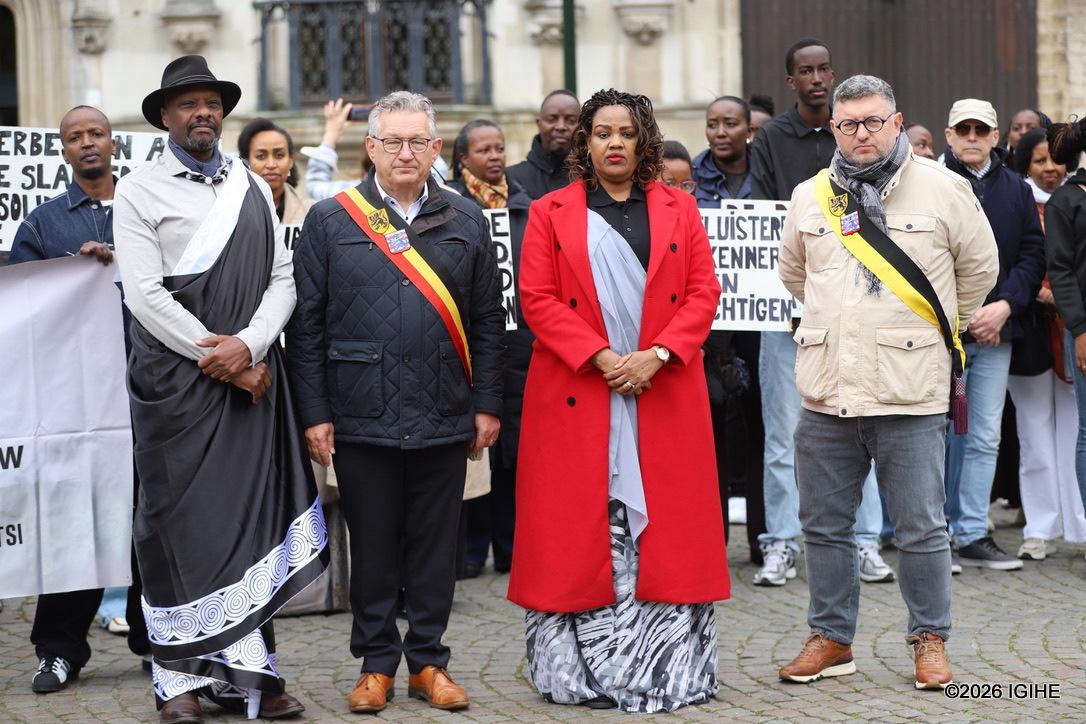
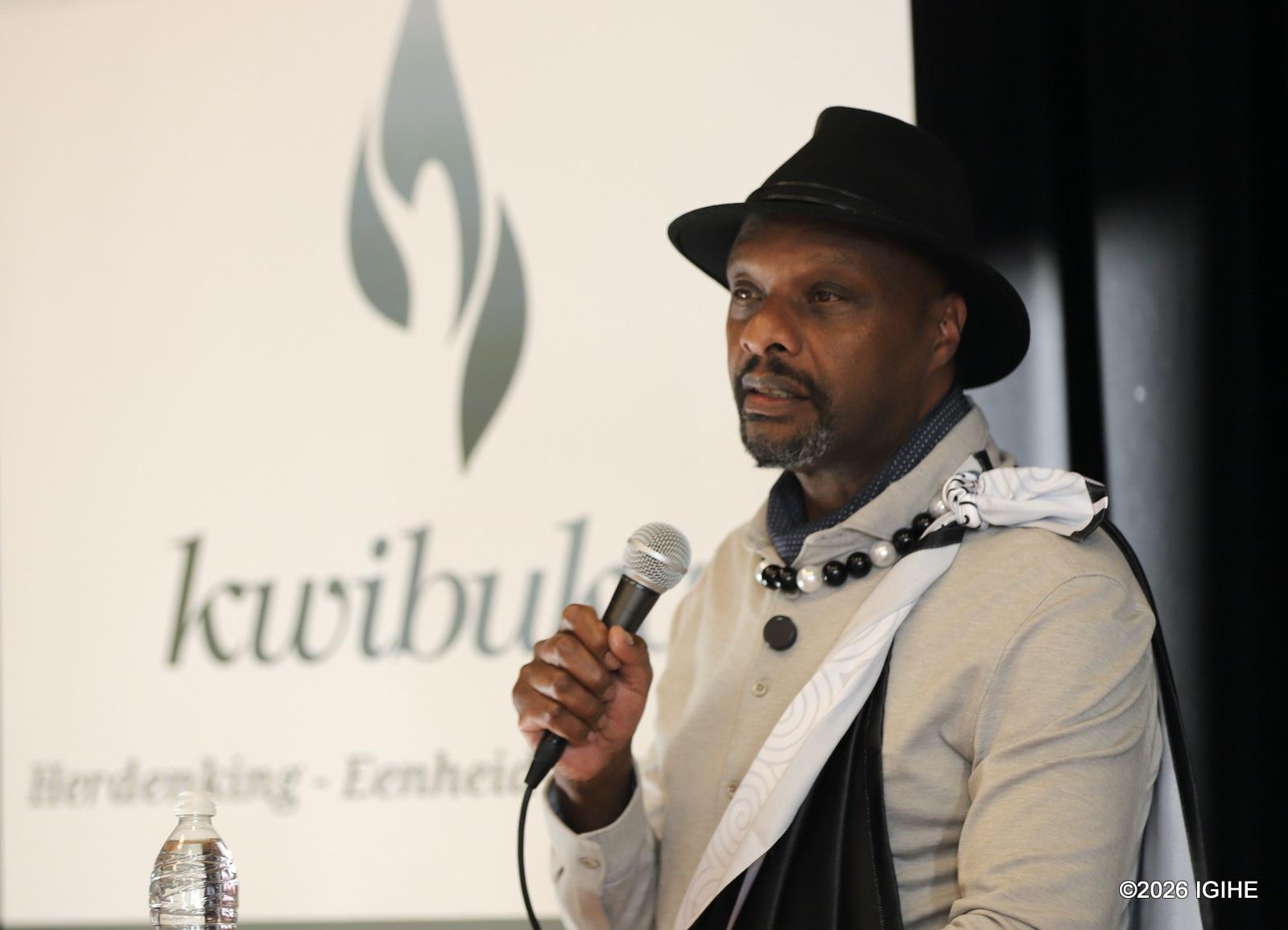
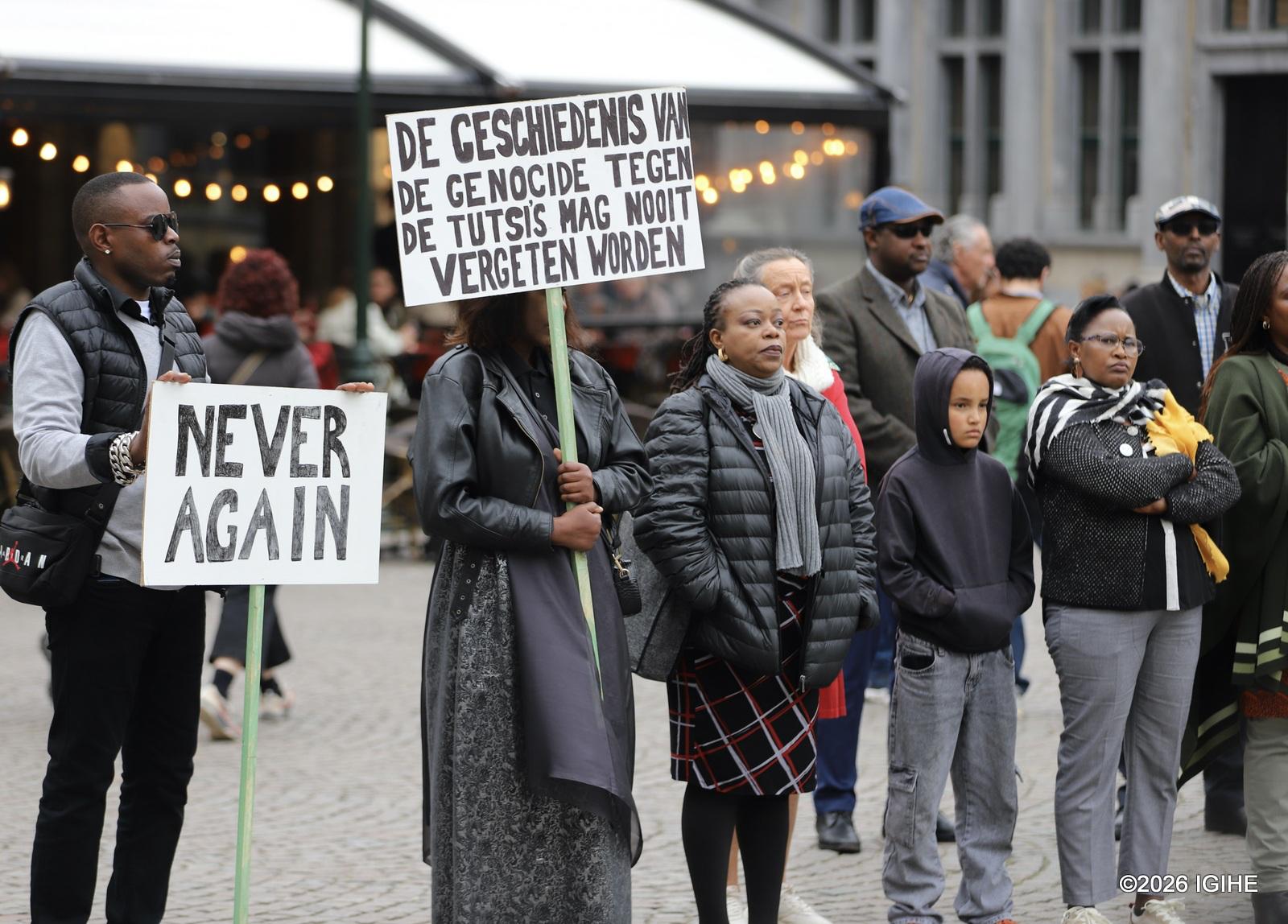
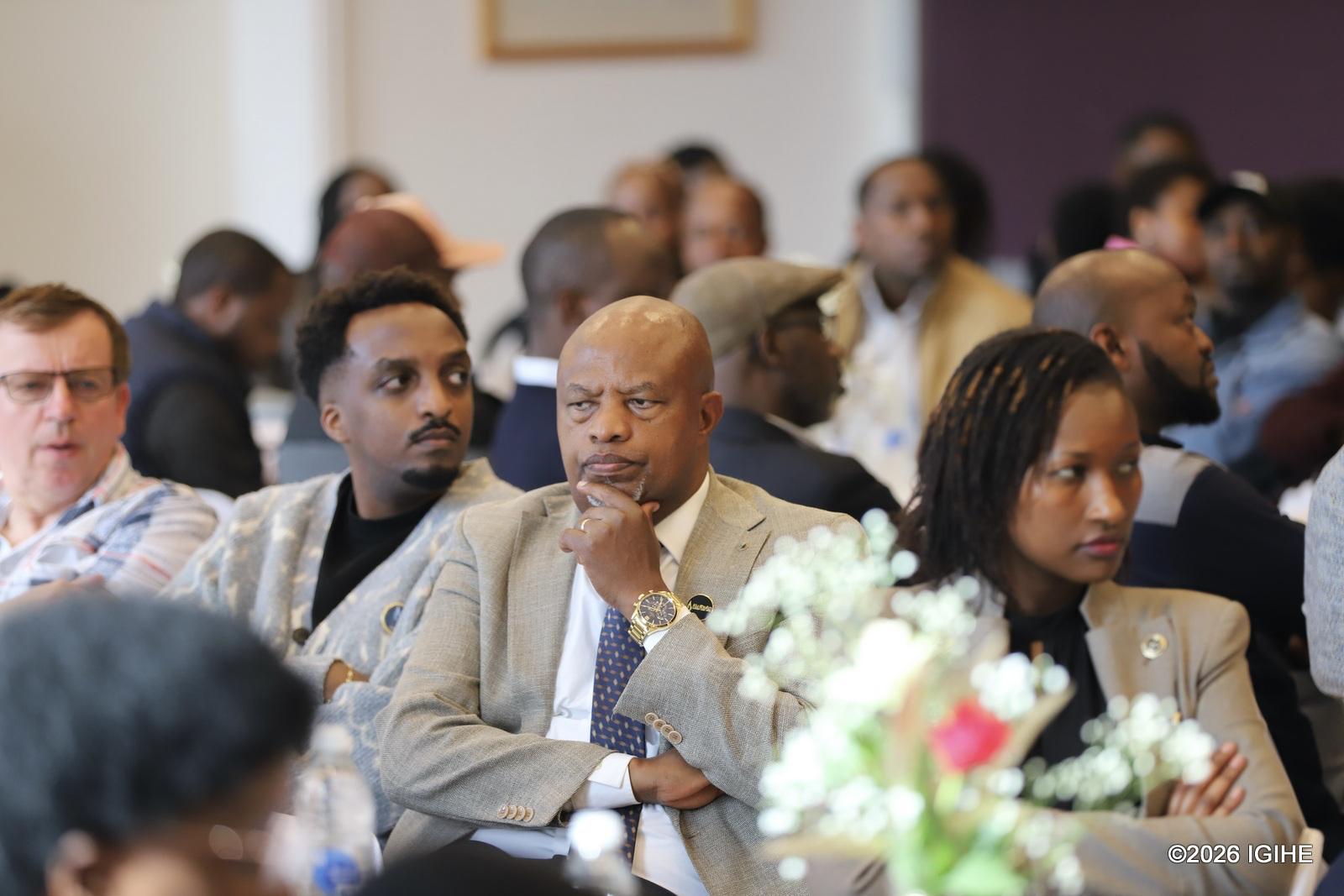
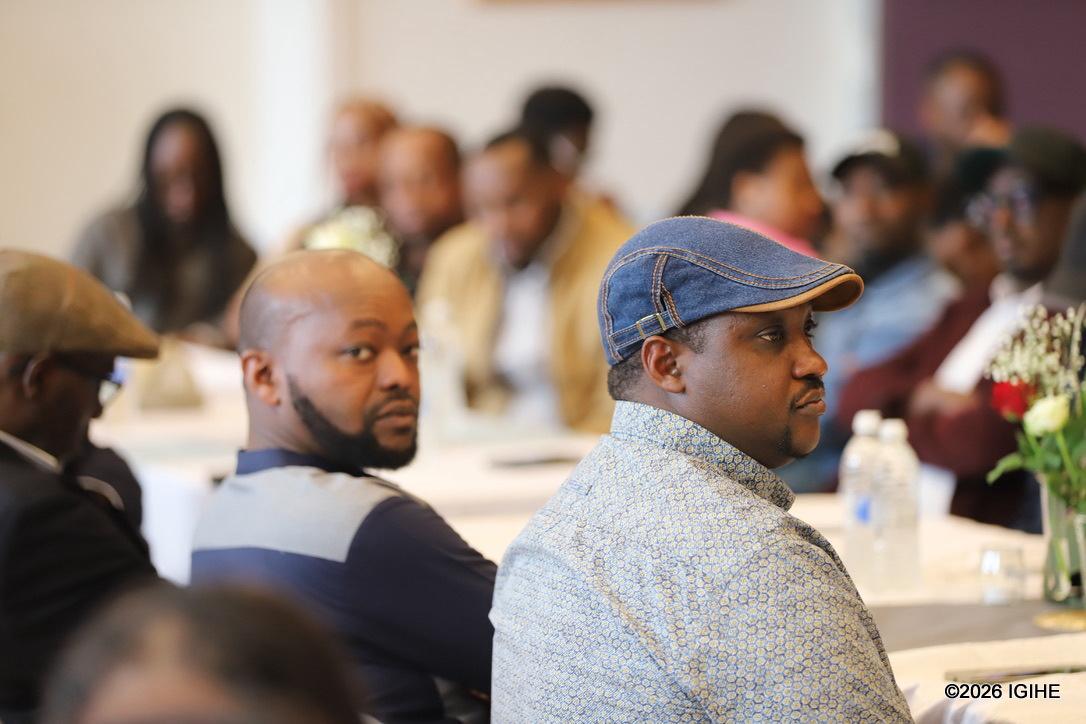
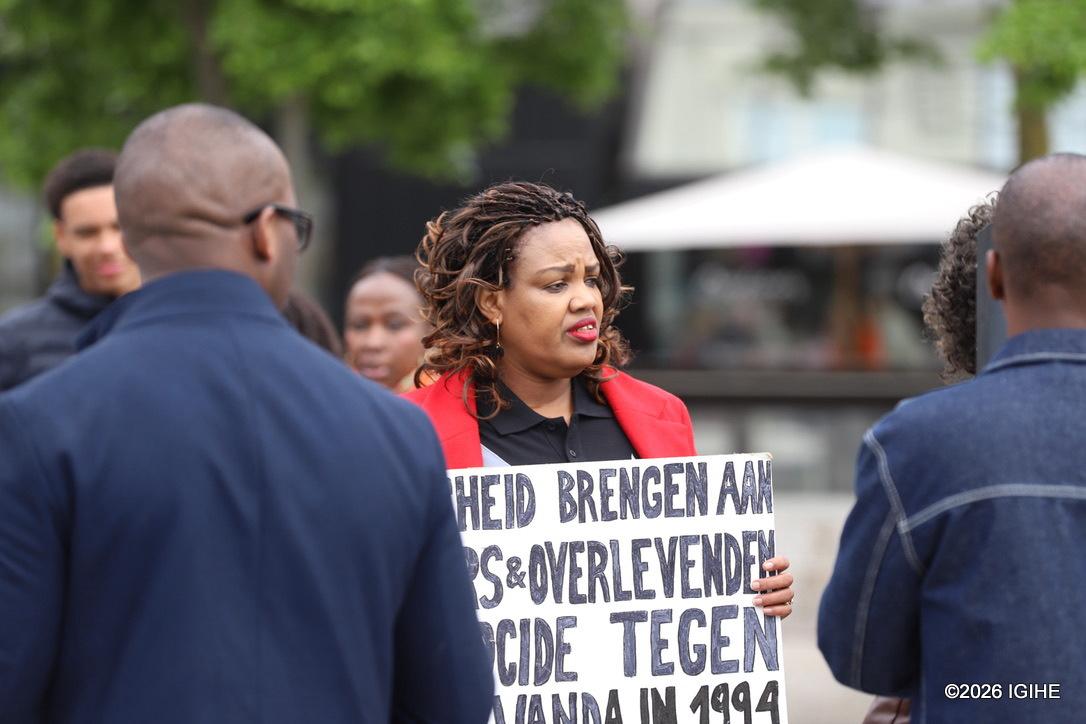
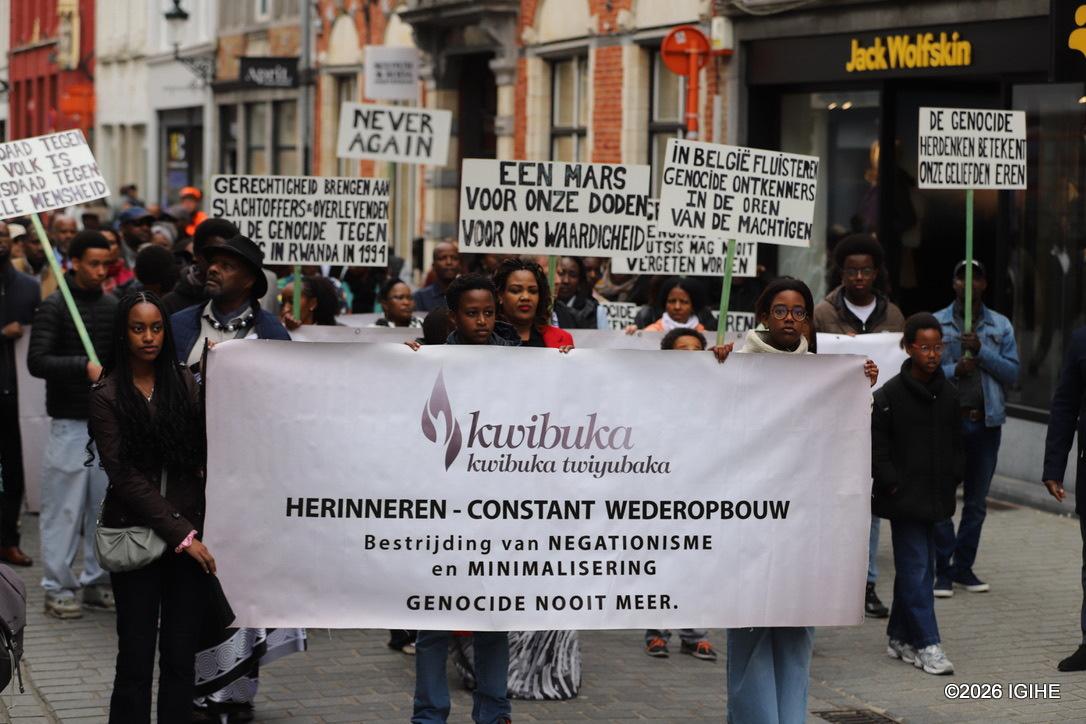
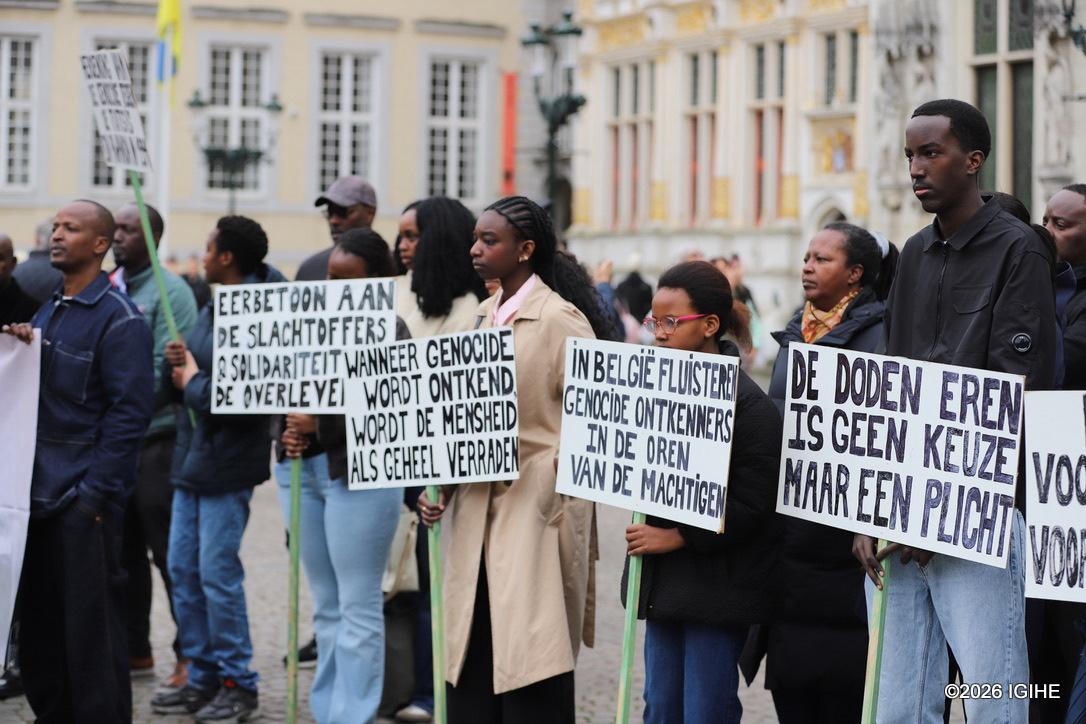
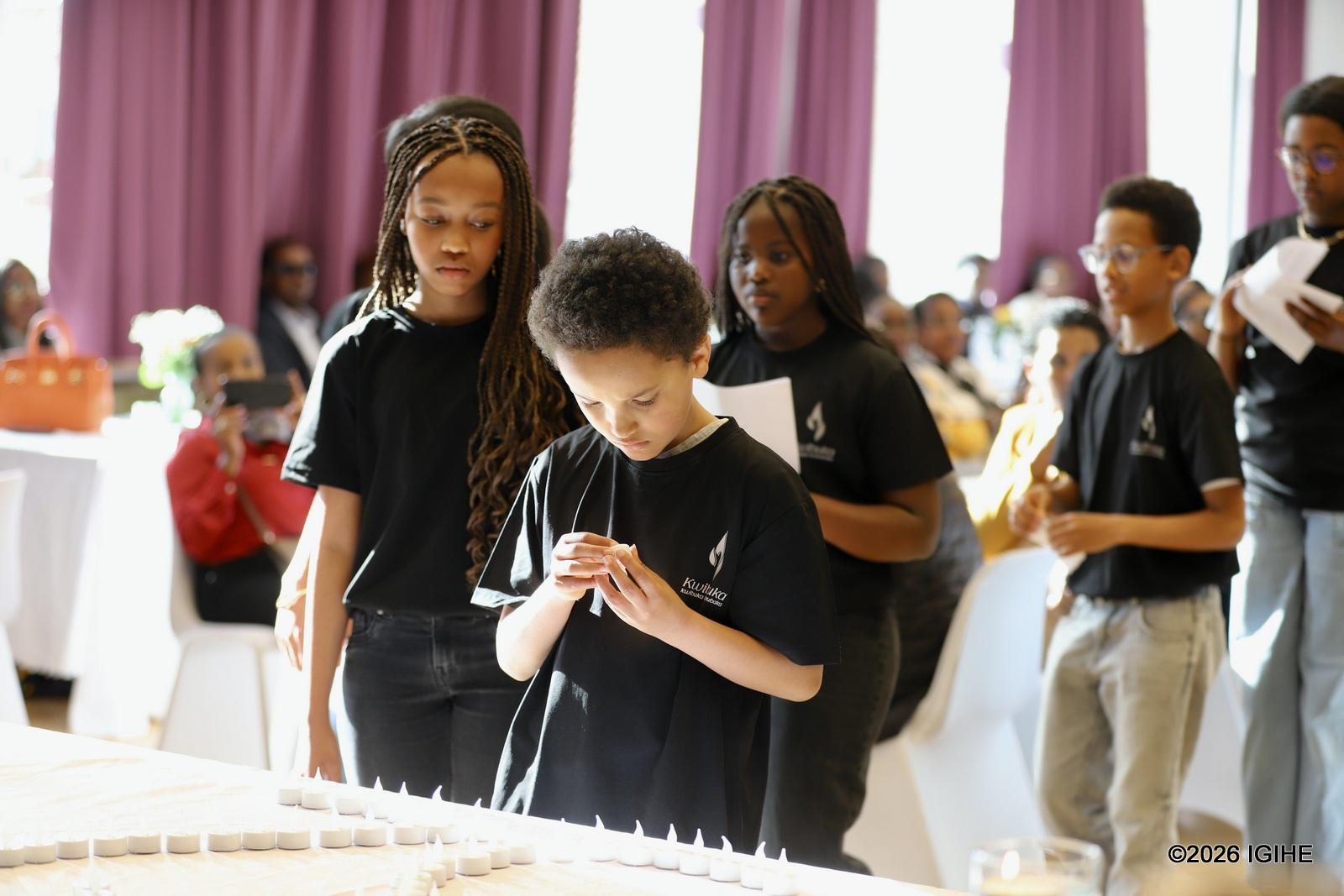
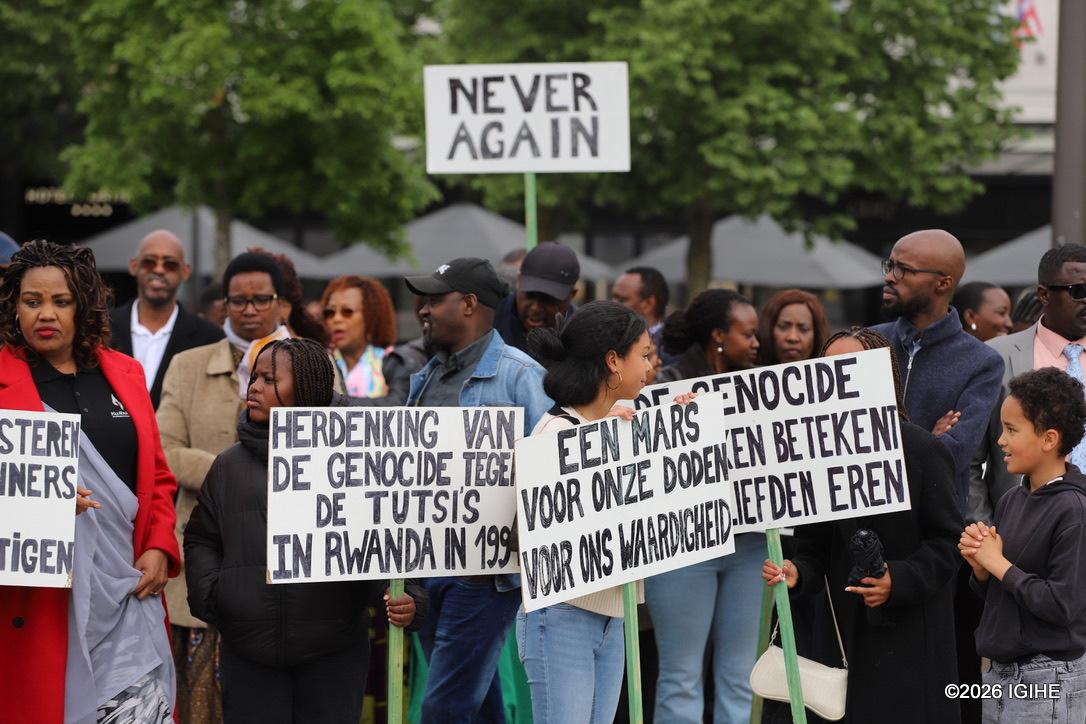
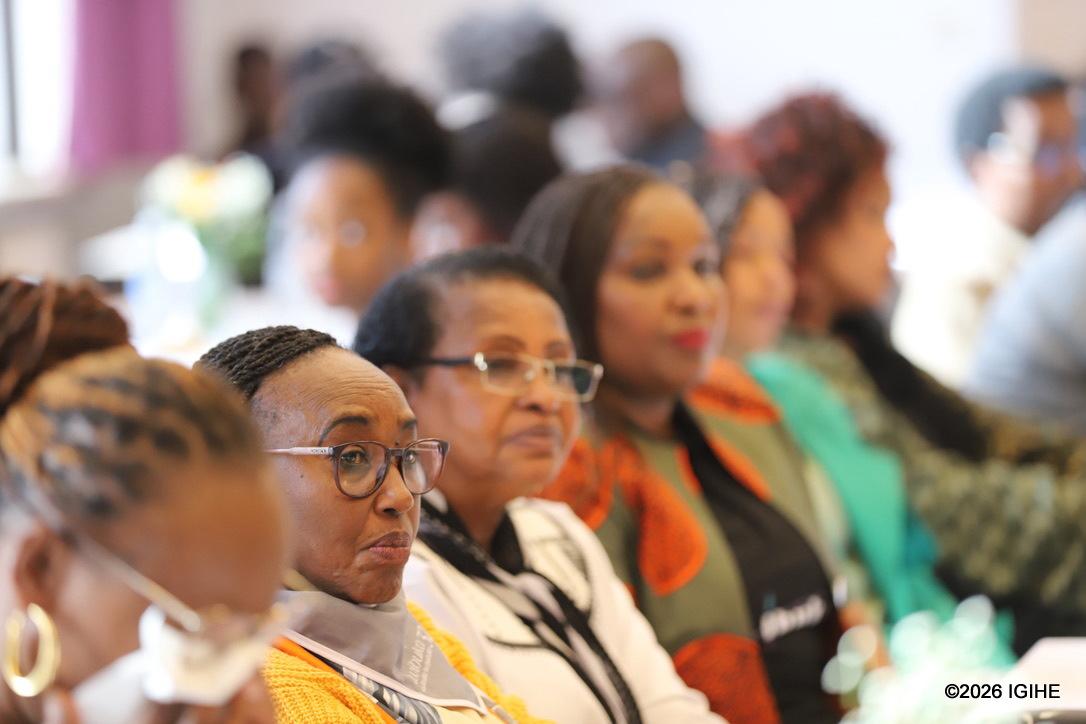
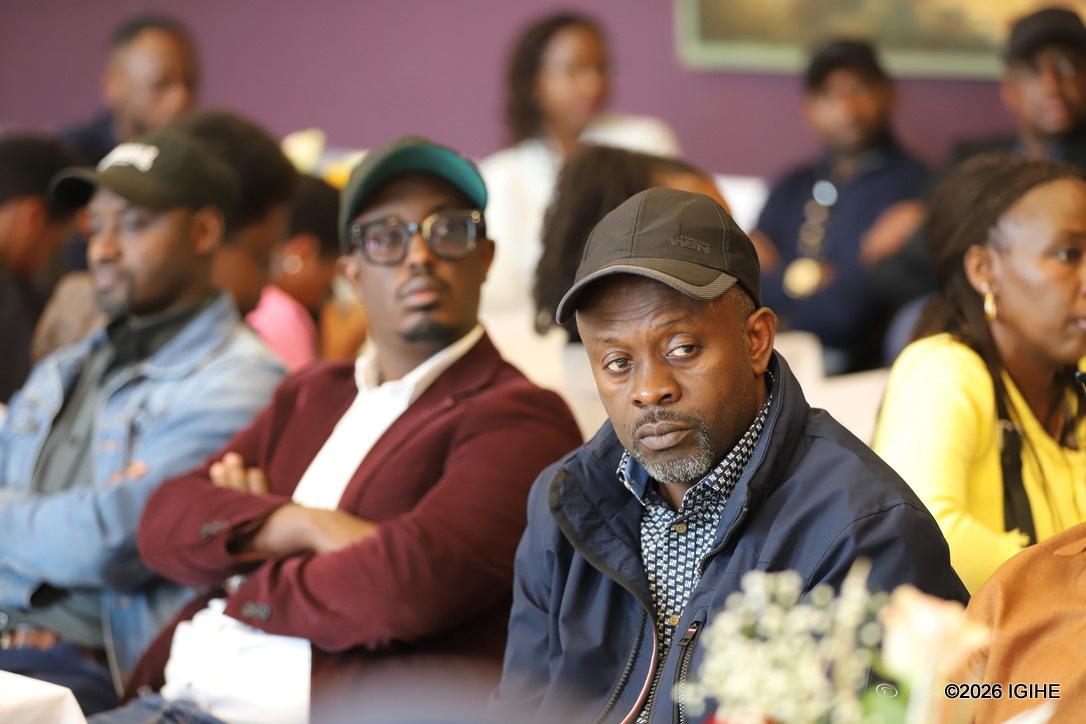
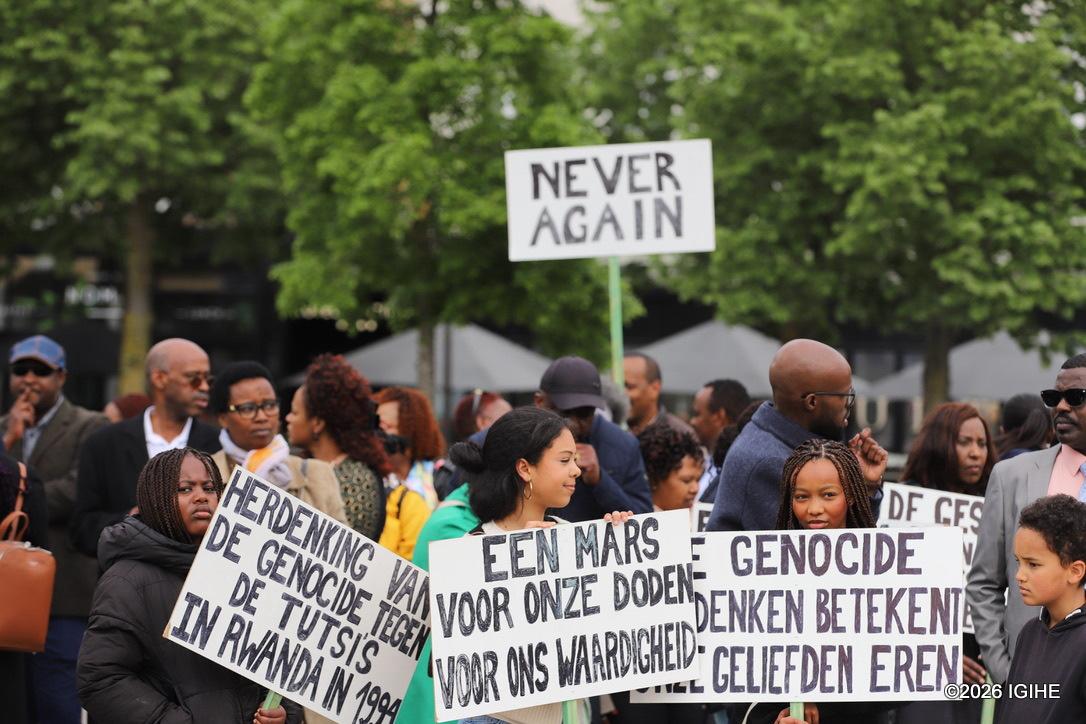
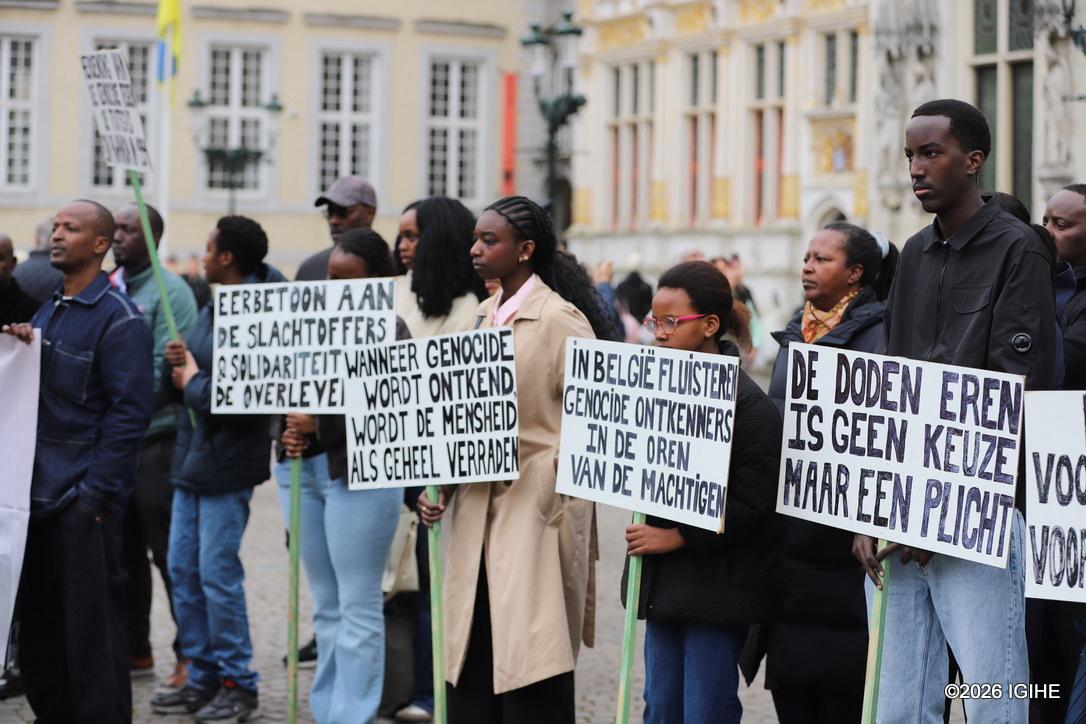
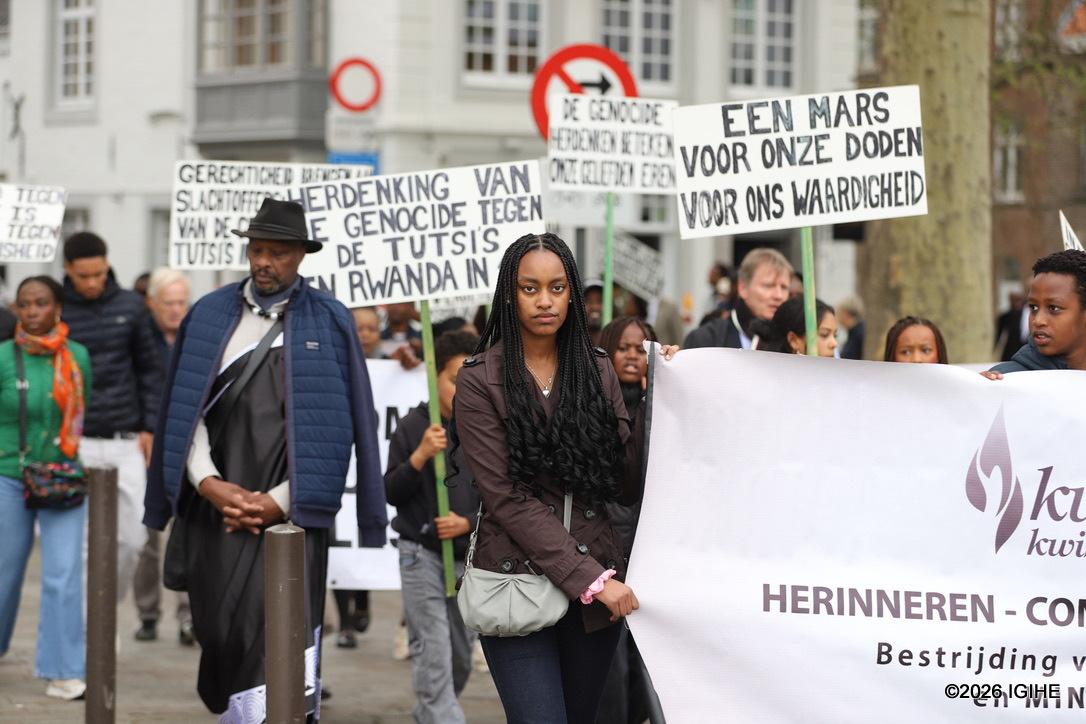
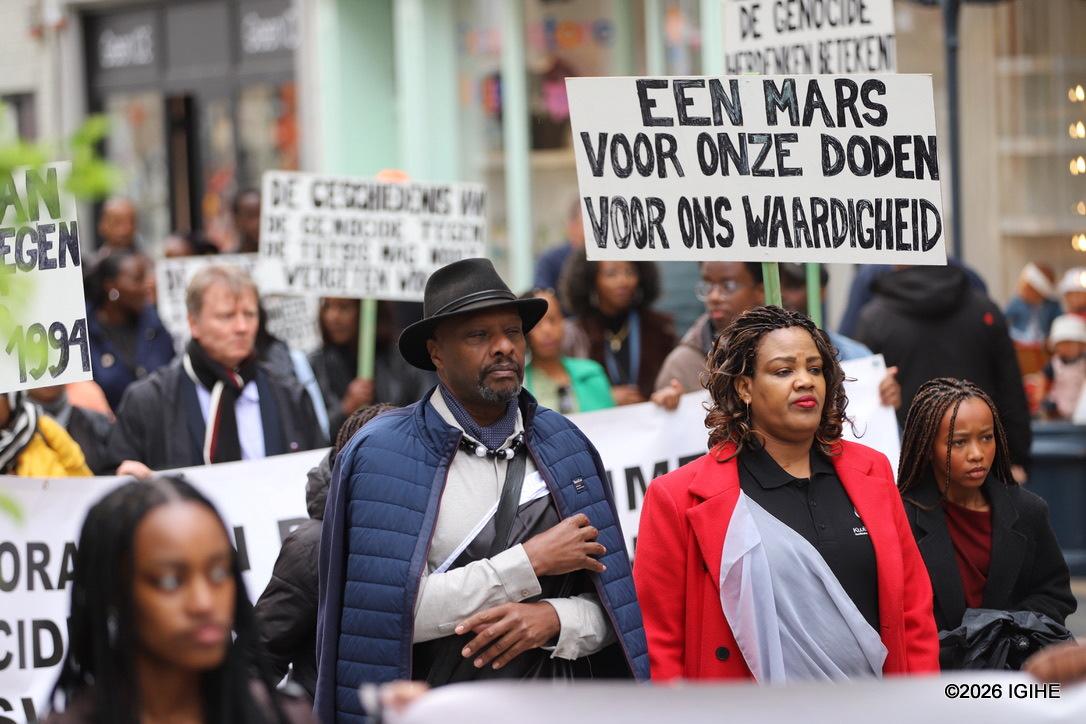
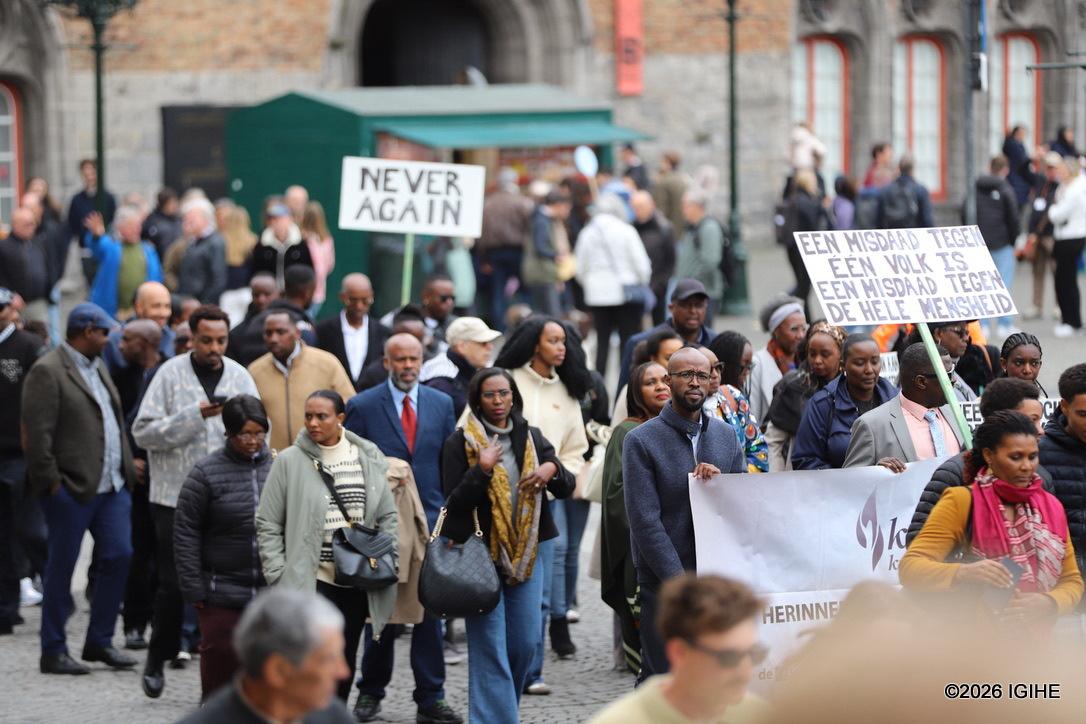
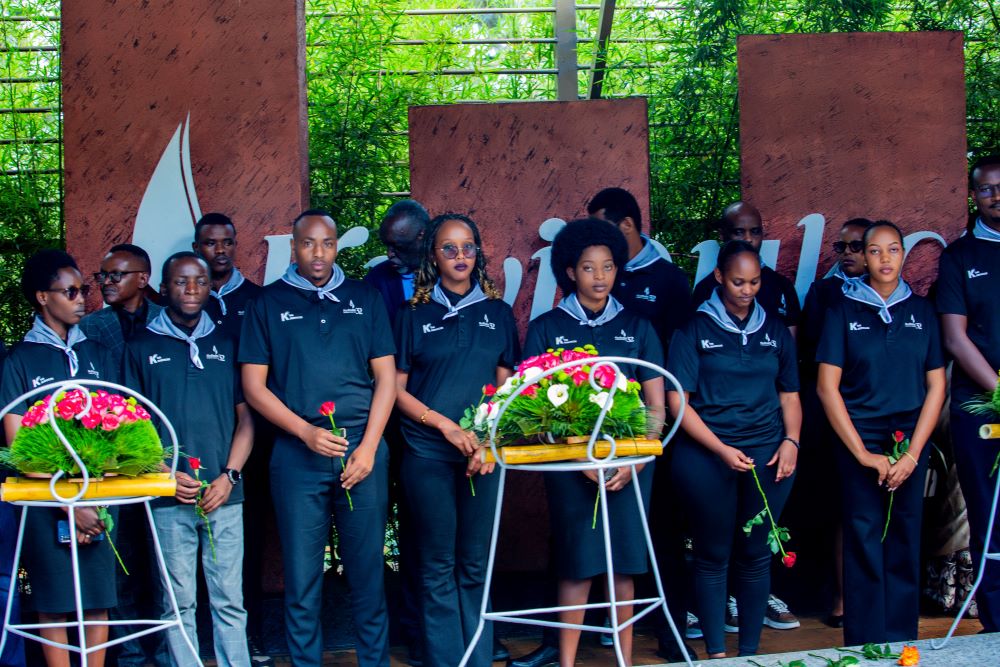
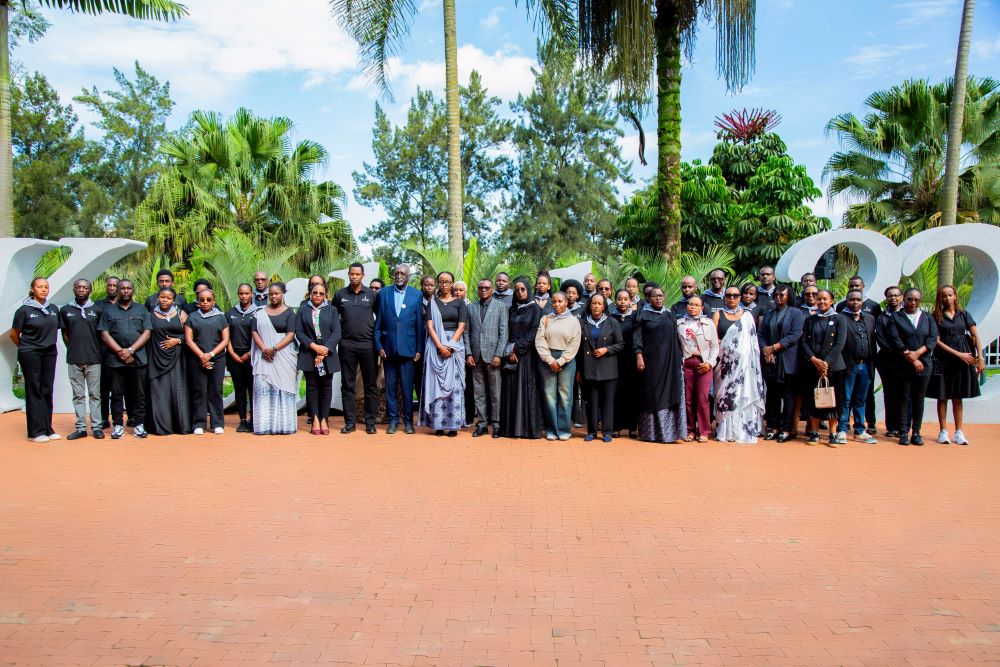
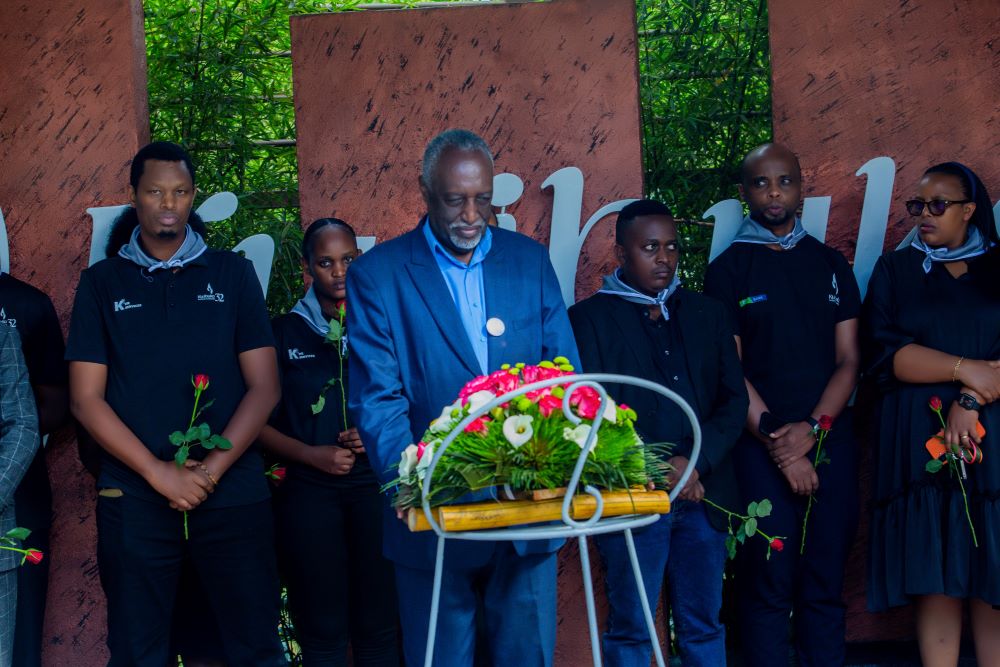
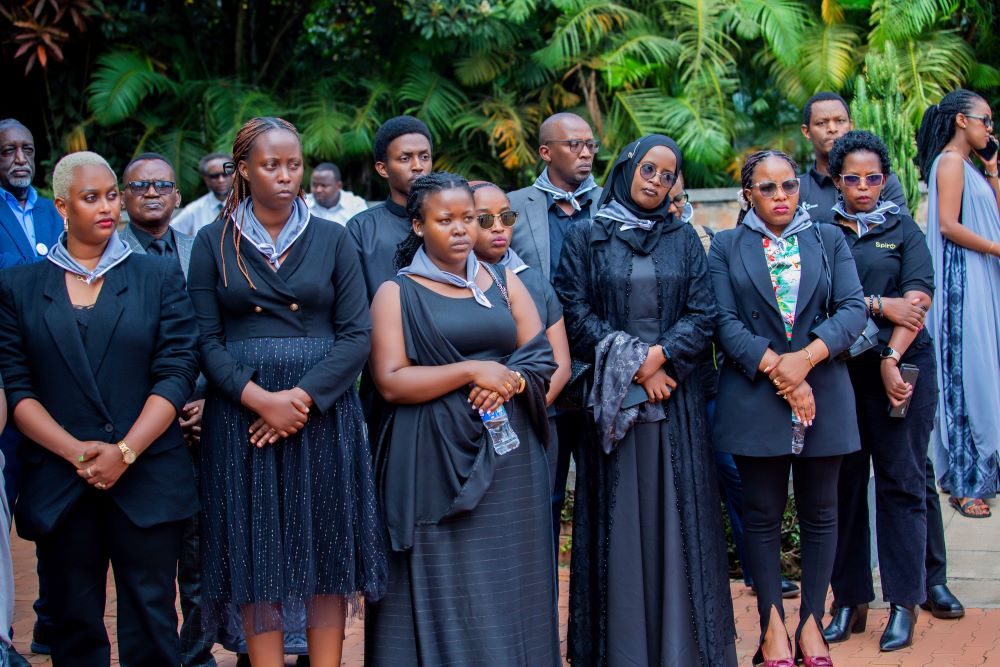
On this occasion, they reaffirmed their commitment to combating genocide denial and minimization, which still persist in Belgium and in other parts of the world.
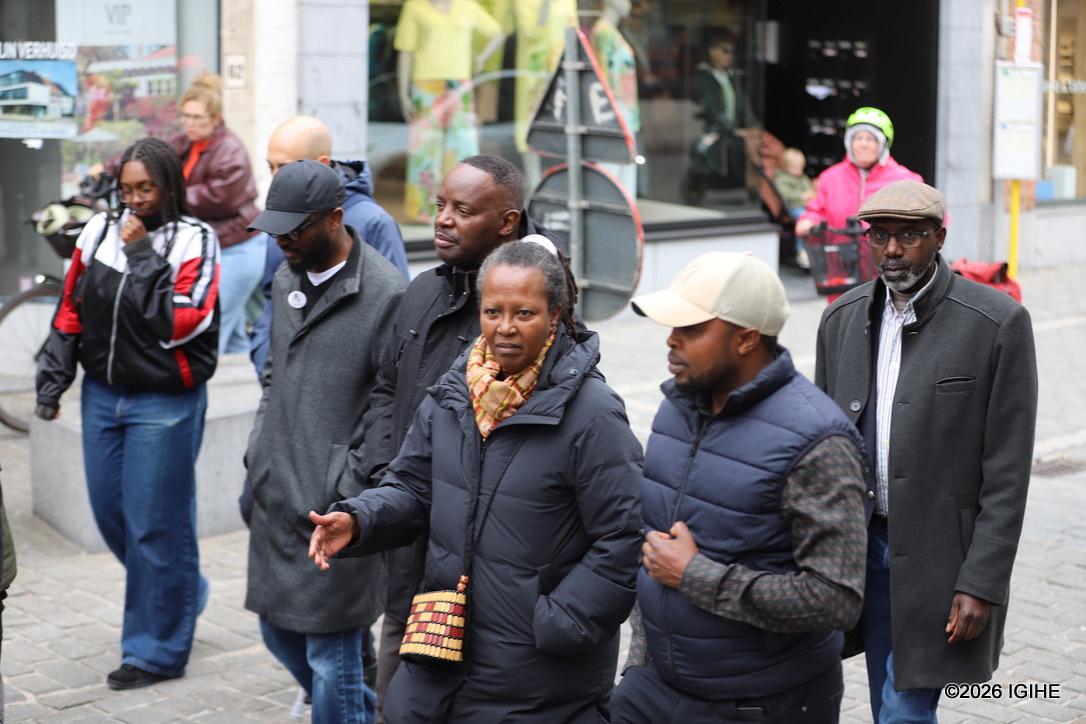
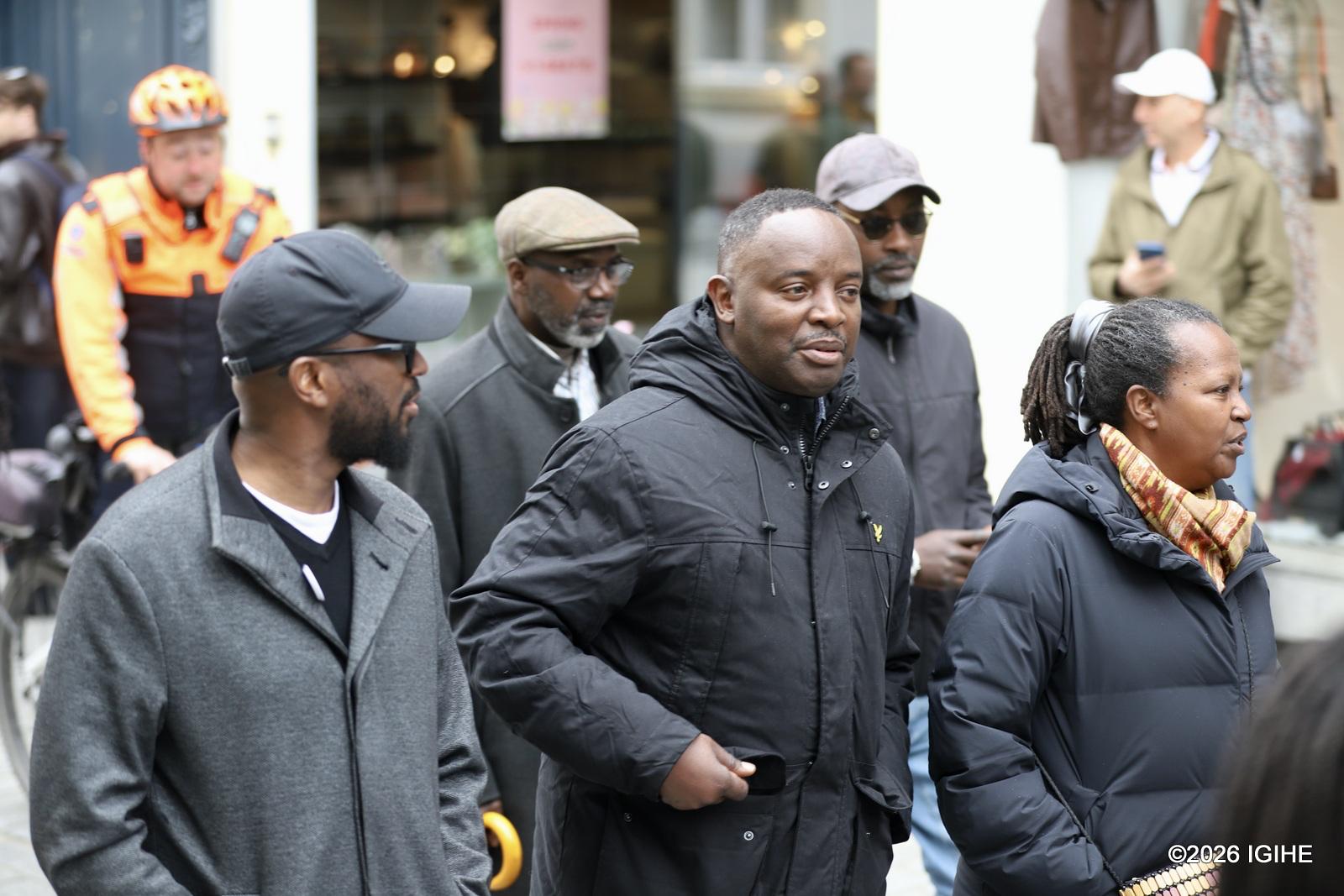
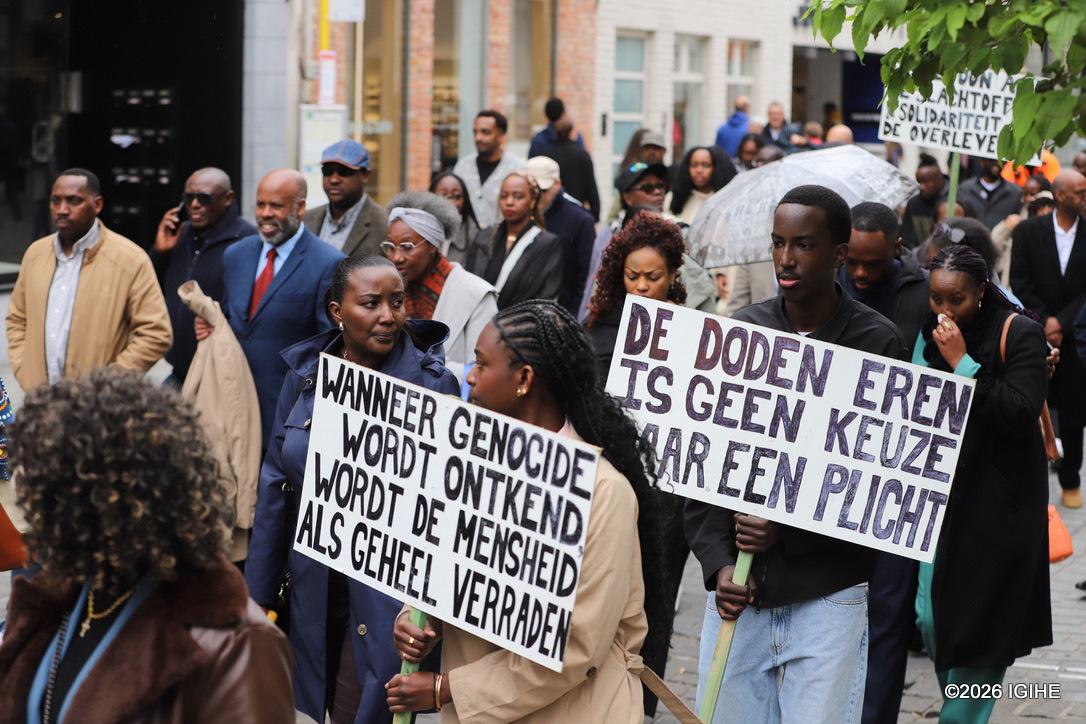
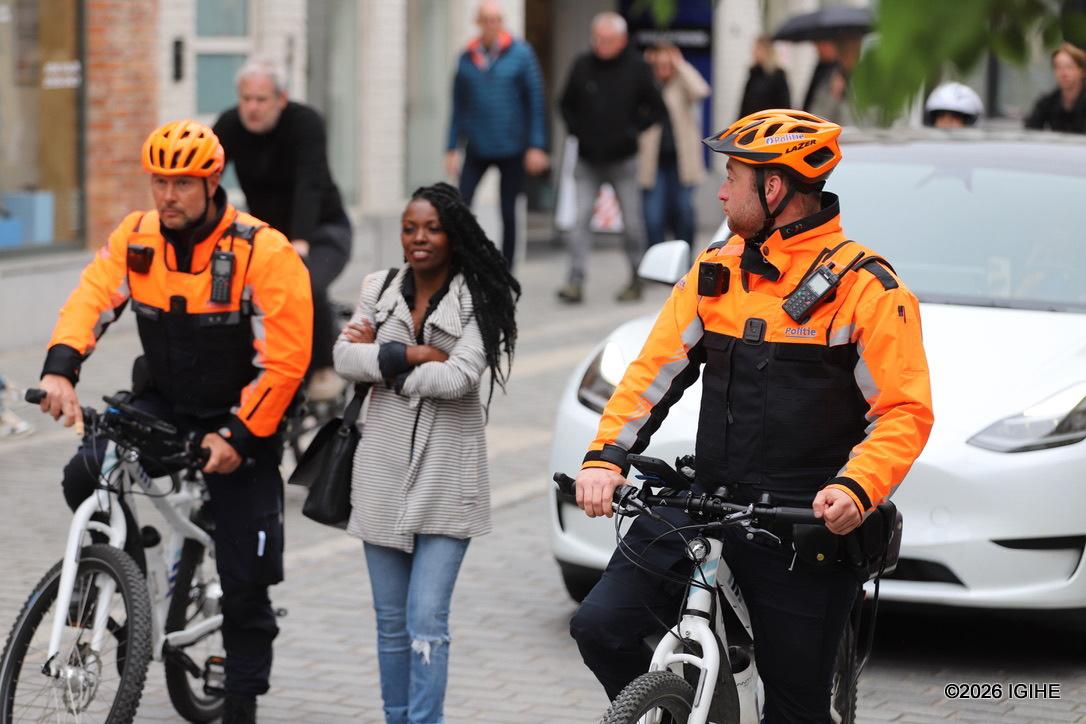
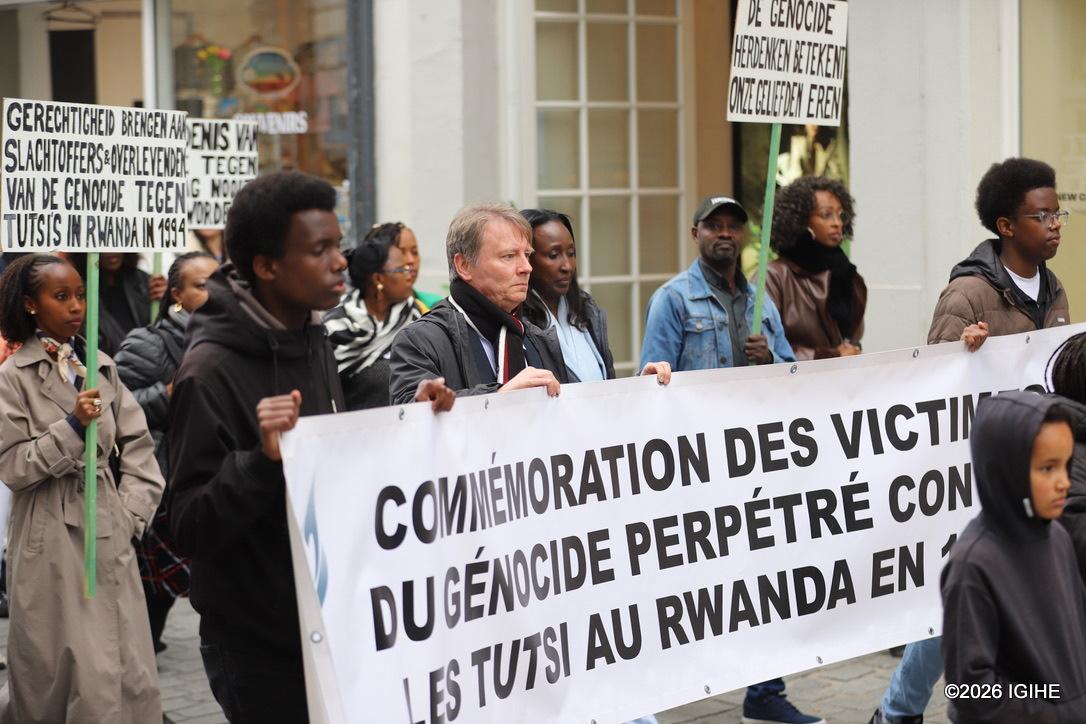
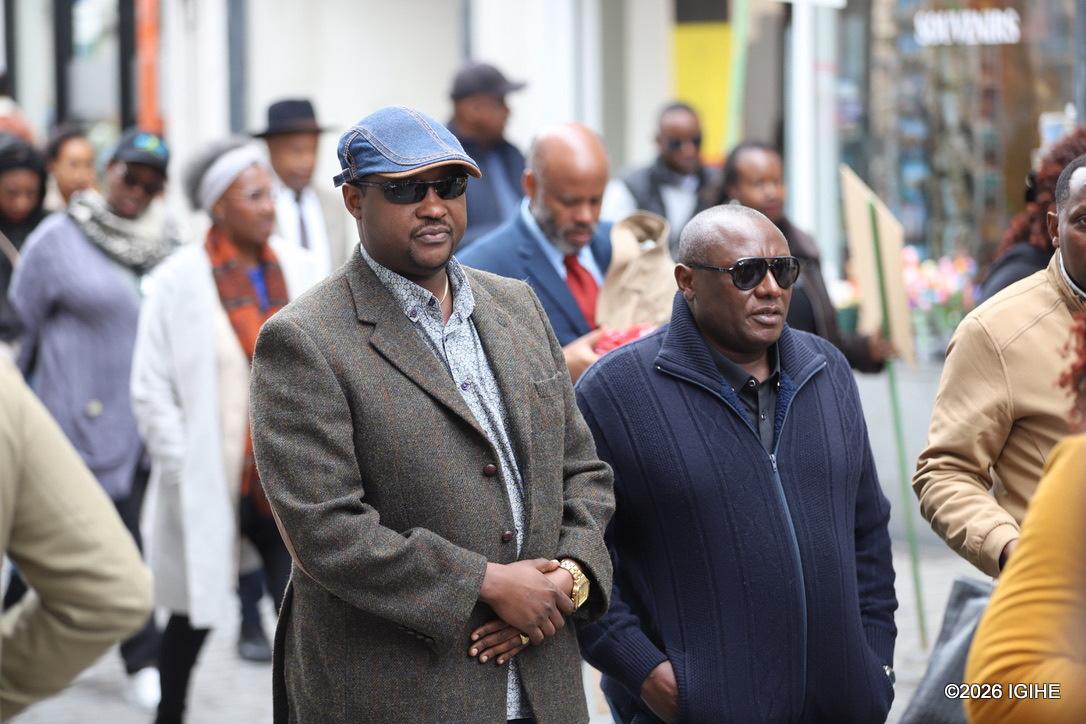
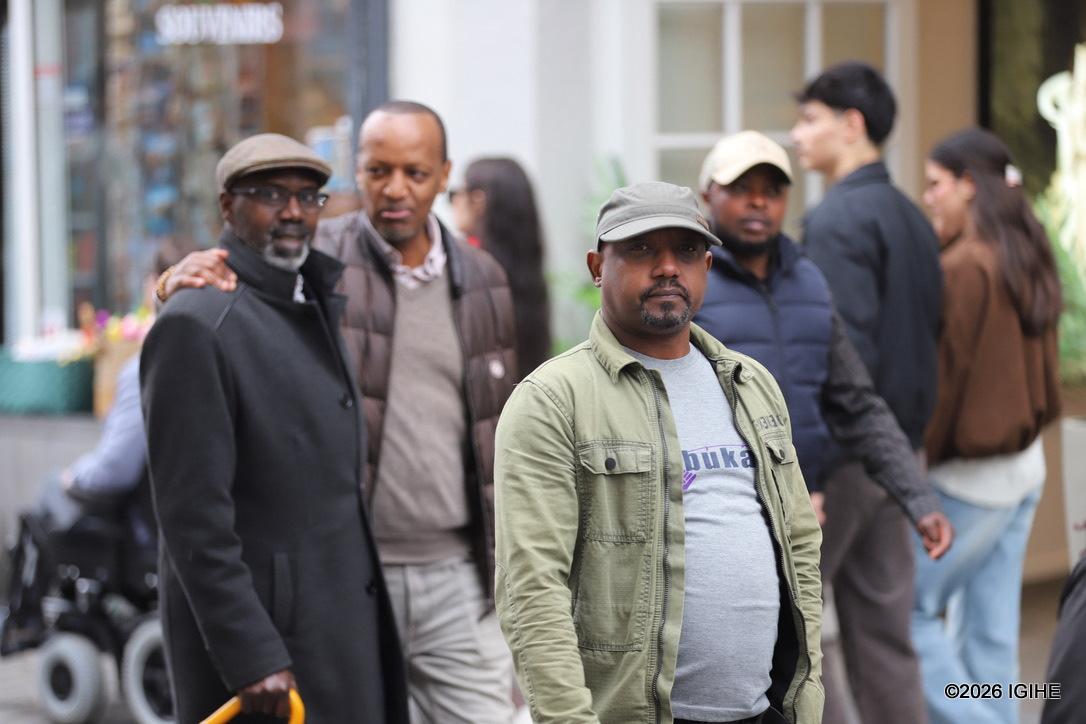
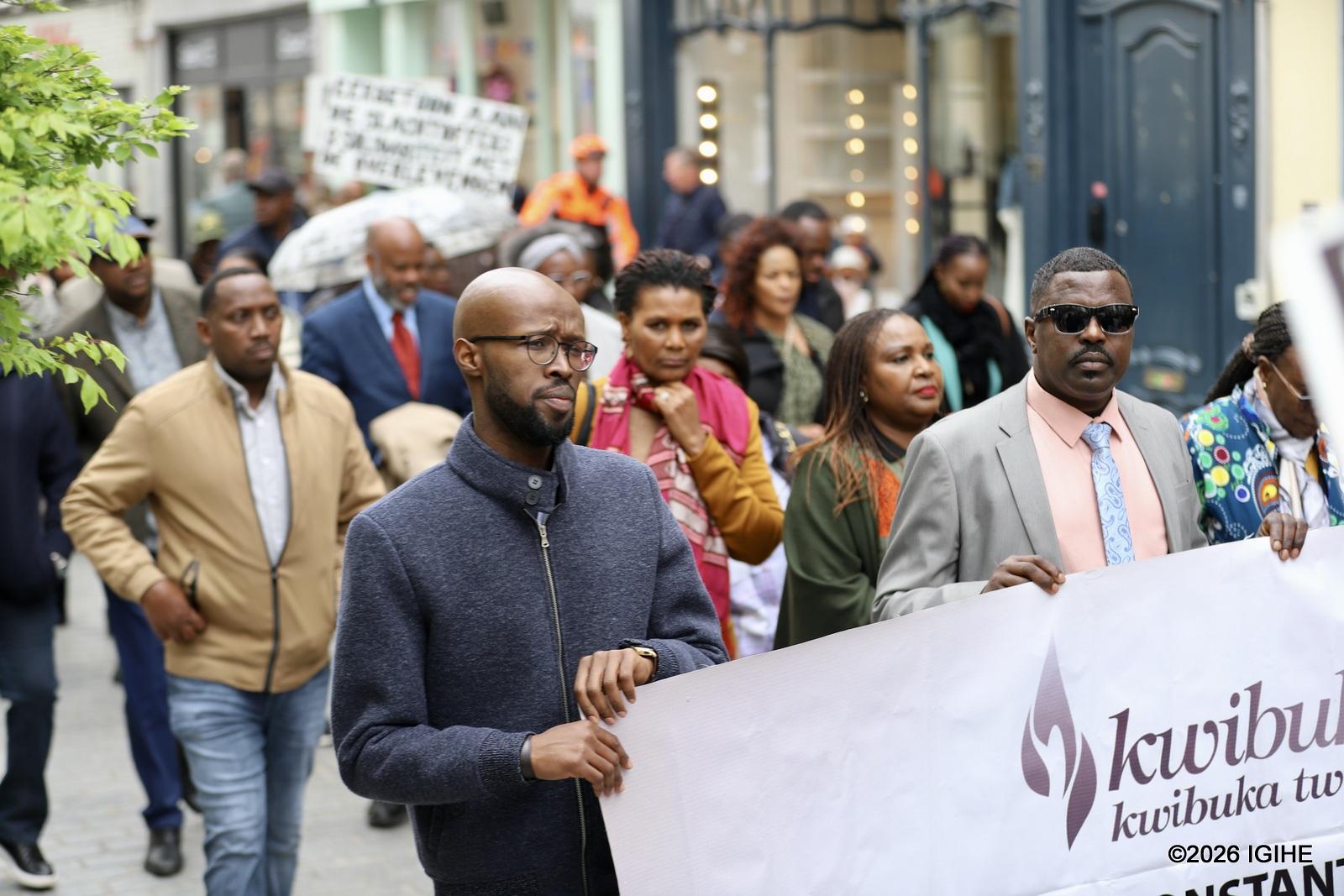
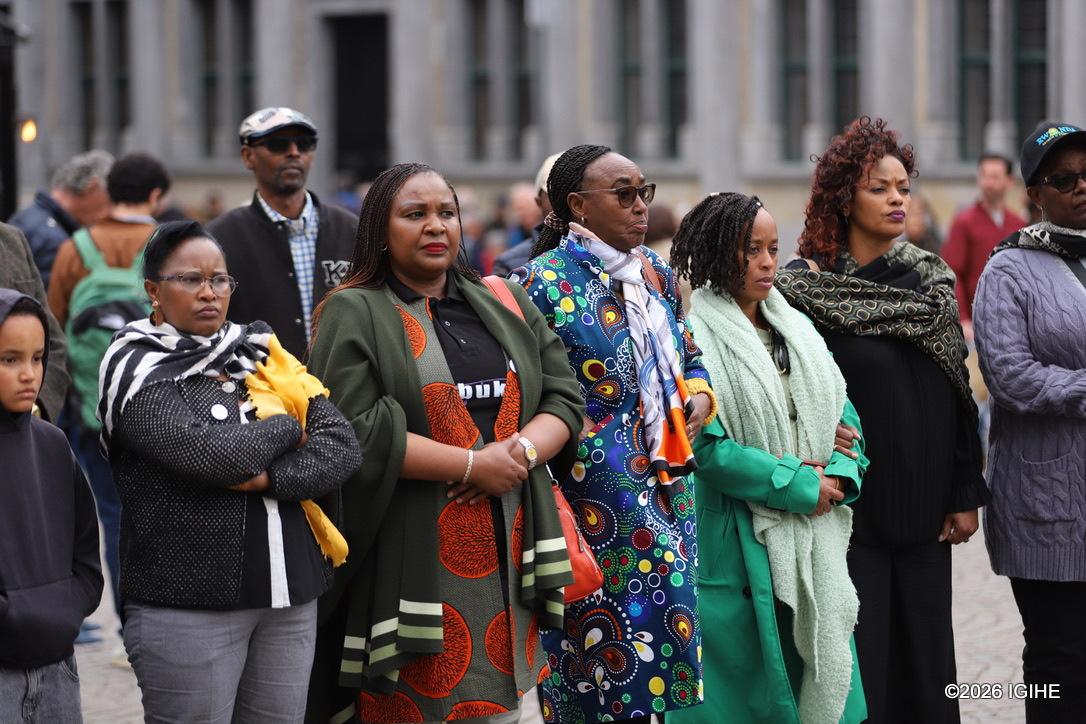
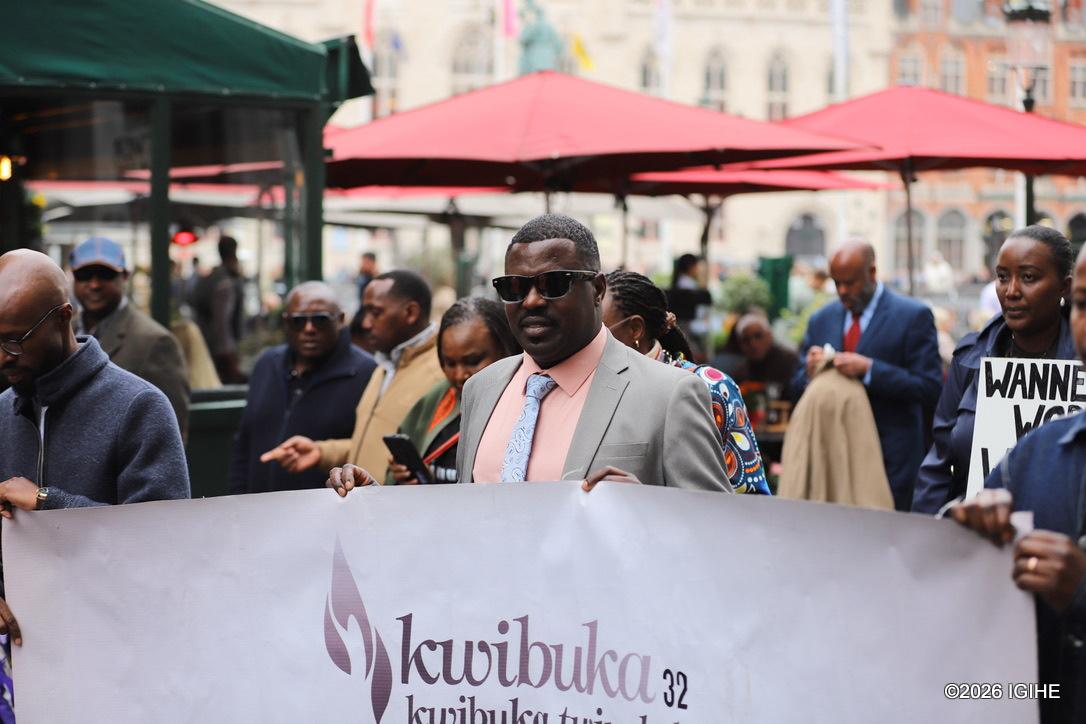
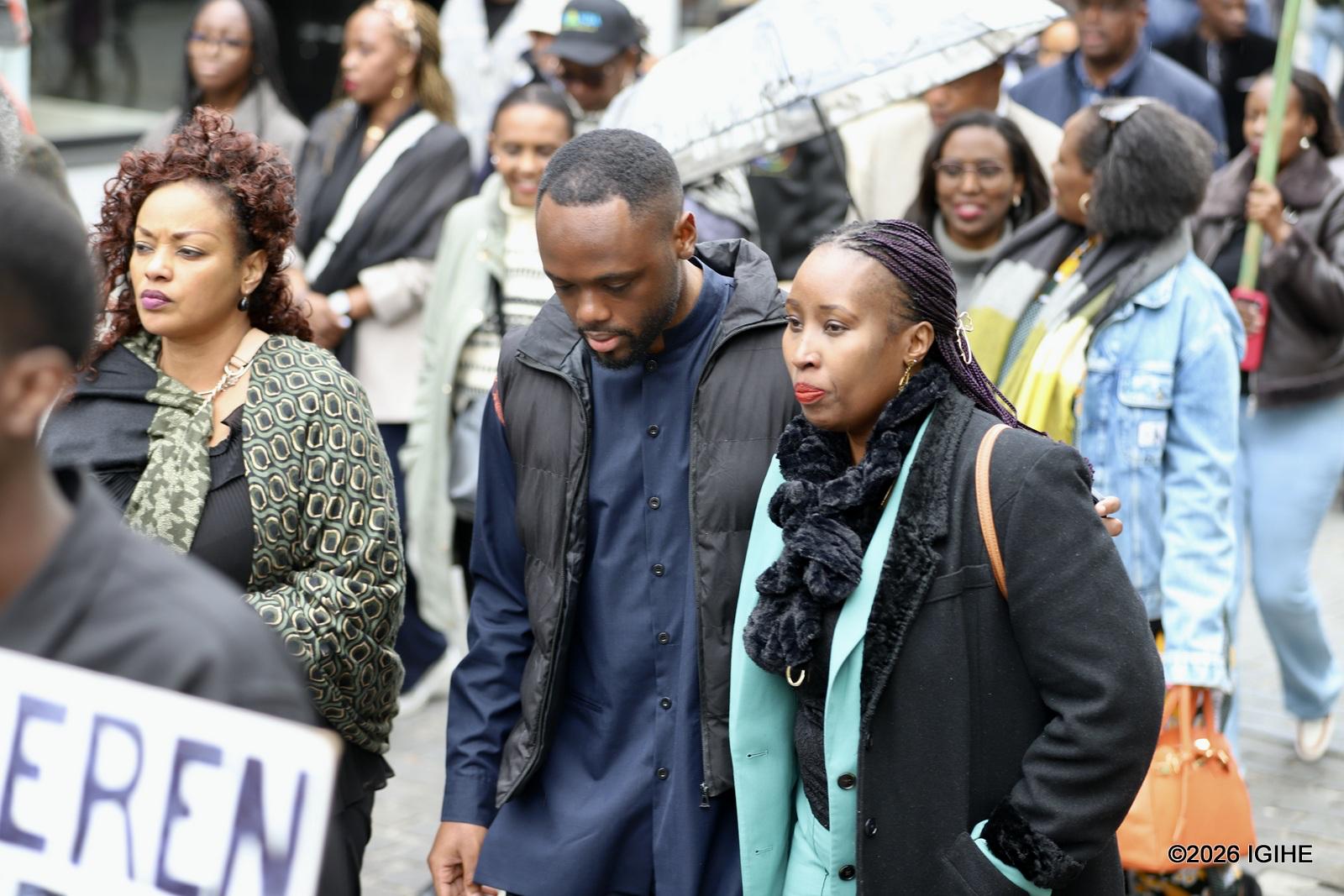
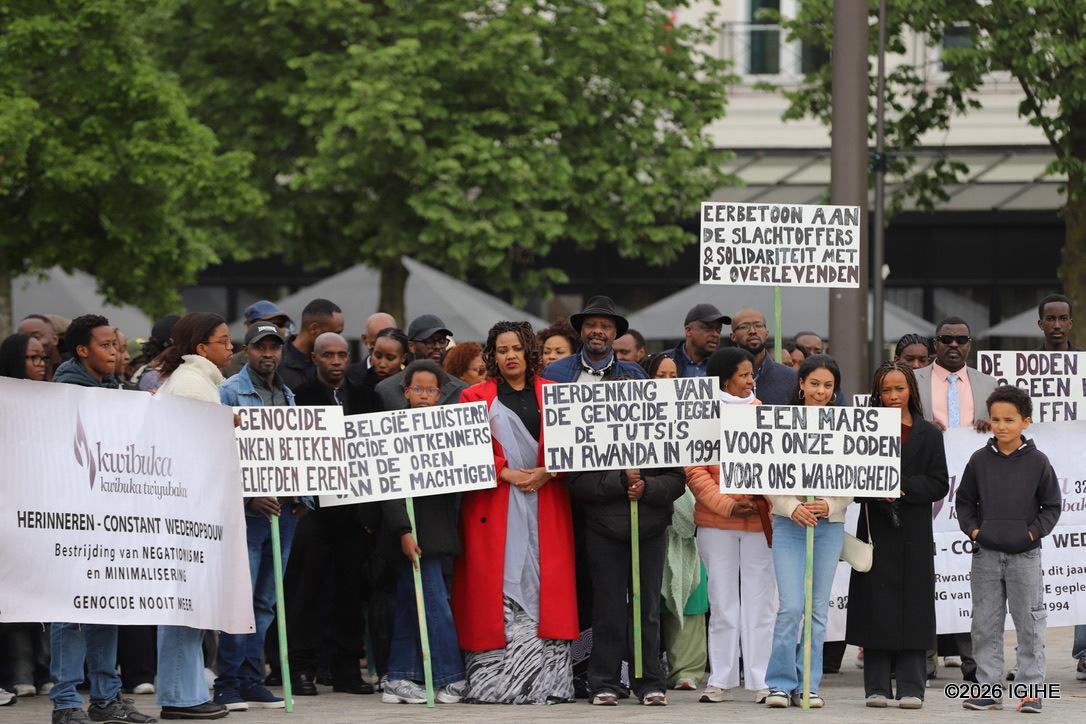
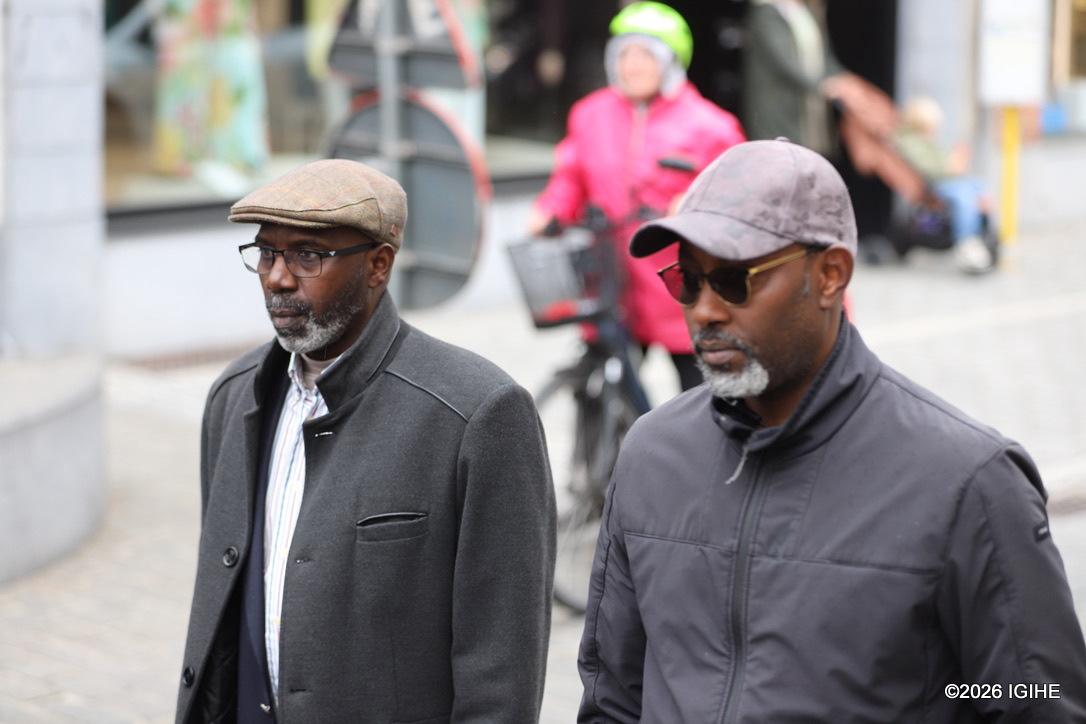
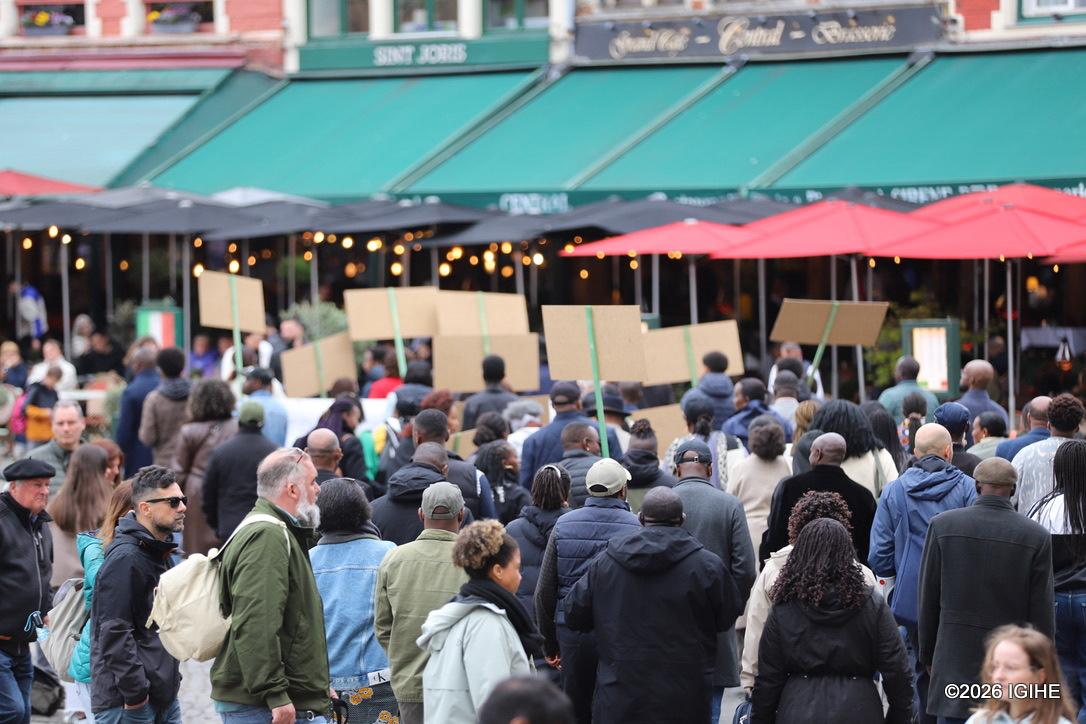
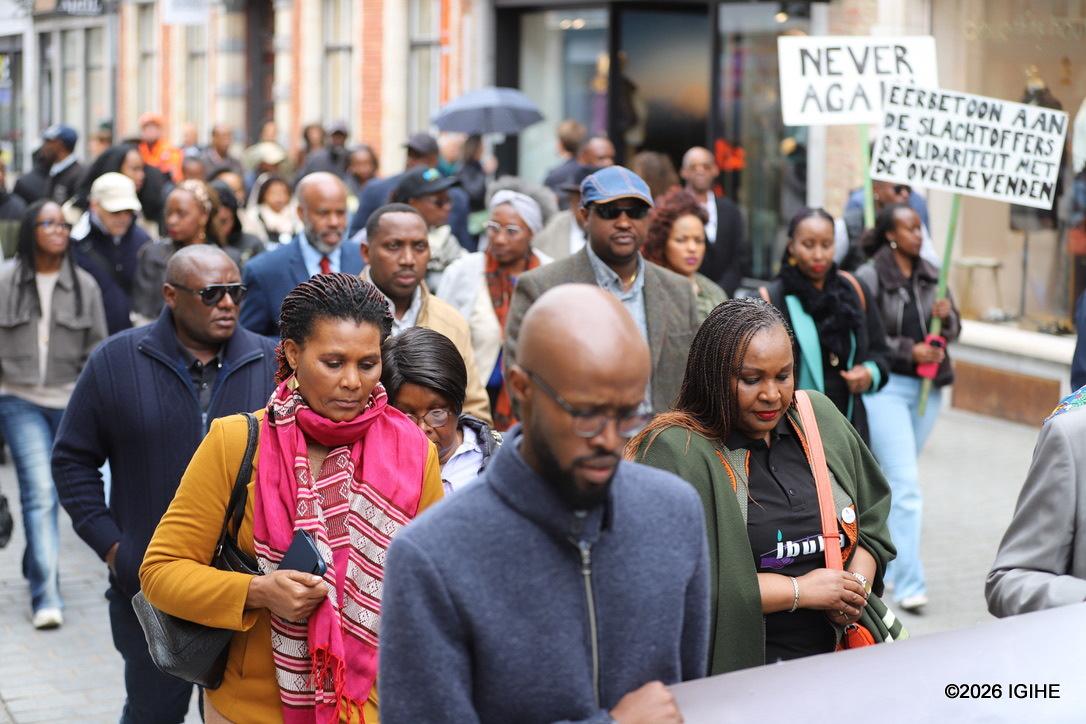
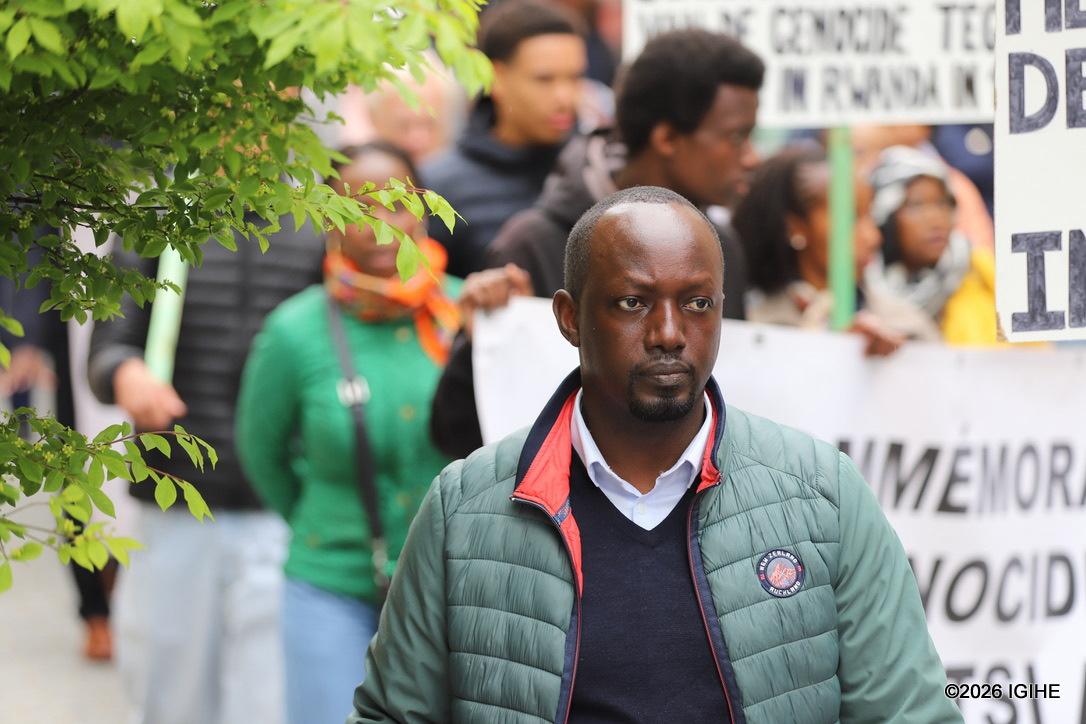
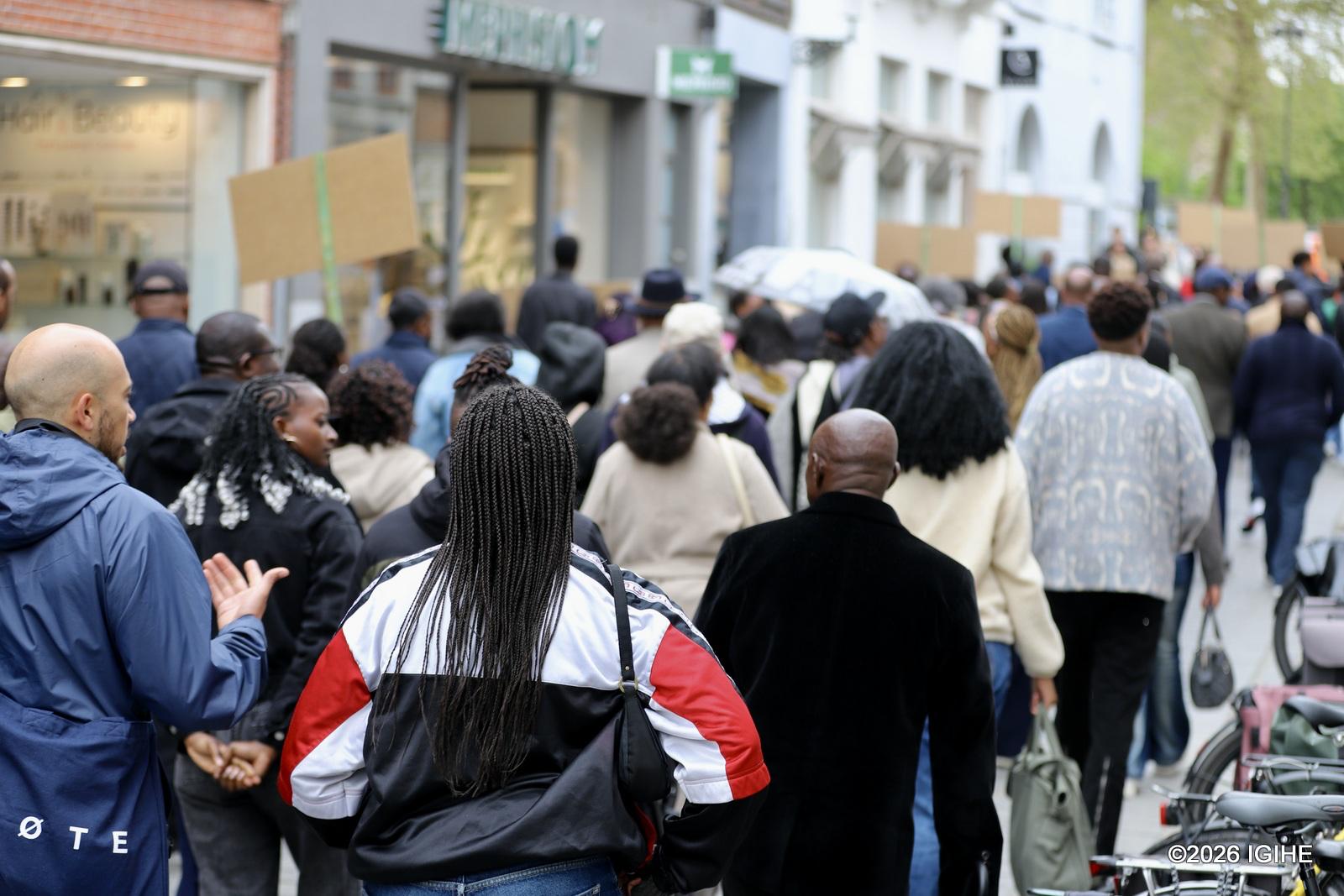
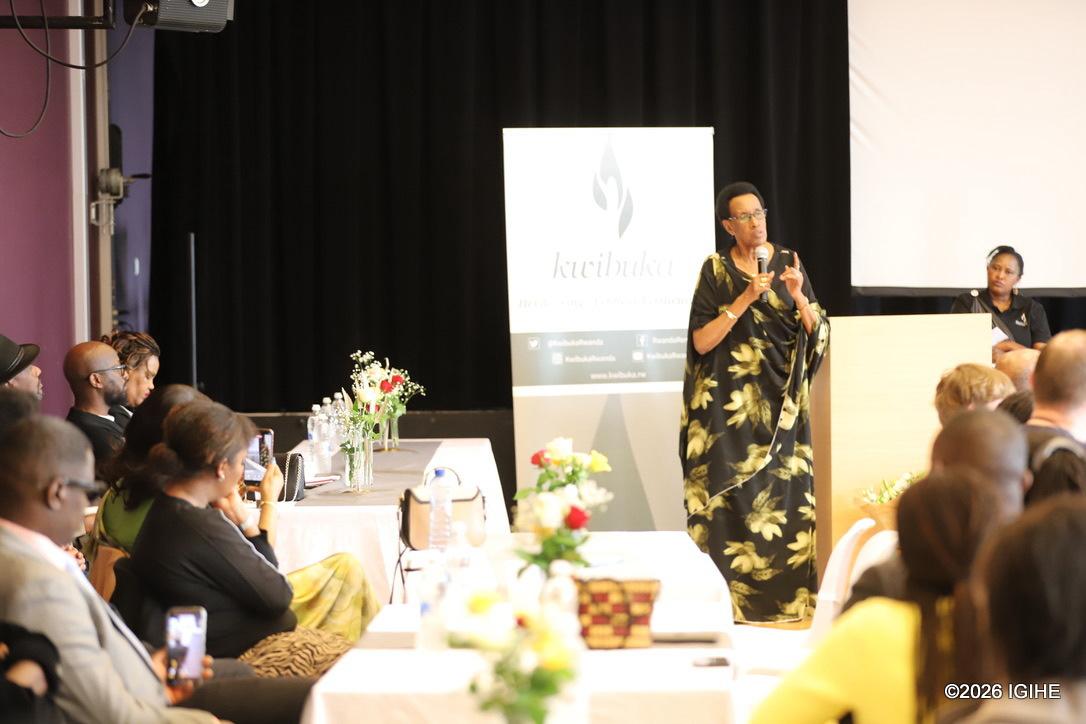
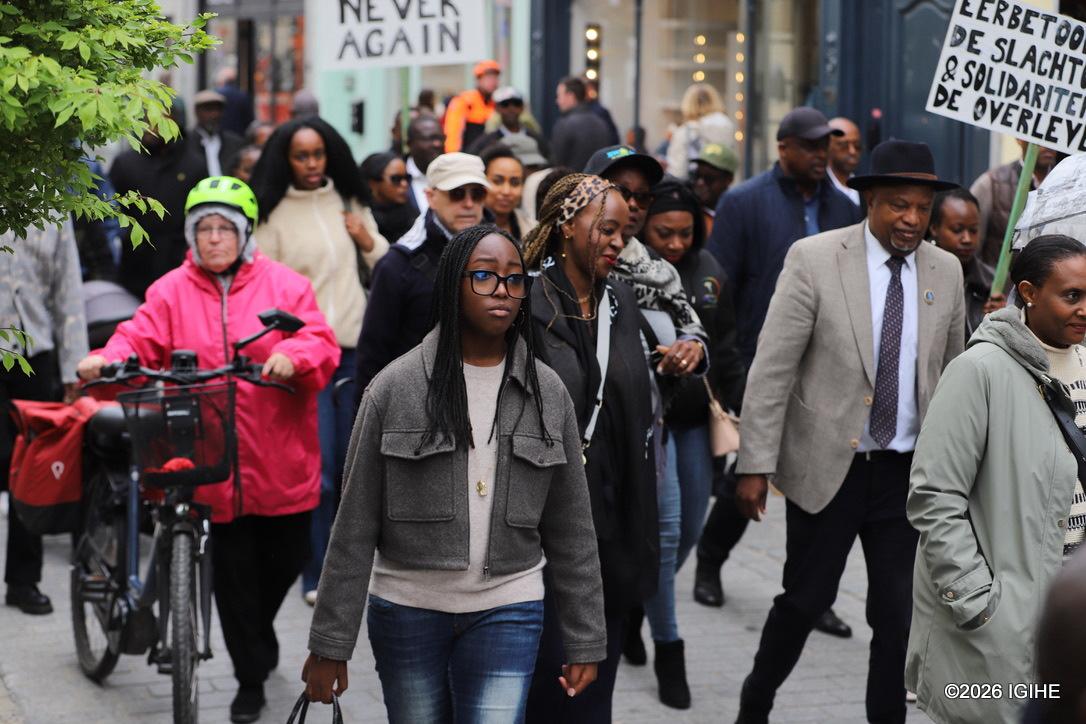
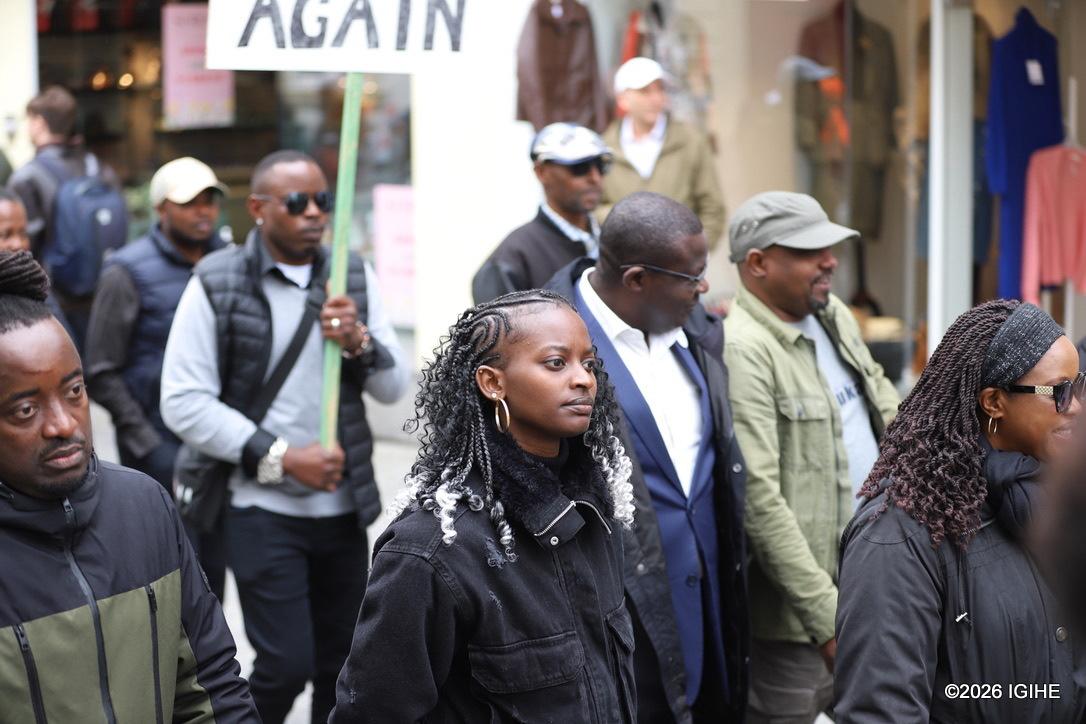
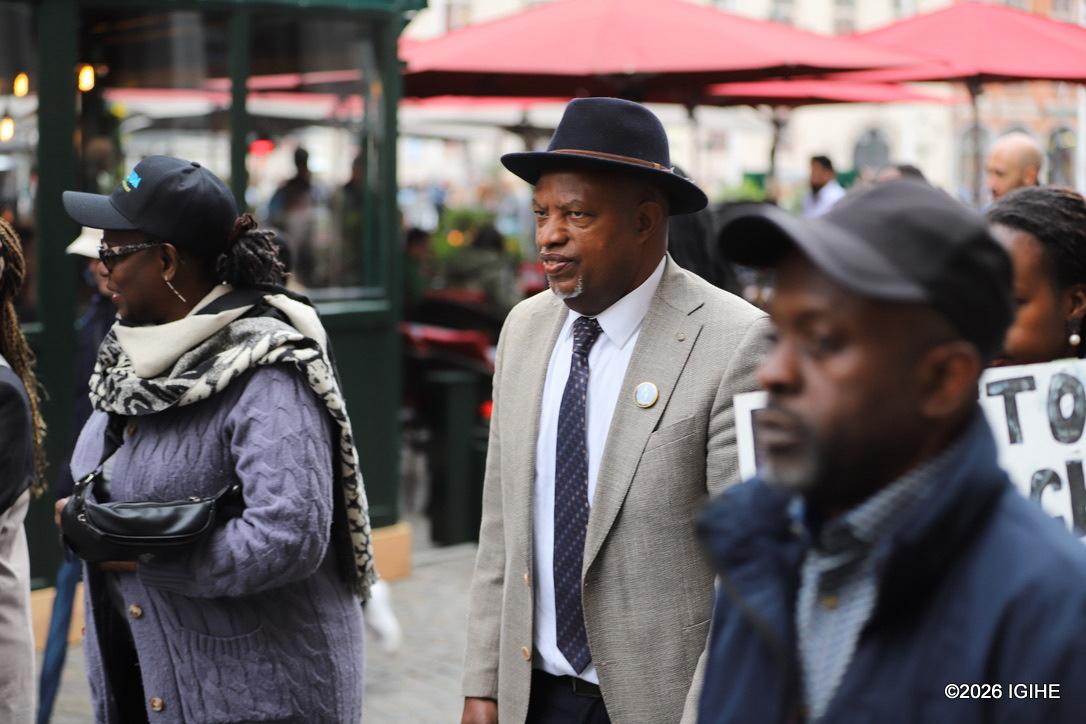
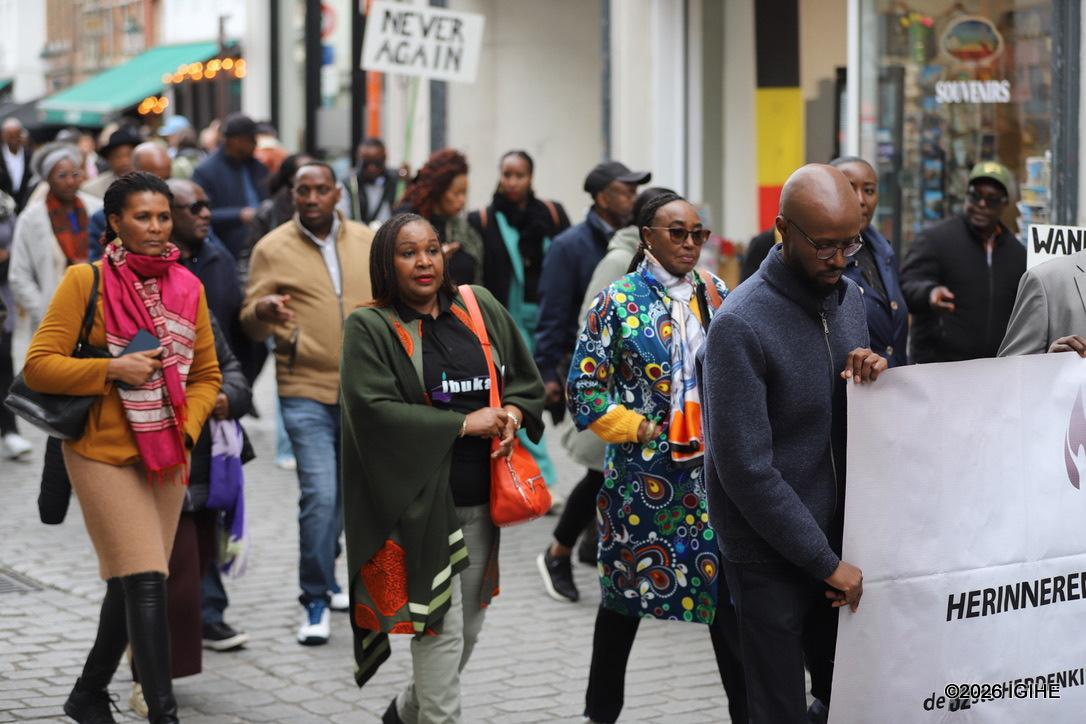
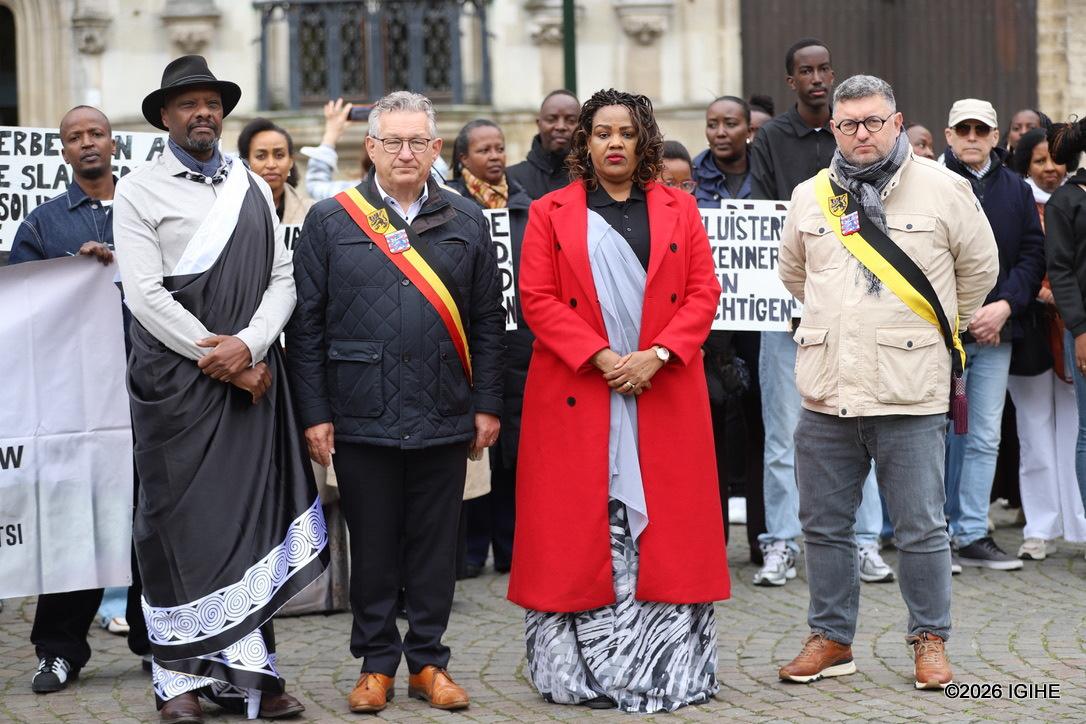
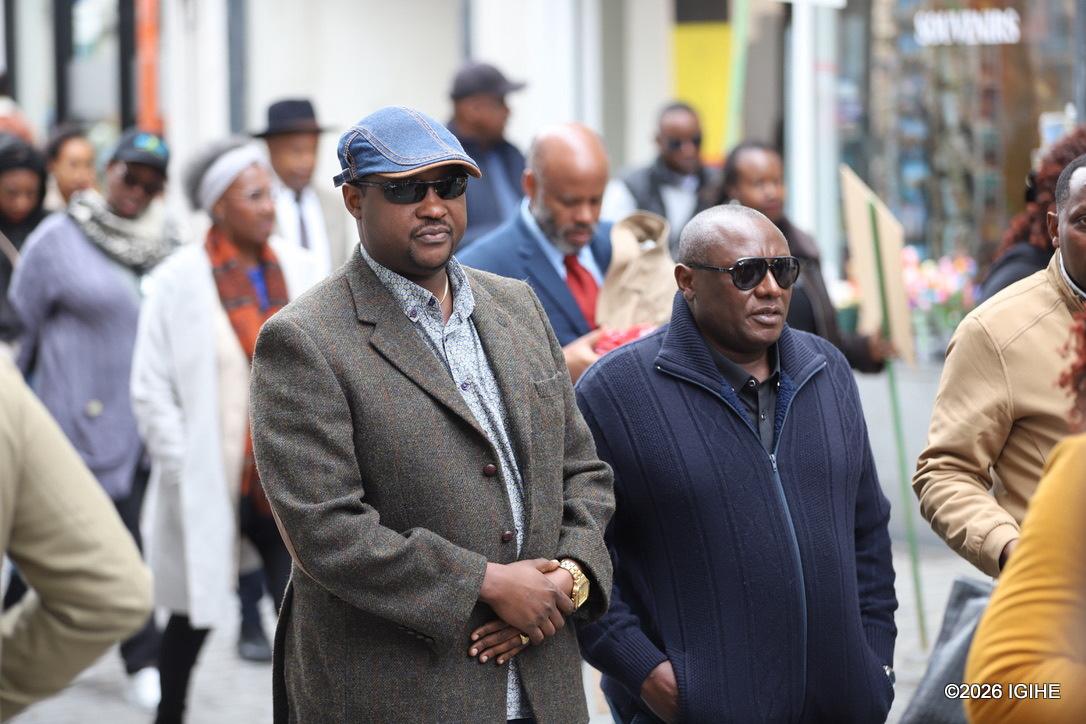
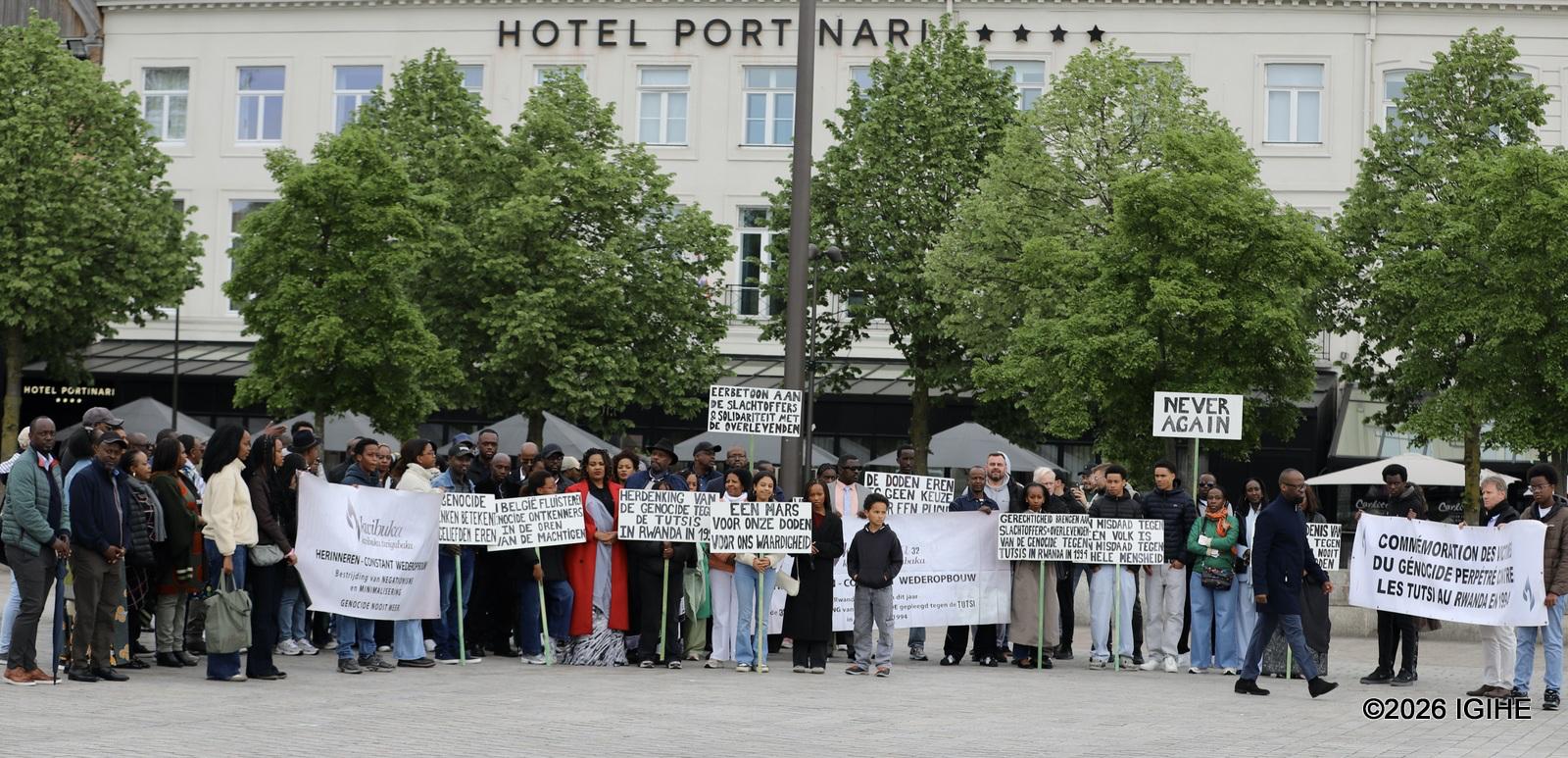
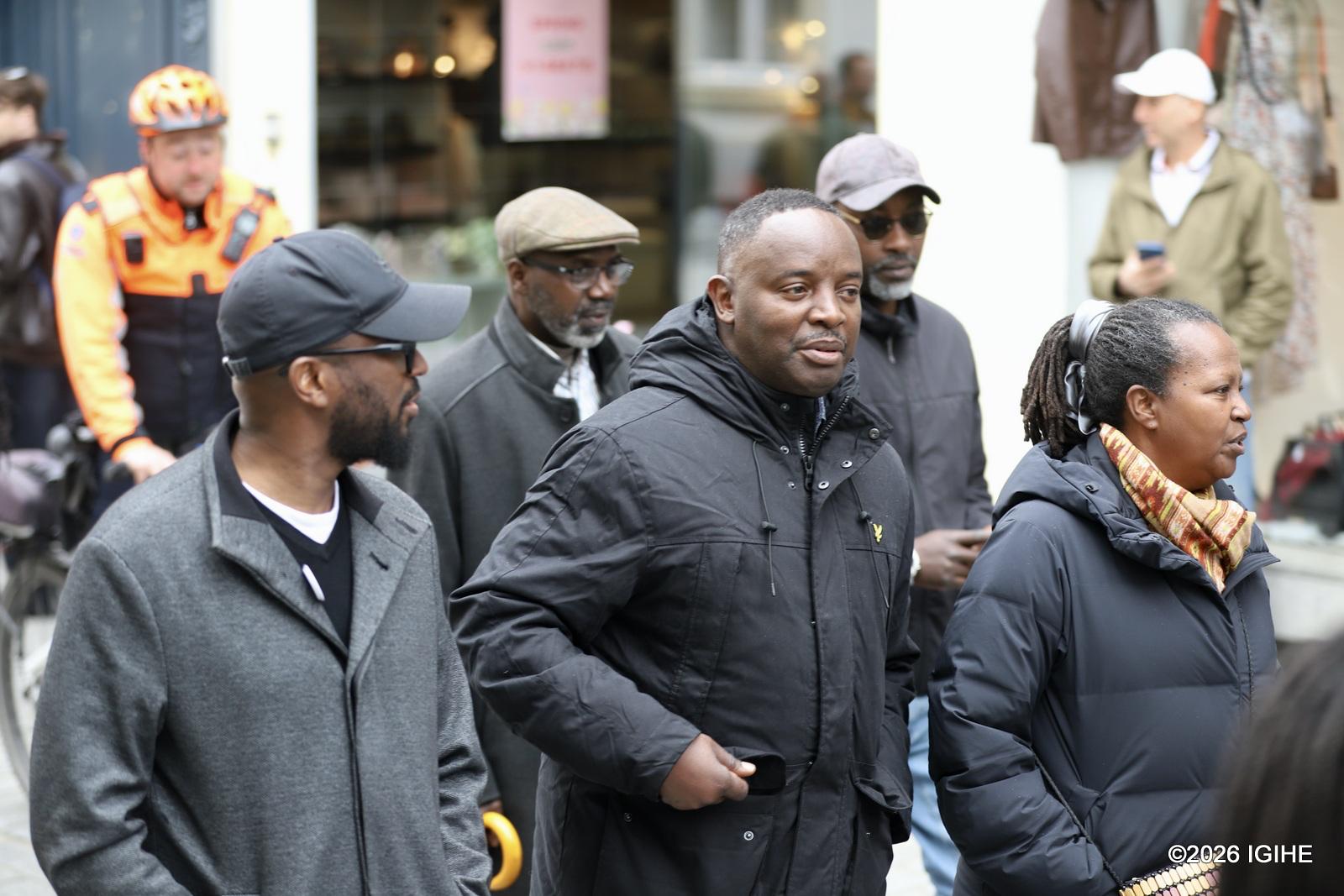
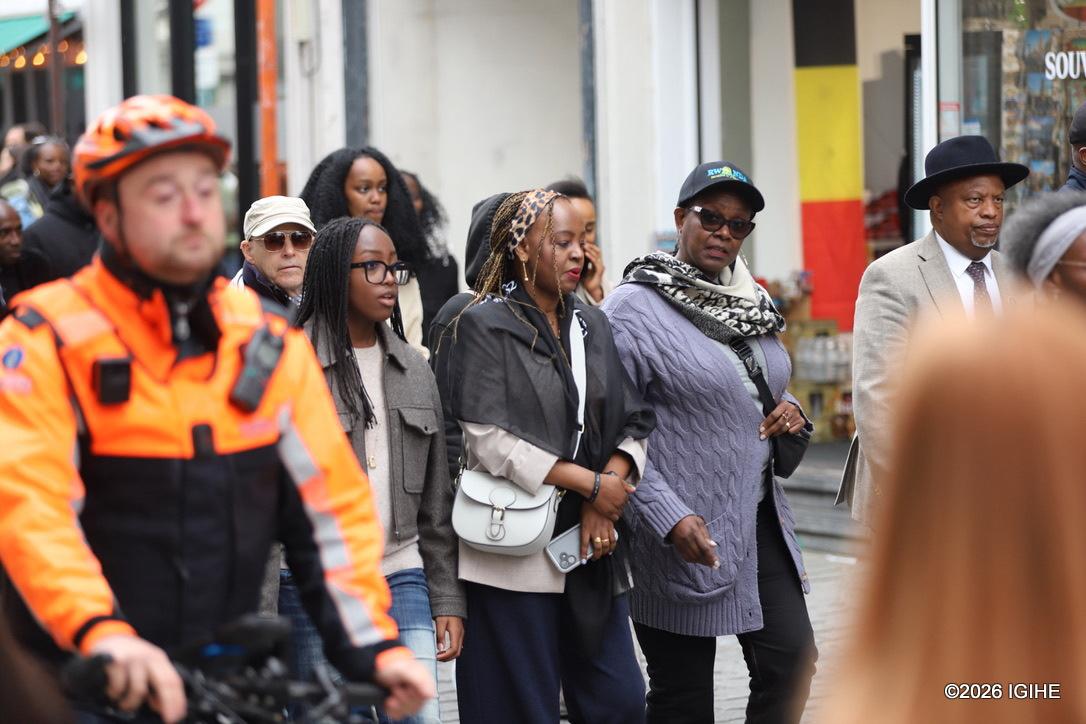
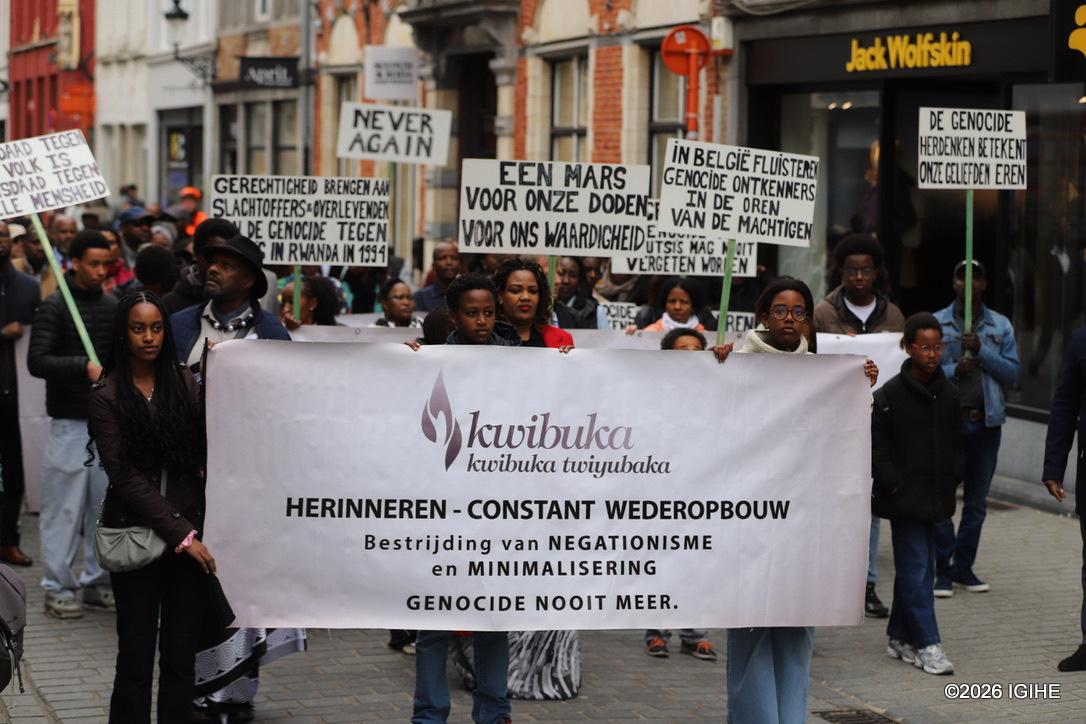
The event included a commemorative walk through the city of Bruges, followed by commemoration talks.
Commemorative walks held abroad represent an important contribution to raising awareness about the history of the Genocide against the Tutsi in Rwanda, while conveying a strong message: “Never again.”
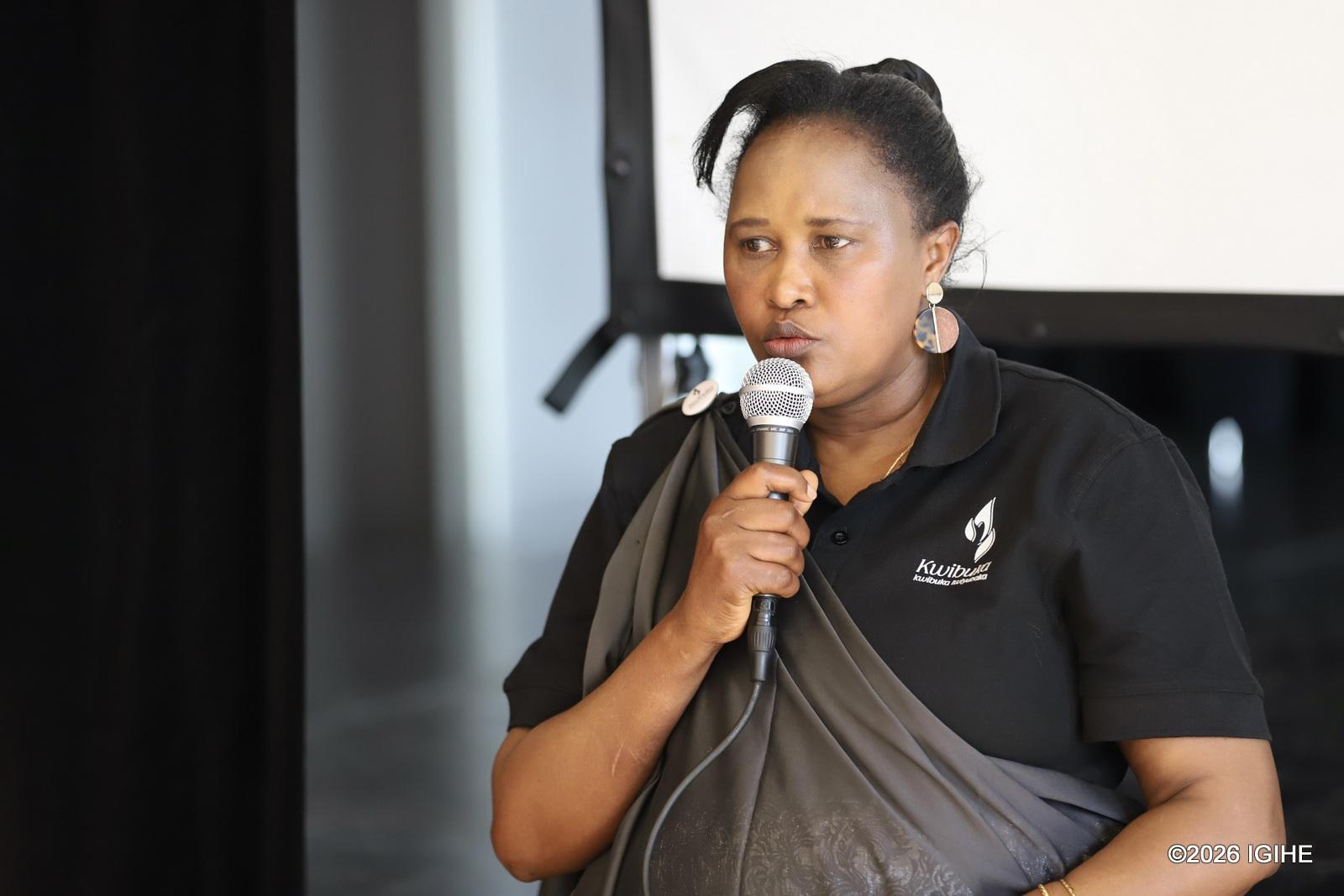
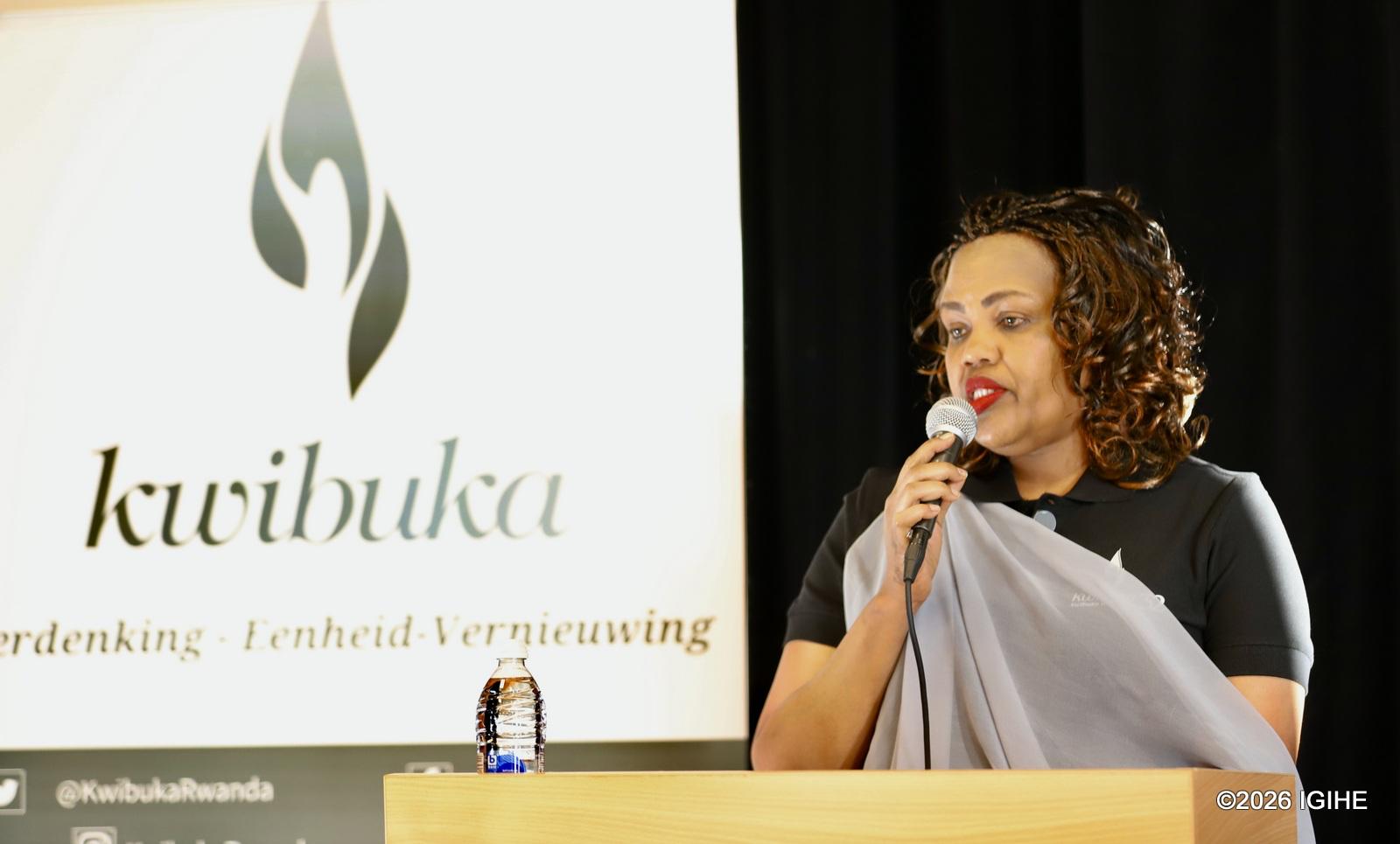
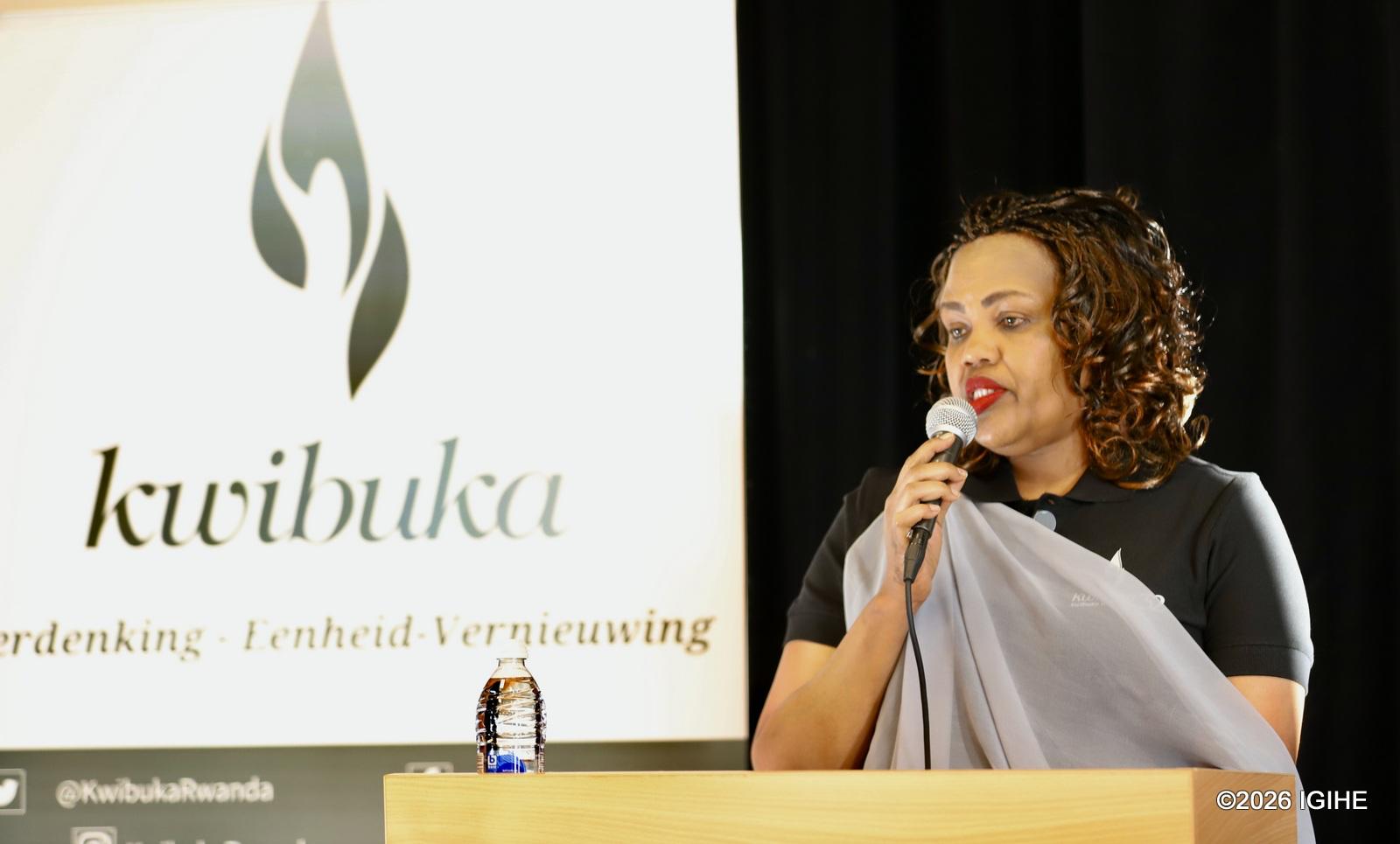
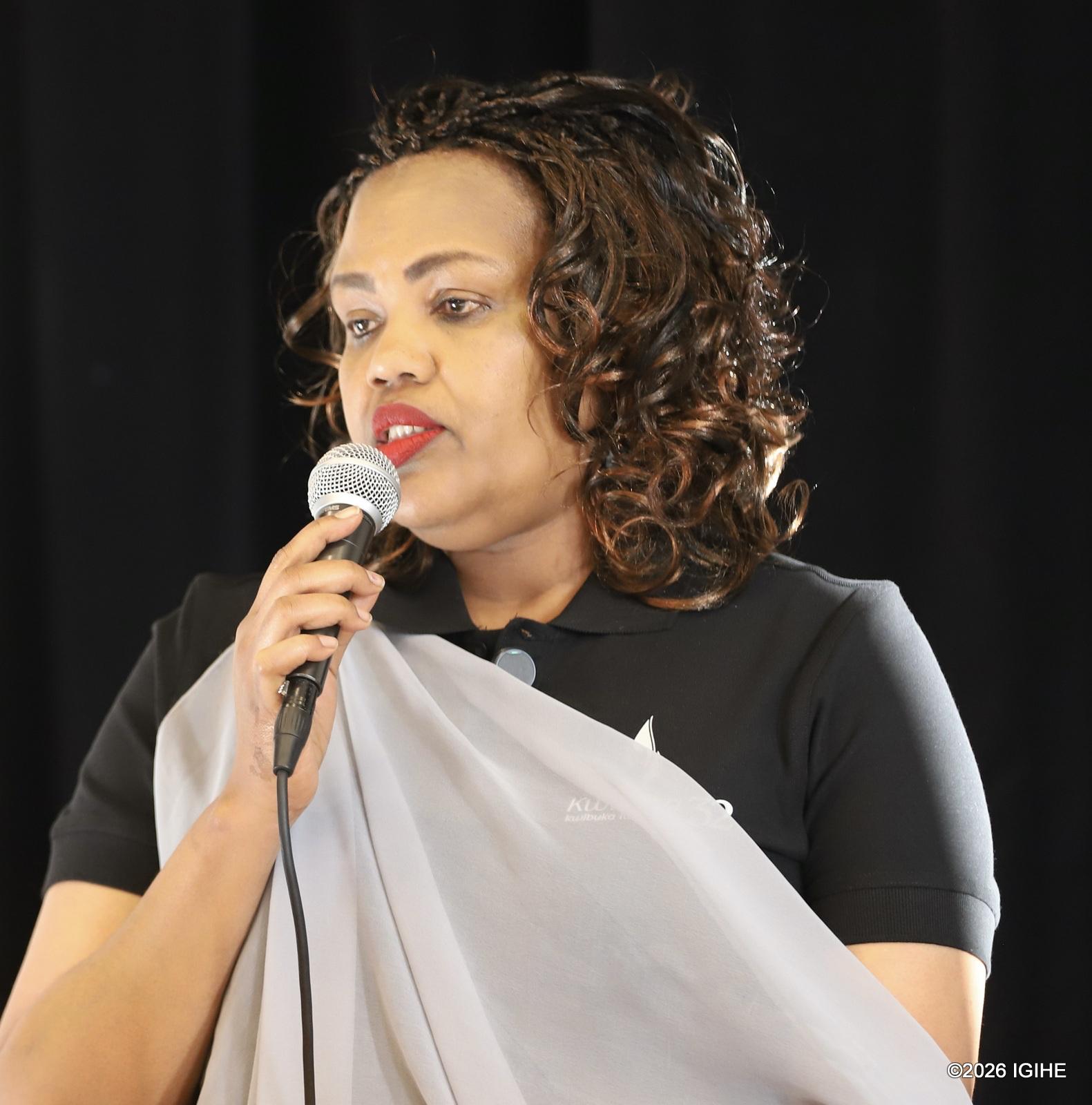
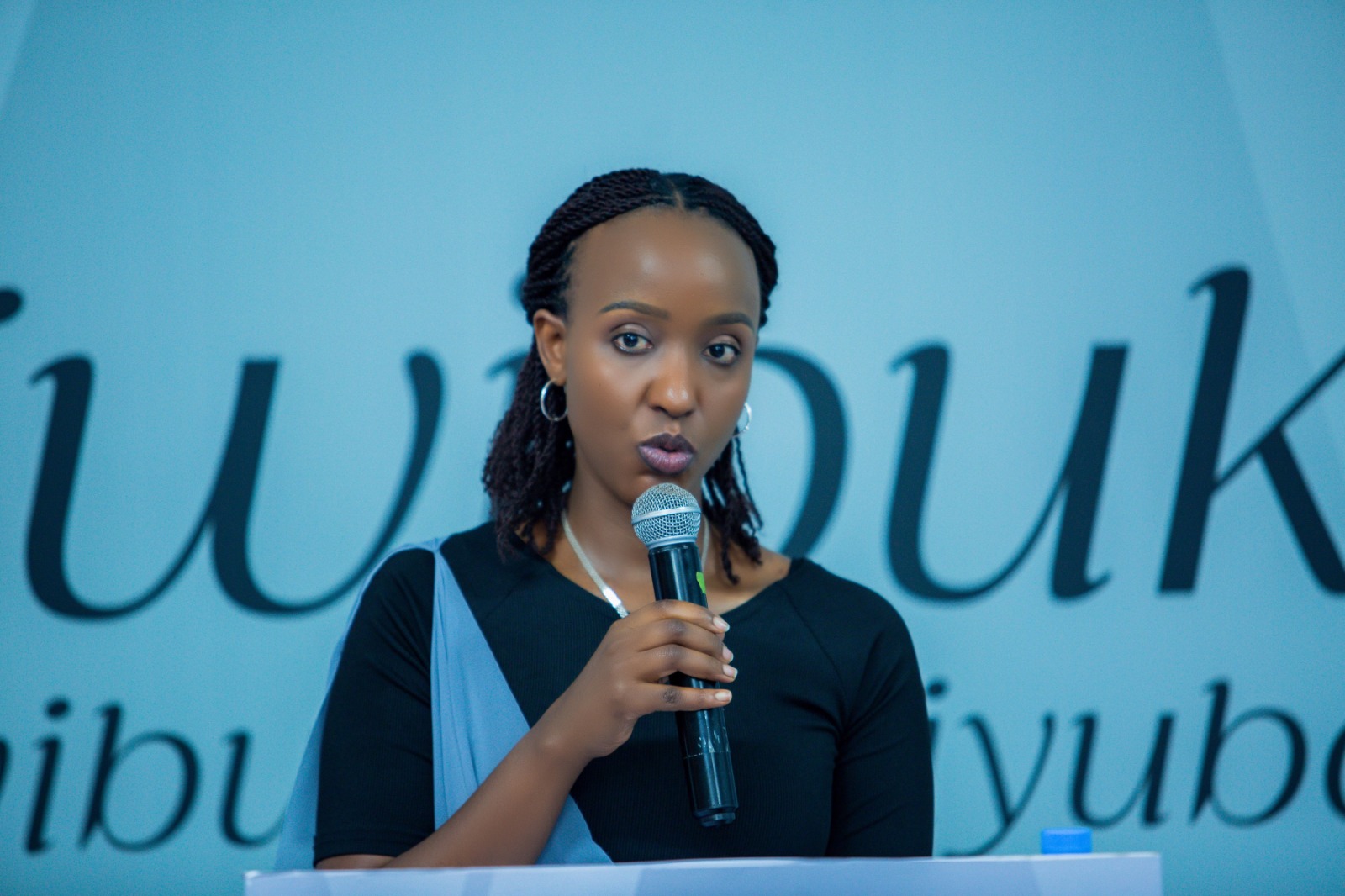
Yvette Umutangana, coordinator of the event in Bruges, called for strengthened efforts to combat genocide ideology, which remains visible in various places, including Belgium. She also emphasized the importance of continued remembrance.
She stated: “Let us continue to remember and remain united. Let us stay committed to rebuilding our country. We are fortunate to benefit from good leadership. We must honor the victims of the Genocide against the Tutsi while also confronting its denial, which persists here in Belgium and elsewhere in the world.”
Umutangana also stressed that telling Rwanda’s history truthfully is essential to counter those who distort it for their own interests. She paid tribute to the FPR-Inkotanyi for stopping the genocide.
“We must remember that it took courage and sacrifice for the FPR to stop the genocide. Without that, we would not be here today,” she added.
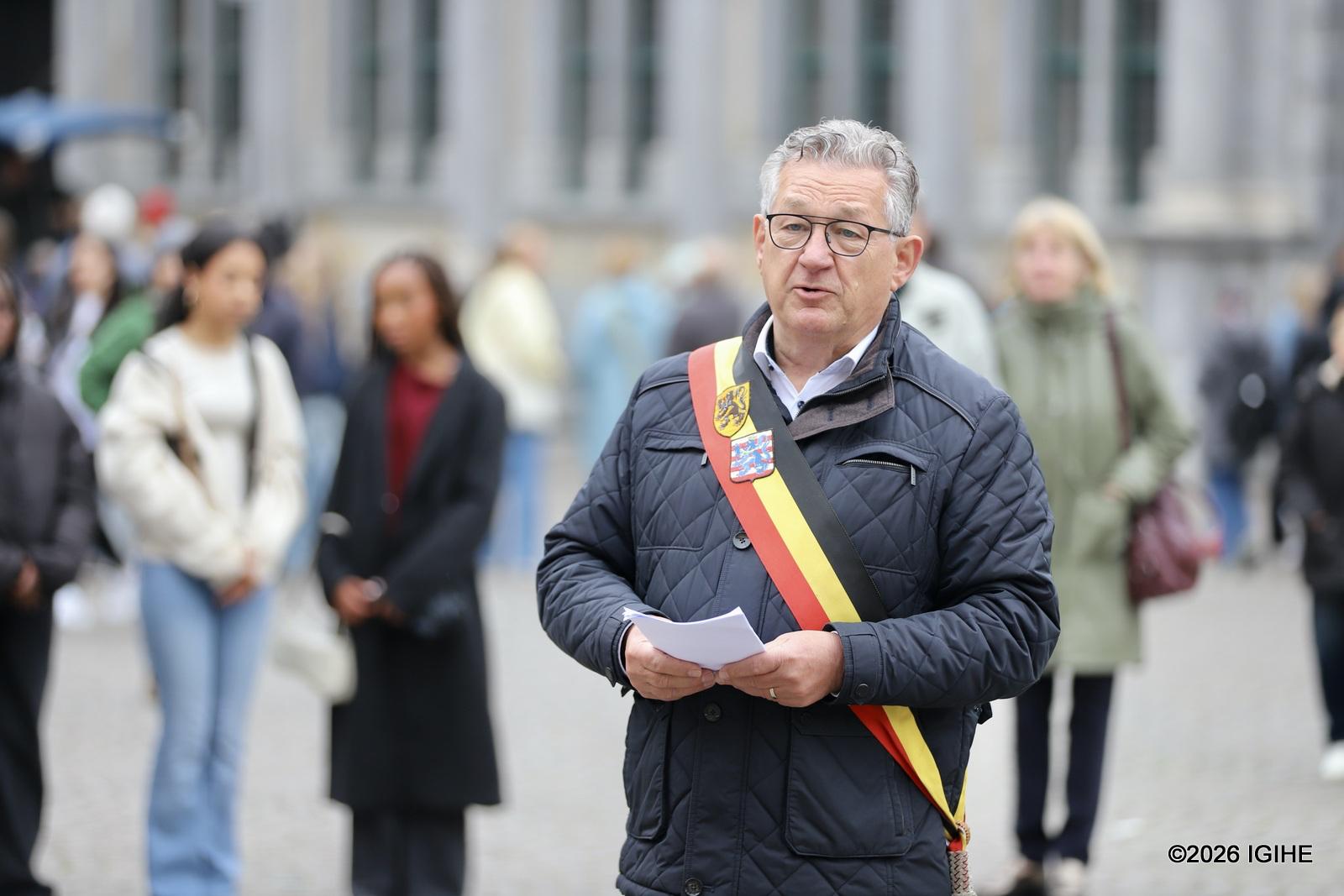
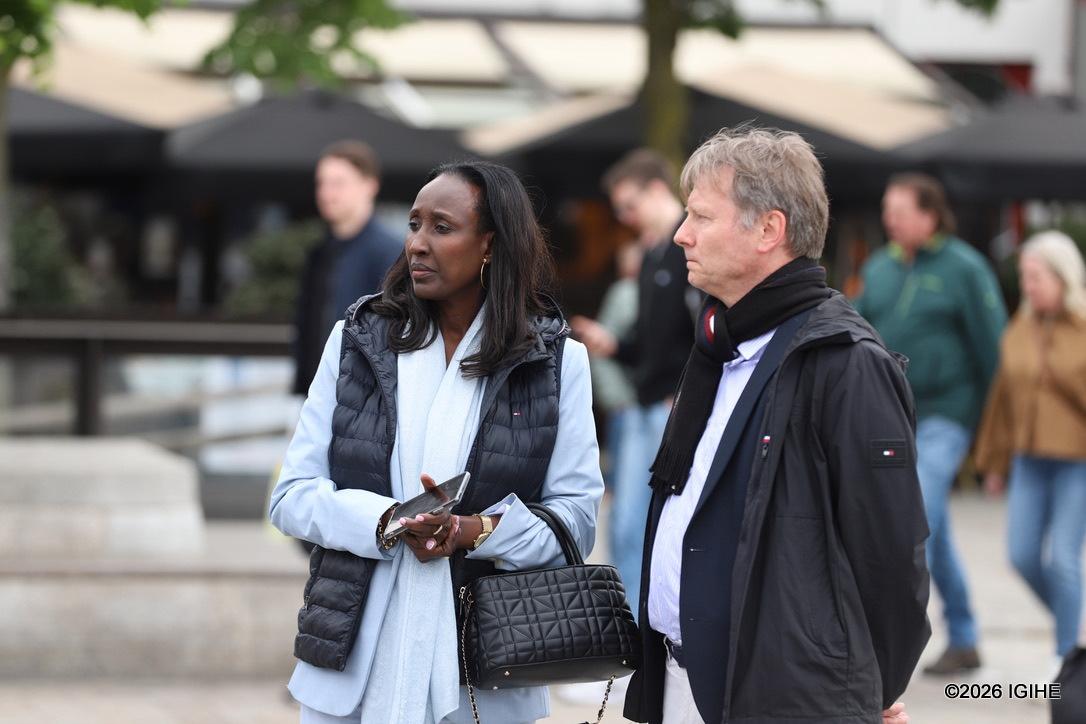
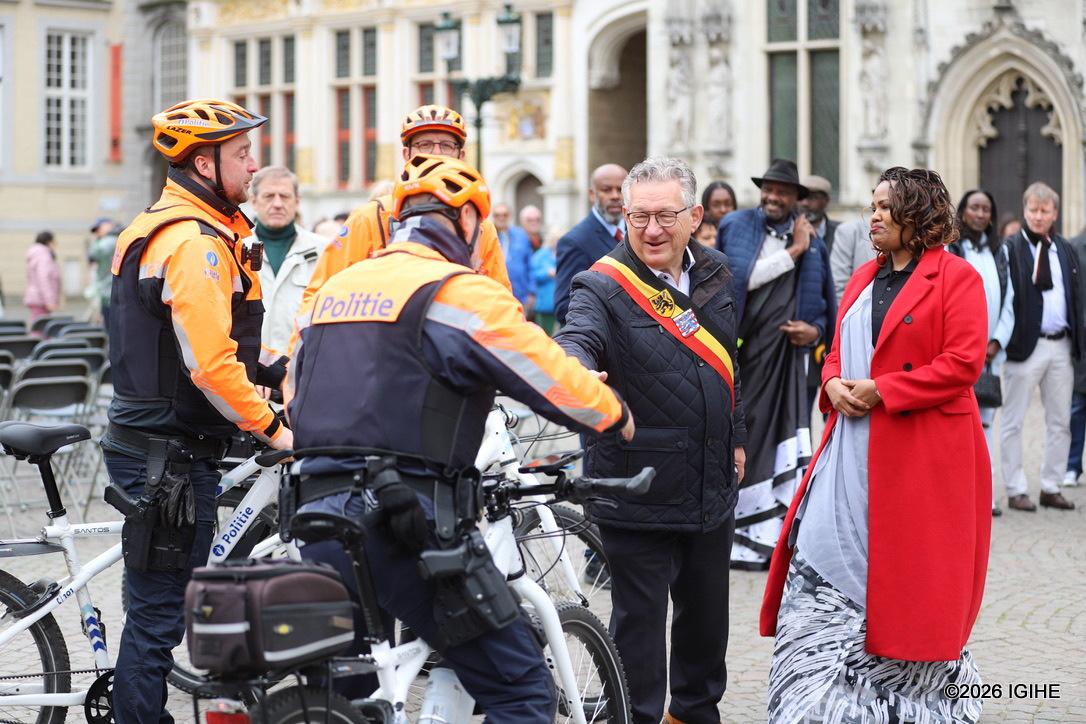
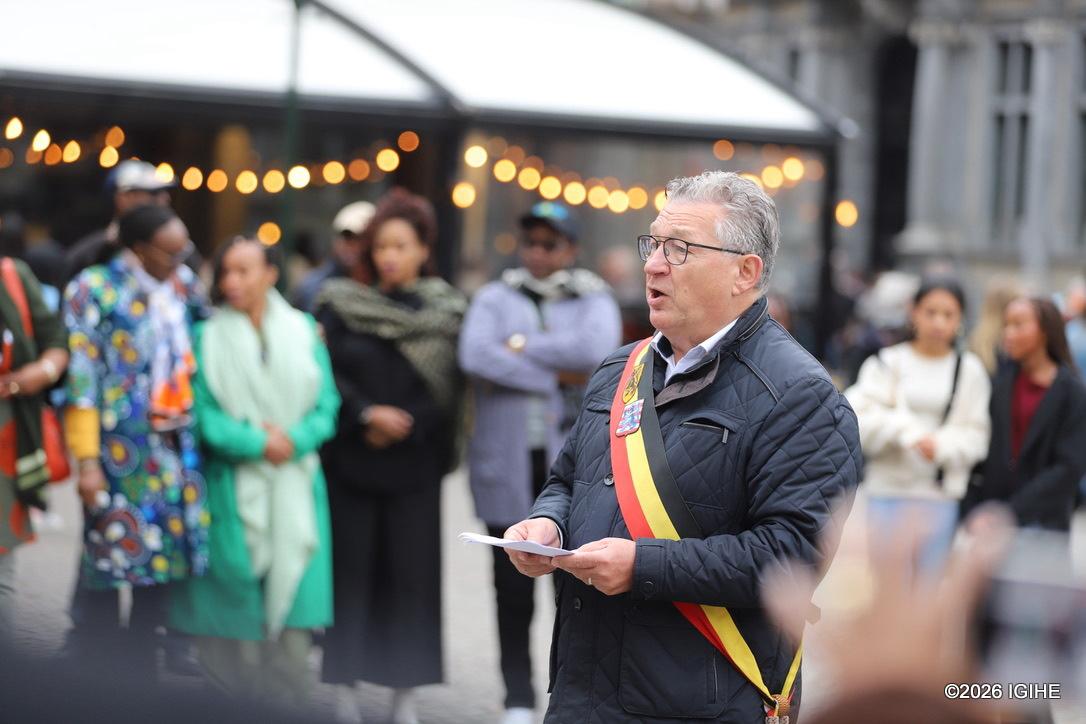
The event was also attended by the Mayor of Bruges, Dirk De fauw, who highlighted the importance of remembrance in preventing such tragedies from happening again. He also praised the unity and commitment of the local Rwandan community in organizing the event.
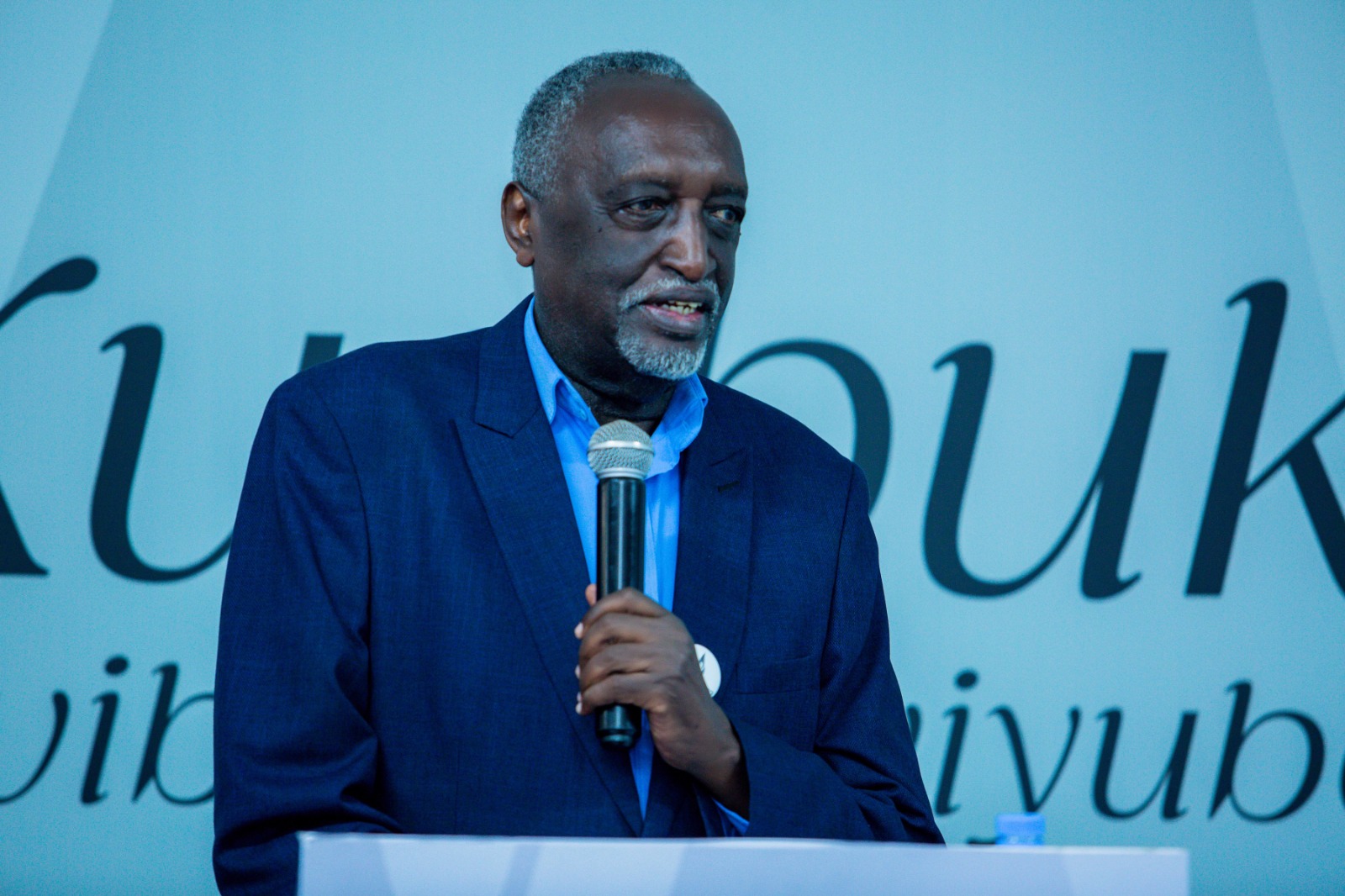
The President of Ibuka Memory and Justice – Belgium, Mutabazi Twagira Eugène, spoke about the establishment of the organization in Belgium and shared a personal testimony about members of his family who were killed.
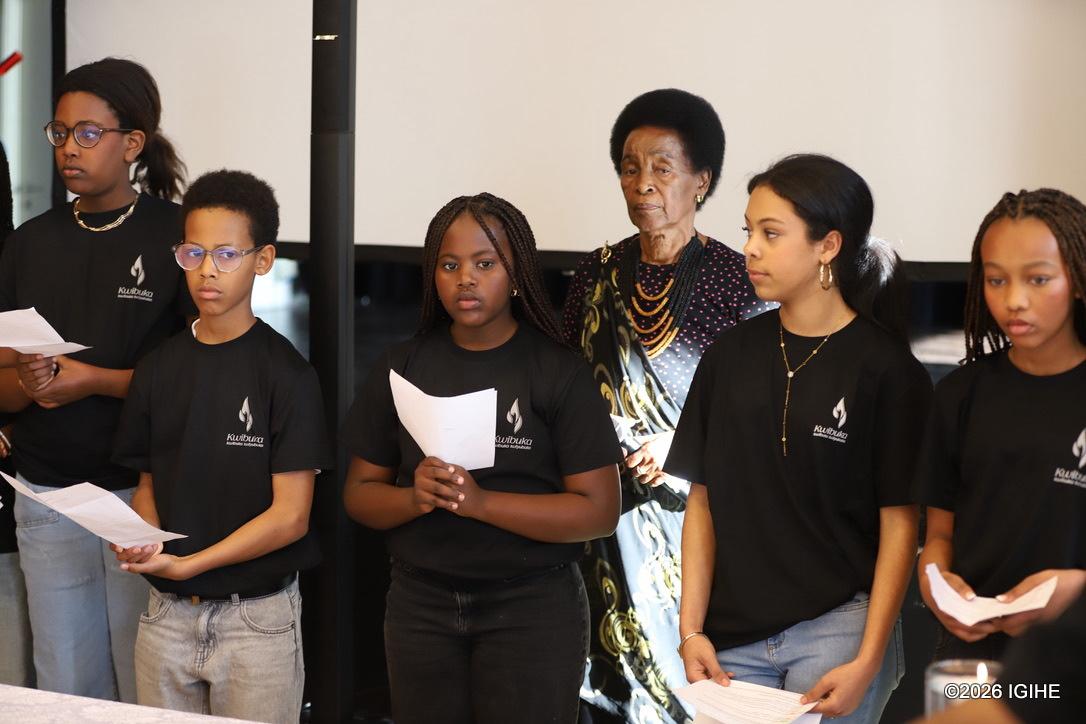
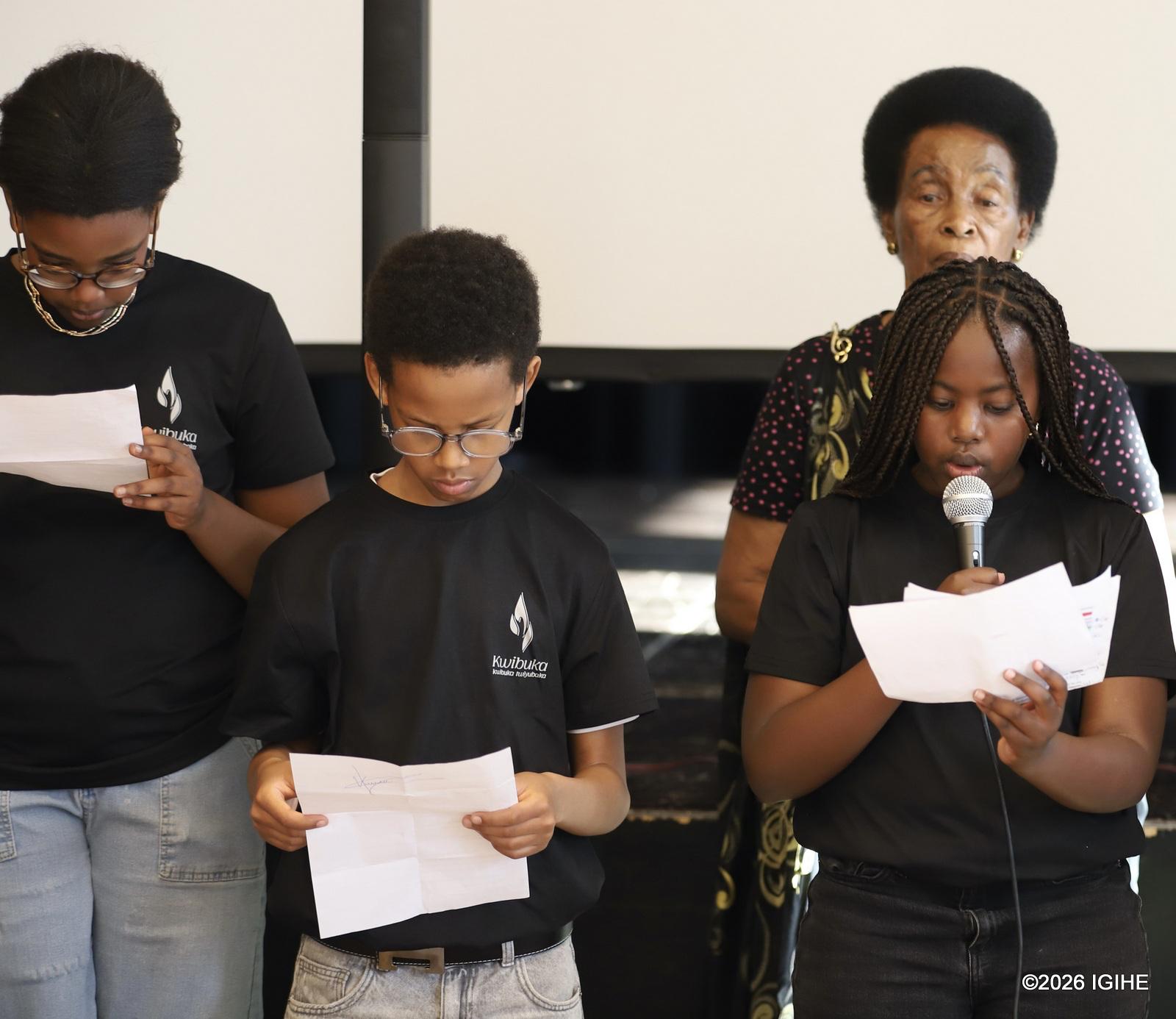
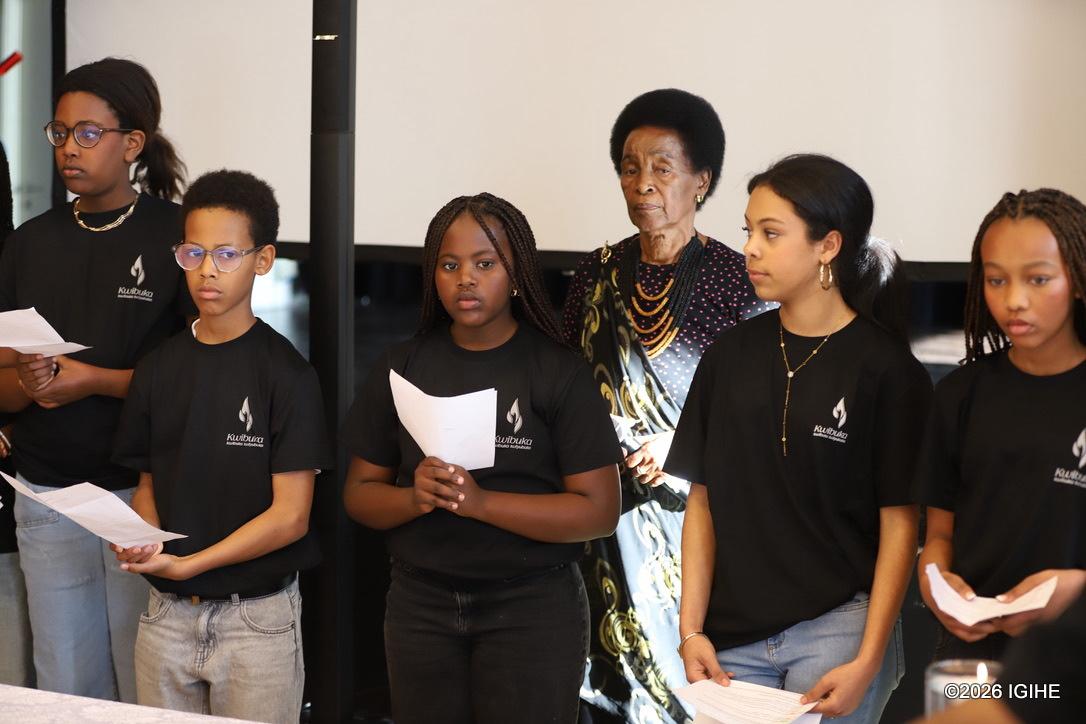
Artists Mariya Yohani and Nyiranyamibwa Suzanne also contributed through songs dedicated to remembrance during the ceremony.
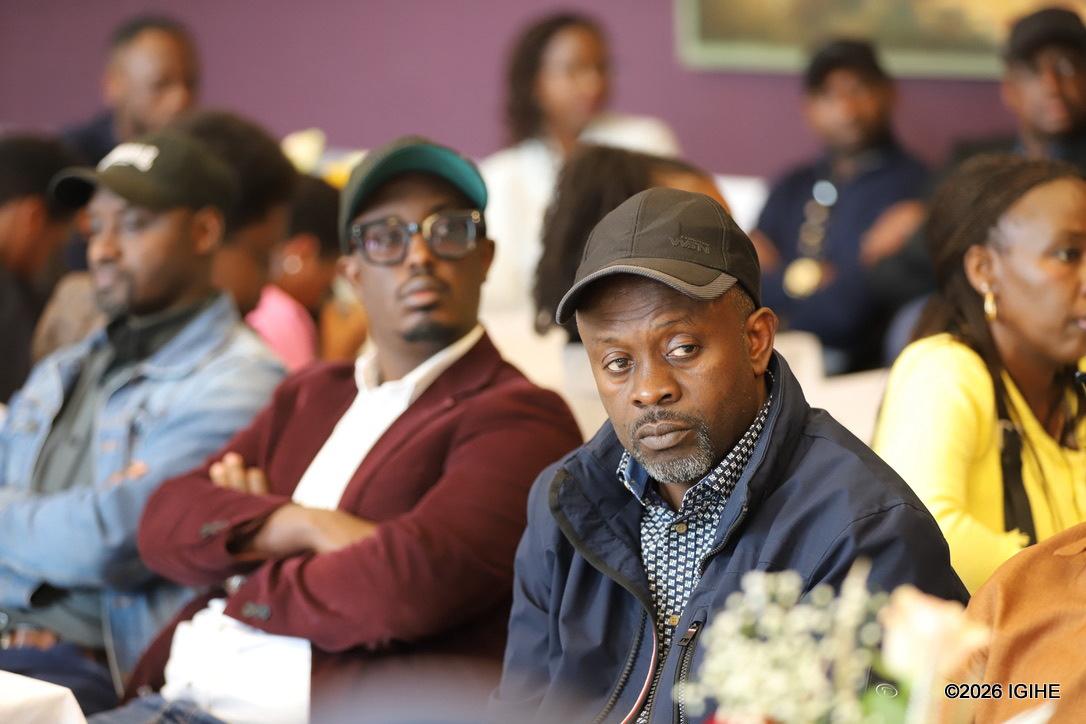
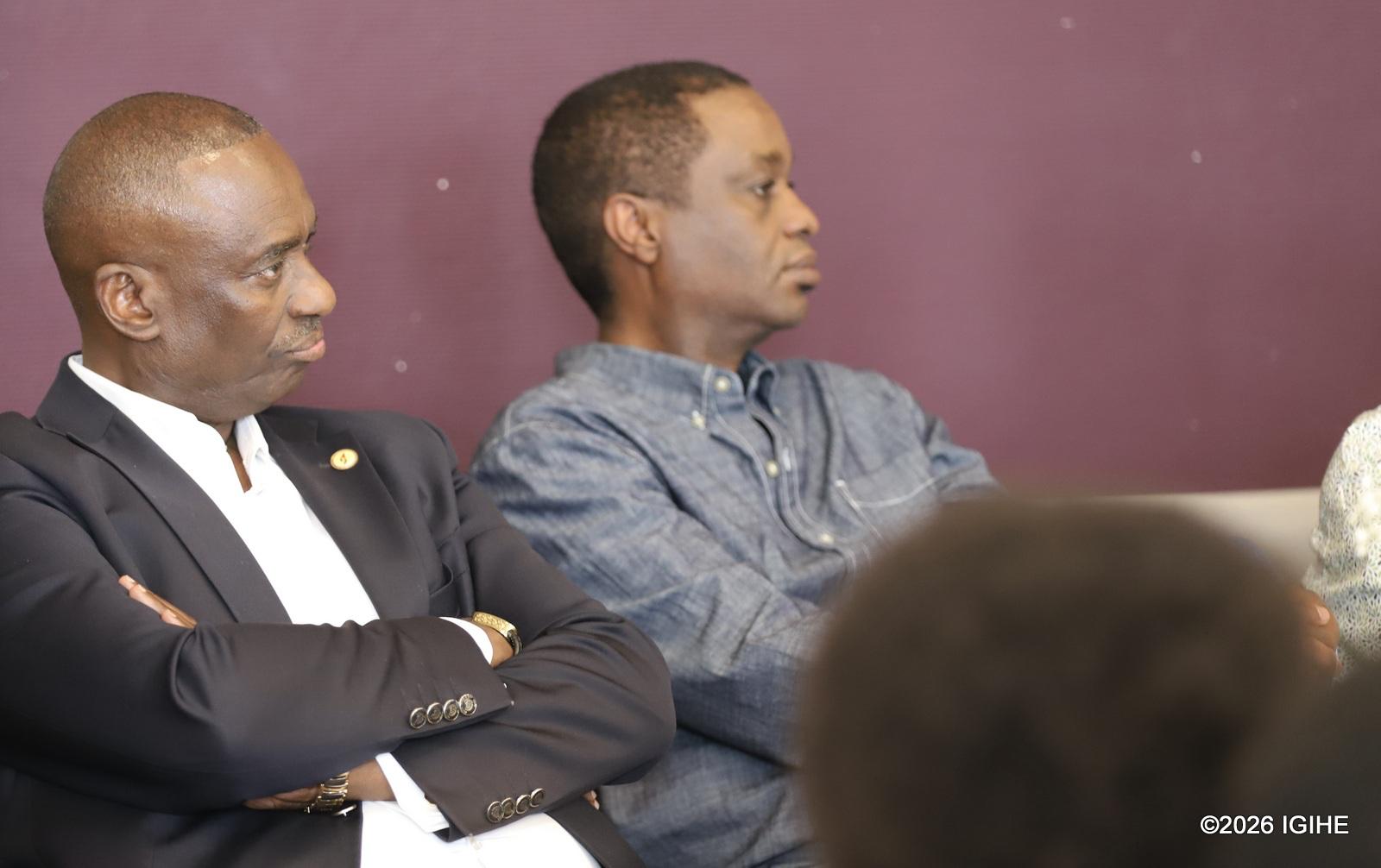
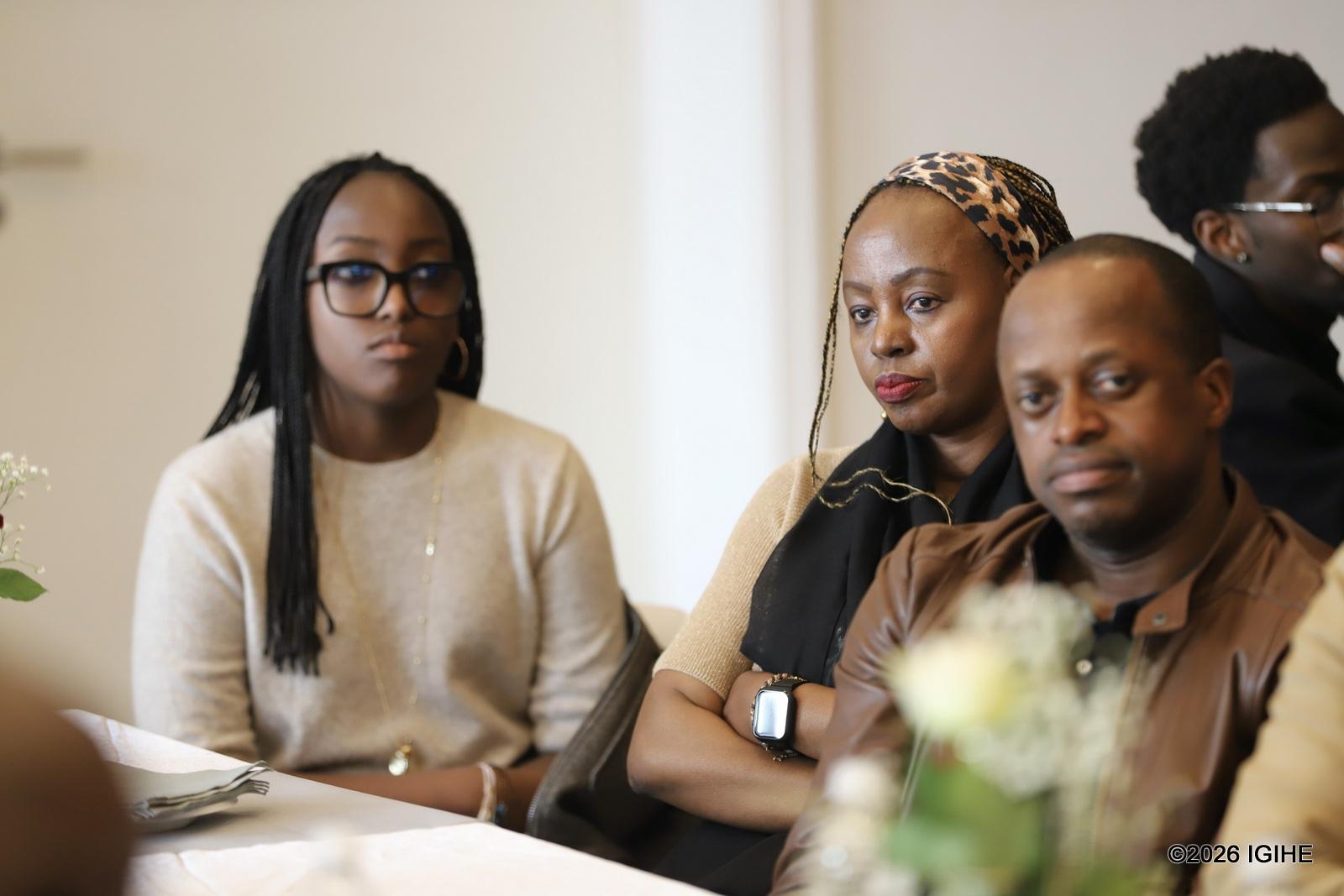
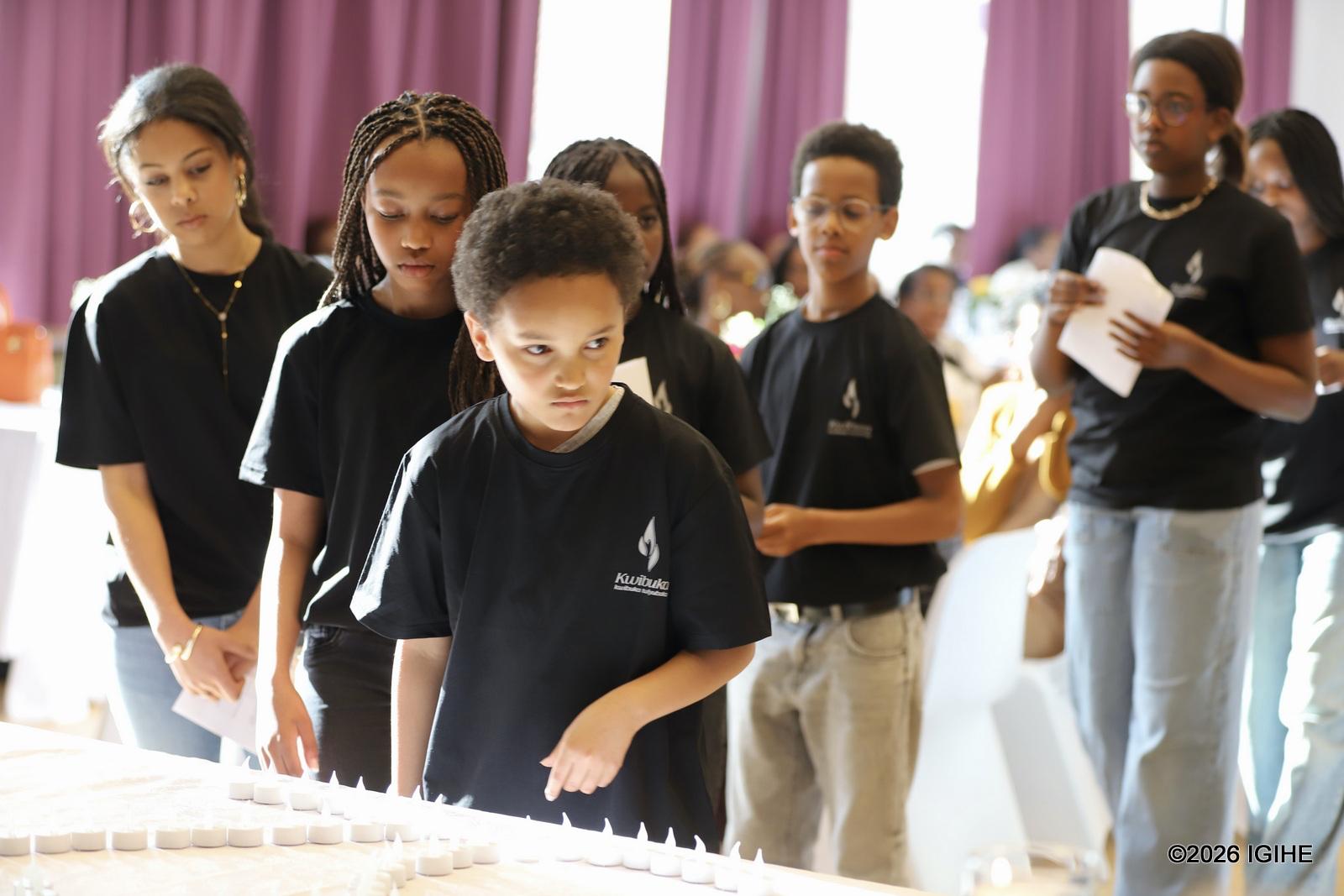
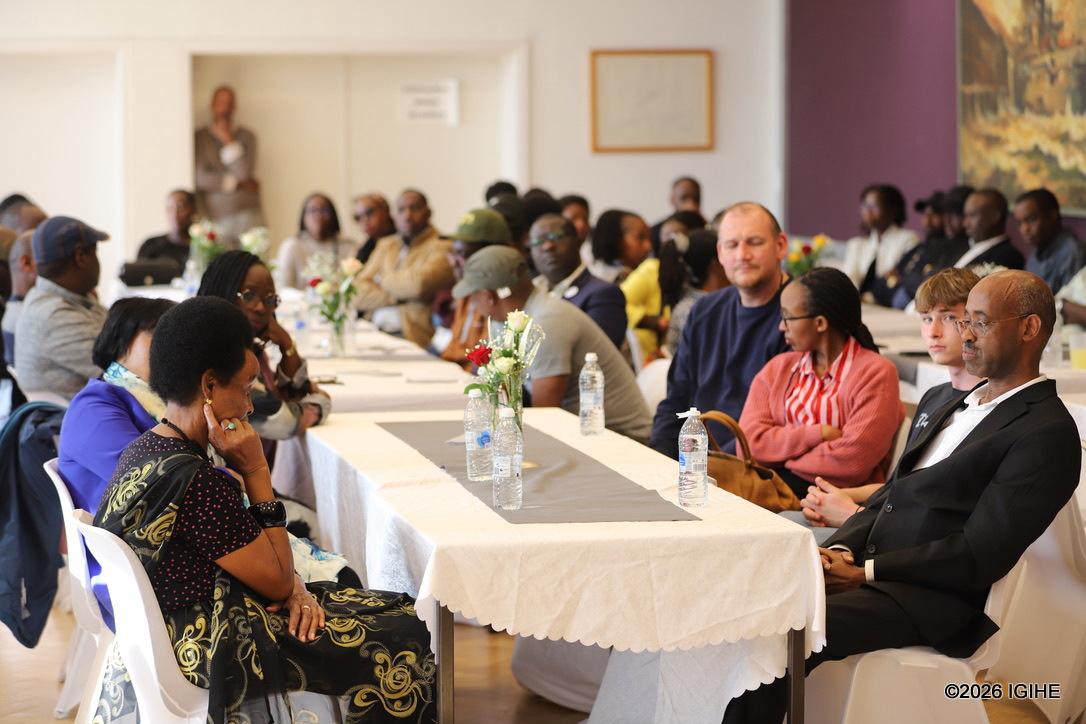
The commemoration concluded with an evening vigil marked by testimonies and the display of photos of victims of the Genocide against the Tutsi. Participants honored them by speaking their names and recalling their lives.
The day also featured a testimony from Yves Kamurase, a survivor of the Genocide against the Tutsi.
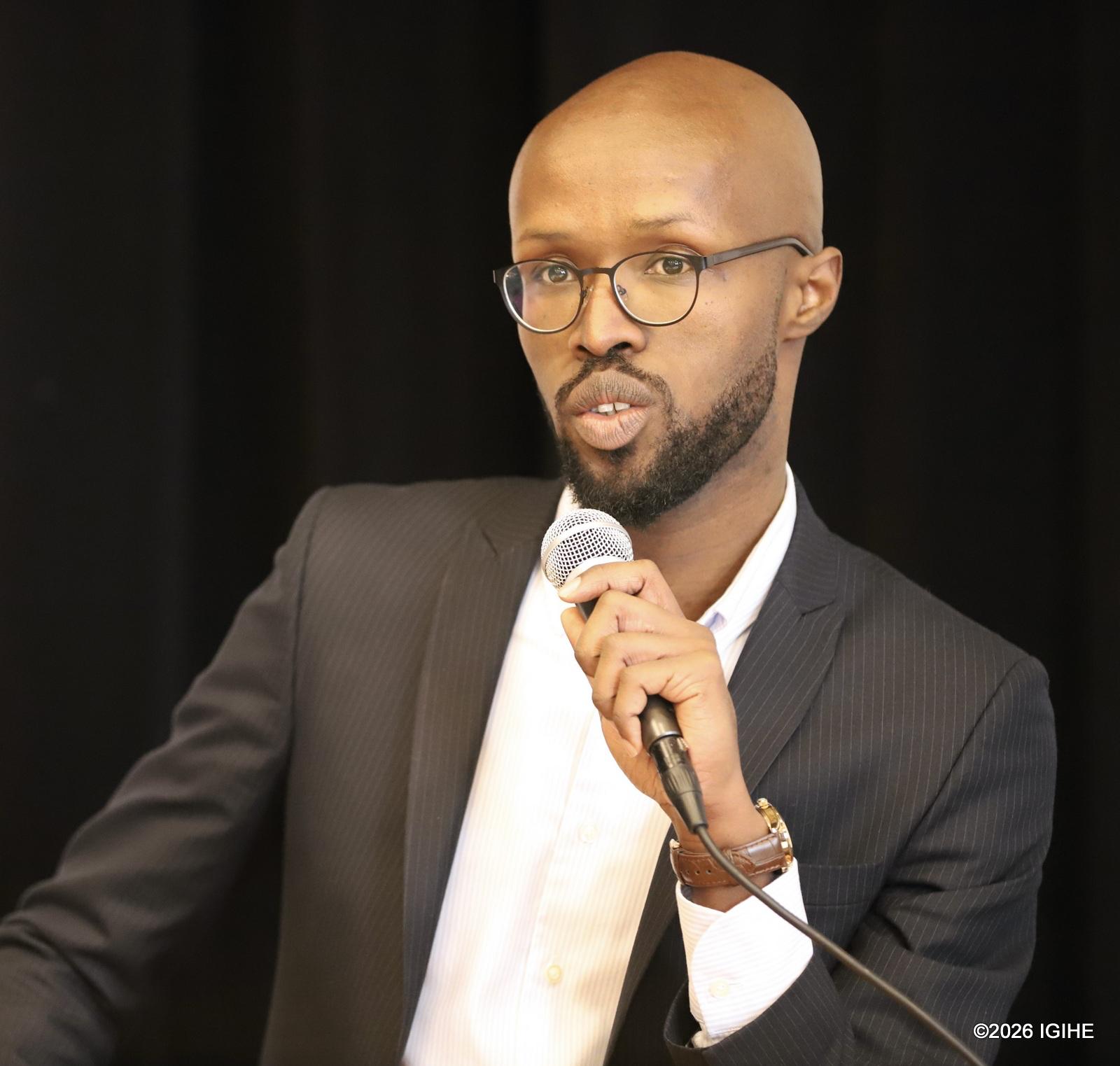
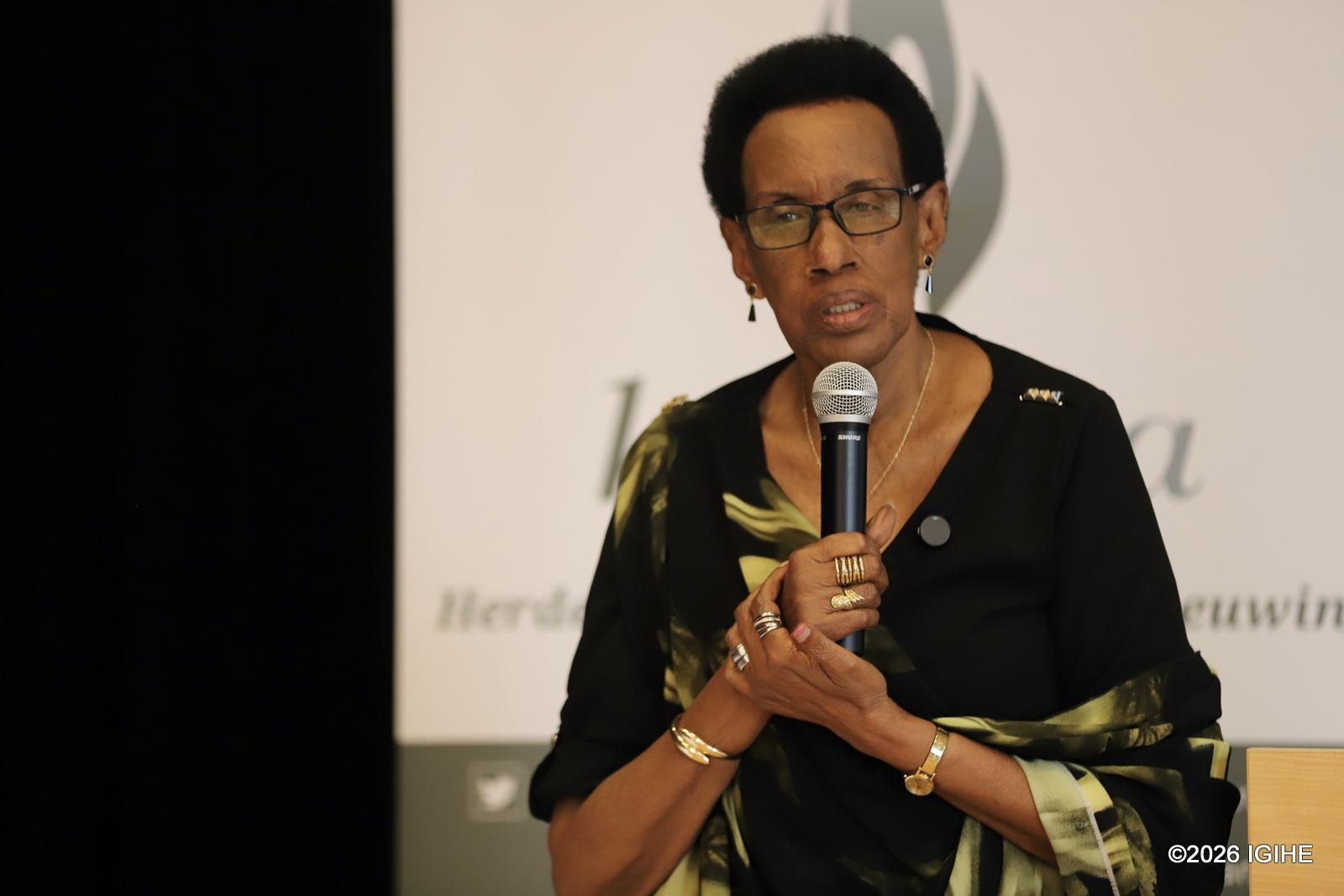
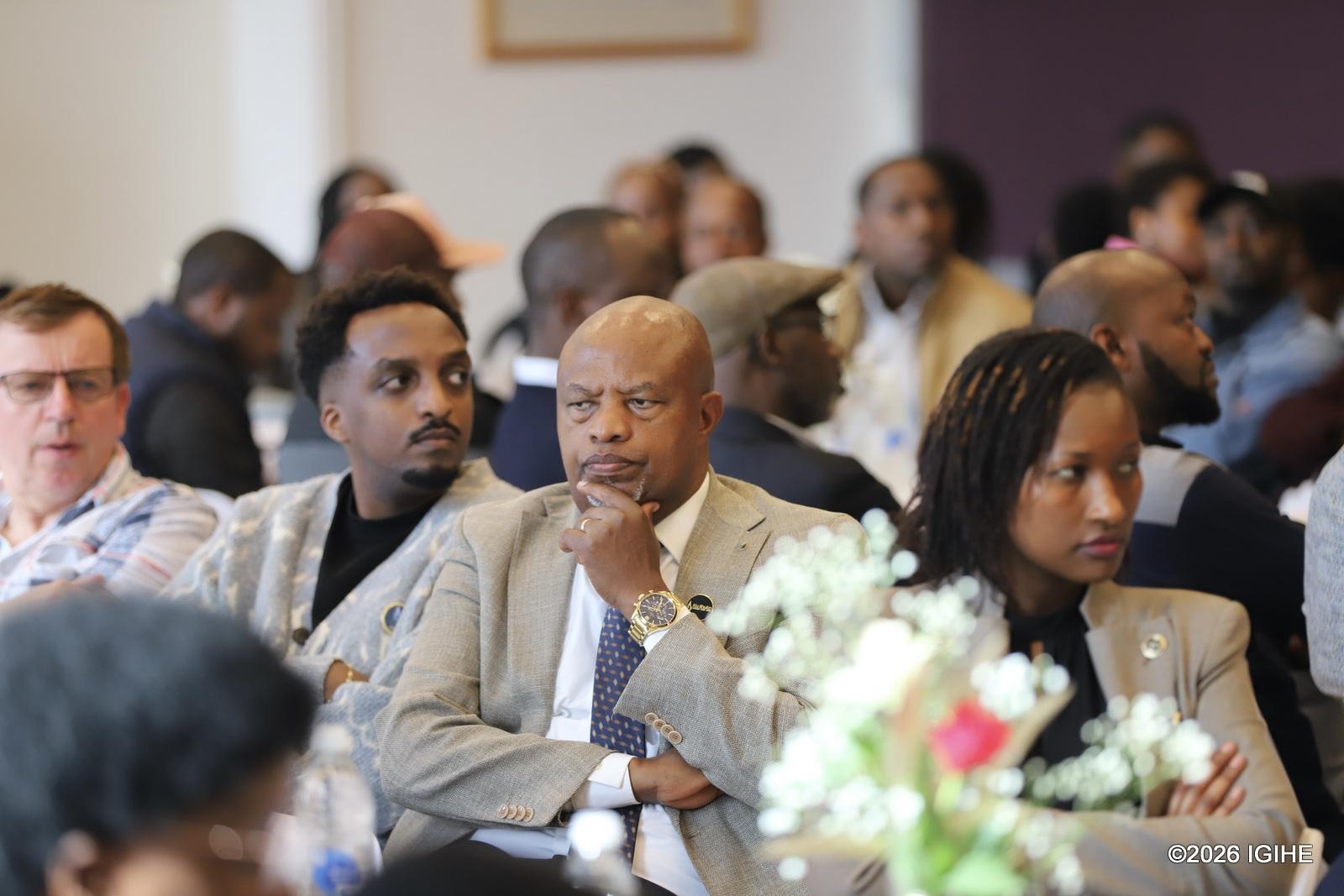
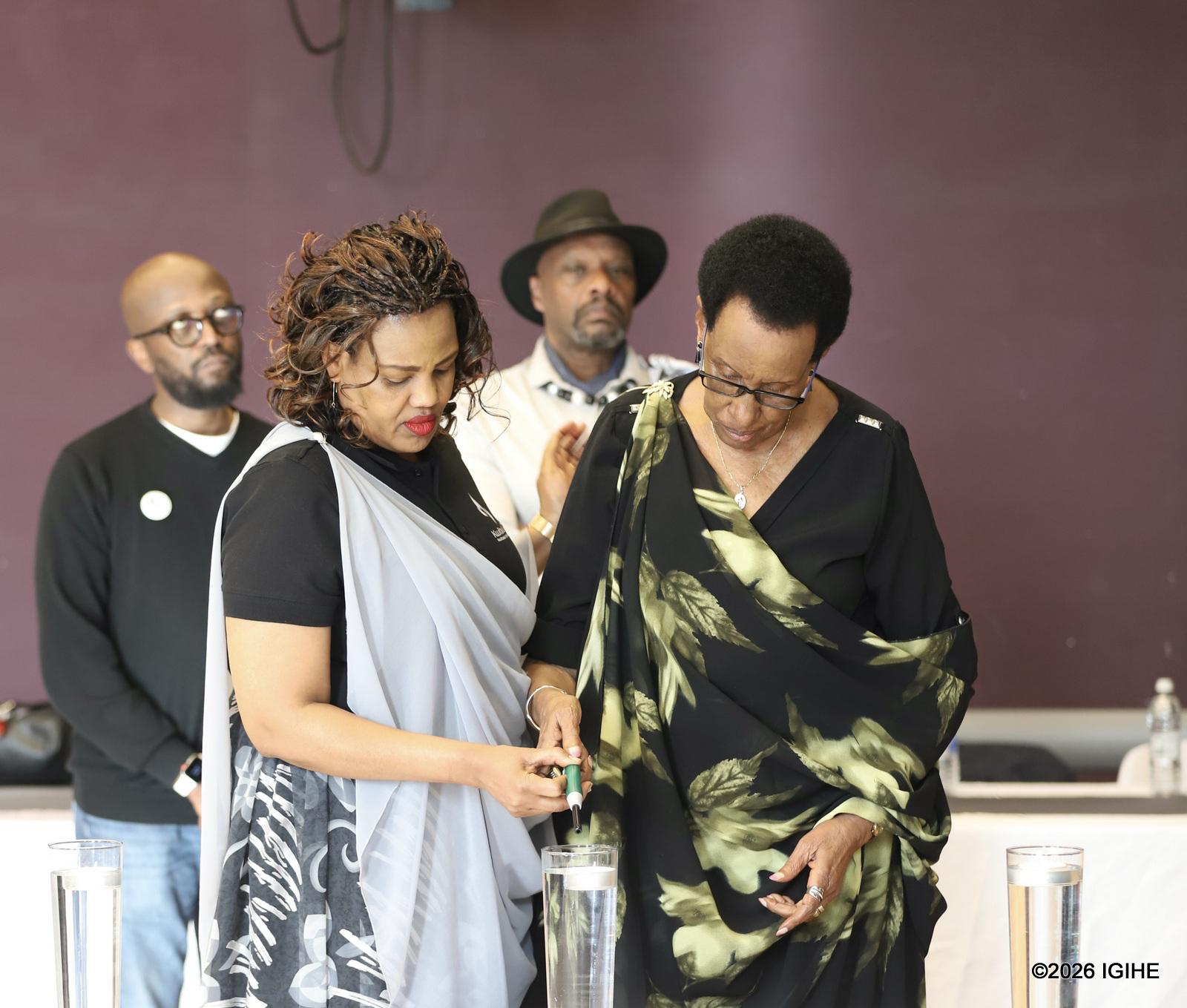
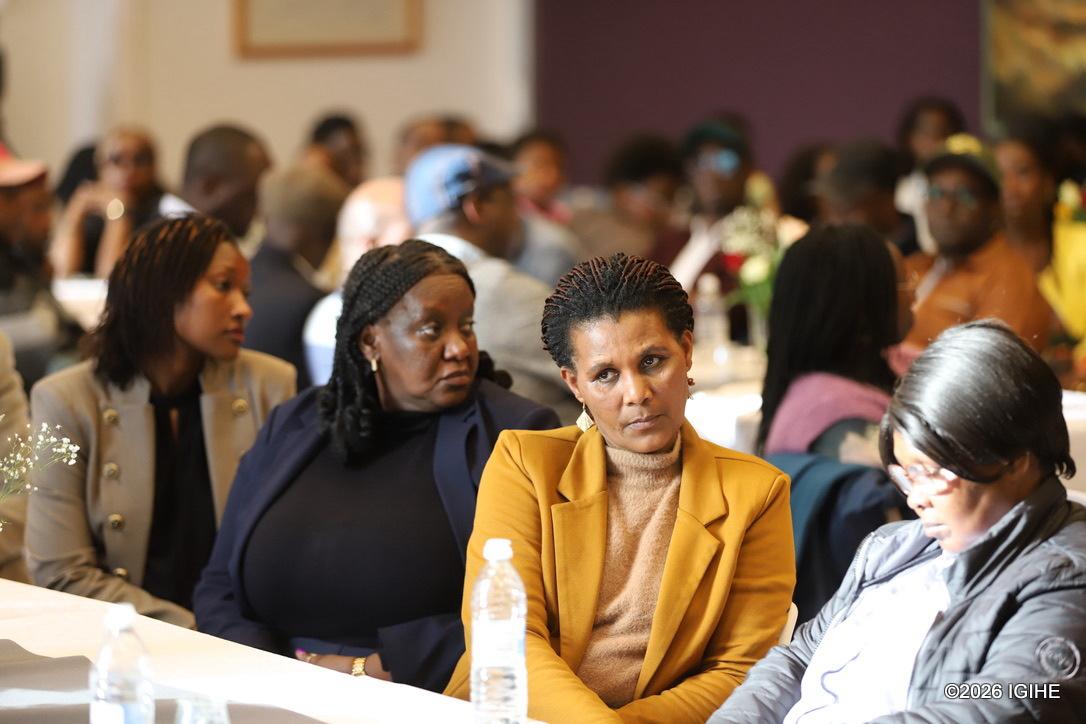
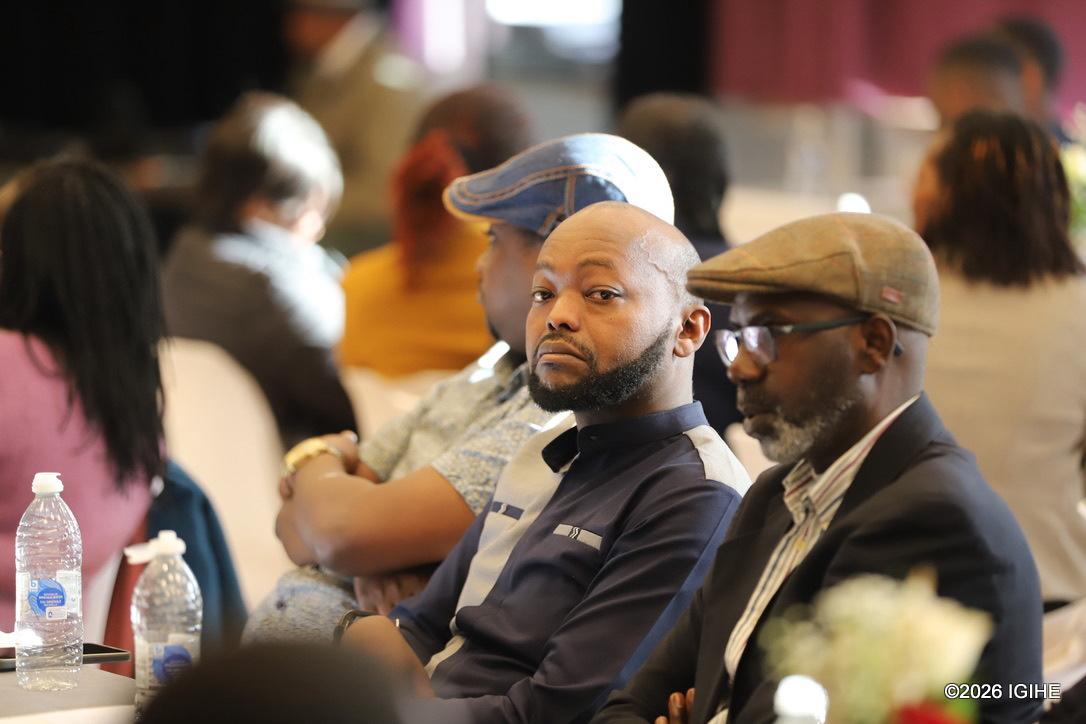
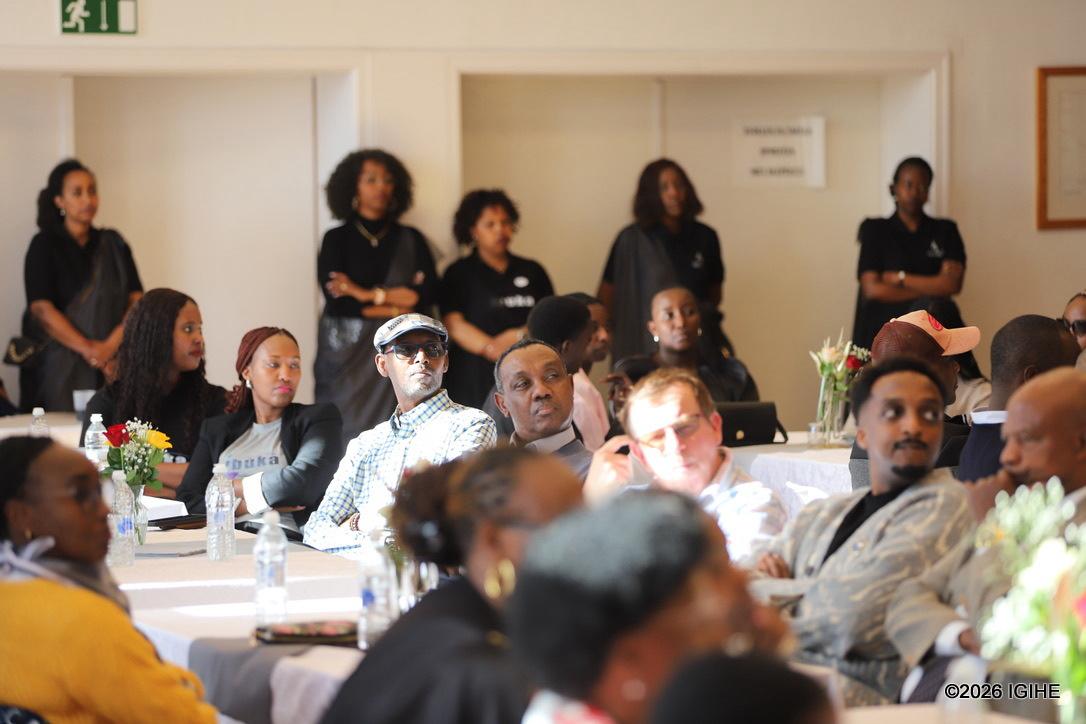
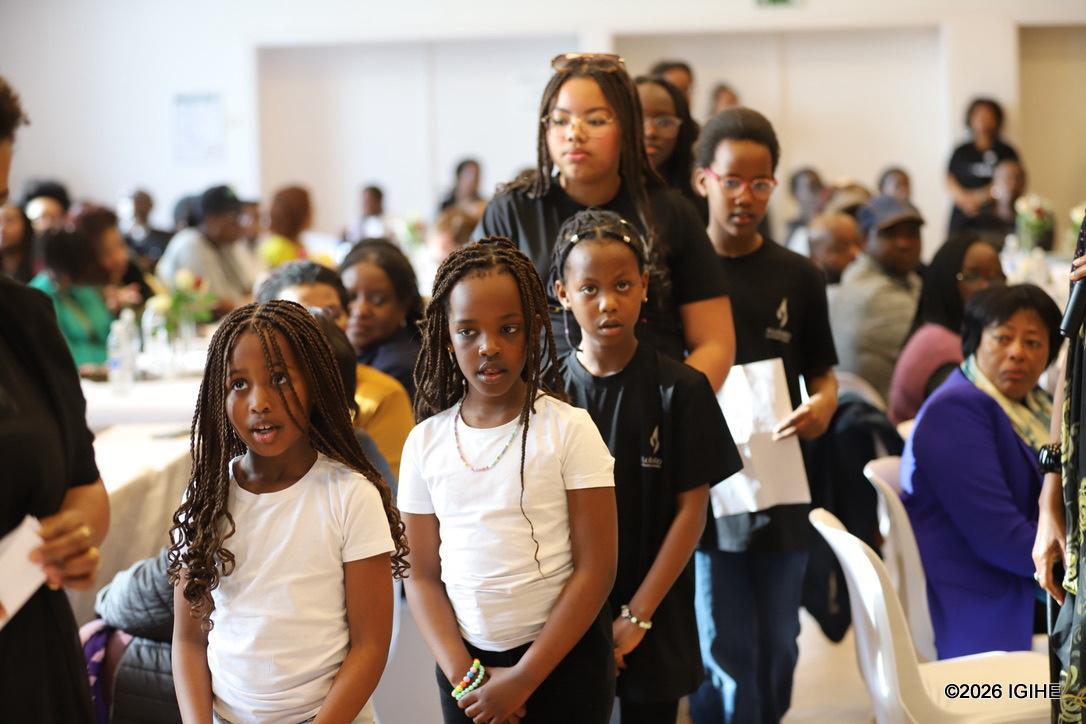
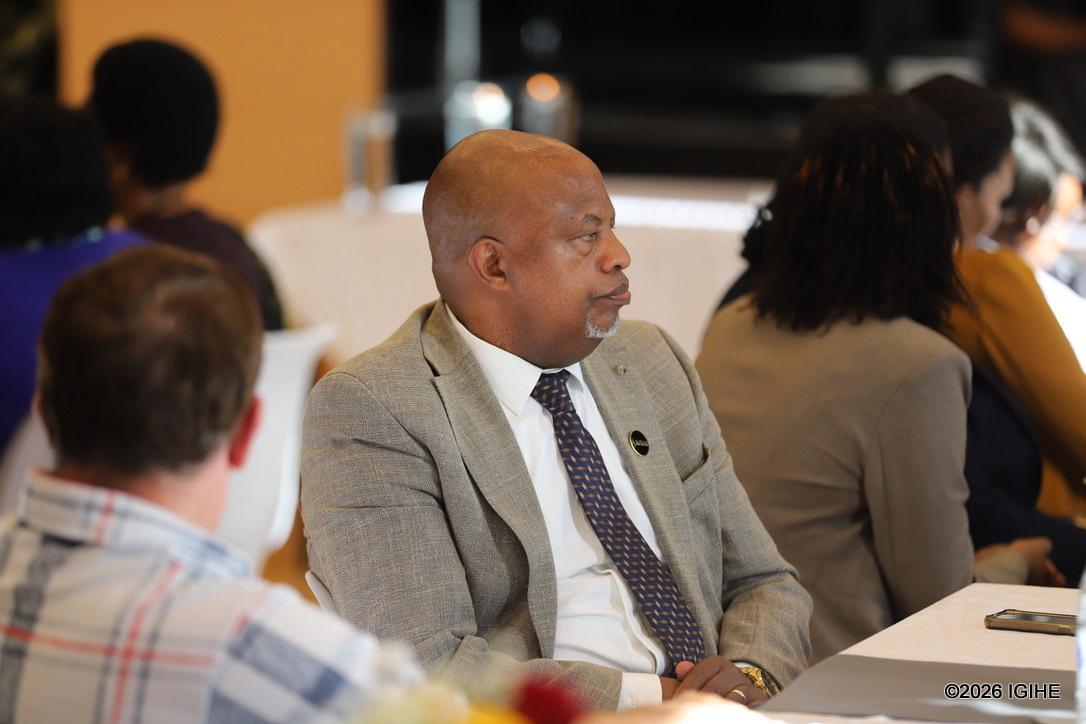
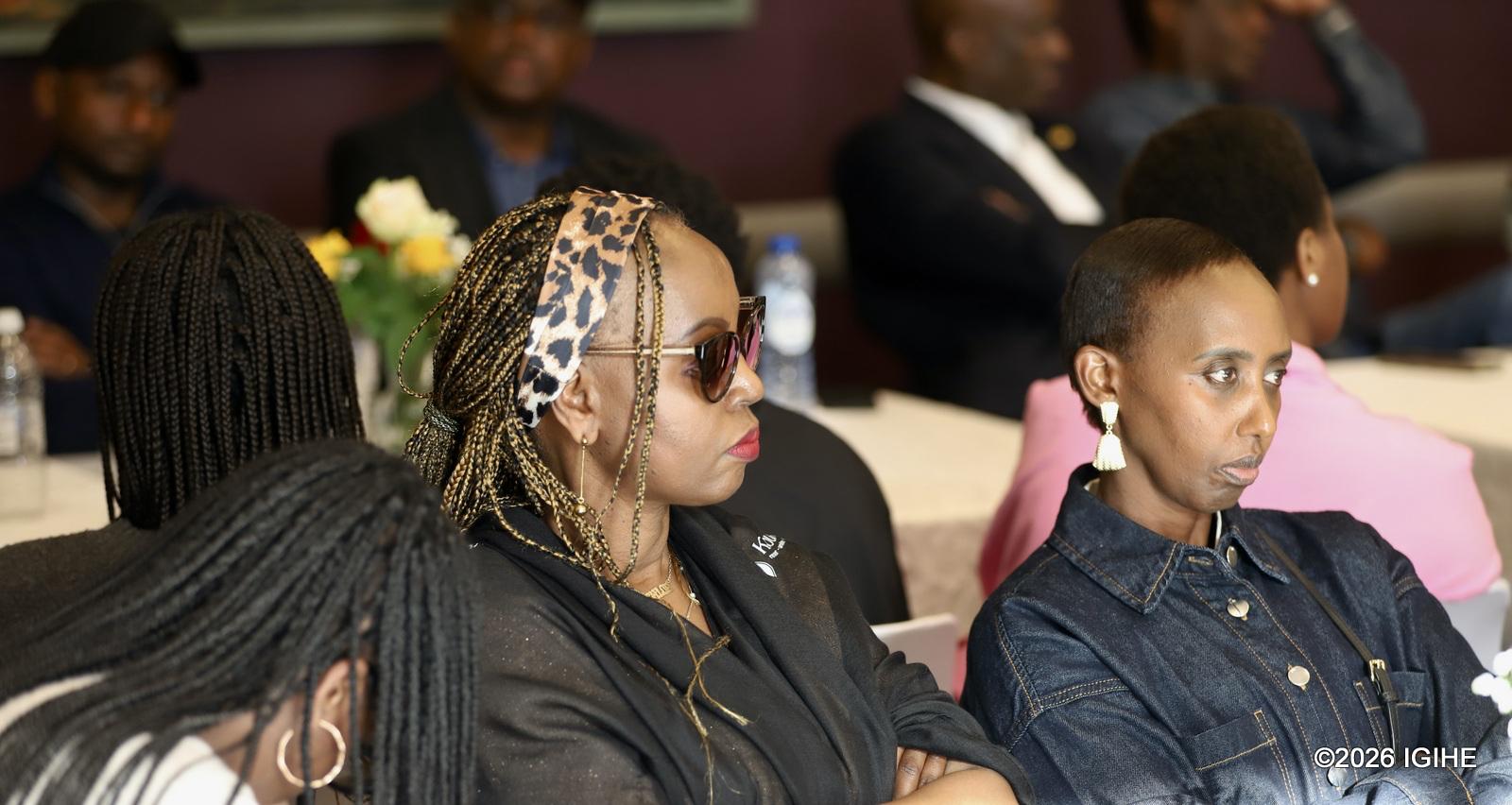
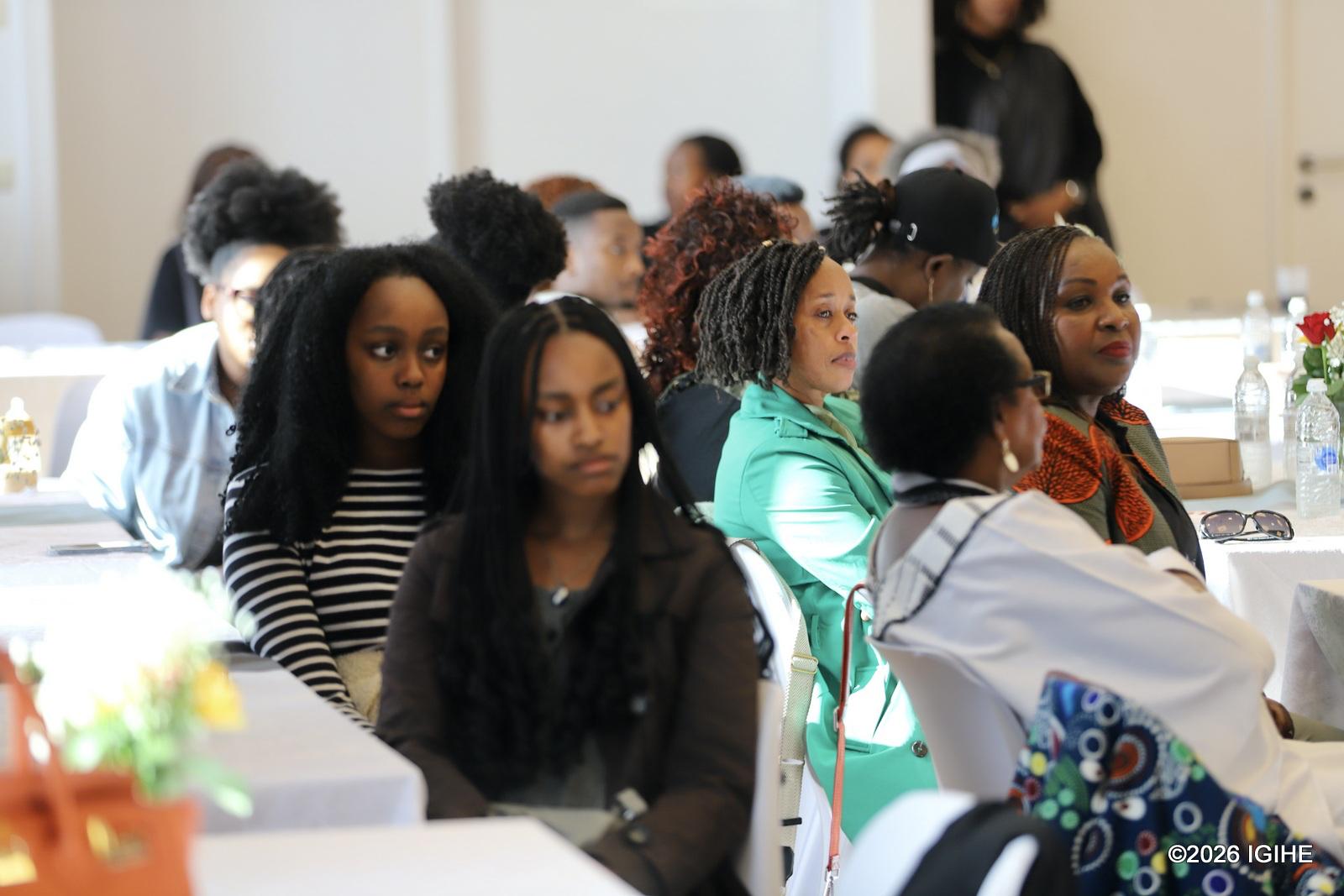
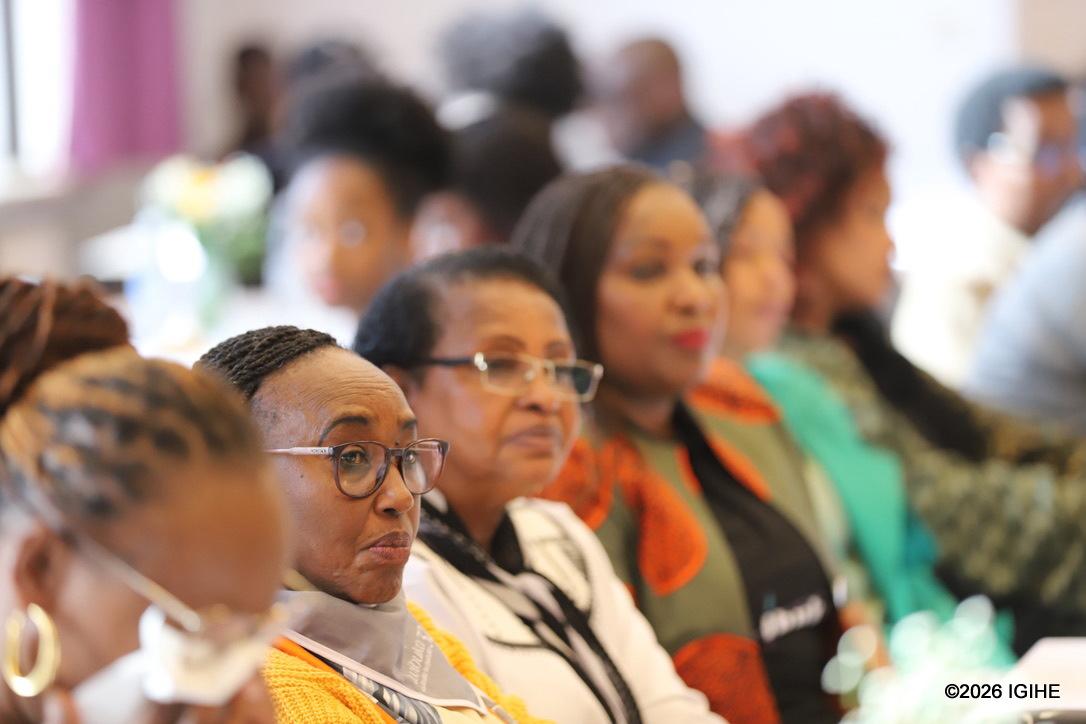
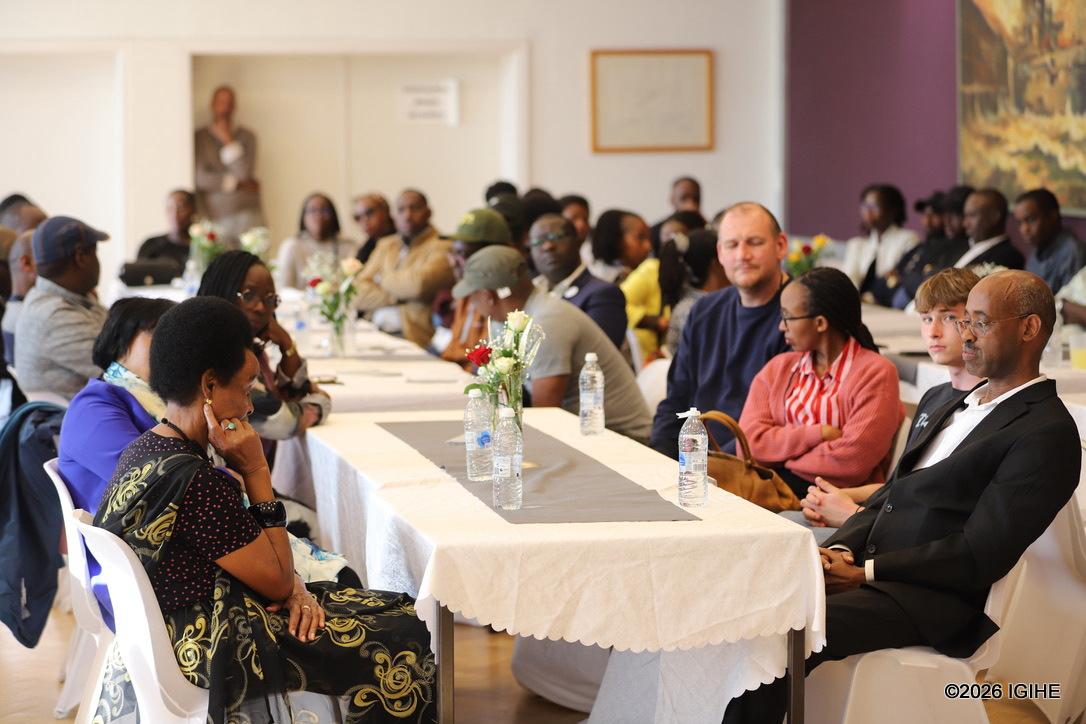
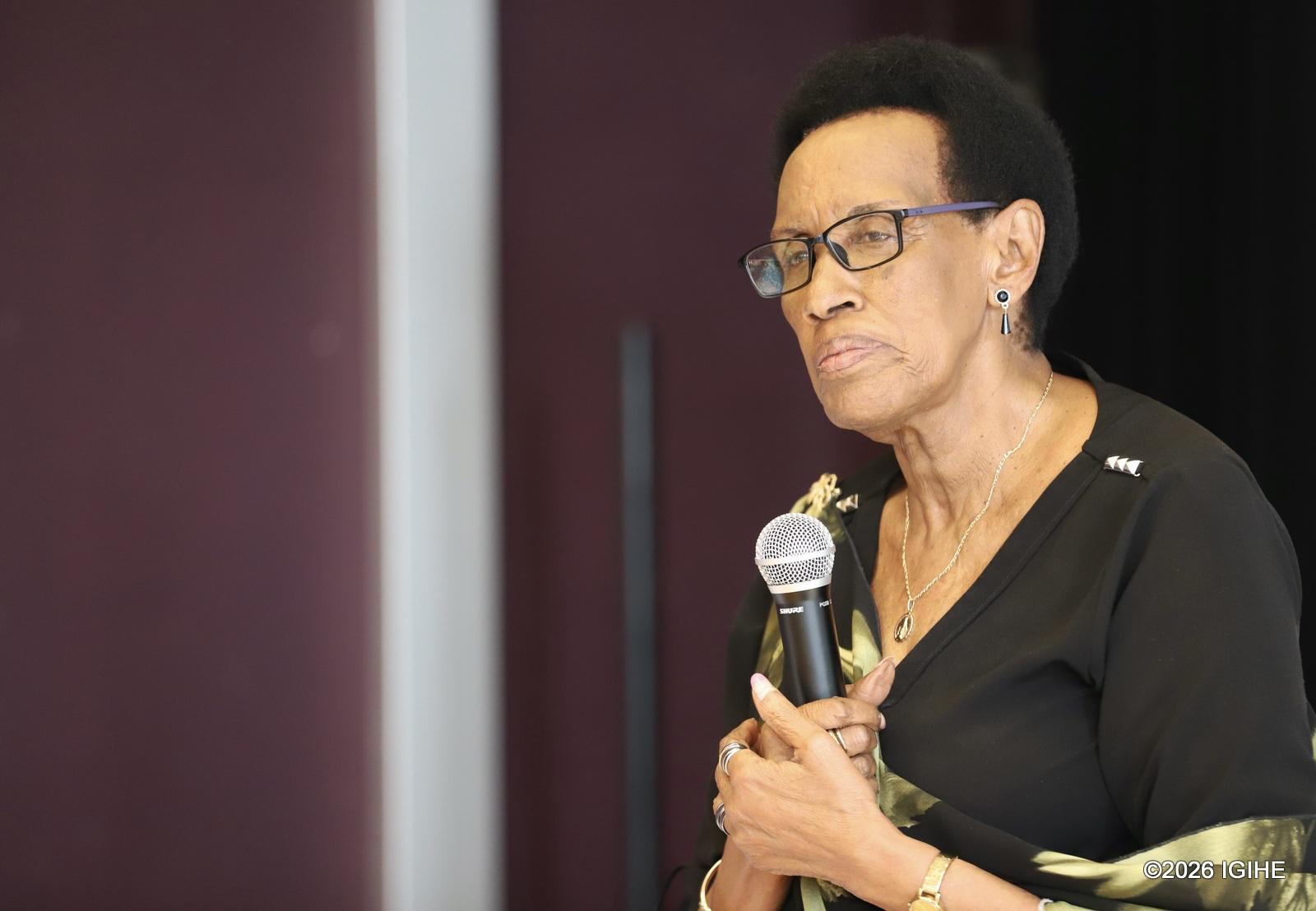
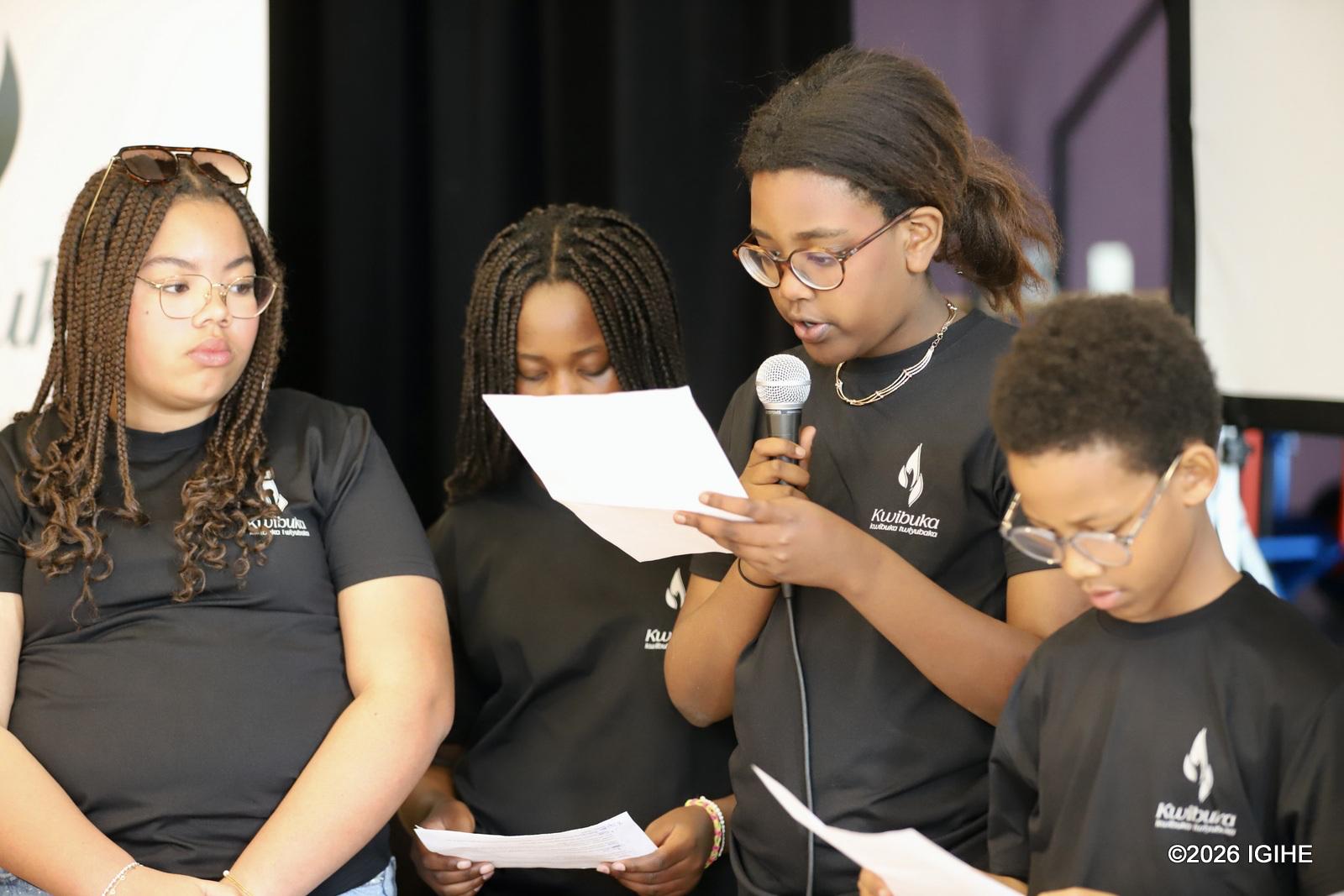
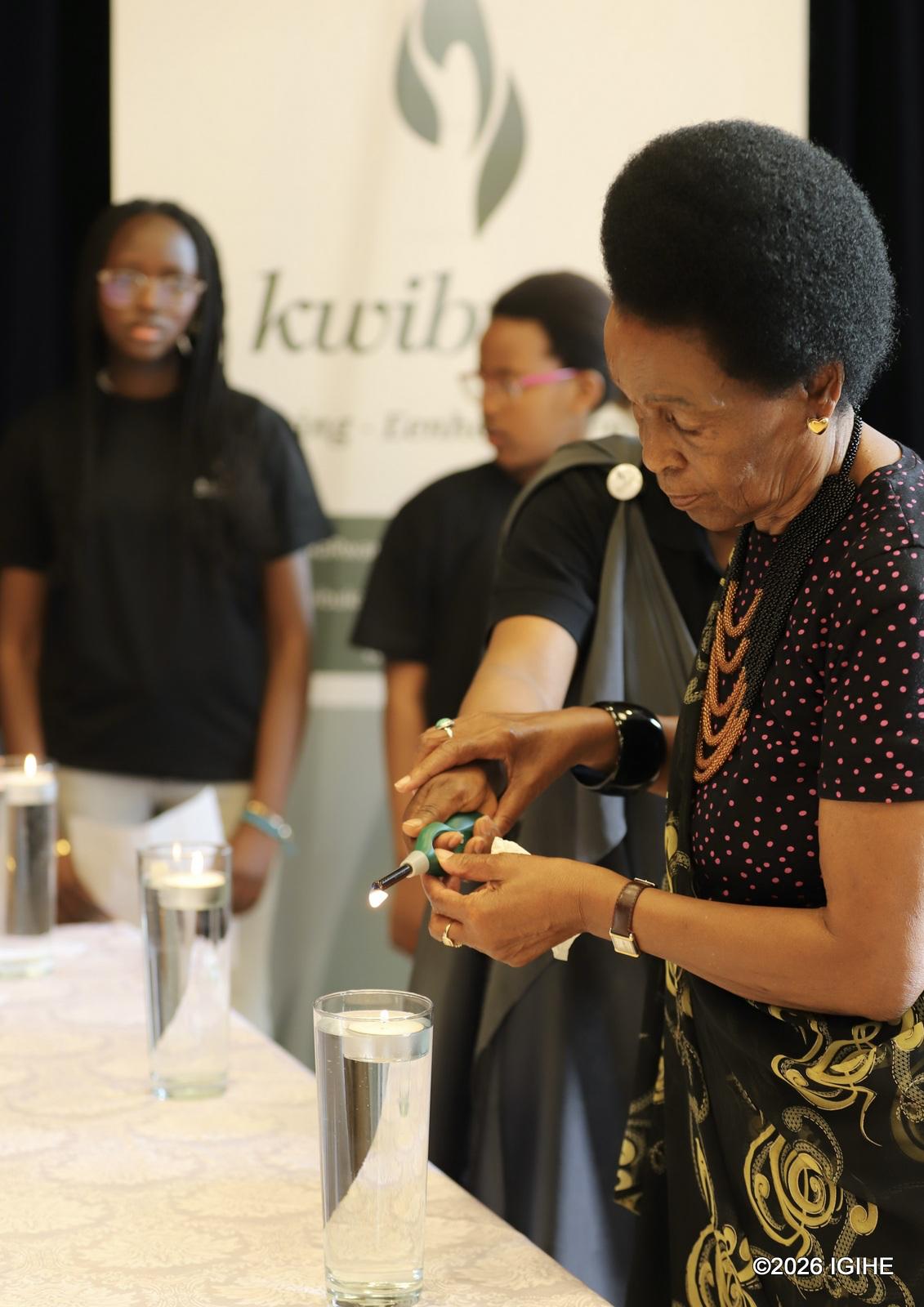
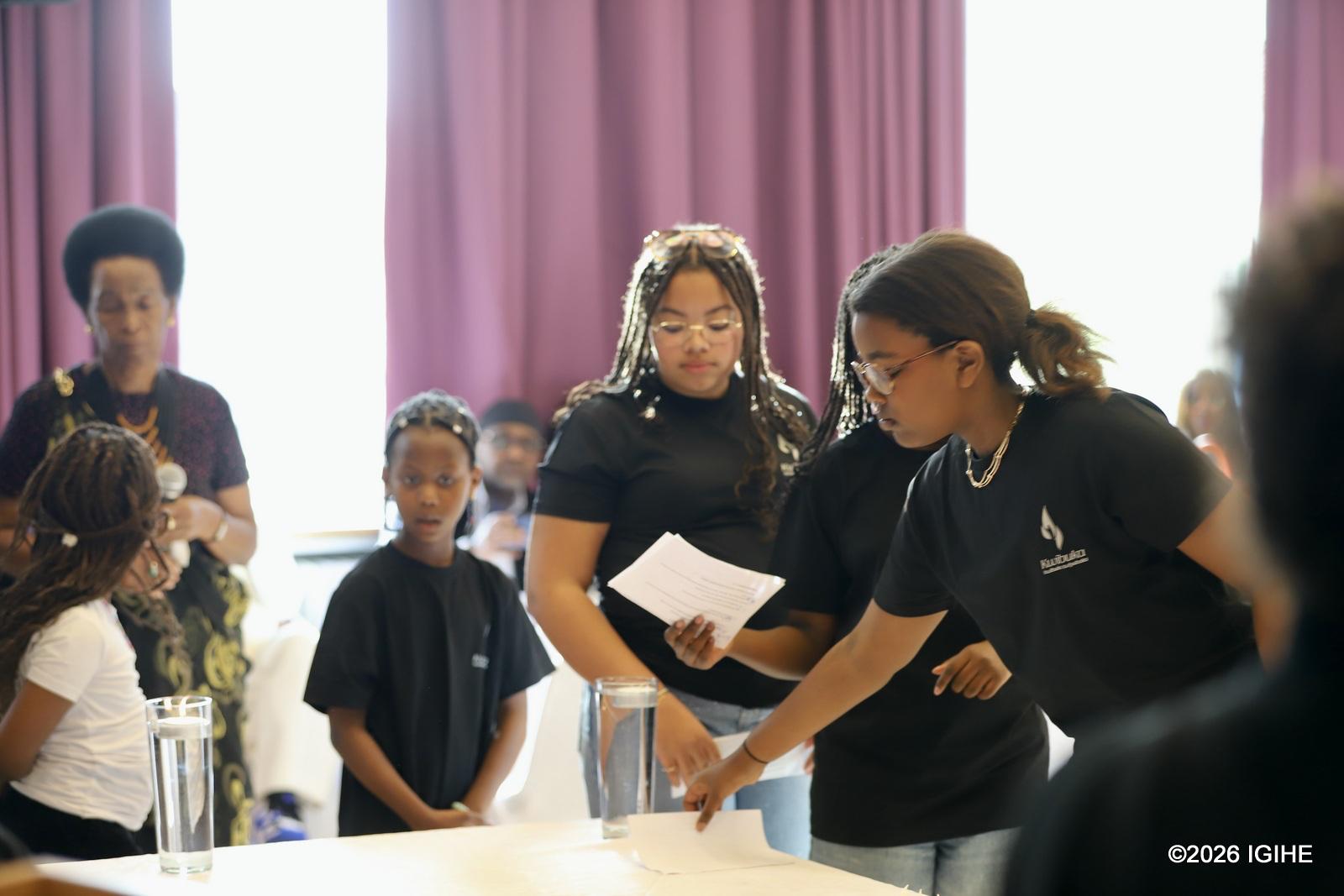
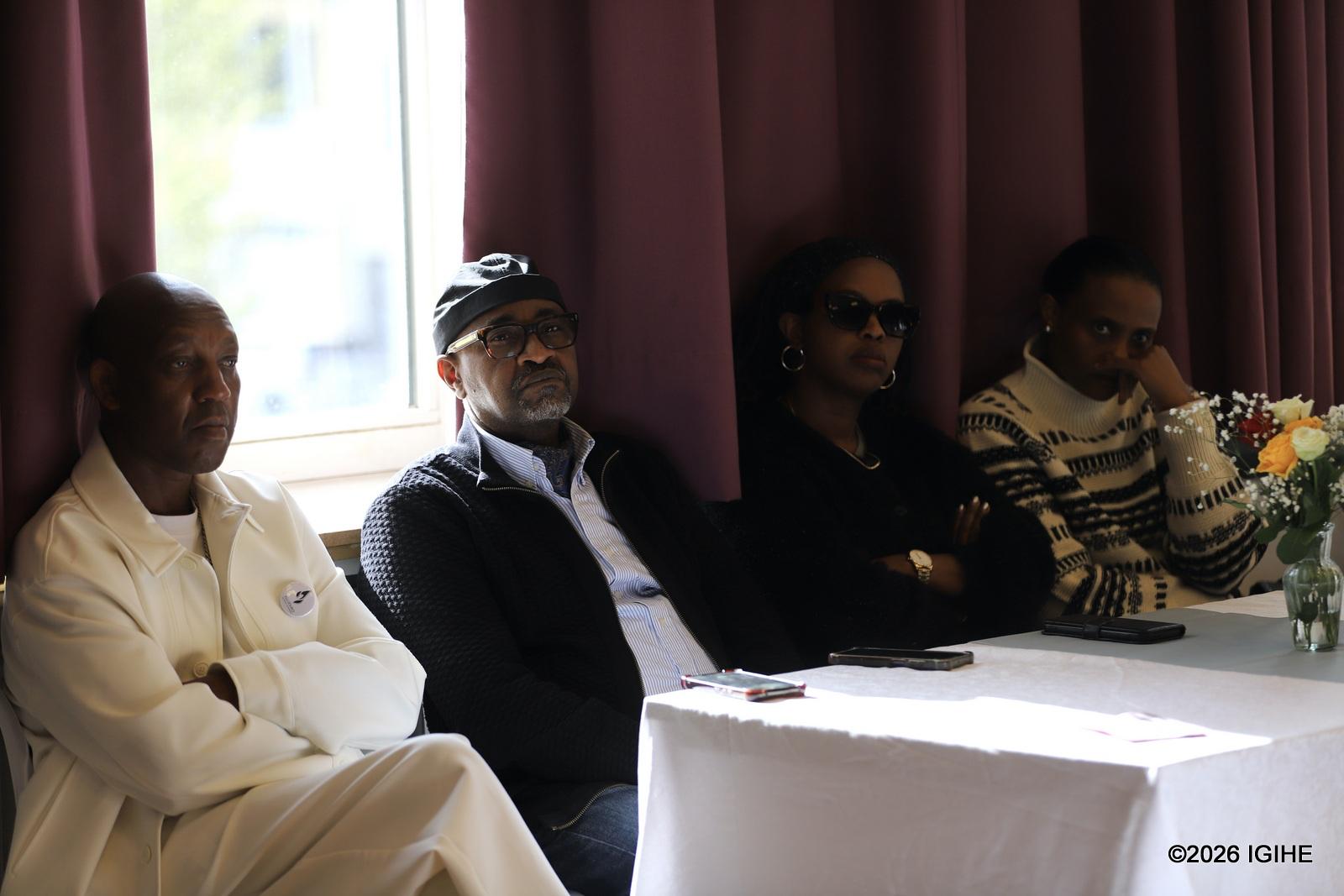
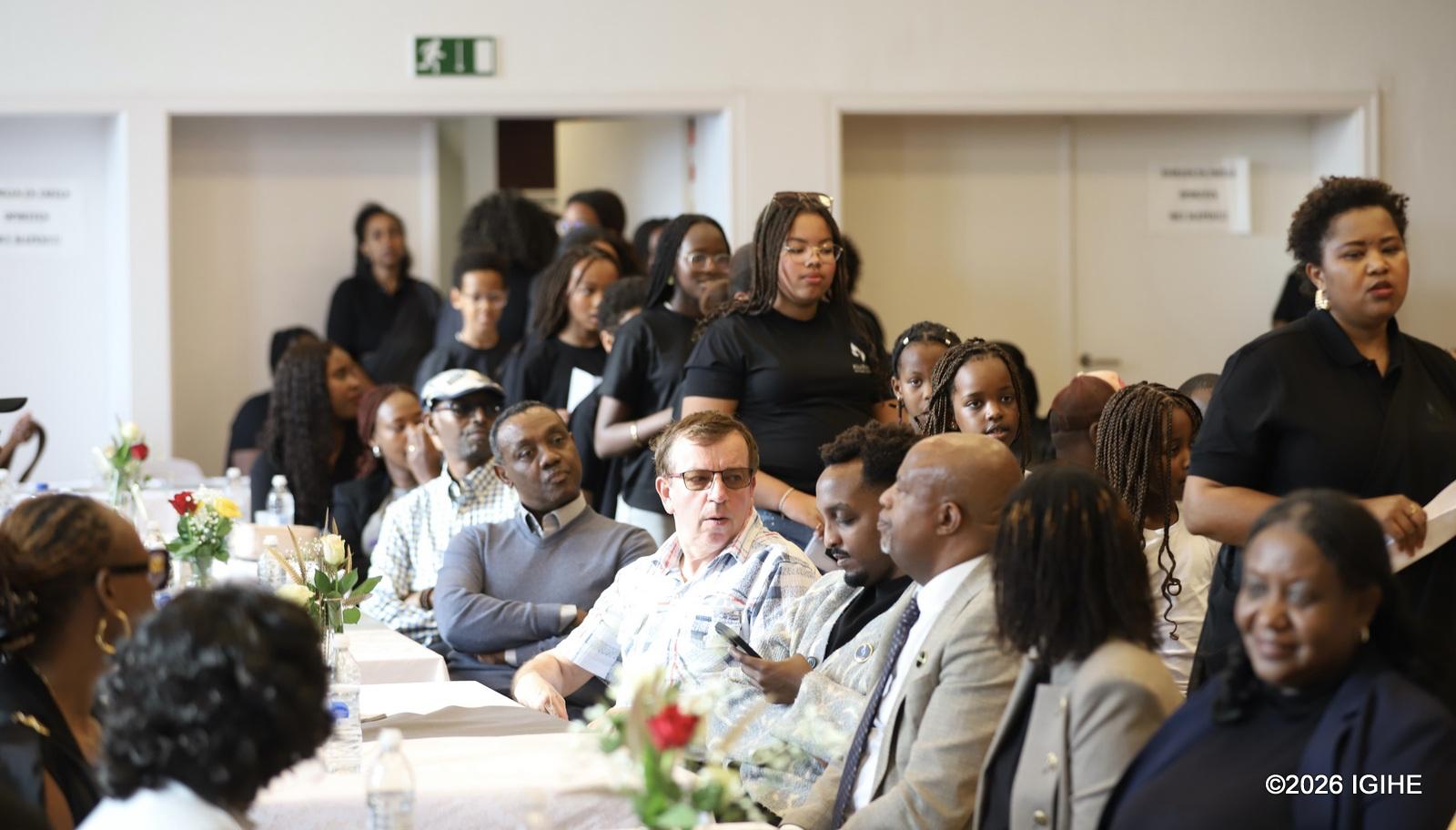
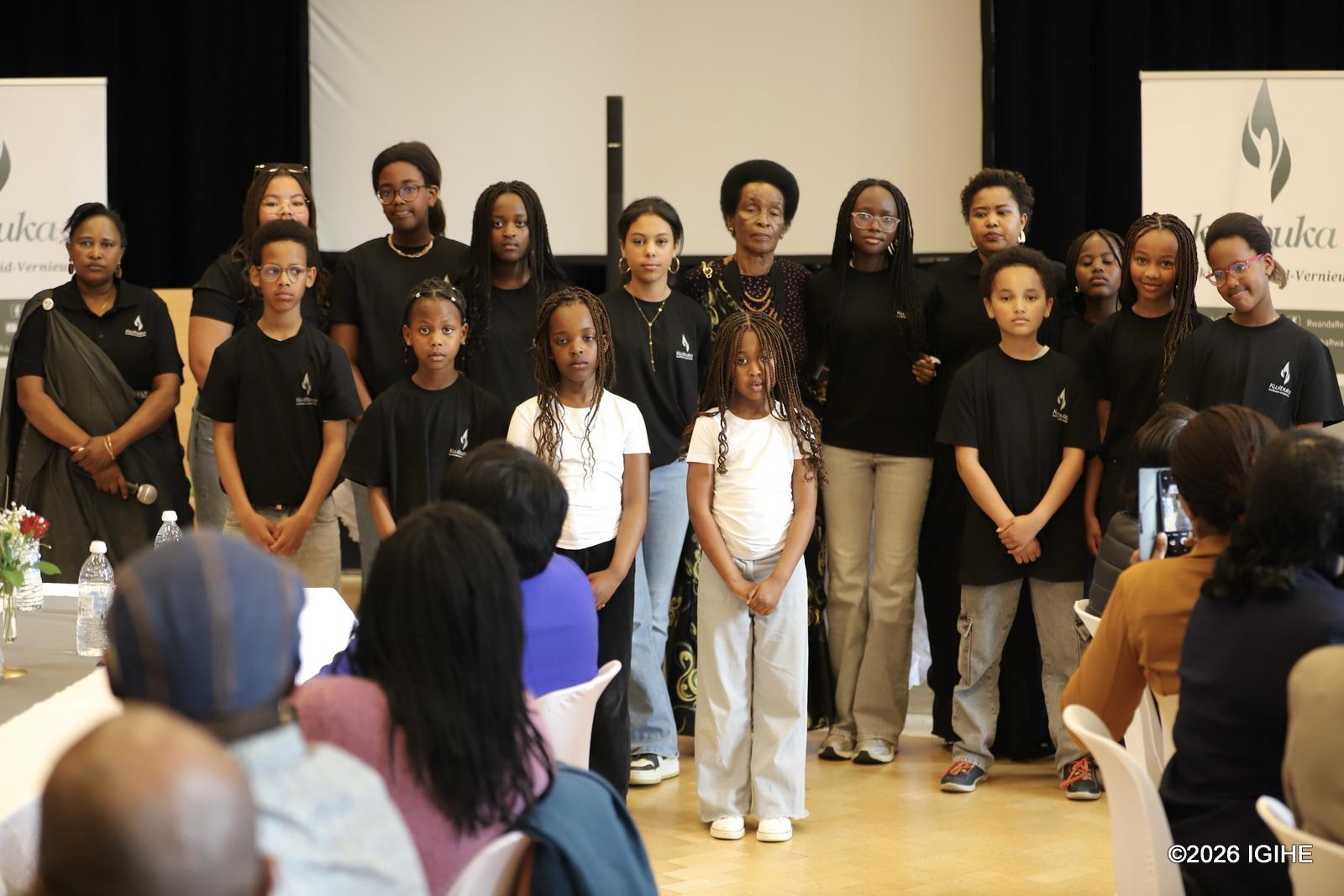
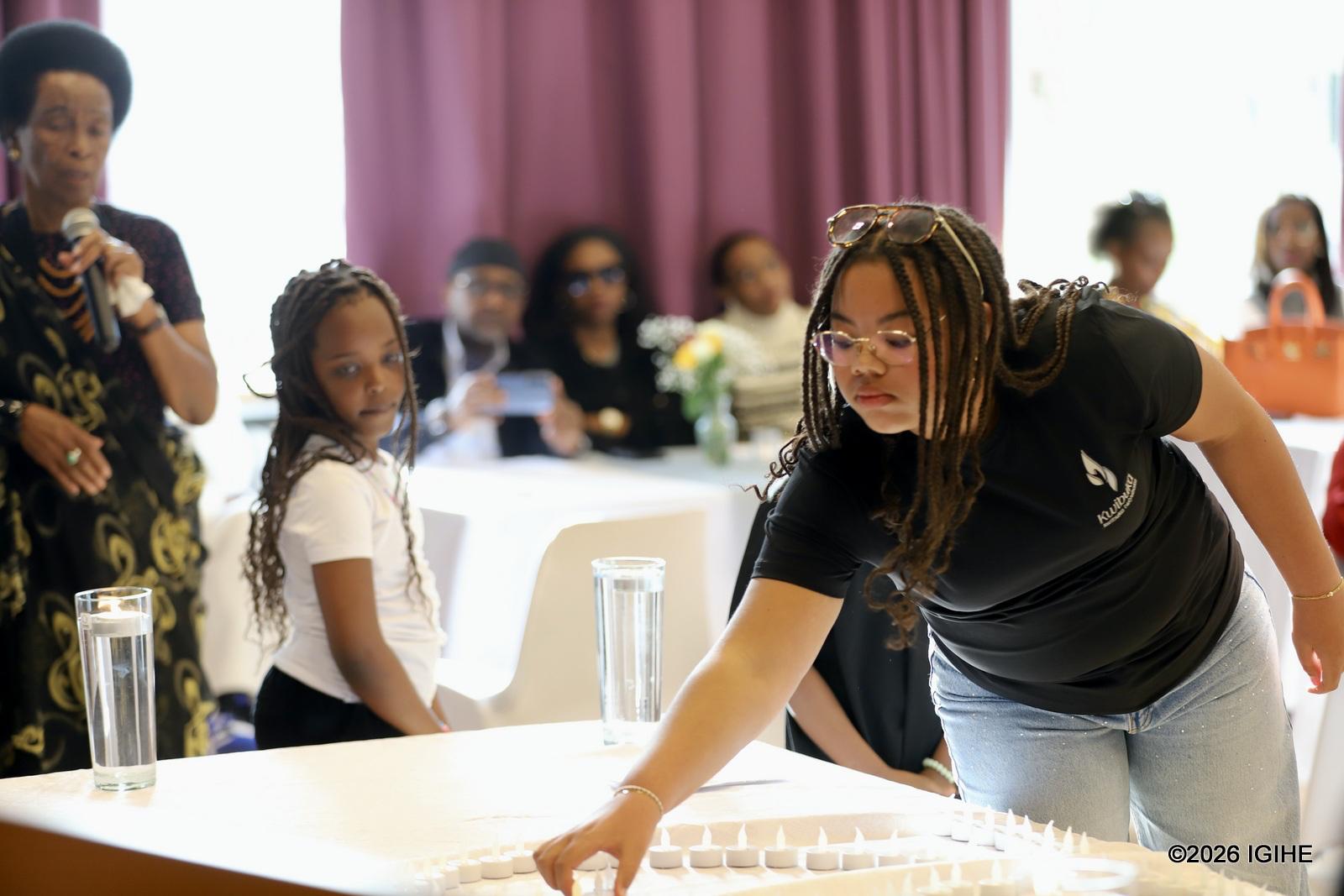
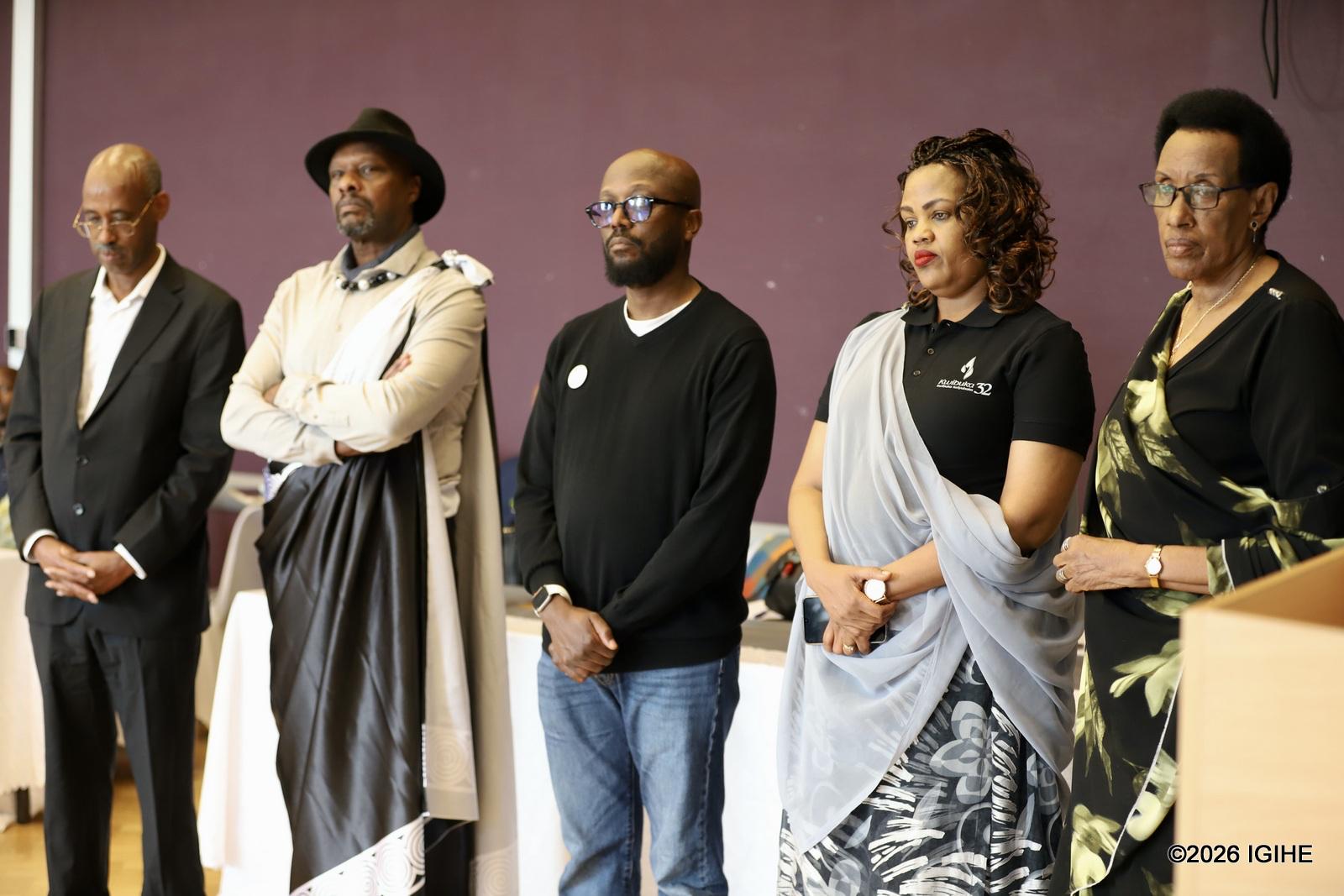
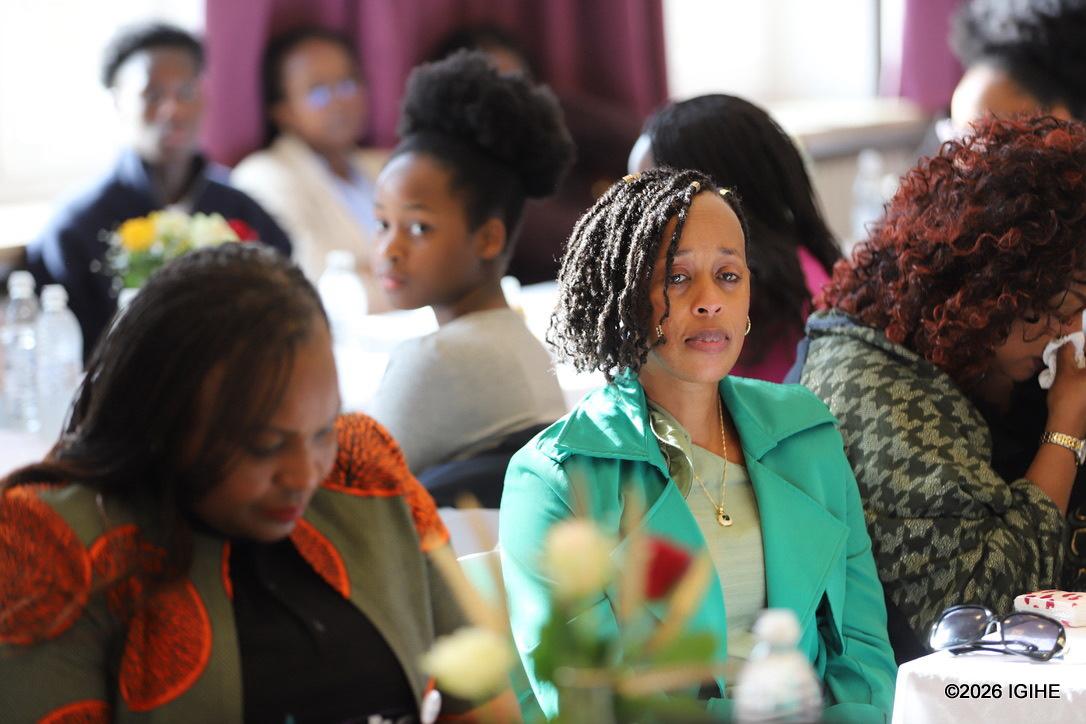
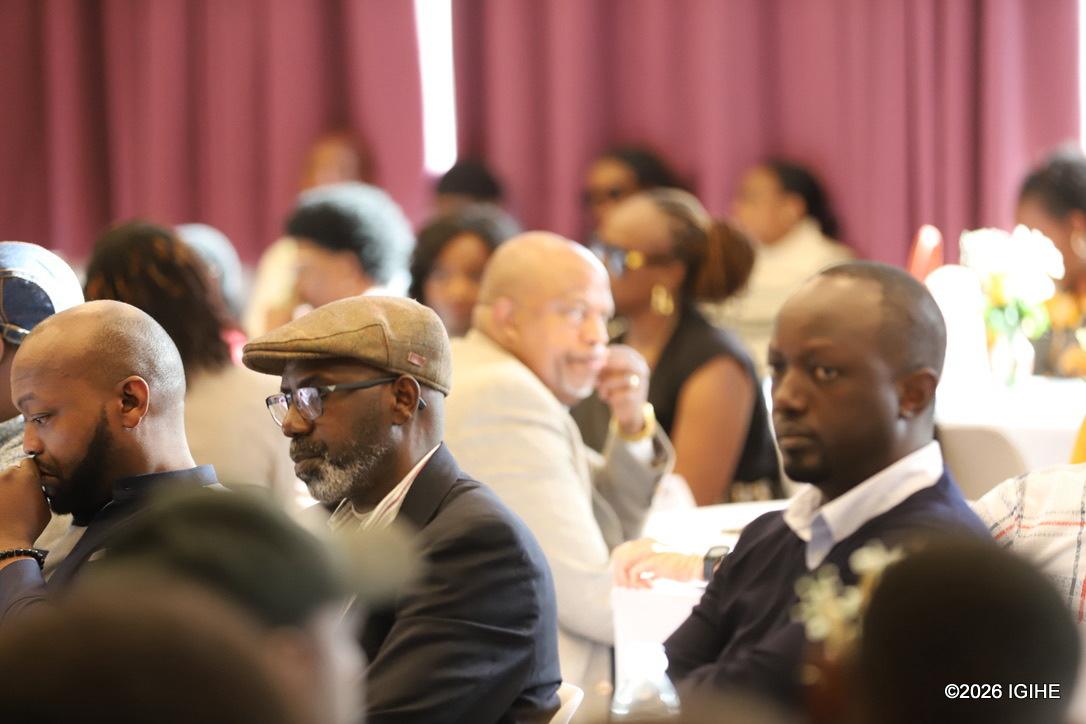
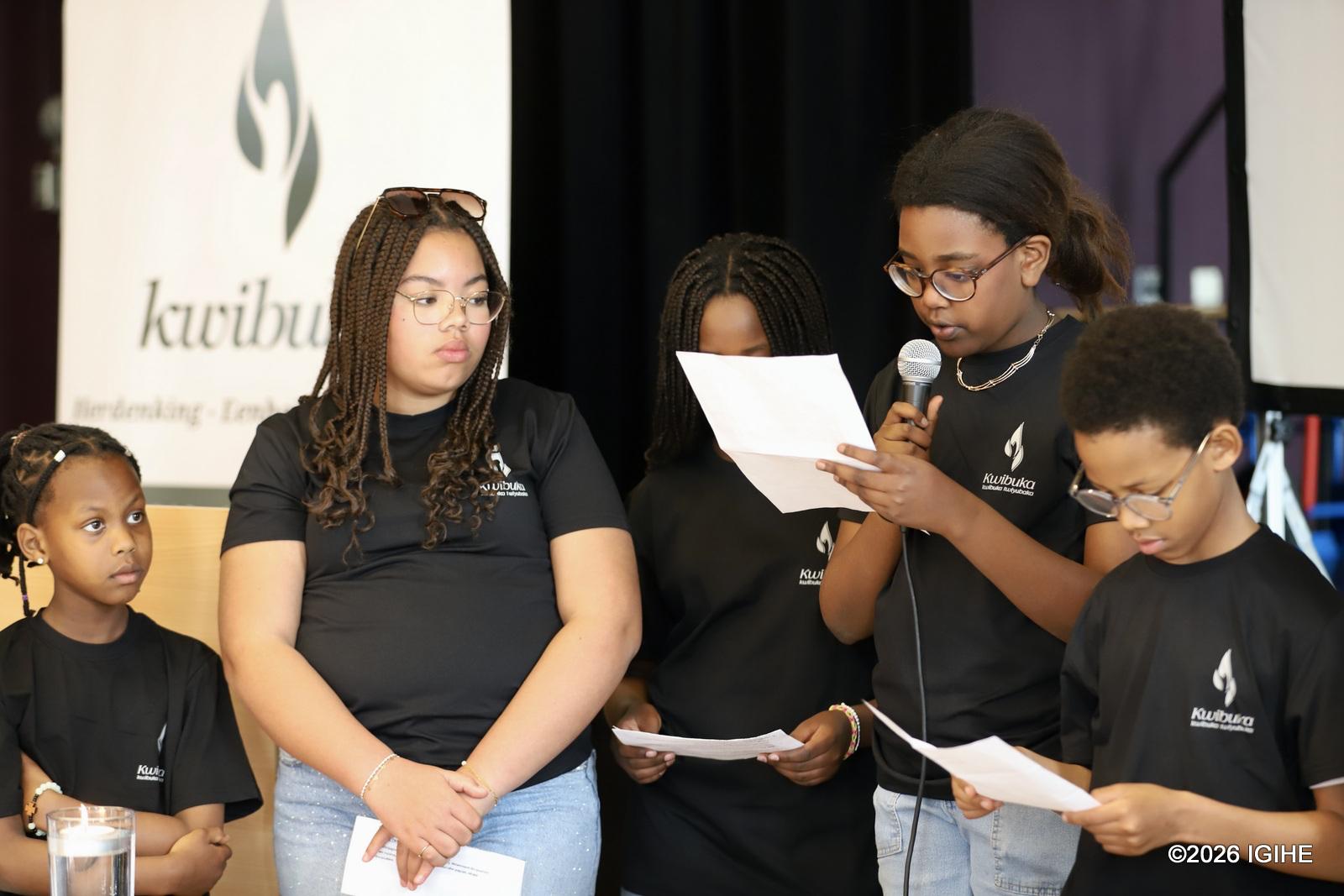
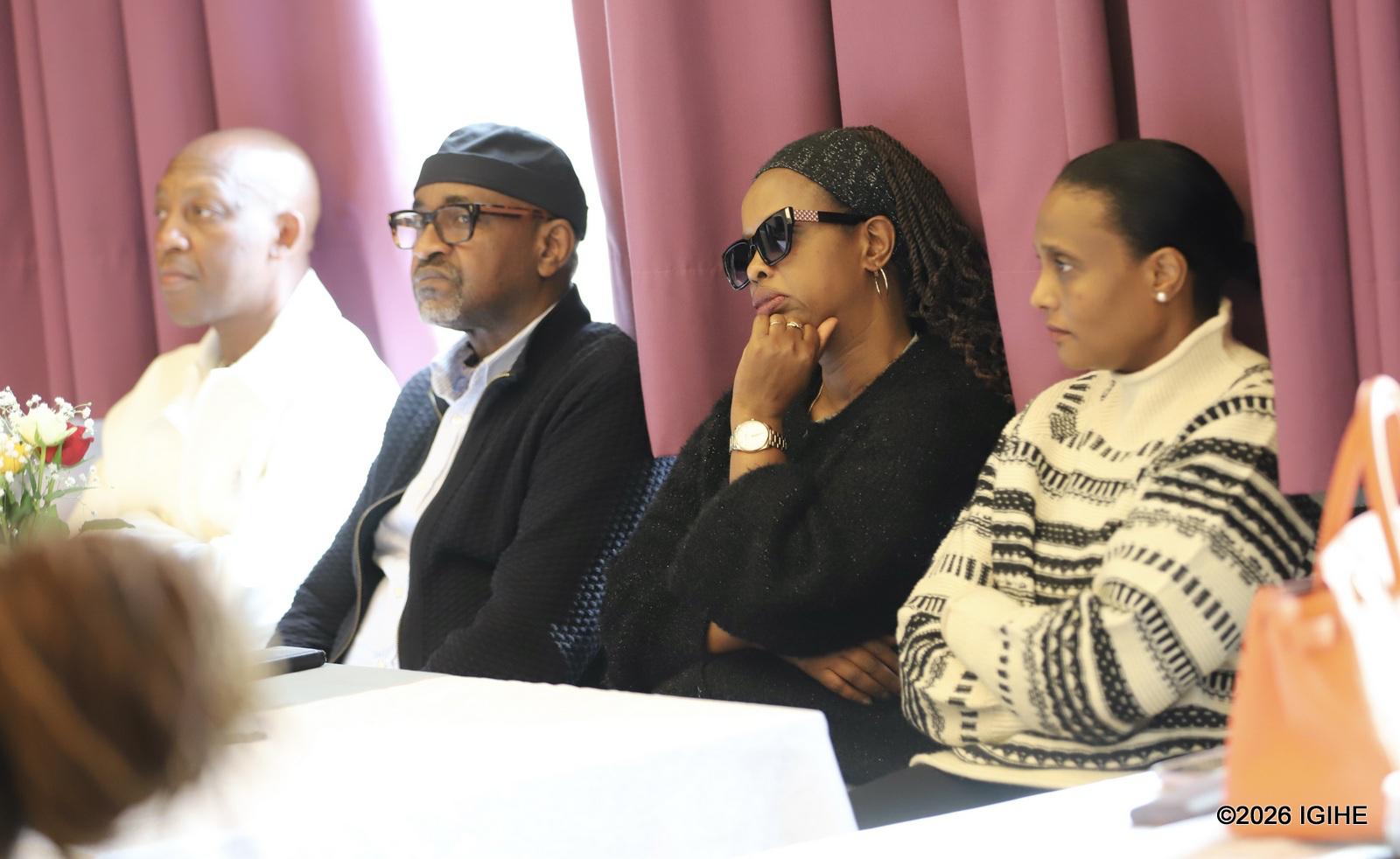
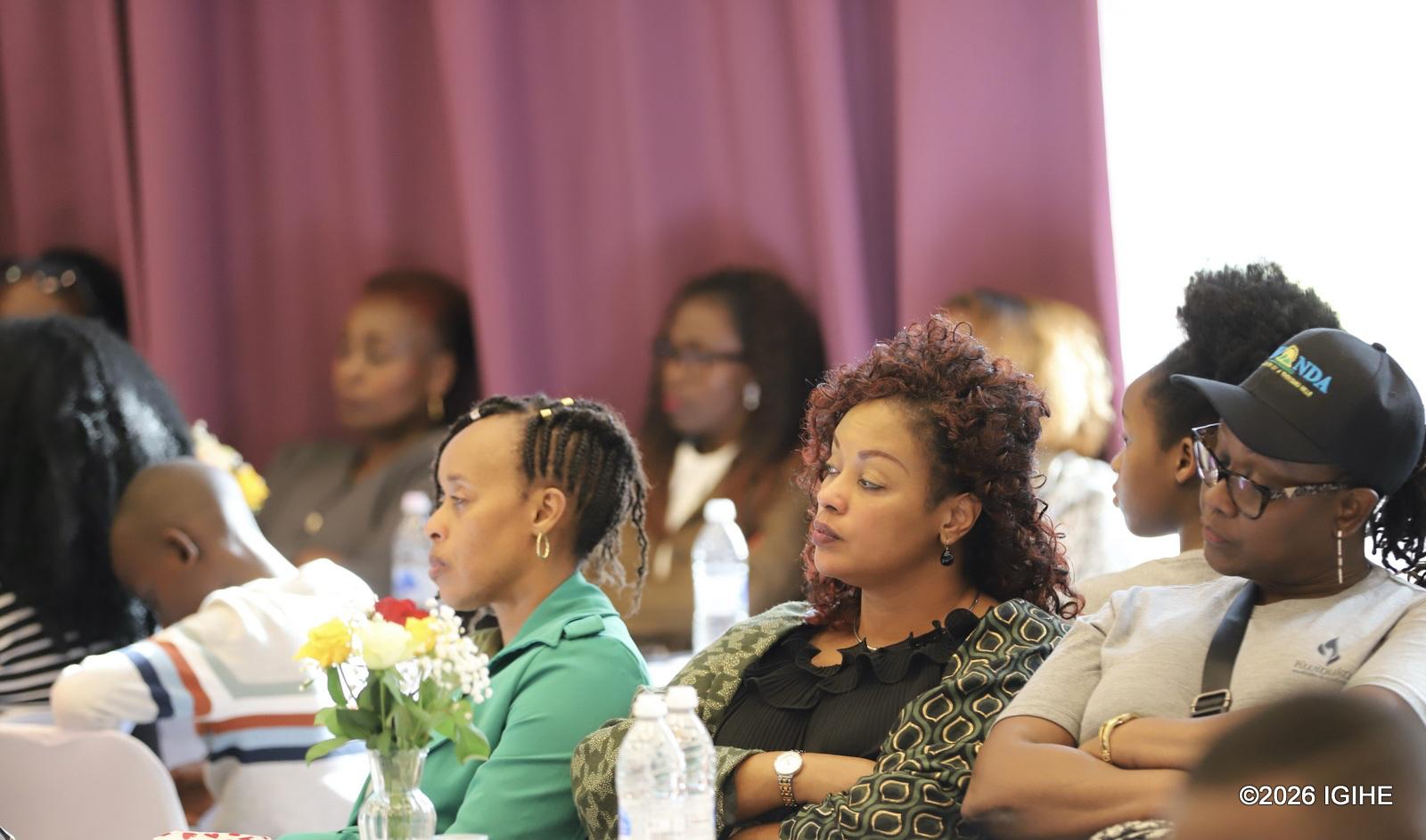
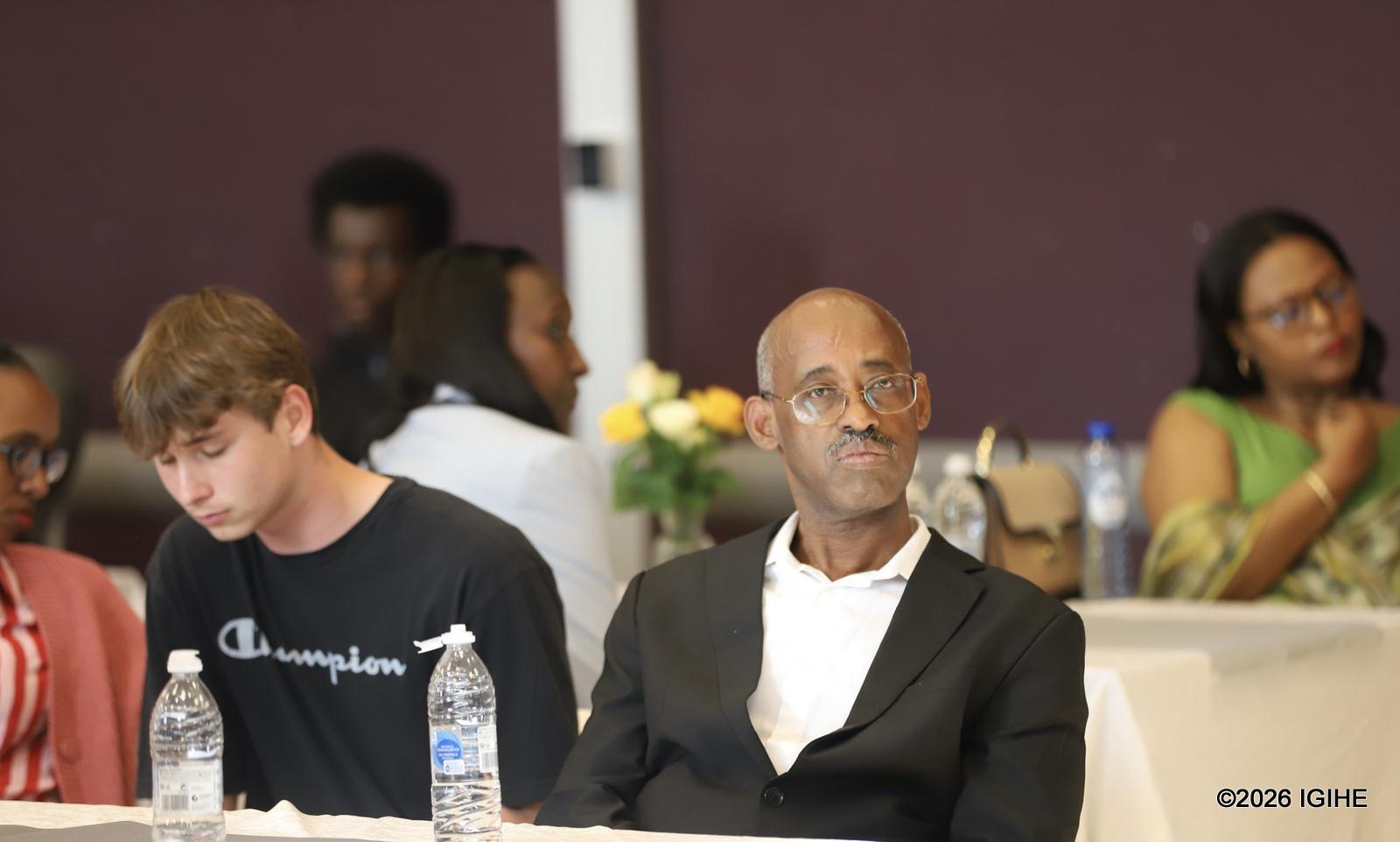
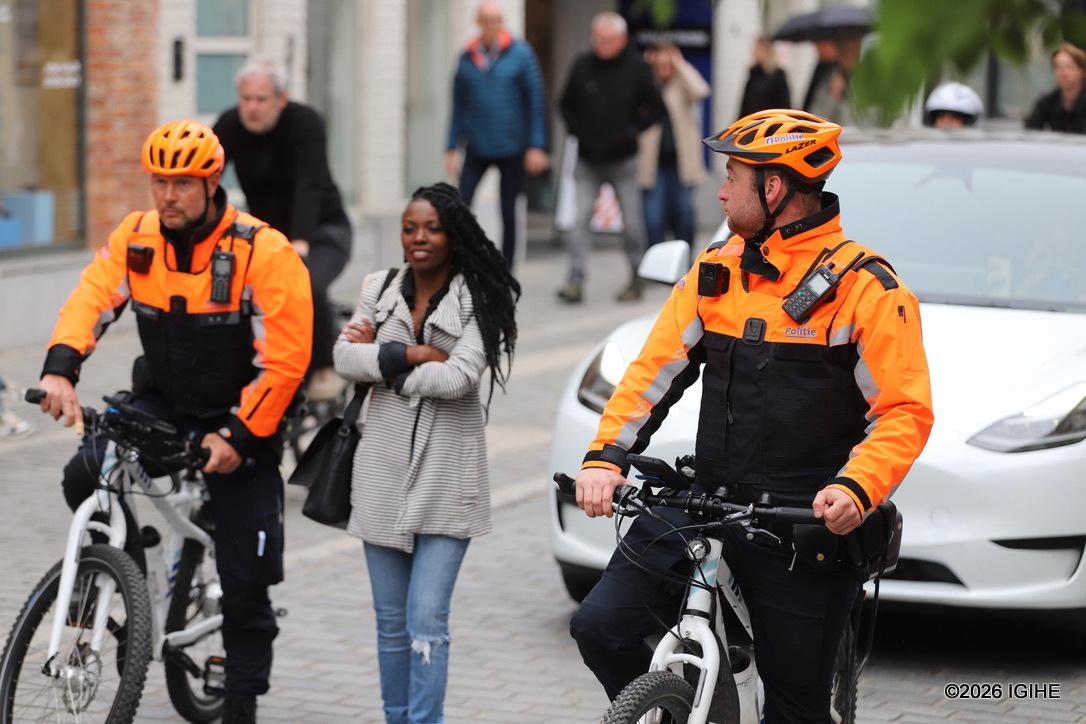
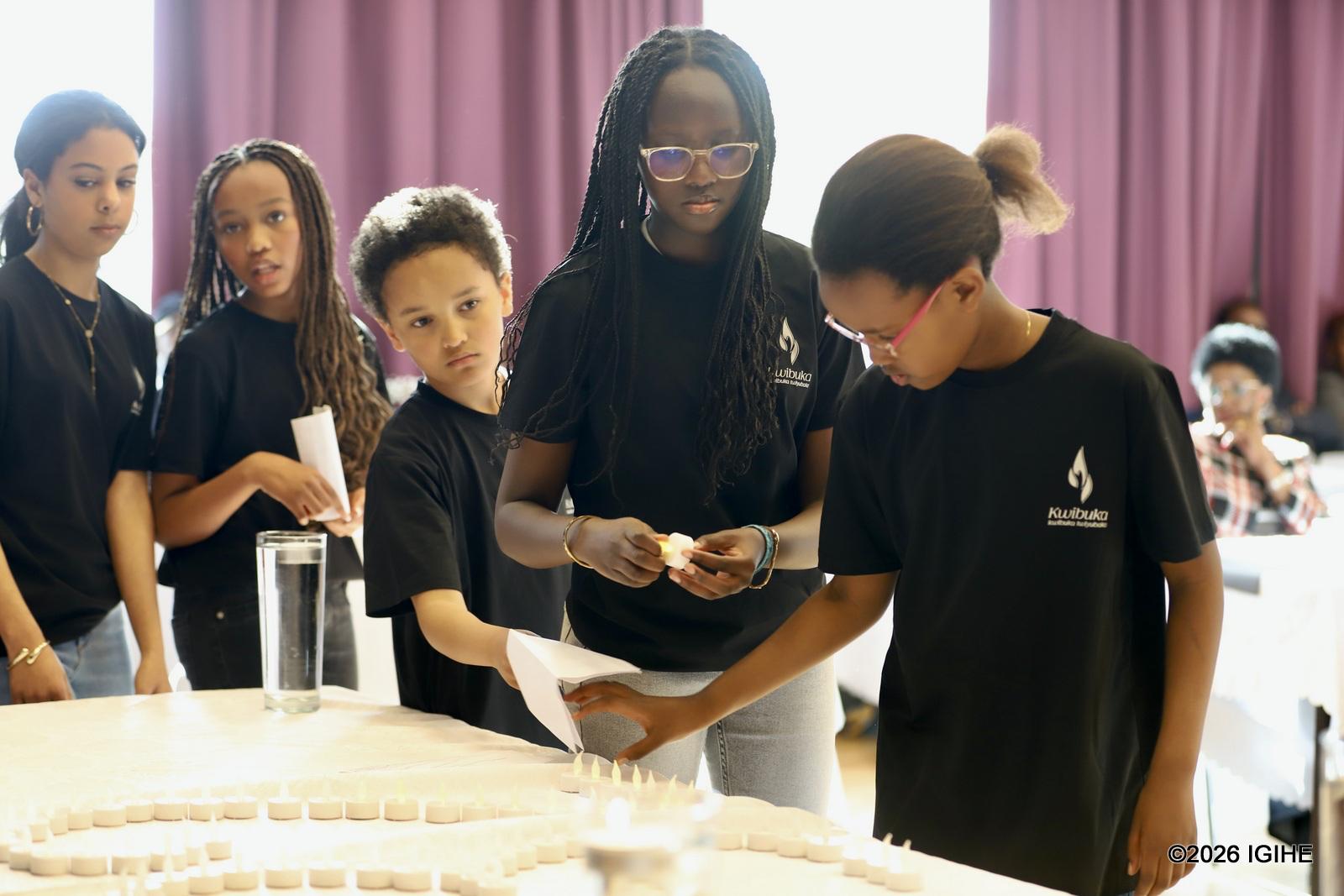
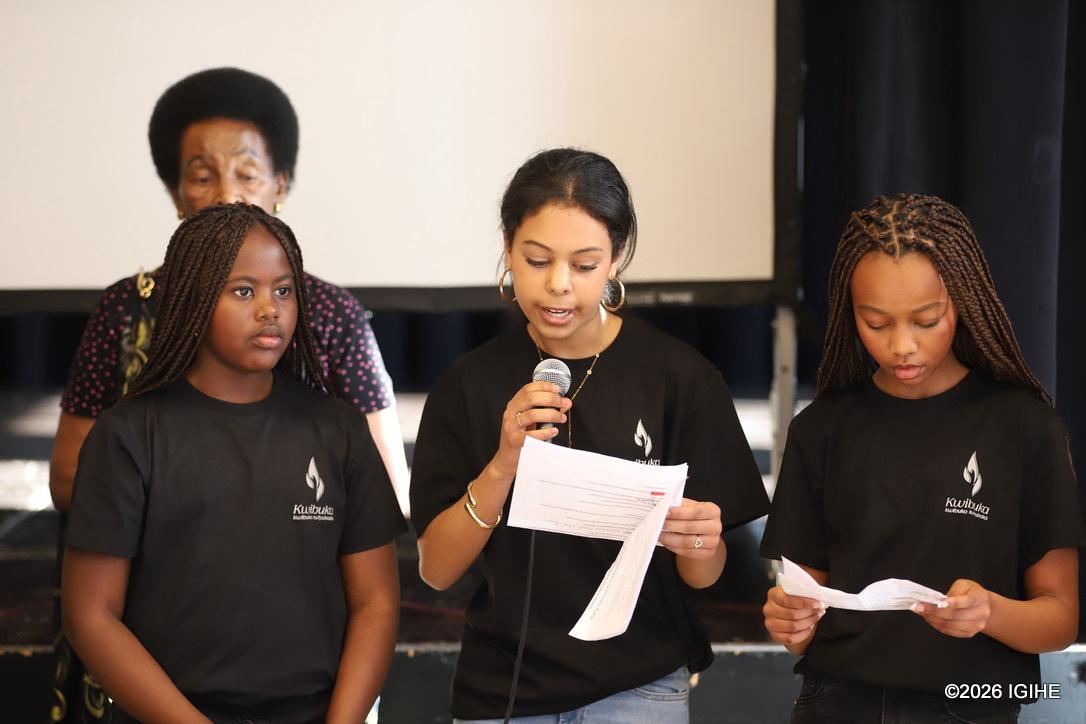
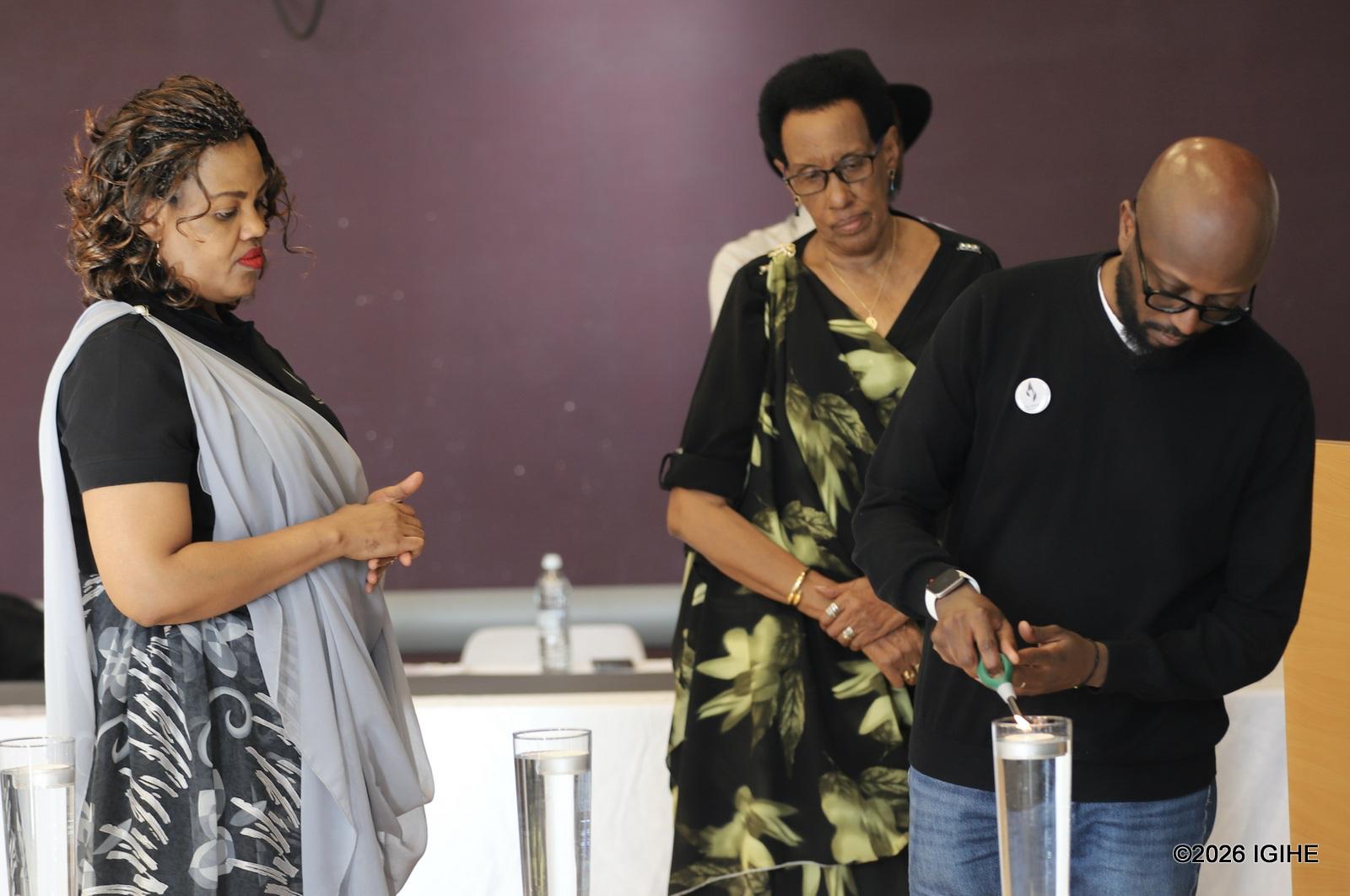
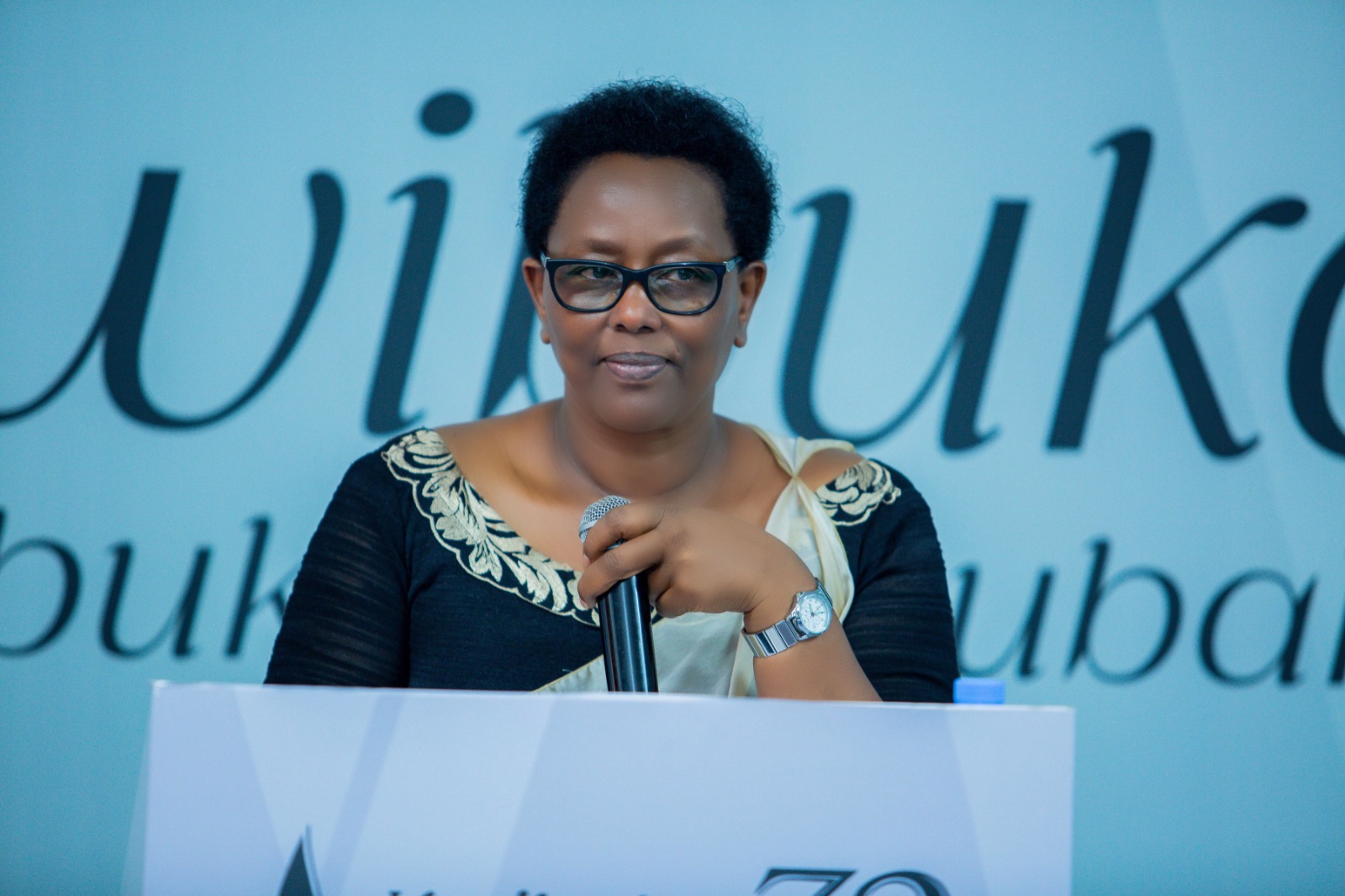
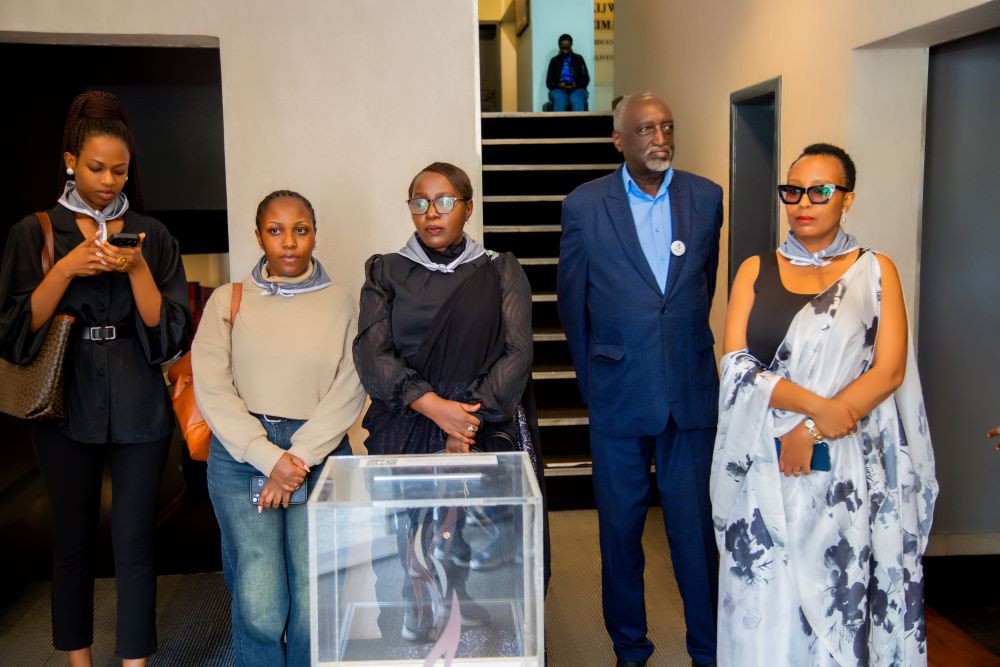
The commemoration in Bruges began with a remembrance walk through the city where Mayor Dirk De fauw emphasized the importance of remembrance in preventing recurrence of the Genocide against the Tutsi.Survivor Yves Kamurase shared his testimony of survival during the Genocide against the Tutsi.Artist Mariya Yohani performed reflective songs inspired by personal research and memories of the Genocide against the Tutsi, offering comfort to survivors.Claudine Mukakinani facilitated discussions at the event. The event concluded with an evening vigil led by Miheto Tatien, featuring testimonies and the display of photos of genocide victims, as participants paid tribute and honored their memory.Eugène Mutabazi, President of IBUKA Mémoire et Justice in Belgium, reflected on the organization’s history and shared a personal testimony about family members lost in the genocide.The event concluded with an evening vigil led by Miheto Tatien, featuring testimonies and the display of photos of genocide victims, as participants paid tribute and honored their memory.Nyiranyamibwa Suzanne joined children in performing the song “Ibuka” and led the lighting of the flame of hope.
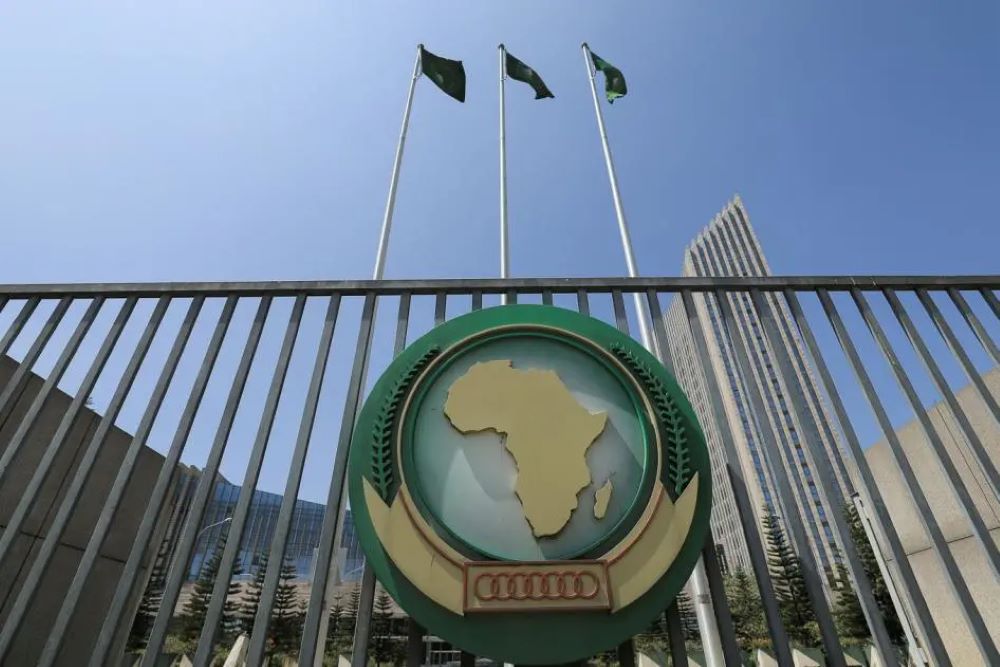
In a statement issued on Sunday, the 55-member continental organization expressed “deep concern” regarding recent developments on Israel’s reported decision to appoint a diplomatic envoy to Somaliland, a self-declared region of Somalia.
The AU reaffirmed its “unwavering respect for the sovereignty, unity, and territorial integrity of Somalia” in accordance with the Constitutive Act of the African Union and international law.
“The African Union does not recognize Somaliland as an independent state,” the statement read. “The AU remains committed to supporting Somalia’s peace, governance, and national cohesion.”
Recalling an AU Peace and Security Council communique that was issued in January, it underscored that “any unilateral recognition of Somaliland is null and void.” It warned that such actions risk undermining regional stability.
On Dec. 26, 2025, Israel became the first country in the world to formally recognize Somaliland as a sovereign state, prompting immediate condemnation from Somalia and the international community.
In a ministerial-level meeting held on Jan. 6, the AU Peace and Security Council rejected the unilateral recognition of Somaliland by Israel and called for its immediate revocation.
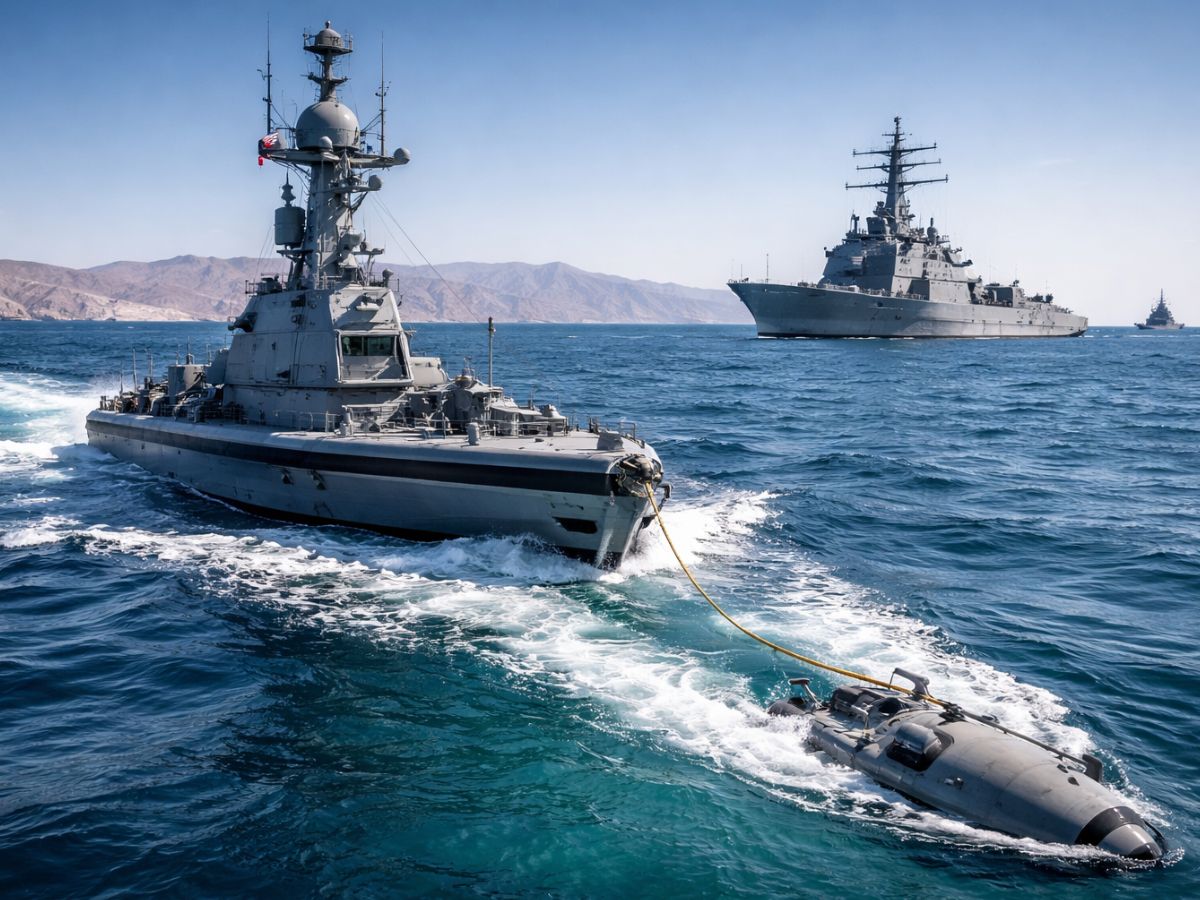
A demining operation combining manned and unmanned systems is adopted by the U.S. military to remove the mines laid by Iran, using both surface and underwater drones equipped with sonar detectors, a U.S. defense official was quoted as saying.
U.S. President Donald Trump said on Friday on his Truth Social platform that “Iran, with the help of the U.S.A., has removed, or is removing, all sea mines!” Iran did not respond to the claim.
After Iran re-closed the strait following a brief opening, 35 outbound vessels have turned back over 36 hours, according to a report by Britain-headquartered maritime analytics company Windward.
Iran tightened control over the strait after the United States and Israel launched joint attacks on the country on Feb. 28. The United States also imposed a naval blockade on the strait following its failed negotiations with Iran in Islamabad, Pakistan.
US Navy deploys unmanned robots and underwater drones to clear sea mines in Strait of Hormuz
The men’s half-marathon world record was created by Uganda’s star distance runner Jacob Kiplimo at the Lisbon Half Marathon in Portugal last month.
At the inaugural E-Town half-marathon in 2025, Tiangong Ultra seized victory in two hours, 40 minutes, and 42 seconds, and only six out of the 20 competing teams successfully finished the 21.0975-kilometer race to make history.
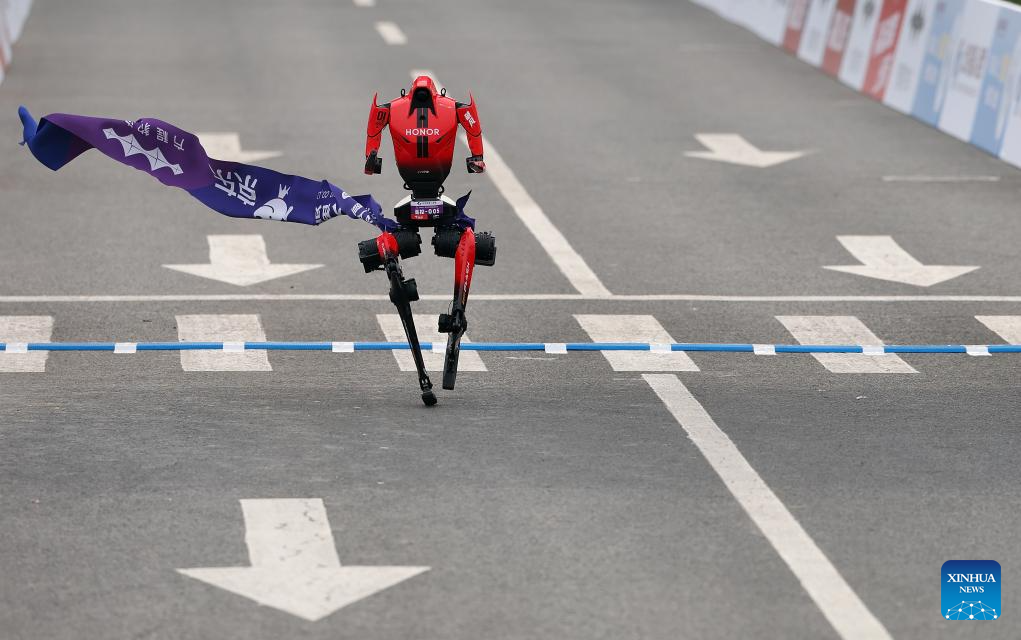
In the second edition of the event on Sunday, humanoid robots made remarkable progress and demonstrated technological breakthroughs to become faster and more stable in running. The number of participating teams increased to more than 100 this year, including participants from Germany, France and Brazil.
In terms of competition rules, robots and human runners followed the same route but separate lanes to ensure safety, and the robot’s cutoff time was set at three hours and 40 minutes. The newly added format this year includes two ways of participation – remote control and autonomous navigation.
For teams in remote control, their finishing times need to be multiplied by a coefficient of 1.2. About 40 percent of the teams adopted the autonomous navigation to achieve better results.
“The setting of coefficient aims to guide and encourage the research and development of autonomous navigation, which represents a technological foundation for humanoid robots to be applied in more scenarios in our daily life towards future,” explained Liang Liang, deputy secretary-general of the Chinese Institute of Electronics.
On the human’s side of E-Town half-marathon, China’s Zhao Haijie took the men’s title in one hour, seven minutes, and 47 seconds, while his compatriot Wang Qiaoxia was crowned in the women’s race with 1:18:06.
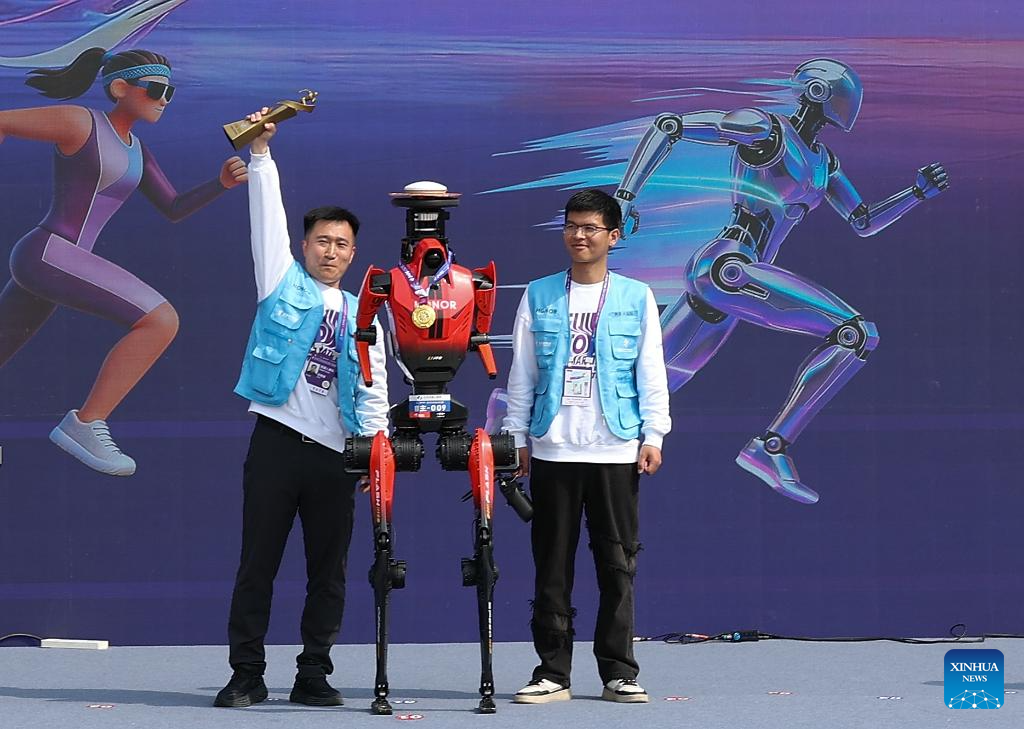
Gold medalist “Flash” (C) of Qitiandasheng Team in the autonomous category poses during the awarding ceremony for the humanoid robots’ half-marathon at the Beijing E-Town half-marathon and humanoid robots half-marathon in the Beijing Economic-Technological Development Area in southeast Beijing, China, April 19, 2026. (Xinhua/Zhang Chenlin)Humanoid robot “Flash” of Pofengshandian Team in the remote-controlled category crosses the finish line during the Beijing E-Town half-marathon and humanoid robots half-marathon in the Beijing Economic-Technological Development Area in southeast Beijing, China, April 19, 2026. (Xinhua/Zhang Chenlin)
What is taking shape across western Rwanda, environmental leaders say, is more than land restoration, it is a synergy between climate action and human development.
“MuLaKiLa shows that restoring landscapes is not only about nature, it is equally about people,” says Dr. Sam Kanyamibwa, Founder and CEO of ARCOS, the organization implementing the project on the ground. “When farmers are empowered with knowledge and financial resources, conservation becomes a pathway to dignity, resilience, and long‑term development.”
That philosophy underpins the MuLaKiLa Project, a large‑scale landscape restoration and livelihood initiative operating around the Mukura–Gishwati Forest and the Lake Kivu catchment landscape.
According to Dr. Amani MABANO, Project Manager of MuLaKiLa, this carbon project was officially launched in 2023 to restore 22,266 hectares (ha) of degraded agricultural land and improve the livelihoods of 40,000 smallholder farmers’ households owning the land in Ngororero and Rutsiro districts.
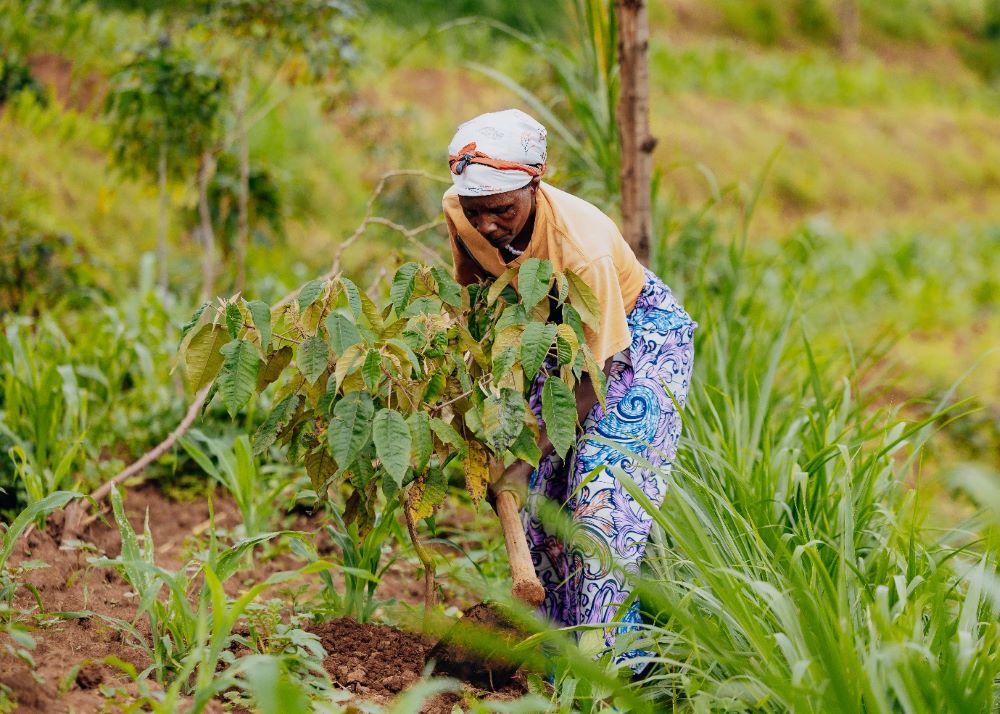
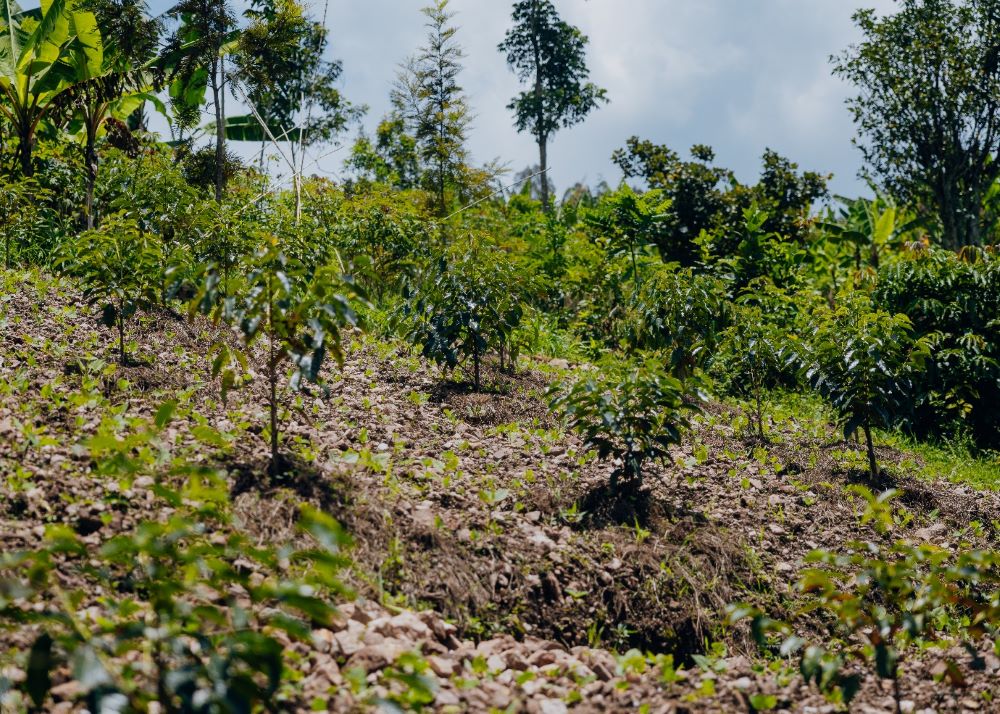
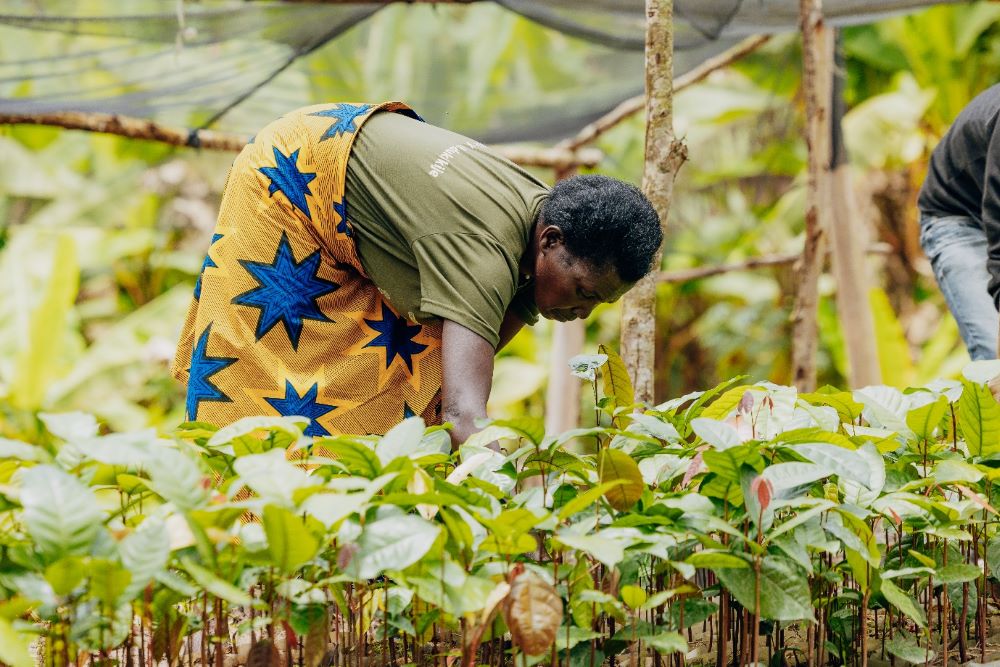
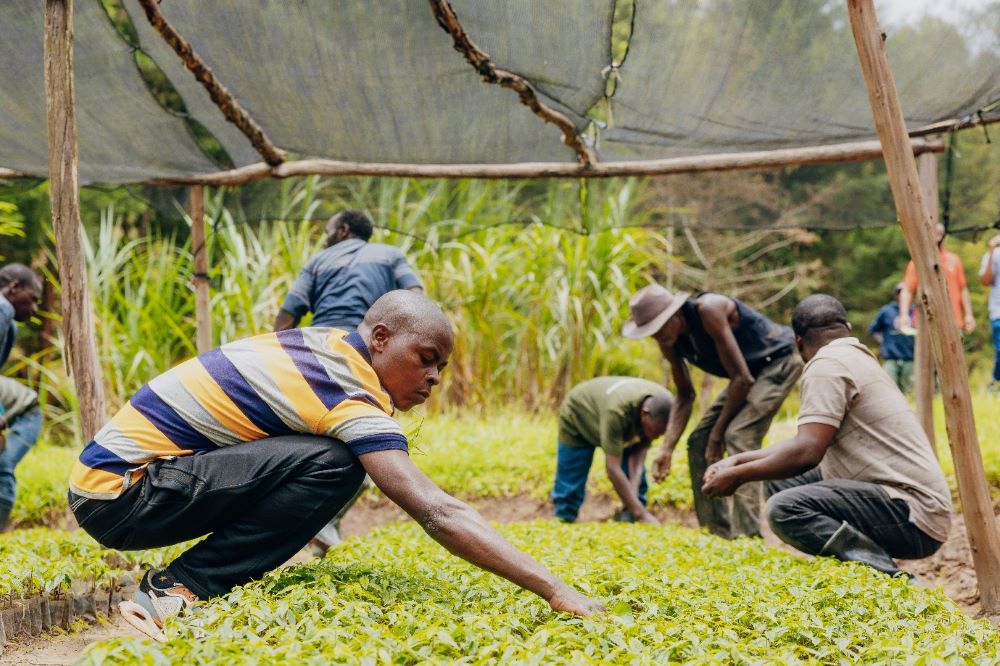
The land is being restored through two key initiatives: tree plantation and establishment of radical and progressive terraces. The project aims to plant 6 million carbon trees comprising native (50% of the trees), fruit (30% of the trees), exotic (20% of the trees) species.
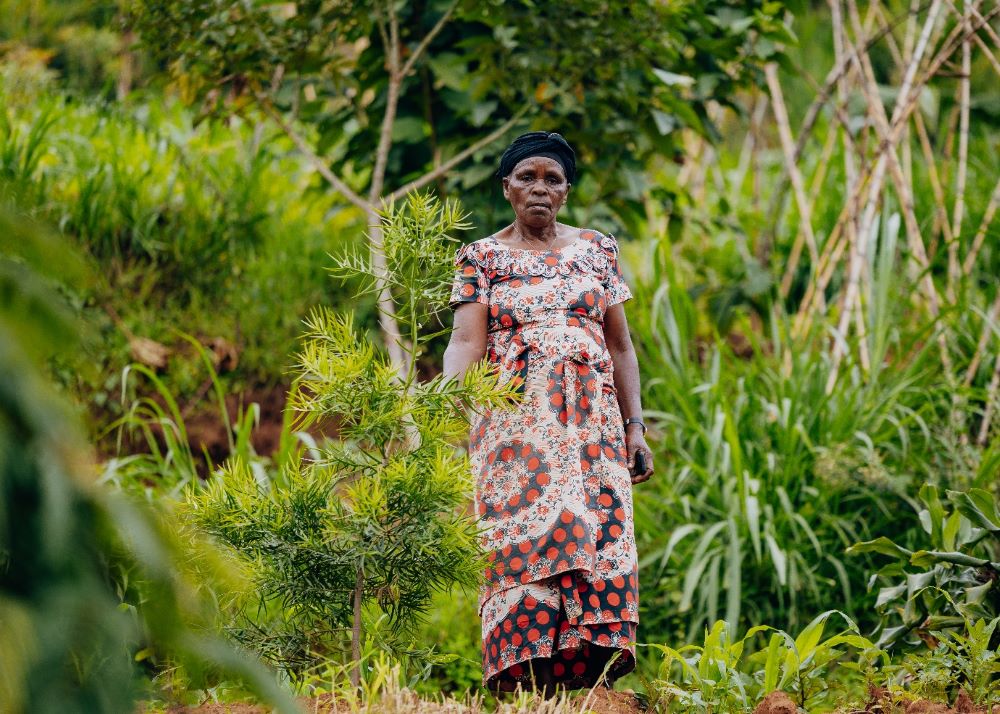
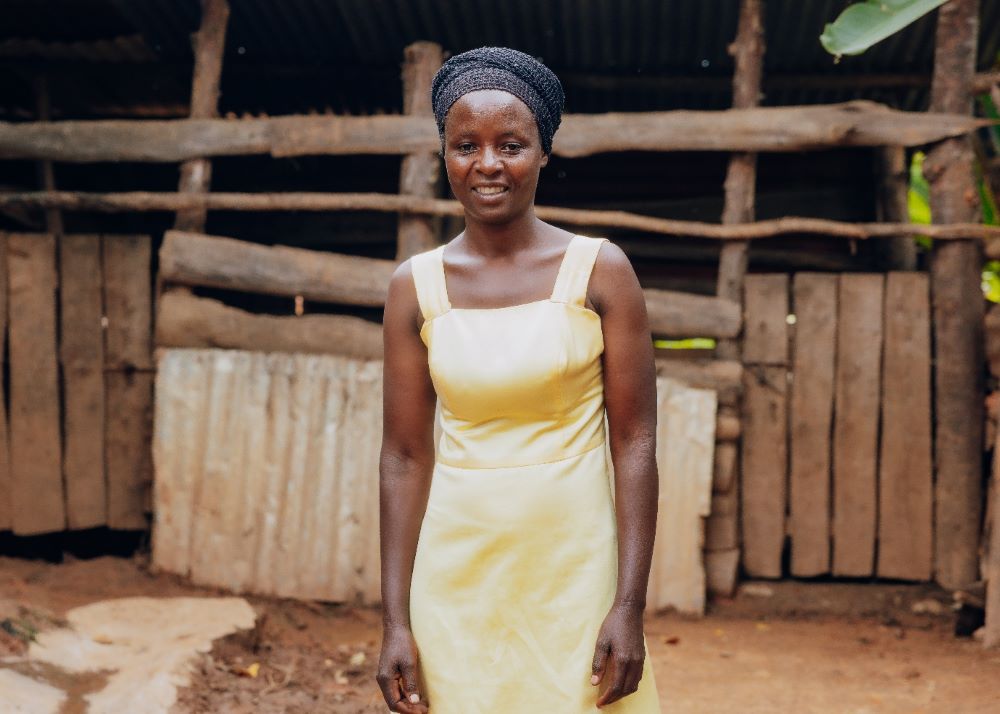
A project beneficiary standing next to Podocarpus falcatus. MuLaKiLa ensures that 50% of the tree species planted are indigenous.
The radical terraces to be established on 2,400 ha and progressive terraces will cover 7,739 ha. The establishment of these terraces comes with package of organic manure, lime, shrubs, elephant grass, and seeds for the agriculture season following the construction of the terraces. As of March 2026, 5.7 million trees have been planted and radical terraces established on 1,650 plus 5,208 ha of progressive terraces.
The livelihoods of local communities will be improved through several initiatives, including a well-designed set of training modules, increased crop yield, employment, tree maintenance incentive, value chain development for different agro-products, implementation of green projects funded through the Umusave Fund (an NBCF), and carbon benefit sharing.
“Thus, the project intends to build resilience to climate change for the vulnerable landscape and its residents,” says Amani.
For farmers like Ildephonse Bizimana, a smallholder in Rutsiro District, the results are already tangible.
“Before the project, rain used to wash away our soil and our harvests were poor,” he says. “Now, with terraces and trees on my land, the soil is stable and my crops are growing better. I can already see the difference in my yields.”
For Devota Uwajeneza, a farmer in Ngororero District, the impact has reshaped farming itself.
“Before, we cultivated but never harvested enough,” she says. “Now the terraces hold water, the soil is getting fertile again, and even during heavy rains, our fields remain intact.”
From the outset, communities have been central to the project’s design and execution. The initiative operates entirely on smallholder land and has engaged farmers and local leaders through village‑level consultations since its inception.
“These farmers are our key stakeholders,” Amani underlines. “They were involved from the beginning and are the drivers of implementation.”
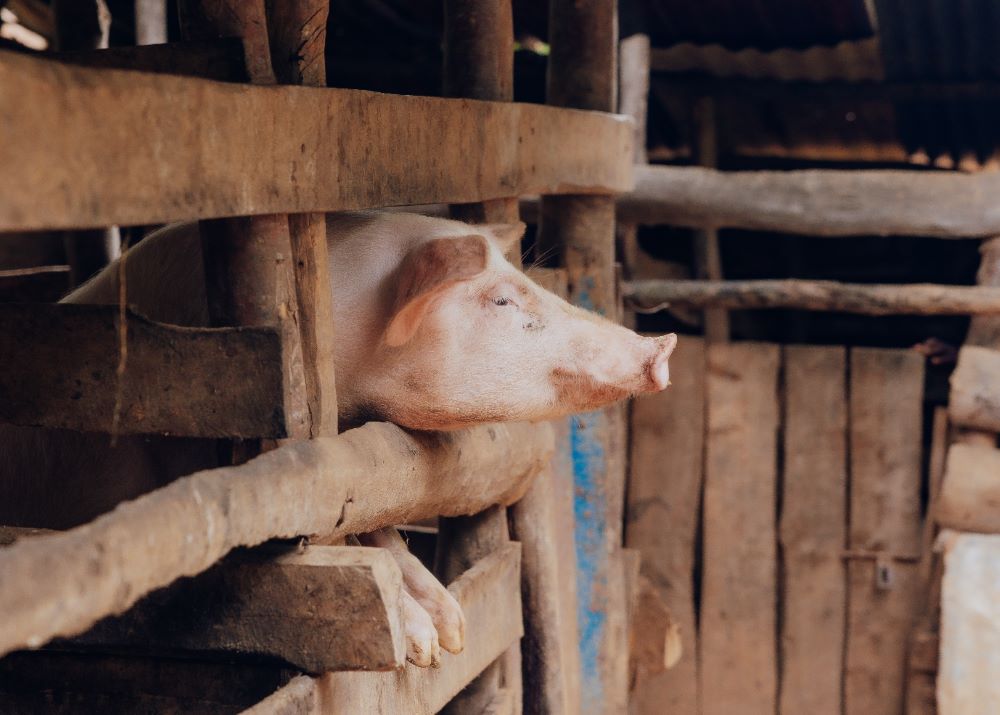
Beyond land restoration, MuLaKiLa targets economic resilience through the Nature‑Based Community Fund (NBCF), a revolving financing mechanism established in 73 cells across the project area. In 2024, €840,000 was deposited into the fund. By early 2026, communities had launched around 450 green projects, with nearly 900 million Rwandan francs invested in climate‑friendly enterprises. For Kankindi Chantal, one of the beneficiaries, access to the fund was decisive.
“Through the community fund, our association was able to invest in livestock farming,” she says. “We repaid the loan and earned enough to plan to upscale our project. We are no longer just farming to survive; we are farming as a business.”
Chantal Kankindi, a project beneficiary of the MuLaKiLa.
All loans have been fully repaid, with interest, an outcome project leaders describe as evidence of growing confidence and financial discipline among communities.
Training has reinforced this transformation. Farmers receive instruction in project management, nursery establishment, and sustainable agricultural practices, alongside basic farming tools and continuous technical support.
“The training also changed how we think,” added Chantal Kankindi. “We now plan, set objectives, and work together. Even when the project ends, these skills will remain with us.”
MuLaKiLa is also structured as a carbon project, allowing communities to benefit directly from climate action. Farmers receive annual incentives to maintain planted trees, while a share of revenue from carbon credits will be returned to communities.
“They are the stewards of the land,” Amani says. “So they should benefit from protecting it.”
The project is the result of collaboration among farmers, district authorities, national institutions, and partners such as Reforest’Action, the project developer. Mabano also credits AstraZeneca for providing the financial support that made the initiative possible.
Much work remains before MuLaKiLa reaches full maturity. But across western Rwanda’s hillsides, terraces are holding, trees are growing, and farmers who once watched their land degrade are now planning for the future.
“What makes us proud,” Amani says, “is when communities succeed. That is when our project succeeds.”
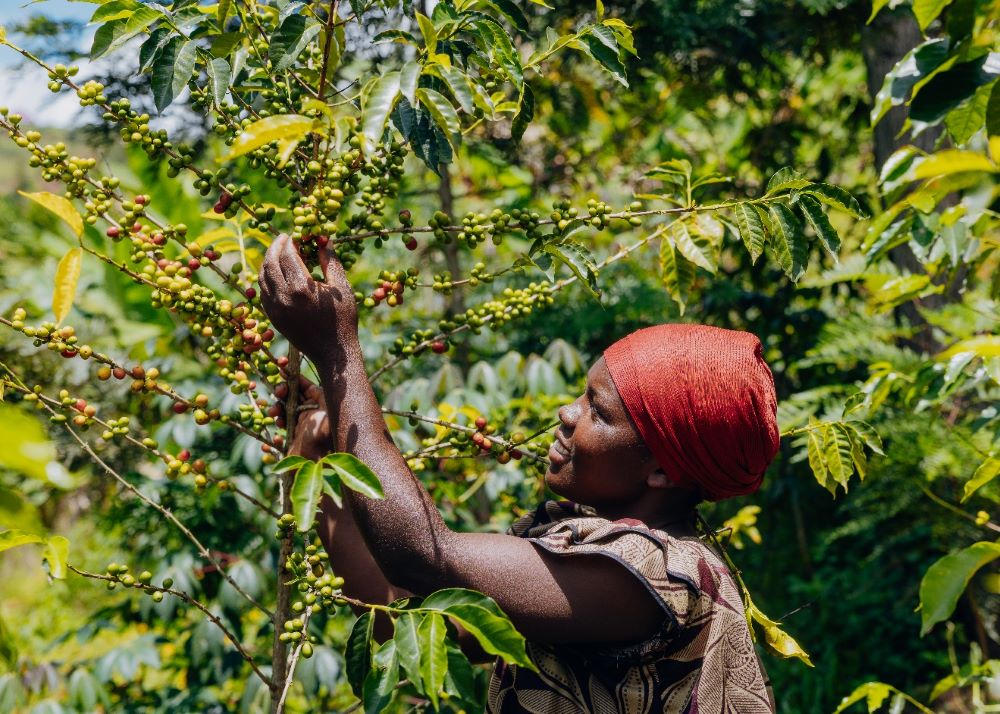
The project invested in key agricultural value chains, including coffee, bananas, beekeeping, and avocado.The project created 280,000 jobs, thanks to nursery management work and terraces establishment.
Germany, through GIZ Rwanda and DSKI, supports Duterimbere IMF Plc in training women to strengthen their financial management skills while also providing them with low-interest loans.
Among the loan products offered is “Aguka Mugore,” which provides up to Rwf 5 million without requiring collateral such as land or property.
Another product, “Kungahara Mugore,” offers up to Rwf 30 million, with only 25% collateral required, while the remaining amount is guaranteed by Development Bank of Rwanda (BRD).
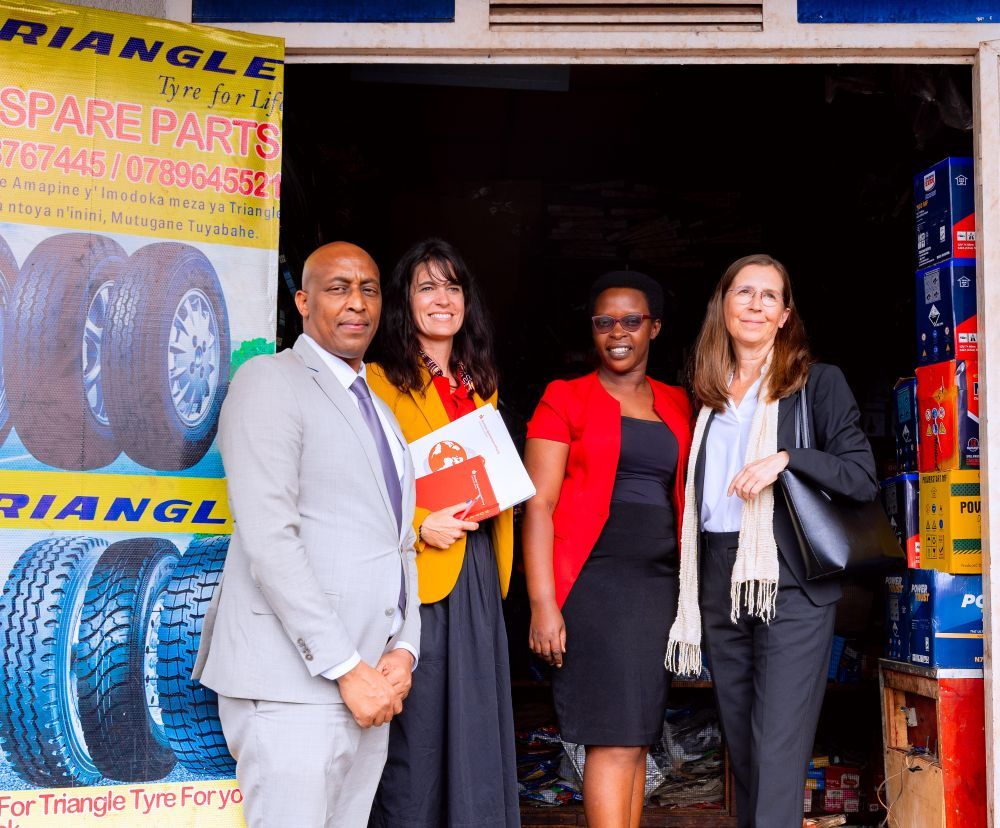
Beneficiaries say these initiatives have significantly transformed their businesses. Uwitonze Jeannette, a trader in auto parts, motorcycles, and milling machines, said she has worked with Duterimbere IMF Plc for 15 years, starting with a loan of Rwf 5 million and gradually expanding her business.
She later secured a Rwf 15 million loan, followed by Rwf 47 million in 2020, which she is close to completing. She now plans to apply for a Rwf 100 million loan at a low interest rate.
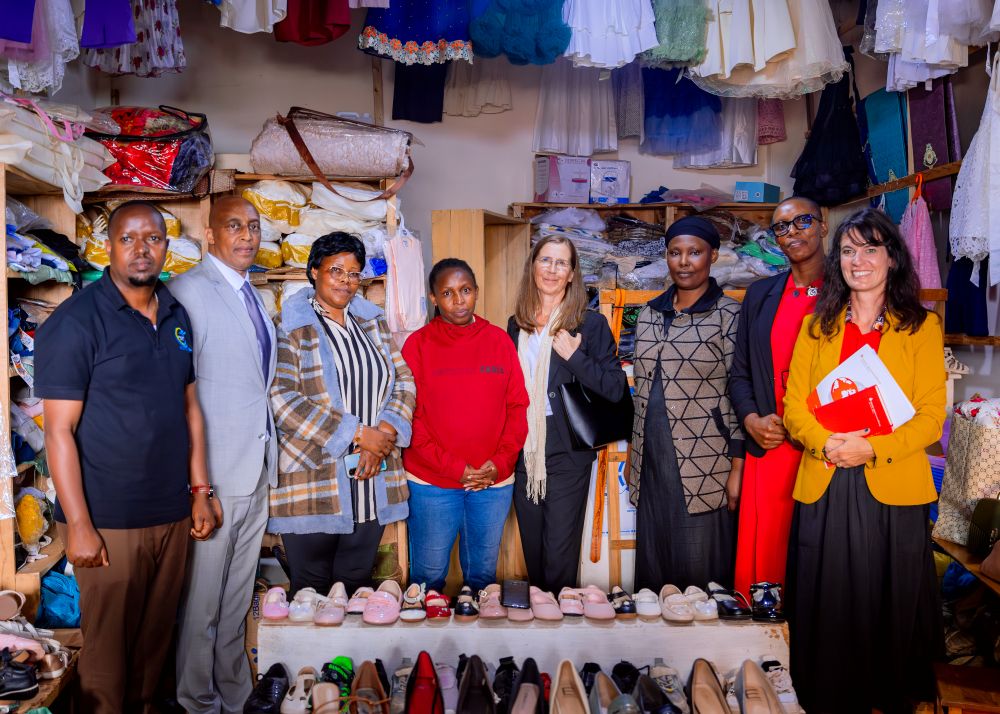
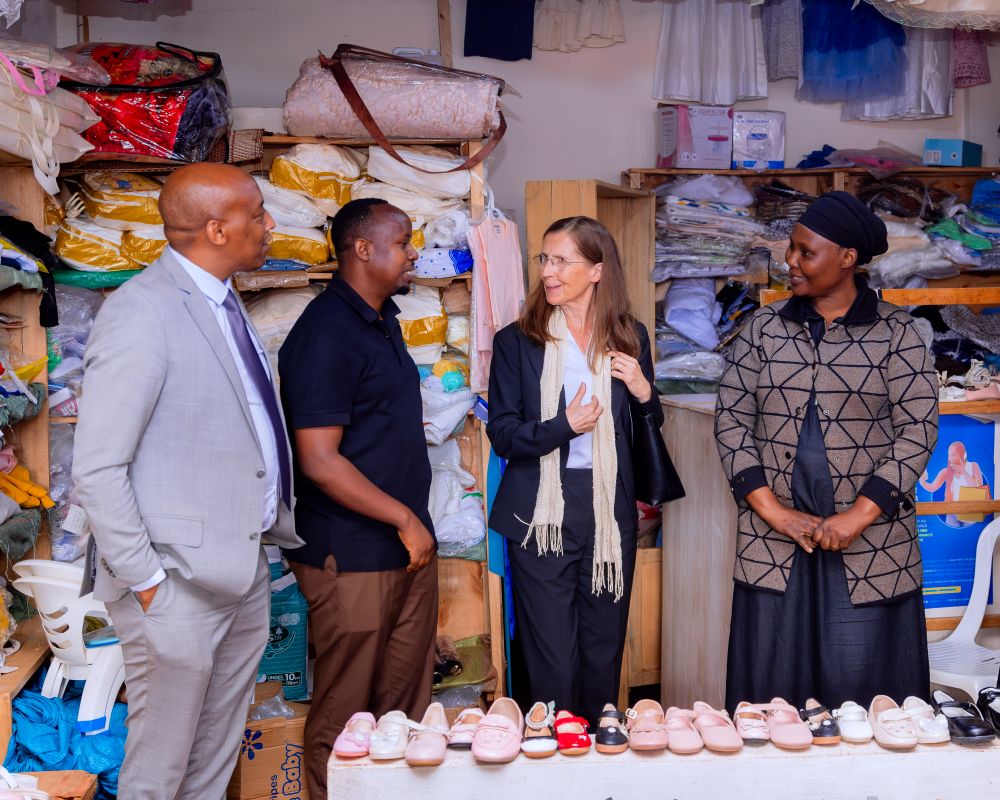
“All the progress I have made is thanks to Duterimbere IMF Plc,” she said. “We recently attended training by GIZ, where we were encouraged to improve our businesses and promised access to low-interest loans. That motivated us greatly.” Another beneficiary, Musabyimana Jeanne, who began working with the institution in 2015 selling clothes, has grown her business into a large shop dealing in a variety of garments and footwear.
She explained that her growth was supported by a series of loans—from Rwf 5 million to Rwf 7 million, then Rwf 9 million, and now Rwf 15 million.
Musabyimana noted that one of the biggest challenges facing women entrepreneurs in Rwanda is access to capital. She credited Duterimbere IMF Plc for bridging that gap, adding that the training and affordable loans have renewed hope among many women.
Ambassador Dettmann praised the institution’s commitment to supporting women, describing it as a strategic investment in families and the country’s future.
“I am very pleased to meet women running profitable businesses, and I am impressed by how Duterimbere IMF Plc works closely with its clients,” she said. “They made the right choice by focusing on women, because empowering women strengthens families, the country, and its future.”
The Managing Director of Duterimbere IMF Plc, Ngabonziza M. Alphonse, welcomed the ambassador’s visit and appreciation of their work.
“We are happy that she was satisfied with what we do, especially in helping women gain confidence to work and generate income, which aligns with Rwanda’s vision of putting citizens at the center of development,” he said.
He added that the positive partnership with German institutions through GIZ could open doors for further collaboration with other organizations to continue advancing women’s economic empowerment.
Established in 2004 and licensed by the National Bank of Rwanda in 2005, Duterimbere IMF Plc has grown into a key player in financial inclusion, particularly for women.
The institution offers a range of savings products, including the “Intego Account,” which provides competitive annual returns paid monthly, with customers allowed up to two withdrawals per month, alongside other tailored accounts.
Currently, Duterimbere IMF Plc operates 19 branches across the country—five in Kigali, four in the Southern Province, two in the Western Province, one in the Northern Province, and six in the Eastern Province—continuing to expand its reach and impact.
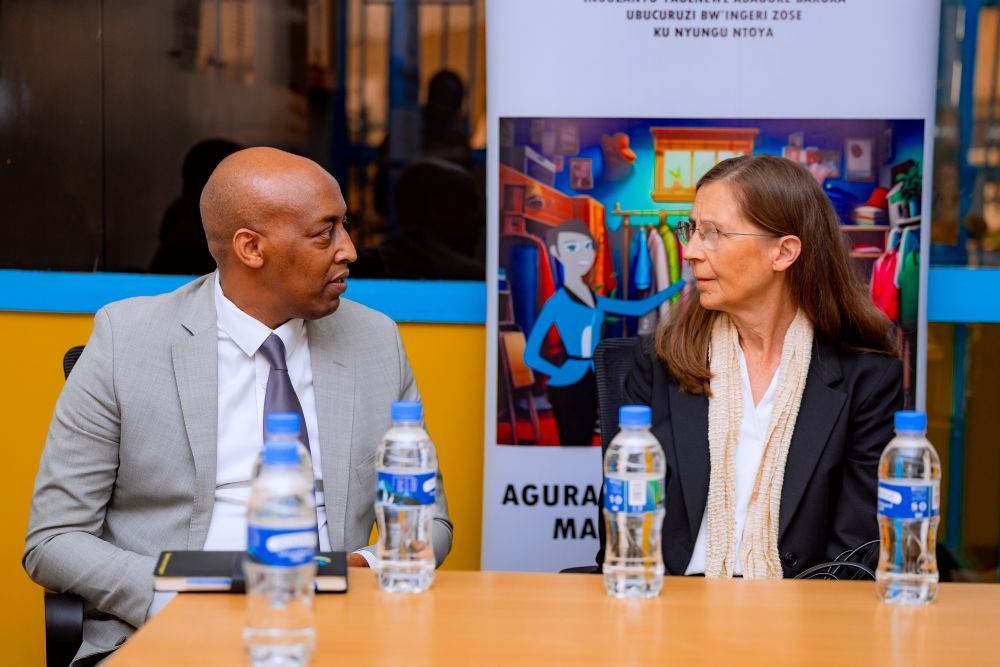
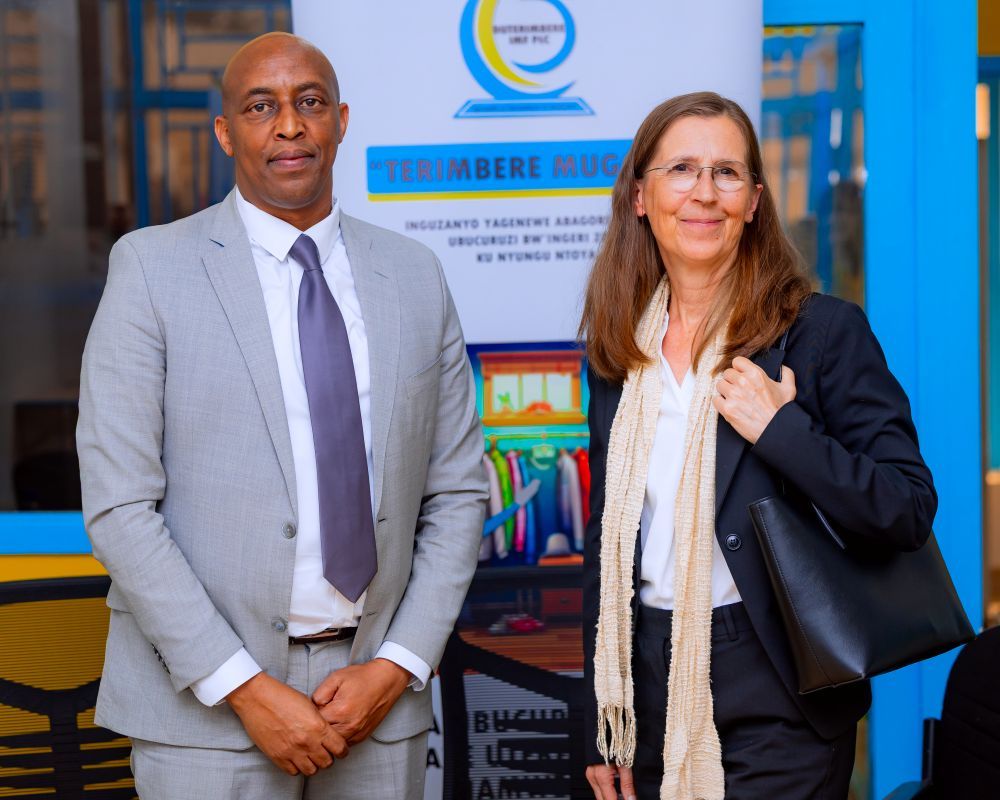
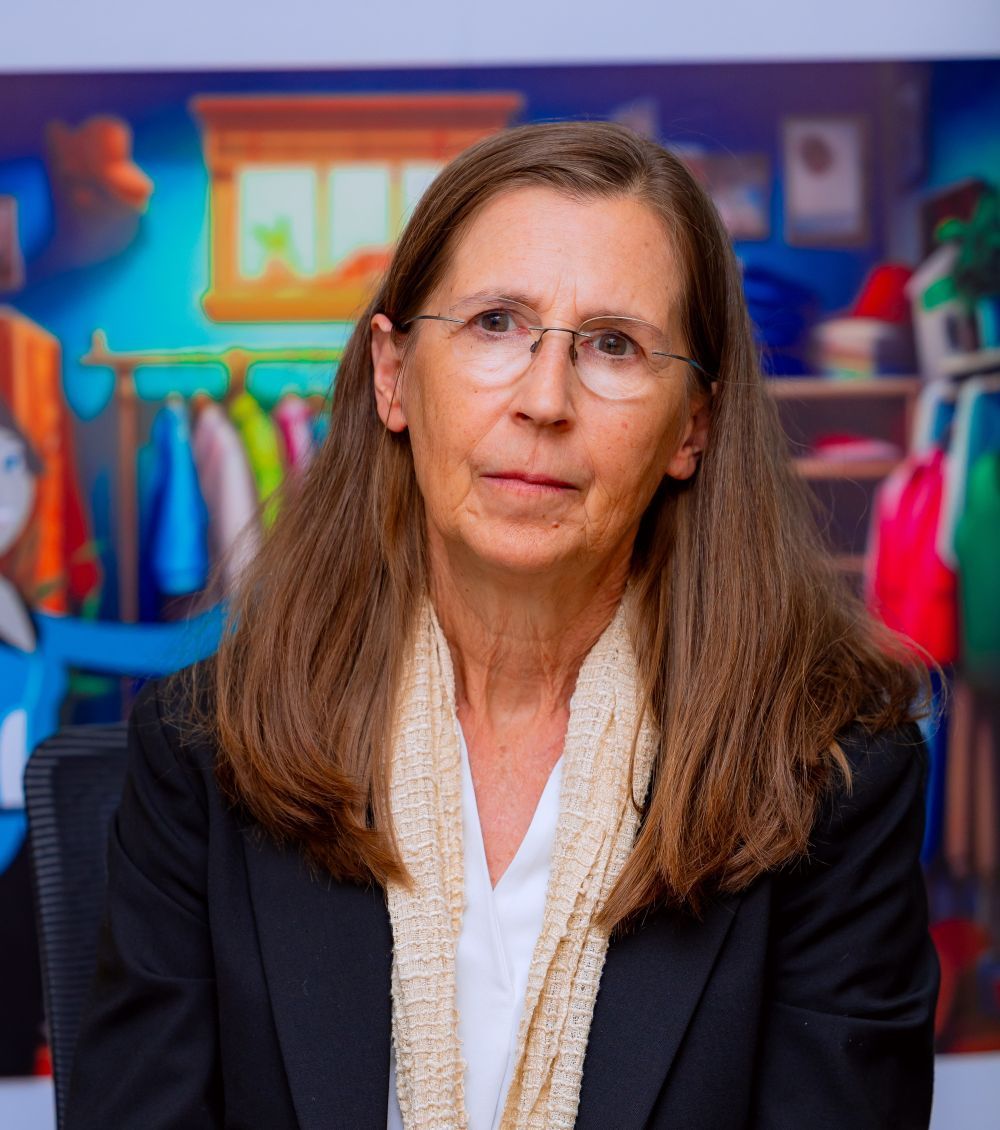
Uwitonze Jeannette (center, wearing a red jacket) praised the role of Duterimbere IMF Plc in her business growth.The Managing Director of Duterimbere IMF Plc Ngabonziza M. Alphonse speaks with Ambassador Heike Uta Dettmann.Duterimbere IMF Plc and the Government of Germany partner to train women.Ambassador Heike Uta Dettmann commended Duterimbere IMF Plc for helping women access financial services.. Ambassador Heike also visited some of the women-led projects supported by Duterimbere IMF Plc, including a clothing shop owned by Musabyimana Jeanne (right). Women working with Duterimbere IMF Plc praised it for transforming their businesses and driving their progress.
The commemoration which took place from 2:00 PM to 5:00 PM, brought together Human Resource practitioners, leaders, and stakeholders from across Rwanda.
In her remarks, Jocelyn Uwamahoro, Chairperson of RHRMO, welcomed participants and emphasized the critical role of HR professionals in fostering ethical and inclusive workplaces.
She urged practitioners to reflect on the past and clearly distinguish themselves from individuals who misused positions of authority during the genocide to harm employees.
She called on all HR professionals to uphold values of integrity, fairness, and humanity, while honoring the victims by committing to the principle of “Never Again.”
The event also featured a keynote address by Tito Rutaremara, Chairperson of the Rwanda Elders’ Advisory Forum.
He shared a historical account of how the Genocide against the Tutsi was systematically prepared and executed, warning against the dangers of divisionism and hate.
Rutaremara encouraged HR practitioners to actively promote unity, equality, and respect within workplaces.
A moving testimony was delivered by Agnes Nyiragabiro, a retired employee, who shared her personal experience during the genocide.
She recounted how the genocide took the life of her husband and reflected on the discrimination and mistreatment she faced from HR structures prior to 1994.
Her testimony highlighted how workplace discrimination and hate contributed to a broader environment that enabled injustice, and she urged HR professionals to ensure such failures are never repeated.
Participants were also encouraged to act as ambassadors of peace, ensuring that workplaces remain free from discrimination, division, and hatred.
The RHRMO reaffirmed its commitment to promoting ethical human resource practices and contributing to national efforts toward unity, reconciliation, and sustainable peace.
HR professionals have been urged to act as ambassadors of peace. Rutaremara encouraged HR practitioners to actively promote unity, equality, and respect within workplaces.HR professionals laying wreaths at Kigali Genocide Memorial. Tito Rutaremara, Chairperson of the Rwanda Elders’ Advisory Forum laying wreaths at the mass grave at Kigali Genocide Memorial. Jocelyn Uwamahoro, Chairperson of RHRMO, welcomed participants and emphasized the critical role of HR professionals in fostering inclusive workplaces. Agnes Nyiragabiro, a retired employee shared her personal experience during the Genocide against the Tutsi.
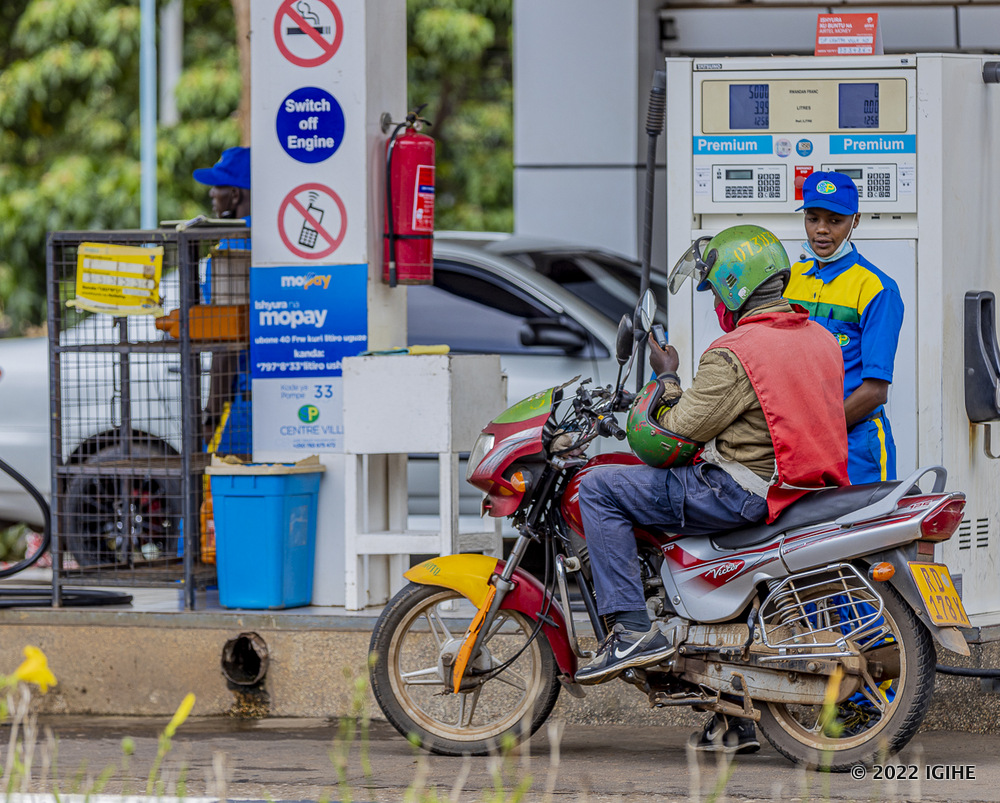
Another notable change is the unusually frequent revision of fuel prices. For the first time, prices were adjusted after only two weeks. Traditionally, fuel prices in Rwanda were revised every two months, but in early April, the cycle was shortened to one month, and later to just two weeks.
According to RURA’s pricing mechanism, fuel prices can technically be reviewed daily depending on market conditions and their impact on supply and costs.
Global supply disruptions as the main driver
Petrol imported into Rwanda passes through ports in Dar es Salaam (Tanzania) and Mombasa (Kenya). However, before reaching these ports, it is sourced from various global suppliers.
Currently, about 27% of fuel entering the region passes through the Strait of Hormuz. Other supplies come from India and Saudi Arabia, often transported through routes near Yemen, particularly the Bab el-Mandeb Strait.
Due to the Iran–US conflict, tensions in the Strait of Hormuz have disrupted shipping routes, with some vessels being blocked or delayed.
This has reduced the flow of fuel to Tanzania and Kenya, forcing suppliers to seek alternative and often more expensive routes. As a result, transportation costs have increased, which has directly pushed up fuel prices.
In Kenya and Tanzania, fuel prices are also adjusted monthly. Currently, petrol in Kenya costs about Rwf 2,342 per litre, while diesel is around Rwf 2,341.
Before Rwanda adjusted its prices, fuel in the country was relatively cheaper compared to neighbouring markets. This allowed some international truck drivers to refuel in Rwanda.
However, this situation created distortions in the market, prompting a price adjustment to align Rwanda with regional pricing trends, where profit margins had shifted unfavourably.
Storage owners have significantly increased prices
In Rwanda, fuel pricing is calculated based on importers who bring petroleum products through international supply chains, mainly via shipping routes in the region. These importers account for about 60% of Rwanda’s fuel supply.
The remaining 40% is supplied through traders who purchase fuel from Tanzania and Kenya, negotiate prices, transport it by trucks, and sell it in Rwanda. Due to rising global prices and regional shortages, these traders face higher procurement costs.
In simple terms, storage owners tend to delay selling in anticipation of higher future profits. Some storage operators in Tanzania have sharply increased their prices, which has affected the 40% of traders who rely on them. As a result, many truckers are now unable to sell fuel competitively in the Rwandan market.
If this segment of 40% were left unregulated, the 60% of formal importers would continue supplying fuel, but at a level insufficient to meet national demand, potentially leading to shortages.
This situation forced Rwanda to take early action to stabilise the market and ensure continued supply. Typically, a fuel truck takes at least five days to travel from Tanzania to Rwanda.
Government absorbs diesel cost increases
According to RURA’s latest pricing statement, the price of diesel has remained unchanged. This decision was made to continue supporting public transport, goods transportation, and the broader economy.
This is a critical intervention, as an increase in diesel prices would have significantly raised the cost of living across all sectors. Transport fares would have increased, and the prices of goods would have risen sharply.
In practical terms, maintaining diesel prices means the government is effectively absorbing part of the cost, likely through tax adjustments. Without this intervention, diesel prices could have exceeded Rwf 3,000 per litre.
Future outlook
If current trends continue, petrol prices in Rwanda could exceed Rwf 3,200 per litre by May, reflecting ongoing global market pressures.
On the international market, a barrel of crude oil is currently trading between $98.5 and $113 in some regions.
In March, crude oil prices fluctuated significantly: on March 4 it stood at $74.6 per barrel, rose to $97 on March 19, reached $98.7 on March 13, and climbed to about $108 in early April.
These global fluctuations continue to strongly influence fuel prices in Rwanda and the wider region.
Fuel prices in Rwanda have increased significantly due to the impact of the Iran–United States conflict.
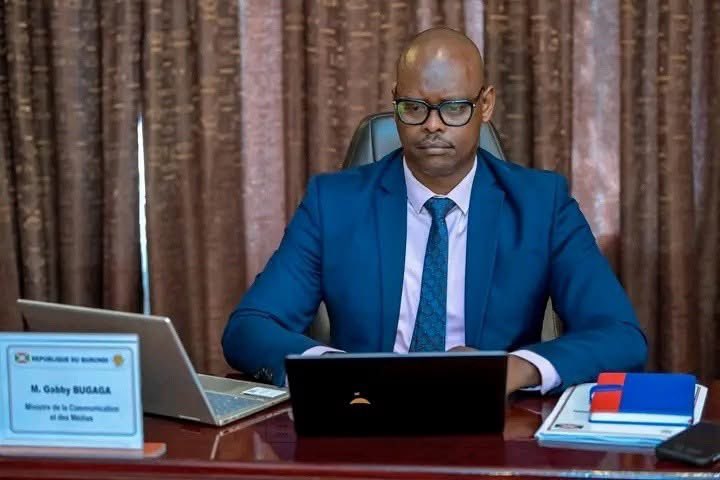
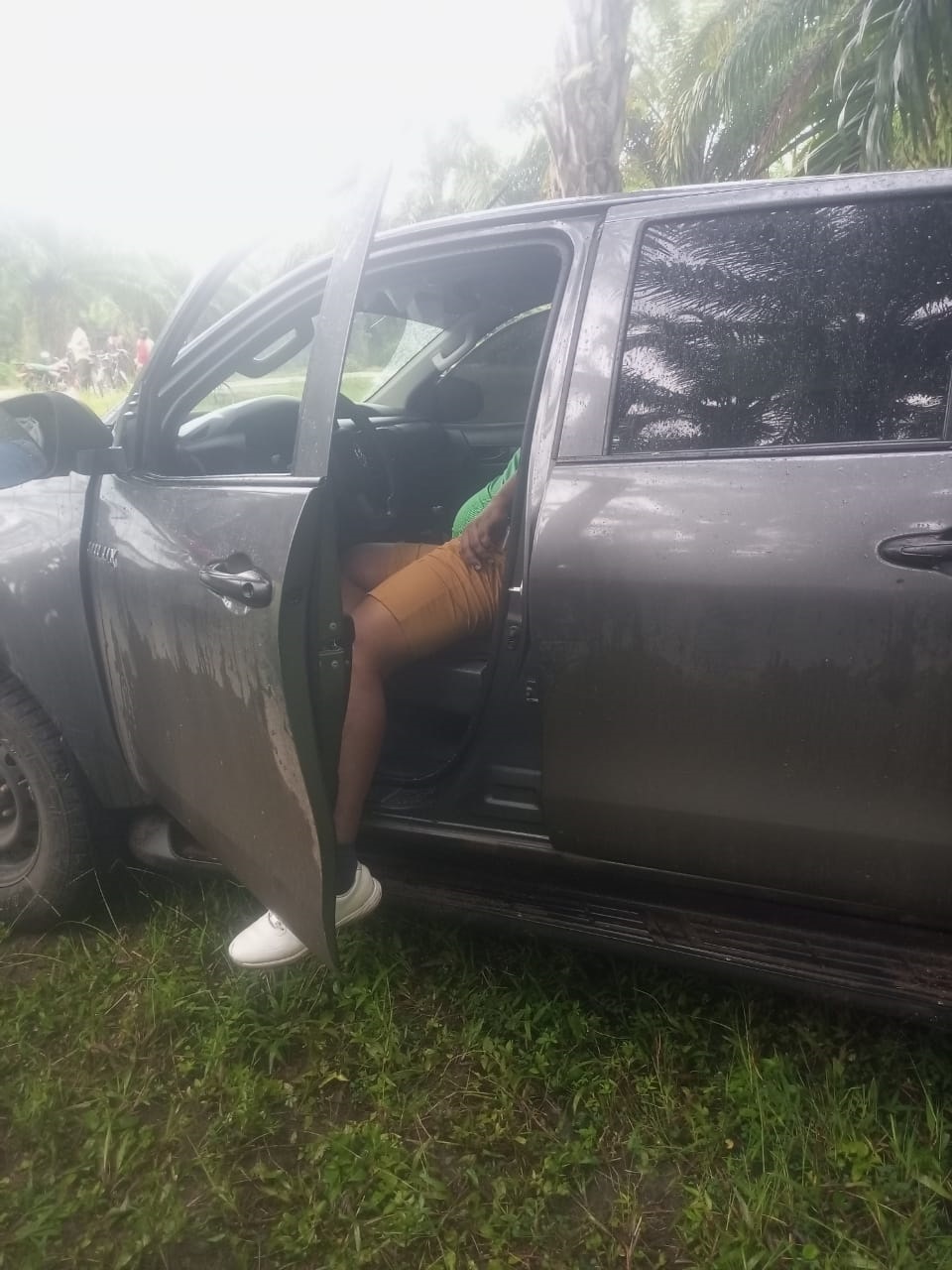
On the morning of April 16, Bugaga’s vehicle was found parked in a palm plantation in Kivoga, near the Bujumbura–Bubanza road. His body was discovered in the front seat, with one leg hanging out through the left window.
Reports indicate that when people later accessed the scene, the body had been repositioned, placing Minister Bugaga in a seated position inside the vehicle in a way that would make it difficult for a casual observer to immediately realize he had died inside the car.
One of the first elements that raised suspicion was the absence of his security detail. In Burundi, a government official of his rank is normally accompanied by security personnel at all times, making their absence unusual.
A close friend of the late minister said that before his death, Bugaga had expressed fear, although he did not clearly explain what he was afraid of. The same friend said he had been planning to leave Burundi for Canada, but later changed his mind.
The friend, who is based in Europe, added that Bugaga had asked for assistance in preparing for relocation, saying, “One day before his death, he urged me to speed up the plan.”
Other accounts suggest that amid growing fears, Bugaga had consulted friends about the possibility of resigning, but they advised him against it, warning that it could create political tension with the government of President Évariste Ndayishimiye.
Human rights activist Pacifique Nininahazwe also questioned the official version of events. He stated that Bugaga’s Toyota Hilux was found in Kivoga without a rear license plate and that no visible signs of a nearby accident scene were present, raising questions about whether the incident actually occurred there.
He further noted unusual details, saying: “The first strange thing is that the car key was not inside the vehicle but was found in Gabby Bugaga’s bag. Did he drive without a key? Or did he park the car, remove the key, lie down, and place his leg out of the window while waiting for death?”
In an official statement, the Secretary-General and government spokesperson of Burundi, Jérôme Niyonzima, insisted that there is no doubt Bugaga died in a road accident and stated that no investigation is necessary.
However, the president of the Ligue Iteka human rights organization, Anschaire Nikoyagize, warned against rushing to conclusions. He called for an independent investigation to establish the truth.
Nikoyagize noted that since President Ndayishimiye came to power in June 2020, 2,248 bodies of people who died under unclear circumstances have been recorded in Burundi, suggesting that Bugaga’s death should also be thoroughly examined rather than automatically classified as an accident.
The deal was concluded during peace talks held in Switzerland from April 13 to 17, 2026, with support from Qatar and the United States.
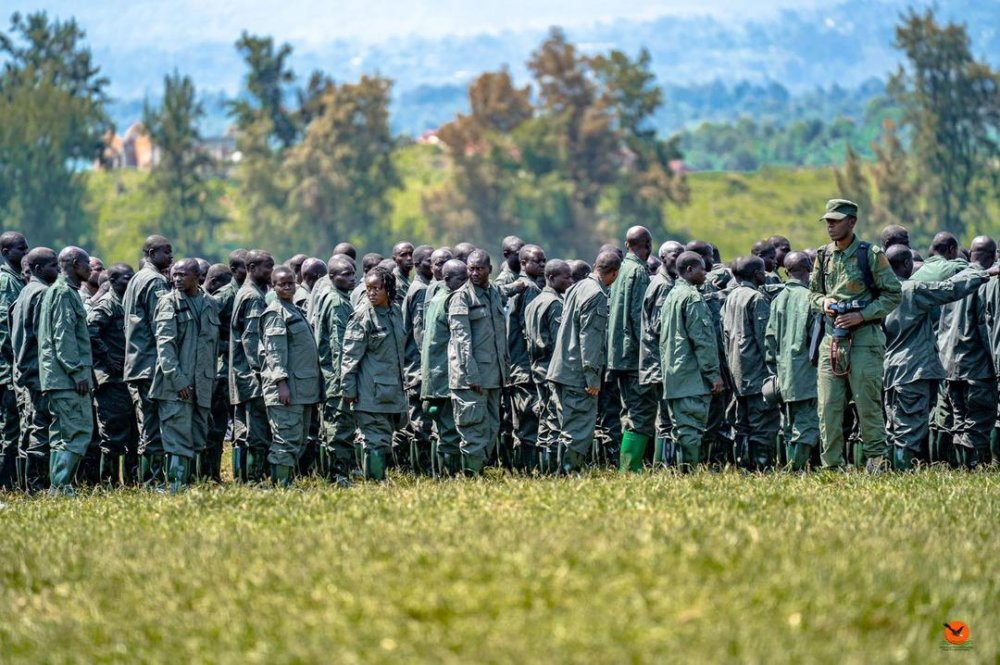
Under the agreement, the DRC government is expected to release 311 prisoners linked to AFC/M23, while the rebel group will free 166 individuals held from the government side.
The prisoner exchange is seen as a confidence-building measure aimed at supporting ongoing peace efforts.
Both parties indicated that the list of prisoners to be released was provided by the International Committee of the Red Cross, in line with an agreement previously signed on September 14, 2025.
On April 14, 2026, the two sides also agreed to operationalise a revised international mechanism tasked with monitoring the ceasefire, known as EJVM+. This body will include three representatives from each side.
The decision to establish EJVM+ was initially made during earlier peace discussions held in Doha, Qatar, last year. However, its implementation had been delayed due to persistent tensions between the DRC government and AFC/M23.
The mechanism is now expected to begin overseeing the ceasefire within a week. Troops from the United Nations peacekeeping mission in the DRC (MONUSCO) are also set to support its operations.
The Government of the Democratic Republic of Congo (DRC) and the AFC/M23 rebel coalition have reached an agreement to release more than 400 prisoners within the next 10 days.