Author: Théophile Niyitegeka

  • Why our brain cells may prevent us burning fat when we’re dieting

    A study carried out in mice may help explain why dieting can be an inefficient way to lose weight: key brain cells act as a trigger to prevent us burning calories when food is scarce.

    “Weight loss strategies are often inefficient because the body works like a thermostat and couples the amount of calories we burn to the amount of calories we eat,” says Dr Clémence Blouet from the Metabolic Research Laboratories at University of Cambridge. “When we eat less, our body compensates and burns fewer calories, which makes losing weight harder. We know that the brain must regulate this caloric thermostat, but how it adjusts calorie burning to the amount of food we’ve eaten has been something of a mystery.”

    Now, in research published in the open access journal eLife, a team of researchers has identified a new mechanism through which the body adapts to low caloric intake and limits weight loss in mice. Mice share a number of important biological and physiological similarities with humans and so are a useful model for studying how our bodies work.

    The researchers tested the role of a group of neurons in a brain region known as the hypothalamus. These ‘agouti-related neuropeptide’ (AGRP) neurons are known for their major role in the regulation of appetite: when activated, they make us eat, but when fully inhibited they can lead to almost complete anorexia.

    The team used a genetic trick to switch the AGRP neurons ‘on’ and ‘off’ in mice so that they could rapidly and reversibly manipulate the neurons’ activity. They studied the mice in special chambers than can measure energy expenditure, and implanted them with probes to remotely measure their temperature, a proxy for energy expenditure, in different contexts of food availability.

    The researchers demonstrated that AGRP neurons are key contributors to the caloric thermostat that regulates our weight, regulating how many calories we burn. The findings suggest that when activated, these neurons make us hungry and drive us to eat — but when there is no food available, they act to spare energy, limiting the number of calories that we burn and hence our weight loss.

    As soon as food becomes available and we start eating, the action of the AGRP neurons is interrupted and our energy expenditure goes back up again to normal levels.

    In addition, the researchers also describe a mechanism through which AGRP neurons regulate their activity by detecting how much energy we have on-board and then controlling how many calories we burn.

    “Our findings suggest that a group of neurons in the brain coordinate appetite and energy expenditure, and can turn a switch on and off to burn or spare calories depending on what’s available in the environment,” says Dr Blouet, who led the study. “If food is available, they make us eat, and if food is scarce, they turn our body into saving mode and stop us from burning fat.”

    “While this mechanism may have evolved to help us cope with famine, nowadays most people only encounter such a situation when they are deliberately dieting to lose weight. Our work helps explain why for these people, dieting has little effect on its own over a long period. Our bodies compensate for the reduction in calories.”

    Dr Luke Burke, the study’s first author, adds: “This study could help in the design of new or improved therapies in future to help reduce overeating and obesity. Until then, best solution for people to lose weight — at least for those who are only moderately overweight — is a combination of exercise and a moderate reduction in caloric intake.”

    Why dieting doesn't always result in losing weight. Key brain cells act as a trigger to prevent us burning calories when food is scarce.

    Source:Science Daily

  • Smoke from wildfires can have lasting climate impact

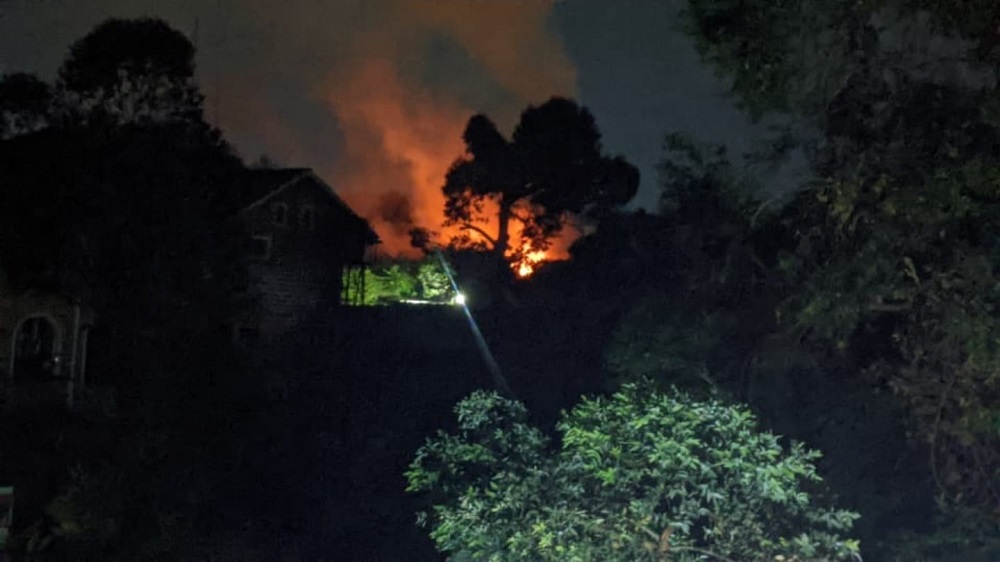
    The wildfire that has raged across more than 150,000 acres of the Okefenokee Swamp in Georgia and Florida has sent smoke billowing into the sky as far as the eye can see. Now, new research published by the Georgia Institute of Technology shows how that smoke could impact the atmosphere and climate much more than previously thought.

    Researchers have found that carbon particles released into the air from burning trees and other organic matter are much more likely than previously thought to travel to the upper levels of the atmosphere, where they can interfere with rays from the sun — sometimes cooling the air and at other times warming it.

    “Most of the brown carbon released into the air stays in the lower atmosphere, but a fraction of it does get up into the upper atmosphere, where it has a disproportionately large effect on the planetary radiation balance — much stronger than if it was all at the surface,” said Rodney Weber, a professor in Georgia Tech’s School of Earth & Atmospheric Sciences.

    The study, which was published May 22 in the journal Nature Geoscience, was sponsored by the NASA Radiation Sciences Program and the NASA Tropospheric Composition Program.

    The researchers analyzed air samples collected in 2012 and 2013 by NASA aircraft from the upper troposphere — about seven miles above the earth’s surface — at locations across the United States. They found surprising levels of brown carbon in the samples but much less black carbon.

    While black carbon can be seen in the dark smoke plumes rising above burning fossil or biomass fuels at high temperature, brown carbon is produced from the incomplete combustion that occurs when grasses, wood or other biological matter smolders, as is typical for wildfires. As particulate matter in the atmosphere, both can interfere with solar radiation by absorbing and scattering the sun’s rays.

    The climate is more sensitive to those particulates as their altitude increases. The researchers found that brown carbon appears much more likely than black carbon to travel through the air to the higher levels of the atmosphere where it can have a greater impact on climate.

    “People have always assumed that when you emit this brown carbon, over time it goes away,” said Athanasios Nenes, a professor and Georgia Power Scholar in the School of Earth & Atmospheric Sciences and the School of Chemical & Biomolecular Engineering.

    After the brown carbon is carried by smoke plumes into the lower atmosphere, it mixes with clouds. Then it hitches a ride on the deep convection forces that exist in clouds to travel to the upper atmosphere.

    Although the researchers couldn’t explain how, they also found that during the journey through the clouds, the brown carbon became more concentrated relative to black carbon.

    “The surprise here is that the brown carbon gets promoted when you go through the cloud, compared to black carbon,” Nenes said. “This suggests that there may be in-cloud production of brown carbon that we were not aware of before.”

    Okefenokee Swamp Wildfire Smoke rises from the wildfire burning across 150,000 acres of the Okefenokee Swamp in Georgia and Florida.

    Source:Science Daily

  • Computer code that Volkswagen used to cheat emissions tests uncovered

    International team of researchers uncovered the system inside cars’ onboard computers

    An international team of researchers has uncovered the mechanism that allowed Volkswagen to circumvent U.S. and European emission tests over at least six years before the Environmental Protection Agency put the company on notice in 2015 for violating the Clean Air Act. During a year-long investigation, researchers found code that allowed a car’s onboard computer to determine that the vehicle was undergoing an emissions test. The computer then activated the car’s emission-curbing systems, reducing the amount of pollutants emitted. Once the computer determined that the test was over, these systems were deactivated.

    When the emissions curbing system wasn’t running, cars emitted up to 40 times the amount of nitrogen oxides allowed under EPA regulations.

    The team, led by Kirill Levchenko, a computer scientist at the University of California San Diego will present their findings at the 38th IEEE Symposium on Security and Privacy in the San Francisco Bay Area on May 22 to 24, 2017.

    “We were able to find the smoking gun,” Levchenko said. “We found the system and how it was used.”

    Computer scientists obtained copies of the code running on Volkswagen onboard computers from the company’s own maintenance website and from forums run by car enthusiasts. The code was running on a wide range of models, including the Jetta, Golf and Passat, as well as Audi’s A and Q series.

    “We found evidence of the fraud right there in public view,” Levchenko said.

    During emissions standards tests, cars are placed on a chassis equipped with a dynamometer, which measures the power output of the engine. The vehicle follows a precisely defined speed profile that tries to mimic real driving on an urban route with frequent stops. The conditions of the test are both standardized and public. This essentially makes it possible for manufacturers to intentionally alter the behavior of their vehicles during the test cycle. The code found in Volkswagen vehicles checks for a number of conditions associated with a driving test, such as distance, speed and even the position of the wheel. If the conditions are met, the code directs the onboard computer to activate emissions curbing mechanism when those conditions were met.

    A year-long investigation

    It all started when computer scientists at Ruhr University, working with independent researcher Felix Domke, teamed up with Levchenko and the research group of computer science professor Stefan Savage at the Jacobs School of Engineering at UC San Diego.

    Savage, Levchenko and their team have extensive experience analyzing embedded systems, such as cars’ onboard computers, known as Engine Control Units, for vulnerabilities. The team examined 900 versions of the code and found that 400 of those included information to circumvent emissions tests.

    A specific piece of code was labeled as the “acoustic condition” — ostensibly, a way to control the sound the engine makes. But in reality, the label became a euphemism for conditions occurring during an emissions test. The code allowed for as many as 10 different profiles for potential tests. When the computer determined the car was undergoing a test, it activated emissions-curbing systems, which reduced the amount of nitrogen oxide emitted.

    “The Volkswagen defeat device is arguably the most complex in automotive history,” Levchenko said.

    Researchers found a less sophisticated circumventing ploy for the Fiat 500X. That car’s onboard computer simply allows its emissions-curbing system to run for the first 26 minutes and 40 seconds after the engine starts — roughly the duration of many emissions tests.

    Researchers note that for both Volkswagen and Fiat, the vehicles’ Engine Control Unit is manufactured by automotive component giant Robert Bosch. Car manufacturers then enable the code by entering specific parameters.

    Diesel engines pose special challenges for automobile manufacturers because their combustion process produces more particulates and nitrogen oxides than gasoline engines. To curb emissions from these engines, the vehicle’s onboard computer must sometimes sacrifice performance or efficiency for compliance.

    The study draws attention to the regulatory challenges of verifying software-controlled systems that may try to hide their behavior and calls for a new breed of techniques that work in an adversarial setting.

    “Dynamometer testing is just not enough anymore,” Levchenko said.

    The article is entitled: “How They Did It: An Analysis of Emission Defeat Devices in Modern Automobiles”

    The authors are: Guo Li, Kirill Levchenko and Stefan Savage from UC San Diego; Moritz Contag, Andre Pawlowski and Thorsten Holz from Ruhr University; and independent researcher Felix Domke.

    This work was supported by the European Research Council and by the U.S. National Science Foundation (NSF).

    Diagnostic sensor applied to the exhaust of a car.

    Source:Science Daily

  • The right thing to do: Why do we follow unspoken group rules?

    How you dress, talk, eat and even what you allow yourself to feel — these often unspoken rules of a group are social norms, and many are internalized to such a degree that you probably don’t even notice them. Following norms, however, can sometimes be costly for individuals if norms require sacrifice for the good of the group. How and why did humans evolve to follow such norms in the first place?

    A new study from the National Institute for Mathematical and Biological Synthesis explores this question, shedding light on the origins of human cooperation.

    The results, published today in the Proceedings of the National Academy of Sciences, show that the ability of humans to internalize social norms is expected to evolve under a wide range of conditions, helping to forge a kind of cooperation that becomes instinctive.

    The researchers used computer simulations to model both individual behavior in joint group actions and underlying genetic machinery controlling behavior. The researchers worked from the premise that adherence to norms is socially reinforced by the approval of, and rewards to, individuals who follow them and by punishment of norm violators. The researchers’ goal was to see whether certain norms get internalized, meaning that acting according to a norm becomes an end in itself, rather than a tool to get something or to avoid social sanctions.

    In the model, individuals make choices about participating in collective actions that require cooperation, and individuals who don’t cooperate, or “free riders,” can face consequences.

    Specifically, the authors looked at two general kinds of collective actions requiring cooperation that our ancestors might have regularly faced. The first type of group action involves “us-vs.-nature” scenarios, where groups must defend against predators and hunt and breed cooperatively. The second type of group action is “us-vs.-them,” which constitutes direct conflicts or other costly competition with other groups over territory, mating, access to trade routes, and the like.

    The model found that norm internalization readily evolves in both scenarios.

    The model also shows that encouraging peer punishment of free-riders is much more efficient in promulgating cooperation in collective actions than promoting participation itself.

    The study predicts a significant genetic variation in the ability of humans to internalize norms. In particular, under some conditions populations are expected to have a relatively small frequency of “over-socialized” individuals who are willing to make extreme sacrifices for their groups. Examples in today’s society might be suicide bombers and other displays of extreme self-sacrificial behavior for the good of the group. Likewise, there are also “under-socialized” individuals — psychopaths — who are completely immune to any social norms.

    As social and physical environments vary greatly between different human groups, the model accounts for this variation and can predict how these differences will affect human social behavior and human decision-making in different regions.

    In addition to answering theoretical questions about the origins of human cooperation, the study may have a variety of practical applications.

    “Every day human beings make choices among multiple options in how to respond to various social situations. Those choices are affected by many interacting factors, including social norms and values. Understanding the effects of social norms could help us better understand human decision-making and better predict human actions in response to certain events or policies,” said lead author Sergey Gavrilets, a professor of ecology and evolutionary biology and mathematics at the University of Tennessee, Knoxville, and NIMBioS associate director for scientific activities.

    Gavrilets also said the models could be helpful in social and economic policymaking.

    “Changing social institutions is a common strategy for changing human behavior,” he said. “Sometimes there are attempts to borrow or transfer institutions from one country or region to another. Often such strategies fail miserably, however. Our models can help explain why. Generalizing our models can lead to the development of better tools for predicting consequences of introducing certain social policies and institutions and in identifying the most efficient strategies for changing or optimizing group behaviors.”

    Following social norms can sometimes be costly for individuals if norms require sacrifice for the good of the group. A new study sheds light on the power of norms and the origins of cooperation.

    Source:Science Daily

  • Humanizing, harmonizing effects of music aren’t a myth

    Listening to music from other cultures furthers one’s pro-diversity belief

    Jake Harwood turned his lifelong hobby as a musician into a scholarly question: Could the sharing of music help ease interpersonal relations between people from different backgrounds, such as Americans and Arabs?

    To explore the issue, and building on his years of research on intergroup communication, Harwood began collaborating two to three years ago with his graduate students and other researchers on a number of studies, finding that music is not merely a universal language. It appears to produce a humanizing effect for members of groups experiencing social and political opposition.

    “Music would not have developed in our civilizations if it did not do very important things to us,” said Harwood, a professor in the University of Arizona Department of Communication. “Music allows us to communicate common humanity to each other. It models the value of diversity in ways you don’t readily see in other parts of our lives.”

    Harwood is presenting his team’s research during the International Communication Association’s 67th annual conference, to be held May 25-29 in San Diego.

    In one study, Harwood worked with UA graduate researchers Farah Qadar and Chien-Yu Chen to record a mock news story featuring an Arab and an American actor playing music together. The researchers showed the video clip to U.S. participants who were not Arab. The team found that when viewing the two cultures collaborating on music, individuals in the study were prone to report more positive perceptions — less of a prejudiced view — of Arabs.

    “The act of merging music is a metaphor for what we are trying to do: Merging two perspectives in music, you can see an emotional connection, and its effect is universal,” said Qadar, who graduated from the UA in 2016 with a master’s degree in communication.

    The team published those findings in an article, “Harmonious Contact: Stories About Intergroup Musical Collaboration Improve Intergroup Attitudes.” The article appeared in a fall issue of the peer-reviewed Journal of Communication.

    Another major finding: The benefits were notable, even when individuals did not play musical instruments themselves. Merely listening to music produced by outgroup members helped reduce negative feelings about outgroup members, Harwood said.

    “It’s not just about playing Arab music. But if you see an Arab person playing music that merges the boundary between mainstream U.S. and Arab, then you start connecting the two groups,” Harwood said.

    As part of his ongoing research in a different study, which he will present during the International Communication Association conference, Harwood and Stefania Paolini, a senior lecturer at the University of Newcastle’s School of Psychology, measured people’s appreciation for diversity, gauging how they felt about members of other groups. After doing so, the team asked people to listen to music from other cultures and then report how much they enjoyed the music and what they perceived of the people the music represented.

    The team found that people who value diversity are more likely to enjoy listening to music from other cultures, and that act of listening furthers one’s pro-diversity beliefs.

    “It has this sort of spiral effect. If you value diversity, you are going to listen to more music from other cultures,” Harwood said, noting that that research is continuing. “If all you are doing is listening to the same type of music all the time, there is homogeneity that is not doing a lot to help people to increase their value for diversity.”

    For Harwood and his collaborators, these findings are affirming given the decades-old world music explosion and more recent examples of performers around the world who regularly sample and cross-reference outgroup musical traditions and elements.

    Harwood pointed to Paul Simon’s “Graceland” album as an early and notable example. Released in 1986, the album drew influence from South African instrumentation and rhythms.

    “It was the start of the world music phenomena,” Harwood said. “Suddenly, everyone wanted to listen to African music. Then Indonesian, then Algerian music. Then you see this modeling of new music with different musical cultures and different people collaborating with each other.”

    Harwood also said artists such as Eminem and Rihanna are among those who are experimenting with music that crosses cultural boundaries. “This whole new type of music is emerging that would not exist if you did not have that kind of cross-collaboration.”

    Harwood also said his team’s findings build on earlier research and emergent models of intergroup dialogue that encourage direct contact and conversation to help build cross-cultural understanding and cohesion.

    “We must think about music as a human, social activity rather than a sort of beautiful, aesthetic hobby and appreciate how fundamental it is to us all,” he said. “We can then begin to see people from other groups as more human and begin to recategorize one another as members as the same group.”

    Interactions through music help people to minimize feelings of prejudice while boosting empathy for others unlike themselves, a researcher has found.

    Source:Science Daily

  • 8 polite ways to say ‘no’ to your boss

    You might be faced with a difficult situation where you’d have to say no to your boss. This might be a very dicey one, but there are some very polite ways of saying no without being disrespectful, even when you know that “the boss is always right”.

    1. First, you must be a dedicated worker

    You can’t be a nonchalant worker and say no to your boss; you’d only infuriate your boss and probably get the sack. But if you’re diligent and dedicated to work, your boss will be more understanding when you say no.

    2. Analyse before saying no

    Probably you have your plate full and your boss has given you more work to do, don’t rush into saying – analyse if you can meet up the task, and then try to look at it from different angles and even the angle of your boss before deciding whether to say no or not.

    Never rush into saying no.

    3. Tell your boss everything

    If you probably can’t cope with the task for that day and you are a dedicated worker who doesn’t give excuses every now and then, your boss will listen to you and give you the benefit of doubt. So don’t hesitate to give your boss the reasons why you have to say ‘no’, and your boss is most likely going to understand, given your pedigree for commitment at work.

    4. Have a transparent relationship with your boss

    Having a transparent relationship with your boss will make it easier for you to do the third tip and it’ll make it easier for your boss to understand your point of view. However, when you are dodgy, you give your boss no choice but to be adamant.

    5. Be on the same page with your boss

    Want the same success your boss wants, work hard to achieve the set vision and be committed to the project. When you do this, your boss will be more lenient to you; it’s human psychology, and this will give you the edge over other employees.

    6. Set boundaries from the start

    If you can’t work during weekends, it’s best to establish that boundary from the onset. It’s better this way than trying to change it in future.

    7. Try come up with an alternative solution

    Saying no to your boss sometimes might be too harsh and you know it. If you can, try to make an alternative arrangement to suit both your needs and that of your boss. Your boss will truly appreciate your concern.

    8. Keep to your words

    Always keep to your words; let your words be as important to you as your money, because keeping or not keeping to your words say a lot about you. If you’ve made an alternative plan with your boss, keep to your words.

    Saying no to your boss couldn’t be so hard after all.

    Source:Elcrema

  • Donald Trump arrives in Bethlehem for talks with Abbas

    Visit comes after US president failed to explain how to revive Israeli-Palestinian talks after meeting with Netanyahu

    Donald Trump has arrived in Bethlehem in the occupied West Bank to meet with Palestinian leader Mahmoud Abbas as the US president seeks to restart peace talks between the Israelis and Palestinians.

    The short visit in Bethlehem on Tuesday comes a day after Trump met Israeli Prime Minister Benjamin Netanyahu, as Palestinians held a general strike in support of hundreds of hunger-striking prisoners held in Israeli jails.

    Meetings with Netanyahu concluded on Monday with Trump promising to help broker an Israeli-Palestinian peace deal, but gave little indication of how he could revive negotiations that collapsed in 2014.

    “It’s not easy. I have heard it is one of the toughest deals of all, but I have a feeling that we are going to get there eventually. I hope,” Trump said after the meeting, without elaborating.

    Al Jazeera’s Hoda Abdel-Hamid, reporting from Bethlehem, said Palestinian officials were not clear of Trump’s intentions during Tuesday’s visit.

    “They have told us they were listening, they were watching and they were trying to figure out whether Trump’s visit was another visit where he was seeking ideas or whether he was going to come up with his own ideas,” Abdel-Hamid said.

    The last round of peace talks, led by then-President Barack Obama and his secretary of state, John Kerry, fell apart in 2014.

    One point of contention is the fate of occupied East Jerusalem, which Israel captured in 1967.

    During his presidential campaign, Trump advocated breaking with decades of precedent and moving the US embassy from Tel Aviv to Jerusalem, deeply alarming Palestinians.

    He has since said the move was still being looked at.

    Diana Buttu, a Palestinian lawyer and former adviser to the Palestine Liberation Organisation, says Trump’s comments about striving for a negotiated solution between Israel and the Palestinians are not promising.

    “The time is now for the world to end Israel military rule,” she told Al Jazeera. “It’s not going to come through negations; it’s only going to come through exerted efforts to hold the Israelis accountable by boycotting through sanctions and bringing them before the international criminal courts.”

    “That Palestinians have to negotiate their freedom and prove ourselves worthy of freedom is repugnant,” Buttu added, arguing that Trump should use its multi-billion dollar financial support to Israel as weight to pressure it from ending its occupation of Palestinian territory.

    “I have very little faith that he will be able to do anything with the Israelis to change their policy,” she concluded. “I don’t anticipate anything positive is going to come out.”

    ‘Day of rage’

    The Palestinian prisoners’ affairs committee called for a “day of rage” on Monday for “the voice of the prisoners to be heard by the president”.

    Tuesday marks the 37th day of a mass hunger strike inside Israeli jails. Palestinian news agency Ma’an estimates that more than 1,300 Palestinians are currently on strike behind bars in Israeli prisons, while Israeli outlets have placed the number in the high hundreds.

    On Monday, Israeli forces shot and injured at least 11 Palestinian protesters who staged a general strike in the occupied West Bank, East Jerusalem, and the besieged Gaza Strip in support of those prisoners on hunger strikes.

    In a separate incident on Monday, Israeli forces shot and killed a Palestinian teenager as he allegedly attempted to stab a border police officer at a checkpoint near Bethlehem.

    In Gaza, Hamas organised a demonstration on Monday to denounce its labelling as a “terrorist” group by many Western governments, including the United States.

    After talks with Abbas, Trump will travel to Yad Vashem Holocaust memorial in Jerusalem and give a speech at the Israel Museum.

    Trump is welcomed by Palestinian leader Mahmoud Abbas at the presidential palace in Bethlehem

    Source:Al Jazeera

  • UN envoy: Liberation of Mosul from ISIL is ‘imminent’

    Jan Kubis tells UN Security Council armed group will soon be defeated but continues to use civilians as human shields.

    The liberation of the northern Iraqi city of Mosul “is imminent” and the days of ISIL’s self-declared caliphate “are numbered”, the UN envoy for Iraq says.

    But Jan Kubis told the UN Security Council on Monday that despite progress, fighting remains “a tremendous challenge” because ISIL fighters are increasingly using civilians as human shields in “a last-gasp effort that reveals little more than the inherent inhuman barbarity of the terrorists”.

    Kubis paid tribute to Iraqi security forces and their coalition partners for trying to limit the impact of military operations to protect civilians, “even if that comes at the cost of prolonging a harsh, bitter campaign that continues to claim both civilian and military lives”.

    Iraqi forces, backed by a US-led coalition, officially launched the operation to retake Mosul, the country’s second-largest city, in October.

    The city’s east was declared “fully liberated” in January and the fight for the west was launched the following month. It has been marked by some of the most grueling and deadly combat in the fight against Islamic State of Iraq and the Levant to date.

    The city fell to ISIL fighters during a lightning charge in June 2014 that left nearly one-third of Iraq in their hands and plunged the country into its most severe crisis since the US-led invasion in 2003.

    ISIL’s “caliphate”, declared after the June 2014 military campaign, once stretched across northern Syria through much of northern and western Iraq. But the group, also known as ISIS and Daesh, is now under attack in both countries and the territory it controls has shrunk.

    Prime Minister Haidar al-Abadi has announced the next steps are to secure the Iraq-Syria border and to liberate west of Ninewa and Anbar governorates, the UN envoy said.

    “Although large-scale military operations against ISIL will hopefully conclude by the end of this year, the security environment will remain volatile and will be characterised by continued cowardly terrorist attacks by Daesh, targeting civilians in many parts of the country,” Kubis said.

    “Whenever given the opportunity, Daesh, al-Qaida and other terrorist groups will likely seek to tap into and deepen sectarian, tribal or ethnic divides, including by cooperating with criminal gangs,” he added.

    To deal with these challenges, he said a long-term, comprehensive reform of the security sector “is imperative”.

    Kubis expressed continuing concern at the delay in returning displaced residents to areas liberated long ago and at many hundreds of alleged disappearances that remain unresolved, saying these and other issues can undermine efforts towards national reconciliation and a political settlement in Iraq.

    An Iraqi soldier patrols in eastern Mosul last month

    Source:Al Jazeera

  • Over 100 households given solar energy in Rwamagana

    At least 108 households in Gatare Village of Gatare cell in Nyakariro Sector, Rwamagana District will no longer have to depend on kerosene or firewood as their source of light after Rwanda National Police, yesterday, lit them with solar home systems.

    The handover of the solar systems to beneficiaries, which is part of the ongoing activities to mark the 17th anniversary of the force, was presided over by the Minister of Infrastructure, James Musoni.

    The event was also attended by the Inspector General of Police (IGP) Emmanuel K. Gasana and the Governor of the Eastern Province Judith Kazayire, among others.

    Minister James Musoni, IGP Emmanuel K. Gasana and other officials and residents, during Umuganda.

    The community development activities in Rwamagana under the flagship of ‘Police Week’ also included the inauguration of clean water sources to serve hundreds of residents of Gatare Village, and conducted Umuganda where they constructed a road that links the residents with other villages.

    Minister Musoni, while addressing thousands of residents, noted that development goes with sustaining what has been achieved.

    He said that it’s a “government policy to extend social infrastructures such as roads, water and electricity to rural areas in order to support development” and commended RNP for going beyond physical security to supplement such community development agenda.

    Consiriya Kabalinda after with the heifer given to her by youth volunteers. She thanked President Paul Kagame for promoting peace and security, and RNP for putting people first unlike before.

    “Peace and security are key pillars to fostering development; every effort has to be made to sustain the prevailing peace but also use it to develop ourselves and eradicate poverty, which can also be a security issue,” the Minister said.

    IGP Gasana thanked residents of Rwamagana for joining Police efforts to keep their communities safe and secure.

    “Fighting crime is a collective effort between community and law enforcement agencies; it is today a proactive approach where it is the duty of everyone to fight lawlessness rather than the old-fashioned reactive approach which creates a gap between the people and security organs,” the Police Chief said.

    Police joined residents of Gatare to create a road linking them to other villages.

    During the event, members of Rwanda Youth Volunteers in Community Policing (RYVCP) donated a cow to a disadvantaged family in Gatare Village.

    IGP Gasana commended the youth for their continued social protection and security activities.

    Governor Kazayire, on her part, thanked RNP for empowering communities to improve their livelihoods.

    Beneficiaries concerns

    consiriya_kabalinda.jpg

    Consiriya Kabalinda, 53, the beneficiary of heifer, whose house was also installed with solar home system, said: “I thank President Paul Kagame for promoting peace and security; our police are also very friendly unlike in the past. I will now be able to read my Bible at night. I thank these youth for giving me a cow, which I am going to take good care of.

    nyarandorimana_ernestine.jpg

    Nyarandorimana Ernestine said: “Thank you police for bringing light to my house. I am now able save all the money that I was spending to buy batteries for my torch at night. I pledge to continue fighting any unlawful tendencies in my village.”

    epimaque_muvunyi.jpg

    Epimaque Muvunyi, 47, a father of four, said: “My children will now be able to read and revise their notes easily; I will now be saving money that I was spending buying paraffin. Thank you Police for fulfilling our President’s promises.”

    Source:Police

  • First-ever global study finds massive health care inequity

    People dying of preventable causes at rates higher than expected; study informs US health care debate; America’s ranking is ‘an embarrassment’

    A first-ever global study finds massive inequity of access to and quality of health care among and within countries, and concludes people are dying from causes with well-known treatments.

    “What we have found about health care access and quality is disturbing,” said Dr. Christopher Murray, senior author of the study and Director of the Institute for Health Metrics and Evaluation (IHME) at the University of Washington. “Having a strong economy does not guarantee good health care. Having great medical technology doesn’t either. We know this because people are not getting the care that should be expected for diseases with established treatments.”

    For example, on a scale of 1 to 100 for health care access and quality, Norway and Australia each scored 90 overall, among the highest in the world. However, Norway scored 65 in its treatment for testicular cancer, and Australia scored 52 for treating non-melanoma skin cancer.

    “In the majority of cases, both of these cancers can be treated effectively,” Dr. Murray said. “Shouldn’t it cause serious concern that people are dying of these causes in countries that have the resources to address them?”

    The top-ranked nation was Andorra with an overall score of 95; its lowest treatment score was for Hodgkin’s lymphoma at 70. The lowest-ranked nation was Central African Republic at 29; its highest treatment score was for diphtheria at 65.

    Professor Martin McKee, from the London School of Hygiene & Tropical Medicine, who participated in the study, commented: “Using deaths that could be avoided as a measure of the quality of a health system is not new but what makes this study so important is its scope, drawing on the vast data resources assembled by the Global Burden of Disease team to go beyond earlier work in rich countries to cover the entire world in great detail, as well as the development of a means to assess what a country should be able to achieve, recognizing that not all are at the same level of development. As the world’s governments move ahead to implement the goal of universal health coverage, to which they committed in the Sustainable Development Goals, these data will provide a necessary baseline from which they can track progress.”

    The United States had an overall score of 81, tied with Estonia and Montenegro. As with many other nations, the US scored 100 in treating common vaccine-preventable diseases, such as diphtheria, tetanus, and measles. But the US had nine treatment categories in which it scored in the 60s: lower respiratory infections (60), neonatal disorders (69), non-melanoma skin cancer (68), Hodgkin’s lymphoma (67), ischemic heart disease (62), hypertensive heart disease (64), diabetes (67), chronic kidney disease (62), and the adverse effects of medical treatment itself (68).

    “America’s ranking is an embarrassment, especially considering the US spends more than $9,000 per person on health care annually, more than any other country,” Dr. Murray said. “Anyone with a stake in the current health care debate, including elected officials at the federal, state, and local levels, should take a look at where the US is falling short.”

    The study was published in the international medical journal The Lancet, and represents the first effort to assess access and quality of services in 195 countries from 1990 to 2015. Researchers used a Healthcare Access and Quality (HAQ) Index, based on death rates from 32 causes that could be avoided by timely and effective medical care, known as “amenable mortality.”

    Scores were based on estimates from the annual Global Burden of Diseases, Injuries, and Risk Factors study (GBD), a systematic, scientific effort to quantify the magnitude of health loss from all major diseases, injuries, and risk factors by age, sex, and population. With more than 2,300 collaborators in 132 countries and 3 non-sovereign locations, GBD examines 300-plus diseases and injuries.

    In addition, data were extracted from the most recent GBD update and evaluated using a Socio-demographic Index (SDI) based on rates of education, fertility, and income. SDI goes beyond the historical “developed” versus “developing” nations. Previous assessments of health quality and access were limited primarily to high-income countries, particularly in Western Europe.

    Nations in much of sub-Saharan Africa, as well as in south Asia and several countries in Latin America and the Caribbean, experienced the lowest rankings. Nonetheless, many countries in these regions, including China (score: 74) and Ethiopia (score: 44), have seen sizeable gains since 1990.

    The paper does offer some favorable signs of improvement in health care access and quality. Since 1990, several countries have achieved progress that met or surpassed levels reached by other nations of similar development. These countries included Turkey, Peru, South Korea, the Maldives, Niger, Jordan, and several Western European nations such as Switzerland, Spain, and France.

    IHME plans each year to update the report, “Healthcare Access and Quality Index based on mortality from causes amenable to personal health care in 195 countries and territories, 1990-2015: a novel analysis from the Global Burden of Disease Study 2015.” It aims to use these results to better understand gaps and opportunities for improving health care access throughout the world.

    The Healthcare Access and Quality (HAQ) Index is a summary measure based on 32 causes, that in the presence of high-quality health care, should not result in death. These 32 causes were selected as part of research that Professor Martin McKee and Dr. Ellen Nolte, both co-authors in this study, began in the early 2000s. The causes are:

    Tuberculosis
    Diarrhea-related diseases
    Lower respiratory infections
    Upper respiratory infections
    Diphtheria
    Whooping cough
    Tetanus
    Measles
    Maternal disorders
    Neonatal disorders
    Colon and rectum cancer
    Non-melanoma skin cancer
    Breast cancer
    Cervical cancer
    Uterine cancer
    Testicular cancer
    Hodgkin’s lymphoma
    Leukemia
    Rheumatic heart disease
    Ischemic heart disease
    Cerebrovascular disease (stroke)
    Hypertensive heart disease
    Chronic respiratory diseases
    Peptic ulcer disease
    Appendicitis
    Inguinal, femoral, and abdominal hernia
    Gallbladder and biliary diseases
    Epilepsy
    Diabetes mellitus
    Chronic kidney disease
    Congenital anomalies
    Adverse effects of medical treatment

    People are dying of preventable causes at rates higher than expected, a new study concludes.

    Source:Science Daily