The researchers found the remains of at least 16 species, including birds and frogs.
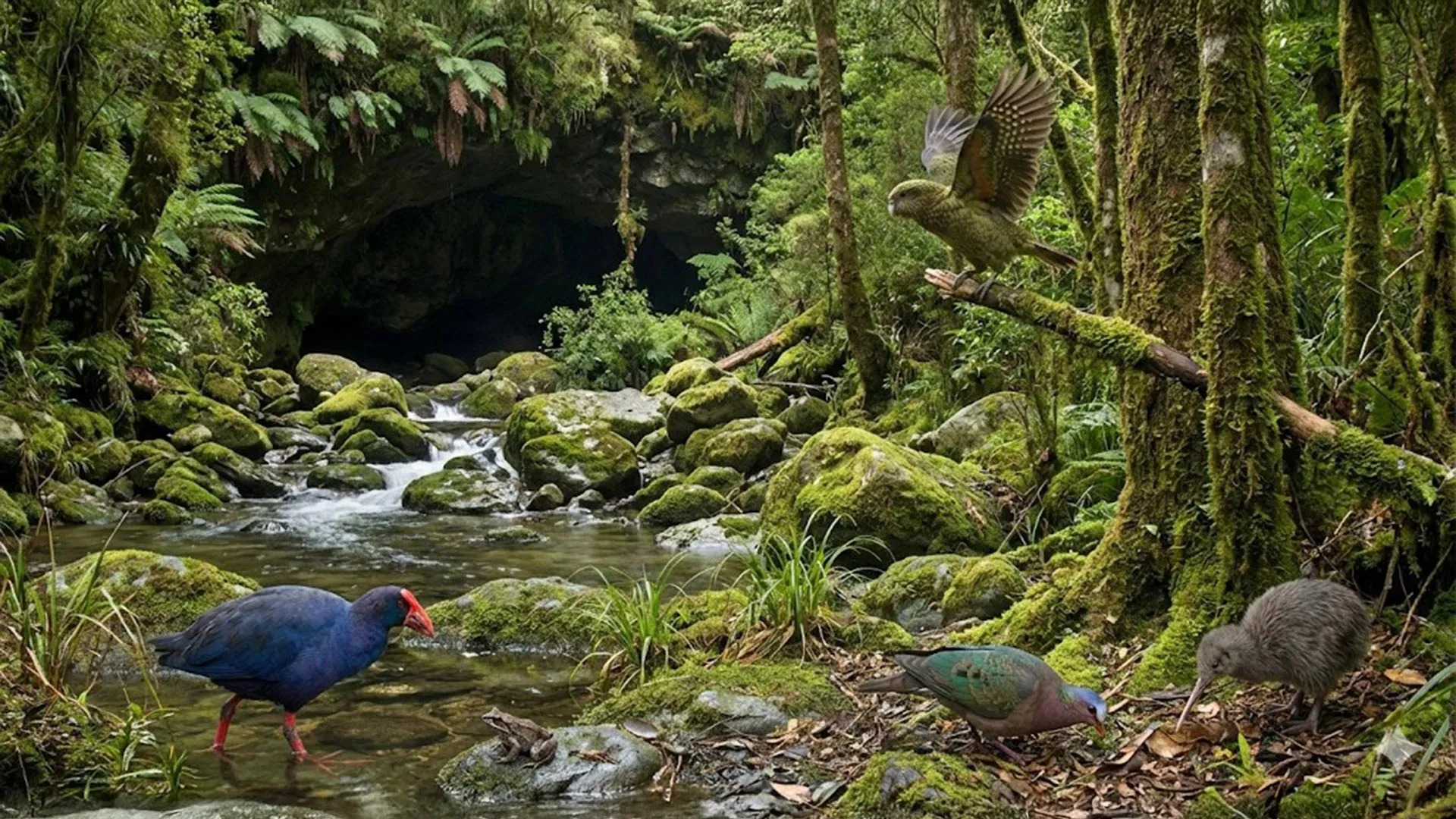
Among the most significant discoveries was a newly identified parrot species, Strigops insulaborealis, believed to be an ancestor of the flightless kākāpō, though this ancient bird may have had the ability to fly.
Other findings include extinct ancestors of the takahē and a pigeon species closely related to the Australian bronzewing.
The fossils were embedded in two distinct layers of volcanic ash, dated to 1.55 million years ago and 1 million years ago, which helped the researchers establish a precise timeline for the remains.
These layers acted as natural time markers, giving scientists a clear snapshot of life during this ancient period.
The discovery challenges previous assumptions about New Zealand’s wildlife. Prior fossil records were either from millions of years ago or from the time after humans arrived.
The new findings fill a crucial gap in understanding the environmental forces shaping wildlife long before humans arrived. According to Associate Professor Trevor Worthy, the fossils represent a “missing volume” in the natural history of New Zealand.
The team also pointed out that climate shifts and volcanic eruptions may have caused significant extinctions before humans, with as many as 33-50% of species disappearing in the million years before human settlement.
Dr. Paul Scofield from Canterbury Museum emphasized that these natural events played a pivotal role in the extinction of species, adding that this discovery “proves that dramatic climate changes and volcanic activity were already reshaping wildlife”, long before human impact.
Leave a Reply