The discoveries, including the tiny Eosteus chongqingensis and the predatory Megamastax amblyodus (the largest early vertebrate found so far, before the Devonian), reveal critical stages in the evolution of nearly all modern vertebrates.
Published in Nature on March 4, 2026, the studies resolve long-standing questions about the early evolution of bony fishes, the ancestors of 98% of living vertebrates, including humans.
Fossils unearthed in southern China provide a rare view of the ancestral anatomy that underpins modern fish and, eventually, terrestrial vertebrates.
Eosteus, measuring just three centimeters, combines features of modern bony fish with traits seen in extinct cartilaginous fish and armored placoderms.
Its “mosaic” anatomy places it at the base of the bony fish lineage, just before the major split into ray-finned and lobe-finned fishes.
Meanwhile, Megamastax, over one meter long and dating roughly 423 million years ago, was the largest known vertebrate of the Silurian period, an era marked by the recovery from ice age extinctions, stabilized warm climates, and high sea levels.
High-resolution CT scans revealed complex tooth cushions in its jaws, solving a decades-old mystery about isolated fossil teeth and demonstrating that early vertebrates could reach substantial sizes, supporting sophisticated predator-prey ecosystems long before the so-called “Age of Fishes.”
Together, these findings position southern China as a cradle of early vertebrate evolution, mapping the emergence of jaws, teeth, and complex anatomy that paved the way for the vertebrate lineage leading to humans.
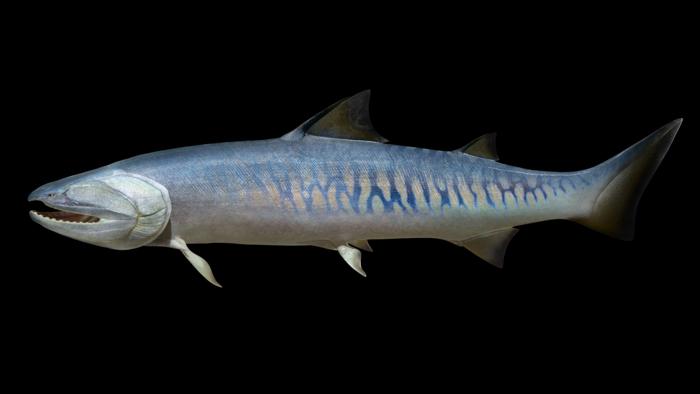
Credit Image by NICE PaleoVislab, IVPP
Leave a Reply