To address these challenges, the Government of Rwanda, in partnership with the World Bank, launched the Volcanoes Community Resilience Project (VCRP). The initiative aims to protect vulnerable areas and prevent disasters from undermining local livelihoods.
Valued at more than $300 million (approximately Rwf 435.6 billion), the project is structured around four key components: flood prevention, expansion of the national park, land restoration, and public awareness and capacity building. Together, these efforts seek to improve living conditions for communities in the region.
Flood prevention and environmental restoration
To mitigate flooding, monitoring equipment is being installed along rivers and waterways in the Vunga corridor. About 15 hydrological stations have already been set up to measure water levels, flow speed, and volume — work led by the Rwanda Water Resources Board.
Land restoration activities are being implemented by the Rwanda Environment Management Authority. These include tree planting, construction of radical terraces on steep hillsides, and training for farmers on effective water management in agricultural fields.
The project plans to establish nurseries and carry out afforestation across 1,177 hectares, promote agroforestry on 10,388 hectares, where more than 86,000 trees have already been planted, and restore 2,955 hectares of degraded forest.
Radical terraces will be developed on 12,740 hectares, with 87 hectares already completed. Contour bank terraces are planned for 81,376 hectares, of which 47 hectares have been implemented so far.
In addition, 10,000 household water tanks will be distributed, where 140 have already been provided, alongside 10,000 cows under the Girinka program, with 40 cows delivered to date.
Expansion of Volcanoes National Park
A major component of the project is the expansion of Volcanoes National Park, which alone is expected to cost about $230 million.
Currently covering about 16,000 hectares, the park will expand by 3,740 hectares — a 23% increase — to reduce human-wildlife conflict and strengthen conservation.
The expansion will require the relocation of residents living within and near the new park boundaries. Business owners such as hotel operators will be compensated or supported to operate eco-friendly forest lodges that comply with park conservation standards, including reforestation requirements and strict environmental guidelines.
As part of the first phase, a “Smart Green Village” will be constructed to house 510 families affected by relocation.
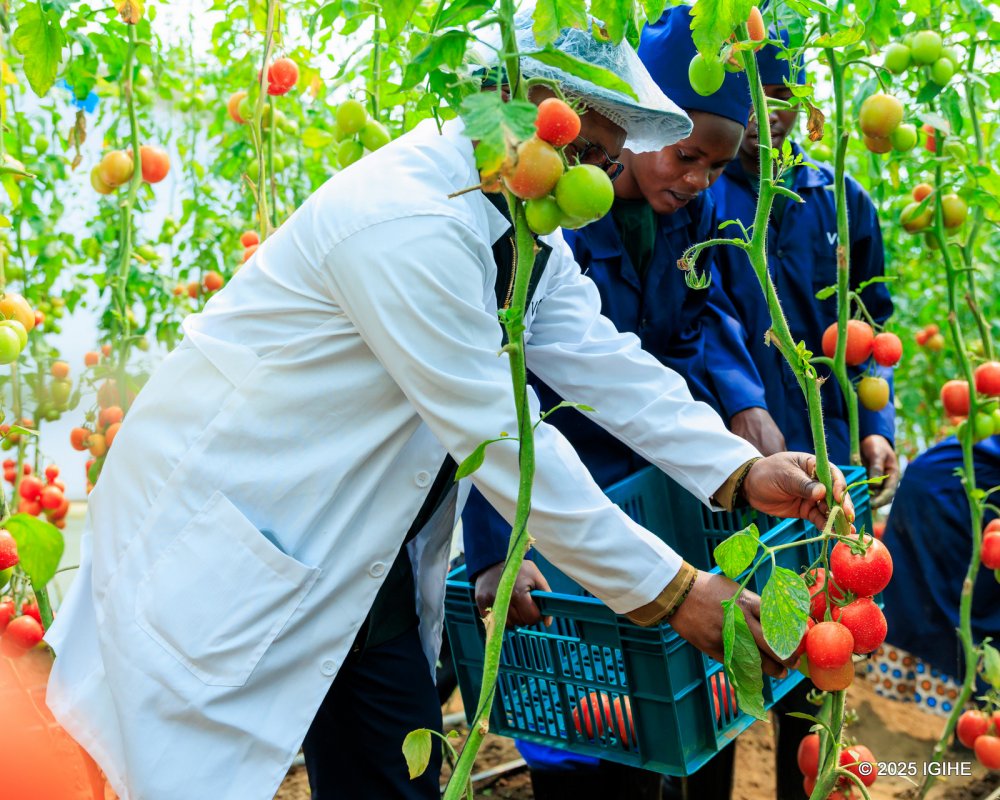
Resettled residents are also receiving training in modern agriculture through the Kinigi Horticulture Hub, which includes greenhouses covering 1,250 square meters. Initial crops include pepper, tomatoes, and cucumbers, selected for their strong market demand and profitability. The hub is projected to generate Rwf 45 million annually, with operating costs estimated at Rwf 11 million.
Project scope and implementation
Launched in 2023, the five-year VCRP is scheduled to run until 2028. It is being implemented in disaster-prone districts including Musanze, Burera, Rubavu, Nyabihu, Ngororero, Rutsiro, Gakenke, and Muhanga.
The project is being carried out through collaboration among several national institutions, including the Rwanda Environment Management Authority, Rwanda Water Resources Board, Meteo Rwanda, and the Rwanda Development Board.
Leave a Reply