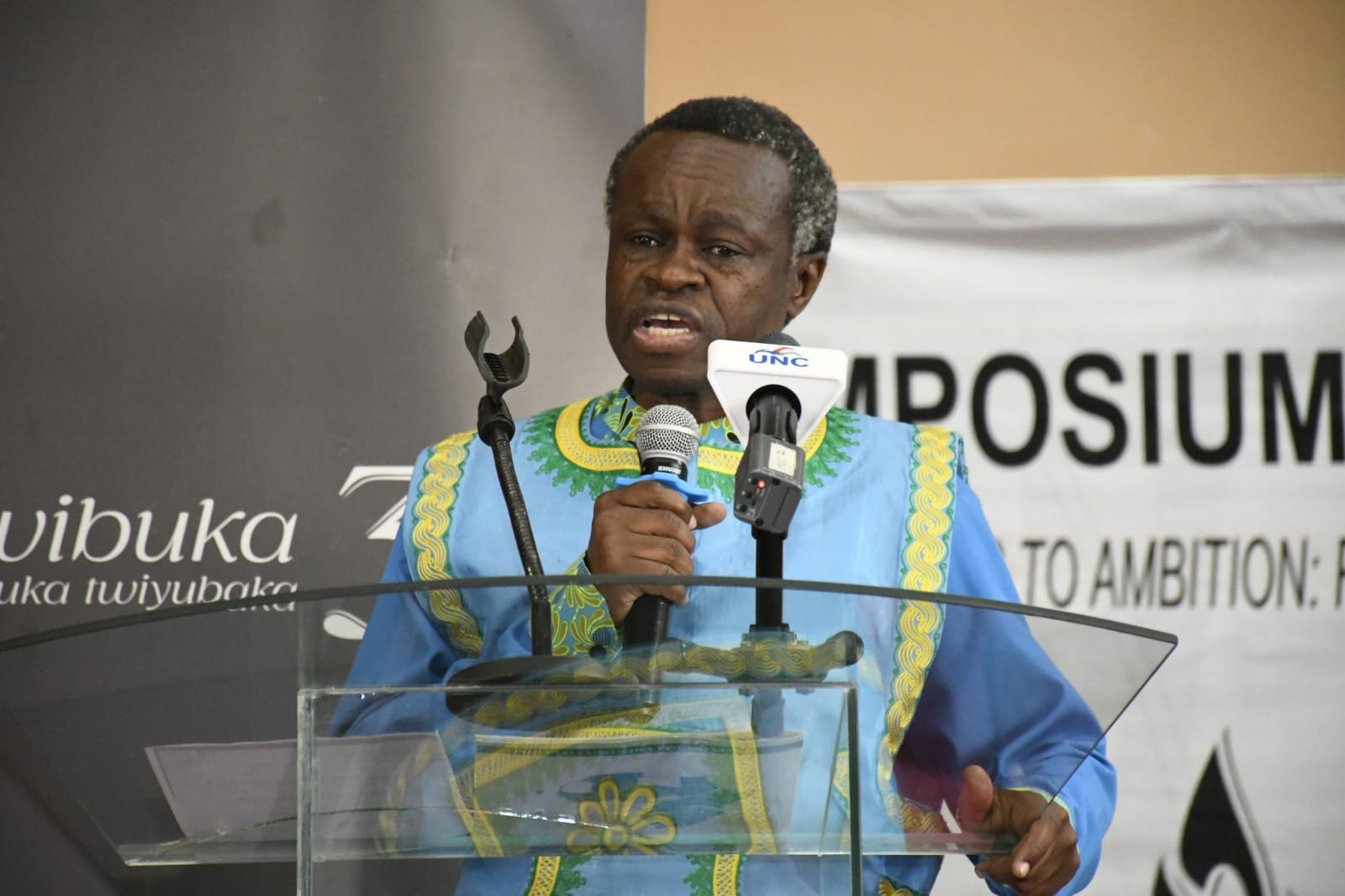
Speaking at a Symposium on Genocide Prevention organised by the Embassy of Rwanda in Kenya as part of the 32nd commemoration of the Genocide against the Tutsi on Wednesday, Lumumba paid tribute to Rwanda’s recovery journey, saying the country has risen “like the phoenix from the ashes” to become a reference point for effective governance and development.
“We are gathered here 32 years since the genocide against the Tutsi in Rwanda,” Lumumba said, noting that the commemoration is not ceremonial but a reminder of humanity’s duty to prevent recurrence of such atrocities.
He warned against historical revisionism and denialism, stressing that the world must remain vigilant.
“If we choose to consign these things to the museums of history, then it will be repeated again,” he said.
Global failures and lessons from history
Lumumba traced the roots of genocide and mass atrocities to historical injustices, including slavery, colonial partitioning of Africa at the Berlin Conference of 1884–1885, and global failures to act decisively in the face of warning signs.
He criticised the international community for its inaction during the 1994 Genocide against the Tutsi, saying world powers, the United Nations, and regional actors “watched in silence for 100 days” as atrocities unfolded in Rwanda.
More than a million people were killed during the 1994 Genocide against the Tutsi, while survivors continue to live with the scars of one of the worst tragedies of modern history.
Critique of international justice systems
The scholar also questioned the effectiveness of international legal systems in delivering justice and preventing atrocities, arguing that global institutions have often failed to act in time.
He contrasted international mechanisms with Rwanda’s community-based Gacaca courts, which he praised as an example of African-led justice and reconciliation.
“The Gacaca system is African, Afrocentric, and authentic,” Lumumba said, noting that while international tribunals handled fewer than 100 cases, Gacaca courts processed nearly 1.9 million, helping communities begin the process of healing.
Rwanda’s reconstruction as a model
Lumumba lauded Rwanda’s post-genocide reconstruction, crediting national leadership led by President Paul Kagame and citizen resilience for the country’s transformation.
“Rwanda, like the phoenix, rose from the ashes,” he said, highlighting improvements in infrastructure, governance, public service delivery, and technology adoption.
He described Kigali as a “model city” for urban planning, infrastructure development, and anti-corruption enforcement, saying it has become a benchmark for African development.
“If you want to see how roads ought to be built, you go to Kigali. If you want to see how roundabouts are manicured, you go to Kigali. If you want to move away from the disorderly borders, you go to Kigali,” he remarked.
“If you want to see policemen who reject your money when you want to corrupt them, you go to Kigali. If you want to see how football stadia and basketball pitches are built within time and within budget, you go to Kigali. Kigali has become our pride.”
While praising Rwanda’s progress, Lumumba cautioned that the risk of mass atrocities persists in the modern era, especially with the rise of digital technology and misinformation.
“We are today in the era of artificial intelligence. Today it would be quicker. Today, in the days of fake news, in the days of Instagram, in the days of WhatsApp, in the days of all these things, if the genocide wanted to commit genocide, they would do it in the twinkling of an eye. Today they would use drones,” he warned, amid concerns over rising ethnic slurs targeting Banyamulenge and Tutsi communities in the eastern DRC.
He urged global institutions and regional bodies, including the East African Community, to move beyond rhetoric and take concrete action to ensure prevention of future atrocities.
Lumumba emphasised that genocide prevention is a shared moral duty rooted in all major faith traditions and ethical systems, citing teachings from Christianity, Islam, Judaism, Hinduism, and African traditional beliefs.
“Never again must not be a slogan; it must be a commitment,” he said, urging the international community to uphold its responsibility to protect vulnerable populations.
Leave a Reply