This is not a routine diplomatic stop; it is a calculated recognition of a continent that has become the new center of gravity for the world’s most pressing conversations on faith, diplomacy, and unity.
The 11-day itinerary, spanning Algeria, Cameroon, Angola, and Equatorial Guinea, is a grueling schedule involving 18 flights and 11 cities. In practice, it represents a bold pivot toward the Global South, moving Africa from the periphery of international discourse to its vital center.
A strategic opening in Algiers
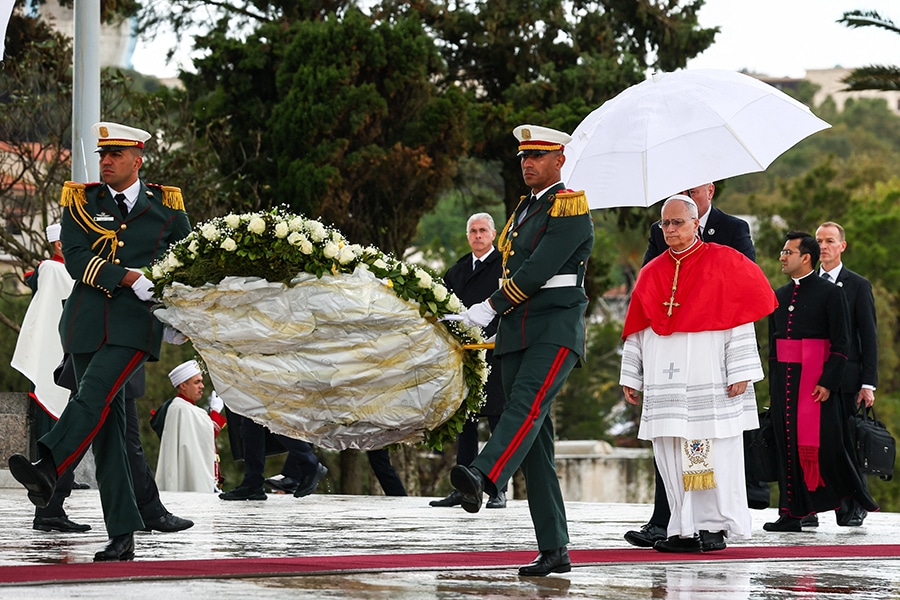
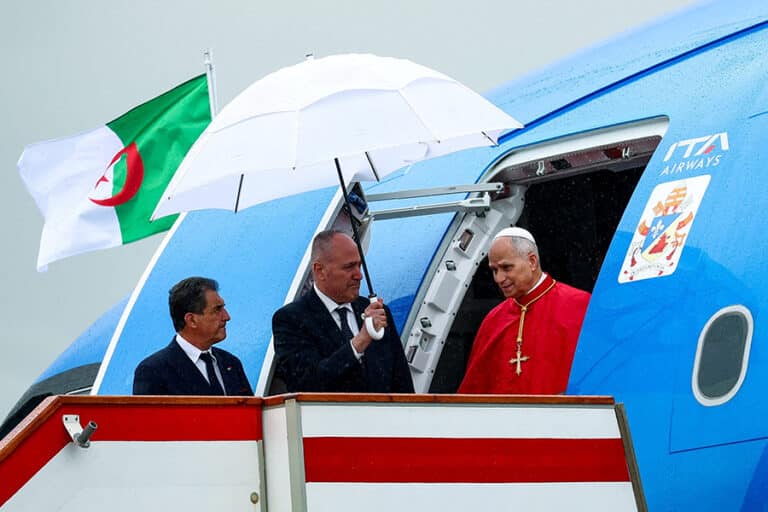
The decision to launch the tour in Algeria is a significant diplomatic statement. As a nation where Islam is the bedrock of social life, Algeria has never before hosted a Catholic Pope. By beginning his journey here, Leo XIV is prioritizing interfaith dialogue over traditional denominational strongholds.
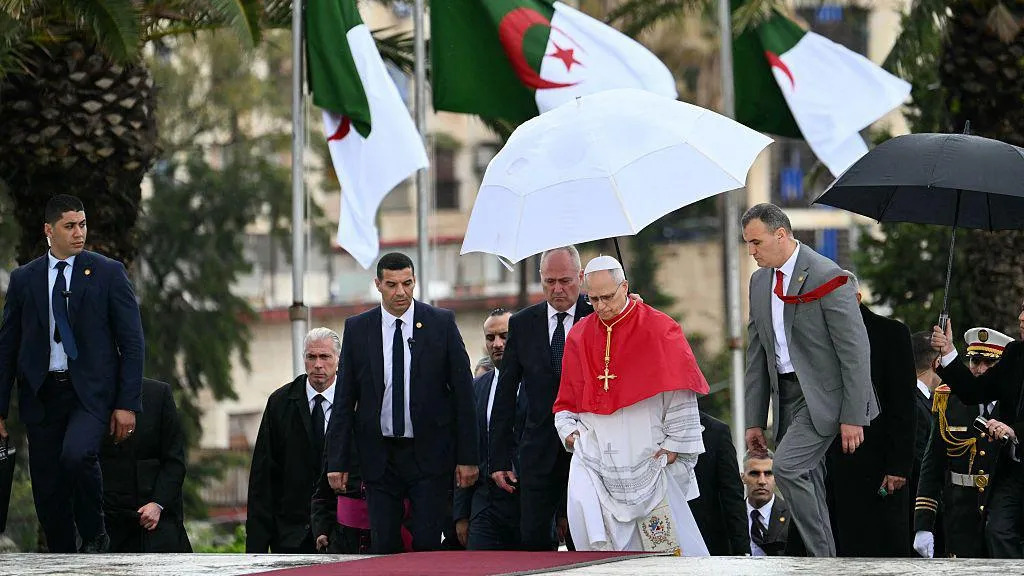
The symbolism is profound: the Pontiff’s schedule includes a historic visit to the Great Mosque of Algiers, one of the world’s largest, followed by a meeting with the local Christian community at the Basilica of Our Lady of Africa. These visits are an active demonstration of how divergent faiths can occupy the same intellectual and physical space.
Furthermore, the visit serves as a historical homecoming. On April 14, the Pope travels to Annaba, the ancient Hippo Regius, to pray at the ruins where Saint Augustine, a foundational architect of Western thought, lived and ministered. For Leo XIV, an Augustinian himself, this is a nod to the African roots of Christian philosophy, a reminder that the continent’s contribution to global thought is as ancient as it is essential.
The new heart of global Catholicism
Beyond the symbolism lies a demographic reality: Africa is now the primary engine of the Catholic Church’s growth. The continent is home to over 256 million Catholics, representing roughly one-fifth of the global total. While participation in the West plateaus, African congregations are expanding at a rate that has fundamentally inverted the old “missionary” narrative.
Today, Africa no longer just receives the faith; it exports it. African priests and lay leaders are increasingly filling the administrative and spiritual voids of the Global North. By visiting Cameroon and Angola, Leo XIV is engaging with the very people who will dictate the future trajectory of the institution.
Navigating high-stakes realities
Each stop on the itinerary is strategically calibrated to address specific regional or global tensions, moving the journey beyond simple ritual into the realm of high-stakes diplomacy.
From Wednesday, April 15, to Saturday, April 18, the Pope will visit Cameroon, a nation of 30 million people, where he will venture into Bamenda. This region has been marked by years of socio-political tension, making his “Meeting for Peace” at St. Joseph’s Cathedral a high-stakes effort toward national reconciliation.
This serious diplomatic mission will be balanced by a massive show of faith in Douala, where an estimated 600,000 faithful are expected to gather at Japoma Stadium for a landmark Eucharistic celebration.
The journey then shifts to Angola from Saturday, April 18, to Tuesday, April 21. During this leg, the Pontiff will travel to the Marian shrine of Mama Muxima, a site of profound cultural and spiritual devotion, to pray for peace in a nation still navigating the scars of its civil war history.
His itinerary also includes a visit to Saurimo, a hub of the diamond industry, where he intends to highlight the human dignity and ethical stakes involved in Africa’s vast natural resource wealth.
The tour concludes in Equatorial Guinea from Tuesday, April 21, to Thursday, April 23, with a final focus on “works of mercy.” In the capital and beyond, Leo XIV will visit the Jean Pierre Olie Psychiatric Hospital and engage with academics at the National University’s León XIV Campus, a sequence of events designed to bridge the gap between grassroots social care and the continent’s growing intellectual influence.
The sheer scale of the mission, covering nearly 18,000 kilometers, underscores its urgency. For a 70-year-old leader, the pace is demanding, but the objective is clear: visibility. By visiting coastal hubs, diamond centers, and conflict-affected regions, the tour brings a global spotlight to areas frequently overlooked by the Western media apparatus.
Ultimately, this tour is an exercise in recognition. It acknowledges a continent that is no longer “in waiting,” but is actively leading global conversations. Over these 11 days, Pope Leo XIV is not merely visiting four nations; he is engaging with a continent that is currently writing the next chapter of global history. In a world defined by fragmentation, this move to center Africa may well be the most important diplomatic statement of his papacy.
Leave a Reply