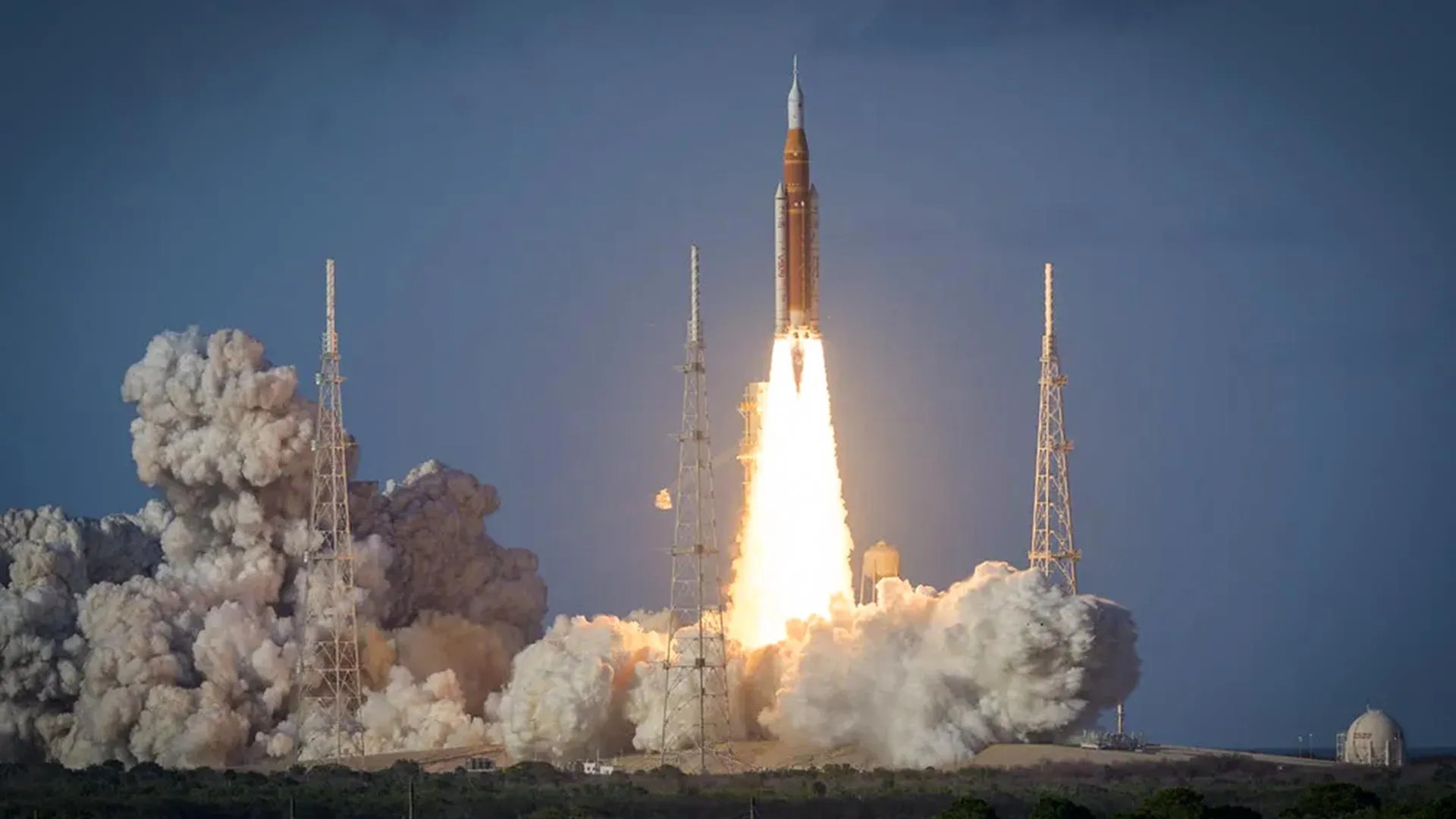
This flight marks a major step forward in human space exploration and signals a return to lunar operations beyond Earth’s orbit after decades of inactivity in crewed lunar missions.
Aboard the Orion spacecraft are four astronauts who will spend about ten days in space, testing critical systems while traveling around the Moon and back toward Earth.
This includes Reid Wiseman, Victor Glover, and Christina Koch from NASA, plus Jeremy Hansen from the Canadian Space Agency, making this a diverse and internationally significant crew.
The mission is designed as a test flight to evaluate the spacecraft’s ability to support human life and function under real deep‑space conditions, an essential requirement for future missions that aim to land astronauts on the Moon and eventually send humans to Mars.
Shortly after launch, Orion’s solar arrays were deployed to begin generating electrical power from sunlight, and the spacecraft was transitioned into normal flight operations.
Engineers and astronauts then worked through a series of system checks, validating life support, communication, and navigation systems. These tests are vital because they will build confidence in both the spacecraft and mission control teams as NASA prepares for more complex missions in the coming years.
After reaching a high Earth orbit, Orion will separate from the rocket’s upper stage and continue on a course toward the Moon. During the mission, the spacecraft will travel into a lunar flyby trajectory, taking advantage of the Moon’s gravity before returning to Earth.
Along the way, the crew will perform additional scientific observations and experiments, including studies related to human health in space, which will help inform future long‑duration missions.
The Artemis II mission is part of NASA’s broader Artemis program, which seeks to establish a long‑term human presence on the Moon and lay the groundwork for human exploration of Mars.
By successfully completing this mission, NASA moves closer to returning astronauts to the lunar surface and expanding human reach into deeper regions of space.
Leave a Reply