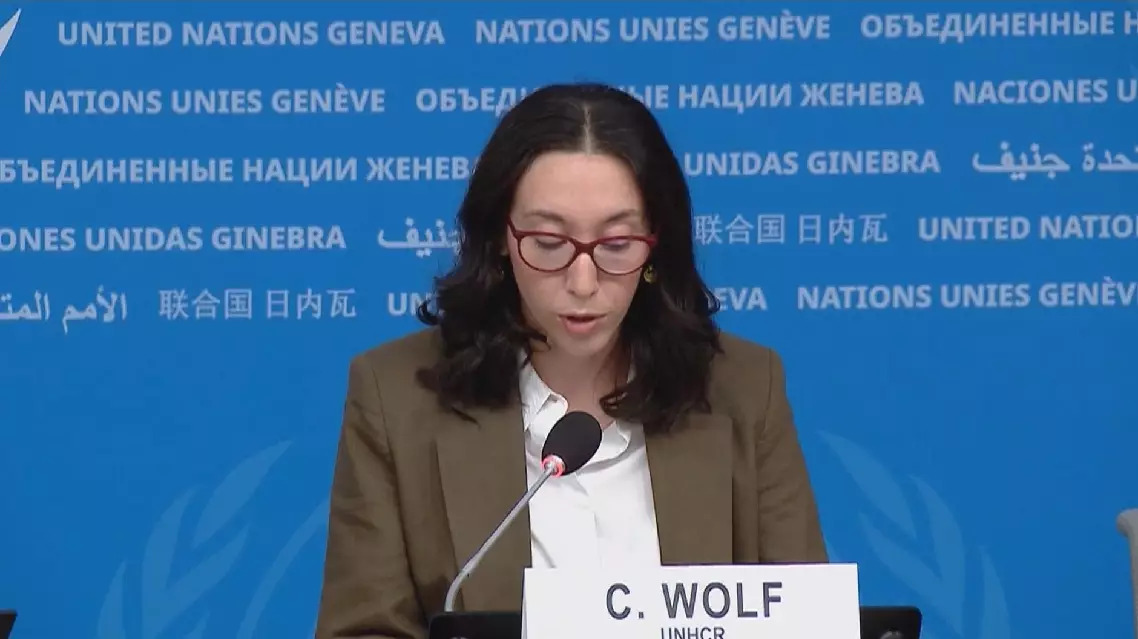
Heightened insecurity and instability around key Gulf routes, including the Strait of Hormuz, have disrupted maritime traffic. Rising fuel, food and freight costs worldwide are driving up prices and delaying the delivery of critical supplies, Carlotta Wolf said at a regular press briefing.
These rising costs “disproportionately affect people who are already living in emergencies, including millions of refugees and displaced people who are among the hardest hit, while also reducing the ability of aid agencies to deliver timely assistance,” she said.
The closure of key maritime routes has forced greater use of longer and more expensive alternatives, leading to increased transit times and operational complexity. Freight rates from key sourcing countries have risen by nearly 18 percent since the start of hostilities, while the capacity of UNHCR’s global transport providers has dropped from 97 to 77 percent since the start of this year, Wolf said.
“For some shipments, costs have more than doubled, such as transport costs for relief items from UNHCR global stockpiles in Dubai to our Sudan and Chad operations,” Wolf said.
The UNHCR spokesperson expressed particular concern about the situation for Africa, home to many overlapping, “often tragically neglected” displacement crises.
In Kenya, where one of UNHCR’s global stockpiles is located, a recent fuel price increase of around 15 percent triggered delays and reduced truck availability for shipments to Ethiopia, the Democratic Republic of the Congo, and South Sudan. In Sudan, the cost of delivering aid has doubled in recent months, while rerouting shipments around the Cape of Good Hope adds up to 25 days in delivery times.
“If instability in the Middle East persists, rising costs, delays and limited transport capacity are likely to constrain humanitarian operations further,” Wolf stressed.
Leave a Reply