Tag: InternationalNews

  • Chinese, ROK leaders hold talks on bilateral ties, int’l affairs

    Chinese, ROK leaders hold talks on bilateral ties, int’l affairs

    It is Lee’s first visit to China since he took office, and the two heads of state have met twice and conducted reciprocal visits, reflecting the importance both sides attach to China-ROK relations.

    ENHANCING STRATEGIC PARTNERSHIP

    China has consistently placed relations with the ROK high on its regional diplomatic agenda and maintained continuity and stability in its policy toward the ROK, Xi said, adding that China is willing to work with the ROK to firmly uphold the direction of friendly cooperation, adhere to the principle of mutual benefit and win-win outcomes, promote bilateral strategic partnership along a healthy path, effectively enhance the well-being of both peoples, and contribute positively to regional and global peace and development.

    Xi called on both sides to enhance mutual trust, respect each other’s development paths, accommodate each other’s core interests and major concerns, and resolve differences properly through dialogue and consultation.

    Lee said the ROK side hopes to use the first head-of-state diplomatic meeting of the year as an opportunity to consolidate the momentum of the comprehensive recovery and development of bilateral relations, seek common ground while reserving differences, deepen the ROK-China strategic cooperative partnership, and open a new chapter of bilateral relations.

    He emphasized that the ROK respects China’s core interests and major concerns, and adheres to the one-China principle.

    Dong Xiangrong, senior fellow at the Chinese Academy of Social Sciences, said that head-of-state diplomacy has played a significant guiding role in China-ROK relations, sending a clear positive signal to foster better bilateral ties, and greatly contributing to deepening political mutual trust and promoting economic and trade cooperation.

    In the future, both sides need to accommodate each other’s major concerns including the Taiwan question, and maintain a stable cooperative relationship as important trading partners, Dong said.

    ACHIEVING MORE COOPERATION RESULTS

    China and the ROK share close economic ties with industrial and supply chains deeply interwoven, and the bilateral cooperation is mutually beneficial, Xi said.

    He said the two countries should further align their development strategies, strengthen policy coordination, expand the pie of common interests, and achieve more cooperation results in emerging fields such as artificial intelligence, green industries, and the silver economy.

    Bilateral economic and trade cooperation has played a positive role in the economic and social development of both countries, Lee said, noting that the ROK looks forward to seizing the opportunities brought by China’s 15th Five-Year Plan to achieve more results in practical cooperation with China.

    After their talks, Xi and Lee witnessed the signing of 15 cooperation documents in fields including scientific and technological innovation, ecological environment, transportation, and economic and trade cooperation.

    Yang Xiyu, a researcher from the China Institute of International Studies, said that since the establishment of diplomatic relations between China and the ROK, bilateral economic and trade cooperation has always been the stabilizer and propeller of the development of bilateral relations.

    He said China and the ROK should leverage their long-standing traditional advantages, and strengthen cooperation with a focus on economy, trade, and technology.

    BEARING RESPONSIBILITIES IN PEACE, DEVELOPMENT

    China and the ROK shoulder important responsibilities in maintaining regional peace and promoting global development, and share a wide range of common interests, Xi said, noting that the two countries should firmly stand on the right side of history and make the right strategic choices.

    More than 80 years ago, the two peoples made tremendous national sacrifices and won the victory against Japanese militarism, he said, adding that the two countries should join hands to safeguard the fruits of the victory in World War II and protect peace and stability in Northeast Asia.

    As beneficiaries of economic globalization, China and the ROK must work together to oppose protectionism and practice true multilateralism, contributing to the advancement of an equal, orderly multipolar world and a universally beneficial, inclusive economic globalization, Xi said.

    Lee said the ROK is willing to strengthen its multilateral coordination with China and contribute to global prosperity and development, and wishes China every success in hosting this year’s Asia-Pacific Economic Cooperation Economic Leaders’ Meeting.

    Dong said amid the recent resurgence of Japanese militarism, China and the ROK should share a common position to maintain regional peace, and the two sides need to jointly address protectionism and defend free trade.

  • Xi meets Taoiseach of Ireland Micheal Martin

    Xi meets Taoiseach of Ireland Micheal Martin

    Xi made the remarks when meeting with Taoiseach of Ireland Micheal Martin in Beijing. The Irish prime minister is on an official visit to China from Jan. 4 to 8.

    Both China and Ireland cherish peace, embrace openness and inclusiveness, and strive for self-reliance and progress, Xi said, adding that the Chinese and Irish people won national independence and liberation through struggles and are advancing toward modernization through sustained efforts of successive generations.

    Since the establishment of the China-Ireland strategic partnership for mutually beneficial cooperation in 2012, bilateral trade volume has quadrupled, with a balanced development in mutual investment, he noted.

    Xi said the two countries should maintain friendly exchanges at multiple levels and across diverse fields, continuously enhance communication and mutual understanding, accommodate each other’s core interests and major concerns, consolidate political mutual trust, and solidify the political foundation of bilateral relations.

    Over the next five years, China will continue to promote high-quality development and expand high-standard opening up. Xi said China is willing to strengthen economic and trade cooperation with Ireland, align development strategies in fields such as artificial intelligence, digital economy, and medicine and healthcare, promote two-way investment, leverage each other’s strengths, share opportunities and pursue common development.

    The two sides should enhance cooperation in education, culture and tourism to foster greater people-to-people affinity, and China welcomes more Irish youth to come to China for study and exchanges, Xi said.

    In a world beset with changes and chaos, unilateral and bullying acts are severely undermining the international order, Xi said. All countries should respect the development paths chosen by the peoples of other nations, and abide by international law as well as the purposes and principles of the UN Charter, he said, stressing that major countries should particularly take the lead in doing so.

    As China and Ireland support multilateralism and advocate international fairness and justice, the two countries should strengthen coordination and cooperation in international affairs, and jointly maintain the authority of the United Nations and make the global governance system more just and equitable, he said.

    Xi said China and the EU should bear the long-term picture in mind, uphold the positioning of partnership, and view and handle differences objectively and rationally to work for win-win cooperation.

    As Ireland will hold the rotating EU presidency in the second half of this year, China hopes Ireland will play a constructive role in promoting the healthy and stable development of China-EU relations, the Chinese president said.

    Highlighting a profound and long-lasting friendship between the two countries, the Irish prime minister said Xi’s successful visit to Ireland in 2012 had laid a solid foundation for the development of the Ireland-China strategic partnership for mutually beneficial cooperation in recent years.

    Martin said Ireland firmly adheres to the one-China policy, and is committed to developing the strategic partnership for mutually beneficial cooperation.

    Ireland is willing to deepen cooperation with China in trade, investment, science and technology, biomedicine, renewable energy, artificial intelligence, education and other fields, he said.

    Martin commended China’s indispensable and important role in international affairs and its positive contributions to upholding the authority of the UN and promoting world peace.

    He said that any international dispute should be settled in conformity with international law, and Ireland is willing to maintain close communication and coordination with China, safeguard international law, uphold free and open trade, and promote world prosperity and stability.

    Noting that the stable development of EU-China relations is of great significance, Martin said the Irish side is willing to play a constructive role in promoting the healthy development of EU-China relations.

  • Expanding “Donroe Doctrine” triggers alert across LatAm countries

    Expanding “Donroe Doctrine” triggers alert across LatAm countries

    The U.S. attack on Venezuela and its so-called “management plan,” as analysts observed, is in essence a testament to its scheme to expand the “Donroe Doctrine,” a Trump-modified version of the Monroe Doctrine aimed at controlling the Western Hemisphere and plundering its resources.

    “RUNNING” OR PLUNDERING VENEZUELA

    Trump told a press conference on Saturday that the United States will set up a working group composed of diplomatic and military personnel to “run” Venezuela until “a safe, proper and judicious transition.”

    He also threatened that the United States is “not afraid” to have military forces on the ground and will launch a larger second wave of strikes against Venezuela if necessary.

    Although the specific plan remains unclear at present, the so-called “running” by the United States is essentially an attempt to conduct substantive intervention in Venezuela through political manipulation and resource control, experts have noted.

    Allan Fajardo, a sociologist at the Honduran National Autonomous University, told Xinhua that there are two possibilities for the so-called “transitional management” by the United States.

    One is to maintain the current government and institutional framework of Venezuela in form and continue to interfere in Venezuela’s internal affairs by exerting political and economic pressure.

    The other possible method is to foster a pro-American regime directly, without even ruling out the possibility of larger-scale military intervention and occupation of Venezuelan territory in the future, he said.

    Trump also mentioned at the press conference that large American oil companies will enter Venezuela to repair severely dilapidated oil infrastructure and start generating revenue.

    Cao Ting, director of the Research Center for Latin American Studies at Fudan University, said that judging from the consistent style of the Trump administration, its strategic goal might be to control the oil lifeline within Venezuela by fostering U.S. proxies in the country without engaging in a long-term occupation.

    This so-called “running” model is not focused on improving people’s livelihoods or rebuilding the country, but on seizing resources, said Jaime Tamayo, an international relations specialist and political scientist from the University of Guadalajara.

    It will lead to the depletion of Venezuela’s governance capacity, the separation of administration and security, the deterioration of public security and the breeding of violence, scholars have said.

    POST-MADURO VENEZUELA

    According to the Venezuelan Constitution, if the president is “absolutely absent,” power will be transferred to the vice president and a general election will be held within 30 days.

    However, Venezuela’s Supreme Court of Justice did not announce that Maduro is “absolutely absent,” although it has ordered Vice President Delcy Rodriguez to immediately take over as acting president after Maduro’s capture, which, according to media analyses, suggests that there might be no general election within 30 days.

    Experts believe that Rodriguez and her brother are currently important representatives of the left-wing forces, with relatively moderate positions.

    In a televised speech on Saturday, Rodriguez took a tough stance toward the United States, condemning its actions as unprecedented military aggression and saying that Venezuela will never become a colony of any country or a slave of any empire, despite Trump’s earlier claim that she has promised to do what the United States wanted.

    Tamayo believes that the current left-wing political forces in Venezuela and their social foundation remain relatively stable, making it difficult for the United States to break the country’s existing political pattern in a short time. It may adopt a strategy of provoking division to win over some senior political or military figures in Venezuela.

    LATIN AMERICA ON HIGH ALERT

    “Today it’s Venezuela, tomorrow it could be anyone else,” Chilean President Gabriel Boric said on Saturday, raising alarm across Latin American countries over the hegemonic interference of the United States.

    Latin American experts and media outlets believe that the U.S. action against Venezuela aims to create a “chilling effect” to deter the regional countries and is an upgraded version of the “Monroe Doctrine.”

    Jose Ignacio Martinez, an international relations specialist from the National Autonomous University of Mexico, said that Washington is highlighting its overbearing logic to arbitrarily define who can become the president and which is a “legitimate country,” while casually labelling relevant countries and leaders as “terrorists,” “drug dealers,” or “dictators.”

    Leaders of Brazil, Mexico, Cuba, Honduras and Chile, among others, have publicly condemned the United States and called on the international community to take urgent action.

    Brazilian President Luiz Inacio Lula da Silva condemned the U.S. military’s actions as “unacceptable,” saying that they violated Venezuela’s sovereignty and set a dangerous precedent.

    The U.S. actions strike at the core of national sovereignty and have raised concerns even among some opposition forces in Venezuela. Under mounting pressure, Latin American countries may seek greater unity and self-reliance to counter hegemony, according to analyses by Latin American media.

  • U.S. launches strikes on Venezuela, drawing widespread condemnation

    U.S. launches strikes on Venezuela, drawing widespread condemnation

    Venezuela’s Vice President Delcy Rodriguez, speaking on a state-run television station, said the whereabouts of Maduro and his wife are unknown, asking for proof they are alive.

    The U.S. military action against the South American nation has drawn widespread international condemnation, with multiple countries calling for a coordinated global response.

    WHAT HAPPENED?

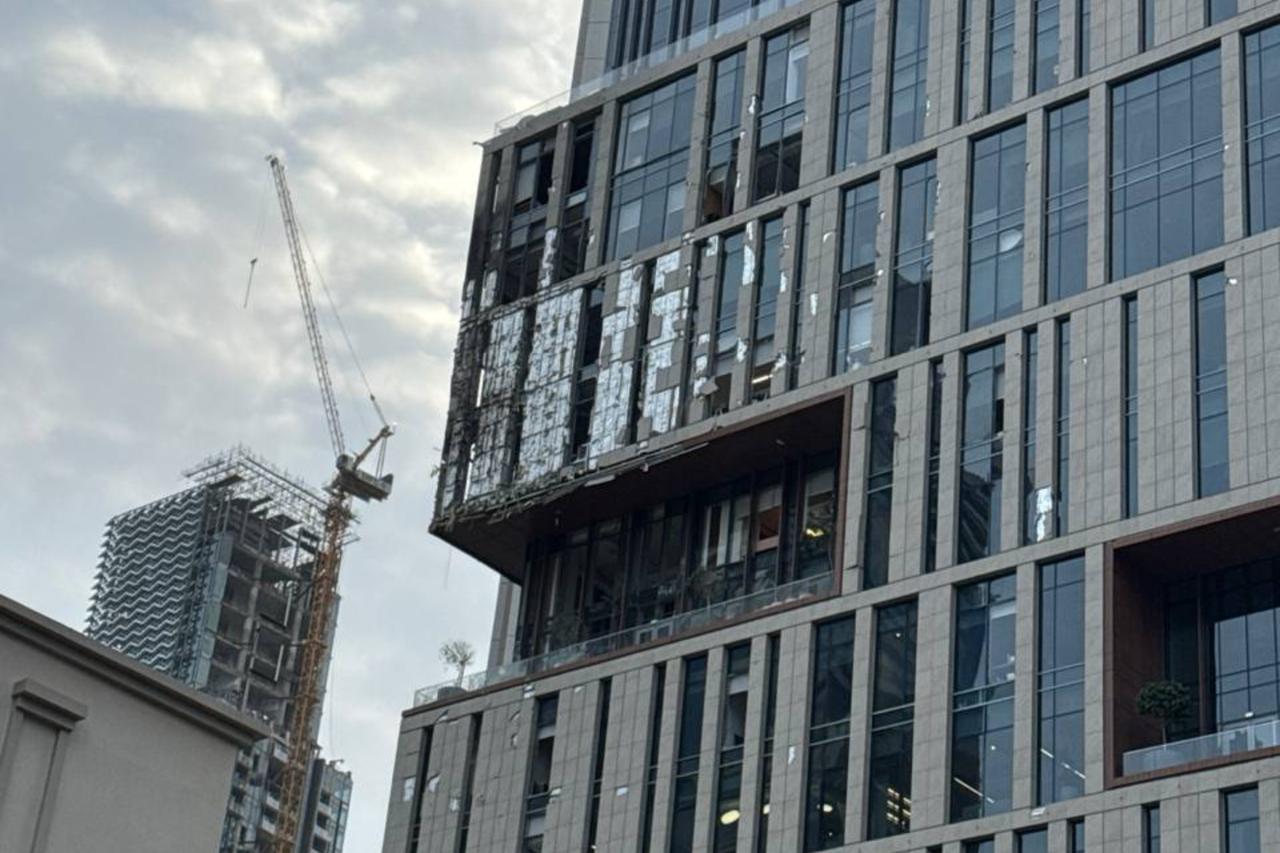
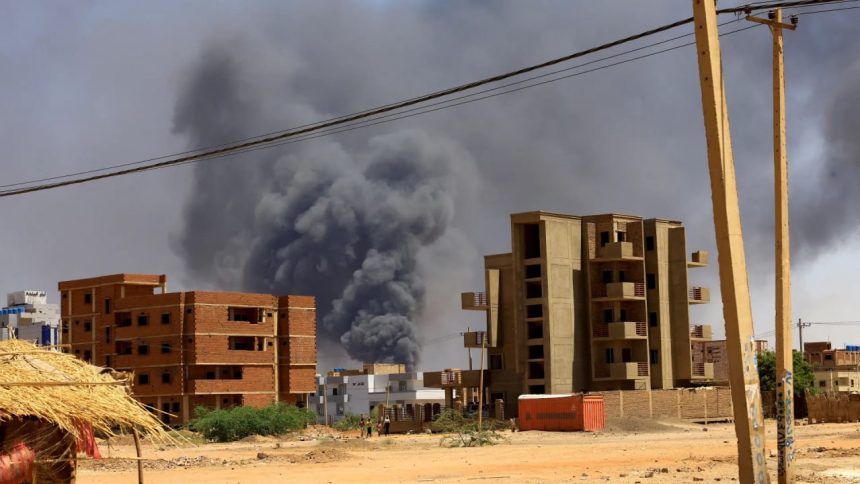
    A Xinhua correspondent based in Caracas reported early Saturday morning that low-flying aircraft were spotted, and clouds of smoke were seen following loud explosion sounds in the Venezuelan capital.

    Photos and videos circulating on social media showed smoke rising from multiple locations in the capital, with residents seen fleeing in the streets.

    Reports said brief power outages occurred in some areas, including a military base in Caracas.

    According to media reports, the U.S. Federal Aviation Administration (FAA) had banned U.S. commercial flights from Venezuelan airspace due to “ongoing military activity” shortly before the explosions were reported.

    Hours after the incident, CBS White House correspondent Jennifer Jacobs said that U.S. President Donald Trump had ordered the strikes, citing U.S. officials. FOX News also reported that U.S. officials had confirmed the military action.

    Following the attacks, Venezuela condemned the incident as “military aggression” by the United States. The Venezuelan government said that the military strike targeted civilian and military sites in at least four states of the country, including Caracas, as well as the states of Miranda, Aragua and La Guaira, adding that the U.S. action blatantly violated the United Nations Charter.

    Later in the day, Trump in a Truth Social post that Maduro and his wife had been captured and flown out of Venezuela.

    “The United States of America has successfully carried out a large scale strike against Venezuela and its leader, President Nicolas Maduro, who has been, along with his wife, captured and flown out of the Country,” Trump said in the post.

    For months, the United States has maintained a significant military presence in the Caribbean, much of it off Venezuela’s coast, purportedly to combat drug trafficking — a claim Venezuela has denounced as an attempt to bring about regime change in Caracas.

    WIDESPREAD CONDEMNATION

    Colombian President Gustavo Petro on Saturday called for an urgent meeting of the Organization of American States and the United Nations on the attack in Venezuela. “Caracas is currently being bombed … Venezuela has been attacked,” he wrote on social media platform X.

    On the same day, Cuban President Miguel Diaz-Canel condemned what he described as the “criminal U.S. attack” against Venezuela, demanding an urgent response from the international community.

    In a social media post, the president said that the Latin American region was being brutally assaulted, and “this is state terrorism against the brave Venezuelan people and against Our America.”

    Meanwhile, the Russian Foreign Ministry said that the United States committed “an act of armed aggression” against Venezuela, which causes deep concern and condemnation.

    Konstantin Kosachev, deputy speaker of Russia’s Federation Council, said the U.S. military operation against Venezuela has no legitimate basis as the South American country has posed no threat to the United States.

    Kosachev stressed that the international order should be based on international law rather than on so-called rules imposed by individual countries. He said international law has clearly been violated, adding that “an order established in this manner must not prevail.”

    Kosachev also said he believed that most countries would firmly distance themselves from the attack on Venezuela and condemn it.

    Also on Saturday, Iran’s Foreign Ministry strongly condemned the U.S. military attack against Venezuela as a “flagrant violation” of the Latin American state’s national sovereignty and territorial integrity.

    It said the U.S. military attack against Venezuela was an “act of aggression and in clear violation” of the fundamental principles of the UN Charter and international law, which bans the use of force against sovereign states.

    It called on the United Nations as well as all governments caring about the rule of law and international peace and security to immediately and explicitly condemn the U.S. attack.

    The Spanish Foreign Ministry on Saturday also said that Spain calls for a deescalation as well as moderation and respect for international law in Venezuela.

  • Hainan FTP to accelerate opening-up after launch of island-wide special customs operations: official

    Hainan FTP to accelerate opening-up after launch of island-wide special customs operations: official

    Wang Fengli, deputy director of the Office of the Free Trade Port Working Committee of the Communist Party of China Hainan Provincial Committee, made the remarks during the latest episode of China Economic Roundtable, an all-media talk show hosted by Xinhua News Agency.

    Hainan will build a more flexible and efficient supervision system to facilitate the free, safe flow of goods. “On the one hand, the range of zero-tariff goods will be expanded to promote the trade of goods. On the other hand, the opening-up of services sectors such as tourism, education and health care will be accelerated in response to the development needs of trade in services,” Wang said.

    Regarding investment, the Hainan FTP aims to create a market-oriented, law-based and internationalized business environment with greater transparency. Foreign investment access will be relaxed further, and reforms will be implemented to streamline approval processes, the official said.

    The opening-up of the financial sector will be advanced steadily, with efforts to develop cross-border asset management and offshore yuan business, he said.

    Restrictions on the free flow of people will also be relaxed, and entry and exit policies will be eased to attract talent and business visitors, according to Wang.

    Hainan will adopt a more open shipping environment, optimize vessel inspection policies and establish an efficient, secure mechanism for the cross-border transfer of data, he added.

  • Island-wide special customs operations of Hainan FTP represents China’s stance against protectionism: expert

    Island-wide special customs operations of Hainan FTP represents China’s stance against protectionism: expert

    Huang, head of the Chinese Academy of Macroeconomic Research, made the remarks during the latest episode of China Economic Roundtable, an all-media talk show hosted by Xinhua News Agency.

    The Thursday launch marks a major milestone in the opening-up drive of the world’s second-largest economy. This move sends a tangible message to the world: China has made a significant decision to open up further, Huang said.

    It also aims to set a benchmark for higher-level opening-up, inject new momentum into upholding multilateralism and free trade, and foster inclusive and universally beneficial economic globalization, according to Huang.

    “It is a strategic move to align with high-standard international economic and trade rules and steadily expand institutional opening-up,” Huang noted. “This provides an important platform for China to better adapt to and utilize international economic and trade rules while actively participating in their formulation.”

    Huang believes that China’s economy has transitioned from rapid growth to high-quality development and is now at a critical stage of transforming growth model, optimizing economic structure, and shifting growth drivers.

    As a key testing ground for reform in China, Hainan shoulders the important mission of paving new paths and accumulating fresh experience for building a high-standard socialist market economy, particularly in key areas such as trade and investment, fiscal and financial systems, and government regulation, Huang added.

  • Hainan FTP to see diversified, high-quality growth after special customs operations: expert

    Hainan FTP to see diversified, high-quality growth after special customs operations: expert

    Huang, head of the Chinese Academy of Macroeconomic Research, made the remarks in the latest episode of China Economic Roundtable, an all-media talk show hosted by Xinhua News Agency.

    During the talk show, Huang highlighted several landmark policies, noting that the share of tariff lines covered by zero-tariff treatment at the Hainan Free Trade Port (FTP) will rise to roughly 70 percent, alongside optimized rules that allow duty-free treatment for value-added processing.

    According to Huang, the measures are expected to significantly reduce operating costs for industries such as pharmaceuticals and high-end manufacturing, encourage industrial clustering, and accelerate the development of emerging sectors, including offshore wind power and commercial space.

    Meanwhile, expanded duty-free shopping options for travelers and improved purchasing policies for island residents are expected to further stimulate local consumption, Huang noted.

    Favorable tax policies are also central to the new economic landscape of Hainan FTP. “Preferential income tax rates will attract more companies and skilled workers, creating higher-quality jobs and reinforcing a virtuous cycle between industry development, talent inflows and economic growth,” Huang added.

    Beyond the island, the launch of island-wide special customs operations is expected to reshape regional development patterns by easing barriers to the movement of goods, capital, and other factors of production, Huang believes. “Hainan will integrate more closely with surrounding regions, fostering coordinated development across southern China.”

    At the national level, Huang described the move as a key step in China’s shift from an opening-up model focused on the flow of goods and other factors to one centered on institutional opening-up.

    Hainan is expected to align more closely with high-standard international economic and trade rules, including those governing cross-border data flows and intellectual property protection, Huang said, adding that successful institutional innovations could be replicated nationwide.

    “Launched against a backdrop of rising protectionism and headwinds to globalization, the special customs operations could provide international investors and traders a more stable and predictable institutional environment,” said Huang.

  • Special customs operations promise broad gains for businesses, residents in Hainan FTP: official

    Special customs operations promise broad gains for businesses, residents in Hainan FTP: official

    Wang Fengli, deputy director of the Office of the Free Trade Port Working Committee of the Communist Party of China Hainan Provincial Committee, made the remarks in the latest episode of China Economic Roundtable, an all-media talk show hosted by Xinhua News Agency.

    Following the launch, the Hainan FTP will see a sharp rise in its level of zero-tariff treatment, said Wang. The number of tariff lines eligible for zero tariffs will expand from about 1,900 to around 6,600, lifting the overall zero-tariff ratio from 21 to 74 percent.

    Beyond zero tariffs, lower tax rates form another major policy advantage of the Hainan FTP, Wang said, noting that companies can benefit from multiple policies across different stages of production and operation.

    He cited the example of a biopharmaceutical company. During the construction and research phase, imported raw materials and equipment can qualify for zero tariffs, reducing import costs by 5 to 10 percent. In manufacturing, products made with zero-tariff imported inputs and meeting a value-added ratio of 30 percent or more can be shipped to the Chinese mainland free of import duties.

    Once profitable, the company can also benefit from a preferential corporate income tax rate of 15 percent, while its executives and technical staff may qualify for a 15 percent personal income tax rate, the official said.

    Taken together, these measures offer companies opportunities for development across the entire industrial chain, Wang said.

    Local residents will also see tangible benefits after the launch of special customs operations, the official added. One key change is access to a wider range of duty-free goods.

    Authorities are studying tax policies for imported goods consumed by island residents, with plans to introduce a positive-list system that would allow residents to purchase selected imported products duty-free, according to Wang.

    “Increased opportunities for international exchanges and cooperation are expected to make work and daily life on the island more convenient and diverse,” said the official.

  • Hainan FTP’s special customs operations underscore China’s firm commitment to high-standard opening up

    Hainan FTP’s special customs operations underscore China’s firm commitment to high-standard opening up

    In the latest episode of China Economic Roundtable, an all-media talk show hosted by Xinhua News Agency, guest speakers shared insights into the significance of the Hainan FTP and its upcoming special customs operations.

    “Accelerating the development of free trade ports is a concrete move to show the world that China’s door to opening up will not be closed, but will only open wider,” said Huang Hanquan, head of the Chinese Academy of Macroeconomic Research under the National Development and Reform Commission.

    “The launch of island-wide special customs operations reflects China’s resolve to address external uncertainties with the certainty of expanded high-standard opening up, injecting new vitality into both the Chinese economy and global growth,” Huang said.

    Located in China’s southernmost island province, the Hainan FTP is the country’s largest special economic zone and a key testing ground for deepening reform and opening up. Under the special customs operations, the Hainan FTP will implement a supervision model featuring “freer access at the first line, regulated access at the second line, and free flows within the island.”

    The “first line,” linking Hainan with overseas markets, will allow most imported goods to enter tariff-free with faster clearance, while the “second line,” referring to the customs boundary between Hainan and the mainland, will apply standard customs oversight to ensure fairness and prevent smuggling.

    Starting Thursday, the share of zero-tariff products in the Hainan FTP will surge from 21 percent to 74 percent, with the number of tariff-free items expanding from about 1,900 to 6,637, covering nearly all production equipment and raw materials.

    {{POLICY BENEFITS}}

    “Island-wide special customs operations will bring a more open trade environment and a more efficient allocation of production factors, creating major development opportunities,” said Xue Zengyi, senior vice chairman of CP Group Agro-industry & Food Business, China Area.

    Xue illustrated the impact with a simple calculation: the group’s coffee business will benefit from the free trade port’s zero-tariff policy on raw and auxiliary materials, reducing import costs by 8 percent in tariffs and 13 percent in value-added tax on green coffee beans, significantly lowering raw material expenses.

    One of the earliest foreign-invested enterprises to establish a presence in Hainan, CP Group has operated in the province for nearly four decades. Starting with agriculture and animal husbandry, it has expanded into seven sectors, including aquaculture and coffee, and now runs 13 enterprises with a total investment of 2 billion yuan (about 283.4 million U.S. dollars).

    The launch of island-wide special customs operations marks a milestone in the development of the Hainan FTP, with a raft of preferential policies expected to deliver tangible gains for businesses and residents in Hainan.

    Huang said that the preferential tax policies will significantly reduce operating costs in sectors such as pharmaceuticals and high-end manufacturing, help attract industrial clustering, and spur the development of emerging industries, including offshore wind power and commercial spaceflight.

    For Hainan residents, the expanded range of offshore duty-free goods and optimized shopping policies are expected to invigorate the local consumer market. Hainan’s distinctive development models are also set to spur a new wave of growth in modern service sectors such as healthcare and education, Huang added.

    As part of efforts to advance the construction of the Hainan FTP, China earlier this year improved the island’s offshore duty-free shopping policies, including measures to broaden the scope of eligible duty-free goods. Since the policy took effect on Nov. 1, offshore duty-free sales have exceeded 1.5 billion yuan.

    {{INSTITUTIONAL OPENING UP}}

    “Island-wide special customs operations mark a new starting point for the opening up and development of the Hainan FTP, rather than the finish line,” Huang said. He added that China will gradually expand opening-up at the “first line,” further ease trade administration, and work to build a special customs supervision zone with international competitiveness and influence.

    Hainan will align itself with high-standard international economic and trade rules in areas such as cross-border data flows and intellectual property protection. The institutional innovations accumulated in the process can be replicated nationwide, helping propel deeper domestic reforms, said Huang.

    In terms of industry and investment, Hainan’s policy advantages are expected to attract global capital into sectors such as tourism and education, while fostering a trade model linking raw materials from Southeast Asia, processing in Hainan, and distribution in the mainland, positioning the island as a hub connecting domestic and international markets and helping optimize China’s overall trade network.

    In the financial sector, improvements to the multi-functional free trade account system will broaden channels for cross-border financing and investment, facilitating the entry of foreign capital into the Chinese market and supporting outbound investment by domestic firms. This will help diversify China’s approaches to both utilizing foreign investment and investing abroad, Huang added.

    Official data show that since 2020, more than 9,600 foreign-invested enterprises have been newly established in Hainan, with investors from 176 countries and regions. With the launch of island-wide special customs operations, Hainan is expected to strengthen further its role as a headquarters base for overseas companies entering the Chinese market.

    In recent years, Hainan’s foreign trade has demonstrated strong growth momentum. In 2024, the total volume of Hainan’s goods imports and exports reached 277.65 billion yuan — up 20 percent year on year and nearly 200 percent compared to 2020.

    Xue said that while CP Group continues to deepen its presence in the Hainan market through product innovation and expanded investment, it will also make full use of the advantages of the Hainan FTP to bring Hainan’s distinctive agricultural products to international markets.

  • Theyab bin Mohamed bin Zayed attends inauguration of UAE-Indonesia Hospital for Cardiac Diseases

    Theyab bin Mohamed bin Zayed attends inauguration of UAE-Indonesia Hospital for Cardiac Diseases

    Sheikh Theyab bin Mohamed bin Zayed toured the hospital’s facilities, which integrate medical innovation, sustainable design, and social impact, including solar energy, rainwater use, and eco-friendly materials, and reaffirmed the UAE’s commitment to global health, humanitarian action, and international cooperation.

    The UAE-Indonesia Hospital for Cardiac Diseases is the first of ten specialist hospitals planned globally in the UAE Global Hospitals Programme, part of the Zayed Humanitarian Legacy Initiative.

    Theyab bin Mohamed bin Zayed has attended the inauguration of UAE-Indonesia Hospital for Cardiac Diseases