Tag: HomeHighlights

  • Rwanda queries persistent refusal to transfer ICTR archives to Rwanda

    He said that there should be explanations of why the international community received files and kept custody of the archives other than sending them back to Rwanda.

    Busingye raised the issue in discussions bringing together different government officials including the Minister of Justice and the President of the Mechanism for International Criminal Tribunals (MICT), Judge Carmel Agius who is in Rwanda for a visit.

    Rwanda has for several years been arguing its right to keep custody of the archives on behalf of the UN which are currently housed in Arusha, Tanzania.

    The archives include tons of video recordings of testimonies, written requests to the court and written decisions. Some of the testimonies were held behind closed doors to protect the security of witnesses

    Having ICTR keeping the archives in Tanzania despite the demand to transfer them to Rwanda is among the issues discussed.

    Carmel Agius who has recently replaced Theodor Meron former president of tribunal said he can do nothing to have Rwanda keep the archives.

    “There are obstacles beyond my powers for Rwanda to get the archives. The United Nations has already decided to keep all ICTY and ICTR documents as the property of the UN over the next 25 years. The organization ruled that these archives should not be transferred to any other country,” he said.

    “I can’t say anything about it because the decision was taken by superiors,” added Carmel Agius.

    He however explained that they will help researchers, lecturers, and families of genocide survivors and others to obtain desired information.

    Minister Busingye said that Rwanda already knows the decision of UN but never welcomed it.

    “Some of these documents include original copies as a property of the Republic of Rwanda which we never offered to UN permanently. How do they become the property of UN? If we don’t explain things right there might be someone to clarify so that we can understand how these documents became the property of the UN,” he said.

  • I&M Bank Rwanda awards three excellent projects

    Three projects selected during the campaign are related to chili pepper farming, recording patients’ database digitally at hospitals and a photo studio .

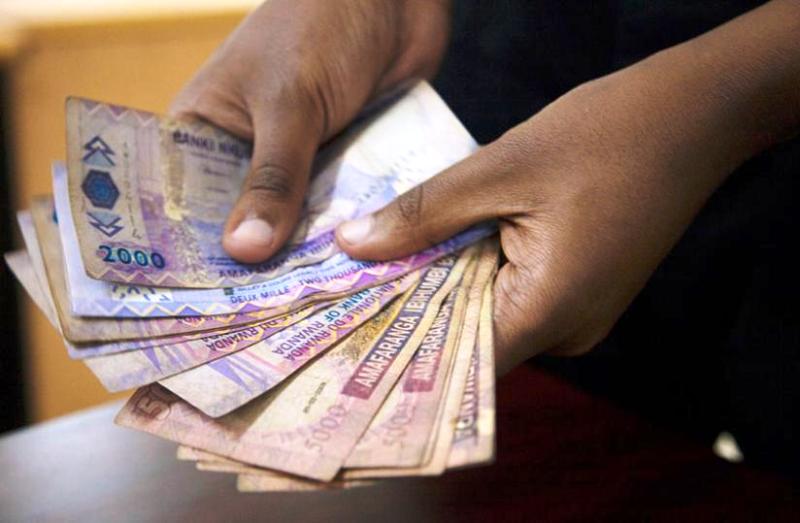
    The chili pepper belonging to CCE Farms received Rwf 2 million; David Ntihinduka the founder of a photo studio received Rwf 1 million while SalutemTech Ltd walked away with Rwf 500,000.

    Selected winners are followers of I&M Bank social media platform who pitched their projects on Twitter using the hashtag #IMPushToStart attracting a large number of likes and retweets.

    The three awardees were selected among five projects presented to designated I&M committee.

    After receiving cheques yesterday at the headquarters of I&M Bank, beneficiaries pledged to expand their projects.

    Candide Ushorewenimana, one of the founders of CCE Farms growing chili pepper in Musenyi of Bugesera district revealed that the money will be utilized to invest in the establishment of an excellent horticulture center.

    “We plan to use the award to build a small plant enabling expansion of our activities. We started trading but we have found the need to plant chili pepper to satisfy the market because we previously supplied only a ton collected from different markets to the National Agricultural Export Board (NAEB) in a week,” she said.

    CCE Farms has 4 permanent and 20 temporary employees.

    David Ntihinduka from Gatsibo district, the winner of Rwf 1 million from his Holy Movie Studio said the money will enable him to buy a decent camera, a printer and other equipment to be used in his business.

    The Managing Director of I&M Bank in Rwanda, Robin Bairstow said the number of university graduates surpasses available jobs which compelled the bank to support small and medium projects.

    He lauded awarded projects promising transformations among Rwandans and promised them support to acquire loans through Business Development Fund (BDF).

    “We will help you in whatever way in relation to banking services. We facilitate access to guarantee which is an obstacle to many. I am here as your adviser when you require,” said Robin Bairstow.

    Awardees become an ambassador of the bank in their areas of operation. I&M Bank will visit beneficiaries in six months to assess the implementation of their projects.

    The campaign also awarded Christian Turimumahoro with Rwf 100,000 as I&M Super Saver and recognized Edmund Kagire for his impressive message on the Celebration of International Women’s Day.

    The campaign saw the number of I&M Bank Rwanda social media platforms followers rising to 1845 from 1444 on Facebook; to 2027 from 1854 on Twitter and rose to 315 from 218 on Instagram within 30 days.

    I&M Bank Rwanda has awarded three excellent small projects selected through its social media campaign dubbed #IMPushToStart held in March 2019
    David Ntihinduka, Founder of a photo studio, received Rwf1 Million. After receiving his cheque, he pledged to expand his project
    Candide Ushorewenimana, one of the founders of CCE Farms, was awarded Rwf2 Million for her project
    The Managing Director of I&M Bank in Rwanda, Robin Bairstow lauded awarded projects promising transformations among Rwandans
    The Communications Specialist at I&M Bank Rwanda, Fiona Kamikazi Rutagengwa
  • Israel Embassy in Kigali: What to expect from Rwanda-Israel relations

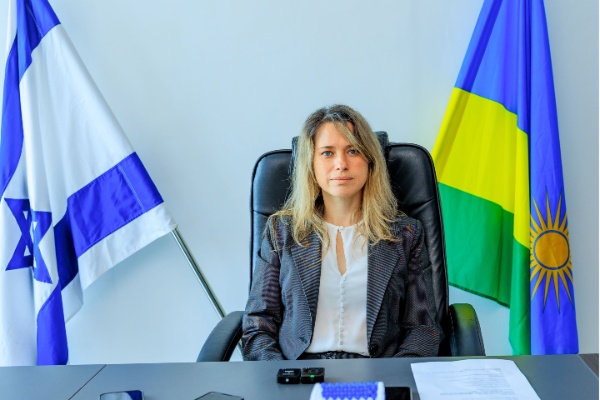
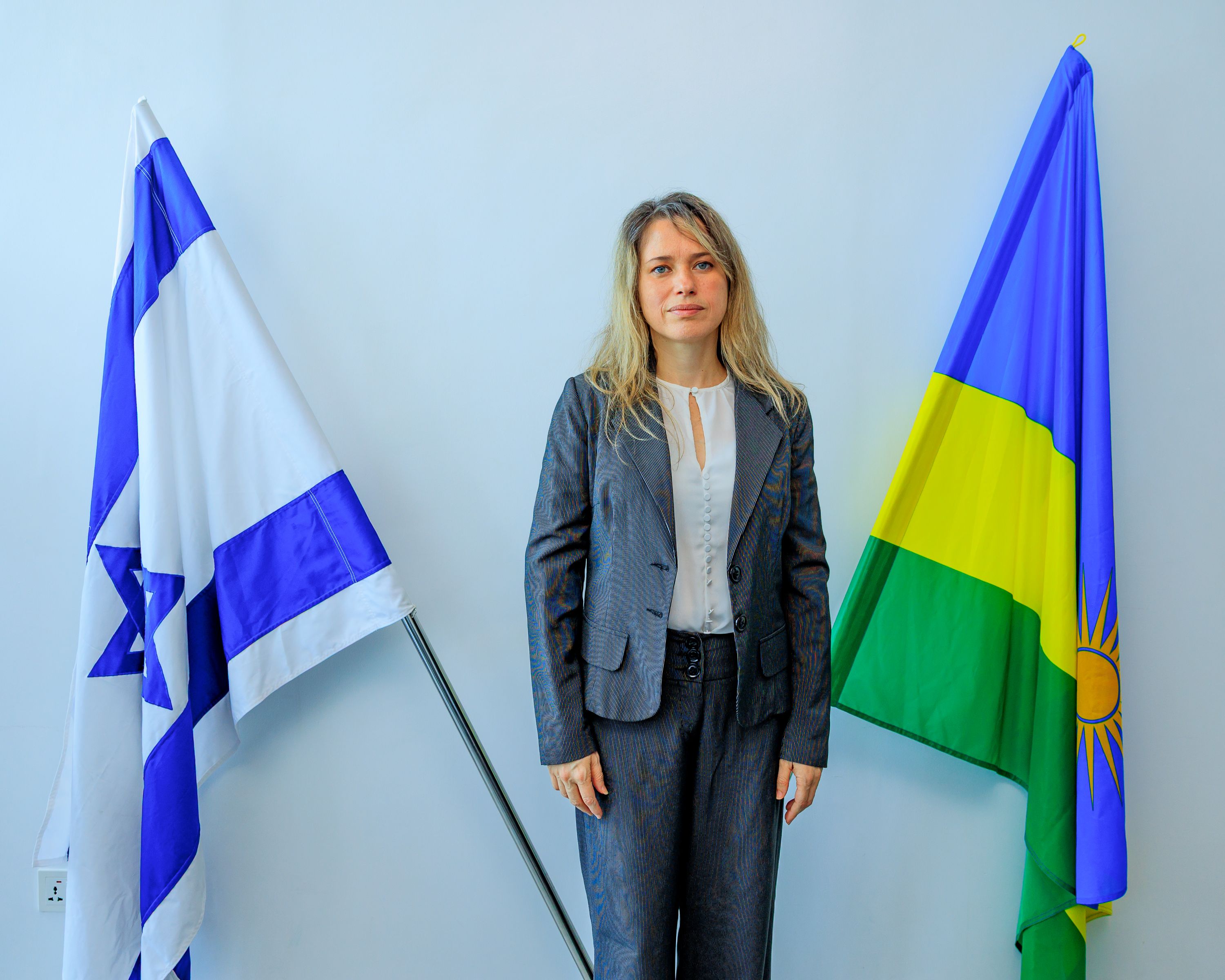
    Israeli Ambassador to Rwanda, Raphael Morav was previously based in Ethiopia. It is the first time the envoy of Israel gets an office in Kigali over the past 50 years ago.

    The move reflects unwavering diplomatic relationships expected to open doors for cooperation in the development of different including but not limited to agriculture, technology and tourism.

    In an exclusive interview with IGIHE, Director General of the Ministry of Foreign Affairs of Israel, Amb. Yuval Rotem said that opening the embassy in Kigali highlights the thirst to scale up relations.

    “This step mainly focuses on strength and benefits between both countries. I think you will see relationships improving more as both heads of states president Paul Kagame and Israeli Prime Minister Benjamin Netanyahu share similar economic and political ambitions,” he said.

    Rwanda and Israel share common history as countries which experienced tragic history during the 1994 Genocide against Tutsi and Holocaust targeting Jews in the 2nd World War. From these scars, emerged courage and strength to work hard during the resilience process.

    “The fact that we were able to overcome hard times, choosing not to sink into sorrow but building strength and self-reliance is shared between both countries. We can root on it to build trust and spread a message of hope to many countries across the globe,” he said.

    Rwanda, Israel relations date back in 1962 when the country obtained independence. In 2014, Rwanda became the first African country signing cooperation agreements with Israel and later in 2015 opened embassy headquartered in Tel Aviv.

    Israel worked with Rwanda as a bridge to expand again ‘our community in Africa’ enabling to open an embassy which had last existed in 1973.

    “Everyone coming here, investors you see, officials from the ministry always talk about Rwanda differently. It took time but we are going to concert much effort to catch up lost time. Indeed, having an embassy here signifies a lot to this relationship,” he observed.

    The opening of the Israel embassy coincided with the opening of Rwanda – Israel Horticulture Centre of Excellence, based in Mulindi which is expected to help Rwandans widen their knowledge in horticulture.

    “The centre will promote agriculture in the country,” he said.

    Both countries expect to launch cooperation in technology, aligning with the country’s goal to become an innovation hub in the region.

    “Talking on areas of biodiversity, science, innovation and jobs creation, you can’t find good friends beyond Rwanda and Israel. I think we are prepared in this area. When you want to improve the economy, you expand from agriculture projects to technology. And I think we have that in common, ” he said.

    The future projects include exchanging flights through national carriers.

    “Measuring the extent of cooperation is assessing the implementation of direct flights between both countries. I know Rwanda is willing to use RwandAir in Kigali-Tel Aviv flights and will go into effect in the near future,” he said.

    He explained that such cooperation will boost tourism, trade and joint investment.

  • Parents seek Kagame’s intervention in admission of former Gitwe students to UR

    The two departments were closed by the Ministry of Education in January this year following the school’s failure to meet education standards instituted by Higher Education Council (HEC).

    After the suspension, students and officials from HEC held a meeting during which was agreed that affected students will be transferred to other schools.

    It was agreed that students in Medicine and Surgery would continue studies at the University of Rwanda (UR) while Medical Laboratory Technology would continue studies at UR, INES Ruhengeri, Kibogora Polytechnic and Catholic University of Rwanda.

    A twitter user claiming to be a parent whose child studied at Gitwe wrote a message in which he tagged President Kagame requesting for intervention.

    “Our children halted studies following the suspension of Medicine courses at Gitwe University. Concerned officials promised them transfer to the University of Rwanda but it is not yet done. We solicit your help, father of the nation so that our children can return to school,” he said.

    The University of Rwanda has via twitter revealed that it is trying by all means to find places and didactic materials.

    “UR is doing everything possible to receive Gitwe students based on their field of studies and performance to establish in which year everyone will be integrated and courses to be revised,” mentioned the tweet.

    “We are also working with partners to identify requirements to teach students like lecturers, laboratories and hospitals in which they will conduct internships among others,” adds the tweet.

    The Ministry of Education has also unveiled that it is following up the matter in partnership with concerned parties.

    The Deputy Vice-Chancellor of the University of Rwanda (UR) in charge of institutional advancement, Dr Charles Murigande said some students in year 4 and 5 didn’t study all necessary modules that they will be obliged to attend courses in previous years or have the case handled as an exception.

    “To be promoted to the next level in the medical department at UR, it is required to have passed every module with marks not below 60% while at Gitwe a student is required to have scored not below 50%. This is another problem we have to solve,” he said noting that it needs much vigilance to confirm admission for these students.

    “We would have admitted them, had they been students in history or literature. They are however studying medicine. We have to be assured that they will have adequate skills to attend to patients when they graduate,” said Murigande.

    The representative of students in medical department at Gitwe Amiel Nzayisenga has told IGIHE that they submitted all required documents to the University of Rwanda and asked to wait.

    Nzayisenga said they were promised to attend missed modules to cover the gap before 2019/2020 academic year begins.

    He however said that their colleagues in laboratory technology resumed studies one week after suspension. According to sources from the University of Rwanda, admission of students from Gitwe will double the existing number of students in medicine.

  • President Kagame in Senegal to attend the swearing-in of President Macky Sall

    He was re-elected on 24th February 2019 with 58% beating four contestants including Idrissa Seck former Prime Minister who obtained 21%.

    19 heads of states , three prime ministers and 53 envoys are expected to attend the swearing-in ceremony of Sall scheduled on 2nd April.

    The tenure will be short compared to the duration he served as he was elected president for the first time in 2012.

    The 2016 referendum in the country came up with consensus to reduce presidential term limit from seven to five years. It is one of reforms he had promised citizens during his first presidential campaigns.

    Macky Sall is one of African countries supporting ambitions of President Paul Kagame on national and continental level.

    He was also present during the swearing-in of President Paul Kagame on 18th August 2017 at Stade Amahoro in Remera.

  • Kwibuka25: Nine heads of states and governments expected in Kigali for the commemoration activities

    Confirmed guests include Belgium Prime Minister, Charles Michel; The General Governor of Canada, Julie Payette; Benin president, Patrice Talon; president Denis Sassou-Nguesso of Congo Brazzaville, Djibouti president , Ismaïl Omar Guelleh; Mali president , Ibrahim Boubacar Keïta, the president of Niger Mahamadou Issoufou and the president of Tchad, Idriss Déby Itno.

    Other guests expected in the commemoration include the Chairperson of the African Union Commission Moussa Faki Mahamat and the president of European Union Commission, Jean-Claude Juncker; Morocco Prime Minister, the speaker of Swiss parliament, the advisor of Egypt president, France MP Hervé Berville, Nigeria vice president , Senegalese and Tanzania foreign affairs ministers, the representative of the UN General Secretary and the Minister of Defense in Madagascar.

    Former heads of states including Olusegun Obasanjo of Nigeria, Benjamin Mkapa of Tanzania and Tony Blair among others will also be present.

    Nduhungirehe said that it is an opportunity to reinforce measures to seize and bring to court genocide fugitives though representatives’ countries don’t accommodate a large number of genocide perpetrators.

    He said that Rwandans should uphold strategies to fight against genocide ideology especially among drawing an emphasis on the youth.

  • Kagame participates in Umuganda at Nyanza Genocide Memorial

    He was joined by ministers for East African Community Affairs and other leaders from the community.

    President Kagame hailed citizens for participation in the community work highlighting that the main purpose is working together for the development of the nation.

    “When we work together, we achieve more and go beyond expectations. Wherever you will find people whether in East Africa, Uganda, Kenya, Burundi, Tanzania, South Sudan working for the development of their nation, join them,” he said.

    “We want to concert efforts and work together as Rwandans in East Africa and elsewhere on this continent. We recognize the benefits of integration and working together. These are values we want,” added Kagame.

    President Kagame encouraged citizens to keep working together to fast track desired progress.

  • Fugitive Protais Mitali appears in public

    The talks attracted people from different walks including Rwandans in Belgium and its neighborhoods. Among the panelists, were the Executive Secretary of the National Commission for the Fight Against Genocide (CNLG), Dr Jean Damascène Bizimana and Rwanda’s Ambassador to Belgium, Amandin Rugira.

    Mitali was among participants in back seats and held discussions with others after attending talks.

    He was reported by his political party in 2015, PL to have misappropriated Rwf 50 million.

    At the time, the Ministry of Foreign Affairs requested Mitali to fix issues with his political party but the suspect fled the country. Following his fleeing, Interpol issued an arrest warrant on account of allegations of misuse and misallocation of his political party’s funds.

    Recently on 19th March, Rwanda’s Prosecutor, Jean Bosco Mutangana told IGIHE that the search for Mitali is underway to bring him to court.

    “We issued arrest warrants for alleged misallocation of funds from the political party he belonged to. He absconded his job and is being hunted by Interpol. No one is aware of where he is since 2015,” he said.

    The PL General Secretary, Odette Nyiramilimo has told IGIHE that they tried to recover the party’s finances through disposing off his property but efforts were futile because Mitali sold his possessions before he left.

  • We cannot afford to be left behind or be the ones to delay the rest of Africa-Kagame

    He made the appeal as he officially opened the Retreat of the Council of Ministers & Heads of Institutions of EAC at Kigali Convention Center.

    The retreat was meant to assess the achievements of the community of the past 20 years and discuss measures towards meeting its goals.
    A similar retreat was held in 2009 when Rwanda was chairing EAC.

    President Kagame highlighted that telling each other the truth and seeking solutions together for problems will enable the implementation of integration goals.

    “We urgently need to get our house in order. Both in terms of ownership which include paying respective dues as well as enhancing transparency and accountability in the management of the institution. This is the only way to maintain integrity internally as well as credibility with our citizens and partner institutions. It will be very difficult to achieve even the more simple goals we have set if we don’t get this right,” he said.

    He called for elimination of obstacles blocking the implementation of set projects.

    “ We have to urgently unblock obstacles in going and non-going projects and to allow ourselves to finish the good work we have started together. Many of these require a little more than political will. Even small triumphs generate so much goodwill and increase trust of our people in the East Africa Community. So why deprive ourselves of success we need and that is within our reach?” he wondered.

  • Rwanda-Uganda Relations: An Informed Analysis

    I have read extensively lots of views by various commentators on the above rather important and serious issue with interest and discernment as a party that claim informed understanding of issues that have characterised Rwanda-Uganda relations since 1997.

    Issues as will be argued later that will need be addressed by Ugandan political elite instead of window dressing these which only serves to postpone the solutions at the expense of socio-economic welfare of two sister countries and a people that are bonded by historical underpins, blood relations, and location that defines their fate and thus destiny for generations to come.

    This bond cannot be discounted, underwritten, nor demeaned by political machinations for this is very expensive to both countries and should thus be avoided and ironed out as and when these arises.

    {{Trended!
    }}

    Destabilization of Rwanda by Ugandan top political elite is as trended as it is ill intended strategy that in my opinion has only served to destroyed beyond repair the best ever strategic alliance that had immense economic as well as socio-political, benefits to both countries at least during the current Uganda’s political leadership.

    Thus, current support Ugandan leadership has extended to RNC that has publically agitated its intentions to remove a democratically elected government in Rwanda (a myopic elusion at its extreme at its worst) and confirmed by President Museveni’s meeting with its top diplomates Charlotte Mukankusi and Eugene Gasana on 1st March 2019 (no accidental meetings with Presidents that happen anywhere in the world) speaks volumes of Uganda’s intention to destabilize Rwanda, an intention that is not only a political daydream, but one that has served to collaborate other past ill motives against Rwandan government, and Rwandese in general.

    As will be argued later, mobilization of FDRL a genocidal out fit in DRC Congo against Rwanda has left many Rwandese dumbfounded with regard to intentions of Ugandan ruling elite, given that this terrorist outfit claimed the lived of over one million of our compatriots in 1994, has left an indelible scar on our conscious as a country and a people that any one, party or country that supports or is even sympathetic with it earns eternal wrath of Rwandans.

    However, support of destabilizing forces by Uganda’s ruling elite is not a new phenomenon. What is new though is the form as well substance this support has taken over late. Thus, as way back as 1997/98 support for such negative elements by Uganda, as Major Furuma, Sebarenzi, Sendashonga etc is irrefutable.

    Issuing of Ugandan passports to FDRL bigwig of Murwanashayaka, Hyacinth Rafiki, and Wallace Nsengiyunva in 2006 to travel to Europe to conduct their subversive activities against Rwanda shocked many in Rwanda then, but no more.

    Facilitation by Uganda given to late Karegeya in 2007 and then to Kayumba Nyamwasa in 2010 when they were going into self-exile is in the know of Rwandans and is trended to earlier subversive activities by Ugandan political elite. As will be pointed out later, some of these so called ‘’dissidents’’ had the blessings of, and are in fact a machination of Ugandan ruling elite in their ill-conceived strategic project of destabilising Rwanda, that has fortunately not succeeded nor ever will, for any such move is known before it is implemented.

    And the headache with the Ugandan ruling elite is why Rwandans get to know of such destabilization in real time, instead of the same being bothered as to why this should be done to a potential allay and a sister country. Reasons behind this unfortunate trend will be highlighted in subsequent articles.

    {{Unprecedented
    }}

    Nonetheless, this trend has reached unprecedented scale of late with dire consequences to the relationship between Rwanda and Uganda. Ugandan political elite have arranged and or organize destabilizing forces RNC, FDRL etc into the so called P5 located in DRC so as to destabilize Rwanda, a project that is dead in the water for Rwanda has more than capacity to deal with these elements despite what Ugandan political elite would have been told to the contrary by their RNC allies of evil.

    As pointed out earlier, that Uganda can mobilize FDRL with their genocide ideologue of extermination of Tutsis in Rwanda, an ideologue akin to that ISIS is beyond comprehension whatever differences there may be between Rwanda and Uganda. A country can win a war against rag tag fighters, but not a well-entrenched ideologue.

    That any country least Uganda which should understand this better can support this group (s) has baffled many Rwandans. Thus, LaForge Fils Bazeye who was the Spokesperson of FDLR and Lt Col Theophile Abega, who was FDLR Head of Intelligence, were arrested by the Army of the Democratic Republic of Congo at the end of last year.

    They were arrested at Bunagana Border on their way from Kampala on 15th December, 2018 from where they had held talks aimed at destabilizing Rwanda’s security. These genocidal elements carried with them lots of information on mobilization of these and others against the government of Rwanda.

    Rwanda has all this information. This is true to the information of activities of RNC renegades whom have accepted to join hands with FDRL at insistence of Uganda. That these developments have been collaborated by The UN Group of Experts Report published on 31 December last year is only the latest factual indictment of the Museveni regime for its anti-Rwanda activities.

    The report details Uganda as a recruitment hub for groups that have declared war on Rwanda’s legitimate government. Denying this by Ugandan ruling elite or even by President Museveni himself “There is no question of Uganda supporting anti-Rwanda elements.” … does not and cannot negate the enormity of this unprecedented situation and on the contrary reinforces its magnitude and consequences.

    {{Obote II antics
    }}

    The above has led to arrests, detention, and torture of over 800 of innocent Rwandan civilians by Uganda operatives of Uganda’s Chieftaincy of Military Intelligence (CMI) and other Ugandan intelligence services akin to what happened to Rwandese in Uganda some of which were Ugandans by all definitions but were labeled Museveni supporters and spies by Obote II regime, and they were to pay a high price including under documented murders.

    Some of us who lived in Uganda at that time have indelible memories of the same. And although this mobilized young Rwandese fighters to join NRA (National Resistance Army now UPDF) in large numbers and as will be argued later contributed fundamentally to President Museveni eventually rise to power in 1985, no Rwandese would have imagined least or expected that this would happen under President Museveni’s regime, a regime that was supposed to stop Obote II torture and murder of real and imaginary “enemies’ of his regime.

    That this can now happen under the same President to whom these Rwandese were accused of supporting have left many Rwandese perplexed. Worse still this is done with, and in cohort with RNC renegades who identify innocent Rwandese for arrest by Ugandan intelligence tells it all. An alliance with a ‘’rebel’’ force for intelligence gathering on a neighbouring country is a situation so bizarre and with far reaching consequences.

    Testimonies, and evidence of this heinous crime against Rwandese in Uganda abound despite the fact that Ugandans living in Rwanda live in peace and harmony alongside their Rwandese brothers and sisters which is expected for we are bound by fate and destiny that no political system can undo by any means or did whatsoever.

    {To be continued.
    }