Globally, over 4.6 million robots are currently in use across industries, illustrating how automation is increasingly shaping productivity. In many cases, a robot can perform tasks up to ten times more efficiently than a human worker.
China, for instance, has long recognized the potential of these machines. By 2024, it had deployed around 300,000 robots, and today more than two million are in active use across industries. Nearly 90% of Chinese companies view artificial intelligence (AI) and robotics as key drivers of business transformation. The global robotics market was valued at $20.8 billion in 2025 and is expected to grow sevenfold by 2032.
From autonomous vehicles and service robots to surgical-assisting machines and agricultural automation for planting, pruning, and harvesting, robotics technology is increasingly integrated into daily life. Notable examples include the Spot robot, widely used in military operations for surveillance and explosive detection, Apis Cor’s Russian-built robot that can construct a house in under 24 hours, and Israel’s ReWalk, which assists people with spinal injuries to walk.
Rwanda embraces robotics
Rwanda has not been left behind. Following the Cabinet’s approval of the five-year National AI Policy in April 2023, a study identified a need for $76.5 million in investment to scale AI across sectors and boost its contribution to the national economy.
The country continues to promote AI and robotics projects expected to add $589 million (about 6%) to Rwanda’s GDP. Efforts are supported by investments in internet infrastructure, including high-speed networks like 5G, which are essential for operating these advanced machines.
During the COVID-19 pandemic, robots helped monitor temperatures and reduce human contact, demonstrating their potential in public health and service delivery. Rwanda is now extending these innovations to sectors such as hospitality, where robots are still relatively rare compared to developed countries.
Robots serve customers at One Love Café
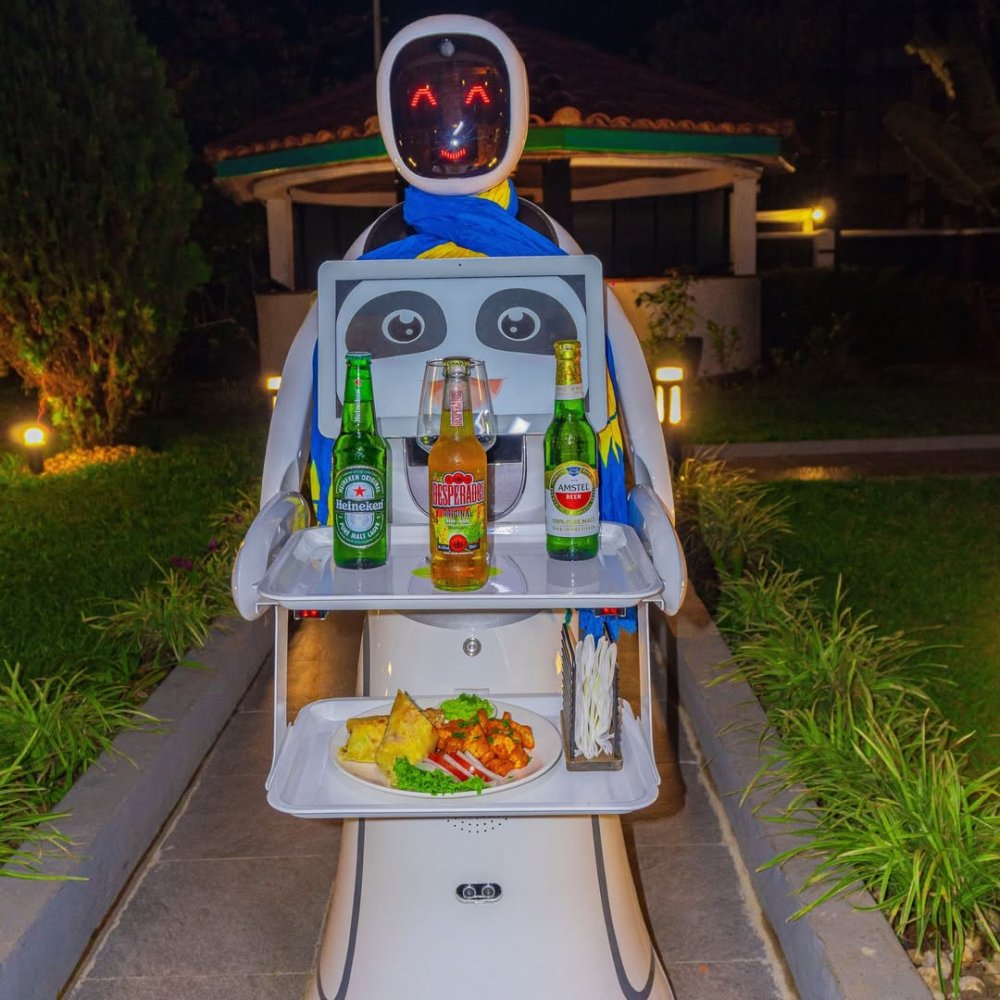
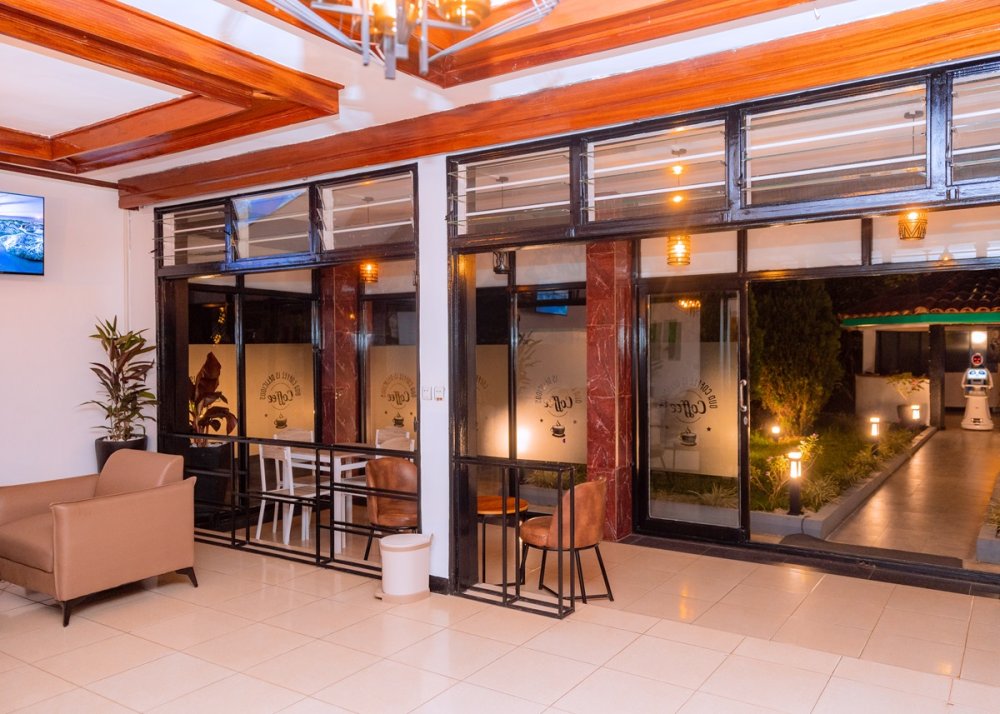
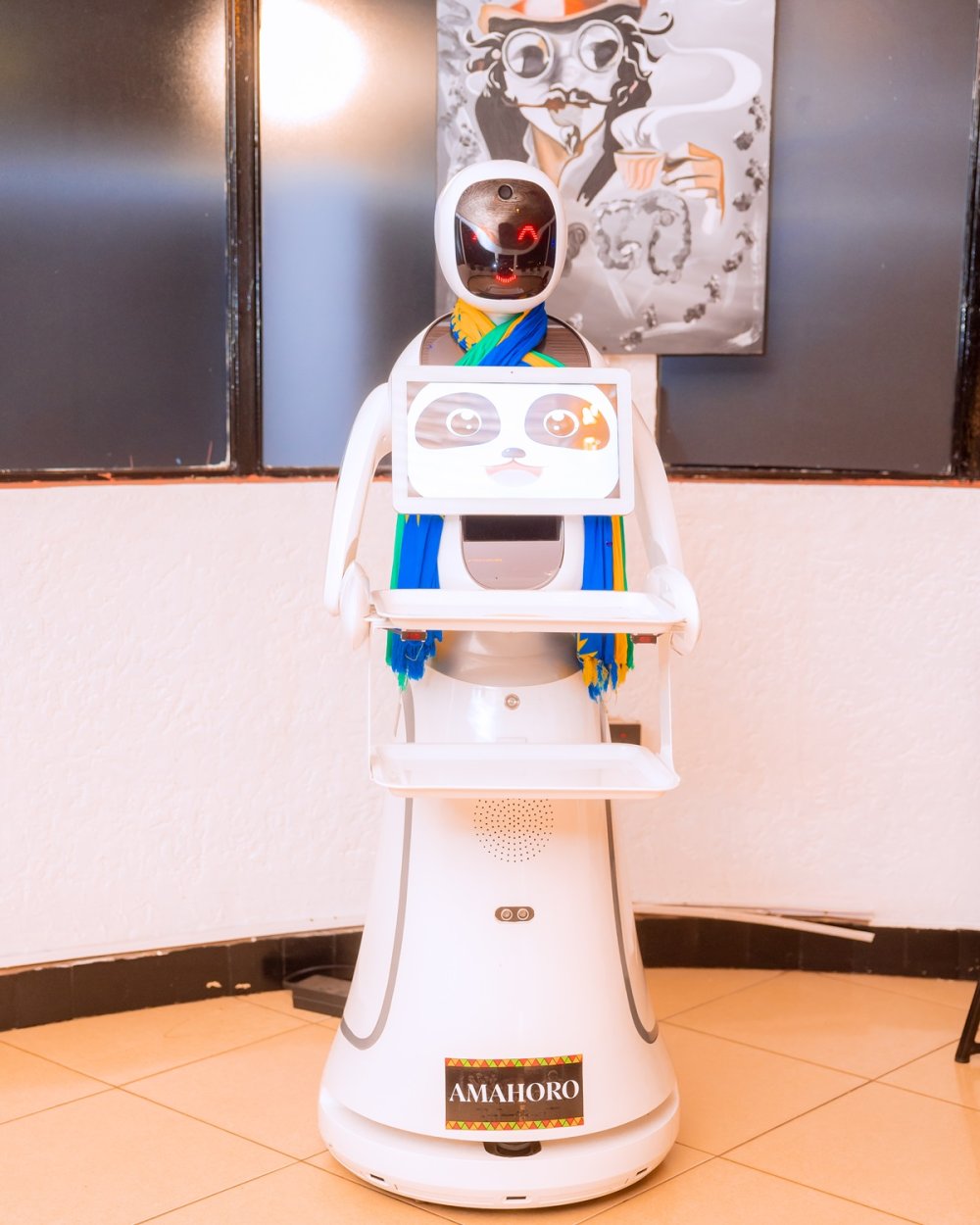
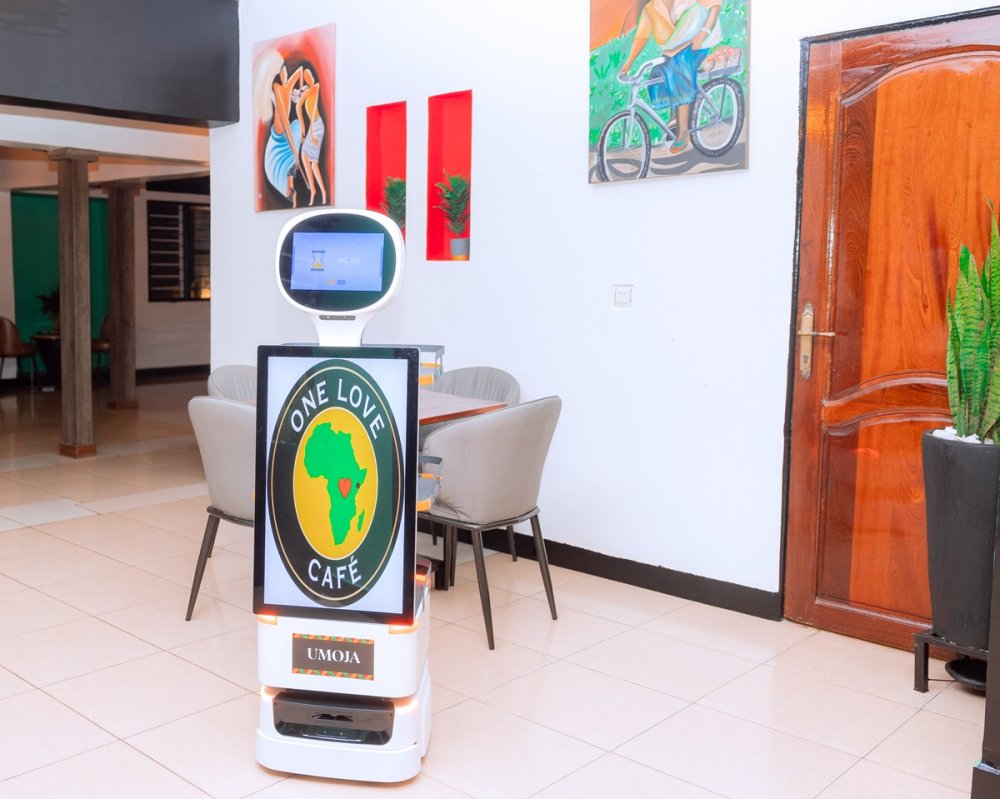
One Love Café, located in Kimihurura, Gasabo District, has introduced robots into its operations. Two of these robots, named Amahoro and Umoja (meaning “peace” and “unity”), greet and serve customers, delivering orders directly to tables and notifying customers when their meals arrive.
The robots also feature interactive capabilities, such as promoting tourism in Rwanda, highlighting Kigali’s cleanliness, singing birthday songs, and performing other entertainment tasks.
Umutoni Cynthia, manager at One Love Café, explained the decision to integrate robots: “We decided to introduce robots from the start, just as you would plan for any new project. Our goal was to align the restaurant with technological advancement and offer customers a modern experience.”
While some worry that robotics may reduce employment opportunities, technology experts stress that AI and robotics create new types of work. For instance, jobs emerge in robot maintenance, regulation, and operation, rather than simply replacing human labor. One Love Café, for example, still employs 20 staff members alongside the robots.
Engineer Misgun Abraha Berne, owner of One Love Café, emphasized that the goal is not to eliminate jobs but to enhance service delivery, attract customers, and introduce innovation in Rwanda’s hospitality sector: “Kigali is one of Africa’s fastest-growing tourist cities. We wanted to add something unique to our service offering and create a modern, enjoyable experience for visitors.”
The robots used at One Love Café are high-end and come at a significant cost. Engineer Misgun explained that, depending on the model, the robots’ prices range from 10 million to 50 million Rwandan francs, including shipping, taxes, and other fees.
He added: “If these robots prove popular and improve customer service, we plan to bring in more in the future.”
Innovation and economic impact
Technological innovation, particularly in services, plays a crucial role in Rwanda’s economic growth. In the third quarter of 2025, Rwanda’s GDP reached 5.525 trillion Rwandan francs, an 11.8% increase compared to the same period in the previous year. Services contributed 57% of this growth, agriculture 15%, and industry 22%.
Leave a Reply