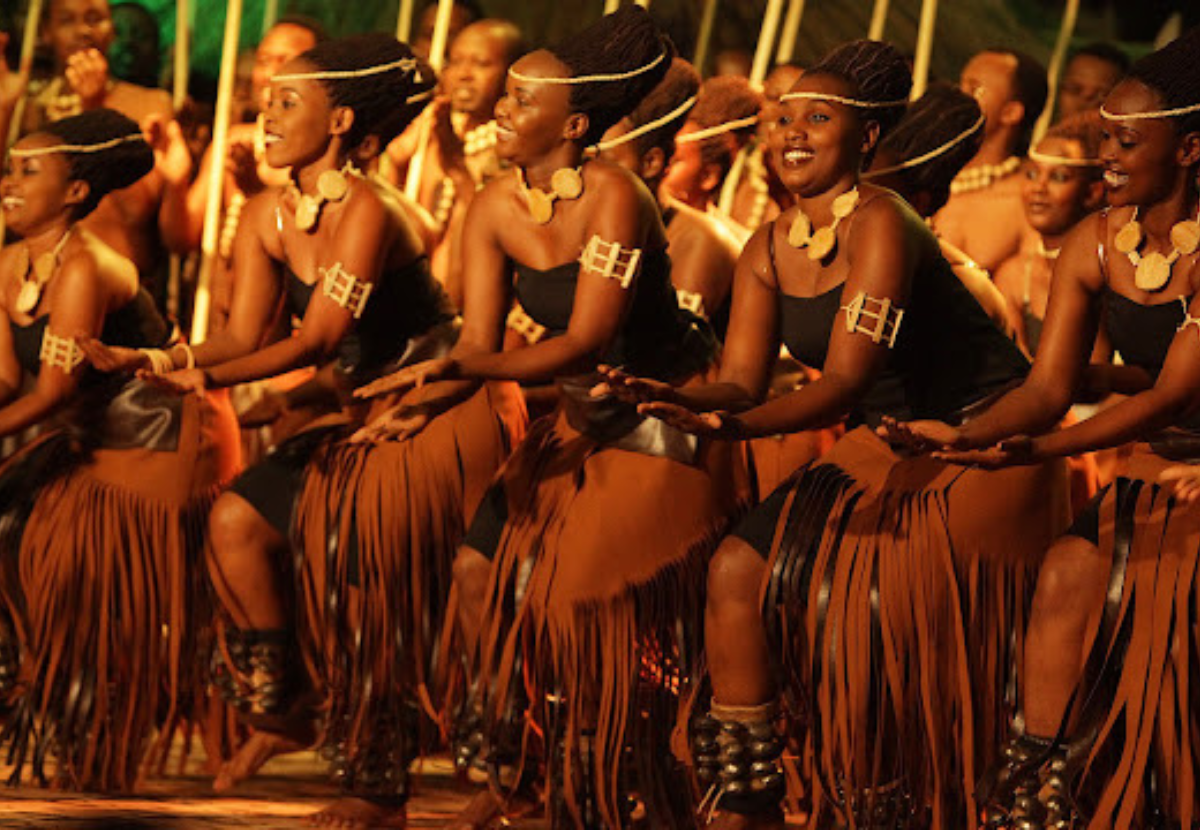
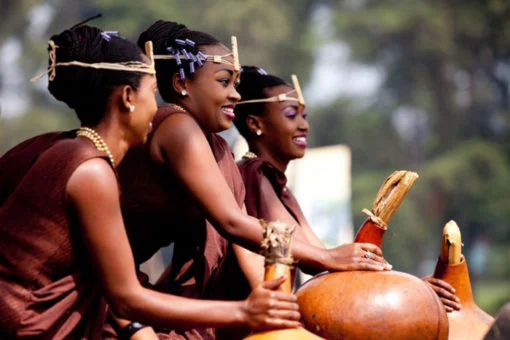
Rooted deeply in Rwanda’s social fabric, each dance tells a story and plays a vital role in marking important events, ceremonies, and festivals.
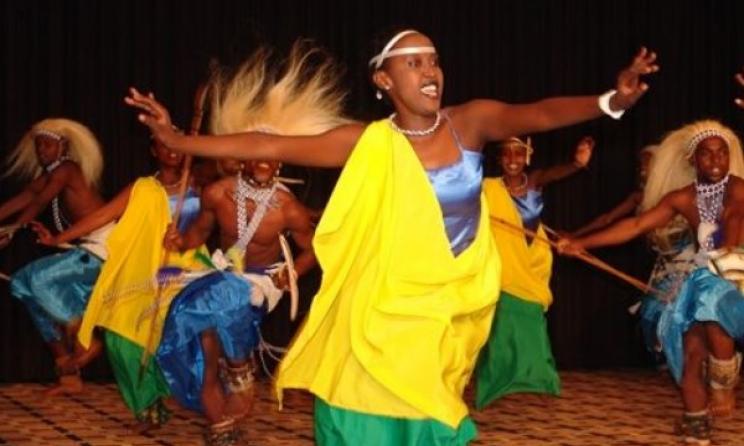
One of the most iconic forms of Rwandan traditional dance is the Intore dance, often referred to as the “dance of the warriors.”
This dynamic and energetic performance was originally performed to honor kings and to celebrate Rwanda’s bravery and valor during times of conflict. The dancers, adorned in elaborate attire, including leopard skins, reflect the courage and strength of the nation’s ancestors.
Their powerful, rhythmic movements and high jumps symbolize the spirit of resilience, and their footwork mimics the precision of warriors preparing for battle.
The dance is accompanied by traditional drumming, which provides a deep, resonating rhythm that enhances the intensity of the performance.
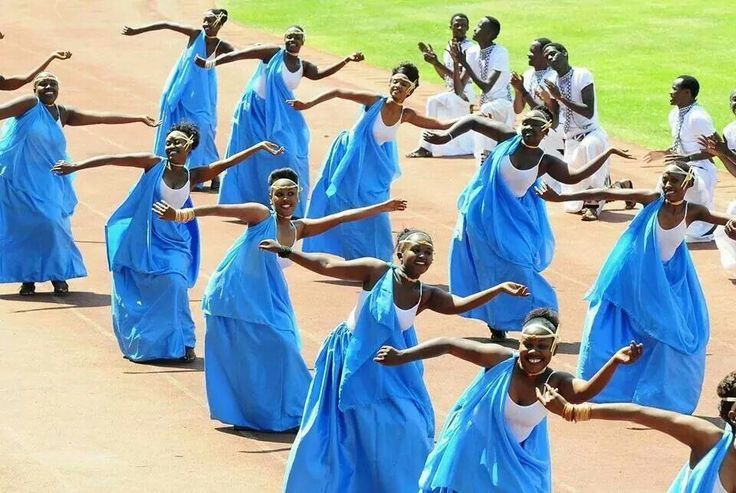
Another important dance is the Ubwuzuzanye, which emphasizes unity and togetherness. This dance is typically performed by a large group of people, often in community settings, to symbolize harmony and cooperation within Rwandan society.
It is characterized by synchronized movements and the collective energy of participants, who work in perfect harmony to perform complex steps and patterns.
This dance is a vivid reminder of the central role community and social bonds play in Rwandan life.
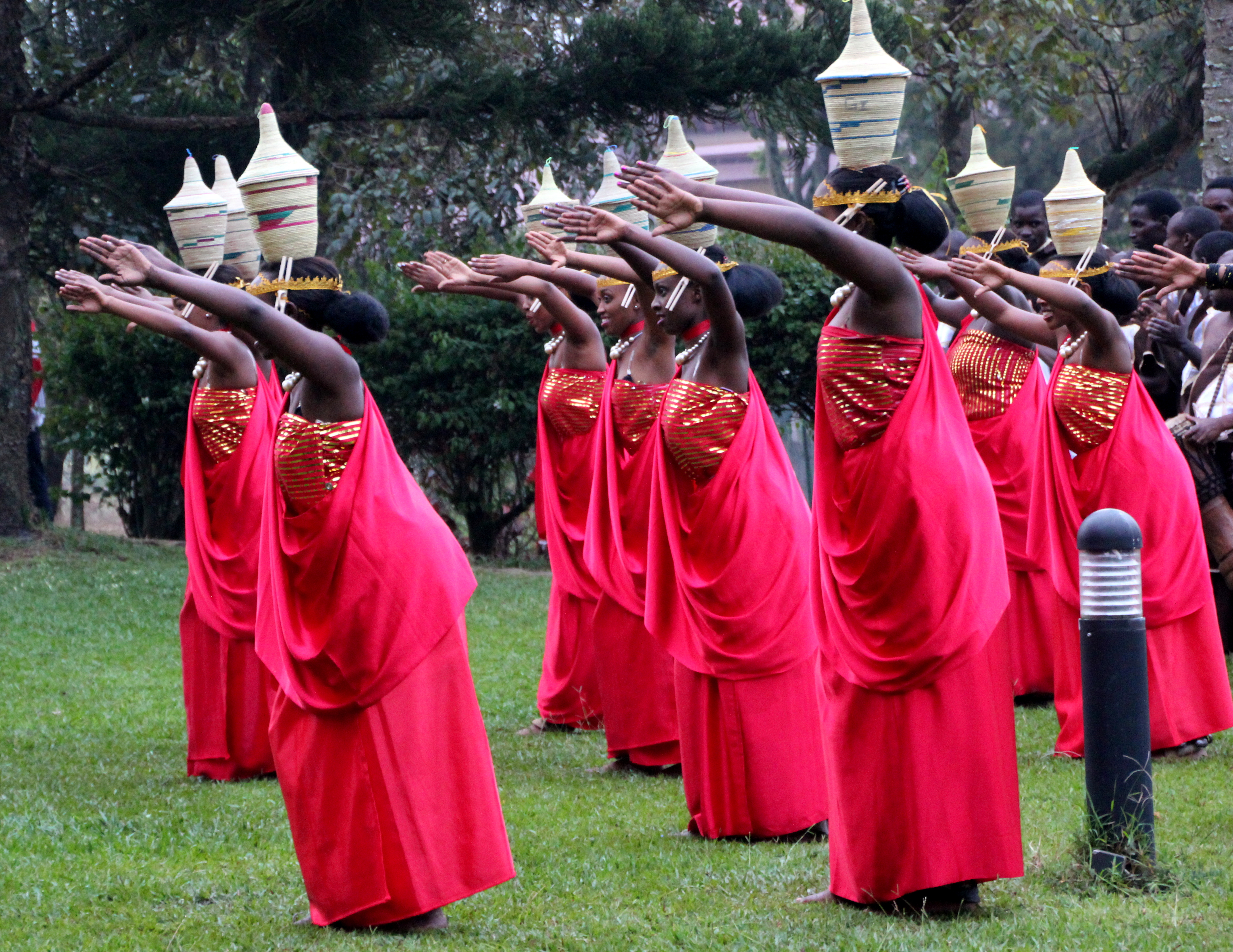
Umushagiriro, on the other hand, is a dance that has been practiced for centuries and is often performed during harvest celebrations or to mark agricultural achievements.
With graceful movements, the dancers sway their bodies to represent the joy and abundance that the harvest brings to Rwandan families. This traditional dance is closely linked to Rwanda’s agrarian roots and is a reminder of the country’s deep connection to the land and its rhythms.
Beyond their aesthetic beauty, these dances serve as community events, bringing people together to celebrate shared cultural heritage.
Today, they are an integral part of Rwandan festivals and ceremonies, including the Umuganura Festival.
These events are deeply significant, as they not only showcase traditional dance but also reinforce values of unity, respect for elders, and cultural pride.
The legacy of traditional dance in Rwanda extends beyond performance; it plays an important role in educating the younger generation about their cultural identity and history.
Schools across the country incorporate dance into their curriculum, ensuring that these traditional arts are preserved for future generations. Through these performances, Rwandans continue to honor their ancestors, celebrate their cultural identity, and foster a sense of pride and national unity.
In recent years, Rwandan traditional dance has gained international recognition, often featured at cultural events abroad to showcase the country’s rich cultural heritage.
The dance is not only a source of entertainment but also a powerful tool for cultural diplomacy, allowing the world to experience Rwanda’s vibrant traditions.
Leave a Reply