His story stands as a chilling reminder that the genocide was not a sudden eruption of violence, but a carefully engineered catastrophe.
To understand how Rwanda was pushed into the abyss, one must look at the two interlocking gears of the regime: the Akazu and Réseau Zéro.
Two main networks were “Akazu” and “Réseau Zéro.” Different but operating together like arms of a human body, one was a family circle while the other was a ruthless network; both pulling Rwanda into the tragedy.
The President, Mr Z, and the First Lady Agathe Kanziga at its center. Around her were family members, relatives from their home region of Bushiru in Gisenyi, Western Rwanda, and the first family’s loyalists. They controlled access to the President, resisted any reforms, and guarded their privilege fiercely.
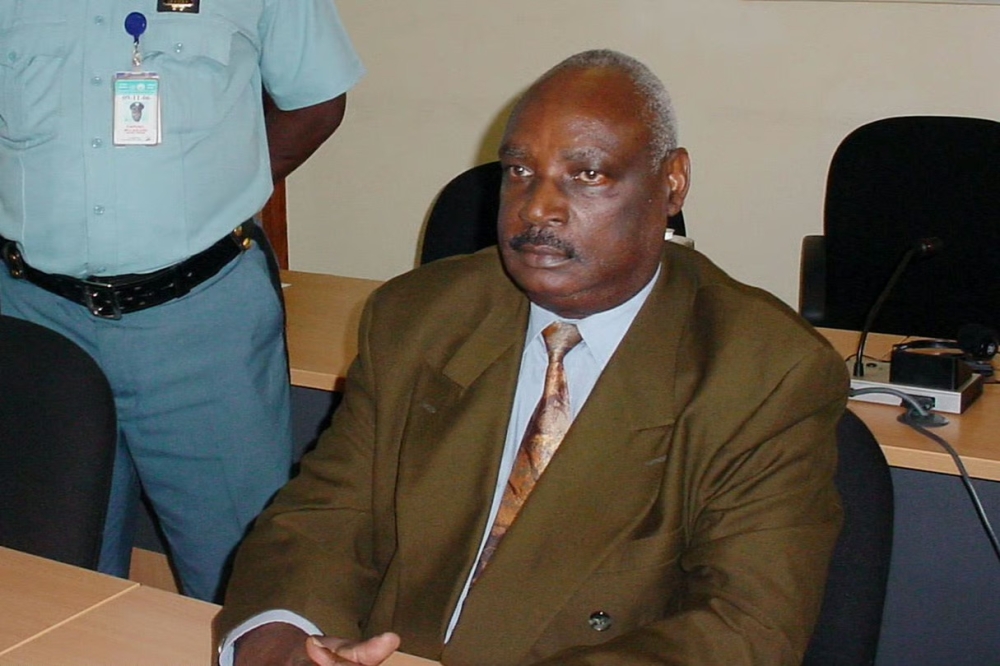
Akazu was not the worst devil, the circle stood something much darker: Réseau Zéro. Unlike Akazu, this wasn’t just about association or proximity to the president. It was a network of fear and violence, built and led by Zigiranyirazo. He was referred to as “Mr. Z” or “Zéro,” with people sometimes whispering the name, because pronouncing it openly was to invite trouble.
Zigiranyirazo began this satanic empire in 1975, when he became prefect of Ruhengeri. He used that position not just for administration but for paving the way for an evil system that would later spread through the army, the ruling MRND party, the intelligence services, and even the media. It grabbed land, crushed opponents, and targeted the Tutsi, especially the Bagogwe in Kinigi, who were chased from their homes in 1978 and later slaughtered in 1990-1994.
Réseau Zéro was the mafia, it sabotaged national projects, looted public resources, and silenced anyone who stood in its way. It infiltrated youth movements, pressured churches, and controlled universities. By the early 1990s, it had mastered the art of propaganda. Its most lethal tool was the infamous Radio Télévision Libre des Mille Collines (RTLM), which spread hate speech, encouraging the Hutu to kill their Tutsi neighbors.
It is easier to confuse Akazu with Réseau Zéro. And many writers called everything just “Akazu.” Zigiranyirazo was head of the network. Others, like Agathe Kanziga, Col Elie Sagatwa, and Séraphin Rwabukumba, connected both worlds.
Akazu was about guarding family power. Réseau Zéro was about building a machine to control, corrupt, and destroy in the name of Hutu Power. One gave political cover; the other carried out the dirty work. If Akazu was a car, Réseau Zéro was its engine.
Habyarimana faced pressure for power sharing in the early 1990s, the two evil powers closed ranks. Akazu resisted reforms, while Réseau Zéro spread fear, organized militias, and fueled divisions.
By April 1994, when Habyarimana’s plane was shot down as an excuse to carry out the long-planned genocide against the Tutsi, everything was already set in place. Akazu carried the will to cling to power. Réseau Zéro carried the tools to turn that will into mass violence. The two networks implemented the genocide that left over one million Tutsi killed in three months.
After the Genocide against the Tutsi, Zigiranyirazo was arrested and accused of organizing massacres. But even then, confusion remained. The story was reduced to Akazu, as if it was family privilege alone that led Rwanda into the tragedy.
The truth was that the genocide was not just the work of a family clique but also of a criminal network that operated under its protection.
Leave a Reply