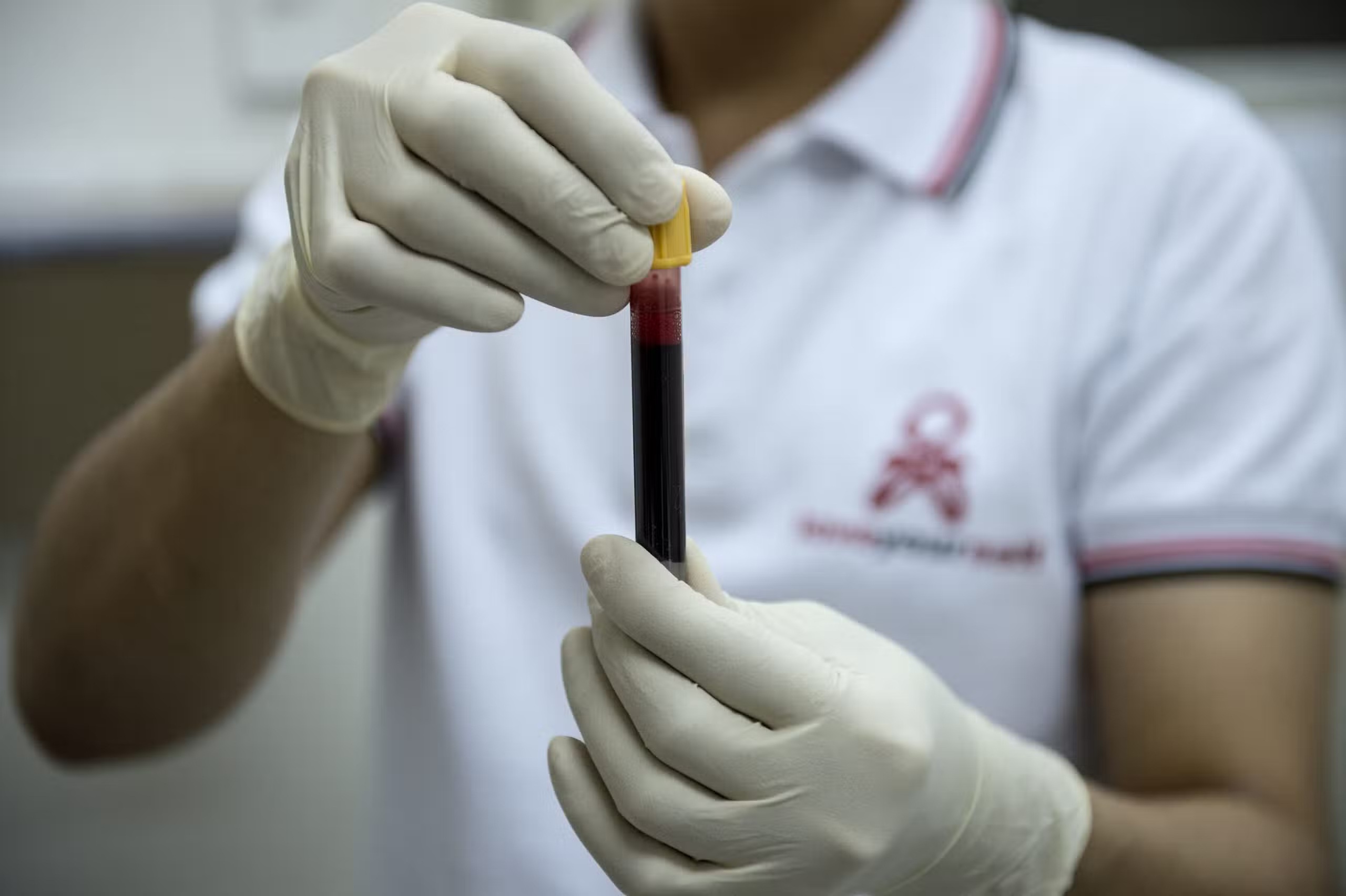
The 63-year-old, known as the “Oslo patient,” is now among roughly 10 people globally who have entered long-term remission from HIV following transplants initially intended to treat serious blood cancers.
The breakthrough hinged on a rare genetic mutation carried by the patient’s brother, which prevents HIV from entering human cells. The mutation affects the CCR5 gene and is found in only about one percent of people in northern Europe.
The patient had been living with HIV since 2006 before being diagnosed in 2017 with myelodysplastic syndrome, a life-threatening blood cancer. His doctors sought a donor who could help treat both conditions, but after failing to find a match, they opted for his elder brother.
In a remarkable twist, doctors only discovered on the day of the 2020 transplant that the brother carried the crucial mutation.
“We had no idea… That was amazing,” said Anders Eivind Myhre of Oslo University Hospital.
Two years after the transplant, the patient stopped taking antiretroviral therapy. Subsequent tests found no trace of HIV in his blood, gut, or bone marrow.
“For all practical purposes, we are quite certain that he is cured,” Myhre said.
The patient himself described the outcome as “like winning the lottery twice,” according to the researchers, whose findings were published in Nature Microbiology.
Doctors say the man is now in excellent health and has regained high energy levels.
While the case represents a significant scientific milestone, experts caution that the procedure itself is not a practical solution for most people living with HIV. Stem cell transplants are complex, high-risk, and typically reserved for patients with life-threatening cancers.
Still, researchers believe such rare cases are crucial to understanding how HIV can be eliminated from the body, potentially guiding future treatments.
Notably, the Oslo patient is the first known case of an HIV cure following a transplant from a family member.
According to Marius Troseid of the University of Oslo, the patient’s immune system was “completely replaced” by the donor’s—an outcome observed for the first time in both bone marrow and gut tissues of a cured patient.
The case also builds on earlier breakthroughs, including that of Timothy Ray Brown, the first person declared cured of HIV in 2008, as well as subsequent patients in cities such as London, New York, and Geneva.
Given his recovery, researchers suggest the man’s nickname may no longer apply.
“The Oslo patient is perhaps no longer a patient,” Troseid said. “At least he doesn’t feel like it.”
Leave a Reply