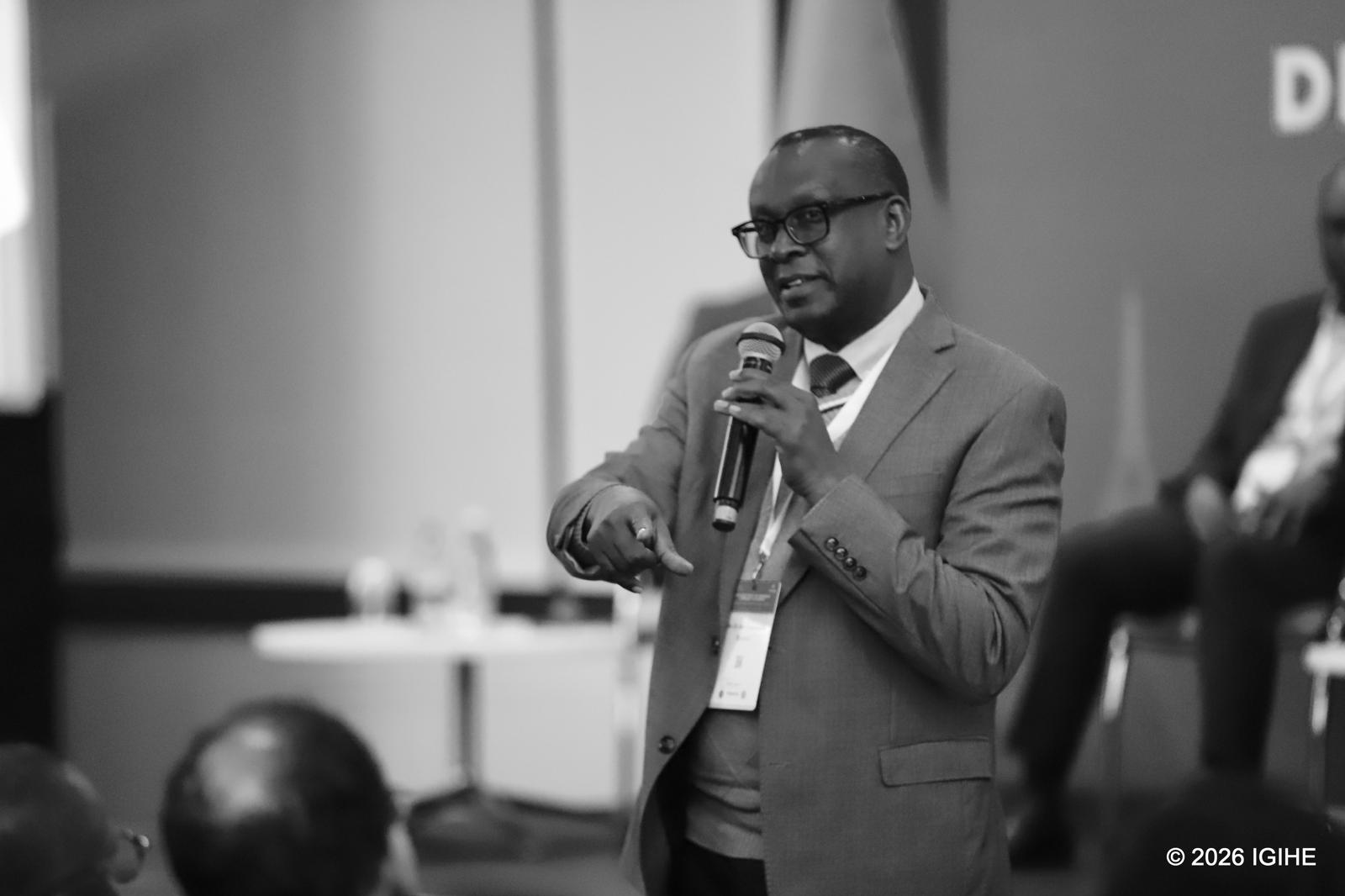
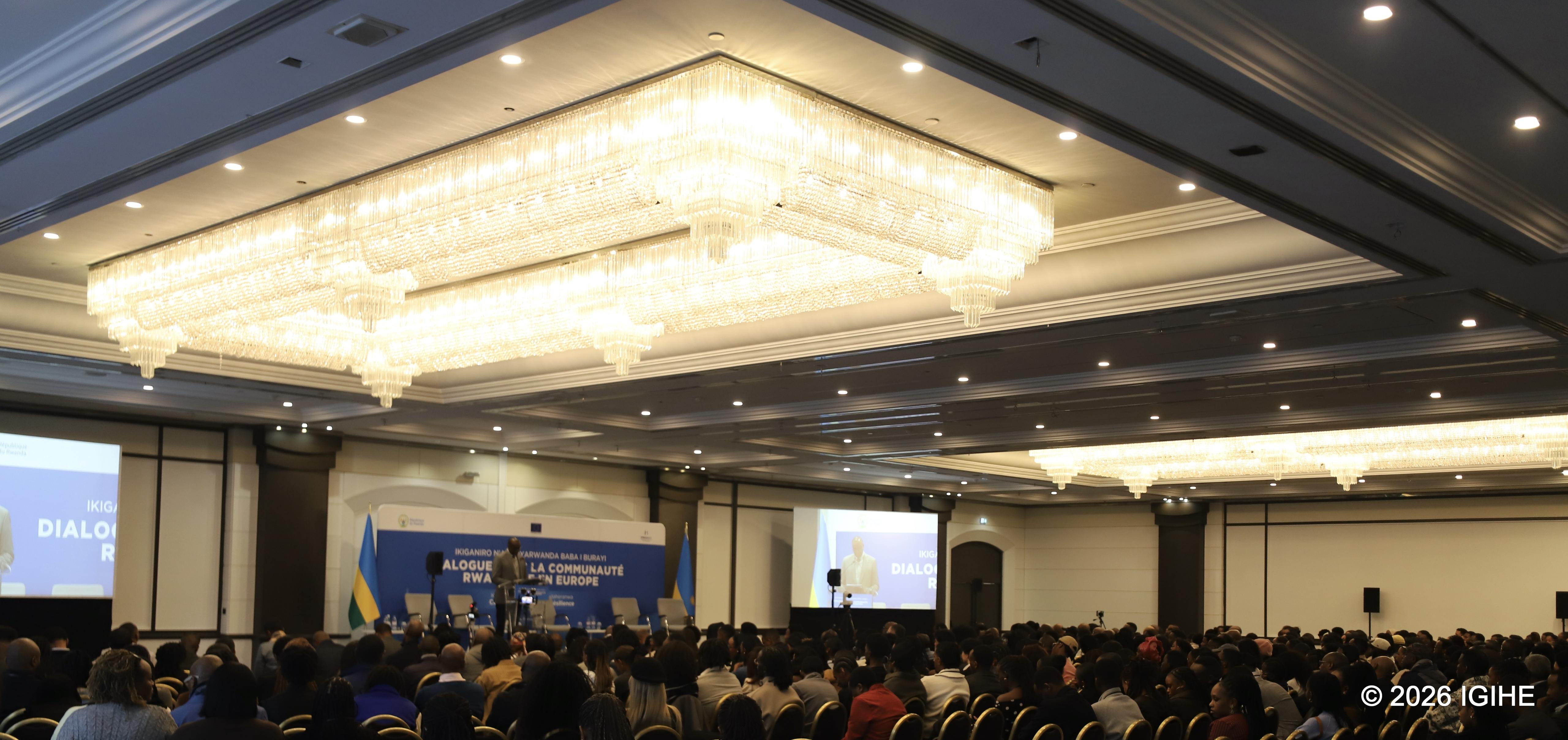
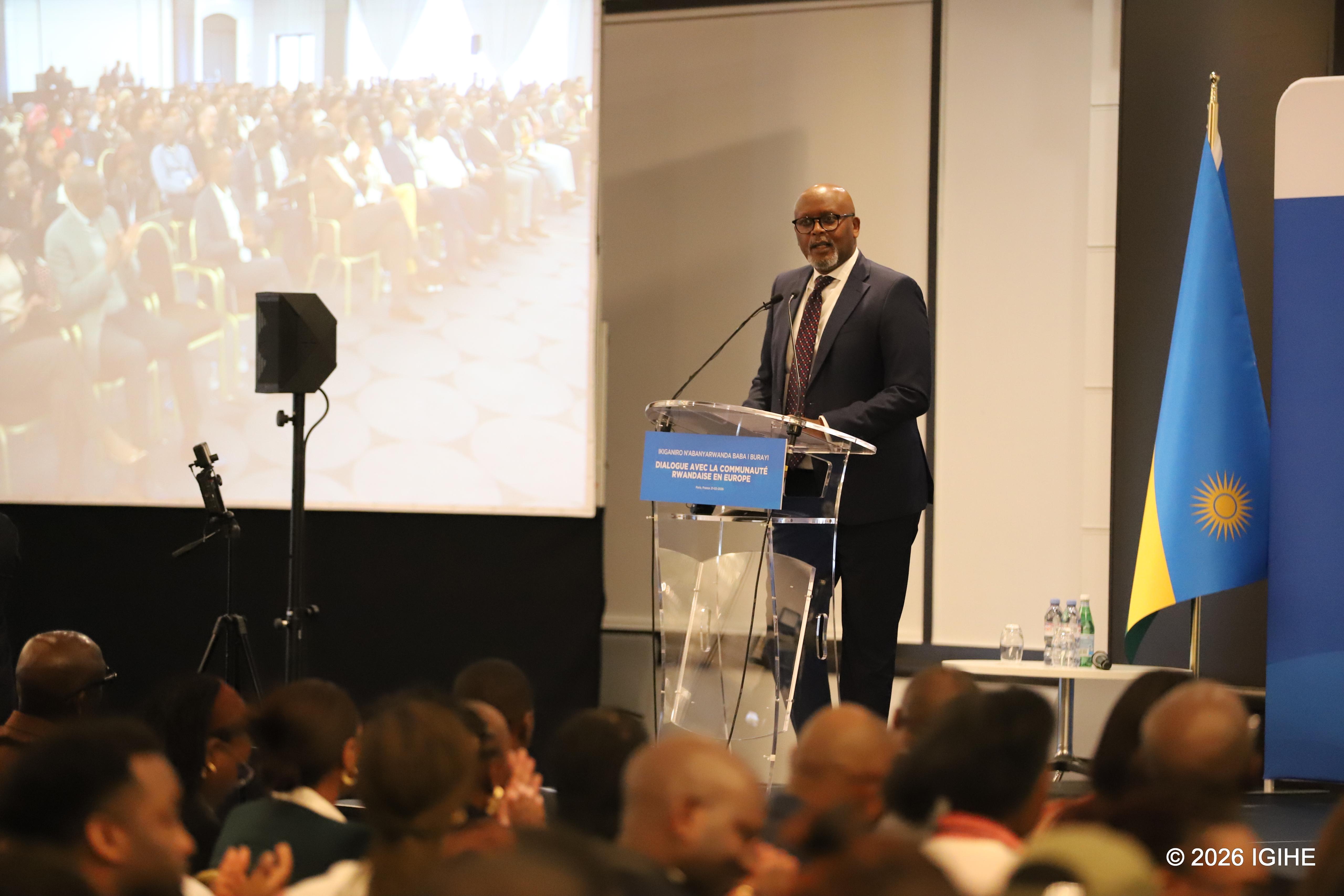
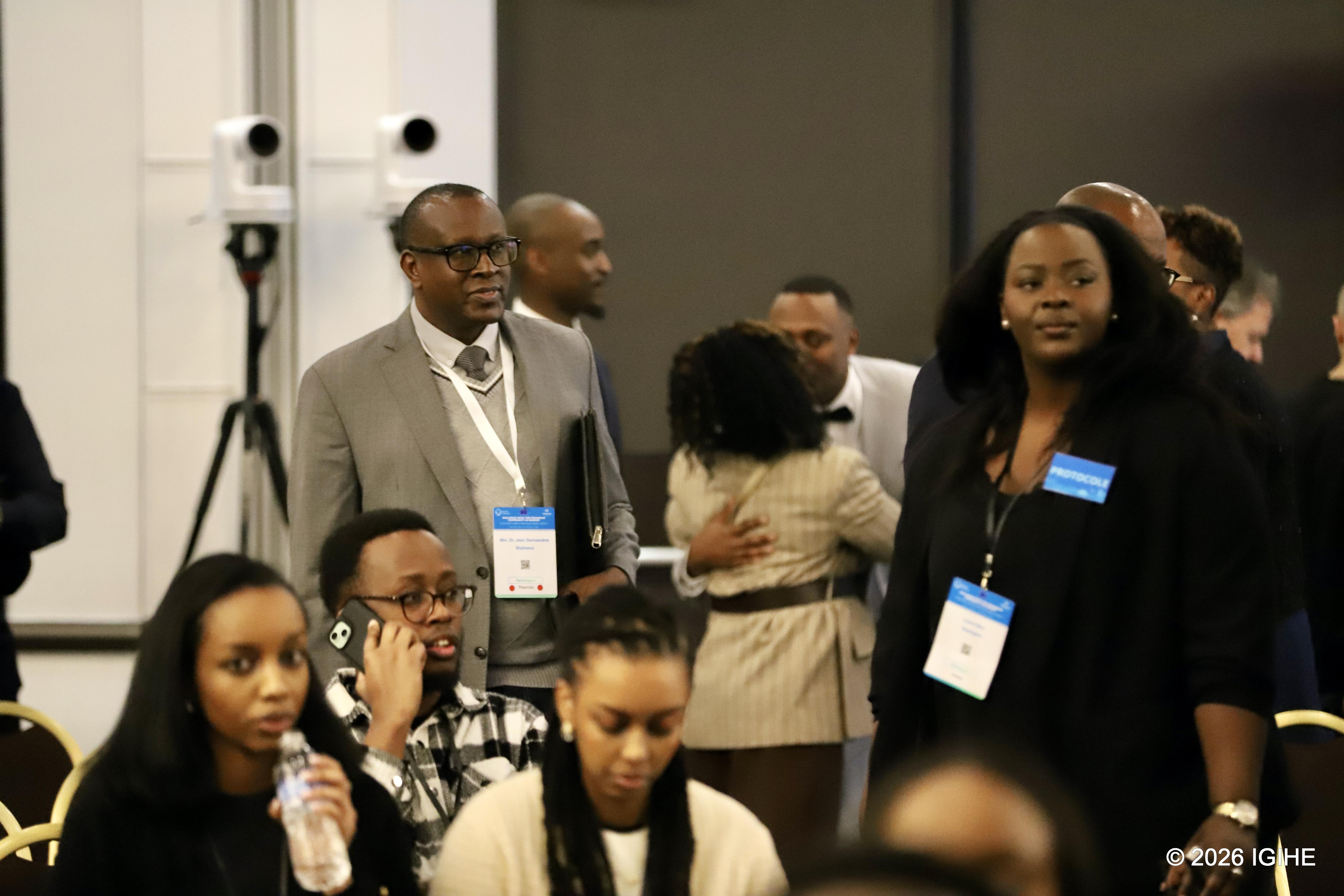
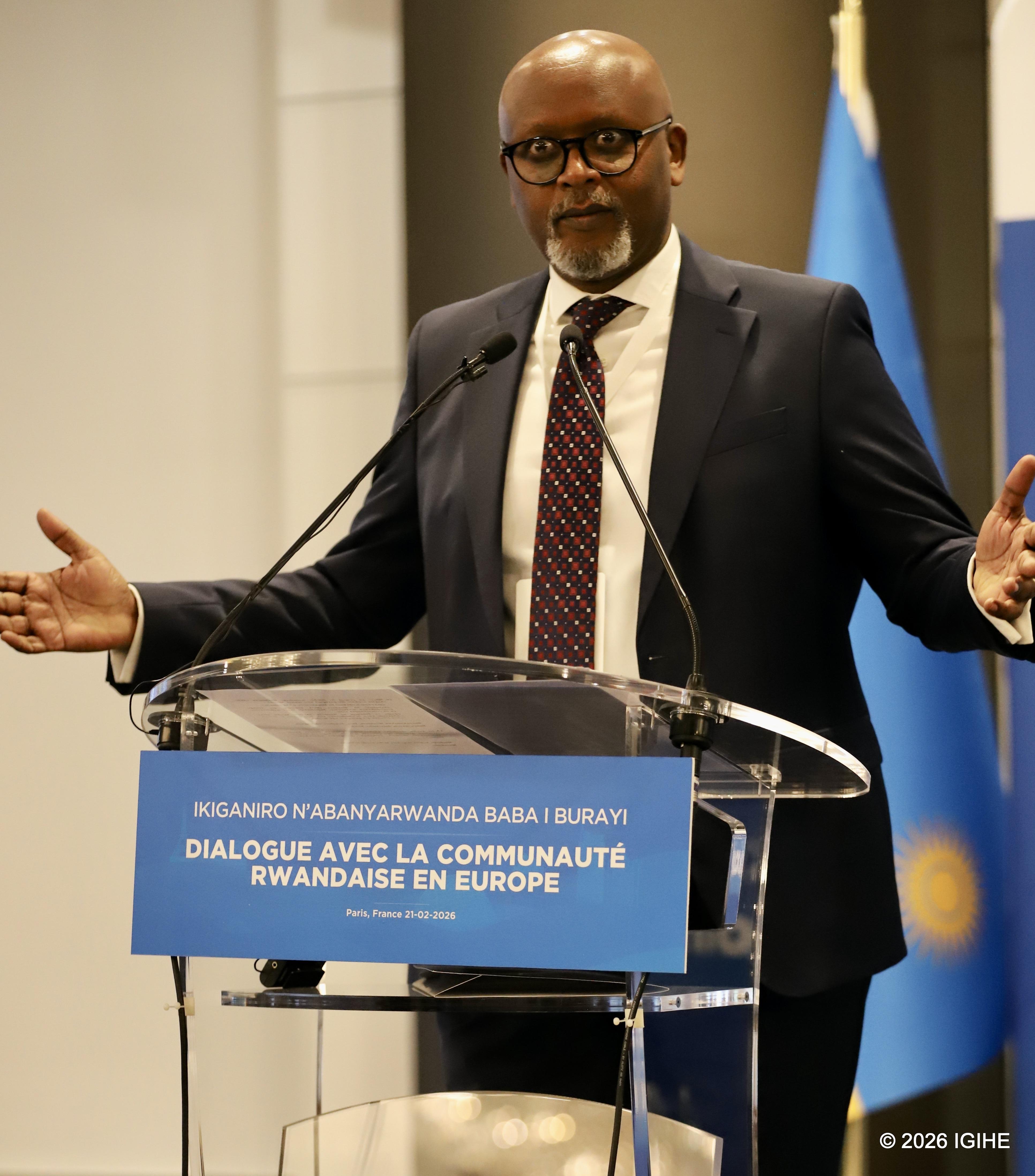
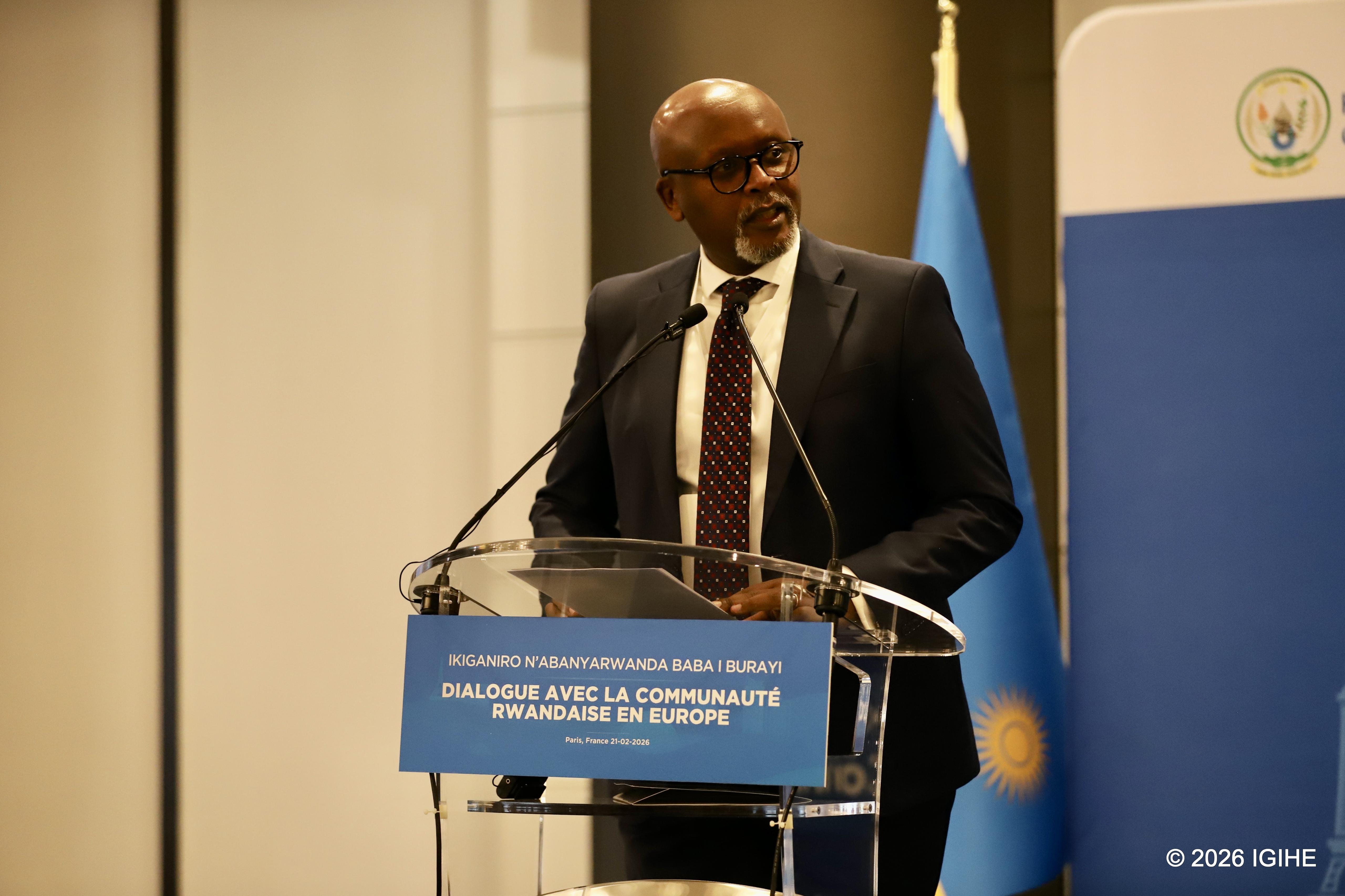
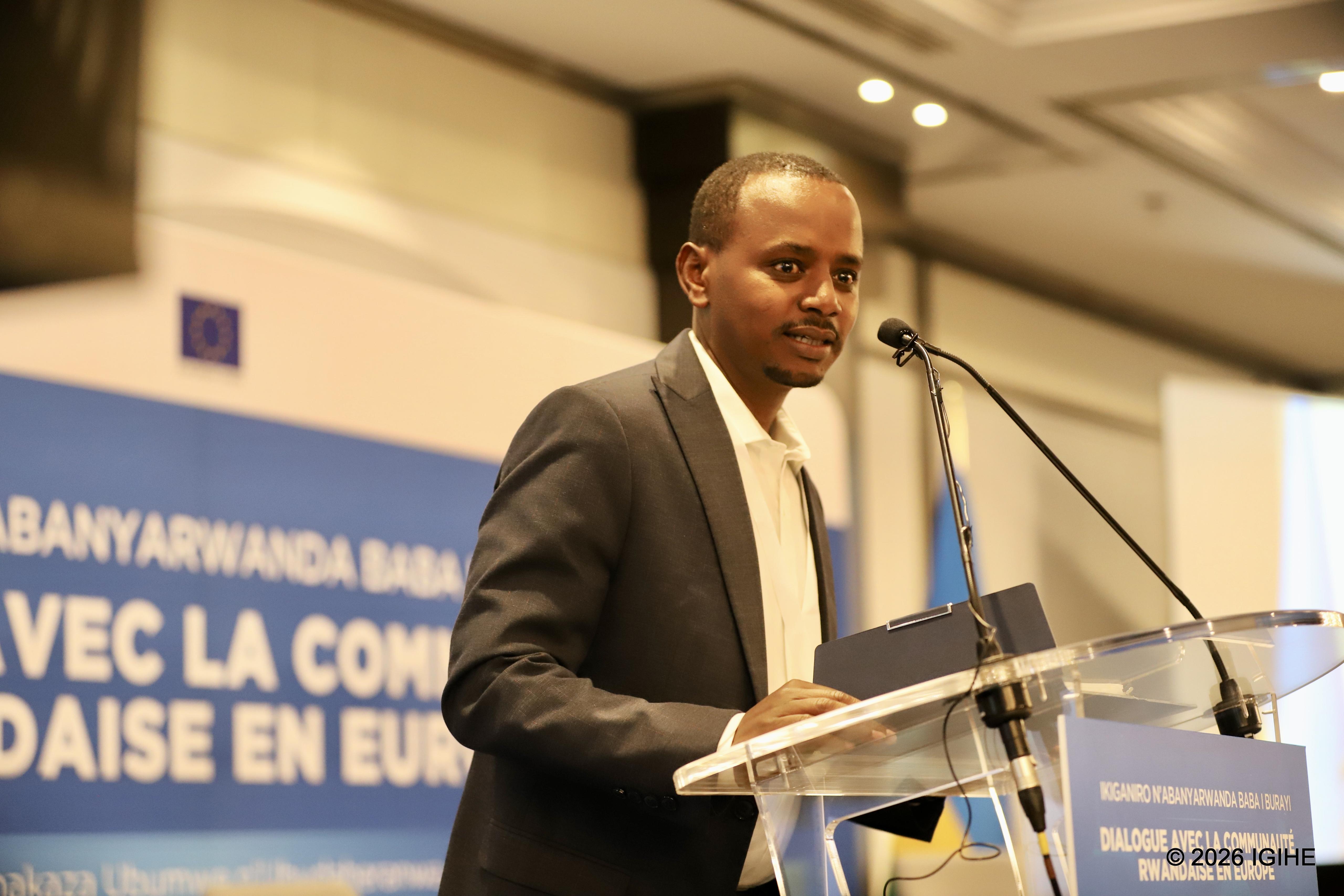
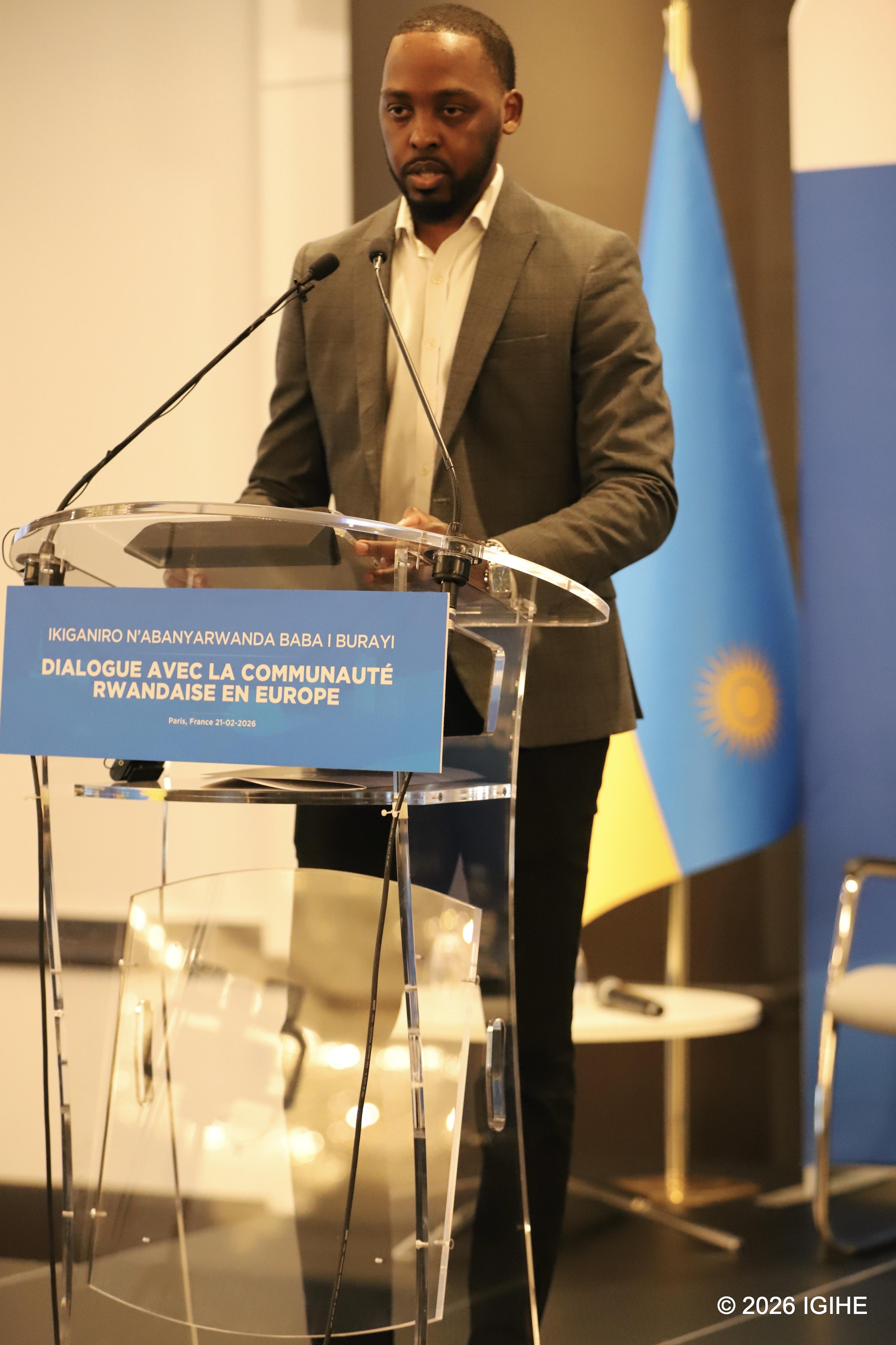
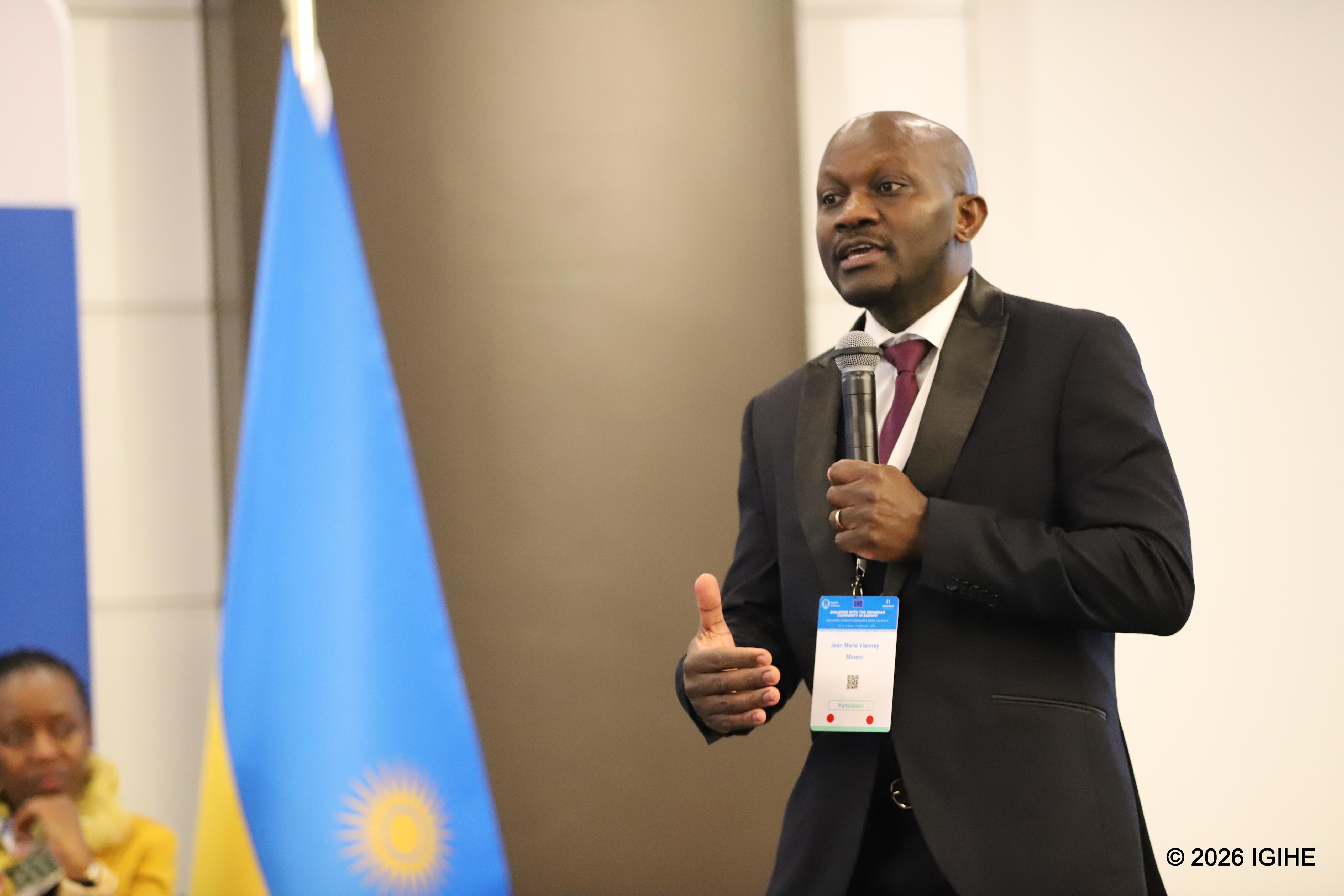
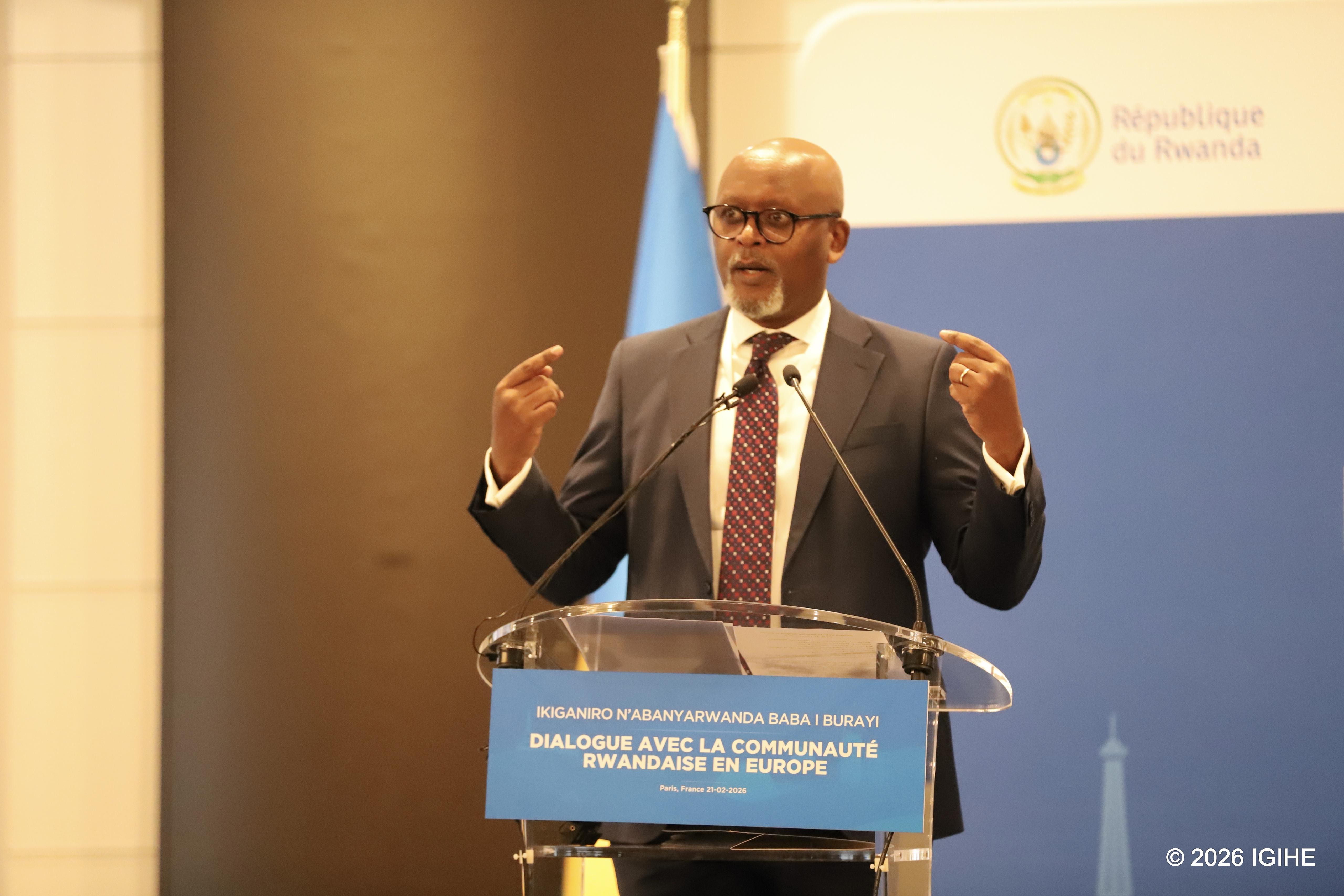
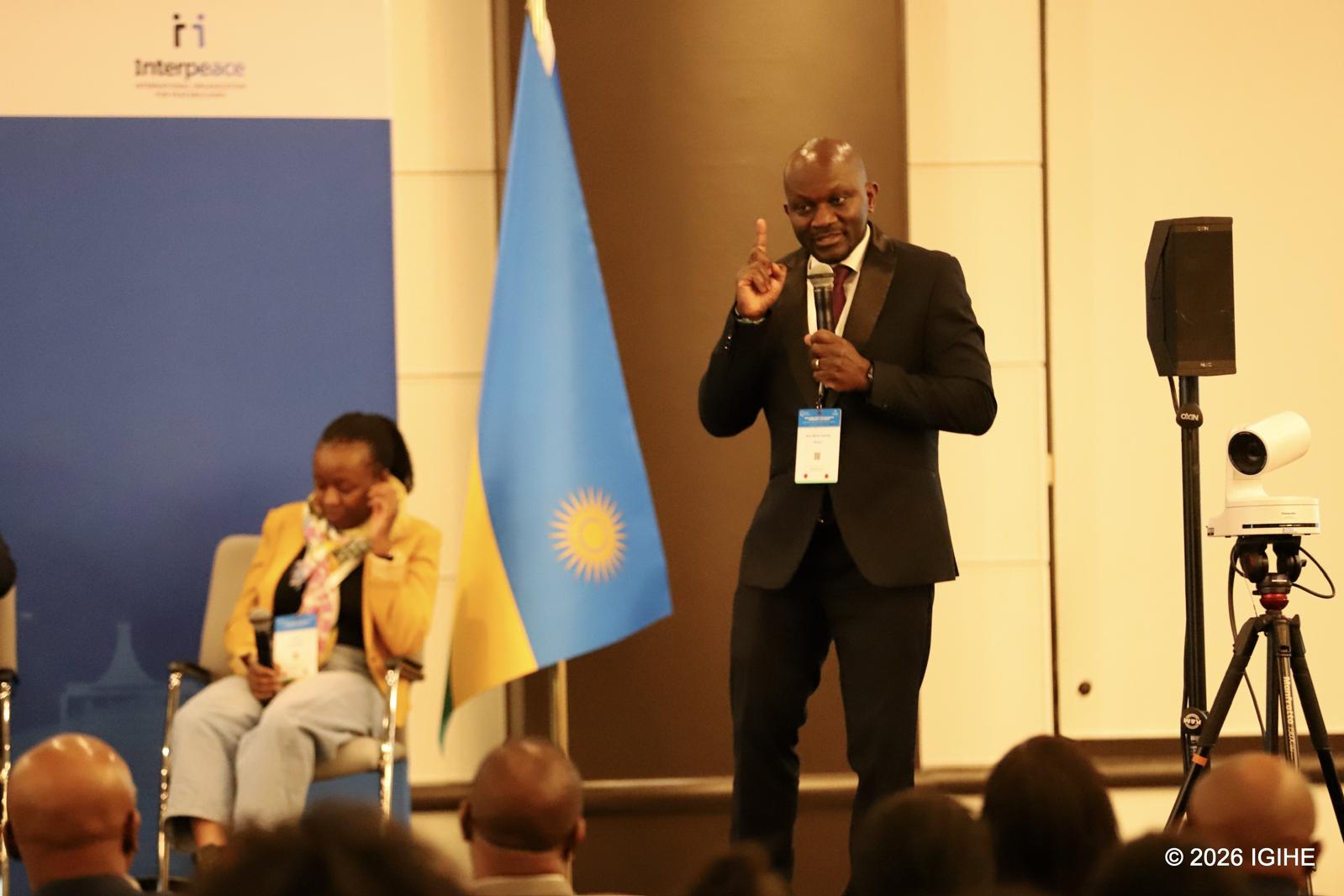
Speaking at the event, Rwanda’s Minister of National Unity and Civic Engagement, Dr. Jean-Damascène Bizimana, delivered a strong message directed to younger generations: preserve the language, understand history, and strengthen ties with the motherland.
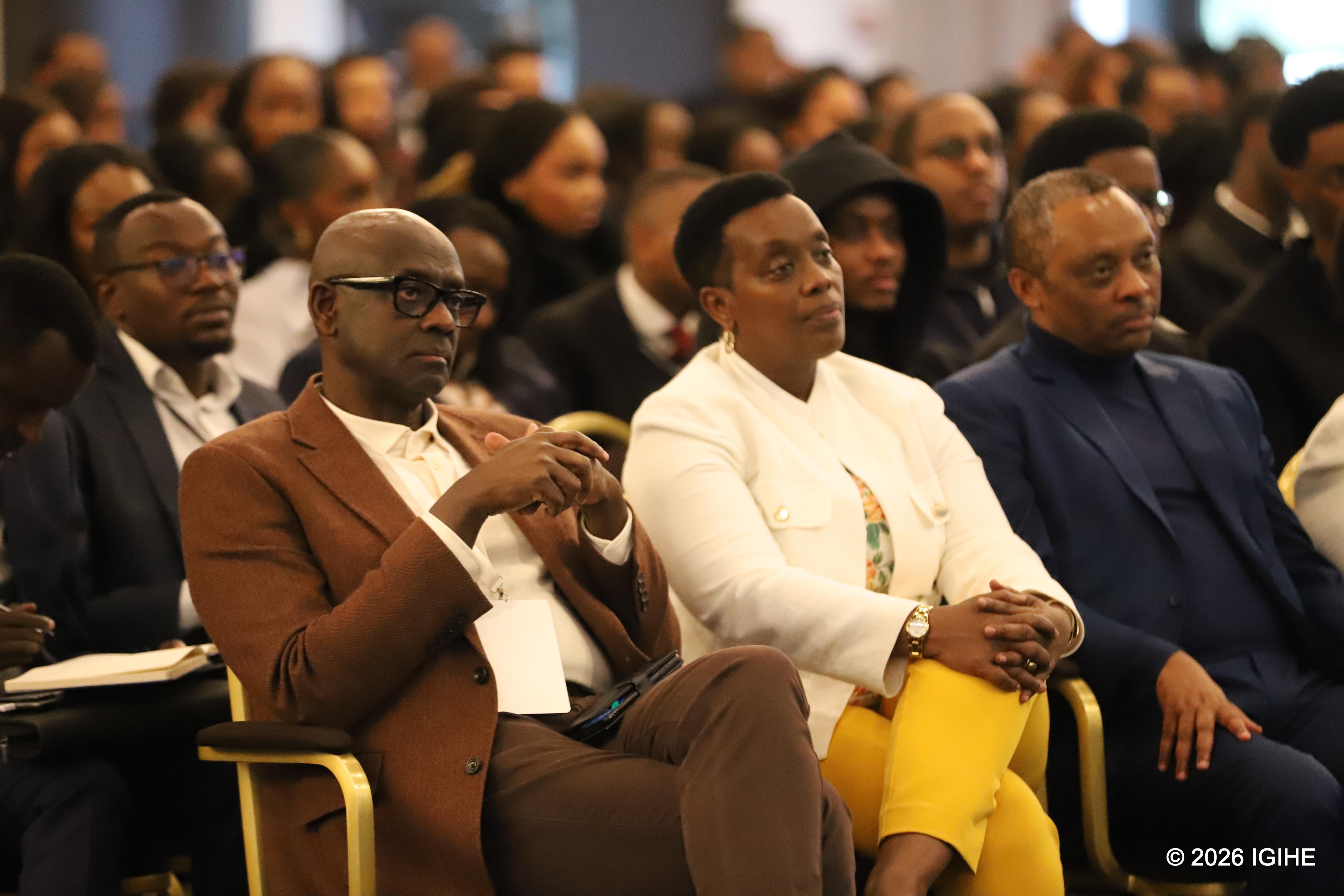
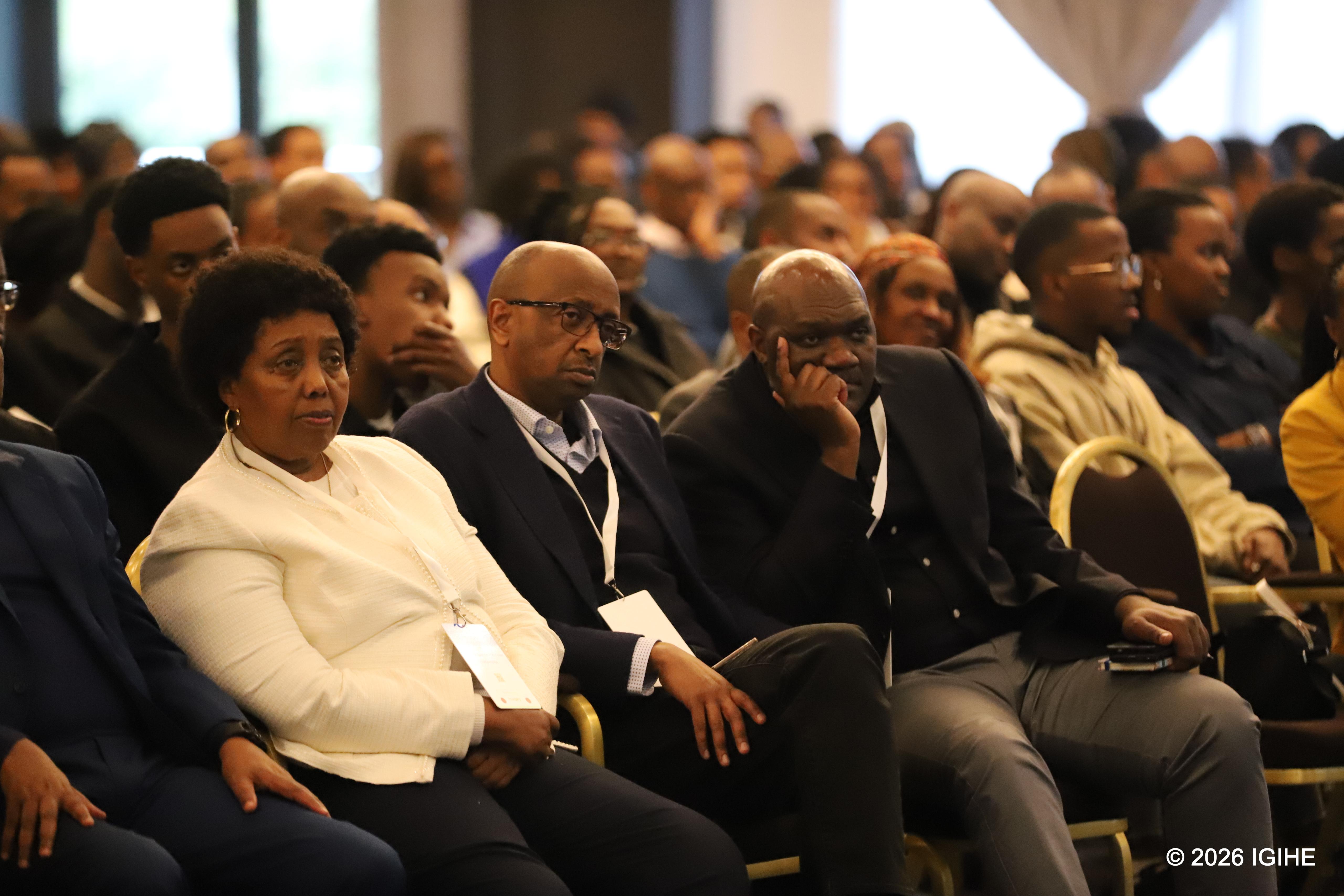
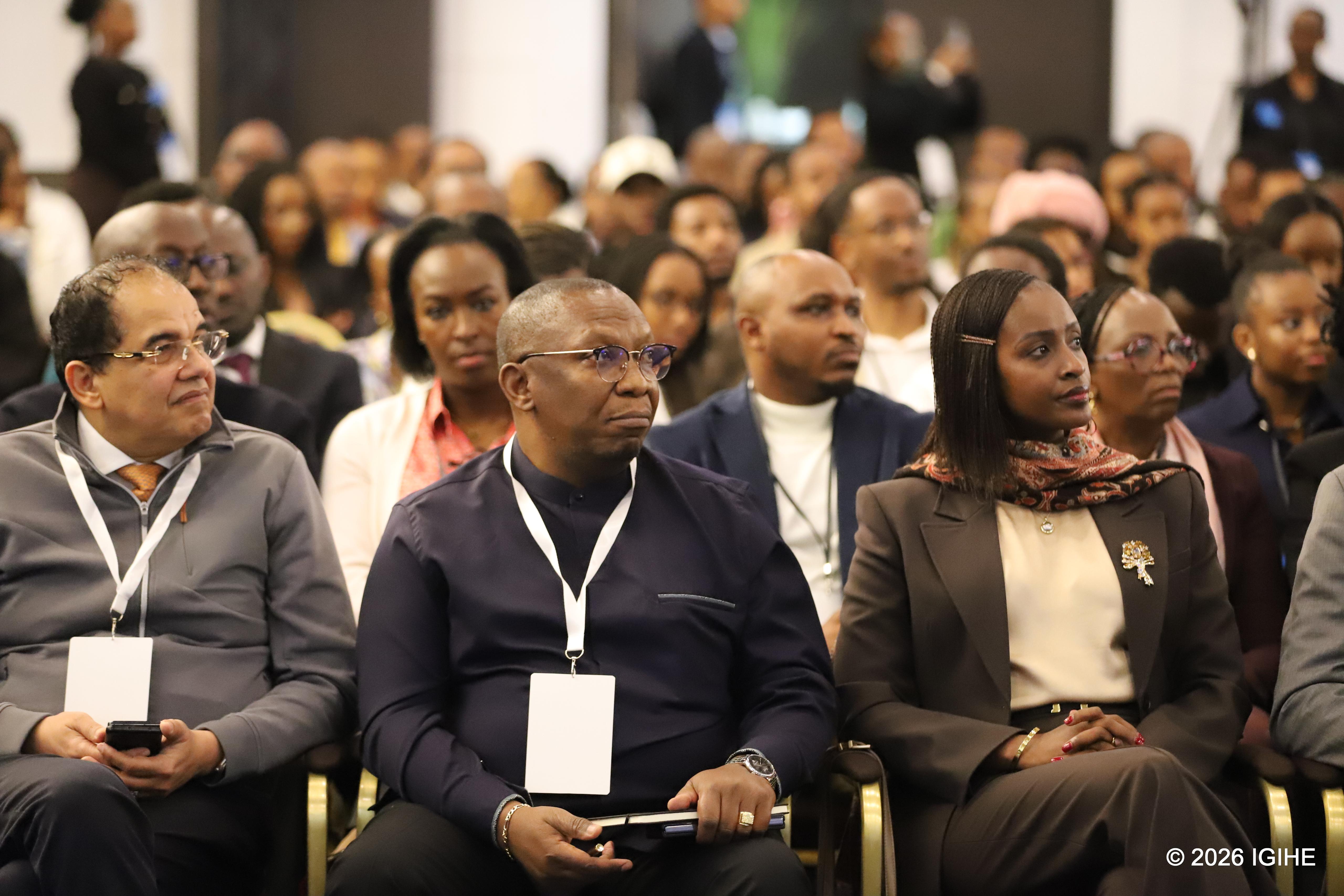
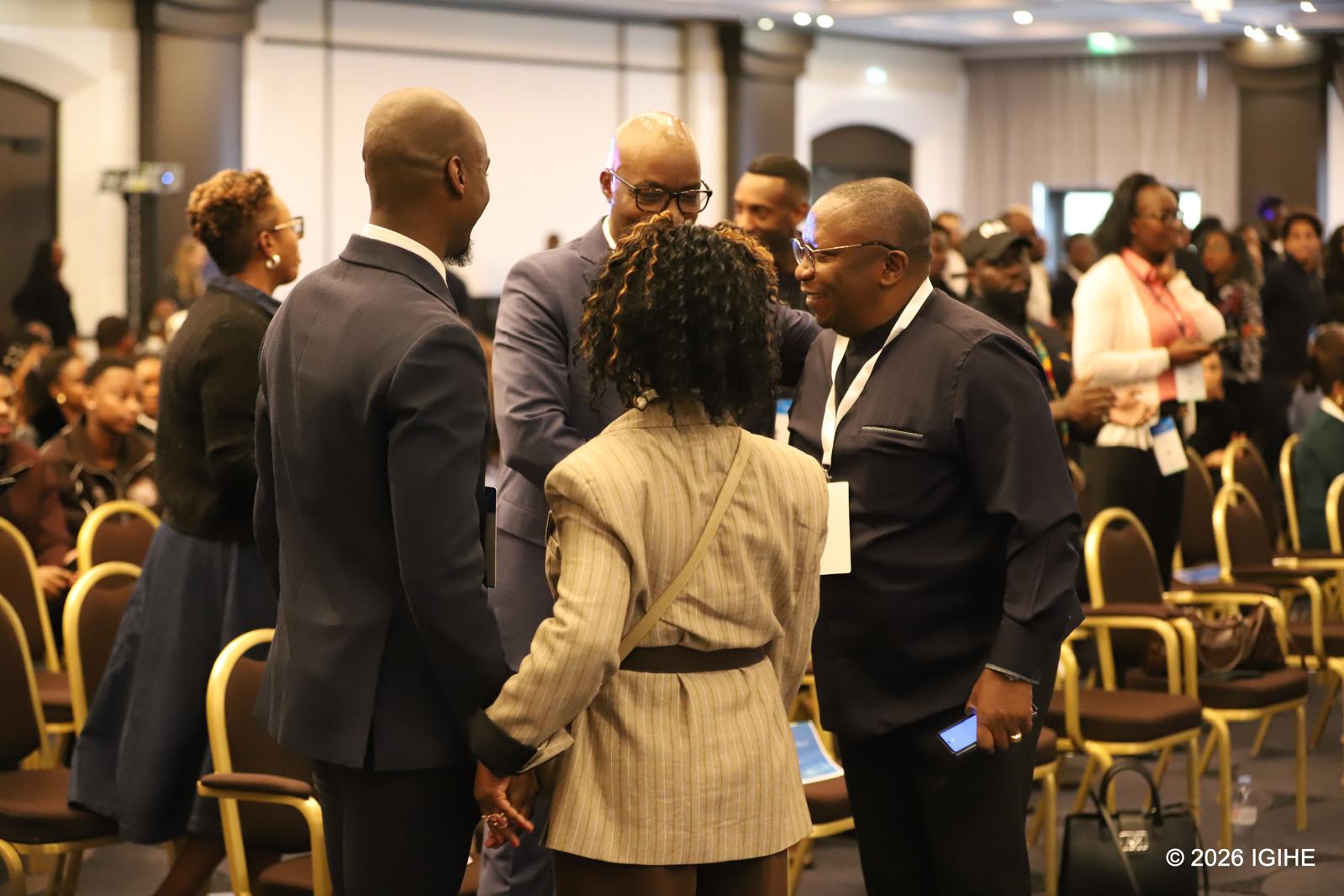
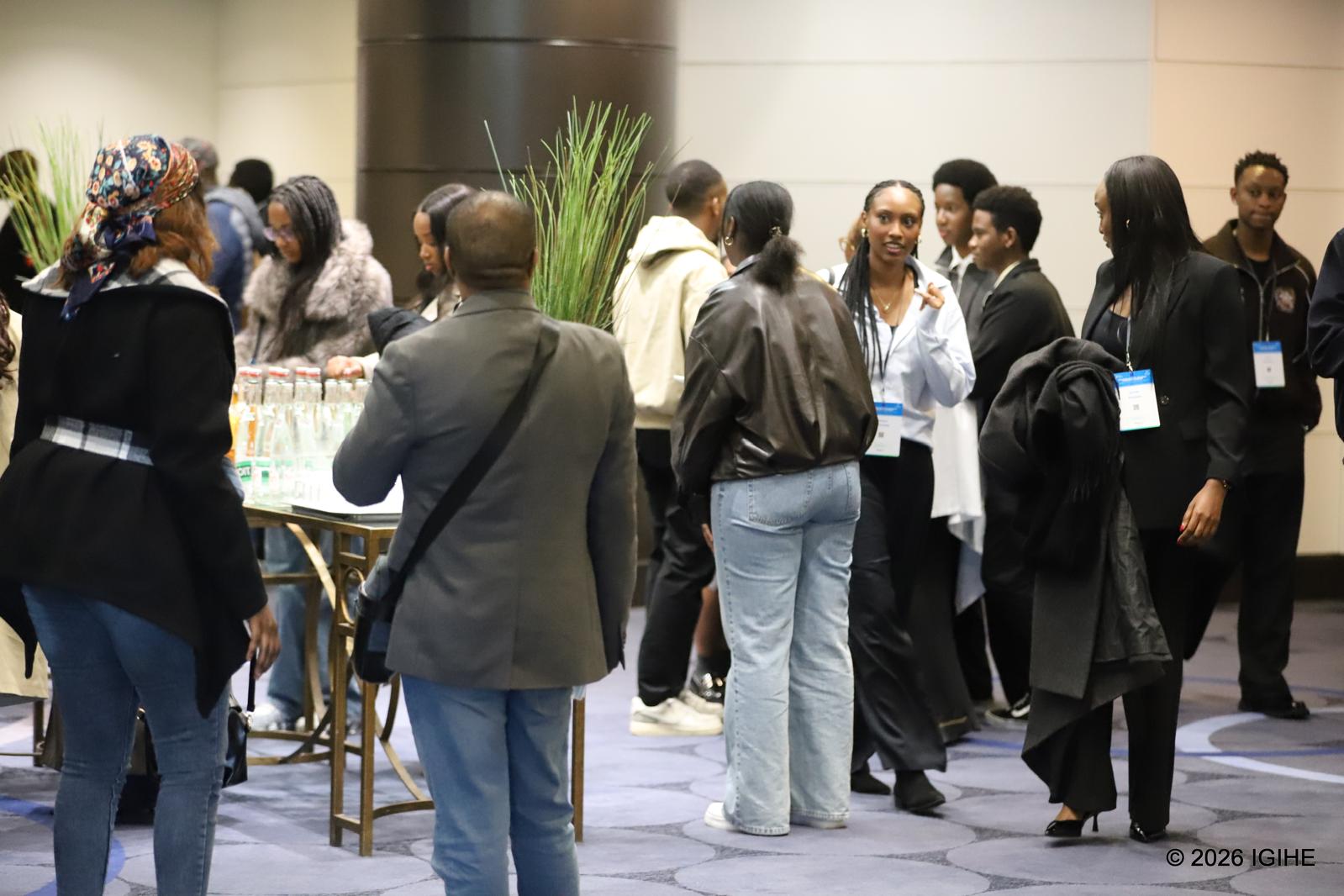
Through testimonies, discussions, and collective reflections, the meeting emerged as a valuable platform for intergenerational dialogue and transmission.
Kinyarwanda language, a foundation of unity
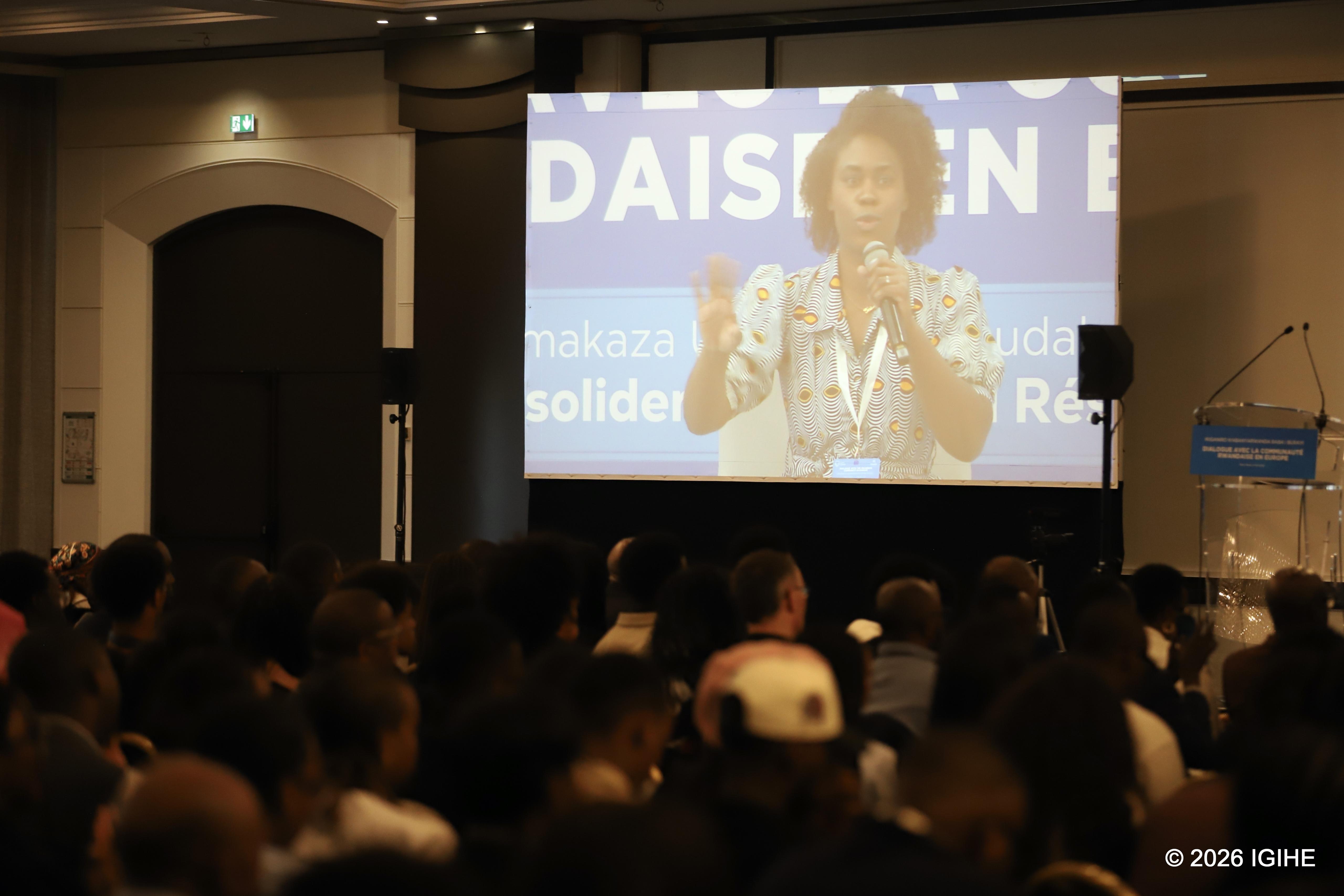
From the outset of his remarks, the speaker chose to speak in French, accompanied by interpretation into Kinyarwanda to ensure inclusivity among participants. A summary was also provided for those not fully fluent in either language.
This linguistic choice became the starting point for a clear call to action: encouraging the learning of Kinyarwanda within the diaspora. “We are fortunate to share a single national language that facilitates communication and strengthens our identity,” he emphasized, urging Rwandan communities abroad to develop local initiatives for cultural and linguistic transmission.
Youth at the heart of discussions
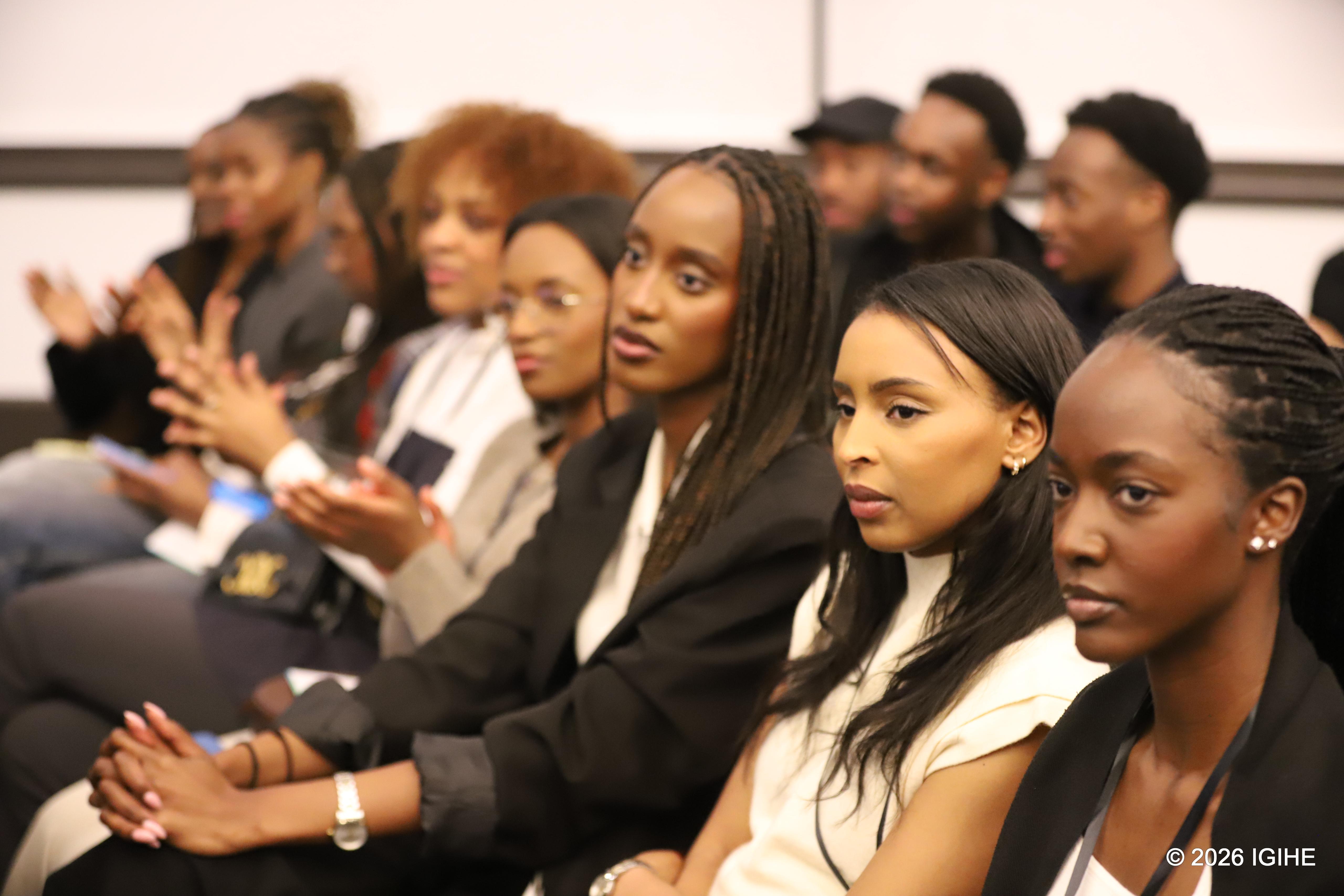
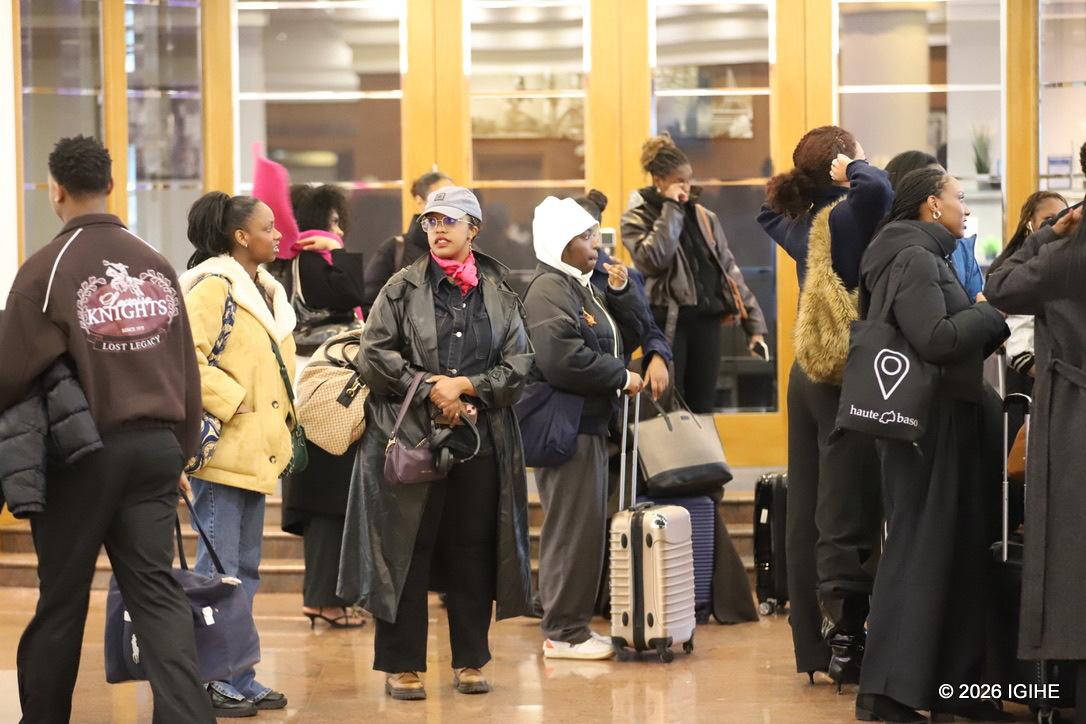
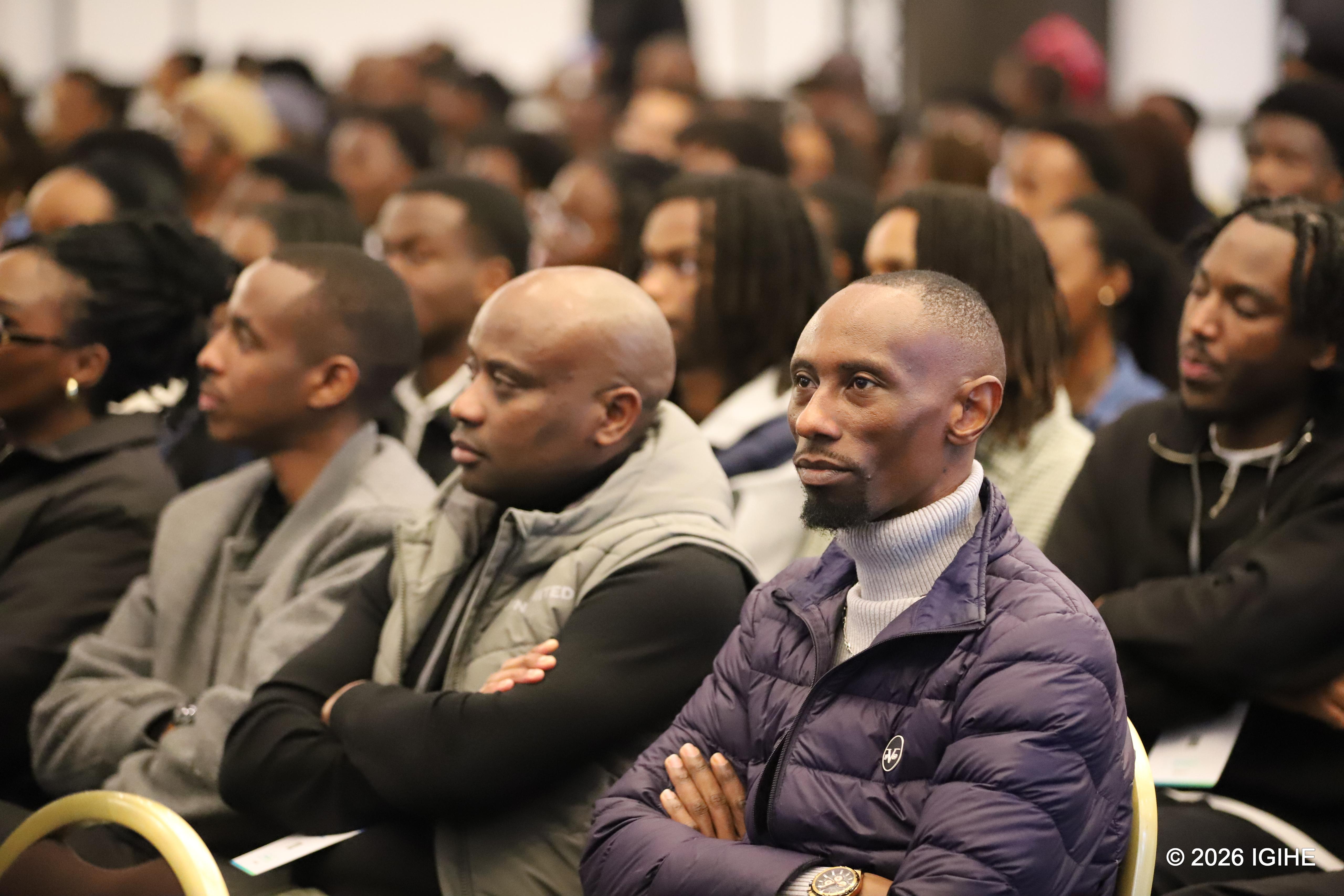
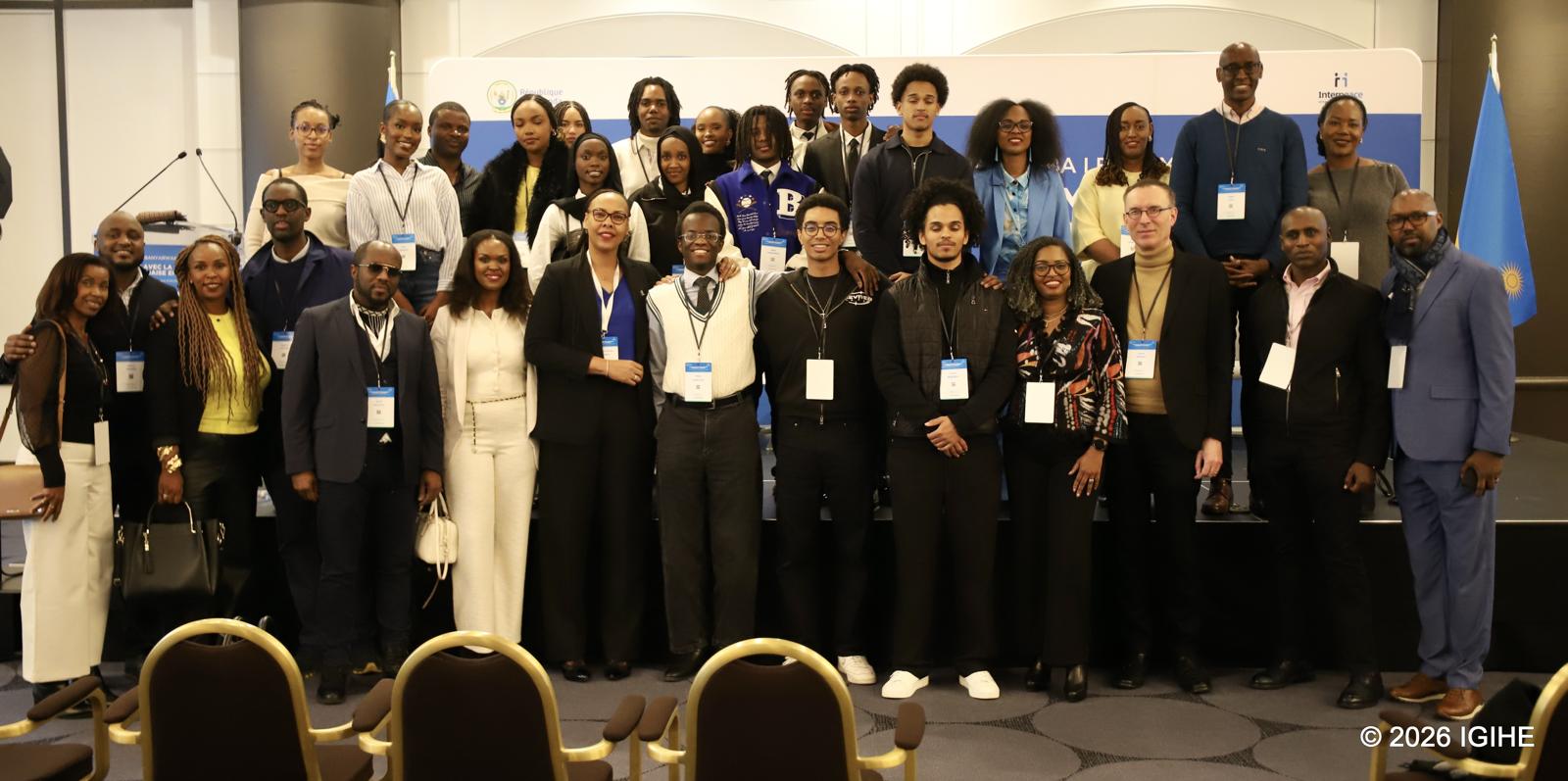
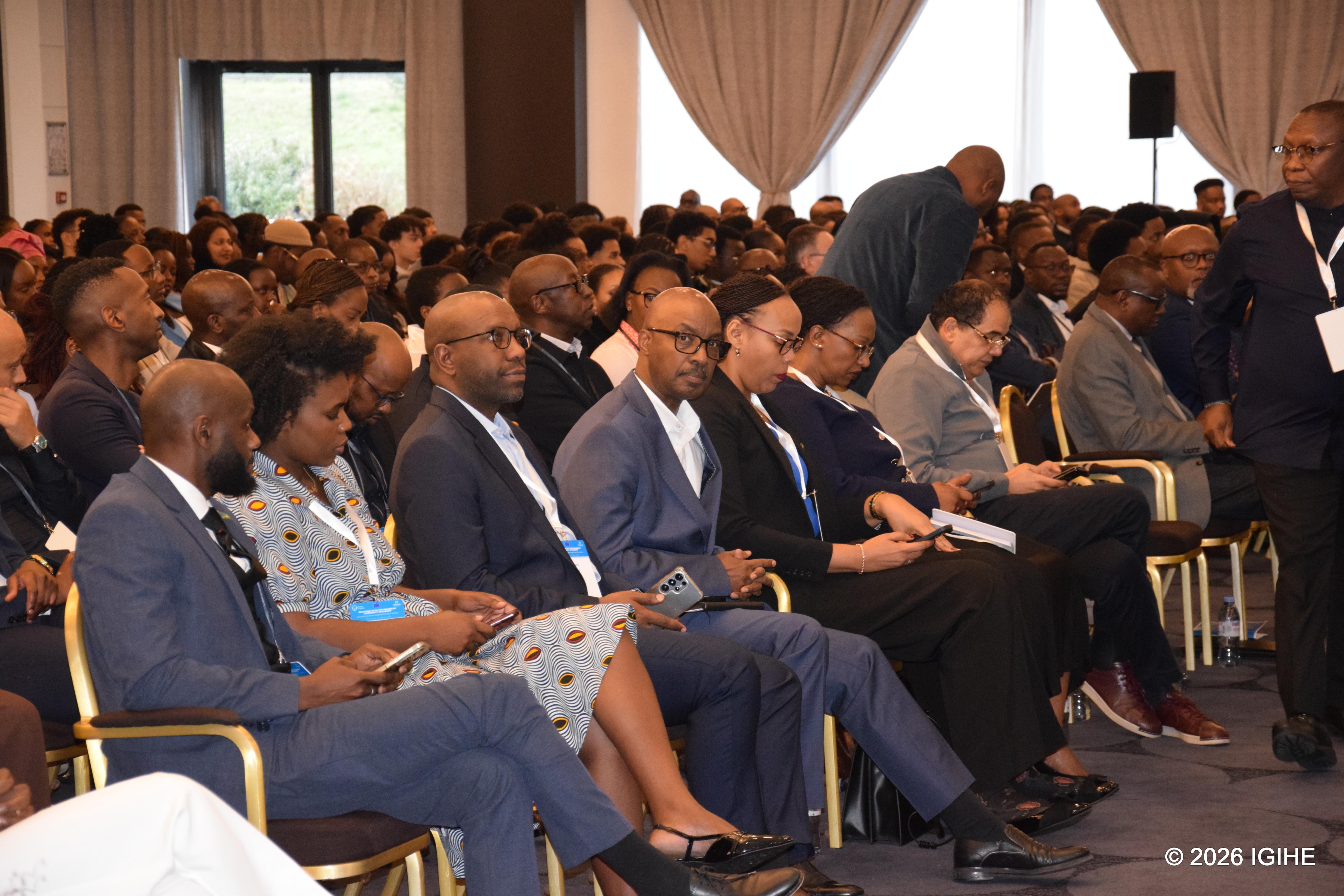
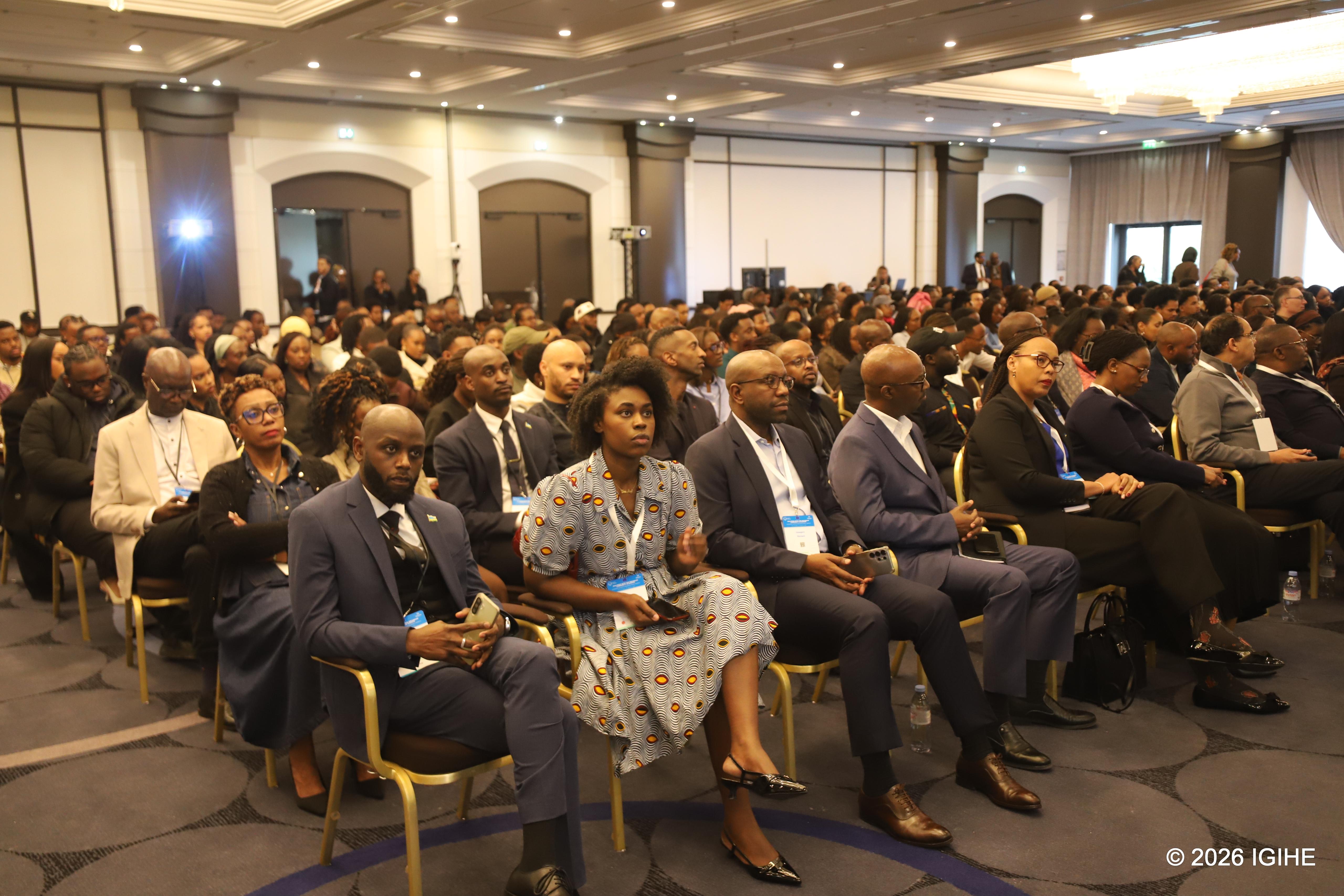
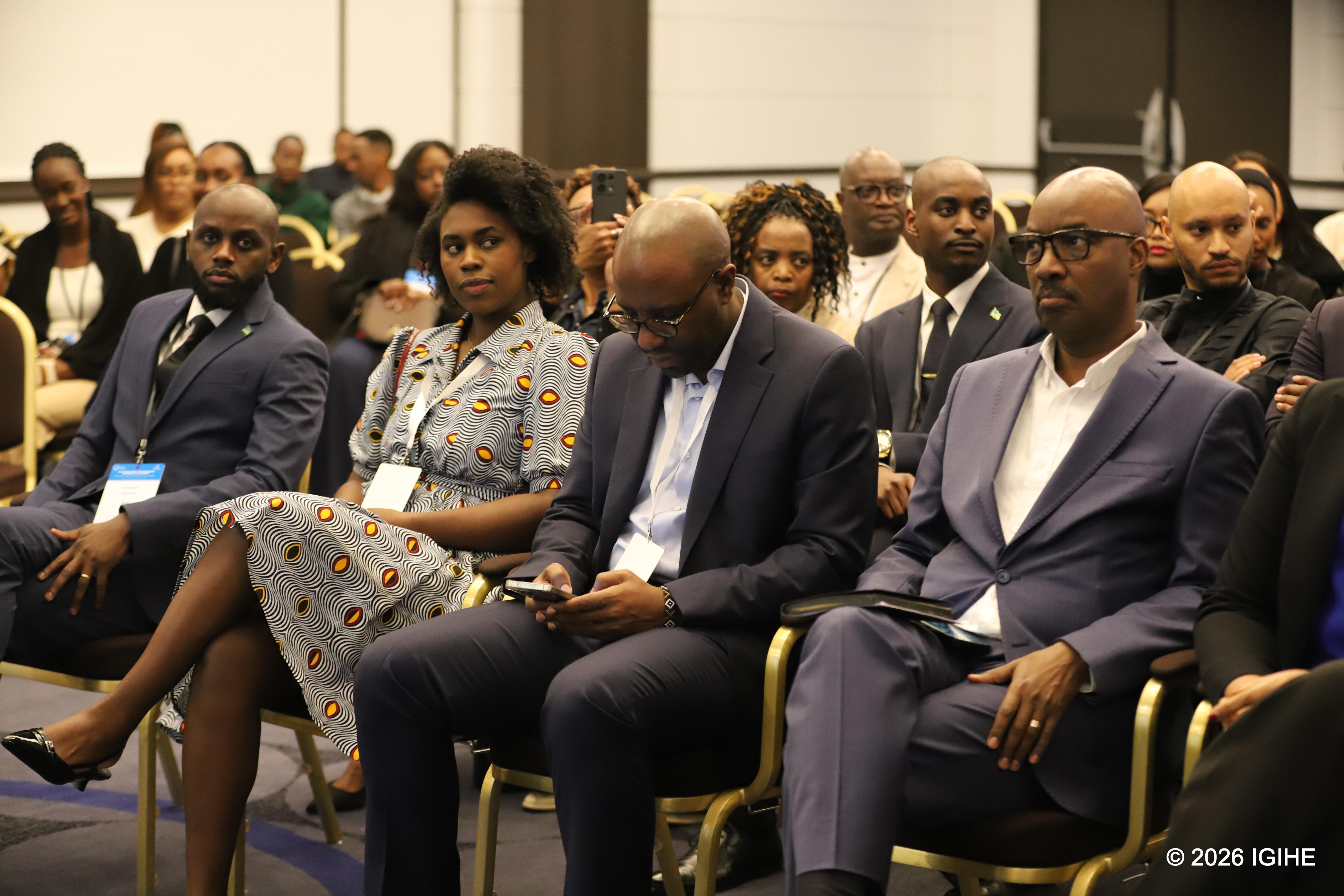
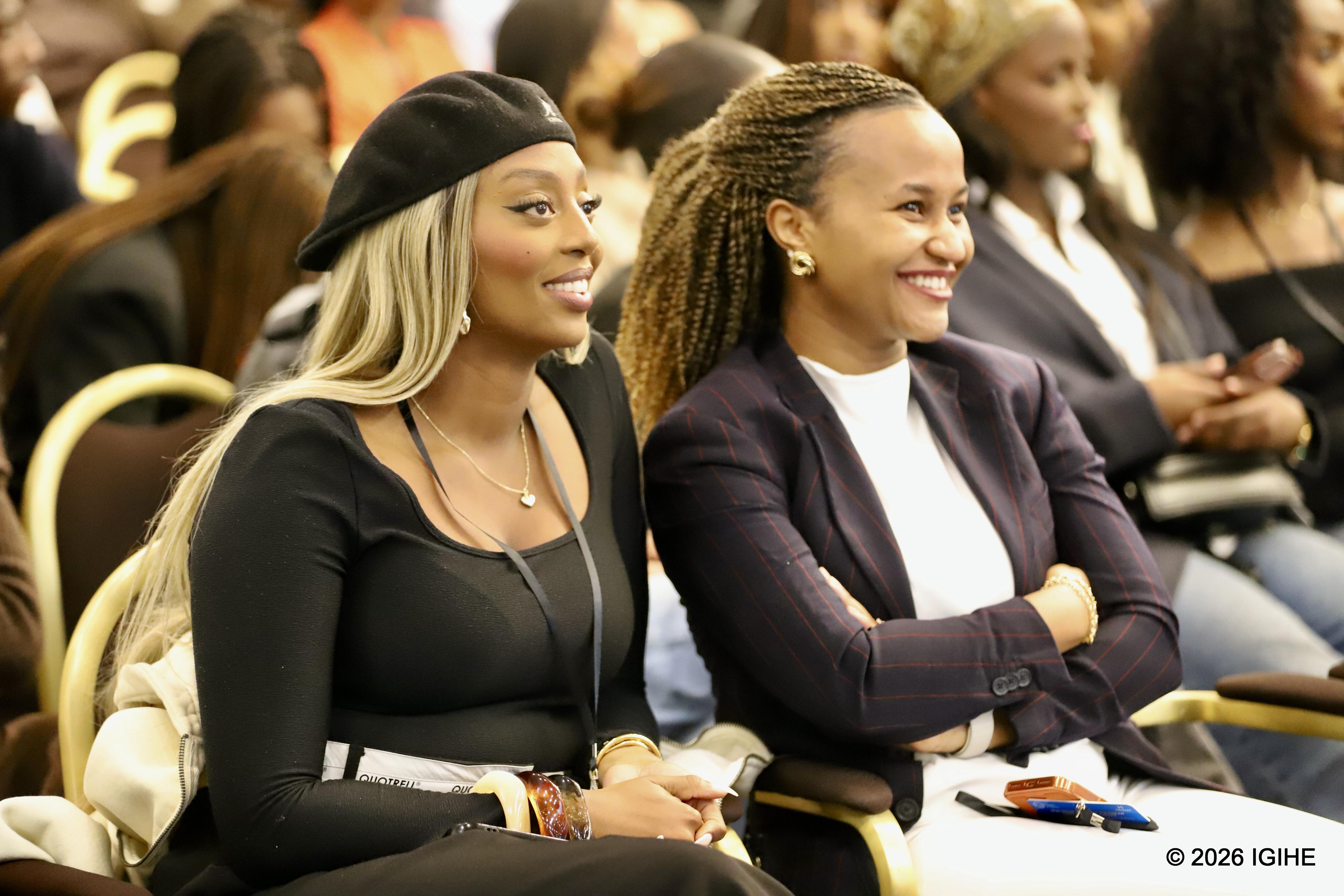
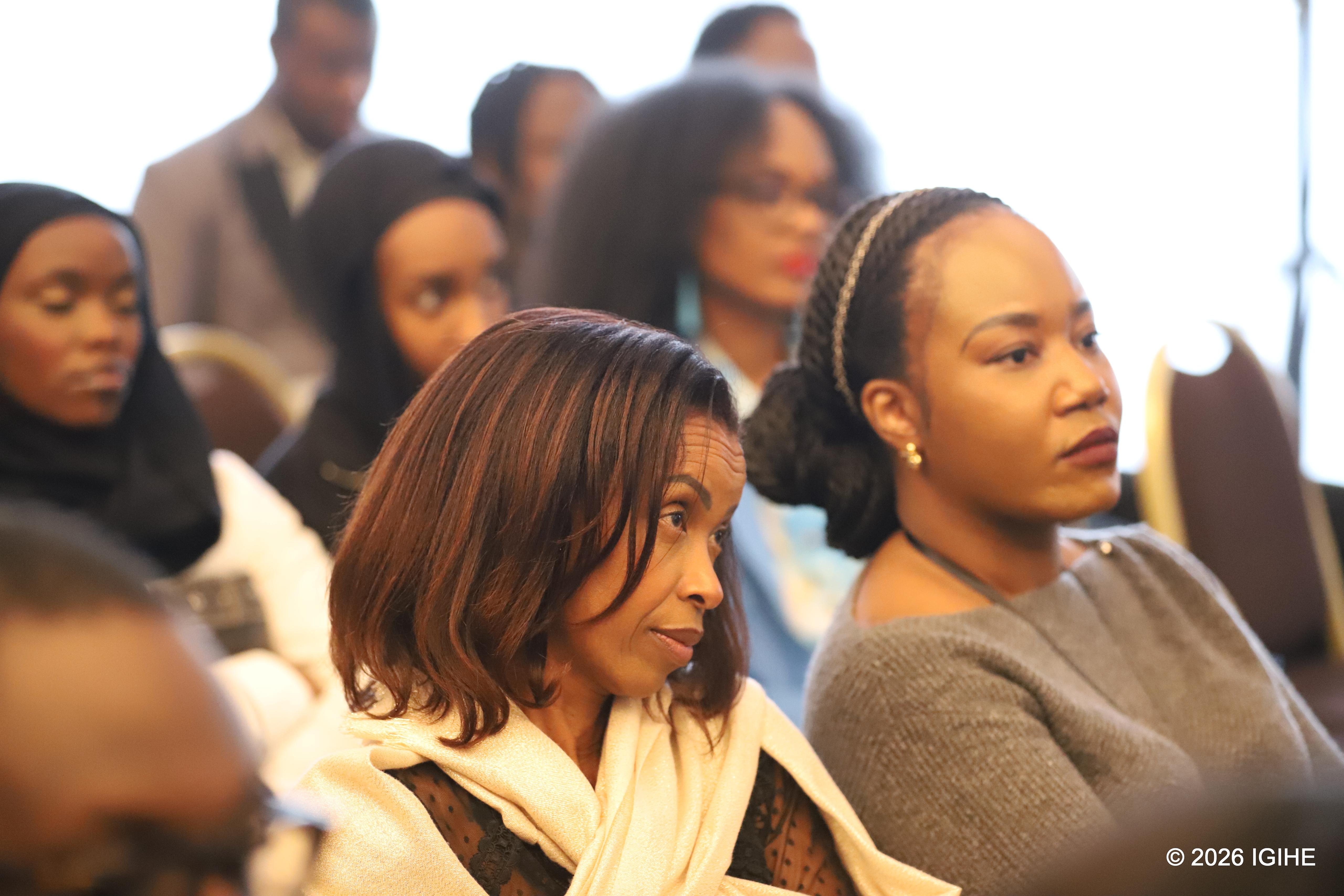
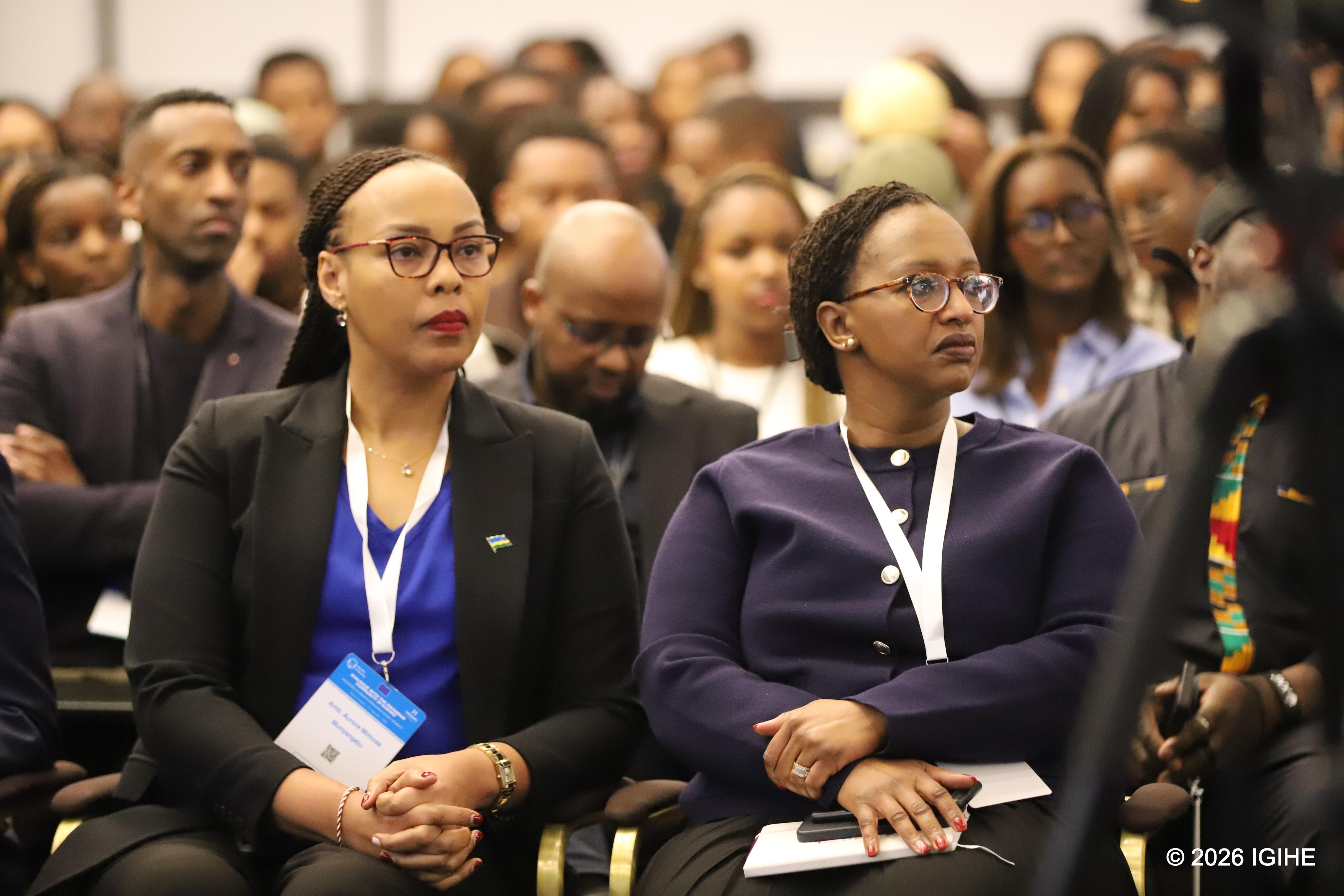
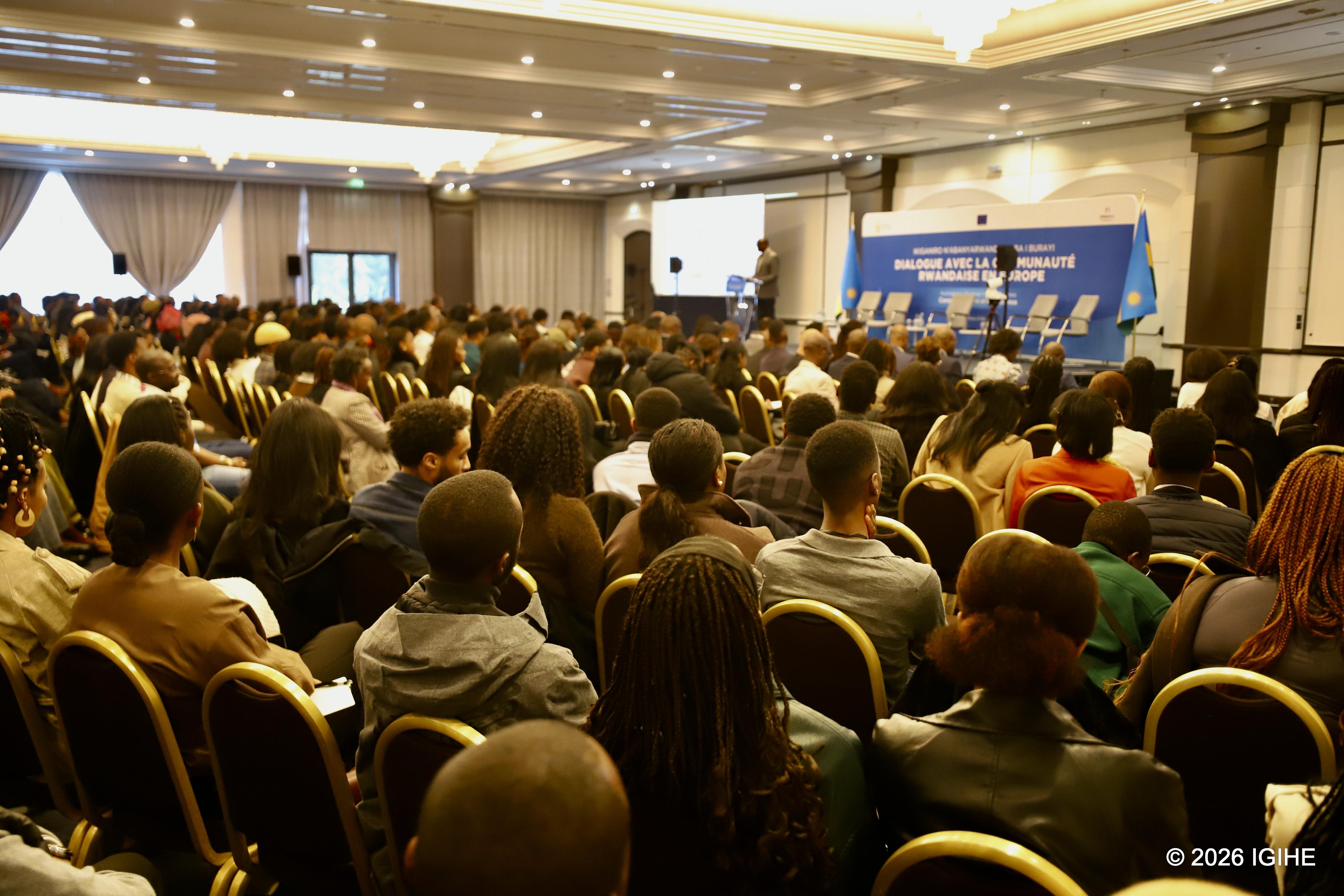
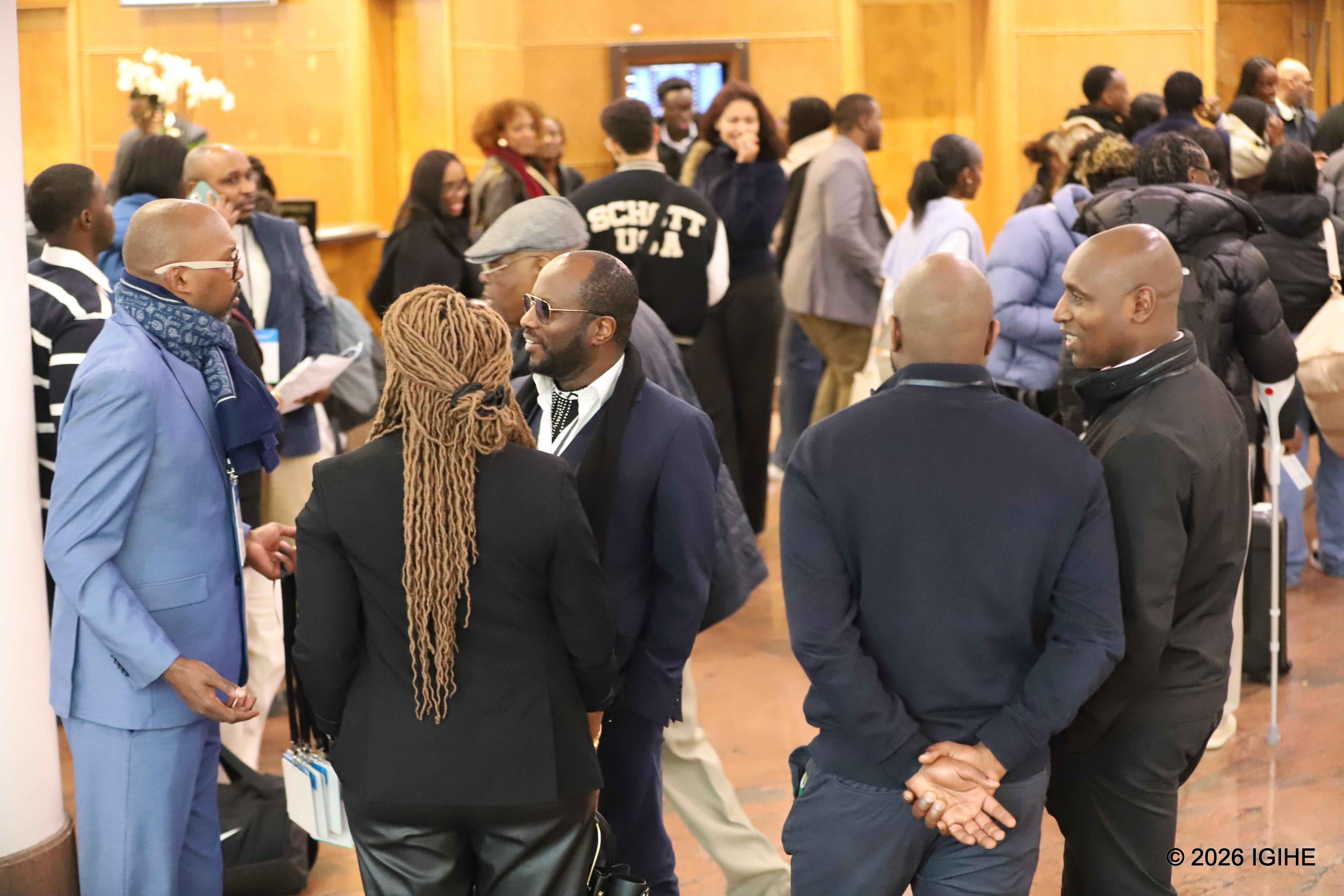
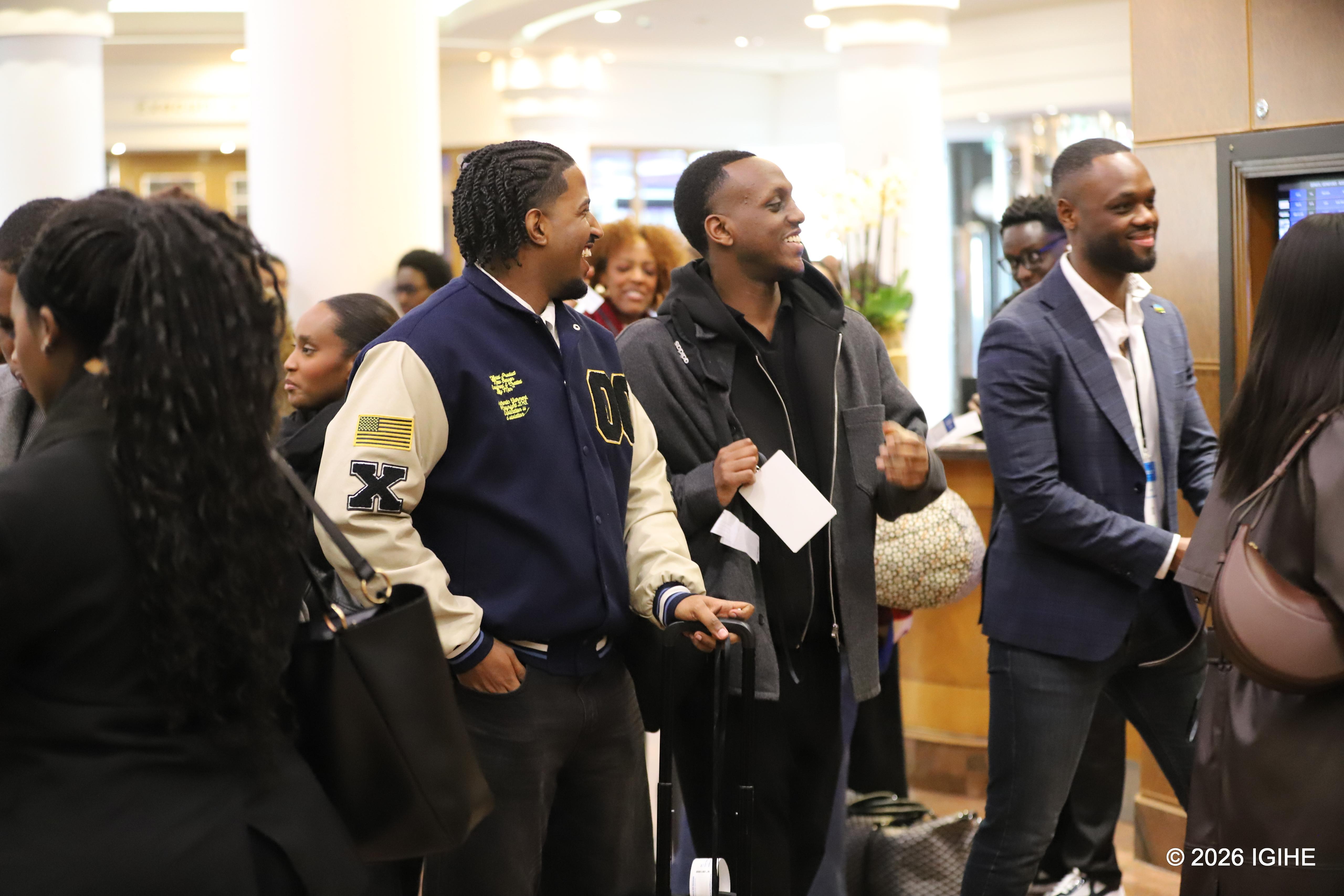
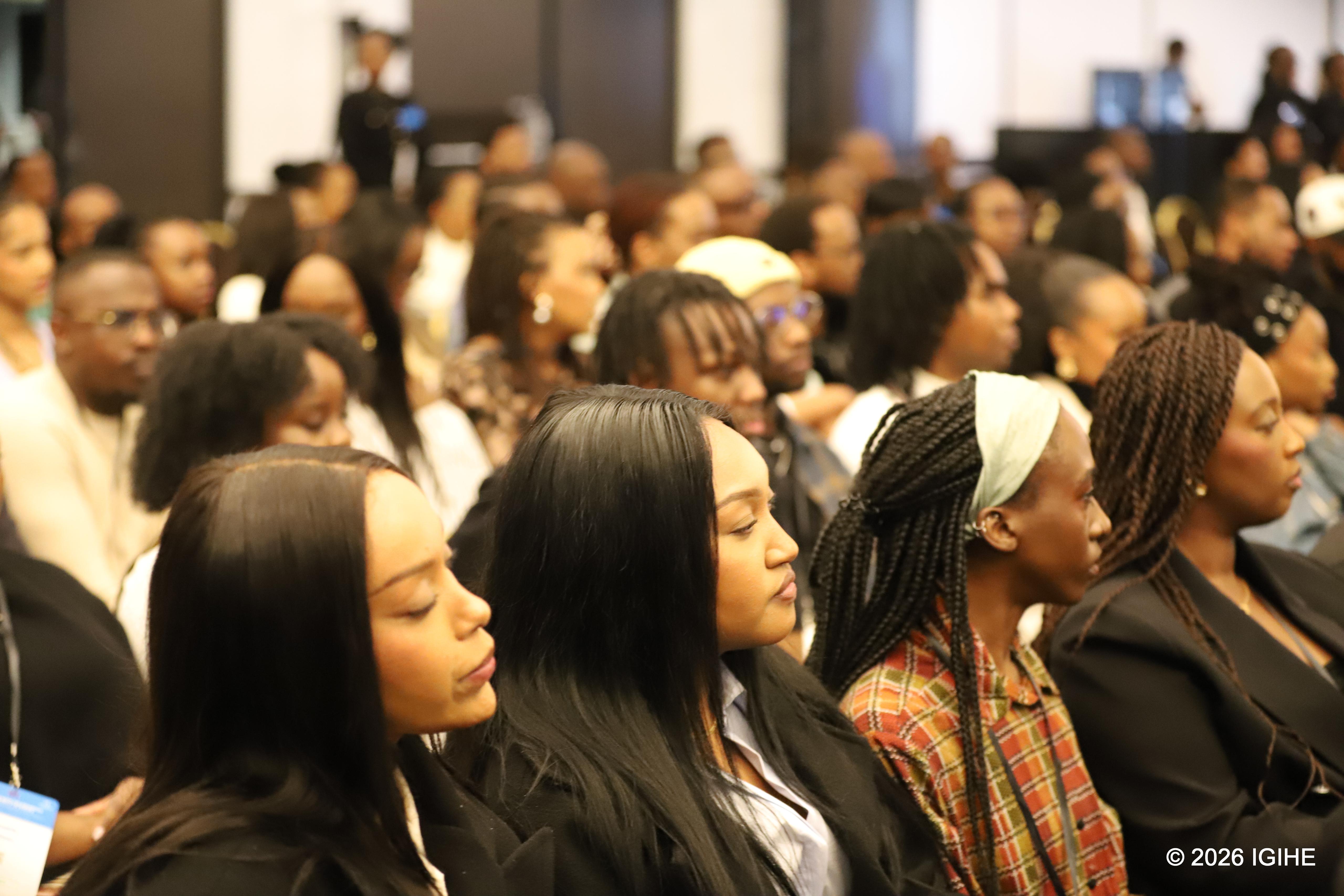
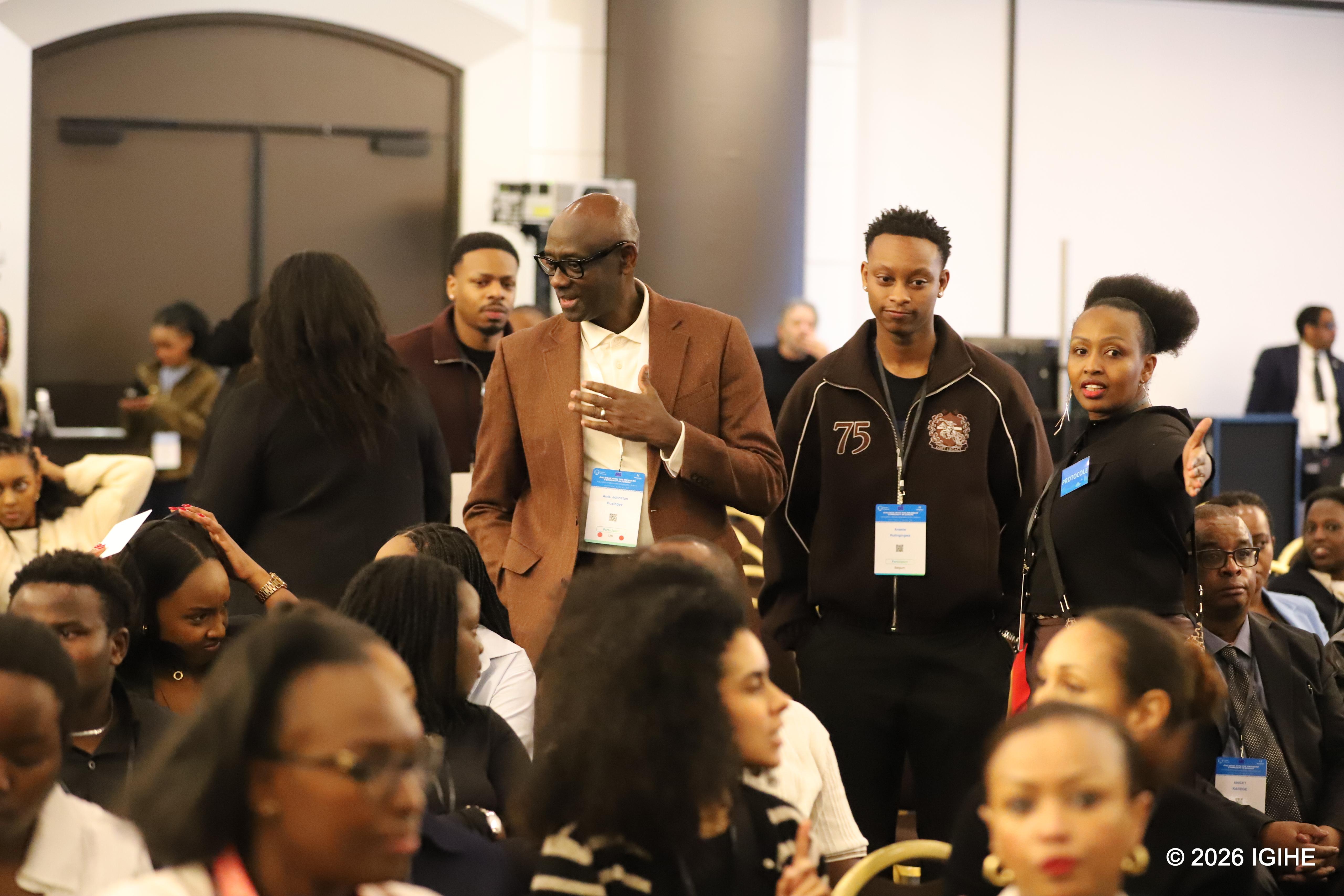
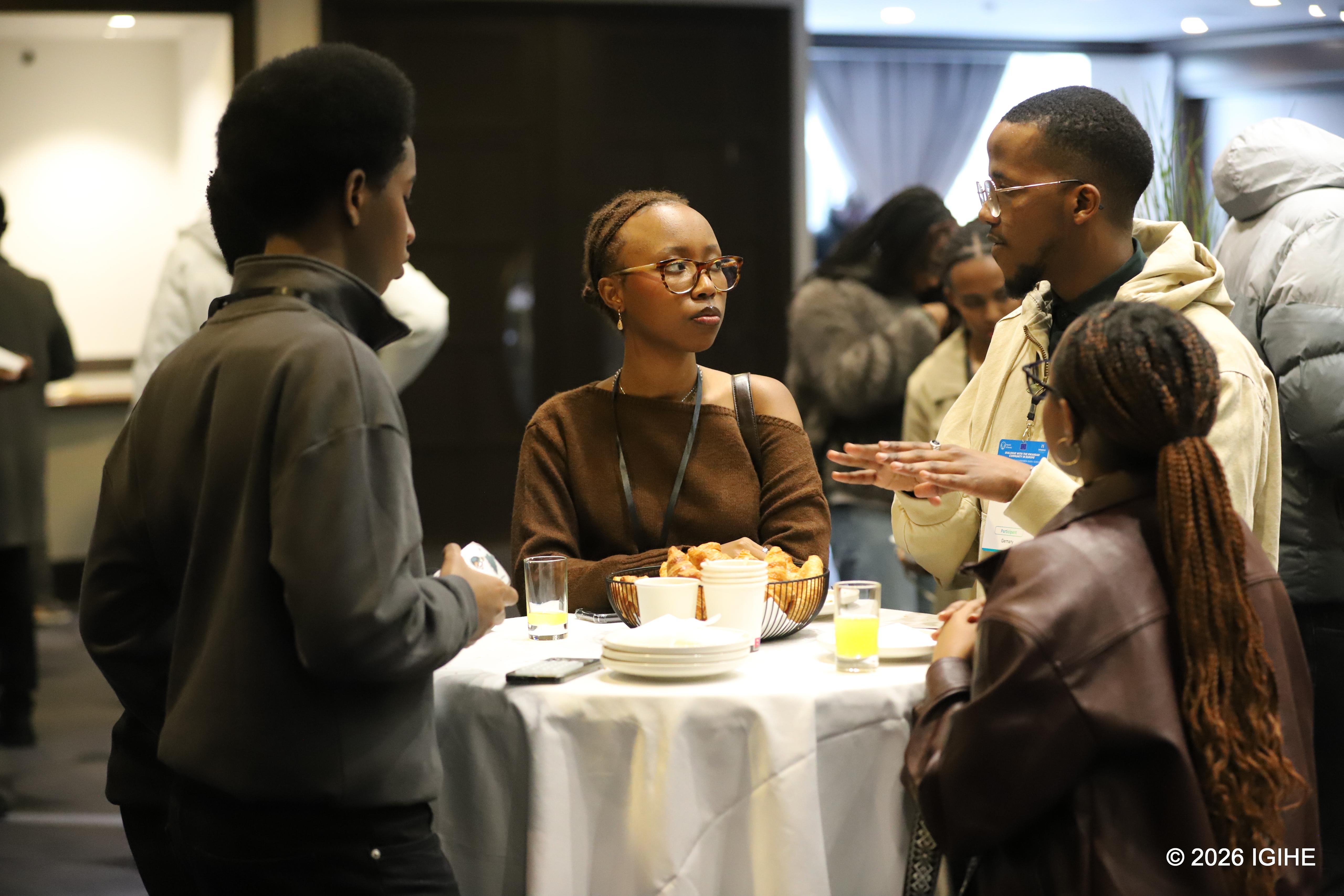
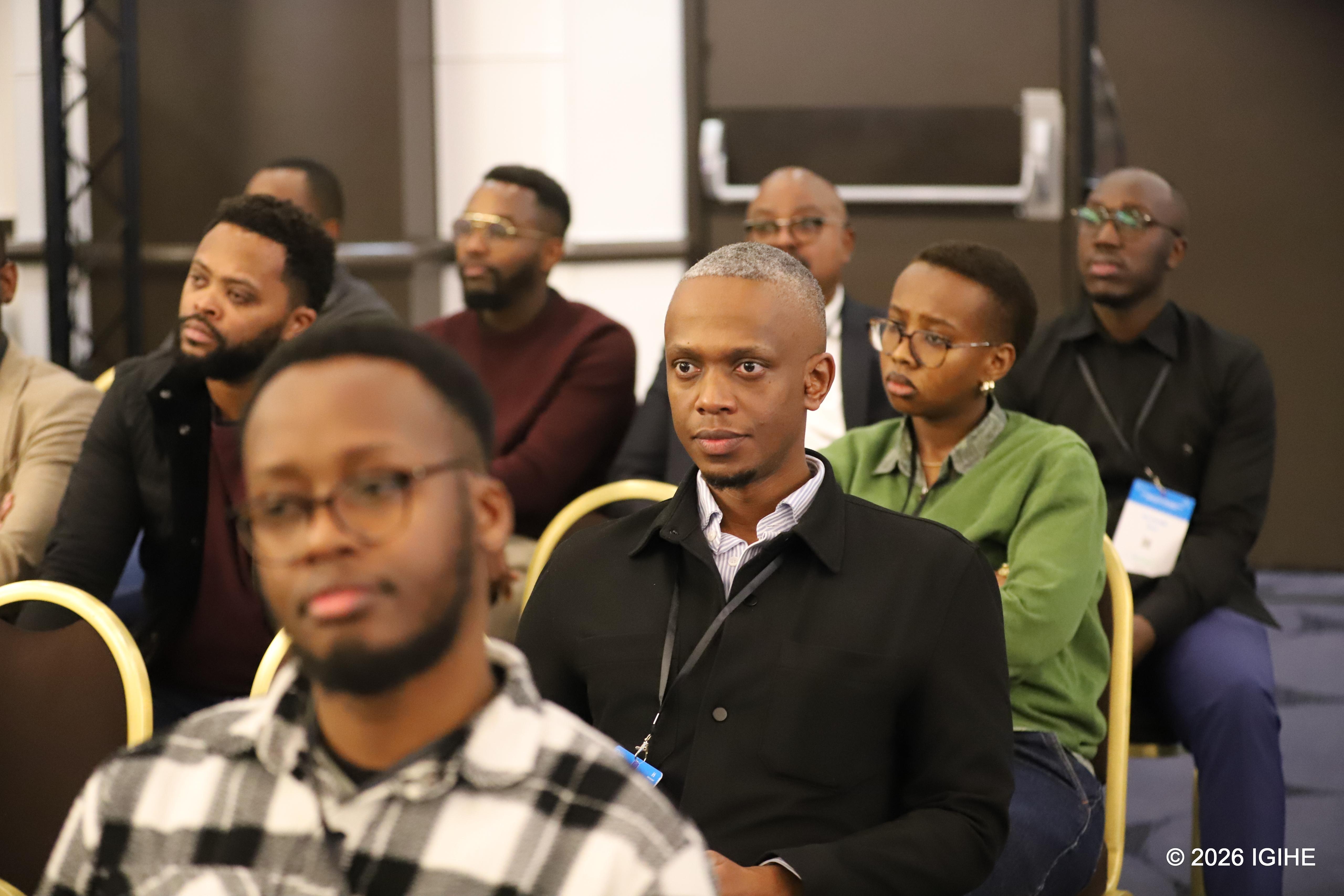
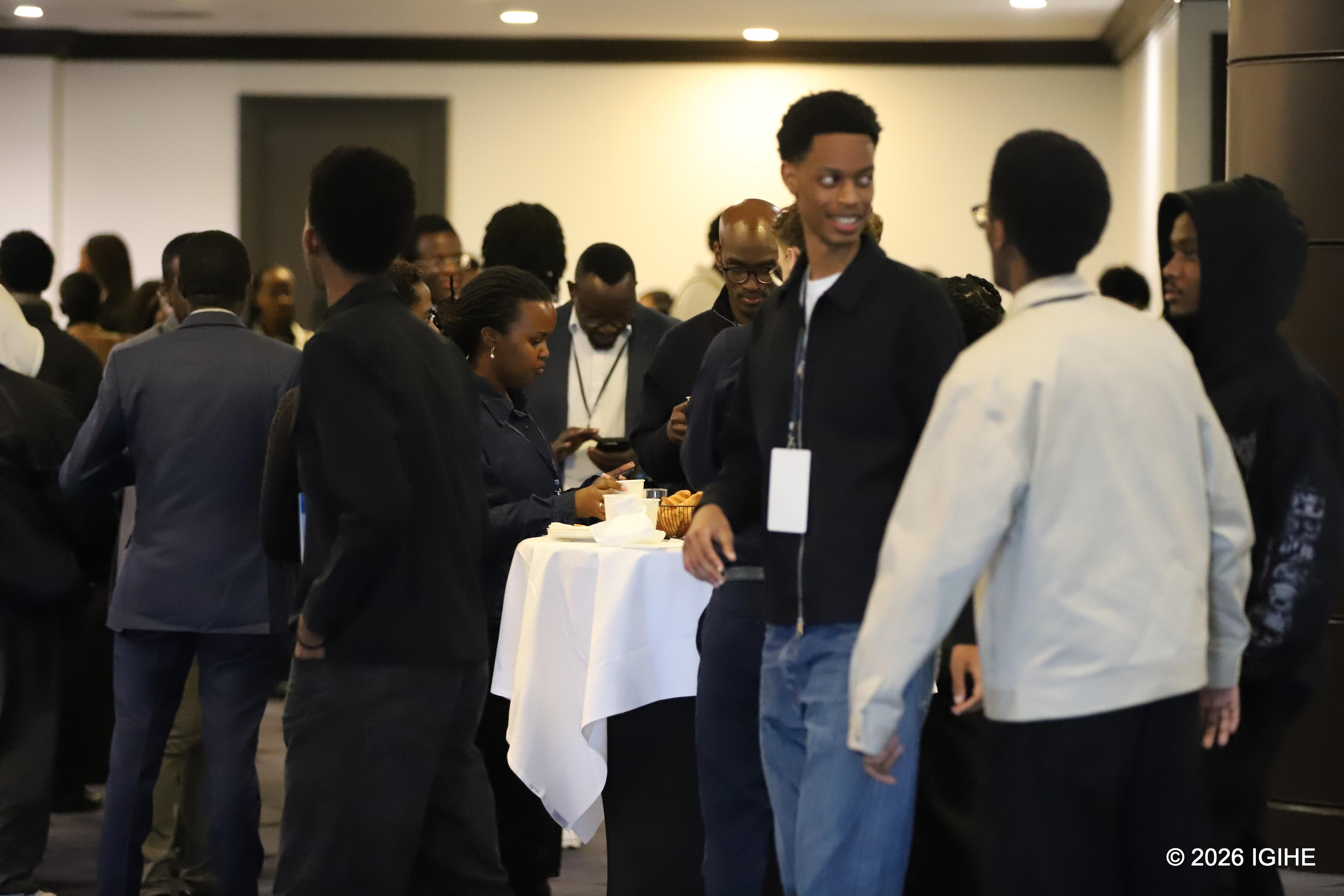
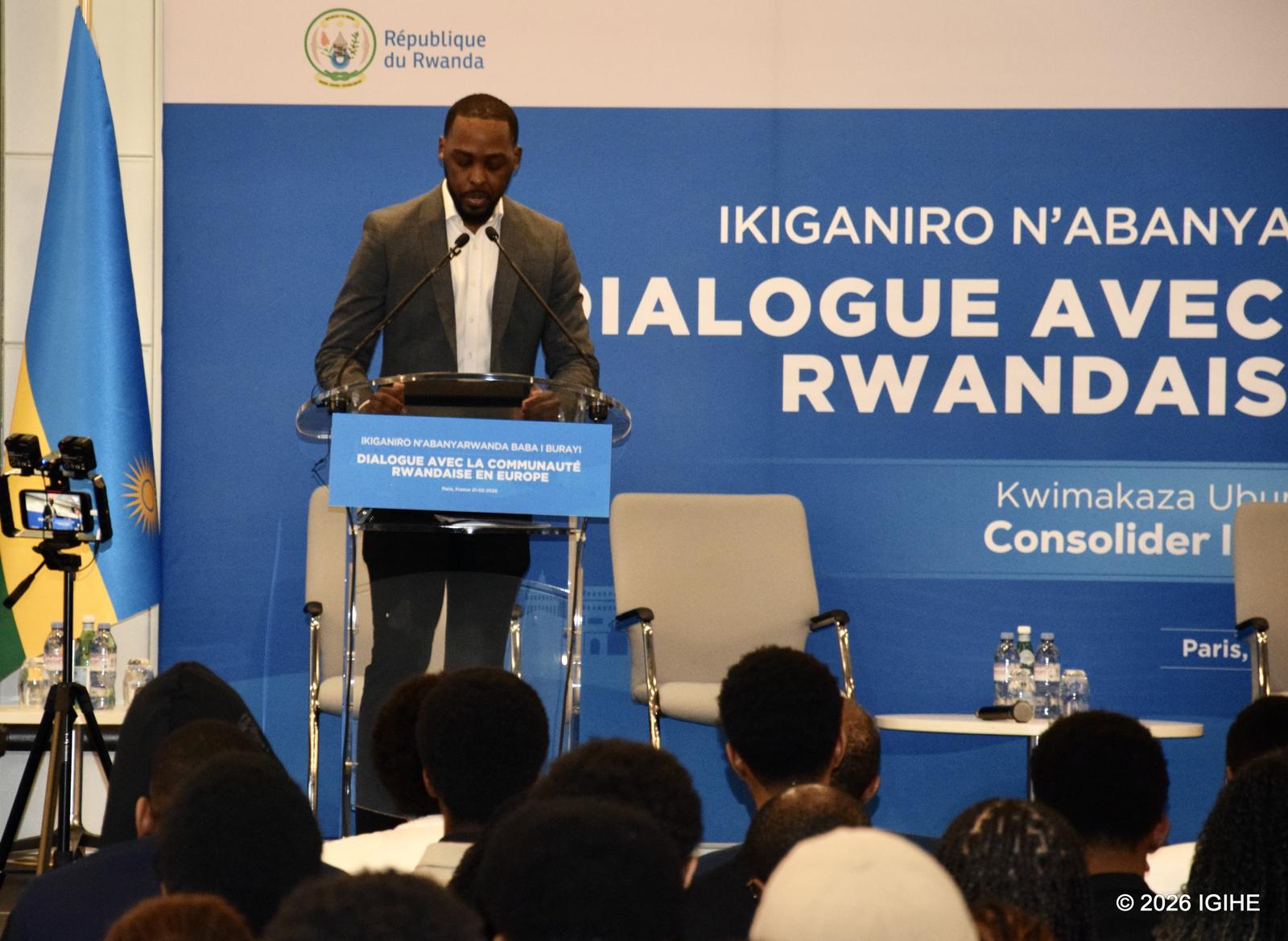
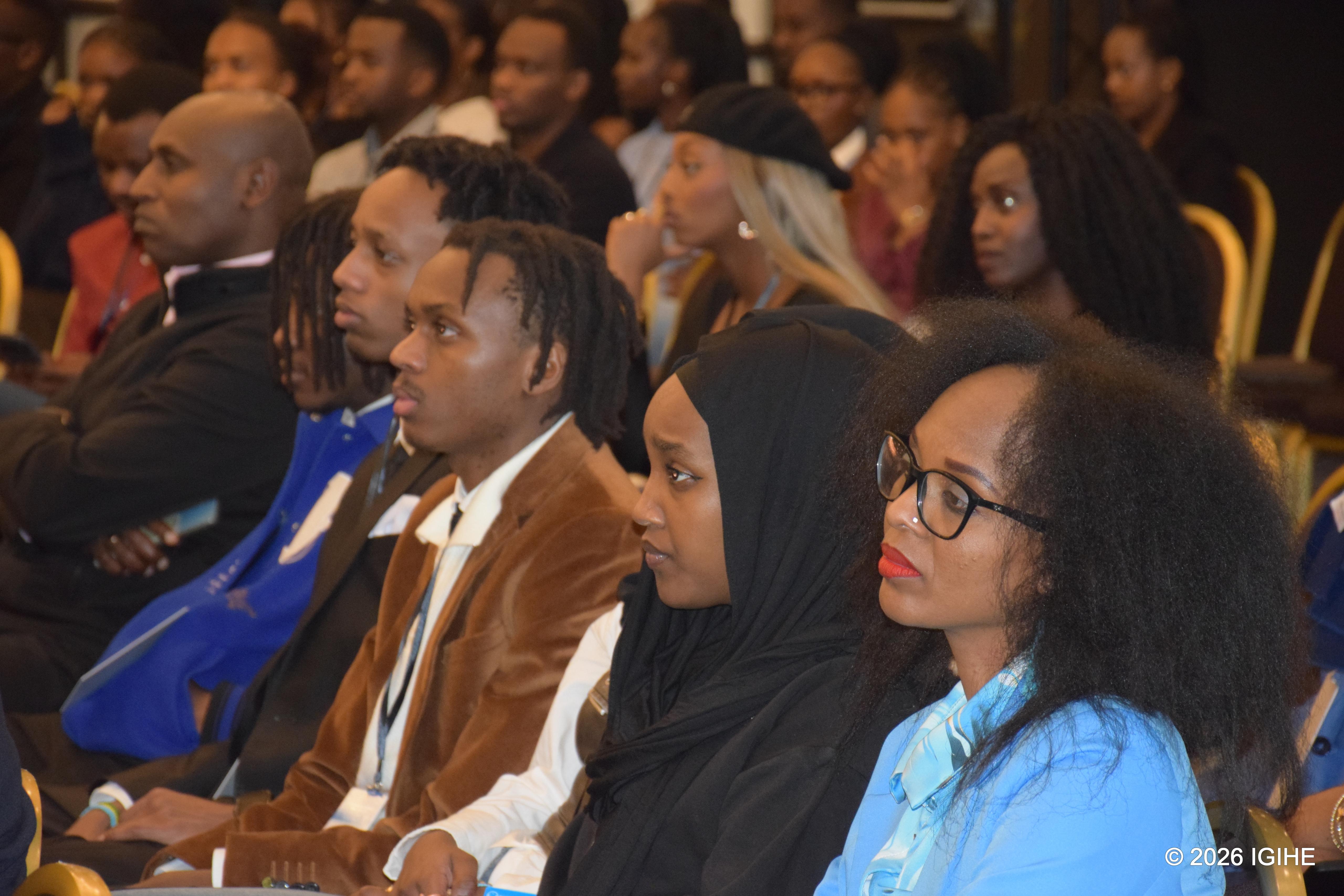
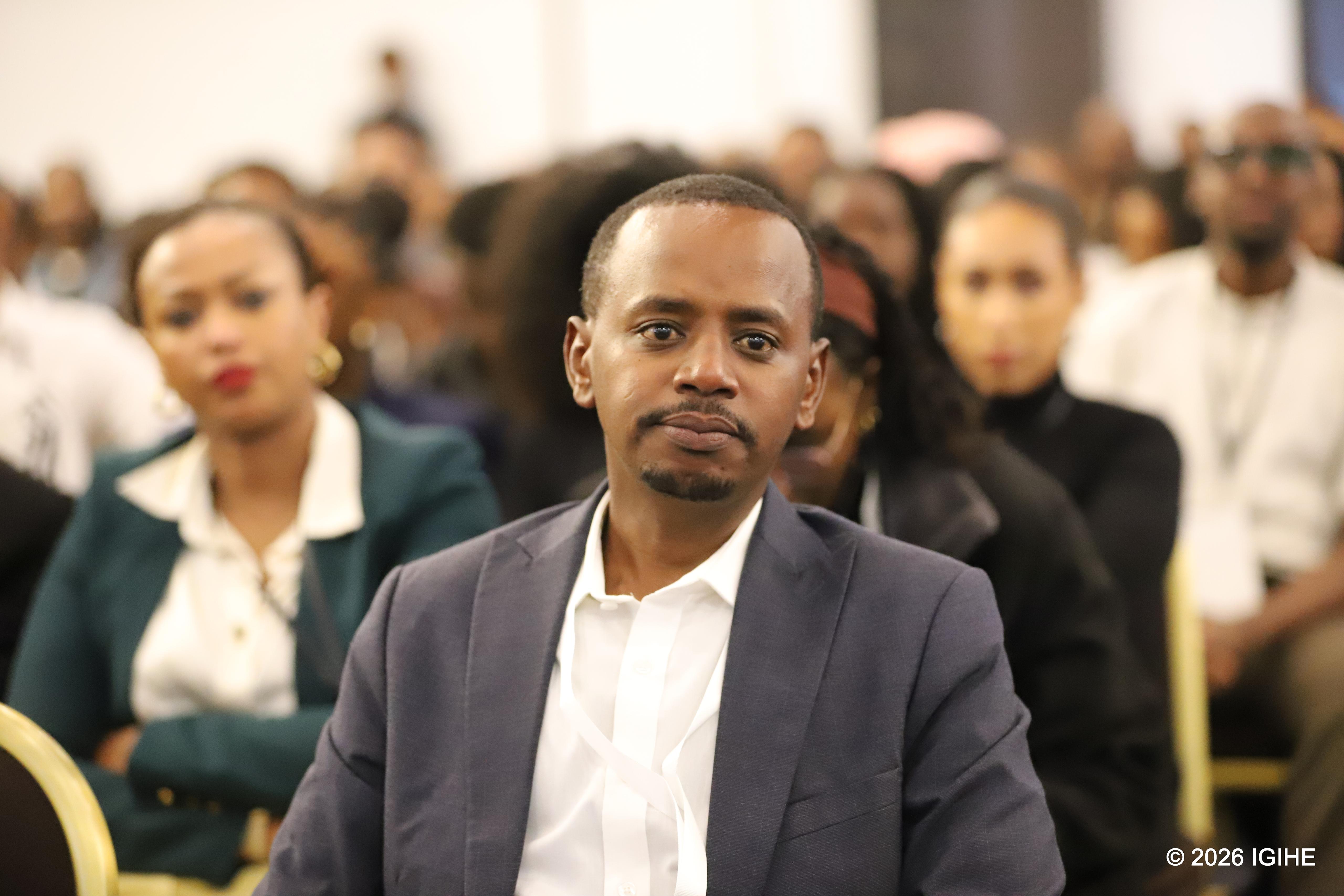
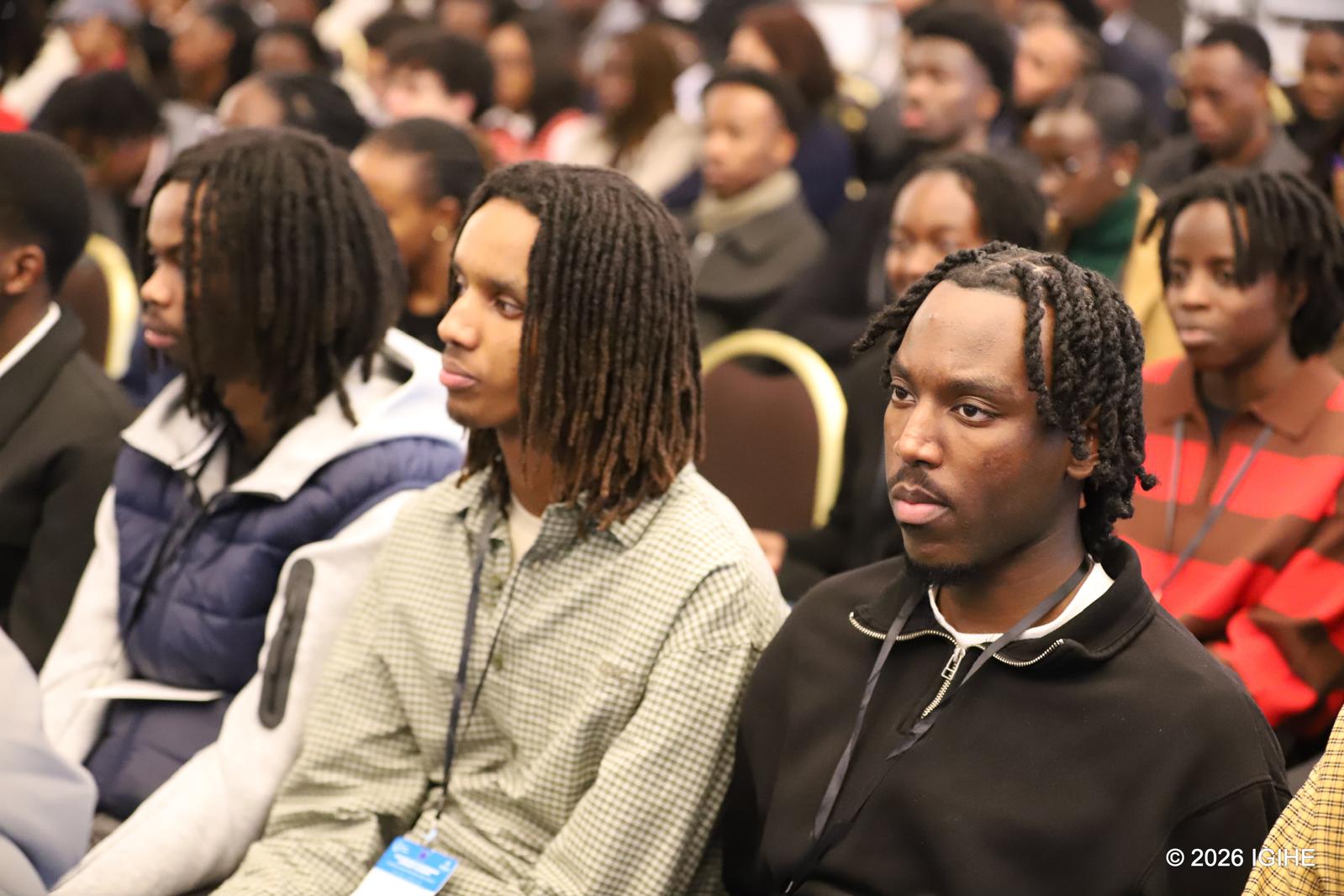
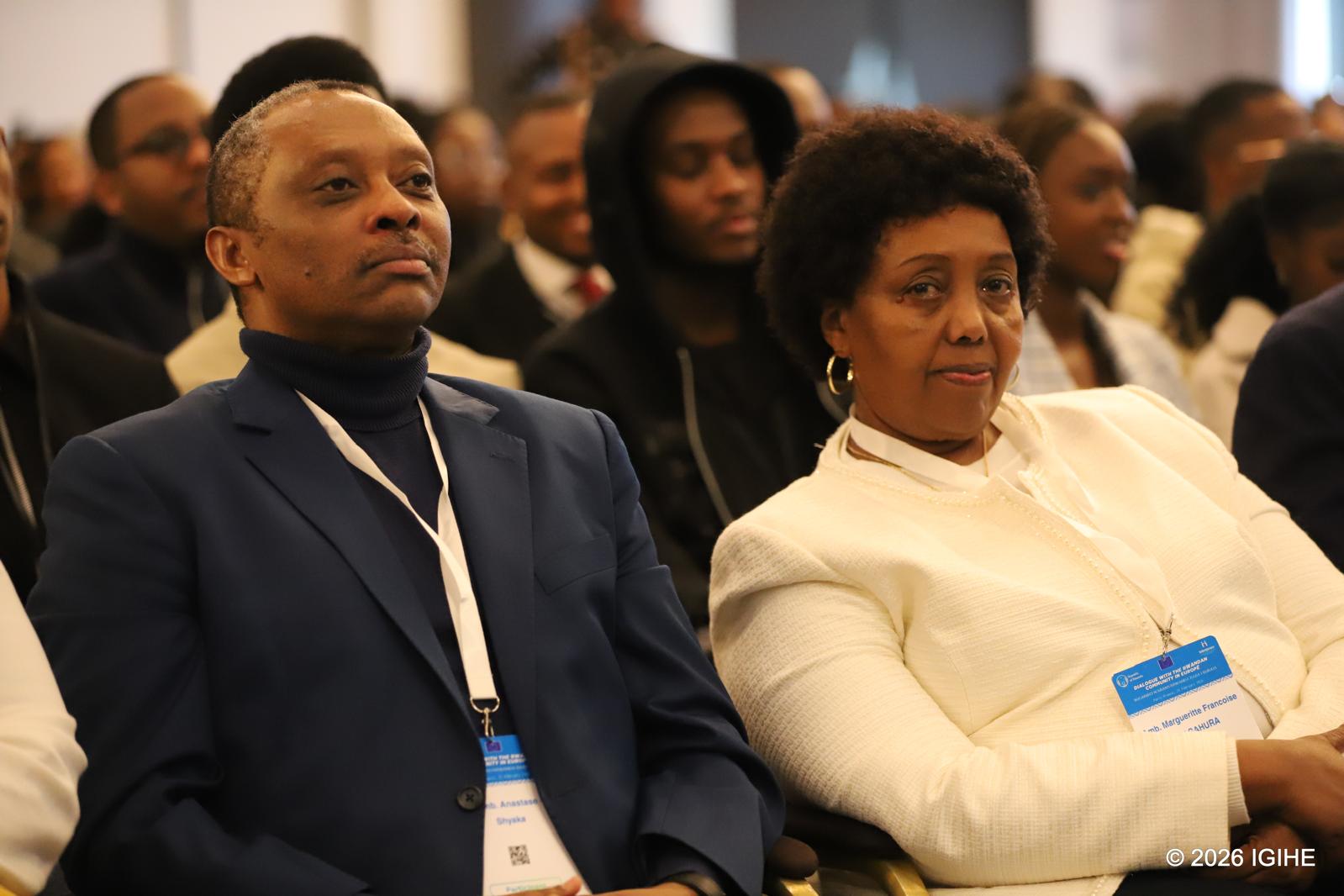
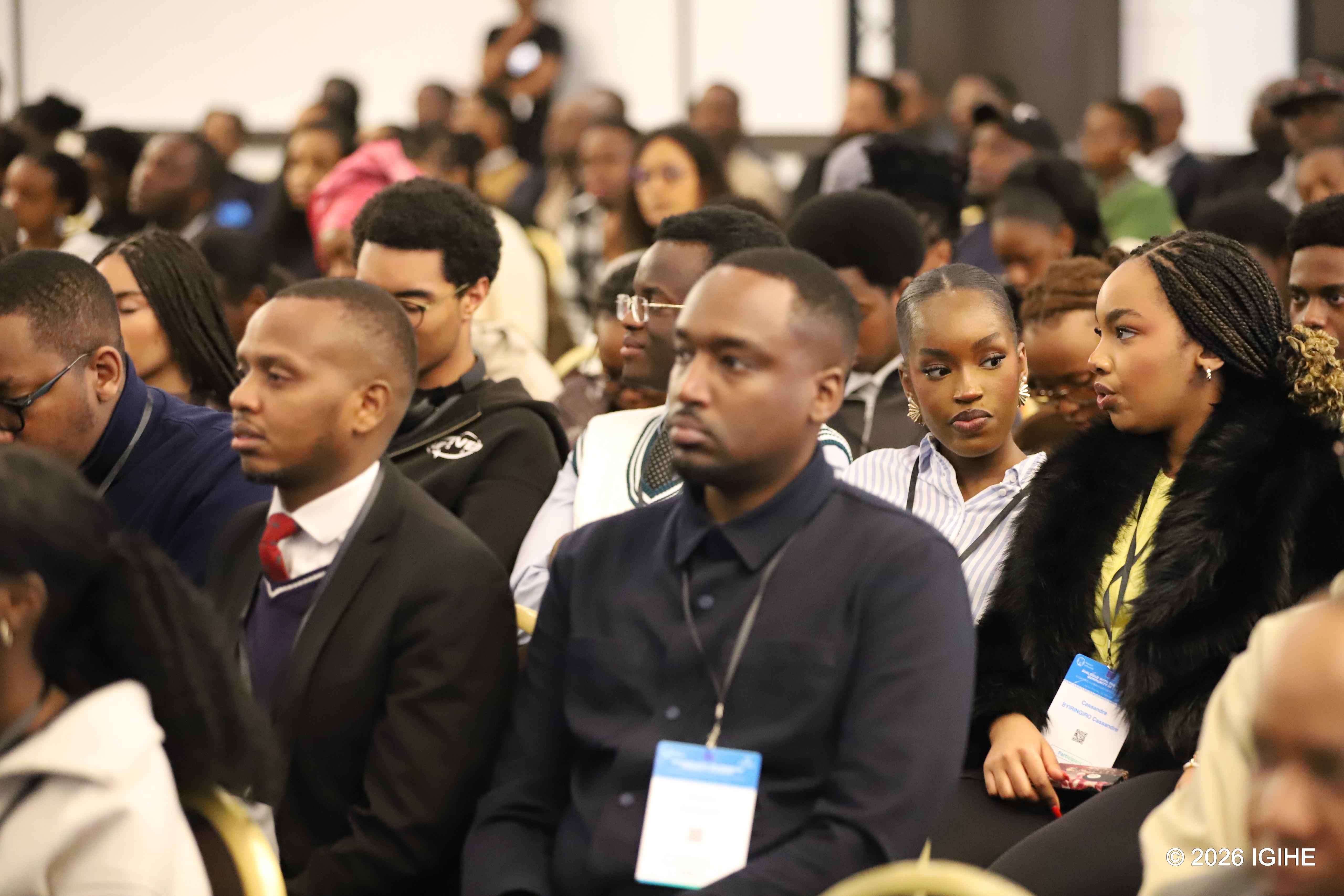
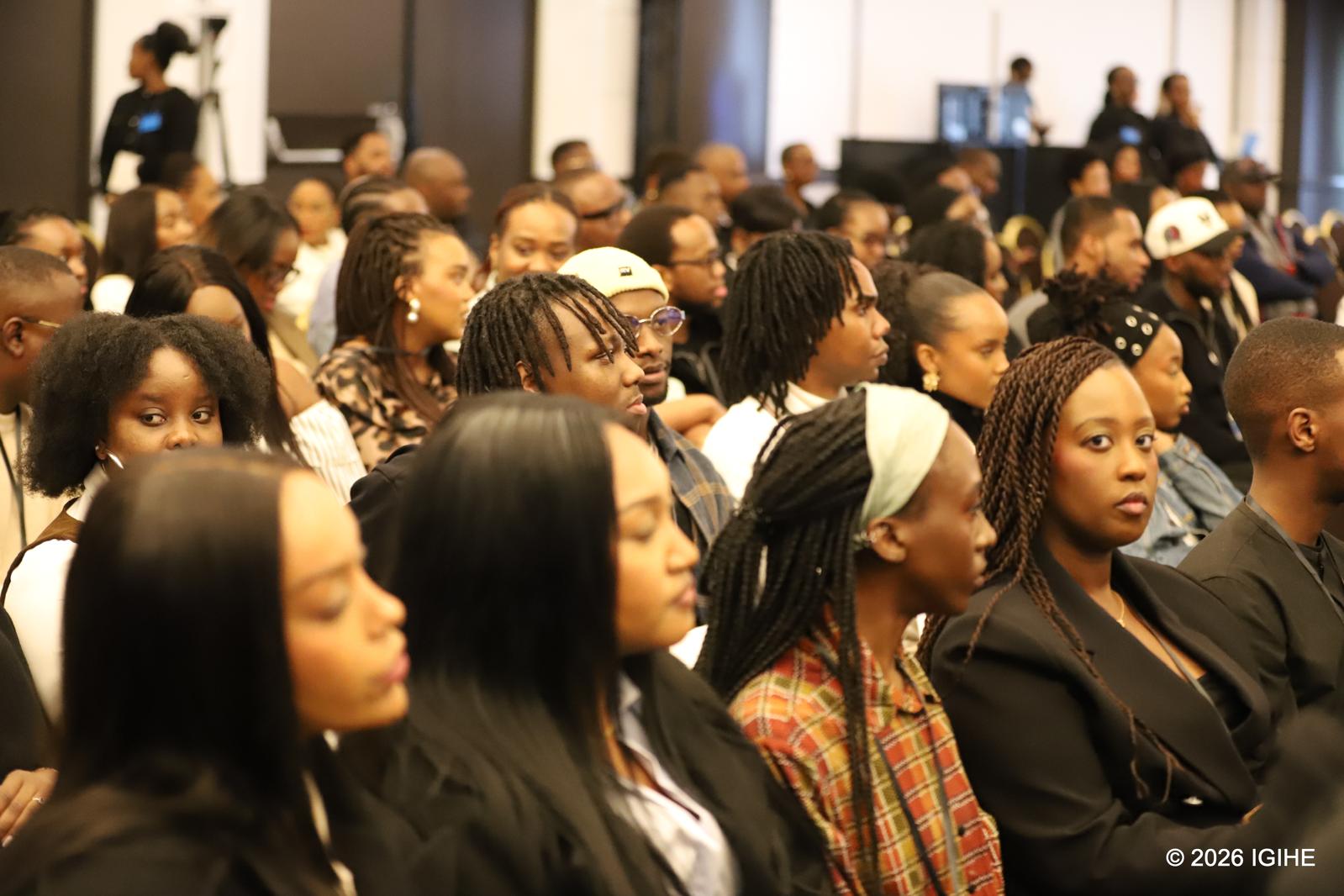
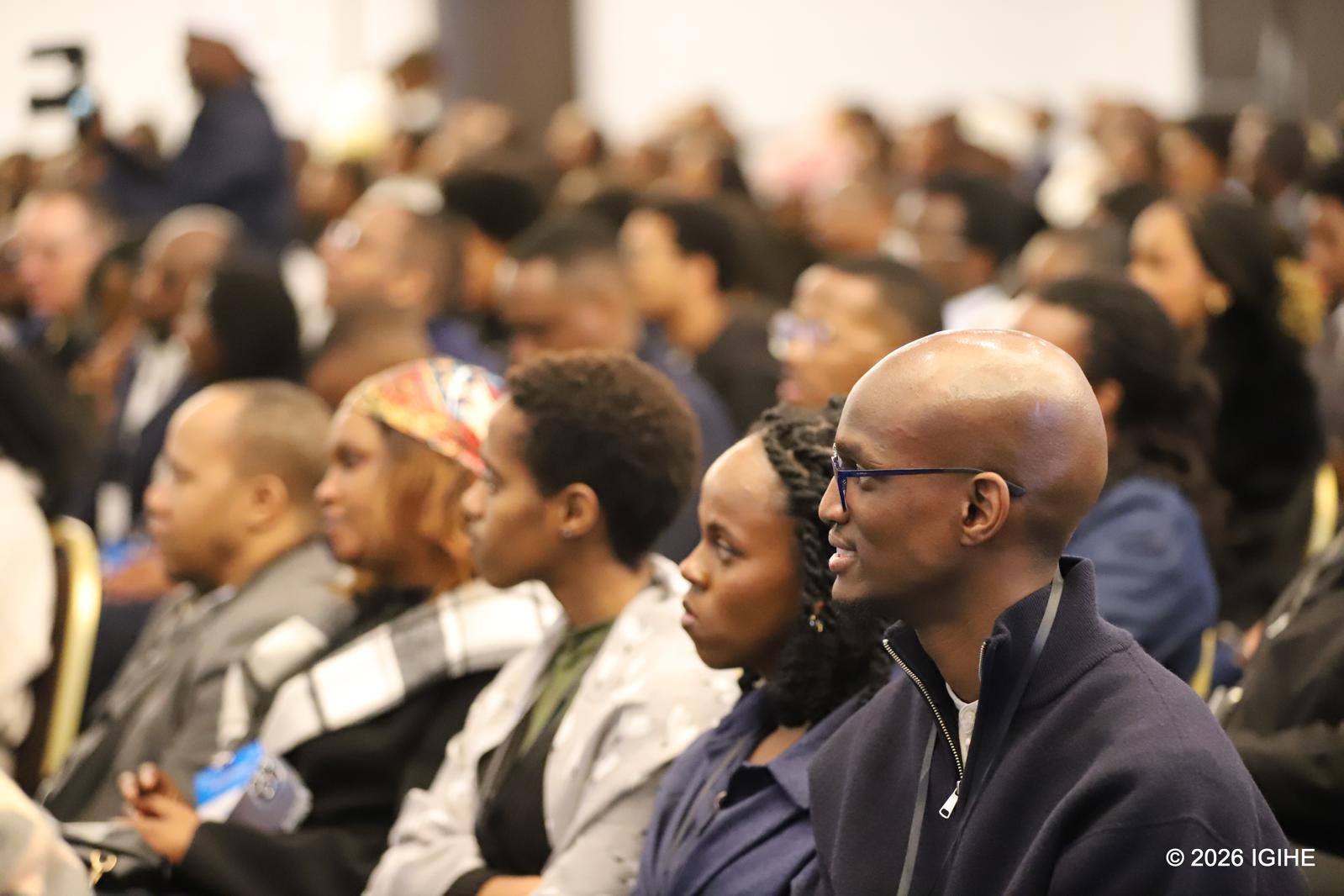
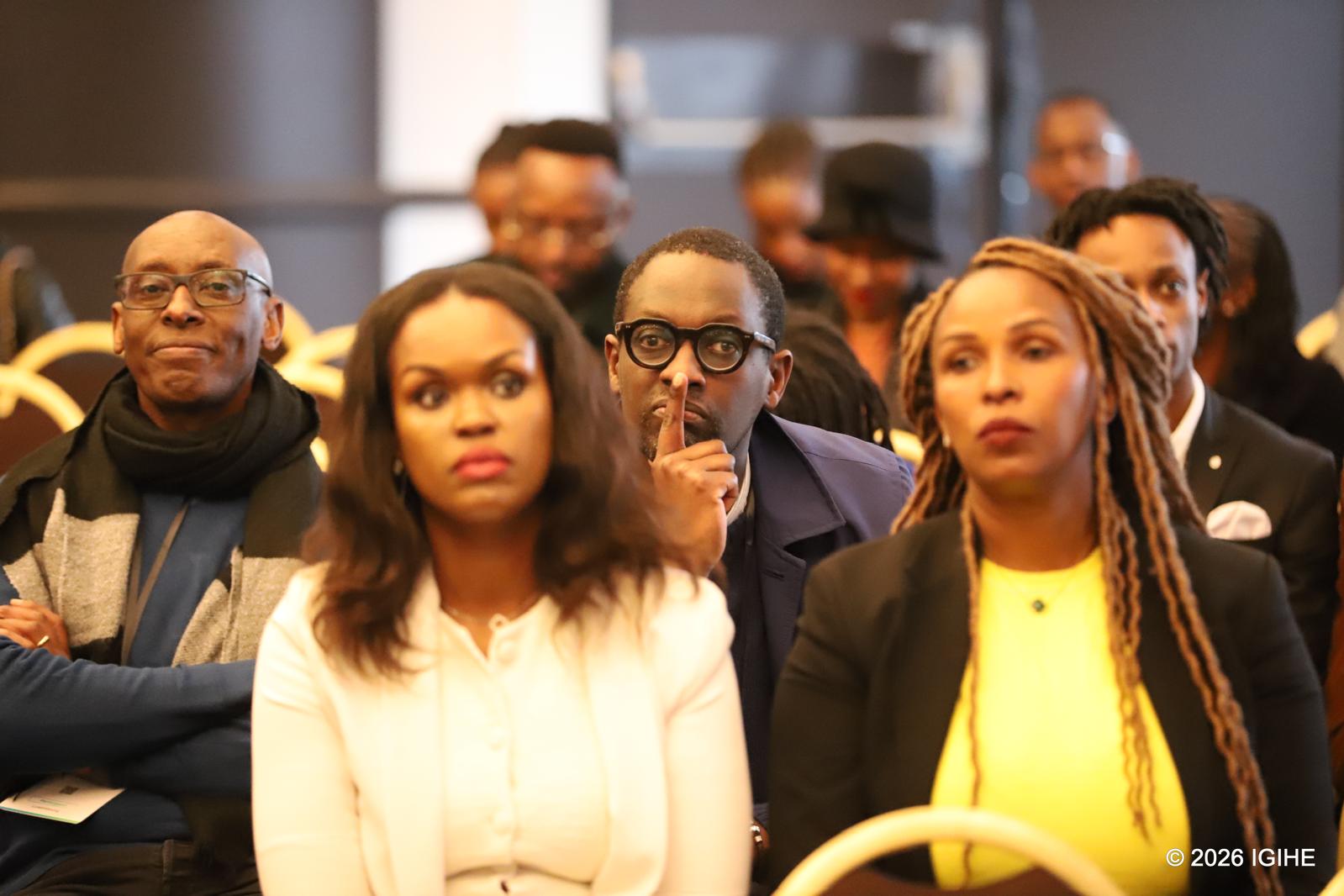
The strong presence of young people born or raised in the diaspora was a defining feature of the gathering. For the delegation from Rwanda, this reality represents a source of optimism. Although geographically distant from the country, these young individuals remain an essential link in cultural and national continuity.
The event also responded to a request expressed by diaspora youth eager to engage directly with representatives from Rwanda in order to better understand the country’s contemporary realities and share their aspirations.
Understanding history to build the future
Discussions also explored memory and historical issues, recalling Rwanda’s complex past and the profound human consequences of the 1994 Genocide against the Tutsi.
Within this context, the speaker stressed the importance of critical inquiry among younger generations, particularly in response to the wide range of narratives circulating on social media. The objective, he explained, is not to impose a particular perspective but to promote informed understanding grounded in facts, testimonies, and direct exchanges.
Dialogue and sharing experiences
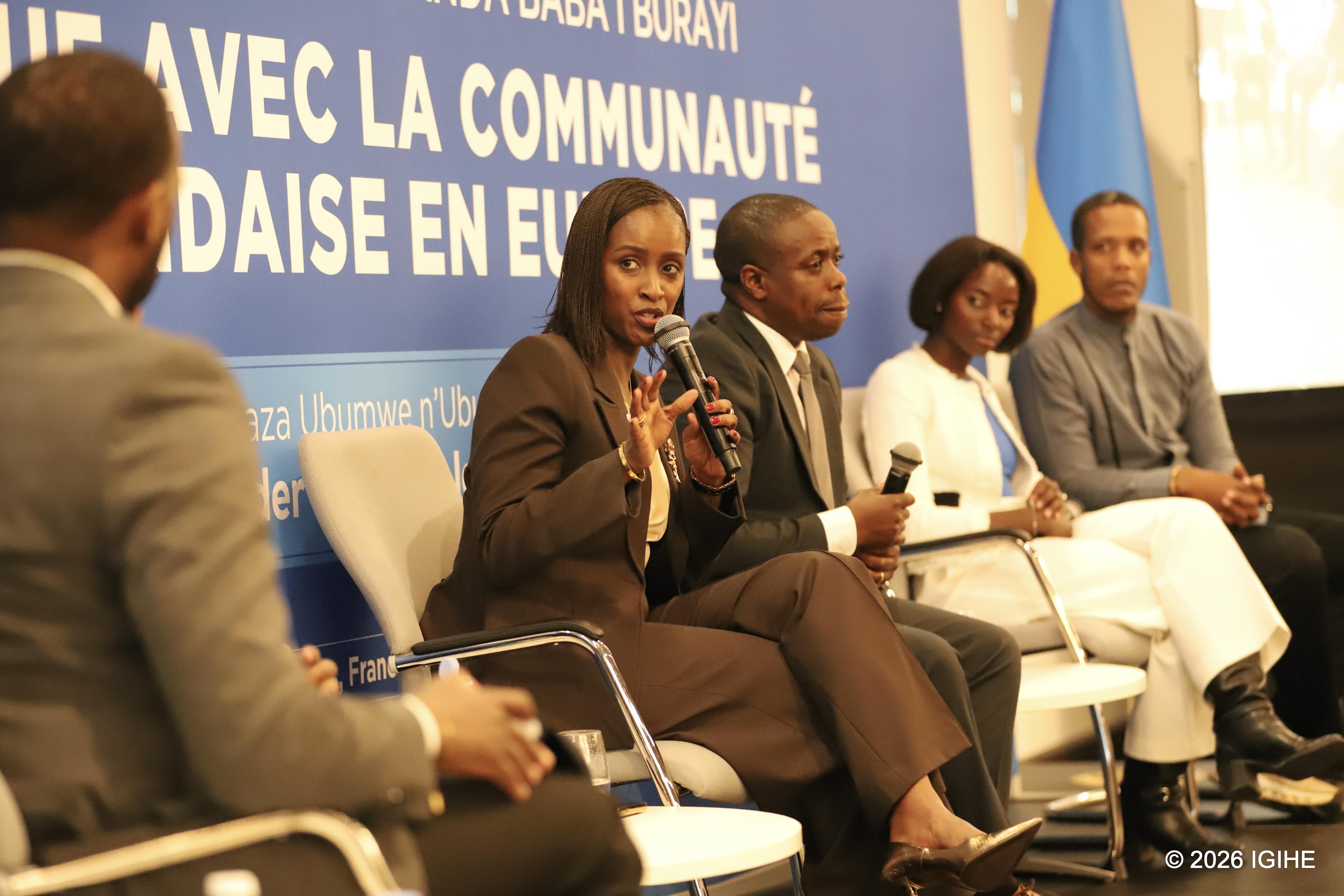
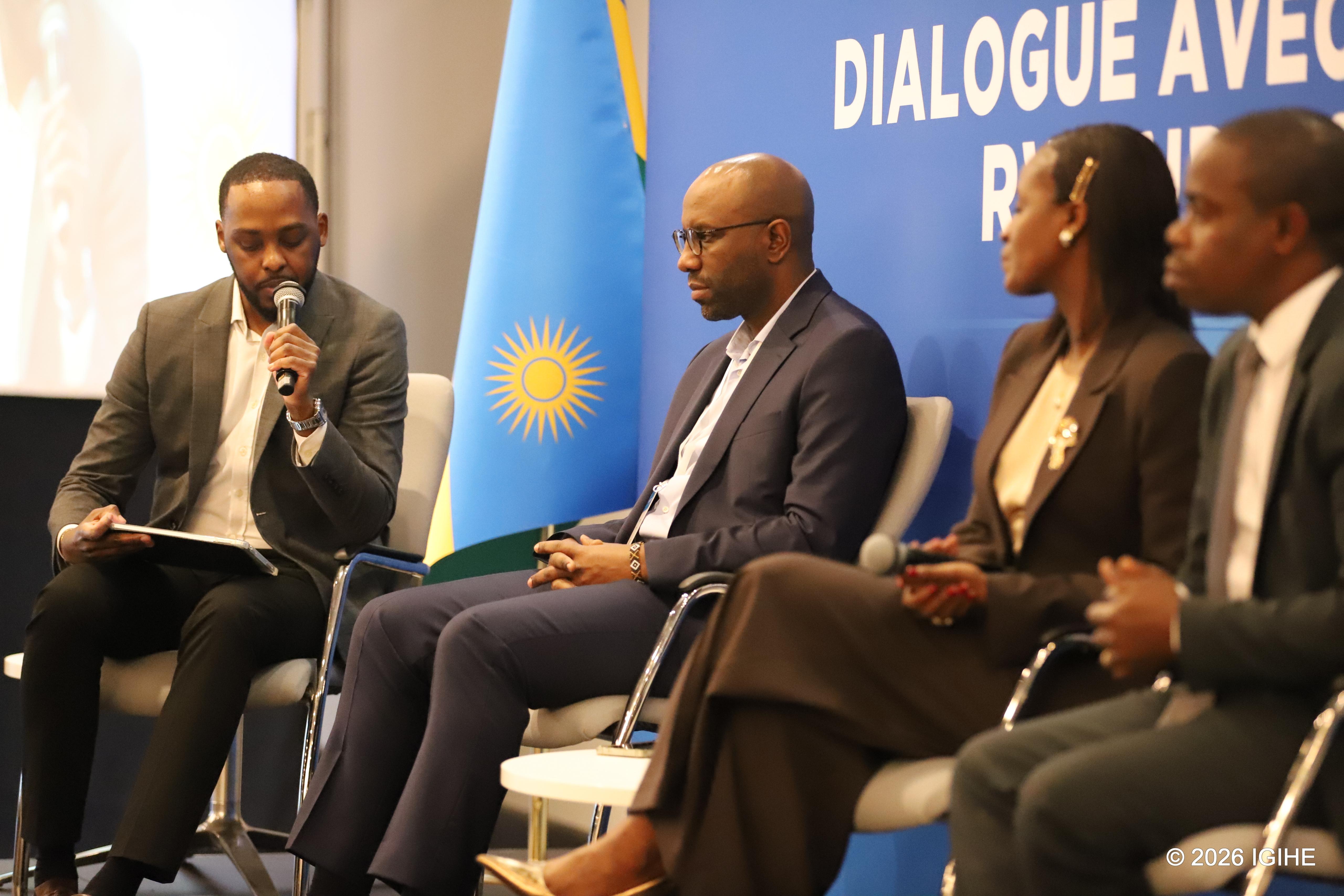
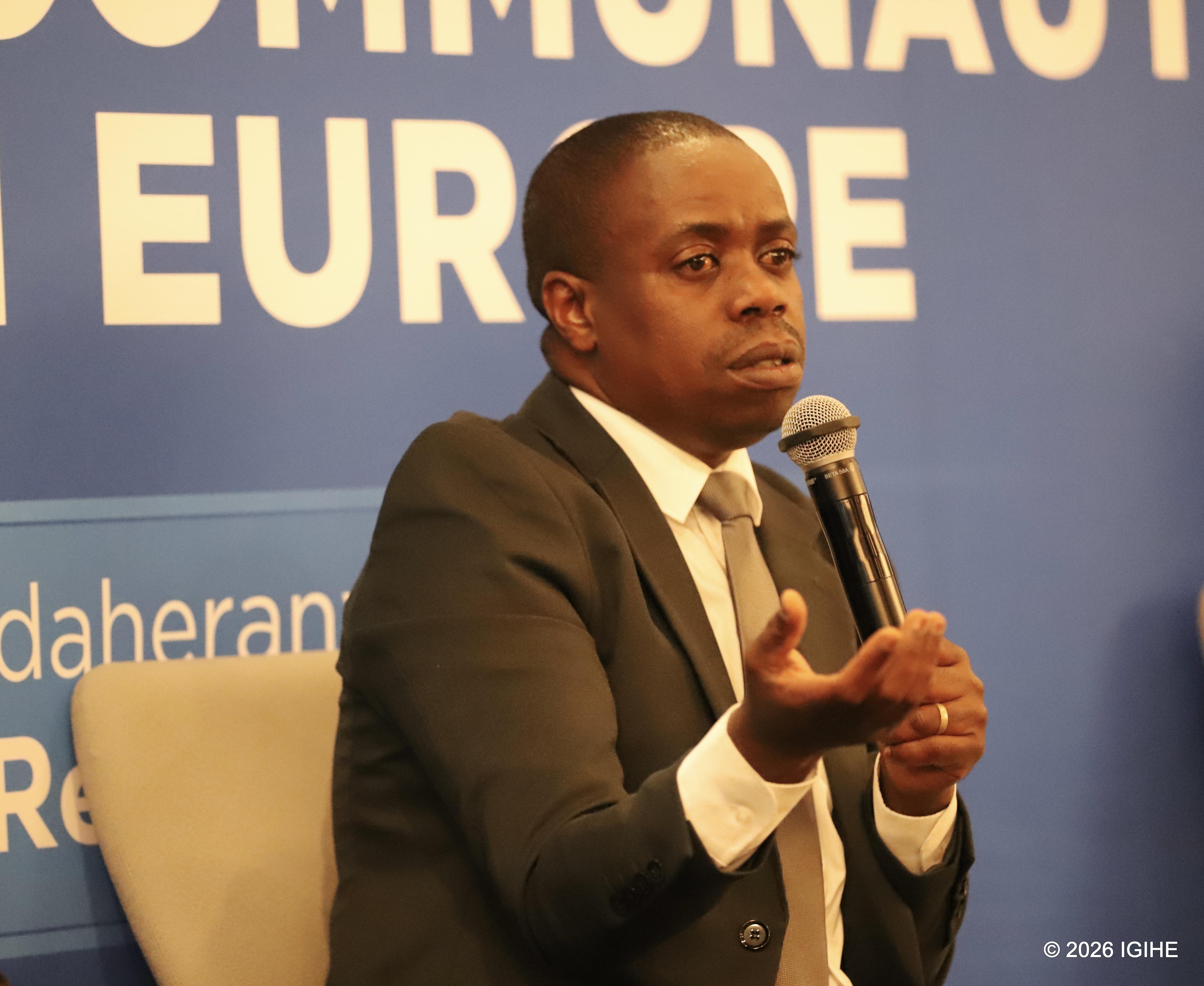
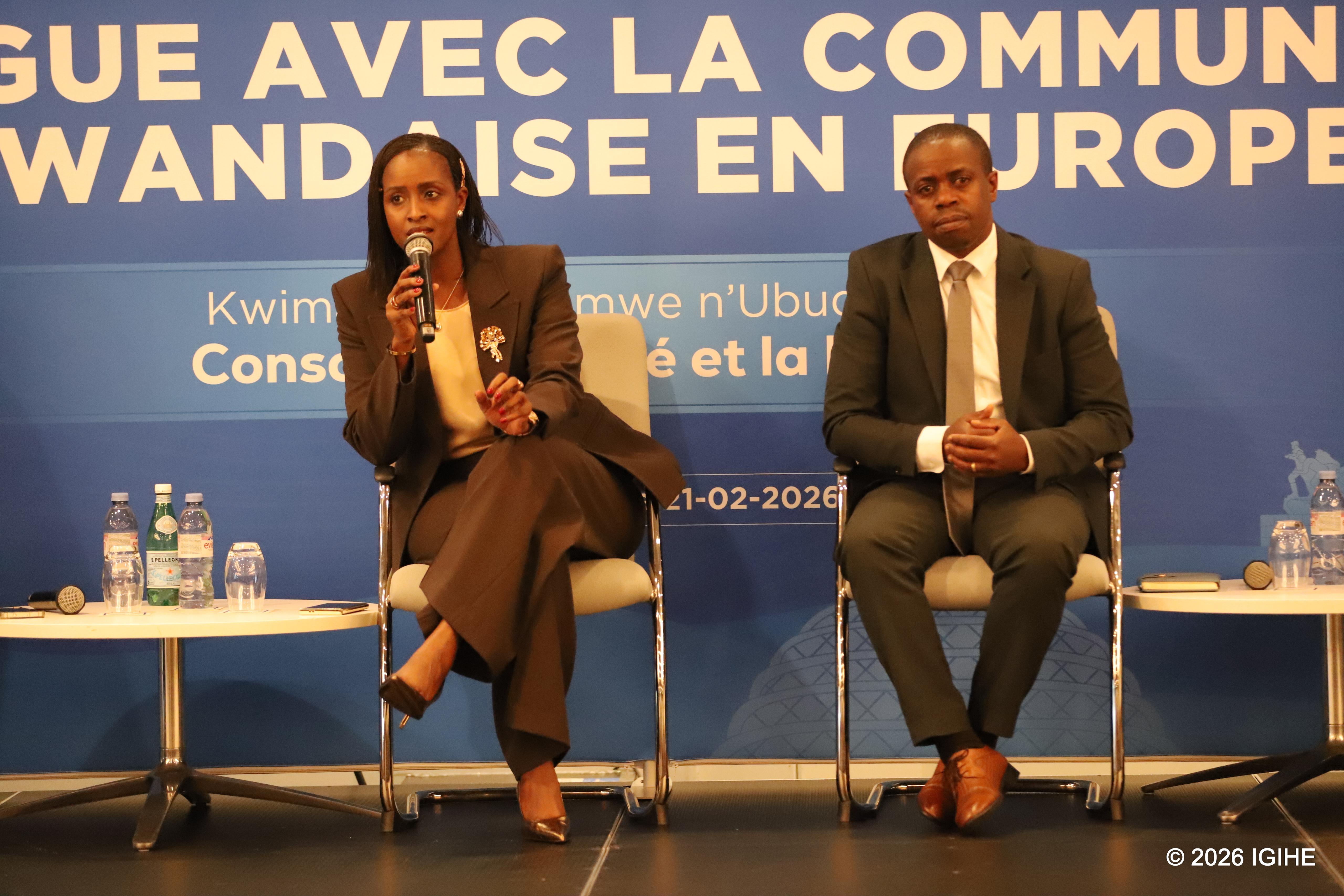
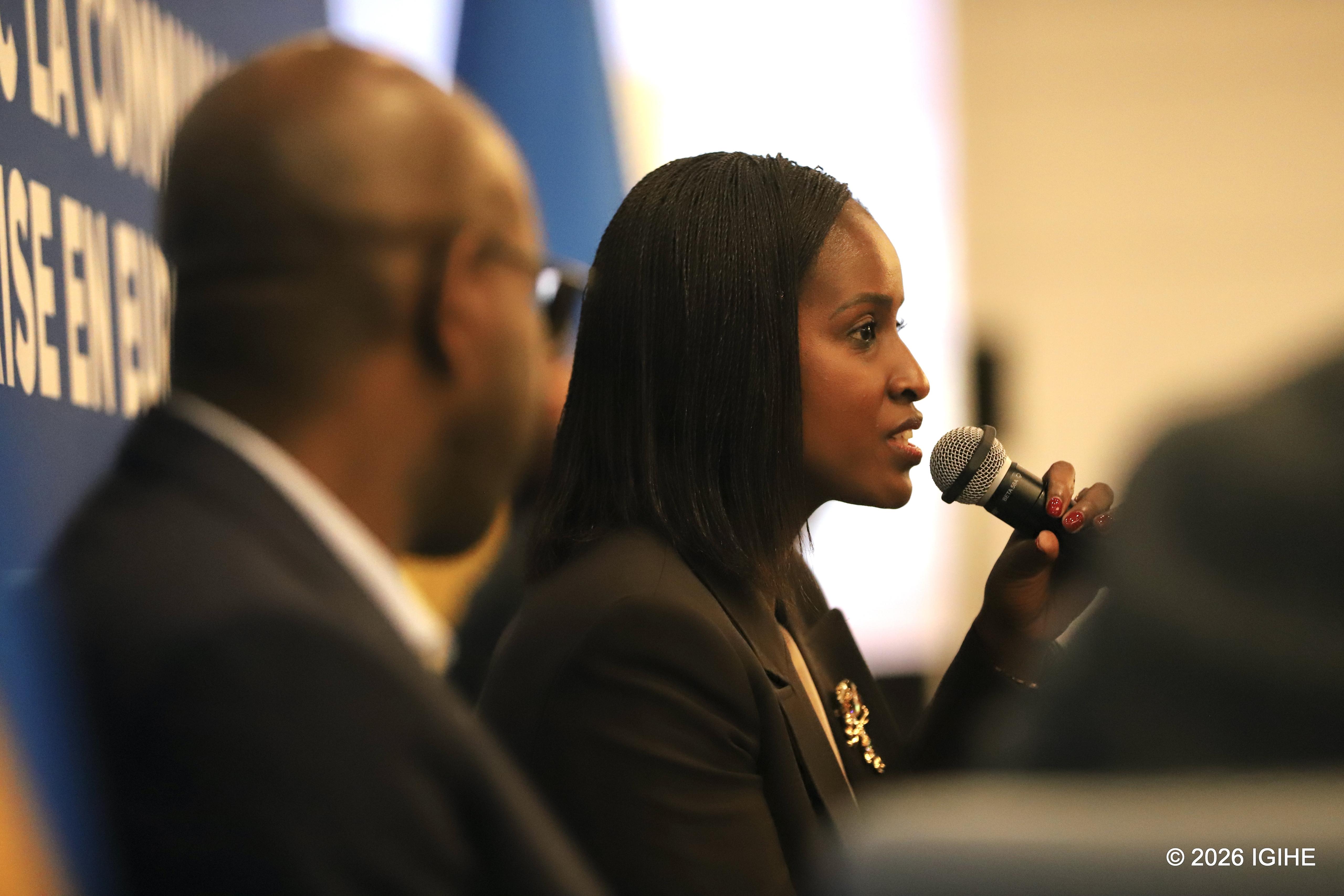
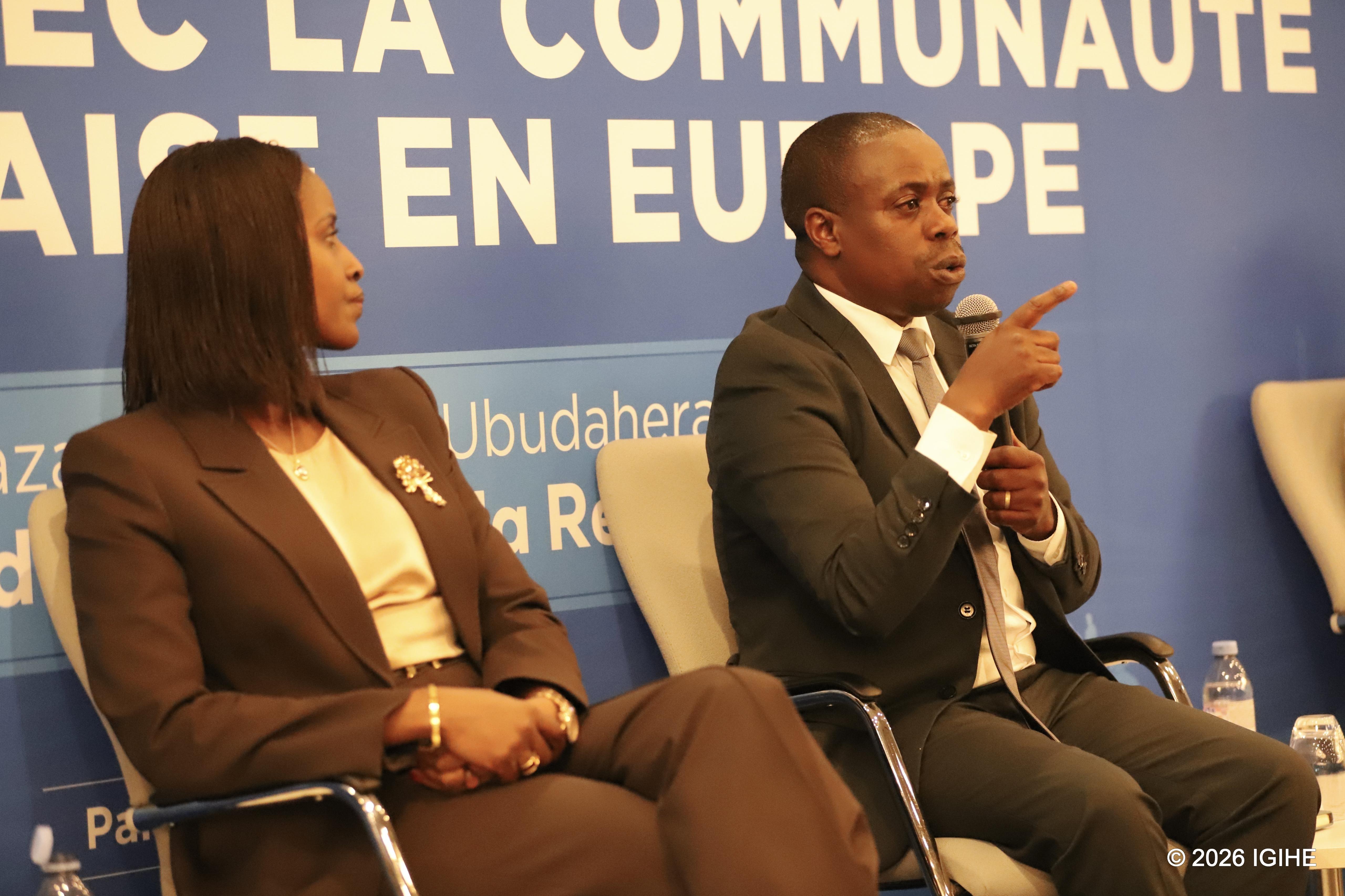
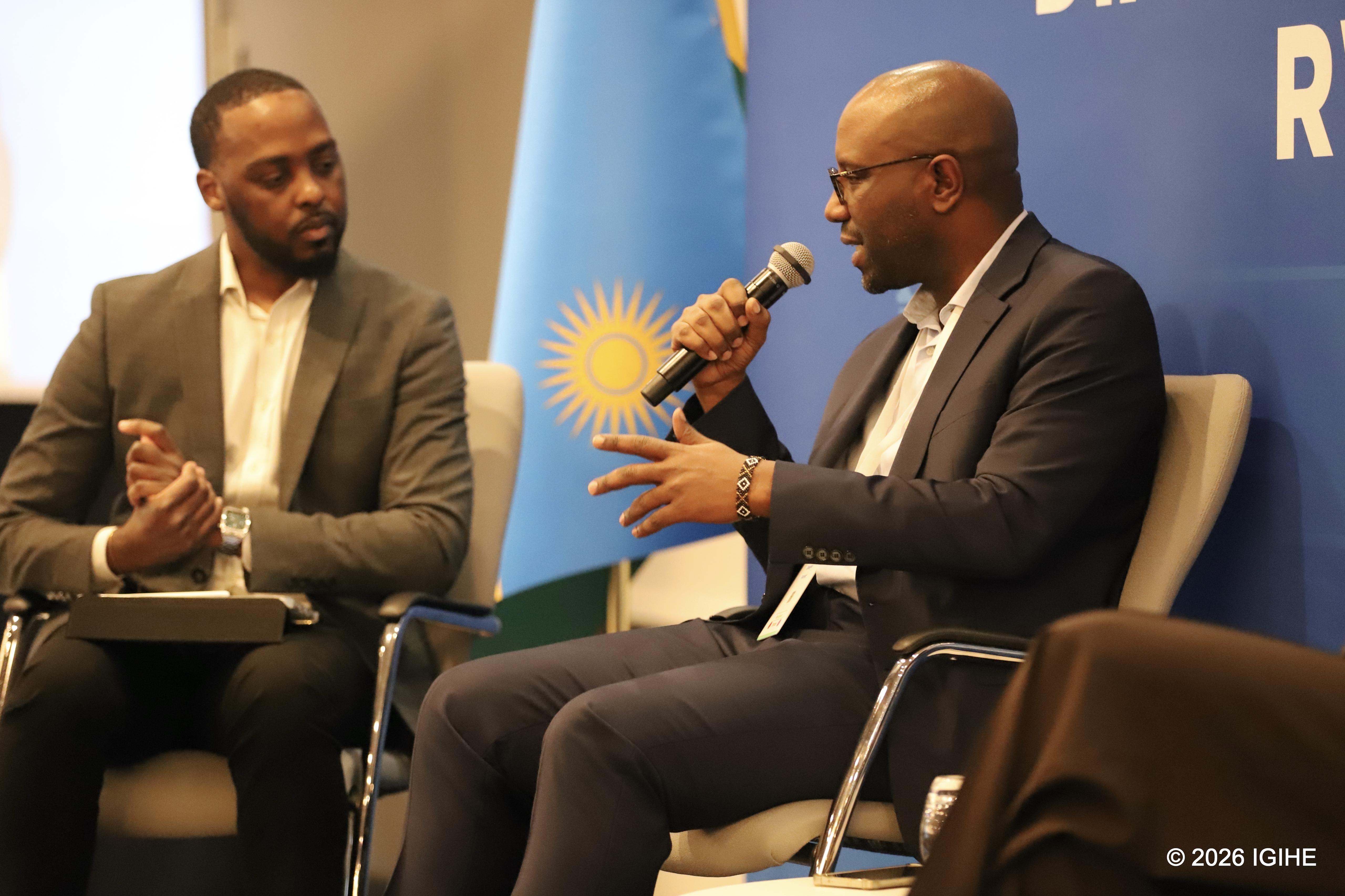
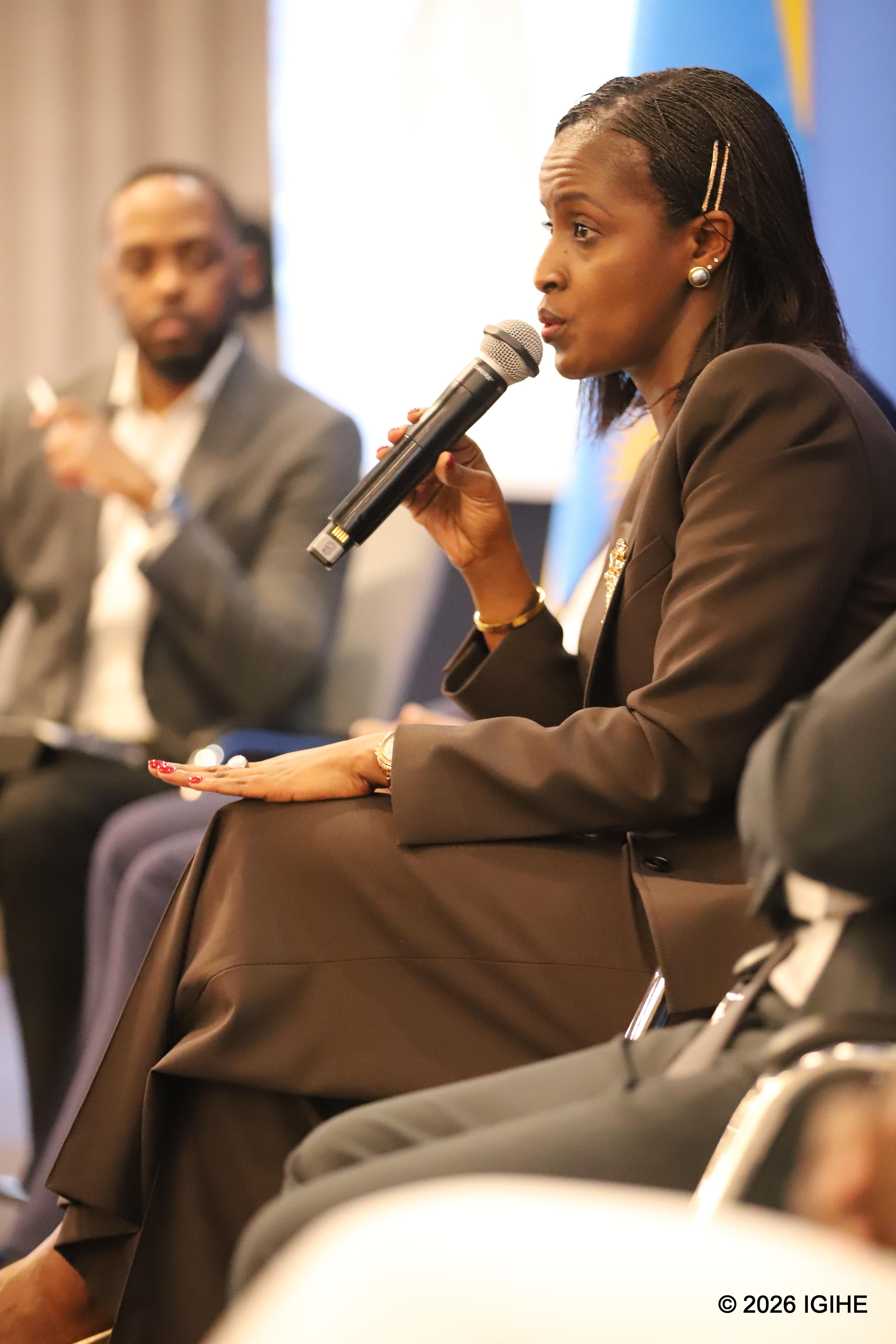
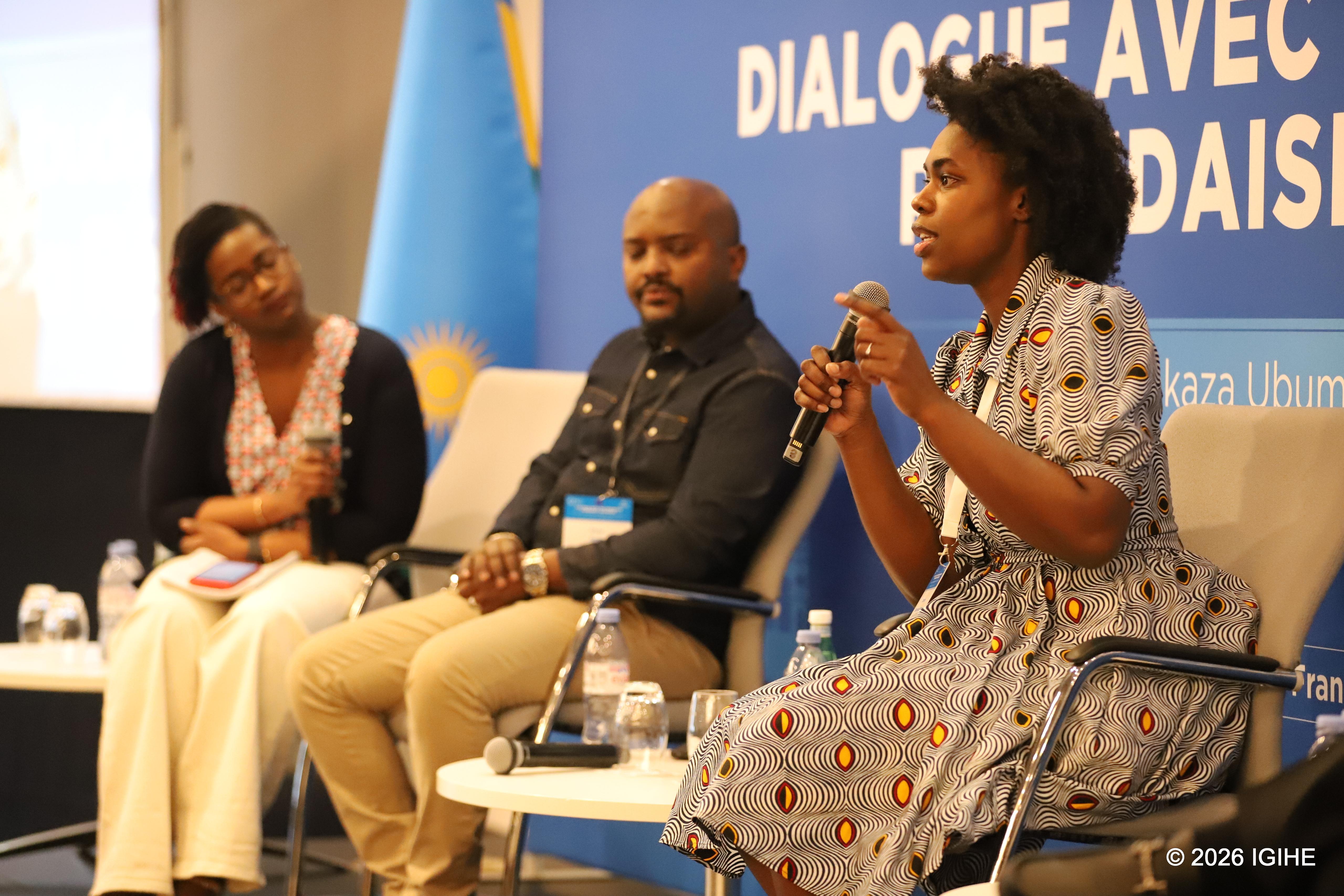
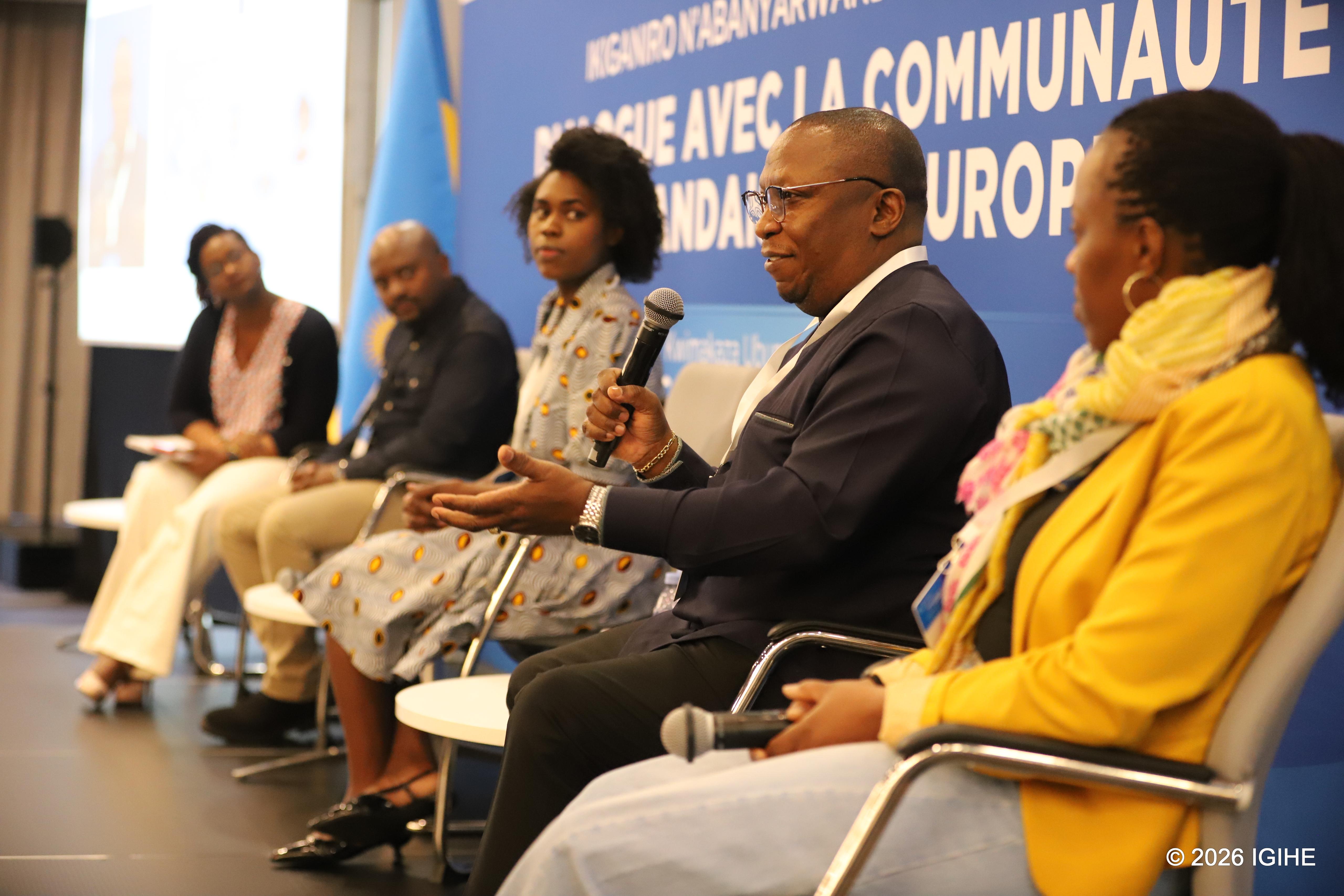
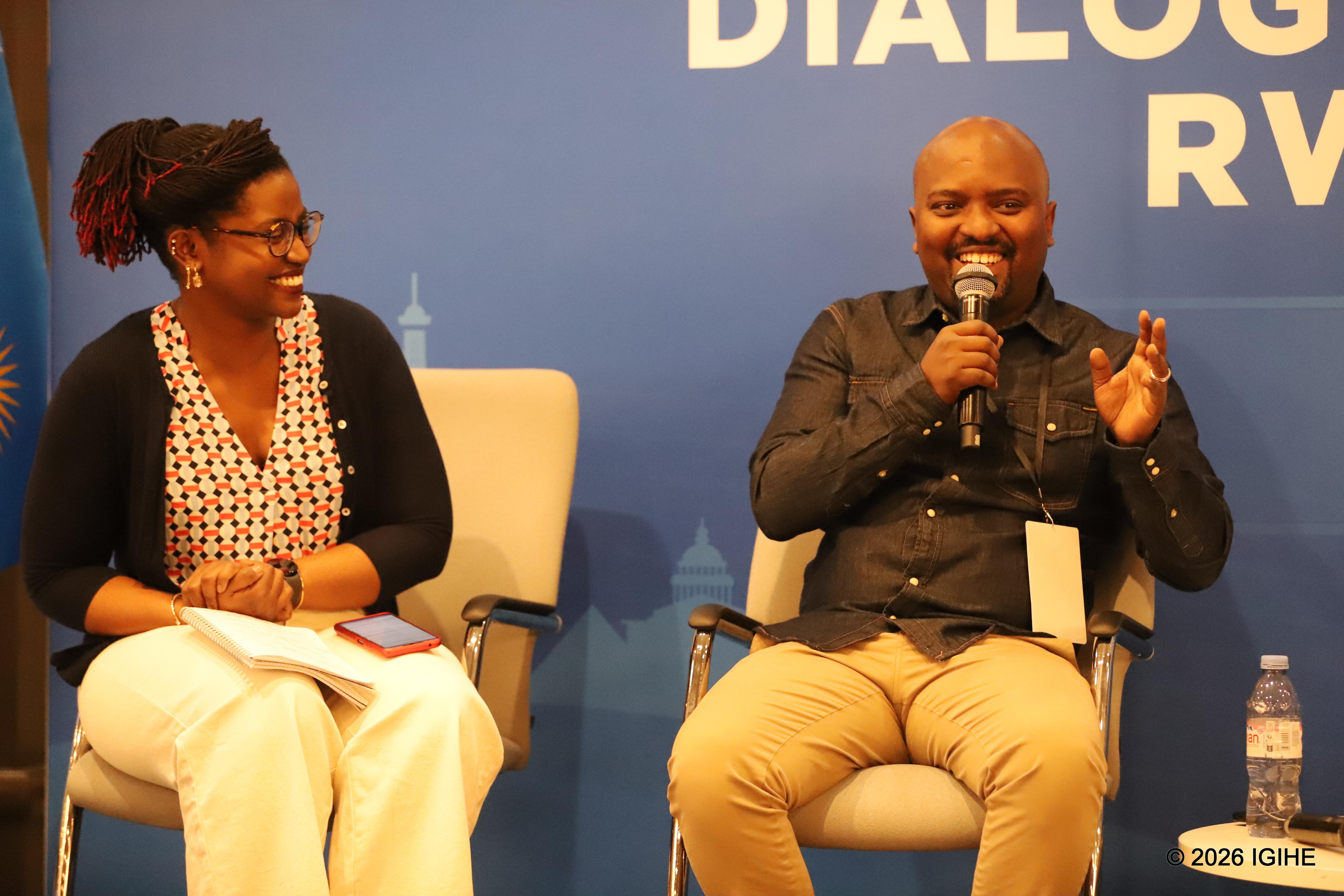
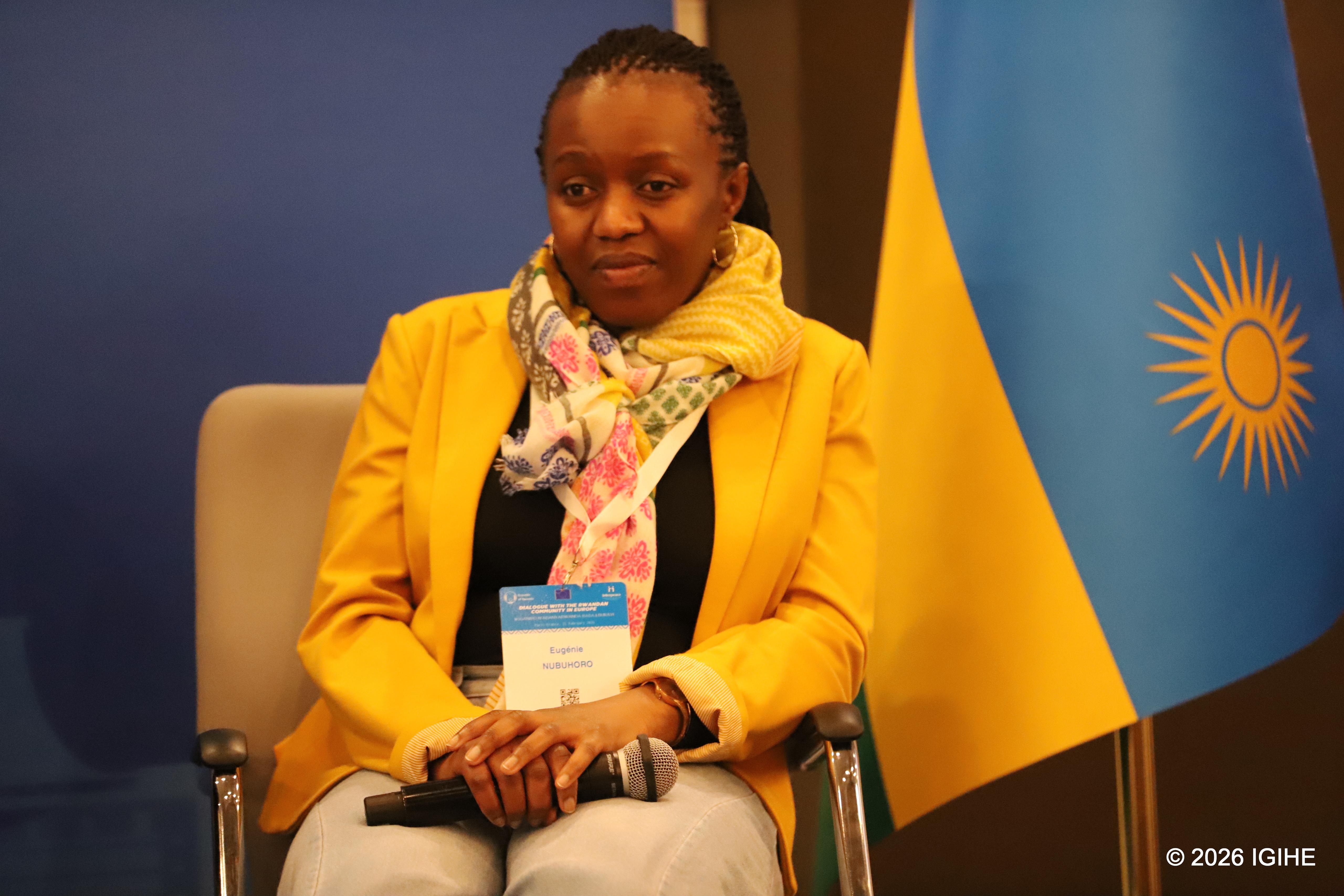
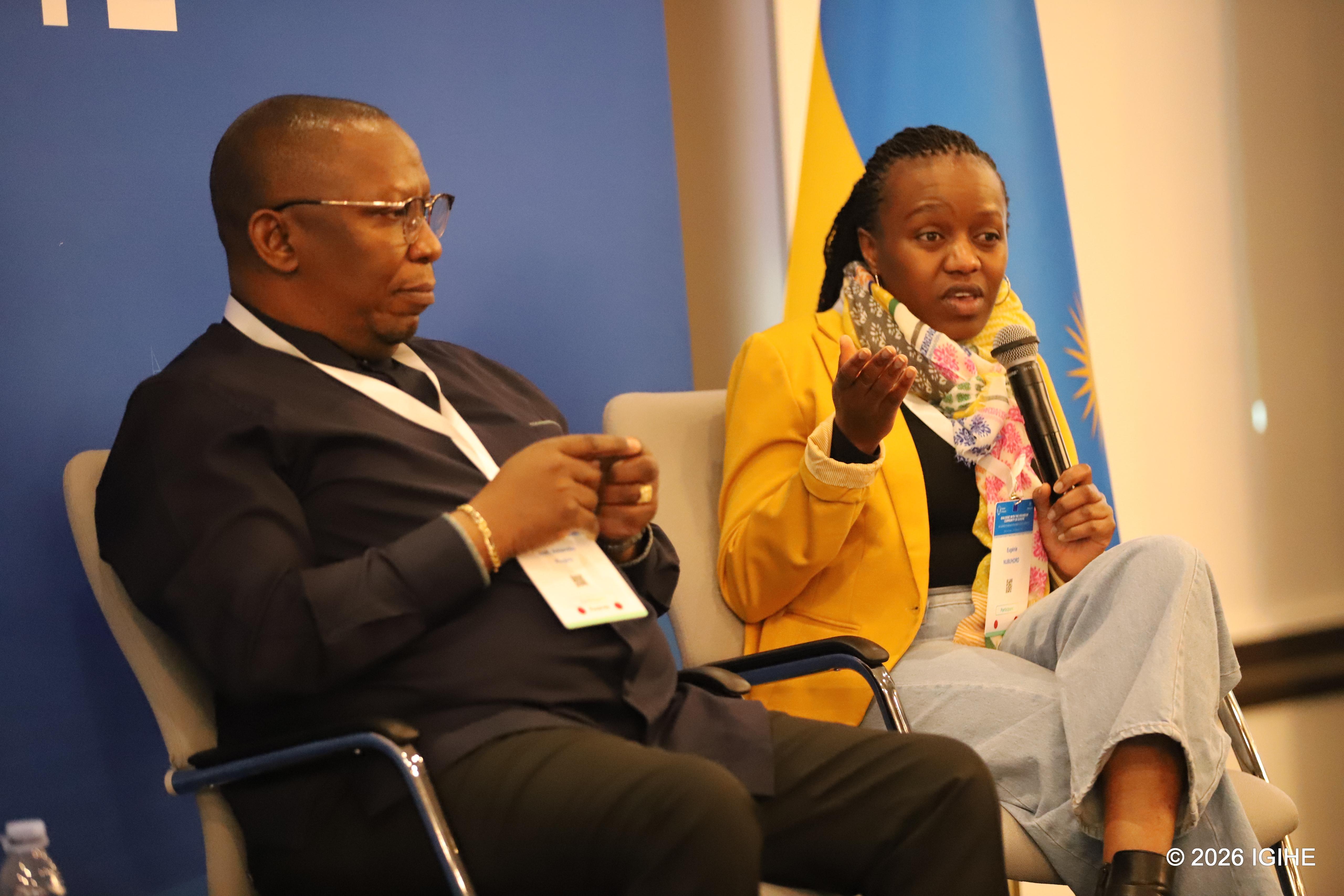
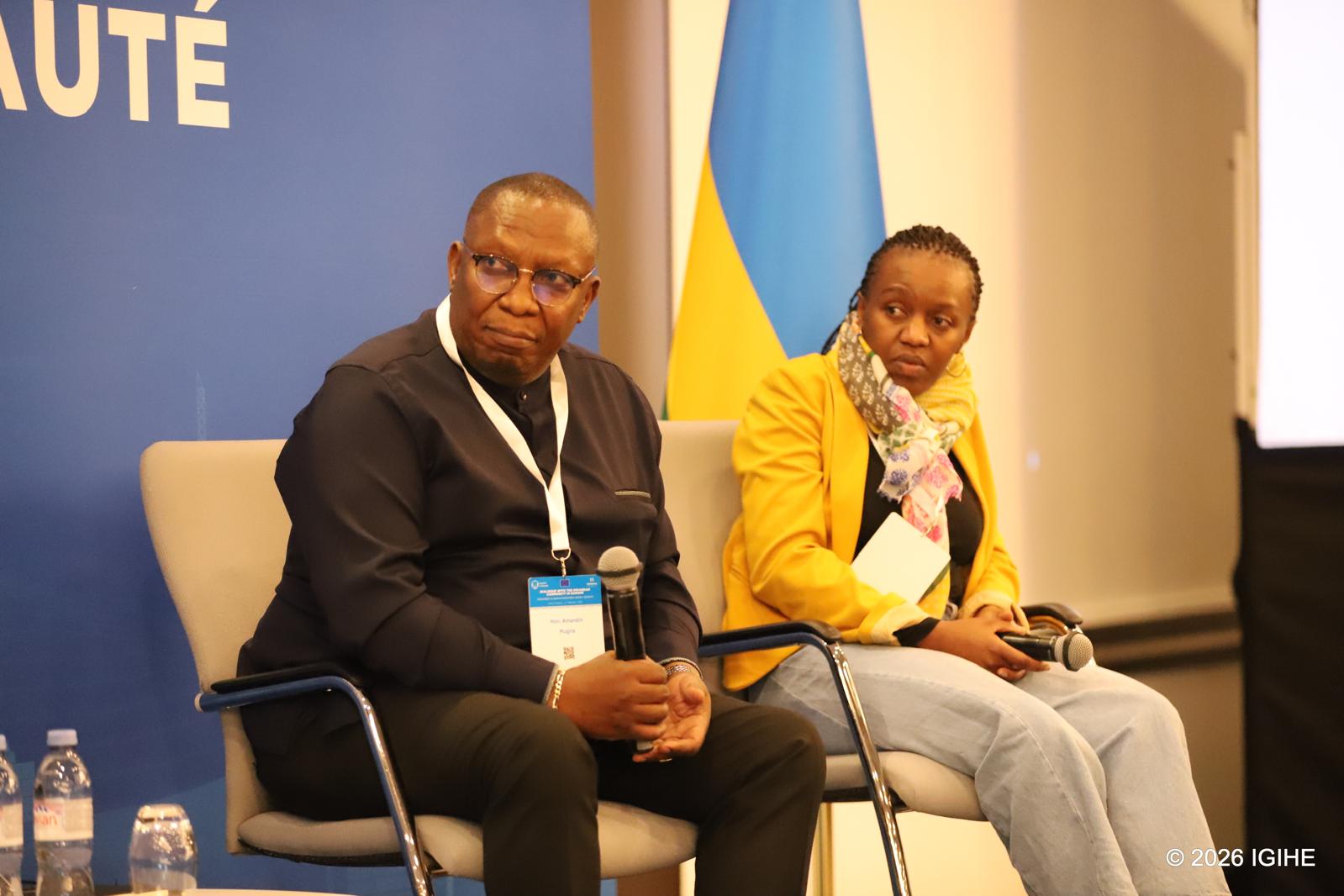
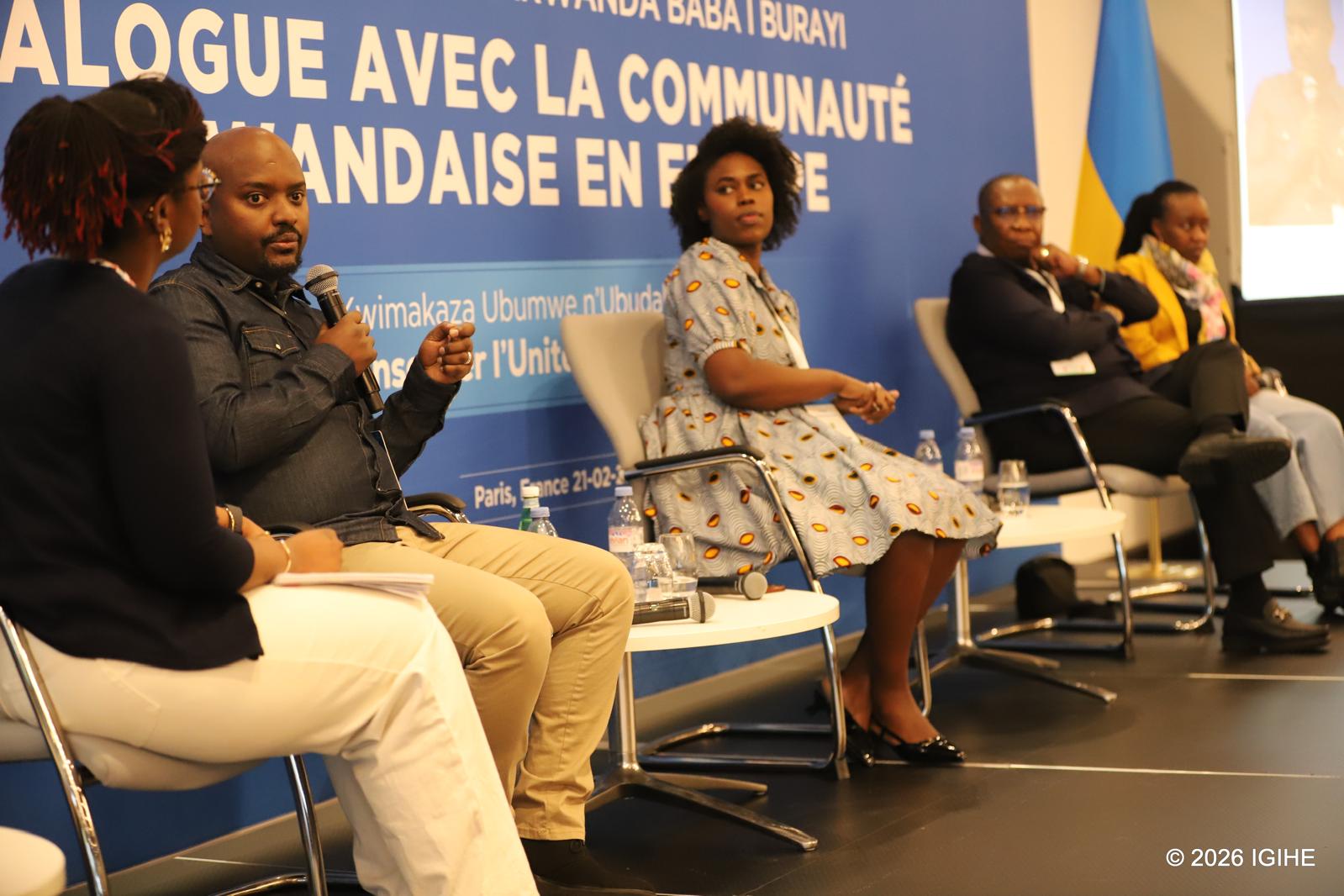
One of the gathering’s key strengths lay in the diversity of speakers. Panelists from varied professional backgrounds and life experiences shared stories closely aligned with those of many diaspora youth.
This practical approach aimed to provide concrete responses to questions surrounding identity, belonging, opportunities, and the different ways individuals can engage while living abroad.
Maintaining ties with the motherland
Beyond historical reflections, the meeting highlighted Rwanda’s transformations over recent decades and the opportunities available to the diaspora, particularly in economic, cultural, and social initiatives.
The central message to young participants was clear and motivating: geographical distance should not be a barrier to engagement. Communication technologies, travel, and cooperation programs now offer multiple pathways to maintain active connections with the country.
A call for unity and transmission
In closing, the remarks turned toward the future, encouraging young Rwandans abroad to take pride in their identity and contribute, in their own ways, to Rwanda’s global presence.
Learning the language, understanding history, and participating in community initiatives were presented as key drivers for strengthening unity and intergenerational solidarity.
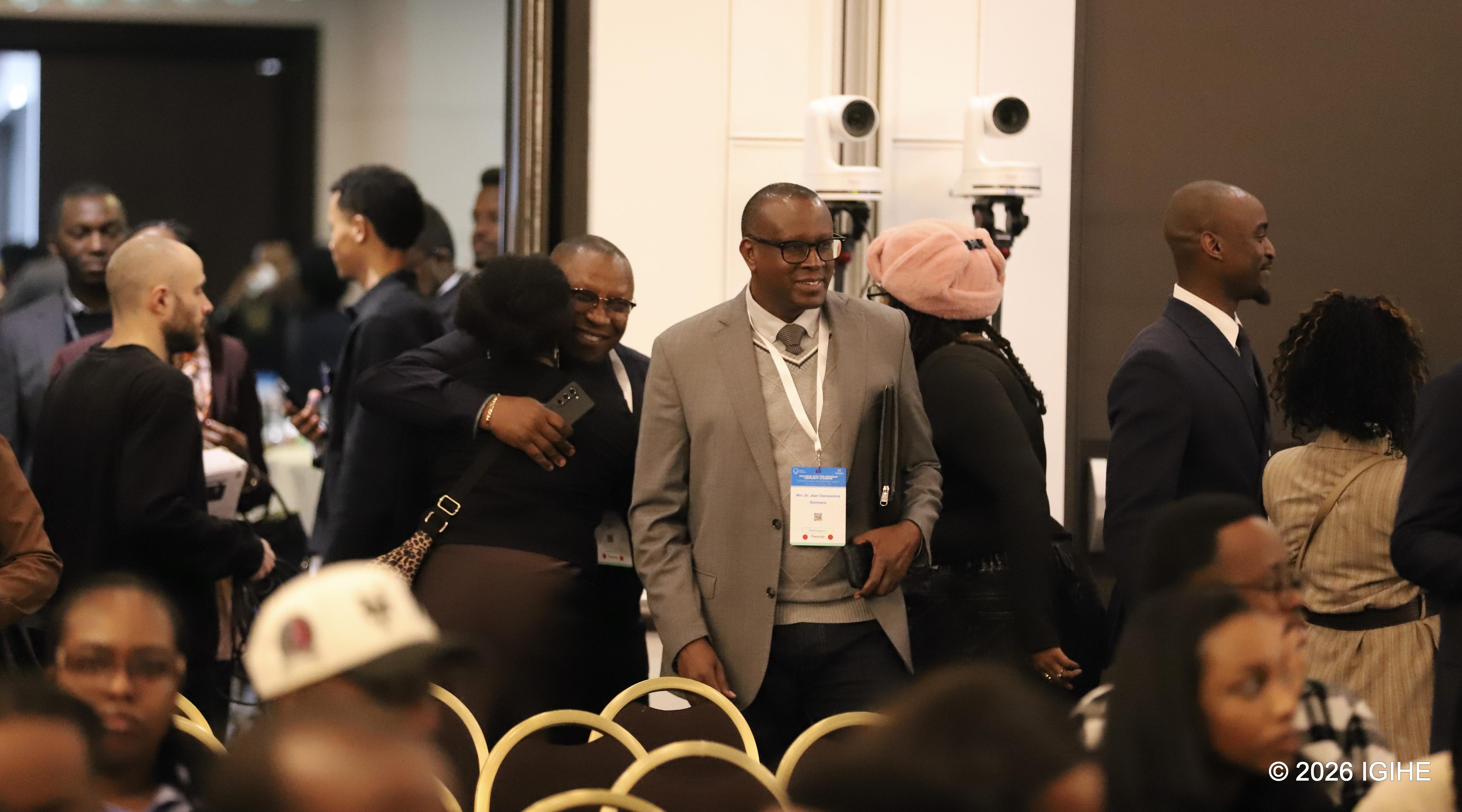
Marked by fraternity and dialogue, the gathering illustrates a shared determination to deepen ties between Rwanda and its diaspora, underpinned by a common conviction: unity remains the cornerstone of a peaceful and hopeful collective future.
karirima@igihe.com
Leave a Reply