A French military command document dated April 8, 1994, indicates that beginning on the morning of April 7, members of the unit that had been responsible for Habyarimana’s protection became active, launching attacks against Rwandan Patriotic Army (RPA) forces stationed at the CND (National Development Council). The document further states that political opponents and Tutsi civilians were arrested and killed during the early hours of the violence.
Among those killed on the morning of April 7 were Prime Minister Agathe Uwilingiyimana, President of the Supreme Court Joseph Kavaruganda, and Minister of Labour and Social Affairs Landouald Ndasingwa, all members of the transitional government established under the Arusha Agreement.
The French government reported that violence and looting intensified as armed Interahamwe militias and disorganised soldiers moved through Kigali. It also noted repeated attacks on French forces operating in the city.
According to the same document, troops guarding Habyarimana’s residence surrounded bases hosting United Nations peacekeepers from UNAMIR, restricting their movement. It also indicates that some peacekeepers were killed during this period.
As security conditions in Kigali deteriorated rapidly, the French government concluded that the safety of its nationals was at risk and decided to urgently evacuate all French citizens from Rwanda.
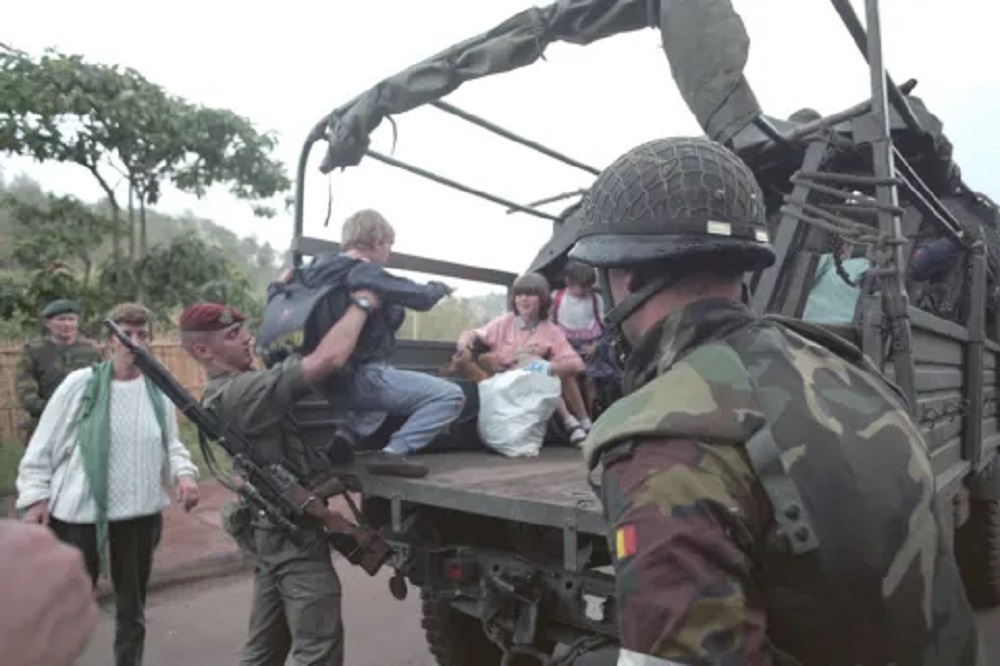
This decision led to the launch of “Operation Amaryllis,” a military evacuation mission aimed at extracting French nationals from Kigali. Those located in provincial areas such as Gitarama and Butare were assisted in crossing into neighbouring countries, including Zaire (now the Democratic Republic of Congo) and Burundi.
To secure the evacuation in Kigali, France deployed special forces, some of whom were tasked with securing Kigali International Airport starting on the morning of April 9, 1994.
Additional commando units stationed in Bangui (Central African Republic) and Libreville (Gabon) were placed on alert to reinforce operations in Kigali if the situation deteriorated further.
Lieutenant Colonel Jean-Jacques Maurin, a security adviser at the French Embassy in Kigali, was appointed to lead Operation Amaryllis, while Colonel Henri Poncet oversaw troop deployment and coordination.
French forces were assigned to secure the airport, protect the embassy, and safeguard other designated assembly points where French nationals were gathered. They also escorted evacuees to Kigali International Airport.
The troops were instructed not to intervene in the fighting between the RPA and the former Rwandan government army (Ex-FAR), though they were authorised to use force in self-defence if their evacuation operations were obstructed.
In April 2022, Rwanda’s Minister of National Unity and Civic Engagement, Dr. Bizimana Jean-Damascène, stated that French forces witnessed Tutsis being killed by Ex-FAR and Interahamwe militias but did not intervene, focusing instead on evacuating French nationals.
“Those French soldiers watched people being killed but never intervened. They left them to die while continuing to evacuate their own people. They did not seek to stop the violence taking place in front of them, particularly at Kanombe airport, where many were killed,” he stated.
The evacuation order initially prioritised around 60 individuals considered at high risk, based on a list provided by French Ambassador Jean-Michel Marlaud. Subsequent evacuations were carried out in additional phases.
Among those evacuated on April 9 under Operation Amaryllis were members of Habyarimana’s family, including his wife Agathe Kanziga, their children, and close associates, all of whom were located at their residence in Kanombe, near Kigali International Airport.
Operation Amaryllis concluded on April 12, 1994. French authorities stated that the mission was successfully completed. Nine transport aircraft were used, including eight C-160 aircraft and one C-130.
Leave a Reply