The Government of Rwanda launched the nationwide program in 2019 to streamline Genocide memorials, with the aim of better preserving the history and evidence of the 1994 Genocide against the Tutsi.
Vedaste Ngarambe, President of Ibuka and also Chairperson of the District Advisory Council in Karongi, said the process is underway in the district.
Among the memorials already consolidated are Murangara, whose remains were transferred to Mubuga, and Bukiro, which was merged into Nyange Memorial in Ngororero District.
“The process is ongoing. The Gahunduguru memorial in Ruganda Sector will be relocated to Birambo Memorial in Gashali Sector. Mukimba memorial in Rugabano Sector will also be moved to Birambo,” he said.
District officials explained that the remaining consolidations have been delayed due to the need to upgrade Birambo Memorial, which is set to receive additional remains. However, feasibility studies have been completed, and construction is expected to begin next year.
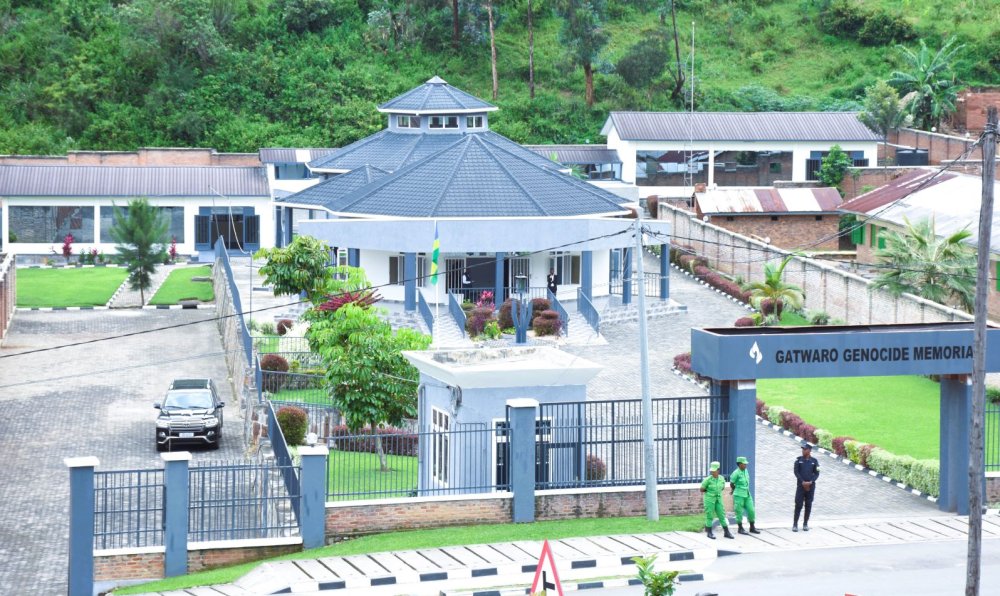
Karongi District Mayor Gelard Muzungu said that once the process is complete, nine memorial sites will remain. These include Birambo, Mubuga, Ngoma, Bisesero, Gitesi, Rubengera, Gatwaro, Home Saint Jean, Saint Pierre, and Nyamishaba.
“We still have memorials that require construction or rehabilitation. As a priority, we plan to begin with Birambo next year, where we will relocate remains currently buried in inadequate conditions at Mukimba and Gahunduguru,” he said. “Gitesi memorial has not yet been built and is in worse condition than Home Saint Jean and Saint Pierre.”
Muzungu added that the district plans to construct or upgrade at least one memorial each year to ensure that all sites properly preserve the remains of victims, as well as the history and evidence of the Genocide against the Tutsi.
In 2022, Karongi District had initially planned to retain five memorial sites under the consolidation program. However, additional sites—Home Saint Jean, Saint Pierre, Nyamishaba, and Gitesi—were later included, bringing the total to nine.
This adjustment followed further assessment of the specific circumstances and historical significance of different locations during the Genocide.
Nyamishaba Memorial, for instance, was retained because it holds many remains recovered from Lake Kivu and will serve as a key site for commemorating victims who were thrown into the lake during the Genocide.
In 2022, Karongi District had initially planned to retain five memorial sites under the consolidation program. However, additional sites—Home Saint Jean, Saint Pierre, Nyamishaba, and Gitesi—were later included, bringing the total to nine.
On April 9, 1994, three days after the start of the Genocide against the Tutsi, Grégoire de Saint Quentin, a technical advisor to the commander of the Para-Commando battalion, Maj. Aloys Ntabakuze, visited Kanziga’s residence in Kanombe. He reportedly informed her that French President François Mitterrand had requested that she and her family be evacuated to France immediately.
Kanziga, whose husband had been killed on April 6, 1994, when the presidential aircraft was shot down near Kigali, was instructed to prepare for immediate departure. She and her entourage were given little time to gather their belongings, with each person allowed only one bag and approximately 30 minutes to get ready.
At around 3 p.m. that day, French soldiers escorted Kanziga and 11 members of her family and friends to Kigali International Airport.
Among those with Kanziga were her three children, her younger sister Catherine Mukamusoni and her four children, as well as her son-in-law Alphonse Ntirivamunda. They were transported on a C-130 military transport aircraft.
The aircraft also carried Kanziga’s cousin, Twahirwa Séraphin, who had insisted on being evacuated, claiming he was seriously ill. It also carried two other families.
Reports indicate that Twahirwa had made prior financial arrangements to leave the country, including the conversion of Rwandan francs and the deposit of approximately 1 million USD into an account at Belgolaise Bank.
All of them departed Kigali at 7 p.m., heading to Bangui in the Central African Republic.
Agathe Kanziga chose to flee, leaving the country in the hands of Col. Théoneste Bagosora and her brother, Protais Zigiranyirazo. Members of the “Akazu” reportedly agreed to her departure, believing she would return soon once the country was “restored to peace.”
They also asked her to continue using her name in politics and her network of friends to help those who remained obtain military, political, and diplomatic support.
It is reported that French forces refused to transport President Habyarimana’s body, instead ordering that it remain in the mortuary of the military hospital in Kanombe.
In Bangui, Kanziga met a Polish nun named Editha, who ran her orphanage called Sainte Agathe, located in Masaka.
In deep sorrow, the nun told Kanziga that the Tutsi children in the orphanage had been killed on 7 April 1994, and asked her: “How could you allow such things to happen? The soldiers at least should not have done this.”
Kanziga told the nun not to blame the soldiers, saying they acted out of anger. She then asked her to remain silent and not speak further on the matter.
In the Central African Republic, Agathe Kanziga’s family was later flown out by an Air France aircraft. Upon arrival, she was welcomed with a bouquet sent by Mitterrand and a $35,000 financial support to help her start a new life.
She was also received by her two children, Jean-Pierre and Bernard, who were studying in France, as well as Marie Rose and Jean Claude, who were studying in Canada.
The family first stayed at the Forest Hill Hotel in Paris before moving into an apartment that Habyarimana had recently purchased in the city.
Kanziga’s reception in France was controversial, and every French official questioned about it reacted angrily to journalists.
Michel Roussin, then French Minister for Cooperation, once responded: “We had relations with a president who was elected legally; we evacuated his family because they requested assistance. It is not normal to blame France for acting this way. Other countries abandon leaders they had good relations with. What we did could have placed them in danger of death.”
Kanziga fled to France, believing she would return within days, expecting a swift military resolution. However, the Rwandan Patriotic Army (RPA) continued its advance, and the interim government eventually fled Kigali, relocating to Gitarama before crossing into what was then Zaire (now the Democratic Republic of Congo) following its defeat.
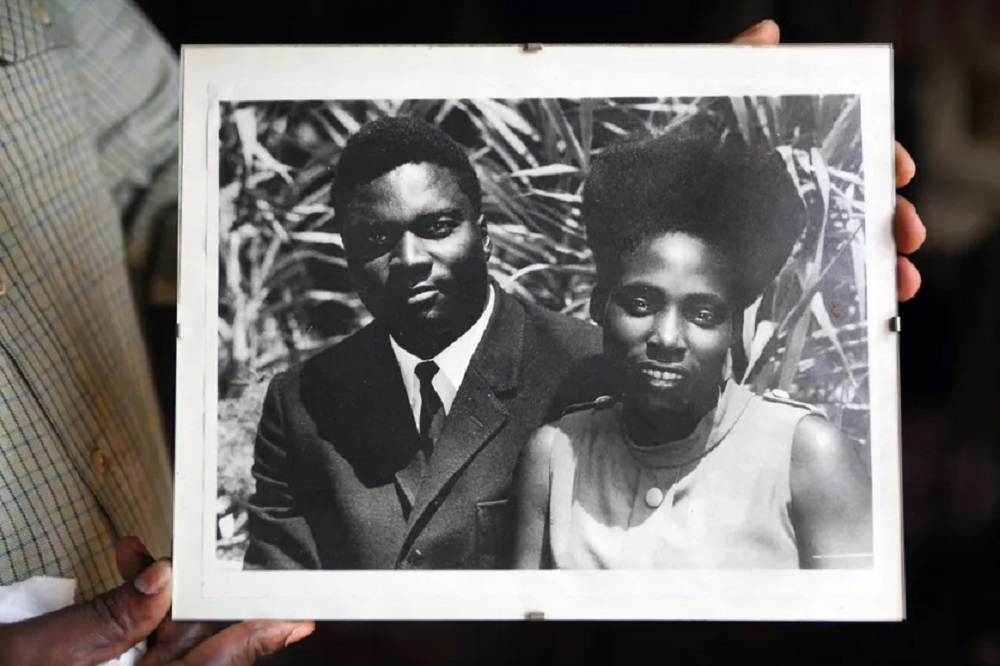
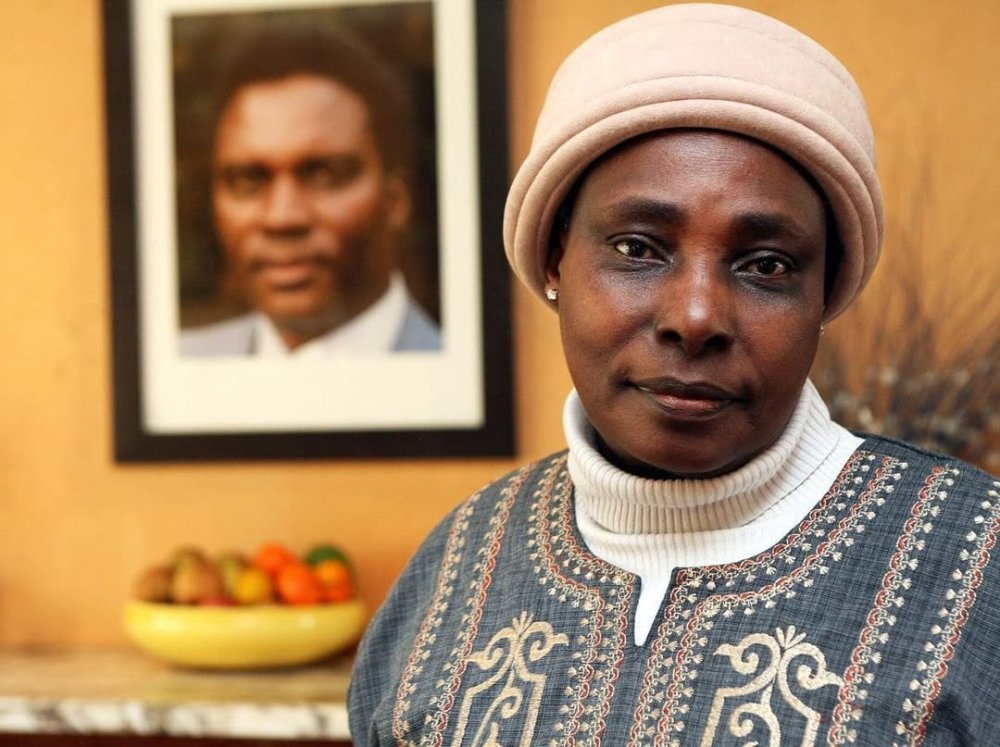
Agathe Kanziga, wife of then-Rwandan President Juvénal Habyarimana, fled Rwanda for France together with her children and close relatives three days after the Genocide against the Tutsi began.
A French military command document dated April 8, 1994, indicates that beginning on the morning of April 7, members of the unit that had been responsible for Habyarimana’s protection became active, launching attacks against Rwandan Patriotic Army (RPA) forces stationed at the CND (National Development Council). The document further states that political opponents and Tutsi civilians were arrested and killed during the early hours of the violence.
Among those killed on the morning of April 7 were Prime Minister Agathe Uwilingiyimana, President of the Supreme Court Joseph Kavaruganda, and Minister of Labour and Social Affairs Landouald Ndasingwa, all members of the transitional government established under the Arusha Agreement.
The French government reported that violence and looting intensified as armed Interahamwe militias and disorganised soldiers moved through Kigali. It also noted repeated attacks on French forces operating in the city.
According to the same document, troops guarding Habyarimana’s residence surrounded bases hosting United Nations peacekeepers from UNAMIR, restricting their movement. It also indicates that some peacekeepers were killed during this period.
As security conditions in Kigali deteriorated rapidly, the French government concluded that the safety of its nationals was at risk and decided to urgently evacuate all French citizens from Rwanda.
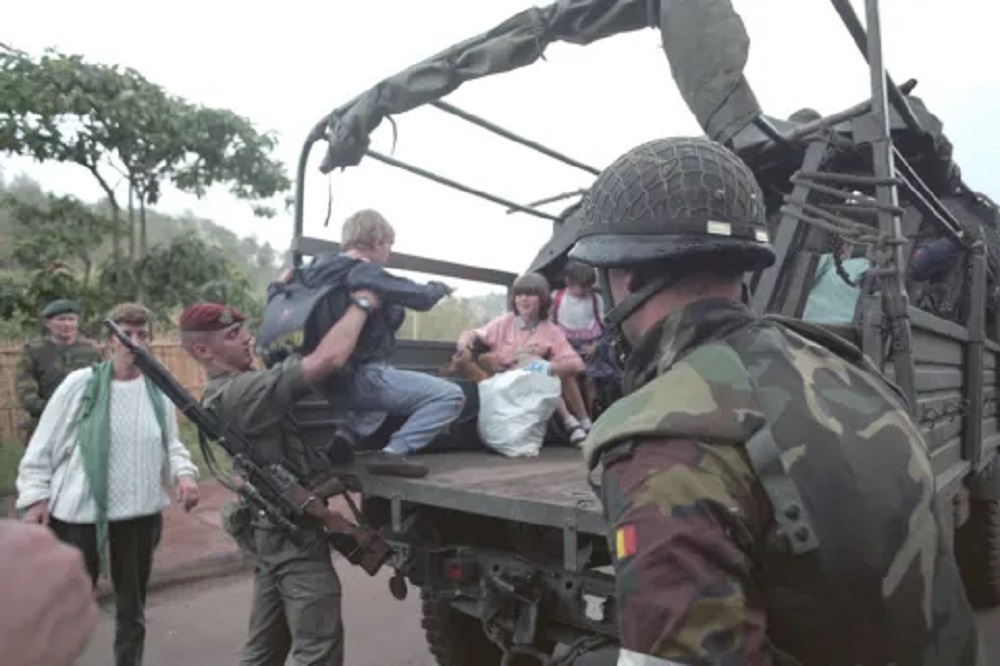
This decision led to the launch of “Operation Amaryllis,” a military evacuation mission aimed at extracting French nationals from Kigali. Those located in provincial areas such as Gitarama and Butare were assisted in crossing into neighbouring countries, including Zaire (now the Democratic Republic of Congo) and Burundi.
To secure the evacuation in Kigali, France deployed special forces, some of whom were tasked with securing Kigali International Airport starting on the morning of April 9, 1994.
Additional commando units stationed in Bangui (Central African Republic) and Libreville (Gabon) were placed on alert to reinforce operations in Kigali if the situation deteriorated further.
Lieutenant Colonel Jean-Jacques Maurin, a security adviser at the French Embassy in Kigali, was appointed to lead Operation Amaryllis, while Colonel Henri Poncet oversaw troop deployment and coordination.
French forces were assigned to secure the airport, protect the embassy, and safeguard other designated assembly points where French nationals were gathered. They also escorted evacuees to Kigali International Airport.
The troops were instructed not to intervene in the fighting between the RPA and the former Rwandan government army (Ex-FAR), though they were authorised to use force in self-defence if their evacuation operations were obstructed.
In April 2022, Rwanda’s Minister of National Unity and Civic Engagement, Dr. Bizimana Jean-Damascène, stated that French forces witnessed Tutsis being killed by Ex-FAR and Interahamwe militias but did not intervene, focusing instead on evacuating French nationals.
“Those French soldiers watched people being killed but never intervened. They left them to die while continuing to evacuate their own people. They did not seek to stop the violence taking place in front of them, particularly at Kanombe airport, where many were killed,” he stated.
The evacuation order initially prioritised around 60 individuals considered at high risk, based on a list provided by French Ambassador Jean-Michel Marlaud. Subsequent evacuations were carried out in additional phases.
Among those evacuated on April 9 under Operation Amaryllis were members of Habyarimana’s family, including his wife Agathe Kanziga, their children, and close associates, all of whom were located at their residence in Kanombe, near Kigali International Airport.
Operation Amaryllis concluded on April 12, 1994. French authorities stated that the mission was successfully completed. Nine transport aircraft were used, including eight C-160 aircraft and one C-130.
Operation Amaryllis prioritised the evacuation of French nationals and designated individuals from Rwanda, as violence escalated and Tutsis who were being killed were left without assistance.
The attack took place on March 18, 1997, three years after the Genocide against the Tutsi, during a period when national security was still fragile, particularly in areas near the border with Zaire (now the Democratic Republic of Congo), where perpetrators of the genocide had fled. At the time, the students were aged between 17 and 22 and were well aware of Rwanda’s tragic history, including how ethnicity had been politicised before and during the genocide.
In interviews with IGIHE, survivors described how insurgents entered classrooms while students were reviewing lessons in the evening at around 8 PM. Urimubenshi Emmanuel, a sixth-year student, recalled:
“It started while we were having our evening meal, and at first we didn’t understand what was happening. We saw many people dressed in unfamiliar military-style clothing. There was a military post nearby, but the area had no electricity at the time. Those who had lights were using generators or solar lamps. Since we also had a generator and were used to soldiers coming to the school to connect radios, we assumed it was them, but soon we realised they were insurgents.”
The attackers demanded that students separate, with Tutsi on one side and Hutu on the other. A sixth-year student, Mujawamahoro Marie Chantal, responded by declaring,
“We are all Rwandans.”
The insurgents shot and killed her and continued firing, targeting other students. After lying on the floor to survive, the sixth-year students witnessed the attackers move to the fifth-year classrooms.
Fifth-year students, including Ndemeye Valens, who would later be killed, took cover under desks as insurgents entered. Two attackers were armed with guns and grenades, while a third stood outside with a machete. One student, Benimana Hélène, refused to separate by ethnicity, saying there were no Tutsi or Hutu among them; they were all Rwandans. She and several others, including Mukarutwaza Séraphine and Valens, were killed.
Survivors said that their upbringing at Nyange, which emphasised unity, prayer, and coexistence, helped them reject the insurgents’ demands and remain united.
The attack left seven students dead, six on the night of March 18, 1997 and one in 2001 from injuries sustained during the assault. The two schools had 47 students at the time; 39 survived, with one later dying in 2018 from illness.
Because of their courage, the Rwandan government recognised the Nyange students as National Heroes in 2001, placing them in the “Imena” category. Survivors later formed an association, Komezubutwari (“Continue the Heroism”), and some, like Rusizi District Mayor Sindayiheba Phanuel, went on to serve in government.
Urimubenshi reflected on the long recovery after the attack:
“Fear was overwhelming. Even at the hospital, we panicked at every sound. But the government supported us fully, covering all medical treatment and helping us recover. Their support reinforced unity and showed us the value of being there for one another.”
The Nyange students’ defiance that night remains a lasting symbol of courage and national unity in Rwanda, commemorated today alongside other heroes on Heroes Day.
Inyambo cows are renowned for their striking features, most notably their long, elegant, upward-curving horns, which make them stand out in any crowd. But beyond their beauty lies a deep historical and cultural connection that ties them directly to Rwanda’s monarchy and the traditions of the people. These cows are not simply bred for milk or meat like ordinary cattle; they have a much more profound role in Rwandan society.
The roots of the Inyambo breed trace back to the 12th century, and their association with the Nyiginya monarchy has shaped their role in Rwandan culture. Unlike other cattle, Inyambo were not just a part of the royal family’s possessions; they were essential for royal ceremonies and played a central role in the celebration of power and prestige. Kings and chiefs would keep these cows as symbols of their status, and during important events, the
Inyambo were adorned with beads, bells, and jewellery.
Trained from a young age, these cows were made to parade gracefully and were even taught to follow traditional songs, creating a spectacle that showcased Rwanda’s rich cultural heritage and royal traditions.
The Inyambo were not mere personal property of the kings; they belonged to the kingdom itself. These cows were seen as public treasures, embodying the unity of the Rwandan people and symbolizing the identity of the nation.
Historical records suggest that Rwandan kings were often reminded by their advisors that the Inyambo cows were part of the nation’s heritage, not just private possessions. This connection to the people and the kingdom made the Inyambo far more than just cattle; they were living representations of Rwanda’s culture, strength, and unity.
Beyond their royal associations, Inyambo cows have a deep cultural significance. They symbolise gratitude, blessings, and the close relationship between the people and their land. As symbols of prosperity and goodwill, the Inyambo were often used as gifts and diplomatic tokens, further cementing their role as icons of Rwandan culture.
However, the journey of the Inyambo breed has not been without its challenges. Over time, diseases, wars, and crossbreeding with other cattle breeds led to a significant decline in their population. The once-prevalent Inyambo cows found themselves on the brink of endangerment.
Recognising the importance of preserving this iconic breed, the government of Rwanda has taken active steps to protect and revive the Inyambo population, ensuring that this piece of living heritage does not fade into history.
Today, the Inyambo are carefully preserved and maintained at institutions like the King’s Palace Museum in Nyanza, where herders continue the ancient traditions of grooming, handling, and parading the cows.
These cows are not only a cultural attraction for visitors but also a source of national pride. Visitors to Rwanda can marvel at the sight of the Inyambo cows, and many are drawn to the sight of the cows’ ceremonial parades, where the elegance and grandeur of these animals are on full display.
To further protect and preserve the breed, modern breeding programs have been introduced by the Rwanda Agriculture Board. These programs combine traditional knowledge with cutting-edge techniques, including in vitro fertilisation and cryopreservation, to maintain the breed’s unique genetic traits. Such scientific efforts ensure that the Inyambo cows continue to thrive in a changing world, securing their place in both Rwanda’s past and its future.
The Inyambo also continue to play a vital role in Rwandan cultural celebrations. During national events and festivals like Umuganura, where the country celebrates its harvest and unity, the Inyambo cows are paraded as symbols of elegance and cultural pride. Their presence at these celebrations is a reminder of the nation’s rich royal history and its commitment to preserving its traditions.
In essence, the Inyambo cows are not just cattle; they are a living bridge between Rwanda’s past and present. These majestic animals are a direct link to the royal courts of the past, and they continue to serve as symbols of Rwanda’s cultural pride, history, and unity. They represent the strength of the Rwandan people and their resilience in preserving their heritage.
So, the next time you see the majestic horns of an Inyambo cow, take a moment to reflect on the history, culture, and tradition that these animals carry with them. They are not just a reminder of Rwanda’s royal past but also a symbol of a proud and thriving nation that has maintained its cultural roots while looking toward the future.
From ancient sacred forests linked to spiritual rituals and royal courts to hills that once cradled thriving kingdoms, these places capture the heart of Rwanda’s story, deep traditions, vibrant culture and enduring spirit.
While there is no official ranking of the nation’s top historic sites, the eleven we have selected stand out for their ability to illuminate Rwanda’s remarkable journey, each revealing a unique chapter of its roots and ongoing evolution.
Many more sites deserve mention, yet these eleven bring the past to life most powerfully, highlighting who Rwandans are today. Join us as we explore these extraordinary places, discovering together Rwanda’s layered history, timeless traditions, and the lives of the people who shaped it.
{{1. Karongi museum of environment }}
In the lakeside town of Karongi, overlooking Lake Kivu, stands the Museum of the Environment, one of the eight museums under the Institute of National Museums of Rwanda.
The first of its kind in Africa, it explores renewable and non-renewable energy sources while promoting harmony between people and nature.
Spread across two floors with interactive exhibits, it also features a rooftop herbal garden that celebrates Rwanda’s traditional healing heritage.
More than a museum, it serves as an educational centre helping visitors understand and protect their environment. It is open daily from 8 a.m. to 6 p.m.
{{2. Buhanga Eco-Park}}
[Buhanga Eco Park->https://en.igihe.com/tourism/article/inside-buhanga-eco-park-where-nature-meets-rwanda-s-royal-legacy], a 31-hectare forest located eight kilometers west of Musanze in the Nyakinama community, is a place where nature and history intertwine. Recently integrated into Volcanoes National Park, it holds deep cultural significance in Rwanda’s monarchy.
The name Buhanga, meaning “creation,” recalls its sacred past, legend says Rwanda’s first king, Gihanga, founded the kingdom here, and for centuries, kings were crowned in this very forest. Its untouched beauty, protected by its sacred status, features towering Ficus and Drago trees, lava-stone paths, and vibrant birdlife.
Walking through Buhanga feels like stepping into Rwanda’s living history, a tranquil sanctuary where nature and ancient royal heritage coexist in perfect harmony.
{{3. Kamegeri Rock }}
[Kamegeri Rock->https://en.igihe.com/history/article/when-the-evil-falls-in-own-trap-the-story-of-kamegeri-rock], located in Ruhango District, is one of Rwanda’s most symbolic historic sites.
It is named after Kamegeri, a local chief and trusted servant of King Mibambwe II Gisanura, who ruled around 1600.
Known for his wisdom, Kamegeri earned the king’s favor but later misused his influence by proposing a cruel punishment, burning traitors on a red-hot rock.
To teach a lesson in justice and humility, the king ordered Kamegeri to suffer the same fate on the very rock he had chosen. His story remains a moral reminder that cruelty and arrogance can lead to one’s downfall.
{{4. Ndaba Rock }}
[Ndaba Rock->https://en.igihe.com/history/article/when-greed-is-overwhelming-the-tale-of-ndaba-rock], located about 20 kilometers from Karongi on the road to Muhanga, is one of Rwanda’s most captivating cultural sites. It is named after Ndaba, a man who died tragically after succumbing to greed.
According to legend, Ndaba was lowered into a honey-filled rock by his friends but chose to eat the honey himself instead of sharing. Angry, his companions abandoned him, and when he tried to climb out, his weight and the slippery rock caused him to fall to his death.
The site remains a powerful symbol against selfishness and attracts visitors with its scenic beauty, waterfalls, and storytelling traditions.
{{5. Huye Ethnographic Museum }}
The Ethnographic Museum in Huye, which has existed since the late 1980s, stands as one of Africa’s finest cultural museums.
Its seven galleries take visitors on a journey through Rwanda’s heritage, from geography and geology to daily life, craftsmanship, and tradition.
Exhibits display tools used in farming, pottery, weaving, and woodwork, alongside traditional clothing and architectural methods. The museum also highlights the social importance of cattle, whose royal descendants still graze in nearby Nyanza.
The final gallery immerses visitors in Rwanda’s customs, beliefs, and oral traditions, while the adjoining craft centre keeps these timeless skills alive.
{{6. Mu Bisi bya Huye kwa Nyagakecuru (Nyagakecuru residing in Huye mountains) }}
High in the mountains of Huye District, Southern Rwanda, once lived an old woman named Nyagakecuru, remembered for her defiance against King Kigeli IV Rwabugili in the 18th century.
While others bowed to royal authority, she refused to submit or send tributes to the king. From her fortified home atop Mount Huye, she was guarded by a massive snake said to protect her from attacks.
After repeated failures to capture her, the king sent her fifty goats as a trick. The goats devoured her thorny fence, leaving the snake homeless. It had no choice but to flee.
Seizing the moment, Rwabugili’s soldiers stormed the mountain and captured her, ending her rebellion.
{{7. Kandt House Museum }}
In the heart of Kigali lies the home of Richard Kandt, the German explorer who founded the city in the early 1900s.
Now the Kandt House Museum, it offers an intriguing glimpse into Rwanda’s colonial encounter and transformation. Through its rooms, visitors trace the shift from pre-colonial life to modern urbanization.
{{8. Mwima Mausoleum}}
A short drive from Nyanza, the Mwima Mausoleum sits quietly among trees, its simplicity befitting the dignity of its occupants.
Here lie King Mutara III Rudahigwa and Queen Rosalie Gicanda, whose lives and legacies shaped Rwanda’s modern identity.
When you stand at Mwima, you can see Rwesero, Rukari and Mushirarungu hill next you.
{{9. ‘Ku Kirenge cya Ruganzu’ – The royal footprint }}
In the hilly Rulindo District, about an hour from Kigali, stands a striking sculpture of a muscular man holding a bow and spear, said to depict King Ruganzu II Ndoli, who ruled Rwanda from 1510 to 1543.
Known as Ku Kirenge (“at the footprint”), the site hosts the Ikirenge Cultural Centre, where a rock bearing Ruganzu’s supposed footprint is displayed.
Guides eagerly point out the marks of his toes and heel, astonishing visitors with the legend’s vivid yet believable detail.
{{10. Akarwa k’abakobwa — The Girls’ island }}
Among Rwanda’s legendary islands is Akarwa k’Abakobwa, the Island of Girls, once a place of banishment for unmarried pregnant girls, seen as a disgrace to their families.
Tradition held that parents would present the girl to the king, who ordered her sent to the island to die in isolation. Sometimes, fishermen from nearby Idjwi Island rescued and married them, while others perished, their fate unknown.
The story instilled fear against premarital sex. Today, the island’s silence remains, now serving as a peaceful grazing ground for Rwanda’s famous swimming cows.
{{11. Campaign Against Genocide Museum }}
In the heart of Kigali’s parliamentary complex stands the Campaign Against Genocide Museum a solemn tribute to courage and unity.
Through powerful displays, visitors retrace the Rwandan Patriotic Army’s heroic efforts to stop the 1994 Genocide against the Tutsi and restore peace.
In today’s digital age, while social media serves as a tool for sharing ideas and promoting businesses, it is also misused to distort historical facts and spread misleading narratives.
To help provide a clearer understanding of Rwanda’s true history, we’ve compiled a list of books that offer valuable insights into the nation’s past, from its foundation to its post-genocide rebirth.
These books are available in various libraries in Rwanda and accessible via online bookstores.
{{1. Imizi y’u Rwanda (Umutumba wa Mbere, 2013)}}
Written by Jean de Dieu Nsanzabera, Imizi y’u Rwanda (Roots of Rwanda) is an essential read for anyone seeking to understand the origins of Rwanda.
It describes how Rwanda was founded, through the unification of 29 kingdoms, and the significant efforts of the kings of Gasabo in creating a unified nation.
The book details the historic agreement made in Nkotsi and Bikara (Musanze), which led to the formation of Rwanda.
This 440-page book is packed with details about the heroic struggles for Rwandan unity and the leaders who fought to preserve it.
{{2. Ibitaramo ku Mateka y’u Rwanda by Kagiraneza Zephyrin}}
This book, written by Kagiraneza Zephyrin and published in 1990, traces the history of Rwanda from its creation. It discusses the country’s borders at that time, the advent of white people, how its territories were taken away through deceit, and its early foreign diplomacy.
{{3. History of Rwanda: From the Beginning to the End of the 20th Century by the National Unity and Reconciliation Commission}}
This book was published by the National Unity and Reconciliation Commission in 2016, under supervision of Déo Byanafashe in collaboration with Paul Rutayisire.
It traces the origins of German influence in Rwanda and how they were later replaced by the Belgians, who immediately began efforts to divide the country and its people, leading Rwandans to realize that their situation had drastically changed.
The book also focuses on Rwanda’s history from the early 20th century until its end, examining the lives of Rwandans, politics, social relations, and development. It particularly highlights the impact of colonialism and how it sowed divisions, which ultimately led to the 1994 Genocide against the Tutsi.
{{4. A Thousand Hills: Rwanda’s Rebirth and the Man Who Dreamed It by Stephen Kinzer}}
In this book, author Stephen Kinzer, published in 2008, focuses extensively on Rwanda’s journey after the 1994 Genocide against the Tutsi, highlighting the leadership of President Kagame, whose visionary approach enabled the country to rebuild and emerge stronger, leading to the Rwanda we see today.
Kinzer discusses Kagame’s early life, from being born and then sent into exile at just four years old, to developing revolutionary ideas that eventually led to the struggle for the country’s liberation. He also details Kagame’s role in halting the Genocide against the Tutsi.
The author further explores the journey of unity and reconciliation, as well as Rwanda’s development. Anyone who reads this book will gain a clear understanding of the political transformations, particularly the recent history of Africa.
{{5. Defeat Is the Only Bad News: Rwanda Under Musinga (1896-1931) by Alison Liebhafsky Des Forges}}
This book, written by Alison Liebhafsky Des Forges and published in 2011, focuses primarily on the reign of King Yuhi V Musinga and examines the colonial era during his reign, extending into the early 20th century.
Des Forges highlights the difficult times King Musinga faced, as the Belgians arrived during his rule and sought to impose their colonial ideas and governance on the Rwandan people.
The book explores the origins of the divisions in Rwanda that ultimately led to the 1994 Genocide against the Tutsi.
{{6. Stepp’d in Blood: Akazu and the Architects of the Rwandan Genocide Against the Tutsi by Andrew Wallis}}
In this book, published by Andrew Wallis in 2018, the focus is on the history of Juvénal Habyarimana’s regime and the members of the ‘Akazu,’ (inner circle) a group largely composed of his family members, including his wife Agatha Kanziga, his brothers-in-law, and others known for their key roles in planning and executing the Genocide against the Tutsi.
The book delves into both the direct and indirect involvement of the Akazu members, their propaganda efforts, and their illicit business activities, including trading in precious minerals, drugs such as cocaine, trafficking of gorilla babies, and their role in the death of Dian Fossey, who had conducted research on gorillas.
Additionally, Wallis examines how the international community stood by while the Genocide against the Tutsi unfolded, failing to intervene or stop it.
This book provides a thorough understanding of the political landscape that led to the 1994 Genocide, which resulted in the deaths of over a million Tutsi.
{{7. Rwanda Before the Genocide: Catholic Politics and Ethnic Discourse in the Late Colonial Era by J.J. Carney}}
This book authored by Carney, focuses extensively on the significant role the Catholic Church played in the governance of Rwanda, particularly its involvement in politics and ethnic divisions before the Genocide against the Tutsi.
The author investigates the Church’s collaboration with the colonizers and its role in the establishment of ethnic classifications and the ideologies associated with them.
He examines how these factors ultimately contributed to the 1994 Genocide against the Tutsi.
{{8. L’État Français et le Génocide des Tutsis au Rwanda by Raphaël Doridant and François Graner}}
This book focuses on the role that France played in the Genocide against the Tutsi in Rwanda.
The author explains that France supported Habyarimana’s government both politically and militarily, which made the preparation and execution of the genocide possible.
The book discusses France’s actions both before and during the Genocide, as well as its post-genocide involvement.
It argues that these actions led Rwanda into a period of darkness, causing immense destruction and turning the country into a site of devastation.
Additionally, the book explores the roles of other countries in Rwanda’s history and their conduct during the Genocide against the Tutsi.
{{9. The Struggle for Liberation: War and Militarism in African History by John Burton Kegel}}
This book by John Burton Kegel was published in 2025. It discusses Rwanda from its roots, covering the periods before independence, as well as the administrations of Habyarimana and Kayibanda.
The book also explores the birth of the Rwandan Patriotic Front (FPR Inkotanyi), the Rwanda Patriotic Army (RPA), and the launch of the struggle to liberate the country. It traces the journey of Rwanda’s reconstruction after the Genocide against the Tutsi.
{{10. Intwari z’Imbanza, zubatse u Rwanda rugahamya igitinyiro (Umutumba wa mbere, 2018)}}
This is one of the comprehensive books that documents the history of Rwanda, authored by the expert in Rwandan culture and history, Jean de Dieu Nsanzabera. The book covers the significant events in the history of the foundation of Rwanda (1091-2017).
It provides a thorough overview of the country’s evolution, from its establishment to its eventual decline and subsequent rebirth. It details how the process of building Rwanda was planned, implemented, and where it stands today, highlighting the contributions of those who shaped the nation during their time.
The book serves as a guide for those seeking to understand the history of each king who ruled Rwanda over the course of 870 years (1091-1961) and the impact of their reigns.
It also covers the actions taken by the Presidents after the monarchy transitioned to a republic. The history is traced from the era of King Gihanga Ngomijana to the time of President Paul Kagame, who was in power when this history was documented.
{{11. Les conditions de vie des Tutsi au Rwanda de 1959 à 1990 : Persécutions et massacres antérieurs au génocide de 1990 à 1994 by Antoine Mugesera}}
This book, written by Antoine Mugesera and published in 2015, focuses on the severe conditions that the Tutsi population endured between 1959, when they began to face persecution, killings, and displacement, and 1990, when those in exile decided to launch the struggle for the country’s liberation, allowing refugees to return home.
Antoine Mugesera, along with Kayitesi Judence who co-authored this work, were recently recognized as one of the top writers in 2025.
According to a book dubbed ‘The History of Rwanda’ co-authored by Paul Rutayisire and Deo Byanafashe, the roots of the conflict in Rwanda stretch back to September 24, 1914, when German forces, led by Captain Wintgens, attacked Ijwi Island and began consolidating their control over the strategic areas surrounding Lake Kivu.
At this time, Rwanda, under German colonial rule since 1897, was already experiencing the strain of European dominance. With a population of fewer than 50,000 German soldiers across the whole of East Africa, including Rwanda, the Germans faced a daunting challenge to maintain control.
Although Germany lacked the military numbers to secure long-term dominance, their disciplined forces had managed to hold Rwanda, employing guerilla tactics to repel Belgian and British forces.
Rwanda’s central location was critical for the Germans, especially in terms of access to vital trade routes and strategic areas around Lake Kivu. However, Belgium had its own plans for the region. As the Belgians eyed the German-occupied territories in East Africa, the country sought to use Rwanda as a stepping stone for further colonial expansion.
Belgium, having already seized German-controlled Burundi, began advancing toward Rwanda in 1915. Despite the Germans’ smaller numbers, their soldiers and local allies fought fiercely to defend their hold over the country.
King Musinga, although caught in a difficult position, supported the German forces, supplying warriors and essential resources to resist the Belgian advances.
The conflict escalated in 1916 when Belgian forces launched a decisive offensive on Rwanda. On April 28, 1916, Colonel Molitor of the Belgian military led his troops to capture key strategic locations, including Gatsibo, which marked the beginning of their march towards Kigali.
The Belgians, now bolstered by British forces from Uganda, quickly closed in on the German-held capital. German forces, realizing they could no longer defend Kigali, began their retreat.
By May 5, 1916, the last German soldiers left Kigali, making their way towards the neighboring regions of Save and Burundi. The Belgian troops, after a fierce but brief skirmish, entered Kigali on May 9, 1916, taking full control of the city and marking the end of German rule in Rwanda.
The German withdrawal was driven by the fear of being completely surrounded by advancing Belgian and British forces.
German Captain Wintgens, the commander in charge of the retreat, also led his troops through the rugged terrain of Rwanda’s hills towards Nyundo and beyond, seeking refuge in the neighboring forests and eventually making their way out of the region.
This retreat signified the final collapse of German authority in Rwanda and the beginning of Belgium’s colonial rule.
Under the Belgian mandate, Rwanda was governed more directly than under the Germans, and the local population would soon feel the effects of this shift. The Belgians established a more rigid political and social order, imposing taxes and forcing labor to support their colonial economy.
King Musinga, though initially hopeful that his relations with the Germans could be rebuilt, found himself under the scrutiny of the new Belgian colonial authorities.
Belgium’s takeover introduced policies that would permanently alter the governance structure of Rwanda. Unlike the Germans, who had worked through local leaders, the Belgians dismantled Rwanda’s traditional power structures, replacing them with direct colonial control.
The consequences of this change were not immediately felt, but the seeds of resistance were sown. The exploitation of Rwanda’s resources, particularly forced labor and the imposition of taxes, led to tensions between the Rwandan people and their new rulers.
King Musinga, who had tried to maintain a delicate balance during German rule, now found himself caught between appeasing the Belgians and retaining some semblance of power for his people.
Rwanda gained its independence from Belgium on July 1, 1962. This followed the dissolution of the monarchy and the abolition of the Kingdom of Rwanda in 1961.
However, Belgium’s approach to governance in Rwanda, had sparked ethnic divisionism that culminated to the 1994 Genocide against the Tutsi halted by the Rwanda Patriotic Army.
Here are 10 things to know about Kibeho that highlight its spiritual, cultural, and educational importance.
{{1. Site of Marian Apparitions
}}
Kibeho gained international recognition as the site of Marian apparitions that began in 1981. Several young students including Alphonsine Mumureke, Nathalie Mukamazimpaka, and Marie-Claire Mukangango from Kibeho’s local schools, reported seeing visions of the Virgin Mary, describing her as weeping and delivering messages of warning and hope. These apparitions were unusual because they occurred during a period of political tension in Rwanda, giving the messages a profound social and spiritual resonance.
The apparitions were initially met with scepticism by the local clergy and authorities, as is common with claims of supernatural experiences. Yet, as the phenomena continued and more witnesses reported similar visions, the Catholic Church took note, sending investigators to document and verify the accounts. These visits helped confirm that the experiences were deeply affecting the local community and carried a consistent moral and spiritual message.
Eventually, the Vatican officially recognised the apparitions in 2001, declaring Kibeho a legitimate site of Marian visitation. This recognition elevated the site from a local curiosity to a place of global pilgrimage, drawing visitors seeking spiritual guidance, reflection, and a deeper understanding of the messages delivered during the apparitions.
Every year, particularly on August 15 during the Feast of the Assumption of the Virgin Mary, Catholic faithful gather at the apparition site to celebrate Mass, participate in processions, and engage in prayers, making Kibeho a focal point for spiritual reflection and devotion.
{{2. Shrine of Our Lady of Sorrows
}}
In response to the apparitions, Kibeho became home to the Shrine of Our Lady of Sorrows (Notre-Dame des Douleurs). The shrine is a large complex designed to accommodate thousands of pilgrims, featuring a main church, prayer areas, and smaller chapels where visitors can meditate and light candles. Over the years, the site has been expanded and improved to meet the growing influx of pilgrims from Rwanda and abroad.
The shrine’s design reflects both Rwandan culture and Catholic tradition, blending local architectural styles with spaces intended for reflection and prayer. Visitors often participate in Mass, Eucharistic adoration, and processions that replicate aspects of the original apparitions, helping to connect them spiritually to the experiences reported by the visionaries.
Beyond its religious function, the shrine has become a cultural landmark, highlighting Rwanda’s rich spiritual heritage. It is not only a place of worship but also a centre for moral and educational activities, offering retreats, workshops, and seminars that teach both religious and social values to the local population and visitors.
{{3. Prophetic Messages
}}
The messages reported by the Kibeho visionaries were deeply prophetic, warning the faithful about the dangers of sin and division. Many observers noted that the visions included specific warnings about the suffering Rwanda would face in the early 1990s. According to witnesses, the Virgin Mary implored the community to turn toward God, embrace reconciliation, and pray for peace.
These prophetic warnings gave the apparitions a sense of urgency and relevance, as the country at the time was grappling with political tensions and social divisions. The messages emphasised moral responsibility, compassion, and the consequences of hatred.
Today, the prophetic nature of Kibeho’s apparitions is often cited by scholars and pilgrims alike as evidence of the visions’ spiritual authenticity. Pilgrims visit the site not only to honour the Virgin Mary but also to reflect on the lessons of history and the importance of peace, unity, and forgiveness in Rwandan society.
{{4. Witnesses Were Primarily Young People
}}
One of the most remarkable aspects of the Kibeho apparitions is that the visionaries were mostly young students, ranging from children to teenagers. Unlike many other reported Marian apparitions worldwide, which often involve adults, Kibeho’s visionaries were chosen from local school communities, emphasising the innocence and purity of youth as a vehicle for divine communication.
These young witnesses described seeing the Virgin Mary in vivid, emotionally charged visions, often accompanied by intense spiritual experiences such as fainting, crying, or prolonged periods of prayer. Their youthfulness lent credibility to the apparitions, as their honesty, innocence, and lack of social or political power made deliberate fabrication unlikely.
The emphasis on young witnesses also served as a moral lesson: that even the youngest members of a community bear responsibility for spiritual vigilance and ethical conduct. Pilgrims today, particularly young visitors, are inspired by this aspect of Kibeho, as it demonstrates that age is no barrier to spiritual insight or moral courage.
{{5. A Modern-Day Pilgrimage Site
}}
Kibeho has become a major pilgrimage destination, often compared to sites like Lourdes in France or Fatima in Portugal.
Thousands of pilgrims, both from Rwanda and across the world, flock to the Sanctuary of Our Lady of Kibeho, particularly on August 15 (Assumption Day) and November 28 (the anniversary of the first apparition). Pilgrims visit the main church, the chapel of the apparitions, and a fountain believed to have healing properties.
The site is considered a place of spiritual healing, where people pray for themselves, their families, and their communities.
Visitors often light candles, kneel at designated prayer areas, and participate in reflection sessions led by priests and spiritual guides. The rituals performed at Kibeho are designed to promote moral introspection, repentance, and the cultivation of virtues such as compassion and forgiveness. Many pilgrims report personal experiences of peace, comfort, and spiritual clarity after their visits.
The healing aspect of Kibeho is not limited to personal prayer; it extends to communal reconciliation. After the genocide, the shrine played an important role in helping communities process trauma, forgive, and rebuild social trust. As such, Kibeho is seen not only as a site of individual spirituality but also as a beacon for societal healing and unity.
Among notable visitors to the site is the former President of Poland, Andrzej Duda, who visited in February 2024 while serving as Head of State.
{{6. Kibeho Genocide Memorial
}}
The Kibeho Genocide Memorial was established to honour the victims of the 1994 Genocide against the Tutsi who were killed in and around the Kibeho Parish. The main memorial is located at the church itself, which was a site of mass slaughter. Thousands of Tutsis had sought refuge in the church, believing it to be a place of safety, only to be attacked and killed by Interahamwe militia.
{{7. Annual Feast Days
}}
The shrine at Kibeho celebrates special feast days, with the most important occurring on November 28, the anniversary of the first apparition. These events attract thousands of pilgrims who come to participate in processions, Masses, and communal prayers. The celebrations provide an opportunity for spiritual renewal and a deep connection with the legacy of the visionaries.
Feast days are marked by both solemn religious observances and vibrant cultural expressions, such as traditional Rwandan music and dance. Pilgrims often engage in group prayers, candlelight vigils, and confession, reinforcing the messages of repentance, reconciliation, and moral responsibility.
For the local community, these annual celebrations are also economically and socially significant. They bring visitors from across the country and the world, fostering a sense of pride, unity, and spiritual significance that strengthens both the community and the broader Rwandan identity.
{{8. Integration with Local Culture
}}
Kibeho is not only a spiritual site but also a place where local Rwandan culture intersects with Catholic tradition. Pilgrims often experience traditional music, dance, and community hospitality during their visits. The shrine incorporates Rwandan artistic expressions in its architecture, ceremonies, and spiritual practices, creating a unique cultural and religious experience.
Local artisans and communities benefit from the influx of visitors, offering souvenirs, crafts, and traditional food. This integration helps preserve cultural heritage while enhancing the spiritual journey of pilgrims, who can experience both the sacred and the cultural dimensions of Rwanda.
The blending of faith and culture also facilitates intergenerational learning. Young Rwandans visiting Kibeho learn not only about religious devotion but also about their heritage, reinforcing national pride and cultural identity alongside spiritual growth.
{{9. Educational Centre
}}
Kibeho has become a hub for moral and spiritual education, particularly for youth. Several institutions have been established near the shrine, including Ecole Technique Kibeho, Saint Joseph Kibeho School, and retreat centres like Kibeho Marian Centre, which offer programs focused on teaching children and adolescents about the significance of the apparitions, moral responsibility, and spiritual development.
These programs often include instruction on prayer, ethical behaviour, reconciliation, and social responsibility, reflecting the messages delivered during the apparitions. By targeting the youth, Kibeho ensures that the next generation grows up with a strong sense of moral awareness, ethical grounding, and spiritual reflection. Students regularly participate in retreats, community service projects, and workshops that reinforce these values.
Educational initiatives also extend to adults and community leaders, with seminars and retreats designed to promote ethical leadership, peace-building, and community cohesion. As such, Kibeho functions not only as a place of worship but also as a centre for comprehensive moral and spiritual education, reinforcing its status as a cornerstone of Rwandan spiritual life.
{{10. Global Recognition
}}
Kibeho’s significance extends far beyond Rwanda. Following the Vatican’s recognition of the apparitions, the shrine has received international attention, attracting pilgrims and researchers from across the globe. Its reputation as a site of prophecy, healing, and spiritual insight has made it a destination for those seeking religious inspiration, moral guidance, or historical understanding.
Global recognition has also led to increased collaboration with Catholic organisations worldwide. Pilgrims from Europe, North America, and other parts of Africa visit Kibeho for retreats, spiritual formation, and peace-building programs, making it a truly international centre of faith.
This worldwide interest highlights the universal appeal of Kibeho’s messages: repentance, reconciliation, and moral responsibility. While deeply rooted in Rwandan history and culture, Kibeho offers lessons and inspiration for people everywhere, bridging the local and global dimensions of faith and human experience.
Father Balthazar Gafuku’s life was filled with extraordinary events. Born in 1885 to Kamurama and Nyirahabimana in the Zaza Mission, now part of the Kibungo Diocese, Gafuku faced significant health challenges as a child.
His parents, believing he had passed away after serious illness, abandoned him in a swamp. He was later discovered and rescued by missionary priests who took him in, providing him with education and guidance that would eventually lead him to the priesthood. This occurred during the reign of King Kigeli IV Rwabugiri.
According to sources, Gafuku received his catechism education in Zaza and, at the age of 18, was baptized in Mibirizi, which was part of Cyangugu at the time.
His journey to the priesthood began in July 1904, when Bishop Joseph Hirth, who had established the Catholic Church in Rwanda, welcomed Gafuku, Donat Reberaho, and other young men, including Joseph Bugondo and Pierre Ndegeya, into the seminary at Hangiro in Bukoba, later relocated to Kyanja-Rubia in Tanzania.
Gafuku and Reberaho completed their studies in the minor seminary from 1904 to 1909. From 1909 to 1910, they pursued philosophy, and from 1910 to 1913, they studied theology. Gafuku was ordained as a deacon on October 8, 1916, alongside Reberaho. A year later, on October 7, 1917, both men were ordained as priests by Bishop Hirth at the Kabgayi Cathedral.
Father Gafuku went on to serve in various capacities throughout his priesthood, including assignments at the Kabgayi Major Seminary and in the Nyundo Diocese. In 1930, he was assigned to serve in Mibilizi, where he had been baptized. He returned to Kabgayi two years later and in 1941 was assigned to Mugombwa, where he celebrated his 25th anniversary as a priest.
Father Gafuku passed away on June 14, 1959, at the age of 74, from a cerebral hemorrhage. He was buried in Mugombwa in the Diocese of Butare, with Bishop André Perraudin presiding over his burial.
Father Donat Reberaho, born in Save in 1884, was baptized on December 25, 1903. He was ordained as a priest on the same day as Father Gafuku. He passed away on May 1, 1926, at the age of 41.
The Catholic Church in Rwanda continued to grow after their ordinations. In 1952, Monsignor Aloys Bigirumwami became the first Rwandan bishop.
On November 28, 2020, Antoine Cardinal Kambanda, the Archbishop of Kigali, was appointed as Rwanda’s first cardinal, further cementing Rwanda’s place in the global Catholic community.