Delegations from both countries departed Islamabad on Sunday without a breakthrough, each side blaming the other for the collapse of talks aimed at ending a war that has killed thousands and disrupted global energy markets.
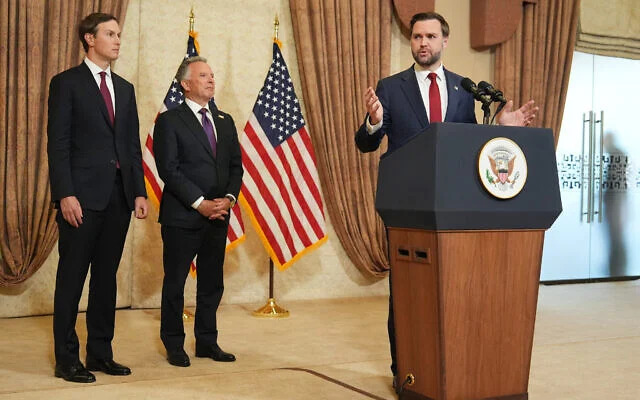
U.S. Vice President JD Vance, who led the American delegation, acknowledged the outcome shortly before leaving Pakistan.
“We’ve had a number of substantive discussions with the Iranians,” he said. “The bad news is that we have not reached an agreement.”
Vance emphasised that Washington’s key demands had not changed, particularly regarding Iran’s nuclear ambitions. He said the U.S. had sought firm guarantees that Tehran would not pursue nuclear weapons or the capability to rapidly develop them.
“We just could not get to a situation where the Iranians would accept our terms,” he added, describing the proposal on the table as the United States’ “final and best offer.”
Vance also revealed the level of direct coordination with Washington during the talks, saying he had spoken with President Donald Trump as many as a dozen times throughout the negotiations. Even as discussions continued, Trump downplayed the necessity of reaching an agreement.
“We’re negotiating. Whether we make a deal or not makes no difference to me, because we’ve won,” President Trump told reporters on Saturday.
Iranian officials, however, pushed back, accusing Washington of making unreasonable demands. A spokesperson for Iran’s foreign ministry described the talks as “intensive” but said progress depended on “seriousness and good faith” from the U.S. side. Iranian media reported that disagreements over the country’s nuclear programme and control of the strategically vital Strait of Hormuz were among the main obstacles.
The negotiations, held over two days and stretching overnight, marked the first direct high-level engagement between the two countries in more than a decade. They followed a temporary ceasefire agreed earlier in the week, which Pakistani officials have urged both sides to maintain despite rising tensions.
Pakistan’s Foreign Minister stressed the importance of preserving the truce, calling it “imperative” for regional stability. Officials in Islamabad had hoped the talks would pave the way for a broader de-escalation, but signs of strain were evident throughout the discussions. One source familiar with the negotiations described “mood swings” and fluctuating tensions as talks progressed.
Beyond nuclear concerns, broader geopolitical issues complicated the negotiations. Iran has reportedly demanded the release of frozen assets, war reparations, and greater control over the Strait of Hormuz, a critical global oil route through which roughly one-fifth of the world’s energy supply passes. The U.S., meanwhile, has insisted on ensuring free navigation through the strait and curbing Iran’s nuclear enrichment capabilities.
The failure to secure a deal leaves the region in a precarious position. Although some oil tankers have begun moving through the Strait of Hormuz following the ceasefire, many vessels remain stranded, and global markets continue to react nervously to the uncertainty.
Adding to the volatility, fighting linked to the broader conflict continues elsewhere in the region. Israel has carried out strikes against Iran-backed Hezbollah targets in Lebanon, underscoring the risk of further escalation beyond the immediate U.S.-Iran confrontation.
Despite the setback, officials on both sides have not ruled out future negotiations. For now, however, the breakdown in Islamabad highlights the deep divisions that remain, and the challenges ahead in turning a temporary ceasefire into lasting peace.
Leave a Reply