Scientists have made a major breakthrough in understanding how the immune system’s most powerful cells fight cancer, and for the first time, they’ve captured a detailed three‑dimensional look at the process inside real tumours.
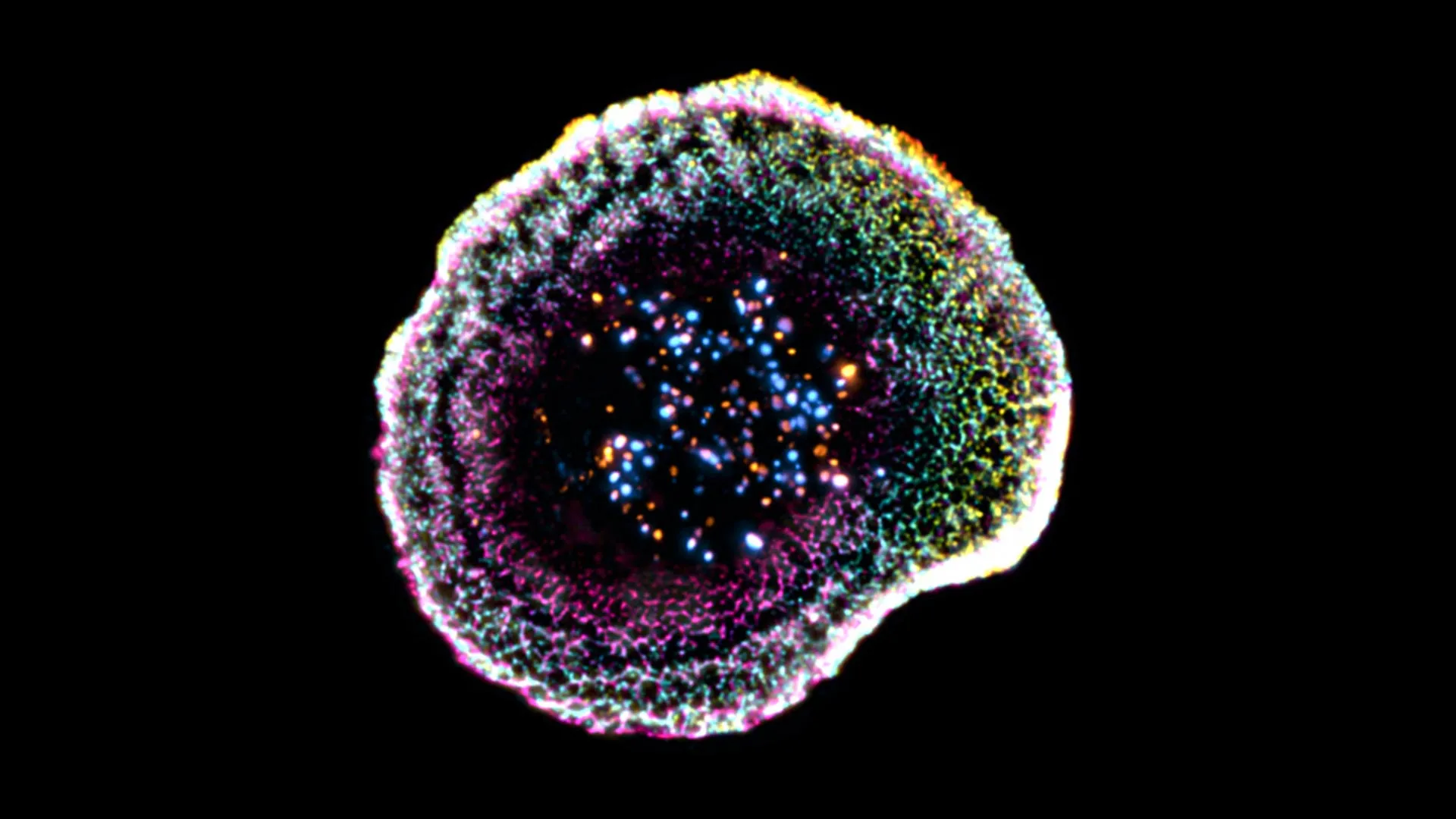
Researchers from the University of Geneva and the Lausanne University Hospital used an advanced imaging technique called cryo‑expansion microscopy to observe how killer T cells, also known as cytotoxic T lymphocytes, attack and eliminate cancerous cells at the microscopic level.
This new view shows that these immune cells form an intricately organised contact zone with their targets, allowing them to destroy dangerous cells with incredible precision, while protecting nearby healthy tissue.
Until now, scientists could only see parts of this killing process because traditional imaging methods either lacked the resolution or distorted the cells’ natural structure. Cryo‑expansion microscopy changes that by freezing cells quickly to preserve their internal architecture and then physically expanding the sample so that tiny details can be seen more clearly than ever before.
Jens Rietdorf, a research engineer at the UNIGE Faculty of Science and co-author, explained why this has been so difficult to observe until now:
“The great challenge in science has always been observing these interactions without deforming delicate biological structures. Cryo-expansion microscopy allows for the physical enlargement of cells after an ultra-rapid freezing process, making the invisible visible.”
With this new technique, the researchers uncovered previously hidden features at the interface where the immune cell meets its target. They also observed how the toxic granules inside T cells, the “killers” that deliver the death blow to infected or cancerous cells, vary in structure and organisation.
Most importantly, the team was able to apply this method directly to tumour tissue samples, allowing them to watch the immune response in a realistic, clinical setting.
This new 3D insight into how killer T cells work could have meaningful implications for cancer research and treatment. By understanding the molecular choreography behind successful immune attacks, scientists can better explore how to improve immunotherapies or find ways to overcome immune resistance in stubborn tumours.
This discovery doesn’t just show us what killer T cells do; it shows how they do it, and that deeper understanding could be a powerful tool in the fight against cancer.
Leave a Reply